} Crítica Retrô: February 2026

Tradutor / Translator / Traductor / Übersetzer / Traduttore / Traducteur / 翻訳者 / переводчик

Páginas

Friday, February 27, 2026

David, o Caçula (1921) / Tol'able David (1921)


Anos atrás, escrevi um perfil de Richard Barthelmess para uma publicação conhecida como The Pre-Code Companion. Considerando o título, foquei mais nas performances de Richard em filmes pre-Code, e assim descobri um novo filme favorito, “Fome por Glória” de 1933. Mas ele fez 81 filmes, numa carreira que durou décadas. Alguns filmes me escaparam na época, e decidi assisti-los depois. Um deles é “David, o Caçula”, e o momento de assisti-lo é agora.  

Years ago, I wrote a profile of Richard Barthelmess for a publication known as The Pre-Code Companion. Given the title, I focused more on Richard’s performances in pre-Code films, and by doing this I discovered a new favorite, 1933’s “Heroes for Sale”. But he made 81 movies in a career that spanned decades. Some movies couldn’t fit my schedule, so I decided to watch them later. One of them was “Tol’able David”, and the moment to watch it is now.

A família Kinemon vive alegremente em Greenstream. Os pais têm dois filhos: Allan (Warner Richmond), o mais velho que já trabalha como carteiro, e David (Barthelmess), o filhinho da mamãe. Há também uma família de malfeitores, os Hatburns, formada por pai e dois filhos. Os Hatburns decidem visitar um primo, que é vizinho dos Kinemon e avô de Esther (Gladys Hulette), interesse amoroso de David. 

The Kinemon family lives happily in Greenstream. Ma and Pa have two sons: Allan (Warner Richmond), the oldest and already working as a mailman, and David (Barthelmess), mother’s boy. There is also a family of wrongdoers, the Hatburns, comprised of father and two sons. The Hatburns decide to visit a cousin, who is the Kinemon’s neighbor and the grandfather of Esther (Gladys Hulette), David’s love interest.

David não é adulto ainda, ele é apenas o caçula. Esther também não o vê como um adulto. Quando seu irmão é ferido pelos Hatburn e seu pai morre, David tem de crescer e se tornar o novo Homem da Casa. Isso inclui tomar para si a obrigação do irmão de entregar as cartas.

David isn’t an adult yet, he’s only “Tol’able” as an adult. Esther doesn’t see him as an adult either. When his brother is wounded by the Hatburns and his father dies, David has to grow up and become the new Man of the House. This includes taking as his the brother’s obligation to deliver the mail.

Um “ator” que merece destaque é o cachorro da família Kinemon, Rocket. Ele rouba as calças de David quando o garoto vai nadar, acompanha-o nas aventuras com ou sem Esther, David quase senta nele, mas o cachorro não se importa. O IMDb dá o crédito de Rocket para um cão chamado Lassie, que fez mais dois filmes. 

One “performer” to highlight is the Kinemon dog, Rocket. It steals David’s pants when the boy is swimming, accompanies David in his adventures with or without Esther, David almost sits on it, but the dog is fine with it. IMDb credits a dog named Lassie as Rocket, with two other film appearances.

No começo do filme David e Esther jogam um jogo chamado Mumblety-Peg, que eu desconhecia. Numa busca pela internet, o curioso site The Art of Manliness me informou que o jogo consiste em jogar uma faca para o ar e ver quem consegue fazê-la cair com a lâmina furando o chão. O vencedor afunda um graveto ou parafuso no chão, que o perdedor precisa tirar com os dentes. 

Early in the movie David and Esther play a game called Mumblety-Peg, which I didn’t know. In a web search, the website weirdly titled The Art of Manliness informed me that the game consists in throwing up a knife and seeing who can get it to stick to the ground. The winner plants a stick on the ground and the loser has to remove the stick with his teeth.
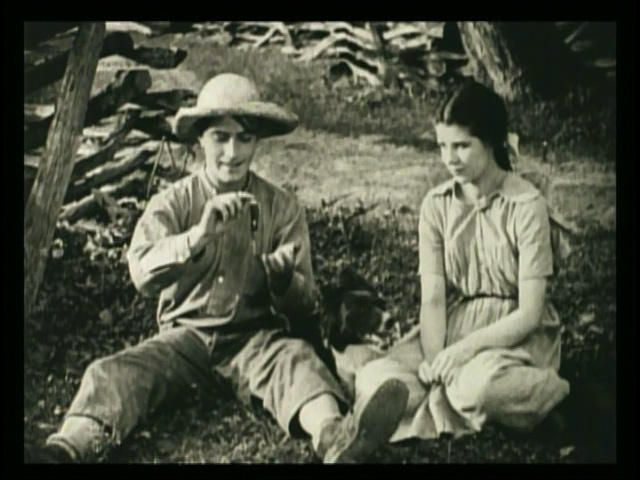
“David, o Caçula” foi feito pela Inspiration Pictures e é claramente um melodrama, mesmo com um momento engraçado não-intencional quando a mãe de David está esperando por ele toda arrumada e com um sorrisinho enquanto ele está envolvido numa briga com um Hatburn. Inspiration Pictures era a produtora de Richard Barthelmess e “David, o Caçula” foi seu primeiro crédito como produtor.

“Tol’able David” was made by Inspiration Pictures and it’s clearly a melodrama, even though there is an unintentional funny moment with David’s mom waiting for him all dolled up and with a silly smile while he is involved in a fistfight with a Hatburn. Inspiration Pictures was Richard Barthelmess’s own production company and “Tol’able David” was his first credit as a producer.  

O diretor e co-roteirista Henry King começou no cinema como ator em 1912 e três anos depois dirigiu seu primeiro filme. Ele dirigiu mais de 100 filmes tanto na era muda quanto após a chegada do cinema falado. Ele foi um dos fundadores da Academia, o órgão que organiza o Oscar. Ele próprio foi indicado a dois Oscars, mas não ganhou nenhum. Em “David, o Caçula”, King emula o estilo cinematográfico de Griffith, que foi o primeiro a receber a oferta para adaptar o livro para as telas mas recusou a oportunidade.

Director and co-screenwriter Henry King started as an actor in film in 1912 and three years later had his first directing credit. He directed over 100 movies both in the silent era and later with the talkies. He was one of the founders of the Academy, the organ that presents the Oscars. King himself was nominated for two Oscars, but failed to win both. In “Tol’able David” King emulates Griffith’s filmmaking style, as Griffith was first offered to adapt the novel to the screen but refused the opportunity.

Barthelmess, que fez um par de filmes com Griffith, traz a quantia certa de charme jovial e ambição para o papel. Mesmo assim, David é tão delicado que chuta uma porta, abrindo-a, e não entra no recinto, só fica do lado de fora parado, sem saber o que fazer. Mas ele é nosso herói e sabemos que ele triunfará no final desta história sobre o que acontece quando meninos se tornam homens.

Barthelmess, who appeared in a couple of Griffith’s films, brings the right amount of young charm and ambition to the lead. Even so, David is so delicate that he kicks a door open and doesn’t enter the room, just stands outside without knowing what to do. But he is our hero and we know he’ll triumph in the end of this story of what happens when boys become men.

Friday, February 20, 2026

Kenneth Williams: Fantabulosa! (2006)


Eu venho escrevendo sobre filmes antigos há 16 anos. O próprio cinema tem pouco mais de 130 anos. E todos os dias eu aprendo alguma coisa nova sobre a Sétima Arte. Por exemplo: através de minha amiga Virginie, que escreve majoritariamente no site The Wonderful World of Cinema, eu descobri uma série de filmes que nunca havia ouvido falar anteriormente: a franquia Carry On. Trinta e um filmes da franquia foram feitos na Inglaterra entre 1958 e 1992, além de vários spin-offs na televisão e nos palcos. Um nome recorrente no elenco destes filmes foi Kenneth Williams. Acredito que não há jeito melhor de conhecer alguém do que aprendendo sobre sua vida, e felizmente houve uma cinebiografia feita para a TV de Kenneth Williams, filme que vi e agora escrevo sobre em honra ao seu centenário.   

I’ve been writing about old movies for sixteen years now. Cinema itself is a little over 130 years old. And everyday I learn something new about the movie world. For instance: through my friend Virginie who writes mainly at The Wonderful World of Cinema I got to know a film series I had never heard about before: the Carry On movie franchise. Thirty-one movies of the franchise were made in England between 1958 and 1992, plus several spin-offs on television and on stage. A recurring name in the cast was Kenneth Williams. I believe there is no better way to get to know someone than learning about their life, and luckily there is a biopic made for TV about Kenneth Williams, the movie I watched and now review, as part of his centennial celebration.

Começamos com Kenny (Michael Sheen), um exuberante solteirão vivendo num apartamento com o mínimo de mobília. Um flashback começa e somos apresentados ao pequeno Kenny, um garotinho que tem seu cabelo cortado pelo próprio pai. Sua mãe fala assim sobre seu pai: “ele é um menino, não é como nós” e mostra para Kenny um vestido que ela estava costurando para ele. Usando o vestido, Kenny desempenha um papel nos palcos e recebe elogios de um jornal. 

We start with Kenny (Michael Sheen), a flamboyant bachelor living in an apartment with minimal furniture. A flashback begins and we’re introduced to little Kenny, a boy having his hair cut by his father. His mother tells him about the father: “he’s a man, not like us” and shows Kenny a dress she made for him. Wearing the dress, Kenny appears on stage and receives praise from a local newspaper.


Já adulto, Kenneth se junta a uma trupe de teatro e demonstra ser um grande comediante, mesmo ao tentar ser um ator dramático. Ele então consegue um trabalho no rádio. É interessante notar como a trajetória de Kenneth até então se assemelha com a de muitos atores e atrizes de Hollywood das décadas de 1930 em diante, especialmente daqueles que faziam comédia.

Now an adult, Kenneth joins a theater group and proves himself to be a great comedian, even when he’s trying to be a serious actor. He then finds a job on the radio. It’s interesting to notice how Kenneth’s trajectory so far is similar to many Hollywood actors of the 1930s onwards, especially those in comedy.

O programa de rádio é um sucesso e o próximo passo é óbvio: a televisão! Vale lembrar que a TV apareceu e se popularizou na Inglaterra antes de isso acontecer nos EUA. Sua fama televisiva dura pouco, pois ele é criticado por seu colega Tony (Martin Trenaman) e os produtores da BBC que queriam um programa mais sério, sem as vozes e as personagens de Kenny. 

The radio show becomes popular and the next step was clear: television! Let’s remember that TV appeared and popularized sooner in England then it did in the US. His television fame doesn’t last long, as he is criticized by both his coworker Tony (Martin Trenaman) and the BBC producers who wanted to make a more realistic show, without Kenny’s voices and characters.

A tristeza não dura muito porque ele é recrutado para o cinema! Sua aparição nos filmes da franquia Carry On começa em 1958 com “Carry On Sergeant” e segue em frente em outros 25 filmes. Podemos ver referências a eles na cinebiografia através dos diferentes figurinos que Kenneth usa no set junto à amiga Joan Sims (Beatie Edney). Além de seu trabalho no cinema, podemos vê-lo em ação nos palcos e televisão, e também fazendo e perdendo amigos e se envolvendo em novos relacionamentos.

Sadness doesn’t last long as he’s recruited to the movies! His appearance in the Carry On films begins in 1958 with “Carry On Sergeant” and went on in 25 more movies. We can see them referenced in the biopic by the various costumes Kenneth is wearing on set alongside his friend Joan Sims (Beatie Edney). Besides his work in cinema, we see him starring on stage and TV, and also making and losing friends and forging new relationships.

Como muitos outros atores - como muitas outras PESSOAS - Kenneth tinha uma relação complicada com os pais. Ele era muito próximo de sua mãe, Lou (Cheryl Campbell), que sempre o apoiou, mas era distante do pai, Charlie (Peter Wight). O pai falava para o filho conseguir um bom trabalho desde menino e não aprovava que ele fosse um ator, mesmo ouvindo os programas de rádio de Kenny quando estava sozinho em casa. Numa noite, Kenneth está passando aspirador em seu apartamento vestindo só uma sunga e impede que o pai entre e faça uma visita, algo que fez grande mal à já pouco saudável relação deles.  

Like many other actors - like many other PEOPLE - Kenneth had a complicated relationship with his parents. He was very close with his supportive mother, Lou (Cheryl Campbell), but distant from his father, Charlie (Peter Wight). The father talked about him getting a good job since he was little and disapproved of him being an actor, even though he would listen to Kenneth’s radio shows when alone at home. One night, Kenneth is vacuuming his apartment only in swimming suits and refuses to let his father in, something that harmed their already poor relationship for good.

Kenneth ouve pela primeira vez falar de “ser queer” no livro “The City and the Pillar”. Para ele, beijar e transar são coisas nojentas, mas ele dissipa sua energia se masturbando. Ele seria hoje considerado um assexual homorromântico. A mãe dele já o via assim.

Kenneth first learns about “queerness” in the book “The City and the Pillar”. For him, kissing and having sex are totally disgusting, but he dissipates his energy by masturbating. He would be considered now a homorromantic asexual individual. His mother already understood that.

Baseado no livro “The Diaries of Kenneth Williams”, publicado postumamente em 1992, “Fantabulosa” é um bom filme feito para a TV, categoria que até alguns anos atrás era sinônimo de algo malfeito. Embora sua atuação possa parecer um bocado afetada e irritante no começo, o camaleônico Michael Sheen faz um bom trabalho.

Based on the book “The Diaries of Kenneth Williams”, posthumously published in 1992, “Fantabulosa” is a good made-for-TV movie, a category that, until recent years, has been associated with poorer production values. Although his acting is a bit affected and even annoying in the beginning, the chameleon Michael Sheen does a good job.

Há citações de Shakespeare e George Bernard Shaw no filme. Mas eu escolho terminar esta crítica com uma citação dele mesmo, Kenneth Williams: “A citação, como a oportunidade, a comida, e o amor, tem que vir no momento certo. Gritada, pode mandar seu ego lá para o tornozelo”.

There are quotes from Shakespeare and George Bernard Shaw in the movie. But I choose to end this review with a quote from the man himself, Kenneth Williams: “The quote, like opportunity, food and love, has got to come at the right moment. Blurted out, it can send your ego round your ankles.”

This is my contribution to the Carry On Kenny blogathon, hosted by Virginie at The Wonderful World of Cinema.

Friday, February 13, 2026

The Horror of Party Beach (1964)


Motocicletas na estrada, com os motoqueiros vestidos de couro como em “O Selvagem” de 1953. A ambientação é a mesma dos filmes de praia dos anos 1960, como “Férias no Havaí” (1961). E há uma ameaça vinda das profundezas do oceano, mais de uma década antes de “Tubarão” (1975). Se estes ingredientes te deixaram intrigado, você precisa conferir o resultado: o filme mal-feito, porém cômico “The Horror of Party Beach”.


Motorcycles on the road, with their riders dressed in black leather like in 1953’s “The Wild One”. The setting is the same as the Beach Party movies of the 1960s, such as “Gidget Goes Hawaiian” (1961). And there is a menace coming from the depths of the ocean, over a decade before “Jaws” (1975). If these ingredients left you intrigued, you should check the result: the badly made yet comical “The Horror of Party Beach”.


Tudo é muito divertido na praia até que um barril de lixo radioativo é jogado no oceano e dá origem a um monstro a partir de um crânio humano e outros dejetos encontrados no fundo do mar. Vamos chamar esse monstro de Criatura. A primeira pessoa a se encontrar com a Criatura é a pobre Tina (Marilyn Clarke), que havia acabado de brigar com o namoradinho Hank (John Scott). Seu corpo coberto de sangue flutua pelo oceano até chegar à praia. Gritos. Começa uma investigação.


All is fun and games at the beach until a barrel of radioactive waste is thrown in the ocean and assembles a monster from a human skull and other stuff down there. Let’s call this monster a Creature. The first person to have an encounter with the Creature is poor Tina (Marilyn Clarke), who had just had an argument with her beau Hank (John Scott). Her gory body covered in blood fluctuates in the ocean until it reaches the shore. Screams. An investigation starts.


“Ninguém percebeu como a Criatura era ridícula?” - você deve estar se perguntando. Isso me lembra de outro filme tão ruim que chega a ser cômico: “Robot Monster” de 1953. Em ambos os casos, o baixo orçamento foi o óbvio culpado que impediu de fazer uma Criatura crível e capaz de provocar medo. Poderia até se dizer que mais dinheiro foi gasto com os efeitos especiais para destruir a Criatura do que foi gasto para criá-la em primeiro lugar.


“Didn’t anyone notice how ridiculous the Creature was?” - you might be asking. This reminds me of another comically bad movie: 1953’s “Robot Monster”. In both cases, the budget was the obvious constraint to make a believable and fear-inducing Creature. It could even be questioned if more money was spent with the special effects used when the Creature was destroyed than it was spent to build the Creature.


De alguma maneira, o filme consegue encaixar seis canções originais em 78 minutos. Eles conseguiram fazer isso graças a uma boy band na praia que cantava esses “hits”. Uma canção é também entoada por meninas numa festinha que é invadida pelas Criaturas - ah, eu esqueci de dizer que a Criatura se multiplicou?


Somehow the movie manages to squeeze six original songs in 78 minutes. They managed this by having a boy band at the beach, singing these “hits”. There is also a song sung by an all-girls slumber party that is invaded by the Creatures - oh, did I forget to mention that it multiplied?


Com o ataque na praia, na festinha, a sequência com as mulheres viajando juntas, as moças andando até em casa, os dois amigos bêbados e a investigação, poderíamos dizer que o filme é episódico e o que conecta os episódios é a presença das Criaturas. Há ainda outras vítimas que não recebem grande tempo de tela: são mostradas numa montagem em paralelo com manchetes de jornais anunciando os últimos passos da Criatura.


With the beach attack, the slumber party, the sequence with the women in a road trip, the ladies walking home, the two drunk friends and the investigation, we could say that the movie is episodic and what connects the episodes is the presence of the Creatures. There are also the other victims that aren’t given screen time: they are shown in a montage in parallel with newspaper headlines announcing the latest steps of the Creature.


Há momentos que poderiam ser considerados críticas aos filmes de praia em voga na época, mas eles provavelmente não foram concebidos como tal. Podemos destacar, nos primeiros 12 minutos, uma breve sequência na qual uma mulher está beijando um homem, que então dá seu lugar para outro homem. Ela elogia como ele beija bem e, percebendo que ele não é quem ela pensava ser, ela não vê problema e continua beijando o desconhecido.


There are moments that could be considered criticism of the Beach Party subgenre, then a fad, but they probably weren’t conceived as such. We could highlight, in the first 12 minutes, a brief sequence in which a woman is kissing a man, who then gives his place to another man. She compliments his kissing and, realizing he’s not the one she believed he was, she sees no problem and keeps on kissing the unknown.


O mesmo cara que escreveu o roteiro ficou responsável pela fotografia e seu nome é Richard Hilliard. Ele foi também diretor de fotografia para “The Curse of the Living Corpse”, também feito em 1964 e também dirigido por Del Tenney. Richard havia escrito, dirigido e produzido o filme bizarro “The Lonely Sex” em 1959, adiantando temas depois vistos em “Psicose” e “Peeping Tom”, mas, como um usuário do Letterboxd resumiu, “há definitivamente algo aqui, mas isso é arruinado por um cineasta incompetente”.


The same guy who writes the screenplay is responsible for the photography and his name is Richard Hilliard. He was also the cinematographer for “The Curse of the Living Corpse”, also made in 1964 and also directed by Del Tenney. Richard had written, directed and produced the exploitation film “The Lonely Sex” in 1959, pre-dating themes later seen in “Psycho” and “Peeping Tom” but, as a Letterboxd user says, “there’s definitely something here, but it’s ruined by incompetent filmmaking”.

Uma personagem que roubou a cena foi Eulabelle, uma empregada que acredita que as mortes são causadas por algum tipo de zumbi ou vudu. Ela é interpretada por Eulabelle Moore, uma atriz que fez sucesso com papéis cômicos na Broadway. É frustrante ver uma mulher negra mais uma vez interpretando uma empregada, mas é ótimo saber que ela era a única que tinha razão: a Criatura é de fato um tipo de zumbi à procura de sangue humano para sobreviver.


One character who stole the scene was Eulabelle, a maid who believe the deaths are caused by some kind of zombies or voodoo. She is played by Eulabelle Moore, an actress who found success playing comic roles on Broadway. It’s frustrating seeing a black woman once again playing a maid, but it’s great to know that she was the only right person: the Creature is indeed some kind of zombie in need of human blood to survive.


Perfeitamente sumarizado como “tão ruim que é bom”, este filme que sequer recebeu título no Brasil - nunca deve ter estreado oficialmente aqui - é como uma festa na praia: leve, despretensioso e melhor se você estiver com amigos para darem boas risadas.


Perfectly summarized as “so bad it’s good”, this film that didn’t receive a title here in Brazil - it may not have had an official premiere - is like a beach party: light, unpretentious and better if you are with your friends sharing a good laugh.


This is my contribution to the Eighth So Bad It’s Good blogathon, hosted by Rebecca at Taking Up Room.