O que pode ser dito sobre a Giornate del Cinema Muto que eu não tenha dito antes aqui no meu blog? Claro, é a melhor semana do ano e prova de que uma pessoa pode assistir somente a filmes mudos pelo resto da vida e seria feliz. Mas tem uma coisa nova: ao ver um pouco quando entrou no meu quarto, minha mãe disse, sem querer ser desagradável: “gostar desse tipo de filme não pode ser normal”. Então aqui está, a cobertura da 43ª edição da Giornate Del Cinema muto para todas as pessoas maravilhosamente anormais que existem.
What
could be said about the Pordenone Silent Film Festival that I didn’t say before
here in my blog? Sure, it’s the best week of the year and the proof that one
could watch only silent movies for the rest of one’s life and be happy. But
there is something new: watching a bit when she entered my bedroom, my mother
said, without meaning to be rude: “liking these kinds of movies isn’t normal.”
So here it is, the coverage of the 43rd Giornate del Cinema Muto for
all the wonderfully abnormal people out there.

No
primeiro dia da programação online eu reencontrei um velho amigo, mas bem mais
jovem do que eu havia visto antes: Ivor Novello. Ele é a estrela de “The Call of the Blood” (“L’Appel
du Sang, 1919) junto a Phyllis Neilson-Terry. Ivor e Phyllis
interpretam o casal de ingleses Maurice e Hermion, que vão de férias para a
Sicília, na Itália, onde ele conhece Maddalena (Desdemona Mazza). Hermione tem
de partir para a África para ajudar seu amigo Emile Artois e Maurice, graças ao
sangue quente siciliano (!!!), inicia um romance com Maddalena. Este melodrama
foi o primeiro filme de Novello!
On the
first day of online programming I got to meet again an old friend, although
younger than when I met him: Ivor Novello. He was the star of “The Call of the
Blood” (1919) alongside Phyllis Neilson-Terry. Ivor and Phyllis play English
newlyweds Maurice and Hermione, who go vacationing to Sicily, Italy where he
meets Maddalena (Desdemona Mazza). Hermione has to leave for Africa to help her
friend Emile Artois and Maurice, due to his hot Sicilian blood (!!!), starts a
romance with Maddalena. This melodrama was actually Novello’s film debut!

Outra
velha amiga que reencontrei em Pordenone - curiosamente uma amiga também
relacionada com o período mudo da obra de Alfred Hitchcock - foi Anny Ondra. Em
“Suzy Saxofone” (1928), as amigas Suzy Hiller (Mary Parker) e Anni von Aspen
(Anny Ondra) de Viena trocam de lugar em Londres. A nova Anni vai para um
colégio interno e a nova Suzy vai para a Escola Tiller de dança. A narrativa se
torna mais complexa com uma subtrama sobre apostas, até que Anni volta para
Viena como Suzy Saxofone. Anny Ondra estava adorável e este filme reforçou meu
amor pelo cinema alemão.
Another
old friend I got to meet again at Pordenone – curiously a friend who is also
tied to Alfred Hitchcock’s silent years – was Anny Ondra. In “Miss Saxophone” (or
“Suzy Saxophone”, 1928), friends Suzy Hiller (Mary Parker) and Anni von Aspen
(Anny Ondra) from Vienna swap places in London. The new Anni goes to boarding
school and the new Suzy goes to the Tiller School for dancers. The narrative
thickens with a subplot about bets, until Anni returns to Vienna as Saxophone
Suzy. Anny Ondra was adorable and this film reinforced my love for German
cinema.

Este
ano as retrospectivas exibiram os cinemas - sim, no plural, - do Uzbequistão e
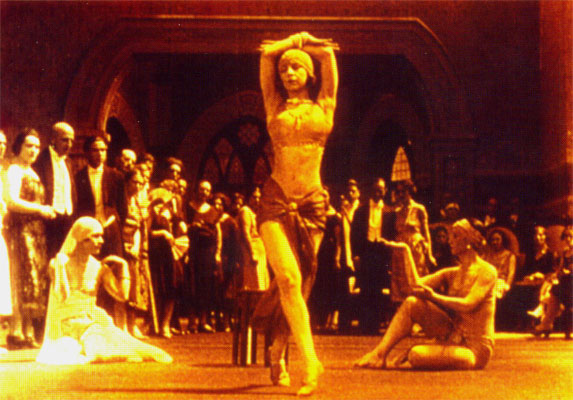
da América Latina. O primeiro filme uzbeque foi “O Minarete da Morte” (exibido
no Brasil como “O Harém da Morte”, 1925), baseado num conto popular do século
XVI que conta as desventuras de uma mulher chamada Jemal (Nadezhda Vendelin).
Primeiro ela é capturada por um bandido, então libertada pela mulher que o ama
e inveja Jemal. Depois ela é novamente capturada, desta vez por um Emir e se
torna o prêmio num jogo popular de Kok-Bori ou “capture a cabra”. Quem a ganha
é Sadiq (Oleg Frelikh), o homem que a salvou na primeira ocasião, mas é sequestrada
mais uma vez pelo filho do Emir, Shahruck-bek (Iona Talanov), para seu harém.
Sadiq então inicia uma verdadeira revolução para salvar Jemal. Este foi
provavelmente meu primeiro filme do Uzbequistão, um bastante impressionante com
múltiplas cenas de multidão, belas locações, edição estilo soviético... e
roupas maneiras.
This
year the special retrospectives showcased the silent cinemas – yes, the plural
– of Uzbekistan and Latin America. The first Uzbek movie was “The Minaret of
Death” (1925), based on a 16th century folk tale that tells the
misadventures of a woman named Jemal (Nadezhda Vendelin). First she is captured
by a common bandit, then set free by the woman who loves him and envies Jemal. Then
she is captured once again, now by an Emir and becomes the prize in a popular
game of Kok-Bori or “catch the goat”. She is won by Sadiq (Oleg Frelikh), the
man who saved her in the first occasion, but is kidnapped once again by the
Emir’s son, Shahrukh-bek (Iona Talanov), for his harem. Sadiq then leads a
literal revolution to rescue Jemal. This was probably my first Uzbek film, and
an impressive one with multiple crowd scenes, beautiful locations, Soviet-style
editing… and nice clothes.

Oleg
Frelikh é a estrela de “O Minarete da Morte” e o diretor de “A Leprosa”. O
roteiro foi escrito por uma mulher, Lolakhan Saifullina, baseado no romance de
F. Duchêne. A protagonista é Tyllia-Oi (Rachel Messerer), que se casa com
Said-Vali e é agredida pelo marido. Ela procura ajuda mas acaba sendo estuprada
pelo Coronel (Adrey Fayt). Isso é visto como uma traição ao marido e Tyllia-Oi
tem de ser devolvida para a casa de seu pai, agora um lar desgraçado. As
metáforas visuais aqui foram certeiras e a discussão toda muito moderna.
Oleg
Frelikh was the star of “The Minaret of Death” and the director of “The Leper”
(1928). The screenplay was written by a woman, Lolakhan Saifullina, based on F.
Duchêne’s novel. The lead is Tyllia-Oi (Rachel Messerer), who marries Said-Vali
and is beaten by her husband. She seeks help but instead she’s raped by the
Colonel (Andrey Fayt). This is seen as a betrayal to her husband and Tyllia-Oi
has to be returned to her father’s home, now disgraced because of her. The
visual metaphors here were on point and the overall discussions very
forward-thinking.

Podemos
encontrar melodrama não somente em “The Call of the Blood”, mas também na
América Latina - em mais de um sentido. É estimado que mais de 90% dos filmes
mudos latino-americanos estão perdidos e aqui trabalhamos, como Jay disse em
sua introdução, em instituições com verbas pequenas e menosprezadas, se
comparadas com o resto do mundo. Por causa disso, muito - se não a maioria - do
nosso cinema mudo está em estado de fragmentos. E Pordenone não se avexou em
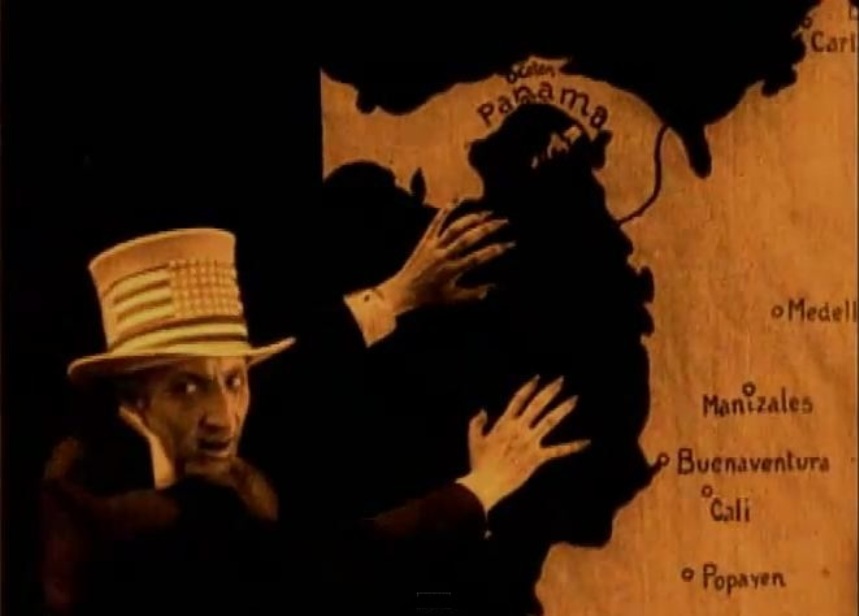
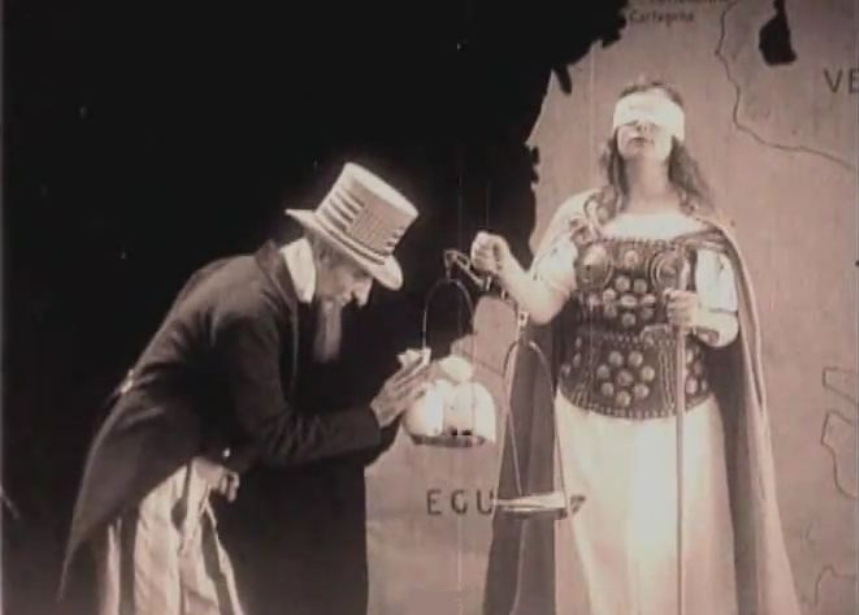
exibir fragmentos em sua versão online, felizmente. Tivemos uma comédia do
Chile, um melodrama moralizante que deveria ser um filme falado do México e uma
divertida propaganda do Brasil.
We can
find melodrama not only in “The Call of the Blood”, but also in Latin America –
in more than one sense. It’s estimated that more than 90% of Latin American silent
film is lost and we here work, as Jay mentions in his intro, in underfunded and
undervalued institutions, compared to the rest of the world. Due to this, much
– if not most – of our silent cinema is in fragmentary state. And Pordenone
didn’t shy away from showing fragments in its online version, thankfully. We
had a slapstick from Chile, a moralizing melodrama that was supposed to be a
talkie from Mexico and a funny advertisement from Brazil.

Agora o
melodrama cinematográfico: o filme que provavelmente inaugurou um gênero e
escreveu sua gramática, “Santa” de 1918 existe parcialmente. Sua protagonista é
a atriz, diretora e fundadora do primeiro arquivo de cinema mexicano, Elena
Sánchez Valenzuela. Santa é expulsa de sua casa no interior quando sua família
descobre que ela não é mais virgem. Ela vai para a cidade grande, onde conhece
um homem cego, Hipólito, e se apaixona por um toureiro, El Jarameño. Suas más decisões
a levarão a uma vida de alcoolismo ou um amor cego a salvará?
Now to
the reel melodrama: the film that probably inaugurated a genre and wrote its
grammar, 1918’s “Santa” is half extant. Its lead is actress, director and the
founder of the first Mexican film archive, Elena Sánchez Valenzuela. Santa is
expelled from her countryside home when her family finds out she isn’t a virgin
anymore. She goes to the big city, where she befriends a blind man, Hipólito,
and falls in love with a bullfighter, El Jarameño. Will her bad decisions take
her on a life of alcoholism or will a blind love save her?

De Cuba veio “A Virgem da Caridade” (“La Virgen de la
Caridad, 1930), que é o único filme mudo que sobrou do país. Conta a
história de amor entre Yeyo (Miguel Santos) e Trina (Diana Marde), ameaçada
pelo pai dela e um falsário que quer tanto a propriedade “La Birijita” de Yeyo
quanto Trina para si. Com um tom religioso sem ser pregador, foi um filme muito
bom.
From
Cuba came “La Virgen de la Caridad” (1930), which is actually the sole
surviving silent film from the country. It tells the love story between Yeyo
(Miguel Santos) and Trina (Diana Marde), challenged by her father and a forger
that wants Yeyo’s property “La Birijita” and Trina for himself. With a
religious undertone without being preachy, it was a very good film.

Outra retrospectiva
em Pordenone focou no designer de cenários e diretor de arte Ben Carré, que
trabalhou durante muitos anos na França e foi para Hollywood junto de Maurice
Tourneur - a dupla fez um de meus filmes favoritos, o visualmente impactante “O
Pássaro Azul” (1918). Não há tantos cenários deslumbrantes em “For the Soul of
Rafael” (1920), no qual clara Kimball Young interpreta uma moça mexicana
chamada Marta Raquel Estevan, criada num convento e prometida para Rafael
Arteaga (Bertram Garssby). Rafael gosta de festejar e é primo de um bandido
conhecido como El Capitan (Juan de La Cruz), que se disfarça de padre para
despistar a polícia.
Another
retrospective in Pordenone focused on set designer and art director Ben Carré,
who worked for many years in France and then went to Hollywood alongside
Maurice Tourneur – the duo worked together in one of my favorite and most
visually stunning movies, “The Blue Bird” (1918). Lavish sets aren’t so many in
“For the Soul of Rafael” (1920), where Clara Kimball Young plays a Mexican girl
named Marta Raquel Estevan, raised in a convent and betrothed to Rafael Arteaga
(Bertram Garssby). Rafael likes to party hard and is the cousin of a bandit
known as El Capitan (Juan de la Cruz), who disguises as a priest to deceive the
police.

Rafael
e Marta se casam, mas ela descobre que ele tem um filho que não assumiu. Para
piorar as coisas, o caminho de Marta se cruza com o de Keith (J. Frank Glendon),
um americano que ela ajudou a recuperar a saúde e que sua fiel criada indígena
Polonia (Paula Merritt) disse ter morrido. Mas Marta está numa encruzilhada,
pois ela prometeu para a sogra que cuidaria da alma de Rafael. Você pode
perceber que a trama é bastante complexa e leva tempo para se formar, embora o
final seja meio corrido.
Rafael
and Marta get married, but she finds out he has an illegitimate child. To make
things worse, Marta’s path crosses with Keith’s (J. Frank Glendon), an American
she helped nurse back to health and her loyal Indian servant Polonia (Paula
Merritt) said had died. But Marta is at a crossroads, as she promised her
mother-in-law that she would guard the soul of Rafael. You can see that the
plot is very complex and takes its time to develop, although the ending is a
bit rushed.

E houve
mais uma retrospectiva focada nos filmes mudos feitos ao redor do mundo por Anna
May Wong. O festival online exibiu “Song” (1928), feito na Alemanha e escrito
especificamente para Anna. Uma garota pobre chamada Song é resgatada numa praia
de dois marmanjos que queriam machucá-la. Quem a resgata é John Houben
(Heinrich George), um atirador de facas. Song se torna parte do número, até que
os caminhos deles se cruzam com o de Gloria Lee (Mary Kidd), uma velha
conhecida de John, por quem ele ainda nutre sentimentos. A maneira como Anna
May Wong atua com as mãos, demonstrando sentimentos, é uma lembrança de uma
arte perdida e de uma artista injustiçada.
And
there was yet another retrospective focusing on the silent films made all over
the world by Anna May Wong. The online festival showed “Show Life” (“Song”,
1928), made in Germany and written specifically for Anna. A poor girl named
Song is rescued at the beach from two men who wanted to harm her. The rescuer
is John Houben (Heinrich George) a knife-thrower. Song becomes part of his act,
until their paths cross with Gloria Lee’s (Mary Kidd), John’s old acquaintance
for whom he still has feelings. The way Anna May Wong acts with her hands,
showing emotion, is a reminder of a lost art and an artist treated unfairly.

Há
fantasia não apenas em “O Pássaro Azul”, mas também em “Folly of Vanity”, de
1925. O filme segue os recém-casados Robert (Jack Mulhall) e Alice (Billie
Dove) conforme os primeiros desentendimentos da vida de casados acontecem,
graças ao cliente dele, Mr Ridgeway (John St. Polis), que cultiva o ciúme no
coração de Robert. A felicidade deles só voltará depois que Alice cair de um
iate e foi levada até o Reino de Netuno debaixo d’água, completo com
aqua-balés!
There
is fantasy not only in “The Blue Bird”, but also in 1925’s “Folly of Vanity”.
It follows newlyweds Robert (Jack Mulhall) and Alice (Billie Dove) as the first
misunderstandings of their married life happen, thanks to Robert’s client Mr
Ridgeway (John St. Polis), who cultivates jealousy in Robert’s heart. Their
happiness will only come back after Alice falls from a yacht and is taken to
Neptune’s Kingdom under the sea, complete with aqua-ballets!

E eu
ainda não falei dos curtas-metragens! Muitos programas online consistiam de um
ou dois curtas mais um longa. “La Mort de Mozart” (1909) foi um curta
visualmente belo da retrospectiva Ben Carré que foi magistralmente acompanhado
ao piano por meu amigo José María Serralde Ruiz. Outro deleite foi “Per La Morale”
(191), que mostra quão ridículos são a censura e os censores - um assunto na
ordem do dia.
And I
haven’t talked about all the shorts yet! Many screenings online consisted of
one or two shorts plus the feature film. “La Mort de Mozart” (1909) was a
visually stunning short from the Ben Carré retrospective that was masterfully
accompanied by my friend José María Serralde Ruiz. Another delight was “Per la
Morale” (1911), that shows how ridiculous censorship and censors are – a timely
subject.

A
atração final da 43ª edição foi “O Maricas” (“Girl Shy”, 1924) de Harold Lloyd
acompanhada pela Zerorchestra. Lloyd interpreta o pobre garoto Harold Meadows,
que escreve um livro sobre como conquistar as mulheres mesmo não sendo nenhum
amante latino - na verdade, ele gagueja quando conversa com as garotas! E então
ele conhece a rica Mary (Jobyna Ralston)... Há uma sequência elaborada de
corrida contra o tempo que casou perfeitamente com o acompanhamento musical.
The closing attraction for the 43rd
edition was Harold Lloyd’s “Girl Shy” (1924) accompanied by the
Zerorchestra. Lloyd plays the poor boy Harold Meadows, who writes a book on how
to conquer women even though he’s no Latin Lover – in fact, he stutters when he
talks to girls! And then he meets the rich girl Mary (Jobyna Ralston)… There
was an elaborate sequence consisted of racing against time that was matched
perfectly with the score.

E assim
acaba minha cobertura da 43ª Giornate del Cinema Muto. As datas para o próximo
ano já foram anunciadas. Vou
cobrir o evento novamente? Sem dúvida! Mas estarei online ou ao vivo
na bela Itália? É o que veremos...