} Crítica Retrô: 1948

Tradutor / Translator / Traductor / Übersetzer / Traduttore / Traducteur / 翻訳者 / переводчик

Showing posts with label 1948. Show all posts

Saturday, September 25, 2021

O Ídolo Caído (1948) / The Fallen Idol (1948)


Quando somos crianças, por vezes vivemos situações que não conseguimos compreender completamente por não termos suficiente maturidade. Mesmo assim, essas situações mudam nossas vidas e nossas mentes. “O Ídolo Caído” é um filme sobre uma criança vivendo uma destas situações. Durante um final de semana, sua percepção sobre o adulto que ele mais admira vai mudar e, quando descer as escadas no final do filme, o garoto não será mais o mesmo.

When we are children, sometimes we live situations that we can't fully understand because we lack maturity. Nevertheless, those situations change our lives and our minds. “The Fallen Idol” is a film about a child going through this kind of situation. Over one weekend, his perception of the adult he admires the most will change and, when he goes down the stairs by the end of the film, the boy will not be the same anymore.

Phillipe (Bobby Henrey) more numa embaixada com seu pai o embaixador, sua mãe – que esteve doente -, o mordomo Baines (Ralph Richardson), a governanta Sra Baines (Sonia Dresdel) e sua cobra de estimação, MacGregor. Phillipe idolatra Baines, e quando seu pai passa um fim de semana fora cuidando da esposa num hospital, o menino se exalta: ele vai passar o fim de semana todo com Baines!

Phillipe (Bobby Henrey) lives in an embassy with his father the ambassador, his mother – who has been ill -, the butler Baines (Ralph Richardson), the governess Mrs Baines (Sonia Dresdel) and his pet snake MacGregor. Phillipe idolizes Baines, and when his father spends a weekend out tending to his mother in a hospital, the boy couldn't be happier: he will spend the whole weekend with Baines!

Baines sai de casa numa tarde e Phillipe o segue. É assim que o garoto encontra Baines com sua amante, Julie (Michèle Morgan). De repente e por acaso, Phillipe se torna cúmplice na traição e logo ele se tornará testemunha de uma morte que pode ou não ter sido um acidente. A situação toda colocará em cheque a lealdade de Phillipe para com Baines.

Baines leaves the house one afternoon and Phillipe follows him. This is how the boy finds Baines with his lover, Julie (Michèle Morgan). Suddenly and by chance, Phillipe becomes an accomplice in the affair and soon he'll become witness of a death that may or may not have been an accident. The whole situation will threaten Phillipe's loyalty to Baines.

O Ídolo Caído” é baseado em um conto do autor Graham Greene, que também escreveu o roteiro, pelo qual ele foi indicado ao Oscar. No ano seguinte Greene iria novamente adaptar uma história sua, “O 3º Homem”, para as telas, de novo sob a direção de Carol Reed. Greene e Reed foram apresentados um ao outro pelo produtor Alexander Korda, que foi quem primeiro se interessou pela história de Greene, “The Basement Room”.

The Fallen Idol” is based on a short story by author Graham Greene, who also wrote the screenplay, for which he was nominated for an Oscar. The following year Greene would also adapt one of his stories, “The Third Man”, for the screen, once again under Carol Reed's direction. Greene and Reed were introducced to each other by producer Alexander Korda, who was the first one to have an interest in Greene's source story, “The Basement Room”.

Alguns ângulos de câmera são ousados e criativos, quase fazendo de “O Ídolo Caído” um exemplo de filme noir. Eu digo “quase” porque o filme tem o visual, mas não os temas, do filme noir: este é um filme sobre uma criança confusa, não sobre femme fatales ou detetives durões. O diretor e produtor Carol Reed tinha experiência no noir – seu filme “Condenado” (1947) é um ótimo e pouco visto noir – e podemos ver seu cuidado com aspectos técnicos, como a iluminação, também aqui. Costuma-se dizer que alguns dos ângulos de câmera estranhos deveriam mostrar como Phillipe vê o mundo adulto, como um quebra-cabeças.

Some camera angles are daring and creative, almost making “The Fallen Idol” an example of film noir. I say “almost” because the movie has the looks, not the themes, of a film noir: this is a film about a confused child, not about femme fatales or hard-boiled detectives. Director and producer Carol Reed was experienced in noir – his “Odd Man Out” (1947) is a great underseen noir – and we can see his care with the technical aspects, such as lightning, here as well. It's said that some of the odd camera angles are supposed to show how Phillipe sees the adult world, as a puzzle.

Costumamos pensar em crianças como criaturas inofensivas e inocentes, e não como pequenos adultos capazes de viver emoções complexas e até mesmo dilemas. O resultado é que muitos filmes usam crianças como acessórios da trama principal dos adultos, e pouquíssimos filmes realmente focam nas ações das crianças. Um destes raros exemplos é “Desejo e Reparação” (2007), filme com uma performance brilhante de Saoirse Ronan, então com 13 anos.

We usually think of kids as innocuous, naïve creatures, not small adults able of living complex emotions and even dilemmas. The result is that many movies use children as accessories to the main plot involving the adults, and very few movies actually focus on a child's actions. One of those rare examples is “Atonement” (2007), a film with a star-making performance by then 13 years old Saoirse Ronan. 

O Ídolo Caído” é outro destes filmes que colocam crianças e suas experiências em destaque. Bobby Henrey, que interpreta Phillipe, nunca tinha atuado antes de fazer este filme e também tinha dificuldade em se concentrar, o que tornou tudo mais difícil no set. Mesmo assim, sua performance foi boa graças à atenção constante do diretor e produtor Carol Reed. Bobby Henrey fez só mais um filme e se tornou capelão em um hospital em Connecticut.

The Fallen Idol” is another of those movies that put children and their experiences in the spotlight. Bobby Henrey, who plays Phillipe, had no acting experience before making the film and also had a very short attention span, which made things difficult on set. Nevertheles, he delivered a good performance because he was always coached by director and producer Carol Reed. Bobby Henrey went on to make only one more film and became a hospital chaplain in Connecticut.

Eu não costumo gostar de filmes “coming of age”, porque eu, como pessoa no espectro autista, tenho dificuldades em me ver nas situações representadas nesses filmes como típicas da infância ou adolescência. “O Ídolo Caído” provavelmente não figura na lista de melhores filmes de “coming of age”, mas deveria estar lá: é um brilhante, tenso e verdadeiro retrato da perda de inocência que todos nós experimentamos de alguma maneira conforme crescemos.

I don't often like coming of age movies, because I, as an autistic person, have a hard time seeing myself in the situations portrayed in these films as part of someone's childhood or teen years. “The Fallen Idol” probably won't make it to the list of best coming of age movies, but it certainly should: it's a brilliant, tense and truthful portrayal of the loss of innocence that we all experience in some way while grouwing up.

This is my contribution to the 8th Annual Rule, Britannia blogathon, hosted by Terence at A Shroud of Thoguhts. 

Monday, December 24, 2018

Vênus, a Deusa do Amor (1948) / One Touch of Venus (1948)


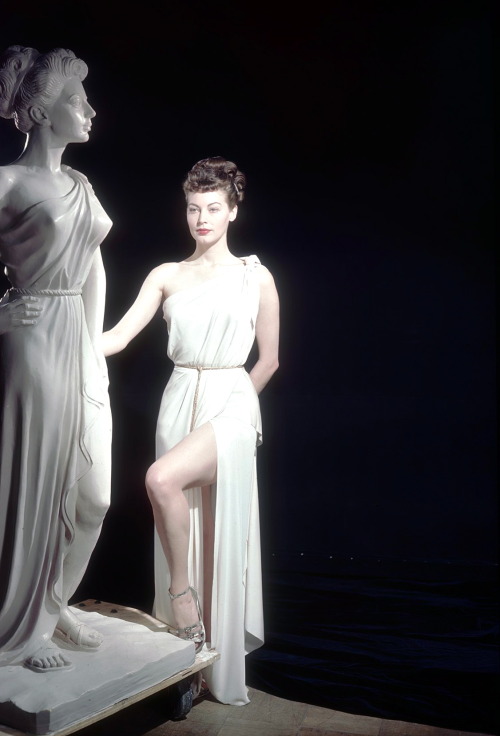
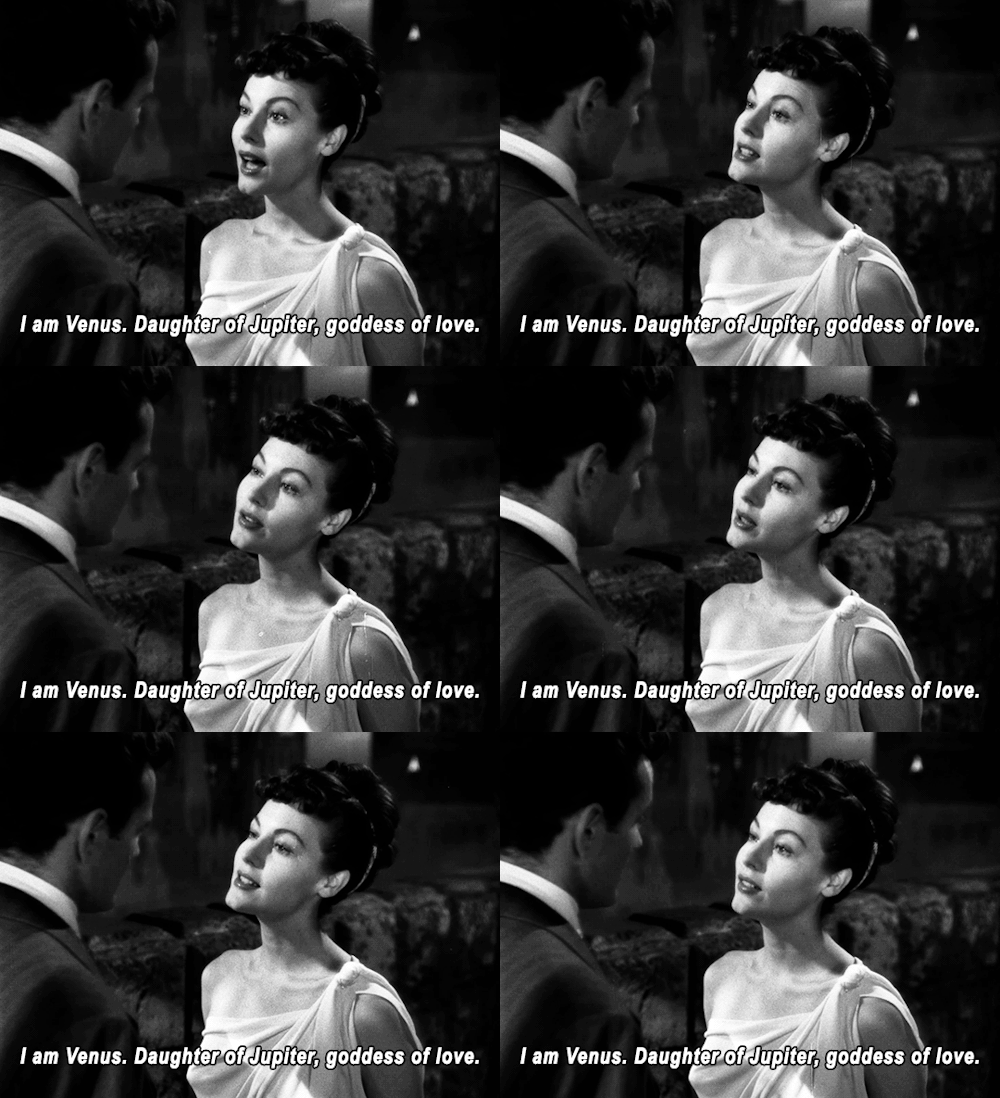
Há muitas atrizes do cinema clássico que poderiam ser chamadas de deusas – atrizes demais para citar aqui. Mas foram poucas que de fato interpretaram deusas nas telas. Uma delas foi Rita Hayworth em “Quando os Deuses Amam” (1947). No ano seguinte, outro filme sobre uma deusa que vem à Terra e se apaixona por uma mortal foi feito: “Vênus, a Deusa do Amor”. A atriz sabiamente escolhida para interpretar a deusa foi Ava Gardner.

There were many classic film actresses that could be called goddesses – like, too many to mention. But only a handful of them went on to actually play goddesses on screen. One of them was Rita Hayworth in “Down to Earth” (1947). The following year, another movie about a goddess who comes to Earth and falls in love with a mortal was made: “One Touch of Venus”. The actress wisely chosen to play the love goddess was Ava Gardner.


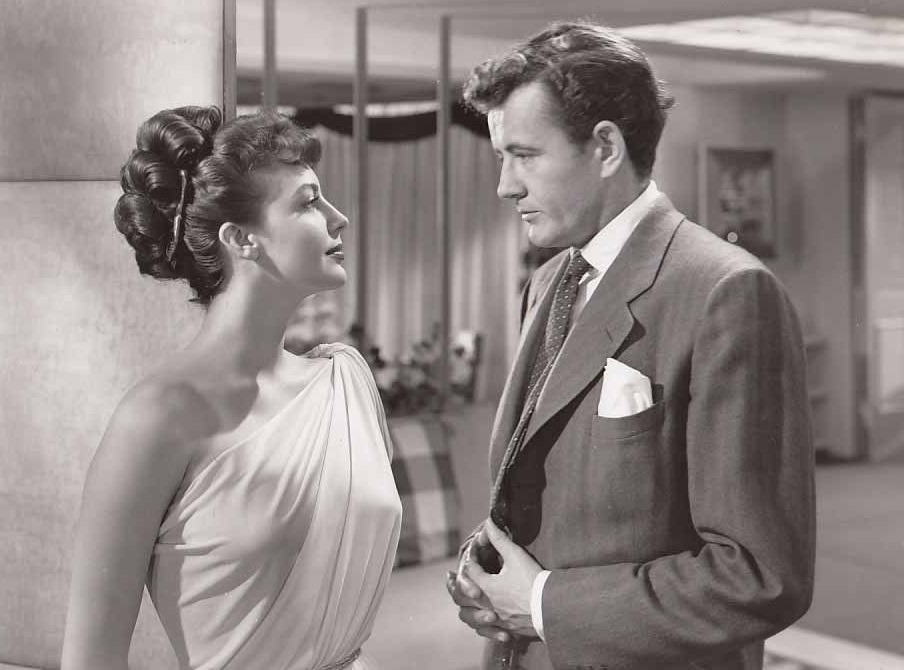
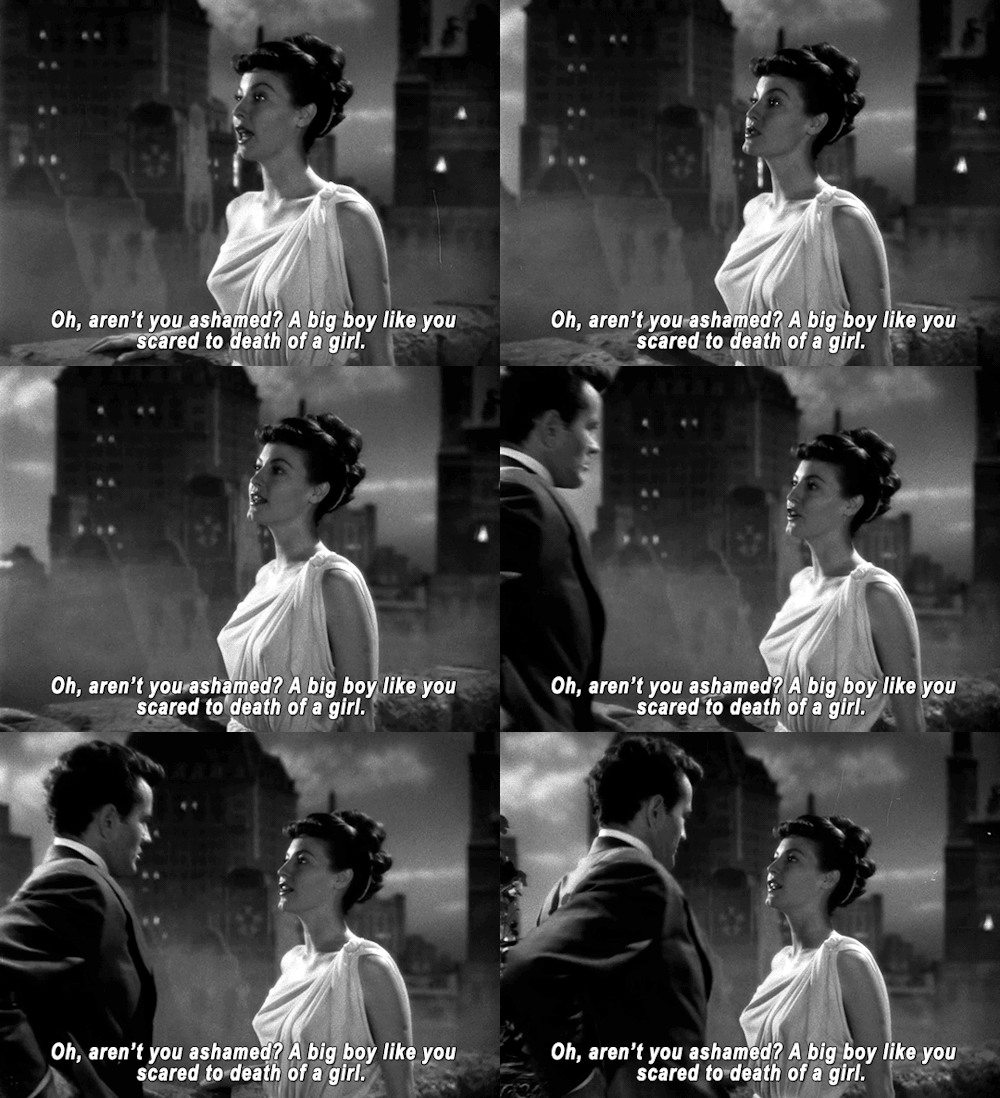
Os créditos passam por cima de um anfiteatro grego. Quando eles acabam, Eddie Hatch (Robert Walker) aparece por trás do anfiteatro, revelando que este era um modelo em uma vitrine. O atrapalhado Eddie é então chamado por seu chefe Savory (Tom Conway) para consertar as pregas de uma cortina que cobre a estátua da deusa do amor, Vênus. Eddie fica encantado com a estátua e, depois de tomar uma taça de champanhe, a beija. Um trovão se escuta e a estátua se torna viva. Agora, Eddie está com problemas e Vênus, a deusa do amor (Ava Gardner) só vai criar mais confusão.

The credits roll over a Greek amphitheatre. When we’re done with the credits, Eddie Hatch (Robert Walker) appears behind the amphitheatre, revealing that it was a window shop model. Clumsy Eddie is then called by his boss Savory (Tom Conway) to fix a curtain drape that covers a statue of the love goddess Venus. Eddie becomes infatuated by the statue and, after one glass of champagne, he kisses it. A thunder is heard and the statue comes to life. Now Eddie is in trouble, and Venus, the love goddess (Ava Gardner) will only bring him more problems.


Primeiro, Eddie é acusado por seu chefe de ter roubado a estátua. Ele diz a verdade ao chefe e à polícia, mas ninguém acredita que uma estátua de mármore simplesmente saiu andando. Eddie é mandado para casa, onde recebe cuidados do amigo Joe (Dick Haymes) e da namorada Gloria (Olga San Juan). Logo Vênus reaparece, e eles têm de fugir para escapar da fúria ciumenta de Gloria.

First, Eddie is accused by his boss of stealing the statue. He tells him and the police the truth, but nobody believes that a marble statue simply walked away. Eddie is sent home, where he is helped by his friend Joe (Dick Haymes) and his girlfriend Gloria (Olga San Juan). Soon Venus reappears there, and they have to run away to escape Gloria’s jealous fury.

Na sua forma humana, Vênus não usa seus poderes com frequência – só em momentos cruciais. Seu maior poder é a sedução, e quando ela descende do Olimpo, o amor fica no ar. Além disso, ela só quer se divertir aqui na Terra durante alguns dias. Considerando sua beleza, sex appeal e personalidade de amante da diversão, podemos dizer que a escolha da jovem Ava Gardner, então com 23 anos, foi perfeita.

In her human form, Venus doesn’t use her powers often – only in crucial moments. Her biggest power is seduction, and when she descends from the Olympus, love gets in the air. Moreover, she just wants to have fun while she is spending a few days on Earth. Considering her beauty, sex appeal and fun-loving personality, we can say that choosing young Ava Gardner, then 23, was a perfect move.


Se você só conhece Robert Walker como o sinistro Bruno de “Pacto Sinistro” (1951), você terá uma grande surpresa. Ele é muito engraçado como Eddie, fazendo caras e boas exageradas e parecendo tão desconcertado com o que acontece quanto Cary Grant em “Este Mundo é um Hospício” (1944). Outra boa performance é de Eve Arden, que interpreta a secretária de Savory, Molly, que é apaixonada pelo patrão. Ela tem várias frases de efeito engraçadas e também brilha com suas expressões faciais.

If you’re only familiar with Robert Walker as the sinister Bruno in “Strangers on a Train” (1951), you’re in for a huge surprise. He is very funny as Eddie, making exaggerated faces and appearing as flabbergasted by all the action as Cary Grant is in “Arsenic and Old Lace” (1944). Another great performance is Eve Arden’s, who play Savory’s secretary Molly, who is in love with her boss. She has many hilarious one-liners and also shines with her facial expressions.


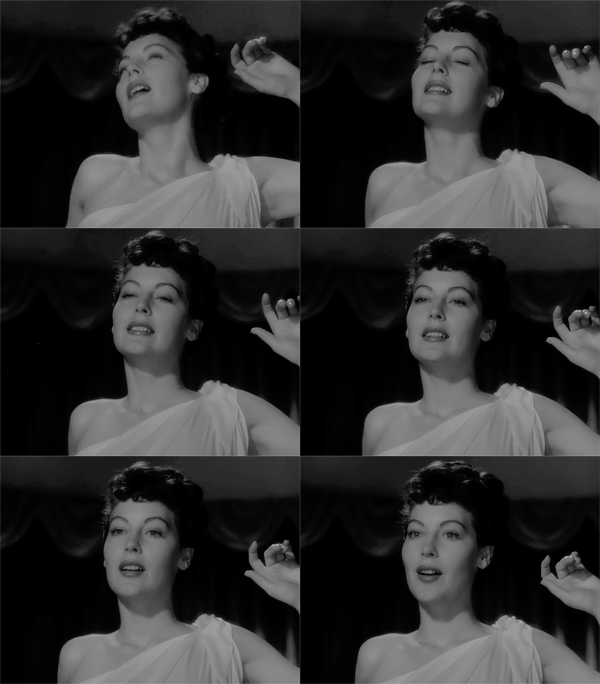
“Vênus, a Deusa do Amor” é um filme de fantasia e comédia romântica e é também um musical. Há três números musicais, e em todos eles a voz de Ava Gardner é dublada por Eileen Wilson. Em sua curta carreira de apenas 12 filmes, Eileen dublou atrizes como Jane Russell em “Os Homens Preferem as Loiras” (1953) e Ava em três ocasiões: “Mercador de Ilusões” (1947), “Lábios que Escravizam” (1949) e aqui em “Vênus, a Deusa do Amor”.

One Touch of Venus” is a romantic comedy-fantasy and also a musical. There are three musical numbers, and in all three Ava Gardner’s singing voice is dubbed by Eileen Wilson. In her short career that lasted only 12 films, Eileen dubbed actresses like Jane Russell in “Gentlemen Prefer Blondes” (1953) and Ava in three occasions: in “The Hucksters” (1947), “The Bribe” (1949) and here in “One Touch of Venus”.


A trama tem origem em um fato histórico misturado a um mito grego. A influência histórica é o templo de Vênus na cidade grega de Tessalônica, construído no século VI a.C. - e ainda preservado. O mito em questão é o mito de Pigmaleão, um escultor talentoso que se apaixonou por uma de suas criações. Vênus, a deusa do amor, foi ao seu estúdio ver as estátuas e, comovida com a estátua em questão, chamada Galateia, deu vida a ela.

The plot is originated in a historical fact mixed with a Greek myth. The historical influence is the temple of Venus in the Greek city of Thessaloniki, built in the 6th century B.C. - and  preserved until today. The myth in question is the myth of Pygmalion, a talented sculptor who fell in love with one of his creations. Venus, the goddess of love, went to his studio to see his statues and, moved by his devotion to the statue named Galatea, brought it to life.

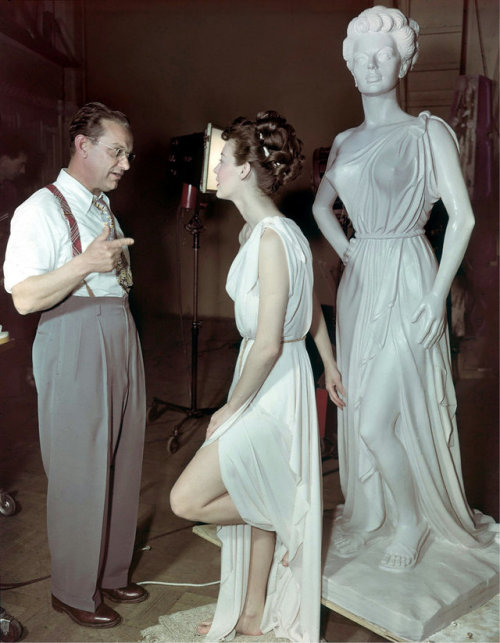
With director William A. Seiter
É inevitável a comparação entre “Vênus, a Deusa do Amor”, e “Quando os Deuses Amam”. “Quando os Deuses Amam” foi feito em 1947 pela Columbia e trazia Rita Hayworth como Terpsícore, a musa da música e da dança, que se apaixona por um mortal que num primeiro momento ela queria punir. Em “Vênus, a Deusa do Amor”, feito pela Universal em 1948, Vênus se apaixona pelas pequenas coisas que um mortal – que já estava apaixonado por ela – dá a ela. Além disso, “Quando os Deuses Amam” é em Technicolor, e “Vênus, a Deusa do Amor” é em preto e branco – embora o plano inicial era que fosse em cores, quando Mary Pickford comprou os direitos da peça de teatro original para produzir o filme.
  
We can't avoid comparing “One Touch of Venus” with “Down to Earth”. “Down to Earth” was made in 1947 by Columbia and starred Rita Hayworth as Terpsichore, the muse of music and dance, who falls in love with a mortal who she was at first going to punish. In “One Touch of Venus”, released by Universal in 1948, Venus falls in love with the little things a mortal – who was already in love with her – provides her. Moreover, “Down to Earth” is in Technicolor, and “One Touch of Venus” is in black and white – although it was first supposed to be shot in color, when Mary Pickford bought the rights of the original play to produce a movie in 1945.


“Vênus, a Deusa do Amor” é um filme subestimado que podia ser mais longo. Mesmo assim, ele tem mais pontos positivos que negativos, e é um filme que te fará sorrir e desejar a possibilidade de experimentar um amor inspirado por ninguém mais ninguém menos que Vênus, a deusa do amor.

“One Touch of Venus” is an underrated movie that could have been longer. However, it has more positive aspects than negative ones, and it is a movie that will make you smile and wish you could experience a love inspired by Venus herself.


This is my contribution to the Ava Gardner blogathon, hosted by Maddy at Maddy Loves Her Classic Films.


Friday, October 19, 2018

Carmen (1948) / The loves of Carmen (1948)


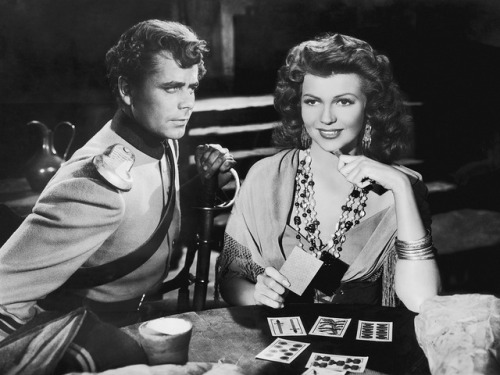
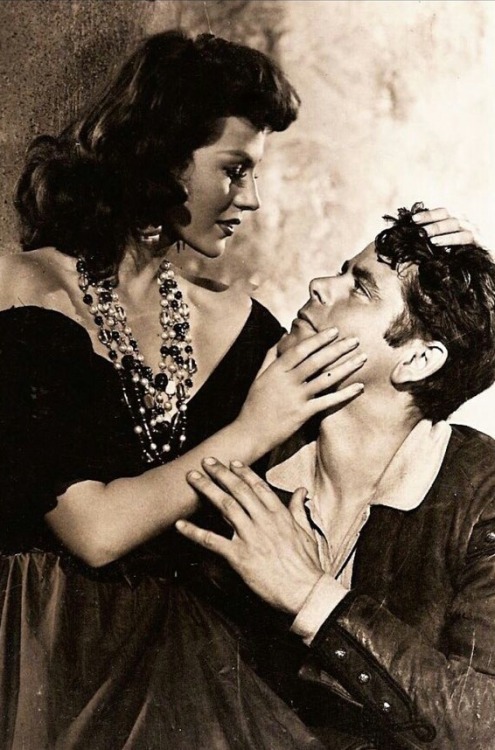
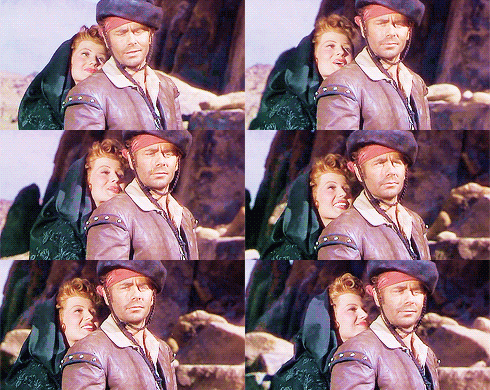
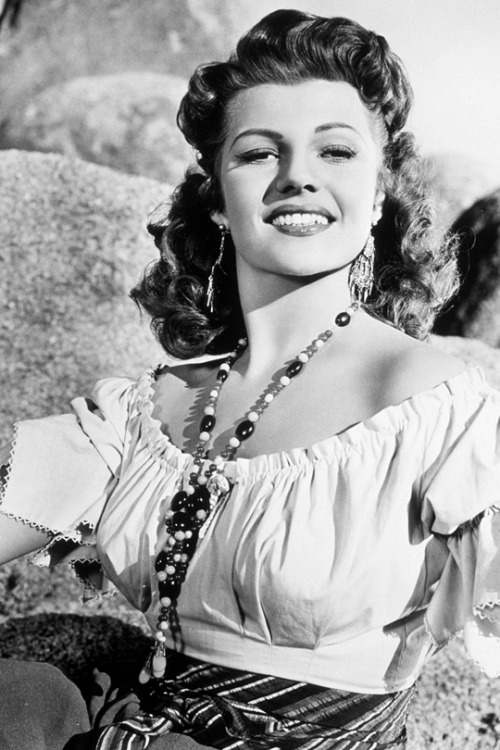
Quando falamos sobre Rita Hayworth e Glenn Ford, pensamos na dupla que protagoniza “Gilda”, de 1946. Mas eles fizeram outros filmes juntos, incluindo “Carmen”, produzido e dirigido por Charles Vidor – também diretor de “Gilda” – e filmado num belo Technicolor que ressaltou a beleza de ambos os astros.

When we talk about Rita Hayworth and Glenn Ford, we think of the duo in 1946’s Gilda. But they starred together in more movies together, including “The loves of Carmen”, produced and directed by Charles Vidor – also the director of Gilda – and shot in ravishing Technicolor that highlighted both their beauties.


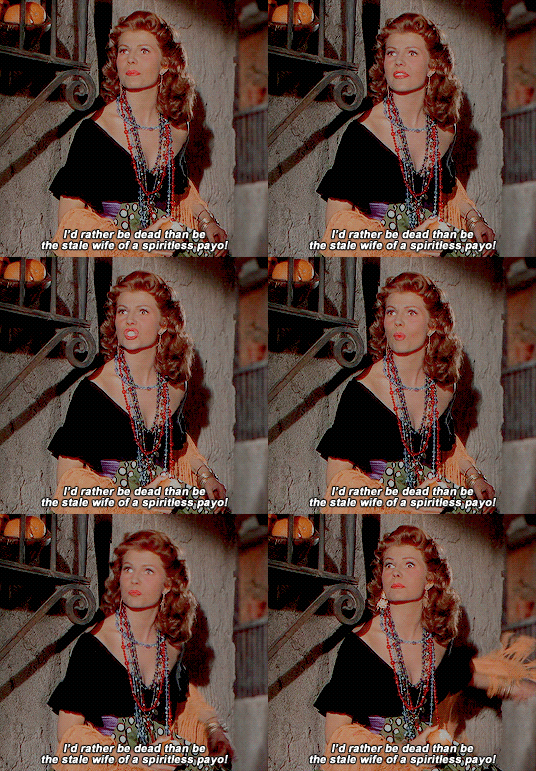
Don Jose (Ford) é um novato vindo de Navarra. Ele chegou a Andaluzia para ser um soldado da guarda, e a primeira pessoa que ele conhece em seu primeiro dia é a provocante cigana Carmen (Hayworth). Assim como todos os ciganos, Carmen é desprezada pelos “cidadãos de bem” do local.

Don Jose (Ford) is a newcomer from Navarra. He has arrived in Andalucía in order to serve the guard, and the first person he meets in his first day is the provocative gypsy Carmen (Hayworth). Like all gypsies, Carmen is despised by the “good citizens” of the town.


Ela provoca Jose e ele fica caidinho por ela. Entretanto, ela não aceita o amor dele por causa de uma previsão de má sorte revelada nas cartas. Mas ela muda de ideia e faz com que Jose mate seu comandante em um duelo – sendo agora um fora da lei, resta a Jose seguir com Carmen e um grupo de ladrões rumo às montanhas, onde ele conhece o líder do grupo, García (Victor Jory), um homem que acaba de sair da prisão... e que por acaso é marido de Carmen.

She teases Jose and he falls for her. However, she won’t accept his love because of a bad omen revealed in the cards for her. But she changes her mind and arranges a duel for Jose to kill his commander - now an outlaw, Jose can only follow Carmen and her group of thieves to the mountains, where he meets the group leader, García (Victor Jory), a man who has just been released from prison... and who happens to be Carmen’s husband.


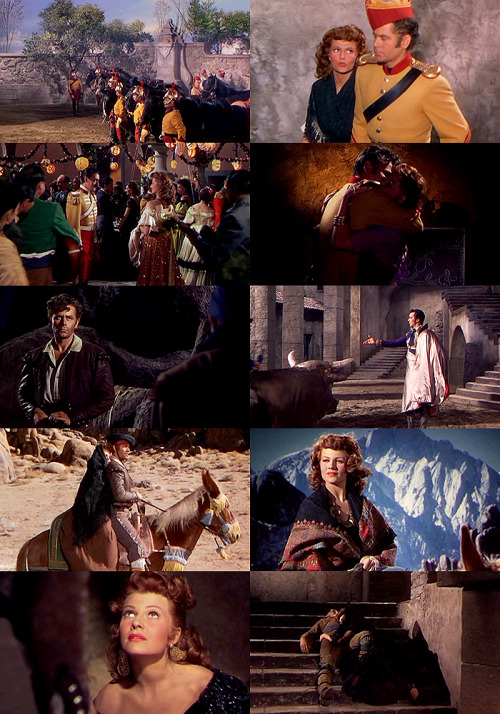
Antes da fuga, vamos a cidade espanhola recriada no estúdio sendo fotografada de maneira pouco inspirada, não tendo nada a ver com outros cenários europeus feitos em estúdio. Esta primeira metade do filme nos lembra de “Sangue e Areia” (1941), no qual um toureiro interpretado por Tyrone Power é seduzido por ninguém menos que Rita Hayworth. Em Hollywood, cidades espanholas e vilas latino-americanas são muito parecidas.

Before they run away, we see the Spanish city recreated in studio is photographed in an uninspired way, unlike other European sets built in studio. This first half of the movie reminds us of “Blood and Sand” (1941), in which a toreador played by Tyrone Power is seduced by none other than Rita Hayworth. In Hollywood, Spanish towns and Latin American villas are very much alike.


Na segunda metade, conforme o grupo foge pelas montanhas, temos a sensação de estarmos assistindo a um faroeste, com armadilhas, recompensas por um foragido, tropas perseguindo o grupo e muitos tiros disparados. Jose trocou de lado completamente e agora está roubando carruagens e se tornando mais violento a cada dia – não porque ele queira, mas porque precisa.

In the second half, as the group escapes through the mountains, we get the feeling that we are now watching a western, with traps, rewards for an outlaw, troops coming for our group and a lot of shootings. Jose traded places completely and is now stealing from stagecoaches and becoming more violent each day- not because he wants to, but because he has to.


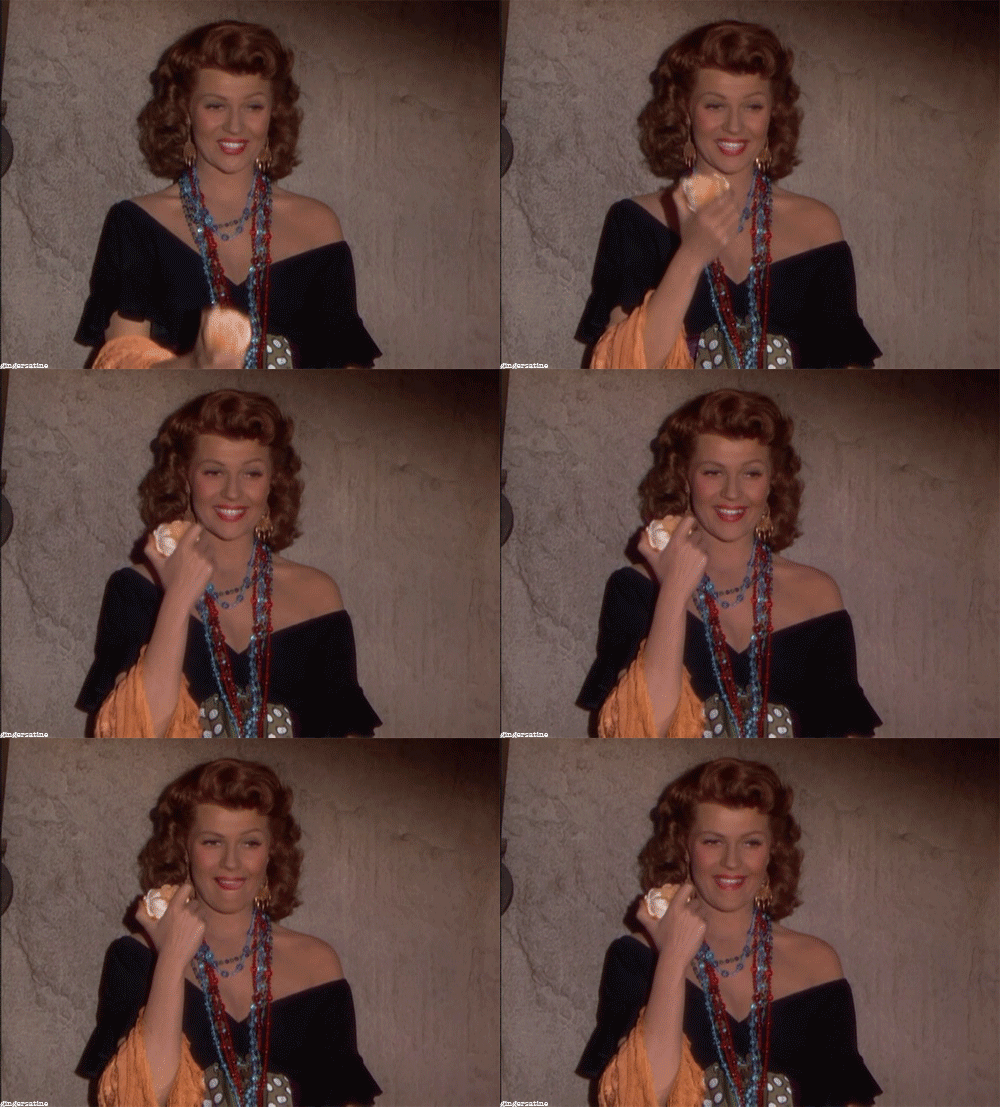
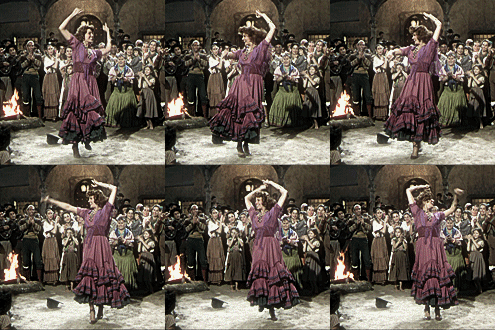
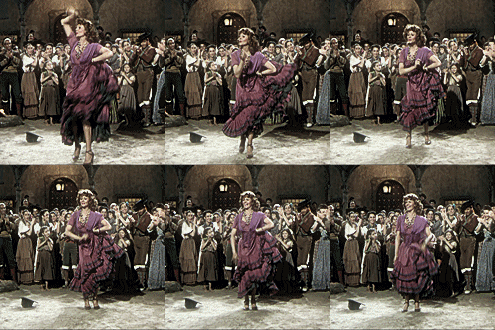
É uma delícia ver Rita Hayworth cantando e dançando músicas folclóricas neste filme. Quando garota, sob seu nome verdadeiro, Rita Cansino, ela dançava profissionalmente, em uma dupla com o pai, Eduardo Cansino, que inclusive trabalhou em “Carmen” como coreógrafo. Ela dançava coreografias como as do filme desde pequena. O único ponto negativo é que ela é dublada ao cantar. A voz dela é dublada por Anita Ellis, que também a dublou em “Gilda”.

It’s delightful to see Rita Hayworth singing and dancing folk songs in this film. As a young girl, under her real name Rita Cansino, she danced for a living, making a duo with her father, Eduardo, who even worked here in “The loves of Carmen” as a choreographer. She had been performing dances like the ones in the film since a very early age. The only downside is that she is dubbed in the songs. Her singing voice is dubbed by Anita Ellis, who also dubbed her in “Gilda”.


Para o povo, Carmen é nojenta. Para a elite, ela é fonte de entretenimento, pois dança nas festas. Isso significa que ela é uma curiosidade para a sociedade, e nada mais. É um comportamento bem hipócrita. Carmen não é apenas uma excluída porque faz parte de um grupo nômade – os ciganos – ela também é vítima de preconceito porque é uma mulher livre que não pode “pertencer” a um homem só.

For the people, Carmen is disgusting. For the elite, she is source of entertainment when she dances at parties. That means that she is a curiosity for society, and nothing else. It’s a very hypocritical behavior. Not only Carmen is an outcast because she is part of a nomad group – the gypsies – she is also frown upon because she is a free woman that can’t “belong” to one man.


Um texto inicial cheio de preconceitos, chamando os ciganos de “uma raça infeliz”, mostra o pensamento que foi responsável pela perseguição de milhões de ciganos durante o Holocausto – ou melhor, o “Porajmos”. Sim, os ciganos rom têm seu próprio termo para a perseguição que sofreram dos nazistas – não há números oficiais, alguns historiadores estimam que 200 mil ciganos foram mortos em campos de concentração, e outros colocam a estimativa em 1,5 milhão. Hollywood não estava fazendo um favor a estas pessoas três anos após a queda de Hitler com tanto preconceito.

An opening text full of prejudice, calling the gypsies “an unhappy breed”, shows the mindset that was responsible for the persecution of millions of gypsies during the Holocaust – or better, the “Porajmos”. Yes, the Romani gypsies have their own word for the persecution they suffered under the Nazis – there are no official numbers, some historians estimate 200000 gypsies were killed in concentration camps, and other put the number up to 1,5 million. Hollywood wasn’t doing a favor to those people three years after Hitler’s fall with so much prejudice.


Se refletirmos um pouco, “Carmen” tem algumas coisas em comum com “Gilda”: a protagonista sedutora, o protagonista que é bobo no começo mas fica mais durão e ciumento por causa de uma mulher, muitas traições, o fatalismo que paira sempre no ar. “Carmen” só se difere por causa do cenário e do Technicolor, os elementos da história são os mesmos. Eu não estou falando que “Carmen” é um filme noir: eu estou dizendo que as histórias do noir bebem de uma fonte universal.

If we think a little, “The loves of Carmen” has some things in common with “Gilda”: the seductive leading lady, the leading man who is at first silly then becomes tougher and more jealous because of a woman, the many betrayals, and the fatalism that is all over. “The loves of Carmen” is different only for its setting and the Technicolor, the story elements are the same. I’m not saying that this film is noir: I’m saying that the noir stories drink from a universal fountain.


“Carmen” certamente se beneficia da química entre os protagonistas. Entretanto, não é tão interessante quanto outras versões da mesma história, como “Carmen Jones”, de 1954. Mas pelo menos podemos ver Glenn Ford mais bonito que nunca e Rita Hayworth dançando danças espanholas.

“The loves of Carmen” certainly profits from the chemistry the two leads have. However, it’s not as interesting as other versions of the same story, like “Carmen Jones”, from 1954. But at least we are able to see Glenn Ford more handsome than ever and Rita Hayworth dancing Spanish songs.  

This is my contribution to the 100 Years of Rita Hayworth blogathon, hosted by Michaela at Love Letters to Old Hollywood.

Monday, April 2, 2018

Romance em Alto Mar (1948) / Romance on the High Seas (1948)

70 anos atrás, uma jovem encantadora cuja vida seria marcada por tragédias apareceu pela primeira vez nas telas do cinema. Ela havia sonhado em ser uma dançarina, mas um acidente grave interrompeu seu sonho. Durante a recuperação, ela fez aulas de canto e sua vida tomou um novo caminho. Em 1948 esta garota – chamada Doris Day – entrou para a indústria na qual teria mais sucesso e reconhecimento com o filme “Romance em Alto Mar”.

70 years ago, a young and lovely woman whose life was marked by tragedy appeared for the first time on the silver screen. She had dreamed of being a dancer, but a serious accident cut her dream short. While recovering, she took singing lessons and her life took a new path. In 1948 this girl – named Doris Day – entered the business that would give her the most success and recognition with the film “Romance on the High Seas”.
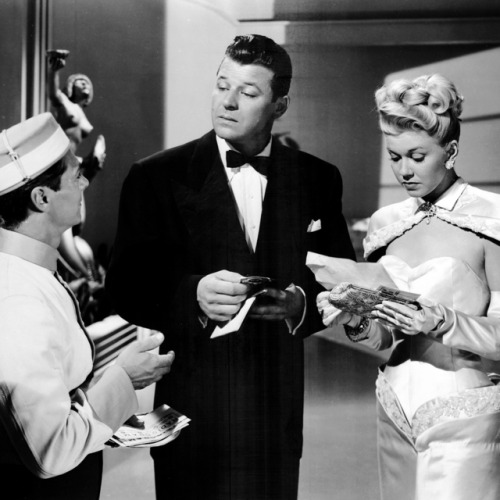
Elvira (Janis Paige) e Michael Kent (Don DeFore) são casados, mas não confiam um no outro. Eles nunca confiaram, nem mesmo antes do casamento. Um deles sempre pensa que o outro está flertando ou sendo infiel. No terceiro aniversário de casamento deles, Elvira tenta mais uma vez planejar uma viagem – algo que já foi planejado e cancelado nos dois anos anteriores por causa dos compromissos de Michael – e reserva uma cabine em um cruzeiro pela América do Sul. Na agência de viagens ela encontra a cantora de cabaré Georgia Garrett (Doris Day), que adora planejar viagens, mas nunca tem dinheiro suficiente para de fato fazê-las.

Elvira (Janis Paige) and Michael Kent (Don DeFore) are married, but they don't trust each other. They have never trusted each other, not even on their wedding day. One always thinks the other is flirting with someone else and being unfaithful. On their third wedding anniversary, Elvira tries to plan a trip once again – something that had been planned and cancelled due to Michael's commitments in two previous years – and books a cabin in a cruise to South America. At the travel agency she meets the cabaret singer Georgia Garrett (Doris Day), who loves to plan trips, but never has the money to actually go.
Com a viagem correndo perigo mais uma vez, Elvira cria um plano: ela deixará que Georgia vá no cruzeiro sob a identidade de senhora Kent, e a própria Elvira vai ficar em Nova York e vigiar o marido. Mas Michael também está preocupado, e decide mandar um detetive, Peter Virgil (Jack Carson), seguir sua esposa no cruzeiro. Obviamente, Virgil nunca viu a senhora Kent antes...

With the trip on jeopardy once more, Elvira elaborates a plan: she will let Georgia go on the cruise under the name of Mrs Kent, and Elvira herself will stay in New York and follow her husband. But Michael is also worried, and decides to send a detective, Peter Virgil (Jack Carson), to follow his wife on the cruise. Obviously, Virgil has never seen Mrs Kent before…
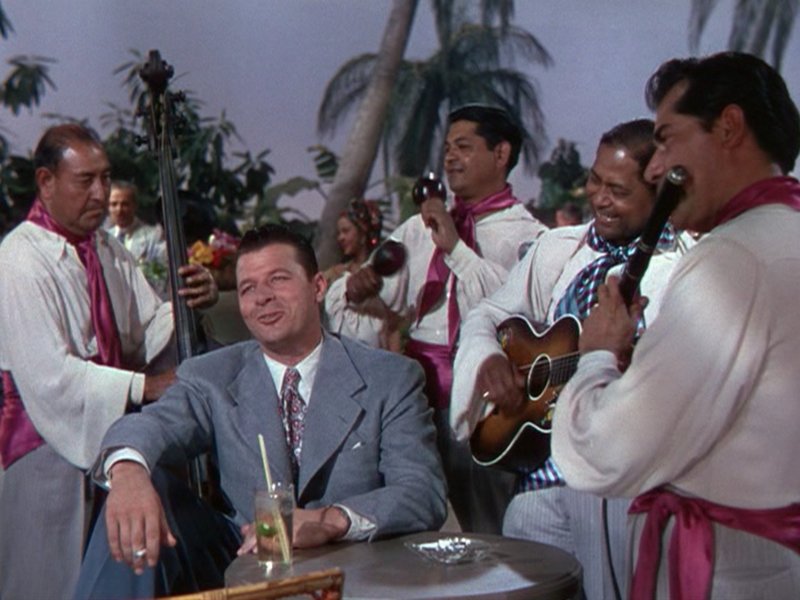
Doris Day já é adorável normalmente, mas neste filme ela está super adorável. Dodo tinha apenas 26 anos quando fez “Romance em Alto Mar” – a mesma idade de Janis Paige, que certamente parece mais madura e séria – e tem as bochechas cobertas de sardas. Sua personagem, Georgia, é divertida, charmosa e tem ótimas tiradas.

Doris Day is usually adorable, but in this film she is extra adorable. Dodo was only 26 when she made “Romance on the High Seas” – the same age as Janis Paige, who certainly looks more mature and serious – and has her cheeks covered in freckles. Her character, Georgia, is funny, charming and street-wise.
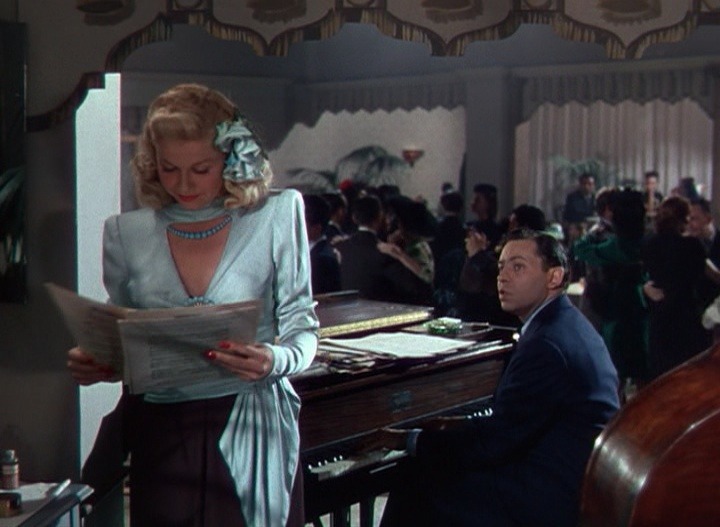
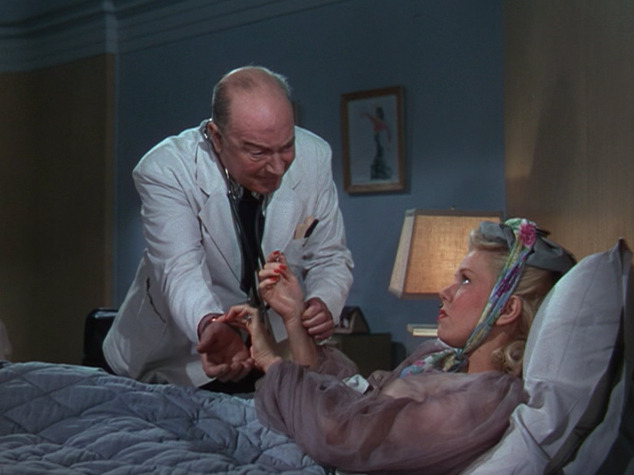
Os coadjuvantes são particularmente maravilhosos. S.Z. Sakall interpreta Lazlo Lazlo, tio de Elvira que adora paquerar mulheres jovens e rememorar o passado. Oscar Levant é Oscar Farrar, o pianista de cabaré que quer se casar com Georgia, e que vai causar problemas no cruzeiro. Uma sequência hilária acontece quando Eric Blore aparece interpretando um médico desastrado que provavelmente está bem pior do que qualquer um de seus pacientes. Grady Sutton como um operador de rádio no navio e John Berkes como um bêbado em Trinidad também farão você dar boas risadas.

The supporting cast is a particular treat. S.Z. Sakall plays Lazlo Lazlo, Elvira's uncle who loves to hit on girls and reminisce the past. Oscar Levant is Oscar Farrar, the pianist at the cabaret who wants to marry Georgia, and who will make things difficult at the cruise. A hilarious moment happens when Eric Blore appears playing a ship doctor that is clumsy and may be much sicker than his patient. Grady Sutton as a ship radio operator and John Berkes as a drunken man in Trinidad also give us a good laugh.
O cruzeiro tem paradas em Cuba, Trinidad e Rio de Janeiro. A maneira como o comércio é retratado em Cuba não é nem um pouco lisonjeiro, e causa alguma vergonha alheia. Em Trinidad, o Calypso é obviamente a atração principal. E no Rio há, claro, um baile de Carnaval! Pelo menos não há ninguém falando espanhol – uma garota é até vista falando português em uma cabine telefônica!

The cruise stops in Cuba, Trinidad and Rio de Janeiro. The way sales in Cuba are shown is not something flattering at all, and makes us uncomfortable watching. In Trinidad, the Calypso is obviously the main attraction. And in Rio of course there is a Carnival ball! Bonus points because no one speaks Spanish – a girl is even seen speaking Portuguese in a telephone booth!
Os personagens se hospedam no Hotel Atlântico. Embora tal hotel de fato exista e seja localizado na famosa praia de Copacabana, não h        á indícios na imprensa de que qualquer cena tenha sido filmada no Brasil. É bem mais provável que imagens de arquivo tenham sido usadas para o voo panorâmico pelo Rio de Janeiro, enquanto os atores ficaram bem longe da cidade maravilhosa.

The characters go to the Hotel Atlântico. Although this hotel exists and until today it is located at the famous Copacabana beach, there are no notes in the newspapers in magazines about shooting the film in Brazil. It’s quite obvious that archive footage was used for the panoramic view of the city, and the actors remained far away from our beaches and beauties.
Romance em Alto Mar” é um filme delicioso, embora previsível. E a trama sequer foi criada em Hollywood: ela se originou em um filme argentino de 1947, chamado “Mulher Infiel”, com Libertad Lamarque. Sim, meus amigos, “Romance em Alto Mar” é um remake!

Romance on the High Seas” is a delightful movie, although predictable. And the plot wasn’t created in Hollywood, since it originated with the Argentinian film “Romance Musical”, from 1947, starring Libertad Lamarque. Yes, my friend, “Romance on the High Seas” is a remake!
Original
Remake
Delicioso é a melhor palavra para descrever tanto “Romance em Alto Mar” quanto a estrela que o filme revelou. O mundo foi rapidamente conquistado pelo sorriso, charme e talento de Doris Day – e é adorável ver como tudo começou.

Delightful is the best word to describe both “Romance on the High Seas” and the star it helped reveal. The world was quickly conquered by Doris Day’s smile, charm and talent – and it’s lovely to see where it all started.

This is my contribution to The Second Doris Day Blogathon, hosted by Michaela at Love Letters to Old Hollywood.

Saturday, September 9, 2017

A Mulher de Branco (1948) / The Woman in White (1948)

“A Mulher de Branco” me lembra de vários filmes da década de 1940. Pode ser um tema em comum, um personagem, uma situação, um cenário. Como eu fui capaz de fazer tantas conexões, foi com curiosidade e surpresa que descobri que a história que deu origem ao filme foi uma das primeiras do gênero investigativo.

“The Woman in White” reminds me of many films made in the 1940s. It may be a common theme, a character, a situation, a set. Since I was able to make so many connections, it was curious to know that the original story was a pioneer in the investigation genre.


Assim como em “O Retrato de Jennie” (1948), “A Mulher de Branco” apresenta uma mulher misteriosa que é vista por um pintor. Ela é primeiro uma peça de um mistério, e depois uma fonte de inspiração. A mulher misteriosa aparece perto da floresta e encontra o professor de pintura Walter Hartright (Gig Young), que acaba de chegar à cidade. Ela desaparece quando surge uma carruagem na estrada, e diz algumas coisas estranhas sobre como ela finge viver na casa em que o senhor Hartright está indo trabalhar.

Like in “Portrait of Jennie” (1948), “The Woman in White” has a mysterious woman that appears for a painter. She is first the piece of a mystery, and second a source of inspiration. The mysterious woman appears in the woods and meets the drawing tutor Walter Hartright (Gig Young), who has just arrived in town. She vanishes when a carriage comes near, and says some odd things about pretending to live in the house Mr Hartright is going to work in.


Assim como em “Silêncio nas Trevas” (1946), o dono da propriedade é inválido. Aqui ele é o senhor Frederick Fairlie (John Abbott), um homem com ataques nervosos que se sente zonzo quando alguém fala alto perto dele. Fairlie serve mais como alívio cômico. Junto com ele está sempre seu criado, Louis, interpretado por Curtis Bois, um ator alemão cuja carreira no cinema durou 82 anos.

Like in “The Spiral Staircase” (1946), the owner of the house is ill and invalid. Here it is Mr Frederick Fairlie (John Abbott), a man with weak nerves who feels dizzy if someone talks too loud. Mr Fairlie comes across as comic relief. With him there is always his companion, Louis, played by Curtis Bois, a German actor famous for having a career spanning 82 years.


Assim como em “O Fantasma Apaixonado” (1947), há um clima sobrenatural desde as primeiras cenas. O senhor Hartright é contratado para ser professor de pintura da sobrinha do senhor Fairlie, Laura (Eleanot Parker), uma moça incrivelmente parecida com a mulher de branco que surgiu naquela noite.

Like in “The Ghost and Mrs Muir” (1947), there is a supernatural feeling since the beginning. Mr Hartright was hired to give drawing lessons to Mr Fairlie's niece, Laura (Eleanor Parker), who has a striking resemblance with the woman in white he saw that night.


Mas o que acontece na propriedade Limmeridge naquela metade do século XIX? O senhor Fairlie está muito doente, e hospeda agora em sua casa o conde Fosco (Sydney Greenstreet),cujo comportamento é duvidoso. Quem cuida da casa é a prima de Laura, Marian (Alix Smith), uma moça séria que gosta do senhor Hartright, mas não acredita quando ele conta a história da mulher de branco. E a própria Laura também gosta do senhor Hartright, mas está noiva de Sir Percival (John Emery).

But what happens in the Limmeridge house in that middle of the 19th  century? Mr Fairlie is too ill, and is currently receiving the visit of Count Fosco (Sydney Greenstreet), who has a suspicious behavior. The person who takes care of the house is Laura's cousin, Marian (Alexis Smith), a practical girl who likes Mr Hartright, but can't believe his story about the woman in white. And Laura herself also likes Mr Hartright, but she is engaged to Sir Percival (John Emery).


O que se segue é chantagem, gaslighting, intriga e algo que pode ser tanto envenenamento – como em “Interlúdio” (1946) – ou hipnose. Acrescentamos à propriedade Limmeridge a presença aparentemente inofensiva de Agnes Moorehead e o que temos é um bom mistério de época – com Sydney Greenstreet em um de seus melhores momentos.

What follows is blackmail, gaslighting, intrigue, and something that may be poisoning – like in “Notorious” (1946) – or hypnotizing. We add to the Limmeridge house the apparently inoffensive presence of Agnes Moorehead and what we have is a nice period mystery – with Sydney Greenstreet in one of his best moments.


Wilkie Collins escreveu o livro em 1860. “A Mulher de Branco” era, assim como “Werther”, um romance epistolar, no qual a história é contada através de cartas. O livro tem mais de 600 páginas e foi um dos pioneiros do gênero investigativo. Mesmo Hrtright não sendo detetive, ele usa o pensamento lógico e a espionagem para juntar as peças do quebra-cabeças – com uma ajudinha de Marian. O livro foi adaptado para o cinema diversas vezes.

Wilkie Collins wrote the book in 1860. “The Woman in White” was, like “Werther”, an epistolary book, in which the story is told through letters. The book had more than 600 pages and was one of the pioneers of the detective fiction. Although Hartright is no detective, he employs logical thinking and snooping in order to put the pieces of the puzzle together – with a little help from Marian. The book was adapted to the screen several times.


Se considerarmos apenas o uso das sombras e uma cena em particular com um candelabro, podemos chamar este filme de um noir de época. A trilha composta por Max Steiner é fantástica, como sempre. E eu não posso elogiar o cenário o suficiente. A atmosfera do filme é sobrenatural sem ser nebulosa, e isto é um ponto positivo. Se há pontos negativos, eles vieram da história original, que perde força e fica estranha em certo momento, quando se escolhe uma saída fácil.

If we consider only the use of shadows and one particular scene with a chandelier, we could call this film a period noir. The score by Max Steiner is fantastic, as always. And I can't say enough good things about the set decoration. The atmosphere of the movie is supernatural without being foggy, and that’s quite an accomplishment. If there are let downs, they are in the original story, that loses power and becomes odd at a certain point, choosing an easy way out.


“A Mulher de Branco” é um dos 12 filmes que pretendo ver em 2017. Não lembro quem recomendou a película para mim, mas acredito que tenha sido a Nitrate Diva no Twitter. De qualquer forma, eu gostei da recomendação e agora também recomendo “A Mulher de Branco” para qualquer pessoa que goste de cinematografia de primeira e não se importe com algumas falhas no roteiro.

“The Woman in White” is one of the 12 new-to-me movies I intend to watch in 2017. I don’t remember who first recommended it to me, but I think it was Nitrate Diva on Twitter. Anyway, whoever you were, I appreciated the recommendation and I’ll also recommend “The Woman in White” to anyone who likes great cinematography and doesn’t care about a few plot holes.

This is my contribution to the Colours Blogathon, hosted by Thoughts All Sorts.
Related Posts Plugin for WordPress, Blogger...