} Crítica Retrô: 1931

Tradutor / Translator / Traductor / Übersetzer / Traduttore / Traducteur / 翻訳者 / переводчик

Showing posts with label 1931. Show all posts

Wednesday, May 28, 2025

O Campeão (1931) / The Champ (1931)

 Maio é o mês em que celebramos as mães, as noivas… e o melodrama. Bem, pelo menos este mês de maio foi melodramático o suficiente neste blog com uma crítica de um melodrama feito por uma mulher - filmes deste gênero específico são em geral feitos PARA mulheres, mas dificilmente POR elas. Há uma mulher forte também por trás do melodrama de hoje: Frances Marion escreveu o roteiro de “O Campeão”.


May is the month we celebrate mothers, brides… and melodrama. Well, at least this May was melodramatic enough on this blog with a review of a melodrama made by a woman - movies from this specific genre are often targeted to women, but not made by them. There is one strong woman also behind today’s melodrama: Frances Marion wrote the screenplay for “The Champ”.


Os anos de glória do boxeador Andy (Wallace Beery) já passaram, mas ele ainda é conhecido como Champ (de “Champion”: campeão). Seu treinador e gerente de sua carreira é seu filho Dink (Jackie Cooper), que ainda é um garoto. Os maiores inimigos de Champ são o álcool e as apostas.


Andy (Wallace Beery) is a has-been boxer, but is still known as Champ. His trainer and career manager is his son Dink (Jackie Cooper), who is just a boy. Champ’s biggest enemies are alcohol and gambling.


Pai e filho vivem num apartamento de um quarto só com uma cama que dividem. Tem uma cadeira de balanço igualzinha à de Champ na minha casa! Numa manhã, Dink está fazendo as tarefas do lar quando Champ chega com um presente: um cavalo! Eles decidem rebatizar o animal, de Butterfly para Little Champ, e treiná-lo para se tornar um cavalo de corrida. Um dia, nas pistas de corrida, Champ encontra uma figura do passado que irá assombrá-lo.


Father and son live in a one-bedroom apartment with a shared bed. There is a rocking chair exactly like Champ’s in my house! One morning, Dink is doing the household chores when Champ arrives with a present: a horse! They decide to rename the animal, from Butterfly to Little Champ, and train it to become a race horse. One day, on the race tracks, Champ meets a figure from his past who will haunt him.


Wallace Beery ganhou o Oscar de Melhor Ator - empatado com Fredric March de “O Médico e o Monstro” - por sua interpretação de Champ, mas o filme pertence a Dink e sua ampla gama de expressões. Jackie Cooper mais tarde declarou que Beery tentou aparecer mais que ele a todo momento, mas os resultados mostram que o ator adulto falhou. O que realmente aconteceu foi a revitalização da carreira de Beery, que se tornou então o ator mais bem pago da época quando ele assinou contrato com a MGM.


Wallace Beery won the Best Actor Oscar - tied with Fredric March from “Dr Jekyll and Mr Hyde” -  for playing Champ, but the movie belongs to Dink and his wide range of expressions. Jackie Cooper later claimed that Beery tried to upstage him at all times, but results prove that the adult actor failed. What did happen was the revitalization of Beery’s career, making him the highest-paid actor of the time when he signed with MGM.


Jackie Cooper foi indicado para o Oscar um ano antes por “Skippy” e, durante a cerimônia, adormeceu encostado no ombro de Marie Dressler! Cooper ainda é a única pessoa menor de 18 anos a ser indicado ao Oscar de Melhor Ator. Frances Marion também ganhou o Oscar na categoria Melhor Roteiro - História Original. Ela havia escrito a história tendo Wallace Beery em mente para ser o protagonista.


Jackie Cooper was nominated for the Oscar one year before for “Skippy” and, during the ceremony, fell asleep on Marie Dressler’s shoulder! Cooper remains the only person under 18 to be nominated for a Best Actor Oscar. Frances Marion also won the Oscar in the category Best Writing - Original Story. She had written the story with Wallace Beery in mind to star.


Dink tem um amigo da sua idade chamado Jonah e, quando o apresenta para Linda (Irene Rich), Dick enfatiza que “ele é de cor”. Jesse Scott interpreta Jonah, no primeiro de seus seis papéis no cinema, metade deles sem receber crédito.


Dink has a friend his age named Jonah and, as he introduces him to Linda (Irene Rich), Dink emphasizes that “he’s colored”. Jesse Scott plays Jonah, in the first of six screen roles, half of them uncredited.


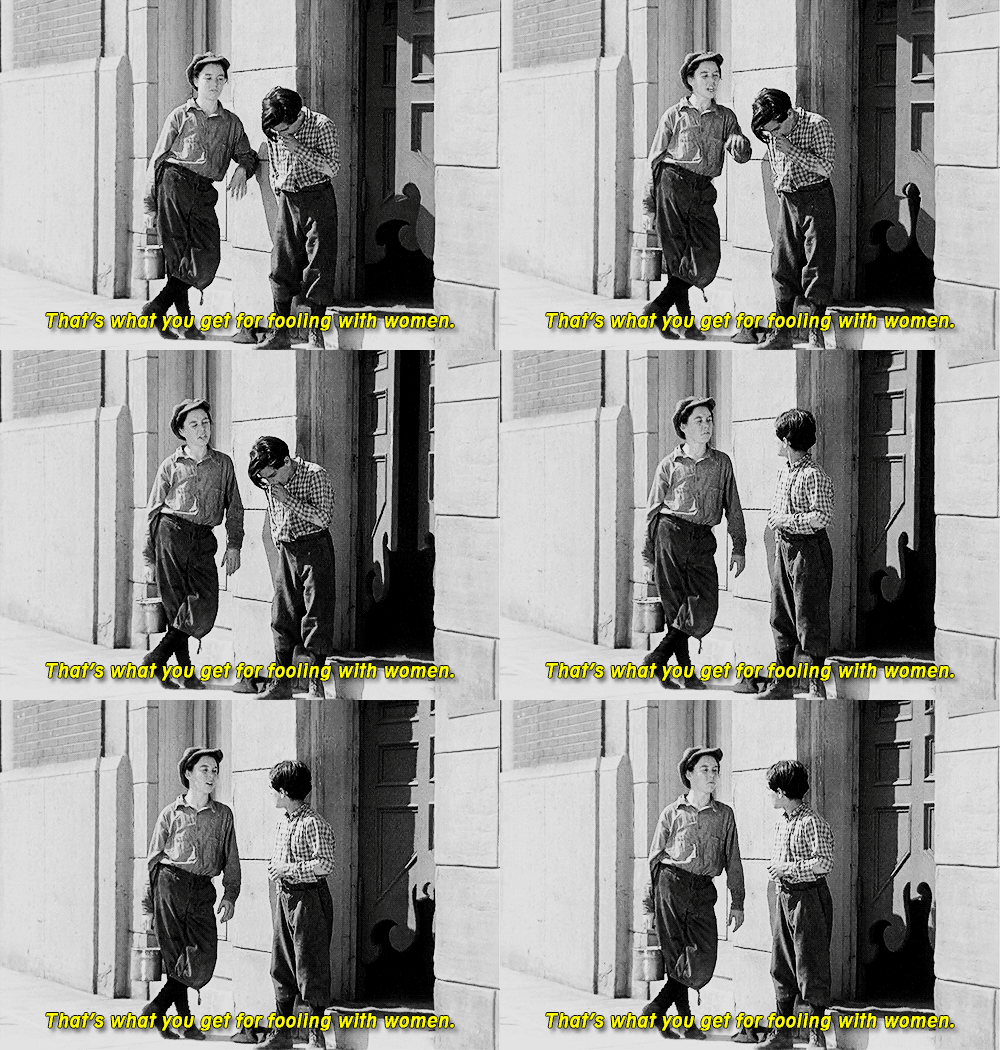
Como escrito na Wikipedia, “a crítica de cinema Judith Christ declarou que quase todo filme contendo um ator adulto junto a um ator mirim deve ser comparado com O Campeão em termos da química entre os atores e a eficácia do filme”. “Química” não é exatamente a melhor palavra para descrever o que havia entre Beery e Cooper, mas você não pode sentir a animosidade enquanto assiste ao filme. Talvez o melhor ator mirim desde Jackie Coogan - de “O Garoto” (1921) de Chaplin - , Cooper é o campeão real aqui.


As written in Wikipedia, “Film critic Judith Christ has argued that almost any film pairing an adult actor alongside a child actor must be compared to The Champ in terms of the chemistry between the actors and the effectiveness of the film.” “Chemistry” isn’t exactly the best word to describe what was going on between Beery and Cooper, but you can’t tell about the animosity while watching the film. Arguably the best child actor since Jackie Coogan - from Chaplin’s “The Kid” (1921) - , Cooper is the real champion here. 

Saturday, September 24, 2022

As Aventuras Cinematográficas de Huckleberry Finn

The Cinematic Adventures of Huckleberry Finn

De acordo com o IMDb, a novela de Mark Twain “As Aventuras de Huckleberry Finn” já foi adaptada para o cinema e a TV mais de 20 vezes, começando com “Huck and Tom” – com Jack Pickford como Tom Sawyer – em 1918. Eu escolhi assistir e resenhar três destas adaptações, todas feitas antes de 1940, e comparar com o livro, que eu li há alguns anos. Por isso este post também é por si só, uma aventura – literária e cinematográfica.

According to IMDb, Mark Twain’ novel “The Adventures of Huckleberry Finn” has been adapted to movies and TV shows, so far, more than 20 times, starting with “Huck and Tom” – that had Jack Pickford as Tom Sawyer – in 1918. I chose to watch and review three of those adaptations, all made before 1940, and compare with the book that I have read a few years ago. That’s why this post is, in itself, an adventure – a literary and cinematographic adventure, that is.

O livro, publicado em 1884, conta as muitas aventuras de Huckleberry Finn, camarada de Tom Sawyer, junto ao escravo em fuga Jim ao longo do rio Mississippi. Antes que a aventura comece, Huck é sequestrado pelo pai, um alcoólatra, que quer o dinheiro que Huck ganhou no livro anterior. Todas as versões que eu vi seguem esta história.

The book, published in 1884, tells the many adventures of Huckleberry Finn, Tom Sawyer’s comrade, alongside the runaway slave Jim through the Mississippi River. Before the adventures start, Huck is kidnapped by his alcoholic father, who wants the money Huck got in the previous book. All versions I’ve watched follow this plot.

Encontrei no Internet Archive apenas a primeira metade da versão de 1920, um filme dirigido por William Desmond Taylor que se destaca por ter sido a primeira adaptação do livro solo para o cinema. Aqui, Huck é interpretado por Lewis Sargent, Tom por Gordon Griffith e Jim por George Reed. Esta primeira metade mostra como Huck foi sequestrado por seu pai alcoólatra e como escapou do cativeiro, e termina quando ele encontra Jim, que havia sido vendido para um homem mau e também escapou. Um ponto importante é que a senhora Watson maltrata Jim, se transformando ela própria em um tipo de vilã.

I could find on the Internet Archive only the first half of the 1920 version, a film directed by William Desmond Taylor that was important for being the very first adaptation exclusively of the novel to the big screen. Huck here is played by Lewis Sargent, Tom by Gordon Griffith and Jim by George Reed. This first half shows how Huck was kidnapped by his alcoholic father and escaped captivity, and it ends when he meets Jim, who had been sold to a bad man and also escaped. Something that calls the attention is how harsh Mrs Watson treats Jim, becoming a villainess in her own right.

A versão de 1931 da Paramount, intitulada no Brasil “Mocidade Feliz”, tem Jackie Coogan como Tom Sawyer, Junior Durkin como Huck e Clarence Muse como Jim. Dirigida por Norman Taurog, esta versão toma um bom tempo mostrando as desventuras de Huck na escola antes do sequestro. Jim e Tom resgatam Huck e os três partem para viver aventuras – afinal, não dava para desperdiçar o poder do nome de Jackie Coogan, ainda um grande astro 10 anos após ser descoberto por Chaplin em “O Garoto”. Coogan, Durkin e a maioria do elenco repetem os papéis que interpretaram em “Aventuras de Tom Sawyer” em 1930. Já que Tom é parte da aventura, muitas mudanças foram feitas na história do livro, e apenas uma história é contada: dois homens que dizem ser um Duque e um Rei fingem ser os tios estrangeiros de duas garotas órfãs. Mesmo assim, esta versão conta com um bom elenco, com Coogan, Durkin (que tragicamente morreu poucos anos depois em um acidente de carro), Jane Darwell e Eugene Pallette.

The 1931 version, from Paramount Pictures, has Jackie Coogan as Tom Sawyer, Junior Durkin as Huck and Clarence Muse as Jim. Directed by Norman Taurog, this version takes a good time showing us Huck’s misadventures at school before his kidnapping. Jim and Tom rescue Huck and the three go on to live adventures - after all, you can’t waste Jackie Coogan’s star power, still strong 10 years after his discovery in Chaplin’s “The Kid”. Coogan, Durkin and most of the cast are repeating the roles they played in “Tom Sawyer” in 1930. Since Tom is part of the whole adventure, a lot of changes were made from the book, and only one story is told: two men who say they are a Duke and a King pose as the foreign uncles for two orphaned girls. Nevertheless, this version brings a good cast, with Coogan, Durkin (who tragically died only a few years later in a car crash), Jane Darwell and Eugene Pallette.

E em 1939 a MGM tinha o astro perfeito para ser o protagonista de “As Aventuras de Huck”: Mickey Rooney. Com Rex Ingram como Jim e nada de Tom Sawyer à vista, Rooney é brilhante como o menino-herói. Nesta versão, Huck não é sequestrado pelo pai, mas aceita ir com ele pois Huck está prestes a desapontar a viúva Douglass (Elizabeth Risdon) e a senhorita Wtason (Clara Blandick), que estavam tomando conta dele. Quando Huck deixa o pai, Jim é falsamente acusado de assassinar o garoto, e os dois descem o Mississippi, até que encontram o Rei e o Duque, que primeiro fazem um show e depois fingem ser os tios das órfãs. Este filme tem algumas escolhas estranhas – se vistas com os olhos de hoje – como mostrar como algo positivo o fato de Huck fumar cachimbo e todo um discurso de Huck sobre Jim ser escravo porque foi esse o destino dado a ele por Deus. Há também dois momentos em que Mickey Rooney se veste de menina.

And in 1939 MGM had the perfect star to be the lead of “The Adventures of Huckleberry Finn”: Mickey Rooney. With Rex Ingram as Jim and no Tom Sawyer in sight, Rooney is outstanding as the boy-hero. In this version, Huck isn’t kidnapped by his father, but agrees to go with him as he’s about to disappoint the Widow Douglass (Elizabeth Risdon) and Miss Watson (Clara Blandick), who had been taking care of him. When Huck escapes his father, Jim is falsely accused of murdering the boy, and the two go down the Mississippi, until they meet the King and the Duke, who first put on a show and later impersonate the orphans’ uncles. This movie has some odd choices – as seen nowadays – like showing Huck smoking a pipe as something nice and a whole speech by Huck about Jim being a slave because this was what God intended for him. There are also two moments in which Mickey Rooney dresses in drag.

Houve uma adaptação da história para o programa de TV Climax em 1955, na qual Jim foi completamente apagado. E então, no final dos anos 50, um cão azul andarilho que cantava Querida Clementina foi criado, e batizado de Dom Pixote – Huckleberry Hound no original. William Hanna e Joseph Barbera quase batizaram Zé Colmeia de Huckleberry Bear, mas mudaram de ideia no último minuto. Além do estilo de vida aventureiro, Dom Pixote tem pouco em comum com Huckleberry Finn.

There was an adaptation of the story for the TV show Climax in 1955, in which Jim was completely erased. And then, in the late 1950s, a blue dog wandering and singing Oh My Darling Clementine was created, and baptized Huckleberry Hound. William Hanna and Joseph Barbera almosted baptized Yogi Bear as Huckleberry Bear, but changed their minds in the last minute. Other than his lifestyle, Huckleberry Hound has little in common with Huckleberry Finn.

E então outras adaptações foram feitas. Houve uma em 1960 dirigida por Michael Curtiz (abaixo), com Buster Keaton em um pequeno papel. J. Lee Thompson dirigiu uma versão em 1974 para a tela grande  e no ano seguinte uma adaptação foi feita para a TV, com Ron Howard como Huck. A versão mais recente da história é um curta-metragem de 2020, mas uma nova adaptação para o cinema já está em pré-produção!

And then other adaptations were made. There was one in 1960 directed by Michael Curtiz (below), with Buster Keaton in a small role. J. Lee Thompson directed a version in 1974 for the big screen and the next year a version was made for the small screen, with Ron Howard as Huck. The most recent version of the story is a short film from 2020 and there is another adaptation in the works!

O relacionamento e a camaradagem entre Huck e Jim é uma das coisas mais importantes no livro, e foi traduzida para as telas de maneiras diferentes. Não houve momentos suficientes de Huck-e-Jim no fragmento de 1920 para que eu pudesse ver como os dois personagens interagiam. Na versão de 1931, a presença de Tom Sawyer por todo o filme eclipsou a relacão de Jim e Huck. Há uma verdadeira amizade retratada no filme de 1939, mesmo que o roteiro reforce que Jim não é uma pessoa muito esperta, sendo inclusive infantil algumas vezes.

The rapport and the camaraderie between Huck and Jim is one of the most important things in the book, and it was translated to the screen in different ways. There wasn’t enough of Huck-and-Jim moments in the 1920 fragment for us to see how the two characters interacted. In the 1931 version, the presence of Tom Sawyer all through the movie eclipsed Jim and Huck’s relationship. There is a true friendship portrayed in the 1939 film, even though they reinforce that Jim is a not-so-bright person, even childish at times.

Eu entendo que “As Aventuras de Huckleberry Finn” é um clássico norte-americano e leitura obrigatória em muitas escolas  - mesmo o livro tendo sido envolvido em polêmicas e até mesmo banido em alguns lugares! Eu li o livro já adulta, tentando agigantar meus horizontes quando o assunto é literatura mundial. Eu gostei muito do livro e agora, dando o veredicto sobre as duas adaptações e meia que vi, tenho que dizer que a versão de 1939 com Mickey Rooney é a melhor delas. E a MGM faz magia novamente!

I understand that “The Adventures of Huckleberry Finn” is an American classic and mandatory reading in many schools – even though the book has been involved in polemics and even banned in some places! I read the novel when I was already an adult, broadening my understanding of world literature. I really enjoyed the novel and now, giving the verdict about the two-and-a-half adataptations I watched, I have to say that the 1939 version with Mickey Rooney is the best of them. MGM does it again, folks!

This is my contribution to the Classic Literature in Film blogathon, hosted by Paul at Silver Screen Classics.

Thursday, July 16, 2020

A Mulher Miraculosa (1931) / The Miracle Woman (1931)

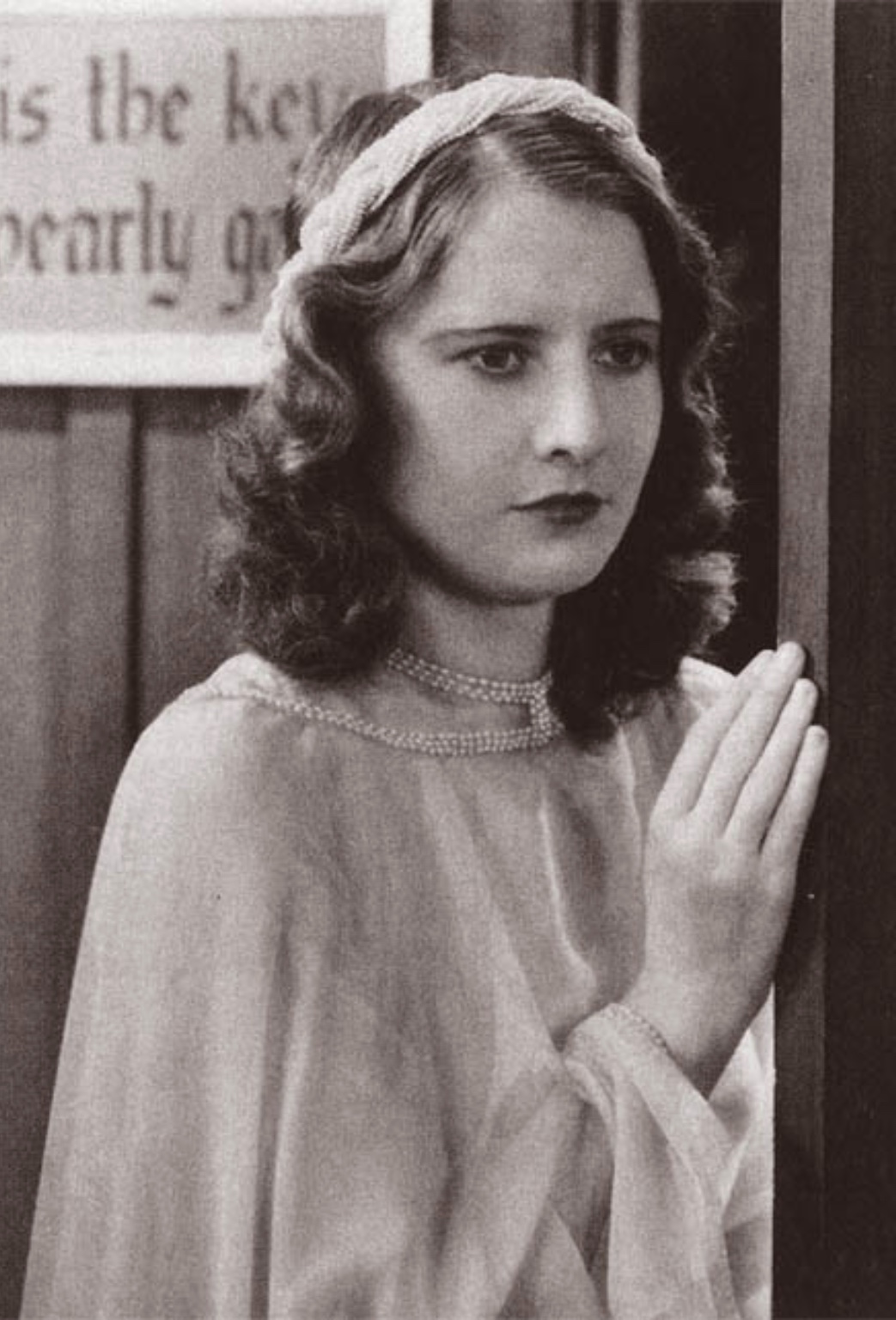
Nas últimas semanas, minhas noites de domingo têm sido dedicadas ao reboot de “Perry Mason” exibido na HBO. Embora Mason seja um personagem conhecido e o protagonista da série, desde o começo a personagem que me chamou a atenção foi a Irmã Alice, interpretada por Tatiana Maslany. Quando eu a vi pregando no trailer da série, só consegui pensar numa coisa: ela é exatamente igual à Barbara Stanwyck em “A Mulher Miraculosa” (1931), um filme subestimado de Frank Capra no qual, na minha opinião, Stanwyck tem uma de suas melhores performances.

In the last few weeks, my Sunday nights have been occupied by the HBO reboot of “Perry Mason”. Although Mason is a well-known character and the lead of the show, since the beginning the character who called my attention was Sister Alice, played by Tatiana Maslany. When I saw her preaching in the trailer, I could only think about one thing: she was exactly like Barbara Stanwyck in “The Miracle Woman” (1931), an underrated Frank Capra film in which Stanwyck delivers, in my opinion, one of her best performances.

Em “A Mulher Miraculosa”, Stanwyck interpreta Florence Fallon, a filha de um pastor. Os serviços de seu pai não são mais necessários na igreja, e ele morre antes de fazer seu último sermão para os fiéis. Florence é incumbida de ler o último sermão, mas entra em colapso no meio da leitura e começa a dizer algumas verdades inconvenientes para os fiéis, que abandonaram o pai dela quando ele ficou doente e agora ele nem pode ter um enterro decente. Ela chama os fiéis de hipócritas e pecadores e todos eles deixam o recinto porque não aguentam ouvir a verdade.

In “The Miracle Woman”, Stanwyck plays Florence Fallon, the daughter of a preacher. Her father’s services are no longer needed by the church, and he dies before addressing his people for the last time. Florence receives the mission to read his final speech, but she breaks in the middle of it and starts telling inconvenient truths to the churchgoers, who abandoned her father when he got ill and now he can’t even have a decent burial. She calls the churchgoers hypocrites and sinners and they all leave because they can’t handle the truth.

Um homem chamado Bob Hornsby (Sam Hardy) estava de passagem pela igreja naquele dia e, depois que o ataque de fúria de Florence termina, ele oferece uma parceria: com a administração dele e os conhecimentos que ela tem da Bíblia, eles podem criar uma nova igreja. Sem nada a perder, Florence aceita a oferta e o Templo da Felicidade surge.

A man called Bob Hornsby (Sam Hardy) happened to be at the church that day and, after Florence’s rage is over, he offers her a business partnership: with his management and her knowledge of the Bible, they can create a new church. Without anything to lose, Florence accepts the offer and the Temple of Happiness is born.

Em pouco tempo o templo está cheio e as pregações dela estão sendo transmitidas pelo rádio. Um dia, um homem cego ouve uma dessas pregações através do rádio da vizinha e muda de ideia sobre seu suicídio iminente. O homem é John Carson (David Manners), um ex-aviador e atualmente músico desempregado. As palavras de Florence – ou da Irmã Fallon – dão a ele esperança e ele decide não apenas continuar perseguindo o sucesso, mas também que deve conhecer a pregadora.

Soon her temple is full and her addresses are being broadcasted in the radio. One day, a blind man listens to one of these addresses through his neighbor’s radio and changes his mind about committing suicide. The man is John Carson (David Manners), a former aviator and currently unemployed musician. Florence’s – or Sister Fallon’s – words give him hope in the future and he decides not only to keep going after success, but also to meet the preacher.

A proprietária do apartamento de John, Senhora Higgins (Beryl Mercer), o leva ao templo logo no dia em que a Irmã Fallon está fazendo um showzinho dentro de uma jaula com leões. John se oferece para entrar na jaula quando Florence garante que aqueles que acreditam em Deus não serão atacados pelos leões. Ela usa o fato de John ser cego na performance e promete que ele voltará a ver – mas não diz quando – porque ele é um homem de fé.

John’s landlady Mrs Higgins (Beryl Mercer) takes him to the temple and they happen to go on the day Sister Fallon is performing a stunt inside a cage full of lions. John volunteers to enter the cage when Florence guarantees that people who believe in God won’t be attacked by the lions. She uses the fact that John is blind in her performance and promises that he shall see again – but doesn’t give him a date – because he is a faithful man.

Em seguida vemos Bob, o braço direito de Florence, dando bronca em algumas pessoas que ele contratou para participar de alguns milagres, incluindo dois homens que deveriam interpretar paralíticos mas que estavam com problemas para “entrar no personagem”. É então que Florence descobre que John não era mais um ator contratado por Bob, mas um homem cego de verdade que realmente acreditou nela. Ela já demonstra insatisfação com a maneira como Bob está conduzindo os negócios.

We next see her right hand Bob lecturing some people he had hired to participate in some miracles, including two men who should play paralyzed people but are having trouble “entering into character”. That’s when Florence learns that John wasn’t another actor hired by Bob, but a real blind man who actually believed in her. She already shows disappointment by how Bob is conducting the business.

Naquela noite, em vez de ir à festa de Bob, Florence encontra John do lado de fora da igreja. Está chovendo e ela oferece uma carona até a casa dele. Ele a convida para subir para seu apartamento e ela aceita, o que inicia uma noite agradável com eles cantando, jogando cartas e com John fazendo um show com um boneco de ventríloquo – que é meio bizarro. Como Judy menciona no site Movie Classics, o boneco é uma metáfora para como Florence está sendo manipulada e manipulando outros em seus sermões, mas isso não torna a cena menos bizarra. Ao final da noite, Florence descobriu que John desistiu do suicídio após ouvi-la, John é contratado para escrever um hino religioso para Florence e eles se beijam.

That night, instead of attending Bob's wild party, Florence bumps into John outside the church. It’s raining so she offers him a ride home. He invites her to his apartment and she accepts, which leads to a pleasant evening singing, playing cards and seeing John do an act with a ventriloquist dummy – which is kind of creepy. As Judy mentions at Movie Classics, the dummy is a metaphor for Florence serving as a mouthpiece only in her addresses, but it doesn't make the dummy less creepy. By the end of the night, Florence had learned that John had given up the idea of suicide after listening to her, John is hired to compose a religious hymn for Florence and they kiss.

Um momento-chave é quando John diz que o pai de Florence deve estar orgulhoso do sucesso dela como pastora. Ela então se mostra completamente desolada com o caminho que escolheu, mas abandonar este caminho será muito difícil porque Bob começa a chantageá-la. Ela alcançará a redenção ou perecerá na tragédia?

A triggering moment happens when John says that Florence’s father must be proud of her success as a preacher. She then achieves full disappointment with her chosen path, but abandoning this path will be very difficult because Bob starts blackmailing Florence. Will she achieve redemption or perish in a tragedy?

É interessante notar que, enquanto o povo entra na igreja, a música que toca é o hino patriótico “Over There”, composto por George M. Cohan durante a Primeira Guerra Mundial. Esta mistura de religião e patriotismo para tirar dinheiro das pessoas é uma velha técnica que ainda vem sendo usada, quase 90 anos depois da estreia de “A Mulher Miraculosa”. Achamos que evoluímos - como sociedade, como humanidade - muito no último século, mas não é verdade: continuamos caindo nos mesmos velhos truques.

It’s interesting to notice that, while the people enter the church, the music playing is the patriotic hymn “Over There”, composed by George M. Cohan during World War I. This mix of religion and patriotism to take money away from people is an old technique and one that is still being used, almost 90 years after “The Miracle Woman” was made. We think we - as a society, as mankind - evolved a lot in the last century, but it’s not true: we are still falling for the same old tricks.
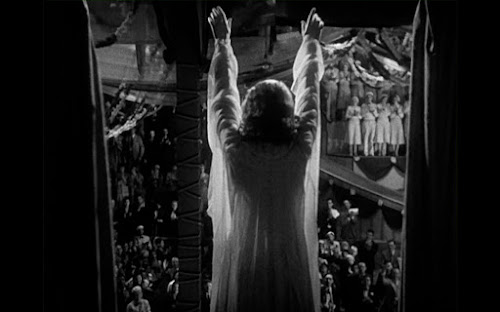
Como Danny do site Pre-Code.com escreveu, “A Mulher Miraculosa” nasceu de uma década de dor. Após a Primeira Guerra Mundial, o charlatanismo cresceu através de pregadores falsos e do espiritualismo – afinal, milhões de pessoas queriam entrar em contato com entes queridos que morreram na guerra ou foram vítimas da Gripe Espanhola. O filme foi baseado em uma peça chamada “Bless You, Sister”, escrita por Robert Riskin, que se tornaria um colaborador constante de Frank Capra, mas que não se envolveu na adaptação da peça para o cinema. Quando o Código Hays foi imposto, filmes como “A Mulher Miraculosa” não mais poderiam ser feitos – provando que a censura não era apenas sobre moralidade, mas também sobre política e religião.

As Danny from PreCode.com wrote, “The Miracle Woman” is born out of the fabric of a decade of pain. After World War I, charlatanism grew in the forms of fake preachers and spiritualism – after all, millions of people wanted to contact the loved ones they lost at the war or because of the Spanish flu. The film was based on a play called “Bless You, Sister”, written by Robert Riskin, who would go on to become Capra's constant collaborator, but had nothing to do with the adaptation of the play to the screen. Once the Hays Code was enforced, films like “The Miracle Woman” couldn't be made anymore – proving that the censorship wasn't only about morality, but also about politics and religion. 

Ao rever este filme, percebi que estava certa: a Irmã Alice de “Perry Mason” tem muito em comum com Florence de “A Mulher Miraculosa”. Ambas usam robes brancos esvoaçantes para parecerem puras e sobrenaturais, uma mistura de anjo e apóstolo. Ambas obedecem a pessoas mais inescrupulosas e ambiciosas que elas: Florence obedece a Bob e Alice obedece à mãe, Birdy, interpretada por Lili Taylor. Ambas fazem falsos milagres. A única diferença é a cor do cabelo! É por isso que “A Mulher Miraculosa” deve ter sido uma inspiração para “Perry Mason”, pois a série tem início na Véspera do Ano Novo de 1932 e o filme é de 1931. Uma inspiração para ambas as pregadoras fictícias é a pregadora Aimée Semple McPherson (1890-1944), uma das fundadoras da Igreja Quadrangular.

By rewatching this film, I realized I was right: Sister Alice from “Perry Mason” has a lot in common with Florence from “The Miracle Woman”. Both wear flowing white robes during their addresses, in order to look otherworldly and pure, a mix of angel and apostle. Both obey more unscrupulous and greedy people: Florence obeys Bob, while Alice obeys her mother, Birdy, played by Lili Taylor. Both perform fake miracles. Their only difference is the hair color! That’s why “The Miracle Woman” must have been an inspiration for “Perry Mason”, as the series starts on New Year’s Eve of 1932, and the film is from 1931. One inspiration for both fictional preachers is the preacher Aimée Semple McPherson (1890-1944), one of the founders of the Foursquare Church.

Aimée Semple McPherson / Sister Alice in "Perry Mason"

John sabe ler Braille, mas para se comunicar com Florence ele pede que ela escreva cartas formando as palavras com letras cortadas, uma a uma, de revistas e jornais, para que ele possa reconhecer as formas. Eu particularmente nunca havia visto nada parecido, apesar de fazer sentido. David Manners se sai bem como um homem cego, sem exagerar ou nos fazer duvidar da cegueira de John. Manners é mais conhecido por ter feito filmes de terror nos estúdios Universal. Ele se aposentou do cinema em 1936.

John knows how to read Braille, but to communicate with Florence he asks her to write letters by making the words from letters cut, one by one, from magazines and newspapers, so he can recognize the shapes. I particularly had never witnessed something like that, but it makes sense. David Manners does well as a blind man, never exaggerating or making it hard for us to believe John is blind. Manners is best known for appearing in horror movies at Universal studios. He retired from the screen in 1936.

Embora “A Mulher Miraculosa” tenha seus problemas – e eu estou, sim, falando do boneco de ventríloquo – é inegável que Barbara Stanwyck mostra uma força imensa como protagonista toda vez que ela sobe ao púlpito e se dirige aos fiéis. Florence é ambígua, por vezes confusa e irada, e muito humana. “A Mulher Miraculosa” - este excelente, pouco comentado e tão atual filme – é a prova perfeita de que o melhor ainda estava por vir para Barbara Stanwyck.

Although “The Miracle Woman” has its problems – I’m looking at you, dummy – it’s undeniable that Barbara Stanwyck shows immense strength as the lead whenever she goes to the pulpit and addresses the churchgoers. Florence is ambiguous, sometimes confused and enraged, and very human. “The Miracle Woman” - this excellent seldom mentioned and very modern movie – is the proof that the best was yet to come for Barbara Stanwyck.

This is my contribution to The Queen of Sass: Barbara Stanwyck blogathon, hosted by Gabriela at Pale Writer.

Sunday, December 9, 2018

Revisitando o “Inimigo Público” (1931) / Revisiting “The Public Enemy” (1931)


ESTE ARTIGO TEM SPOILERS
THIS ARTICLE HAS SPOILERS

Assim como a maioria dos adolescentes, eu era rebelde e nem sempre me dava bem com a minha família. Ao contrário da maioria dos adolescentes, cinema clássico era minha válvula de escape. A história que contarei hoje começa em janeiro de 2010, quando eu briguei com a minha família por causa de uma sobremesa que eu havia preparado – uma “brevidade” que ficou dura demais. Eu estava com raiva e fui ao shopping naquela tarde. Quando eu cheguei em casa, era tarde demais para ver minha sitcom favorita, “The Big Bang Theory”, no horário das oito. Eu teria de esperar pela reprise à meia-noite. Para a hora passar, eu decidi ver um filme que estava começando: “Inimigo Público”. De certa maneira, este filme mudou minha vida.

Like most teenagers, I was rebellious and not always got along with my family. Unlike most teenagers, classic films were my escape. The story I'll tell today starts in January 2010, after I argued with my family over one dessert I had backed – a cake called “brevidade” that actually ended up too hard. I was sour and spent the evening at the mall. When I arrived home, it was too late to catch my favorite sitcom, “The Big Bang Theory”, at the 8 P.M. showing time. I had to wait for the rerun at midnight. Until then, I decided to watch a film that was starting: “The Public Enemy”. In a sense, this film changed my life.


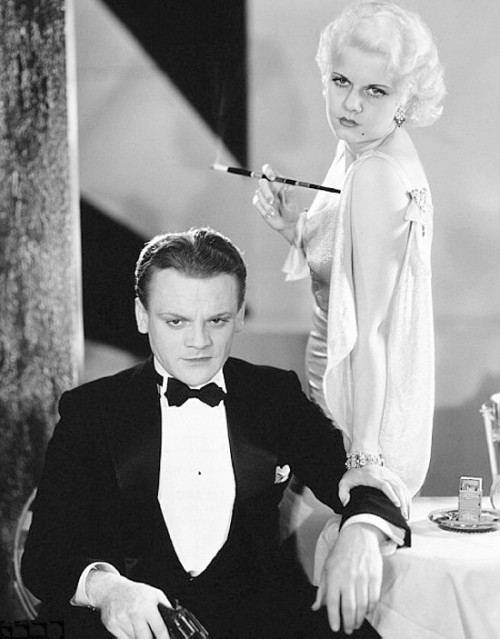
Eu decidi assistir ao filme por causa de Jean Harlow. Eu já tinha ouvido falar sobre ela, que morreu com apenas 26 anos, mas nunca a tinha visto em um filme. No final, Jean esteve OK, mas James Cagney foi quem me surpreendeu e impressionou. Eu apreciei tanto sua performance e a trama do filme que, naquele mesmo ano, eu vi “Inimigo Público” mais duas vezes. E por oito anos eu não o revi – e aqui estão minhas impressões depois de revisitar meu querido filme de gângster.
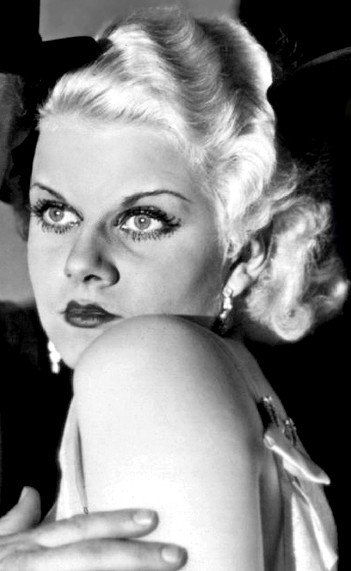
I decided to watch it because of Jean Harlow. I had heard about her, who had died at only 26, but never had seen her in anything. In the end, Jean was OK, but James Cagney was the one that surprised and amazed me. I enjoyed his performance and the overall plot so much that, in that same year, I rewatched “The Public Enemy” twice. And for eight years I haven't rewatched it – and here are my impressions after revisiting my beloved gangster flick.


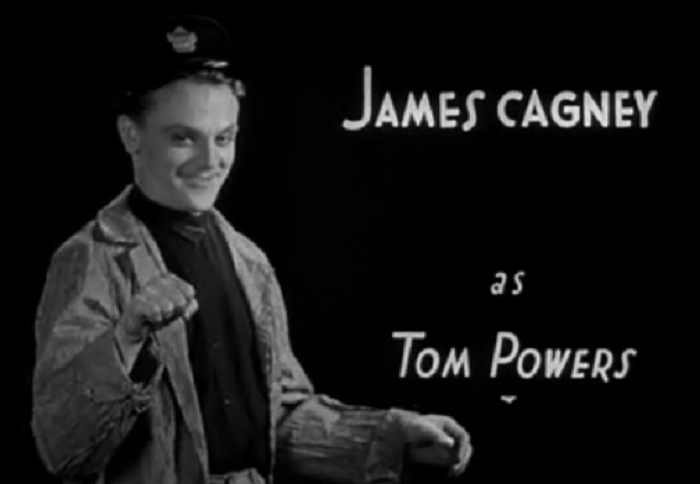
Eu me lembro bem dos créditos iniciais. Eu amo estes créditos dos pre-Codes com a imagem de cada ator e o nome do personagem. Eu me lembro perfeitamente de Cagney socando o ar e Harlow sorrindo nestes créditos iniciais. Eu também amo o realismo que a Warner tentou imprimir nestes filmes com os textos sobre como tudo era baseado em histórias reais...

I remember the opening credits well. I love those pre-Code credits with each actor and their character's name. I vividly remember Cagney punching the air and Harlow smiling in these opening credits. I also love the realism Warner tried to imprint their films with as they added those texts about how the facts here presented are happening right now...


O “Inimigo Público” é Tom Powers (Cagney), alguém que nasceu para se meter em encrencas. Eu me lembrava pouco das cenas da infância dos personagens, mas não entendo como Tom pôde crescer tanto, indo de pré-adolescente até a fase James Cagney, em apenas seis anos. A partir de 1915 na linha do tempo do filme, já podemos ver Cagney.

“The Public Enemy” is Tom Powers (Cagney), a natural-born troublemaker. I remembered a little of his childhood phase as shown in the movie, but I don't understand how Tom could grow from his pre-teen phase to the James Cagney stage in only six years. By 1915 in the film's timeline, Cagney can already be seen.

Desde a infância, Tom e seu melhor amigo Matt Doyle (Eddie Woods) estavam envolvidos em atividades ilícitas, como roubos. Quando chega 1920 e a proibição da venda de bebidas alcoólicas é promulgada, eles veem uma nova oportunidade com o dono de bar Paddy (Robert O’Connor) e o grande contrabandista Nails Nathan (Leslie Fenton) – um novo trabalho que permite que Cagney intimide e cuspa cerveja no rosto de um homem.

Since childhood, Tom and his best friend Matt Doyle (Eddie Woods) have been involved in illicit activities like stealing. When they reach 1920 and the Prohibition arrives, they see a new opportunity with bar owner Paddy (Robert O’Connor) and master bootlegger Nails Nathan (Leslie Fenton) – a new job that allows Cagney to intimidate and spit beer to a man’s face.


Tom e Matt têm êxito, mas Tom não conta à sua querida mãezinha (Beryl Mercer) que ele está envolvido com atividades ilegais. Quando seu irmão Mike (Donald Cook) volta da guerra, uma briga começa: Mike acha que o que Tom faz é horrível, mas Tom também condena Mike por ter matado pessoas na guerra. Eu não me lembrava desta sequência interessante, mas a linha do tempo histórica me incomodou – quem esperaria de 1918, quando a guerra acabou, até 1920 para voltar para casa?

Tom and Matt thrive, but Tom doesn’t tell his beloved mother (Beryl Mercer) that he is involved with illegal activities. When his brother Mike (Donald Cook) comes back from the war, an argument starts: Mike thinks what Tom does is hideous, but Tom also condemns Mike for killing innocent people in the war. I didn’t remember this very interesting sequence, but the historical timeline kind of bothered me here – who waited from 1918, when the war ended, to 1920 to come home?


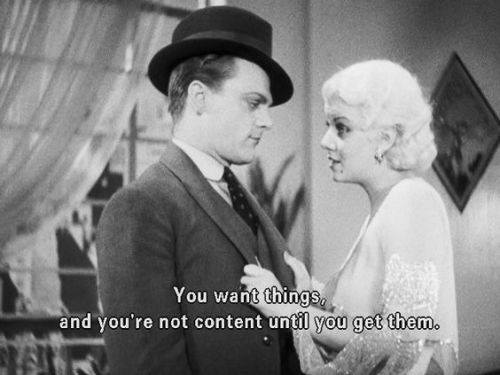
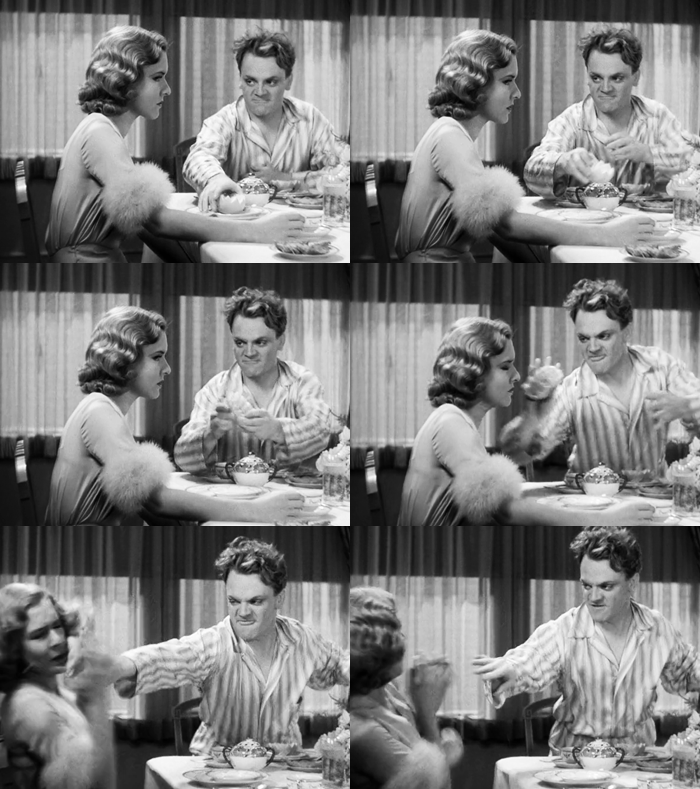
O que se segue é a famosa cena do grapefruit, depois que Tom confessa a Nathan que já está de saco cheio de sua namorada, Kitty (Mae Clarke, não creditada). Depois deste episódio, Matt e Tom conhecer Gwen (Jean Harlow) e dão uma carona a ela – Harlow tem uma entrada simples, mas memorável.

What follows is the famous grapefruit scene, after Tom confesses to Nathan that he is already fed up with his girl, Kitty (an uncredited Mae Murray). After the episode, Matt and Tom meet Gwen (Jean Harlow) and give her a ride – Harlow has a simple but memorable entrance.


Matt se casa com Mamie (Joan Blondell) e Tom começa a sair com Gwen. Na noite de núpcias de Matt, ele tem de deixar sua esposa e acompanhar Tom em uma missão para matar um velho conhecido. Tom age como se nada tivesse acontecido depois que o “trabalho” é feito, mas Matt fica muito perturbado com o que viu. O hábito de Tom de socar o rosto das pessoas como cumprimento também começa a incomodar sua mãe, que imita o gesto de maneira desconfortável.

Matt marries Mamie (Joan Blondell) and Tom starts dating Gwen. On Matt’s wedding night, he has to leave his wife and accompany Tom in a mission to kill an old acquaintance. Tom acts as if nothing happened after the job is done, but Matt is deeply disturbed by what he witnessed. Tom’s habit of punching people’s faces as a greeting also starts bothering his mother, who mimics the gesture once in an uncomfortable way.

Tom recebe a notícia de que Nails Nathan morreu enquanto Gwen está declarando seu amor por ele. Tom a deixa no mesmo minuto para buscar vingança – um tipo chocante de vingança, que eu nunca esqueci. Gwen fica sozinha, refletindo se ela significa para Tony o mesmo que ele significa para ela.

Tom receives the news that Nails Nathan died while Gwen was declaring all her love for him. Tom leaves her in the same minute to seek revenge – a shocking kind of revenge, one I never forgot. Gwen is left thinking if she means to Tom as much as he means to her.


Tom Powers pode não ser o chefe dos gângsteres agora, mas é parte de uma briga de gangues, e não deixará que atos de violência contra seus amigos passem sem vingança. Vingança é o tema dos últimos 20 minutos do filme, quando você aprende que violência só leva a mais violência.

Tom Powers may not be the top gangster now, but he is part of a mob war, and won’t let acts of violence against his fellows pass without revenge. Revenge is the theme of the last 20 minutes of the film, when you learn that violence only leads to more violence.


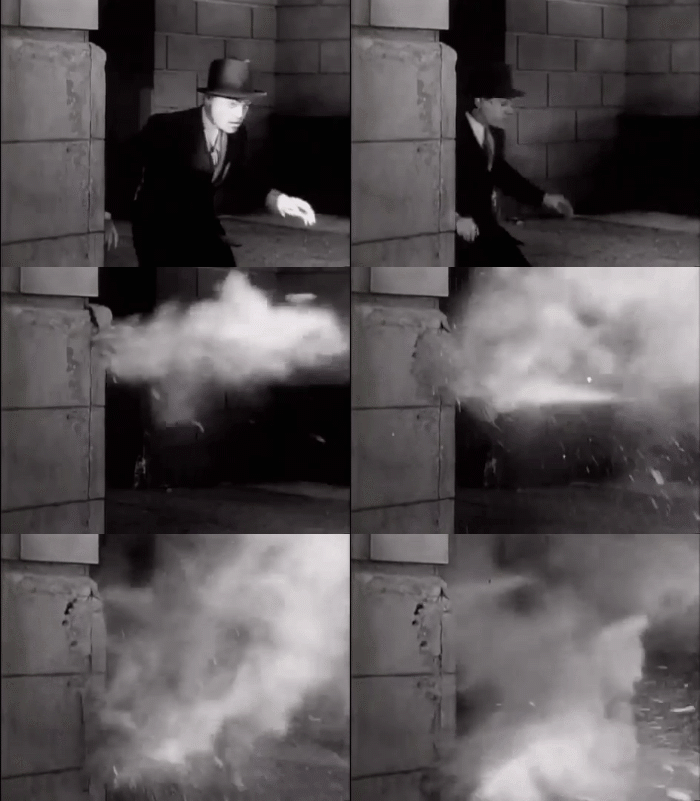
E quão poderoso é o final? Eu fiquei sem fala, com os olhos arregalados, naquela noite fatídica em janeiro de 2010, quando eu vi o filme pela primeira vez. Agora, eu espero pelo final com animação. Na verdade, como eu já vi o filme antes, em muitos momentos eu pude perceber o suspense crescendo, e pude ver os muitos elementos interessantes – como o som de carvão sendo despejado de um caminhão – que foram usados para criar o suspense que culmina no clímax.

And how powerful is that ending? I was just speechless, with my eyes wide open, in that fatidic night in January 2010, when I watched the film for the first time. Now, I expect the ending with anticipation. Actually, because I had seen the film before, in many moments I could feel the suspense in a crescendo, and the many interesting elements – like the sound of coal being poured from a truck – that were used to create the suspense until the climax.


Eu me lembro de que o homem que comentava este filme na TV disse que o segredo de Cagney era energia – ele disse isso enquanto passavam cenas de Cagney andando na chuva e sorrindo. Eu concordo, mas devo acrescentar que seus momentos mais sutis, de fragilidade – como quando ele é ferido – são igualmente poderosos. E não podemos nos esquecer de Beryl Mercer interpretando a Mamãe Powers, uma personagem tão simplória que é quase patética, mas de quem gostamos e cujo sofrimento nos faz também sofrer.

I remembered that the man commenting this film on TV said that Cagney’s secret was energy – he said that while they were showing footage of Cagney walking in the rain and grinning. I agree, but I must add that his more subtle moments of fragility – like when he’s hurt – are equally powerful. And we can’t forget Beryl Mercer as Ma Powers, playing that character as such a simpleton that she is almost pathetic, but we can’t help liking her and suffering when she suffers.


Eu discordo das pessoas que dizem que “Inimigo Público” foi um produto de seu tempo, quando o som ainda era novo em Hollywood. De maneira alguma o filme é primitivo: a história é ótima, as performances são naturais e perfeitas, os cenários e os sons são muito bons. “Inimigo Público” é um filme excelente mesmo depois de todos estes anos, e depois de revê-lo eu posso dizer que ele ainda está entre meus preferidos.

I disagree when people say that “The Public Enemy” was a product of its time, when sound was still new in Hollywood. In no ways the film is primitive: the storytelling is great, the performances are natural and on point, the sets and sound are very good. William A. Wellman is truly a master of cinema. “The Public Enemy” is a terrific movie even after all those years, and after rewatching it I can say it still belongs in my top five.


Se eu não tivesse brigado com a minha família e perdido “The Big Bang Theory”, eu teria assistido a “Inimigo Público” em circunstâncias muito diferentes, e talvez eu não tivesse ficado tão hipnotizada e maravilhada com o filme. Talvez eu não gostasse tanto de filmes de gângster e de William A. Wellman – e talvez James Cagney não fosse meu ator favorito. Graças e Deus, eu fui uma adolescente rebelde – e que fazia péssimos bolos.

If I hadn't argued with my family and missed “The Big Bang Theory”, I would have watched “The Public Enemy” under very different circumstances, and maybe I wouldn't have been so amused and thrilled. Maybe then I wouldn't like gangster movies and William A. Wellman so much – and maybe James Cagney wouldn't be my favorite actor. Thank God I was a rebellious teenager – and one who baked terrible cakes.

This is my contribution to The Unexpected Blogathon, hosted by Rebecca at Taking Up Room.

Related Posts Plugin for WordPress, Blogger...