} Crítica Retrô: variações sobre um mesmo tema

Tradutor / Translator / Traductor / Übersetzer / Traduttore / Traducteur / 翻訳者 / переводчик

Showing posts with label variações sobre um mesmo tema. Show all posts

Friday, May 15, 2026

Variações sobre um mesmo tema: O Morro dos Ventos Uivantes (1939 e 2026)


Variations on the same theme: Wuthering Heights (1939 and 2026)

Eu nunca li “O Morro dos Ventos Uivantes” de Emily Brontë, mas anos atrás assisti a uma das adaptações do romance para as telas, mas hoje já me esqueci da maioria dos detalhes. Fiquei curiosa para conferir a nova adaptação e, como li que a versão de 1939 é a melhor até agora, aqui estou para ver e comparar ambas.

I have never read Emily Brontë’s “Wuthering Heights”, but many years ago I watched one of the adaptations of the novel to the screen, even though I forgot most details. I was curious to check out this new adaptation, and as I read that the 1939 version is the best one so far, I’m here to watch and compare both. 


A versão de 2026 começa com um enforcamento e uma ereção - duas coisas que definitivamente não seriam mostradas em 1939 por causa do nefasto Código Hays. Então somos apresentados à garotinha Cathy, cujo pai bêbado adota um menino que ela batiza de Heathcliff em homenagem a um irmão já falecido. Eles são criados como irmãos, mas quando crescem percebem que o amor que nutrem um pelo outro não é fraternal. Mas Cathy (Margot Robbie) se casa com o vizinho Edgar Lynton porque ela pode amar Heathcliff (Jacob Elordi), mas eles viverão na pobreza se ficarem juntos.

The 2026 version starts with a hanging and an erection - two things that definitely wouldn’t be shown in 1939 because of the nefarious Hays Code. Then we’re introduced to the girl Cathy, whose drunk father adopts a boy she baptizes as Heathcliff after her dead brother. They grow up as brother and sister, but only when they get old they understand that their love isn’t fraternal. But Cathy (Margot Robbie) marries their neighbor Edgar Lynton because she may love Heathcliff (Jacob Elordi), but they will live in poverty if they stay together.

A versão de 1939 começa com um homem procurando um lugar para se abrigar durante uma tempestade de neve. Ele chega ao Morro dos Ventos Uivantes e é recebido pelo proprietário Heathcliff (Laurence Olivier), que lhe oferece um quarto. Ele ouve uma mulher gritando no meio da noite e se assusta. Heathcliff sai para perseguir a mulher que grita e uma empregada conta ao hóspede a história de amor de Cathy (Merle Oberon) e Heathcliff.

The 1939 version starts with a man looking for a place to stay during a snowstorm. He arrives at Wuthering Heights and is received by owner Heathcliff (Laurence Olivier), who offers him a bedroom. He listens to a woman screaming in the middle of the night and gets scared. Heathcliff leaves to pursue the screaming woman and a maid tells the guest the love story of Cathy (Merle Oberon) and Heathcliff.

Cathy tem uma infância feliz ao lado do pai e de um irmão, Hindley, que começa a mandar no irmão adotivo deles depois que o pai morre. A alta sociedade aceita e abraça a Cathy adulta e ela se acostuma com uma vida de luxo. Quando Heathcliff foge, Cathy aceita se casar com o vizinho Edgar (David Niven), mas Heathcliff voltará com uma atitude blasé.

Cathy has a happy childhood alongside her father and a brother, Hindley, who starts bossing around their adoptive brother after their father dies. High society accepts and embraces adult Cathy and she gets used to a life of luxuries. When Heathcliff runs away, Cathy accepts to marry neighbor Edgar (David Niven), but Heathcliff will come back with a no-nonsense attitude.

Os dois filmes retratam os empregados do Morro dos Ventos Uivantes de maneiras muito distintas. Na versão de 1939, é a empregada Ellen (Flora Robson) que conta a história toda, o que significa que ela sabe tudo que aconteceu. Na versão de 2026, a empregada Nelly (Hong Chau) é uma personagem enxerida e inconveniente, tramando contra os dois amantes. 

The two movies are very different about how they picture the Wuthering Heights employees. In the 1939 version, it’s maid Ellen (Flora Robson) who tells the whole story, meaning that she knows everything that has happened. In the 2026 version, maid Nelly (Hong Chau) is a nosy and inconvenient character, plotting against the two lovers.


Outra diferença diz respeito à personagem Isabella. Em ambos ela se apaixona por Heathcliff, mas em 1939, interpretada por Geraldine Fitzgerald, ela é só uma jovem apaixonada que tem uma ótima cena de confronto com Cathy, enquanto em 2026, interpretada por Alison Oliver, ela é uma maníaca, com personalidade totalmente amalucada. 

Another difference conceals the character Isabella. In both she falls in love with Heathcliff, but in 1939, played by Geraldine Fitzgerald, she is just a young girl in love that gets an excellent confrontation scene with Cathy, while in 2026, played by Alison Oliver, she is a maniac, with a completely nutty personality.

O roteiro da versão de 2026 foi escrito pela diretora e produtora Emerald Fennell. Sei que ela tem muitos haters, mas considerei OK seu último filme, “Saltburn” (não vi seu filme ganhador do Oscar “Bela Vingança” por causa de um spoiler que arruinou o filme para mim). O roteiro da versão de 1939 ficou a cargo de Ben Hecht, um dos meus roteiristas favoritos, e Charles McArthur, mais conhecido por ter escrito a peça “The Front Page”. Nenhuma dessas versões segue o livro à risca, pois há uma segunda parte ignorada por ambas.

The screenplay for the 2026 version was written by director and producer Emerald Fennell. I know she has plenty of haters but I found her past effort “Saltburn” OK (I didn’t watch her Oscar-winning movie “Promising Young Woman” because I saw a spoiler and it ruined the movie for me). The screenplay for the 1939 version was penned by Ben Hecht, a favorite of mine, and Charles McArthur, best known for having written the play “The Front Page”. None of these two versions follow the book closely, as there is a second part that is ignored by both.


Fennell usa diversas músicas pop na trilha sonora, completa com algumas faixas instrumentais. As músicas grandiosas da versão de 1939 foram compostas por Alfred Newman. Ele foi considerado um prodígio da música quando criança e foi empregado como maestro na Broadway por uma década, começando com apenas 19 anos. Ele iria compor para o cinema e seria indicado ao Oscar 45 vezes, ganhando nove prêmios. Sua mais famosa obra, entretanto, dura alguns segundos: a música que acompanha o logo da 20th Century Fox até hoje.

Fennell uses several pop songs in the soundtrack, complete with some instrumental tunes. The grandiose songs from the 1939 version were composed by Alfred Newman. He was considered a musical prodigy as a child and was employed as a conductor on Broadway shows for a decade, starting when he was only 19. He would go on to score movies and would be nominated for the Oscar 45 times, winning nine awards. His most famous piece however, lasts a few seconds: the tune that accompanies 20th Century Fox logos to this day.

Visualmente impressionante, a versão de 2026 teve figurinos feitos pela renomada Jacqueline Durran e fotografia de Linus Sandgren. A de 1939 teve fotografia de Gregg Toland, um dos maiores diretores de fotografia da História e que ganhou seu único Oscar por esse filme, e figurinos de Omar Kiam - não confundir com o multitalentoso Omar Khayyam

Visually stunning, the 2026 version had costumes made by the renowned Jacqueline Durran and photography by Linus Sandgren. The 1939 version had its photography by Gregg Toland, one of the best cinematographers of all time in his only Oscar win, and costumes by Omar Kiam - not to be confused with the multitalented Omar Khayyam!

Emerald Fennell menciona diversos clássicos como inspiração para seu filme, como “Na Noite do Passado” (1942), “Neste Mundo e no Outro” (1946) e “Pele de Asno” (1970), mas seu filme não está à altura da versão de 1939, que é mais emocionante, igualmente bela e tem excelentes interpretações.

Emerald Fennell mentions several classics as inspirations for her movie, such as “Random Harvest” (1942), “A Matter of Life and Death” (1946) and “Donkey Skin” (1970), but her movie doesn’t stand close to the 1939 version, which is more moving, equally beautiful to look at and a masterclass in acting.

Tuesday, October 29, 2024

Variações sobre um mesmo tema: Adeus, Mr Chips (1939 e 1969)


Variations on the same theme: Goodbye, Mr Chips (1939 and 1969)


No dia 15 de outubro o Dia dos Professores é celebrado no Brasil. Eu fui moldada pelos professores que eu tive. Não apenas os que me deram aula, mas especialmente por minha mãe, que esteve em sala de aula por 38 anos ensinando matemática. É por causa dela que eu amo filmes sobre professores. Desta vez trago duas versões da mesma história, filmadas com 30 anos de diferença, sobre um mestre inspirador.


On October 15th, Teacher’s Day is celebrated in Brazil. I’ve been greatly shaped by the teachers I had. Not only the ones who taught me classes, but especially my mother, who was inside classrooms teaching math for 38 years. That’s why I love movies about teachers. This time I bring two versions of the same story, filmed 30 years apart, about an inspiring master.

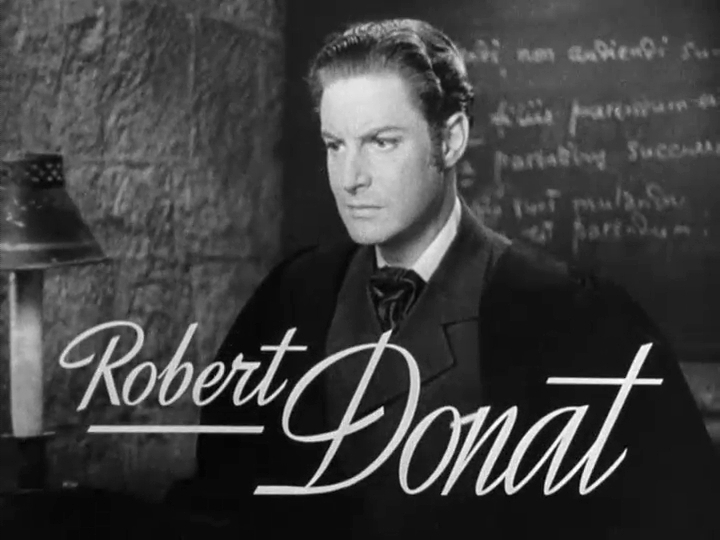
Em 1939, Charles Chipping (Robert Donat) tem 83 anos e leciona há impressionantes 63 anos. Impossibilitado a ir a uma aula inaugural pela primeira vez por causa de uma gripe, ele rememora sua trajetória. Em seu primeiro dia, foi-lhe pregada uma peça por seus alunos e teve problemas para manter a ordem. O aluno mais difícil de controlar é Colley (Terry Kilburn).


In 1939, Charles Chipping (Robert Donat) is 83 years old and has been teaching for impressive 63 years. Unable to go to the inaugural class for the first time due to a cold, he remembers his trajectory. On his first day, he was pranked by his students and had a rough time mantaining peace and order. The hardest student to control is Colley (Terry Kilburn).

Anos depois, já um homem de meia-idade mas ainda um professor impopular, o Sr Chipping viaja para as montanhas com um colega de trabalho e lá conhece Kathy Ellis (Greer Garson em seu primeiro papel no cinema). Eles se encontram novamente em Viena, se divertem muito e se casam. Ela dá a ele o apelido “Chips” e começa a convidar os alunos dele para tomarem chá na cada deles. De repente Chips se torna um professor popular e até conta piadas na sala de aula! Os tempos mudam, a Escola Brookfield para garotos também, mas Chips não muda os tempos – então decidem aposentá-lo contra a vontade dos alunos.


Years later, already a middle-aged man but still an unpopular teacher, Mr Chipping travels to the mountains with a colleague and there he meets Kathy Ellis (Greer Garson in her film debut). They run into each other again in Vienna, have a wonderful time together and get married. She gives him the nickname “Chips” and start hosting teapartys in their residence for his students. Suddenly Chips becomes a popular teacher and even tells jokes in class! Times change, the Brookfield School for Boys too, but Chips doesn’t change with the times – so they decide to retire him against the students’ will.

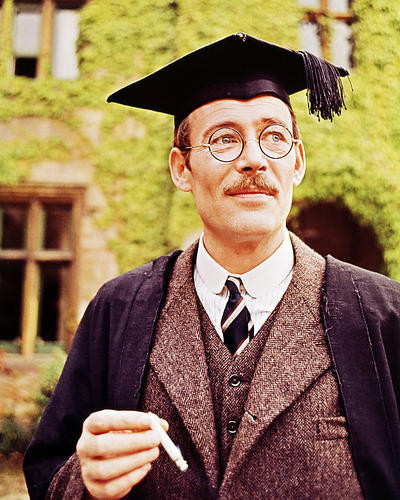
Em 1969 somos informados de que nossa história começa em 1924. Arthur Chipping (Peter O’Toole) é um professor impopular na Escola Brookfield. De férias em Pompeia, ele volta a encontrar a estrela de teatro musical Katherine Bridges (Petula Clark) e eles se divertem muito juntos. De volta a Londres, eles se casam. No primeiro encontro ela já o havia apelidado de “Chips”.


In 1969 we’re informed that our story begins in 1924. Arthur Chipping (Peter O’Toole) is an unpopular teacher at the Brookfield School. While on vacation in Pompeii, he meets again the musical theater actress Katherine Bridges (Petula Clark) and have a wonderful time together. Back in London, they get married. On their first meeting she had already nicknamed him “Mr Chips”.

Por volta dos 15 minutos de projeção temos uma baita surpresa quando o Sr Chips começa a cantar. Ele canta sobre a passagem do tempo e sobre como o mundo ficou mais colorido depois que ele se casou com Kathy. Petula Clark é quem mais canta neste filme que eu não esperava ser um musical, mas Peter O’Toole foi ousado e cantou sem usar dublagem.


At around the 15-minute mark we’re greatly surprised when Mr Chips starts to sing. He sings about the passage of time and how the world got more colorful after he married Kathy. Sure, Petula Clark does the majority of the singing in this film I wasn’t expecting to be a musical, but Peter O’Toole was fierce and did his own singing.

Em 1939, o Sr Chips é Chefe do Departamento na escola durante a Primeira Guerra Mundial. Em 1969, ele vivencia a Segunda Guerra Mundial, em meio à possibilidade de ataques aéreos à escola. Em ambas as versões o Sr Chips sofre diversas perdas durante as guerras, ficando enlutado por causa de pessoas queridas.


In 1939, Mr Chips served as a headmaster of the school during World War I. In 1969, he goes through World War II, with the possibility of airplane attacks to the school. In both versions Mr Chips faces several losses during the wars, grieving those he loved.

Além do período em que se passa a história, a maior mudança de uma versão para a outra foi Kathy. Em 1939 ela tem pouco tempo em cena mas é fundamental para fazer do Sr Chips um professor e uma pessoa mais afável. Em 1969, com uma profissão e uma reputação, ela é co-protagonista e o casamento dura muito mais.


Besides the time frame, the main change from one version to the other was Kathy. In 1939 she is given little screen time but is pivotal to make Mr Chips a more likeable teacher and person. In 1969, with a profession and a reputation, she is a co-lead and her marriage lasts for a much longer time.

A versão de 1939 agradeceu nos créditos a ajuda de Sidney Franklin – diretor não-creditado do filme – e a inspiração fornecida pelo finado Irving Thalberg. O filme foi produzido por Victor Saville, que produziu alguns dos primeiros trabalhos de um jovem desconhecido chamado Alfred Hitchcock. Assim como Hitch, Saville também dirigiu filmes de suspense na Inglaterra no começo dos anos 1930. De acordo com o IMDb, ele produziu 39 filmes entre 1923 e 1962.


The 1939 version acknowledged in the credits the help of Sidney Franklin – uncredited diretor of the movie – and the inspiration of the late Irving Thalberg. The movie was produced by Victor Saville, who produced some of the early films by a then-unknown named Alfred Hitchcock. Like Hitch, Saville also directed thrillers in England in the early 1930s. According to IMDb he produced 39 movies between 1923 and 1962.

A versão de 1969 foi dirigida por Herbert Ross e produzida por Arthur Jacobs, que havia recém produzido “O Fabuloso Dr Dolittle” (1967). Esta foi a estreia de Ross na direção – ele antes trabalhava como coreógrafo. Jacobs queria Rex Harrison, que fez o papel de Dolittle, para ser o Sr Chips, mas ele recusou o papel. Outros nomes considerados foram Richard Burton, Christopher Plummer, Peter Sellers, Albert Finney, Richard Harris e Paul Scofield.


The 1969 version was directed by Herbert Ross and produced by Arthur Jacobs, who had just produced “Dr Dolittle” (1967). This is Ross’ directing debut – he had been working as a choreographer before. Jacobs wanted Rex Harrison, who played the part of Dolittle, to be Mr Chips, but he refused. Other names considered were Richard Burton, Christopher Plummer, Peter Sellers, Albert Finney, Richard Harris and Paul Scofield.

Robert Donat ganhou seu Oscar de Melhor Ator por “Adeus, Sr Chips” mas não viveu até os 83 anos como seu personagem. Na verdade, ele tinha apenas 53 anos quando morreu, depois de completar “A Moradada Sexta Felicidade” (1958). Por sua vez, Peter O’Toole foi indicado a um Oscar por sua performance como o Sr Chips e viveu até os 81 anos. O’Toole foi indicado para oito Oscars, mas nunca ganhou o prêmio.


Robert Donat won his Best Actor Oscar for “Goodbye, Mr Chips” but never lived to be 83 like his character. In fact, he died at only 53, after completing “The Inn of the Sixth Happiness” (1958). On the other hand, Peter O’Toole was nominated for an Oscar for his performance as Mr Chips and lived to be 81. O’Toole was nominated for eight Oscars, but never won the award.

Além da minha mãe, essa dupla de filmes me fez lembrar outro professor de matemática: Júlio César de Mello e Souza, conhecido pelo seu pseudônimo Malba Tahan. Um professor e também escritor de sucesso, ele faleceu poucas horas depois de dar aula. Seu aniversário, seis de maio, é celebrado como Dia Nacional da Matemática.


Besides my mother, the duo of movies reminded me of another math teacher: Júlio César de Mello e Souza, known for his pseudonym Malba Tahan. A teacher as well as a successful wirter, he died mere hours after teaching a class. His birthday, May 6th, is celebrated as National Math Day.

Em seu discurso de aposentadoria o Sr Chips conta a seus alunos que ele pode ter dificuldades de reconhece-los no futuro porque na sua cabeça eles permanecem jovens. Ele também diz que é mentira que ele nunca teve filhos: ele teve milhares deles! Quando perguntada sobre isso, minha mãe não chegou a considerar seus alunos como filhos. Eu, sua única filha, fiquei aliviada, mas ao mesmo tempo sei como ela é amada e lembrada por seus alunos por causa do jeito como ela é tratada quando encontramos algum deles. Como o Sr Chips, ela deixou seu legado.


In his departing speech Mr Chips tells his students that he may have a hard time recognizing them when they grow up because in his mind they remain young boys. He also says that it’s a lie that he didn’t have kids: he had thousands of boys! When asked about that, my mother didn’t go as far as considering her students as her children. I, as her only child, am relieved, but at the same time I know how much she is loved and remembered by her students by the way she is treated whenever we meet one of them. Like Mr Chips, she left her legacy.


O veredicto: a versão de 1939 tem 40 minutos a mais, porém é bem mais emocionante que o remake!


The verdict: the 1939 version is 40 minutes shorter but has a lot more heart than the remake!


Wednesday, May 29, 2024

Variações sobre um mesmo tema: O Demônio da Algéria (1937) e Argélia (1938)

 Variations on the same theme: Pépé Le Moko (1937) and Algiers (1938)


Todos sabemos que os norte-americanos não gostam de assistir a filmes com legendas. Todos também sabemos que os chefes dos estúdios estão sempre de olho no mercado estrangeiro, procurando por inspiração e sucessos para fazer remakes. Em 1938, Hollywood fez um remake de um filme que havia estreado apenas um ano antes na França. “Argélia” é um remake fidelíssimo, quase cena a cena, de “O Demônio da Algéria” (sic), que ainda consegue ser cinco minutos mais longo que o original. Ambos contam com ótimas performances e alguns nomes nos bastidores que merecem ser destacados.


It’s widely known that Americans don’t like to watch movies with subtitles. It’s also widely known that studio heads are always with an eye on the foreign market, looking for inspiration and successes to be remade. In 1938, Hollywood remade a film that had premiered in France only one year prior. “Algiers” is an almost shot-by-shot remake of “Pépé Le Moko” that still manages to be five minutes longer than the original. Both have great performances and a few names behind the cameras that we should highlight.


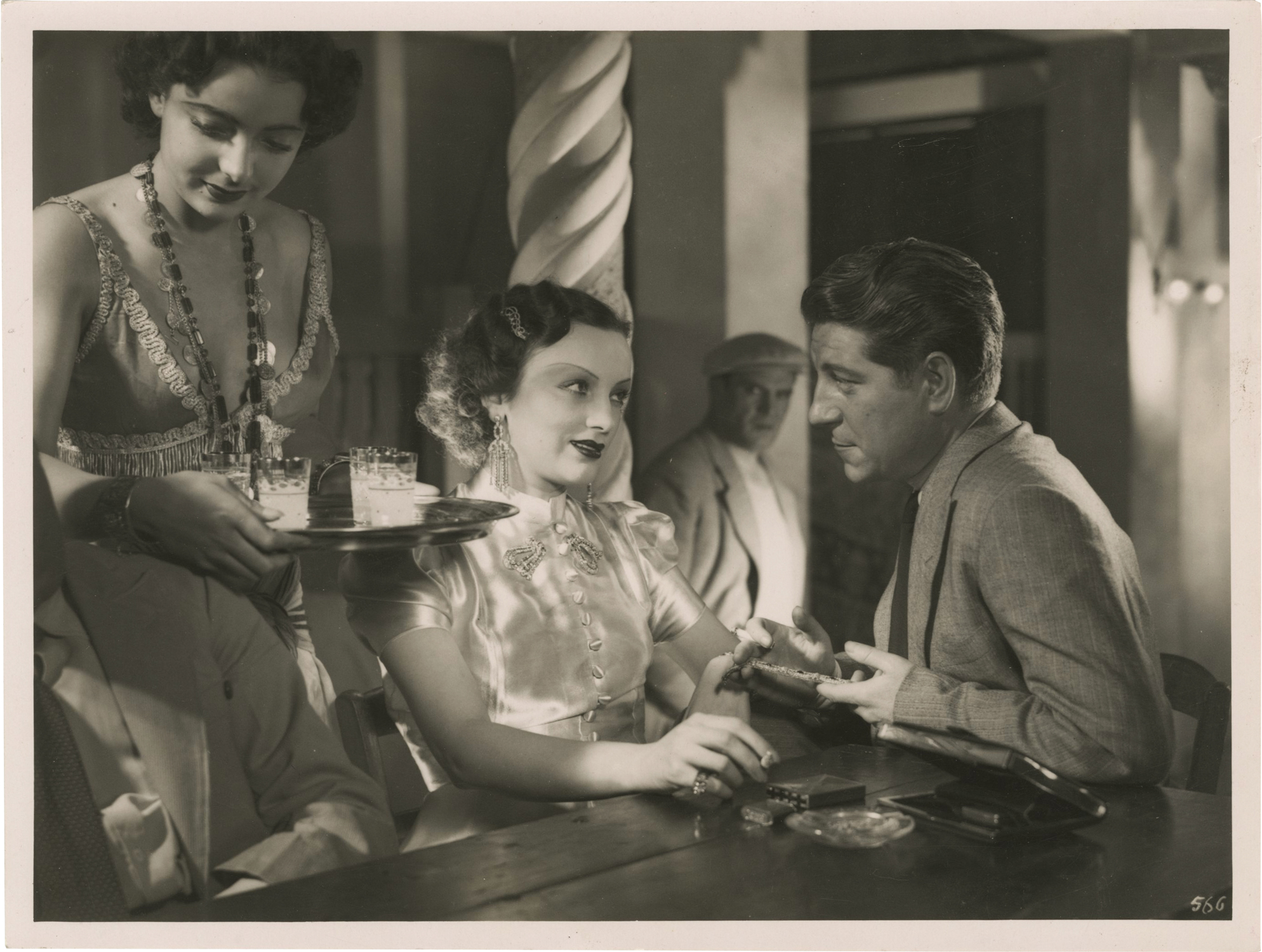
Nos últimos dez anos, cinco detetives tentaram e falharam em capturar o ladrão Pépé Le Moko (Jean Gabin / Charles Boyer). Seu esconderijo é bem conhecido: é a Casbah, bairro labiríntico de Argel onde vivem quarenta mil pessoas. Como dito em “Argélia”, a polícia não pode simplesmente entrar no bairro e prender Pépé porque “não se pode prender um rei no seu próprio palácio”.


In the last two years, five detectives tried and failed to capture the thief Pépé Le Moko (Jean Gabin / Charles Boyer). His hidi
ng place is well known: it’s the Casbah, a labyrinthine district of Argel where forty thousand people live. As it’s said in “Algiers”, the police can’t simply invade the Casbah and arrest Pépé because “you can’t arrest a king in his own palace”.

Uma noite, enquanto fugia de um grupo de policiais, Pépé conheceu Gaby (Mireille Balin / Hedy Lamarr) e se apaixonou por ela... e ainda mais pelas joias dela. Ela é uma socialite francesa que estava passeando pela Casbah e está disposta a voltar nem que seja para jantar e dançar com o belo ladrão. Fora da Casbah é muito perigoso para ele... será que Pépé se contentará com sua garota Inès (Line Noro / Sigrid Gurie) ou se arriscará indo atrás de Gaby?


While running away one night from a group of police officers, Pépé meets Gaby (Mireille Balin / Hedy Lamarr) and falls in love with her… falling deeper for her jewels. She is a French socialite who was touring the Casbah and is willing to come back if only to have dinner and a dance with the handsome thief. Outside the Casbah it’s too dangerous for him… will Pépé settle for his girl Inès (Line Noro / Sigrid Gurie) or will he risk going after Gaby?

“O Demônio da Algéria” é um bom filme por causa do charme e do talent de Jean Gabin, que na época já era uma superestrela. Num artigo para o website da Criterion, Michael Atkinson escreve sobre ele: “Gabin era quase como Garbo em sua habilidade de ancorar nossa atenção sem mover um músculo”. O mais novo de sete filhos de uma dona de café e um artista de cabaré, ele começou a atuar aos 15 anos, trabalhando subsequentemente tanto no Folies Bergéres quanto no Moulin Rouge, além de fazer turnê pela América do Sul com um grupo. Ele fez seu primeiro filme em 1928 e o último em 1976, ano em que faleceu. Ele apareceu num total de 97 filmes.


“Pépé Le Moko” works because of the charm and talent of Jean Gabin, then already a superstar. In an  essay for the Criterion website, Michael Atkinson writes this about him: “Gabin was almost Garbo-like in his ability to anchor our attention without moving a muscle”. The youngest of seven children of a coffee owner and a cabaret entertainer, he started acting at 15, working in subsequent years at both the Folies Bergéres and the Moulin Rouge, and also touring South America with a troupe. He made his first film in 1928 and the last in 1976, the year he passed away. He appeared in 97 films total.

Charles Boyer pode ser charmoso e francês – uma redundância –, mas a verdadeira estrela de “Argélia” é Hedy Lamarr, em seu primeiro filme em Hollywood. O produtor Walter Wanger no início queria Sylvia Sidney ou Dolores Del Río como a atriz principal, mas acabou decidindo pedir Lamarr emprestada da MGM. Diz-se que foi Charles Boyer que apresentou Lamarr para Wanger após uma festa. Apesar de ser o chamariz para o filme, Hedy Lamarr foi considerada inadequada pelo diretor John Cromwell, que disse que ela não sabia atuar e não tinha personalidade.


Charles Boyer may be charming and French – a redundancy –, but the real star of “Algiers” is Hedy Lamarr, in her first Hollywood movie. Producer Walter Wanger first wanted Sylvia Sidney or Dolores Del Río as the female lead, but decided to borrow Lamarr from MGM instead. It is said that it was Charles Boyer who introduced Lamarr to Wanger after a party. Despite being the one who called attention for the film, Hedy Lamarr was considered inadequate by director John Cromwell, who said she couldn’t act and had no personality.

O livro que serviu de inspiração foi, diz-se, inspirado em “Scarface” (1932) e deu origem a um filme sem o qual o cinema noir seria completamente diferente. “O Demônio da Algéria” foi a primeira adaptação cinematográfica de um a obra literária de Henri La Barthe, creditado com seu pseudônimo Ashelbé. O diretor Julien Duvivier, que no começo da década foi responsável por efetivamente fazer a carreira de Jean Gabin decolar, foi um dos roteiristas. A história seria filmada mais uma vez em 1948, num musical com Tony Martin, Märta Torén e Yvonne de Carlo.


The source novel was reportedly inspired by “Scarface” (1932) and it originated a movie without which film noir wouldn’t be what it was. “Pépé Le Moko” was the first cinematic adaptation of a literary work by Henri La Barthe, credited under his pseudonym Ashelbé. Director Julien Duvivier, who was in the beginning of the decade responsible for effectively launching Jean Gabin’s career, served as one of the screenwriters. The story would be filmed once more in 1948, as a musical starring Tony Martin, Märta Torén and Yvonne De Carlo.

O diretor de fotografia de “Argélia” é o grande James Wong Howe. Nascido na China, sua família chegou a Washington quando ele tinha cinco anos. Ele foi boxeador profissional na adolescência e começou sua carreira no cinema como assistente de Cecil B. DeMille. “Argélia” deu a Howe a primeira de suas dez indicações ao Oscar, e ele ganhou duas vezes. Curiosidade: James Wong Howe e Charles Boyer nasceram no mesmo dia, 28 de agosto de 1899.


The director of photography in “Algiers” is the great James Wong Howe. Born in China, his family arrived in Washington when he was five. He was a professional boxer as a teenager and started his career in film as an assistant to Cecil B. DeMille. “Algiers” gave Howe his first of 10 Oscar nominations, and he would win twice. Curious info: James Wong Howe and Charles Boyer were born in the same day, August 28, 1899.

Em “Argélia” o personagem Regis (Gene Lockhart) tem mais tempo em cena que no filme original. Há basicamente uma sessão de tortura psicológica com ele quando Pépé descobre que Regis traiu seu amigo Pierrot e acompanhou o jovem até uma armadilha. Gene Lockhart foi indicado ao Oscar de Melhor Ator Coadjuvante por sua performance, mas não ganhou o prêmio.


In “Algiers” the character Regis (Gene Lockhart) has more screen time than in the original. There is basically a psychological torture session with him when Pépé finds out that Regis betrayed his pal Pierrot and accompanied the young man right into a trap. Gene Lockhart was nominated for the Best Supporting Actor Oscar for his performance, but didn’t win the award.

Quando Régis (Fernand Charpin) fala sobre Pépé ser mulherengo, ele retruca: “Eu dou a elas [às mulheres] meu corpo, mas mantenho para mim a cabeça”. Quando fala sobre sua linha de raciocínio para Inès, Pépé (interpretado por Charles Boyer) diz que “eu não penso com minha cabeça, mas com meu coração”. Estas frases definem as diferenças de construção de um mesmo personagem: o de Gabin é sexy e ousado, o de Boyer mais suave.


When Régis (Fernand Charpin) talks about Pépé’s womanizing habits, he says: “I give them [the women] my body, but I keep my head”. When talking about his thinking to Inès, Pépé (played by Charles Boyer) says that “I don’t think with my head, but with my heart”. These quotes settle the differences between the portrayals of the same character: Gabin’s is sexy and bold, Boyer’s is softer.

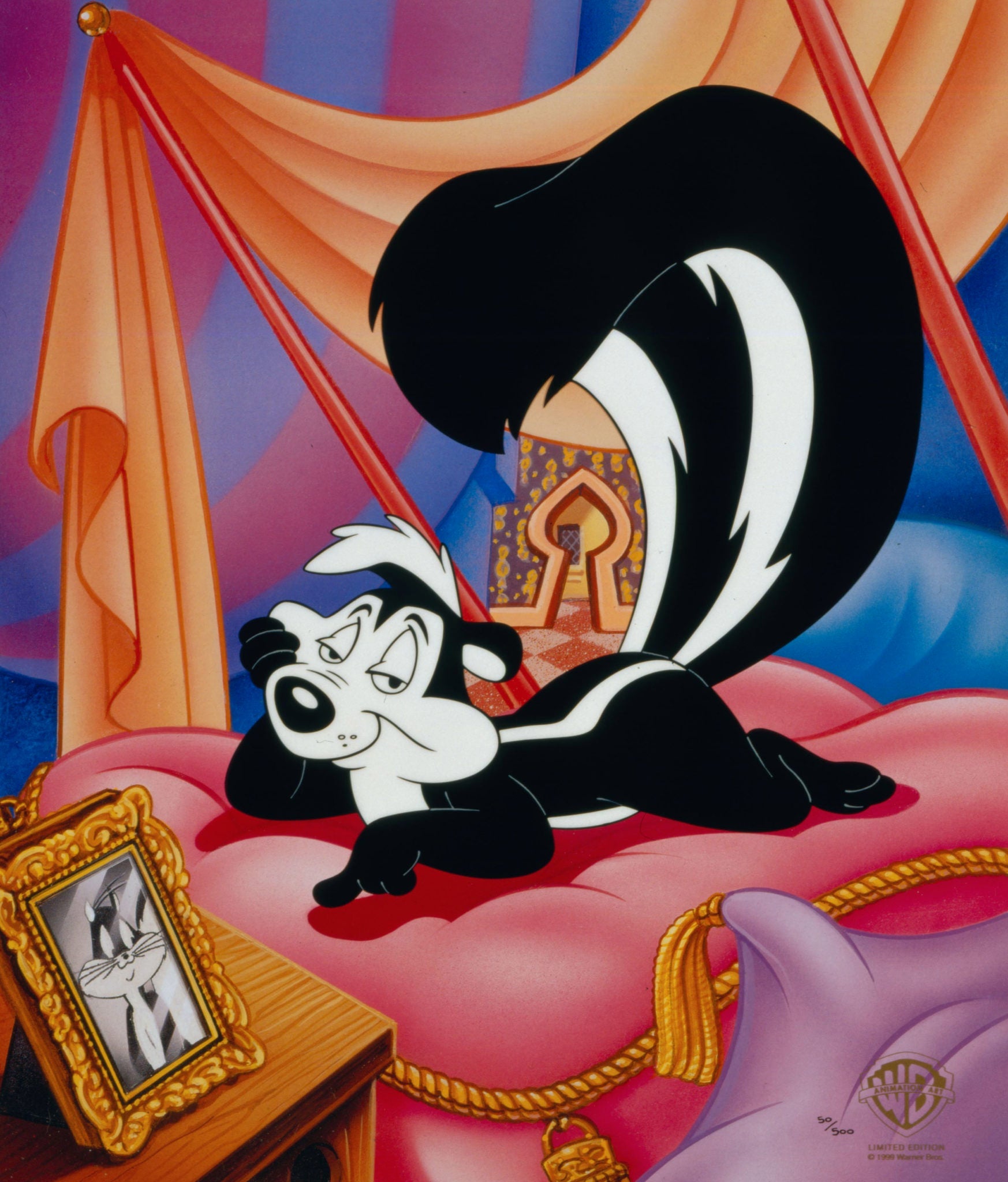
O sotaque francês e o jeito mulherengo do personagem de Boyer inspirou o personagem dos Looney Tunes Pepé Le Pew, apresentado ao público em 1945 com a frase de efeito “Venha comigo para a Casbah”. O filme de 1938 também inspirou “Casablanca”, com seu sucesso de bilheteria servindo de argumento para convencer a Warner Bros a aprovar o projeto do filme em 1942. A MGM, entretanto, não liberou Hedy Lamarr de seu contrato e “Casablanca” teve de ser feita com Ingrid Bergman como protagonista.


The French accent and the womanizing in Charles Boyer’s character inspired the Looney Tunes character Pepé Le Pew, introduced in 1945 with the catchphrase “Come with me to the Casbah”. The 1938 film also inspired “Casablanca”, with its success in the box-office serving as a point to convince Warner Bros to approve the project for the film in 1942. MGM, however, didn’t release Hedy Lamarr from her contract and “Casablanca” had to be made with Ingrid Bergman as the lead.

Um fato para horrorizar os amantes de cinema: enquanto era filmado o remake, Walter Wanger tentou destruir todas as cópias de “O Demônio da Algéria”. Que bom que ele não conseguiu! “O Demônio da Algéria” tem 3,8 estrelas no Letterboxd e sua nota no IMDb é 7,7, enquanto “Argélia” tem respectivamente 3,2 estrelas e nota 6,6. Ambos os filmes são muito bons de maneiras diferentes e vê-los em sequência, embora um pouco cansativo por causa da mesma história, dá origem a um divertido jogo de “encontrar diferenças”.


A fact that will horrify all film lovers: while shooting the remake, Walter Wanger tried to have all the copies of “Pépé Le Moko” destroyed. We’re happy his wish wasn’t granted! “Pépé Le Moko” has 3,8 stars on Letterboxd and its grade is 7,7 on IMDb, while “Algiers” has respectively 3,2 stars and grade 6,6. Both movies are extremely enjoyable and entertaining in their own ways, and a double feature, even though tiring with the same story, serves as a joyful game of “spot the differences”.

Saturday, October 22, 2022

Variações sobre um mesmo tema: Casino Royale (1967 e 2006)

 
Variations on the same theme: Casino Royale (1967 and 2006)


Quem é seu James Bond favorito? Sean Connery? Daniel Craig? Roger Moore? Talvez aquele que interpretou Bond só uma vez, George Lazenby? Ou que tal... David Niven? Sim, você leu certo: David Niven foi James Bond, enquanto Sean Connery já interpretava o espião, mas Niven fez o papel numa paródia: o filme de 1967 “Casino Royale”, filme com grande elenco e dirigido por John Huston – entre outros.


Who is your favorite Bond? Sean Connery? Daniel Craig? Roger Moore? Maybe the one-time Bond George Lazenby? Or how about… David Niven? Yes, you’ve read it right: David Niven was Bond, while Connery was already playing the role, but Niven portrayed the character in a parody: the 1967 film “Casino Royale”, with an all-star cast, directed – among others – by John Huston.

James Bond (Niven) é um agente aposentado. Ele gagueja e é conhecido por ser abstêmio e casto – a única mulher que ele realmente amou foi Mata Hari, ao contrário deste novo 007, chamado de “incompetente” pelo velho Bond. Mas o mundo a espionagem precisa mais uma vez dele, porque espiões de diversos países foram mortos. Os chefes de quatro importantes agências de espionagem ao redor do mundo vão encontrar Bond em sua casa de campo e, após uma tragédia, Bond está de volta ao jogo.


James Bond (Niven) is a retired agent. He stutters and is known for being a teetotaler and for his chastity - the only woman he has ever loved was Mata Hari, unlike this new 007, who the old Bond calls “incompetent”. But the espionage world needs him again, as spies from several countries have been killed. The heads of four important espionage agencies around the world go find Bond in his country home and, after tragedy strikes, Bond comes back to the game.

Uma surpresa vem logo no início: David Niven não é o primeiro na lista de créditos. O primeiro lugar pertence a Peter Sellers, que interpreta o vigarista Evelyn Tremble. É para o personagem de Sellers que é tocada a música “The Look of Love” por Dusty Springfield. Há uma razão para isso: em 1967, Sellers era um astro mais em destaque do que David Niven. Podemos dizer que Niven compartilhava com seu Bond o status de ultrapassado. No meio do filme, Evelyn Tremble praticamente se torna o protagonista, sendo treinado pelo MI-6 e chamado de James Bond para uma missão especial: enfrentar Número (Orson Welles) em um cassino. E Sellers até se apresenta oficialmente como 007 com “Meu nome é Bond. James Bond”!


A surprise comes right in the beginning: David Niven is not first billed. Top billing belongs to Peter Sellers, who plays the swindler Evelyn Tremble. It’s for Sellers’s character that the song “The Look of Love” is performed by Dusty Springfield. This has a reason: in 1967, Sellers was a bigger star than Niven. We could say that Niven shared with his Bond the situation of being outdated. In the middle of the movie, Evelyn Tremble practically becomes the lead, being trained by MI-6 and called James Bond for a special mission: to face the Le Chiffre (Orson Welles) in a casino. And Sellers even manages to utter the official Bond introduction: “My name is Bond, James Bond”!

Ainda antes de David Niven, o segundo nome nos créditos é o de Ursula Andress. Sua presença aqui é de interesse, afinal, ela foi a primeiríssima Bond girl em “007 contra o satânico Dr No” (1962). Mas ela não foi a única pessoa a aparecer em um filme de 007 e na paródia “Casino Royale”, pois muitos outros atores secundários partilham deste feito.


Also before David Niven, the second billed is Ursula Andress. Her presence here is interesting, as she was the first ever Bond girl in “Dr No” (1962). But she wasn’t the only Bond cast member to appear in “Casino Royale”, as many other secondary players were also, one time or another, in a Bond film.

Uma das coisas mais bacanas nos filmes de 007 é ver toda a parafernália tecnológica que o MI-6 inventa para seu agente. Em “Casino Royale”, muitas engenhocas são mencionadas, mas um relógio que se parece muito com um smart watch moderno é o destaque. Outro elemento divertido relacionado à espionagem é a Escola de Espionagem Mata Hari, um prédio que tem seus interiores completamente inspirados pelo Expressionismo Alemão, nos fazendo lembrar de “O Gabinete do Dr Caligari” (1920).


One of the coolest things in Bond movies is seeing all the technological stuff MI-6 comes up with for their agent. In “Casino Royale”, lots of tools are mentioned, but a watch that looks a lot with modern smart watches is the highlight. Another fun espionage-related element is the Mata Hari School of Espionage, a building that has its interiors completely inspired by German Expressionism, reminding us of “The Cabinet of Doctor Caligari” (1920).

O que realmente valoriza este filme é a brincalhona e psicodélica trilha sonora. Falando sério, a trilha sonora é fantástica! Além da já mencionada “The Look of Love”, há o tema de Casino Royale tocado por Herb Alpert e The Tijuana Brass. Ambas as músicas foram compostas por Burt Bacharach, que estava ainda praticamente no começo de sua carreira, mas a apenas dois anos de compor a famosa “Raindrops Keep Falling on my Head”.


What really enhances the film is the playful and groovy soundtrack. Seriously, the soundtrack is amazing! Besides the aforementioned “The Look of Love”, there is the Casino Royale theme played by Herb Alpert and The Tijuana Brass. Both songs were composed by Burt Bacharach, who was practically in the beginning of his career then, but only two years before he composed the famous “Raindrops Keep Falling on my Head”.

Eu mencionei que John Huston foi um dos diretores. “Casino Royale” teve cinco diretores e estourou em muito o orçamento, com Peter Sellers infernizando todos no set, até mesmo Orson Welles, que estava se divertindo à beça fazendo truques de mágica.


I mentioned that John Huston was one of the directors. “Casino Royale” had five directors and went extremely over budget, with Peter Sellers pestering everyone on set, even Orson Welles, who was having the time of his life doing magic tricks to the camera.

Vamos para 2006, quase quarenta anos após “Casino Royale” ter sido feito. Em seu primeiro filme como 007, Daniel Craig tem de enfrentar, no Casino Royale de Montenegro, Le Chiffre (Mads Mikkelsen), um banqueiro ligado a grupos terroristas. Neste filme, o jogo de cartas é uma sequência cheia de suspense, ao contrário do que acontece no filme de 1967, no qual a sequência principal do jogo se torna secundária com toda a maluquice que acontece ao seu redor.   


Cut to 2006, nearly forty years after “Casino Royale” was made. In his first movie as 007, Daniel Craig has to face, in the Casino Royale of Montenegro, Le Chiffre (Mads Mikkelsen), a banker who is tied to terrorist groups. In this, the game sequence is very suspenseful, contrary to what happens in the 1967 movie, in which the main game sequence becomes secondary with all the mayhem happening around.

“Casino Royale”, a paródia, só podia ter sido feita nos anos 60. Por vezes datado, às vezes nem um pouco engraçado, é um produto curioso de seu tempo. É quase um crime comparar este filme com a versão de 2006, que segue mais fielmente o livro de Ian Fleming. “Casino Royale”, então, deve permanecer assim: como uma curiosidade, uma anomalia no universo de 007 – e algo que todos nós devemos experimentar pelo menos uma vez.


“Casino Royale”, the parody, could only have been made in the swinging 1960s. Sometimes dated, at times not even funny, it’s a most curious product of its era. It’s almost a crime to compare this film with the 2006 version, one that was much more faithful to Ian Fleming’s book. “Casino Royale”, then, must remain this: a curiosity, an anomaly in the Bond universe – and something we all should experience at least once.

This is my contribution to The “Take Two!” blogathon, hosted by Annette at Hometowns to Hollywood.

Related Posts Plugin for WordPress, Blogger...