} Crítica Retrô: James Bond

Tradutor / Translator / Traductor / Übersetzer / Traduttore / Traducteur / 翻訳者 / переводчик

Showing posts with label James Bond. Show all posts

Saturday, October 22, 2022

Variações sobre um mesmo tema: Casino Royale (1967 e 2006)

 
Variations on the same theme: Casino Royale (1967 and 2006)


Quem é seu James Bond favorito? Sean Connery? Daniel Craig? Roger Moore? Talvez aquele que interpretou Bond só uma vez, George Lazenby? Ou que tal... David Niven? Sim, você leu certo: David Niven foi James Bond, enquanto Sean Connery já interpretava o espião, mas Niven fez o papel numa paródia: o filme de 1967 “Casino Royale”, filme com grande elenco e dirigido por John Huston – entre outros.


Who is your favorite Bond? Sean Connery? Daniel Craig? Roger Moore? Maybe the one-time Bond George Lazenby? Or how about… David Niven? Yes, you’ve read it right: David Niven was Bond, while Connery was already playing the role, but Niven portrayed the character in a parody: the 1967 film “Casino Royale”, with an all-star cast, directed – among others – by John Huston.

James Bond (Niven) é um agente aposentado. Ele gagueja e é conhecido por ser abstêmio e casto – a única mulher que ele realmente amou foi Mata Hari, ao contrário deste novo 007, chamado de “incompetente” pelo velho Bond. Mas o mundo a espionagem precisa mais uma vez dele, porque espiões de diversos países foram mortos. Os chefes de quatro importantes agências de espionagem ao redor do mundo vão encontrar Bond em sua casa de campo e, após uma tragédia, Bond está de volta ao jogo.


James Bond (Niven) is a retired agent. He stutters and is known for being a teetotaler and for his chastity - the only woman he has ever loved was Mata Hari, unlike this new 007, who the old Bond calls “incompetent”. But the espionage world needs him again, as spies from several countries have been killed. The heads of four important espionage agencies around the world go find Bond in his country home and, after tragedy strikes, Bond comes back to the game.

Uma surpresa vem logo no início: David Niven não é o primeiro na lista de créditos. O primeiro lugar pertence a Peter Sellers, que interpreta o vigarista Evelyn Tremble. É para o personagem de Sellers que é tocada a música “The Look of Love” por Dusty Springfield. Há uma razão para isso: em 1967, Sellers era um astro mais em destaque do que David Niven. Podemos dizer que Niven compartilhava com seu Bond o status de ultrapassado. No meio do filme, Evelyn Tremble praticamente se torna o protagonista, sendo treinado pelo MI-6 e chamado de James Bond para uma missão especial: enfrentar Número (Orson Welles) em um cassino. E Sellers até se apresenta oficialmente como 007 com “Meu nome é Bond. James Bond”!


A surprise comes right in the beginning: David Niven is not first billed. Top billing belongs to Peter Sellers, who plays the swindler Evelyn Tremble. It’s for Sellers’s character that the song “The Look of Love” is performed by Dusty Springfield. This has a reason: in 1967, Sellers was a bigger star than Niven. We could say that Niven shared with his Bond the situation of being outdated. In the middle of the movie, Evelyn Tremble practically becomes the lead, being trained by MI-6 and called James Bond for a special mission: to face the Le Chiffre (Orson Welles) in a casino. And Sellers even manages to utter the official Bond introduction: “My name is Bond, James Bond”!

Ainda antes de David Niven, o segundo nome nos créditos é o de Ursula Andress. Sua presença aqui é de interesse, afinal, ela foi a primeiríssima Bond girl em “007 contra o satânico Dr No” (1962). Mas ela não foi a única pessoa a aparecer em um filme de 007 e na paródia “Casino Royale”, pois muitos outros atores secundários partilham deste feito.


Also before David Niven, the second billed is Ursula Andress. Her presence here is interesting, as she was the first ever Bond girl in “Dr No” (1962). But she wasn’t the only Bond cast member to appear in “Casino Royale”, as many other secondary players were also, one time or another, in a Bond film.

Uma das coisas mais bacanas nos filmes de 007 é ver toda a parafernália tecnológica que o MI-6 inventa para seu agente. Em “Casino Royale”, muitas engenhocas são mencionadas, mas um relógio que se parece muito com um smart watch moderno é o destaque. Outro elemento divertido relacionado à espionagem é a Escola de Espionagem Mata Hari, um prédio que tem seus interiores completamente inspirados pelo Expressionismo Alemão, nos fazendo lembrar de “O Gabinete do Dr Caligari” (1920).


One of the coolest things in Bond movies is seeing all the technological stuff MI-6 comes up with for their agent. In “Casino Royale”, lots of tools are mentioned, but a watch that looks a lot with modern smart watches is the highlight. Another fun espionage-related element is the Mata Hari School of Espionage, a building that has its interiors completely inspired by German Expressionism, reminding us of “The Cabinet of Doctor Caligari” (1920).

O que realmente valoriza este filme é a brincalhona e psicodélica trilha sonora. Falando sério, a trilha sonora é fantástica! Além da já mencionada “The Look of Love”, há o tema de Casino Royale tocado por Herb Alpert e The Tijuana Brass. Ambas as músicas foram compostas por Burt Bacharach, que estava ainda praticamente no começo de sua carreira, mas a apenas dois anos de compor a famosa “Raindrops Keep Falling on my Head”.


What really enhances the film is the playful and groovy soundtrack. Seriously, the soundtrack is amazing! Besides the aforementioned “The Look of Love”, there is the Casino Royale theme played by Herb Alpert and The Tijuana Brass. Both songs were composed by Burt Bacharach, who was practically in the beginning of his career then, but only two years before he composed the famous “Raindrops Keep Falling on my Head”.

Eu mencionei que John Huston foi um dos diretores. “Casino Royale” teve cinco diretores e estourou em muito o orçamento, com Peter Sellers infernizando todos no set, até mesmo Orson Welles, que estava se divertindo à beça fazendo truques de mágica.


I mentioned that John Huston was one of the directors. “Casino Royale” had five directors and went extremely over budget, with Peter Sellers pestering everyone on set, even Orson Welles, who was having the time of his life doing magic tricks to the camera.

Vamos para 2006, quase quarenta anos após “Casino Royale” ter sido feito. Em seu primeiro filme como 007, Daniel Craig tem de enfrentar, no Casino Royale de Montenegro, Le Chiffre (Mads Mikkelsen), um banqueiro ligado a grupos terroristas. Neste filme, o jogo de cartas é uma sequência cheia de suspense, ao contrário do que acontece no filme de 1967, no qual a sequência principal do jogo se torna secundária com toda a maluquice que acontece ao seu redor.   


Cut to 2006, nearly forty years after “Casino Royale” was made. In his first movie as 007, Daniel Craig has to face, in the Casino Royale of Montenegro, Le Chiffre (Mads Mikkelsen), a banker who is tied to terrorist groups. In this, the game sequence is very suspenseful, contrary to what happens in the 1967 movie, in which the main game sequence becomes secondary with all the mayhem happening around.

“Casino Royale”, a paródia, só podia ter sido feita nos anos 60. Por vezes datado, às vezes nem um pouco engraçado, é um produto curioso de seu tempo. É quase um crime comparar este filme com a versão de 2006, que segue mais fielmente o livro de Ian Fleming. “Casino Royale”, então, deve permanecer assim: como uma curiosidade, uma anomalia no universo de 007 – e algo que todos nós devemos experimentar pelo menos uma vez.


“Casino Royale”, the parody, could only have been made in the swinging 1960s. Sometimes dated, at times not even funny, it’s a most curious product of its era. It’s almost a crime to compare this film with the 2006 version, one that was much more faithful to Ian Fleming’s book. “Casino Royale”, then, must remain this: a curiosity, an anomaly in the Bond universe – and something we all should experience at least once.

This is my contribution to The “Take Two!” blogathon, hosted by Annette at Hometowns to Hollywood.

Saturday, December 18, 2021

Robin e Marian (1976) / Robin and Marian (1976)


Costumamos focar tanto na aventura que em geral esquecemos que a lenda de Robin Hood também é uma história de amor. Maid Marian, a garota de Robin Hood, foi interpretada por Olivia de Havilland em “As Aventuras de Robin Hood” (1938) e retratada como uma raposa de vestido rosa e lilás em “Robin Hood” (1973) da Disney, mas o relacionamento deles nunca foi o foco do filme. Corta para 1976, quando os superastros Sean Connery e Audrey Hepburn – que estava longe das telas desde 1967 – foram escalados como Robin e Marian maduros em um filme que mostra que o amor pode ser a maior aventura de todas.

We focus so much in the adventure side of the tale that we often forget that the Robin Hood legend is also a love story. Maid Marian, Robin Hood’s girl, was played by Olivia de Havilland in “The Adventures of Robin Hood” (1938) and portrayed as a fox in a pink and lilac dress in Disney's “Robin Hood” (1973), but their relatioship was never the focus of the movie. Cut to 1976, when superstars Sean Connery and Audrey Hepburn – who had been far from the screens since 1967 – were cast as older Robin and Marian in a film that shows that love may be the biggest adventure there is.

Depois de 20 anos seguindo o rei Ricardo Coração de Leão (Richard Harris), Robin Hood (Sean Connery) o desobedece pela primeira vez. Parece que o coração de Ricardo não era tão bom assim, pois ele ordena que Robin destrua um castelo francês ocupado apenas por mulheres, crianças e um velho. Por sua desobediência, Robin é enviado para um calabouço com seu braço direito, Little John (Nicol Williamson). No dia seguinte, pouco antes de morrer, o rei Ricardo liberta Robin e John.

After 20 years following king Richard the Lionheart (Richard Harris), Robin Hood (Sean Connery) disobeys him for the first time. It looks like Richard’s heart is not so good after all, as he orders Robin to destroy a French castle that has only women, children and an old man inside. For his disobedience, Robin is sent to the dungeons with his right-hand man, Little John (Nicol Williamson). The following day, just before dying, king Richard lets Robin and John go.

Atravessando as florestas rumo à Inglaterra, Robin e John encontram velhos amigos, como Friar Tuck (Ronnie Barker), para quem Robin pergunta sobre Marian, alguém em quem, ele afirma, ele não havia pensado por anos. Marian ainda está nas redondezas, e o mesmo se aplica ao Xerife de Nottingham (Robert Shaw). Robin vai atrás dela e se surpreende ao descobrir que Maid Marian (Audrey Hepburn) é agora uma freira que ajuda os doentes.

Going through the woods back to England, Robin and John meet old friends, such as Friar Tuck (Ronnie Barker), to whom Robin inquires about Marian, someone who, he claims, he hasn’t thought about in years. Marian is still around, and so is the Sheriff of Nottingham (Robert Shaw). Robin goes after her and is surprised to find out that maid Maid Marian (Audrey Hepburn) is now a nun helping the sick.

O Xerife de Nottingham ordenou a prisão de Marian num ato de intolerância religiosa, e ela está disposta a ir sem lutar. Robin não deixa que ela seja presa e a leva para a floresta e, acampados junto aos amigos de Robin e a outras freiras resgatadas, eles reiniciam seu romance enquanto esperam pelo confronto com o Xerife de Nottingham.

The Sheriff of Nottingham has ordered Marian’s arrest in an act of religious intolerance, and she’s willing to go without fighting. Robin doesn’t let her and takes her to the woods and, camping along Robin’s friends and other rescued nuns, they reignite their romance while waiting for the confront with the Sheriff of Nottingham.

"Robin e Marian” foi dirigido por Richard Lester, que também dirigiu “Os Reis do Iê-iê-iê” (1964) e “Help!” (1965), entre outros filmes. Aqui, ele está muito mais contido e escolhe tons de marrom e bege como predominantes na fotografia. Como Roger Ebert escreveu em sua crítica, “ele fotografa a Floresta de Sherwood e seus personagens com um bom realismo que é melhor que a solenidade pretensiosa que às vezes vemos em filmes históricos”.

"Robin and Marian” was directed by Richard Lester, who also directed “A Hard Day’s Night” (1964) and “Help!” (1965), among other movies. Here, he is much more restrained and chooses tones of brown and beige as predominant in the photography. As Roger Ebert wrote in his review, “he photographs Sherwood Forest and its characters with a nice off-hand realism that's better than the pretentious solemnity we sometimes get in historical pictures.”

A trilha sonora foi composta por John Barry. Ele também compôs a trilha de 11 filmes de James Bond e foi responsável por dar forma ao inconfundível tema musical de 007. Barry escolheu “007 Contra Goldfinger” (1964) como sua trilha sonora favorita e “007 Contra o Homem com a Pistola de Ouro” (1974) como a que menos gostou, pois teve apenas três semanas para compô-la.

The soundtrack was composed by John Barry. He also composed the soundtrack of 11 James Bond movies, and was responsible for shaping the now unmistakable 007 theme song. Barry has chosen “Goldfinger” (1964) as his favorite score, and “The Man with the Golden Gun” (1974) as his least favorite, because he had only three weeks to work on it.

Esta não é a primeira vez em que Audrey Hepburn interpreta uma freira. Em 1959 ela fez “Uma Cruz à Beira do Abismo”, sobre as dificuldades enfrentadas por uma jovem ingênua ao entrar para o convento. Em “Robin e Marian”, ela interpreta uma freira mais independente, e tem ótima química com Sean Connery – o que é bastante curioso, porque os produtores queriam que Connery interpretasse Little John, com Albert Finney como Robin Hood.

This is not the first time Audrey Hepburn has played a nun. In 1959 she did “A Nun’s Story”, about the hardships a young and naïve woman faces when she joins a nunnery. In “Robin and Marian”, she plays a more independent nun, and has a great chemistry with Sean Connery – which is quite curious, since the producers wanted Connery to play Little John, with Albert Finney as Robin Hood.

A Wikipedia diz que “Robin e Marian” foi a primeira vez na cultura popular que o rei Ricardo Coração de Leão foi retratado como uma figura menos-que-perfeita. Na vida real, Ricardo realmente morreu com uma flechada no pescoço por pensar que não precisava usar armadura durante o cerco de um castelo. Ricardo Coração de Leão também é conhecido como Ricardo I da Inglaterra, e foi rei por apenas 10 anos, de 1189 a 1199.

Wikipedia says that “Robin and Marian” was the first time in popular culture that king Richard the Lionheart was portrayed as a less-than-perfect figure. In real life, Richard did die from an arrow in his neck because he thought he didn’t need to wear armor while besieging a castle. Richard the Lionheart is also known as Richard I of England, and was king for only ten years, from 1189 to 1199.

"Robin e Marian” tem um equilíbrio perfeito de romance e aventura. Há beijos e promessas de amor, mas também paredes sendo escaladas, luta de espadas e muitas flechadas. Parcialmente filmado na Espanha, o estilo do filme é um destaque e “Robin e Marian” acerta em tantos aspectos que se mostra uma excelente adição ao cânone de Robin Hood.

Robin and Marian” has the right balance of romance and adventure. There’s kissing and love promises, but there is also wall climbing, sword fights and many arrows shot. Partially shot in Spain, the looks of the movie are a highlight and “Robin and Marian” does it right in so many aspects that ends up being a great addition to the Robin Hood canon.

This is my contribution to the You Knew my Name: The Bond Not Bond blogathon, hosted by Gill and Gabriella at Realweegiemidget Reviews and Pale Writer.

Thursday, April 25, 2019

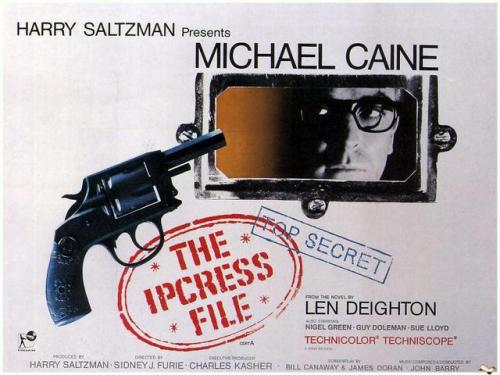
Ipcress: Arquivo Confidencial (1965) / The Ipcress File (1965)


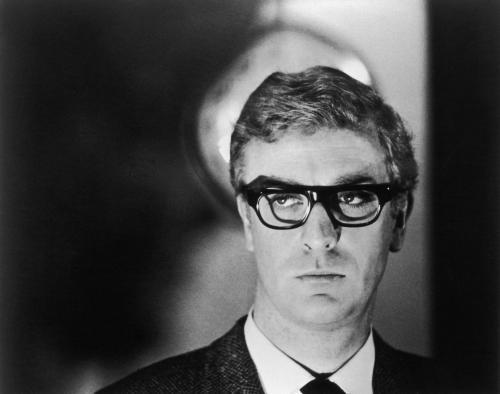
O investigador Harry Palmer foi criado para ser o oposto de James Bond. Ele deveria ser um homem comum que não usa engenhocas em suas missões e que nem sempre se ocupa de seduzir mulheres bonitas. Até seu nome deveria ser bobo: Harry Palmer foi o nome mais bobo em que Michael Caine conseguiu pensar para o personagem. Mas o primeiro filme de Harry Palmer, “Ipcress – Arquivo Confidencial” (1965), não tem nada de bobo.

Investigator Harry Palmer was created to be an anti-Bond. He is supposed to be a common man who does not use gadgets in his missions and who is not always seducing beautiful women. Even his name is supposed to be boring: Harry Palmer was the most boring name Michael Caine could come with for the character. But Harry Palmer’s first film, “The Ipcress File” (1965), is not boring at all.


O ótimo porém insolente sargento Harry Palmer (Michael Caine) é transferido pelo coronel Ross (Guy Doleman) para uma nova função, ficando no lugar de um homem que foi morto recentemente. Este homem estava investigando a aposentadoria repentina de grandes cientistas que estavam bem e de repente perderam suas habilidades.

Great yet insolent sergeant Harry Palmer (Michael Caine) is transferred by Colonel Ross (Guy Doleman) to a new position, replacing a man who had just been killed. This deceased man was investigating the sudden retirement of top-notch scientists who were just fine and suddenly couldn't function anymore.


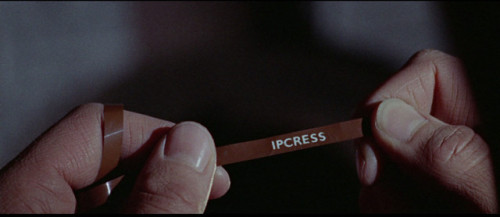
Harry pode estar trabalhando para o major Dalby (Nigel Green), mas ele ainda prefere suas velhas técnicas de investigação. Não importa o que Harry faça, Dalby acha que “não é bom o suficiente”. Isso acontece até que Harry e a equipe encontram uma fita de áudio onde está escrito “Ipcress”.

Harry might be working for major Dalby (Nigel Green) now, but he still prefers his old investigation techniques. No matter what Harry does, Dalby thinks “It's not good enough”. This happens until Harry and the team find an audiotape with “Ipcress” written on it.


Descobrir a função da fita não será o único desafio de Harry: ele também se envolverá com uma agente, descobrirá que tanto Rossa quanto Dalby querem a fita e será cobaia em um experimento torturante. Para tornar tudo um pouco pior, Harry será seguido por um homem com óculos de armação quebrada.

Finding out what the tape does won't be Harry's only challenge: he will also get involved with a female agent, he will find out that both Ross and Dalby want the tape and he will go through a torturing experience. To make things a bit worse, Harry will be followed everywhere by a man with broken glasses.


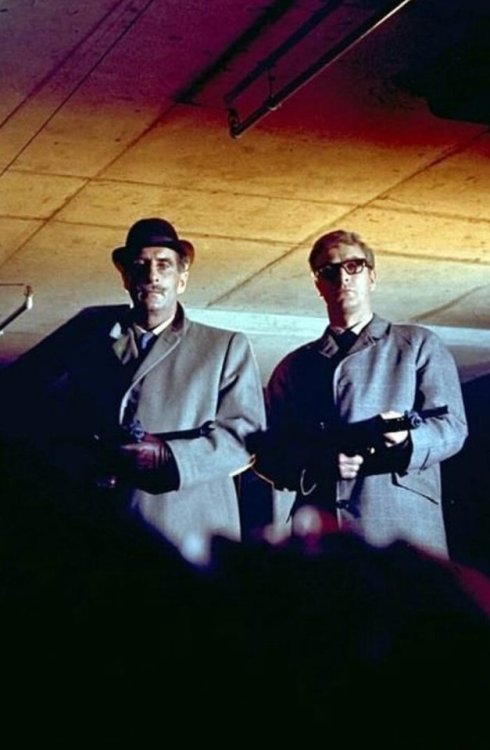
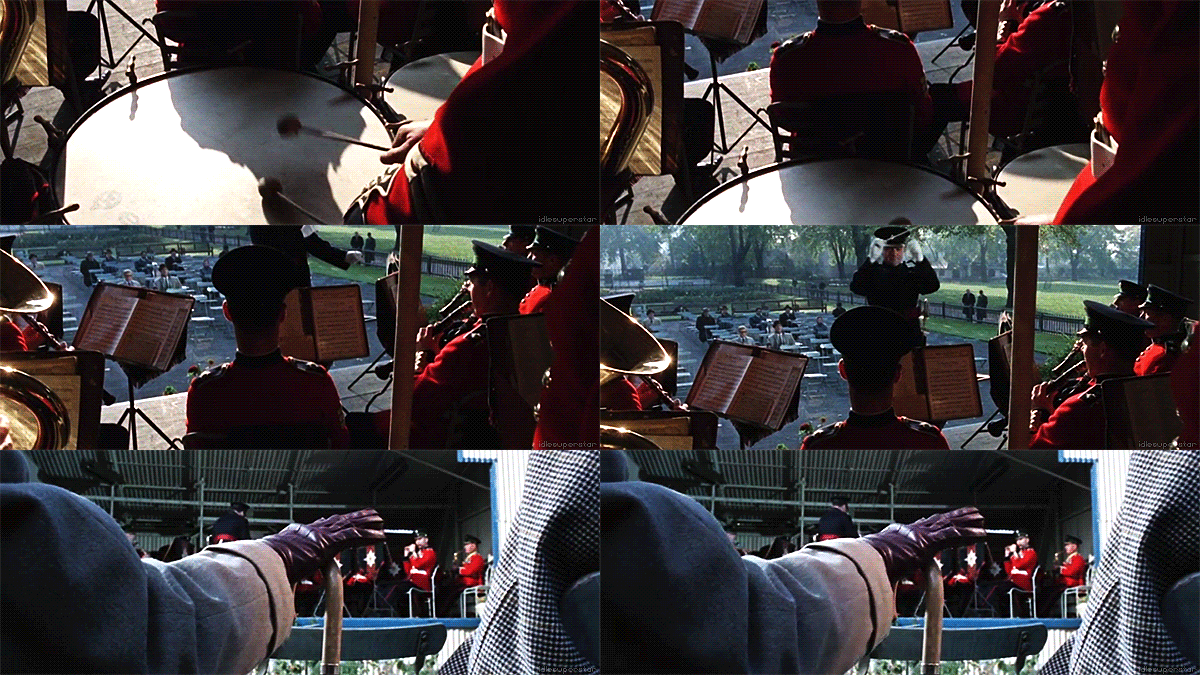
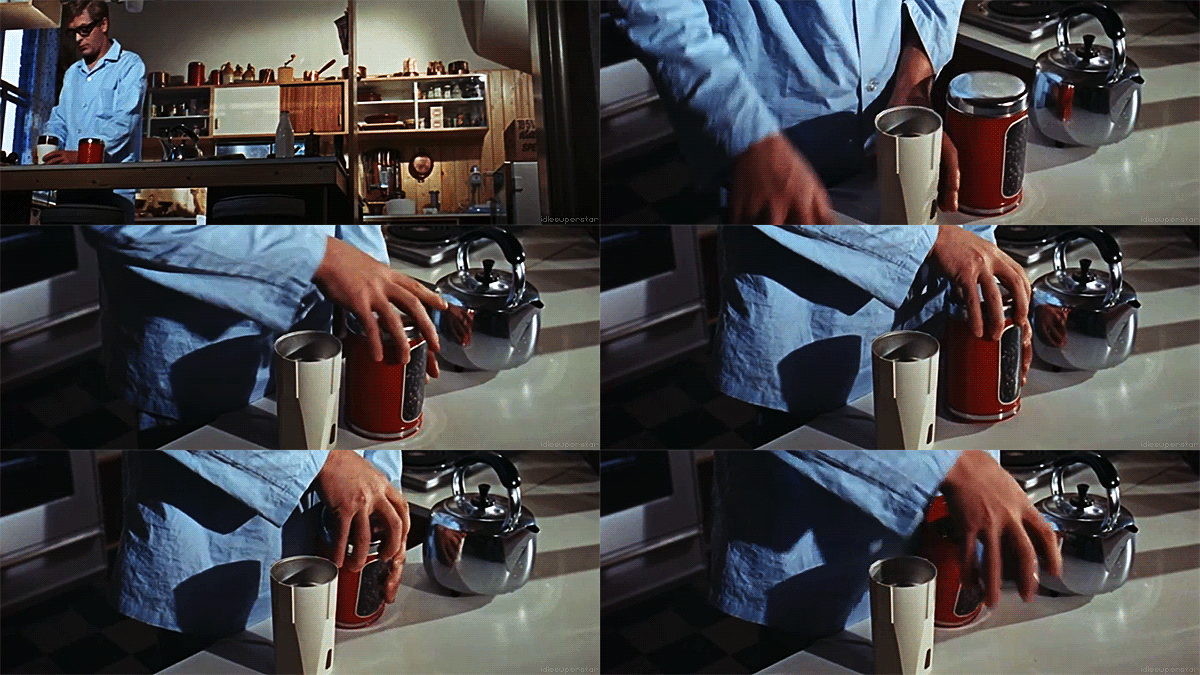
“Ipcress – Arquivo Confidencial” é um filme com uma trama muito complexa – quase tão complexa quanto a de “O Espião que Sabia Demais” (2011). Mesmo assim, há espaço para humor quando Harry e seu chefe conversam, de maneira não muito amigável, enquanto fazem compras de supermercado. Há também uma sequência de muito suspense em uma garagem subterrânea onde um homem ferido é resgatado.

“The Ipcress File” is a film with a very complex plot – almost as complex as “Tinker Taylor Soldier Spy” (2011). Nevertheless, there is room for humor as Harry and his boss talk, not exactly in an amicable way, while they do grocery shop. There is also a very suspenseful sequence in an underground parking lot as a hurt man is traded by cash.


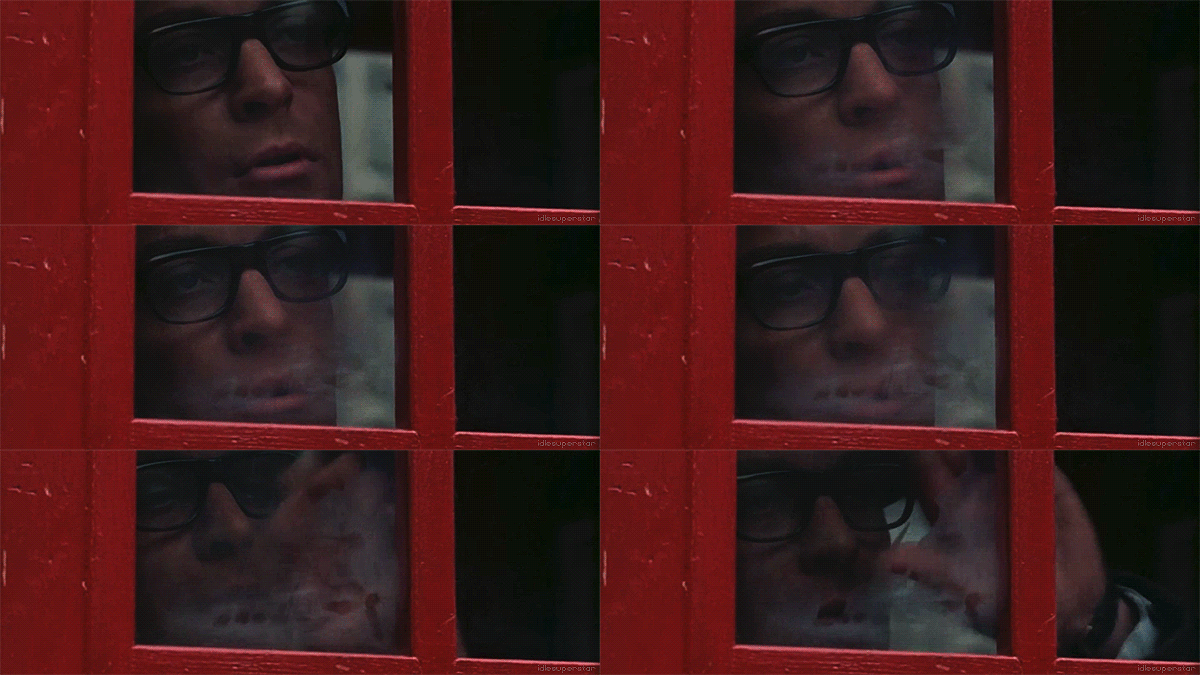
Há uma boa quantidade de ângulos criativos, que nos fazem ver a ação através de lentes de óculos, cabines telefônicas transparentes, pequenas aberturas e buracos nas paredes. De acordo com Michael Caine, o diretor Sidney Furie decidiu filmar as cenas como se o público estivesse seguindo a ação detrás de alguma coisa, como um agente escondido.

There is a fine amount of creative shots, making us see the action through glass lenses, transparent telephone boots, small apertures and holes in walls. According to Michael Caine, director Sidney Furie deliberately chose to shoot the film as the public was following the action hiding behind something, as an undercover agent.


Havia muitas pessoas trabalhando em “Ipcress – Arquivo Confidencial” que haviam trabalhado em filmes do 007:  o produtor Harry Saltzman, o editor Peter Hunt, o designer de produção Ken Adam e o compositor John Barry. Sendo profissionais versáteis, eles conseguiram criar uma atmosfera muito diferente da dos filmes de James Bond – a diferença mais perceptível é a música.

There were many people working on “The Ipcress File” who had also worked in Bond movies: producer Harry Saltzman, editor Peter Hunt, production designer Ken Adam and composer John Barry. As versatile professionals, they managed to create an atmosphere as far from the Bond movies as possible – the most perceptible difference is the soundtrack.


“Ipcress – Arquivo Confidencial” foi um livro escrito por Len Deighton e publicado em 1962. No livro, narrado em primeira pessoa, o agente principal não tem nome. Já que é raro para uma película ser filmada com ponto de vista de primeira pessoa – a primeira metade de “Prisioneiro do Passado” (1947) é uma exceção – os produtores precisavam de um nome para nosso anti-herói. Michael Caine sugeriu o nome, e usou o sobrenome de seu colega de escola mais chato. Caine também escolheu manter os óculos que o personagem usava no livro para fazer Palmer mais humano – e para ajudar na caracterização de Caine, já que o ator usa óculos na vida real. Como alguém que usa óculos, fico feliz em ver um investigador cuja vista é tão ruim quanto a minha.

“The Ipcress File” was a book written by Len Deighton and published in 1962. In the book, narrated in the first person, the lead agent had no name. Since it’s rare for a movie to be filmed with a first person point-of-view – with the first half of “Dark Passage” (1947) being one exception – the producers needed a name for our anti-hero. Michael Caine suggested the name, and took the surname from his most boring school classmate. Caine also chose to keep the glasses the character used in the novel as a way to make Palmer more down-to-Earth – and to help Caine’s characterization, as the actor wears glasses in real life. As someone who wears glasses, I’m happy to see an investigator whose sight is as bad as mine.


“Ipcress – Arquivo Confidencial” deu origem a uma pequena série de filmes – foram seis no total. Michael Caine não interpretou o protagonista em apenas um deles, “Spy Story” (1976), no qual o protagonista recebeu outro nome. Os dois últimos filmes da série não oficial de Harry Palmer foram feitos diretamente para a TV.

“The Ipcress File” originated a small series of films – there were six in total. Michael Caine didn’t play the lead in only one of the films, “Spy Story” (1976), in which the lead was also renamed. The last two films of the unofficial Harry Palmer series were made for TV in the 1990s.


“Ipcress – Arquivo Confidencial” foi um grande sucesso. E como foi também o primeiro filme de Michael Caine como protagonista, ele logo se tornou uma grande estrela – e ele nem era a primeira opção do produtor: Saltzman queria Christopher Plummer para o papel, mas Plummer preferiu fazer “A Noviça Rebelde”. Em 1999, “Ipcress – Arquivo Confidencial” foi escolhido o 59º melhor filme inglês pelo Instituto de Cinema Britânico. E, mesmo com Harry Palmer tendo sido criado para ser o oposto de James Bond, temos de concordar que Michael Caine é tão bacana quanto qualquer ator que fez 007, não?

“The Ipcress File” was a huge success. As it was Michael Caine’s first time as he lead, he soon became a superstar – and he wasn’t even the producer’s first choice: Saltzman wanted Christopher Plummer for the role, but Plummer chose to do “The Sound of Music” instead. In 1999, “The Ipcress File” was voted the 59th best British film ever by the British Film Institute. And, even though Harry Palmer was created to be an anti-Bond, we all can agree that Michael Caine is as cool as any actor who played agent 007, isn’t he?

This is my contribution to the Second Marvellous Michael Caine blogathon, hosted by Gill at Realweegiemidget Reviews.


Tuesday, January 21, 2014

E se... Skyfall fosse protagonizado por Sean Connery?

O ano é 1965. Já estreou “007 contra o satânico Dr No / Dr No” em 1962, Bond já fez seu esforço anti-soviético em “Moscou contra 007 / From Russi with Love” em 1963 e já surgiu nas telas talvez o mais icônico filme do agente, “007 contra Goldfinger / Goldfinger” em 1964. Imagine que os livros de Ian Fleming não são mais interessantes e a ideia é criar uma história original com o personagem. Sim, porque o roteiro de “007 – Operação Skyfall / Skyfall”, de 2012, é original, e com certeza muitos saudosistas assistiram a esse filme pensando: “Sean Connery foi o melhor James Bond!”. Bem , e se Skyfall fosse feito em 1965?

James Bond (Daniel Craig): Sean Connery
M (Judi Dench): Marlene Dietrich
Silva (Javier Barden): Anthony Perkins
Eve Moneypenny (Naomie Harris): Rita Moreno
Gareth Mallory (Ralph Fiennes): Bing Crosby
Q (Ben Whishaw): Dean Stockwell

Na década de 1960, eram poucas as atrizes que chegavam à meia-idade e continuavam com bons papéis. Ou era interpretar a vovozinha ou aposentadoria. Mas não para Marlene Dietrich. A alemã nunca se curvou aos estereótipos de Hollywood e continuou com papéis marcantes, como em “Testemunha de Acusação / Witness for the Prosecution” (1957) e “O Julgamento de Nuremberg / Judgement in Nuremberg” (1960). Ela seria perfeita para o papel de M, a chefe meio mãe de 007.
E que clichê temos aqui? Considero Anthony Perkins um ator muito versátil, mas que não conseguiu escapar do fantasma de Norman Bates. E, se pensarmos bem, o vilão Silva tem algo em comum com Norman...
Hoje 007 tem uma companheira mulata, mas isso seria pouco provável na década de 1960. Mesmo assim, o papel de fica com Rita Moreno, cuja carreira estava no auge após receber o Oscar em 1962.
Mallory, personagem de Ralph Fiennes, é o presidente do Comitê de Inteligência e Segurança, e está cotado para ficar no lugar de M. Acredito que Fiennes tem uma pequena semelhança com Bing Crosby. E quem não gostaria de ver Bing e Marlene Dietrich brigando pelo cargo de chefe do MI6?
Dean Stockwell, um dos poucos atores mirins que prosperaram na carreira, seria o jovem gênio do MI6, Q, o responsável pelas geringonças mirabolantes usadas por Bond.
Sean Connery teria muitas oportunidades para mostrar seu físico e seu peito peludo nas mesmas situações que Daniel Craig o fez. Passando pela China, Turquia e pela velha propriedade da família Bond, o 007 original teria árias cenas de ação a serem filmadas.
Ah, antes que eu me esqueça: a música ganhadora do Oscar, Skyfall, seria cantada por Dusty Springfield.

Seria ou não um sucesso?

Related Posts Plugin for WordPress, Blogger...