} Crítica Retrô: comédia

Tradutor / Translator / Traductor / Übersetzer / Traduttore / Traducteur / 翻訳者 / переводчик

Showing posts with label comédia. Show all posts

Friday, September 11, 2026

Ser ou Não Ser (1942) / To Be or Not to Be (1942)

 Ser ou não ser: eis a questão. A frase de Shakespeare conhecida até mesmo por quem não sabe quem foi Shakespeare. Naquele que seria o último filme de Carole Lombard, a frase é um código para um encontro furtivo entre amantes. Nas habilidosas mãos de Ernst Lubitsch, aqui como diretor e produtor, a frase também funciona como o título de uma comédia de humor negro essencial dentro da História do cinema.

To be or not to be: that’s the question. The Shakespearean line known even by those who don’t know who Shakespeare was. In what was Carole Lombard’s last film, the line is a code for a furtive encounter between lovers. In the skillful hands of Ernst Lubitsch, here as both director and producer, the line also works as the title of a quintessential black comedy.

Damos a primeira risada quando Bronski (Tom Dugan), vestido como Hitler, faz a saudação nazista e diz “Heil, eu”. Tudo o que havíamos presenciado até então não é nada além de uma peça encenada pela companhia do Sr Dobosh (Charles Halton). É agosto de 1939 na Polônia e a peça “Gestapo” não pode estrear porque pode desagradar a Hitler. Eles então reencenam Hamlet.

The first laugh is upon us when Bronski (Tom Dugan), dressed as Hitler, does the Nazi salute and says “Heil, me”. All we had been witnessing is nothing but a play staged by the company that belongs to Mr Dobosh (Charles Halton). It’s August 1939 in Poland and their play “Gestapo” can’t open because it may upset Hitler. They go on to stage Hamlet once again.

As principais estrelas da companhia são Joseph Tura (Jack Benny) e sua esposa Maria (Carole Lombard). Maria recebe a visita de um piloto, Stanislav Sobinski (Robert Stack), sempre que seu marido está no meio do famoso solilóquio “ser ou não ser”. E então a guerra é declarada. 

The company’s main stars are Joseph Tura (Jack Benny) and his wife Maria (Carole Lombard). Maria receives the visit of a pilot, Stanislav Sobinski (Robert Stack), always when her husband is in the middle of the “to be or not to be” soliloquy. War is then declared.

Stanislav vai para a Inglaterra para se juntar à Real Força Aérea britânica. Lá ele se aproxima de um professor chamado Siletsky (Stanley Ridges), que diz ser polonês. Mas ele nunca ouviu falar de Maria Tura, o que acende um sinal de alerta na mente de Stanislav. Siletsky vai para Varsóvia e Stanislav o segue, temendo que ele possa ser um agente alemão levando informações secretas para a Gestapo. Stanislav envolve Joseph e Maria no jogo de espionagem.

Stanislav goes to England to join the Royal Air Force, the RAF. There he befriends a professor named Siletsky (Stanley Ridges) who claims to be Polish. But he had never heard of Maria Tura, which is a red flag according to Stanislav. Siletsky goes to Warsaw and Stanislav follows him, fearing he could be a German agent bringing top secret information to the Gestapo. Stanislav then involves Maria and Joseph in the espionage game.

Durante a guerra, entregar uma mensagem podia ser uma missão complexa. Você tinha que falar através de códigos que só as pessoas certas sabiam. Você tinha que carregar fotos em lugares incomuns. Você tinha que esconder as evidências. Você não podia se comunicar rapidamente pelo telefone ou por mensagens de texto. Mas você também não conhecia o rosto das pessoas, o que permite, por exemplo, que Joseph finja ser o coronel Ehrhardt para econtrar Siletsky.  

During the war, delivering a message could be a tricky task. You had to speak using codes that only the right people knew. You had to take photos in the most unusual places. You had to hide evidence. You couldn’t communicate quickly through the phone or text message. But you also didn’t know the face of the person you had to meet, which allows, for instance, Joseph to pose as colonel Ehrhardt for Siletsky.

Jack Benny é mais conhecido por seu trabalho no rádio e na televisão. Ele foi a primeira e única opção para interpretar Joseph Tura, pois Lubitsch escreveu o personagem com o ator em mente. Isso levou Benny a aceitar o papel de imediato. Entretanto, para a protagonista feminina a primeira opção foi Miriam Hopkins, mas ela e Jack Benny não se deram bem e Carole Lombard foi escalada. 

Jack Benny is better known for his radio and television work. He was the first and only option to play Joseph Tura, as Lubitsch wrote the character with the actor in mind. This led to Benny accepting the role immediately. However, for the female lead the first option was Miriam Hopkins, but she and Jack Benny didn’t get along, so Carole Lombard was cast instead.

A única indicação para o Oscar que este filme teve foi na categoria Melhor Música. A trilha sonora deveria ter sido composta por Miklós Rózsa, mas ele não concordou com uma sátira ao regime Nazista e recusou o trabalho. Rózsa era húngaro, assim como o produtor Alexander Korda, e foi substituído pelo judeu alemão Werner Heymann, que já havia trabalhado com Lubitsch anteriormente. Curiosidade: naquele ano, 18 filmes foram indicados ao Oscar de Melhor Música! 

The only nomination for the Oscar for this film came for Best Music. The soundtrack was supposed to have been composed by Miklós Rózsa, but he didn’t agree with a satirization of the Nazi regime and refused the job. Rózsa was Hungarian, as was the producer Alexander Korda, and was replaced by Jewish and German Werner Heymann, who had worked with Lubitsch previously. Curious tidbit: that year, 18 films were nominated for the Best Music Oscar! 

O filme estreou logo depois de os EUA entrarem na guerra. Carole Lombard, podemos dizer, foi vítima da guerra, pois faleceu num acidente de avião numa campanha de bônus de guerra dias depois de terminar de rodar “Ser ou Não Ser”.  

The movie premiered right after the USA entered the war. Carole Lombard, we could say, was a victim of the war, as she died in a plane crash while promoting war bonds days after she finished shooting “To Be or Not to Be”.

Anos antes de assistir a este filme, assisti ao remake de 1983 com Mel Brooks. Lembro que era um filme divertido, mas nem tanto quanto o original, e também tinha menos senso de urgência que o filme de Lubitsch. Fazer piada com os nazistas em 1983 era anacrônico, fazer piada com os nazistas em 1942 e hoje é catártico. Se toda catarse fosse como este filme hilário, o mundo seria um fardo bem mais leve de carregar.  

Years before I watched this film, I watched the 1983 remake with Mel Brooks. I remember it being funny, but not as much as the original, and also lacking the sense of urgency the Lubitsch film has. Making fun of Nazis in the 1980s was anachronistic, making fun of Nazis in the 1940s and nowadays is a catharsis. If all catharsis could play like this hilarious film, the world would be a lighter burden for us to carry.

Friday, July 10, 2026

Natal em Julho (1940) / Christmas in July (1940)


Sempre me interessei pelo conceito de Natal em julho, desde a primeira vez que ouvi essa expressão em inglês. Faria sentido para nós no Brasil celebrarmos o Papai Noel numa época de frio. Mas o Natal é mais que isso. O Natal é, para nosso mundo capitalista, sobre presentes. Não há decorações de Natal nem celebrações religiosas no filme intitulado “Natal em Julho”, mas há muitos presentes. E tem mais: a grande felicidade que sentimos durante as festividades.

I’ve always been interested in the concept of Christmas in July, ever since I’ve heard the expression. It would make sense for us in Brazil to celebrate Santa Claus when it’s cold outside. But Christmas is more than that. Christmas is, for our capitalist world, all about gifts. There aren’t Christmas decorations or religious celebrations in the little movie titled “Christmas in July”, but there are gifts galore. And there is, of course, the amazing joy we all feel during the holidays.


O jovem casal Jim (Dick Powell) e Betty (Ellen Drew) estão no telhado de seu prédio fazendo planos para o futuro e esperando o resultado de um concurso de rádio do qual Jim participou. Não foi só ele: mais de duas milhões de cartas com ideias para um novo slogan para uma empresa de café foram enviadas para a rádio e precisam anunciar o feliz vencedor que ganhará 25 mil dólares! Mas o júri não chega a um veredicto. 

The young couple Jim (Dick Powell) and Betty (Ellen Drew) are on a rooftop making plans for their future and waiting for  the result of a radio contest Jim took part in. Not only him: over two million responses for a new slogan for a coffee company were sent to the radio and they need to announce the happy winner who will win 25,000 dollars! But the jury can’t reach a verdict.


Jim e Betty trabalham juntos no escritório de uma companhia de café. É um ambiente de trabalho visto antes em “A Turba” (1928) e depois em “Se meu Apartamento Falasse” (1960), com todas as mesas enfileiradas. Sabendo que o casal está esperando o resultado, três colegas de trabalho falsificam um telegrama dizendo que Jim ganhou o concurso. E aí as coisas saem do controle.

Jim and Betty work together in an office of a coffee firm. It’s a working environment seen before in “The Crowd” (1928) and later in “The Apartment” (1960), with all the desks one after another. Knowing that the couple is waiting for the result, three co-workers forge a telegram saying that Jim won the contest. Then things spiral out of control.


Logo Jim está na sala do chefe, sugerindo novos slogans e estratégias de marketing. Ele compra coisas para Betty, para a mãe, para os amigos e vizinhos. Ele enche três táxis com pequenos presentes. É realmente Natal em julho.

Soon Jim is at his boss’ room, suggesting new slogans and marketing strategies. He buys things for Betty, for his mother, for their friends and neighbors. He fills three taxis with small gifts. It’s really Christmas in July.


É curioso ver estações de rádio com plateia e orquestra, mas era assim mesmo no passado, antes do advento da televisão, quando famílias e colegas de trabalho se juntando ao redor do aparelho para ouvir os programas. Fiquei surpresa ao descobrir, na minha aula de mídia na pós-graduação, que muitas, muitas pessoas ainda ouvem o rádio com regularidade. 

It’s curious to see radio studios with an audience and orchestra, but they were really this way in the past, before the advent of television, when families and co-workers reunited around a radio to listen to the shows. I was surprised to learn in my post-graduation media class that many, many people still listen to the radio often, but they do! 


O primeiro prêmio de 25 mil dólares é equivalente a 550 mil hoje. Curiosidade: conversões como esta são mais difíceis de fazer no Brasil porque tivemos muitas mudanças de moeda no último século. Outra dificuldade no Brasil: traduzir os trocadilhos que Jim faz para seus slogans!

The first prize of 25,000 dollars is equivalent to 550,000 nowadays. Curious fact: conversions like this are trickier to do here in Brazil because we had many changes of coins in the past century. Another difficulty in Brazil: to translate the puns Jim keeps working on for his slogans!


Dick Powell teve algumas fases bem distintas em sua carreira. Ele começou como cantor e foi rapidamente contratado pela Warner Bros para trabalhar em musicais, resultando em sucesso instantâneo. Entretanto, após “Até a Vista, Querida” (1944), ele se reinventou interpretando detetives durões. Na década de 1950 trabalhou como diretor de sete filmes. Na vida privada, foi casado com Joan Blondell, com quem fez 12 filmes, e com June Allyson.

Dick Powell had some very distinct phases in his career. He started as a crooner and was quickly signed by Warner Bros to work in musicals, resulting in immediate success. However, after “Murder, my Sweet” (1944), he reinvented himself playing tough private eyes. In the 1950s he worked as a director in seven films. In his private life, he was married to Joan Blondell, with whom he made 12 movies, and to June Allyson.


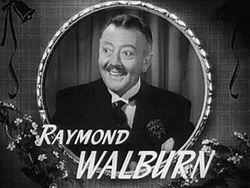
Como o enérgico dono da companhia de café Dr Maxford temos Raymond Walburn roubando a cena. O IMDb lista quase 100 trabalhos no cinema e televisão para este grande coadjuvante, que começou no teatro seguindo os passos da mãe. Ele trabalhou muitas vezes com Preston Sturges e Frank Capra e nos anos 1940 e 1950 fez uma série de filmes como o personagem Henry Latham. 

As the energetic coffee company owner Dr Maxford we have Raymond Walburn stealing the scene. IMDb lists almost 100 works on film and TV for this character actor, who started in theater following his mother’s footsteps. He worked several times with Preston Sturges and Frank Capra and in the late 1940s, early 1950s played the character Henry Latham in a series of movies.


Preston Sturges foi um grande roteirista que se tornou um grande diretor - “Natal em Julho” é apenas seu segundo filme na cadeira do diretor e baseado em sua própria peça “A Cup of Coffee”. Aqui ele tem uma fala interessante, divertida porém assustadora, quando o dono da loja pede que todas as pessoas brincando do lado de fora do prédio de Jim sejam presas, e o policial pergunta: “quem você acha que é, Hitler?”. E o dono da loja a quem a pergunta se dirige se chama… Schindel.  

Preston Sturges was a great screenwriter who became a great director - “Christmas in July” is only his second movie at the director’s chair, and based on his own unproduced play “A Cup of Coffee”. Here he has one interesting, funny but worrying, line when the store owner asks to have all the people playing outside Jim’s building arrested, and the police officer asks: “who do you think you are, Hitler?” And the store owner the question is directed to is called… Schindel.


Sturges e seus temas por vezes me lembram de Frank Capra. Ambos brilharam com comédias malucas de diálogos rápidos e muitas vezes trataram de críticas sociais. Em muitos momentos lembrei-me de “Adorável Vagabundo” na maneira como “Natal em Julho” tratou de otimismo e mentiras. Capra teve uma carreira muito mais longa e ganhou diversos prêmios, por isso agora é mais lembrado que Sturges, que merece mais reconhecimento. 

Sturges and his themes sometimes remind me of Frank Capra. Both excelled at fast-paced screwball comedies and often dealt with societal criticism. In many moments I was reminded of “Meet John Doe” in the way “Christmas in July” tackled optimism and lies. Capra had a much longer career and won several awards, reasons why he now is better remembered than Sturges, who deserves more recognition. 


Você sabe como hoje em dia parece mais difícil acomodar um filme nas nossas rotinas e listas de filmes com 90 minutos ou menos são sucesso no Letterboxd? “Natal em Julho” é um destes filmes: com apenas 67 minutos de duração, é sagaz, charmoso, divertido e um lembrete de que Preston Sturges merece nossa atenção.

Do you know how nowadays it seems more difficult to squeeze in a film in our routines and lists about films that are 90 minutes or less are successful on Letterboxd? “Christmas in July” is one of these movies: only 67 minutes long, it’s witty, charming, fun and a reminder that Preston Sturges deserves our attention.

Thursday, December 18, 2025

Banzé no Oeste (1974) / Blazing Saddles (1974)


Quando foi exibido pela primeira vez na TV, assisti à animação “O Lendário Cão Guerreiro” (2022), sobre um cão que quer se tornar samurai numa terra onde só há gatos. Fiquei surpresa ao ver o nome de Mel Brooks como produtor executivo, mas não deveria me surpreender: a premissa da animação é a mesma de seu clássico “Banzé no Oeste” (1974). Vejamos como a ideia foi executada originalmente.

When it was first shown on TV, I watched the animation “Paws of Fury: The Legend of Hank” (2022), about a dog who wants to become a samurai in a land where there are only cats. I was surprised to see Mel Brooks’ name as executive producer, but I shouldn’t have been: the premise of the animation is the same as his classic “Blazing Saddles” (1974). Let’s take a look at the original idea.

Os créditos surgem por cima da imagem de um deserto, com os nomes mudando conforme um chicote estala. O filme começa com a construção de uma estrada de ferro que deve cruzar a cidade de Rock Ridge, o que alimenta a ambição do advogado e assistente do governador, Hedley Lamarr (Harvey Corman).

The credits appear over the image of a desert, with the names changing at the noise of a whip. The movie begins with the building of a railroad that shall cross the town of Rock Ridge, something that feeds the ambition of attorney and assistant to governor, Hedley Lamarr (Harvey Corman).

Rock Ridge está tomada pela criminalidade. A população clama por um novo xerife que deve ser mandado pelo governador, interpretado por Mel Brooks. O governador passa a missão para Hedley que, querendo tirar vantagem, escolhe o pior xerife possível, um homem negro chamado Bart (Cleavon Little).

Rock Ridge is taken by criminality. The population asks for a new sheriff to be sent by the governor, played by Mel Brooks. The governor gives the mission to Hedley who, wanting to take advantage, chooses the worst possible sheriff, a black man named Bart (Cleavon Little).

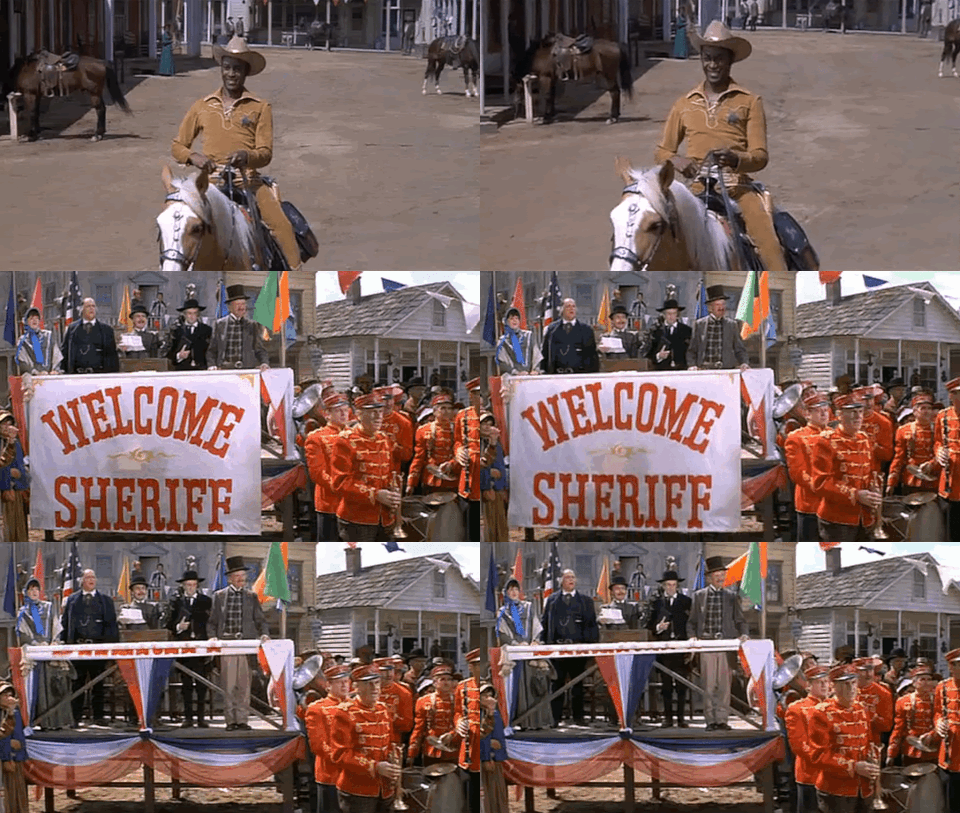
A cidade, habitada totalmente por pessoas brancas, fica horrorizada com a chegada do novo xerife. Enquanto eles desmontam a festa de boas-vindas que organizaram e escrevem cartas iradas para o governador, Bart fica amigo de um preso chamado Jim (Gene Wilder), mas anteriormente conhecido como Waco Kid. Jim diz que “eu devo ter matado mais pessoas que Cecil B. DeMille” - uma frase que me fez rir alto. Bart e Jim se tornam parceiros. 

The all-white town is horrified when the new sheriff arrives. While they dismantle the welcome party they organized and write irate letters to the governor, Bart befriends a prisoner named Jim (Gene Wilder), but formerly known as Waco Kid. Jim says “I must have killed more men than Cecil B. DeMille” - a sentence that made me laugh out loud. Bart and Jim become partners.

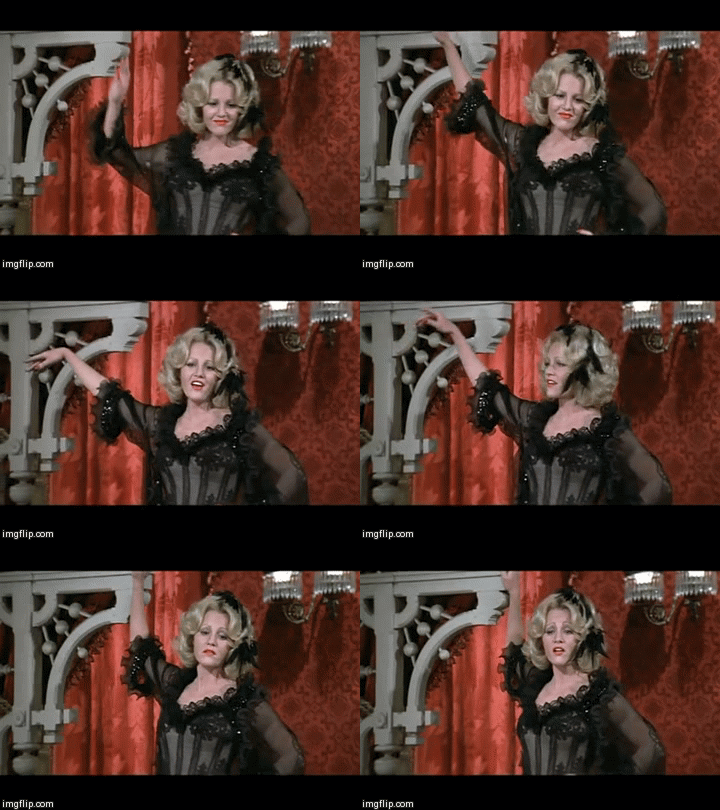
Para desmoralizar Bart e esvaziar a cidade, Hedley manda o troglodita Mongo (Alex Karras), mas o novo xerife consegue prender o homem. Já que a Fera falhou, é hora de tentar com a Bela. Hedley recruta a cantora e dançarina Lili von Shtupp (Madeline Kahn) para seduzir Bart.    

To demoralize Bart and empty the city, Hedley sends the troglodyte Mongo (Alex Karras), but the new sheriff manages to arrest the man. Since the Beast failed, it’s time to try with the Beauty. Hedley recruits the singer and dancer Lili von Shtupp (Madeline Kahn) to seduce Bart.

Mel Brooks dirige, escreve, tem dois papéis e escreve as letras das músicas de “Banzé no Oeste”. Na época, ele já havia ajudado a criar uma das minhas séries de TV favoritas, “Agente 86”, e feito grandes filmes como “Primavera para Hitler” (1967). Naquele mesmo ano ele também faria “O Jovem Frankenstein”. Com dois clássicos estreando no mesmo ano, Brooks cimentou sua reputação como mestre da comédia. 

Mel Brooks directs, writes, has two roles and writes the lyrics for the songs in “Blazing Saddles”. At the time, he had already helped create one of my favorite TV shows, “Get Smart”, and done great movies such as “The Producers” (1967). That same year he’d also make “Young Frankenstein”. With two classics releasing in the same year, Brooks cemented his reputation as a master in comedy.

Há piadas flatulentas, gags visuais, trocadilhos, uso cômico de músicas, muitos jogos e palavras que infelizmente se perdem na tradução - como o desejo de dar ao novo xerife “a Laurel and a Hardy handshake”. Há até mesmo uma piada com a Ku Klux Klan, quando Bart e Jim se vestem como membros da KKK e entram numa fila de bandidos. Quando eles precisam falar de suas experiências na vilania, eles dizem que já provocaram “um estouro da boiada… no Vaticano!” 

There are fart jokes, visual gags, puns, funny musical clues, varied plays with words that unfortunately are lost in translation - such as giving the new sheriff “a Laurel and a Hardy handshake”. There is even a joke about the Ku Klux Klan, when Bart and Jim dress up as members of the KKK and enter a line of bandits. When they have to talk about their experiences in villainous acts, they say “stampeding cattle… through the Vatican!”

Há uma excelente gag envolvendo música diegética e não-diegética, conceitos que talvez você não conheça. Música diegética é tocada dentro do mundo do filme, por isso os personagens também podem ouvi-la, enquanto música não-diegética é a trilha que só a plateia pode ouvir. A gag acontece quando o novo xerife está a caminho de Rock Ridge e nós ouvimos uma animada música instrumental. Conforme ele cavalga, saímos do plano detalhe para ver o corpo todo dele e depois o ambiente, quando finalmente vemos que a música está sendo tocada ao vivo por uma orquestra! 

There is a great gag involving diegetic and non-diegetic music, a concept you might not know. Diegetic music is played inside the film world, thus heard also by the characters, while non-diegetic music is the score only the audience can hear. The gag happens when the new sheriff is going to Rock Ridge and we listen to an exciting instrumental song. As he rides, we go from the focus on the details to his whole body and then the environment, when we finally see that the song is being played live by an orchestra!

O papel principal aqui é o ponto alto da carreira de Cleavon Little. Um experiente ator da Broadway, ele teve a ajuda de seu novo amigo Gene Wilder para interpretar em frente às câmeras. Ele continuaria fazendo mais peças, filmes e séries de TV, ganhando alguns prêmios numa carreira que durou 25 anos. 

This leading role is the highest point in the career of Cleavon Little. A seasoned Broadway actor, he had the help of his new friend Gene Wilder to perform in front of a camera. He would go on to appear in more plays, films and TV shows, grabbing a few awards for a career that lasted 25 years.

Mais do que uma comédia hilária, “Banzé no Oeste” é uma história sobre vencer preconceitos e o poder do trabalho em equipe. Foi, além disso, uma ótima maneira de terminar minhas resoluções de Ano Novo de 2025. Sou uma pessoa mais feliz por ter visto e me divertido com este filme.

More than a hilarious comedy, “Blazing Saddles” is a tale of overcoming prejudice and the power of team work. It was, moreover, a great way to end my 2025 New Year’s resolution. I’m a happier person for having watched and laughed with this movie.

Monday, October 14, 2024

43ª Giornate del Cinema Muto / 43rd Pordenone Silent Film Festival

 O que pode ser dito sobre a Giornate del Cinema Muto que eu não tenha dito antes aqui no meu blog? Claro, é a melhor semana do ano e prova de que uma pessoa pode assistir somente a filmes mudos pelo resto da vida e seria feliz. Mas tem uma coisa nova: ao ver um pouco quando entrou no meu quarto, minha mãe disse, sem querer ser desagradável: “gostar desse tipo de filme não pode ser normal”. Então aqui está, a cobertura da 43ª edição da Giornate Del Cinema muto para todas as pessoas maravilhosamente anormais que existem.

What could be said about the Pordenone Silent Film Festival that I didn’t say before here in my blog? Sure, it’s the best week of the year and the proof that one could watch only silent movies for the rest of one’s life and be happy. But there is something new: watching a bit when she entered my bedroom, my mother said, without meaning to be rude: “liking these kinds of movies isn’t normal.” So here it is, the coverage of the 43rd Giornate del Cinema Muto for all the wonderfully abnormal people out there.

No primeiro dia da programação online eu reencontrei um velho amigo, mas bem mais jovem do que eu havia visto antes: Ivor Novello. Ele é a estrela de “The Call of the Blood” (“L’Appel du Sang, 1919) junto a Phyllis Neilson-Terry. Ivor e Phyllis interpretam o casal de ingleses Maurice e Hermion, que vão de férias para a Sicília, na Itália, onde ele conhece Maddalena (Desdemona Mazza). Hermione tem de partir para a África para ajudar seu amigo Emile Artois e Maurice, graças ao sangue quente siciliano (!!!), inicia um romance com Maddalena. Este melodrama foi o primeiro filme de Novello!  

On the first day of online programming I got to meet again an old friend, although younger than when I met him: Ivor Novello. He was the star of “The Call of the Blood” (1919) alongside Phyllis Neilson-Terry. Ivor and Phyllis play English newlyweds Maurice and Hermione, who go vacationing to Sicily, Italy where he meets Maddalena (Desdemona Mazza). Hermione has to leave for Africa to help her friend Emile Artois and Maurice, due to his hot Sicilian blood (!!!), starts a romance with Maddalena. This melodrama was actually Novello’s film debut!

Outra velha amiga que reencontrei em Pordenone - curiosamente uma amiga também relacionada com o período mudo da obra de Alfred Hitchcock - foi Anny Ondra. Em “Suzy Saxofone” (1928), as amigas Suzy Hiller (Mary Parker) e Anni von Aspen (Anny Ondra) de Viena trocam de lugar em Londres. A nova Anni vai para um colégio interno e a nova Suzy vai para a Escola Tiller de dança. A narrativa se torna mais complexa com uma subtrama sobre apostas, até que Anni volta para Viena como Suzy Saxofone. Anny Ondra estava adorável e este filme reforçou meu amor pelo cinema alemão.

Another old friend I got to meet again at Pordenone – curiously a friend who is also tied to Alfred Hitchcock’s silent years – was Anny Ondra. In “Miss Saxophone” (or “Suzy Saxophone”, 1928), friends Suzy Hiller (Mary Parker) and Anni von Aspen (Anny Ondra) from Vienna swap places in London. The new Anni goes to boarding school and the new Suzy goes to the Tiller School for dancers. The narrative thickens with a subplot about bets, until Anni returns to Vienna as Saxophone Suzy. Anny Ondra was adorable and this film reinforced my love for German cinema.

Este ano as retrospectivas exibiram os cinemas - sim, no plural, - do Uzbequistão e da América Latina. O primeiro filme uzbeque foi “O Minarete da Morte” (exibido no Brasil como “O Harém da Morte”, 1925), baseado num conto popular do século XVI que conta as desventuras de uma mulher chamada Jemal (Nadezhda Vendelin). Primeiro ela é capturada por um bandido, então libertada pela mulher que o ama e inveja Jemal. Depois ela é novamente capturada, desta vez por um Emir e se torna o prêmio num jogo popular de Kok-Bori ou “capture a cabra”. Quem a ganha é Sadiq (Oleg Frelikh), o homem que a salvou na primeira ocasião, mas é sequestrada mais uma vez pelo filho do Emir, Shahruck-bek (Iona Talanov), para seu harém. Sadiq então inicia uma verdadeira revolução para salvar Jemal. Este foi provavelmente meu primeiro filme do Uzbequistão, um bastante impressionante com múltiplas cenas de multidão, belas locações, edição estilo soviético... e roupas maneiras.   

This year the special retrospectives showcased the silent cinemas – yes, the plural – of Uzbekistan and Latin America. The first Uzbek movie was “The Minaret of Death” (1925), based on a 16th century folk tale that tells the misadventures of a woman named Jemal (Nadezhda Vendelin). First she is captured by a common bandit, then set free by the woman who loves him and envies Jemal. Then she is captured once again, now by an Emir and becomes the prize in a popular game of Kok-Bori or “catch the goat”. She is won by Sadiq (Oleg Frelikh), the man who saved her in the first occasion, but is kidnapped once again by the Emir’s son, Shahrukh-bek (Iona Talanov), for his harem. Sadiq then leads a literal revolution to rescue Jemal. This was probably my first Uzbek film, and an impressive one with multiple crowd scenes, beautiful locations, Soviet-style editing… and nice clothes.

Oleg Frelikh é a estrela de “O Minarete da Morte” e o diretor de “A Leprosa”. O roteiro foi escrito por uma mulher, Lolakhan Saifullina, baseado no romance de F. Duchêne. A protagonista é Tyllia-Oi (Rachel Messerer), que se casa com Said-Vali e é agredida pelo marido. Ela procura ajuda mas acaba sendo estuprada pelo Coronel (Adrey Fayt). Isso é visto como uma traição ao marido e Tyllia-Oi tem de ser devolvida para a casa de seu pai, agora um lar desgraçado. As metáforas visuais aqui foram certeiras e a discussão toda muito moderna.  

Oleg Frelikh was the star of “The Minaret of Death” and the director of “The Leper” (1928). The screenplay was written by a woman, Lolakhan Saifullina, based on F. Duchêne’s novel. The lead is Tyllia-Oi (Rachel Messerer), who marries Said-Vali and is beaten by her husband. She seeks help but instead she’s raped by the Colonel (Andrey Fayt). This is seen as a betrayal to her husband and Tyllia-Oi has to be returned to her father’s home, now disgraced because of her. The visual metaphors here were on point and the overall discussions very forward-thinking.

Podemos encontrar melodrama não somente em “The Call of the Blood”, mas também na América Latina - em mais de um sentido. É estimado que mais de 90% dos filmes mudos latino-americanos estão perdidos e aqui trabalhamos, como Jay disse em sua introdução, em instituições com verbas pequenas e menosprezadas, se comparadas com o resto do mundo. Por causa disso, muito - se não a maioria - do nosso cinema mudo está em estado de fragmentos. E Pordenone não se avexou em exibir fragmentos em sua versão online, felizmente. Tivemos uma comédia do Chile, um melodrama moralizante que deveria ser um filme falado do México e uma divertida propaganda do Brasil.   

We can find melodrama not only in “The Call of the Blood”, but also in Latin America – in more than one sense. It’s estimated that more than 90% of Latin American silent film is lost and we here work, as Jay mentions in his intro, in underfunded and undervalued institutions, compared to the rest of the world. Due to this, much – if not most – of our silent cinema is in fragmentary state. And Pordenone didn’t shy away from showing fragments in its online version, thankfully. We had a slapstick from Chile, a moralizing melodrama that was supposed to be a talkie from Mexico and a funny advertisement from Brazil.

Agora o melodrama cinematográfico: o filme que provavelmente inaugurou um gênero e escreveu sua gramática, “Santa” de 1918 existe parcialmente. Sua protagonista é a atriz, diretora e fundadora do primeiro arquivo de cinema mexicano, Elena Sánchez Valenzuela. Santa é expulsa de sua casa no interior quando sua família descobre que ela não é mais virgem. Ela vai para a cidade grande, onde conhece um homem cego, Hipólito, e se apaixona por um toureiro, El Jarameño. Suas más decisões a levarão a uma vida de alcoolismo ou um amor cego a salvará?

Now to the reel melodrama: the film that probably inaugurated a genre and wrote its grammar, 1918’s “Santa” is half extant. Its lead is actress, director and the founder of the first Mexican film archive, Elena Sánchez Valenzuela. Santa is expelled from her countryside home when her family finds out she isn’t a virgin anymore. She goes to the big city, where she befriends a blind man, Hipólito, and falls in love with a bullfighter, El Jarameño. Will her bad decisions take her on a life of alcoholism or will a blind love save her?

De Cuba veio “A Virgem da Caridade” (“La Virgen de la Caridad, 1930), que é o único filme mudo que sobrou do país. Conta a história de amor entre Yeyo (Miguel Santos) e Trina (Diana Marde), ameaçada pelo pai dela e um falsário que quer tanto a propriedade “La Birijita” de Yeyo quanto Trina para si. Com um tom religioso sem ser pregador, foi um filme muito bom.

From Cuba came “La Virgen de la Caridad” (1930), which is actually the sole surviving silent film from the country. It tells the love story between Yeyo (Miguel Santos) and Trina (Diana Marde), challenged by her father and a forger that wants Yeyo’s property “La Birijita” and Trina for himself. With a religious undertone without being preachy, it was a very good film.
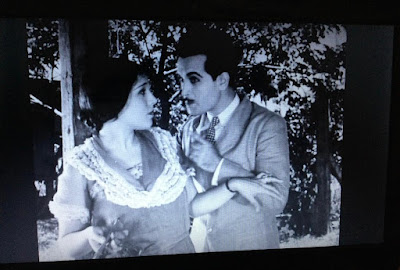
Outra retrospectiva em Pordenone focou no designer de cenários e diretor de arte Ben Carré, que trabalhou durante muitos anos na França e foi para Hollywood junto de Maurice Tourneur - a dupla fez um de meus filmes favoritos, o visualmente impactante “O Pássaro Azul” (1918). Não há tantos cenários deslumbrantes em “For the Soul of Rafael” (1920), no qual clara Kimball Young interpreta uma moça mexicana chamada Marta Raquel Estevan, criada num convento e prometida para Rafael Arteaga (Bertram Garssby). Rafael gosta de festejar e é primo de um bandido conhecido como El Capitan (Juan de La Cruz), que se disfarça de padre para despistar a polícia.  

Another retrospective in Pordenone focused on set designer and art director Ben Carré, who worked for many years in France and then went to Hollywood alongside Maurice Tourneur – the duo worked together in one of my favorite and most visually stunning movies, “The Blue Bird” (1918). Lavish sets aren’t so many in “For the Soul of Rafael” (1920), where Clara Kimball Young plays a Mexican girl named Marta Raquel Estevan, raised in a convent and betrothed to Rafael Arteaga (Bertram Garssby). Rafael likes to party hard and is the cousin of a bandit known as El Capitan (Juan de la Cruz), who disguises as a priest to deceive the police.

Rafael e Marta se casam, mas ela descobre que ele tem um filho que não assumiu. Para piorar as coisas, o caminho de Marta se cruza com o de Keith (J. Frank Glendon), um americano que ela ajudou a recuperar a saúde e que sua fiel criada indígena Polonia (Paula Merritt) disse ter morrido. Mas Marta está numa encruzilhada, pois ela prometeu para a sogra que cuidaria da alma de Rafael. Você pode perceber que a trama é bastante complexa e leva tempo para se formar, embora o final seja meio corrido.

Rafael and Marta get married, but she finds out he has an illegitimate child. To make things worse, Marta’s path crosses with Keith’s (J. Frank Glendon), an American she helped nurse back to health and her loyal Indian servant Polonia (Paula Merritt) said had died. But Marta is at a crossroads, as she promised her mother-in-law that she would guard the soul of Rafael. You can see that the plot is very complex and takes its time to develop, although the ending is a bit rushed.

E houve mais uma retrospectiva focada nos filmes mudos feitos ao redor do mundo por Anna May Wong. O festival online exibiu “Song” (1928), feito na Alemanha e escrito especificamente para Anna. Uma garota pobre chamada Song é resgatada numa praia de dois marmanjos que queriam machucá-la. Quem a resgata é John Houben (Heinrich George), um atirador de facas. Song se torna parte do número, até que os caminhos deles se cruzam com o de Gloria Lee (Mary Kidd), uma velha conhecida de John, por quem ele ainda nutre sentimentos. A maneira como Anna May Wong atua com as mãos, demonstrando sentimentos, é uma lembrança de uma arte perdida e de uma artista injustiçada.   

And there was yet another retrospective focusing on the silent films made all over the world by Anna May Wong. The online festival showed “Show Life” (“Song”, 1928), made in Germany and written specifically for Anna. A poor girl named Song is rescued at the beach from two men who wanted to harm her. The rescuer is John Houben (Heinrich George) a knife-thrower. Song becomes part of his act, until their paths cross with Gloria Lee’s (Mary Kidd), John’s old acquaintance for whom he still has feelings. The way Anna May Wong acts with her hands, showing emotion, is a reminder of a lost art and an artist treated unfairly.  

Há fantasia não apenas em “O Pássaro Azul”, mas também em “Folly of Vanity”, de 1925. O filme segue os recém-casados Robert (Jack Mulhall) e Alice (Billie Dove) conforme os primeiros desentendimentos da vida de casados acontecem, graças ao cliente dele, Mr Ridgeway (John St. Polis), que cultiva o ciúme no coração de Robert. A felicidade deles só voltará depois que Alice cair de um iate e foi levada até o Reino de Netuno debaixo d’água, completo com aqua-balés!

There is fantasy not only in “The Blue Bird”, but also in 1925’s “Folly of Vanity”. It follows newlyweds Robert (Jack Mulhall) and Alice (Billie Dove) as the first misunderstandings of their married life happen, thanks to Robert’s client Mr Ridgeway (John St. Polis), who cultivates jealousy in Robert’s heart. Their happiness will only come back after Alice falls from a yacht and is taken to Neptune’s Kingdom under the sea, complete with aqua-ballets!

E eu ainda não falei dos curtas-metragens! Muitos programas online consistiam de um ou dois curtas mais um longa. “La Mort de Mozart” (1909) foi um curta visualmente belo da retrospectiva Ben Carré que foi magistralmente acompanhado ao piano por meu amigo José María Serralde Ruiz. Outro deleite foi “Per La Morale” (191), que mostra quão ridículos são a censura e os censores - um assunto na ordem do dia.  

And I haven’t talked about all the shorts yet! Many screenings online consisted of one or two shorts plus the feature film. “La Mort de Mozart” (1909) was a visually stunning short from the Ben Carré retrospective that was masterfully accompanied by my friend José María Serralde Ruiz. Another delight was “Per la Morale” (1911), that shows how ridiculous censorship and censors are – a timely subject.

A atração final da 43ª edição foi “O Maricas” (“Girl Shy”, 1924) de Harold Lloyd acompanhada pela Zerorchestra. Lloyd interpreta o pobre garoto Harold Meadows, que escreve um livro sobre como conquistar as mulheres mesmo não sendo nenhum amante latino - na verdade, ele gagueja quando conversa com as garotas! E então ele conhece a rica Mary (Jobyna Ralston)... Há uma sequência elaborada de corrida contra o tempo que casou perfeitamente com o acompanhamento musical.  

The closing attraction for the 43rd edition was Harold Lloyd’s “Girl Shy” (1924) accompanied by the Zerorchestra. Lloyd plays the poor boy Harold Meadows, who writes a book on how to conquer women even though he’s no Latin Lover – in fact, he stutters when he talks to girls! And then he meets the rich girl Mary (Jobyna Ralston)… There was an elaborate sequence consisted of racing against time that was matched perfectly with the score.

E assim acaba minha cobertura da 43ª Giornate del Cinema Muto. As datas para o próximo ano já foram anunciadas. Vou cobrir o evento novamente? Sem dúvida! Mas estarei online ou ao vivo na bela Itália? É o que veremos...

And this ends my coverage of the 43rd Pordenone Silent Film Festival. Next year’s dates have already been announced. Will I cover it again? Without a doubt! But will I be online or there in the beautiful Italy? We shall see…
Related Posts Plugin for WordPress, Blogger...