} Crítica Retrô: remake

Tradutor / Translator / Traductor / Übersetzer / Traduttore / Traducteur / 翻訳者 / переводчик

Showing posts with label remake. Show all posts

Friday, September 11, 2026

Ser ou Não Ser (1942) / To Be or Not to Be (1942)

 Ser ou não ser: eis a questão. A frase de Shakespeare conhecida até mesmo por quem não sabe quem foi Shakespeare. Naquele que seria o último filme de Carole Lombard, a frase é um código para um encontro furtivo entre amantes. Nas habilidosas mãos de Ernst Lubitsch, aqui como diretor e produtor, a frase também funciona como o título de uma comédia de humor negro essencial dentro da História do cinema.

To be or not to be: that’s the question. The Shakespearean line known even by those who don’t know who Shakespeare was. In what was Carole Lombard’s last film, the line is a code for a furtive encounter between lovers. In the skillful hands of Ernst Lubitsch, here as both director and producer, the line also works as the title of a quintessential black comedy.

Damos a primeira risada quando Bronski (Tom Dugan), vestido como Hitler, faz a saudação nazista e diz “Heil, eu”. Tudo o que havíamos presenciado até então não é nada além de uma peça encenada pela companhia do Sr Dobosh (Charles Halton). É agosto de 1939 na Polônia e a peça “Gestapo” não pode estrear porque pode desagradar a Hitler. Eles então reencenam Hamlet.

The first laugh is upon us when Bronski (Tom Dugan), dressed as Hitler, does the Nazi salute and says “Heil, me”. All we had been witnessing is nothing but a play staged by the company that belongs to Mr Dobosh (Charles Halton). It’s August 1939 in Poland and their play “Gestapo” can’t open because it may upset Hitler. They go on to stage Hamlet once again.

As principais estrelas da companhia são Joseph Tura (Jack Benny) e sua esposa Maria (Carole Lombard). Maria recebe a visita de um piloto, Stanislav Sobinski (Robert Stack), sempre que seu marido está no meio do famoso solilóquio “ser ou não ser”. E então a guerra é declarada. 

The company’s main stars are Joseph Tura (Jack Benny) and his wife Maria (Carole Lombard). Maria receives the visit of a pilot, Stanislav Sobinski (Robert Stack), always when her husband is in the middle of the “to be or not to be” soliloquy. War is then declared.

Stanislav vai para a Inglaterra para se juntar à Real Força Aérea britânica. Lá ele se aproxima de um professor chamado Siletsky (Stanley Ridges), que diz ser polonês. Mas ele nunca ouviu falar de Maria Tura, o que acende um sinal de alerta na mente de Stanislav. Siletsky vai para Varsóvia e Stanislav o segue, temendo que ele possa ser um agente alemão levando informações secretas para a Gestapo. Stanislav envolve Joseph e Maria no jogo de espionagem.

Stanislav goes to England to join the Royal Air Force, the RAF. There he befriends a professor named Siletsky (Stanley Ridges) who claims to be Polish. But he had never heard of Maria Tura, which is a red flag according to Stanislav. Siletsky goes to Warsaw and Stanislav follows him, fearing he could be a German agent bringing top secret information to the Gestapo. Stanislav then involves Maria and Joseph in the espionage game.

Durante a guerra, entregar uma mensagem podia ser uma missão complexa. Você tinha que falar através de códigos que só as pessoas certas sabiam. Você tinha que carregar fotos em lugares incomuns. Você tinha que esconder as evidências. Você não podia se comunicar rapidamente pelo telefone ou por mensagens de texto. Mas você também não conhecia o rosto das pessoas, o que permite, por exemplo, que Joseph finja ser o coronel Ehrhardt para econtrar Siletsky.  

During the war, delivering a message could be a tricky task. You had to speak using codes that only the right people knew. You had to take photos in the most unusual places. You had to hide evidence. You couldn’t communicate quickly through the phone or text message. But you also didn’t know the face of the person you had to meet, which allows, for instance, Joseph to pose as colonel Ehrhardt for Siletsky.

Jack Benny é mais conhecido por seu trabalho no rádio e na televisão. Ele foi a primeira e única opção para interpretar Joseph Tura, pois Lubitsch escreveu o personagem com o ator em mente. Isso levou Benny a aceitar o papel de imediato. Entretanto, para a protagonista feminina a primeira opção foi Miriam Hopkins, mas ela e Jack Benny não se deram bem e Carole Lombard foi escalada. 

Jack Benny is better known for his radio and television work. He was the first and only option to play Joseph Tura, as Lubitsch wrote the character with the actor in mind. This led to Benny accepting the role immediately. However, for the female lead the first option was Miriam Hopkins, but she and Jack Benny didn’t get along, so Carole Lombard was cast instead.

A única indicação para o Oscar que este filme teve foi na categoria Melhor Música. A trilha sonora deveria ter sido composta por Miklós Rózsa, mas ele não concordou com uma sátira ao regime Nazista e recusou o trabalho. Rózsa era húngaro, assim como o produtor Alexander Korda, e foi substituído pelo judeu alemão Werner Heymann, que já havia trabalhado com Lubitsch anteriormente. Curiosidade: naquele ano, 18 filmes foram indicados ao Oscar de Melhor Música! 

The only nomination for the Oscar for this film came for Best Music. The soundtrack was supposed to have been composed by Miklós Rózsa, but he didn’t agree with a satirization of the Nazi regime and refused the job. Rózsa was Hungarian, as was the producer Alexander Korda, and was replaced by Jewish and German Werner Heymann, who had worked with Lubitsch previously. Curious tidbit: that year, 18 films were nominated for the Best Music Oscar! 

O filme estreou logo depois de os EUA entrarem na guerra. Carole Lombard, podemos dizer, foi vítima da guerra, pois faleceu num acidente de avião numa campanha de bônus de guerra dias depois de terminar de rodar “Ser ou Não Ser”.  

The movie premiered right after the USA entered the war. Carole Lombard, we could say, was a victim of the war, as she died in a plane crash while promoting war bonds days after she finished shooting “To Be or Not to Be”.

Anos antes de assistir a este filme, assisti ao remake de 1983 com Mel Brooks. Lembro que era um filme divertido, mas nem tanto quanto o original, e também tinha menos senso de urgência que o filme de Lubitsch. Fazer piada com os nazistas em 1983 era anacrônico, fazer piada com os nazistas em 1942 e hoje é catártico. Se toda catarse fosse como este filme hilário, o mundo seria um fardo bem mais leve de carregar.  

Years before I watched this film, I watched the 1983 remake with Mel Brooks. I remember it being funny, but not as much as the original, and also lacking the sense of urgency the Lubitsch film has. Making fun of Nazis in the 1980s was anachronistic, making fun of Nazis in the 1940s and nowadays is a catharsis. If all catharsis could play like this hilarious film, the world would be a lighter burden for us to carry.

Friday, May 15, 2026

Variações sobre um mesmo tema: O Morro dos Ventos Uivantes (1939 e 2026)


Variations on the same theme: Wuthering Heights (1939 and 2026)

Eu nunca li “O Morro dos Ventos Uivantes” de Emily Brontë, mas anos atrás assisti a uma das adaptações do romance para as telas, mas hoje já me esqueci da maioria dos detalhes. Fiquei curiosa para conferir a nova adaptação e, como li que a versão de 1939 é a melhor até agora, aqui estou para ver e comparar ambas.

I have never read Emily Brontë’s “Wuthering Heights”, but many years ago I watched one of the adaptations of the novel to the screen, even though I forgot most details. I was curious to check out this new adaptation, and as I read that the 1939 version is the best one so far, I’m here to watch and compare both. 


A versão de 2026 começa com um enforcamento e uma ereção - duas coisas que definitivamente não seriam mostradas em 1939 por causa do nefasto Código Hays. Então somos apresentados à garotinha Cathy, cujo pai bêbado adota um menino que ela batiza de Heathcliff em homenagem a um irmão já falecido. Eles são criados como irmãos, mas quando crescem percebem que o amor que nutrem um pelo outro não é fraternal. Mas Cathy (Margot Robbie) se casa com o vizinho Edgar Lynton porque ela pode amar Heathcliff (Jacob Elordi), mas eles viverão na pobreza se ficarem juntos.

The 2026 version starts with a hanging and an erection - two things that definitely wouldn’t be shown in 1939 because of the nefarious Hays Code. Then we’re introduced to the girl Cathy, whose drunk father adopts a boy she baptizes as Heathcliff after her dead brother. They grow up as brother and sister, but only when they get old they understand that their love isn’t fraternal. But Cathy (Margot Robbie) marries their neighbor Edgar Lynton because she may love Heathcliff (Jacob Elordi), but they will live in poverty if they stay together.

A versão de 1939 começa com um homem procurando um lugar para se abrigar durante uma tempestade de neve. Ele chega ao Morro dos Ventos Uivantes e é recebido pelo proprietário Heathcliff (Laurence Olivier), que lhe oferece um quarto. Ele ouve uma mulher gritando no meio da noite e se assusta. Heathcliff sai para perseguir a mulher que grita e uma empregada conta ao hóspede a história de amor de Cathy (Merle Oberon) e Heathcliff.

The 1939 version starts with a man looking for a place to stay during a snowstorm. He arrives at Wuthering Heights and is received by owner Heathcliff (Laurence Olivier), who offers him a bedroom. He listens to a woman screaming in the middle of the night and gets scared. Heathcliff leaves to pursue the screaming woman and a maid tells the guest the love story of Cathy (Merle Oberon) and Heathcliff.

Cathy tem uma infância feliz ao lado do pai e de um irmão, Hindley, que começa a mandar no irmão adotivo deles depois que o pai morre. A alta sociedade aceita e abraça a Cathy adulta e ela se acostuma com uma vida de luxo. Quando Heathcliff foge, Cathy aceita se casar com o vizinho Edgar (David Niven), mas Heathcliff voltará com uma atitude blasé.

Cathy has a happy childhood alongside her father and a brother, Hindley, who starts bossing around their adoptive brother after their father dies. High society accepts and embraces adult Cathy and she gets used to a life of luxuries. When Heathcliff runs away, Cathy accepts to marry neighbor Edgar (David Niven), but Heathcliff will come back with a no-nonsense attitude.

Os dois filmes retratam os empregados do Morro dos Ventos Uivantes de maneiras muito distintas. Na versão de 1939, é a empregada Ellen (Flora Robson) que conta a história toda, o que significa que ela sabe tudo que aconteceu. Na versão de 2026, a empregada Nelly (Hong Chau) é uma personagem enxerida e inconveniente, tramando contra os dois amantes. 

The two movies are very different about how they picture the Wuthering Heights employees. In the 1939 version, it’s maid Ellen (Flora Robson) who tells the whole story, meaning that she knows everything that has happened. In the 2026 version, maid Nelly (Hong Chau) is a nosy and inconvenient character, plotting against the two lovers.


Outra diferença diz respeito à personagem Isabella. Em ambos ela se apaixona por Heathcliff, mas em 1939, interpretada por Geraldine Fitzgerald, ela é só uma jovem apaixonada que tem uma ótima cena de confronto com Cathy, enquanto em 2026, interpretada por Alison Oliver, ela é uma maníaca, com personalidade totalmente amalucada. 

Another difference conceals the character Isabella. In both she falls in love with Heathcliff, but in 1939, played by Geraldine Fitzgerald, she is just a young girl in love that gets an excellent confrontation scene with Cathy, while in 2026, played by Alison Oliver, she is a maniac, with a completely nutty personality.

O roteiro da versão de 2026 foi escrito pela diretora e produtora Emerald Fennell. Sei que ela tem muitos haters, mas considerei OK seu último filme, “Saltburn” (não vi seu filme ganhador do Oscar “Bela Vingança” por causa de um spoiler que arruinou o filme para mim). O roteiro da versão de 1939 ficou a cargo de Ben Hecht, um dos meus roteiristas favoritos, e Charles McArthur, mais conhecido por ter escrito a peça “The Front Page”. Nenhuma dessas versões segue o livro à risca, pois há uma segunda parte ignorada por ambas.

The screenplay for the 2026 version was written by director and producer Emerald Fennell. I know she has plenty of haters but I found her past effort “Saltburn” OK (I didn’t watch her Oscar-winning movie “Promising Young Woman” because I saw a spoiler and it ruined the movie for me). The screenplay for the 1939 version was penned by Ben Hecht, a favorite of mine, and Charles McArthur, best known for having written the play “The Front Page”. None of these two versions follow the book closely, as there is a second part that is ignored by both.


Fennell usa diversas músicas pop na trilha sonora, completa com algumas faixas instrumentais. As músicas grandiosas da versão de 1939 foram compostas por Alfred Newman. Ele foi considerado um prodígio da música quando criança e foi empregado como maestro na Broadway por uma década, começando com apenas 19 anos. Ele iria compor para o cinema e seria indicado ao Oscar 45 vezes, ganhando nove prêmios. Sua mais famosa obra, entretanto, dura alguns segundos: a música que acompanha o logo da 20th Century Fox até hoje.

Fennell uses several pop songs in the soundtrack, complete with some instrumental tunes. The grandiose songs from the 1939 version were composed by Alfred Newman. He was considered a musical prodigy as a child and was employed as a conductor on Broadway shows for a decade, starting when he was only 19. He would go on to score movies and would be nominated for the Oscar 45 times, winning nine awards. His most famous piece however, lasts a few seconds: the tune that accompanies 20th Century Fox logos to this day.

Visualmente impressionante, a versão de 2026 teve figurinos feitos pela renomada Jacqueline Durran e fotografia de Linus Sandgren. A de 1939 teve fotografia de Gregg Toland, um dos maiores diretores de fotografia da História e que ganhou seu único Oscar por esse filme, e figurinos de Omar Kiam - não confundir com o multitalentoso Omar Khayyam

Visually stunning, the 2026 version had costumes made by the renowned Jacqueline Durran and photography by Linus Sandgren. The 1939 version had its photography by Gregg Toland, one of the best cinematographers of all time in his only Oscar win, and costumes by Omar Kiam - not to be confused with the multitalented Omar Khayyam!

Emerald Fennell menciona diversos clássicos como inspiração para seu filme, como “Na Noite do Passado” (1942), “Neste Mundo e no Outro” (1946) e “Pele de Asno” (1970), mas seu filme não está à altura da versão de 1939, que é mais emocionante, igualmente bela e tem excelentes interpretações.

Emerald Fennell mentions several classics as inspirations for her movie, such as “Random Harvest” (1942), “A Matter of Life and Death” (1946) and “Donkey Skin” (1970), but her movie doesn’t stand close to the 1939 version, which is more moving, equally beautiful to look at and a masterclass in acting.

Friday, June 27, 2025

Hollywood (1932) / What Price Hollywood? (1932)


Meu filme favorito de todos os tempos é a versão de 1937 de “Nasce uma Estrela”. Com Technicolor brilhante, este drama sobre fama e infortúnio me arrebatou quando o vi pela primeira vez, há mais de 15 anos. Até agora, o filme foi refilmado três vezes - em 1954 com Judy Garland, em 1976 com Barbra Streisand e em 2018 com Lady Gaga. Mas mesmo em 1937 a história não era completamente original: o filme foi meio que inspirado por uma produção anterior, sobre a qual escreverei sobre agora, depois de todos esses anos apaixonada pela história de Vicky Lester e Norman Maine.

My favorite film of all time is the 1937 version of “A Star is Born”. With shining Technicolor, this drama of fame and misfortune swept me out of my feet when I first watched it, over 15 years ago. So far, the film was remade three times - in 1954 with Judy Garland, in 1976 with Barbra Streisand and in 2018 with Lady Gaga. But the story wasn’t completely original in 1937: the movie was kind of inspired by an earlier movie, which I’ll review today, after all those years being in love with the story of Vicky Lester and Norman Maine.

Mary Evans (Constance Bennett) segue as modas ditadas pelas estrelas de cinema e pelas revistas sobre o tema. Ela sonha com uma beijoca de Clark Gable, mas enquanto não tem sua grande chance, trabalha servindo mesas numa lanchonete local. Numa noite ela serve a mesa do famoso diretor Max Carey (Lowell Sherman), que, estando bêbado, a convida para ser seu par numa estreia de filme.  

Mary Evans (Constance Bennett) follows the fashions dictated by movie stars and fan magazines. She dreams of a smooch from Clark Gable, but while she doesn’t get her big break, she waits tables in a local derby. One night she waits the table of famous director Max Carey (Lowell Sherman), who, being drunk, invites her to be his date in a movie premiere.

No dia seguinte, porque Mary o trouxe inconsciente até a casa dele, Carey diz para ela ir até o estúdio. Ela consegue um pequeno papel com uma fala. Ela passa muitas horas ensaiando e o esforço compensa: o produtor Sr Saxe (Gregory Ratoff) lhe oferece um contrato a longo prazo. Com o apelido de “Amiga da América”, eles querem transformar Mary numa estrela. E conseguem.

The following day, since Mary brought him unconscious to his house, Mr Carey tells her to come to the studio. She is given a bit part with one line. She spends many hours rehearsing and the effort pays off: the producer Mr Saxe (Gregory Ratoff) gives her a long-term contract. Marketing her as “America’s Pal”, they want to turn Mary into a star. And so they do.

Um dia num jogo de polo, ela conhece Lonny Borden (Neil Hamilton), que a força a jantar com ele porque ele não aceita não como resposta. O horrível jantar forçado é logo seguido do anúncio do noivado deles. O casamento é um grande evento, mas a lua de mel precisa ser adiada porque Mary precisa regravar algumas cenas de seu próximo filme. Lonny é um milionário, mas pelo estúdio ele é conhecido como Sr Evans. Carey não quer que Mary desperdice seu tempo e talento dando atenção ao marido ao invés de focar na carreira. 

One day in a polo game she meets Lonny Borden (Neil Hamilton), who then forces her to have dinner with him because he can’t take no for an answer. The horrible forced dinner is quickly followed by the news of their engagement. The wedding is a huge event, but the honeymoon has to be postponed because Mary needs to do some retakes for her next film. Lonny is a millionaire but around the studio he is referred to as Mr Evans. Mr Carey doesn’t want Mary wasting her time and talent giving attention to her husband and focusing less on her career.

O contrato de sete anos com o mesmo estúdio era prática comum em Hollywood. À primeira vista soava como segurança, mas podia ser uma prisão. O contrato era como ter um dono: os estúdios eram donos de suas estrelas e as estrelas tinham que aceitar quaisquer papéis e roteiros que os executivos escolhiam para elas. Mas havia maneiras de escapar: atores podiam incentivar a permuta com outros estúdios que ofereciam papéis melhores, como fez Elizabeth Taylor, ou recusar papéis do estúdio, o que fez Bette Davis, sendo então suspensa por causa de seu comportamento.

The contract lasting for seven years with the same studio was common practice in Hollywood. It at first sounded like security, but could be a prison. The contract was basically an ownership: studios owned their stars and the stars had to accept whichever roles and scripts the executives chose for them. But there were ways out: actors could trigger loans to other studios for juicier roles, as Elizabeth Taylor did, or refuse roles from their studios, which Bette Davis did and was suspended for her behavior.

Este filme foi baseado numa história de Adela Rogers St. John. Muitos detalhes do roteiro são comentados por uma coluna de fofocas chamada “You Ask Me!”. Mas Adela não veio dessas colunas: ela foi uma respeitada jornalista em revistas de cinema, que a levaram até Hollywood, onde a primeira adaptação de uma de suas histórias foi feita em 1918. Para “Hollywood”, ela provavelmente se inspirou na vida pessoal de Colleen Moore e na tragédia do diretor Tom Forman. Adela foi indicada ao Oscar na categoria Melhor História. 

This movie was based on a story by Adela Rogers St. John. Many plot points here are commented upon by a gossip column called “You Ask Me!”. Adela didn’t come from these columns, though: she was a respected journalist in fan magazines, which led her to Hollywood, where the first adaptation of one of her stories was made in 1918. For “What Price Hollywood?”, she probably took inspiration from Colleen Moore’s personal life and the tragedy of director Tom Forman. Adela was nominated for an Oscar in the Best Story category.

Tanto “Hollywood” quanto a versão de 1937 de “Nasce uma Estrela” foram produzidos por David Selznick, que queria Clara Bow no papel principal e precisou convencer os executivos da RKO de que um filme sobre filmes seria bem-sucedido. Tanto “Hollywood” quanto a versão de 1954 de “Nasce uma Estrela” foram dirigidos por George Cukor. Cukor se recusou a dirigir a versão de 1937 por causa das semelhanças que continha com o filme de 1932. 

Both “What Price Hollywood?” and the 1937 “A Star is Born” were produced by David Selznick, who wanted to cast Clara Bow as the lead and had to convince RKO executives that a movie about movies would be successful. Both “What Price Hollywood?” and the 1954 “A Star is Born” were directed by George Cukor. Cukor refused to direct the 1937 version because of the similarities between this and the 1932 movie.

Os créditos começam com algo que não estamos acostumados a ver: um galo em cima de um globo e as palavras “An RKO Pathé Picture”. Em 1931 a RKO adquiriu a Pathé Exchange, fundada em 1914. Com a fusão vieram algumas das maiores estrelas da Pathé, como Constance Bennett. O nome “RKO Pathé” foi usado apenas até o fim de 191, quando o estúdio voltou a se chamar somente RKO. 

The credits begin with something we’re not used to seeing: a rooster over a globe and the words “An RKO Pathé Picture”. In 1931 RKO acquired Pathé Exchange, founded in 1914. With the merge came some of the greatest Pathé stars, such as Constance Bennett. The name “RKO Pathé” was used only until late 1932, when the studio became once again only RKO. 

Eu simplesmente amei os vestidos de Mary! Eu com certeza os usaria se eles fossem um pouco mais curtos A supervisão de figurino ficou a cargo de Margaret Pemberton, que tem apenas dois créditos no currículo. Na estreia, o destaque foi uma sequência com uma montagem da ascensão de Mary para os píncaros da fama, usando efeitos especiais que eram então novidade. 

I simply loved Mary’s dresses! I would certainly wear them if they were a little shorter. The wardrobe supervisor is Margaret Pemberton, who has only two film credits. At the premiere, however, the highlight was a sequence featuring a montage of Mary’s ascension to the top of Tinseltown, using special effects that were brand new at the time.

Em “Hollywood”, a figura bêbada problemática é o diretor Max Carey e não o marido da estrela, o que faz do roteiro mais criativo do que o de “Nasce uma Estrela”, mas provavelmente com menos pathos. É bacana, entretanto, ver uma “versão” da história na era pre–Code, mesmo sendo cheia de misoginia e racismo para com a empregada de Mary, Juanita (a incansável Louise Beavers). Considerando os prós e contras, é uma boa sessão.

In “What Price Hollywood?”, the problematic drunk figure is the director Mr Carey and not the starlet’s husband, which makes the plot more creative than the one in “A Star is Born”, although probably with less pathos. It’s nice, however, to see a “version” of the story made in the pre-Code era, even though it’s full of misogyny and racism towards the character of Mary’s maid Juanita (the hardworking Louise Beavers). Considering the pros and cons, it’s an enjoyable movie.

Tuesday, October 29, 2024

Variações sobre um mesmo tema: Adeus, Mr Chips (1939 e 1969)


Variations on the same theme: Goodbye, Mr Chips (1939 and 1969)


No dia 15 de outubro o Dia dos Professores é celebrado no Brasil. Eu fui moldada pelos professores que eu tive. Não apenas os que me deram aula, mas especialmente por minha mãe, que esteve em sala de aula por 38 anos ensinando matemática. É por causa dela que eu amo filmes sobre professores. Desta vez trago duas versões da mesma história, filmadas com 30 anos de diferença, sobre um mestre inspirador.


On October 15th, Teacher’s Day is celebrated in Brazil. I’ve been greatly shaped by the teachers I had. Not only the ones who taught me classes, but especially my mother, who was inside classrooms teaching math for 38 years. That’s why I love movies about teachers. This time I bring two versions of the same story, filmed 30 years apart, about an inspiring master.

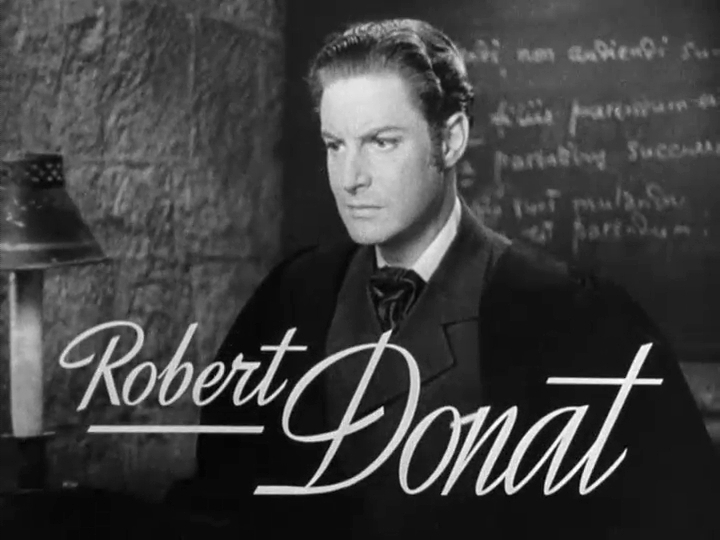
Em 1939, Charles Chipping (Robert Donat) tem 83 anos e leciona há impressionantes 63 anos. Impossibilitado a ir a uma aula inaugural pela primeira vez por causa de uma gripe, ele rememora sua trajetória. Em seu primeiro dia, foi-lhe pregada uma peça por seus alunos e teve problemas para manter a ordem. O aluno mais difícil de controlar é Colley (Terry Kilburn).


In 1939, Charles Chipping (Robert Donat) is 83 years old and has been teaching for impressive 63 years. Unable to go to the inaugural class for the first time due to a cold, he remembers his trajectory. On his first day, he was pranked by his students and had a rough time mantaining peace and order. The hardest student to control is Colley (Terry Kilburn).

Anos depois, já um homem de meia-idade mas ainda um professor impopular, o Sr Chipping viaja para as montanhas com um colega de trabalho e lá conhece Kathy Ellis (Greer Garson em seu primeiro papel no cinema). Eles se encontram novamente em Viena, se divertem muito e se casam. Ela dá a ele o apelido “Chips” e começa a convidar os alunos dele para tomarem chá na cada deles. De repente Chips se torna um professor popular e até conta piadas na sala de aula! Os tempos mudam, a Escola Brookfield para garotos também, mas Chips não muda os tempos – então decidem aposentá-lo contra a vontade dos alunos.


Years later, already a middle-aged man but still an unpopular teacher, Mr Chipping travels to the mountains with a colleague and there he meets Kathy Ellis (Greer Garson in her film debut). They run into each other again in Vienna, have a wonderful time together and get married. She gives him the nickname “Chips” and start hosting teapartys in their residence for his students. Suddenly Chips becomes a popular teacher and even tells jokes in class! Times change, the Brookfield School for Boys too, but Chips doesn’t change with the times – so they decide to retire him against the students’ will.

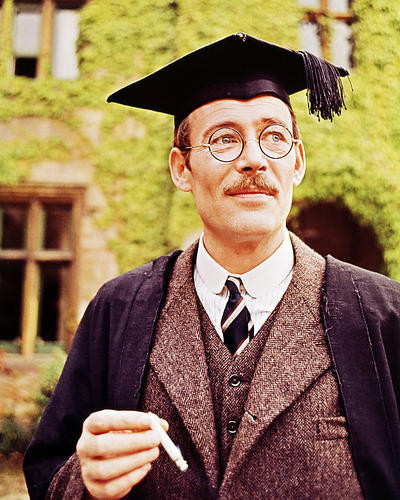
Em 1969 somos informados de que nossa história começa em 1924. Arthur Chipping (Peter O’Toole) é um professor impopular na Escola Brookfield. De férias em Pompeia, ele volta a encontrar a estrela de teatro musical Katherine Bridges (Petula Clark) e eles se divertem muito juntos. De volta a Londres, eles se casam. No primeiro encontro ela já o havia apelidado de “Chips”.


In 1969 we’re informed that our story begins in 1924. Arthur Chipping (Peter O’Toole) is an unpopular teacher at the Brookfield School. While on vacation in Pompeii, he meets again the musical theater actress Katherine Bridges (Petula Clark) and have a wonderful time together. Back in London, they get married. On their first meeting she had already nicknamed him “Mr Chips”.

Por volta dos 15 minutos de projeção temos uma baita surpresa quando o Sr Chips começa a cantar. Ele canta sobre a passagem do tempo e sobre como o mundo ficou mais colorido depois que ele se casou com Kathy. Petula Clark é quem mais canta neste filme que eu não esperava ser um musical, mas Peter O’Toole foi ousado e cantou sem usar dublagem.


At around the 15-minute mark we’re greatly surprised when Mr Chips starts to sing. He sings about the passage of time and how the world got more colorful after he married Kathy. Sure, Petula Clark does the majority of the singing in this film I wasn’t expecting to be a musical, but Peter O’Toole was fierce and did his own singing.

Em 1939, o Sr Chips é Chefe do Departamento na escola durante a Primeira Guerra Mundial. Em 1969, ele vivencia a Segunda Guerra Mundial, em meio à possibilidade de ataques aéreos à escola. Em ambas as versões o Sr Chips sofre diversas perdas durante as guerras, ficando enlutado por causa de pessoas queridas.


In 1939, Mr Chips served as a headmaster of the school during World War I. In 1969, he goes through World War II, with the possibility of airplane attacks to the school. In both versions Mr Chips faces several losses during the wars, grieving those he loved.

Além do período em que se passa a história, a maior mudança de uma versão para a outra foi Kathy. Em 1939 ela tem pouco tempo em cena mas é fundamental para fazer do Sr Chips um professor e uma pessoa mais afável. Em 1969, com uma profissão e uma reputação, ela é co-protagonista e o casamento dura muito mais.


Besides the time frame, the main change from one version to the other was Kathy. In 1939 she is given little screen time but is pivotal to make Mr Chips a more likeable teacher and person. In 1969, with a profession and a reputation, she is a co-lead and her marriage lasts for a much longer time.

A versão de 1939 agradeceu nos créditos a ajuda de Sidney Franklin – diretor não-creditado do filme – e a inspiração fornecida pelo finado Irving Thalberg. O filme foi produzido por Victor Saville, que produziu alguns dos primeiros trabalhos de um jovem desconhecido chamado Alfred Hitchcock. Assim como Hitch, Saville também dirigiu filmes de suspense na Inglaterra no começo dos anos 1930. De acordo com o IMDb, ele produziu 39 filmes entre 1923 e 1962.


The 1939 version acknowledged in the credits the help of Sidney Franklin – uncredited diretor of the movie – and the inspiration of the late Irving Thalberg. The movie was produced by Victor Saville, who produced some of the early films by a then-unknown named Alfred Hitchcock. Like Hitch, Saville also directed thrillers in England in the early 1930s. According to IMDb he produced 39 movies between 1923 and 1962.

A versão de 1969 foi dirigida por Herbert Ross e produzida por Arthur Jacobs, que havia recém produzido “O Fabuloso Dr Dolittle” (1967). Esta foi a estreia de Ross na direção – ele antes trabalhava como coreógrafo. Jacobs queria Rex Harrison, que fez o papel de Dolittle, para ser o Sr Chips, mas ele recusou o papel. Outros nomes considerados foram Richard Burton, Christopher Plummer, Peter Sellers, Albert Finney, Richard Harris e Paul Scofield.


The 1969 version was directed by Herbert Ross and produced by Arthur Jacobs, who had just produced “Dr Dolittle” (1967). This is Ross’ directing debut – he had been working as a choreographer before. Jacobs wanted Rex Harrison, who played the part of Dolittle, to be Mr Chips, but he refused. Other names considered were Richard Burton, Christopher Plummer, Peter Sellers, Albert Finney, Richard Harris and Paul Scofield.

Robert Donat ganhou seu Oscar de Melhor Ator por “Adeus, Sr Chips” mas não viveu até os 83 anos como seu personagem. Na verdade, ele tinha apenas 53 anos quando morreu, depois de completar “A Moradada Sexta Felicidade” (1958). Por sua vez, Peter O’Toole foi indicado a um Oscar por sua performance como o Sr Chips e viveu até os 81 anos. O’Toole foi indicado para oito Oscars, mas nunca ganhou o prêmio.


Robert Donat won his Best Actor Oscar for “Goodbye, Mr Chips” but never lived to be 83 like his character. In fact, he died at only 53, after completing “The Inn of the Sixth Happiness” (1958). On the other hand, Peter O’Toole was nominated for an Oscar for his performance as Mr Chips and lived to be 81. O’Toole was nominated for eight Oscars, but never won the award.

Além da minha mãe, essa dupla de filmes me fez lembrar outro professor de matemática: Júlio César de Mello e Souza, conhecido pelo seu pseudônimo Malba Tahan. Um professor e também escritor de sucesso, ele faleceu poucas horas depois de dar aula. Seu aniversário, seis de maio, é celebrado como Dia Nacional da Matemática.


Besides my mother, the duo of movies reminded me of another math teacher: Júlio César de Mello e Souza, known for his pseudonym Malba Tahan. A teacher as well as a successful wirter, he died mere hours after teaching a class. His birthday, May 6th, is celebrated as National Math Day.

Em seu discurso de aposentadoria o Sr Chips conta a seus alunos que ele pode ter dificuldades de reconhece-los no futuro porque na sua cabeça eles permanecem jovens. Ele também diz que é mentira que ele nunca teve filhos: ele teve milhares deles! Quando perguntada sobre isso, minha mãe não chegou a considerar seus alunos como filhos. Eu, sua única filha, fiquei aliviada, mas ao mesmo tempo sei como ela é amada e lembrada por seus alunos por causa do jeito como ela é tratada quando encontramos algum deles. Como o Sr Chips, ela deixou seu legado.


In his departing speech Mr Chips tells his students that he may have a hard time recognizing them when they grow up because in his mind they remain young boys. He also says that it’s a lie that he didn’t have kids: he had thousands of boys! When asked about that, my mother didn’t go as far as considering her students as her children. I, as her only child, am relieved, but at the same time I know how much she is loved and remembered by her students by the way she is treated whenever we meet one of them. Like Mr Chips, she left her legacy.


O veredicto: a versão de 1939 tem 40 minutos a mais, porém é bem mais emocionante que o remake!


The verdict: the 1939 version is 40 minutes shorter but has a lot more heart than the remake!


Related Posts Plugin for WordPress, Blogger...