} Crítica Retrô: 1928

Tradutor / Translator / Traductor / Übersetzer / Traduttore / Traducteur / 翻訳者 / переводчик

Showing posts with label 1928. Show all posts

Friday, September 4, 2026

Dois filmes mudos no Stummfilmtage Bonn 2026


Two silents at the Stummfilmtage Bonn 2026

Alguns dias atrás percebi que algumas pessoas que eu seguia no Letterboxd haviam logado alguns filmes mudos dos quais eu nunca havia ouvido falar. Em seus comentários, eu encontrei o link para o Stummfilmtage Bonn 2026 - que em alemão é o mesmíssimo título da Giornate del Cinema Muto é em italiano: Dias de Cinema Mudo. Além da versão presencial na Alemanha, eles tinham uma programação online grátis! Eu cheguei bem no fim da festa, mas pude assistir a três filmes mudos intrigantes. O primeiro, “Béhula” (1921), será analisado mais profundamente no meu blog Lost and Found films, por isso vamos focar nos outros dois filmes. 

A few days ago I noticed that some people I followed on Letterboxd had logged some silent films I had never heard of. In their reviews, I found the link to the Stummfilmtage Bonn 2026 - which in German is the very same as is the title for Le Giornate del Cinema Muto in Italian: Days of Silent Cinema. Besides its onsite version in Germany, they provided an online program that was free! I arrived pretty late for the party, but I could watch three intriguing silents. The first, “Béhula” (1921), will be analyzed deeper on my blog Lost and Found Films, so let’s dive into the other two movies.

Ambos tinham referências bíblicas em seus títulos e ambos não puderam ser exibidos no evento presencial por causa do mau tempo. Um deles tinha uma trilha pré-gravada, enquanto o outro foi exibido totalmente silencioso. Um veio de Hollywood, o outro da Tchecoslováquia.

Both had biblical references in their titles and both couldn’t be screened at the onsite event due to bad weather. One had a soundtrack pre-recorded, while the other was screened totally silent. One came from Hollywood, the other from Czechoslovakia.

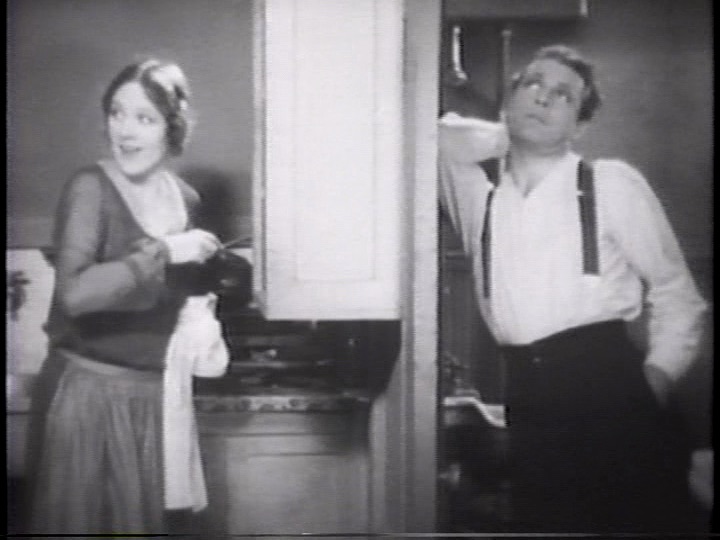
Em “The Garden of Eden” (1928), somos apresentados a Toni (Corinne Griffith), uma garota de Viena que quer ser cantora de ópera. Ela recebe uma carta de Budapeste convidando-a para cantar no Palácio de Paris; uma carta assinada por M. Bauer. Chegando lá, ela descobre que Bauer (Maude George) é uma mulher que administra um show de mau gosto. Ela aceita cantar mesmo assim, mas é humilhada em seu primeiro número, o que a leva a ser despedida junto à costureira do local, Rosa (Louise Dresser), que defendeu a menina.  

In “The Garden of Eden” (1928), we’re introduced to Toni (Corinne Griffith), a girl from Vienna who wants to be an opera singer. She receives a letter from Budapest inviting her to sing at the Palais de Paris; a letter signed by M. Bauer. Arriving there, she finds out that Bauer (Maude George) is a woman who manages a show house of poor taste. She accepts to sing anyway, but is humiliated in her first number, which leads to her firing alongside the house seamstress Rosa (Louise Dresser), who defended her.

Rosa é na verdade uma Baronesa e, amadrinhando Toni, a leva para Monte Carlo no Hotel Eden para viver com pompa e circunstância duas semanas patrocinadas pela pensão de viúva de guerra. Lá, elas conhecem o Coronel Dupont (Edward Martindel) e seu sobrinho Richard (Charles Ray), e ambos se apaixonam por Toni, ou melhor, a Baronesa Antoinette. 

Rosa is actually a Baroness and, taking Toni under her wing, takes her to Monte Carlo to Hotel Eden to live lavishly two weeks from her war widow pension. There, they meet the Colonel Dupont (Edward Martindel) and his nephew Richard (Charles Ray), and both fall for Toni, or better, Baroness Antoinette.

Em “Adam and Eva” (1922), somos apresentados aos gêmeos chamados Adam e Eva, ambos interpretados por Suzanne Marwille. Ela é sapeca, sempre pregando peças nos outros, especialmente no irmão. Quando ambos têm dezesseis anos, Adam decide ensinar uma lição para Eva e se veste como ela para seduzir o vizinho. Eva então se veste de Adam para se vingar da vingança dele. 

In “Adam and Eva” (1922), we’re introduced to twins named Adam and Eva, both played by Suzanne Marwille. She is the mischievous one, always pranking other people and especially her brother. When they’re sixteen, Adam decides to teach Eva a lesson and dresses like her to seduce a neighbor. Eva then dresses as Adam to take revenge on his revenge.

Somos informados por uma cartela de texto que “The Garden of Eden” tinha uma sequência de sonho em Technicolor no primeiro rolo que atualmente está perdida. “Adam e Eva” termina de maneira abrupta, o que nos leva a imaginar se não tem nada faltando. Esses detalhes, entretanto, não impactaram as sessões, e agora eu sei que há outro maravilhoso festival de cinema mudo para nós amantes dessa arte.

We are informed by a title card that “The Garden of Eden” had a Technicolor dream sequence in the first reel that’s currently lost. “Adam and Eva” ends abruptly and lets us imagine if there isn’t anything missing. These things, however, didn’t make the viewing experience any worse, and now I know that there is another wonderful silent film festival for us lovers of this art.

Saturday, April 26, 2025

A Turba (1928) / The Crowd (1928)


Alguns dos melhores filmes mudos foram feitos quando a era do cinema mudo estava lentamente se despedindo. O ano de 1928 produziu alguns dos melhores filmes e nos faz pensar o que aconteceria se o som sincronizado tivesse demorado mais um pouco para chegar. E não estou falando de megaproduções como “A Arca de Noé”. 1928 produziu filmes incríveis com muito pouco. Tome por exemplo o filme-sem-maquiagem “O Martírio de Joana D’Arc”... ou o filme sobre o qual falamos hoje. “A Turba” é tão comum que lida com nosso cotidiano, e nos causa dor.

Some of the best silent movies were made when the silent era was slowly fading. The year of 1928 produced some of the greatest movies and this makes us wonder what would happen if synchronized sound had arrived a little later. And I’m not talking only about mega productions such as "Noah's Ark”. 1928 produced some amazing movies with so little. Take for instance the make-up-less “The Passion of Joan of Arc”… or the movie we’re talking about today. “The Crowd” is so ordinary that it hits too close to home, and it aches.

No dia quatro de julho de 1900, um menino nasce na família Sims. Ele é chamado de John e seu pai diz que ele está destinado a fazer algo grandioso. Quando John (James Murray) tem 21 anos, ele se muda para a selva, quer dizer, Nova York. Ele se torna um dos milhões de trabalhadores num daqueles prédios imensos, fingindo trabalhar nas suas mesinhas e deixando como loucos o espaço quando acaba o turno.

On the Fourth of July in the year 1900, a boy is born in the Sims household. He’s named John and his father claims he is destined to do great deeds. When John (James Murray) is 21, he moves to the jungle, that is, New York. He becomes one of millions of workers in those huge buildings, pretending to work on their little desks and leaving like crazy cattle when the workday ends.

Numa tarde, o colega de John, Bert (Bert Roach), o apresenta a uma amiga de uma amiga, Mary (Eleanor Boardman). Eles vão a um parque de diversões de Coney Island e se dão bem - tão bem que ele a pede em casamento naquela mesma noite. Logo eles estão casados e vivendo num pequeno apartamento, esperando que ele consiga uma promoção. Logo começam também os problemas.

One evening, John’s coworker Bert (Bert Roach) introduces him to a friend of a friend, Mary (Eleanor Boardman). They go to the amusement park in Coney Island and get along fine - so fine that he proposes that very same night. Soon they’re married and living in a little flat, waiting for him to get a promotion. Also soon the troubles arrive.

No Natal, John prefere se divertir com Bert a passar o tempo com a desagradável família de Mary. Alguns meses depois, eles já discutem por bobagens, até que John declara: “casamento não é uma palavra… é uma sentença!” Será que o casamento deles vai durar só um ou dois anos, como Bert previu?

On Christmas, John prefers to party with Bert than to spend time with Mary’s judgmental family. A few months later, they’re arguing over little things, until John declares: “marriage isn’t a word… it’s a sentence!” Will their marriage last only a year or two, like Bert predicted?


Uma coisa que me incomodou foi que John passou a tratar Mary melhor quando ele descobriu que ela estava grávida. Uma mulher deve ser tratada com amor e respeito porque é um ser humano, não porque ela atualmente é uma incubadora. Ter Mary como “recipiente” carregando o filho DELE fez John vê-la com outros olhos, e isso é simplesmente errado - ou deveria ser em 2025. Eu entendo o anacronismo, mas esta sequência deixou-me um gosto amargo na boca.

One thing that bothered me was that John started treating Mary better when he learned she was pregnant. A woman must be treated with love and respect because she’s a human being, not because she’s currently an incubator. Having Mary as a vessel carrying HIS child made John see her differently, and this is simply wrong - or it should be in 2025. I understand the anachronism, but this sequence left me with a bitter taste in my mouth.

A fotografia é simplesmente brilhante. Logo no começo, quando o pequeno Johnny está subindo as escadas, é como se ele estivesse partindo para a idade adulta com todos ao pé da escada assistindo - esta bela sequência foi inspirada pelo Expressionismo Alemão. Além disso, os prédios são filmados de maneira a ficarem tão majestosos quanto os cenários de “Metrópolis”, feito um ano antes, e essa sequência inspirou outra obra-prima, “Se Meu Apartamento Falasse” (1960).

The cinematography is simply outstanding. Right in the beginning, while little Johnny is going upstairs, it’s as if he was ascending to adulthood with everybody downstairs watching - this beautiful sequence was inspired by German Expressionism. Also, the way the buildings are shot makes them as magnificent as the sets from “Metropolis”, made one year prior, and inspired the cinematography of another masterpiece, Billy Wilder’s “The Apartment” (1960).

O roteiro foi co-escrito pelo diretor King Vidor com John V.A. Weaver, no segundo de seus 11 créditos como roteirista, e as cartelas de texto ficaram a cargo de Joseph Farnham, ganhador do único Oscar de Melhor Escrita de Intertítulos, em 1929. “A Turba” foi o filme que se seguiu ao sucesso de Vidor “O Grande Desfile”, de 1925, e mais uma vez ele escolheu ter um homem comum como protagonista, desta vez não indo para a guerra, mas vivendo uma vida ordinária.

The screenplay was co-written by the director King Vidor with John V.A. Weaver, in the second of 11 writing credits, and the titles were written by Joseph Farnham, winner of the only Oscar for Best Title Writing, given in 1929. “The Crowd” was the film that followed Vidor’s hit “The Big Parade”, from 1925, and once again he chose to have an average man as his lead, but this time not going to war, but living an ordinary life.

Nascido em 1901, mas não em quatro de julho, James Murray, astro de “A Turba”, teve uma vida breve e triste, que King Vidro tentou narrar no roteiro nunca produzido chamado “The Actor”. Indo atrás de uma carreira em Hollywood após participar de um filme universitário, Murray foi escolhido entre os figurantes para ser o protagonista de “A Turba”. Mais trabalhos surgiram, mas o álcool atravessou seu caminho. Tendo recusado um papel de Vidor no filme “O Pão Nosso” (1934), Murray morreu afogado no Rio Hudson. Ele tinha apenas 35 anos.

Born in 1901, not on the Fourth of July, James Murray, the star of “The Crowd”, had a brief and sad life, one that King Vidor tried to narrate in the never-produced screenplay “The Actor”. Pursuing the Hollywood dream after appearing in a movie made at his university, Murray was picked from the extras to play the lead of “The Crowd”. More works followed, but alcohol got in the way. Refusing Vidor’s offer for a role in “Our Daily Bread” (1934), Murray drowned in the Hudson River. He was only 35. 

Os cenários foram decorados por Cedric Gibbons e Arnold Gillespie. Apesar da presença de Gibbons no departamento de arte, não há muita opulência nos cenários, pois a casa de John e Mary deveria ser caseira. Poderia ser nossa casa na tela. John e Mary poderiam ser nós.

The sets were decorated by Cedric Gibbons and Arnold Gillespie. Despite Gibbons presence in the art department, there is not much opulence in the sets, because John and Mary’s home is supposed to be homely. It could be our home on the screen. John and Mary could be us.

Há dois nomes mais comuns que John e Mary? Não havia nos anos 1920: de acordo com o site do Serviço Social dos EUA, Mary foi o nome mais popular para meninas naquela década, com mais de 70 mil garotinhas recebendo o nome todos os anos. Robert foi o nome masculino mais popular naquela década, com John em segundo lugar. Entretanto, em 1900, quando nosso John Sims nasceu, o nome John encabeçava a lista.

Are there two names more ordinary than John and Mary? In the 1920s, there weren’t: according to the USA Social Security website, Mary was the most popular name for girls in that decade, with more than 70,000 girls given the name per year. Robert was the most popular male name in that decade, with John not far behind. However, in 1900, when our John Sims was born, the name John was on the top of the list. 

Se alguns livros e filmes são descritos como “pedaços de Americana”, “A Turba” poderia ser descrito como “anti-Americana”. Explicando: Americana é o nome dado a qualquer artefato cultural que explora a herança e o folclore dos Estados Unidos da América. Comumente vistos pelo lado positivo, temas como trabalho duro, valores arraigados e a possibilidade de se tornar rico e famoso - o chamado “sonho americano”- são a norma. “A Turba” subverte este último tema, destacando, por exemplo, como “a multidão sempre ri com você… mas chorará com você apenas por um dia”.

If some books and movies are described as “slices of Americana”, “The Crowd” could be described as “anti-Americana”. Let’s explain: Americana is the name given to any cultural artifact that explores the heritage and folklore of the United States of America. Often seen in a positive light, themes as hard work, strong values and the possibility to become rich and famous - the so-called “American dream” - are the norm. “The Crowd” subverts this latter theme, highlighting, for instance, how “the crowd laughs with you always… but it will cry with you for only a day”.

Quando eles se conhecem, John e Mary zombam das pessoas na multidão que pensaram que seriam alguém um dia e fariam coisas incríveis. No final, eles percebem que há beleza em ser apenas mais um rosto na multidão. Se estivermos na multidão para assistir a um filme como este, com uma história simples mas elementos que o destacam, podemos nos considerar sortudos.

When they meet, John and Mary mock the people in the crowd who thought they would one day be someone and do big things. In the end, they realize there is beauty in being just another face in the crowd. If we’re in the crowd to watch a movie like this, with a simple story but outstanding elements, we can consider ourselves the lucky ones.

Friday, April 26, 2024

Alemanha, Ano 1928 / Germany, Year 1928


Em qualquer dado ano, MUITOS filmes estreiam ao redor do mundo. Em alguns países, com indústrias do cinema mais desenvolvidas, a riqueza dos títulos é algo a se maravilhar. Vamos olhar para a Alemanha na Era Muda do cinema. Em meu post sobre o ano de 1928 no cinema, disse que foi um ano muito louco para a Alemanha. E foi mesmo. Eu acabei escolhendo dois filmes alemães de 1928 nas minhas resoluções de Ano Novo para 2024 e decidi escrever sobre eles num só artigo. Vamos nessa.


In any given year, A LOT of movies are released all over the world. In some countries, with more developed film industries, the richness of titles released is a thing to wonder at. Let’s look at German in the silent era. In my post about 1928 in film, I said it was a very crazy year in Germany. And it was indeed. I ended up choosing two German films from 1928 to watch as part of my 2024 New Year’s resolutions and decided to review them together. Let’s go.

Alraune / Alraune, A Daughter of Destiny


Eu ouvi falar pela primeira vez deste filme num curso que fiz sobre filmes de ficção científica. O tópico era criar e manipular seres vivos – começando, obviamente, com “Frankenstein” – e como esses experimentos ambiciosos foram retratados no cinema. “Alraune” começa com o mito da mandrágora: uma raiz que, sob as circunstâncias adequadas, pode se tornar um ser humano – mas um ser humano sem sentimentos.


I first heard about this film in a class I was taking on sci-fi movies. The topic was creating and manipulating life – starting, of course, with “Frankenstein” – and how these ambitious experiments were portrayed in film. “Alraune” begins with the myth of the mandrake: a root that, under the right circumstances, can become a human being – but one without feelings.

O professor Brinken (Paul Wegener) pesquisa características hereditárias e quer comprovar o mito da raiz de mandrágora. Com a raiz ele cria um ser humano chamado Alraune (Brigitte Helm, de “Metropolis”). Com cerca de 20 anos de idade, Alraune está sendo educada numa escola religiosa, mas ela foge do lugar e, num trem, conhece uma trupe de circo e foge com eles. O professor Brinken a encontra no circo e a leva para viver com ele numa vila elegante, onde ela conhecerá a verdade sobre sua origem e buscará vingança.


Professor Brinken (Paul Wegener) researches hereditary characteristics and wants to debunk or prove the myth surrounding the mandrake root. With the root he creates a human being named Alraune (Brigitte Helm, from “Metropolis”). At about 20 years old, Alraune is being educated in a monastery school, but she escapes the place and, in a train, meets a circus troupe and runs away with them. Professor Brinken finds her at the circus and brings her to live with him in a fancy villa, where she will learn the truth about her origin and seek revenge.

Este não é um filme do prestigiado estúdio alemão UFA, mas sim dos Estúdios Ama. Eu pude encontrar pouquíssima informação sobre o estúdio, pois a maioria dos resultados de pesquisa se referia a uma companhia de software de mesmo nome fundada em 2004. “Alraune” foi refilmado como filme sonoro em 1930, com Brigitte Helm mais uma vez interpretando o papel-título.


This is a film not by the prestigious UFA studios, but rather by the Ama Studios. I could find very little about it, as most search results are about a software company of the same name founded in 2004. “Alraune” was remade as a sound film in 1930, with Brigitte Helm reprising the title role.

“Alraune” é baseado num romance escrito por Hanns Heinz Ewers, um mestre do gênero terror que escreveu diversos romances e contos – sendo o mais famoso “O Estudante de Praga” – e era também ator de vaudeville. A história foi adaptada para as telas pelo diretor Henrik Galeen, que escreveu o roteiro de “Nosferatu” (1922). Galeen fez seis filmes como ator na era muda e dirigiu 12 filmes entre 1914 e 1933.


“Alraune” is based on a novel written by Hanns Heinz Ewers, a master of the horror genre that wrote several novels and short stories – being his most famous “The Student from Prague” – and was also a vaudeville performer. The story was adapted to the screen by director Henrik Galeen, who wrote the screenplay for “Nosferatu” (1922). Galeen appeared in six films as an actor in the silent era and directed 12 movies between 1914 and 1933.

Embora não seja uma obra-prima, este filme foi divertido de se ver e Brigitte Helm, com apenas 19 anos à época das gravações, está ótima como vítima de experimento científico que se transforma numa sedutora. Fiquei feliz que meus estudos me motivaram a ver este filme.


Although not a masterpiece, this film was fun to watch and Brigitte Helm, only 19 when was shot, is great as the victim of a scientific experience who becomes a seductress. I’m glad my studies took me to see this movie.


Os Espiões / Spies / Spione


Eu escolhi “Os Espiões” de Fritz Lang como um destaque do ano de 1928 na Alemanha. E que espetáculo é este filme! Nele, documentos secretos são roubados de diversos locais, começando uma guerra de cérebros entre espiões. O vilão Haghi (Rudolg Klein-Rogge), banqueiro, tem como sua espiã a sedutora russa Sonja Barranikova (Gerda Maurus), enquanto o Serviço Secreto oficial tem um homem conhecido apenas como número 326 (Willy Fritsch). O problema é que estes dois espiões de lados opostos se apaixonam.


I chose Fritz Lang’s “Spies” as a highlight from 1928 in Germany. And what a spectacle it is! In the film, secret documents are stolen from several places, starting a battle of wits between spies. The villain Haghi (Rudolf Klein-Rogge), a bank owner, has as his spy the Russian seductress Sonja Barranikova (Gerda Maurus), while the official Secret Service has a man known only as number 326 (Willy Fritsch). The problem is that these two spies from opposite sides fall in love.

O quartel-general de Haghi está cheio de aparatos tecnológicos, algo que pode ser encontrado em muitos covis de vilões. A tecnologia pode ser usada para boas ou más ações, mas é tão comumente ligada a vilões por causa de seu potencial de criar caos. Haghi usa uma cadeira de rodas, uma característica comum a outros vilões antes e depois deste filme – lembremo-nos de apenas um: Lionel Barrymore em “A Felicidade não se Compra” (1946).


Haghi’s headquarters are full of technological devices, something that can be found in many villains’ places. Technology can be used for good and bad deeds, but is linked so often to villains because of its potential to create chaos. Haghi uses a wheelchair, also a trait shared by many villains before and after this film – let’s remember only one: Lionel Barrymore in “It’s a Wonderful Life” (1946).

“Os Espiões” foi publicado como romance por Thea von Harbou, então esposa de Fritz Lang, um ano após a estreia do filme. Foi o primeiro filme que Lang fez com sua própria produtora. De acordo com Robert Osborne, Lang estava tendo um caso com Gerda Maurus durante as filmagens.


“Spies” was published as a novel by Thea von Harbou, then Fritz Lang’s wife, one year after the film was released. This was the first movie Fritz Lang made under his own production company. According to Robert Osborne, Lang was having an affair with Gerda Maurus during the shooting of the movie.

Foi uma boa surpresa ver que uma de minhas atrizes coadjuvantes favoritas, Hertha Von Walther, estava neste filme como Lady Leslane, que é chantageada por Haghi bem no começo da película. Hertha chamou minha atenção pela primeira vez como coadjuvante muito importante em “Rua das Lágrimas” (1925) e desde então já a encontrei em muitos outros filmes alemães da década de 1920.


It was a great surprise to see that one of my favorite supporting actresses, Hertha Von Walther, was in this movie as Lady Leslane, who is blackmailed by Haghi in the very beginning of the film. Hertha first called my attention as a very important supporting player in “Joyless Street” (1925) and since then I spotted her in many other German movies from the 1920s.

Descrito no Letterboxd como “007 dos filmes mudos” e “Intriga Internacional de Fritz Lang”, este filme por vezes demasiado longo é certamente uma maravilha. Há pouco desenvolvimento dos personagens, entretanto, mas é assim que ele funciona. No final das contas, a jornada é mais importante do que quem a empreendeu.


Described on Letterboxd as “007 from the silent era” and “Fritz Lang’s North by Northwest”, this sometimes too long movie is certainly a marvel. There is little character development, though, and it works this way. In the end of the day, the ride is more important than the ones who did it.

Sunday, June 12, 2022

A Arca de Noé (1928) / Noah’s Ark (1928)


Às vezes temos uma grata surpresa com um filme ou alguns filmes. Isso acontece quando um filme épico, cuja narrativa é ambientada no passado, mostra paralelos com o presente. Este é o caso do magnífico “Os Dez Mandamentos” de DeMille de 1923 - melhor que o remake sonoro de 1956, na minha opinião. Nele, há a história de Moisés seguida por uma história sobre os perigos de não se seguir os Dez Mandamentos neste mundo moderno e louco. Outro filme mudo que é um épico religioso mas faz comparações com o presente é “A Arca de Noé” (1928).  

Sometimes we’re pleasantly surprised by a movie or a couple of movies. This happens to me when an epic film, whose story is set in the past, shows parallels to the present. This is the case of DeMille’s magnificent “The Ten Commandments” from 1923 - better than the 1956 sound remake, in my opinion. In it, there is the Moses story followed by a story about the dangers of not following the Ten Commandments even in this modern, crazy world. Another silent movie that is a religious epic but draws comparisons with the present is “Noah’s Ark” (1928).

Nos primeiros minutos de projeção, as cartelas de texto, retiradas diretamente da Bíblia, nos contam sobre a construção da Torre de Babel e a adoração do Bezerro de Ouro. Corta para os tempos modernos, e as pessoas ainda estão adorando o dinheiro em bolsas de valores - lembre-se, este filme foi feito um ano antes da quebra da bolsa de Wall Street em 1929. Mas a história moderna que veremos começa antes, em 1914.

In the first minutes of projection, the title cards, taken directly from the Bible, tell us about the building of the Tower of Babel and the worship of the Golden Calf. Cut to modern times, and people are still worshipping money in stock markets - remember, this movie was made one year before the 1929 crash of Wall Street. But the modern story we’re following starts earlier, in 1914.

Um grupo de pessoas muito diferentes está viajando no Expresso do Oriente. Um pastor (Paul McAllister) está lendo a Bíblia na viagem e chama a atenção das pessoas ao seu redor. Todos zombam dele, dizendo que Deus não existe. De repente, um raio atinge e destrói uma ponte, causando um acidente com o trem. Muitos descrentes morrem no local, mas o norte-americano Travis (George O’Brien) e seu amigo Al (Guinn Williams) sobrevivem e ajudam uma garota alemã chamada Marie (Dolores Costello) a encontrar abrigo numa taverna.

A group of very different people is travelling aboard the Orient Express. A Minister (Paul McAllister) is reading the Bible while travelling and calls the attention of people around him. Everybody mocks him, saying there is no God. Suddenly, a thunder strikes and destroys a bridge, causing an accident with the train. Many non-believers die on the spot, but the American Travis (George O’Brien) and his friend Al (Guinn Williams) survive and help a German girl named Marie (Dolores Costello) to reach shelter in a tavern.

A guerra é declarada naquela noite, e Marie tem de fugir do local por ser alemã. Durante algum tempo, Al, Travis e Marie vivem felizes em Paris, intocados pela guerra. Quando os EUA declaram guerra, Al decide se alistar e Travis o segue, mesmo não querendo lutar contra os alemães por causa de Marie. Marie, que é artista, se junta a um grupo para entreter as tropas. Adivinha quem mais está neste grupo? Myrna Loy!  

War is declared that night, and Marie has to flee the place because she’s German. For a while, Al, Travis and Marie live happily in Paris, untouched by the war. When the United States declares war, Al decides to enlist and Travis follows him, even though he didn’t want to fight the Germans because of Marie. When the two boys are gone, Marie, who is an artist, joins a group to entertain the troops. Guess who else is there in the group? Myrna Loy!

E quando a arca de Noé entra na história, você deve estar se perguntando. Com quase 60 minutos de projeção, quando os personagens estão em uma situação muito difícil, nosso velho amigo pastor conta a velha história e diz que a guerra, assim como o dilúvio, veio para exterminar o ódio e o mal no mundo - se ele soubesse que uma guerra ainda pior estava para acontecer! A história bíblica então se desenrola em frente aos nossos olhos, com os mesmos atores da história principal interpretando os papéis, por exemplo: Paul McAllister como Noé, George O’Brien como Japheth, filho de Noé, e Dolores Costello como Miriam, criada de Noé e apaixonada por Japheth.

And when does Noah’s Ark enter the story, you might be asking. At almost the 60 minute mark, when the characters are in a very difficult situation, our old friend the Minister tells the ages-old story and says that the war, like the flood, came to end hate and wickedness in the world - if only he knew a worse war was coming! The Biblical story then unfolds in front of our eyes, with the same actors from the main story playing the parts, for instance: Paul McAllister as Noah, George O’Brien as Japheth, Noah’s son, and Dolores Costello as Miriam, Noah’s handmaid in love with Japheth.

“A Arca de Noé” é um destes curiosos filmes parcialmente falados que estrearam pouco depois de “O Cantor de Jazz” (1927). Há efeitos sonoros, canções e até mesmo alguns diálogos no filme. Como você deve imaginar, isso acontece porque o filme foi planejado como uma produção silenciosa, mas o cinema falado surgiu e houve uma mudança de planos. Com 135 minutos em sua estreia, “A Arca de Noé” sofreu diversos cortes, com muitas sequências com diálogos que não funcionavam bem sendo cortadas, e agora a única versão disponível tem 105 minutos de duração.

“Noah’s Ark” is one of those odd part-talkies released a little while after “The Jazz Singer” (1927). There are sound effects, songs and even some spoken dialogue in the film. As you might have imagined, this happens because the movie was planned to be a silent production, but sound came and the plans changed. Running 135 minutes in its release, “Noah’s Ark” suffered several cuts, with many talking sequences that didn’t work well being cut, and now the only version available is 105 minutes long.

As estrelas deste filme parcialmente falado tiveram experiências variadas com o cinema sonoro. Dolores Costello fez apenas alguns filmes falados, porque ela se casou com John Barrymore no mesmo ano em que “A Arca de Noé” foi feito. Eles se divorciaram em 1935, quando Dolores voltou para o cinema para fazer mais nove filmes antes de se aposentar definitivamente. George O’Brien, mais conhecido hoje como o protagonista de “Aurora” (1927), teve uma longa carreira na era sonora, se aposentando apenas em 1964.

The stars of this part-talkie had varied experiences with sound films. Dolores Costello made only a handful of them, because she got married to John Barrymore the same year “Noah’s Ark” was made. They divorced in 1935, when Dolores went back to cinema to make nine more movies before retiring for good. George O’Brien, better known today as the lead of “Sunrise” (1927), had a long career in the sound era, retiring only in 1964.

Noah Beery, que interpreta dois papéis vilanescos, trabalhava no cinema desde 1913 e fez uma boa transição para o falado, trabalhando em todo tipo de filme até sua morte em 1946. Paul McAllister teve em “A Arca de Noé” seu melhor papel, e trabalhou quase sempre sem receber crédito na era sonora. Louise Fazenda, que tem um pequeno papel neste filme, trabalhou também nos filmes falados, mas não com o mesmo sucesso que teve no cinema mudo. Dito isto, podemos afirmar que a pessoa mais bem-sucedida nos filmes sonoros que também esteve neste filme foi Myrna Loy, que tem duas falas aqui mas que se tornou uma das mais amadas estrelas na década seguinte.

Noah Beery, who plays two villainous roles, had been working in movies since 1913 and transitioned well to talkies, working in all kinds of movies until his death in 1946. Paul McAllister had in “Noah’s Ark” his best role, and worked almost always uncredited in the sound era. Lousie Fazenda, who has a small role in this movie, worked in the sound era as well, but not with the same success she had in silents. That being said, we can affirm that the most successful person in the sound era who was also in this movie was Myrna Loy, who has a couple of lines here but went on to become one of the most beloved actresses of the following decade.

Noah Beery

Assim como a maioria dos épicos da Era de Ouro de Hollywood, “A Arca de Noé” foi muito caro. Na parte da história bíblica, há grandes multidões de pecadores, cenários imensos e até um grande livro escrito com fogo. Obviamente, a sequência do dilúvio é o ápice, e também a parte mais comentada do filme. Várias fontes dizem que três figurantes se afogaram filmando a cena, um teve que amputar a perna e quase uma dúzia quebrou costelas e sofreu outros traumas. A quantidade de água utilizada foi cerca da mesma quantidade de uma piscina olímpica.

Like most epic films from the Golden Age of Hollywood, “Noah’s Ark” was very expensive. In the Biblical story part, there are big crowds of sinners, huge sets and even a massive book written with fire. Of course, the flood sequence is the highlight, and also the most talked about part of the movie. Various sources say that three extras drowned while filming the scene, one had to have his leg amputated and almost a dozen suffered broken ribs and other injuries. The amount of water used is said to be the same of an Olympic-sized swimming pool.

Há uma sequência silenciosa muito poderosa com o exército norte-americano marchando através de Paris. Marie assiste o desfile e podemos sentir seu desconforto, afinal, aqueles homens estavam indo matar o povo dela. Travis, animado no começo, olha em volta e vê um soldado sem uma perna e mulheres em luto pela perda de seus filhos e maridos na guerra. Quando ele vê Al, Travis decide se juntar também ao exército, deixando para trás Marie de coração partido. Ao se juntar ao desfile, Travis pergunta “Para onde vamos?” e recebe como resposta “Quem sabe ou se importa?”.  

There is a very powerful silent sequence featuring the North American army marching through Paris. Marie watches the parade and we can feel her discomfort, after all, those men are about to kill her people. Travis, excited at first, looks around and sees a soldier without a leg and women mourning the loss of their sons and husbands in the war. When he sees Al, Travis decides to join the army as well, leaving behind a broken-hearted Marie. As Travis joins the parade, he asks “Where to?” and receives as an answer “Who knows or cares?”.

Além do desastre criado por Deus, o grande dilúvio, “A Arca de Noé” fala de desastres criados pelo homem que são igualmente prejudiciais. Obviamente, a guerra é o maior desastre feito pelo homem, mas há também a adoração de falsos deuses. Quando o filme compara o dilúvio divino com a guerra, ele cria um precedente muito perigoso: ele chama a guerra de vontade de Deus, praticamente inocentando os líderes mundiais que começaram a guerra ou mesmo dizendo que eles estavam seguindo as ordens de Deus. Este é um discurso extremamente nocivo que o filme infelizmente apoia.

Besides the God-made disaster of the great flood, “Noah’s Ark” talks about man-made disasters that are as harmful. Of course, the war is the biggest man-made disaster, but there is also the worshipping of fake gods. When the movie compares the divine flood with the war, it creates a very dangerous precedent: it calls the war a will of God, practically saying that the world leaders who started the war were innocent or were simply following God’s orders. This is an extremely dangerous discourse that the film unfortunately backs up.

“A Arca de Noé” foi o primeiro trabalho de Darryl F. Zanuck como produtor e, tendo apenas 26 anos de idade, ele prometeu “fazer o maior filme já feito”. Seu grande filme foi um fracasso de bilheteria e também não agradou aos críticos. Entretanto, não é um filme ruim. Considerada a primeira produção notável dirigida por Michael Curtiz em Hollywood, “A Arca de Noé” é uma surpresa agradável que mistura - embora com resultados estranhos - o passado e o presente de uma maneira quase única.

“Noah’s Ark” was Darryl F. Zanuck’s first assignment as a producer and, being only 26 years old, he promised to “make the greatest picture ever made”. His great film was a box-office failure and didn’t please the critics either. However, it’s not a bad film. Considered to be the first notable production directed in Hollywood by Michael Curtiz, “Noah’s Ark” is a pleasant surprise that mixes - although with odd results - the past and the present in an almost unique way.

This is my contribution to the Second Disaster blogathon, hosted by Dubsism and Pale Writer.    

Related Posts Plugin for WordPress, Blogger...