} Crítica Retrô: drama

Tradutor / Translator / Traductor / Übersetzer / Traduttore / Traducteur / 翻訳者 / переводчик

Showing posts with label drama. Show all posts

Saturday, April 26, 2025

A Turba (1928) / The Crowd (1928)


Alguns dos melhores filmes mudos foram feitos quando a era do cinema mudo estava lentamente se despedindo. O ano de 1928 produziu alguns dos melhores filmes e nos faz pensar o que aconteceria se o som sincronizado tivesse demorado mais um pouco para chegar. E não estou falando de megaproduções como “A Arca de Noé”. 1928 produziu filmes incríveis com muito pouco. Tome por exemplo o filme-sem-maquiagem “O Martírio de Joana D’Arc”... ou o filme sobre o qual falamos hoje. “A Turba” é tão comum que lida com nosso cotidiano, e nos causa dor.

Some of the best silent movies were made when the silent era was slowly fading. The year of 1928 produced some of the greatest movies and this makes us wonder what would happen if synchronized sound had arrived a little later. And I’m not talking only about mega productions such as "Noah's Ark”. 1928 produced some amazing movies with so little. Take for instance the make-up-less “The Passion of Joan of Arc”… or the movie we’re talking about today. “The Crowd” is so ordinary that it hits too close to home, and it aches.

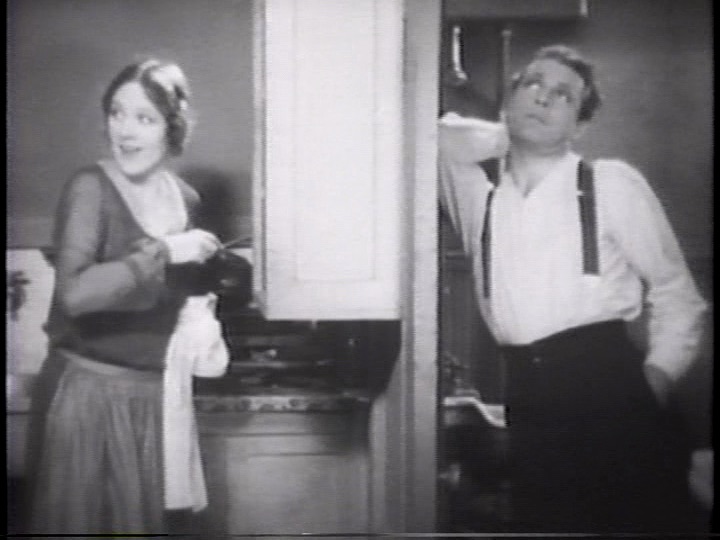
No dia quatro de julho de 1900, um menino nasce na família Sims. Ele é chamado de John e seu pai diz que ele está destinado a fazer algo grandioso. Quando John (James Murray) tem 21 anos, ele se muda para a selva, quer dizer, Nova York. Ele se torna um dos milhões de trabalhadores num daqueles prédios imensos, fingindo trabalhar nas suas mesinhas e deixando como loucos o espaço quando acaba o turno.

On the Fourth of July in the year 1900, a boy is born in the Sims household. He’s named John and his father claims he is destined to do great deeds. When John (James Murray) is 21, he moves to the jungle, that is, New York. He becomes one of millions of workers in those huge buildings, pretending to work on their little desks and leaving like crazy cattle when the workday ends.

Numa tarde, o colega de John, Bert (Bert Roach), o apresenta a uma amiga de uma amiga, Mary (Eleanor Boardman). Eles vão a um parque de diversões de Coney Island e se dão bem - tão bem que ele a pede em casamento naquela mesma noite. Logo eles estão casados e vivendo num pequeno apartamento, esperando que ele consiga uma promoção. Logo começam também os problemas.

One evening, John’s coworker Bert (Bert Roach) introduces him to a friend of a friend, Mary (Eleanor Boardman). They go to the amusement park in Coney Island and get along fine - so fine that he proposes that very same night. Soon they’re married and living in a little flat, waiting for him to get a promotion. Also soon the troubles arrive.

No Natal, John prefere se divertir com Bert a passar o tempo com a desagradável família de Mary. Alguns meses depois, eles já discutem por bobagens, até que John declara: “casamento não é uma palavra… é uma sentença!” Será que o casamento deles vai durar só um ou dois anos, como Bert previu?

On Christmas, John prefers to party with Bert than to spend time with Mary’s judgmental family. A few months later, they’re arguing over little things, until John declares: “marriage isn’t a word… it’s a sentence!” Will their marriage last only a year or two, like Bert predicted?


Uma coisa que me incomodou foi que John passou a tratar Mary melhor quando ele descobriu que ela estava grávida. Uma mulher deve ser tratada com amor e respeito porque é um ser humano, não porque ela atualmente é uma incubadora. Ter Mary como “recipiente” carregando o filho DELE fez John vê-la com outros olhos, e isso é simplesmente errado - ou deveria ser em 2025. Eu entendo o anacronismo, mas esta sequência deixou-me um gosto amargo na boca.

One thing that bothered me was that John started treating Mary better when he learned she was pregnant. A woman must be treated with love and respect because she’s a human being, not because she’s currently an incubator. Having Mary as a vessel carrying HIS child made John see her differently, and this is simply wrong - or it should be in 2025. I understand the anachronism, but this sequence left me with a bitter taste in my mouth.

A fotografia é simplesmente brilhante. Logo no começo, quando o pequeno Johnny está subindo as escadas, é como se ele estivesse partindo para a idade adulta com todos ao pé da escada assistindo - esta bela sequência foi inspirada pelo Expressionismo Alemão. Além disso, os prédios são filmados de maneira a ficarem tão majestosos quanto os cenários de “Metrópolis”, feito um ano antes, e essa sequência inspirou outra obra-prima, “Se Meu Apartamento Falasse” (1960).

The cinematography is simply outstanding. Right in the beginning, while little Johnny is going upstairs, it’s as if he was ascending to adulthood with everybody downstairs watching - this beautiful sequence was inspired by German Expressionism. Also, the way the buildings are shot makes them as magnificent as the sets from “Metropolis”, made one year prior, and inspired the cinematography of another masterpiece, Billy Wilder’s “The Apartment” (1960).

O roteiro foi co-escrito pelo diretor King Vidor com John V.A. Weaver, no segundo de seus 11 créditos como roteirista, e as cartelas de texto ficaram a cargo de Joseph Farnham, ganhador do único Oscar de Melhor Escrita de Intertítulos, em 1929. “A Turba” foi o filme que se seguiu ao sucesso de Vidor “O Grande Desfile”, de 1925, e mais uma vez ele escolheu ter um homem comum como protagonista, desta vez não indo para a guerra, mas vivendo uma vida ordinária.

The screenplay was co-written by the director King Vidor with John V.A. Weaver, in the second of 11 writing credits, and the titles were written by Joseph Farnham, winner of the only Oscar for Best Title Writing, given in 1929. “The Crowd” was the film that followed Vidor’s hit “The Big Parade”, from 1925, and once again he chose to have an average man as his lead, but this time not going to war, but living an ordinary life.

Nascido em 1901, mas não em quatro de julho, James Murray, astro de “A Turba”, teve uma vida breve e triste, que King Vidro tentou narrar no roteiro nunca produzido chamado “The Actor”. Indo atrás de uma carreira em Hollywood após participar de um filme universitário, Murray foi escolhido entre os figurantes para ser o protagonista de “A Turba”. Mais trabalhos surgiram, mas o álcool atravessou seu caminho. Tendo recusado um papel de Vidor no filme “O Pão Nosso” (1934), Murray morreu afogado no Rio Hudson. Ele tinha apenas 35 anos.

Born in 1901, not on the Fourth of July, James Murray, the star of “The Crowd”, had a brief and sad life, one that King Vidor tried to narrate in the never-produced screenplay “The Actor”. Pursuing the Hollywood dream after appearing in a movie made at his university, Murray was picked from the extras to play the lead of “The Crowd”. More works followed, but alcohol got in the way. Refusing Vidor’s offer for a role in “Our Daily Bread” (1934), Murray drowned in the Hudson River. He was only 35. 

Os cenários foram decorados por Cedric Gibbons e Arnold Gillespie. Apesar da presença de Gibbons no departamento de arte, não há muita opulência nos cenários, pois a casa de John e Mary deveria ser caseira. Poderia ser nossa casa na tela. John e Mary poderiam ser nós.

The sets were decorated by Cedric Gibbons and Arnold Gillespie. Despite Gibbons presence in the art department, there is not much opulence in the sets, because John and Mary’s home is supposed to be homely. It could be our home on the screen. John and Mary could be us.

Há dois nomes mais comuns que John e Mary? Não havia nos anos 1920: de acordo com o site do Serviço Social dos EUA, Mary foi o nome mais popular para meninas naquela década, com mais de 70 mil garotinhas recebendo o nome todos os anos. Robert foi o nome masculino mais popular naquela década, com John em segundo lugar. Entretanto, em 1900, quando nosso John Sims nasceu, o nome John encabeçava a lista.

Are there two names more ordinary than John and Mary? In the 1920s, there weren’t: according to the USA Social Security website, Mary was the most popular name for girls in that decade, with more than 70,000 girls given the name per year. Robert was the most popular male name in that decade, with John not far behind. However, in 1900, when our John Sims was born, the name John was on the top of the list. 

Se alguns livros e filmes são descritos como “pedaços de Americana”, “A Turba” poderia ser descrito como “anti-Americana”. Explicando: Americana é o nome dado a qualquer artefato cultural que explora a herança e o folclore dos Estados Unidos da América. Comumente vistos pelo lado positivo, temas como trabalho duro, valores arraigados e a possibilidade de se tornar rico e famoso - o chamado “sonho americano”- são a norma. “A Turba” subverte este último tema, destacando, por exemplo, como “a multidão sempre ri com você… mas chorará com você apenas por um dia”.

If some books and movies are described as “slices of Americana”, “The Crowd” could be described as “anti-Americana”. Let’s explain: Americana is the name given to any cultural artifact that explores the heritage and folklore of the United States of America. Often seen in a positive light, themes as hard work, strong values and the possibility to become rich and famous - the so-called “American dream” - are the norm. “The Crowd” subverts this latter theme, highlighting, for instance, how “the crowd laughs with you always… but it will cry with you for only a day”.

Quando eles se conhecem, John e Mary zombam das pessoas na multidão que pensaram que seriam alguém um dia e fariam coisas incríveis. No final, eles percebem que há beleza em ser apenas mais um rosto na multidão. Se estivermos na multidão para assistir a um filme como este, com uma história simples mas elementos que o destacam, podemos nos considerar sortudos.

When they meet, John and Mary mock the people in the crowd who thought they would one day be someone and do big things. In the end, they realize there is beauty in being just another face in the crowd. If we’re in the crowd to watch a movie like this, with a simple story but outstanding elements, we can consider ourselves the lucky ones.

Thursday, October 3, 2019

Telefonema de um Estranho (1952) / Phone Call from a Stranger (1952)


Sempre que eu viajo com a minha mãe, ela comenta, em um tom alegre que não combina com o conteúdo sombrio do comentário: “você está vendo toda essa gente no aeroporto? Provavelmente nunca mais os veremos de novo.” De fato, nós nunca fizemos amigos em um aeroporto – e, considerando a trama de “Telefonema de um Estranho”, foi bom nunca termos feito amizade.

Whenever I travel with my mom, she comments, in a happy tone that has nothing to do with the somber commentary: “do you see all those people here in the airport? We'll probably never see them ever again.” Indeed, we never made friends at an airport – and, considering the plot of “Phone Call from a Stranger”, it’s a good thing we never did.


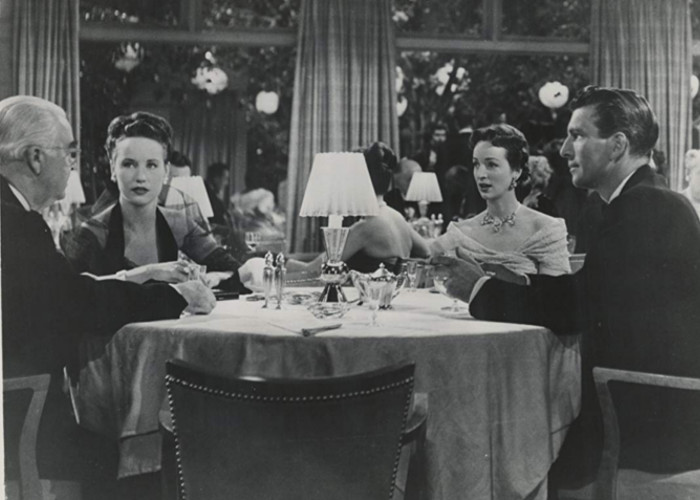
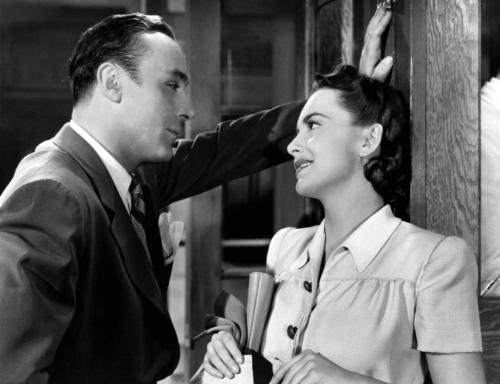
Quatro estranhos se conhecem em um aeroporto. David Trask (Gary Merrill) é um advogado que acabou de abandonar a esposa Jane (Helen Westcott) para decidir o que fazer da vida em Los Angeles. Bianca Carr (Shelley Winters) é uma atriz fracassada, usando o nome artístico de Binky Gay, que está voltando para casa. É a primeira vez que ela viaja de avião e ela está muito nervosa. Eddie Hoke (Keenan Wynn) é um viajante que adora contar piadas. Robert Fortness (Michael Rennie) é um médico calado.

Four strangers meet at the airport. David Trask (Gary Merrill) is a lawyer who has just left his wife Jane (Helen Westcott) to figure his life out in LA. Bianca Carr (Shelley Winters) is a failed actress, under the stage name of Binky Gay, going back home. It's her first time in an airplane and she's very nervous. Eddie Hoke (Keenan Wynn) is a salesman who loves to tell jokes. Robert Fortness (Michael Rennie) is a quiet doctor.


Quando o avião faz sua primeira – e imprevista – escala, o Dr. Fortness pede alguns conselhos legais para David. Cinco anos antes, o Dr. Fortness saiu muito bêbado de uma festa e causou um acidente automobilístico que matou três pessoas, incluindo seu amigo, o Dr. Brooks (Hugh Beaumont), que estava no carro com ele. Entretanto, o Dr. Fortness disse à polícia que o Dr. Brooks é que estava dirigindo o carro, o que foi confirmado pela esposa dele, Claire Fortness (Beatrice Straight), e, desde que mentiu, o Dr. Fortness tem sido consumido pela culpa. Ele decidiu contar a verdade à polícia e quer que David o represente no processo que se seguirá.

When the plane hits its first – unpredicted – stop, Dr. Fortness talks to David about some legal advice. Five years before, Dr. Fortness left a party after drinking too much and caused a car accident that killed three people, including his friend, Dr. Brooks (Hugh Beaumont), who was with him in the car. However, Dr. Fortness told the police that Dr. Brooks was the one driving the car, which was confirmed by his wife, Claire Fortness (Beatrice Straight), and since lying Dr. Fortness has been consumed by guilt. He decided to tell the police the truth and wants David to represent him in the upcoming process.


O avião decola novamente, mas, após passar por algumas nuvens espessas, ele cai em uma área de floresta. Dezoito pessoas morrem, e dos quatro amigos, apenas David sobrevive. Como ele tinha o telefone dos outros três, ele decide telefonar para suas famílias e oferecer a eles algum tipo de ajuda.

The plane takes off again, only to pass some thick clouds and crash in a forest area. Eighteen people die, and from the four new friends, only David survives. Since he got the phone numbers of all the three others, he decides to phone their families and try to offer any kind of help they need.


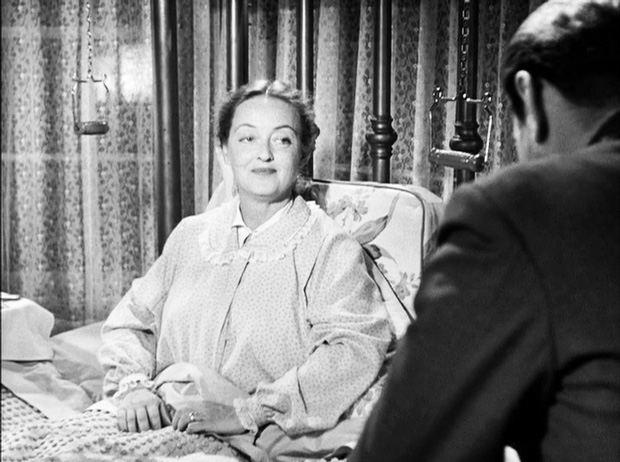
David terá de convencer o filho do Dr. Fortness, Jerry (Ted Donaldson), de que o problema do pai com a bebida não é culpa da mãe – e ainda contar a verdade sobre o acidente de carro. Ele também encontrará o marido e a sogra de Binky, que ainda não sabem sobre a morte dela. A sogra dela a despreza porque Binky os deixou para se tornar uma grande estrela sem a ajuda deles. David terá de limpar a reputação do Dr. Fortness e de Binky, mas será surpreendido ao aprender uma lição poderosa com a esposa de Eddie, Marie (Bette Davis). Eddie era um brincalhão e David imaginava que ele vivia uma vida feliz com sua bela esposa, mas a verdade é muito diferente.

David will have to convince Dr. Fortness' son, Jerry (Ted Donaldson), that his father's problem with the alcohol wasn't his mother's fault – and also tell the truth about the car crash. He will also meet Binky's husband and mother-in-law, who don't know about her death yet. Her mother-in-law despises her for leaving them to try becoming a big star on her own. David may have to clean Dr. Fortness' and Binky's reputation, but he'll be surprised to learn a powerful lesson from Eddie's wife, Marie (Bette Davis). Eddie was a clown and David imagined he lived a very happy life with his beautiful wife, but this couldn’t be further to the truth.


“Telefonema de um Estranho” é um drama convincente que também oferece a Gary Merrill uma de suas poucas oportunidades de ser protagonista em um filme de tamanho prestígio. Por vezes ele se parece com James Mason, e embora seu papel não exija muito, ele atua bem como David. Este foi o terceiro e último filme que ele fez com sua então esposa, Bette Davis.

“Phone Call from a Stranger” is a compelling drama that also offers Gary Merrill one of the few chances he had to star in such a prestigious picture. Sometimes he looks like James Mason, and although his role doesn’t demand so much, he delivers a good performance as David. This is the third and final film he did with his then wife, Bette Davis.


Bette Davis, depois de ler o roteiro, buscou conseguir o papel de Marie Hoke. Embora seja pequeno, é um dos papéis mais complexos do filme, e foi isso que atraiu Bette – e é essa complexidade que faz sua personagem se sobressair.

Bette Davis, after reading the script, actively pursued the role of Marie Hoke. Although a small one, it’s one of the most complex roles in the picture, and that’s what attracted Bette – and what makes the character stand out.


Michael Rennie, que interpreta o Dr. Fortness, é um bom porém subestimado ator. Beatrice Straight, que interpreta a esposa do Dr. Fortness, fez sua estreia no cinema em “Telefonema de um Estranho”. Ela ganharia um Oscar por uma performance breve mas poderosa em “Rede de Intrigas” (1978).

Michael Rennie, who plays Dr. Fortness, is a good yet underrated actor. Beatrice Straight, who plays Dr. Fortness’ wife, made her screen debut in “Phone Call from a Stranger”. She would win an Oscar for her brief yet powerful performance in “Network” (1978).


Shelley Winters é uma das poucas atrizes cuja carreira pode ser dividida em duas fases bem diferentes. Na primeira fase, ela interpretou personagens mais sensuais, mas com pouco tempo de tela. Alguns filmes notáveis desta primeira fase são o ótimo “Fatalidade” (1947) e este “Telefonema de um Estranho” – no qual seu nome é o primeiro nos créditos. Ela fugiu deste estereótipo, com sucesso, em “Um Lugar ao Sol” (1951), e considerava que neste filme teve sua melhor atuação. Na segunda fase ela interpretou matronas coadjuvantes que quase sempre roubavam a cena – como em “O Diário de Anne Frank” (1959) e “Lolita” (1962).

Shelley Winters is one of the few actresses whose career can be divided in two very clear phases. In the first phase, she played sexier characters, but with little screen time. Some movies of notice from this first phase are the great “A Double Life” (1947) and this “Phone Call from a Stranger” – in which she is first billed. She played against this type, with success, in “A Place in the Sun” (1951), and she considered this to be her best performance. In the second phase she played matronly supporting characters that often stole the picture – like in “The Diary of Anne Frank” (1959) and “Lolita” (1962).


Gary Merrill e Shelley Winters reprisaram seus papéis quando “Telefonema de um Estranho” foi adaptado para o rádio em 1953. Em 1956, a história foi adaptada para a televisão com o título de “Crack-Up”, e Merrill mais uma vez interpretou David. O filme de 1952 reuniu, atrás das câmeras, dois grandes nomes de Hollywood que não são muito lembrados atualmente: o diretor Jean Negulesco e o produtor / roteirista Nunnally Johnson.

Gary Merrill and Shelley Winters reprised their roles when “Phone Call from a Stranger” was adapted to the radio in 1953.  In 1956, the story was adapted for television under the title “Crack-Up”, and Merrill once again played David. The 1952 film put together, behind the cameras, two Hollywood greats that are not so well remembered today: director Jean Negulesco and producer / screenwriter Nunnally Johnson.


Chamado de ‘mecânico’ e ‘irreal’ por um crítico quando lançado, “Telefonema de um Estranho”, mesmo hoje, se mantém como um bom drama e a prova de que todos nós impactamos a vida dos outros, não importa quão breve foi nossa ligação com alguém. E, se você quer evitar a possibilidade de viver algo como o que David vive no filme, você sempre pode fazer o que eu faço em aeroportos: ler um livro enquanto espera o voo, sem falar com ninguém.

Called ‘mechanical’ and ‘unreal’ by a critic when it was released, “Phone Call from a Stranger”, even today, stands as a good drama and proof that we all impact each others’ lives, no matter if we interact with someone only for a short time. And, if you want to avoid the possibility of living something like David lives in the film, you can always do what I do at airports: read a book while waiting for your flight instead of making acquaintances.

This is my contribution to the Shelley Winters blogathon, hosted by Gill and Erica at RealWeegieMidget Reviews and Poppity Talks Classic Film.


Monday, December 31, 2018

2018 em retrospecto / 2018 in retrospect


Foi difícil escolher uma palavra para definer 2018.  O dicionário Oxford escolheu “tóxico”. O site Dictionary.com escolheu “desinformação”, e o Merriam-Webster escolheu “justice”. Alguns textos no Medium apontaram outras opções, como “trauma” e “luto”. De certa maneira, todas estas palavras estão corretas. 2018 não foi um ano fácil para a sociedade, em especial para nós que vimos com horror a ascensão do fascismo mais uma vez – para uma historiadora como eu, é como se um filme de horror passasse pelos meus olhos, mas agora não é ficção.

It was hard to choose one word to define 2018. Oxford Dictionaries chose “toxic”. Dictionary.com chose “misinformation”, and Merriam-Webster chose “justice”. Some think pieces on Medium pointed other options, such as “trauma” and “grief”. In a way, all these words are correct. 2018 wasn’t easy for as a society, in special for those of us who watch with horror the rise of fascism all over again – for a historian like me, it’s like a little horror movie being shown in front of my eyes, but not in the movie slot, but at the TV news.
 
NOPE
E mesmo assim, na minha vida pessoal, 2018 foi bom – ei, eu escrevi um capítulo de um livro sobre Alfred Hitchcock! E foi bom por causa do cinema. Eu estou cada vez mais convencida de que nós temos as artes em geral e o cinema em particular para nos salvar da excruciante dor da realidade.

And yet, in my personal life, 2018 was goo – hey, I wrote a book chapter about Alfred Hitchcock! And it was good because of the movies. I’m more and more convinced that we have the arts in general and the movies in particular to save us from the excruciating pain of reality.


That's the book
That's me
Estes foram os melhores filmes que eu vi em cada mês – os filmes que me ajudaram a escapar da realidade:

These are the best films I’ve watched each month – the films that helped me escape reality:
My 2018 film notebook
Janeiro: “A Senhora e seus Maridos” (1964) é uma das mais deliciosas comédias que eu já vi. Sua estrela é Shirley MacLaine, interpretando uma garota que só quer ser feliz, mas acaba casada com vários homens, um após o outro, que de repente se tornam ricos, famosos e infelizes. Como seus maridos, temos Dick Van Dyke, Paul Newman, Dean Martin, Gene Kelly e Robert Mitchum.

January: “What a Way to Go!” (1964) is one of the most delightful comedies I’ve ever seen. It stars Shirley MacLaine as a girl who only wants to be happy, but ends up marrying a series of men who suddenly become rich, famous and unhappy. As her husbands, we have Dick Van Dyke, Paul Newman, Dean Martin, Gene Kelly and Robert Mitchum.


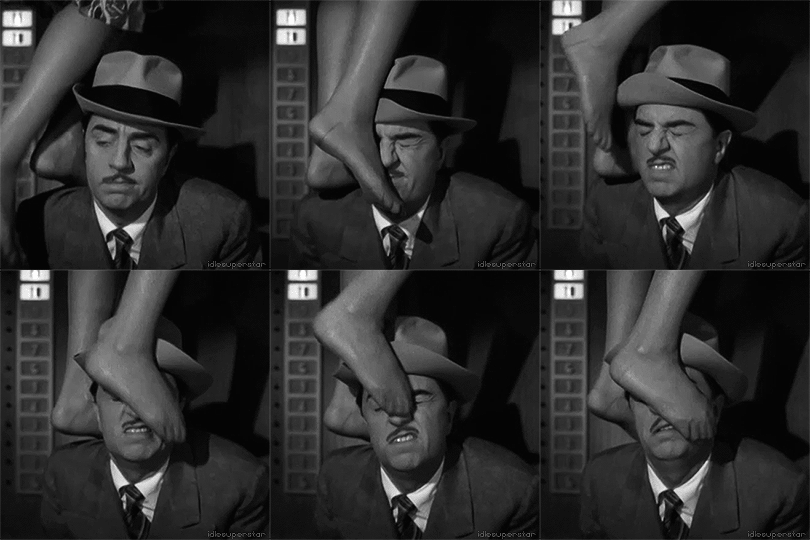
Menção honrosa para “Meu Querido Maluco” (1941), um filme que deveria aparecer no topo de todas as listas de melhores screwball comedies. Suas estrelas são a incrível dupla Myrna Loy e William Powell!

Honorable mention to “Love Crazy” (1941), a film that should be up there in the list of best screwball comedies. It stars the amazing duo Myrna Loy and William Powell!


Fevereiro: O primeiro ganhador do Oscar de Melhor Filme, “Asas” (1927) me impressionou de várias maneiras. As sequências aéreas, a estupidez da guerra, a amizade entre os dois protagonistas, a cena do balanço: estas poderiam ser as quatro razões pelas quais William A. Wellman foi um dos melhores diretores de todos os tempos.

February: The first Best Picture Oscar winner, “Wings” (1927) mesmerized me in more than one way. The aerial sequences, the stupidity of war, the friendship between the two leads, the swing scene: these could be the four main reasons why William A. Wellman was one of the best directors ever.


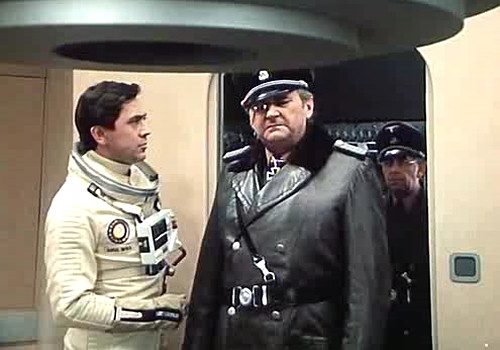
Março: Você já ouviu falar do filme tcheco-eslovaco “Tomorrow I’ll Wake Up and Scald Myself with Tea”, de 1977? Eu também não o conhecia até que a Ruth do blog Silver Screenings escreveu sobre ele. Como o filme estava disponível online, eu decidi lhe dar uma chance, e ri mais com ele do que ri no ano inteiro. O filme é sobre o piloto Charles (Petr Kostka), que é parte de um plano para viajar no tempo e fazer a Alemanha ganhar a Segunda Guerra Mundial. Charles morre de repente e seu irmão gêmeo, John (também Petr Kostka), assume a missão. É preciso ver para crer.

March: Have you ever heard about the Czechoslovakian film “Tomorrow I’ll Wake Up and Scald Myself with Tea”, from 1977? I also hadn’t heard about it until Ruth from Silver Screenings wrote about the film. Since it was available online, I decided to give it a chance and, boy, I laughed more than I had in a long time. The film is about pilot Charles (Petr Kostka), who is part of a plan to travel in time and make German win World War Second. Charles dies suddenly and his twin brother, John (also Petr Kostka) assumes his mission. It needs to be seen to be believed.


Menção honrosa para “A Grande Ilusão” (1949), um filme tão atual que chega a doer. Minha avó também viu o filme e disse que era chato. Ela não é mais minha avó...
Brincadeirinha.

Honorable mention to “All the King’s Men” (1949), a film so modern it hurts. Also, my grandmother also watched this and thought it was boring. She is no longer my grandmother…
 Just kidding.

Abril: O filme de estreia de Doris Day, “Romance em Alto Mar” (1948), pode melhorar o humor de qualquer um. Este amável musical também conta com Janis Paige, Jack Carson e números coreografados por Busby Berkeley.

April: Doris Day’s debut, “Romance on the High Seas”(1948) can be the definition of a feel-good movie. This sweet musical also stars Janis Paige, Jack Carson and has numbers staged by Busby Berkeley.


Menção honrosa para a adorável comédia “A Incrível Jornada de Jacqueline” (2016), sobre um homem que atravessa a França a pé acompanhado de sua vaca.

Honorable mention to the delightful comedy “La Vache” (2016), about a man in a cross-country trip with his cow.


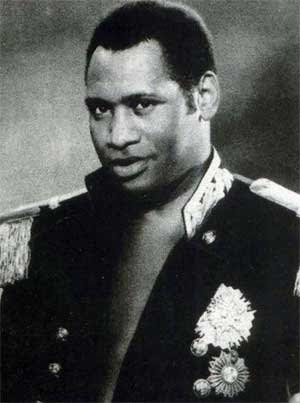
Maio: “A Canção da Liberdade” (1936) é o filme que iniciou minha obsessão com Paul Robeson. Eu também fiquei obcecada com a canção “Lonely Road” e escutei-a sem parar no Spotify. Paul Robeson pode não ser muito popular hoje, mas foi um grande ator, cantor e ser humano.

May: “Song of Freedom” (1936) is the film that started my obsession with Paul Robeson. I became obsessed with his song “Lonely Road” and listened to it on loop on Spotify. Paul Robeson may be not remembered that well, but he was a great actor, singer and human being.


Menção honrosa para “O Homem que Não Vendeu sua Alma” (1966) e a atuação inspirada de Paul Scofield.

Honorable mention to “A Man for All Seasons” (1966) and Paul Scofield’s inspired performance.


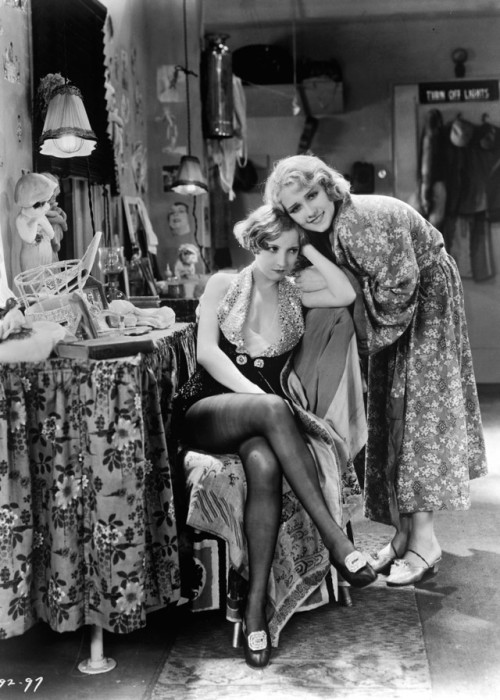
Junho: “Melodia da Broadway” (1929) foi o primeiro musical e ganhar o Oscar de Melhor Filme e eu o vi como parte do curso TCM – Mad About Musicals. O filme pode parecer primitivo, mas certamente é um marco na história de Hollywood. Além disso, Bessie Love é um amorzinho.

June: “The Broadway Melody” (1929) was the first musical to win the Best Picture Oscar and I watched it as part of the Mad About Musicals TCM course. It may seem primitive, but it was certainly a landmark in the history of Hollywood. Also, Bessie Love is love.


Menção honrosa para “As Boas Maneiras” (2017), um filme de brasileiro de horror e fantasia que me deixou sem fôlego.

Honorable mention to “The Good Manners” (2017), a Brazilian horror-fantasy that just took my breath away.


Julho: “A Porta de Ouro” (1941) é sobre imigrantes presos na fronteira, sem poder entrar nos EUA. Mais um filme com um tema muito atual – e que filme emocionante!

July: “Hold Back the Dawn” (1941) is about immigrants trapped in the border, not being able to enter the US. Another film with a very modern theme – and such a touching one!


Agosto: Até agosto, eu nunca tinha visto “Grande Hotel” (1932) e não sabia o que estava perdendo! Amei o filme, em particular as maneiras como ele trata de temas como solidão, ganância e do poder que o dinheiro tem de destruir pessoas.

August: Until August, I hadn’t watched “Grand Hotel” (1932) and, wow, I was missing a lot! I loved the film, in particular the themes of solitude, greed and the power money has to destroy people.


Menção honrosa para “Ao Sul do Pacífico” (1959), um filme cuja trilha sonora se tornou minha obsessão.

Honorable mention to “South Pacific” (1959), a film whose soundtrack became my obsession.


Setembro: Reassistir a “Fome por Glória” (1933), meu filme favorito com Richard Barthelmess, foi recompensador. Em apenas 76 minutos, ele lida com temas como o abandono dos veteranos de guerra, vício em drogas, socialismo, a Grande Depressão e muito mais.

September: Rewatching “Heroes for Sale” (1933), my favorite Richard Barthelmess film, proved to be rewarding. In only 76 minutes, it manages to deal with war veterans being abandoned, drug addiction, socialism, the Depression and much more.


Outubro: “Estrela Ditosa” (1929) tem o melhor do cinema mudo: atuações charmosas, uma dupla com muita química – Janet Gaynor e Charles Farrell – e ótima direção de arte. Frank Borzagefoi realmente um mestre.

October: “Lucky Star” (1929) has the best of silent films: charming performances, a duo with great chemistry – Janet Gaynor and Charles Farrell – and great art direction. Frank Borzage was really a master.


Novembro: “Eu Acuso!” (1919) estreou apenas seis meses após o fim da Primeira Guerra Mundial e é impressionante. Suas quase três horas de projeção passam muito rápido.

November: “J’Accuse” (1919) was released only six months after the end of World War I and it is breathtaking. Its nearly three hours passed by quick and easy.

Menção honrosa para “O Fugitivo” (1932), um filme que vale ser revisto sempre.

Honorable mention to “I am a Fugitive from aChain Gang” (1932), a film always worth revisiting.


Dezembro: Meu querido “Inimigo Público” (1931) provou que continua bom depois de ser reassistido… quatro vezes.

December: My dear “The Public Enemy” (1931) proved to be as good the… fourth time around.


Menção honrosa para “Becket – O Favorito do Rei’ (1964), um grande filme histórico com a carismática dupla Peter O’Toole e Richard Burton.

Honorable mention to “Becket” (1964), a great historical flick with the charismatic duo Peter O’Toole and Richard Burton.


Que não nos faltem bons filmes em 2019!

May 2019 be filled with good movies!

Related Posts Plugin for WordPress, Blogger...