} Crítica Retrô: 1933

Tradutor / Translator / Traductor / Übersetzer / Traduttore / Traducteur / 翻訳者 / переводчик

Showing posts with label 1933. Show all posts

Saturday, July 19, 2025

Cavalgada (1933) / Cavalcade (1933)


ESTA CRÍTICA TEM SPOILERS

THIS ARTICLE HAS SPOILERS 

Um dos episódios mais curiosos da História do Oscar aconteceu em 1934, quando “Frank” foi chamado ao palco pelo apresentador Will Rogers para receber a estatueta de Melhor Diretor. Frank Capra caminhava alegremente até o palco, quando percebeu que o vencedor na verdade era Frank Lloyd. O filme pelo qual o hoje quase esquecido Lloyd ganhou o prêmio é nosso foco de hoje: o épico “Cavalgada”.

One of the most curious episodes in Oscar history happened in 1934, when “Frank” was called to the stage by presenter Will Rogers to receive the Best Director award. Frank Capra was happily walking to the stage, when he realized the real winner was Frank Lloyd. The film for which the now almost forgotten Lloyd won the award is our focus today: the epic “Cavalcade”.

É véspera de Ano Novo, em 1899. O ano de 1900 e um novo século projetam uma sombra sobre a casa dos Marryot. Robert (Clive Brook) e seu empregado Alfred Bridges (Herbert Mundin) devem ir para a África do Sul lutar na Segunda Guerra dos Bôeres assim que o dia raiar. De repente, as brincadeiras das crianças passam a envolver soldados e guerras, e a nova atividade de Jane Marryot (Diana Wynyard) é procurar o nome do marido na lista de vítimas.

It’s New Year’s Eve, 1899. The year 1900 and a new century cast a dark shadow upon the Marryot house. The master Robert (Clive Owen) and his employee Alfred Bridges (Herbert Mundin) must go to South Africa to fight in the Second Boer War the first thing in the morning. Suddenly, the kids’ play becomes all about soldiers and wars, and Jane Marryot’s (Diana Wynyard) new activity is checking if her husband’s name is in the casualty list.

Robert e Alfred voltam ilesos da guerra. A Rainha Vitória morre. Alfred passa a administrar um bar ao lado da esposa Ellen (Una O’Connor) - e também começa a beber em demasia. Os meninos dos Marryot, Edward e Joey, crescem, assim como a menina dos Bridges, Fanny. Em seu caminho eles encontram tragédias, guerra, pesares e têm alguns encontros fortuitos.

Robert and Alfred return safely from the war. Queen Victoria dies. Alfred starts running a pub alongside his wife Ellen (Una O’Connor) - and he also starts overdrinking. The Marryot boys, Edward and Joey, grow up, as does the Bridges girl, Fanny. In their way through life, they meet with tragedy, war, sorrows and a few chance encounters.

A sequência do Titanic foi sem dúvida na época mais chocante do que é agora. Meros 20 anos após o acontecimento, a tragédia ainda estava fresca na memória das pessoas - é a mesma coisa que hoje fazer filmes contendo o ataque às Torres Gêmeas. Edward (John Warburton) e sua esposa Edith (Margaret Lindsay) passam a lua-de-mel em um cruzeiro, e ela diz palavras que soam como adivinhos, como que ela não se importaria se eles morressem naquela noite, e que ela não tinha medo do que o futuro lhes reservava. É o fato de nós sabermos o que acontece em seguida que nos causa angústia - a mesma sensação causada quando Robert diz que uma guerra mundial em 1914 duraria apenas três meses. 

The Titanic sequence was without a doubt at the time more shocking than it is now. A mere 20 years after it happened, the tragedy was still fresh in people’s minds - it’s the same as movies with the World Trade Center attacks for us. Edward (John Warburton) and his new wife Edith (Margaret Lindsay) are spending their honeymoon on a cruise, and she says foretelling words, such as that she wouldn’t mind if they died that night, and that she wasn’t afraid of the future. It’s us knowing what happens next that causes anguish - the same thing when Robert says that a world war in 1914 would last only for three months.


As mulheres da família Bridges, Ellen e Fanny, são dignas de nota. Ellen é interpretada por Una O’Connor, amada atriz coadjuvante. O papel foi escrito especialmente para ela, que interpretou a personagem nos palcos e nas telas. Ela é mais lembrada por seus papéis como mulheres nervosas e histéricas em filmes de monstros, como em “A Noiva de Frankenstein” (1935), mesmo tendo feito 91 filmes.

The Bridges women, Ellen and Fanny, are worth highlighting. Ellen is played by Una O’Connor, a beloved character actress. The role was written specifically for her, who played the character both on stage and on screen. She is best remembered for her roles of nervous screaming women in monster movies, such as “The Bride of Frankenstein” (1935), even though she appeared in 91 films.

Quando criança, Fanny é interpretada por Bonita Granville, uma garota com um nome auspicioso. Nascida em 1923 e tendo começado sua carreira nos palcos ao lado dos pais, artistas do vaudeville, ela fez 81 filmes entre 1932 e 1981. Foi indicada ao Oscar com apenas 14 anos. Tendo se casado com um milionário em 1947, ela passou a atuar como produtora e filantropa. 

As a kid, Fanny is played by Bonita Granville, a girl with an auspicious name - Bonita means “pretty” in Portuguese. Born in 1923 and starting her stage career alongside her vaudevillian parents when she was three, she appeared in 81 movies between 1932 and 1981. She was nominated for an Oscar at only 14. Married to a millionaire in 1947, she became a producer and philanthropist.

No começo de “Cavalgada”, não pude deixar de pensar nas semelhanças com a série “A Idade Dourada”, pois ambas mostram os problemas privados de pessoas da alta sociedade e de seus empregados como igualmente importantes. Tanto o filme quanto a série já foram comparados com outra série, mais famosa: “Downton Abbey”, que eu confesso nunca ter visto.

In the beginning of “Cavalcade”, I couldn’t stop thinking about its similarities with the series “The Gilded Age”, as both show the private affairs of rich people and their servants as equally interesting. Both the movie and the series have been compared to another, more hyped and famous series: “Downton Abbey”, which I confess I never watched.

Outro filme relacionado é o obscuro porém muito bom “E o Mundo Marcha”, de 1934. Feito pelo grande diretor John Ford, aqui acompanhamos as sagas de famílias de diferentes países, dos dias das plantações de algodão até os perigos que o mundo enfrentava no começo dos anos 1930.

Another connection I made is with the obscure but very good “The World Moves On”, from 1934. Made by the great director John Ford, here we accompany the sagas of families from different countries, from the days of cotton plantations until the dangers the world was facing in the early 1930s. 

Por que um filme sobre o começo do século XX para um bando de ingleses seria tão bem-sucedido nos EUA, ganhando até mesmo o Oscar de Melhor Filme? É porque este filme é uma rara oportunidade de ver na frente dos nossos olhos o declínio de um império. Ver o seu passado é, como no discurso de Jane ao final, desejar que um dia o país reencontre sua dignidade, grandeza e paz.

Why would a movie about the early 1900s for a bunch of English people be so successful in the USA, winning even the Best Picture Oscar? It’s because this movie is a rare opportunity of seeing in front of your eyes the decline of an empire. Seeing its past is, like in Jane’s speech at the very ending, wishing that one day the country finds its dignity, greatness and peace again. 

“Cavalgada” é também um triunfo da técnica, meros seis anos após a chegada do som sincronizado nos cinemas. Como preparação para as filmagens, o departamento de newsreels dos estúdios Fox gravou a peça montada em Londres e escrita pelo grande Noël Coward. Os cenários brilhantemente decorados deram ao filme, além dos prêmios de Melhor Filme e Melhor Diretor, o Oscar de Melhor Direção de Arte.

“Cavalcade” is also a triumph of technique, a mere six years after synchronized sound arrived in movies. As a preparation for shooting, the Fox studios newsreels recorded the live play staged in London, written by the great Noël Coward. The impressively decorated sets gave the film, besides the Best Picture and Director awards, the Oscar for Best Art Direction.

Frank Lloyd

O responsável pelas cenas de guerra foi o diretor de arte William Cameron Menzies. Sua sequência da Primeira Guerra Mundial é uma elaborada montagem de bombas explodindo e soldados marchando e caindo. A sequência é dinâmica, emocionante e uma ótima maneira de apresentar a passagem do tempo.

The person responsible for the war scenes was art director William Cameron Menzies. His World War I sequence is an elaborate montage of bombs exploding and soldiers marching and falling. The sequence is dynamic, thrilling and a great way to present the passage of time.

No Instagram outro dia, quando o assunto eram filmes difíceis de assistir até o final, um usuário comentou que “todos os ganhadores de Melhor Filme antes de 1950” eram assim. Eu discordo totalmente. Eles são uma janela para o passado, para os gostos das pessoas do passado e, neste caso, o passado comentando sobre um passado ainda mais remoto. “Cavalgada” não é o pior ganhador do Oscar de Melhor Filme, nem o mais chato nem o mais obscuro. Pode ser um filme para completistas, mas dar uma chance a ele é uma maneira melhor de aprender História do que enfiar a cara nos livros.

On Instagram the other day, when the topic was films difficult to watch through, an user commented that “all Best Picture winners before 1950” were like this. I completely disagree. They are a window to the past, to the tastes of people from the past and, in this case, the past talking about a further past. “Cavalcade” isn’t the worst Best Picture winner, the most boring or the most obscure. It may be a film for completists, but checking it out is a better way to learn History than staring at textbooks.

This is my contribution to the Titanic in Pop Culture blogathon, hosted by Rebecca at Taking Up Room.

Friday, May 24, 2024

Filhos do Deserto (1933) / Sons of the Desert (1933)

 Sempre que eu ouço falar de Honolulu, a primeira coisa que me vem à mentee é a canção “Honolulu Baby”, presente na comédia de 1933 d’O Gordo e o Magro “Filhos do Deserto”. Considerado, com razão, um dos melhores filmes da dupla, esta película de apenas 68 minutos de duração é muito divertida, com uma miríade de gags verbais e visuais.


Whenever I hear about Honolulu, the first thing that comes to my mind is the song “Honolulu Baby”, featured in the 1933 Laurel and Hardy comedy “Sons of the Desert”. Considered, with reason, one of the biggest achievements of the duo, this film that is only 68 minutes long is a lot of fun, packed with visual and verbal gags.

A história é bem simples: o Gordo e o Magro são vizinhos e amigos que querem participar de uma convenção da sociedade secreta da qual participam, chamada “Filhos do Deserto”. Só há uma coisa no caminho deles: suas esposas. Ollie finge estar doente e Stanley chama um médico - um veterinário! - para dizer a eles que precisam ir a Honolulu para curar Ollie, mas em vez disso eles vão para a convenção em Chicago. Eles não imaginavam que um navio fosse afundar em Honolulu, levando as esposas pensarem que ficaram viúvas.


The story is pretty simple: Laurel and Hardy are neighbors and also friends who want to attend a convention of the secret society they belong to, called “Sons of the Desert”. There is only one thing that comes in their way: their wives. Ollie fakes an illness and Stan calls a doctor - a veterinarian! - to tell them that they must go to Honolulu to cure Ollie, but instead they go to Chicago to the convention. They didn’t count on a ship sinking in Honolulu, what makes the wives think they perished.

Algumas piadas são previsíveis, enquanto outras nos pegam desprevenidas. Assim como na era muda do cinema, eles tomam o tempo necessário para construir as gags - como aquela de Stanley comendo uma fruta de cera. A gag que mais me surpreendeu não poderia existir na era muda, pois consiste em Stanley falando palavras muito difíceis, o que surpreende também a Ollie!


Some jokes are predictable, while others catch us off guard. Like in silent cinema, they take time to build the gags - like the one with Stanley eating the wax fruit. What surprised me the most is a gag that couldn’t have been done in the silent era: Stanley speaking very difficult words, surprising also Hardy while he spoke!

Tanto a Sra Laurel, Betty (Dorothy Christy), quanto a sra Hardy, Lottie, são ameaçadoras, mas a Sra Hardy tem mais tempo em tela. Ela é interpretada por Mae Busch, que fez 131 filmes entre 1912 e 1947. Ela nasceu na Austrália e era filha de estrelas do vaudeville. Ela fez 13 filmes d’O Gordo e o Magro, e para além das comédias pode ser vista em “Esposas Ingênuas” (1922), de Erich von Stroheim. Mae Busch faleceu aos 54 anos em 1946.


Both Mrs Laurel, Betty (Dorothy Christy), and Mrs Hardy, Lottie, are menacing, but Mrs Hardy is given more screen time. She is played by Mae Busch, who appeared in 131 films from 1912 to 1947. She was born in Australia and was the daughter of vaudevillians. She appeared in 13 Laurel and Hardy comedies, and outside of comedy she can be seen in Erich von Stroheim’s “Foolish Wives” (1922). Mae Busch passed away aged 54 in 1946.

Como um membro ultra-excitado dos “Filhos do Deserto” vindo do Texas, temos um velho amigo nosso, que somos fãs de comédia muda: Charley Chase. Pregando peças em todos ao seu redor, seu personagem ri o tempo todo em que está em cena. Mas aqueles não eram os tempos mais felizes para Chase, mesmo que estivesse tendo sucesso com comédias de curta-metragem. Seu problema com a bebida já era aparente e ele não estava gostando do personagem que interpretava. Em 1939, a morte prematura de seu irmão James Parrott representou um duro golpe para Chase, que começou a beber mais e trabalhar demais, o que levou à sua própria morte um ano depois.


As the overtly excited “Sons of the Desert” member from Texas we have an old friend of us, silent comedy fans: Charley Chase. Pranking everyone around him, Chase’s character laughs all the time he was on screen. But those weren’t the happiest of times for Chase, even though he was enjoying success in short comedies. His drinking problem was already appearing and he didn’t like the character he was playing. In 1939, the premature death of his brother James Parrott was a hard blow for Chase, who started drinking more and overworking, which led to his own death one year later.


“Filhos do Deserto” foi filmado em 21 dias e arrecadou um milhão de dólares na bilheteria. Foi votado como um dos filmes mais divertidos de Hollywood pelo Instituto de Cinema Americano e entrou na lista do Registro de Filmes da Biblioteca do Congresso em 2012. Mais do que isso, deu nome à Sociedade Internacional de Fãs d’O Gordo e o Magro. É um filme icônico de uma dupla icônica: é simplesmente impossível não acertar com “Filhos do Deserto”!


“Sons of the Desert” was shot in 21 days and went on to make a million dollars at the box-office. It was voted one of Hollywood’s funniest movies by the AFI and entered the National Film Registry from the Library of Congress in 2012. Moreover, it provided the name for the Internationl Laurel and Hardy appreciation society. It’s an iconic film from an iconic duo: you simply cannot go wrong with “Sons of the Desert”!


This is my contribution to the Neighbors Blogathon, hosted by Rebecca and Quiggy at Taking Up Room and The Midnite Drive-In.


Tuesday, May 21, 2024

A ascensão e queda de Clara Bow / The rise and fall of Clara Bow


A vida de Clara Bow durou 60 anos. Sua carreira meteórica, 11 anos e 58 filmes. Ela teve em 1927 seu melhor ano, quando participou de dois clássicos: o primeiro ganhador do Oscar de Melhor Filme “Asas” e o icônico “It”, que definiu uma geração. Podemos aprender muito com o primeiro e o último filme que uma estrela do cinema fez. E é isso que faremos hoje.   


Clara Bow’s life lasted 60 years. Her meteoric career, eleven years and 58 movies. She had in 1927 her best year, when she appeared in two classics: the first Best Picture Oscar winner “Wings” and the iconic “It”, that defined a generation. We can learn a lot from looking at the first and the last film a star made. And that’s it we’re doing today.

Todas as cenas com ela no primeiro filme que fez, “Beyond the Rainbow” (1922), foram cortadas, mas adicionadas novamente quando ela se tornou uma superestrela e o filme voltou a circular. Este filme hoje não está disponível, mas sua estreia para valer está. Ela já prevê as personagens modernas que marcariam a carreira de Clara Bow até seu último filme, no qual interpreta uma personagem corajosa.


All her scenes from her debut film, “Beyond the Rainbow”, (1922) were cut, but put together again after she became a superstar and the film was re-released. This movie isn’t available, but her real debut is. It already predicts her modern characters from later in her career and even in her last hurrah she was portraying a bold character.


Nasce uma estrela: Rumo ao Mar (1922)
A star is born: Down to the Sea in Ships (1922)


Os créditos nos contam que o filme foi “produzido em New Bedford, Massachusets, pela Companhia Baleeira de Cinema”. É um filme sobre caçar baleias, afinal de contas. O protagonista, William Morgan (William Walcott), é um baleeiro que só quer que sua filha Patience (Marguerite Courtot) se case com outro baleeiro. O garoto da casa ao lado, Allan (Raymond McKee), ama tanto Patience que abandona seu trabalho numa fábrica de algodão para ir para o mar. A neta de Morgan, Dot (Clara Bow), também embarca no navio, disfarçada usando roupas masculinas.


The credits tell us that the film was “produced in New Bedford, Massachusetts, by the Whaling Film Company”. It’s a film about hunting whales, after all. The lead, William Morgan (William Walcott), is a whaleman who only wants his daughter Patience (Marguerite Courtot) to marry another whaleman. The boy next door, Allan (Raymond McKee), loves Patience so much that he abandons his job at a cotton mill to go down to the sea. Morgan’s granddaughter Dot (Clara Bow) is also on the ship, disguised as a man.

Também interessado em Patience – e na frota de navios de Morgan – está Samuel Siggs (Jack Baston), que contrata um homem chamado Finner (Pat Hartigan) para dar um fim em Allan no meio do mar. Na cidade, o povo pensa que Dot e Allan fugiram juntos para o Oeste. Finner encontra Dot escondida no navio e ameaça machucá-la se ela não ficar com ele. Entra aí o salvador dela, Jimmy (James Turfler). Depois de um motim, Allan precisa demonstrar sua bravura caçando uma baleia.


Also interested in Patience - and in Morgan’s fleet of ships - there is Samuel Siggs (Jack Baston), who pays a man named Finner (Pat Hartigan) to get rid of Allan in the sea. In the town, people believe Allan and Dot ran away together to the west. Finner finds Dot hiding in the ship and threatens to harm her if she doesn’t stay with him. Enters her savior, Jimmy (James Turfler). After a mutiny, Allan has to demonstrate his bravery hunting a whale.

Este filme foi “pessoalmente filmado” por Elmer Clifton. Nascido em Chicago em 1890, ele começou a atuar nos palcos em 1907 e estreou nos cinemas em 1912, dirigindo seu primeiro filme em 1915. Ele é mais lembrado hoje porque estava dirigindo “Mãe Solteira” (1949) quando adoeceu e Ida Lupino tomou seu lugar na direção.


The movie was “personally filmed” by Elmer Clifton. Born in Chicago in 1890, he started acting on stage in 1907 and debuted at the movies in 1912, directing his first movie in 1915. He is best remembered today because he was directing “Not Wanted” (1949) when he fell ill, and Ida Lupino took over the direction.

As cartelas de texto são quase todas muito longas, algumas até com citações de “Moby Dick”, de onde vem o próprio título. Há também um reflexo do ódio aos asiáticos que existia no período, com o vilão sendo “amarelo”. Elmer Clifton com certeza estava imitando Griffith – aliás, ele foi ator em “O Nascimento de uma Nação” (1915) e “Intolerância” (1916) – e a história de amor empalidece se comparada às sequências de caça.


The title cards are often very long, some even quoting “Moby Dick”, where the title itself comes from. There is also a reflection of the Asian hate from the period, with the villain being “yellow”. Elmer Clifton was for sure emulating Griffith - by the way, he was an actor in both “The Birth of a Nation” (1915) and “Intolerance” (1916) - and the love story is pale compared to the whale hunting sequences.

Clara Bow tinha apenas 17 anos quando “Rumo ao Mar” estreou e é simplesmente adorável. Enquanto todos os outros personagens tinham aspecto Vitoriano, ela parece moderna e moleca, mesmo com o figurino antiquado. Ela não tem muito tempo na tela, mas quando aparece simplesmente não conseguimos desviar o olhar de sua doce figura.


Clara Bow was only 17 when “Down to the Sea in Ships” was released and is simply adorable. While all the other characters looked Victorian, she looks modern and tomboyish, even with old-fashioned clothes. She isn’t given a lot of screen time, but whenever she is on screen we simply cannot take our eyes off her.


Uma estrela se apaga: Lábios de Fogo (1933)
A star fades: Hoopla (1933)


Um jovem chamado Chris (Richard Cromwell) chega a um espetáculo itinerante procurando por seu pai, Nifty (Preston Foster), que administra o local. Ele quer um trabalho com o espetáculo e logo é contratado. Na sua primeira noite viajando com a turma, ele se embebeda junto às dançarinas Lou (Clara Bow) e Carrie (Mina Gombell), que era amante de Nifty mas é deixada por ele naquela mesma noite. Carrie então paga Lou para seduzir Chris.


A young man named Chris (Richard Cromwell) arrives at a carnival looking for his father, Nifty (Preston Foster), who manages the place. He wants a job with the show and gets it. In his first night traveling with the carnival, he gets drunk alongside dancers Lou (Clara Bow) and Carrie (Minna Gombell), who was Nifty’s lover but is ditched by him that same night. Carrie then pays Lou to seduce Chris.

Podemos desmistificar uma mentira vendo “Lábios de Fogo”: Clara Bow tinha uma voz agradável, charmosa e brincalhona. Ela teve sucesso com seus primeiros filmes falados, permanecendo como uma das atrizes favoritas do público em 1929, 1930 e 1931. Um escândalo envolvendo Clara e uma empregada, que tornou públicas algumas correspondências privadas da atriz, fez com a Paramount terminasse o contrato com ela. Ela fez seus dois últimos filmes pela Fox.


We can bust a myth watching “Hoopla”: in reality, Clara Bow had a pleasant, charming, playful voice. She was successful in her first talkies, remaining one of the favorite actresses of the public in 1929, 1930 and 1931. A scandal involving Clara and her maid, who shared part of the actress’ private correspondence, made Paramount release her from her contract. She did her final two films for Fox.

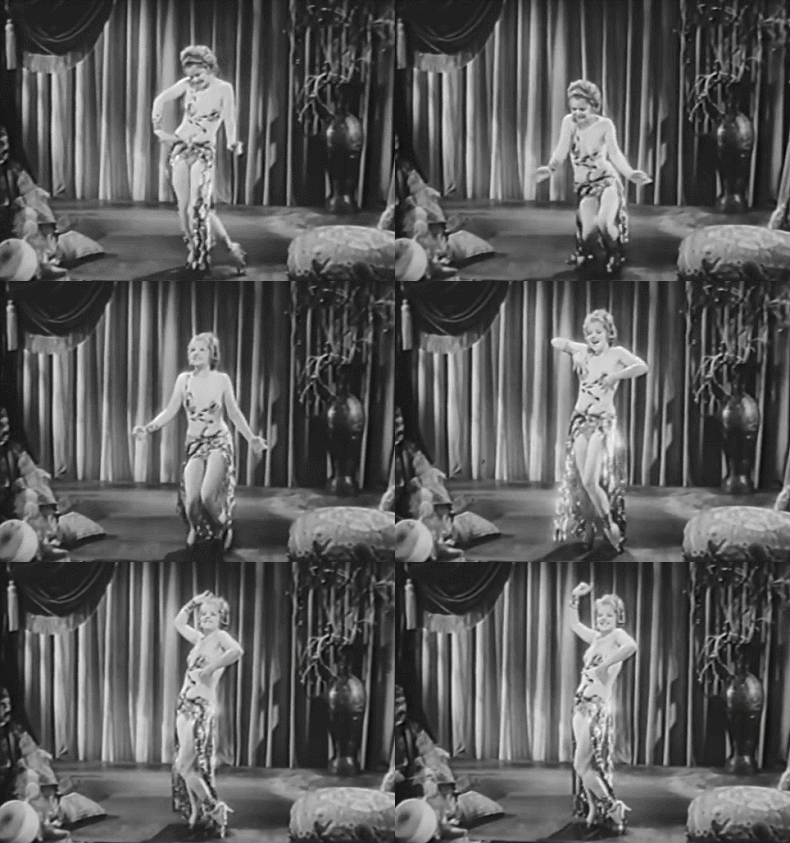
Há alguns momentos que seriam impossíveis de encontrar num filme feito após a adoção do Código Hays: uma câmera foca no rosto de Clara enquanto ela tira a roupa e coloca uma camisola. Depois disso ela divide uma cama com outra mulher, nada nua num lago e ainda dança com roupas minúsculas.


There are a few moments that wouldn’t be possible in a movie made under the Hays Code: a camera focuses on Clara’s face while she undresses to put on her nightgown. Afterwards she shares a bed with another woman, then she goes swimming naked in a lake and later dances in minimal clothes.

“Lábios de Fogo” é um destes curiosos filmes que mostram o romance de uma mulher mais velha com um homem mais novo. Richard Cromwell era cinco anos mais novo que Clara Bow, o que não é muito – Bow tinha apenas 28 anos quando fez este último filme. A carreira de Cromwell durou de 1930 a 1948, quando se aposentou. Ele foi o primeiro marido de Angela Lansbury.


“Hoopla” is a curious case of a movie depicting romance between a young man and an older woman. Richard Cromwell was five years younger than Clara Bow, which was not much – Bow was only 28 at the time she filmed this swan song. Cromwell’s career lasted from 1930 to 1948, when he retired. He was Angela Lansbury’s first husband.


Aos 28, Clara Bow se aposentou das telas e teve dois filhos que adorava. A felicidade não foi uma constante em sua vida, mas de Hollywood ela estava farta. Para nós, que nunca estamos fartos de Clara Bow, alguns de seus filmes ainda existem e mostram a superestrela em sua melhor forma.


At 28, Clara Bow retired from screen and would go on to have two sons who she adored. Happiness wasn’t a constant in her later life, but she had had enough of Hollywood. For us, who never have enough of Clara Bow, some of her films still exist and show the superstar in great shape.


This is my contribution to the Screen Debuts and Last Hurrahs blogathon, hosted by the Classic Movie Blog Association.

Friday, May 3, 2024

A Canção de Lisboa (1933) / A Song of Lisbon (1933)


O que me fascina no cinema é que, mesmo que seja uma arte com poucos mais de 125 anos e que haja tantos filmes perdidos, há sempre muito mais para descobrir. O caso em questão é o cinema de Portugal. Como alguém que tem dupla cidadania - brasileira e portuguesa - a sétima arte em ambas as minhas pátrias muito me interessa.

What enchants me in cinema is that, even though it’s an art that is a little more than 125 years old and there are so many lost movies, there is always so much more to discover. The case in question is cinema from Portugal. As someone who has double citizenship - Brazilian and Portuguese - the seventh art in both my homelands interests me a lot.


Eu sei que os filmes dos Lumière foram exibidos pela primeira vez em Portugal em 1896, que o primeiro cinema no país foi inaugurado em 1904 e o filme com roteiro mais antigo de Portugal foi filmado em 1907. O primeiro filme falado estreou em 1931 - mesmo ano em que “A Canção de Lisboa” foi filmado - e que em 1933 a Era de Ouro do cinema em Portugal começa exatamente com “A Canção de Lisboa”. É claro que eu teria que assistir a este filme que é um marco histórico.

I know that Lumière’s films were first shown in Portugal in 1896, the first movie theater in the country opened in 1904 and the earliest scripted Portuguese film was shot in 1907. The first talkie was released in 1931 - the same year “A Song of Lisbon” was filmed - and that in 1933 the Golden Age of film in Portugal begins exactly with “A Song of Lisbon”. Of course I needed to watch this milestone movie.

Vasco Leitão (Vasco Santana) é um estudante que fracassou em seu exame oral final e assim não se graduou no curso de Medicina. Sua família no interior, entretanto, não sabe de seu fracasso e duas tias estão vindo para Lisboa para comemorar a formatura do “Vasquinho”. Vasco é despejado do quarto onde vivia, mas recebe ajuda dos muitos amigos e do sogro Caetano (António Silva), com quem ele tem uma relação de pai e filho.  

Vasco Leitão (Vasco Santana) is a student who just flunked his final oral exam and failed to receive a medical degree. His family on the countryside, however, isn’t aware of his failure and two aunts are coming to Lisbon to celebrate his graduation. Vasco is evicted from the place he used to live in, but is helped by his many friends and his father-in-law Caetano (António Silva), with whom he has a father/son relationship.

A namorada de Vasco, Alice (Beatriz Costa), é uma costureira que trabalha com o pai. Ela é candidata num concurso que elegerá a “Rainha das Costureiras”. Alice tem seus momentos para canto e dança, incluindo quando ela sonha acordada com a vida de casada.

Vasco’s girlfriend Alice (Beatriz Costa) is a seamstress who works with her father. She is a candidate at a contest that will choose the “Queen of Seamstresses”. Alice has moments of song and dance, including when she daydreams about married life.

“A Canção de Lisboa” não é apenas uma comédia, é também um musical! Há canções extradiegéticas no começo e o já mencionado sonho acordado de Alice. Há inclusive uma quadrilha, dança típica das quermesses. E há Vasco se recusando a cantar um fado, o mais famoso gênero musical português, mas ele acaba cantando-o mesmo assim.

“A Song of Lisbon” is not only a comedy, it’s also a musical! There are extra-diegetic songs in the beginning and Alice’s aforementioned daydream. There is even a “quadrilha”, a typical dance presented at folk parties. And there is Vasco refusing to sing fado, the most famous Portuguese music genre, but he ends up singing it nonetheless.

Há uma longa sequência com Vasco levando suas tias ao zoológico, onde eles vêem diversos animais. O Zoológico de Lisboa foi fundado em 1884, movido para uma nova sede em 1894 e teve sua mudança final em 1905 - o que significa que ele se localiza atualmente no mesmíssimo lugar em que foram filmadas as cenas de “A Canção de Lisboa”! Há cerca de dois mil animais atualmente no zoológico.

There is a long sequence of Vasco taking his aunts to the zoo, where many animals are shown. The Lisbon Zoo was founded in 1884, moved to another place in 1894 and had its final move in 1905 - which means that it is currently located in the exact same spot where “A Song of Lisbon” was filmed! There are about two thousand animals currently at the zoo.

Há momentos de pura e sutil genialidade, como quando Vasco diz Luís 16 e uma janela cai acertando seu pescoço, como uma guilhotina. Isso com certeza não foi coincidência! Outro detalhe: quando Vasco finge ser um manequim, o casaco que ele veste está sendo vendido por 9500 escudos tendo por “ocasião: Estado Novo”. O Estado Novo, ditadura de extrema-direita portuguesa, começou com um golpe em 1926 e teve um referendo em 1933 para aprovar a nova constituição.

There are moments of pure and subtle geniality, like when Vasco says Louis, 16 and a window shield falls on his neck, like a guillotine. This certainly wasn’t a coincidence! Another detail: when Vasco pretends to be a mannequin, the coat he dresses is being sold for 9500 escudos having as “occasion: Estado Novo”. The Estado Novo, Portugal’s far-right dictatorship, started with a coup in 1926 and had a referendum in 1933 to approve the new constitution.

No papel de Carlos temos Manoel de Oliveira, um conhecido ator e diretor que já tinha dirigido seu primeiro filme quando “A Canção de Lisboa” foi feito. Ele trabalharia bastante nos 80 anos seguintes, dirigindo 66 filmes. Manoel morreu aos 106 anos e ainda trabalhava à época de seu falecimento.

As Carlos we have Manoel de Oliveira, a well-known actor and director who had already directed his first film when “A Song of Lisbon” was made. He would work steadily in the following 80 years, directing 66 movies. Manoel died at age 106 and was still working when he passed.

O diretor de “A Canção de Lisboa” é José Cottinelli Telmo, um arquiteto que se tornou multiartista, dirigindo três filmes na década de 1930. O assistente de direção é o famoso pintor Carlos Botelho, enquanto o assistente de roteiro é o poeta José Gomes Ferreira. Os cartazes do filme foram desenhados pelo artista Modernista Almada Negreiros. Em frente às Câmeras, como os protagonistas, temos dois artistas muito conhecidos da Era de Ouro do cinema português: Vasco Santana e Beatriz Costa. Ambos fizeram turnê por Portugal e pelo mundo com sua arte e Beatriz até mesmo morou dez anos no Brasil.  

The director of “A Song of Lisbon” is José Cottinelli Telmo, an architect who became a multi-artist, directing three films in the 1930s. The director’s assistant is the famous painter Carlos Botelho, while the writing assistant is the poet José Gomes Ferreira. The posters for the film were designed by the Modernist artist Almada Negreiros. In front of the cameras, as the leads, we have two very famous performers from the Golden Age of Portuguese cinema: Vasco Santana and Beatriz Costa. Both toured Portugal and the world with their art and Beatriz even lived for ten years in Brazil.

Talvez algo seja perdido pelos estrangeiros que são apresentados a “A Canção de Lisboa”. É um filme demasiado português - e orgulhoso de sua nacionalidade. Um sucesso na televisão local, onde é exibido com frequência desde a década de 1950, é uma grande comédia, um bom musical e um ponto de partida perfeito para aqueles que querem mergulhar fundo no cinema português.

Maybe something is lost to foreigners who are introduced to “A Song of Lisbon”. It’s such a Portuguese film - and proud of its nationality. A success on local television, where it is shown frequently since the 1950s, it’s a great comedy, a fine musical and a perfect starting point for those who want to dive deep into Portuguese cinema.


This is my contribution to the Fourth Luso World Cinema blogathon, hosted by Beth and me at Spellbound with Beth Ann and Crítica Retrô.


Related Posts Plugin for WordPress, Blogger...