} Crítica Retrô: TV

Tradutor / Translator / Traductor / Übersetzer / Traduttore / Traducteur / 翻訳者 / переводчик

Showing posts with label TV. Show all posts

Friday, March 22, 2024

Série Retrô: A Família Addams


Retro Series: The Addams Family


Você já deve ter ouvido falar do bloco de programação Nick at Nite, do canal de TV Nickelodeon, que exibia coisas retrô. O bloco foi criado nos EUA em 1985, mas chegou aqui ao Brasil somente em 2006 – exatamente quando eu era uma jovenzinha em busca de algo mais antigo para assistir. Eu passei todas as minhas férias assistindo ao Nick at Nite, onde eu conheci alguns dos meus programas de televisão favoritos, como “Mork & Mindy”. Eu também gostava das outras séries, entre elas aquela de que falaremos hoje: a série clássica da “Família Addams”, dos anos 60.


You might have heard about the programming block Nick at Nite, at the TV channel Nickelodeon, that exhibited retro attractions. The block was created in the US in 1985, but arrived here in Brazil only in 2006 – exactly when I was a wee teenager looking for older content to watch. I spent my whole vacation watching Nick at Nite, where I got to know some of my favorite TV shows, like “Mork & Mindy”. I also enjoyed the other shows, among them the one we’re talking about today: the classic series “The Addams Family”, from the 1960s.

Esta família de arrepiar foi criada pelo cartunista Charles Addams, mas nas tirinhas eles não tinham nomes. Os personagens foram batizados por Addams em 1964, quando uma série de TV sobre eles estreou. A série duraria apenas dois anos, com 64 episódios no total, mas a influência dos Addams no mundo do entretenimento estava apenas começando.


This spooky family was created by cartoonist Charles Addams, but in the cartoons they didn’t have names. The characters were named by Addams in 1964, when a TV show about them premiered. The show would run for only two years, having 64 episodes total, but their influence in the entertainment world was just starting.
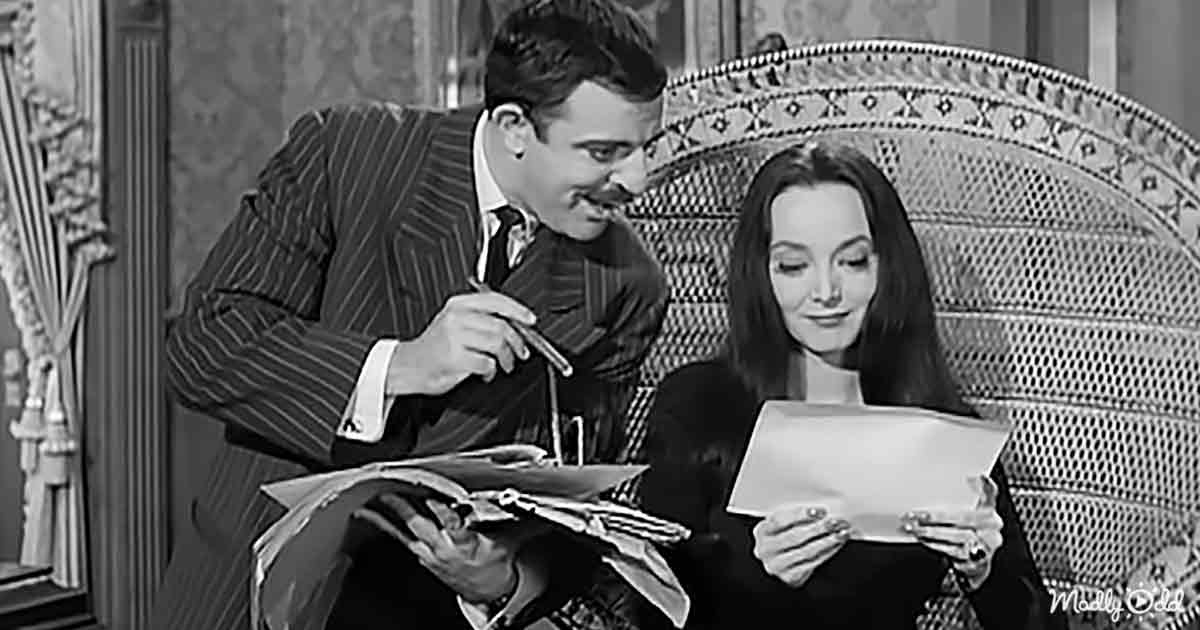
O patriarca é Gomez Addams (interpretado por John Astin), um milionário excêntrico cuja aparência e maneirismos foram baseados em Groucho Marx. A matriarca é a sensual Mortícia (Carolyn Jones), que enlouquece o marido com seu charme e beleza. Eles têm dois filhos: Feioso (Ken Weatherwax) e Wandinha (Lisa Loring) e dividem a casa com, entre outros, Tio Chico (Jackie Coogan – sim, o menininho do filme de Chaplin “O Garoto”). Completando o rol de moradores da casa temos Mãozinha, uma mão sem corpo que ajuda a todos, e Tropeço (Ted Cassidy), o mordomo que viveu um sucesso musical assim como Wandinha viveria anos mais tarde – mas já chegamos lá.


The patriarch is Gomez Addams (played by John Astin), an eccentric millionaire whose appearance and manners were based on Groucho Marx. The matriarch is the sexy Morticia (Carolyn Jones), who makes her husband crazy with her good looks and charm. They have two children: Pugsley (Ken Weatherwax) and Wednesday (Lisa Loring) and share the house, among others, with Uncle Fester (Jackie Coogan – yes, the little boy from Chaplin’s “The Kid”). Completing the household are Thing, a helpful disembodied hand, and Lurch (Ted Cassidy), the butler who even had a musical hit just like Wednesday would have years later – but we’ll get there.

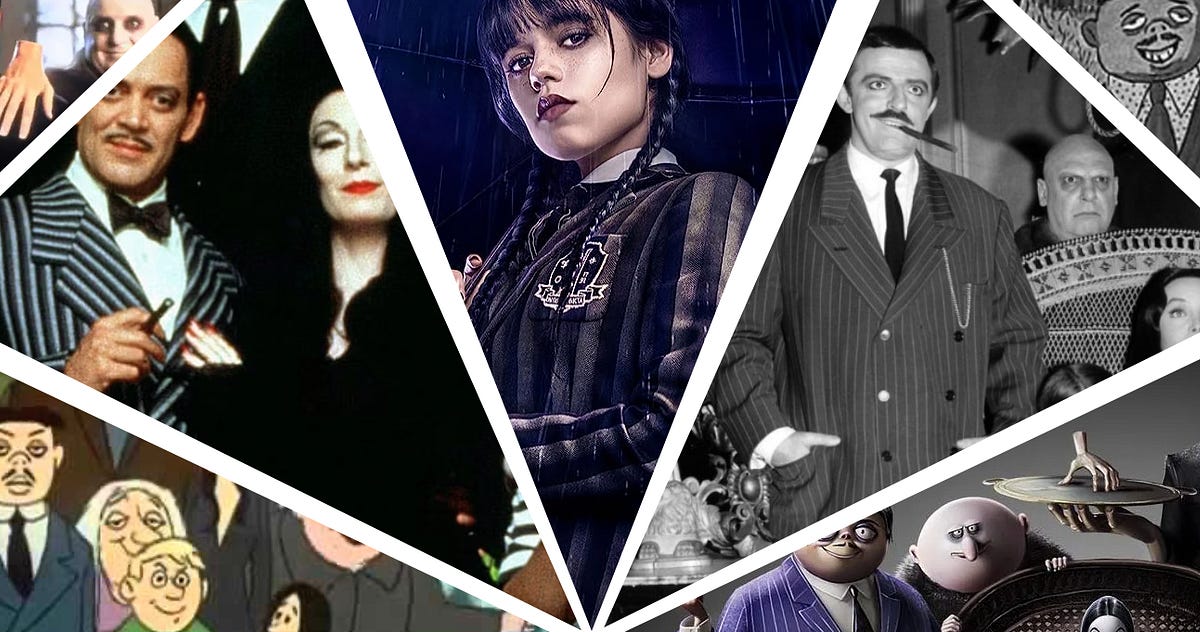
A família Addams se tornou tamanha sensação com o passar dos anos que, além da série dos anos 60, foi assunto de mais filmes, desenhos animados, espetáculos da Broadway e vídeo-games. A atração mais recente à família da Família Addams foi a série da Netflix “Wandinha”. Nela, a filha adolescente dos Addams (interpretada por Jenna Ortega) frequenta uma escola especial para encantados e poderosos. Lá, ela faz amigos e inimigos, e se torna sensação com sua dança no baile da escola.


The Addams Family became such a sensation over the years that, besides the 1960s series, it was the subject for more movies, animated shows, Broadway shows and video games. The most recent addition to The Addams Family family was the Netflix show “Wednesday”. In it, the teenage daughter of the Addams (played by Jenna Ortega) attends a special school for the enchanted and powerful. There, she makes friends and enemies, and becomes a sensation with her dance at the local ball.
Ao me preparar para assistir a “Wandinha”, eu revisitei alguns episódios desta série que me divertiu tanto na adolescência. Um episódio em consonância com a série de 2022 da Netflix é o piloto, “The Addams Femily Goes to School”. Nele, um oficial da educação força Wandinha e Feioso a frequentar uma escola pela primeira vez na vida, com consequências hilárias. 


In preparation to watch “Wednesday”, I revisited some episodes of this series that entertained me so much when I was a teenager. An episode in consonance with the 2022 Netflix series is the pilot, “The Addams Family Goes to School”. In it, a school office forces Wednesday and Pugsley to attend school for the first time in their lives, with hilarious consequences.

O episódio apresenta para nós todas as estranhezas familiares ao fazer com que os personagens percorram a casa em companhia do Sr Hilliard (Allyn Joslyn). Gomez apoia o ensino domiciliar – como ele diz para Hilliard “por que ter filhos só para nos livrarmos deles?” – e quem dá as lições é a Vovó (interpretada por Blossom Rock). Quando as crianças finalmente começam a frequentar a escola, Wandinha volta para casa chateada porque, num conto de fadas, o dragão é morto!


The episode introduces all the familiar oddities to us by having the characters show around the house to the officer Mr Hilliard (Allyn Joslyn). Gomez is a supporter of homeschooling – as he says to Hilliard, “why to have children just to get rid of them?” – and the one in charge of the lessons is Grandmama (played by Blossom Rock). When the kids finally start attending school, Wednesday comes back home upset because, in the fairy tale, the dragon gets killed!

Este episódio foi dirigido por Arthur Hiller. Ele tem 76 créditos como diretor no IMDb, sendo o mais importante o bem-sucedido “Love Story” (1970). Ele começou sua carreira na televisão em 1954, mas só dirigiu este episódio para “A Família Addams”.


This episode was directed by Arthur Hiller. He gets 76 directing credits on IMDb, being the most important the sensation “Love Story” (1970). He started his career on television in 1954, but for “The Addams Family” this was the only episode he directed.

Eu sempre gostei de todos os personagens de A Família Addams, mas tinha uma pequena preferência por Wandinha, por ser uma garota como eu, uma pequena estranha. Fico feliz que Wandinha seja o foco do segundo filme de animação dos Addams, que estreou em 2021. Também gostei muito da série da Netflix. Eu estava esperando ver mais da personagem neste episódio da série dos anos 60, mas eu entendo que ele sirva mais como uma apresentação da família do que qualquer outra coisa.


I’ve always liked all the characters from the Addams Family, but had a small preference for Wednesday, being a girl myself and thinking I was odd growing up. I’m glad Wednesday was the focus of the second animated “The Addams Family” movie, released in 2021. The Netflix series also pleased me a lot. I was expecting to see m0re of her in this episode of the 1960s series, but I know it was more of an introduction to the family than anything else.

Ao colocar o público no lugar do Sr Hilliard, o primeiro episódio da série nos oferece um vislumbre de todas as excentricidades que nos fariam amar os Addams nos anos vindouros, um amor que ainda hoje prevalece.


By putting the audience in the place of Mr Hilliard, the first episode of the series offers us a glimpse of all the eccentricities that would make we love the Addams in the years to come, a love that hasn’t diminished today.


This is my contribution to the 10th Annual Favourite TV Show Episode blogathon, hosted by Terence at A Shroud of Thoughts.

Thursday, May 18, 2023

Raymond Burr como Perry Mason / Raymond Burr as Perry Mason


Perry Mason é um personagem criado por Erle Stanley Gardner em 1933. Gardner escreveu 82 romances e quatro contos estrelando o advogado fictício. A última vez que vimos Perry Mason, ele era interpretado por Matthew Rhys na série da HBO que investiga a história de origem do personagem numa Los Angeles proto-noir no começo da década de 1930. Mas Perry Mason foi imortalizado na telinha da televisão por Raymond Burr, que interpretou o personagem numa série que durou nove temporadas - 271 episódios! - e depois em 26 filmes feitos para a TV. Embora o personagem tenha sido interpretado por outros atores no cinema, rádio e TV, ele sempre será associado a Burr, e é sobre um destes filmes feitos para a TV que falaremos hoje.


Perry Mason is a character created by Erle Stanley Gardner in 1933. Gardner wrote 82 novels and four short stories starring the fictional lawyer. We last saw Perry Mason played by Matthew Rhys in the HBO series that investigates the character’s origin story in a proto-noir Los Angeles in the early 1930s. But Perry Mason was immortalized on the small screen by Raymond Burr, who played the character in a TV show that lasted nine seasons - 271 episodes! - and subsequently in 26 films made for TV. Although the character was portrayed by other actors on film, radio and TV, he’ll be forever associated with Burr, and it’s about one of these made-for-TV movies that we talk about today.


Seis filmes de Perry Mason foram feitos pela Warner Brothers em 1930, três deles com Warren William, um com Ricardo Cortez e um com Donald Woods como o justo advogado. Nascido em 1917, Raymond Burr já estava atuando no começo dos anos 30, em tour com um grupo de teatro canadense. Em 1940 Burr fez sua estreia na Broadway, e em 1946 fez seu primeiro filme. Burr esteve em 50 filmes entre 1946 e 1957, o mais conhecido deles sendo “Janela Indiscreta” (1954), de Alfred Hitchcock. Seu papel em “Um Lugar ao Sol” (1951), numa cena de julgamento, chamou a atenção da atriz Gail Patrick, que estava trabalhando atrás das câmeras como produtora de uma nova versão das histórias de Gardner - desta vez, para a TV.


Six Perry Mason movies were made by Warner Brothers in 1930, three of them with Warren William, one with Ricardo Cortez and another with Donald Woods as the rightful lawyer. Born in 1917, Raymond Burr was already acting in the early 1930s, touring with a Canadian theater group. In 1940 Burr made his Broadway debut, and in 1946 he made his first movie. Burr appeared in 50 films from 1946 to 1957, the most famous of them being Alfred Hitchcock’s “Rear Window” (1954). His role in “A Place in the Sun” (1951), in a courtroom scene, called the attention of fellow thespian Gail Patrick, who was working behind the cameras as a producer for a new iteration of Gardner’s work - this time, on TV.


A série de TV, começando em 1957, ficou muito popular e rendeu a Raymond Burr dois prêmios Emmy de Melhor Ator em Série Dramática. Barbara Hale, como Della Street, também ganhou um Emmy de Melhor Atriz Coadjuvante em Série Dramática. O trio não estaria completo sem Paul Drake, interpretado por William Hopper. Hopper fez um teste para o papel de Perry Mason, mas os produtores consideraram que ele era perfeito para o papel de Paul Drake. Por falar em escolha de elenco, o IMDb nos conta que outros atores considerados para o papel de Perry Mason foram William Holden, Richard Carlson, Mike Connors, Efrem Zimbalist Jr e Fred MacMurray.


The TV show, starting in 1957, became widely popular and earned Raymond Burr two Primetime Emmy Awards for Outstanding Leading Actor in a Drama Series. Barbara Hale, playing Della Street, also won an Emmy as Outstanding Supporting Actress in a Drama Series. The trio wouldn’t be complete without Paul Drake, played by William Hopper. Hopper first auditioned for the role of Perry Mason, but the producers thought he was perfect for the Paul Drake character. Talking about casting, IMDb tells us that other actors considered for the role of Perry Mason were William Holden, Richard Carlson, Mike Connors, Efrem Zimbalist Jr and Fred MacMurray.


Entre os filmes feitos para a TV de Perry Mason disponíveis no YouTube, eu escolhi ver “The Case of the Sinister Spirit” (1987) para poder conferir como era Raymond Burr como o personagem. Também de volta da série original temos Barbara Hale como Della Street.


Among the made-for-TV Perry Mason movies available on YouTube, I chose to watch “The Case of the Sinister Spirit” (1987) to see what’s the deal with this fellow Raymond Burr. Also returning from the original TV show is Barbara Hale as Della Street.


Em “The Case of the Sinister Spirit”, nós primeiro vemos Perry Mason em um tipo de mansão, andando cuidadosamente num ambiente pouco iluminado. Ele para debaixo de um lustre chique e a peça pesada cai sobre sua cabeça. Um telefone toca. Era tudo apenas um sonho para o advogado, que estava dormindo em cima de uma pilha de livros. Do outro lado da linha está Jordan White (Robert Stack), editor do livro que Mason estava lendo, “The Resort”. Jordan está indo encontrar o autor do livro, David Hall (Matthew Faison).


In “The Case of the Sinister Spirit”, we first see Perry Mason in some kind of mansion, walking around carefully in the dimly lit scenario. He stops under a fancy chandelier and the heavy piece falls on his head. A phone rings. It was all just a dream for the lawyer who was sleeping laying his head on a pile of books. On the line with Mason is Jordan White (Robert Stack), the editor of the book “The Resort” that Mason was reading. Jordan is on his way to meet the author of the book, David Hall (Mathew Faison).


O local de encontro é um resort exatamente como aquele do livro. Além de Jordan, outras pessoas foram convidadas: pessoas que inspiraram personagens do livro. Depois de um jantar frustrado e piadas sádicas, David liga para o quarto de Jordan e pede que ele vá para o bar, e daí para a torre do resort. Antes que Jordan chega, há uma briga entre David e outra pessoa, e David cai do alto da torre. Jordan se torna, como esperado, o principal suspeito do assassinato.


The meeting place is a resort just like the one in the book. Besides Jordan, other people were invited: people who inspired characters in the book. After a failed dinner and sadistic practical jokes, David calls Jordan’s bedroom and asks him to go to the bat, then to the resort tower. Before Jordan arrives, there is a fight between David and someone else, and David falls from the tower. Jordan becomes, as expected, the main suspect on the murder.


Tudo fica mais complicado para Jordan quando a polícia encontra uma foto partida em dois pedaços: um pedaço com o corpo de David e o outro no terno de Jordan. A foto é de Janet, amante de Jordan. Jordan liga para seu advogado - nosso Perry Mason - e lá vai ele para o resort, onde os quatro suspeitos estão à espera de uma solução para o crime. Enquanto isso, a única testemunha do crime, a herdeira do local, Susan Warrenfield (Kim Delaney), está sendo perseguida pelo real assassino, que quer levá-la à loucura.


Things get more complicated for Jordan when the police finds a picture in two pieces: one piece with David’s body and the other in Jordan’s suit. The picture is of Janet, Jordan’s mistress. Jordan calls his lawyer - our Perry Mason - and there he goes to the resort, where the four suspects are also waiting for the solution of the crime. Meanwhile, the only witness to the crime, the heiress of the place, Susan Warrenfield (Kim Delaney), is being persecuted, as the real murderer tries to drive her crazy.


Com 70 anos em 1987, quando “The Case of the Sinister Spirit” foi ao ar pela primeira vez, Raymond Burr está excelente, em especial nas cenas de tribunal. Barbara Hale como Della Street também merece elogios, pois ela é bem mais que “o amuleto da sorte” de Mason, como ele a chama. Della também faz parte da investigação, e se juntando à dupla temos Paul Drake Jr (William Katt), que também se garante como ótimo investigador.


Aged 70 in 1987, when “The Case of the Sinister Spirit” first aired, Raymond Burr is excellent, in special in courtroom scenes. Barbara Hale as Della Street must be highlighted, as she is much more than Mason’s “good luck charm”, as he calls her. Della investigates together, and joining the duo is Paul Drake Jr (William Katt), another great investigator on his own.


Eu nunca consegui ver a série original de Perry Mason, mas assisti ao reboot da HBO - e adorei - e, claro, assisti a “The Case of the Sinister Spirit”. O filme para a TV é muito bem feito, com ótimas performances do elenco e uma trama intrigante. Eu gostei muito da experiência e espero um dia poder encontrar episódios da série original de Perry Mason para conferir.


I wasn’t able to watch the Perry Mason original series, but I watched the HBO reboot - loved it - and of course “The Case of the Sinister Spirit”. The TV movie is very well-done, with great performances by the cast and an intriguing plot. I was mostly pleased with the experience and hope to catch episodes of the original Perry Mason somewhere one day.


Numa entrevista, Sam White, produtor associado da série Perry Mason, disse que Raymond Burr confessou a ele: “Se você não gostar de mim como Perry Mason, eu mudo e interpreto o papel do promotor de justiça, Hamilton Burger.” Nós com certeza nos alegramos por Burr ter sido um ótimo e icônico Perry Mason.


In an interview, Sam White, associate producer of the Perry Mason series, said that Burr told him: “If you don't like me as Perry Mason, then I'll go along and play the part of the district attorney, Hamilton Burger." We certainly are glad he made a wonderful iconic Perry Mason.


This is my contribution to the Big Stars on the Small Screen blogathon, hosted by the Classic Movie Blog Association in support of the National Classic Movie Day.


Tuesday, March 23, 2021

Buster Keaton in “The Awakening” (1954)


Quando os caminhos de Buster Keaton e de Douglas Fairbanks se cruzaram, aconteceu uma mudança: Keaton fez seu primeiro longa-metragem, “O Pesado” (1920), porque Fairbanks o recomendou para os estúdios Metro. Trinta e quatro anos depois, os caminhos de Buster se cruzaram com os de Douglas Fairbanks Jr. Na época, séries antológicas na TV eram populares, e com eles pessoas como Hitchcock e Fairbanks tinham programas próprios sem precisar se envolver demais com o trabalho toda semana – por exemplo, escrevendo, dirigindo ou gravando uma nova história toda semana, podendo apenas produzir e supervisionar o show. Doug foi o apresentador de “Douglas Fairbanks Presents” de 1953 a 1957  e, em 14 de julho de 1954, Doug teve a honra de apresentar Buster Keaton interpretando um personagem dramático de Gogol – algo que nunca pensamos que veríamos, mas que bom que isso aconteceu.

When Buster Keaton's path crossed with Douglas Fairbanks', change happened: Keaton made his first feature film, “The Saphead” (1920), because Fairbanks recommended him to Metro to play the lead. Thirty-four years later, Buster's path crossed with Douglas Fairbanks Jr's. At that time, anthology series on TV were quite popular, and with them people like Hitchcock and Fairbanks had a show to call their own without having to do a lot of hard work every week – I mean, they didn't have to write, direct or shoot a new story every week, they could only produce and oversee the show. Doug was the host of “Douglas Fairbanks Presents” from 1953 to 1957 and, on July 14th 1954, Doug had the honor to present Buster playing a dramatic character by Gogol – something we never thought we'd see, but we're glad it happened.

Como Doug diz, nossa história é ambientada em qualquer lugar – ou mesmo lugar nenhum. O tempo? Ontem ou hoje ou no futuro distante. O tema? Liberdade. Uma liberdade esquecida. Esquecer a liberdade é o que leva uma sociedade a aceitar o totalitarismo, e isto foi o que aconteceu antes da história começar. Tudo que sabemos é que o local está sob o comando de alguém chamado O Chefe (James Hayter), cuja foto está presente nas casas dos cidadãos – e até nos escritórios e nos quartos! - com as palavras “Ele SE IMPORTA” escritas abaixo da imagem.

As Doug says, the setting of our story is anywhere or nowhere. The time? Yesterday or today or tomorrows to come. The subject? Freedom. A forgotten freedom. Forgetting freedom is what leads a society to accept totalitarism, and this is what happened before the story begins. All we know is that the place is under someone called The Chief (James Hayter), whose photo hangs in citizens' houses – even in their offices and bedrooms! - with the words “He CARES” underneath the image. 

Buster é O Homem, um burocrata comum que se importa mais com números e dados do que com pessoas. Mas é claro, as coisas e especialmente as pessoas devem estar em seus devidos lugares, seguindo uma classificação rígida! O Homem não se importa com pessoas, diversão ou moda – prova disso é que ele tem um sobretudo muito velho que precisa de conserto. Mas O Alfaiate (Sam Jaffe) convence O Homem a fazer um sobretudo novo em vez de consertar o antigo.

Buster is The Man, a common bureaucrat who cares more about numbers and data than with people. But of course, things and especially people must  be in their proper places, following a rigid classification! The Man doesn't care about people, fun or fashion – a proof of that is that he has a very old overcoat needing mending. But The Tailor (Sam Jaffe) covinces The Man to make a new, expensive overcoat instead.

E o sobretudo muda O Homem. De repente seus colegas de trabalho o admiram, e a garota que vive em seu prédio passa a achá-lo bonito. Quando o sobretudo é roubado, O Homem começa a questionar a burocracia ao seu redor e se transforma naquele que realmente se importa – e isso, obviamente, será um grande problema e o levará a um encontro com O Chefe.

And the overcoat changes The Man. Suddenly his coworkers admire him, and the girl who lives in his building thinks he's handsome. When the overcoat is stolen, The Man starts questioning the bureaucracy around him and becomes the one who really truly cares – and this, of course, will be a huge problem and lead him to a meeting with The Chief.

É incrível ver quanto podia ser inserido em tão pouco tempo – 30 minutos menos os comerciais! Eu não quero parecer nostálgica e desprezar o que há de bom na TV moderna, mas hoje em geral vemos programas de TV com muitos personagens e histórias tolas contadas 30 minutos ou menos, enquanto nos anos 50, no começo da televisão, clássicos da literatura mundial eram adaptados para o novo meio e podiam ser brilhantemente contados em pouco tempo com um elenco enxuto.

It's amazing how so much could be packed in such a little time – 30 minutes minus the commercials! I don't want to sound nostalgic and dismiss the good modern TV, but now we often see TV shows with many characters and silly stories told in thirty minutes or less, when in the 1950s, the dawn of television, classics of world literature were adapted to the new medium and could be brilliantly told in a short time with an equally short cast.

Eu não li o conto de Gogol, mas pude passar os olhos brevemente por ele. O conto traz o nome do protagonista e é claramente ambientado na Rússia do século XIX – o que torna a história menos universal. O conto foi adaptado para as telas por Larry Marcus, que escreveu 10 episódios de “Douglas Fairbanks Presents”, foi responsável pela ótima adaptação de Agatha Christie “Testemunha de Acusação” (1957) e também escreveu o roteiro original do filme “O Bígamo” (1953).

I didn't read Gogol's story “The Cloak”, but I was able to briefly run my eyes through it. The story names the main character and the set is clearly 19th-century Russia – which makes it a less universal tale. The story was adapted to the screen by Larry Marcus, who wrote 10 episodes of “Douglas Fairbanks Presents”, was responsible for the great Agatha Christie adaptation “Witness for the Prosecution” (1957) and also wrote the original story for the film “The Bigamist” (1953).

A Wikipedia menciona 13 adaptações do conto para o cinema e a TV. Em “The Awakening”, há muitas mudanças importantes com relação ao original, e alguns elementos de “1984” de George Orwell podem ser vistos, como o poder que O chefe tem sobre todos, e a ideia de que todos estão sendo vigiados. Embora O Chefe seja uma figura que só aparece em uma curta cena, sua presença está por toda parte, e por causa disso nós já antipatizamos com ele e com o regime - e é ótimo ver Buster desafiar o regime. Quando Buster fala, você se surpreende. Quando ele grita e se rebela, você fica maravilhado com o que aquele homenzinho do rosto de pedra podia fazer.

Wikipedia lists 13 film and TV adaptations of the story. In “The Awakening”, there were many important changes from the original, and some elements from George Orwell's “Nineteen Eighty-Four” can be seen, like the power The Chief has over everybody, and the idea that everybody is under vigilance. Although The Chief is a figure that only appears in a small scene, his presence is everywhere, and because of that we already dislike him and the regime - and it’s great to see Buster standing up to the regime. When Buster talks, you are surprised. When he shouts and rebels, you're marveled at what that little stone-faced man could do.

Fairbanks viu Keaton como única opção para o papel principal. Ele disse: “Me pareceu uma bela ideia - uma ideia nova - colocá-lo em um papel sério, porque ele era tão bom ator e com grande talento. Funcionou muito bem; sua performance foi maravilhosa. Eu acredito que ele e Chaplin eram os maiores mestres da pantomima produzidos pelo cinema. Eles podiam expressar tanto com tão pouco.” Buster não ficou nervoso com a atuação dramática, garantiu sua esposa Eleanor: “Na comédia, ele tinha de criar tudo. No drama, você apenas decora suas falas e deixa outra pessoa se preocupar.”

Fairbanks saw nobody but Keaton in the main role. He said: "It struck me as a beautiful idea—a novel idea—to put him in a straight part, because he was such a beautiful actor and a great talent. It worked out very well; he gave a marvelous performance. I think that he and Chaplin were the supreme pantomimists that the screen has produced. They could convey so much with so little." Buster was not nervous about doing drama, and his wife Eleanor guaranteed it: “In comedy, he had to create everything. In drama, you just learn your lines and let someone else do the worrying."

Eu fiquei particularmente feliz quando um dos recursos narrativos que eu mais odeio - o final “tudo não passou de um sonho” - foi subvertido de maneira ousada e inspirada. Ao ter seu sobretudo levado, O Homem é despertado. Ser despertado para a realidade é em geral muito doloroso e traz vários problemas, e “The Awakening” mostra que, por causa disso, é preciso mais do que ser despertado: se manter desperto é algo completamente diferente, que muda a vida de uma pessoa.

I was particularly happy when one of my most hated narrative devices – the “it was all just a dream” finale – was subverted in a bold and inspired way. By having his overcoat taken, The Man has his awakening. To wake up for reality is often extremely painful and troublesome, and “The Awakening” shows that, because of this, there is more than waking up: staying woke – and here I may be using the double meaning the word has earned recently – is something completely different and life-changing.

This is my contribution to the 7th Annual Buster Keaton blogathon, hosted by Lea at Silent-ology.

Related Posts Plugin for WordPress, Blogger...