} Crítica Retrô: série retrô

Tradutor / Translator / Traductor / Übersetzer / Traduttore / Traducteur / 翻訳者 / переводчик

Showing posts with label série retrô. Show all posts

Thursday, March 19, 2026

Série Retrô: O Vigilante Rodoviário


A televisão surgiu nos anos 1920, após décadas de experimentação envolvendo a transmissão de imagens. A BBC começou a transmitir seus programas em 1931. A CBS apareceu em 1937. No Brasil, a inauguração da primeira rede de TV aconteceu em 1950. A primeira série de TV da história foi “The Queen’s Messenger” (O Mensageiro da Rainha), de 1928 - um clipe da gravação pode ser encontrado AQUI. A primeira sitcom feita nos EUA foi “Mary Kay e Johnny”, de 1947 a 1950. O primeiro seriado de TV no Brasil foi “O Vigilante Rodoviário”. Falaremos dele hoje. 

Television appeared in the 1920s, after decades of experiments involving the transmission of images. BBC started its broadcasting in 1931. CBS appeared in 1937. In Brazil, the inauguration of the first TV network happened in 1950. The first TV series ever was “The Queen’s Messenger”, from 1928 - a clip of its recording can be found HERE. The first sitcom made in the USA was “Mary Kay and Johnny” from 1947 to 1950. The first TV show in Brazil was “O Vigilante Rodoviário” (The Road Vigilante). We’ll talk about it today.

“O Vigilante Rodoviário” foi exibido a partir de 1961, com 38 episódios no total. No seriado, o inspetor Carlos (Carlos Miranda) mantém a lei e a ordem numa rodovia com a ajuda de seu fiel cão Lobo e seu amigo, o garoto Tuca (Reginaldo Vieira). Quase todas as cenas externas foram gravadas na mesma altura da Rodovia Anhanguera, onde o sol era mais forte e mais constante independente da estação.

“O Vigilante Rodoviário” aired from 1961 onwards, 38 episodes total. In the series, Inspector Carlos (Carlos Miranda) maintains the law and the order in a highway with the help of his faithful dog Lobo and his kid friend Tuca (Reginaldo Vieira). Almost all external scenes were shot in the same spot of the Rodovia Anhanguera highway, where the sun was brighter and more constant no matter the season.

A série foi criada por Ary Fernandes, que também foi o diretor, roteirista e compositor da música-tema. Desejando mostrar um herói 100% brasileiro, Fernandes já era um prolífico diretor de cinema quando criou a série. Diversos episódios foram mais tarde editados juntos para serem exibidos como um filme.

The series was created by Ary Fernandes, who served also as director, co-writer and compositor of the theme song. Longing for a 100% Brazilian hero, Fernandes was already a prolific cinema director when he created the series. Several episodes were later edited together for exhibition at movie theaters.

Houve um crossover entre “O Vigilante Rodoviário” e outra série de TV do mesmo criador, intitulada “Águias de Fogo”. E mais uma coisa que “O Vigilante Rodoviário” fez antes de Hollywood: foi traduzido para outras mídias, com a criação de uma história em quadrinhos, um documentário, um fanzine, uma fanfic e teve diversos brinquedos inspirados no seriado.

There was a crossover between “O Vigilante Rodoviário” and other TV show from the same creator, called “Águias de Fogo” (Fire Eagles). And, another thing in which “O Vigilante Rodoviário” predated Hollywood: it was translated to several different media, with the creation of a comic book, a documentary, a fanzine, a fanfic and several toys inspired by the show.


Eu encontrei dois episódios de “O Vigilante Rodoviário” no Internet Archive. Vamos analisá-los.

I found two episodes of “O Vigilante Rodoviário” at the Internet Archive. Let’s analyze them.

Episódio 16 foi “O Invento”. Nele, cientistas inventam um supermotor que faria os carros da polícia andarem mais rápido. O Vigilante tem de guardar a invenção durante a noite, porque testes seriam feitos no dia seguinte e a invenção não podia cair em mãos erradas. Mas é um dos cientistas que pode trair o outro e a polícia quando fotografa a fórmula desenvolvida.

Episode 16 was “O Invento” (The Invention). In it, scientists invent a super motor that would make police cars faster. The Vigilante has to keep an eye on the invention overnight, because tests would be run the next day and the invention can’t fall in wrong hands. But it’s one of the scientists that may betray the other and the police by photographing the formula.


Episódio 26 foi “A Chantagem”. Começamos com pessoas sendo espancadas por três homens que cobram dívidas. A próxima vítima é um dono de cafeteria que já esteve preso. O filho deste homem, o garoto Eduardo, fica chocado ao saber que seu pai já foi preso e corre para contar para seu amigo, o Vigilante. Juntos, eles bolam um plano para capturar os chantagistas. 

Episode 26 was “A Chantagem” (The Blackmail). We start with people being beaten by three men collecting debts. Their next victim is a cafe owner who once has been in jail. The man’s son, young Eduardo, is shocked to find out his father was a prisoner and runs to tell his friend, the Vigilante. Together, they make a plan to catch the blackmailers.

Durando cerca de 20 minutos cada um, os episódios eram simples, com narrativas diretas e a certeza de que o Vigilante venceria no final. Dos dois episódios a que assisti, “A Chantagem” estava em piores condições e era um pouco difícil de escutar. Gostei mais de “O Invento” por causa da narrativa de espionagem industrial e os muitos truques daquele que roubou a cena, o cão Lobo, super fofinho! Depois disso percebi que havia uma playlist com muitos outros episódios da série, então talvez um dia eu veja mais alguns.

Clocking at around 20 minutes each, the episodes were simple, with straightforward plots and the certainty that the Vigilante would win in the end. Out of the two episodes I watched, “A Chantagem” had worse sound conditions and was difficult to hear. I liked “O Invento” best because of its plot of industrial espionage and the many tricks and scene-stealing moments including Lobo, who was very cute! I then realized that there was a playlist with many more episodes of the series, so maybe someday I’ll watch more.

Com suas botas na altura dos joelhos, jaqueta de couro e óculos por cima do quepe, o Vigilante Rodoviário foi mais que um herói de ação: foi um ícone fashion. Depois do final da série, o ator Carlos Miranda se tornou policial, o que garantiu um lugar no Guinness Book como o único ator a se tornar seu personagem na vida real. Ele faleceu recentemente aos 91 anos, numa cidade próxima à minha. Mas meu personagem favorito continua sendo o cão Lobo! 

With his knee-high boots, leather jacket and goggles over his cap, the Vigilante Rodoviário was more than an action hero: he was a fashion icon. After the series ended, actor Carlos Miranda really became a cop, which led him to be included in the Guinness Book as the only actor to become his character in real life. He died recently at age 91, in a city close to mine. But my favorite character is still Lobo the dog!

This is my contribution to the 12th Annual Favourite TV Show Episode blogathon, hosted by Terence at A Shroud of Thoughts. 

Friday, March 22, 2024

Série Retrô: A Família Addams


Retro Series: The Addams Family


Você já deve ter ouvido falar do bloco de programação Nick at Nite, do canal de TV Nickelodeon, que exibia coisas retrô. O bloco foi criado nos EUA em 1985, mas chegou aqui ao Brasil somente em 2006 – exatamente quando eu era uma jovenzinha em busca de algo mais antigo para assistir. Eu passei todas as minhas férias assistindo ao Nick at Nite, onde eu conheci alguns dos meus programas de televisão favoritos, como “Mork & Mindy”. Eu também gostava das outras séries, entre elas aquela de que falaremos hoje: a série clássica da “Família Addams”, dos anos 60.


You might have heard about the programming block Nick at Nite, at the TV channel Nickelodeon, that exhibited retro attractions. The block was created in the US in 1985, but arrived here in Brazil only in 2006 – exactly when I was a wee teenager looking for older content to watch. I spent my whole vacation watching Nick at Nite, where I got to know some of my favorite TV shows, like “Mork & Mindy”. I also enjoyed the other shows, among them the one we’re talking about today: the classic series “The Addams Family”, from the 1960s.

Esta família de arrepiar foi criada pelo cartunista Charles Addams, mas nas tirinhas eles não tinham nomes. Os personagens foram batizados por Addams em 1964, quando uma série de TV sobre eles estreou. A série duraria apenas dois anos, com 64 episódios no total, mas a influência dos Addams no mundo do entretenimento estava apenas começando.


This spooky family was created by cartoonist Charles Addams, but in the cartoons they didn’t have names. The characters were named by Addams in 1964, when a TV show about them premiered. The show would run for only two years, having 64 episodes total, but their influence in the entertainment world was just starting.

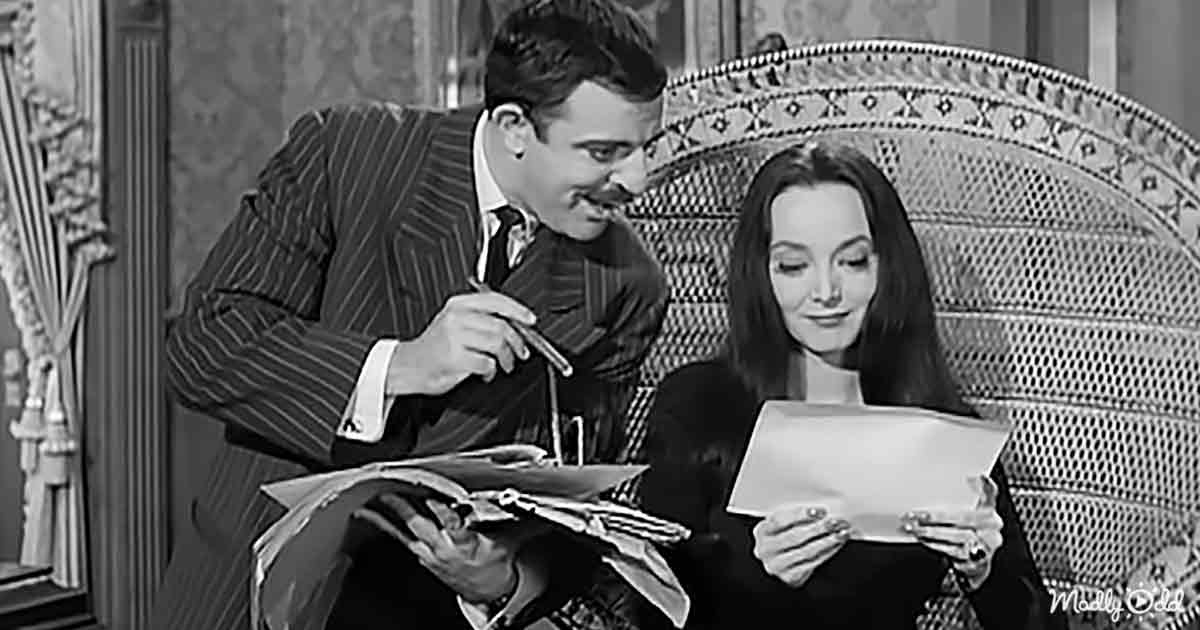
O patriarca é Gomez Addams (interpretado por John Astin), um milionário excêntrico cuja aparência e maneirismos foram baseados em Groucho Marx. A matriarca é a sensual Mortícia (Carolyn Jones), que enlouquece o marido com seu charme e beleza. Eles têm dois filhos: Feioso (Ken Weatherwax) e Wandinha (Lisa Loring) e dividem a casa com, entre outros, Tio Chico (Jackie Coogan – sim, o menininho do filme de Chaplin “O Garoto”). Completando o rol de moradores da casa temos Mãozinha, uma mão sem corpo que ajuda a todos, e Tropeço (Ted Cassidy), o mordomo que viveu um sucesso musical assim como Wandinha viveria anos mais tarde – mas já chegamos lá.


The patriarch is Gomez Addams (played by John Astin), an eccentric millionaire whose appearance and manners were based on Groucho Marx. The matriarch is the sexy Morticia (Carolyn Jones), who makes her husband crazy with her good looks and charm. They have two children: Pugsley (Ken Weatherwax) and Wednesday (Lisa Loring) and share the house, among others, with Uncle Fester (Jackie Coogan – yes, the little boy from Chaplin’s “The Kid”). Completing the household are Thing, a helpful disembodied hand, and Lurch (Ted Cassidy), the butler who even had a musical hit just like Wednesday would have years later – but we’ll get there.

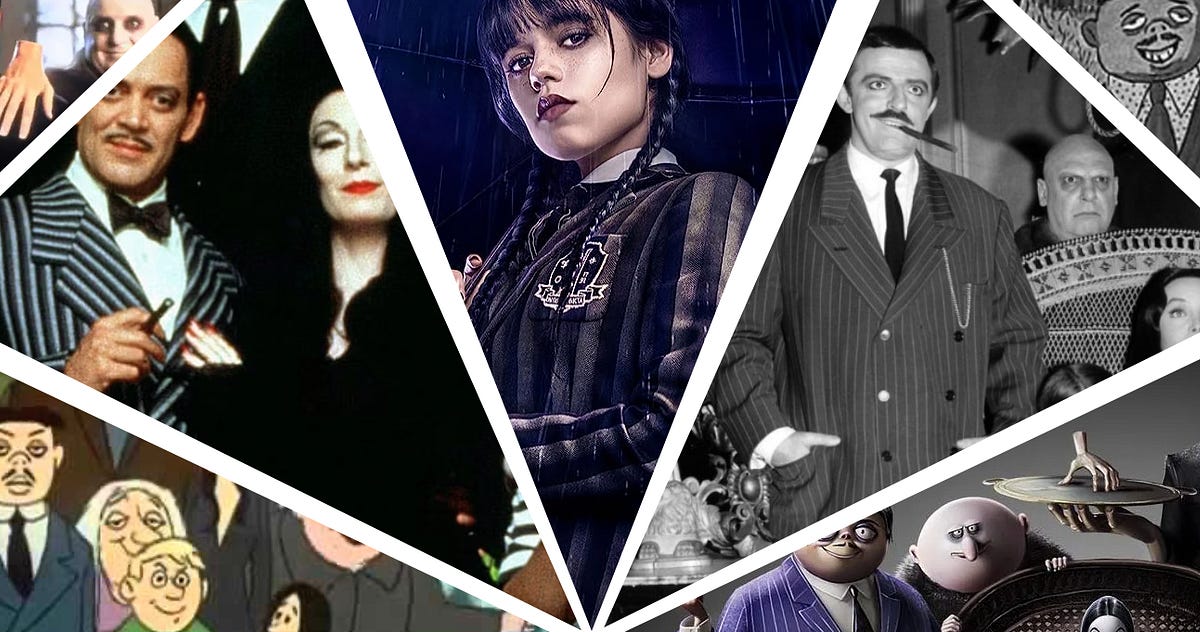
A família Addams se tornou tamanha sensação com o passar dos anos que, além da série dos anos 60, foi assunto de mais filmes, desenhos animados, espetáculos da Broadway e vídeo-games. A atração mais recente à família da Família Addams foi a série da Netflix “Wandinha”. Nela, a filha adolescente dos Addams (interpretada por Jenna Ortega) frequenta uma escola especial para encantados e poderosos. Lá, ela faz amigos e inimigos, e se torna sensação com sua dança no baile da escola.


The Addams Family became such a sensation over the years that, besides the 1960s series, it was the subject for more movies, animated shows, Broadway shows and video games. The most recent addition to The Addams Family family was the Netflix show “Wednesday”. In it, the teenage daughter of the Addams (played by Jenna Ortega) attends a special school for the enchanted and powerful. There, she makes friends and enemies, and becomes a sensation with her dance at the local ball.

Ao me preparar para assistir a “Wandinha”, eu revisitei alguns episódios desta série que me divertiu tanto na adolescência. Um episódio em consonância com a série de 2022 da Netflix é o piloto, “The Addams Femily Goes to School”. Nele, um oficial da educação força Wandinha e Feioso a frequentar uma escola pela primeira vez na vida, com consequências hilárias. 


In preparation to watch “Wednesday”, I revisited some episodes of this series that entertained me so much when I was a teenager. An episode in consonance with the 2022 Netflix series is the pilot, “The Addams Family Goes to School”. In it, a school office forces Wednesday and Pugsley to attend school for the first time in their lives, with hilarious consequences.

O episódio apresenta para nós todas as estranhezas familiares ao fazer com que os personagens percorram a casa em companhia do Sr Hilliard (Allyn Joslyn). Gomez apoia o ensino domiciliar – como ele diz para Hilliard “por que ter filhos só para nos livrarmos deles?” – e quem dá as lições é a Vovó (interpretada por Blossom Rock). Quando as crianças finalmente começam a frequentar a escola, Wandinha volta para casa chateada porque, num conto de fadas, o dragão é morto!


The episode introduces all the familiar oddities to us by having the characters show around the house to the officer Mr Hilliard (Allyn Joslyn). Gomez is a supporter of homeschooling – as he says to Hilliard, “why to have children just to get rid of them?” – and the one in charge of the lessons is Grandmama (played by Blossom Rock). When the kids finally start attending school, Wednesday comes back home upset because, in the fairy tale, the dragon gets killed!

Este episódio foi dirigido por Arthur Hiller. Ele tem 76 créditos como diretor no IMDb, sendo o mais importante o bem-sucedido “Love Story” (1970). Ele começou sua carreira na televisão em 1954, mas só dirigiu este episódio para “A Família Addams”.


This episode was directed by Arthur Hiller. He gets 76 directing credits on IMDb, being the most important the sensation “Love Story” (1970). He started his career on television in 1954, but for “The Addams Family” this was the only episode he directed.

Eu sempre gostei de todos os personagens de A Família Addams, mas tinha uma pequena preferência por Wandinha, por ser uma garota como eu, uma pequena estranha. Fico feliz que Wandinha seja o foco do segundo filme de animação dos Addams, que estreou em 2021. Também gostei muito da série da Netflix. Eu estava esperando ver mais da personagem neste episódio da série dos anos 60, mas eu entendo que ele sirva mais como uma apresentação da família do que qualquer outra coisa.


I’ve always liked all the characters from the Addams Family, but had a small preference for Wednesday, being a girl myself and thinking I was odd growing up. I’m glad Wednesday was the focus of the second animated “The Addams Family” movie, released in 2021. The Netflix series also pleased me a lot. I was expecting to see m0re of her in this episode of the 1960s series, but I know it was more of an introduction to the family than anything else.

Ao colocar o público no lugar do Sr Hilliard, o primeiro episódio da série nos oferece um vislumbre de todas as excentricidades que nos fariam amar os Addams nos anos vindouros, um amor que ainda hoje prevalece.


By putting the audience in the place of Mr Hilliard, the first episode of the series offers us a glimpse of all the eccentricities that would make we love the Addams in the years to come, a love that hasn’t diminished today.


This is my contribution to the 10th Annual Favourite TV Show Episode blogathon, hosted by Terence at A Shroud of Thoughts.

Saturday, March 24, 2018

Série Retrô: Combat! - Self-Inflicted Wound (S.I.W.)


Eu fiz faculdade à distância – e mais ou menos ao mesmo tempo, comecei a escrever este blog. Depois de uma época difícil no ensino médio, de repente me vi com liberdade e tempo livre na faculdade. Eu não tinha mais que acrodar às cinco da manhã, não tinha apenas uma hora para ir para casa, almoçar e voltar para a escola, eu tinha finalmente tempo para descansar e respirar. E eu tinha as manhãs livres!

I got a college degree online – at about the same time, I started writing on this blog. After a hard time in high school, I suddenly found myself with freedom and free time in college. I didn't have to wake up at 5 a.m., I didn't have one hour to go home, eat lunch and go back to school, I actually had time to rest and to breathe. And I had free mornings!
Eu usava estas manhãs para assistir à TV. Havia diversas sitcoms no canal Sony – Seinfeld, The Nanny, Married… With Children, Mad About You, Will & Grace e outras – e o TCM brasileiro também exibia algumas séries antigas.  Eu me lembro de que o horário das 10 era ocupado por uma rara série em preto e branco, Combate!, que eu via de vez em quando.

I spent those mornings watching TV. There were several sitcoms at the Sony channel – Seinfeld, The Nanny, Married… with Children, Mad About You, Will & Grace and others – and Brazilian TCM  also had a few TV series. I remember the 10 a.m. time slot on TCM had a rare black and white TV series, Combat!, that I would watch every now and then.
Obviamente, a primeira coisa que chama a atenção quando você vê Combate! é o nome de Vic Morrow. Na época, eu já havia lido sobre o terrível e fatal acidente envolvendo Vic, um helicóptero e duas crianças nas filmagens de “No Limite da Realidade” em 1982. A morte de Vic ganhou mais destaque que sua vida e seu legado – e por falar em legado, você sabia que uma das filhas de Vic Morrow é a atriz Jennifer Jason Leigh? Eu só descobri isso enquanto escrevia este artigo. Mesmo assim, ele foi um ator popular e também diretor, e Combate! é seu trabalho mais famoso.

Of course, the first thing that calls your attention when you watch Combat! is Vic Morrow's name. At the time, I had already read about his terrible fatal accident involving a helicopter and two children while filming “Twilight Zone: The Movie” in 1982. Morrow's death overshadowed his life and legacy – talking about legacy, did you know that one of Vic Morrow's daughters is the actress Jennifer Jason Leigh? I only got to know that when writing this article. Nevertheless, he was a successful and popular actor and director, and Combat! is his best remembered work.
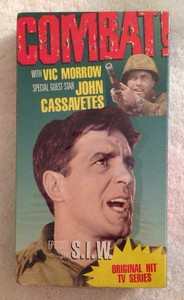
Dos poucos episódios que eu vi, me lembro de dois claramente: um deles tinha uma enfermeira interpretada por uma atriz que se parecia muito com Greta Garbo – eu fiquei longo tempo pensando se ela ERA Garbo, mesmo sabendo que isso era impossível porque Garbo se aposentou em 1941, e Combate! estreou em 1962. O outro episódio de que me lembro bem é “S.I.W.” – que significa “Self-Inflicted Wound”, ou ferida autoprovocada.

From the few episodes I watched, I remember two clearly: one of them had a nurse played by an actress who looked a lot like Greta Garbo – I kept wondering if she was Garbo, even knowing that it was impossible because Garbo retired in 1941, and Combat! started airing in 1962. The other episode I remember well is “S.I.W.” – or Self-Inflicted Wound.
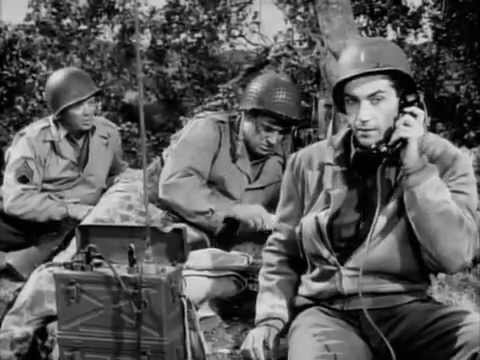
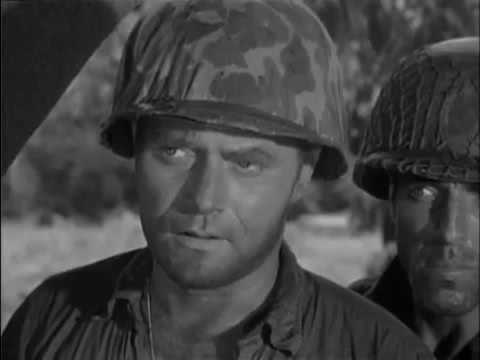
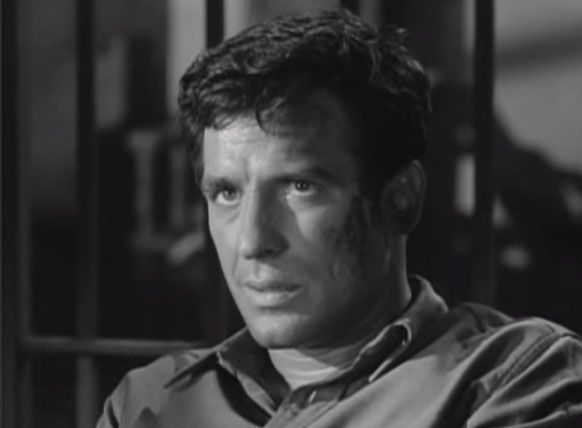
“S.I.W.” é o terceiro episódio da quarta temporada, e foi ao ar originalmente em 28 de setembro de 1965. Nele, o soldado Kalb (John Cassavetes) tem uma má reputação: ele foi acusado de se acovardar e fugir, deixando todos os seus companheiros de batalhão morrer em duas missões diferentes. Agora ele é um substituto no esquadrão do sargento Saunders (Vic Morrow). Um dia, ele é ferido em uma vila abandonada, e todos acreditam que ele mesmo se feriu para poder ser liberado do combate. O tenente Hanley (Rick Jason) é aquele que mais firmemente acredita que Kalb está mentindo.

“S.I.W.” is the third episode of season four, and it first aired on September 28th, 1965. In it, Soldier Kalb (John Cassavetes) has already been accused of cowardice and of letting all his comrades die in two different missions. Now he is a replacement at Sgt Saunders’ (Vic Morrow) squad. One day, he is wounded in an abandoned village, and everybody believes he wounded himself so he could leave the front. Lt. Hanley (Rick Jason) is the one who believes the most in the lie hypothesis.
Kalb insiste que foi um soldado alemão de óculos que o feriu durante uma luta, o que parece improvável – quem vai para a guerra usando óculos pouco práticos? Se sua ferida foi autoprovocada, Kalb será punido.

Kalb insists that a German soldier wearing glasses wounded him during a physical fight, which seems improbable – who goes to war wearing impractical glasses? If his wound in self-inflicted, he'll be punished.
Quando eu assisti a “S.I.W.” pela primeira vez, eu não usava óculos. Agora eu uso. Óculos são estes maravilhosos pedacinhos de vidro que ajudam você a enxergar melhor. E se eles já ficam embaçados com neblina ou um pouquinho de chuva, você pode imaginar como é ir para a guerra, com lama e poeira e gás, e ter de usar óculos para lutar pela sua vida?

When I watched “S.I.W.” for the first time, I didn't wear glasses. Now I do. Glasses are those wonderful, literal pieces of glass that help you see better. And if they get blurry with the fog or a little bit of rain can you imagine going to war, full of mud and powder and gas, and have to wear glasses to fight for your life?
Felizmente, eu não sou a única que pensou em quão absurdo é ir para a guerra usando óculos. Esta questão (em inglês) do Quora traz alguns veteranos do Vietnã contando como eles lidaram com seus problemas de visão durante a guerra. Mas nós estamos considerando, assim como é mostrado na série, o que um soldado de óculos experimentaria na Segunda Guerra Mundial, e para este caso temos um esclarecedor artigo (também em inglês) sobre o assunto, provando que podemos encontrar quase tudo na internet.

Fortunately, I'm not the only one who thought about the absurdity of going to war wearing glasses. In this Quora thread, some Vietnam veterans talk about how they coped with their bad eyesight during combat. But we are considering, as the series did, what a soldier with glasses would go through in the Second World War, and for this we have this enlightening blog post about the issue, proving that you can find almost anything in the Internet.
Actual footage of me imagining how it is
to go to war wearing glasses
“S.I.W.” é um episódio tenso sobre julgamento e tomada de decisões sob pressão – um dos muitos desafios que o sargento Saunders teve de enfrentar durante a guerra. O episódio também mostra que John Cassavetes era um ótimo ator, embora hoje ele seja mais lembrado por seu trabalho como diretor.

“S.I.W.” is a tense episode about judgment and making decisions under pressure – one of the many challenges Saunders had to face during the war. It also shows how good John Cassavetes was as an actor, although he is best remembered by his work as a director.
Combate! foi uma série muito popular. Ela era muito elogiada pelo realismo das cenas de batalha. Combate! inclusive deu origem a um livro de colorir e a um jogo de tabuleiro. “S.I.W.” está apenas na trigésima quarta posição no ranking de episódios da série no IMDb. Mesmo assim, foi o episódio que nunca saiu da minha cabeça.

Combat! was a very popular series. It was often praised by the realism of the battle scenes. Combat! even generated a coloring book and a board game. “S.I.W.” was just in number 34 in the IMDb episodes ranking for the series. Yet, it was the one that never left my mind.

This is my contribution to the 4th Annual Favourite TV Show Episode Blogathon, hosted by Terence at A Shroud of Thoughts.

Tuesday, January 30, 2018

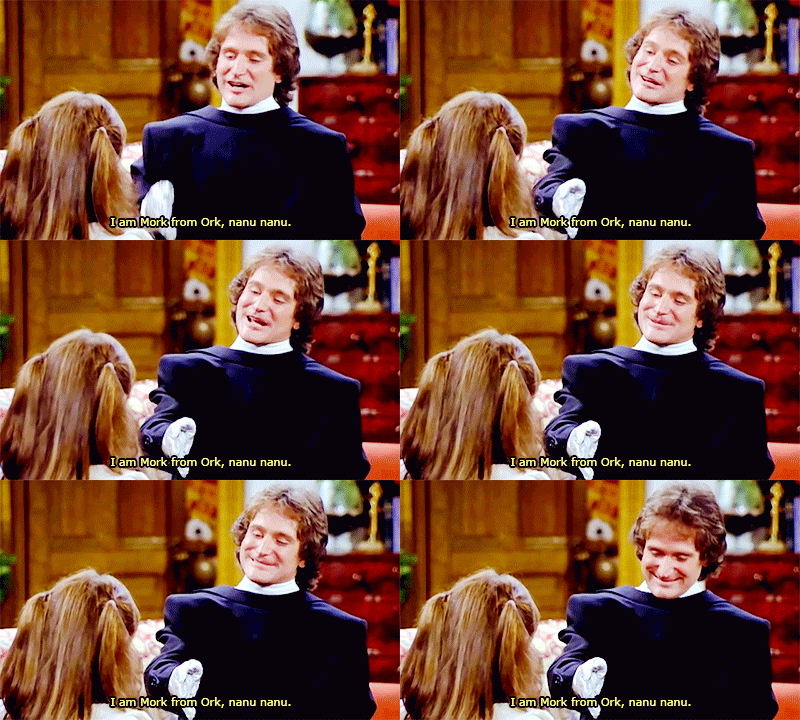
Série Retrô: Mork & Mindy

Quando eu tinha uns 13 anos, eu tinha uma amiga cujo filme favorito era “Patch Adams – O Amor é Contagioso” (1994). Eu vi o filme, e imediatamente Robin Williams se tornou meu ator favorito. Felizmente, “Mork & Mindy”, o primeiro trabalho de Robin na TV, estava sendo transmitido na TV brasileira pela primeira vez. Três anos depois, o filme favorito da minha amiga tinha mudado para “Um Amor para Recordar” (2002), e meu ator favorito era então James Cagney. Eu perdi contato com esta amiga, mas meu ator favorito ainda é James Cagney – empatado c0m Lon Chaney. Mas este não é um post sobre mim nem minha amiga, mas sim sobre como eu aprendi a amar Robin Williams.

When I was about 13, I had a friend whose favorite movie was “Patch Adams” (1994). I watched it, and instantly Robin Williams became my favorite actor. It also helped that “Mork & Mindy”, his first work on TV, was being broadcasting Brazilian cable television for the first time ever. Three years later, my friend's favorite film had changed to “A Walk to Remember” (2002), and my favorite actor was then James Cagney. I lost touch with this friend, but my favorite actor is still James Cagney – tied with Lon Chaney. But this post is not about me or my friend, but about how I learned to love Robin Williams.
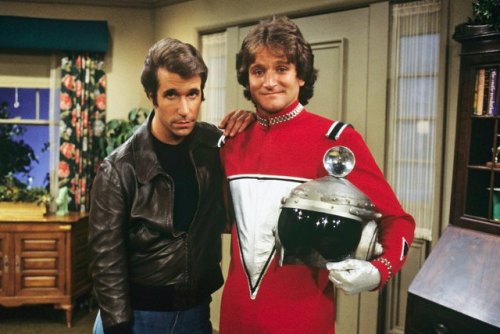
“Mork & Mindy” estreou na TV brasileira neste momento – por volta de 2006, quase 30 anos depois da série ir ao ar nos EUA. No Brasil, ela era parte do bloco de programação Nick at Nite, com outras séries vintage como “A Feiticeira”, “Jeannie é um Gênio”, “A Família Addams” e “Os Monstros”. A série estreou nos EUA em setembro de 1978, como um spin-off da popular “Happy Days” – Mork apareceu pela primeira vez em um episódio de Happy Days de fevereiro de 1978.

“Mork & Mindy” actually had its premiere on Brazilian TV the time I watched it – around 2006, nearly 30 years after it originally aired in the US. In Brazil, is was part of the Nick at Nite programming block, with other vintage series like “Bewitched”, “I Dream of Jeannie”, “The Addams Family” and “The Munsters”. The series premiered in the US in September 1978, and it was a spin-off from the popular series “Happy Days” – Mork had first appeared in a Happy Days episode in February 1978.
In "Happy Days"
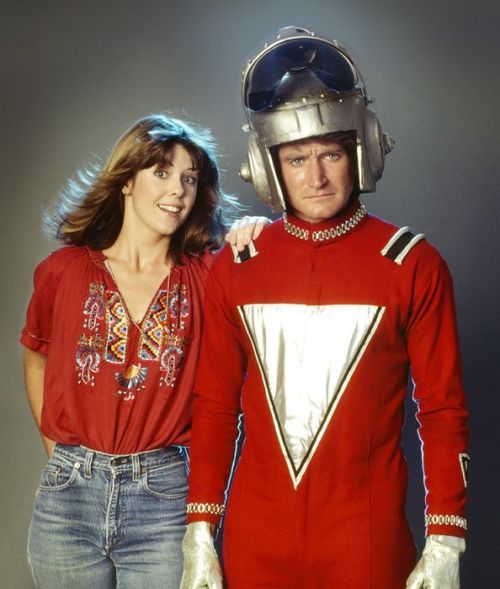
Mork (Robin Williams) é um alienígena do planeta Ork que é mandado por seu superior, Orson – que foi, como você pode imaginar, batizado em homenagem a Orson Welles – para estudar a vida primitiva na Terra. Por primitivo você pode imaginar organismos pré-históricos, mas os animais que Mork vai analisar são na verdade dos americanos de classe média dos anos 70. Mork acaba morando de favor em Boulder, Colorado, com Mindy McConell (Pam Dawber), a filha do proprietário de uma loja de discos, Fred (Conrad Janis). A avó de Mindy, Cora (Elizabeth Kerr), também era presença constante na série.

Mork (Robin Williams) is an alien from planet Ork who is sent by his superior, unseen Orson, – who was, as you may imagine, named after Orson Welles – to study the primitive life on Earth. By primitive you may think about pre-Historic organisms, but the kind of animals Mork will analyze are middle-class Americans from the 1970s. Mork ends up boarding in Boulder, Colorado with Mindy McConell (Pam Dawber), the daughter of a record store owner, Fred (Conrad Janis). Mindy’s grandmother, Cora (Elizabeth Kerr), also made constant appearances.  
Por que uma adolescente como eu gostava tanto de “Mork & Mindy”? Mork era um alien ingênuo e com boas intenções vivendo disfarçado na Terra. Ele em geral criava situações cômicas porque não entendia os códigos de convivência e as tradições humanas. Neste sentido, Mork se parece muito com outro personagem que eu também estava aprendendo a amar quando eu tinha 14 anos, um personagem com o qual eu me identifico muito até hoje: Sheldon Cooper de “The Big Bang Theory”. 

Why did a teenager like me like “Mork & Mindy” so much? Mork was a naïve, well-meaning alien trying to live undercover on Earth. He often created funny messes as he misunderstood the codes of human behavior and human traditions. In this sense, Mork is a lot like another character I was learning to love when I was 14, a character with whom I identify a lot until today: Sheldon Cooper from “The Big Bang Theory”.
Young Sheldon = Mork
Eu também gosto muito do estilo extravagante de Mork e de tudo a respeito de Pam Dawber: rosto, sorriso, risada, cabelo e franja! O que eu também gosto em Mindy é que ela não é uma personagem excessivamente sexualizada, embora houvessem planos de torná-la mais sexy – planos aos quais tanto Pam Dawber quanto Robin Williams foram contrários. Ainda bem, porque Mindy é simplesmente perfeita do jeito que é – e é fácil se identificar com ela. Mindy é a pessoa séria na série.

I also really like Mork’s extravagant look and everything about Pam Dawber: her face, her smile, her laugh, her hairstyle, her bangs! What I also like about Mindy is that she isn’t an overly-sexualized character, although there were plans to make her sexier – plans that both Pam Dawber and Robin Williams opposed to. Thankfully, because Mindy is just perfect – and relatable. Mindy is the ‘straight guy’ in the show.
Obviamente, “Mork & Mindy” não seria inesquecível sem Robin Williams. O roteirista Brian Levant o descreveu como “um cara que incorporava todos os três irmãos Marx, Chaplin, os Três Patetas e William F. Buckley em um só corpo”. Williams era muito bom com comédia física e também com improvisação, duas coisas que passaram a inspirar os roteiristas. Para equilibrar o lado cômico, havia o relatório final que Mork sempre mandava para Orson, comentando sobre a vida na terra e fazendo críticas do ponto de vista de um forasteiro.

Of course, “Mork & Mindy” wouldn’t be remarkable without Robin Williams. Screenwriter Brian Levant described him as “one guy who embodied all three Marx brothers, Chaplin, the Three Stooges, and William F. Buckley in one body”. Williams was very good at physical comedy and ad-libbing, things that writers drew inspiration from.  To balance with the comedy there was the final report Mork always sent to Orson, commenting about life on Earth and making some critics from the point of view of an outsider.
A série foi muito popular na primeira temporada – tão popular que Ginger Rogers se tornou fã e esteve presente em muitos ensaios. A série gerou um remake brasileiro em 1979 – provavelmente a razão de “Mork & Mindy” não ter sido exibida até 2006 foi porque o remake, “Super Bronco”, era uma cópia deslavada. Apenas os nomes das personagens foram mudados, todas as situações e detalhes eram os mesmos. “Super Bronco” foi um sucesso, mas foi cancelada após uma temporada.

The show was incredibly popular on its first season – so popular that Ginger Rogers became a fan attended many rehearsals. The series was remade in Brazil in 1979 – probably the reason why “Mork & Mindy” was never broadcasted until 2006 was that the remake, “Super Bronco”, was a shameless rip-off. Only the characters’ names were changed, all the situations and plot details were the same. “Super Bronco” was a success, but was cancelled after one season.
Original
SHAMELESS RIP-OFF
A maior razão por trás da queda de popularidade de “Mork & Mindy” foi provavelmente algo que estraga muitas séries: a insistência em focar em um relacionamento romântico entre os protagonistas. Com o tempo, Robin Williams perdeu o interesse em interpretar Mork – e isso ficou visível na tela. Mesmo assim, a série ainda é lembrada com carinho por aqueles que a viram, e nós seremos eternamente gratos porque ela apresentou a genialidade de Robin Williams para o mundo.

The biggest reason for “Mork & Mindy”’s downfall was probably something that makes many shows jump the shark: the insistence on focusing on a romantic relationship between the leads. With time, Robin Williams lost interest in playing Mork – and it showed on screen. Nevertheless, the show is still fondly remembered by those who watched it, and we’ll be forever thankful because it presented Williams’s geniality to the world.


This is my contribution to the Robin Williams blogathon, hosted by Gill and Crystal at RealWeegieMidget Reviews and In the Good Old Days of Classic Hollywood. Nanu, Nanu!

Wednesday, March 22, 2017

“A Gata e o Rato” e a paródia de Casablanca / Moonlighting and the Casablanca parody

Nos anos 80 e 90, era comum que as séries de TV, em especial sitcoms, tivessem “episódios de antologia”. Estes episódios não faziam a trama avançar e podiam até ser ignorados pelo público. Alguns deles eram simples coleções de clipes de episódios anteriores. Outros eram paródias de filmes famosos. Vamos falar de um episódio deste último tipo.

In the 1980s and 1990s, it was common for TV series, in special sitcoms, to have some “anthology episodes”. These episodes didn't advance the plot and could even be skipped by the public. Some of them were a collection of clips from previous episodes. Others were parodies of famous movies. We're talking about an example of the later.
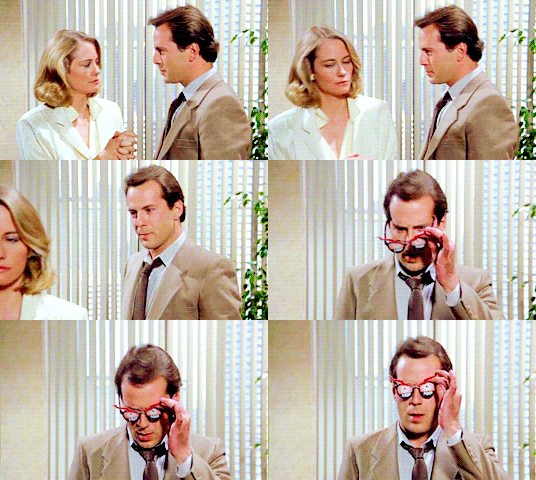
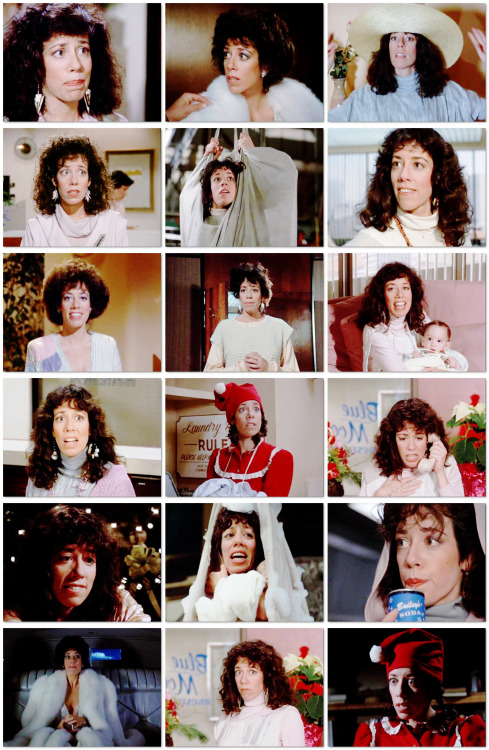
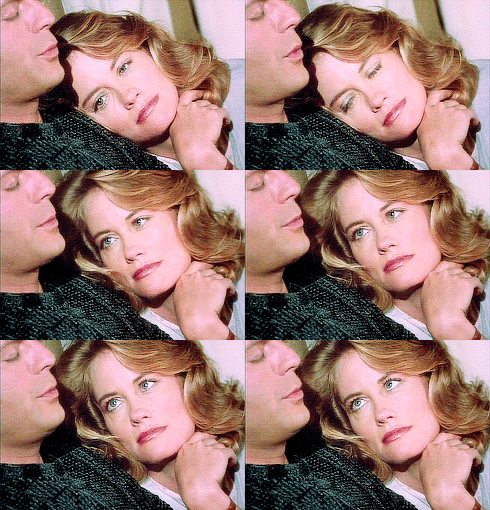
Os personagens principais da série romântica / de suspense / de comédia “A Gata e o Rato” eram Madelyn ‘Maddie’ Hayes (Cybill Shepherd) e David Addison (Bruce Willis), os dois principais investigadores da agência de detetives Blue Moon, da qual Maddie é proprietária. Entre os personagens coadjuvantes recorrentes estava a secretária atrapalhada e adorável, Agnes DiPesto (Allyce Beasley).

The main characters in the romantic / thriller / comedy Moonlighting were Madelyn 'Maddie' Hayes (Cybill Shepherd) and David Addison (Bruce Willis), the two main detectives in the Blue Moon agency, that Maddie also owns. Among the recurrent characters there was the clumsy secretary with a heart of gold, Agnes DiPesto (Allyce Beasley).
O público aprendeu a amar Agnes DiPesto. Ela ganhou mais tempo em cena, um par romântico – Herbert ‘Bert’ Viola (Curtis Armstrong) – e alguns episódios focados só nela. Bem, isso aconteceu porque ela era popular, obviamente, mas também porque aconteceram alguns atrasos nas gravações quando Bruce Willis machucou o ombro e Cybill Shepherd deu à luz gêmeos. Curiosamente, os dois episódios mais marcantes para mim têm tudo a ver com filmes clássicos.

The public learned to love Agnes DiPesto. She got more screen time, she got a romantic interest – Herbert ‘Bert’ Viola (Curtis Armstrong) – and she got some episodes focused on herself. Well, this happened because she was popular, sure, but also because there were some delays when Willis broke his shoulder and Shepherd had twins. Curiously, the two episodes I remember best have everything to do with classic movies.
Um deles é “In ‘N Outlaws” (temporada 5, episódio 11), uma espécie de “12 Homens e uma Sentença” com um toque romântico. Nele Agnes é parte de um júri e é a única que acredita na inocência do réu. Ela então conta sua teoria e narra suas experiências com a relação complicada de Maddie e David para convencer os outros jurados da inocência do réu.

One of them, “In ‘N Outlaws” (S5E11), is some kind of romantic “12 Angry Men”. In it Agnes is part of a jury and is the only one who believes in the man's innocence. She then tells her theories and her experience with the on-again off-again couple Maddie and David to convince the other jurors of his innocence.
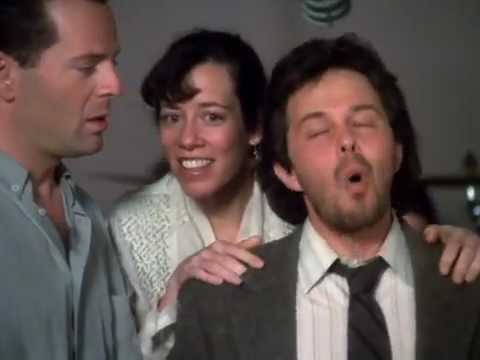
O outro episódio também foi romântico, e lidou com a relação de Agnes e Herbert. Eles eram ambos tímidos, loucamente apaixonados um pelo outro, mas não tinham coragem para dizer o que realmente sentiam, nem para dar grandes passos e avançar o relacionamento. No episódio “Here’s Living with You, Kid” (temporada 4, episódio 13), Herbert sugere que ele e Agnes vão morar juntos. Bert meio que recebe um não como resposta, e a partir daí tem fantasias envolvendo filmes clássicos.

The other episode was romantic as well, and dealt with Agnes and Herbert's relationship. They were both shy people, madly in love with each other, but without the necessary courage neither to tell what they really felt nor to take risks in the relationship. In the episode “Here’s Living with You, Kid” (S4E13), after asking if Agnes wants to move in with him and kind of receiving “no” as an answer, Herbert has fantasies involving classic films.
Primeiro Bert fantasia com “O Sheik” (1921), provavelmente o primeiro filme da história a glorificar a síndrome de Estocolmo. O sonho acordado é um filme mudo completo, sem diálogos mas com intetítulos.

First Bert fantasizes with “The Sheik” (1921), probably the first film to glorify the Stockholm syndrome in the history of movies. The daydream is a complete silent movie without dialog and with intertitles.
Então Bert fantasia com Casablanca. Herbert é Rick, Agnes é Ilsa. De todos os bares de todas as cidades do mundo, ela teve de entrar logo no dele. Este devaneio é mais longo, e também mais divertido, pois zoa com as cenas mais famosas de Casablanca. Veja abaixo, com legendas:

Then Bert fantasizes with Casablanca. Herbert is Rick, Agnes is Ilsa. Of all the gin joints in all the towns in all the world, Agnes walks into his. This daydream sequence is longer, and also funnier, because of the way it mocks with the most famous scenes in Casablanca. See below, with Portuguese subtitles:


“A Gata e o Rato” teve cinco temporadas, de 1985 a 1989. Eu assistia às reprises no canal TCM a partir de 2011. Eu adorava a série, em especial as paródias, os momentos em que a quarta parede era quebrada e as deliciosas situações em que os personagens demonstravam que sabiam que faziam parte de um programa de TV.

Moonlighting lasted five seasons, from 1985 to 1989. I watched the reruns from 2011 onwards. I really, really loved the show, and I adored their spoofs, whenever they broke the fourth wall and the amazing tongue-in-cheek moments when the characters made clear they knew it was only a show.
Agora as séries não têm mais episódios de antologia. Agora as séries transmitidas na TV têm entre 22 e 23 episódios por temporada, enquanto as séries via streaming têm 13 ou 10 episódios ou até menos. Eu também aprecio a maneira moderna de se fazer séries, mas fico pensando: como minhas séries atuais favoritas lidariam com episódios de antologia e quais clássicos eles se atreveriam a parodiar?

Now the series have no more anthology episodes. Now the series airing on TV have about 22 or 23 episodes per season, while the ones on streaming have 13, 10 or even fewer. I like the modern model as well, but sometimes I wonder how some of my favorite series would tackle anthology episodes and which classics they could spoof.

You can watch the full “Here’s Living with You, Kid” episode on Dailymotion.

This is my contribution to the 3rd Annual Favourite TV Show Episode Blogathon, hosted by my friend Terence at A Shroud of Thoughts.
Related Posts Plugin for WordPress, Blogger...