} Crítica Retrô: 1938

Tradutor / Translator / Traductor / Übersetzer / Traduttore / Traducteur / 翻訳者 / переводчик

Showing posts with label 1938. Show all posts

Wednesday, May 29, 2024

Variações sobre um mesmo tema: O Demônio da Algéria (1937) e Argélia (1938)

 Variations on the same theme: Pépé Le Moko (1937) and Algiers (1938)


Todos sabemos que os norte-americanos não gostam de assistir a filmes com legendas. Todos também sabemos que os chefes dos estúdios estão sempre de olho no mercado estrangeiro, procurando por inspiração e sucessos para fazer remakes. Em 1938, Hollywood fez um remake de um filme que havia estreado apenas um ano antes na França. “Argélia” é um remake fidelíssimo, quase cena a cena, de “O Demônio da Algéria” (sic), que ainda consegue ser cinco minutos mais longo que o original. Ambos contam com ótimas performances e alguns nomes nos bastidores que merecem ser destacados.


It’s widely known that Americans don’t like to watch movies with subtitles. It’s also widely known that studio heads are always with an eye on the foreign market, looking for inspiration and successes to be remade. In 1938, Hollywood remade a film that had premiered in France only one year prior. “Algiers” is an almost shot-by-shot remake of “Pépé Le Moko” that still manages to be five minutes longer than the original. Both have great performances and a few names behind the cameras that we should highlight.


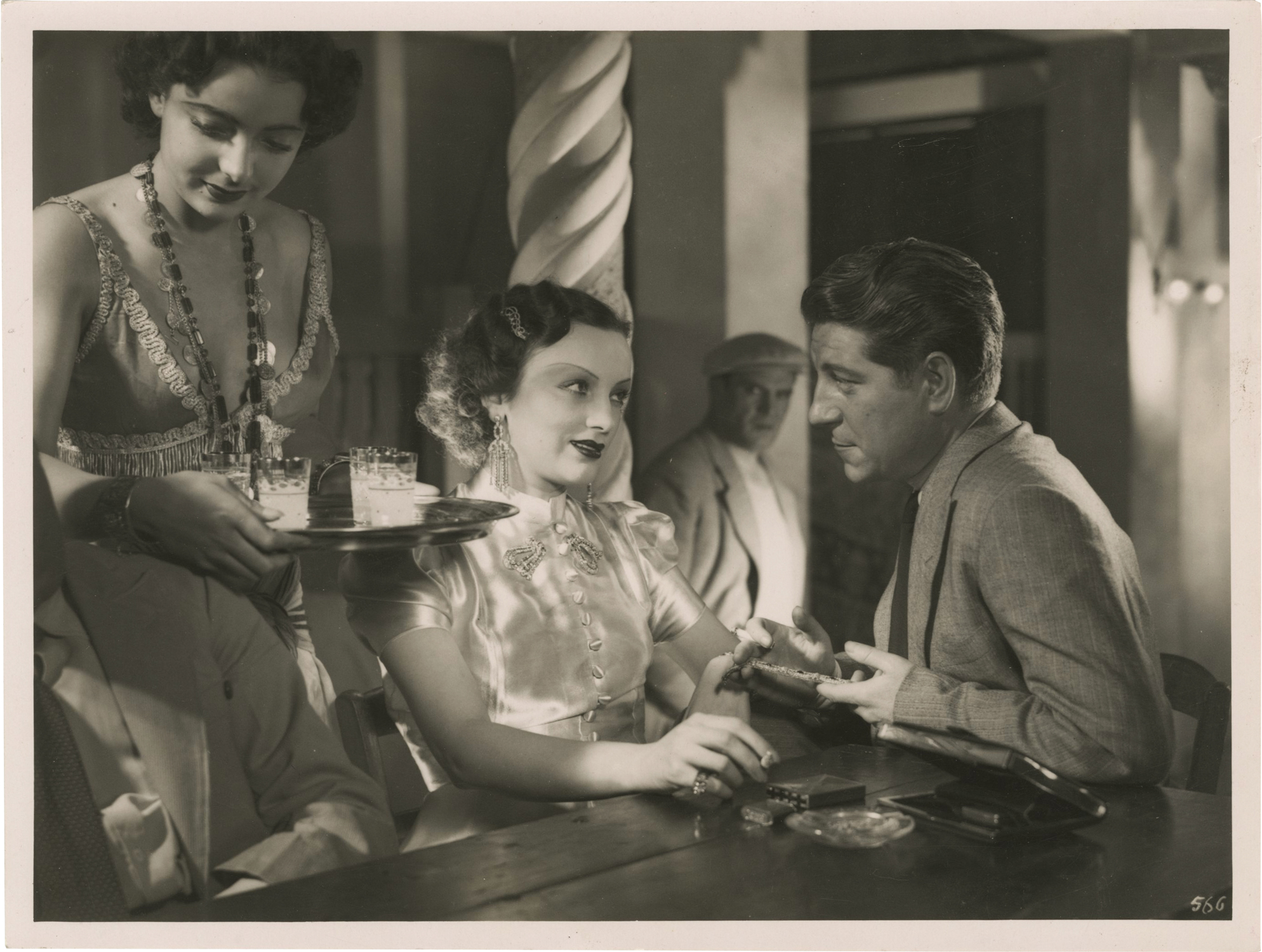
Nos últimos dez anos, cinco detetives tentaram e falharam em capturar o ladrão Pépé Le Moko (Jean Gabin / Charles Boyer). Seu esconderijo é bem conhecido: é a Casbah, bairro labiríntico de Argel onde vivem quarenta mil pessoas. Como dito em “Argélia”, a polícia não pode simplesmente entrar no bairro e prender Pépé porque “não se pode prender um rei no seu próprio palácio”.


In the last two years, five detectives tried and failed to capture the thief Pépé Le Moko (Jean Gabin / Charles Boyer). His hidi
ng place is well known: it’s the Casbah, a labyrinthine district of Argel where forty thousand people live. As it’s said in “Algiers”, the police can’t simply invade the Casbah and arrest Pépé because “you can’t arrest a king in his own palace”.

Uma noite, enquanto fugia de um grupo de policiais, Pépé conheceu Gaby (Mireille Balin / Hedy Lamarr) e se apaixonou por ela... e ainda mais pelas joias dela. Ela é uma socialite francesa que estava passeando pela Casbah e está disposta a voltar nem que seja para jantar e dançar com o belo ladrão. Fora da Casbah é muito perigoso para ele... será que Pépé se contentará com sua garota Inès (Line Noro / Sigrid Gurie) ou se arriscará indo atrás de Gaby?


While running away one night from a group of police officers, Pépé meets Gaby (Mireille Balin / Hedy Lamarr) and falls in love with her… falling deeper for her jewels. She is a French socialite who was touring the Casbah and is willing to come back if only to have dinner and a dance with the handsome thief. Outside the Casbah it’s too dangerous for him… will Pépé settle for his girl Inès (Line Noro / Sigrid Gurie) or will he risk going after Gaby?

“O Demônio da Algéria” é um bom filme por causa do charme e do talent de Jean Gabin, que na época já era uma superestrela. Num artigo para o website da Criterion, Michael Atkinson escreve sobre ele: “Gabin era quase como Garbo em sua habilidade de ancorar nossa atenção sem mover um músculo”. O mais novo de sete filhos de uma dona de café e um artista de cabaré, ele começou a atuar aos 15 anos, trabalhando subsequentemente tanto no Folies Bergéres quanto no Moulin Rouge, além de fazer turnê pela América do Sul com um grupo. Ele fez seu primeiro filme em 1928 e o último em 1976, ano em que faleceu. Ele apareceu num total de 97 filmes.


“Pépé Le Moko” works because of the charm and talent of Jean Gabin, then already a superstar. In an  essay for the Criterion website, Michael Atkinson writes this about him: “Gabin was almost Garbo-like in his ability to anchor our attention without moving a muscle”. The youngest of seven children of a coffee owner and a cabaret entertainer, he started acting at 15, working in subsequent years at both the Folies Bergéres and the Moulin Rouge, and also touring South America with a troupe. He made his first film in 1928 and the last in 1976, the year he passed away. He appeared in 97 films total.

Charles Boyer pode ser charmoso e francês – uma redundância –, mas a verdadeira estrela de “Argélia” é Hedy Lamarr, em seu primeiro filme em Hollywood. O produtor Walter Wanger no início queria Sylvia Sidney ou Dolores Del Río como a atriz principal, mas acabou decidindo pedir Lamarr emprestada da MGM. Diz-se que foi Charles Boyer que apresentou Lamarr para Wanger após uma festa. Apesar de ser o chamariz para o filme, Hedy Lamarr foi considerada inadequada pelo diretor John Cromwell, que disse que ela não sabia atuar e não tinha personalidade.


Charles Boyer may be charming and French – a redundancy –, but the real star of “Algiers” is Hedy Lamarr, in her first Hollywood movie. Producer Walter Wanger first wanted Sylvia Sidney or Dolores Del Río as the female lead, but decided to borrow Lamarr from MGM instead. It is said that it was Charles Boyer who introduced Lamarr to Wanger after a party. Despite being the one who called attention for the film, Hedy Lamarr was considered inadequate by director John Cromwell, who said she couldn’t act and had no personality.

O livro que serviu de inspiração foi, diz-se, inspirado em “Scarface” (1932) e deu origem a um filme sem o qual o cinema noir seria completamente diferente. “O Demônio da Algéria” foi a primeira adaptação cinematográfica de um a obra literária de Henri La Barthe, creditado com seu pseudônimo Ashelbé. O diretor Julien Duvivier, que no começo da década foi responsável por efetivamente fazer a carreira de Jean Gabin decolar, foi um dos roteiristas. A história seria filmada mais uma vez em 1948, num musical com Tony Martin, Märta Torén e Yvonne de Carlo.


The source novel was reportedly inspired by “Scarface” (1932) and it originated a movie without which film noir wouldn’t be what it was. “Pépé Le Moko” was the first cinematic adaptation of a literary work by Henri La Barthe, credited under his pseudonym Ashelbé. Director Julien Duvivier, who was in the beginning of the decade responsible for effectively launching Jean Gabin’s career, served as one of the screenwriters. The story would be filmed once more in 1948, as a musical starring Tony Martin, Märta Torén and Yvonne De Carlo.
O diretor de fotografia de “Argélia” é o grande James Wong Howe. Nascido na China, sua família chegou a Washington quando ele tinha cinco anos. Ele foi boxeador profissional na adolescência e começou sua carreira no cinema como assistente de Cecil B. DeMille. “Argélia” deu a Howe a primeira de suas dez indicações ao Oscar, e ele ganhou duas vezes. Curiosidade: James Wong Howe e Charles Boyer nasceram no mesmo dia, 28 de agosto de 1899.


The director of photography in “Algiers” is the great James Wong Howe. Born in China, his family arrived in Washington when he was five. He was a professional boxer as a teenager and started his career in film as an assistant to Cecil B. DeMille. “Algiers” gave Howe his first of 10 Oscar nominations, and he would win twice. Curious info: James Wong Howe and Charles Boyer were born in the same day, August 28, 1899.

Em “Argélia” o personagem Regis (Gene Lockhart) tem mais tempo em cena que no filme original. Há basicamente uma sessão de tortura psicológica com ele quando Pépé descobre que Regis traiu seu amigo Pierrot e acompanhou o jovem até uma armadilha. Gene Lockhart foi indicado ao Oscar de Melhor Ator Coadjuvante por sua performance, mas não ganhou o prêmio.


In “Algiers” the character Regis (Gene Lockhart) has more screen time than in the original. There is basically a psychological torture session with him when Pépé finds out that Regis betrayed his pal Pierrot and accompanied the young man right into a trap. Gene Lockhart was nominated for the Best Supporting Actor Oscar for his performance, but didn’t win the award.

Quando Régis (Fernand Charpin) fala sobre Pépé ser mulherengo, ele retruca: “Eu dou a elas [às mulheres] meu corpo, mas mantenho para mim a cabeça”. Quando fala sobre sua linha de raciocínio para Inès, Pépé (interpretado por Charles Boyer) diz que “eu não penso com minha cabeça, mas com meu coração”. Estas frases definem as diferenças de construção de um mesmo personagem: o de Gabin é sexy e ousado, o de Boyer mais suave.


When Régis (Fernand Charpin) talks about Pépé’s womanizing habits, he says: “I give them [the women] my body, but I keep my head”. When talking about his thinking to Inès, Pépé (played by Charles Boyer) says that “I don’t think with my head, but with my heart”. These quotes settle the differences between the portrayals of the same character: Gabin’s is sexy and bold, Boyer’s is softer.

O sotaque francês e o jeito mulherengo do personagem de Boyer inspirou o personagem dos Looney Tunes Pepé Le Pew, apresentado ao público em 1945 com a frase de efeito “Venha comigo para a Casbah”. O filme de 1938 também inspirou “Casablanca”, com seu sucesso de bilheteria servindo de argumento para convencer a Warner Bros a aprovar o projeto do filme em 1942. A MGM, entretanto, não liberou Hedy Lamarr de seu contrato e “Casablanca” teve de ser feita com Ingrid Bergman como protagonista.


The French accent and the womanizing in Charles Boyer’s character inspired the Looney Tunes character Pepé Le Pew, introduced in 1945 with the catchphrase “Come with me to the Casbah”. The 1938 film also inspired “Casablanca”, with its success in the box-office serving as a point to convince Warner Bros to approve the project for the film in 1942. MGM, however, didn’t release Hedy Lamarr from her contract and “Casablanca” had to be made with Ingrid Bergman as the lead.

Um fato para horrorizar os amantes de cinema: enquanto era filmado o remake, Walter Wanger tentou destruir todas as cópias de “O Demônio da Algéria”. Que bom que ele não conseguiu! “O Demônio da Algéria” tem 3,8 estrelas no Letterboxd e sua nota no IMDb é 7,7, enquanto “Argélia” tem respectivamente 3,2 estrelas e nota 6,6. Ambos os filmes são muito bons de maneiras diferentes e vê-los em sequência, embora um pouco cansativo por causa da mesma história, dá origem a um divertido jogo de “encontrar diferenças”.


A fact that will horrify all film lovers: while shooting the remake, Walter Wanger tried to have all the copies of “Pépé Le Moko” destroyed. We’re happy his wish wasn’t granted! “Pépé Le Moko” has 3,8 stars on Letterboxd and its grade is 7,7 on IMDb, while “Algiers” has respectively 3,2 stars and grade 6,6. Both movies are extremely enjoyable and entertaining in their own ways, and a double feature, even though tiring with the same story, serves as a joyful game of “spot the differences”.

Saturday, June 17, 2023

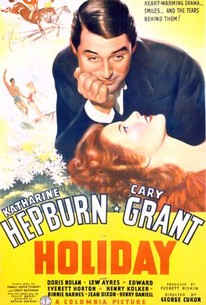
Boêmio Encantador (1938) / Holiday (1938)

 “Boêmio Encantador” é o terceiro de quatro filmes que Katharine Hepburn e Cary Grant fizeram juntos. Os outros três são “Vivendo em Dúvida” (1935), “Levada da Breca” (1938) e “Núpcias de Escândalo” (1940). “Boêmio Encantador” é o pior do quarteto, e isso pode ser porque ele é teatral demais – mas ainda é um filme bacana.


“Holiday” is the third of four movies Katharine Hepburn and Cary Grant made together. The other three are “Sylvia Scarlett” (1935), “Bringing Up Baby” (1938) and “The Philadelphia Story” (1940). “Holiday” is the worst of the bunch, and this may be because it’s too theatrical – but still a nice movie.

A trama é bem simples. Johnny Case (Grant) conhece Julia Seton (Doris Nolan) há apenas dez dias, mas acredita que está pronto para se casar com ela. O que ele não esperava descobrir é que Julia vem de uma família extremamente rica – sua casa é tão grande que tem um elevador – e que o pai dela tem tudo preparado para o casal: ele planejou a futura casa deles e quer que seu futuro genro aceite um emprego no banco dele... mas o pobre Johnny só quer sair de férias para clarear as ideias.


The plot is pretty simple. Johnny Case (Grant) has known Julia Seton (Doris Nolan) for ten days, but believes he’s ready to marry her. What he didn’t expect to discover is that Julia comes from an extremely rich family – her house is so big that it has an elevator – and her father has everything prepared for the soon-to-be newlyweds: he’s planned their future house and wants his future son-in-law to take a job at his bank… but poor Johnny only wants a holiday to clear his mind.

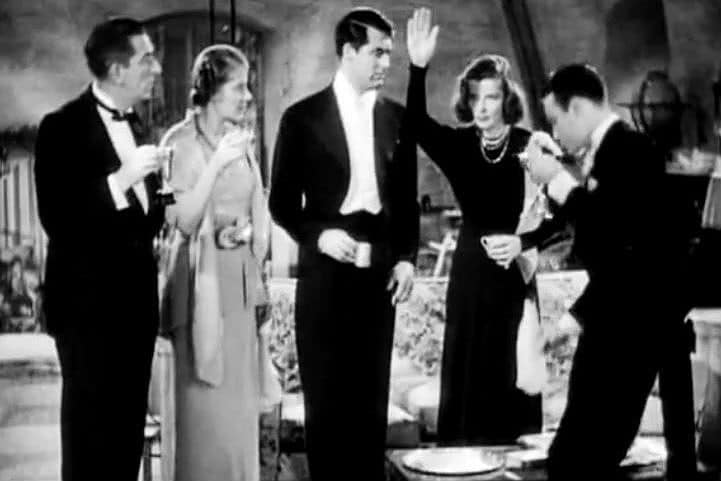
A família da noiva é fora de série: temos o irmão mais novo de Julia, o alcoólatra Ned (Lew Ayres) e a vivaz irmã mais nova Linda (Hepburn). Linda queria dar uma festa de noivado simples e íntima para Julia e Johnny, mas o pai dela decide dar uma imensa festa de véspera de Ano Novo para anunciar o noivado para toda a alta sociedade. Esta festa é o assunto da maior parte do filme.


The future in-laws Johnny meets are out of this world: there is Julia’s alcoholic younger brother Ned (Lew Ayres) and vivacious younger sister Linda (Hepburn). Linda wanted to throw a simple and intimate engagement party to Julia and Johnny, but her father decides to throw a huge New Year’s Eve party to announce their engagement to all of high society. This party takes the biggest bulk of the film.

Linda decide não se juntar à festa e fica na sala de jogos da casa, onde podemos encontrar vários brinquedos da infância dos irmãos – um tempo mais simples e mais feliz para eles. No meio da festa se juntam a ela os amigos de Johnny, Nick e Susan Potter, interpretados por Edward Everett Horton e Jean Dixon. Logo Johnny e Ned também se juntam a eles na sala de jogos, onde a verdadeira diversão está – e talvez também o amor verdadeiro.


Linda decides to not join the party and stays in the house’s playroom, where we can find several toys from the siblings’ childhood – a simpler, happier time for them. In the middle of the party she’s joined by Johnny’s close friends Nick and Susan Potter, played by Edward Everett Horton and Jean Dixon. Soon Johnny and Ned also join them in the playroom, where the true fun is – and maybe also true love.

“Boêmio Encantador” foi uma peça de teatro que estreou em 1928 e teve 229 performances. Donald Ogden Stewart, que escreveu o roteiro do filme, havia interpretado Nick Potter no teatro, e Katharine Hepburn foi substituta na peça. A peça de Philip Barry – que também escreveu “Núpcias de Escândalo” – já havia sido adaptada para as telas em 1930, e Edward Everett Horton também interpretou Nick Potter neste filme.


“Holiday” was a theater play that opened in 1928 and ran for 229 performances. Donald Ogden Stewart, who wrote the screenplay for the movie, had played Nick Potter in the theater, and Katharine Hepburn was an understudy in the play as well. The play by Philip Barry – who also wrote “The Philadelphia Story” – had already been adapted to the screen in 1930, and Edward Everett Horton was in this film as Nick Potter.

Katharine Hepburn não foi a primeira escolha para o papel de Linda. O papel era supostamente de Irene Dunne, e Ginger Rogers e Joan Bennett também foram nomes cotados antes de Hepburn ser emprestada da RKO para a Columbia - o que foi ótimo, uma vez que ela está perfeita no papel. O diretor George Cukor queria que Rita Hayworth interpretasse Julia, mas a novata foi considerada sem experiência suficiente para o papel, que ficou com Doris Nolan.


Katharine Hepburn wasn’t the first choice to play Linda. The role was supposed to go to Irene Dunne, and Ginger Rogers and Joan Bennett were also considered before Hepburn was loaned from RKO to Columbia - a great deal, as she is perfect in the role. Director George Cukor wanted Rita Hayworth to play Julia, but the newcomer wasn’t considered to be too inexperienced for the role, that went to Doris Nolan.

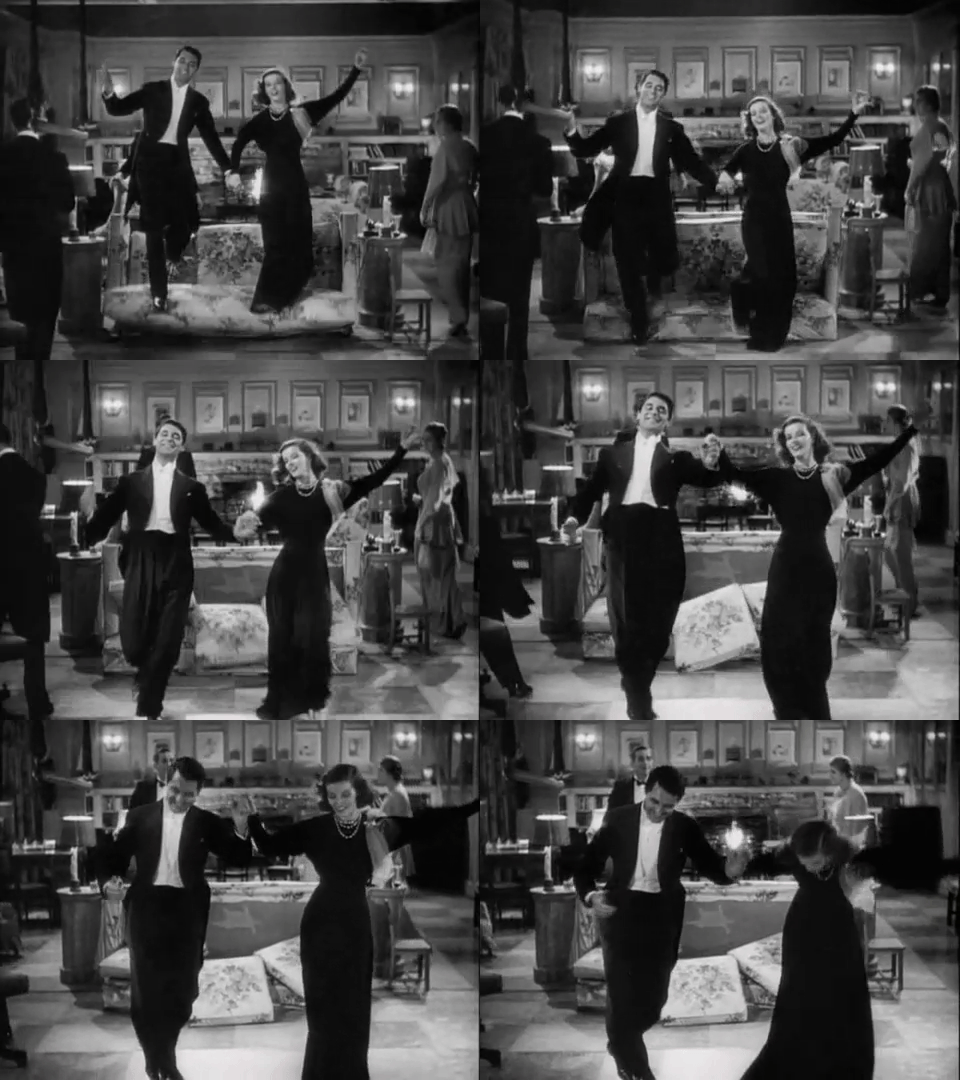
“Boêmio Encantador” é certamente um filme sofisticado, mas também verborrágico. Há muita falação – especialmente quando estão solucionando a situação toda – e só um pouco de ação. O momento com mais ação é a acrobacia de Grant e Hepburn, um momento que você pode já ter visto em forma de GIF. Menos famoso que os outros três filmes feitos pela dupla dinâmica Grant e Hepburn, “Boêmio Encantador” pode ser charmoso, mas também é um pouco chato e previsível. Uma pena, mas nem todos os filmes podem ser obras-primas.


“Holiday” is certainly a sophisticated film, but also a “talky” one. There is too much talking – especially when they are solving the whole situation – and just a little action. The moment with the most action is Grant’s and Hepburn’s tumbling trick, a moment you might have already seen as a GIF. Less famous than the other three films made by the dynamic duo Grant and Hepburn, “Holiday” may be charming, but it’s also a bit boring and predictable. Too bad, but we can’t have only masterpieces.


 This is my contribution to The Intruder blogathon, hosted by Silver Scenes. 

Saturday, June 6, 2020

Do Mundo Nada se Leva (1938) / You Can’t Take It With You (1938)

Nenhum homem que tem amigos é um fracasso. Essa é a lição aprendida por James Stewart como George Bailey em “A Felicidade Não se Compra” (1946), de Frank Capra. Entretanto, a mesma lição havia sido ensinada em outro filme de Capra estrelado por James Stewart e Lionel Barrymore: “Do Mundo Nada Se Leva”, um filme que também traz a melhor e mais excêntrica família do cinema.

No man is a failure who has friends. This is the lesson learned by James Stewart as George Bailey in Frank Capra's “It's a Wonderful Life”, from 1946. However, the same lesson had been taught in another Capra movie starring James Stewart and Lionel Barrymore: “You Can't Take It With You”, a film that also brings the best and most eccentric family to ever grace the screen.

O Sr Kirby (Edward Arnold) quer controlar toda a indústria de munição, e para isso ele precisa construir uma fábrica ao redor do negócio de seu concorrente. Entretanto, há um problema: a fábrica não pode ser construída enquanto um terreno não for comprado. O teimoso proprietário deste terreno é um cavalheiro chamado Vanderhof.

Mr Kirby (Edward Arnold) wants to control the whole ammunition industry, and to do this he needs to construct a factory around his competitor’s business. However, there is one problem: the factory can’t be built if one lot isn’t sold. The stubborn owner of this lot is a gentleman called Vanderhof.

Martin Vanderhof (Lionel Barrymore) é uma figura. Em vez de solucionar seu problema sobre o terreno com o senhor Blakely (Clarence Wilson), que trabalhar para o Sr Kirby, ele apenas faz com que o Sr Poppins (Donald Meek), um contador que estava na empresa havia 20 anos, abandone o emprego para seguir seu sonho de construir brinquedos. Vanderhof leva Poppins até sua casa, que é, obviamente, um lar peculiar.

Martin Vanderhof (Lionel Barrymore) is quite a guy. Instead of solving the issue about his lot with Mr Blakely (Clarence Wilson), who works for Mr Kirby, he only makes Mr Poppins (Donald Meek), an accountant who had been working there from 20 years, abandon his job and follow his dream of manufacturing toys. Vanderhof takes Poppins to his house, and, of course, it is a peculiar household.

A filha de Vanderhof, Penny (Spring Byington), é uma dramaturga amadora. Seu genro, Paul Sycamore (Samuel S. Hinds), faz fogos de artifício. Sua neta mais nova, Essie (Ann Miller), sonha em ser bailarina. Enquanto isso não acontece, ela faz bombons para o marido, Ed (Dub Taylor), vender. Alice (Jean Arthur), a neta mais velha, trabalha como datilógrafa.

Vanderhof’s daughter, Penny (Spring Byington), is an amateur playwright. His son-in-law, Paul Sycamore (Samuel S. Hinds), makes fireworks. His younger granddaughter, Essie (Ann Miller), dreams about being a ballerina. While this doesn’t happen, she makes candy for her husband, Ed (Dub Taylor), to sell. Alice (Jean Arthur), the older granddaughter, works as a stenographer.

E aqui as coisas ficam mais interessantes: Alice trabalha como datilógrafa no escritório de Tony Kirby Jr (James Stewart). Eles estão apaixonados e Tony pede Alice em casamento – sem saber que o avô dela é dono do terreno que o pai dele tanto cobiça.

And here things get more interesting: Alice works as a stenographer at the office that belongs to Tony Kirby Jr (James Stewart). They are in love and Tony asks Alice to marry him – without knowing that her grandfather owns the lot his father wants to buy so badly.

Vanderhof tem um motivo sentimental para não vender a casa: as memórias de sua falecida esposa ainda estão lá, em cada canto. Ele conta isso a Alice em uma cena comovente. A cena deve ter sido particularmente difícil de gravar porque Lionel havia perdido a esposa na véspera de Natal de 1936.

Vanderhof has a good sentimental reason to not sell the house: the memories about his late wife are still there, in many corners. He tells this to Alice in a very moving scene. The scene must have been particularly difficult to shoot because Lionel had just lost his wife on Christmas Eve, 1936.

Vanderhof e sua família só fazem o que gostam. Se eles estão se divertindo, estão felizes. Não importa se eles não estão enriquecendo nem seguindo regras da sociedade: eles simplesmente VIVEM intensamente. Eles entendem que a vida não é uma lista de tarefas que temos de completar de todas as maneiras – a vida é outra coisa. Talvez um presente, uma bênção ou mesmo uma maldição, mas com certeza algo tem de ser feito com ela. Então por que não viver uma vida feliz?

Vanderhof and his family only do what pleases them. As long as they’re having fun, they’re happy. It doesn’t matter if they aren’t getting rich nor following societal rules: they simply LIVE to the fullest. They understand that life isn’t a to-do list that we must complete no matter what – life is something else. Maybe a gift, maybe a blessing, maybe a curse, but certainly something has to be done with it. So why not live a happy life?

Tony fica fascinado com a maneira como a família Vanderhof-Sycamore vive. Ele diz que é preciso muita coragem para ignorar as expectativas dos outros e só fazer o que você gosta. E ele se enche de coragem para levar sua família para jantar na casa de Alice não no dia combinado, mas um dia antes para pegar todos à vontade em casa. O problema é que todos estão muito à vontade – e isso inclui o senhor DePinna (Halliwell Hobbes), que também faz fogos de artifício mas no momento está posando para uma pintura, e Kolenkhov (Mischa Auer), o professor russo de balé de Essie que acha que tudo é um lixo. O que realmente será um lixo será a relação do relaxado Vanderhof e do ambicioso Sr Kirby.

Tony is marveled at how the Vanderhof-Sycamore family lives. He says it takes a lot of courage to ignore everybody else’s expectation and just do what makes you happy. And he is full of courage when he takes his family to have dinner at Alice's house not on the scheduled day, but one day earlier to catch everybody comfortable at home. The problem is that everybody is too comfortable – and this includes Mr DePinna (Halliwell Hobbes), who also makes fireworks but is currently posing for a painting, and Kolenkhov (Mischa Auer), Essie's Russian ballet teacher who thinks everything stinks. What will really stink is the relationship between fun-loving Mr Vanderhof and money-hungry Mr Kirby.

“Do Mundo Nada se Leva” era originalmente uma peça, escrita por George S. Kaufman e Moss Hart. Vanderhof foi interpretado, na peça, por Henry Travers, que mais tarde ensinou uma lição de amizade para George Bailey. A peça de sucesso ganhou o Prêmio Pulitzer e deu origem ao filme, que ganhou dois Oscars: Melhor Diretor e Filme. “Do Mundo Nada se Leva” é a primeira de apenas duas peças que ganharam o Pulitzer e mais tarde o Oscar de Melhor Filme – a outra é “Conduzindo Miss Daisy”.

 “You Can't Take It With You” was originally a play, written by George S. Kaufman and Moss Hart. Vanderhof was played, in the play, by Henry Travers, who later taught George Bailey a lesson in friendship. The successful play won the Pulitzer Prize and originated the film, that went on to win two Oscars: Best Director and Best Picture. “You Can't Take It With You” is one of only two plays to win both the Pulitzer and later the Best Picture Oscar – the other one is “Driving Miss Daisy”.

A Peça / The Play
A Peça / The Play

Robert Riskin, colaborador constante de Frank Capra, adaptou a peça para o cinema e adicionou seu toque inspirador – na verdade, muito do que mais tarde foi considerado “Capracorn” veio da mente de Riskin, como a mensagem alegre, o conflito da cobiça contra a ingenuidade, o homem comum contra o sistema e muito mais. É possível encontrar várias semelhanças entre “Do Mundo Nada se Leva” e outros filmes de Capra e Riskin do final dos anos 30, como “O Galante Mr Deeds” (1936) e “A Mulher Faz o Homem” (1939), indo da Cinderela em fuga até a mensagem de que dinheiro não traz felicidade.

Capra's constant collaborator Robert Riskin adapted the play to the screen and added his inspirational touch – in fact, much of what was later considered “Capracorn” came from Riskin's mind, like the feel-good message, the greed versus naïveté conflict, the common man against the system and many more. You can find many similarities between “You Can't Take It With You” and other Capra-Riskin films of the late 1930s, like “Mr Deeds Comes to Town” (1936) and “Mr Smith Goes to Washington” (1939), from the runaway Cinderella to the lesson that money doesn't buy happiness.

Algumas mudanças foram feitas na peça, em especial no terceiro ato. O personagem Poppins não existia, nem o conflito principal do Sr Kirby querer comprar a casa de Vanderhof. Algumas cenas com muitos extras foram adicionadas, num restaurante, fora da casa de Vanderhof e numa cadeia, e este último cenário trouxe uma deliciosa participação de Harry Davenport como um juiz.

Some changes were made in the play, in special in the third act. The character Mr Poppins didn't exist, nor the main conflict of Mr Kirby wanting to buy the Vanderhof house. Some crowd scenes were added, in a restaurant, outside the Vanderhof house and in a jail, and this last set allowed for a delightful appearance by Harry Davenport as a judge.


Capra, o elenco e seus autógrafos / Capra, the cast and their autographs

Eu apenas considero de mau gosto a maneira como os personagens negros são tratados, em especial Donald (Eddie 'Rochester' Anderson), namorado de Rheba – Rheba (Lillian Yarbo) é a empregada da família. Donald é preguiçoso e não muito inteligente, e na oficina ele trabalha tendo como ajudante um corvo chamado... Jim Crow – em alusão às leis racistas de segregação da época. Aff.

I only find distasteful the way black characters are treated, in special Donald (Eddie 'Rochester' Anderson), Rheba’s boyfriend – Rheba (Lillian Yarbo) is the maid of the house. Donald is portrayed as lazy and not very bright, and in the workshop he works assisted by a crow named… Jim Crow. Ugh.

Embora “Do Mundo Nada se Leva” seja um filme adorável e divertido, as gravações não foram fáceis. Robert Riskin começou a acreditar que Capra estava levando crédito pelo trabalho dele, e o primeiro e único filme de Riskin como diretor havia fracassado recentemente. Lionel Barrymore, sofrendo com artrite e uma bacia recém-quebrada, estava usando muletas e tomando remédios para dor. Ann Miller, com apenas 15 anos, achava difícil fazer suas cenas de balé e constantemente chorava no set.

Although “You Can't Take It With You” is a lovely and funny film, shooting wasn't so easy. Robert Riskin started to believe that Capra was taking credit for his work, and Riskin's first and only film as a director had recently bombed. Lionel Barrymore, suffering from arthritis and a broken hip, was using crutches and taking painkillers. Ann Miller, at only 15 found it difficult to do her ballet scenes and constantly cried on set.

E, mesmo assim, nenhuma destas dificuldades transparece no filme. Talvez hoje, mais de 80 anos após a estreia, “Do Mundo Nada se Leva” traga uma mensagem difícil demais de seguir – você consegue se imaginar vivendo para seus hobbies? - mas ao mesmo tempo nos faz sorrir e acreditar que, com algumas palavras sábias e uma gaita, tudo é possível.

And, yet, none of those difficulties appear when we watch the film. Maybe now, over 80 years after it was released, “You Can't Take It With You” brings a message too difficult to follow  - can you imagine living for your hobbies? - but at the same time it puts a smile on our faces and makes us believe that, with a few wise words and a harmonica, anything is possible.

This is my contribution to the Third Broadway Bound blogathon, hosted by Rebecca at Taking Up Room.

Sunday, May 12, 2019

Um Rosto de Mulher (1941) / A Woman's Face (1941)

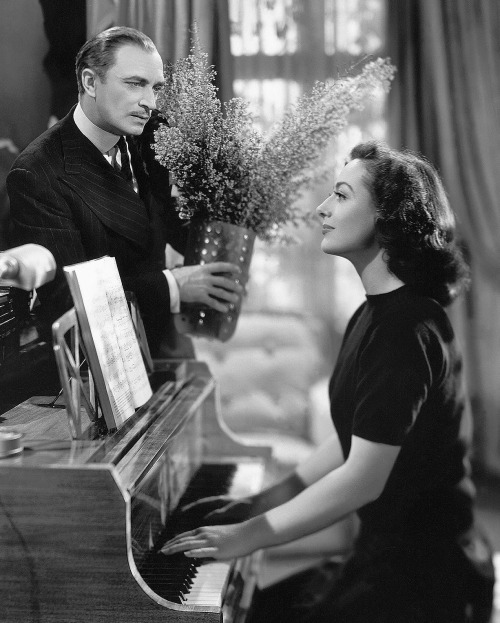
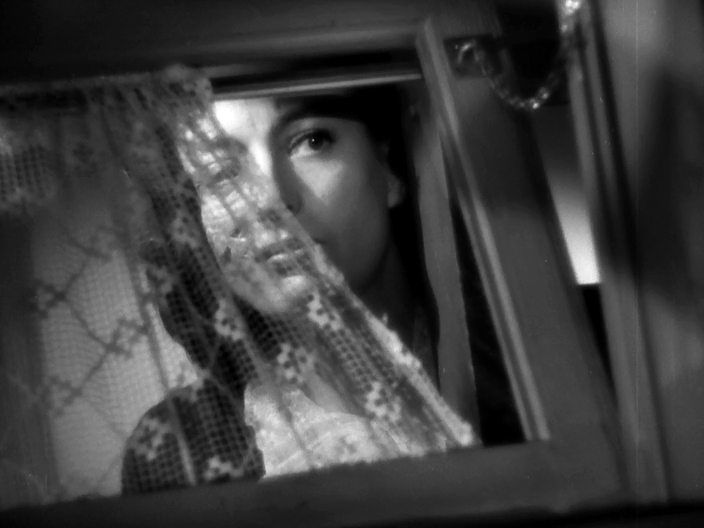
Durante a Era de Ouro dos estúdios, sempre que um artista tinha liberdade para interpretar um personagem diferente do que estava acostumado – em geral depois de muita insistência e luta – o resultado era quase sempre maravilhoso. Por exemplo: quando a MGM deixou Joan Crawford arriscar e interpretar uma personagem marcada – em vez de mais uma mulher glamourosa – em “Um Rosto de Mulher”, ela nos legou uma performance incrível.

During the Studio Era, whenever a performer was allowed to play against type – usually after a lot of insistence and fighting – the result was almost always wonderful. For instance: when MGM let Joan Crawford take a risk and play a scarred character – instead of another glamorous woman – in “A Woman's Face”, she delivered an outstanding performance.


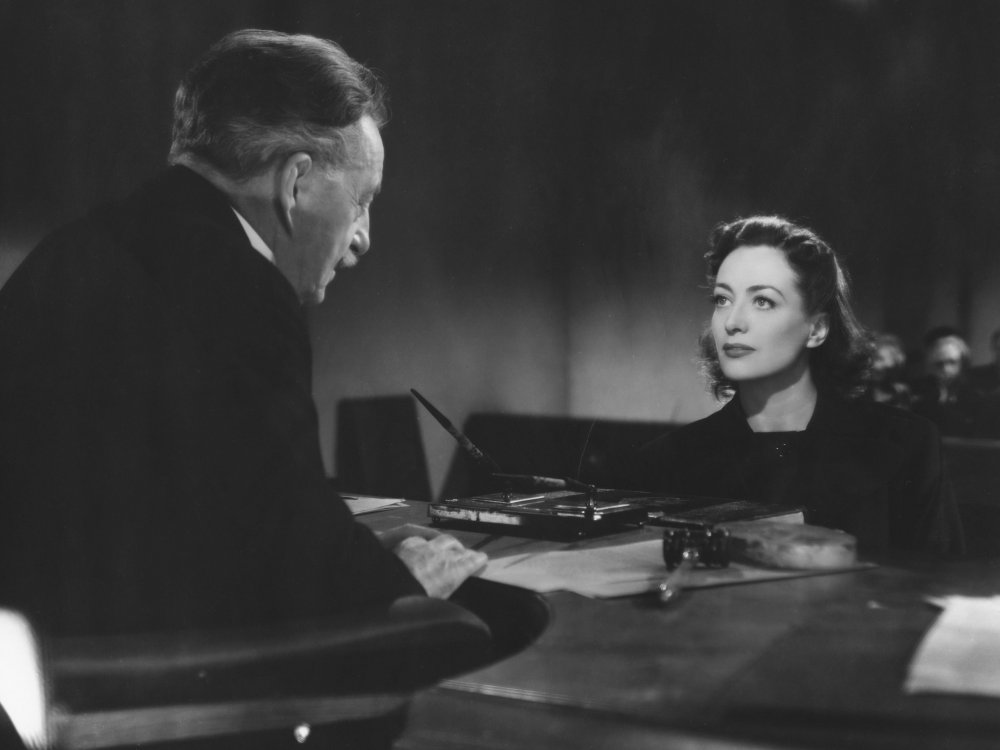
Em um tribunal em Estocolmo, o julgamento de Anna Holm (Joan Crawford) começa. Anna é acusada de assassinato. As testemunhas são chamadas e contam a história em flashback. Anna e seus “amigos” trabalhavam em um restaurante, mas este trabalho era só de fachada: eles atuavam de verdade no ramo da chantagem.

In a tribunal in Stockholm, the judgment of Anna Holm (Joan Crawford) begins. Anna is accused of murder. The witnesses are called and they tell the story in flashback. Anna and her “friends” worked in a restaurant, but this job was just a disguise: they were really active in the blackmail market.


A vítima de chantagem que vai mudar toda a história é Vera Segert (Osa Massen), cujas cartas de amor para um amante foram parar nas mãos erradas. Enquanto negocia com Vera, Anna conhece o esposo dela, Gustaf (Melvyn Douglas), quese interessa pela grande cicatriz que Anna tem no rosto. Gustav então se oferece para operar Anna e remover a cicatriz. Ao mesmo tempo, Anna se apaixona por Torsten Barring (Conrad Veidt), que a quer para executar seu próprio plano maligno.

The blackmail victim that will change everything is Vera Segert (Osa Massen), whose love letters to a lover ended up in wrong hands. While negotiating with Vera, Anna meets her husband, Gustaf (Melvyn Douglas), who gets interested in the big scar Anna has in her face. Gustav then offers to operate Anna and remove the scar. At the same time, Anna falls in love with Torsten Barring (Conrad Veidt), who wants her for an evil plan of his own.


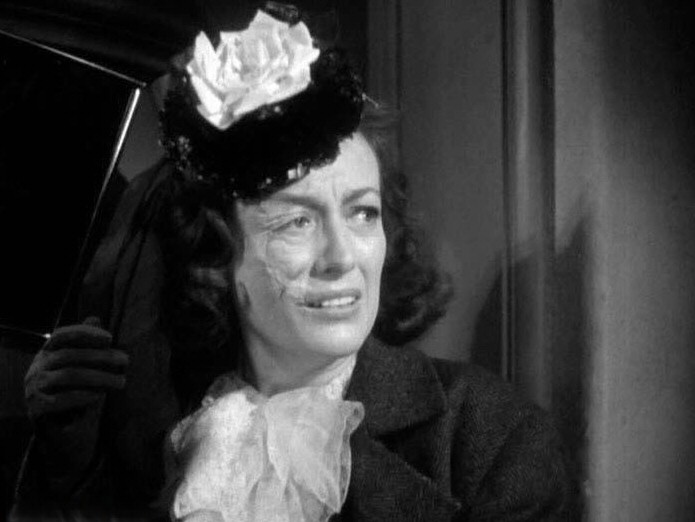
A cicatriz de Anna é decorrente de um incêndio ao qual ela sobreviveu na infância. Por causa da cicatriz, ela não conseguiu arranjar trabalho quando era adolescente e então se tornou criminosa. Anna lidava com canalhas, e em geral desconfiava de todos – não porque eles eram canalhas, mas porque ela achava que eles estavam sempre zombando de seu rosto. Toda a vida e todas as atitudes de Anna foram pautadas em sua cicatriz.

Anna got her scar after she survived a fire in her childhood. Because of the scar, she couldn't find a job as a teen and turned to crime. Anna was dealing with crooks, and she was often suspicious of everybody – not because they were crooks, but because she thought they were always mocking her appearance. All her life and her actions have been dictated by that scar.


“Um Rosto de Mulher” nos leva a refletir sobre as aparências e sobre como julgamos as pessoas pela aparência. Isso vai além das noções de bonito ou feio: aqui estamos falando de uma pessoa marcada, na mesma situação de pessoas que adquiriram uma deficiência depois de um acidente. Eu pensei muito nas pessoas que lutaram em guerras e ficaram para sempre marcadas ou deficientes porque não havia  tratamento ou cirurgia plástica na época. Estas são as vítimas do fogo, de bombas e de ataques com gás que tiveram de conviver com pessoas que não acreditavam que alguém “diferente” merecia respeito.

A Woman's Face” leads us to think about appearances and how we judge people by their looks. This goes way beyond the notions of beautiful and ugly: here we are talking about someone scarred, in the same situation as people who were left handicapped by some accident. I thought a lot about people who had fought in wars and left permanently scarred or disabled because there was no treatment or plastic surgery in that time. These are the victims of fires, bombs, gas attacks, who then had to live among people who didn't see someone “different” as someone worth respecting.


Hollywood, desde sempre, fez remakes de sucessos internacionais, e neste caso não foi diferente. “Um Rosto de Mulher” é o remake de “A Mulher que Vendeu a Alma”, filme sueco de 1938 que revelou ao mundo uma jovem de 23 anos chamada Ingrid Bergman. Enquanto Crawford está bem no remake, não há comparação com a personagem amarga interpretada por Ingrid no original.

Hollywood, since the beginning, remade international successes, and this case was no exception. “A Woman's Face” is the remake of “En kvinnas ansikte”, a Swedish film from 1938 that introduced to the world a young 23-year-old girl named Ingrid Bergman. While Crawford is good in the remake, there is no comparison to the embittered character played by Ingrid in the original.


Em uma única cena no sótão, Conrad Veidt consegue ser incrivelmente assustador e sombrio – muito diferente de quando ele está dançando com Joan Crawford. Como Vera, Osa Massen ou é uma péssima atriz ou uma ótima atriz interpretando uma personagem insuportável. Alguns coadjuvantes brilham, em especial Marjorie Main e Donald Meek.

In a single scene in an attic, Conrad Veidt manages to be incredibly scary and somber – very different from when he's dancing with Joan Crawford. As Vera, Osa Massen is either a very bad actress or a very good one playing an annoying character. Some supporting players shine, in special Marjorie Main and Donald Meek.


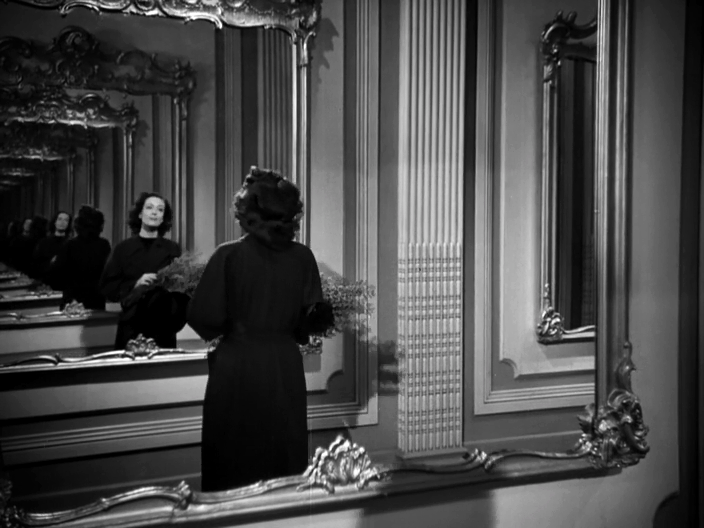
Do ponto de vista técnico, há algumas coisas a se destacar em “Um Rosto de Mulher”. Há uma cena muito interessante com diversos espelhos. Há duas sequências muito tensas e sem música – apenas com os barulhos do ambiente, e esta escolha foi muito eficiente para aumentar o suspense. E, claro, o departamento de maquiagem fez maravilhas não apenas com a criação da cicatriz de Anna, mas também com a maneira como mostram o efeito do fogo no olho dela.

From the technical point of view, there are a few things to point out about “A Woman's Face”. There is a very interesting shot with a lot of mirrors. There are a couple of very tense scenes that have no music – only the noises of the place, and this choice proved to be very effective to increase the suspense. And, of course, the make-up department did wonders not only conceiving Anna's scar, but also showing how the fire also affected her eye.


Antes do doutor Gustaf ver o resultado da cirurgia de Anna, ele diz ter medo de que ela se torne “um belo rosto sem coração”. A mudança no rosto de Anna vem junto com uma mudança no coração, e assim o filme reforça o estereótipo de Hollywood de que tudo que é belo é bondoso. “Um Rosto de Mulher” é um ótimo filme, mas eu gostaria mais dele se a aparência de Anna não tivesse mudado. Afinal, se o Corcunda de Notre Dame podia ser um cara legal mesmo sendo considerado “feio”, por que o mesmo não poderia acontecer com Anna Holm?

Before Dr. Gustaf sees the result of Anna's surgery, he says he's afraid of her ending up having “a beautiful face and no heart”. As Anna's change in her face comes with a change of heart, we see another picture that reinforces the Hollywood stereotype that beautiful equals kind. “A Woman's Face” is a great film, but I'd love it more if the Anna's appearance didn't change. After all, if the Hunchback of Notre Dame could be a great guy even being considered “ugly”, why couldn't Anna Holm be the same?


This is my contribution to the Joan Crawford blogathon, hosted by Pale Writer and Poppity Talks Classic Films.


Related Posts Plugin for WordPress, Blogger...