} Crítica Retrô: Broadway

Tradutor / Translator / Traductor / Übersetzer / Traduttore / Traducteur / 翻訳者 / переводчик

Showing posts with label Broadway. Show all posts

Saturday, June 6, 2020

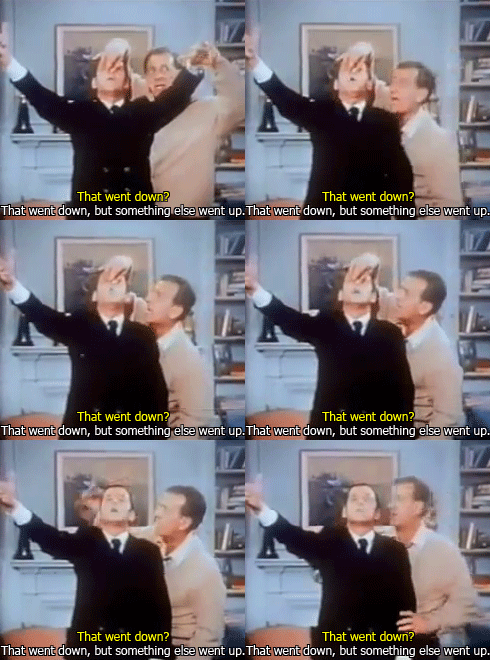
Do Mundo Nada se Leva (1938) / You Can’t Take It With You (1938)

Nenhum homem que tem amigos é um fracasso. Essa é a lição aprendida por James Stewart como George Bailey em “A Felicidade Não se Compra” (1946), de Frank Capra. Entretanto, a mesma lição havia sido ensinada em outro filme de Capra estrelado por James Stewart e Lionel Barrymore: “Do Mundo Nada Se Leva”, um filme que também traz a melhor e mais excêntrica família do cinema.

No man is a failure who has friends. This is the lesson learned by James Stewart as George Bailey in Frank Capra's “It's a Wonderful Life”, from 1946. However, the same lesson had been taught in another Capra movie starring James Stewart and Lionel Barrymore: “You Can't Take It With You”, a film that also brings the best and most eccentric family to ever grace the screen.

O Sr Kirby (Edward Arnold) quer controlar toda a indústria de munição, e para isso ele precisa construir uma fábrica ao redor do negócio de seu concorrente. Entretanto, há um problema: a fábrica não pode ser construída enquanto um terreno não for comprado. O teimoso proprietário deste terreno é um cavalheiro chamado Vanderhof.

Mr Kirby (Edward Arnold) wants to control the whole ammunition industry, and to do this he needs to construct a factory around his competitor’s business. However, there is one problem: the factory can’t be built if one lot isn’t sold. The stubborn owner of this lot is a gentleman called Vanderhof.

Martin Vanderhof (Lionel Barrymore) é uma figura. Em vez de solucionar seu problema sobre o terreno com o senhor Blakely (Clarence Wilson), que trabalhar para o Sr Kirby, ele apenas faz com que o Sr Poppins (Donald Meek), um contador que estava na empresa havia 20 anos, abandone o emprego para seguir seu sonho de construir brinquedos. Vanderhof leva Poppins até sua casa, que é, obviamente, um lar peculiar.

Martin Vanderhof (Lionel Barrymore) is quite a guy. Instead of solving the issue about his lot with Mr Blakely (Clarence Wilson), who works for Mr Kirby, he only makes Mr Poppins (Donald Meek), an accountant who had been working there from 20 years, abandon his job and follow his dream of manufacturing toys. Vanderhof takes Poppins to his house, and, of course, it is a peculiar household.

A filha de Vanderhof, Penny (Spring Byington), é uma dramaturga amadora. Seu genro, Paul Sycamore (Samuel S. Hinds), faz fogos de artifício. Sua neta mais nova, Essie (Ann Miller), sonha em ser bailarina. Enquanto isso não acontece, ela faz bombons para o marido, Ed (Dub Taylor), vender. Alice (Jean Arthur), a neta mais velha, trabalha como datilógrafa.

Vanderhof’s daughter, Penny (Spring Byington), is an amateur playwright. His son-in-law, Paul Sycamore (Samuel S. Hinds), makes fireworks. His younger granddaughter, Essie (Ann Miller), dreams about being a ballerina. While this doesn’t happen, she makes candy for her husband, Ed (Dub Taylor), to sell. Alice (Jean Arthur), the older granddaughter, works as a stenographer.

E aqui as coisas ficam mais interessantes: Alice trabalha como datilógrafa no escritório de Tony Kirby Jr (James Stewart). Eles estão apaixonados e Tony pede Alice em casamento – sem saber que o avô dela é dono do terreno que o pai dele tanto cobiça.

And here things get more interesting: Alice works as a stenographer at the office that belongs to Tony Kirby Jr (James Stewart). They are in love and Tony asks Alice to marry him – without knowing that her grandfather owns the lot his father wants to buy so badly.

Vanderhof tem um motivo sentimental para não vender a casa: as memórias de sua falecida esposa ainda estão lá, em cada canto. Ele conta isso a Alice em uma cena comovente. A cena deve ter sido particularmente difícil de gravar porque Lionel havia perdido a esposa na véspera de Natal de 1936.

Vanderhof has a good sentimental reason to not sell the house: the memories about his late wife are still there, in many corners. He tells this to Alice in a very moving scene. The scene must have been particularly difficult to shoot because Lionel had just lost his wife on Christmas Eve, 1936.

Vanderhof e sua família só fazem o que gostam. Se eles estão se divertindo, estão felizes. Não importa se eles não estão enriquecendo nem seguindo regras da sociedade: eles simplesmente VIVEM intensamente. Eles entendem que a vida não é uma lista de tarefas que temos de completar de todas as maneiras – a vida é outra coisa. Talvez um presente, uma bênção ou mesmo uma maldição, mas com certeza algo tem de ser feito com ela. Então por que não viver uma vida feliz?

Vanderhof and his family only do what pleases them. As long as they’re having fun, they’re happy. It doesn’t matter if they aren’t getting rich nor following societal rules: they simply LIVE to the fullest. They understand that life isn’t a to-do list that we must complete no matter what – life is something else. Maybe a gift, maybe a blessing, maybe a curse, but certainly something has to be done with it. So why not live a happy life?

Tony fica fascinado com a maneira como a família Vanderhof-Sycamore vive. Ele diz que é preciso muita coragem para ignorar as expectativas dos outros e só fazer o que você gosta. E ele se enche de coragem para levar sua família para jantar na casa de Alice não no dia combinado, mas um dia antes para pegar todos à vontade em casa. O problema é que todos estão muito à vontade – e isso inclui o senhor DePinna (Halliwell Hobbes), que também faz fogos de artifício mas no momento está posando para uma pintura, e Kolenkhov (Mischa Auer), o professor russo de balé de Essie que acha que tudo é um lixo. O que realmente será um lixo será a relação do relaxado Vanderhof e do ambicioso Sr Kirby.

Tony is marveled at how the Vanderhof-Sycamore family lives. He says it takes a lot of courage to ignore everybody else’s expectation and just do what makes you happy. And he is full of courage when he takes his family to have dinner at Alice's house not on the scheduled day, but one day earlier to catch everybody comfortable at home. The problem is that everybody is too comfortable – and this includes Mr DePinna (Halliwell Hobbes), who also makes fireworks but is currently posing for a painting, and Kolenkhov (Mischa Auer), Essie's Russian ballet teacher who thinks everything stinks. What will really stink is the relationship between fun-loving Mr Vanderhof and money-hungry Mr Kirby.

“Do Mundo Nada se Leva” era originalmente uma peça, escrita por George S. Kaufman e Moss Hart. Vanderhof foi interpretado, na peça, por Henry Travers, que mais tarde ensinou uma lição de amizade para George Bailey. A peça de sucesso ganhou o Prêmio Pulitzer e deu origem ao filme, que ganhou dois Oscars: Melhor Diretor e Filme. “Do Mundo Nada se Leva” é a primeira de apenas duas peças que ganharam o Pulitzer e mais tarde o Oscar de Melhor Filme – a outra é “Conduzindo Miss Daisy”.

 “You Can't Take It With You” was originally a play, written by George S. Kaufman and Moss Hart. Vanderhof was played, in the play, by Henry Travers, who later taught George Bailey a lesson in friendship. The successful play won the Pulitzer Prize and originated the film, that went on to win two Oscars: Best Director and Best Picture. “You Can't Take It With You” is one of only two plays to win both the Pulitzer and later the Best Picture Oscar – the other one is “Driving Miss Daisy”.

A Peça / The Play
A Peça / The Play

Robert Riskin, colaborador constante de Frank Capra, adaptou a peça para o cinema e adicionou seu toque inspirador – na verdade, muito do que mais tarde foi considerado “Capracorn” veio da mente de Riskin, como a mensagem alegre, o conflito da cobiça contra a ingenuidade, o homem comum contra o sistema e muito mais. É possível encontrar várias semelhanças entre “Do Mundo Nada se Leva” e outros filmes de Capra e Riskin do final dos anos 30, como “O Galante Mr Deeds” (1936) e “A Mulher Faz o Homem” (1939), indo da Cinderela em fuga até a mensagem de que dinheiro não traz felicidade.

Capra's constant collaborator Robert Riskin adapted the play to the screen and added his inspirational touch – in fact, much of what was later considered “Capracorn” came from Riskin's mind, like the feel-good message, the greed versus naïveté conflict, the common man against the system and many more. You can find many similarities between “You Can't Take It With You” and other Capra-Riskin films of the late 1930s, like “Mr Deeds Comes to Town” (1936) and “Mr Smith Goes to Washington” (1939), from the runaway Cinderella to the lesson that money doesn't buy happiness.

Algumas mudanças foram feitas na peça, em especial no terceiro ato. O personagem Poppins não existia, nem o conflito principal do Sr Kirby querer comprar a casa de Vanderhof. Algumas cenas com muitos extras foram adicionadas, num restaurante, fora da casa de Vanderhof e numa cadeia, e este último cenário trouxe uma deliciosa participação de Harry Davenport como um juiz.

Some changes were made in the play, in special in the third act. The character Mr Poppins didn't exist, nor the main conflict of Mr Kirby wanting to buy the Vanderhof house. Some crowd scenes were added, in a restaurant, outside the Vanderhof house and in a jail, and this last set allowed for a delightful appearance by Harry Davenport as a judge.


Capra, o elenco e seus autógrafos / Capra, the cast and their autographs

Eu apenas considero de mau gosto a maneira como os personagens negros são tratados, em especial Donald (Eddie 'Rochester' Anderson), namorado de Rheba – Rheba (Lillian Yarbo) é a empregada da família. Donald é preguiçoso e não muito inteligente, e na oficina ele trabalha tendo como ajudante um corvo chamado... Jim Crow – em alusão às leis racistas de segregação da época. Aff.

I only find distasteful the way black characters are treated, in special Donald (Eddie 'Rochester' Anderson), Rheba’s boyfriend – Rheba (Lillian Yarbo) is the maid of the house. Donald is portrayed as lazy and not very bright, and in the workshop he works assisted by a crow named… Jim Crow. Ugh.

Embora “Do Mundo Nada se Leva” seja um filme adorável e divertido, as gravações não foram fáceis. Robert Riskin começou a acreditar que Capra estava levando crédito pelo trabalho dele, e o primeiro e único filme de Riskin como diretor havia fracassado recentemente. Lionel Barrymore, sofrendo com artrite e uma bacia recém-quebrada, estava usando muletas e tomando remédios para dor. Ann Miller, com apenas 15 anos, achava difícil fazer suas cenas de balé e constantemente chorava no set.

Although “You Can't Take It With You” is a lovely and funny film, shooting wasn't so easy. Robert Riskin started to believe that Capra was taking credit for his work, and Riskin's first and only film as a director had recently bombed. Lionel Barrymore, suffering from arthritis and a broken hip, was using crutches and taking painkillers. Ann Miller, at only 15 found it difficult to do her ballet scenes and constantly cried on set.

E, mesmo assim, nenhuma destas dificuldades transparece no filme. Talvez hoje, mais de 80 anos após a estreia, “Do Mundo Nada se Leva” traga uma mensagem difícil demais de seguir – você consegue se imaginar vivendo para seus hobbies? - mas ao mesmo tempo nos faz sorrir e acreditar que, com algumas palavras sábias e uma gaita, tudo é possível.

And, yet, none of those difficulties appear when we watch the film. Maybe now, over 80 years after it was released, “You Can't Take It With You” brings a message too difficult to follow  - can you imagine living for your hobbies? - but at the same time it puts a smile on our faces and makes us believe that, with a few wise words and a harmonica, anything is possible.

This is my contribution to the Third Broadway Bound blogathon, hosted by Rebecca at Taking Up Room.

Monday, June 3, 2019

O Homem de La Mancha (1972) / Man of La Mancha (1972)


Recentemente, durante a quinta temporada da comédia da Netflix “Grace and Frankie”, Robert (interpretado por Martin Sheen) fez parte de um grupo de teatro gay que decidiu produzir o musical “O Homem de La Mancha”. Robert queria o papel de Dom Quixote, mas acabou sendo Sancho. Em uma cena primordial na temporada, entretanto, Robert canta de maneira magnífica a canção mais famosa do musical, “The Impossible Dream”.

Recently, during the fifth season of the Netflix sitcom “Grace and Frankie”, Robert (played by Martin Sheen) was part of a gay theater group that decided to produce the musical “Man of La Mancha”. Robert wanted the role of Don Quijote, but he ended up as Sancho. In a key scene of the season, however, Robert sings beautifully the best known song of the musical, “The Impossible Dream”.


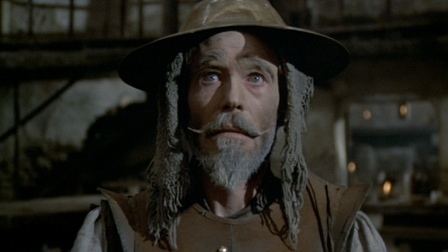
Esta trama me fez pensar no filme de 1972, “O Homem de La Mancha”, que eu vi e amei durante minha fase de particular interesse por Peter O’Toole, há mais de sete anos. Eu soube que era hora de revisitar este filme querido estrelado por um dos meus atores favoritos, que ainda vivia quando eu vi o filme pela primeira vez.

This whole plot made me think of the 1972 film “Man of La Mancha”, one that I watched and loved back in my Peter O’Toole phase, over seven years ago. I knew it was time to revisit this old favorite starring an old and now gone favorite.


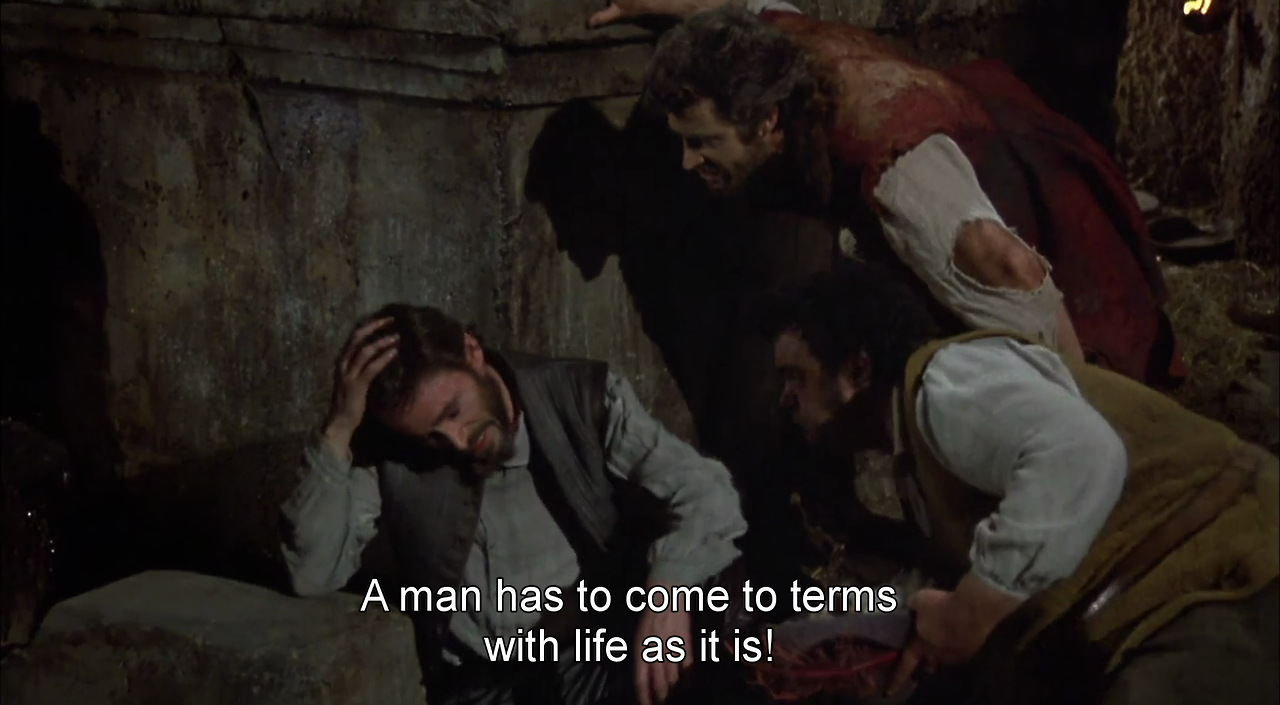
“O Homem de La Mancha” conta uma história dentro de outra. No começo, o escritor e ator Miguel de Cervantes (Peter O’Toole) e seu assistente (James Coco) são presos pela Inquisição durante uma peça. Na prisão, eles encontram todo tipo de gente, todos dispostos a incomodá-los e a queimar os manuscritos de Cervantes. Para salvar seus manuscritos, Cervantes aceita ser julgado por um tribunal fajuto, e assim conta a história de Dom Quixote.

“Man of La Mancha” tells a story within a story. In the beginning, writer and actor Miguel de Cervantes (Peter O’Toole) and his assistant (James Coco) are arrested by the Inquisition as they’re doing a play. Once in the prison, they find all kinds of people, and all willing to bother them and burn Cervantes’s manuscripts. In order to save his manuscripts, Cervantes accepts to be judged by a mock trial and thus tells the story of Don Quijote.


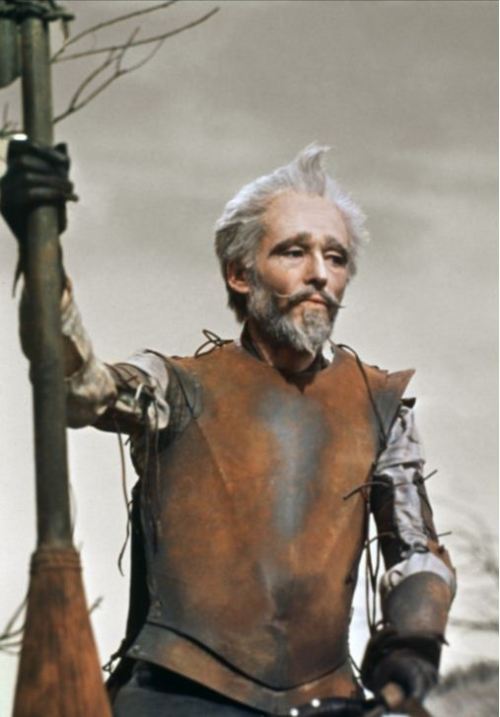
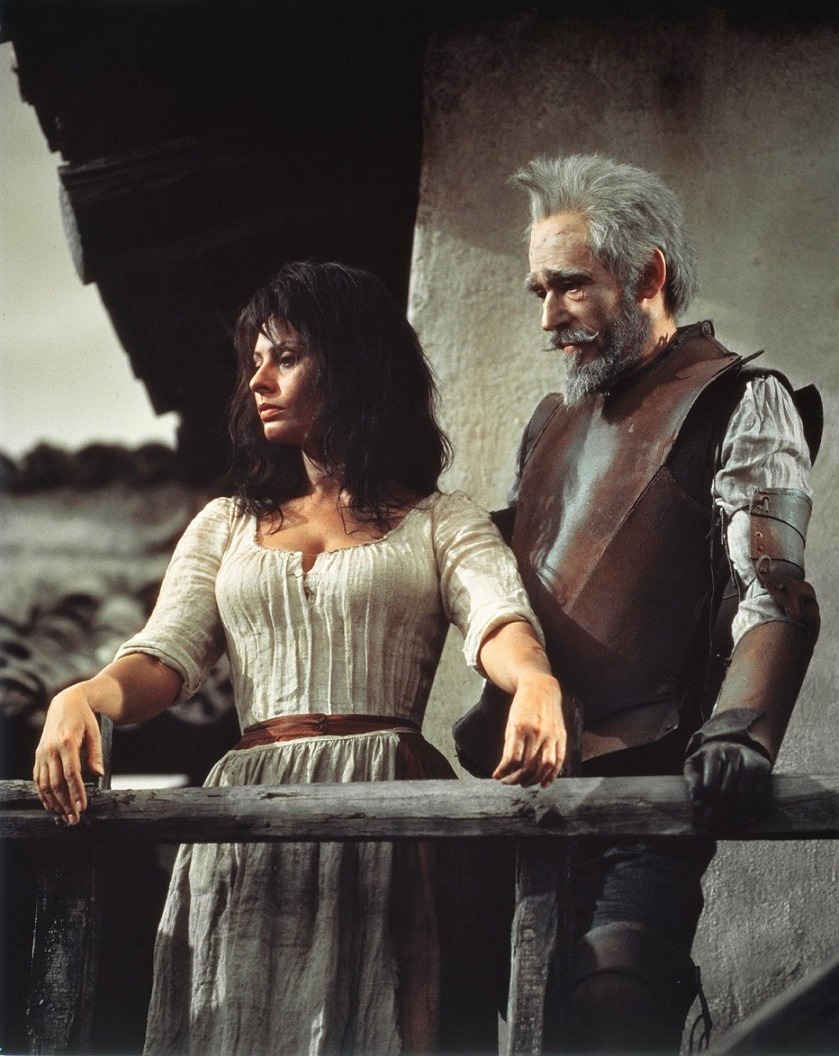
Esta é uma história muito conhecida. Alonso Quijana era um homem velho que amava ler. Ele lei tantas histórias de aventuras que ficou convencido de que ele era um cavaleiro chamado Dom Quixote de La Mancha (novamente Peter O’Toole). Ele convence seu vizinho Sancho Pança (de novo James Coco) a sair em missão ao seu lado. Dom Quixote confunde moinhos de vento com gigantes, pobres estalagens com castelos, uma tigela de barbear com um capacete dourado e a prostituta Aldonza (Sophia Loren) com a donzela Dulcinea.

This is a well known story. Alonso Quijana was an old man who loved to read. He read so much adventure stories that he was convinced he was himself a knight called Don Quijote de La Mancha (once again, Peter O’Toole). He convinces his neighbor Sancho Panza (again James Coco) to go with him and be his sidekick. Don Quijote confuses windmills with giants, poor inns with castles, a shaving pot with a golden helmet and the whore Aldonza (Sophia Loren) with the damsel Dulcinea.


Enquanto isso, a sobrinha de Alonso Quijana, Antonia (Julie Gregg) convence o noivo dela, Sanson Carrasco (John Castle) a ir atrás do tio e fazê-lo olhar para o espelho da realidade - porque Alonso já se tornou motivo de chacota na cidade. Ela diz que “só está pensando nele”, mas sabemos que ela está mais preocupada com a sua própria reputação do que com o tio louco.

Meanwhile, Alonso Quijana’s niece Antonia (Julie Gregg) convinces her fiancée, Sanson Carrasco (John Castle) to go after her uncle and try to makehim look at the mirror of reality - because Alonso has already become laugh stock for the town. She may say she is “only thinking of him”, but we know she is worried more about her reputation than with her crazy uncle.


Miguel de Cervantes nunca considerou Dom Quixote como sua melhor obra. Mesmo assim, ela é a mais lembrada atualmente, e foi o primeiro de seus escritos a ser adaptado para as telas em um curta-metragem francês de 1903. O musical, baseado em apenas uma parte da novela Dom Quixote, estreou na Broadway em 1965 – mesmo tendo sido gerado como uma peça de televisão! O autor Don Wasserman foi chamado pelo diretor musical Albert Marre para transformar sua malsucedida obra de televisão em um musical... e assim a história foi feita.

Miguel de Cervantes never considered Don Quijote as his best work. Nevertheless, it is now his best remembered, and it was the very first of his writings to be adapted to the screen in a 1903 French short film. The musical, based on only a part of the Don Quijote novel, opened on Broadway in 1965 - even though it started as a non-musical teleplay! The writer Don Wasserman was approached by musical director Albert Marre to turn the unsuccessful teleplay into a stage musical... and history was made.


“O Homem de La Mancha, o musical, ganhou cinco prêmios Tony, incluindo um de Melhor Musical. Logo Hollywood se interessou, e Wasserman foi contratado para escrever o roteiro. Marre foi contratado para dirigir, mas foi demitido logo depois por não ter experiência no cinema. No final, Arthur Hiller dirigiu o filme. Obviamente, muitas falas e músicas inteiras tiveram de ser cortadas da peça – e o filme ainda acabou tendo mais de duas horas de duração!

“Man of La Mancha”, the musical, won five Tonys, including one for Best Musical. Soon Hollywood was interested, and Wasserman was hired to write the screenplay. Marre was hired to direct, but fired little after due to his lack of film experience. In the end, Arthur Hiller directed the film. Of course, many lines and whole songs had to be cut for the movie - that still managed to run over two hours!


Kirk Douglas tentou conseguir o papel principal, mas Peter O'Toole foi escolhido para ser Cervantes / Dom Quixote. O'Toole gravou as músicas mas, ao perceber que não cantava bem, procurou alguém para dublá-lo, e assim encontrou o cantor Simon Gilbert. Mesmo sem cantar, O'Toole trouxe emoção para a personagem, o que foi essencial. Sophia Loren cantou suas canções. James Coco está ótimo e divertido, como um bom Sancho deve ser. O filme foi gravado nos estúdios de Dino di Laurentiis em Roma.

As for the leads, Kirk Douglas actively campaigned for the role, but Peter O’Toole ended up as Cervantes / Quijote. O’Toole recorded his songs but, seeing his singing wasn’t good, looked for someone to dub him, and ended up with Simon Gilbert. Even without singing, O’Toole brought a lot of emotion to the character, which was essential. Sophia Loren did her own singing. James Coco is as great and funny as Sancho should be. The film was shot at the Dino di Laurentiis studios in Rome.


Todas as transições da prisão para os cenários da história de Dom Quixote são fantásticas – se você piscar, perderá um grande trabalho de edição. Há também uma cena organizada como se os personagens fossem peças em um jogo de xadrez – é brilhante. O estilo do filme é rústico, do interior mais pobre. Sophia Loren queria que o filme fosse gravado em Andaluzia, na terra de Cervantes, entretanto eu acredito que o estilo rústico foi determinante para evocar o século XVI.

All the transitions from the prison to the scenarios of the Quijote story and back are fantastic - you blink and you’ll miss the great editing work. There is also a scene played as if the characters were pieces in a chess game and it’s brilliant. The overall look of the film is raw, from the poor countryside. Even though Sophia Loren wished to film in the beautiful Andalucía, Cervantes’s home, I believe the rustic look made the film evoke the 16th century well.


O principal legado de “O Homem de La Mancha” é, sem dúvida, a música “The Impossible Dream”. Gravado por cantores e cantoras – incluindo Frank Sinatra e Cher – e com versões em diversas línguas, hoje a canção pode ser considerada mais famosa do que a própria peça.

The main legacy of “Man of La Mancha” is, without a doubt, the song “The Impossible Dream”. Recorded by both male and female voices - including Frank Sinatra and Cher - and with versions in several languages, now the song can be considered more famous than the play itself.


Como curiosidade, uma vez, para uma performance da peça para a caridade, Martin Sheen interpretou o protagonista de “O Homem de La Mancha”. E assim voltamos ao começo do artigo, da mesma forma como o filme volta ao começo de suas histórias concatenadas.

As a curiosity, once, for a charity performance of the play, Martin Sheen played the lead of “Man of La Mancha”. And thus we come full circle with this post, just like the film comes full circle with its intertwined stories.


No começo do falso julgamento, Cervantes é acusado de ser um idealista quando ele diz que o mundo é um lugar ruim, e que a realidade é inferior à ficção. Alonso Quijana estava tão insatisfeito com a realidade que preferiu viver uma vida de ilusão. Eu já pensei que ficção e ilusão são melhores e muito mais interessantes que as lutas e os absurdos da vida real. Cervantes pode ter tentado nos ensinar a lição de que não podemos confundir realidade e ficção, mas com “O Homem de La Mancha” temos uma mensagem mais poderosa: a ficção existe para nos inspirar a enfrentar a vida e, às vezes, podemos trocar uma pela outra – mesmo se isso soar como um sonho impossível.

In the beginning of the mock trial, Cervantes is accused of being a idealist when he says the world is a bad place, and reality is inferior to fiction. Alonso Quijana was so dissatisfied with reality that he preferred to live a life of illusion. I’ve felt that fiction and illusion are better and way more interesting than the struggles and absurd of real life. Cervantes might have wanted to teach us the lesson that we can’t mistake fiction for reality, but with “Man of La Mancha” we get a more powerful message: fiction exists to inspire us to face real life, and sometimes, we can trade one for the other - even if it sounds like an impossible dream.

This is my contribution to the Second Annual Broadway Bound blogathon, hosted by Rebecca at Taking Up Room.

Sunday, October 14, 2018

O legado de “Um Estranho Casal” / The lasting legacy of “The Odd Couple”


“Você é um Felix ou um Oscar?” Para algumas pessoas, esta questão não tem significado. Mas, para milhões de pessoas que conhecem a obra de Neil Simon, ela significa muito. Responder se você é Oscar ou Felix é como responder se sua personalidade é Tipo A ou Tipo B – diz tudo sobre você. Sim, é uma maneira reducionista de classificar as pessoas – em apenas dois grupos – mas se havia alguém capaz de criar personagens que representam todo tipo de gente, este alguém era Neil Simon.

Are you a Felix or an Oscar?” For some people, this question means nothing. But, for millions of people familiar with Neil Simon's work, it means everything. Answering if you are Oscar or Felix is like answering if you have Type A or Type B personality – it says all that is needed to know about you. Yes, it is a reductive way to classify people - in only two groups - but if there was someone who could create characters to represent all kinds of people, it was Neil Simon.
 
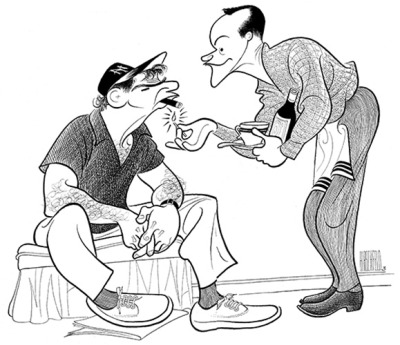
The Odd Couple by Al Hirschfeld
A peça “Um Estranho Casal” estreou em 1965. A inspiração para a peça é controversa. O jornal The Washington Post cita o divórcio do roteirista de TV Adam Bernstein, enquanto Mel Brooks alega que foi o seu primeiro divórcio que inspirou Neil Simon a escrever a peça. De qualquer maneira, aqui está a primeira informação importante sobre a peça: ela trata da vida após o divórcio – uma prática que só se tornou socialmente aceitável poucas décadas atrás.

The play “The Odd Couple” premiered in 1965. The inspiration for the play is controversial, however. The Washington Post cites the divorce of TV writer Adam Bernstein, while Mel Brooks alleges that it was his first divorce that inspired Neil Simon to write the play. Anyway, here it is the first important thing about the play: it was about life after divorce – a practice that only became socially accepted a few decades ago.
 
Neil Simon
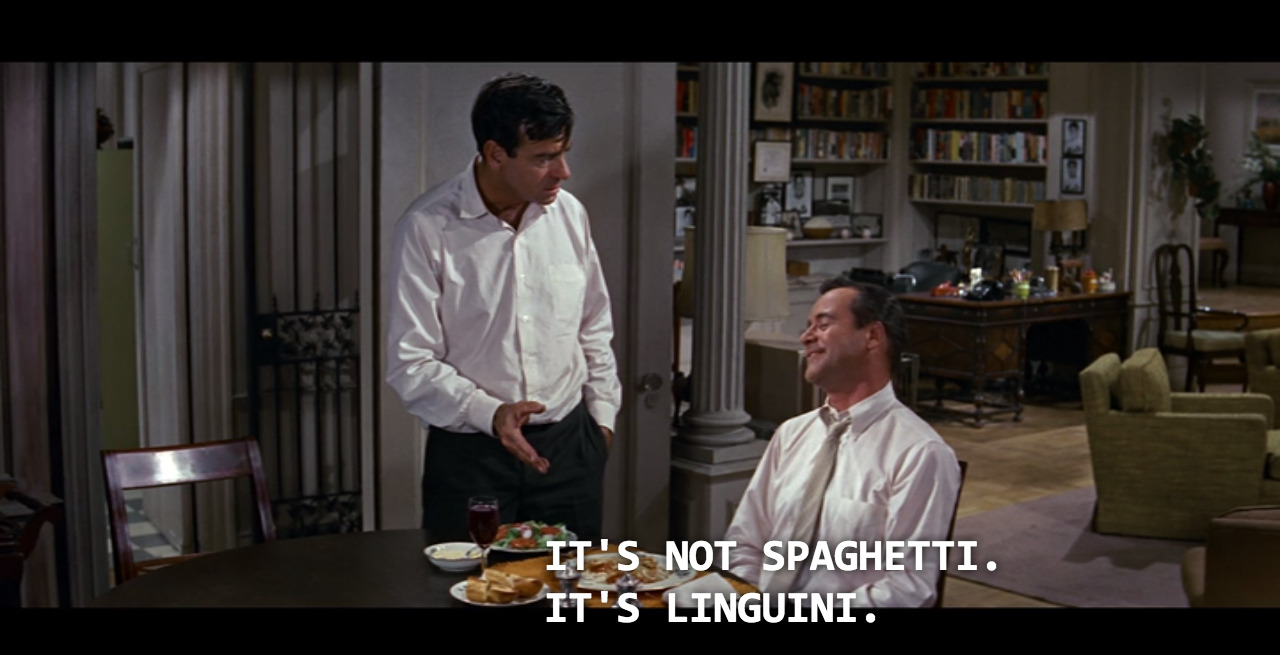
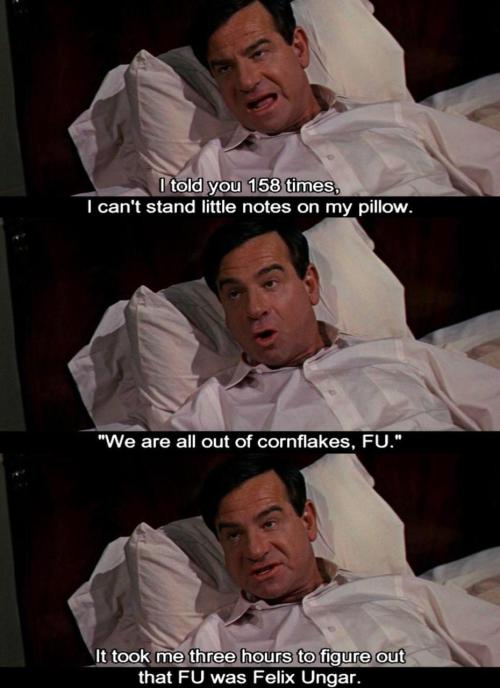
A história é incrivelmente simples: Felix Ungar, um jornalista, tem de sair de casa durante o processo de divórcio e sua única opção é ficar no apartamento do amigo Oscar Madison, um jornalista esportivo divorciado. O problema é que Felix e Oscar são completamente diferentes. Para Felix, o copo sempre está meio vazio, e há sempre algo que precisa ser limpo. Para Oscar, o copo está meio cheio, e não há problema em viver em meio a um pouco de caos.

The plot is incredibly simple: Felix Ungar, a newswriter, gets thrown out of his house by his wife and his only option is to go live with his friend Oscar Madison, a divorced sportswriter. The problem is that Felix and Oscar have completely different approaches to life. For Felix, the glass is always half empty, and there is also something to be cleaned. For Oscar, the glass is half full and there is no problem about living among some chaos.
 
Art Carney and Walter Matthau on Broadway
A peça ganhou quatro prêmios Tony, e os direitos de adaptação foram comprados pela Paramount. Neil Simon escreveu o roteiro, Walter Matthau voltou a interpretar Oscar após ganhar um Tony por sua performance, e Jack Lemmon veio interpretar Felix – que era feito por Art Carney no teatro. O filme foi dirigido por Gene Sacks, enquanto a peça foi dirigida por Mike Nichols.

The play won four Tonys, and its adaptation rights were bought by Paramount. Simon adapted the play into an screenplay, Walter Matthau reprised his Tony-winning role as Oscar and Jack Lemmon was brought to play Felix – it was Art Carney who originally played the character on the stage. The film was directed by Gene Sacks – while the play was directed by Mike Nichols.


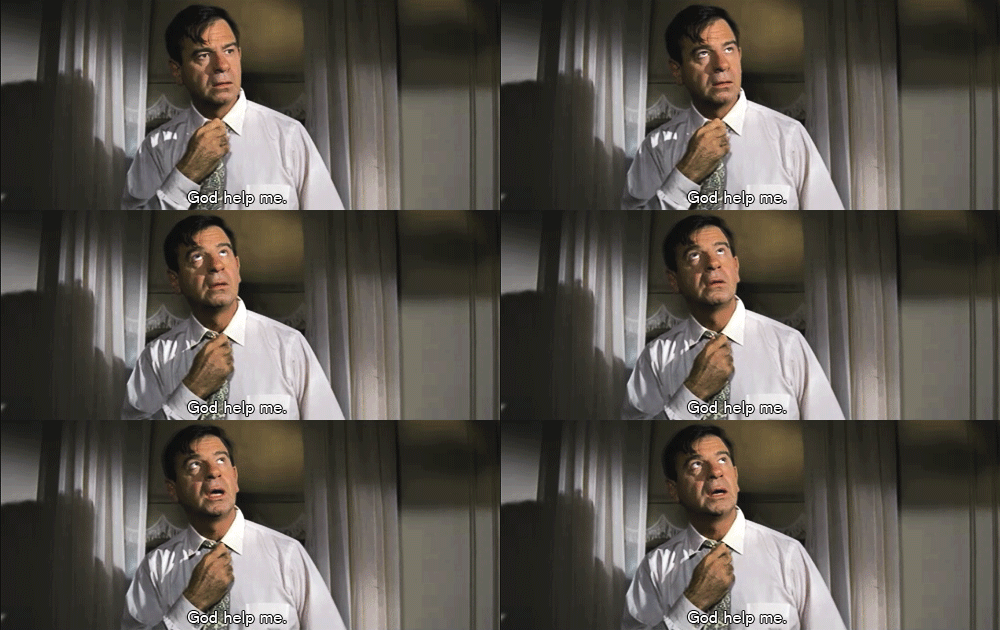
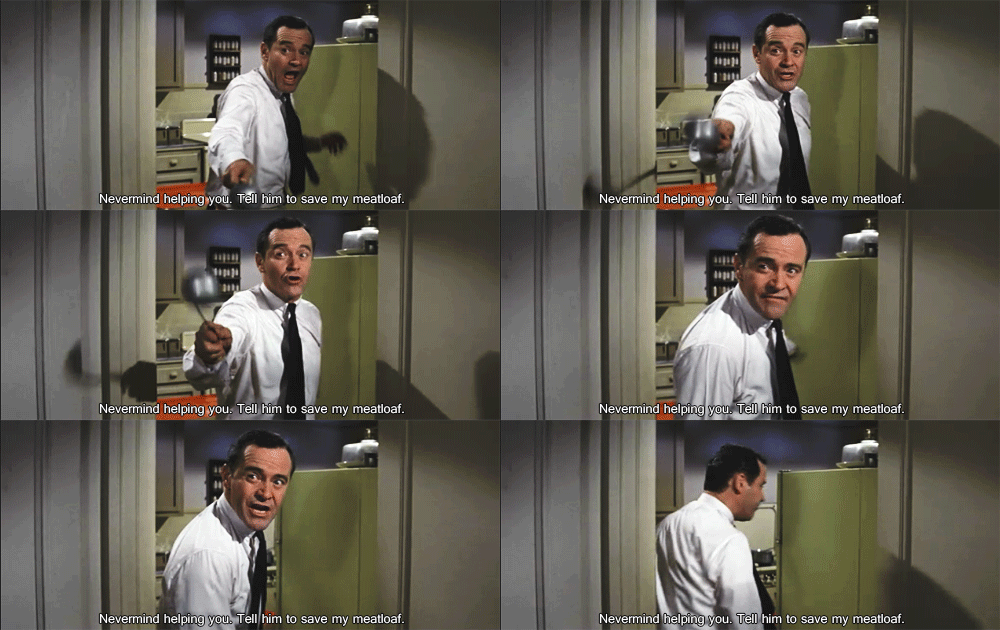
A adição de Jack Lemmon foi maravilhosa. Felix é meu personagem favorito em “Um Estranho Casal”, e ele é a estrela das cenas que se passam fora do apartamento – cenas estas que foram escritas exclusivamente para o filme. Felix é neurótico e maluco por limpeza, e seu comportamento enlouquece Oscar. Seja durante um jogo de pôquer entre amigos ou durante um encontro com as irmãs Pigeon, Felix mostra que não se esqueceu da esposa, e que sua obsessão com limpeza pode ser uma tentativa de colocar as coisas em ordem em sua vida novamente.

The addition of Jack Lemmon was a marvelous one. Felix is my favorite of “The Odd Couple”, and he is the star of the scenes outside the apartment – scenes that were written exclusively for the film. Felix  is neurotic and crazy about tidiness, and his behavior drives Oscar insane. May it be during poker nights with their mutual friends or during a double date with the peculiar Pigeon sisters, Felix shows that he hasn't forgotten his wife, and his cleaning obsession may be a way of trying to put things back together in his life.


A próxima parada de “Um Estranho Casal” era a televisão, com Tony Randall como Felix e Jack Klugman como Oscar. Esta versão durou cinco temporadas, e só na última Neil Simon expressou aprovação frente a adaptação. Em 1982, a sitcom foi refeita, com Ron Glass como Felix e Demond Wilson como Oscar. E, finalmente, em 2015, houve uma nova versão para a TV, com Thomas Lennon como Felix e Matthew Perry como Oscar.

“The Odd Couple” was headed next for television, with Tony Randall as Felix and Jack Klugman as Oscar. This iteration lasted five seasons, and only by the last one Neil Simon expressed approval of the adaptation. In 1982, the sitcom was remade, with Ron Glass as Felix and Demond Wilson as Oscar. And, finally, in 2015 there was a new TV version, with Thomas Lennon as Felix and Matthew Perry as Oscar.
 
1970s
1980s
2010s
Quando a sitcom de 1975 acabou, a coisa mais psicodélica e típica dos anos 70 aconteceu: uma adaptação animada de “Um Estranho Casal”. Em “The Oddball Couple”, o arrumadinho Spiffy, um gato, e o bagunceiro Fleabag, um cão, dividem a casa, o carro e o escritório – eles dividem tudo tão perfeitamente que estas coisas todas são metade arrumadas e metade bagunçadas. Obviamente, eles não eram divorciados, apenas colegas de quarto. A série teve 16 episódios de meia hora cada.

As the 1975 sitcom ended, the most psychedelic and 1970s thing possible happened: a CARTOON adaptation of “The Odd Couple”. In “The Oddball Couple”, the orderly Spiffy, a cat, and the messy Fleabag, a dog, share a house, a car and an office – they share those things so perfectly that exactly half of each of these is neat, and half is messy. Of course, they were not divorced, only roommates. The cartoon had 16 half-hour episodes.


Neil Simon também fez algo para as garotas. Em 1985, ele escreveu “The Female Odd Couple”, que tinha basicamente a mesma história, mas com a ordeira Florence Ungar e a desleixada Olive Madison. Na Broadway, Florence foi interpretada por Sally Struthers e Olive por Rita Moreno. As irmãs Pigeon foram substituídas pelos irmãos Costazuela, e um deles foi interpretado por Tony Shalhoub, em sua estreia na Broadway. A peça encerrou após 295 performances e foi remontada algumas vezes.

Neil Simon also had something for the girls in store. In 1985, he wrote “The Female Odd Couple”, which had basically the same plot, but now starring tidy Florence Ungar and sloppy Olive Madison. On Broadway, Florence was played by Sally Struthers and Olive by Rita Moreno. The Pigeon sisters were  replaced by the Costazuela brothers, and one of them was played by Tony Shalhoub in his Broadway debut. The play closed after 295 performances and was revived a few times.


Não há dúvida de que a versão com Lemmon e Matthau é a definitiva, e a mais amada pelos fãs. É por isso que foi feita uma sequência, trinta anos após a estreia do filme original, e o roteiro foi escrito pelo próprio Neil Simon – diz-se que o autor trabalhou neste roteiro por dez anos.

There is no doubt that the Lemmon / Matthau version is the definitive one, and the most cherished by the fans of the story. That's why they even made a sequel, thirty years after the original premiered, and the screenplay was written by Neil Simon himself – who is said to have worked ten years on this sequel idea.


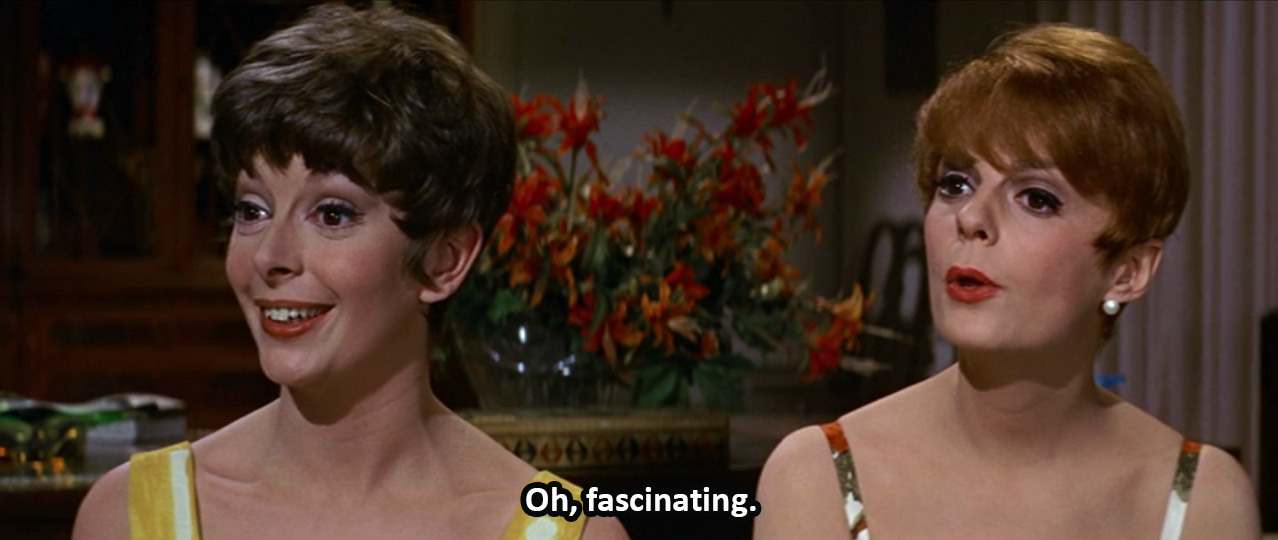
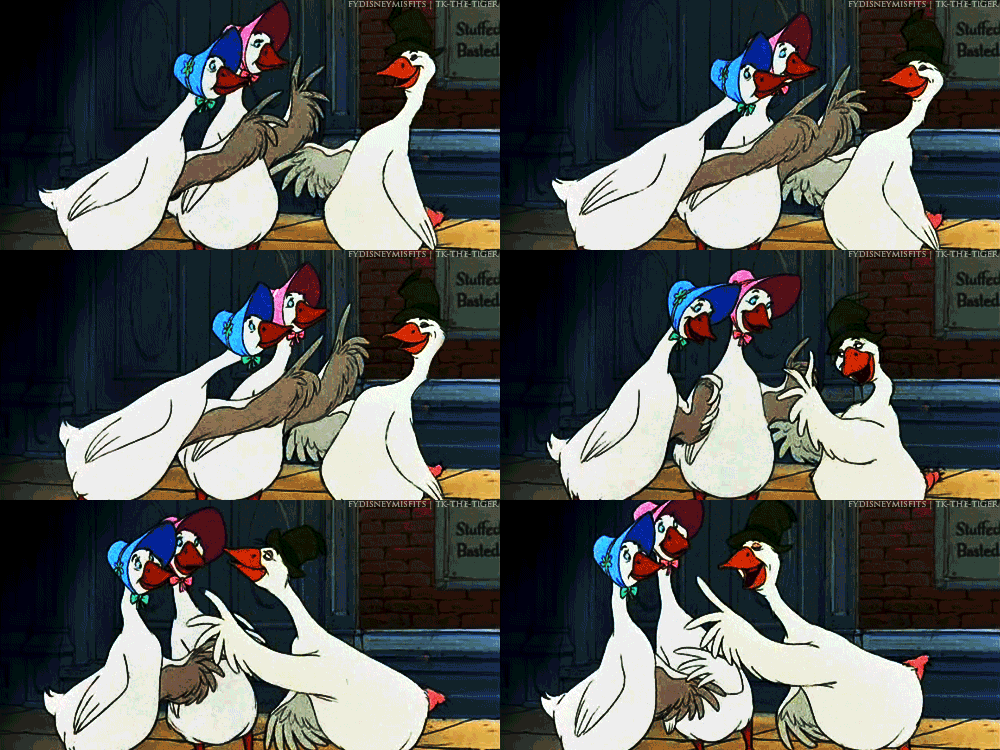
Duas queridas do público são as irmãs Pigeon. No filme de 1968 elas são interpretadas por Monica Evans (Cecily) e Carole Shelley (Gwendolyn), ambas vindas da montagem original da Broadway. Elas voltaram a trabalhar juntas na sitcom de “Um Estranho Casal” em 1970 e depois dublaram ambas personagens animadas em “Aristogatas” (1970) – as irmãs gansas Abigail e Amelia – e em “Robin Hood” (1973) – com Monica fazendo Maid Marian e Carole Lady Cluck.

Two favorites of the public are the Pigeon sisters. In the 1968 movie they are played by Monica Evans (Cecily) and Carole Shelley (Gwendolyn), both coming from the original Broadway production. They worked together again in the sitcom “The Odd  Couple” in 1970 and then voicing animated characters in “The Aristocats” (1970) – the geese sisters Abigail and Amelia – and in “Robin Hood” (1973) – with Monica Evans voicing Maid Marian and Carole Shelley voicing Lady Cluck.


É interessante notar que Neil Simon escolheu chamar os amigos que vivem juntos de “casal”. Assim como um casal, eles dividem o mesmo teto. E, como um casal, Felix e Oscar discutem, brigam, discordam, mas também aprendem um com o outro, e mudam um ao outro. É por isso que a história ainda nos toca: todos nós temos um pouco de Felix e de Oscar dentro de nós.

It's interesting to notice how Neil Simon chose to call the two friends who live together a “couple”. Like a couple, they do live under the same roof. And, like a couple, Felix and Oscar argue, fight, disagree, but they also learn with each other, and change each other. That's why we the story still resonates with us: we all have a little of both Felix and Oscar in us.

This is my contribution to the Neil Simon blogathon, hosted by Paddy and Rick at Caftan Woman and Wide Screen World.


Friday, December 16, 2016

O quinto irmão Marx: Margaret Dumont

The fifth Marx brother: Margaret Dumont

Equilíbrio.

Balance.

Equilíbrio é o que todos nós devemos tentar alcançar na vida, e também na arte. A vida – e a arte – sem equilíbrio é apenas exagero, e isso nunca é bom. Quem vive uma vida sem equilíbrio é, mais cedo ou mais tarde, punido pela justiça ou pelo karma. Arte sem equilíbrio não é boa de se ver,  é rejeitada pelo público, é em geral classificada como “de mau gosto”.

Balance is what we all should seek in life, and also in art. Life – and art – without balance is just exaggeration, and it's never good. Who lives live without balance is, sooner or later, punished by justice or karma. Art without balance is not nice to look at, is rejected by the public, is often labeled as “of bad taste”.


Se não há um personagem mais “normal” para criar equilíbrio em uma dupla, trio ou grupo maluco, a comédia pode perder a graça. Hardy, o Gordo, era mais esperto e mais realista que Laurel, o magro. Precisávamos de Dean Martin para neutralizar as loucuras do atrapalhado Jerry Lewis. E sempre havia alguém mais normal junto com os Três Patetas. Tudo para criar equilíbrio. Porque o público precisa se identificar com alguém no filme, e quanto mais normal, melhor.

If there is not a more “normal” character to create balance in a crazy duo, trio or group, the comedy may fall flat. Hardy was smarter, and more down-to-earth than Laurel. We needed straight man Dean Martin to go with the shenanigans of goofy Jerry Lewis. And there was always someone more normal along the Three Stooges. All to create balance. Because the public needs an identification with someone onscreen, the more normal, the better.


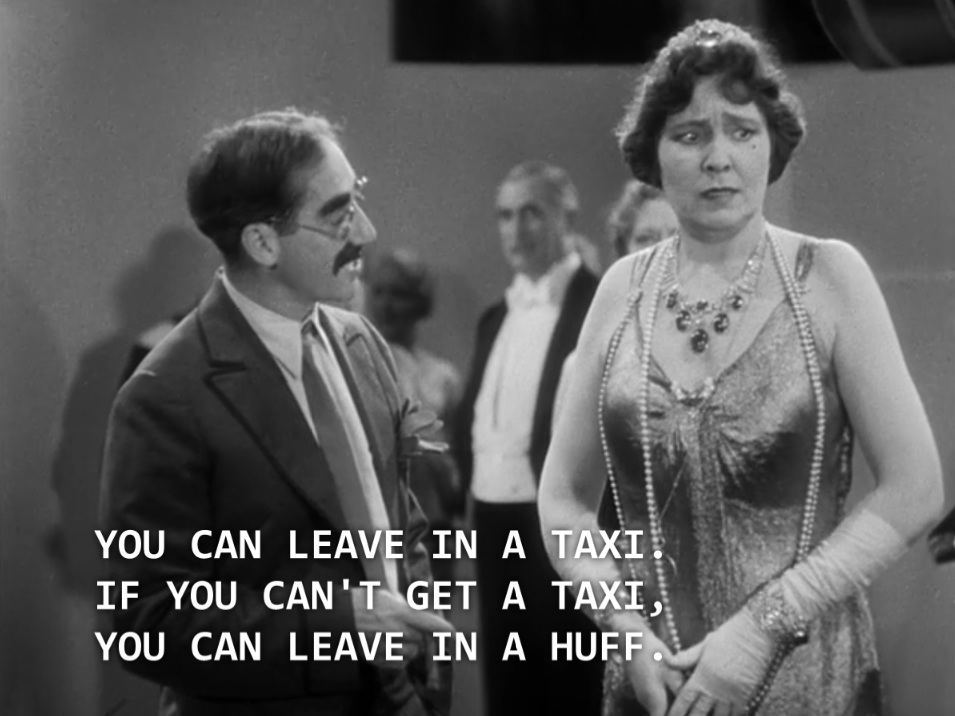
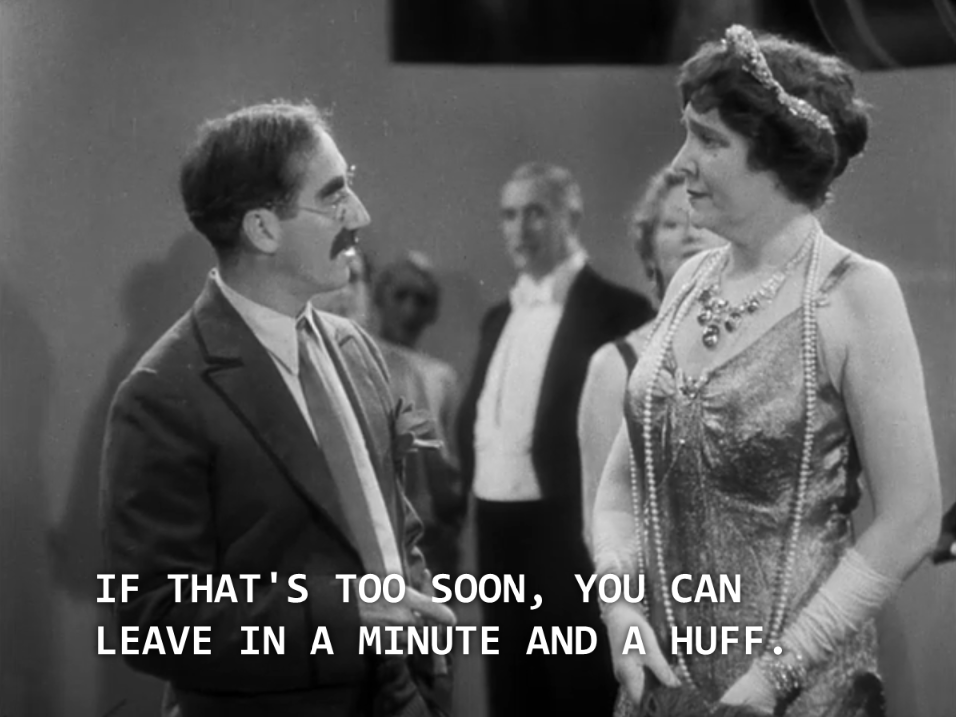
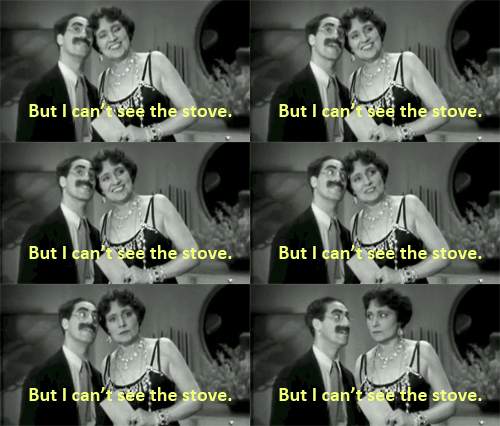
E que tal ser o único normal no meio de quatro malucos? Esta era a difícil tarefa de Margaret Dumont nos sete filmes que ela fez comos irmãos Marx. Porque ela não era apenas uma ilha de razão em um mar de loucura, como era Zeppo, ela era também o motivo de muitas, muitas piadas.

And what about being the only one normal in the middle of four weirdos? This was Margaret Dumont's hard task in the seven movies she did with the Marx Brothers. Because she wasn't just an island of reason in a sea of wackiness, like Zeppo was, she was also the target of many, many jokes.


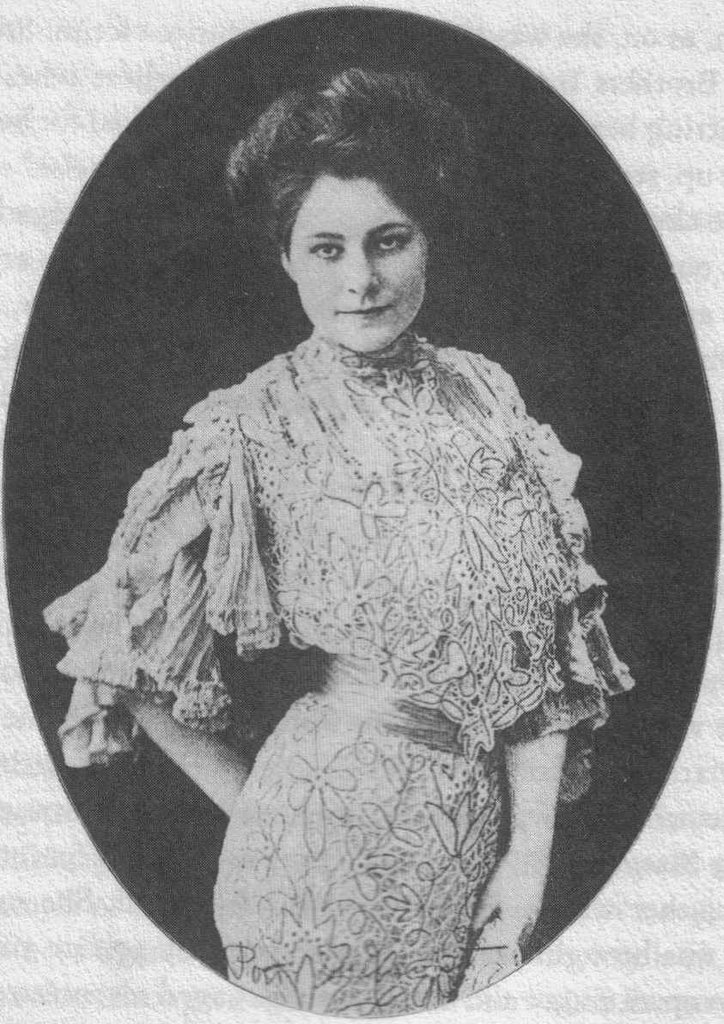
O nome Daisy Juliette Baker pode não ser familiar, mas foi assim que Margaret foi batizada ao nascer, em 1882. Ele era uma soprano, e se apresentou pela primeira vez no vaudeville pouco antes de completar 20 anos. Sua beleza quando jovem era impressionante, e ela era em geral escalada para papéis de “soubrette”: moças jovens que gostavam de flertar em óperas e shows cômicos.

The name Daisy Juliette Baker may not ring a bell, but it was with this name that Margaret was christened when she was born, in 1882. She was a trained soprano, and first entered vaudeville when she was about to turn 20. Her beauty as a young woman was mesmerizing, and she was often cast in “soubrette” roles: the ones of young flirtatious girls in comic operas and shows.


Sua primeira investida como atriz durou até 1910, quando ela se casou com o rico John Moller Jr. Durante a epidemia de gripe espanhola de 1918, seu marido morreu e a viúva de 38 anos voltou aos palcos.

Her first entertainment phase lasted until 1910, when she married heir John Moller Jr. During the 1918 influenza pandemic, her husband died and the 36-year-old widow came back to the stages.


Foi nos palcos que ele encontrou pela primeira vez os quatro irmãos Marx. Em 1925, ela foi escolhida para a peça “The Cocoanuts”. Em 1928, ela foi novamente escalada para contracenar com os irmãos em “Animals Crackers”. Quando os irmãos receberam uma oferta da Paramount para transportar seus shows para o cinema – que agora era falado – Margaret os seguiu. Até então, ela havia feito apenas papéis como extra em dois filmes mudos.

It was on the stage that she first met the four Marx brothers. In 1925 she was cast in their play The Cocoanuts. In 1928, she was again cast along them in Animal Crackers. When the brothers received an offer from Paramount to transport their plays to the – now talking – movies, Margaret followed them. Until then she had only appeared as an uncredited extra in two silent films.


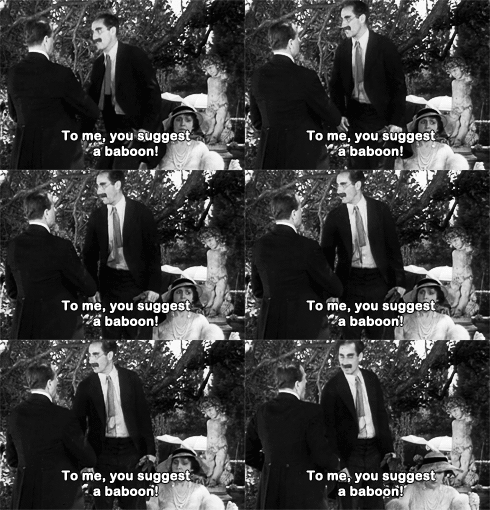
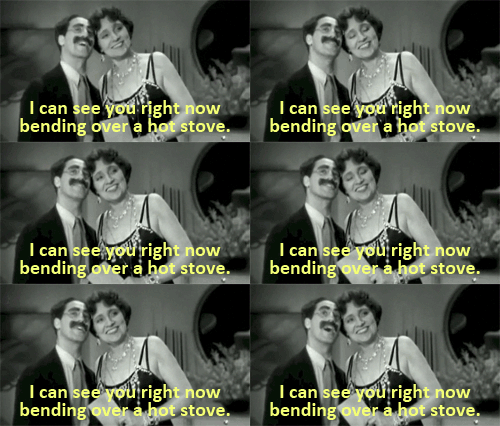
Hoje, muitas das piadas dos irmãos seriam consideradas grosseiras ou politicamente incorretas. Margaret estreou no cinema com os Marx quando tinha 47 anos, ou seja, não era uma jovenzinha, e sabemos como o trabalho de atriz pode ser duro para mulheres mais velhas. Frequentemente ela era insultada, chamada – indiretamente – de feia, gorda ou velha por Groucho Marx, que era apenas oito anos mais novo que ela. Pode ser dito que estes insultos faziam parte da graça de Groucho, ou que não tinha importância porque Margaret não entendia as piadas (o que não é verdade, pois ela era uma atriz experiente e inteligente).

Today, many of the brothers' antics would be considered unpolite or politically incorrect. Margaret entered the movies business with the brothers when she was 47, so she was no youngster, and we know how hard work is for older actresses. Too often she was insulted, called – indirectly – ugly or fat or ancient by a Groucho Marx who was only eight years her junior. It can be said the insults are part of Groucho's fun, or that Margaret didn’t understand the jokes (which is not true, since she was an experienced and intelligent performer herself).


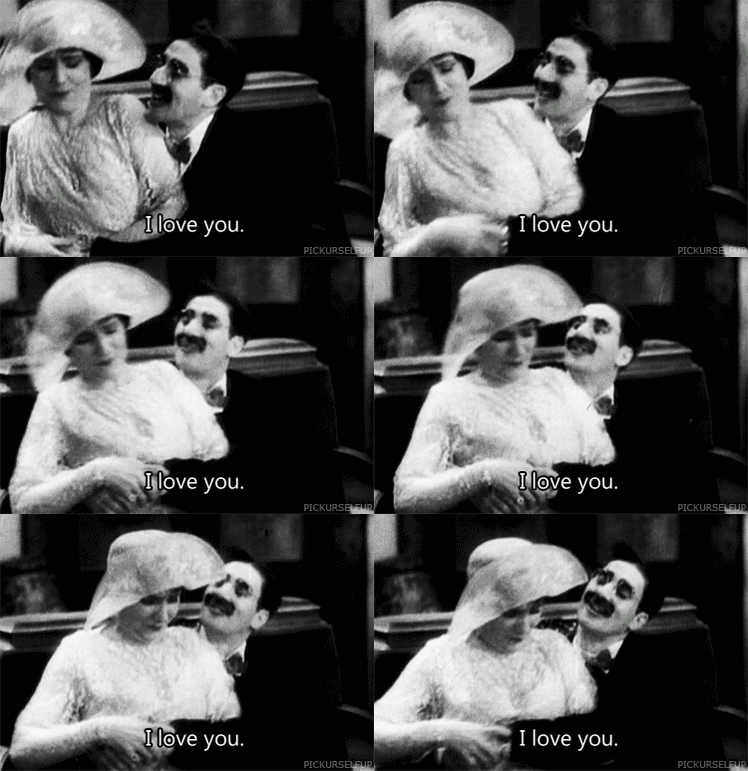
É interessante notar quão forte era a relação de Margaret e Groucho. Ela o chamava carinhosamente de “Julie” na vida real – o nome de batismo de Groucho é Julius – e Groucho disse que muitas vezes o público pensava que ele e Margaret eram de fato casados. Quando ele recebeu um Oscar Honorário em 1974, Margaret foi uma das poucas pessoas a quem ele agradeceu – os irmãos Gummo e Zeppo, que ainda estavam vivos, ficaram fora do discurso de agradecimento. E a última aparição de Margaret na TV aconteceu ao lado de Groucho no programa “The Hollywood Palace”, oito dias antes de ela morrer.

It's interesting to notice how strong Margaret's relationship with Groucho was. She fondly called him “Julie” in real life – Groucho’s real name is Julius – and Groucho said that the public often thought he and Margaret were, indeed, a couple off-screen. When he received an Honorary Oscar in 1974, Margaret was one of the few people he thanked – brothers Gummo and Zeppo, who were still alive, were left out of the acceptance speech. And Margaret's last appearance on camera happened alongside Groucho in the TV show The Hollywood Palace, eight days before her death.


This is my contribution to the 5th Annual What a Character Blogathon, hosted by mighty trio Aurora, Kellee and Paula at Citizen Screen, Outspoken & Freckled and Paula’s Cinema Club.

Related Posts Plugin for WordPress, Blogger...