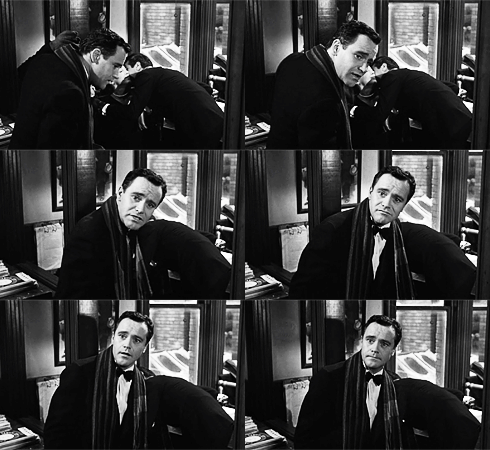
} Crítica Retrô: Jack Lemmon

Tradutor / Translator / Traductor / Übersetzer / Traduttore / Traducteur / 翻訳者 / переводчик

Showing posts with label Jack Lemmon. Show all posts

Sunday, October 14, 2018

O legado de “Um Estranho Casal” / The lasting legacy of “The Odd Couple”


“Você é um Felix ou um Oscar?” Para algumas pessoas, esta questão não tem significado. Mas, para milhões de pessoas que conhecem a obra de Neil Simon, ela significa muito. Responder se você é Oscar ou Felix é como responder se sua personalidade é Tipo A ou Tipo B – diz tudo sobre você. Sim, é uma maneira reducionista de classificar as pessoas – em apenas dois grupos – mas se havia alguém capaz de criar personagens que representam todo tipo de gente, este alguém era Neil Simon.

Are you a Felix or an Oscar?” For some people, this question means nothing. But, for millions of people familiar with Neil Simon's work, it means everything. Answering if you are Oscar or Felix is like answering if you have Type A or Type B personality – it says all that is needed to know about you. Yes, it is a reductive way to classify people - in only two groups - but if there was someone who could create characters to represent all kinds of people, it was Neil Simon.
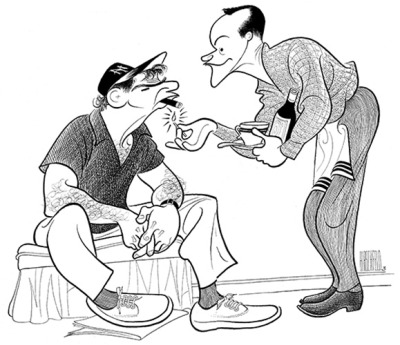
 
The Odd Couple by Al Hirschfeld
A peça “Um Estranho Casal” estreou em 1965. A inspiração para a peça é controversa. O jornal The Washington Post cita o divórcio do roteirista de TV Adam Bernstein, enquanto Mel Brooks alega que foi o seu primeiro divórcio que inspirou Neil Simon a escrever a peça. De qualquer maneira, aqui está a primeira informação importante sobre a peça: ela trata da vida após o divórcio – uma prática que só se tornou socialmente aceitável poucas décadas atrás.

The play “The Odd Couple” premiered in 1965. The inspiration for the play is controversial, however. The Washington Post cites the divorce of TV writer Adam Bernstein, while Mel Brooks alleges that it was his first divorce that inspired Neil Simon to write the play. Anyway, here it is the first important thing about the play: it was about life after divorce – a practice that only became socially accepted a few decades ago.
 
Neil Simon
A história é incrivelmente simples: Felix Ungar, um jornalista, tem de sair de casa durante o processo de divórcio e sua única opção é ficar no apartamento do amigo Oscar Madison, um jornalista esportivo divorciado. O problema é que Felix e Oscar são completamente diferentes. Para Felix, o copo sempre está meio vazio, e há sempre algo que precisa ser limpo. Para Oscar, o copo está meio cheio, e não há problema em viver em meio a um pouco de caos.

The plot is incredibly simple: Felix Ungar, a newswriter, gets thrown out of his house by his wife and his only option is to go live with his friend Oscar Madison, a divorced sportswriter. The problem is that Felix and Oscar have completely different approaches to life. For Felix, the glass is always half empty, and there is also something to be cleaned. For Oscar, the glass is half full and there is no problem about living among some chaos.
 
Art Carney and Walter Matthau on Broadway
A peça ganhou quatro prêmios Tony, e os direitos de adaptação foram comprados pela Paramount. Neil Simon escreveu o roteiro, Walter Matthau voltou a interpretar Oscar após ganhar um Tony por sua performance, e Jack Lemmon veio interpretar Felix – que era feito por Art Carney no teatro. O filme foi dirigido por Gene Sacks, enquanto a peça foi dirigida por Mike Nichols.

The play won four Tonys, and its adaptation rights were bought by Paramount. Simon adapted the play into an screenplay, Walter Matthau reprised his Tony-winning role as Oscar and Jack Lemmon was brought to play Felix – it was Art Carney who originally played the character on the stage. The film was directed by Gene Sacks – while the play was directed by Mike Nichols.
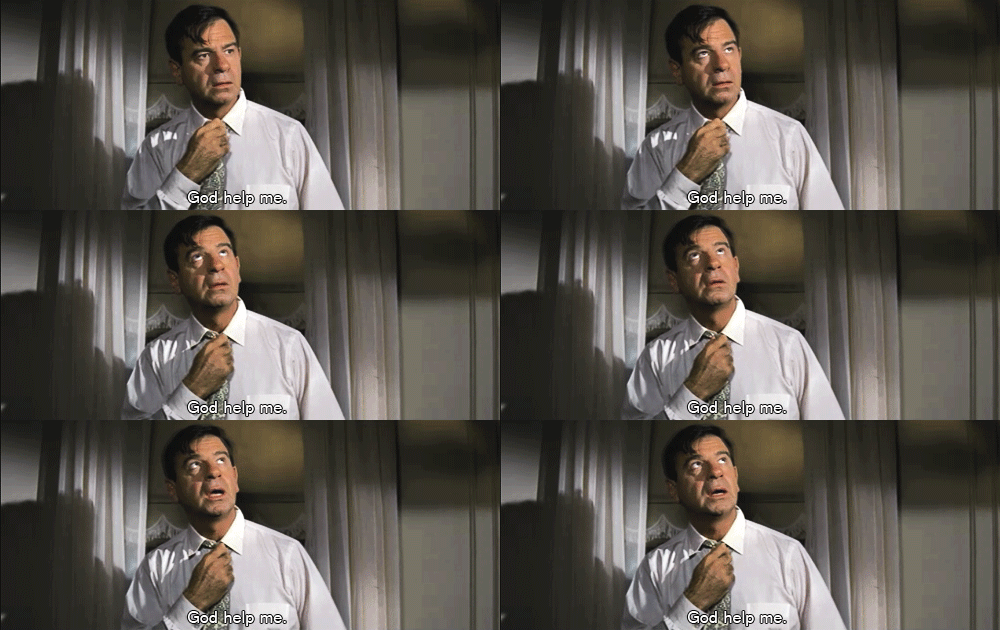

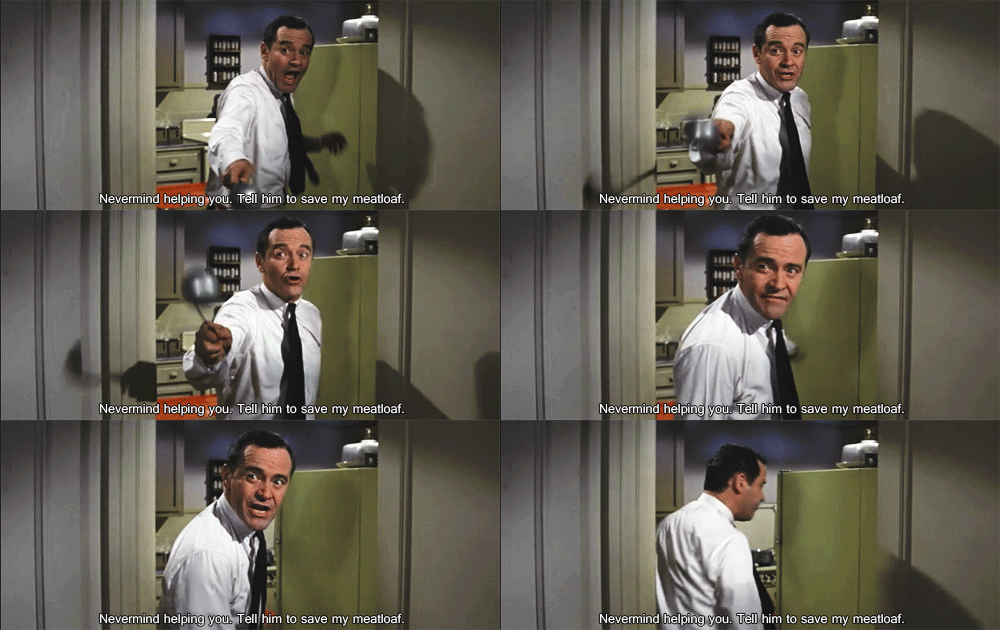
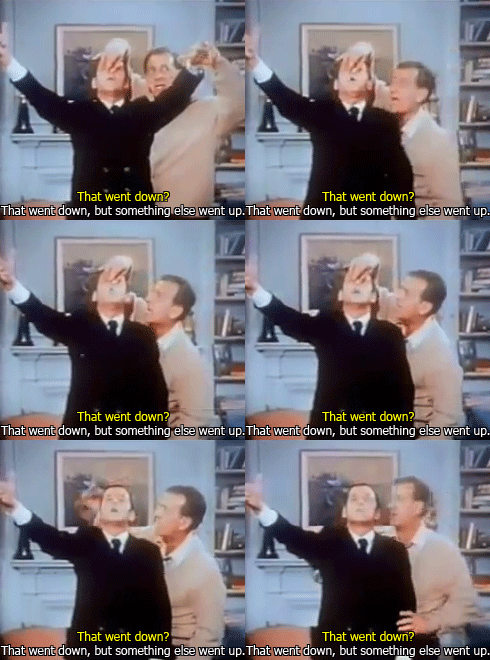
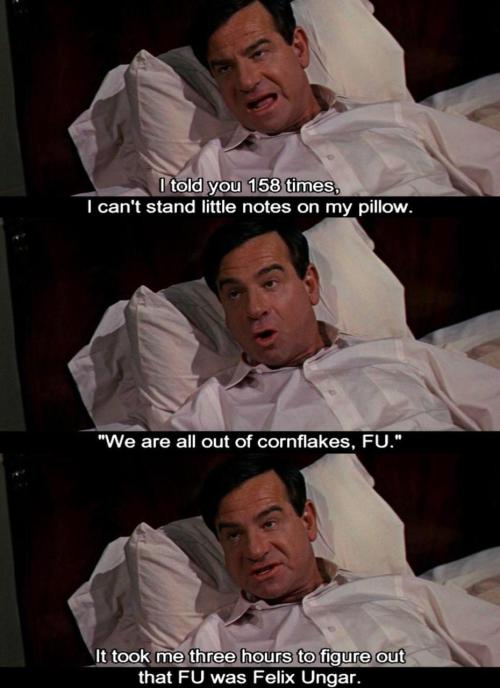
A adição de Jack Lemmon foi maravilhosa. Felix é meu personagem favorito em “Um Estranho Casal”, e ele é a estrela das cenas que se passam fora do apartamento – cenas estas que foram escritas exclusivamente para o filme. Felix é neurótico e maluco por limpeza, e seu comportamento enlouquece Oscar. Seja durante um jogo de pôquer entre amigos ou durante um encontro com as irmãs Pigeon, Felix mostra que não se esqueceu da esposa, e que sua obsessão com limpeza pode ser uma tentativa de colocar as coisas em ordem em sua vida novamente.

The addition of Jack Lemmon was a marvelous one. Felix is my favorite of “The Odd Couple”, and he is the star of the scenes outside the apartment – scenes that were written exclusively for the film. Felix  is neurotic and crazy about tidiness, and his behavior drives Oscar insane. May it be during poker nights with their mutual friends or during a double date with the peculiar Pigeon sisters, Felix shows that he hasn't forgotten his wife, and his cleaning obsession may be a way of trying to put things back together in his life.
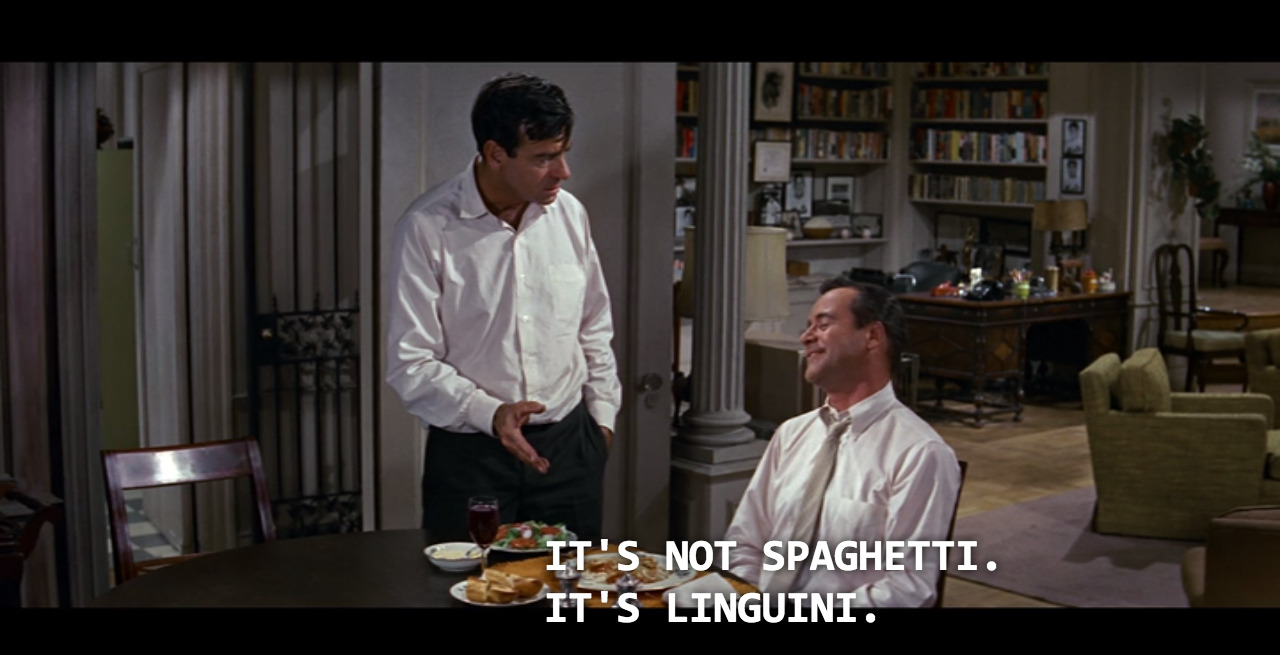

A próxima parada de “Um Estranho Casal” era a televisão, com Tony Randall como Felix e Jack Klugman como Oscar. Esta versão durou cinco temporadas, e só na última Neil Simon expressou aprovação frente a adaptação. Em 1982, a sitcom foi refeita, com Ron Glass como Felix e Demond Wilson como Oscar. E, finalmente, em 2015, houve uma nova versão para a TV, com Thomas Lennon como Felix e Matthew Perry como Oscar.

“The Odd Couple” was headed next for television, with Tony Randall as Felix and Jack Klugman as Oscar. This iteration lasted five seasons, and only by the last one Neil Simon expressed approval of the adaptation. In 1982, the sitcom was remade, with Ron Glass as Felix and Demond Wilson as Oscar. And, finally, in 2015 there was a new TV version, with Thomas Lennon as Felix and Matthew Perry as Oscar.
 
1970s
1980s
2010s
Quando a sitcom de 1975 acabou, a coisa mais psicodélica e típica dos anos 70 aconteceu: uma adaptação animada de “Um Estranho Casal”. Em “The Oddball Couple”, o arrumadinho Spiffy, um gato, e o bagunceiro Fleabag, um cão, dividem a casa, o carro e o escritório – eles dividem tudo tão perfeitamente que estas coisas todas são metade arrumadas e metade bagunçadas. Obviamente, eles não eram divorciados, apenas colegas de quarto. A série teve 16 episódios de meia hora cada.

As the 1975 sitcom ended, the most psychedelic and 1970s thing possible happened: a CARTOON adaptation of “The Odd Couple”. In “The Oddball Couple”, the orderly Spiffy, a cat, and the messy Fleabag, a dog, share a house, a car and an office – they share those things so perfectly that exactly half of each of these is neat, and half is messy. Of course, they were not divorced, only roommates. The cartoon had 16 half-hour episodes.


Neil Simon também fez algo para as garotas. Em 1985, ele escreveu “The Female Odd Couple”, que tinha basicamente a mesma história, mas com a ordeira Florence Ungar e a desleixada Olive Madison. Na Broadway, Florence foi interpretada por Sally Struthers e Olive por Rita Moreno. As irmãs Pigeon foram substituídas pelos irmãos Costazuela, e um deles foi interpretado por Tony Shalhoub, em sua estreia na Broadway. A peça encerrou após 295 performances e foi remontada algumas vezes.

Neil Simon also had something for the girls in store. In 1985, he wrote “The Female Odd Couple”, which had basically the same plot, but now starring tidy Florence Ungar and sloppy Olive Madison. On Broadway, Florence was played by Sally Struthers and Olive by Rita Moreno. The Pigeon sisters were  replaced by the Costazuela brothers, and one of them was played by Tony Shalhoub in his Broadway debut. The play closed after 295 performances and was revived a few times.


Não há dúvida de que a versão com Lemmon e Matthau é a definitiva, e a mais amada pelos fãs. É por isso que foi feita uma sequência, trinta anos após a estreia do filme original, e o roteiro foi escrito pelo próprio Neil Simon – diz-se que o autor trabalhou neste roteiro por dez anos.

There is no doubt that the Lemmon / Matthau version is the definitive one, and the most cherished by the fans of the story. That's why they even made a sequel, thirty years after the original premiered, and the screenplay was written by Neil Simon himself – who is said to have worked ten years on this sequel idea.

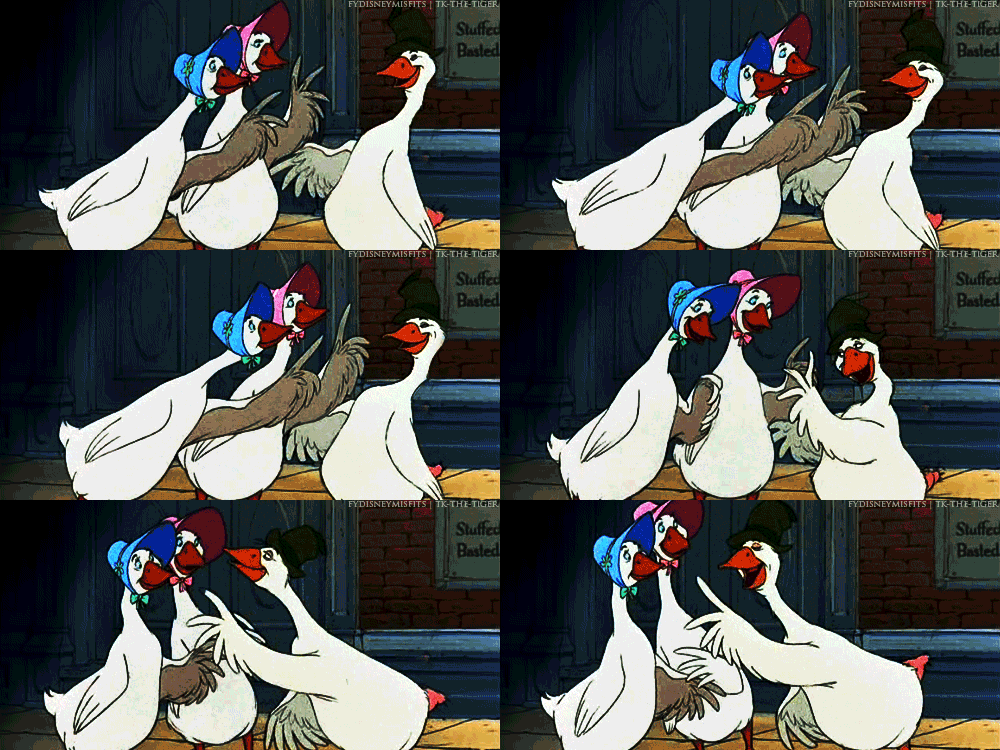
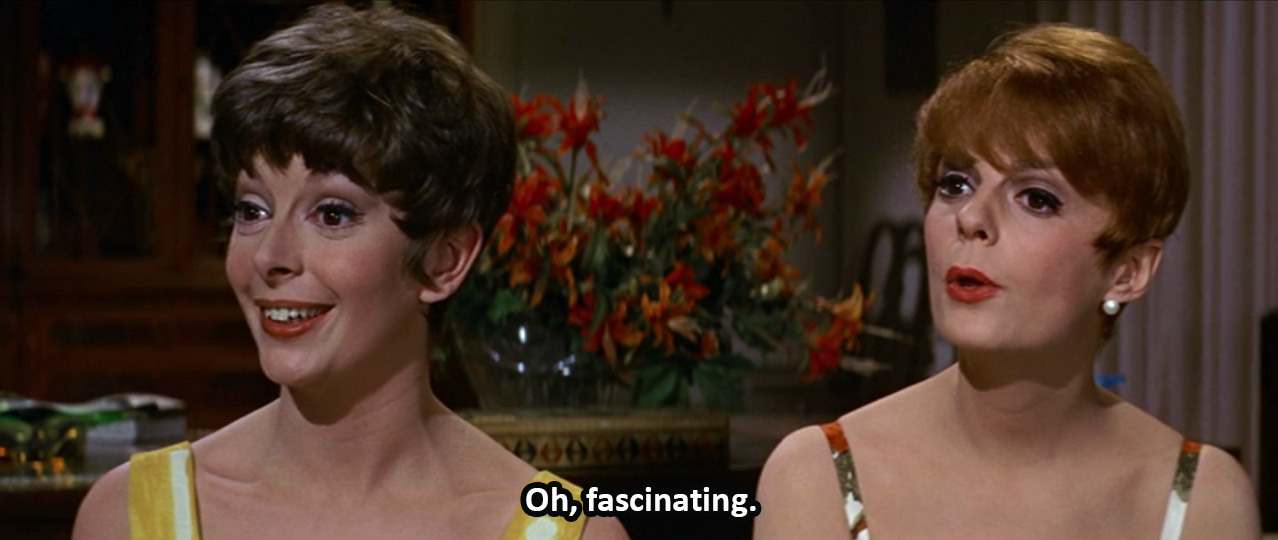
Duas queridas do público são as irmãs Pigeon. No filme de 1968 elas são interpretadas por Monica Evans (Cecily) e Carole Shelley (Gwendolyn), ambas vindas da montagem original da Broadway. Elas voltaram a trabalhar juntas na sitcom de “Um Estranho Casal” em 1970 e depois dublaram ambas personagens animadas em “Aristogatas” (1970) – as irmãs gansas Abigail e Amelia – e em “Robin Hood” (1973) – com Monica fazendo Maid Marian e Carole Lady Cluck.

Two favorites of the public are the Pigeon sisters. In the 1968 movie they are played by Monica Evans (Cecily) and Carole Shelley (Gwendolyn), both coming from the original Broadway production. They worked together again in the sitcom “The Odd  Couple” in 1970 and then voicing animated characters in “The Aristocats” (1970) – the geese sisters Abigail and Amelia – and in “Robin Hood” (1973) – with Monica Evans voicing Maid Marian and Carole Shelley voicing Lady Cluck.

É interessante notar que Neil Simon escolheu chamar os amigos que vivem juntos de “casal”. Assim como um casal, eles dividem o mesmo teto. E, como um casal, Felix e Oscar discutem, brigam, discordam, mas também aprendem um com o outro, e mudam um ao outro. É por isso que a história ainda nos toca: todos nós temos um pouco de Felix e de Oscar dentro de nós.

It's interesting to notice how Neil Simon chose to call the two friends who live together a “couple”. Like a couple, they do live under the same roof. And, like a couple, Felix and Oscar argue, fight, disagree, but they also learn with each other, and change each other. That's why we the story still resonates with us: we all have a little of both Felix and Oscar in us.

This is my contribution to the Neil Simon blogathon, hosted by Paddy and Rick at Caftan Woman and Wide Screen World.


Sunday, September 2, 2018

Fred MacMurray, Billy Wilder e a luxúria


Fred MacMurray, Billy Wilder and lust


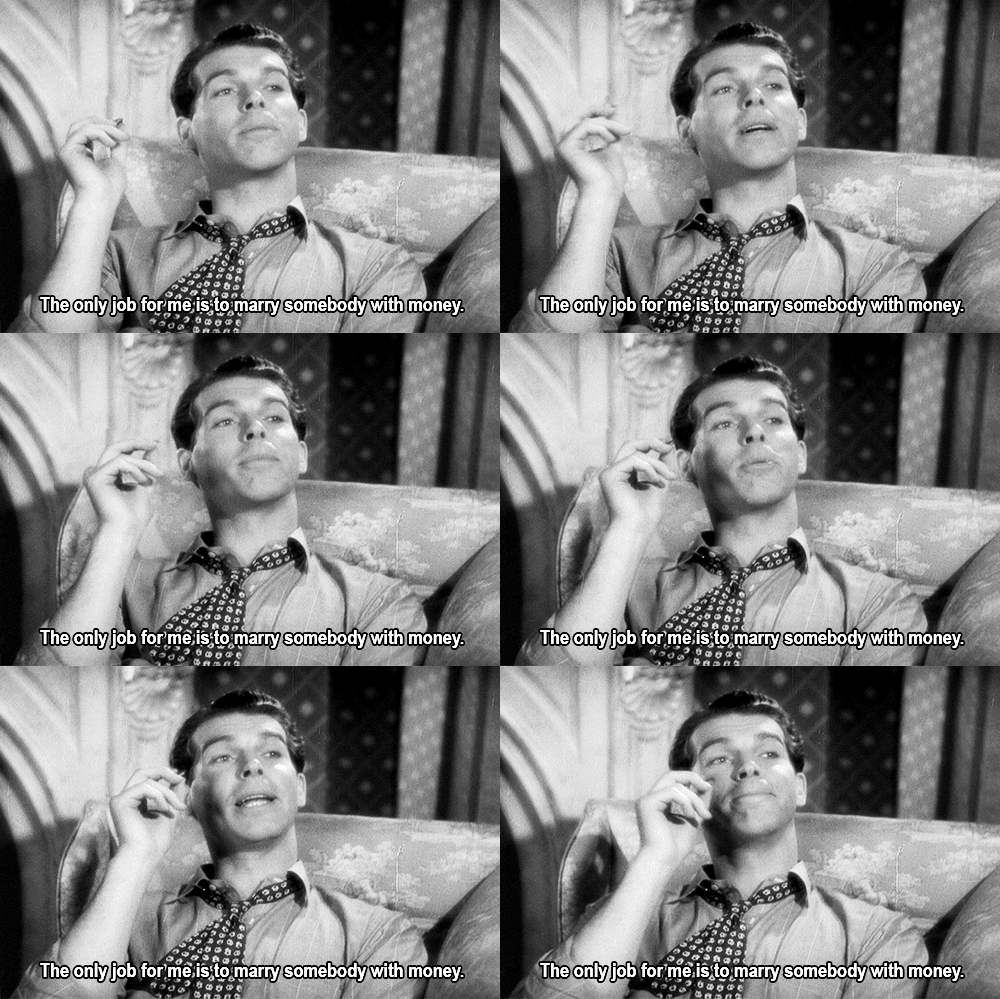
Quer você queira ou não, um ator ou atriz desenvolve uma persona – especialmente nos dias do sistema de estúdio – para ser facilmente reconhecido pelo público e também para que o estúdio o utilize em papéis estereotipados. Isso aconteceu com Fred MacMurray, mais conhecido por interpretar caras bacanas pais de família, pais que tinham resposta para tudo e que poderiam ser ao mesmo tempo um pouco atrapalhados e muito sábios. Mas ele não fazia estes papéis quando trabalhava com Billy Wilder.

Whether you want it or not, a performer usually develops a persona – especially in the Studio System days – in order to be easily recognizable by the public and also typecasted by the studio. This happened to Fred MacMurray, better known as a lovely guy, a family man, a dad who knew it all and who could be at the same time a bit clumsy and very wise. But he didn't play by these rules when he was working with Billy Wilder.
 
1935
Billy Wilder desafiou os limites de MacMurray e tirou tudo de pior que existe na mente humana para encher seus personagens de ambição e luxúria – e, assim, Wilder dirigiu MacMurray nas duas melhores performances da carreira do ator, em que ele fez papéis muito diferentes dos habituais e, ironicamente, estas são as performances pelas quais MacMurray é mais conhecido hoje.

Billy Wilder went wild (LOL) with MacMurray, and took the worst he could have in his mind in order to infuse his characters with ambition and lust – and, by doing this, Wilder directed MacMurray in the two best performances of his career, in which he played against type and, ironically, these are the performances that today he has the biggest chance to be recognized for.


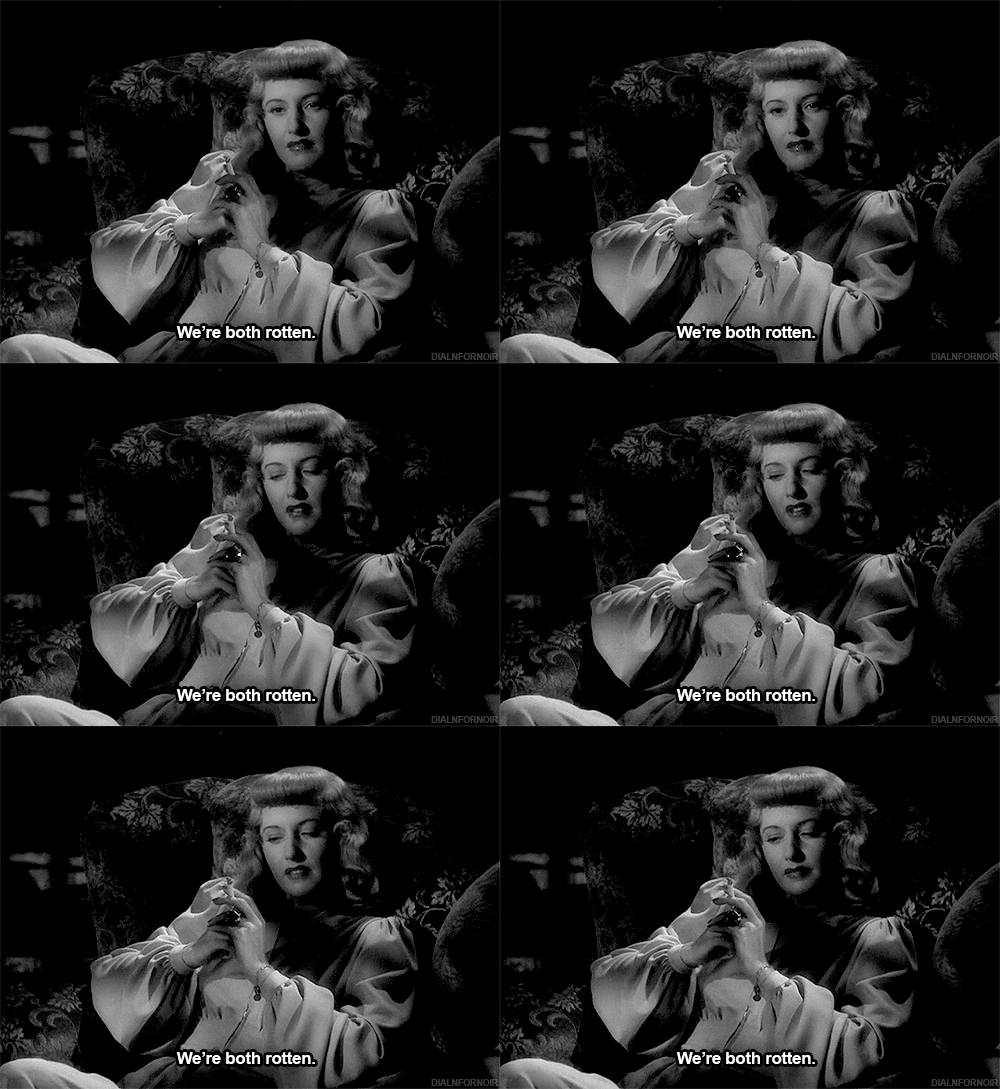
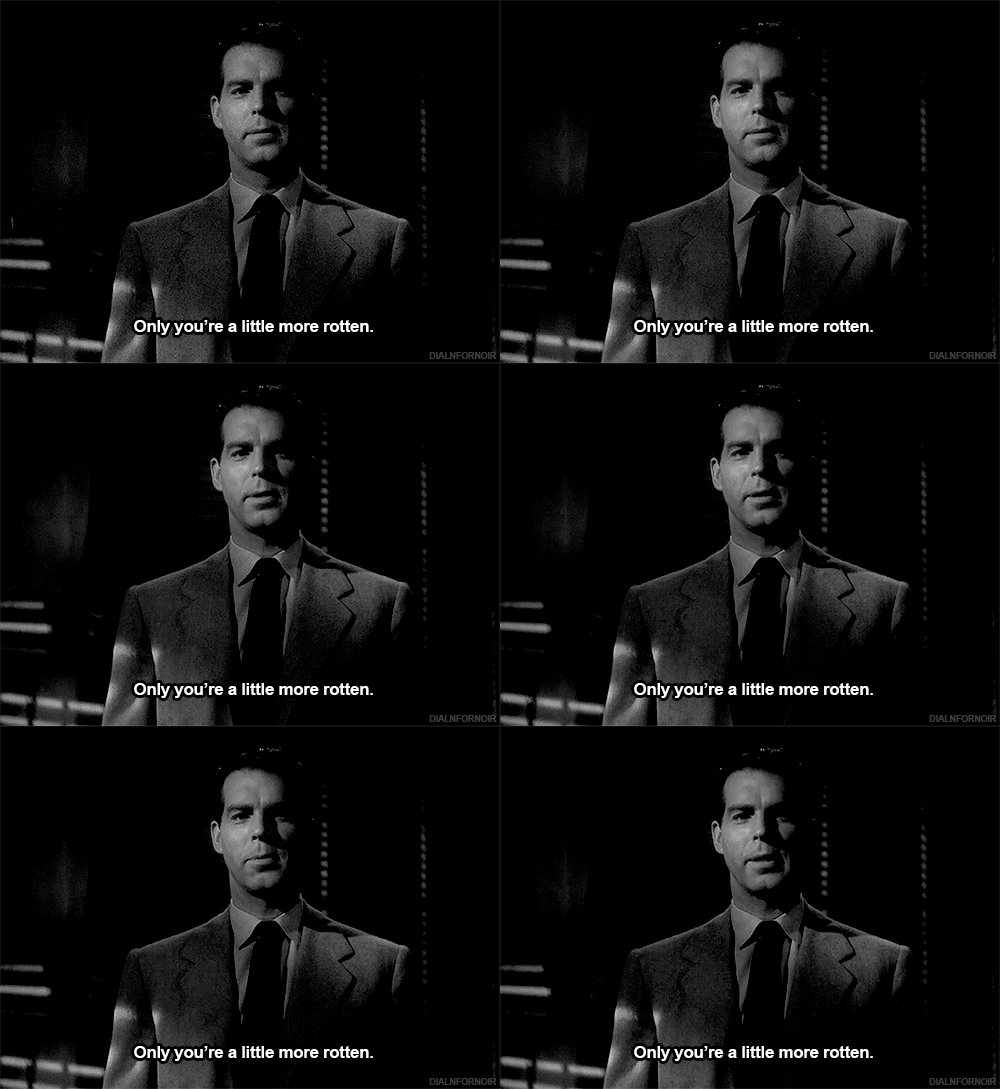
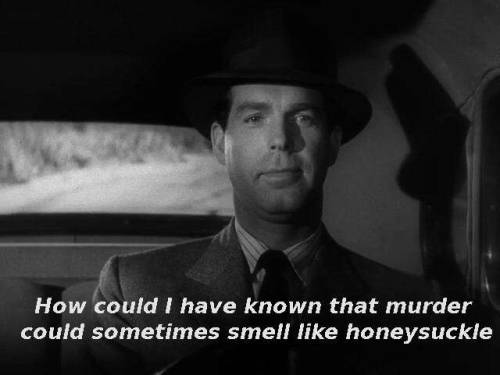
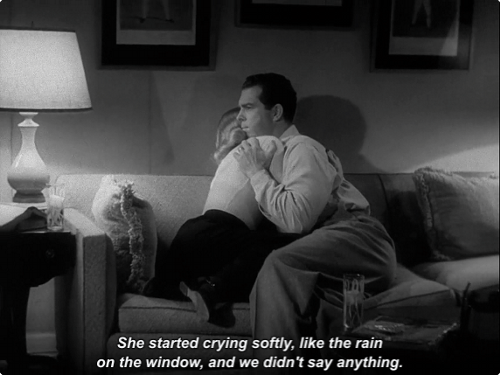
“Pacto de Sangue” (1944) é um dos melhores filmes noir de todos os tempos. Nele, Fred MacMurray é Walter Neff, o perfeito panaca que é seduzido pela femme fatale Phyllis Dietrichson (Barbara Stanwyck) e convencido a fazer parte do plano para matar o marido dela e ficar com o dinheiro do seguro. Obviamente, Walter não é um completo imbecil. Ele tem boa memória e boa atenção aos detalhes, habilidades que são importantes para o crime.

“Double Indemnity” (1944) is one of the best film noir of all time. In it, Fred MacMurray is Walter Neff, the perfect stupid man who is dragged down by femme fatale Phyllis Dietrichson (Barbara Stanwyck) and convinced to take part in her plan to kill her husband and get the insurance money. Of course, Walter is not totally idiot. He has a good memory and pays a lot of attention to detail, skills that are important for the crime.


Walter é movido por luxúria, por seu desejo sexual por Phyllis e periodicamente impedido de continuar por causa de sua amizade com Barton Keyes (Edward G. Robinson) – ou talvez haja também luxúria envolvida, porque algumas teorias apontam para um subtexto homossexual no filme. Só depende da maneira como cada pessoa interpreta o filme.

Walter is moved by lust, by his sexual desire for Phyllis and periodically stopped by his friendship with Barton Keyes (Edward G. Robinson) – or maybe there is also lust involved here, because some theories point at a gay subtext in the movie. It only depends on how each person interprets the movie.


Em 1943, Barbara Stanwyck era a atriz mais bem paga de Hollywood, e Fred MacMurray era o ator mais bem pago. Entretanto, foi coincidência que eles tenham se juntado para fazer “Pacto de Sangue”. Ambos estavam relutantes no início. Stanwyck foi facilmente convencida por Wilder a aceitar o papel, quando ele disse a ela para ser ousada, mas a história com MacMurray foi outra. Walter Neff era um anti-herói, e o papel já havia sido recusado por grandes atores como James Cagney, Spencer Tracy e Alan Ladd. Até o próprio MacMurray recusou o papel, dizendo que ele não era capaz de fazê-lo, mas Wilder insistiu, dia após dia, até que o ator se rendeu. No começo, MacMurray disse para Wilder: “Você está cometendo o maior erro da sua vida!”, e no fim, confessou: “Eu jamais sonharia que aquele seria o melhor filme que eu faria”.

In 1943, Barbara Stanwyck was the highest paid actress in Hollywood and Fred MacMurray, the highest-paid actor. It was, however, a coincidence that they ended up doing “Double Indemnity”. Both were reluctant at first. Stanwyck was easily convinced by Wilder, who told her to be fearless, but it was another thing with MacMurray. Walter Neff was an anti-hero and the role was refused by A-listers like James Cagney, Spencer Tracy and Alan Ladd. Even MacMurray himself turned down the role, saying he couldn’t do it, but Wilder insisted, day after day, until the actor compromised. At first, MacMurray said to Wilder: “You’re making the mistake of your life!”, and in end, he confessed: “I never dreamed it would be the best picture I ever made”.


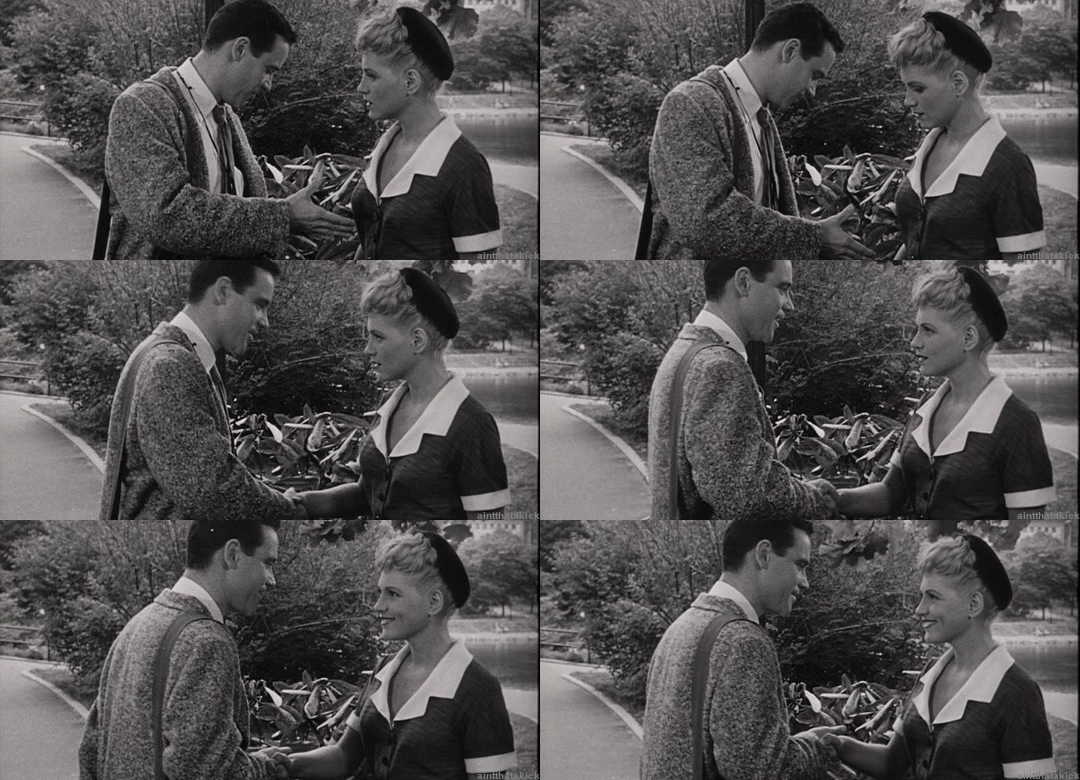
MacMurray voltou a trabalhar com Wilder 16 anos depois. Na época, ele já era um favorito na Disney, tendo feito alguns filmes fofos para a família no estúdio do Mickey. O ano era 1960 e o filme era “Se Meu Apartamento Falasse”. Fred MacMurray interpretava Sheldrake, o chefe de C.C. Baxter (Jack Lemmon). Sheldrake usa o apartamento de seu empregado para ter encontros sexuais com outras mulheres sem correr o risco de ser descoberto pela esposa. A presa atual é Fran Kubelik (Shirley MacLaine), que é ascensorista no prédio de Sheldrake. Mais uma vez, o personagem de MacMurray é movido pela luxúria.

MacMurray reteamed with Wilder 16 years later. By then, MacMurray was already a Disney favorite, having made some cute family flicks for the Mickey Mouse studio. The year was 1960 and the film was “The Apartment”. Fred MacMurray played Sheldrake, C.C. Baxter's (Jack Lemmon) boss. Sheldrake uses his employee's apartment to have sexual encounters with other women far from his wife. The current prey is Fran Kubelik (Shirley MacLaine), who is an elevator operator at Sheldrake's building. Once again, MacMurray's character is drove by lust.


Sheldrake é simplesmente nojento – provavelmente o personagem menos simpático que MacMurray interpretou em toda sua carreira. Além de trair a esposa e enganar a senhorita Kubelik, ele também cria uma situação difícil para Baxter. E Sheldrake simplesmente não se importa. Ele quer ter prazer e evitar problemas. Quando a senhorita Kubelik para de lhe proporcionar prazer e se torna um problema, ele simplesmente a dispensa, e não se importa se isso for colocar a vida dela em perigo.

Sheldrake is simply disgusting – probably the least likeable character MacMurray ever played. Besides cheating on his wife and making empty promises to Miss Kubelik, he also creates a difficult situation for Baxter. And Sheldrake simply doesn’t care. He wants to have pleasure and avoid problems. When Miss Kubelik stops giving him pleasure and becomes a problem, he simply dumps her, and doesn’t even care if this puts her life in danger.


Convenhamos: se refletirmos sobre a maioria dos outros personagens de MacMurray, nos perguntamos como eles podem sequer transar. Quer dizer, em “Bon Voyage, Enfim Paris!”, ele tem dois filhos, mas é tão ingênuo e atrapalhado que se perde no esgoto parisiense. Em “Quando o Coração não Envelhece” (1967), ele é um pai trapalhão que tem um jacaré de estimação chamado George. Em outros filmes da Disney, como “O Fantástico Super-Homem” (1961) e “Nunca é Tarde para Amar” (1966), ele começa o filme como um cara solteiro, e depois de um namoro atrapalhado e fofo, acaba casado. O MacMurray da Disney não conhece luxúria – por isso ele é aceito pela Disney, e por isso ele não é tão interessante quanto o MacMurray de Billy Wilder.

Let's face it: if we think about most of MacMurray's characters, we ask ourselves how they could even get laid. I mean, in “Bon Voyage” (1962), he has two children, but is so naïve and absent-minded that he gets lost in the Parisian sewer. In “The Happiest Millionaire” (1967), he is a goofy father who has a pet alligator called George. In other Disney films, like “The Absent-Minded Professor” (1961) and “Follow Me, Boys!” (1966), he starts the movie as a single man, and after a sweet but clumsy dating process, he ends up married. The Disney MacMurray has no lust – that's why he is accepted by Disney, and that's why he is not as interesting as the Billy Wilder MacMurray.
 
1967
Billy Wilder e Fred MacMurray poderiam ter feito outro filme juntos. O ator foi um dos nomes considerado para o papel de Joe Gillis em “Crepúsculo dos Deuses” (1950), mas todos nós sabemos que William Holden foi escalado em seu lugar. Gillis é outro personagem que se deixa levar pela luxúria, e eu penso que MacMurray teria sido um ótimo Gillis. Mesmo sem este filme na parceria, nós não podemos negar que MacMurray nunca esteve tão bem quanto ao lado de Billy Wilder.

Billy Wilder and Fred MacMurray could have done another film together. The actor was considered for the role of Joe Gillis in “Sunset Boulevard” (1950), but we all know William Holden was cast instead. Gillis is another character very much driven by lust, and I imagine MacMurray would have played a great Gillis. Even without this movie in their partnership, we can’t deny that MacMurray did his best when he went a little Wilder.  

This is my contribution to the Fred MacMurray blogathon, hosted by Laura at Phyllis Loves Classic Movies.

Friday, March 31, 2017

Jack Lemmon Blogathon - Day 2

This is a consensus among classic film fans: Jack Lemmon was a sweet guy (ha! See what I did there?) and a fantastic actor. His most famous work ended with the line "nobody's perfect", but we firmly believe that Mr Lemmon was close to perfection.
He could play any role and make it believable and human - that's why we're here together to celebrate his impressive body of work.
Day 1 of the blogathon was hosted by my friend and co-host Rich at Wide Screen World.
A fictional representation of Rich and me, agreeing on doing this blogathon


Now, without further ado, here are the links for Day 2:

Real Weegie Midget

Silver Screenings

Cinema Cities
Days of Wine and Roses (1962)

Old Hollywood Films
The Odd Couple (1968)

Cary Grant Won't Eat You
The Fortune Cookie (1966

Whimsically Classic
Some Like It Hot (1959)  

A Shroud of Thoughts
The Apartment (1960) 

Wide Screen World
The Out-of-Towners (1970)

Thank you to all who have made this event possible!

Thursday, March 30, 2017

Variações sobre um mesmo tema: 12 Homens e uma Sentença (1957 e 1997)

Variations on the same theme: 12 Angry Men (1957 & 1997)

Quando os remakes são necessários? Eu costumava achar que remakes nunca eram necessários – até ver o filme feito para a TV “12 Homens e uma Sentença”, de 1997. Sim, é exatamente igual ao filme de 1957, e Jack Lemmon era basicamente minha única razaão para vê-lo. Mas ver este filme me deu a reposta para minha questão inicial: remakes são necessários para contar grandes histórias para as novas gerações.

When are remakes necessary? I used to think that remakes are never necessary – until I saw the 1997 TV movie “12 Angry Men”. Sure, it is exactly like the 1957 movie, and Jack Lemmon was basically my only reason to see it. But it made gave me an answer for my initial quesiton: remakes are necessary to tell great stories to younger generations.
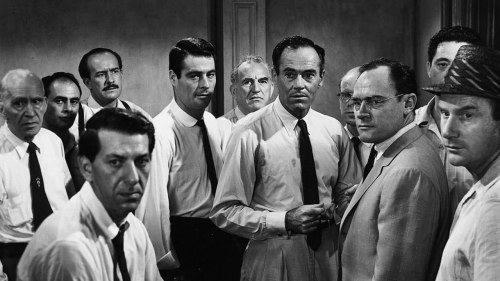
O próprio filme de 1957 é um remake de um filme para a TV feito  em 1954. Isto significa que a versão de 1997 significou apenas que a história voltou às origens – mas, desde vez, a cores. E as cores são, de fato, o elemento principal aqui.

The 1957 film is itself a remake of a 1954 TV attraction. It means that the 1997 version is only the story coming back to its origins – but, this time, in color. And color is, indeed, the main element here.
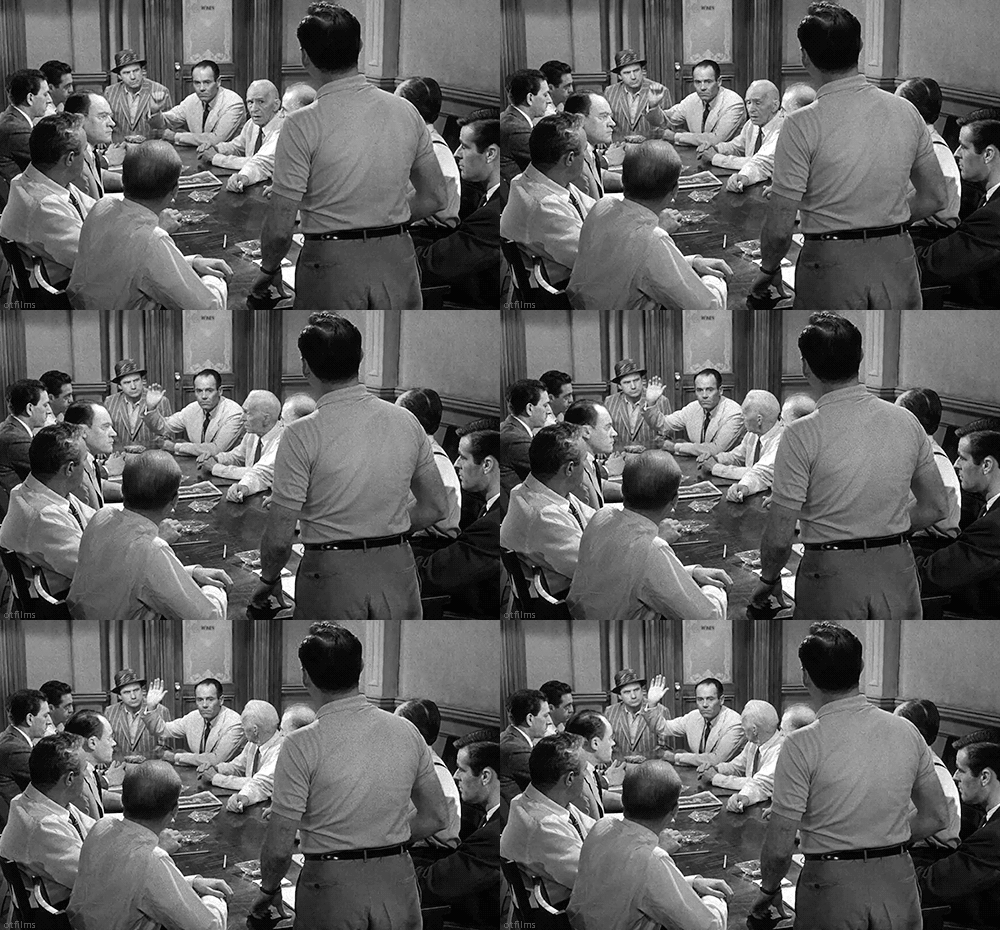
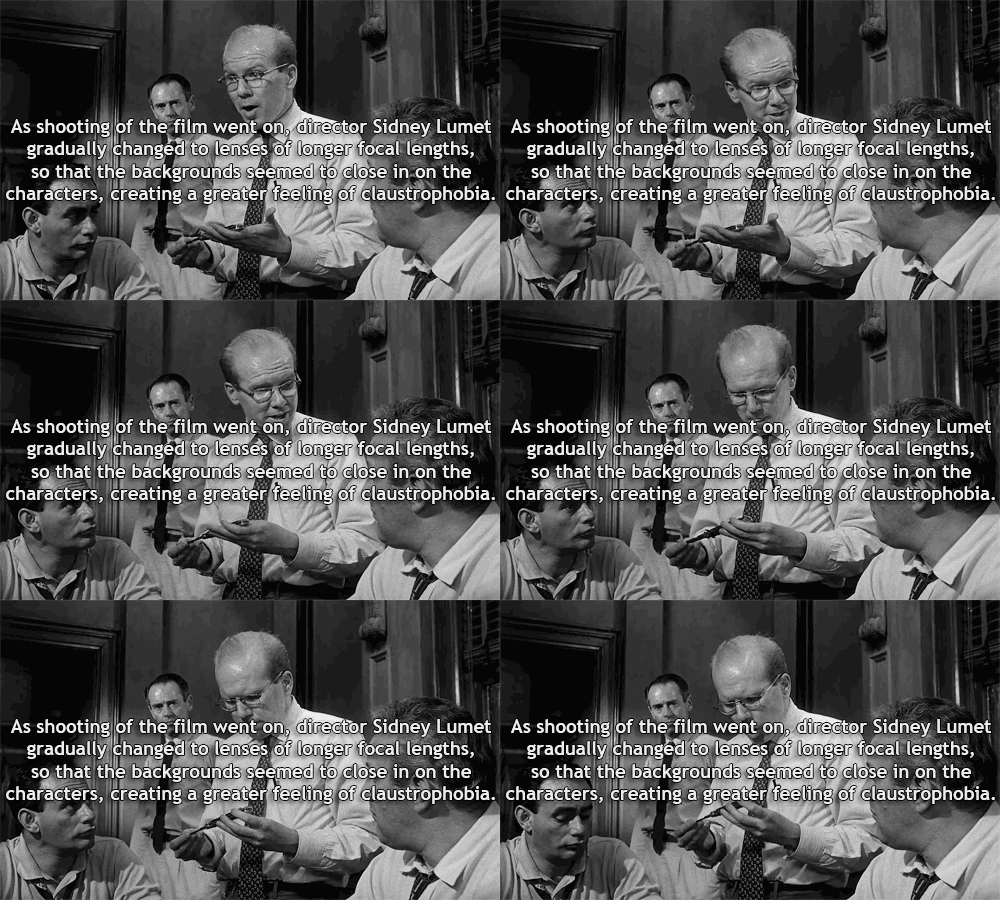
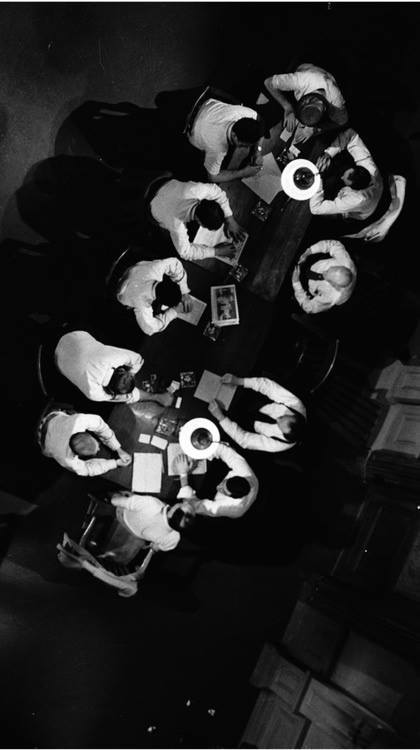
A trama se desenrola em um único ambiente – a sala em que os jurados estão reunidos para decidir o veredicto – e a exigência principal é que nós, enquanto espectadores, sintamos como o lugar é claustrofóbico. Neste sentido, a versão de 1957 funciona melhor: o suor em preto e branco fica mais evidente, e todo o ambiente parece mais opressivo que em 1997.

The story unfolds in only one environment – the room in which the jury is left to decide the verdict – and a main exigence is that we, as viewers, must feel how claustrophobic the place is. In this sense, the 1957 version works better: sweat in black and white appears better, and the whole environment seems more oppressive than it did in 1997.
E então chegamos à cor da pele. Na versão de 1997 temos quatro jurados negros, entre jovens e velhos. Na de 1957, você pode adivinhar: não há nenhum. E tem mais: em 1997  o próprio acusado é negro. Em 1957 ele apenas vem de um bairro pobre, e é de origem filipina.

And then we come to skin color. In the 1997 version, there are four black jurors, old and young. In the 1957 version, you guessed: not even one. And there is more: in the 1997 version the accused is himself black. In the 1957 one he only comes from the slums and is Filipino.
Ainda mais interessante que o componente racial é a idade, especificamente na versão de 1997. Nesta, a idade dos jurados varia muito, enquanto na de 1957 eles parecem regular em idade. Na versão mais recente, temos Hume cronyn como o jurado mais velho, Jurado nº 9, e ele é abertamente desrespeitado. Ele é quase careca e usa uma bengala – e também é sempre interrompido quando tenta dar sua opinião na primeira meia hora do filme. É preciso que Jack Lemmon, como o Jurado nº 8, o defenda e exija que os outros o deixem falar. E aí é formada uma conexão instantânea entre eles.

Even more interesting than the race component is the age, especifically in the 1997 version. In it, the jurors' age vary a lot, while in the 1957 version they looked basically the same age. In the most recent version, we have Hume Cronyn as the oldest juror, Juror #9, and he is by far the most disrespected. He is nearly bald and walks with a cane – and is also interrupted whenever he tries to give his opinion in the first half an hour or so. It takes Jack Lemmon, as Juror #8, to stand for him and ask the others to let him talk. A connection is then instantly formed between the two.
O jurado que aparenta menos idade é o que mais desrespeita os outros, incluindo o nº 8: ele desconsidera as ideias de Jack Lemmon e tenta confrontá-lo no banheiro. Era de se esperar que os jurados mais jovens tivessem a mente mais aberta, e é o oposto que ocorre. É mais fácil para os jurados mais velhos serem empáticos com o acusado, com uma exceção: George C. Scott como o Jurado nº 3 será difícil de convencer porque ele está julgando o caso de maneira emocional.

The juror who looks the youngest is the most disrespectful towards the others, including #8: he takes Jack Lemmon's ideas for granted and tries to confront him in the bathroom. We were expecting the youngest jurors to be more open-minded, and the opposite happens. It's easy for the older jurors to feel empathy for the accused, withone exception: George C. Scott as Juror #3 will be difficult to convince because he's using his emotions to judge the case.
Com remakes focados só em mulheres, como o remake de “Ghostbusters” de 2016 e o futuro remake de “11 Homens e um Segredo”, eu não pude parar de pensar em uma nova versão da história: o filme “12 Mulheres e uma Sentença”. Bem, o próprio título não é muito bacana, porque soa como uma comédia misógina. Mas o sexismo vai mais fundo aqui: eu acho que nunca haverá uma versão toda feminina do filme porque nem na vida real as pessoas aceitariam bem um júri só de mulheres – exceto em casos em que isto é uma estratégia da defesa ou da acusação. Em outros casos haveria protestos, e pessoas dizendo algo estúpido como “mulheres sozinhas não podem julgar um caso porque elas serão guiadas pela emoção e não pela razão”.

With the many women-focused remakes, like the “Ghostbusters” one in 2016 and the upcoming “Ocean’s Eleven”, I couldn’t stop thinking about a new version of the story: a “12 Angry Women” film. Well, the title itself is not encouraging, because it sounds like a stupid misogynistic comedy. But the sexism is even deeper here: I think there will never be an all-female version of the movie because not even in real life people would accept an all-female jury – except when it's part of the defense's or the prosecution's strategy. In other cases there would be protest, with people saying something stupid like “women alone can’t judge a case because they’d be driven by emotion and not reason”. 
Jack Lemmon foi, sem dúvida, a alma do filme – assim como Fonda foi da versão de 1957. Ele não é um herói perfeito: ele vota em “inocente” não porque ele acredita na inocência do réu, mas sim porque não está convencido de sua culpa. Ele acredita que o caso deve ser analisado com cuidado, afinal, eles estão decidindo se um jovem vai ou não receber a pena de morte! Ele é apenas justo, ele é apenas humano – e o faro de que um personagem assim seja considerado um herói e uma inspiração nos diz muito sobre a corrupção já enraizada na sociedade.

Jack Lemmon was, without a doubt, the heart and soul of this movie – just like Fonda was in the 1957 version. He is not a flawless hero: he votes “not guilty” not because he is sure of the  innocence of the accused, but because he is not either sure of his guilt. He thinks the case must be thought over, after all, they could be sending a young man to the death row! He is only fair, he is only human – and yet the fact that such a character is considered a hero and an inspiration tells a lot about how corrupt society is becoming in its roots.
No ano seguinte à estreia do telefilme, este esteve no centro de um momento inesquecível na história do Globo de Ouro. Na categoria de Melhor Ator em Minissérie Filme para TV, Ving Rhames ganhou o prêmio. Chocado, durante seu discurso ele disse que não merecia o prêmio e chamou Jack Lemmon para o palco – e simplesmente deu a estatueta a Lemmon. Houve muito burburinho e mal-estar ao redor do evento. Ambos os atores foram aplaudidos de pé, e Rhames não quis receber a estatueta de volta. Mais tarde, a Hollywood Foreign Press Association, entidade responsável pelo prêmio, deu uma cópia da estatueta a Rhames.

The year after the TV movie was released, it was in the center of an unforgettable moment in Golden Globes history. In the Best Actor in a TV Movie or Miniseries category, Ving Rhames won the award. In awe, during his speech, he said he didn't deserve the award and called Jack Lemmon to the stage – and simply gave the trophy to Lemmon. There was a lot of buzz and a good deal of awkwardness surrounding the event. Both actors received an standing ovation, and Rhames didn't accept the trophy back. Later, the Hollywood Foreign Press Association, the entity responsible for the Golden Globes, gave Rhames a duplicate of the trophy.
Jack Lemmon fez tudo ser melhor – comédias, dramas, remakes e até premiações!

Jack Lemmon made everything better – comedies, dramas, remakes and even award shows!


This is my contribution to the Jack Lemmon blogathon, hosted by my friend Rich at Wide Screen World and moi right here at Critica Retro.

Tuesday, January 10, 2017

Announcing the Jack Lemmon blogathon

Jack Lemmon was his name, acting wonderfully was his game. He shined in both drama and comedy. He is best remembered by his role in “Some Like It Hot” (1959), but he also won two Oscars, four Golden Globes, two Emmys, three BAFTAs and two Cannes prizes for Best Actor. He was born inside an elevator, went to Harvard, served the Marine, was a self-taught pianist, was Billy Wilder’s favorite and Walter Matthau’s best friend. SO. MUCH. AWESOMENESS.
That’s why I had to jump on the bandwagon when my friend Rich of Wide Screen World invited me, of all bloggers, to co-host a blogathon in honor of Jack Lemmon.

To maximize the fun, we minimized the rules:

Choose a film, a topic, an anecdote. Duplicates are allowed.
Get in touch with us via blog or Twitter (me, @startspreading / Rich, @ratzo318)
Grab a banner if you like (we appreciate the support)

Publish your post when the time comes and send us the links!

The roster so far:

Critica Retrô – 12 Angry Men (1997 TV movie)
Wide Screen World – The Out of Towners (1970)
A Shroud of Thoughts – The Apartment (1960)
The Old Hollywood Garden – It Should Happen to You (1954)
Paula’s Cinema Club – It Happened to Jane (1959)
Love Letters to Old Hollywood – Bell, Book and Candle (1958) 
Caftan Woman – Avanti! (1972)
Outspoken & Freckled – Mister Roberts (1955)
Old Hollywood Films – The Odd Couple (1968)
Moon in Gemini – Some Like It Hot (1959)
The Midnite Drive-In – How to Murder Your Wife (1965) 
Movies, Silently – The Great Race (1965)
Silver Screenings – The China Syndrome (1979)
Cinema Cities – Days of Wine and Roses (1962)
Realweegiemidget Reviews – Airport 77 (1977)
Cary Grant won’t eat you – The Fortune Cookie (1966)
The Wonderful World of Cinema – Irma La Douce (1963) 
Musings of a Classic Film Addict – You Can’t Run Away from It (1956)
The Stop Button – Short Cuts (1993)
Crimson Kimono – Missing (1982)
D Movies Blog – Days of Wine and Roses (1962)

Charlene’s (Mostly) Classic Movies Reviews – Glengarry Glen Ross (1992)


Related Posts Plugin for WordPress, Blogger...