} Crítica Retrô: Walter Matthau

Tradutor / Translator / Traductor / Übersetzer / Traduttore / Traducteur / 翻訳者 / переводчик

Showing posts with label Walter Matthau. Show all posts

Saturday, August 29, 2020

Flor de Cacto (1969) / Cactus Flower (1969)


O filme “Flor de Cacto” começa com uma música de Quincy Jones cuja letra diz “primavera é apenas um estado de espírito”. Para a protagonista, é verdade: ela floresce, deixando de lado uma personalidade considerada fria e desinteressante. “Flor de Cacto” é, por causa disso, um filme sobre se libertar – e, numa surpresa agradável, quem se liberta é uma mulher madura, algo que não teria espaço nas telas 10 anos antes.

The film “Cactus Flower” starts with a song by Quincy Jones that says “Spring is just a state of mind”. For the female lead, it really is: she blossoms leaving behind a personality seen as icy cold and uninteresting. “Cactus Flower” is, because of this, a film about becoming free – and, a thankful surprise, the one becoming free is a mature woman, something that wouldn’t be on screen 10 years before.

Toni Simmons (Goldie Hawn) está prestes a cometer suicídio. O homem que ela ama, o dentista Julian Winston (Walter Matthau), é casado e ela sabe disso. Na verdade, foi a honestidade dele, ao contar que é casado e pai de três filhos, que a atraiu. Eles começam a sair e tudo parece estar indo bem. Entretanto, no primeiro aniversário do dia em que se conheceram, ele cancela o encontro. Ela decide se matar, mas o vizinho Igor (Rick Lenz) a salva antes que ela se envenene com gás.

Toni Simmons (Goldie Hawn) is about to commit suicide. The man she loves, the dentist Julian Winston (Walter Matthau), is a married man and she knows it. Actually, it was his honesty about being married and the father of three kids that attracted her to him. They start going out and everything seems swell. However, on the first anniversary of their meeting, he cancels their date. She decides to kill herself, but her neighbor Igor (Rick Lenz) saves her before she suffocates on gas.

O grande problema é que Julian não é casado, nem mesmo tem filhos. Ele disse isso a Toni porque queria que as coisas permanecessem casuais entre eles. Quando ele descobre que ela quase se matou, ele promete se casar com ela para compensar o ato. Mas ainda há a mentira: ele não tinha esposa e três filhos? Ele diz que está se divorciando, mas Toni insiste em conhecer a esposa para garantir que ela ficará bem após o divórcio. Julian então pede a sua enfermeira, Stephanie Dickinson (Ingrid Bergman), para fingir que é sua futura ex-esposa. Como ela sempre cuidou dele, ela aceita – e este é só o começo dos problemas e mais mentiras.

The biggest issue is that Julian is not married, nor has kids. He told Toni that because he wanted things to remain casual between them. When he learns that she almost killed herself, he promises to marry her to compensate. But there is still the lie: didn't he have a wife and three kids? He says he's divorcing his wife, but Toni insists about meeting her to make sure she'll be fine after the divorce. Julian then asks his nurse, Stephanie Dickinson (Ingrid Bergman), to pretend she's his soon-to-be ex-wife. As she has always taken care of him, she does that – and this is just the beginning of their troubles and more lies.

Não pude deixar de lembrar-me de outro filme de Ingrid Bergman no qual o protagonista mente sobre ser casado: a deliciosa comédia “Indiscreta” (1958). Neste filme, Philip Adams (Cary Grant) diz a Anna Kalman (Ingrid) que é casado porque ele prefere não estragar uma relação com a possibilidade de um futuro casamento. Aqui, entretanto, Ingrid Bergman interpreta a amante, não outra mulher envolvida no esquema – talvez uma prova de que, 11 anos depois, seu status como atriz havia mudado por causa da idade?

I couldn't help but remember another Ingrid Bergman film in which the leading man lies about being married: the delightful comedy “Indiscreet”, from 1958. In this film, Philip Adams (Cary Grant) tells Anna Kalman (Ingrid) that he's married because he prefers not to spoil a relationship if the possibility of marriage is on the horizon. Here, however, Ingrid Bergman plays the lover, not another woman involved in the scheme – maybe a proof that, 11 years later, her status as an actress had changed because of her age? 

Há uma cena de dança icônica e muito divertida envolvendo Cary Grant e uma coreografia maluca em “Indiscreta”. Em “Flor de Cacto” temos uma sequência de dança hilária com Ingrid Bergman, quando Stephanie desabrocha tal qual seu cacto, indo de espinhosa e pouco atraente planta do deserto a uma mulher exuberante e amante da diversão. Não, não, a idade não desacelerou Ingrid Bergman nem a fez ficar irrelevante: aqui ela está roubando a cena!

There is an iconic and very funny dancing scene involving Cary Grant and some crazy steps in “Indiscreet”. In “Cactus Flower” we have a hilarious dancing sequence with Ingrid Bergman, as Stephanie blossoms like her cactus, going from a prickly and unattractive desert plant to an exuberant and fun-loving woman. No, no, age hasn't slowed down Ingrid Bergman nor made her irrelevant: here she is absolutely stealing the picture from everybody else!

Outro filme de Ingrid Bergman do qual eu me lembrei foi “Mais Uma Vez Adeus” (1961), também sobre relacionamentos modernos. Neste filme, Ingrid interpreta Paula, que tem um relacionamento aberto com Roger (Yves Montand), mas se apaixona pelo jovem Philip (Anthony Perkins). Quando Roger exprime que desaprova o romance de Paula com um homem mais jovem, ela comenta que ele tem affairs com mulheres mais jovens, e ele responde que isso é normal para os homens. O mesmo acontece em “Flor de Cacto”: Julian acha estranho que Stephanie dance com Igor, mas para ele é perfeitamente normal namorar Toni, que tem apenas 21 anos.

Another Ingrid Bergman movie that came to my mind was “Goodbye Again” (1961), also about modern relationships. In this film, Ingrid plays Paula, who has an open relationship with Roger (Yves Montand), but falls in love with the young Philip (Anthony Perkins). When Roger expresses disapproval of Paula's romance with a younger man, she calls him out for having affairs with younger women, to which he replies that it's something normal for men. The same happens in “Cactus Flower”: Julian thinks it's odd when Stephanie dances with Igor, but for him it's perfectly normal to date Toni, who is just 21.

O roteiro foi escrito por I.A.L Diamond, colaborador constante de Billy Wilder. Neste filme, Diamond consegue inserir mais piadas de teor sexual do que ele conseguia com Wilder, nos filmes da dupla feitos durante o domínio restritivo do Código Hays. Em “Flor de Cacto”, por exemplo, temos Julian dizendo que seu filho mais velho tem 12 anos, mesmo ele sendo casado há apenas 10 anos, porque foi um bebê prematuro, e também Igor, tristonho, dizendo que sua mãe deveria ter tomado a pílula.

The screenplay was written by I.A.L. Diamond, a constant Billy Wilder collaborator. In this film, Diamond manages to squeeze a few more sex jokes than he could do with Wilder, in their films made during the strict Code dominion. In “Cactus Flower”, for instance, we have Julian saying that his older son is 12, even though he has been married for only 10 years, because he was a premature baby, and also Igor, in a sad mood, saying that his mother should have taken the pill.

“Flor de Cacto” foi originalmente uma peça da Broadway que revitalizou a carreira de Lauren Bacall. Ansiosa para voltar a Hollywood, ela ficou um bocado chateada quando Ingrid Bergman foi escolhida para interpretar Stephanie. Conhecendo Bacall de comédias como “Como Agarrar um Milionário” (1953), podemos imaginar que sua performance como Stephanie seria tão boa no filme quanto foi nos palcos, onde recebeu grandes elogios.

“Cactus Flower” was originally a Broadway play that revitalized Lauren Bacall's career. Anxious to make a comeback in Hollywood, she was a bit disappointed when Ingrid Bergman was cast as Stephanie. Knowing Bacall in comedies like “How to Marry a Millionaire” (1953), we can imagine that her performance as Stephanie would be as great on screen as it was on stage, where she received fantastic reviews.

Goldie Hawn – que nos créditos aparece como “apresentando”, mesmo já tendo feito outro filme com seu nome verdadeiro, Goldie Jeanne Hawn – surpreendeu a todos quando ganhou o Oscar de Melhor Atriz Coadjuvante por “Flor de Cacto” – a única indicação do filme. Podemos discutir se Toni é protagonista ou coadjuvante, mas não podemos negar que, com seus imensos olhos azuis, uma personalidade doce e uma preocupação genuína com a personagem de Ingrid, Goldie interpreta uma personagem adorável no filme.

Goldie Hawn – who receives an “introducing” credit even though she had already made a movie under her real name of Goldie Jeanne Hawn – surprised everybody when she won a Best Supporting Actress Oscar for “Cactus Flower” – the film’s only nomination. We could argue if Toni is a leading or a supporting character, but we can't deny that, with her huge blue eyes, a sweet personality and a sincere concern about Ingrid’s character, Goldie plays an adorable character in this film.

Embora previsível, o filme é tão charmoso quanto outros dirigidos por Gene Saks, como “Descalços no Parque” (1967) e “Um Estranho Casal” (1968). Há ainda um longo caminho a ser percorrido até que atrizes maduras recebam papéis tão interessantes quanto as mais jovens. Mas a mudança tinha de começar em algum lugar, e “Flor de Cacto” é um bom ponto de partida para personagens femininas mais livres e – por que não? – uma inspiração para que nós nunca nos esqueçamos de nos divertir.

Although predictable, this film is as charming as others directed by Gene Saks, like “Barefoot in the Park” (1967) and “The Odd Couple” (1968). There is still a long way until mature actresses receive roles as interesting as the younger performers. But change had to start somewhere, and “Cactus Flower” is a great starting point for freer female characters and – why not? – an inspiration for us all to never forget to have fun.  

This is my contribution to the 5th Wonderful Ingrid Bergman blogathon, hosted by superfan Virginie at The Wonderful World of Cinema.

Saturday, October 20, 2018

King Creole (1958): musical noir


Há muitos debates sobre o que é noir. O noir é um movimento ou um gênero? Sendo movimento, significa que filmes de qualquer gênero podem ser considerados noir? Sendo gênero, o noir pode coexistir com outros gêneros? O que eu quero dizer é: pode haver comédia noir? E que tal musical noir? Bem, eu não consigo pensar em uma só comédia noir que não seja “Cliente Morto Não Paga” (1982), mas eu posso citar dois musicais que têm elementos noir.

There is a lot of debate about what is noir. Is noir a movement or a genre? As a movement, does this mean that films from any genre can be noir? As a genre, can noir co-exist with other genres? What I want to say is: can a comedy be noir? What about a musical? Well, I can’t think about a noir comedy other than the spoof “Dead Men Don’t Wear Plaid”, from 1982, but I can think of two musicals that have noir elements in them.


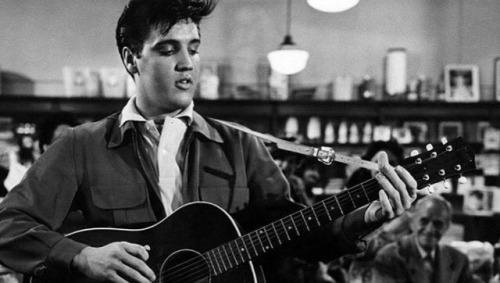
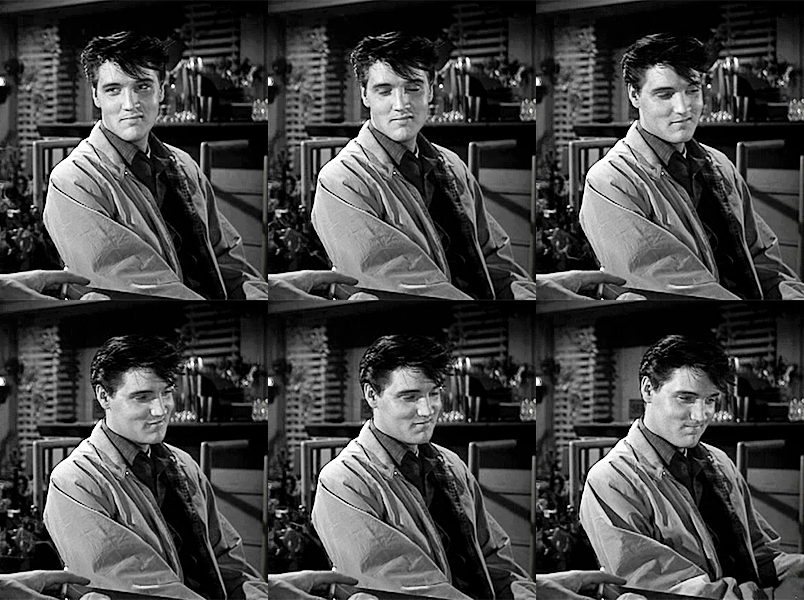
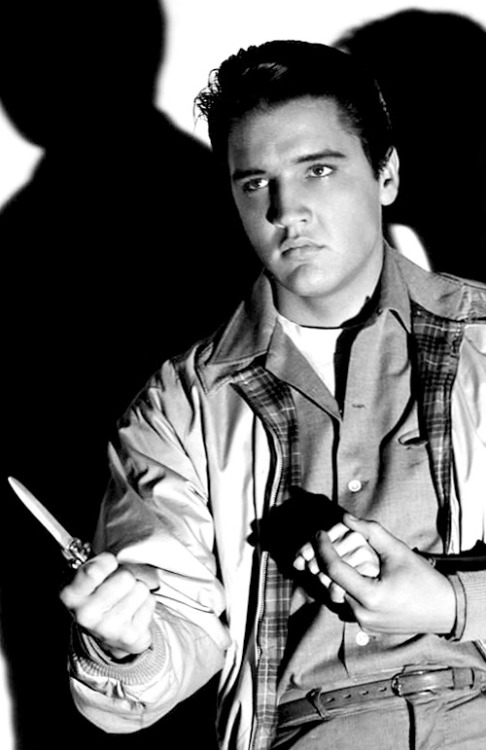
O musical com mais elementos noir tem como estrelas uma garota que deixou Hollywood para se tornar freira, uma atriz que interpretaria Morticia Adams na TV e ninguém menos que Elvis Presley. “Balada Sangrenta” nos traz Danny Fisher (Elvis), um jovem com um grande problema: ele precisa trabalhar antes e depois da escola para sustentar a família. Seu pai, interpretado por Dean Jagger, perdeu o emprego após ficar viúvo, e há tem também uma irmã, Mimi (Jan Shepard), que Danny precisa sustentar.

The musical with the most noir elements stars a girl that would leave Hollywood to become a nun, an actress that would play Morticia Adams on TV and Elvis Presley himself. “King Creole” brings us Danny Fisher (Elvis), a young man with a big problem: he has to work before and after school hours in order to support his family. His father, played by Dean Jagger, has lost his job after becoming a widow, and there is also a sister, Mimi (Jan Shepard), that Danny has to help support.


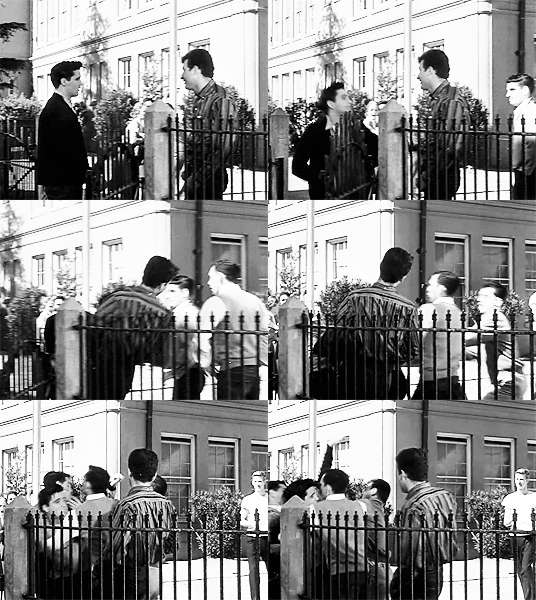
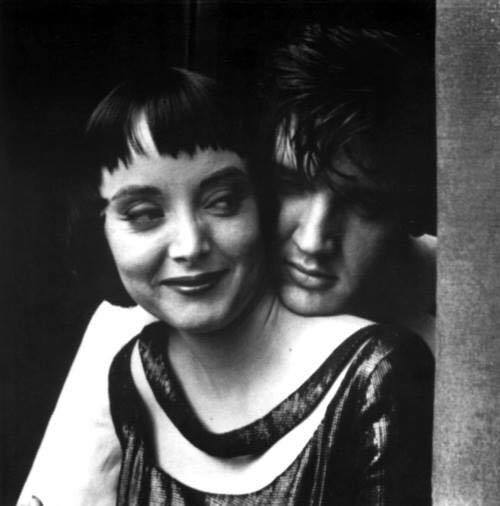
Uma manhã, em um bar, ele salva uma mulher, Ronnie (Carolyn Jones), de um namorado abusivo. Ronnie e Danny vão de táxi até a escola de Danny, e antes de entrar na classe Danny briga com um colega. Depois da briga, a professora decide que a punição de Danny será não receber o diploma. Danny decide abandonar a escola.

One morning, at a bar, he saves a woman, Ronnie (Carolyn Jones), from an abusive date. Ronnie and Danny ride to Danny’s school, and before entering class Danny has a fight with a schoolmate. After this fight, his teacher decides that Danny won’t get his diploma as a punishment. Danny then drops out from school.


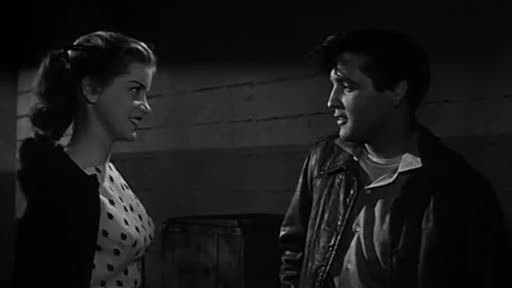
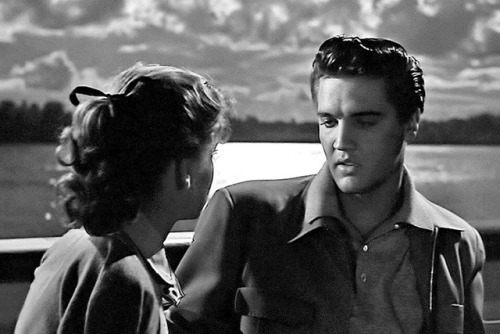
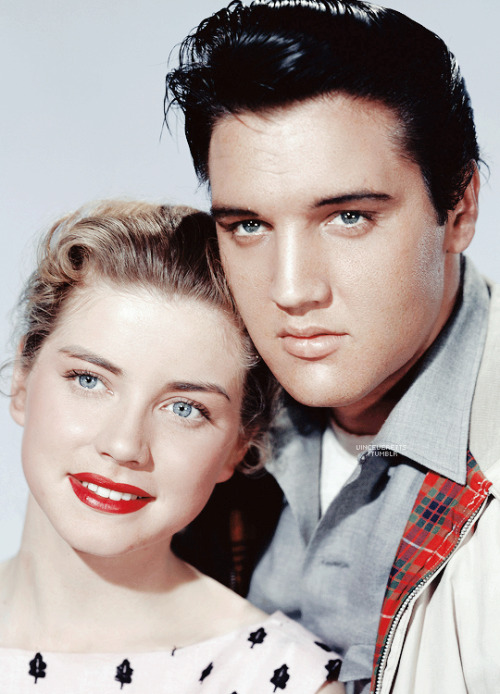
Depois disso, Danny se junta a uma gangue! O líder da gangue, Shark (Vic Morrow), manda Danny distrair os clientes enquanto a gangue rouba uma lanchonete. Danny os distrai cantando, e chama a atenção da garçonete Nellie (Dolores Hart), que percebe que ele é cúmplice do roubo. Eles começam a conversar e se dão bem. Uma noite, Danny leva Nellie a um quarto de hotel para transar, o que ela refusa, mas diz que ainda gostaria de vê-lo em circunstâncias diferentes. É a velha Hollywood sendo ousada!

Next, Danny joins a gang! The gang leader, Shark (Vic Morrow), orders Danny to distract customers while the gang robs a bar. Danny distracts by singing, and calls the attention of the waitress Nellie (Dolores Hart), who realizes he is accomplice in the robbery. They start chatting and hit it off. One night, Danny takes Nellie to a hotel room to have sex, which she refuses, but saying that she would still like to see him again, under different circumstances. Daring old Hollywood at its best.


Logo Danny é descoberto por Charlie LeGrand (Paul Stewart), que o convida para cantar em sua boate, chamada King Creole. Esta é uma das poucas boates na cidade que não pertencem ao perigoso Maxie Fields (Walter Mathau), o novo namorado de Ronnie. Danny se torna cantor contra a vontade do pai – o senhor Fisher agora trabalha como farmacêutico.

Soon Danny is discovered by Charlie LeGrand (Paul Stewart), who invites him to sing at his nightclub, the King Creole. The King Creole is one of the few clubs in the city not owned by dangerous Maxie Fields (Walter Matthau), Ronnie’s current boyfriend. Danny becomes a singer against his father wishes – Mr. Fisher is now working as a pharmacist.


E muitas outras coisas acontecem no filme: traição, chantagem, espancamentos por gangues, tiros, brigas com faca, triângulos amorosos. Danny percebe que está dividido entre a angelical Nellie e a sensual Ronnie. Ele também tem problemas em viver sabendo que seu pai não aprova sua carreira como cantor.

Much more happens in the movie: betrayal, blackmail, gang beatings, shootings, knife fights, love triangles. Danny finds himself torn between angelic Nellie and sexy Ronnie. He also has trouble living with his father’s disapproval of his singing career.


Vemos muitos traços noir no filme. Um dos mais óbvios e que eu aprendi no curso “Investigating Film Noir” do TCM são as fontes de iluminação visíveis – como lâmpadas que são incluídas nas tomadas. É óbvio que muitas lâmpadas e lustres apareceriam na boate, mas também temos as lâmpadas da casa de Danny incluídas nas tomadas. As cenas na casa dele, aliás, são cheias de sombras, assim como as cenas nos becos.

We see many noir traits in the film. One obvious one that I learned at the Investigating Film Noir course from TCM is the visible sources of lighting – like lamps included in the shots. It’s clear that many lamps and chandeliers would be featured in the club, but we also have the lamps in Danny’s house included in the shots. The scenes in his house, by the way, are full of shadows, just like scenes in the alleys.


Danny está dividido entre dois mundos, representados pelas duas mulheres: o mundo caseiro que Nellie representa, e o selvagem mundo do show business que Ronnie representa. Mas Ronnie não é uma femme fatale: ela não é a vamp sedutora responsável pela desgraça do protagonista. Ela é uma mulher que precisa ser salva de seus namorados abusivos e que apenas timidamente implora pelo amor de Danny, em vez de tomá-lo ferozmente.

Danny is torn between two worlds, represented by the two women: the homely world that Nellie represents, and the wild show business world that Ronnie represents. But Ronnie isn’t a femme fatale: she is not a seductive vamp responsible for the leading man’s disgrace. She is a woman who needs to be rescued from abusive relationships and only timidly begs for Danny’s love instead of going ferociously for it.


O director Michael Curtiz trabalhou em diversos filmes, dos anos 1910 até os anos 60. Seu maior título noir é “Alma em Suplício / Mildred Pierce”, de 1945. Ele definitivamente quis que “Balada Sangrenta” tivesse características noir – ele insistiu para que o filme fosse filmado em preto e branco. O diretor de fotografia Russel Haran tinha ainda mais experiência noir: trabalhou no icônico “Mortalmente Perigosa / Gun Crazy” (1950).

Director Michael Curtiz worked in many productions, from the 1910s to the 1960s. His most nourish title is “Mildred Pierce”, from 1945. He definitely wanted “King Creole” to have noir qualities – he was the one who decided to shoot it in black and white. Cinematographer Russel Harlan was even more experienced in noir: he had worked in the iconic “Gun Crazy” (1950).


Conforme os créditos rolam, e antes disso, quando o povo canta, descobrimos que o filme se passa em New Orleans. A cidade também foi cenário de filmes noir como “Férias de Natal” (1944), “A Aranha” (1945) e principalmente “Pânico nas Ruas” (1950). Estamos acostumados a ver filmes noir ambientados em Nova York ou, mais comumente, em San Francisco, mas New Orleans também é um ambiente perfeito para o noir. Nas poucas locações e nos muitos cenários construídos em estúdio, podemos ver a iluminação noir – com as cenas externas tendo um look bem natural.

While the credits role, and even before, when some people sing, we know the film is set in New Orleans. This city was also the set of noir like “Christmas Holiday” (1944), “The Spider” (1945) and mainly “Panic in the Streets” (1950). We are used to seeing noir movies set in New York or, more often, San Francisco, but New Orleans is also a perfect setting for noir. At the few location shootings and the many studio sets, we can see the noir lighting both– with the outside scenes looking very natural.


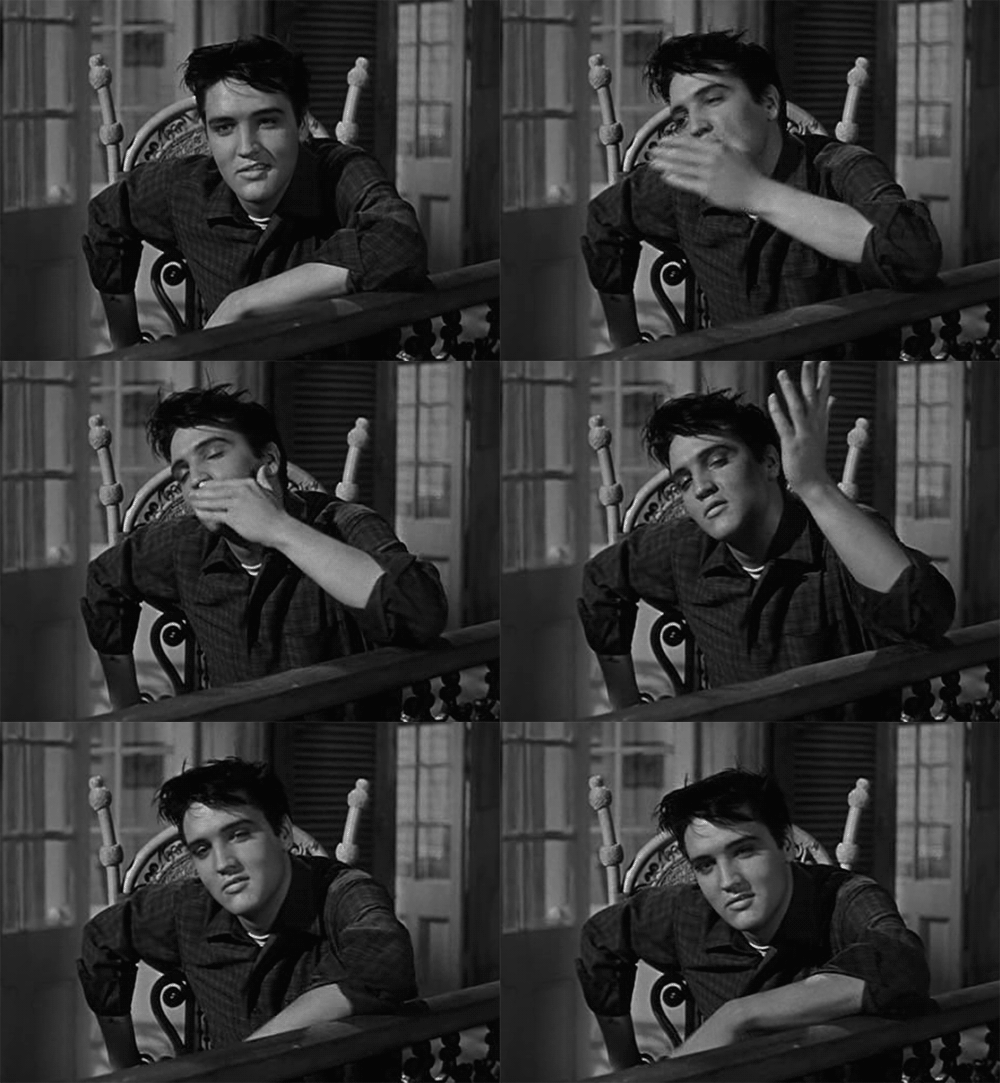
Danny foi o personagem que Elvis gostou mais de interpretar. De fato, “Balada Sangrenta” foi o filme em que Elvis mais mostrou suas habilidades de atuação. Seu talento e comportamento no set foram elogiados pelo diretor Michael Curtiz, que o chamou de “garoto adorável”, e pelo colega Walter Matthau, que disse “ele era muito elegante, contido, e refinado, e sofisticado”.

Danny was the character that Elvis liked the most to play. Indeed, “King Creole” is the film in which Elvis showcases the most of his acting abilities. His talent and behavior on set were praised by his director Michael Curtiz, who said Elvis was “a lovely boy”, and co-star Walter Matthau, who said “he was very elegant, sedate, and refined, and sophisticated”.


Michael Curtiz trabalharia novamente com Dolores Hart cinco anos mais tarde, em “Francisco de Assis” (1961). Ela fez mais quatro filmes nos anos 60 e deixou Hollywood para se tornar freira – o que faz da Irmã Dolores provavelmente a única freira a ter beijado Elvis. Ela tinha dúvidas sobre sua vocação religiosa desde 1959, quando visitou a Abadia Regina Laudis, e seu encontro com o Papa João XXIII durante as filmagens de “Francisco de Assis” confirmou sua vocação. Dolores nunca se arrependeu da decisão.

Michael Curtiz would work with Dolores Hart again five years later, in “Francis of Assisi” (1961). She did four more films in the 1960s and left Hollywood to become a nun – which probably makes Sister Dolores the only nun to have kissed Elvis. She had doubts about her religious vocation since 1959, when she visited the Regina Laudis Abbey, and her meeting with Pope XXIII during the shooting of “Francis of Assisi” sealed it. Dolores never regretted her decision.


Eu gosto de defender a tese de que, não importa se noir é um gênero ou um movimento, qualquer filme pode ter toques noir. “Balada Sangrenta” definitivamente tem estes toques. Além de uma trama incrivelmente complexa e emocionante, o filme trata de crime, amor, corrupção, gangues... e quem disse que não poderia haver música no meio disso tudo?

I like to defend the thesis that, no matter if noir is a genre or a movement, any film can have noir touches. “King Creole” definitely has those touches. Besides its incredibly complex and surprising plot, the film deals with crime, love, corruption, gangs… and who said there couldn’t be music in the middle of all this?

This is my contribution to the Dolores Hart blogathon, hosted by Virginie at The wonderful World of Cinema.

P.S.: Que outro musical eu consider noir? Vocês devem estar se perguntando, e eu responderei: eu considero que um número musical em particular em “A Roda da Fortuna” (1953) seja noir: o balé The Girl Hunt. Tudo de noir está ali: o detetive, a femme fatale, o crime, o amor fracassado... é um roteiro noir em forma de música.
P.S.: Which other musical do I consider noir? You may be making this question, and I’ll answer: I consider a particular musical sequence in “The Band Wagon” (1953) to be noir: the Girl Hunt ballet. Everything noir is there: the detective, the femme fatale, the crime, the doomed love… It’s a noir screenplay put into a song.  
Sunday, October 14, 2018

O legado de “Um Estranho Casal” / The lasting legacy of “The Odd Couple”


“Você é um Felix ou um Oscar?” Para algumas pessoas, esta questão não tem significado. Mas, para milhões de pessoas que conhecem a obra de Neil Simon, ela significa muito. Responder se você é Oscar ou Felix é como responder se sua personalidade é Tipo A ou Tipo B – diz tudo sobre você. Sim, é uma maneira reducionista de classificar as pessoas – em apenas dois grupos – mas se havia alguém capaz de criar personagens que representam todo tipo de gente, este alguém era Neil Simon.

Are you a Felix or an Oscar?” For some people, this question means nothing. But, for millions of people familiar with Neil Simon's work, it means everything. Answering if you are Oscar or Felix is like answering if you have Type A or Type B personality – it says all that is needed to know about you. Yes, it is a reductive way to classify people - in only two groups - but if there was someone who could create characters to represent all kinds of people, it was Neil Simon.
 
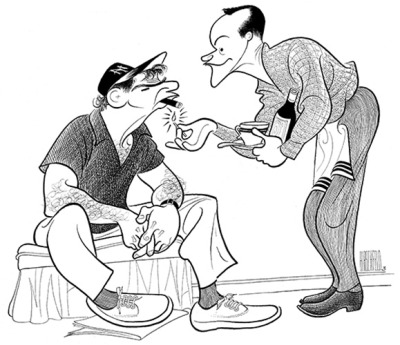
The Odd Couple by Al Hirschfeld
A peça “Um Estranho Casal” estreou em 1965. A inspiração para a peça é controversa. O jornal The Washington Post cita o divórcio do roteirista de TV Adam Bernstein, enquanto Mel Brooks alega que foi o seu primeiro divórcio que inspirou Neil Simon a escrever a peça. De qualquer maneira, aqui está a primeira informação importante sobre a peça: ela trata da vida após o divórcio – uma prática que só se tornou socialmente aceitável poucas décadas atrás.

The play “The Odd Couple” premiered in 1965. The inspiration for the play is controversial, however. The Washington Post cites the divorce of TV writer Adam Bernstein, while Mel Brooks alleges that it was his first divorce that inspired Neil Simon to write the play. Anyway, here it is the first important thing about the play: it was about life after divorce – a practice that only became socially accepted a few decades ago.
 
Neil Simon
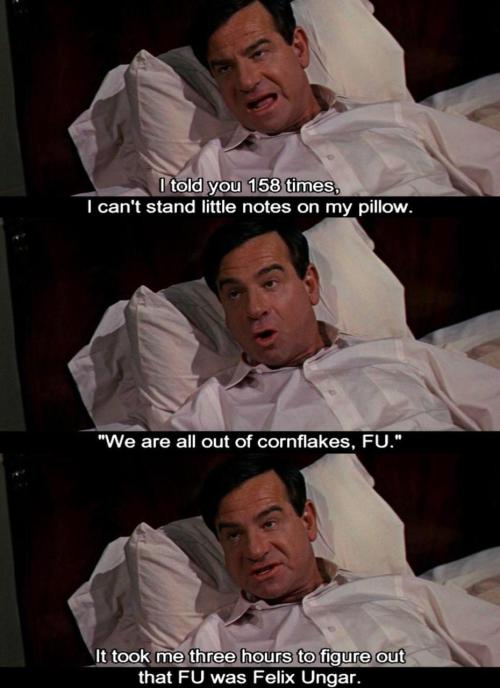
A história é incrivelmente simples: Felix Ungar, um jornalista, tem de sair de casa durante o processo de divórcio e sua única opção é ficar no apartamento do amigo Oscar Madison, um jornalista esportivo divorciado. O problema é que Felix e Oscar são completamente diferentes. Para Felix, o copo sempre está meio vazio, e há sempre algo que precisa ser limpo. Para Oscar, o copo está meio cheio, e não há problema em viver em meio a um pouco de caos.

The plot is incredibly simple: Felix Ungar, a newswriter, gets thrown out of his house by his wife and his only option is to go live with his friend Oscar Madison, a divorced sportswriter. The problem is that Felix and Oscar have completely different approaches to life. For Felix, the glass is always half empty, and there is also something to be cleaned. For Oscar, the glass is half full and there is no problem about living among some chaos.
 
Art Carney and Walter Matthau on Broadway
A peça ganhou quatro prêmios Tony, e os direitos de adaptação foram comprados pela Paramount. Neil Simon escreveu o roteiro, Walter Matthau voltou a interpretar Oscar após ganhar um Tony por sua performance, e Jack Lemmon veio interpretar Felix – que era feito por Art Carney no teatro. O filme foi dirigido por Gene Sacks, enquanto a peça foi dirigida por Mike Nichols.

The play won four Tonys, and its adaptation rights were bought by Paramount. Simon adapted the play into an screenplay, Walter Matthau reprised his Tony-winning role as Oscar and Jack Lemmon was brought to play Felix – it was Art Carney who originally played the character on the stage. The film was directed by Gene Sacks – while the play was directed by Mike Nichols.


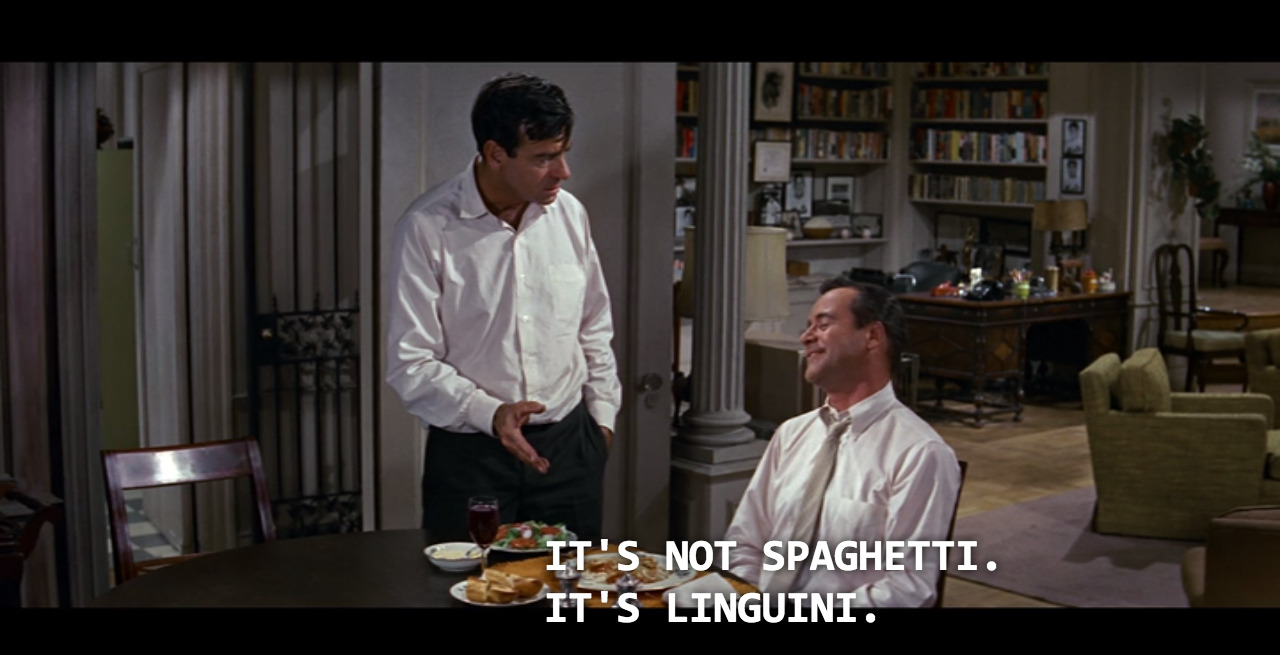
A adição de Jack Lemmon foi maravilhosa. Felix é meu personagem favorito em “Um Estranho Casal”, e ele é a estrela das cenas que se passam fora do apartamento – cenas estas que foram escritas exclusivamente para o filme. Felix é neurótico e maluco por limpeza, e seu comportamento enlouquece Oscar. Seja durante um jogo de pôquer entre amigos ou durante um encontro com as irmãs Pigeon, Felix mostra que não se esqueceu da esposa, e que sua obsessão com limpeza pode ser uma tentativa de colocar as coisas em ordem em sua vida novamente.

The addition of Jack Lemmon was a marvelous one. Felix is my favorite of “The Odd Couple”, and he is the star of the scenes outside the apartment – scenes that were written exclusively for the film. Felix  is neurotic and crazy about tidiness, and his behavior drives Oscar insane. May it be during poker nights with their mutual friends or during a double date with the peculiar Pigeon sisters, Felix shows that he hasn't forgotten his wife, and his cleaning obsession may be a way of trying to put things back together in his life.


A próxima parada de “Um Estranho Casal” era a televisão, com Tony Randall como Felix e Jack Klugman como Oscar. Esta versão durou cinco temporadas, e só na última Neil Simon expressou aprovação frente a adaptação. Em 1982, a sitcom foi refeita, com Ron Glass como Felix e Demond Wilson como Oscar. E, finalmente, em 2015, houve uma nova versão para a TV, com Thomas Lennon como Felix e Matthew Perry como Oscar.

“The Odd Couple” was headed next for television, with Tony Randall as Felix and Jack Klugman as Oscar. This iteration lasted five seasons, and only by the last one Neil Simon expressed approval of the adaptation. In 1982, the sitcom was remade, with Ron Glass as Felix and Demond Wilson as Oscar. And, finally, in 2015 there was a new TV version, with Thomas Lennon as Felix and Matthew Perry as Oscar.
 
1970s
1980s
2010s
Quando a sitcom de 1975 acabou, a coisa mais psicodélica e típica dos anos 70 aconteceu: uma adaptação animada de “Um Estranho Casal”. Em “The Oddball Couple”, o arrumadinho Spiffy, um gato, e o bagunceiro Fleabag, um cão, dividem a casa, o carro e o escritório – eles dividem tudo tão perfeitamente que estas coisas todas são metade arrumadas e metade bagunçadas. Obviamente, eles não eram divorciados, apenas colegas de quarto. A série teve 16 episódios de meia hora cada.

As the 1975 sitcom ended, the most psychedelic and 1970s thing possible happened: a CARTOON adaptation of “The Odd Couple”. In “The Oddball Couple”, the orderly Spiffy, a cat, and the messy Fleabag, a dog, share a house, a car and an office – they share those things so perfectly that exactly half of each of these is neat, and half is messy. Of course, they were not divorced, only roommates. The cartoon had 16 half-hour episodes.


Neil Simon também fez algo para as garotas. Em 1985, ele escreveu “The Female Odd Couple”, que tinha basicamente a mesma história, mas com a ordeira Florence Ungar e a desleixada Olive Madison. Na Broadway, Florence foi interpretada por Sally Struthers e Olive por Rita Moreno. As irmãs Pigeon foram substituídas pelos irmãos Costazuela, e um deles foi interpretado por Tony Shalhoub, em sua estreia na Broadway. A peça encerrou após 295 performances e foi remontada algumas vezes.

Neil Simon also had something for the girls in store. In 1985, he wrote “The Female Odd Couple”, which had basically the same plot, but now starring tidy Florence Ungar and sloppy Olive Madison. On Broadway, Florence was played by Sally Struthers and Olive by Rita Moreno. The Pigeon sisters were  replaced by the Costazuela brothers, and one of them was played by Tony Shalhoub in his Broadway debut. The play closed after 295 performances and was revived a few times.


Não há dúvida de que a versão com Lemmon e Matthau é a definitiva, e a mais amada pelos fãs. É por isso que foi feita uma sequência, trinta anos após a estreia do filme original, e o roteiro foi escrito pelo próprio Neil Simon – diz-se que o autor trabalhou neste roteiro por dez anos.

There is no doubt that the Lemmon / Matthau version is the definitive one, and the most cherished by the fans of the story. That's why they even made a sequel, thirty years after the original premiered, and the screenplay was written by Neil Simon himself – who is said to have worked ten years on this sequel idea.


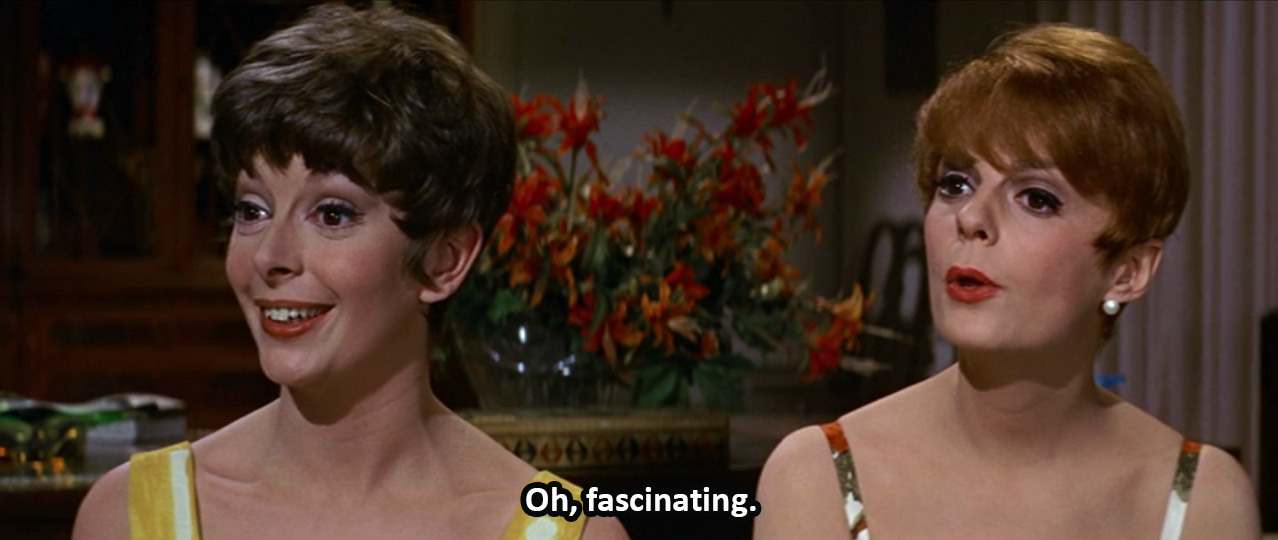
Duas queridas do público são as irmãs Pigeon. No filme de 1968 elas são interpretadas por Monica Evans (Cecily) e Carole Shelley (Gwendolyn), ambas vindas da montagem original da Broadway. Elas voltaram a trabalhar juntas na sitcom de “Um Estranho Casal” em 1970 e depois dublaram ambas personagens animadas em “Aristogatas” (1970) – as irmãs gansas Abigail e Amelia – e em “Robin Hood” (1973) – com Monica fazendo Maid Marian e Carole Lady Cluck.

Two favorites of the public are the Pigeon sisters. In the 1968 movie they are played by Monica Evans (Cecily) and Carole Shelley (Gwendolyn), both coming from the original Broadway production. They worked together again in the sitcom “The Odd  Couple” in 1970 and then voicing animated characters in “The Aristocats” (1970) – the geese sisters Abigail and Amelia – and in “Robin Hood” (1973) – with Monica Evans voicing Maid Marian and Carole Shelley voicing Lady Cluck.


É interessante notar que Neil Simon escolheu chamar os amigos que vivem juntos de “casal”. Assim como um casal, eles dividem o mesmo teto. E, como um casal, Felix e Oscar discutem, brigam, discordam, mas também aprendem um com o outro, e mudam um ao outro. É por isso que a história ainda nos toca: todos nós temos um pouco de Felix e de Oscar dentro de nós.

It's interesting to notice how Neil Simon chose to call the two friends who live together a “couple”. Like a couple, they do live under the same roof. And, like a couple, Felix and Oscar argue, fight, disagree, but they also learn with each other, and change each other. That's why we the story still resonates with us: we all have a little of both Felix and Oscar in us.

This is my contribution to the Neil Simon blogathon, hosted by Paddy and Rick at Caftan Woman and Wide Screen World.


Monday, October 8, 2012

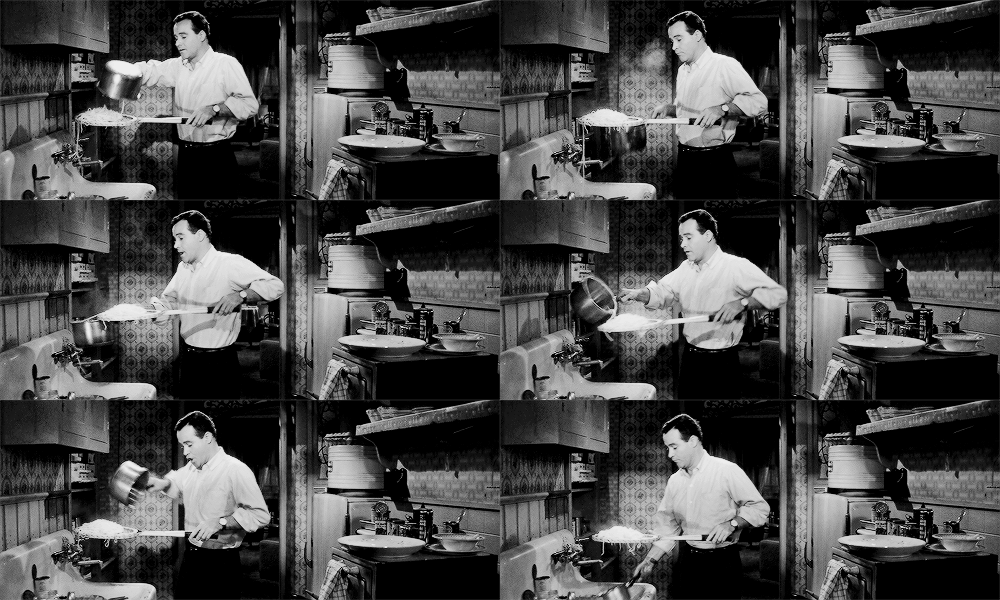
Jack Lemmon: fatos rápidos

Ele nasceu no elevador de um hospital em Massachussets, em 1925, e faleceu em 2001, vítima de câncer de cólon e câncer metástico de bexiga.

He was born in the elevator of a hospital in Massachussets in 1925 and died in 2001, due to colon cancer and methastic bladder cancer. 
Aos oito anos já sabia que queria ser ator e, durante a faculdade em Harvard, participou de diversos clubes de teatro. Depois de formado, serviu na Marinha.

When he was eight he already wanted to be an actor. During college in Harvard, he was part of several theater clubs. He was even president of the Harvard Hasty Pudding Club! After graduation, he served in the Marine. 
Em 1954 fez sua estreia oficial no cinema ao lado de Judy Holliday na comédia “Demônio de Mulher”. Antes disso, ele havia sido um extra em “Até Parece Mentira”, de 1949.

In 1949 he made his official film debut alongside Judy Holliday in the comedy “It Should Happen to You”. Before that, he was an extra in “The Lady Takes a Sailor”, from 1949.
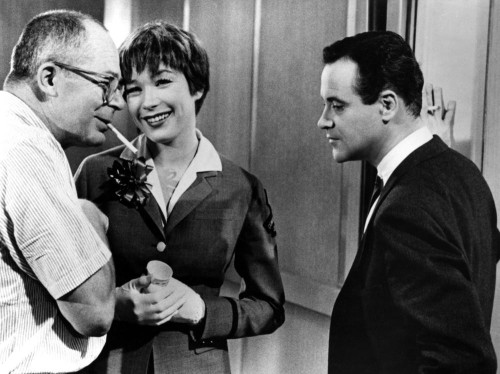
Trabalhou como o diretor Billy Wilder em sete filmes. Wilder dizia que ele era como um “presunto fino, que apenas precisava ter a fina camada de gordura retirada”, referindo-se à necessidade de burilar o talento de Jack, que tendia a exagerar em algumas atuações.

He worked with director Billy Wilder in seven films. Wilder said that Lemmon was like “fine ham, only needing a little of his fat chopped off”. In this quote Wilder is mentioned Jack’s tendency of overacting, so he had to control and downplay every now and then.
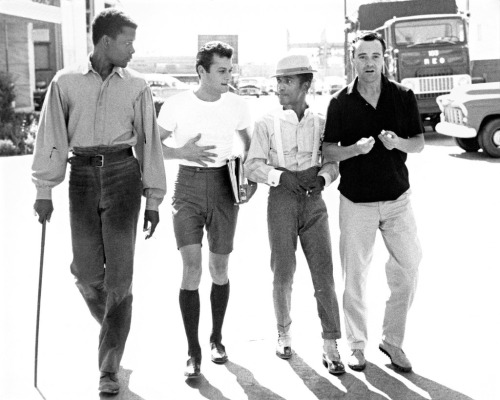
Fez quatro filmes com Blake Edwards, dois com Tony Curtis e onze com seu amigo Walter Matthau. O único filme dirigido por Lemmon, Kotch (1971), rendeu a Matthau uma indicação ao Oscar como Melhor Ator Coadjuvante.

He made four films with Blake Edwards, two with Tony Curtis and eleven with his good friend Walter Matthau. The only film ever directed by Jack Lemmon, Kotch (1971), gave Matthau a Supporting Actor nomination at the Oscars.
Sua produtora JML esteve por trás de “Rebeldia Indomável” (1967). Como prova de sua gratidão pelo apoio, Paul Newman, o astro do filme, convidou Lemmon para interpretar Sundance Kid em “Butch Cassidy and the Sundance Kid” (1969), mas o ator recusou pois não gostava de andar a cavalo e também acreditava que vários de seus personagens anteriores tinham traços de Sundance.

His producer JML was behind “Cool Hand Luke” (1967). To thank him for the support, Paul Newman asked if Jack wanted to play Sundance Kid in “Buth Cassidy and the Sundance Kid” (1969). Lemmon refused the offer because he didn’t like to ride horses and also because he thought several of his former characters were similar to the Sundance Kid.
Ele chegou a gravar um disco enquanto filmava “Quanto mais quente melhor / Some like it hot” (1959).

He recorded an album while filming “Some Like It Hot” (1959)

Ele aprendeu a tocar piano sozinho, e também era capaz de tocar órgão, gaita e contrabaixo. 

He taught himself to play the piano and was also able to play the organ, the harmonica and the double-bass.
Ganhou um Oscar de Melhor Ator Coadjuvante em 1956 por “Mister Roberts” e outro de Melhor Ator em 1974 por “Sonhos do Passado”, sendo o primeiro a conseguir este feito. Também é um dos três felizardos a ganhar duas vezes o prêmio de Melhor Ator em Cannes (os outros dois são Marcello Mastroianni e Dean Stockwell).

He won the Best Supporting actor Oscar in 1956 for “Mister Roberts” and the Best Actor one in 1974 for “Save the Tiger”, being the first actor to do so (Kevin Spacey did the same in 1996 and 2000, and thanked Lemmon in his later speech). He is also one of the three men who won the Best Actor award at Cannes twice (the other two are Marcello Mastroianni and Dean Stockwell).

Foi casado duas vezes e teve um casal de filhos, um de cada casamento.

He was married twice and had two children: Chris, from hsi first wife, and Courtney, from his second wife, actress Felicia Farr.
Em 1998 foi indicado ao Globo de Ouro de Melhor Ator num filme feito para a TV e perdeu para Ving Rhames. Durante seu discurso, Rhames chamou-o ao palco e lhe deu o prêmio.

In 1998 he was nominated for a Best Actor in a TV-Movie Golden Globe and lost to Ving Rhames. During his speech, Rhames asked Lemmon to go on the stage and handled him the award.
Related Posts Plugin for WordPress, Blogger...