} Crítica Retrô: 1953

Tradutor / Translator / Traductor / Übersetzer / Traduttore / Traducteur / 翻訳者 / переводчик

Showing posts with label 1953. Show all posts

Saturday, March 5, 2022

Investida de Bárbaros (1953) / The Charge at Feather River (1953)


Alguns filmes são essenciais por causa de sua incrível trama, grandes atuações, efeitos especiais impressionantes, glorioso Technicolor, CinemaScope de tirar o fôlego, som estereofônico. Outros são essenciais porque trouxeram algo novo à história do cinema, quebrando paradigmas e definindo gêneros e eras. Outros filmes são notas de rodapé: vale a pena vê-los se você é um completista ou bastante curioso – por exemplo, os primeiros filmes de grandes estrelas. “Investida de Bárbaros” (1953) é um destes filmes de nota de rodapé, um filme que nos interessa porque foi nele que o famoso grito Wilhelm ganhou este nome.

Some movies are essential viewing because of their amazing plot, great acting, impressive special effects, glorious Technicolor, breathtaking CinemaScope, stereophonic sound. Others are essential because they brought something new to the history of film, breaking paradigms and defining genres and eras. Some movies are footnote movies: they are worth viewing if you’re a completist or just curious – for instance, the first movie of a big star. “The Charge at Feather River” (1953) is one of those footnote movies, one that interests us because it’s where the famous Wilhelm scream got its name.

Depois da Guerra de Secessão, o Forte Bello se tornou um lugar pacífico com recrutas que não são muito espertos. O comandante sabe disso e chama um ex-soldado, Miles Archer (Guy Madison), para uma missão especial: comandar um regimento que resgatará duas jovens que foram sequestradas por índios anos antes, quando a família delas foi dizimada. De início relutante, Miles aceita o trabalho quando descobre que o irmão das moças é seu velho amigo Johnny (Ron Hagherty).

After the Secession War, Fort Bello became a pacific place with rookies that are not very bright. The officer knows this and calls a former soldier, Miles Archer (Guy Madison), for a special mission: to command a regiment that will rescue two young women who were kidnapped by Indians many years before, when their family was decimated. At first reluctant, Miles accepts the job when he learns that the girls’ brother is his old friend Johnny (Ron Hagherty).

Entre os homens escolhidos por Miles está o sargento Charlie Baker (Frank Lovejoy), que acabou de encontrar sua esposa tomando chá – oh! - com outro homem que também fará parte da missão, o soldado Ryan (Steve Brodie). Tudo já parece bem complicado, e vai ficar ainda mais difícil porque uma das moças sequestradas, Jennie (Vera Miles), já se adaptou à vida entre os Cheyennes. Quando as moças são levadas, os índios atacam o Forte Bello, e o regimento tem de ir a pé, carregando Johnny ferido, até o próximo posto, Forte Darby.

Among the men assembled by Miles there is sergeant Charlie Baker (Frank Lovejoy), who just caught his wife having tea – gasp! - with another man who will also be part of the mission, private Ryan (Steve Brodie). Everything seems already complicated enough, and it’ll get even more difficult because one of the kidnapped ladies, Jennie (Vera Miles), is fully adapted to life among the Cheyennes. When the ladies are taken, the Indians attack Fort Bello, and the regiment has to go on foot, carrying a wounded Johnny, to nearby Fort Darby.

Com uma trama bem parecida com “Rastros de Ódio”, “Investida de Bárbaros” estreou três anos antes do filme de John Ford. É mais um faroeste que retrata os índios como os malvados e o homem branco como o salvador. Por exemplo: assim que o regimento entra em território indígena, eles encontram um velho índio doente que foi deixado para trás para morrer – um dos homens brancos então diz “é por isso que chamamos eles de selvagens”. Também fica implícito que os índios estupraram a mais velha das moças, Anne (Helen Westcott). Para Jennie, a garota branca que vive como índia e ama um índio, não há redenção: a morte é o único fim possível para ela.

With a plot very similar to “The Searchers”, “The Charge at Feather River” actually predates John Ford’s film by three years. It’s another western that paints Indians as the bad guys and white men as the saviors. For instance: right when the regiment enters Indian territory, they find an old Indian who is sick was left to die – one of the white men then says “no wonder why we call them savages”. It’s also implied that the Indians have raped the oldest of the sisters, Anne (Helen Westcott). For Jennie, the white girl who lives like an Indian and loves an Indian, there is no redemption: death is the only possible end for her.

As moças já passaram pelo trauma de serem sequestradas uma vez – isto é, se elas foram realmente sequestradas e não simplesmente resgatadas pelos Cheyennes – e agora têm de passar por isso de novo – porque o que o homem branco faz é outro sequestro. Não é que elas não podem voltar: elas não querem voltar a viver em meio à “civilização”… bem, pelo menos Jennie não quer.

The ladies have already been through the trauma of being kidnapped once – that is, if they were kidnapped at all and not simply rescued by the Cheyennes – and now they’ll have to go though this again – because what the white men do is another kidnapping. It’s not that they can’t go back: they don’t want to go back to living among the “civilization”… well, at least Jennie doesn’t want to.

O título original pode ser traduzido como “A Carga no Rio Pena”, mas o título no Brasil é “Investida de Bárbaros”. Eu me pergunto se o tradutor se referia aos Cheyennes ou aos homens brancos como “bárbaros”. Eu gosto de pensar que os homens brancos são os verdadeiros bárbaros aqui, pois invadem território indígena e começam um verdadeiro massacre.

As a curiosity, the title of the film in Brazil is “Barbarian Assault”. I wonder if the translator was referring to the Cheyennes or to the white men as “barbarians”. I’d like to think that the white men are the real barbarians here, as they invade Indian territory and start a true massacre.

Aos 39 minutos de projeção, o evento pelo qual esperávamos acontece: o soldado Wilhelm, aquele de camisa xadrez, é atingido por uma flecha na perna e grita. Essa não foi, na verdade, a primeira vez que o efeito sonoro foi usado – este título pertence ao filme de Gary Cooper “Tambores Distantes” (1951), no qual o efeito foi gravado pelo dublador Sheb Wooley. Foi em 1977 que o designer de som Ben Burtt batizou o efeito sonoro com o nome do infeliz soldado. De volta a “Investida de Bárbaros”, o soldado Wilhelm não é mais visto, mas acreditamos que ele sobreviveu.

At the 39 minute mark, the event we’ve all been looking forward to happens: private Wilhelm, the one in the checkered shirt, is hit by an arrow in his leg and screams. This wasn’t, however, the first time the sound effect was used – this title belongs to the Gary Cooper vehicle “Distant Drums” (1951), where the effect was recorded off-camera by voice actor Sheb Wooley. It was in 1977 when sound designer Ben Burtt named the sound effect after the unfortunate soldier. Back to “The Charge at the Feather River”, private Wilhelm is not seen again, but we believe he survived.

Além do grito Wilhelm, há algo mais a ser escutado: a ótima trilha de Max Steiner. Steiner chegou em Hollywood para trabalhar na RKO em 1929, e neste estúdio ficou por oito anos. Em 1937, ele foi para a Warner Bros, onde compôs trilhas para cerca de 140 filmes. Max Steiner ganhou três Oscars e sua mais famosa trilha é de “E o Vento Levou…” (1939).

Besides the Wilhelm scream, there is something else to listen to: Max Steiner’s great score. Steiner had entered Hollywood in 1929 at RKO, where he stayed for eight years. In 1937, he went to Warner Bros, where he score about 140 movies. Max Steiner won three Oscars and his most famous score is for “Gone with the Wind” (1939).

Os fãs de faroeste vão gostar de “Investida de Bárbaros”. Tendo estreado no cinema em 3D, o filme tem boas cenas de ação e uma sequência, com flechas dos índios voando através da tela, que ficaria fantástica em 3D. Sim, é um filme de nota de rodapé, uma curiosidade, mas também uma maneira agradável de passar 95 minutos – se você não se importa com os muitos preconceitos que em geral existem nos faroestes.

Western fans will enjoy “The Charge at Feather River”. Released in theaters in 3D, the movie has good action scenes and one sequence, with Indian arrows flying from the screen, that would look fantastic in 3D. Yes, it is a footnote movie, a curiosity, but also a pleasant way to spend 95 minutes – if you don’t bother with the many prejudices that often appear in westerns.


This is my contribution to the Wilhelm Scream blogathon, hosted by Gill at Realweegiemidget Reviews.

Friday, April 19, 2019

Ingênua Até Certo Ponto (1953) / The Moon is Blue (1953)


Eu sou fascinada por filmes que foram condenados ou censurados. Eu amo quando um filme ri na cara da Legião da Decência ou da Igreja Católica. Eu adoro filmes provocantes. Por isso que fiquei intrigada com “Ingênua Até Certo Ponto” (1953), um filme que foi condenado pela Production Code Administration e pela Legião da Decência. Além disso, ele tem o comercial de cerveja mais estranho de todos os tempos.

I’m fascinated by films that were either condemned or censored. I love whenever a film laughed at the face of the Legion of Decency or the Catholic Church. I adore provocative movies. That’s why I was more than intrigued with “The Moon is Blue” (1953), a film that was condemned by the Production Coda Administration and the Legion of Decency. Also, it has the weirdest beer commercial ever.


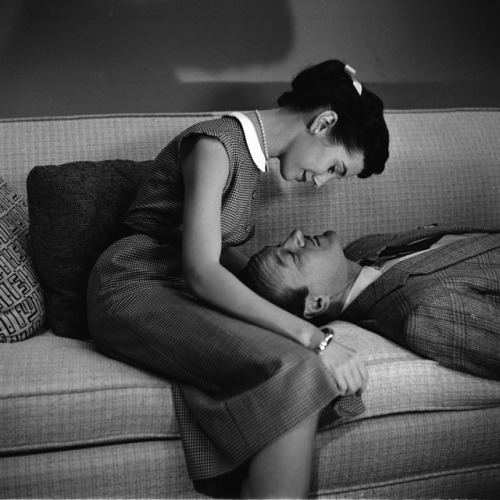
Patty (Maggie McNamara) está vendo as vitrines das lojas quando seus olhos encontram os de um estranho. Este homem começa a segui-la em outras lojas e vai atrás dela até o topo do Empire State Bulding. Isso deveria ser uma sequência engraçada e charmosa, mas se você é uma mulher você sabe que ser seguida por um homem é assustador. Felizmente, este estranho é inofensivo porque ele é interpretado pelo grande William Holden – mas este é só o começo dos problemas para Patty.

Patty (Maggie McNamara) is window shopping when she locks eyes with a stranger. This man starts following her to other stores and eventually to the top of the Empire State Building. It's supposed to be a funny and charming sequence, but if you're a woman you know that being followed by a man is terrifying. Fortunately, this stranger is harmless because he is played by the great William Holden – but this is just the beginning of Patty's problems.


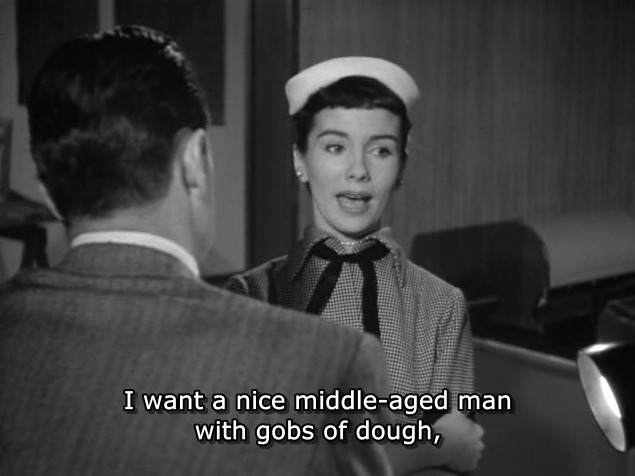
Ainda bem que Patty não é boba. Ela vai com Don (o personagem de Holden) até o escritório dele, e lá ela diz que é atriz e está procurando um homem com quem se casar. Mas não qualquer homem: de preferência um homem de meia-idade que já tenha sido casado e que não vá babar em cima dela. Don é muito jovem e está babando. Um pouco depois, ela também surpreende uma taxista com sua conversa franca com Don sobre as intenções dele e, confuso, ele aceita que o jantar deles tenha “afeto, mas sem paixão”.

A good thing is that Patty is not a fool. She goes with Don (Holden's character) to his office, and there she says that she is an actress trying to get a man to marry her. But not any man: preferably a middle-aged man who had been married before and won't drool over her. Don is too young and currently drooling. A while later, she also surprises a taxi driver with her blunt talk to Don about his intentions, and, confused, he agrees that their dinner can have “affection, but no passion”.


Depois de uma conversa reveladora no apartamento de Don, ele sai para comprar ingredientes para Patty preparar o jantar. Enquanto Don está fora, seu vizinho David (David Niven) bate à porta à procura de Don, e se surpreende ao encontrar uma garota como Patty no lugar. David quer falar com Don porque a filha de David, Cynthia (Dawn Addams), passou a noite com Don e estava furiosa porque “ele fez mal a ela” – nesse caso, ela estava furiosa porque Don não a tocou!

After a revealing chat at Don’s apartment, he leaves to buy ingredients for Patty to make dinner. While Don is out, his neighbor David (David Niven) knocks on his door looking for him, and is surprised to find a girl like Patty there. David wants to talk to Don because David’s daughter, Cynthia (Dawn Addams), had spent the night with Don and was sour because “he had done her wrong” – in this case, she was sour because Don didn’t touch her!


David fica para jantar com Don e Patty, e mais tarde David e Patty vão até o apartamento dele, onde ele fala sobre os sentimentos que tem por ela. Cynthia também aparece, e assuntos como virtude, dar o exemplo e pureza são discutidos.

David stays for dinner with Don and Patty, and later David and Patty go to his apartment, when he talks about his feelings for her. Cynthia also appears, and issues like virtue, leading by example and purity are discussed.


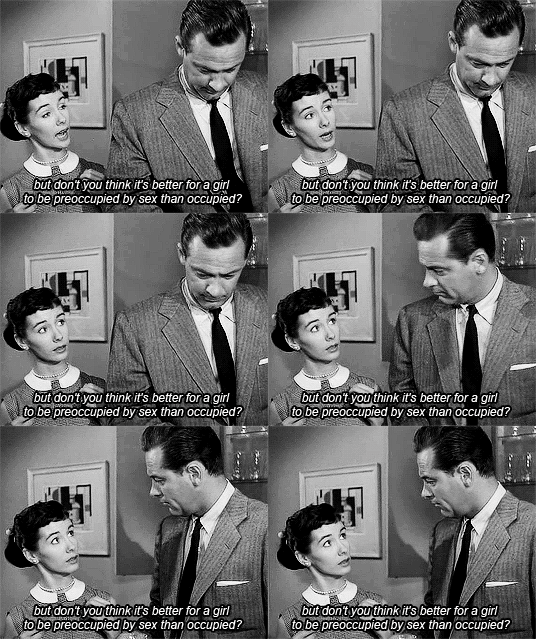
É fácil perceber por que “Ingênua Até Certo Ponto” foi condenado: a protagonista está longe de ser o que era esperado para uma mulher dos anos 1950. Patty O’Neill poderia ser considerada um mau exemplo para as jovens espectadoras. Patty não acredita no amor, é completamente prática ao falar sobre casamento e considera natural discutir sexo e sedução. Ela não quer ilusões românticas, ela quer segurança. Você consegue imaginar, nos anos 50, o que aconteceria se as mulheres começassem a ser tão... EXIGENTES?

It’s easy to see why “The Moon is Blue” was condemned: the leading lady was not what is expected of women to be in the 1950s. Patty O’Neill could even be considered a bad role model for young moviegoers. Patty doesn’t believe in love, she is completely practical when talking about marriage and considers it’s natural to discuss sex and seduction. She doesn’t want romantic illusions, she wants security. Can you imagine, in the 1950s, what would happen if women started being so… DEMANDING?


Tanto Patty quanto Cynthia são novos tipos de mulher, que gostam de ser beijadas e tocadas, e não necessariamente se envolver romanticamente com um homem. Elas não podem dizer não a um homem e não gostam que os homens digam não a elas. Elas são mulheres modernas, modernas demais para os anos 50, mesmo Patty ainda sendo virgem.

Both Patty and Cynthia are new kinds of women, who enjoy being kissed and touched, and not necessarily get romantically involved with a man. They can’t say no to a man and don’t like when a man says no to them. They are modern women, too modern for the 50s, even though Patty is still a virgin.


E aí está o problema: “Ingênua Até Certo Ponto” ousou usar a palavra “virgem” – algo que nenhum outro filme da era do Código Hays havia ousado fazer! E tem mais: este filme também foi pioneiro no uso de “seduzir” e “amante”, por isso a Legião da Decência deu ao filme uma nota C – a mais baixa possível – e a película foi banida em algumas cidades, como Boston e Memphis.

And there lies the problem: “The Moon is Blue” was bold enough to use the word “virgin” – something that no other film from the Code era had done until them! There is more: this film was also a pioneer of the use of both “seduce” and “mistress”, so the Legion of Decency gave it a C rating – the lowest possible –  and the film was banned in some cities, like Boston and Memphis.


“Ingênua Até Certo Ponto” teve origem como uma peça da Broadway que também foi dirigida por Otto Preminger. Assim que ele conseguiu os direitos de adaptação da peça para o cinema, Preminger fez escolhas curiosas no elenco, escalando David Niven, então considerado uma estrela em decadência, e a novata Maggie McNamara, que havia interpretado a protagonista da peça em Chicago. Para equilibrar as coisas, ele escolheu William Holden para completar o trio – Holden era então um ator muito popular nas bilheterias.

“The Moon is Blue” originated as Broadway play that was also directed by Otto Preminger. As he secured the rights to adapt the play to the screen, Preminger made odd cast choices as he chose David Niven, then considered a fading star, and newcomer Maggie McNamara, who had played the lead of the play in Chicago. To balance things, he chose William Holden to complete the trio – Holden was then a very popular actor among moviegoers.


Maggie McNamara é adorável como a tagarela Patty – ela inclusive foi indicada a um Oscar por “Ingênua Até Certo Ponto”, seu primeiro filme. A atriz, que se parecia muito com Jean Simmons, foi uma das três protagonistas de “A Fonte dos Desejos”, de 1954. Infelizmente, sua carreira nunca decolou e anos mais tarde ela passou a trabalhar como datilógrafa para sobreviver. Maggie cometeu suicídio em 1978, aos 48 anos.

Maggie McNamara is adorable as the talkative Patty – she was even nominated for an Oscar for “The Moon is Blue”, her very first film. The actress, who looked a lot like Jean Simmons, was one of the three leads in 1954’s “Three Coins in the Fountain”. Unfortunately, her career never took off and later in life she worked as a typist to survive. Maggie committed suicide in 1978, at age 48.


David Niven ganhou um Globo de Ouro por interpretar David, o que deu nova vida à sua carreira, e William Holden teve um ótimo ano de 1953: ele apareceu em quatro filmes naquele ano – além de uma participação na versão alemã de “Ingênua Até Certo Ponto” – e um desses filmes, “Inferno nº 17”, deu a ele um Oscar. Como uma coincidência curiosa, Otto Preminger interpreta o antagonista de “Inferno nº 17”.

David Niven won a Golden Globe for his portrayal of David, what gave new life to his career, and William Holden had an overall great year of 1953: he appeared in four films that year – plus a cameo in the German version of “The Moon is Blue” – and one of those films, “Stalag 17”, gave him his only Oscar. As a curious coincidence, Otto Preminger plays the antagonist in “Stalag 17”.


No final das contas, “Ingênua Até Certo Ponto” e Otto Preminger riram por último: a United Artists distribuiu o filme mesmo sem o selo de aprovação do Código. O filme foi um sucesso de bilheteria e as pessoas perceberam que ele não tinha nada questionável – ele era, na verdade, um filme bastante decente, charmoso e divertido. Era o começo do fim do Código Hays. Viva “Ingênua Até Certo Ponto”!

In the end, “The Moon is Blue” and Otto Preminger had the last laugh: United Artists distributed the movie even though it didn’t receive a Code Seal from Breen’s office. The film was a box-office hit and people realized that it had nothing to object – it was actually a very decent, charming and entertaining movie. It was the beginning of the end of the Code. Hooray for “The Moon is Blue”!

This is my contribution to the 4th Golden Boy blogathon, hosted by Virginie, Michaela and Emily at The Wonderful World of Cinema, Love Letters to Old Hollywood and The Flapper Dame.


Sunday, April 14, 2019

Salomé (1953) / Salome (1953)


ESTE ARTIGO TEM SPOILERS

THIS ARTICLE HAS SPOILERS

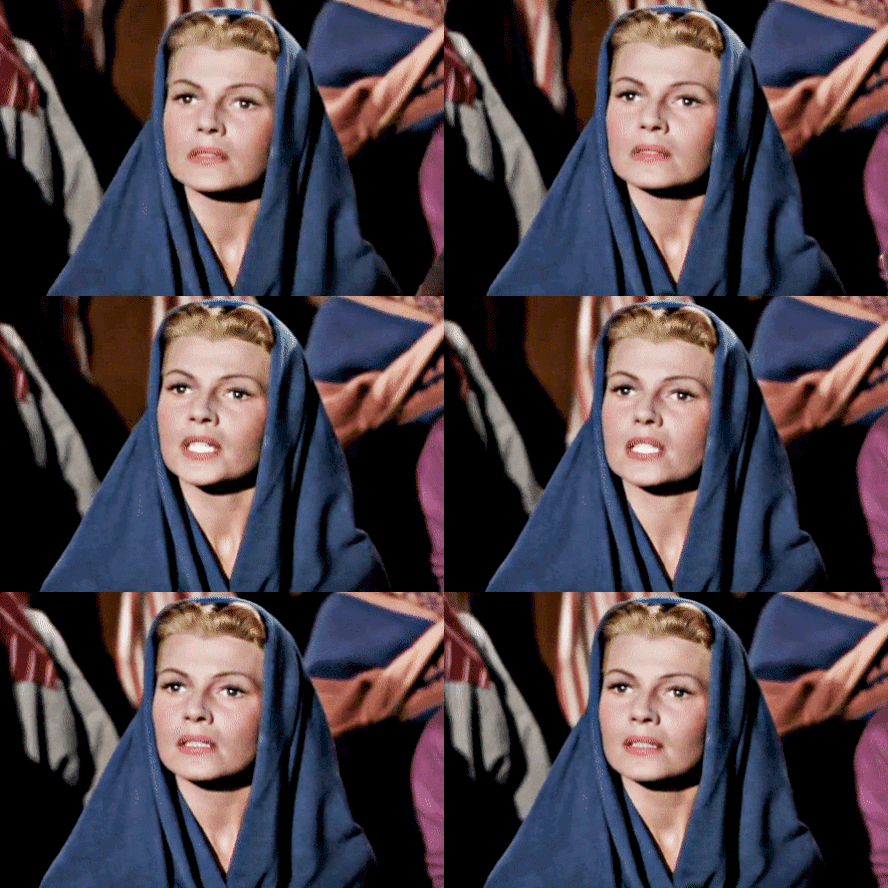
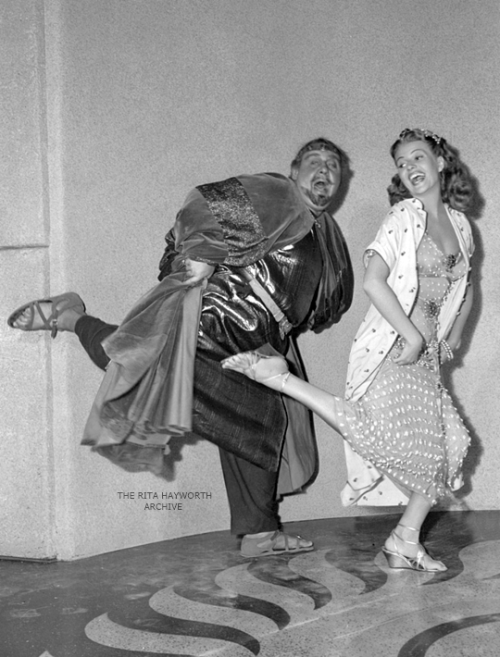
Primeiro, ela foi Gilda, arrasando corações em um cassino em Buenos Aires em 1946. Depois, em 1948, ela foi Carmen, uma cigana que faz um militar se tornar fora da lei na Espanha. O próximo passo para ela foi dar vida à Salomé, que pediu a cabeça de João Batista na Galileia. A atriz Rita Hayworth interpretou muitas femme fatales – na lista, apenas Gilda seria considerada a femme fatale regular do cinema noir – e ela era a escolha óbvia para interpretar a femme fatale bíblica em “Salomé”, de 1953 – e corajosamente subverter a famosa história.

First, she was Gilda, wrecking hearts in a casino in Buenos Aires in 1946. Then, in 1948, she was Carmen, a gypsy that makes an officer become an outlaw in Spain. The next step for her was to embody Salome, who asked for John the Baptist's head in Galilee. Actress Rita Hayworth played many femme fatales – in the list, only Gilda could be considered the common noir femme fatale – and she was the obvious choice to play the Biblical femme fatale in 1953's “Salome” - and boldly subvert the well-known story.


Um pouco do básico de história bíblica: antes de Jesus ficar conhecido como o Messias, seu primo, João Batista, era considerado o Messias, embora sempre negasse isso. John era alguns meses mais velho que Jesus e Jesus, já adulto, foi batizado por João.

A little of Biblical history 101: before Jesus became known as the Messiah, his cousin, John the Baptist, was considered the Messiah, although he denied the title. John was a few months older than Jesus and Jesus, already in his adulthood, was baptized by John.


Assim como outros profetas, João Batista (Alan Badel) prega contra tiranos, como o rei Herodes (Charles Laughton) – o filho de Herodes o Grande, aquele rei que quis matar todos os bebês do gênero masculino quando Jesus nasceu. Quem está mais ansiosa com a crescente popularidade de João é a rainha Herodias (Judith Anderson), que quer que seu marido faça algo antes que o pregador os tire do trono.

Like other prophets, John the Baptist (Alan Badel) preaches and talks against tyrants, like King Herod (Charles Laughton) – the son of Herod the Great, that king who wanted all baby boys killed by the time Jesus was born. The one more anxious about John's growing popularity is Queen Herodias (Judith Anderson), who wants her husband to do something about the preacher before he dethrones them.


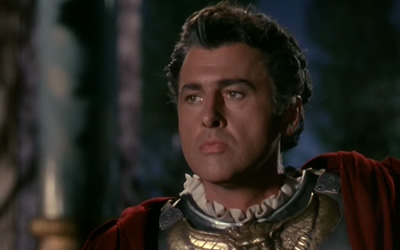
Filha da rainha Herodias e enteada do rei Herodes, a princesa Salomé (Rita Hayworth) vive em Roma. Marcellus (Rex Reason), sobrinho do imperador Tiberius Cesar (Cedric Hardwicke), quer se casar com Salomé, mas o imperador o proíbe, porque Salomé não é romana, e então bane Salomé de Roma. No caminho para casa, ela conhece o comandante Claudius (Stewart Granger), que deve acompanhar a caravana dela par a Galileia. O provocador e pio comandante se apaixona por ela.

Queen Herodias's daughter and king Herod's stepdaughter, Princess Salome (Rita Hayworth), lives in Rome. Marcellus (Rex Reason), the nephew of emperor Tiberius Caesar (Cedric Hardwicke), wants to marry Salome, but the emperor forbids him to do so, because Salome is not a Roman, and banishes Salome from Rome. On her way home, she meets commander Claudius (Stewart Granger), who must accompany her caravan to Galilee. The provocative and pious commander falls in love with her.


Atravessando a planície rumo à Galileia, a caravana encontra João Batista e seus seguidores e ocorre um confronto. Claudius impede que João seja morto por um soldado – ele diz que a morte de João causaria revolta entre o povo, mas na realidade Claudius e João são amigos.

When going by land to Galilee, the caravan meets with John the Baptist and his followers and there is confrontation. Claudius prevents John from being killed by a soldier – he says that killing John would cause uproar among the people, but in reality Claudius and John are friends.


No palácio, o rei Herodes se interessa pela enteada, enquanto a rainha Herodias cria um plano para usar a beleza de Salomé a seu favor. Salomé vai ao mercado e ouve João Batista falando mal da mãe dela, e por isso começa a se opor a ele, o que é perfeito para o plano de Herodias.

In the palace, King Herod lusts over her stepdaughter, while Queen Herodias plots a plan to use Salome's beauty to her favor. Salome goes to the market and listens to John the Baptist speaking ill of her mother, and thus starts to oppose him, which is perfect for Herodias's plan.


Entre 1949 e 1951, Rita Hayworth se afastou de Hollywood ao se casar com o príncipe Ali Khan e se tornar a primeira atriz / princesa. Em 1951, DeMille disse que queria Hayworth para interpretar Salomé em um filme que ele faria no futuro. O chefe da Columbia, Harry Cohn, roubou a ideia e fez “Salomé” em 1953, com Hayworth também como produtora do filme, através de sua produtora Beckworth Company, que produziu três de seus filmes.

Between 1949 and 1951, Rita Hayworth took a break from Hollywood as she married Prince Aly Khan and became the first actress / princess. In 1951, DeMille said he wanted Hayworth to play Salome in an upcoming picture. Columbia boss Harry Cohn stole the idea and made “Salome” in 1953, with Hayworth serving also as a producer, under her company Beckworth, that produced only three of her movies.


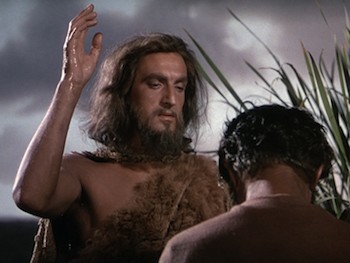
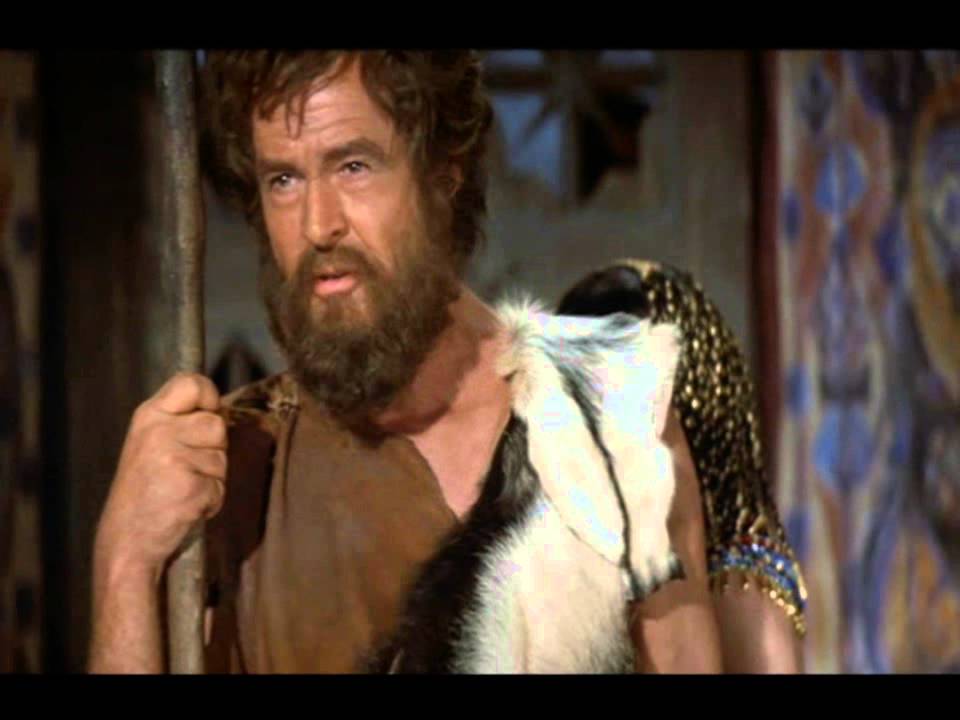
Alan Badel, olhando para cima o tempo todo com olhos arregalados, faz João Batista parecer um pouco lunático. Em “Rei dos Reis” (1961), João Batista é interpretado por Robert Ryan, o que faz com que ele pareça bem mais velho que o Jesus de Jeffrey Hunter, e também mais circunspecto. No épico de 1961, Salomé é interpretada por Brigid Bazlen, uma garota parecida com Elizabeth Taylor que tinha apenas 16 anos na época.

Alan Badel, looking up all the time with wide open eyes, makes John the Baptist look a little bit lunatic. In “King of Kings” (1961), John the Baptist is played by Robert Ryan, what makes him look much older than Jeffrey Hunter’s Jesus, and also more circumspect. In the 1961 epic, Salome is played by Brigid Bazlen, an Elizabeth Taylor lookalike who was only 16 at the time.

John the Baptist in 1953
John the Baptist in 1961

Falando em louco, o Herodes de Charles Laughton nos lembra um pouco do Nero de Peter Ustinov em “Quo Vadis” (1951), com a diferença de que Nero era mais megalomaníaco, enquanto Herodes é mais como uma criatura nojenta.
Judith Anderson, conhecida como a vilã de “Rebecca” (1940), é perfeita como a maldosa rainha Herodias.

Speaking of crazy, Charles Laughton's Herod kind of reminds us of Peter Ustinov's Nero in “Quo Vadis” (1951), with the difference that Nero was more megalomaniac, while Herod is more of a disgusting creature. Judith Anderson, known as the villain in “Rebecca” (1940), is perfect as the evil Queen Herodias.


Assim como em “Ben-Hur”, em “Salomé” Jesus também aparece, mas seu rosto não é mostrado. Mas, aqui, o personagem mais importante é fictício: Claudius é um homem bom entre homens maus, dividido entre o dever e sua nova crença. Quando se apaixona por Salomé, um novo conflito surge, pois ele tenta mostrar a ela que a mãe dela está errada e que João Batista está pregando uma doutrina que durará séculos.

Like in “Ben-Hur”, in “Salome” Jesus is also there, but his face is not shown. But, here, the most important character is a fictional one: Claudius is a good man among bad men, torn between duty and his new belief. As he falls in love with Salome, a new conflict appears, as he tries to show her that her mother is wrong and John the Baptist is actually preaching about something that will last centuries.


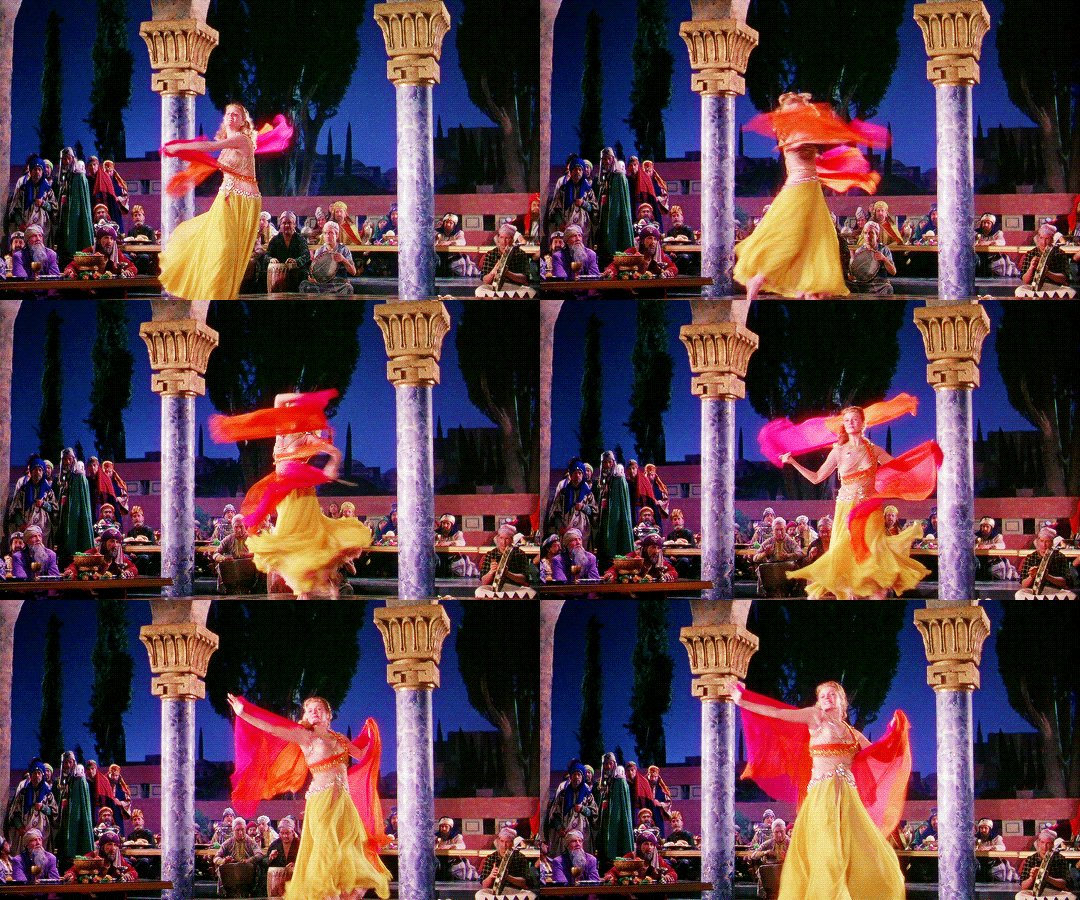
Podemos até ser subversivos e dizer que “Salomé” é tão subversivo quanto “Bastardos Inglórios” (2009), de Tarantino. Salomé se redime e sua culpa no assassinato de João Batista é apagada, e ela se torna uma vítima e não uma femme fatale. Nesta versão, ela faz a Dança dos Sete Véus – que Hayworth mencionou como a coreografia mais difícil que teve de fazer – como distração para que Claudius tente libertar João Batista. Obviamente, isso não termina bem para João, mas é bom ver Salomé como um ser humano, que ri, ama e aprende.
  
We can even be subversive and say that “Salome” is as subversive as Tarantino's “Inglorious Basterds” (2009). Salome is redeemed and her guilt in John the Baptist's assassination is erased, and she becomes a victim rather than a femme fatale. In this version, she performs the Dance of the Seven Veils – that Hayworth mentioned as the most demanding dance routine she ever performed – as a distraction while Claudius tries to free John. Of course, it doesn’t end well for John, but it’s nice to see Salome as a human, laughing, loving and learning.

This is my contribution to the Stewart Granger blogathon, hosted by Maddy at Maddy Loves Her Classic Movies.


Saturday, October 21, 2017

O Bígamo (1953) / The Bigamist (1953)

Na era clássica de Hollywood, havia poucas mulheres diretoras. Obviamente, havia algumas mulheres fazendo filmes experimentais, mas dentro dos estúdios, com acesso a um bom elenco, equipe e orçamento, havia apenas duas: Dorothy Arzner e Ida Lupino. Arzner trabalhou nos anos 30 e 40, e Lupino veio logo depois, trabalhando nos anos 50 e 60. Ida Lupino dirigiu 41 filmes e episódios de séries e TV entre 1939 e 1968. Hoje falaremos de um de seus mais conhecidos filmes, “O Bígamo”, de 1953.

In the classic Hollywood era, there were very few female directors. Sure, there were some doing experimental work, but inside the big studios, with access to a good cast, crew and budget, there were only two: Dorothy Arzner and Ida Lupino. Arzner worked in the 1930s and 40s, and Lupino came next, working in the 1950s and 60s. Lupino directed 41 movies and TV episodes between 1939 and 1968. Today we’ll talk about one of her most famous movies, 1953’s “The Bigamist”.


Harry Graham (Edmond O’Brien) e sua esposa Eve (Joan Fontaine) querem adotar uma criança. Eles vão até uma agência de adoção e preenchem a papelada. O próximo passo é uma rápida investigação sobre a vida do casal, levada a cabo pelo senhor Jordan (Edmund Gwenn). Harry se mostra relutante e desconfortável com a investigação. O casal Graham vive em San Francisco, mas Harry viaja com frequência para trabalhar em Los Angeles. O senhor Jordan segue Harry até LA, e descobre que ele tem uma segunda família, completa com um filho bebê e uma esposa, Phillys (a própria Ida Lupino).

Harry Graham (Edmond O'Brien) and his wife Eve (Joan Fontaine) want to adopt a child. They go to an adoption agency and fill in all the forms. The next step is a quick investigation about their lives, made by Mr Jordan (Edmund Gwenn). Harry is reluctant and uncomfortable about this investigation. The Grahams live in San Francisco, but Harry travels often to Los Angeles to work. Mr Jordan follows Harry until LA, and finds out he has another family there, complete with a baby son and a wife, Phyllis (Ida Lupino herself).


Depois de descobrirem que não podem ter filhos, Harry e Eve começam a trabalhar juntos na área de vendas, e ela rapidamente dobra os lucros dele. Ela fica cada vez mais interessada no trabalho. Ele fica cada vez mais frustrado com o novo interesse dela. Quando vai para Los Angeles para uma viagem entediante, ele faz um passeio de ônibus e conhece uma mulher igualmente entediada – Phyllis. Com o tempo, o relacionamento deles se desenvolve.

After finding out they couldn't have children, Harry says Eve started working with him in the sales business, and quickly doubled his sales. She becomes more and more invested in working. He becomes more and more bummed by her new interest. When he goes to a boring business trip to Los Angeles, he takes a bus tour and meets an equally bored woman – Phyllis. With time, they get involved. 


Há traços do noir em “O Bígamo”? Claro. Primeiro, você tem uma história contada em flashback. E várias escolhas estilísticas são puro noir: a inclusão de lâmpadas no enquadramento e as muitas sombras que têm origens em cortinas, janelas e paredes, por exemplo. Entretanto, não é um noir, não é um drama familiar, não é de maneira alguma um romance. Mas é real, e é uma golfada de ar fresco no sistema de estúdio, que na maioria das vezes trabalhava como uma linha de produção.

Are there noirish traces in “The Bigamist”? Sure. First, you have a story told in flashback. Also, many stylistic choices scream noir: the inclusion of lamps in the frame and the many shadows cast by curtains, windows and walls, for instance. However, it's not a noir, it's not a family drama, it's not a romance at all. But it's real, and it's a blow of fresh air in the studio system, that more often than not worked like an assembly line.


Não era a primeira vez que Joan Fontaine interpretava uma personagem com problemas conjugais – quem pode se esquecer de seu trabalho em “Rebecca” (1940), como a segunda senhora De Winter? Sim, Harry até tenta confessar para Eve que a está traindo quando a traição ainda nem havia sido consumada, mas ela muda de assunto. Neste exato momento do filme, vemos como Eve é insegura. Infelizmente, Joan Fontaine não tem muito mais o que fazer a não ser mostrar algumas expressões faciais significativas perto do final.

It was not the first time Joan Fontaine played a character with marital problems – who can forget her work in “Rebecca” (1940), as the second Mrs De Winter? Sure, Harry does try to tell Eve about his cheating when it wasn't even cheating yet, but she changes the subject. In this exact moment in the film, we see how insecure Eve is. Unfortunately, Joan Fontaine doesn't have much more to do than to showcase some meaningful facial expressions near the end. 


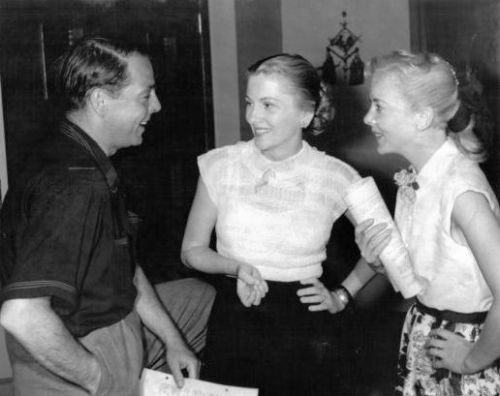
E é muito interessante saber que Ida Lupino e Joan Fontaine foram quase rivais de verdade na vida amorosa. A história não é tão surpreendente ou patética quanto a do filme: o roteirista Collier Young, sócio de Lupino na produtora independente The Filmakers, foi casado com Ida Lupino entre 1948 e 1951. Um ano depois, ele se casou com Joan Fontaine, com quem ficou até 1961. A situação não criou um clima ruim nos bastidores de “O Bígamo”, e com frequência os dois casais socializavam – Collier e Joan, Ida e seu novo marido, Howard Duff.

And it’s extra interesting to know that Ida Lupino and Joan Fontaine were almost romantic rivals in real life. The story is not nearly as salacious or pathetic as the one in the film: screenwriter Collier Young, Lupino’s partner in the independent film production company The Filmakers, was married to Ida Lupino from 1948 until 1951. The next year, he married Joan Fontaine, and the two remained together until 1961. The situation didn’t interfere with the mood during filming “The Bigamist”, and the two couples frequently had fun together – Young and Fontaine, Lupino and her new husband Howard Duff.


Collier Young, Joan Fontaine, Ida Lupino
 

Esta não é uma lição de moral. “O Bígamo” não tem a intenção de ensinar algo ao espectador, nem de julgar seus personagens. Há um dilema moral, sim, mas Harry não é retratado como mulherengo e Phyllis não é retratada como destruidora de lares. E devemos isso a Ida Lupino.

This is not a cautionary tale. “The Bigamist” is not supposed to teach something to the viewer, and not even to judge its characters. There is a moral dilemma, sure, but Harry is not portrayed as a womanizer and Phyllis is not portrayed as a home wrecker. And we owe this to Ida Lupino.


Ida Lupino era uma boa diretora, mas eu bem que gostaria que ela fosse mais ousada e inovadora. Para ser aprovada pelos censores do código Hays, “O Bígamo” tinha de ser incrivelmente cuidadoso – o próprio assunto do filme era muito ousado. Por isso há muitos eufemismos para que finalmente seja revelado que Phyllis está grávida de um filho de Harry. Eu entendo completamente por que Ida teve de fazer isso.

Ida Lupino was a good director, but I wish she was more daring and groundbreaking. To be approved by the Hays Office, “The Bigamist” had to be extra cautious – the subject matter in itself was very bold. That's why there is a lot of euphemisms to finally tell that Phyllis is pregnant with Harry's child. I completely understand why Ida had to do this.


Mr Jordan (Edmund Gwenn)

Ida Lupino era uma mulher fazendo um filme centrado num personagem masculino. Eu adoraria ver as duas esposas contando as versões delas da história, compartilhando seus pensamentos e sentimentos. Eu adoraria se Ida tivesse dado voz a estas mulheres. Eu sei que seria bem difícil, considerando a época, mas também seria incrível e histórico.

Ida Lupino was a woman directing a picture centered in a man. I'd love to see the two wives telling their versions of the story, sharing with us their thoughts and feelings. I'd love if Ida had given those women a voice. I know it'd be quite hard for the time period, but it'd also be amazing and historic.


Infelizmente, mesmo tendo Ida Lupino muito jeito para aos negócios, “O Bígamo” não foi um sucesso de bilheteria. Ida Lupino e Collier Young decidiram distribuir o filme de maneira independente, o que certamente afetou a performance na bilheteria. Ida Lupino se dedicou à televisão, e só voltaria a dirigir outro filme 13 anos depois. Isso é uma pensa, porque “O Bígamo” é um filme interessante – e, se no final nós não nos importamos com o destino de Harry e suas duas esposas, isso é um trunfo de Ida Lupino e seu gosto por histórias diferentes.

Unfortunately, even with Lupino’s great brains for business, “The Bigamist” didn’t do well at the box office. Lupino and Young had decided to distribute the picture in an independent way, and it certainly hurt the performance. Ida Lupino started directing more television, and only directed another movie 13 years later. This is too bad, because “The Bigamist” is an interesting flick – and, after all, if by the end we don’t really care about which wife wants Harry back, it’s because of Ida Lupino’s taste for unique stories.


This is my contribution to the Joan Fontaine Centenary blogathon hosted by Virginie at The Wonderful World of Cinema and Crystal at In the Good Old Days of Classic Hollywood.
Related Posts Plugin for WordPress, Blogger...