} Crítica Retrô: Edmond O'Brien

Tradutor / Translator / Traductor / Übersetzer / Traduttore / Traducteur / 翻訳者 / переводчик

Showing posts with label Edmond O'Brien. Show all posts

Sunday, April 17, 2022

Tributo de Sangue (1952) / The Turning Point (1952)

Quando eu estava me preparando para assistir a “Tributo de Sangue” (1952) no Internet Archive, percebi que ele estava categorizado como “filme noir tardio”. É uma categoria estranha, e mais estranha ainda se considerarmos que muitos filmes noir foram feitos em meados e até finais da década de 1950. Seja ele um “filme noir tardio” ou não, o que importa é que “Tributo de Sangue” tem o ingrediente principal do filme noir: crime.

As I was getting ready to watch “The Turning Point” (1952) at the Internet Archive, I noticed that it was labeled “late film noir”. It was an odd label, even odder considering that there were several films noir made way into the 1950s. Whether it’s a “late film noir” or not, what is important is that “The Turning Point” exudes the stuff film noir is made of: crime.

Johnny Conroy (Edmond O’Brien) é um promotor de sucesso que está investigando um novo caso. Ele pede ajuda a seu pai, um policial, mas recebe um não como resposta. Surpreso pela recusa, o amigo de Johnny, Jerry (William Holden), que é repórter, decide seguir o pai de Johnny, Matt (Tom Tully), pela cidade.

Johnny Conroy (Edmond O’Brien) is a successful special prosecutor investigating a new case. He asks his father, a cop, for help, and his father refuses. Startled by the father’s refusal, Johnny’s friend Jerry (William Holden), a reporter, decides to follow Johnny’s father, Matt (Tom Tully), through the city.

Acontece que Matt está colaborando com os caras malvados, entregando para eles informações secretas da polícia. Também envolvida com o caso, mas do lado dos bonzinhos, está a namorada e assistente de Johnny, Amanda (Alexis Smith). Conforme vai escrevendo sobre a investigação, Jerry se envolve cada vez mais com o caso – e também se envolve com Amanda.

It turns out that Matt is collaborating with the bad guys, sending them classified information from the police. Also involved in the case, but at the good guy’s side, is Johnny’s girlfriend and work assistant Amanda (Alexis Smith). As he writes about the ongoing investigation, Jerry becomes more and more involved with the case – and he also becomes involved with Amanda.

Em vez do detetive durão que costumamos encontrar no filme noir, em “Tributo de Sangue” temos um repórter durão, Jerry, que é constantemente mais inteligente que Johnny, o promotor e protagonista do filme. Quando Johnny fica inseguro frente a uma decisão de autossacrifício – que é denunciar seu pai – pelo bem do caso, é Jerry que o convence a seguir em frente. Um ano antes de sua performance ganhadora do Oscar em “Inferno Nº 17” (1953), William Holden é o protagonista de fato em “Tributo de Sangue”.

Instead of the hard-boiled detective we often find in film noir, in “The Turning Point” we have a hard-boiled reporter, Jerry, who is usually more intelligent than Johnny, the prosecutor and lead of the movie. When Johnny feels unsure about sacrificing himself – that is, denouncing his father – for the sake of the case, it’s Jerry who convinces him to do so. One year before his Oscar-winning performance in “Stalag 17” (1953), William Holden is the de facto lead of “The Turning Point”.

Não era raro ter repórteres nos filmes noir ou com toques de noir. Podemos mencionar “A Montanha dos 7 Abutres” (1951), um filme com toques de noir no qual um repórter faz de tudo para explorar uma boa história após encontrá-la. O noir argentino “Los Tallos Amargos” (1957) é sobre um esquema mortal envolvendo um curso de jornalismo por correspondência. Não devemos nos esquecer de que o cinema noir por vezes encontrou inspiração em jornais, fosse em casos reais – como aconteceu em “Tributo de Sangue” – ou no estilo cru das fotos tiradas por grandes fotojornalistas dos anos 1930 e 1940, a exemplo de Weegee.

It wasn’t so rare to have reporters in film noir or in “noirish” films. We can mention “Ace in the Hole” (1951), a noirish film in which a reporter does anything for a good story once he finds it. The Argentinian noir “Los Tallos Amargos” (“Bitter Stems”, 1957) is about a deadly scheme involving a journalism correspondence course. We must not forget that film noir often found inspiration in newspapers, be it in real-life cases – which happened in “The Turning Point” – or in the raw looks of the photos taken by lead photojournalists of the 1930s and 1940s, such as Weegee.

Os figurinos de “Tributo de Sangue” foram feitos por Edith Head. Não há roupas extravagantes, pois a maioria dos personagens são homens de terno. Os vestidos usados por Alexis Smith são bonitos, mas não figuram entre as melhores criações de Edith Head. Na história do cinema noir, Edith fez figurinos de filmes notáveis como “Pacto de Sangue” (1944), “Crepúsculo dos Deuses” (1950) e o subestimado “O Relógio Verde” (1948).

The costumes for “The Turning Point” were made by Edith Head. There are no flashy costumes, as most characters are men in suits. The dresses worn by Alexis Smith are pretty, but are not among Edith Head’s best creations. In film noir history, Head also created costumes for the very famous “Double Indemnity” (1944), “Sunset Boulevard” (1950) and the underrated “The Big Clock” (1948).

Tributo de Sangue” foi dirigido por William Dieterle. O diretor de origem alemã teve uma carreira bem longa, começando como ator em 1913 – seu papel mais famoso é como o coadjuvante Valentin em “Fausto”, de 1926. Ele começou a dirigir filmes na Alemanha em 1923 e em 1931 foi para Hollywood. Com 91 créditos como diretor, de acordo com o IMDb, Dieterle foi prolífico em sua carreira atrás das câmeras, dirigindo vários gêneros durante mais de 40 anos.

The Turning Point” was directed by William Dieterle. The German-born director had a very long career, starting as an actor in 1913 – his most famous role being the supporting role of Valentin in 1926’s “Faust”. He started directing in Germany in 1923 and in 1931 went to Hollywood. With 91 directing credits to his name, according to IMDb, Dieterle was a prolific director, working in several genres for over four decades.

Com um clímax tenso num ringue de boxe – mas não tão tenso quanto o clímax no carrossel em “Pacto de Sangue” (1951) – “Tributo de Sangue” termina de um jeito amargo, como tantos filmes noir. É um filme pouco visto, considerando a carreira de William Holden, apesar de sua ótima performance, e é outro noir subestimado que eu tive a sorte de encontrar no Internet Archive.

With a tense climax in a boxing arena – but not as tense as the climax in the merry-go-round in “Strangers on a Train” (1951) – “The Turning Point” ends on a bitter note, like so many noirs. It’s an underseen movie in William Holden’s career, despite his very good performance, and it’s another underrated noir I was lucky to find at the Internet Archive.

This is my contribution to the 5th Golden Boy blogathon: A William Holden Celebration, hosted by Virginie at The Wonderful World of Cinema, Michaela at Love Letters to Old Hollywood and Emily at The Flapper Dame.

Saturday, October 21, 2017

O Bígamo (1953) / The Bigamist (1953)

Na era clássica de Hollywood, havia poucas mulheres diretoras. Obviamente, havia algumas mulheres fazendo filmes experimentais, mas dentro dos estúdios, com acesso a um bom elenco, equipe e orçamento, havia apenas duas: Dorothy Arzner e Ida Lupino. Arzner trabalhou nos anos 30 e 40, e Lupino veio logo depois, trabalhando nos anos 50 e 60. Ida Lupino dirigiu 41 filmes e episódios de séries e TV entre 1939 e 1968. Hoje falaremos de um de seus mais conhecidos filmes, “O Bígamo”, de 1953.

In the classic Hollywood era, there were very few female directors. Sure, there were some doing experimental work, but inside the big studios, with access to a good cast, crew and budget, there were only two: Dorothy Arzner and Ida Lupino. Arzner worked in the 1930s and 40s, and Lupino came next, working in the 1950s and 60s. Lupino directed 41 movies and TV episodes between 1939 and 1968. Today we’ll talk about one of her most famous movies, 1953’s “The Bigamist”.


Harry Graham (Edmond O’Brien) e sua esposa Eve (Joan Fontaine) querem adotar uma criança. Eles vão até uma agência de adoção e preenchem a papelada. O próximo passo é uma rápida investigação sobre a vida do casal, levada a cabo pelo senhor Jordan (Edmund Gwenn). Harry se mostra relutante e desconfortável com a investigação. O casal Graham vive em San Francisco, mas Harry viaja com frequência para trabalhar em Los Angeles. O senhor Jordan segue Harry até LA, e descobre que ele tem uma segunda família, completa com um filho bebê e uma esposa, Phillys (a própria Ida Lupino).

Harry Graham (Edmond O'Brien) and his wife Eve (Joan Fontaine) want to adopt a child. They go to an adoption agency and fill in all the forms. The next step is a quick investigation about their lives, made by Mr Jordan (Edmund Gwenn). Harry is reluctant and uncomfortable about this investigation. The Grahams live in San Francisco, but Harry travels often to Los Angeles to work. Mr Jordan follows Harry until LA, and finds out he has another family there, complete with a baby son and a wife, Phyllis (Ida Lupino herself).


Depois de descobrirem que não podem ter filhos, Harry e Eve começam a trabalhar juntos na área de vendas, e ela rapidamente dobra os lucros dele. Ela fica cada vez mais interessada no trabalho. Ele fica cada vez mais frustrado com o novo interesse dela. Quando vai para Los Angeles para uma viagem entediante, ele faz um passeio de ônibus e conhece uma mulher igualmente entediada – Phyllis. Com o tempo, o relacionamento deles se desenvolve.

After finding out they couldn't have children, Harry says Eve started working with him in the sales business, and quickly doubled his sales. She becomes more and more invested in working. He becomes more and more bummed by her new interest. When he goes to a boring business trip to Los Angeles, he takes a bus tour and meets an equally bored woman – Phyllis. With time, they get involved. 


Há traços do noir em “O Bígamo”? Claro. Primeiro, você tem uma história contada em flashback. E várias escolhas estilísticas são puro noir: a inclusão de lâmpadas no enquadramento e as muitas sombras que têm origens em cortinas, janelas e paredes, por exemplo. Entretanto, não é um noir, não é um drama familiar, não é de maneira alguma um romance. Mas é real, e é uma golfada de ar fresco no sistema de estúdio, que na maioria das vezes trabalhava como uma linha de produção.

Are there noirish traces in “The Bigamist”? Sure. First, you have a story told in flashback. Also, many stylistic choices scream noir: the inclusion of lamps in the frame and the many shadows cast by curtains, windows and walls, for instance. However, it's not a noir, it's not a family drama, it's not a romance at all. But it's real, and it's a blow of fresh air in the studio system, that more often than not worked like an assembly line.


Não era a primeira vez que Joan Fontaine interpretava uma personagem com problemas conjugais – quem pode se esquecer de seu trabalho em “Rebecca” (1940), como a segunda senhora De Winter? Sim, Harry até tenta confessar para Eve que a está traindo quando a traição ainda nem havia sido consumada, mas ela muda de assunto. Neste exato momento do filme, vemos como Eve é insegura. Infelizmente, Joan Fontaine não tem muito mais o que fazer a não ser mostrar algumas expressões faciais significativas perto do final.

It was not the first time Joan Fontaine played a character with marital problems – who can forget her work in “Rebecca” (1940), as the second Mrs De Winter? Sure, Harry does try to tell Eve about his cheating when it wasn't even cheating yet, but she changes the subject. In this exact moment in the film, we see how insecure Eve is. Unfortunately, Joan Fontaine doesn't have much more to do than to showcase some meaningful facial expressions near the end. 


E é muito interessante saber que Ida Lupino e Joan Fontaine foram quase rivais de verdade na vida amorosa. A história não é tão surpreendente ou patética quanto a do filme: o roteirista Collier Young, sócio de Lupino na produtora independente The Filmakers, foi casado com Ida Lupino entre 1948 e 1951. Um ano depois, ele se casou com Joan Fontaine, com quem ficou até 1961. A situação não criou um clima ruim nos bastidores de “O Bígamo”, e com frequência os dois casais socializavam – Collier e Joan, Ida e seu novo marido, Howard Duff.

And it’s extra interesting to know that Ida Lupino and Joan Fontaine were almost romantic rivals in real life. The story is not nearly as salacious or pathetic as the one in the film: screenwriter Collier Young, Lupino’s partner in the independent film production company The Filmakers, was married to Ida Lupino from 1948 until 1951. The next year, he married Joan Fontaine, and the two remained together until 1961. The situation didn’t interfere with the mood during filming “The Bigamist”, and the two couples frequently had fun together – Young and Fontaine, Lupino and her new husband Howard Duff.


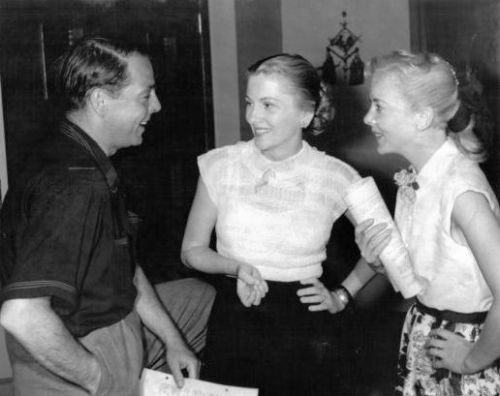
Collier Young, Joan Fontaine, Ida Lupino
 

Esta não é uma lição de moral. “O Bígamo” não tem a intenção de ensinar algo ao espectador, nem de julgar seus personagens. Há um dilema moral, sim, mas Harry não é retratado como mulherengo e Phyllis não é retratada como destruidora de lares. E devemos isso a Ida Lupino.

This is not a cautionary tale. “The Bigamist” is not supposed to teach something to the viewer, and not even to judge its characters. There is a moral dilemma, sure, but Harry is not portrayed as a womanizer and Phyllis is not portrayed as a home wrecker. And we owe this to Ida Lupino.


Ida Lupino era uma boa diretora, mas eu bem que gostaria que ela fosse mais ousada e inovadora. Para ser aprovada pelos censores do código Hays, “O Bígamo” tinha de ser incrivelmente cuidadoso – o próprio assunto do filme era muito ousado. Por isso há muitos eufemismos para que finalmente seja revelado que Phyllis está grávida de um filho de Harry. Eu entendo completamente por que Ida teve de fazer isso.

Ida Lupino was a good director, but I wish she was more daring and groundbreaking. To be approved by the Hays Office, “The Bigamist” had to be extra cautious – the subject matter in itself was very bold. That's why there is a lot of euphemisms to finally tell that Phyllis is pregnant with Harry's child. I completely understand why Ida had to do this.


Mr Jordan (Edmund Gwenn)

Ida Lupino era uma mulher fazendo um filme centrado num personagem masculino. Eu adoraria ver as duas esposas contando as versões delas da história, compartilhando seus pensamentos e sentimentos. Eu adoraria se Ida tivesse dado voz a estas mulheres. Eu sei que seria bem difícil, considerando a época, mas também seria incrível e histórico.

Ida Lupino was a woman directing a picture centered in a man. I'd love to see the two wives telling their versions of the story, sharing with us their thoughts and feelings. I'd love if Ida had given those women a voice. I know it'd be quite hard for the time period, but it'd also be amazing and historic.


Infelizmente, mesmo tendo Ida Lupino muito jeito para aos negócios, “O Bígamo” não foi um sucesso de bilheteria. Ida Lupino e Collier Young decidiram distribuir o filme de maneira independente, o que certamente afetou a performance na bilheteria. Ida Lupino se dedicou à televisão, e só voltaria a dirigir outro filme 13 anos depois. Isso é uma pensa, porque “O Bígamo” é um filme interessante – e, se no final nós não nos importamos com o destino de Harry e suas duas esposas, isso é um trunfo de Ida Lupino e seu gosto por histórias diferentes.

Unfortunately, even with Lupino’s great brains for business, “The Bigamist” didn’t do well at the box office. Lupino and Young had decided to distribute the picture in an independent way, and it certainly hurt the performance. Ida Lupino started directing more television, and only directed another movie 13 years later. This is too bad, because “The Bigamist” is an interesting flick – and, after all, if by the end we don’t really care about which wife wants Harry back, it’s because of Ida Lupino’s taste for unique stories.


This is my contribution to the Joan Fontaine Centenary blogathon hosted by Virginie at The Wonderful World of Cinema and Crystal at In the Good Old Days of Classic Hollywood.
Related Posts Plugin for WordPress, Blogger...