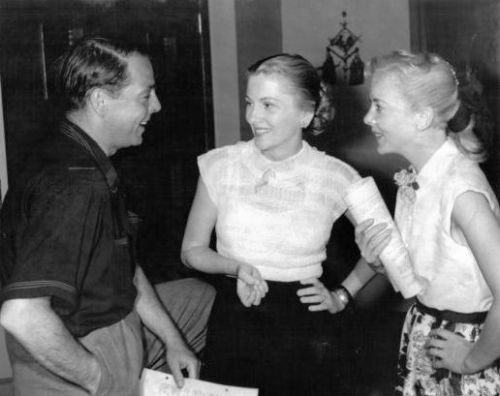
O começo de “Ilha nos Trópicos” parece um anúncio sedutor que convida o público para visitar a ilha de Santa Marta e aproveitar o verão. De fato, parece ser o paraíso, um lugar como muitos outros no Caribe. Santa Marta é um lugar fictício, mas muitas das características dadas à ilha são encontradas por todo o Caribe há os descendentes dos colonizadores britânicos, há os nativos, há uma economia baseada no turismo e nas plantações e há uma boa dose de tensão racial.
The beginning of “Island in the Sun” looks like a seductive ad calling the audience to visit the island of Santa Marta and enjoy the summer. Indeed, it looks like a paradise, a place like many others in the Caribbean. Santa Marta happens to be a fictional place, but many of the characteristics given to it could be found everywhere in the Caribbean: there are descendants of the English colonizers, there are natives, there is an economy based on tourism and plantations and there is a good deal of racial tension.

Uma das famílias mais ilustres de Santa Marta é a família Fleury. Maxwell Fleury (James Mason) pode ser parte da família bem-sucedida, mas é muito infeliz. Com medo de não corresponder à expectativa das pessoas em relação a ele e à família, Maxwell se torna muito inseguro e começa a acreditar que sua esposa Sylvia (Patricia Owens) está traindo-o com um homem que fuma cigarros egípcios – a única prova que ele tem para alimentar sua paranoia.
One of the most notorious families in Santa Marta is the Fleurys. Maxwell Fleury (James Mason) may be part of the successful family, but he is very unhappy. Fearing that he does not live to people's expectation of him and his family, he becomes very insecure and starts believing his wife Sylvia (Patricia Owens) is cheating on him with a man who smokes Egyptian cigarettes – the only evidence to support his paranoia.

Enquanto isso, a irmã mais nova de Maxwell, Jocelyn (Joan Collins), está aproveitando a vida quando conhece e se apaixona por Euan Templeton (Stephen Boyd), filho do governador da ilha. Joan Collins e Stephen Boyd estavam na época entre os candidatos para os papéis de Cleópatra e Marco Antônio no épico que acabou sendo feito em 1963 com Elizabeth Taylor e Richard Burton.
Meanwhile, Maxwell's young sister Jocelyn (Joan Collins) is living life to the fullest when she meets and falls in love with Euan Templeton (Stephen Boyd), son of the governor of the island. Joan Collins and Stephen Boyd were at the time being considered for the roles of Cleopatra and Marc Anthony in the epic film that was eventually made in 1963 with Elizabeth Taylor and Richard Burton.

Surpreendentemente, há dois casais inter-raciais: David Boyeur (Harry Belafonte) é um líder comunitário em ascensão que está saindo com Mavis Norman (Joan Fontaine), uma mulher muito rica. E Denis (John Justin), que trabalha para o governador, começa a namorar Margot (Dorothy Dandridge), que trabalha numa farmácia.
Surprisingly, there are two interracial couples: David Boyeur (Harry Belafonte) is a rising community leader going out with Mavis Norman (Joan Fontaine), a very rich woman. And Denis (John Justin), who works for the governor, starts dating Margot (Dorothy Dandridge), a drugstore cashier.

Maxwell e Jocelyn ficam chocados quando um artigo de jornal revela que a avó deles era jamaicana – portanto, negra. Julian, o pai deles (interpretado por Basil Sydney), tenta amenizar a situação com cálculos extremos: a mãe dele era ¾ branca! Ele é apenas 1/16 “de cor”! Já vi este tipo de matemática frequentemente no cinema e na TV norte-americanos – nunca me esquecerei quando alguém numa série de TV disse que era “1/64 Cherokee”. De fato, cor e raça são assuntos de peso nos EUA, e não de maneira velada. Veja isto: recentemente: um site se referiu à atriz Anya Taylor-Joy como “uma mulher de cor” apenas porque ela foi criada na Argentina – ela não nasceu lá, nasceu em Miami, apenas foi criada na América Latina!
Maxwell and Jocelyn are shocked when a newspaper article reveals that their grandmother was Jamaican – that means: black. Julian, their father (played by Basil Sydney), tries to compensate the situation by doing extreme math: his mother was ¾ white! He’s only 1/16 “colored”! I've seen this kind of math frequently on US film and TV – Il'll never forget when someone on a TV show claimed to be “1/64 Cherokee”. Indeed, color and race are huge issues in the US, and not in a veiled way. Take a look at this: recently, a website referred to actress Anya Taylor-Joy as “a woman of color” only because she was raised in Argentina – she wasn't born there, she was born in Miami, she was only raised in Latin America!

From dvdbeaver.com
De volta ao filme: quando o pai o obriga a agir como se nada tivesse acontecido, um contrariado Maxwell diz que é maravilhoso que o artigo tenha sido publicado porque ele pode fazer campanha para um cargo político chegando nos eleitores e dizendo “Sou um de vocês agora”, porque ele combina o negro e o branco. Maxwell acaba de dobrar suas chances de ser eleito – e de atrapalhar a carreira política de David Boyeur.
Back to the film: when his father makes him act as if nothing happened, an upset Maxwell says that it’s wonderful that the article was published because he can campaign for a political position by approaching all people and saying “I’m one of you now”, because he combines black and white.Maxwell just doubled his chances of being elected – and he can even stand in the way of David Boyeur's political career.

Além dos romances e da eleição, há mais uma coisa acontecendo na ilha: assassinato! Hilary Carson (Michael Rennie) é assassinado em sua casa, e um chefe de polícia muito sagaz, o coronal Wittingham (John Williams), investiga o caso.
Besides the romances and the election, there is something else happening in the island: murder! Hilary Carson (Michael Rennie) is murdered in his house, and a very clever chief of police, Colonel Wittingham (John Willams), investigates the case.

Quando perguntado sobre o principal problema na ilha, David Boyeur responde rapidamente: cor. Boyeur acredita que também há problemas com a manutenção das tradições. Maxwell, por outro lado, não perde a oportunidade para lembrar Boyeur de que o pai dele trabalhou na plantação do pai de Maxwell, e não foi deixado sem assistência quando adoeceu – ou seja, quando deixou de ser útil para o patrão. “Isto é caridade. O que nós queremos é igualdade”, Boyeur resume.
When asked what is the biggest problem in the island, David Boyeur answers in a heartbeat: color. Boyeur believes there are problems with keeping traditions as well. Maxwell, on the other hand, doesn't waste the opportunity to remind Boyeur that his father had worked in Maxwell's father's plantation and wasn't left unassisted when he got sick – that is, when he was no longer useful for his master. “That's charity. What we want is equality”, Boyeur summarizes.

E David está certo: há um problema envolvendo cor na ilha. Quando David e Mavis compram refrigerantes para um grupo de crianças, uma mulher mulata tira o refrigerante da mão do filho e devolve a bebida, mostrando que o menino de pele clara não deveria ser tratado da mesma forma que as outras crianças, que tinham a pele mais escura. Outro momento tenso, e muito surpreendente para um filme de 1957, ocorre quando Mavis segura uma máscara na frente do rosto e David violentamente tira a máscara, porque ela simula blackface - algo subentendido e, aparentemente, considerado normal na ilha.
And David is right: there is a problem about color in the island. When David and Mavis buy sodas for a group of kids, a mixed-race woman takes the soda away from her son’s hand and gives it back, showing that the boy with light-colored skin shouldn’t be treated like the other children, who had darker skin. Another tense moment, and a surprising one for a 1957 movie, is when Mavis puts a mask in front of her face and David violently takes it from her, as it simulates blackface - something implied and, apparently, considered normal in the island.
Maxwell é o personagem principal e a maior parte do filme é sobre ele, o que é um pouco desanimador, pois eu preferiria ter visto mais sobre os problemas enfrentados pelos casais inter-raciais. Mesmo assim, podemos dizer que é um milagre que este filme tenha sido feito, considerando os vários assuntos polêmicos que foram minimamente abordados - e isso inclui retratar David como um líder popular carismático e justo em tempos de histeria McCarthista.
Maxwell is the main character and most of the film revolves around him, which is a little upsetting, as I'd rather have seen more of the troubles faced by the interracial couples. Nevertheless, we can say that it's a miracle that this film was made at all, considering the many risky subjects that were barely addressed – and this includes the portrayal of David as a charismatic and just popular leader in a time of McCarthism hysteria.

Mas, na Hollywood dos anos 50, Darry F. Zanuck não tinha (muito) medo de arriscar - lembre-se de que ele foi produtor de outro filme sobre o controverso tema da miscigenação, “O que a Carne Herda” (1949). Zanuck comprou os direitos de adaptação do romance “Island in the Sun” quando ele foi publicado em 1955. Mesmo com sua experiência em polêmicas, Zanuck ficou apreensivo com possíveis reclamações e exigiu algumas mudanças no roteiro - por exemplo, Dorothy Dandridge e John Justin tiveram de enfrentar o produtor para que seus personagens pudessem dizer que se amavam.
But, in Hollywood in the 1950s, Darryl F. Zanuck was not (very) afraid of risking – remember that he was the producer of another movie about the controversial theme of miscegenation, “Pinky” (1949). Zanuck bought the rights to adapt the novel “Island in the Sun” when it was published in 1955. Even though he was experienced in polemics, Zanuck was apprehensive about possible complaints and demanded some changes in the script – for instance, Dorothy Dandrige and John Justin had to battle the producer so their characters were able to say that they loved each other.

O último filme de Dorothy Dandridge tinha sido “Carmen Jones”, em 1954, com Harry Belafonte. Depois do sucesso do filme e uma indicação ao Oscar, Dorothy assinou um contrato com a 20th Century Fox, que planejava um remake de “O anjo Azul” (1930) com um elenco todo negro, um projeto que infelizmente não se concretizou. Dorothy então recusou o papel coadjuvante de Tuptim em “O Rei e Eu” (1956), papel que foi para Rita Moreno. Em 1957, ela processou a revista Confidential após a publicação de uma notícia falsa que a acusava de “ter fornicado com um músico branco” em Nevada em 1950.
Dorothy Dandridge's last film had been “Carmen Jones”, in 1954, with Harry Belafonte. After the success of the film and an Oscar nomination, Dorothy signed with 20th Century Fox, that was planning to film a remake of “The Blue Angel” (1930) with an all-black cast, a project that unfortunately wasn’t further developed. Dorothy then refused the supporting role of Tuptim in “The King and I” (1956), a role that went to Rita Moreno. In 1957 she sued Confidential magazine when it published a false story accusing Dorothy of having “fornicated with a white band leader” in Nevada in 1950.

Logo antes de o filme estrear, Belafonte se casou com Julie Robinson, uma mulher branca. Mesmo assim, Joan Collins diz em sua autobiografia que ela e Belafonte tiveram um caso durante as filmagens de “Ilha nos Trópicos”. Poucos anos após o filme ser feito, nos anos 60, Belafonte se envolveu com o movimento dos Direitos Civis, tornando-se próximo de Martin Luther King Jr. Em sua carreira, Belafonte recusou diversas ofertas quando o papel retratava negros de maneira negativa ou quando o elenco era segregado racialmente.
Right before the film opened, Belafonte married Julie Robinson, a white woman. Nevertheless, Joan Collins claimed in her autobiography that she and Belafonte had an affair while filming “Island in the Sun”. A few years after the film was made, in the early 1960s, Belafonte got involved in the Civil Rights Movement, becoming close to Martin Luther King Jr. Throughout his career, Belafonte refused several offers if the role portrayed black people in a derogatory way or if the cast was segregated.
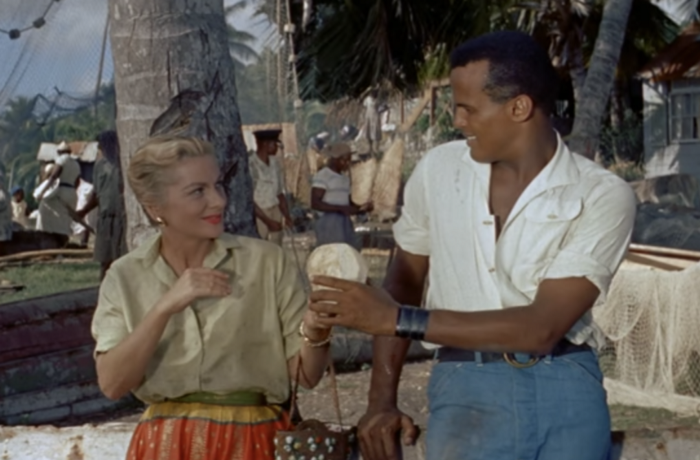
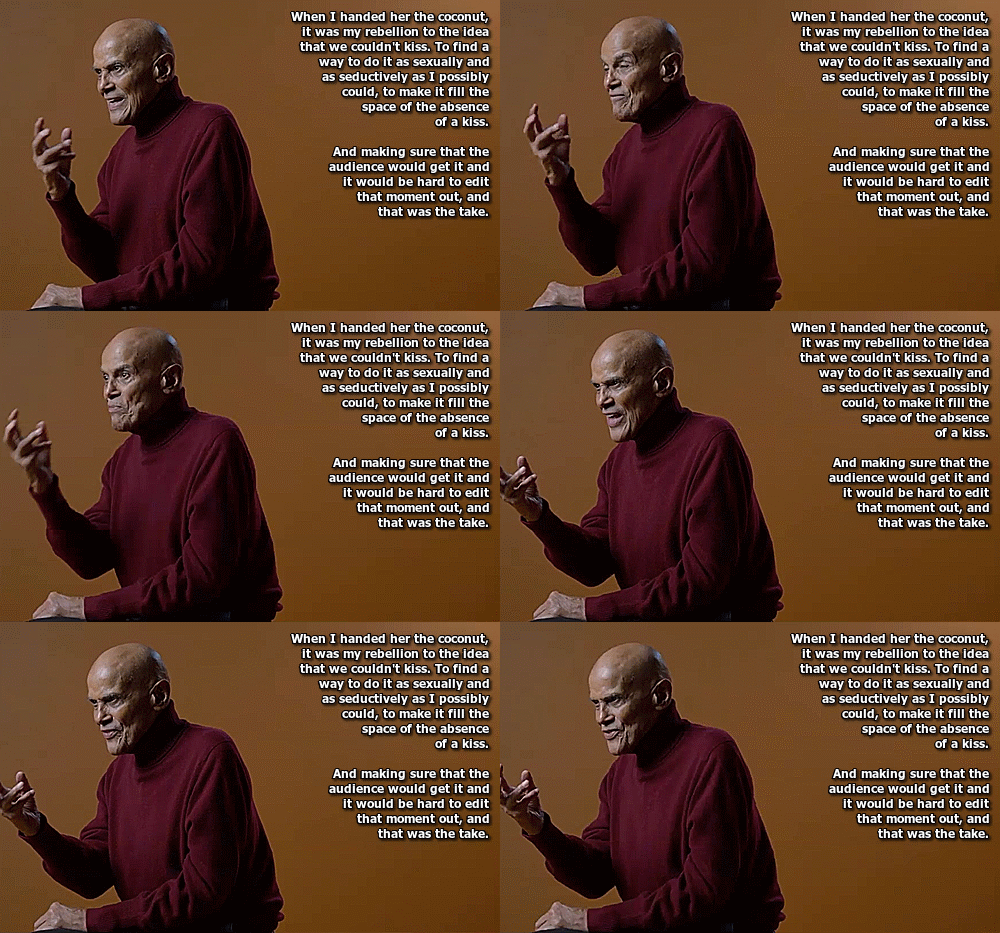
Como era de se esperar, o filme não foi bem recebido por racistas. A Ku Klux Klan e outros fanáticos mandaram cartas odiosas para Joan Fontaine - e ela nem beija Harry Belafonte no filme, mas o fato de eles beberem do mesmo coco foi considerado chocante demais! Joan precisou de escolta policial para ir à estreia do filme em Hollywood - o mesmo tipo de coisa que sua personagem jamais poderia imaginar, mas que é algo que afeta o personagem de Belafonte todos os dias. Houve protestos contra o filme em Minneapolis, um político tentou bani-lo na Carolina do Sul e o filme foi de fato banido em Memphis. Em todos estes casos, assim como acontece hoje, os racistas estavam protestando contra o filme sem tê-lo visto: para eles, a simples existência de tal filme era inaceitável.
As you may expect, the film was not received well by racists. The Ku Klux Klan and other fanatics sent Joan Fontaine hate letters – and she doesn't even kiss Harry Belafonte in the movie, but they simply sharing a coconut was considered too shocking! Fontaine needed police escort to attend the premiere of the film in Hollywood – just the kind of thing her character could never imagine, but it's something that affects Belafonte's character daily. There were protests against the film in Minneapolis, a politician tried to ban it in South Carolina and it was indeed banned in Memphis. In all these cases, just as it happens nowadays, the racists were protesting against a movie without having seen it: for them, the simple existence of such a movie was unacceptable.

Há um momento em que David diz “minha pele é meu país”. De fato, muitas pessoas sofrem por causa da cor da pele, não importa aonde elas vão - há preconceito, e especialmente preconceito racial, em toda parte do mundo. “Ilha nos Trópicos” tem boas performances e poderia ter sido muito mais revolucionário. Também poderia ter sido censurado. Por isso, vamos nos alegrar porque o filme foi feito e exibiu os talentos de artistas como Dorothy Dandridge e Harry Belafonte.
There is one moment when David says “My skin is my country”. Indeed, many people suffer because of their skin color anywhere they go - there is prejudice, and especially racial prejudice, anywhere in the world. “Island in the Sun” has nice performances and it could have been much more groundbreaking. It could also have been censored. So, let’s get happy because it was made at all, with talents such as Dorothy Dandridge’s and Harry Belafonte’s.
This is my contribution to the Joan Collins blogathon, hosted by Gill at Realweegiemidget Reviews.