} Crítica Retrô: #TheResistance

Tradutor / Translator / Traductor / Übersetzer / Traduttore / Traducteur / 翻訳者 / переводчик

Showing posts with label #TheResistance. Show all posts

Saturday, August 31, 2019

A Sétima Cruz (1944) / The Seventh Cross (1944)


ESTA CRÍTICA TEM SPOILERS

THIS ARTICLE HAS SPOILERS

A guerra mais violenta, degradante e mortal de todas começou em 1939, mas os horrores já estavam acontecendo há anos na terra de Hitler. Os nazistas chegaram ao poder na Alemanha em 1932, quando se tornaram o partido majoritário do Reichstag - o Congresso alemão. No ano seguinte, 1933, o primeiro campo de concentração foi aberto. Dachau serviu como local para enviar presos políticos antes de os judeus serem escolhidos como principal alvo do ódio nazista. Mesmo que campos de concentração já existissem desde o século XIX - quando colonizadores europeus construíram campos na África para eliminar a população local - estes lugares de extermínio são comumente associados à Segunda Guerra Mundial.

The most violent, degrading and mortal war of them all started in 1939, but the horrors were already happening for years in Hitler’s land. The Nazis came to power in Germany in 1932, when they became the largest party in the Reichstag - the German Congress. The following year, 1933, the first concentration camp opened. Dachau served as a place to keep political prisoners before Jews were chosen as the main target for the Nazis’ hate. Even though concentration camps existed since the nineteenth century - when European colonizers built those camps in Africa to kill the locals - these places for extermination are often associated with World War II.
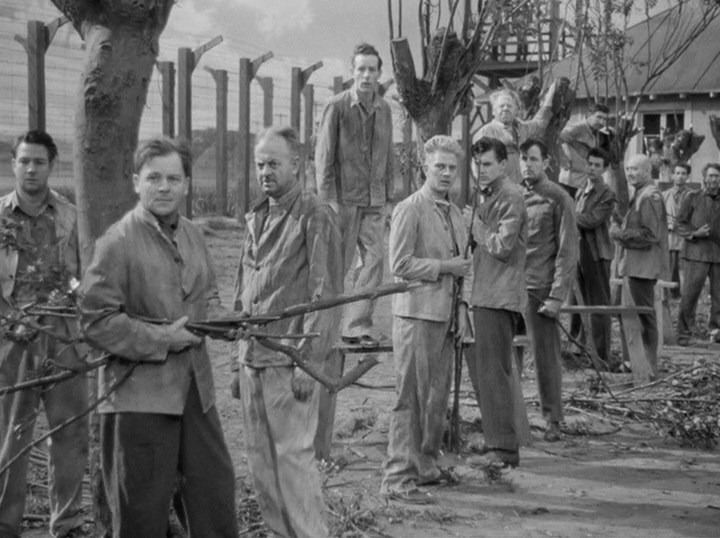

“A Sétima Cruz” é a história de sete prisioneiros que, em 1936, fogem do campo de concentração fictício de Westhofen. Entre eles está George Heisler (Spencer Tracy), que quer reencontrar sua amada Leni (Kaaren Verne). No campo, o comandante ordena que os outros prisioneiros ergam sete cruzes, nas quais ele pretende crucificado cada fugitivo - depois de torturá-los, obviamente.

“The Seventh Cross” is the story of seven prisoners who, in 1936, escape from the fictional concentration camp of Westhofen. Among them there is George Heisler (Spencer Tracy), who wants to be reunited with his beloved girl, Leni (Kaaren Verne). Back at the camp, the commander orders the other prisoners to build seven crosses, where he intends to crucify each fugitive - after torturing them, of course.


Enquanto isso, na cidade vizinha de Mainz, um amigo de George está preocupado com ele. Franz Marnet (Herbert Rudley) procura pelo líder da Resistência na cidade, e juntos eles conseguem passaportes falsos para George - o único problema é que George acredita que Franz está em Berlim, e Franz não faz ideia de onde George pode estar escondido.

Meanwhile, in the neighboring city of Mainz, a friend of George’s is worried about him. Franz Marnet (Herbert Rudley) looks for the leader of the Resistance in town, and together they get fake passports to give George - the only problem is that George believes Franz is in Berlin, and Franz has no idea where George could be hiding.


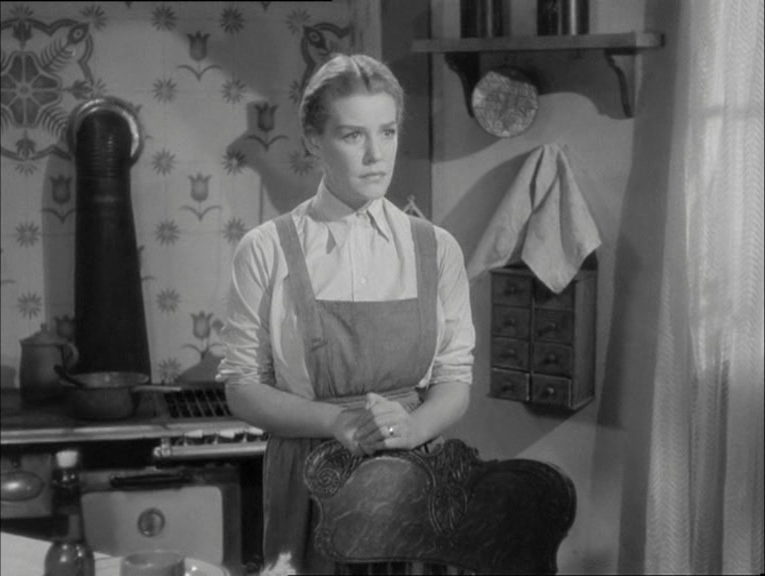
George encontra Leni em Mainz - a mesma Leni que prometeu esperar por ele para sempre agora está casada e ameaça contar para seu marido que ela viu o fugitivo. George não pode confiar em mais ninguém. Ele começa, assim como Blanche Dubois, a depender da bondade de estranhos - primeiro uma costureira (Agnes Moorehead) que é amiga de outro fugitivo, depois um médico judeu que cuida de um ferimento de George e decide não entregá-lo às autoridades. Sim, há oprimidos contribuindo com os opressores, mas ainda pode haver algumas pessoas decentes entre os oprimidos, que sabem o tanto que sofrem e que não desejam o mesmo destino para ninguém.

George finds Leni in Mainz - the same Leni who promised to wait for him forever is now married and threatens to tell her husband that she saw the fugitive. George can’t trust anybody anymore. He starts, like Blanche DuBois, depending on the kindness of strangers - first a dressmaker (Agnes Moorehead) who is friends with another fugitive, then a Jewish doctor who treats George’s wound and decides not to report him to authorities. Yes, there are oppressed people siding with the oppressors, but there may still be a few decent ones among the oppressed, who know what they’ve been through and won’t want the same fate to anybody.

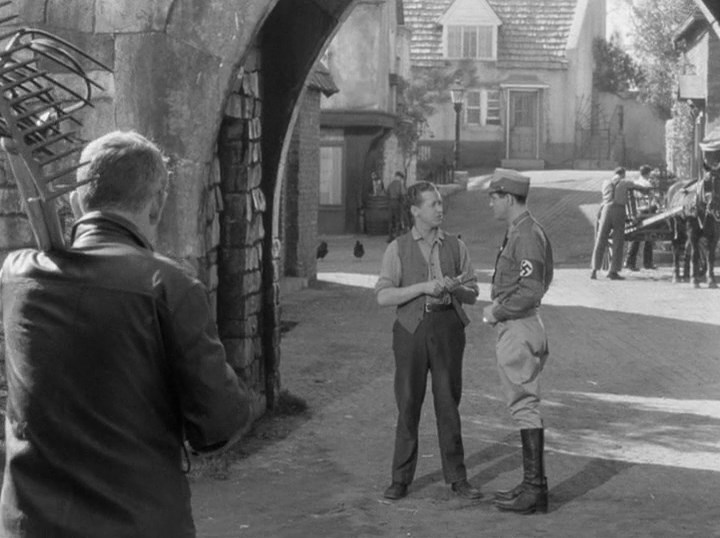
Membros histéricos da Juventude Hitlerista tomam uma vila e invadem casas em busca de um fugitivo. Para algumas pessoas, ver um homem ser caçado por nazistas é como ver um evento esportivo. O povo comemora e um homem faz piada quando o fugitivo - que felizmente não é George - é preso. Numa realidade nazista, as melhores pessoas são os indiferentes: pelo menos eles não contribuem para a desgraça de ninguém.

Hysterical members of the Hitler Youth go through the village and invade houses looking for a fugitive. Watching a man being hunted by Nazis is like watching a sports event for these people. The people cheer and a man makes a joke when the fugitive - luckily, not our George - is arrested. In a Nazi reality, the best people are the indifferent ones: at least they don’t contribute to someone’s misery.

George tem de procurar por Rudolf Schenck no número 46 da Morgenstrasse em Mainz. Quando ele chega ao endereço, uma vizinha o informa, com um sorriso debochado, que Rudolf e a esposa haviam sido presos pela Gestapo. Essa vizinha certamente informará à Gestapo sobre George - não há pessoas piores que as que são como esta vizinha, incapazes de cuidar somente de suas próprias vidas e que se enchem de prazer ao destruir os outros.

George has to look for Rudolf Schenck at 46 Morgenstrasse in Mainz. When he arrives at the address, a neighbor informs him, with a mocked smile, that Rudolf and his wife had been arrested by the Gestapo. This neighbor will certainly talk to the Gestapo about seeing George - there are no people worse than this neighbor kind, who can’t mind only their own business and feel pleasure in destroying others.


George, perturbado, procura pelo velho amigo Paul Roeder (Hume Cronyn) e sua esposa Liesel (Jessica Tandy). Paul é um cidadão comum: ele está feliz que seu salário aumentou e obedece ao Führer quando ele ordena que as famílias alemãs - só as famílias arianas, obviamente- tenham mais filhos. Ele está preocupado com os fins, não com os meios. E daí que o país está produzindo muito armamento e as minorias estão sendo sistematicamente eliminadas? A vida dele melhorou, e isso é tudo que parece importar para ele. Felizmente, Paul aceita ajudar o velho amigo - e eu posso estar sendo pessimista, mas não vejo essas pessoas que preferem os fins aos meios ajudando os outros.

A disturbed George then looks for his old friend Paul Roeder (Hume Cronyn) and his wife Liesel (Jessica Tandy). Paul is a common citizen: he is happy that his wage increased and obeys the Führer when he says German families - only the Arian ones, obviously - must make babies. He’s worried about the ends, not the means. So what that the country is producing a lot of guns and minorities are being systematically erased? His life got better, and that’s all that seems to matter to him. Fortunately, Paul agrees to help his old friend - I may be a pessimist now, but I don’t see those ends-over-means people helping anyone.


Outro amigo de George, Bruno Sauer (George Macready), em um primeiro momento se mostra demasiado covarde para ajudar, mas então se redime. Assim como muitos outros, Bruno tem uma vida confortável - seu banheiro cheio de espelhos é quase labiríntico- e aceita a situação porque ele tem medo de arriscar tudo para fazer a coisa certa. George mais uma vez terá de depender de estranhos, como o operário Fiedler (Paul Guilfoyle), o padeiro Poldi Schlamm (Felix Bressart) e a garçonete Toni (Signe Hasso).

Another friend of George’s, Bruno Sauer (George Macready), is at first too coward to help, but then redeems himself. Like many people, Bruno lives a comfortable life - his bathroom full of mirrors is almost a labyrinth- and compromises with the situation because he’s afraid to risk everything to do something right. George once again will have to rely on strangers, like factory work Fiedler (Paul Guilfoyle), baker Poldi Schlamm (Felix Bressart) and waitress Toni (Signe Hasso).


Mesmo que a saga de George se pareça com um suspense, ficamos enojados e alarmado com a história: afinal, é real, muitas pessoas passaram por dificuldades inenarráveis depois de fugirem de um campo de concentração, não é uma história inventada de detetive. E o mais terrível disso tudo é que você fica tão acostumado com o mal que não consegue mais confiar em ninguém- eu não conseguia confiar em nenhum personagem assim que ele aparecia, e por causa dessa desconfiança a situação de George fica mais difícil.

As much as George’s saga looks like a thriller, we are more disgusted and alarmed by the story: after all, it’s real, some people have been through hell after escaping a concentration camp, it is not an invented detective story. And the most awful thing in this whole tale is that you get so used with seeing evil that you start trusting nobody - I couldn’t trust any character at first, and because of these mistrust issues George’s situation gets harder.


A principal característica de um campo de concentração é que ele não é uma prisão: as pessoas não precisam ser condenadas por um crime para serem presas em um - elas apenas precisam ser consideradas perigosas ou repulsivas por aqueles que detêm o poder para serem mandadas para um campo de concentração. Eu não quero parecer demasiado dramática ou alarmista, mas todas essas coisas não foram deixadas em um passado sombrio - elas estão acontecendo novamente, agora. Imigrantes estão sendo separados de suas famílias em campos na fronteira dos EUA. As pessoas estão comemorando a desgraça alheia. Empatia está se tornando algo raro - porque quem não é alvo de discurso de ódio não consegue se colocar no lugar de pessoas que são, e por isso nada é feito contra o discurso de ódio. A esperança é cada dia mais difícil de ser mantida - mas “A Sétima Cruz” nos mostra que uma centelha de esperança é suficiente para iniciar a mudança. Ou, como escreveu uma menina naquela época:

“É difícil em tempos como estes: ideais, sonhos e esperanças permanecerem dentro de nós, sendo esmagados pela dura realidade. É um milagre eu não ter abandonado todos os meus ideais, eles parecem tão absurdos e impraticáveis. No entanto, eu me apego a eles, porque eu ainda acredito, apesar de tudo, que as pessoas são realmente boas de coração”. 
Anne Frank


The main characteristic of a concentration camp is that it’s not a prison: people don’t have to be found guilty of something to be imprisoned there - they just need to be found as dangerous or repulsive by those in power in order to be sent to a concentration camp. I don’t want to sound overly dramatic or alarmist, but all those things weren’t left in a somber past - they are happening again, now. Immigrants are being separated from their families in camps at the US border. People are cheering at someone’s disgrace. Empathy is becoming rare - because people who are not target of hate speech can’t put themselves in the places of people who are, therefore they do nothing against the hate speech. Hope is harder and harder to maintain - but “The Seventh Cross” shows us that one spark of hope is enough to start change. Or, as a girl wrote back then:

“It's difficult in times like these: ideals, dreams and cherished hopes rise within us, only to be crushed by grim reality. It's a wonder I haven't abandoned all my ideals, they seem so absurd and impractical. Yet I cling to them because I still believe, in spite of everything, that people are truly good at heart.” 
 Anne Frank
This is my contribution to the World War II blogathon, hosted by Maddy and Jay at Maddy Loves Her Classic Films and Cinema Essentials.


Saturday, June 17, 2017

#TheResistance at the movies: Presenting Cine Suffragette

Are you scared about the future? Are you disillusioned? Do you get nauseous when you watch the news? Did you answer YES to all the questions? Now comes the most important question of all: are you ready and willing to fight back and resist? If once again you answered YES, you'll be welcome to Cine Suffragette.


Since he-who-must-not-be-named was elected president of the US, I started feeling once again the burden that being a woman is. Not only a woman. Nowadays, being anything but a white-male-cisgender-straight-christian is dangerous and wrong. And it shouldn’t be.

That's why me and my fabulous internet friends decided to do what we know best: watch movies. And then analyze the movies and bring up valuable discussions about being a female, working in the movie businnes as a woman, and the representation of LGBT individuals, black, disabled and older people at the movies.


And that's why we created Cine Suffragette: an online, multilingual publication about empowerment and representativeness in film. We publish texts in English, Brazilian Portuguese, Spanish and French on the Medium platform. We also have an Instagram, Twitter, Facebook fanpage and YouTube channel.

You, members of #TheResistance, are more than welcome to read our texts and even contribute with us! Our first guest post was published this month and we will published versions in all languages. If you want to contribute, get in touch with us!

I must leave a big THANK YOU here to my partners in crime in this project: Rafaella from the blog Império Retrô and Jessica from the website Cine Espresso. <3 o:p="">


Find us at:


Friday, April 28, 2017

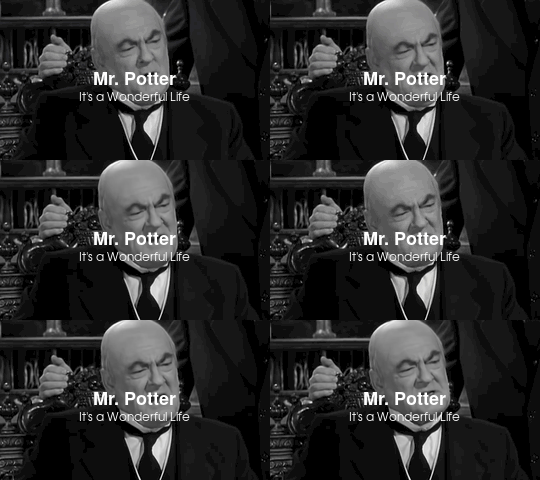
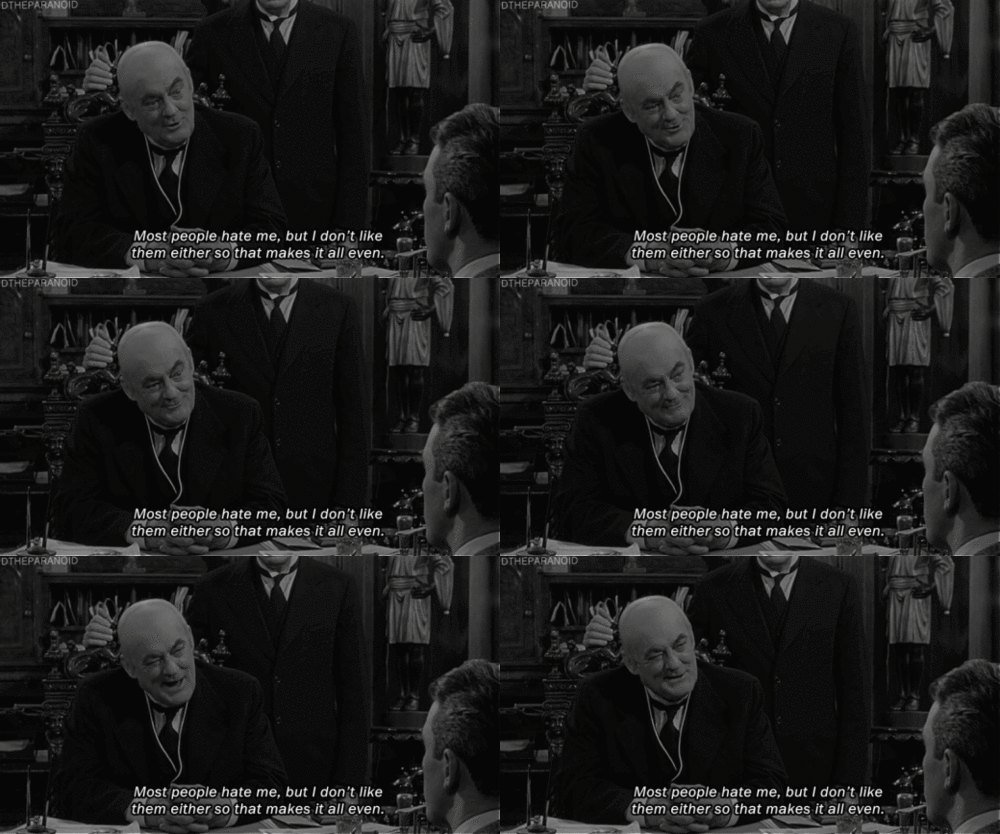
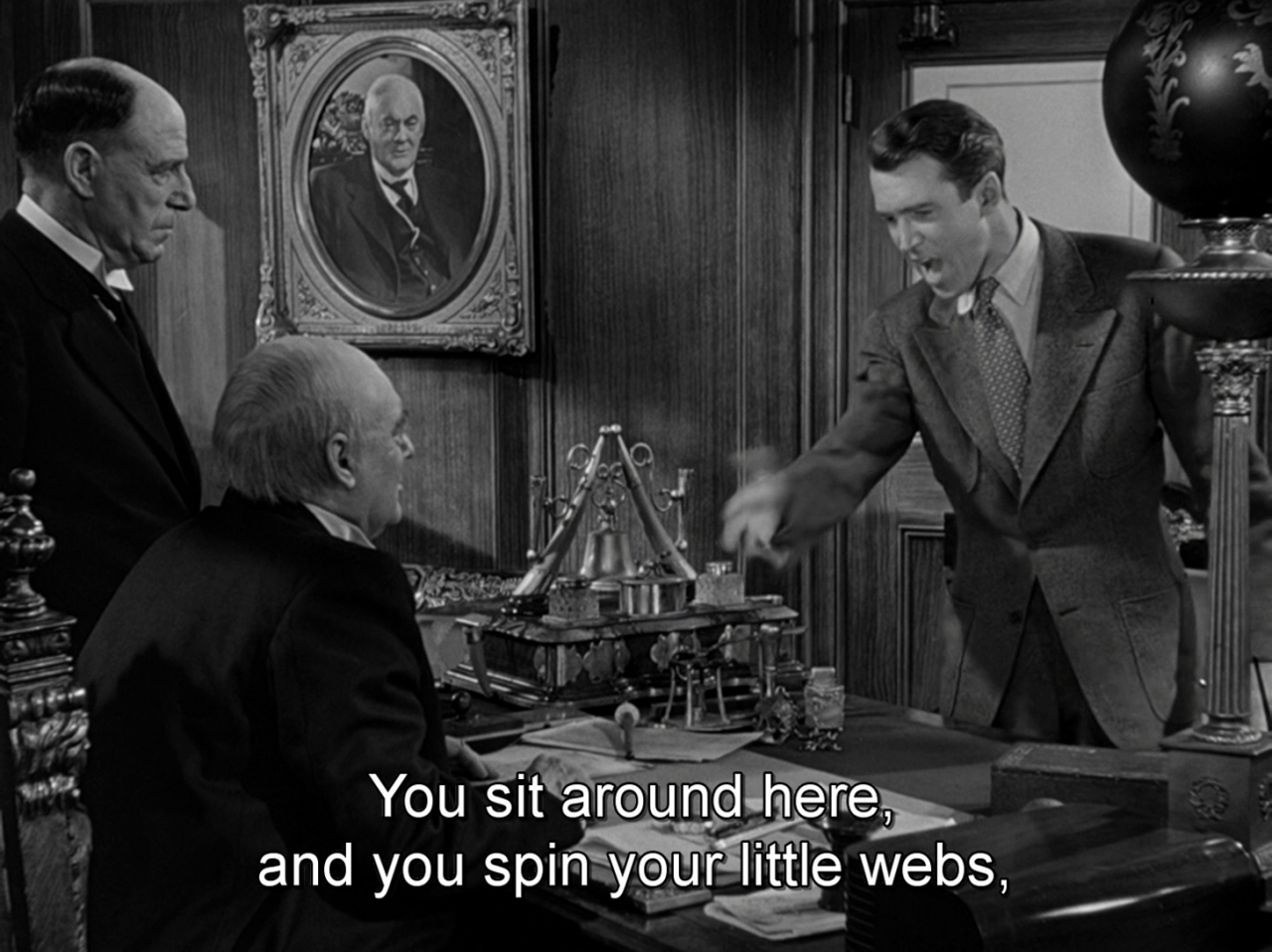
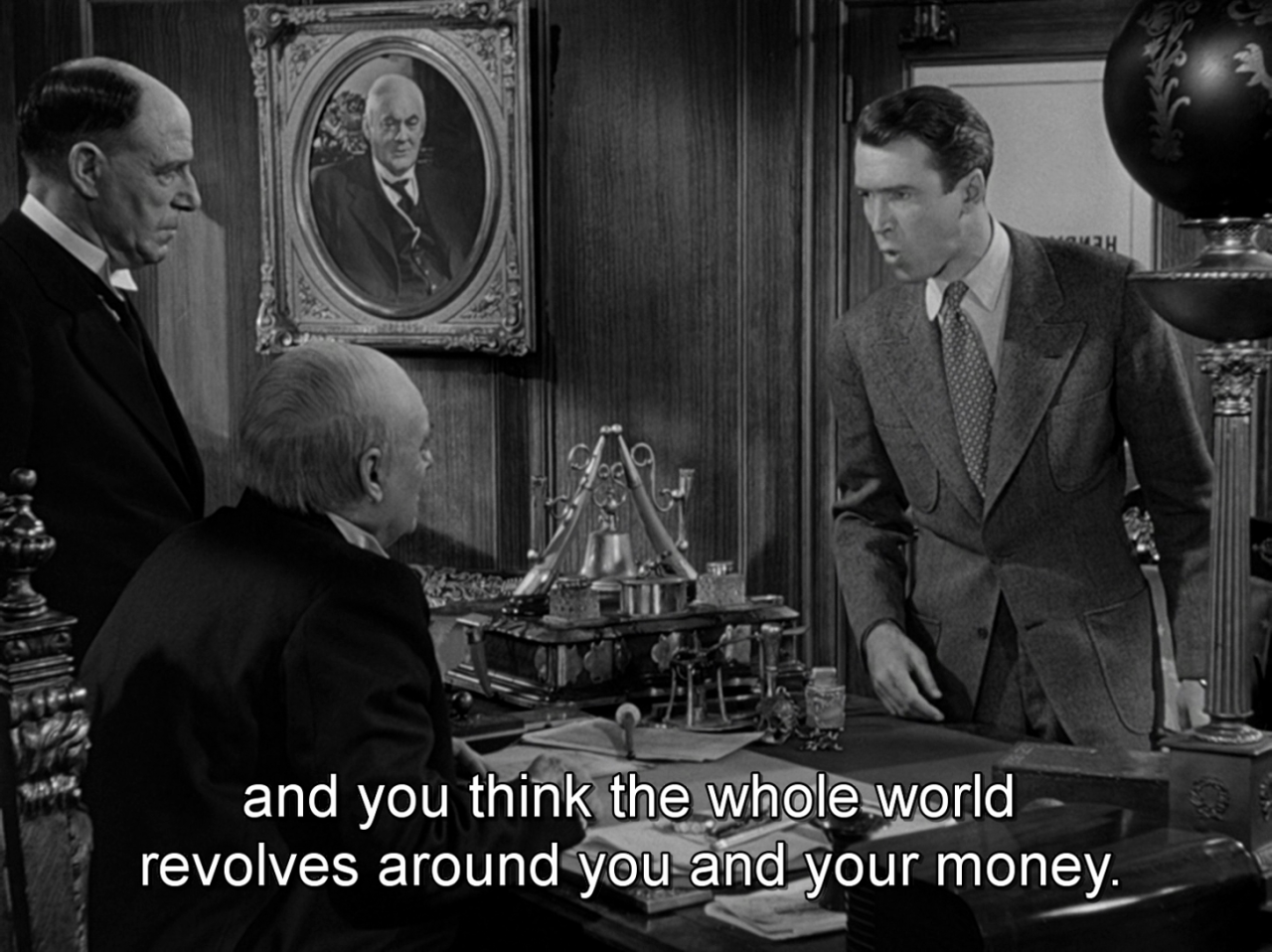
#TheResistance at the movies: how we can destroy the Mr Potters of the world

Nas três últimas edições de The Great Villain blogathon, eu escolhi focar em vilões divertidos – ou ao menos admiráveis. Assim, escrevi sobre dois vilões interpretados por Peter Lorre, os vilões da Disney através do tempo, e o inigualável Professor Fate!

For the past three editions of The Great Villain blogathon, I chose to showcase villains that were fun – or at least admirable. This includes two villainous roles Peter Lorre played, Disney villains through time, and the one and only Professor Fate!

Agora as coisas mudaram. Eu ainda adoro os vilões do cinema, mas o mundo fica cada dia mais cheio de vilões reais – e alguns até obtém poder político! Por isso eu escolhi um vilão muito real, um que pode ser encontrado em qualquer cidade e é muito perigoso. Ora, ele foi responsável por quase acabar com a vida maravilhosa de George Bailey – então pode ter certeza de que se trata de perigo real.

Now things changed. I still love movie villains, but the world gets fuller with real villains every day – and some even got political power! So I chose a very real villain to talk about, one that can be found in any city and is very harmful. Well, he was responsible for nearly ending George Bailey's wonderful life – so we're talking about real danger.
Mr Potter was considered the 6th worst villain of all time by AFI
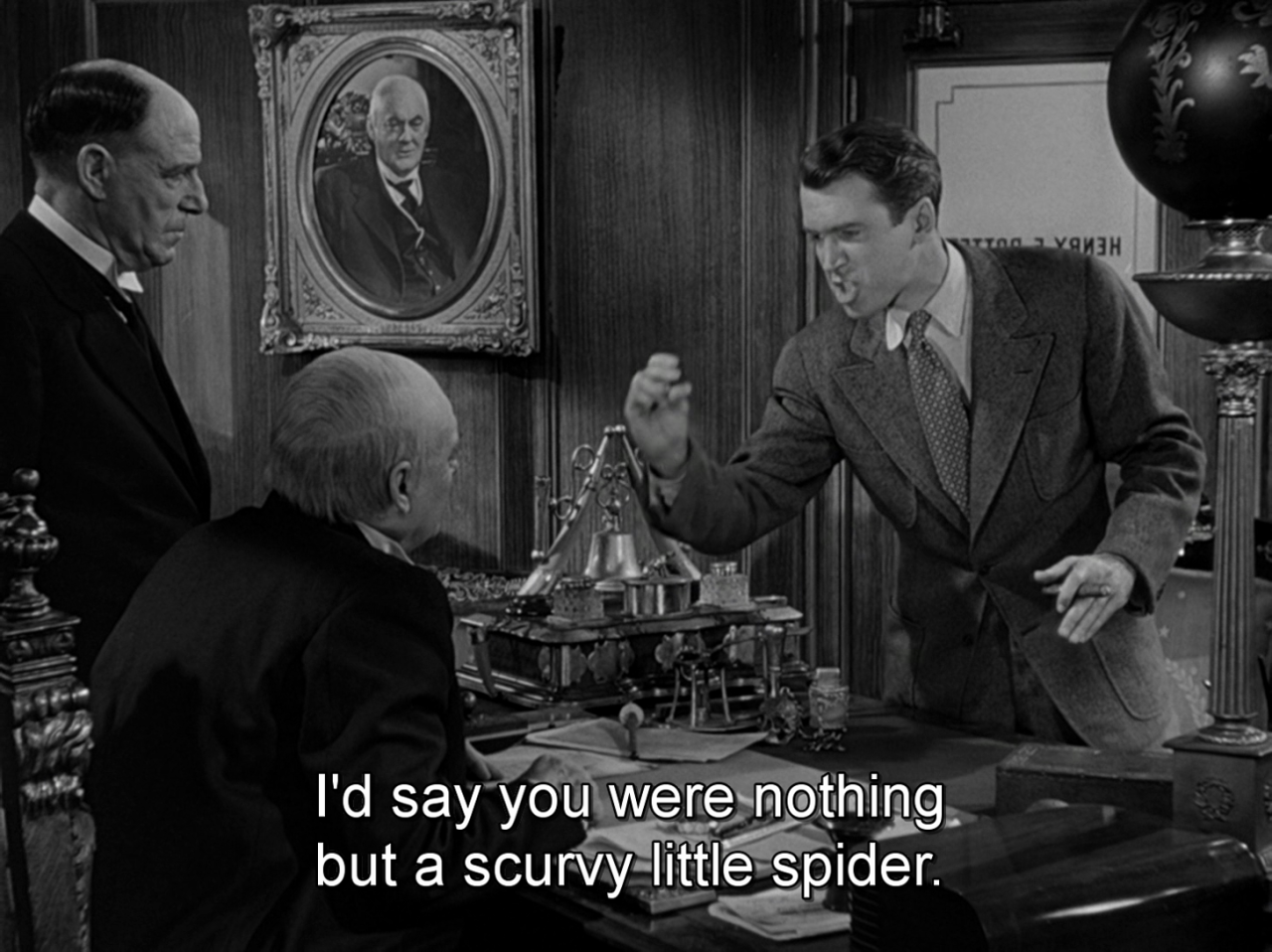
Henry F. Potter (Lionel Barrymore) é um banqueiro e o homem mais rico de Bedford Falls. A primeira vez em que ele entra em confronto com George Bailey (James Stewart) é quando ele tenta dissolver a Bailey Brothers's Building and Loan, empresa da família de George. Goerge convence os investidores a votarem contra a dissolução, mas tem de se tornar o co-administrador da Building and Loan, algo que ele nunca havia pensado em fazer.

Henry F. Potter (Lionel Barrymore) is a banker and the richest man in Bedford Falls. He first clashes with George Bailey (James Stewart) when he tries to dissolve Bailey Brothers's Building and Loan, the company owned by George's family. George convinces the investors to vote against the dissolution, but he has to become the co-administrator of Building and Loan, something he had never dreamed of.
George sacrifica muitos sonhos para manter a Bailey Brothers's Building and Loan funcionando, incluindo dar o dinheiro de sua lua-de-mel para a empresa, e trabalhando noite e dia. A Building and Loan ajuda as pessoas a construir a casa própria e sair dos supervalorizados barracos de propriedade de Mr Potter. Como George diz, para Mr Potter, as pessoas são como gado.

George sacrifices many dreams in order to keep the Bailey Brothers' Building and Loan working, including giving his honeymoon money to the company and working night and day. Building and Loan helps people build their own houses and move away from the overpriced slums owned by none other than Mr Potter. As George says, for Mr Potter, people are cow.
Na véspera de Natal de 1945 a tragédia parece acontecer quando o outro co-administrador da mepresa, tio Billy (Thomas Mitchell), perde 8 mil dólares (equivalentes a mais de 100 mil dólares hoje) e eles caem na mão de Mr Potter – que, obviamente, não tem intenção de devolver o dinheiro. Desesperado, George vai atrás de Mr Potter e pede um empréstimo, oferecendo seu seguro de vida como garantia, ao que Mr Potter responde: “você vale mais morto do que vivo”. Há coisa pior para falar para um homem desesperado?

On Christmas Eve, 1945, tragedy seems to strike: the other co-administrator of the company, uncle Billy (Thomas Mitchell), misplaces 8,000 dollars (equivalent to more than 100,000 dollars today) and they end up exactly in Mr Potter's hands – that won't give the money back, of course. In desperation, George goes after Mr Potter and asks for a loan, offering his insurance policy as a guarantee, to which Mr Potter comments: “you're worth more dead than alive”. Can you think about something worse to be said to a desperate man?
Nós sabemos o que acontece a seguir: George decide cometer suicído, mas seu anjo da guarda, Clarence (Henry Travers), o faz desistir da ideia ao mostrar como o mundo seria sem George. E então George chega a Pottersville – ou o que bem pode ser os Estados Unidos ou o Brasil num futuro próximo.

We know what happens next: George decides to commit suicide, but his guardian angel, Clarence (Henry Travers), dissuades him from the act by showing him what the world would be like without him. And then he arrives to Pottersville – or what could well be the US or Brazil in a near future.
Você conhece alguém como Mr Potter – que só se importa com lucros, e não com pessoas? Claro que sim: aquele-que-não-deve-ser-nomeado e é atualmente presidente dos EUA (o mesmo poderia ser dito do presidente ilegítimo do Brasil!). Bem, se ele é Potter, nós somos todos George Baileys. Um exército de George Baileys.

Do you know anyone who is just like Mr Potter – caring about profits, not about people? Of course you do: that-who-must-not-be-named and is now president of the US (the same could be said about the illegitimate Brazilia president!). Well, if he is Potter, we're all George Baileys. An army of George Baileys.
Baily é honesto, mas puro demais. Eu sinceramente queria que ele tivesse descoberto que Potter roubou o dinheiro e que o banqueiro mesquinho fosse punido e destruído. Eu gostaria de ver os Mr Potters de hoje punidos e destruídos.

Bailey is honest, but too pure. I sincerely wished he could have discovered it was Potter who stole the money, and have the greedy banker punished and destroyed. I'd like to see the Mr Potters of today punished and destroyed.
Nós podemos ser como George Bailey? Eu acho que não. Ele é como um príncipe encantado, e por isso não há como alguém ser tão perfeito quanto ele. Mas nós podemos aprender algo com a jornada dele: cada um de nós conta na #Resistência. E cada uma de nossas ações também conta para destruirmos os Mr Potters do mundo.

Can we be like George Bailey? I don't think so. He's like a prince charming, and therefore nobody can be as perfect as him. But we can learn something about his journey: each one of us counts at #TheResistance. And each one of our actions counts, too, to destroy the Mr Potters of the world.


This is my contribution to the 4th Great Villain Blogathon, hosted by Ruth, Kristina and Karen at, respectively, Silver Screenings, Speakeasy and Shadows and Satin.


Thursday, January 26, 2017

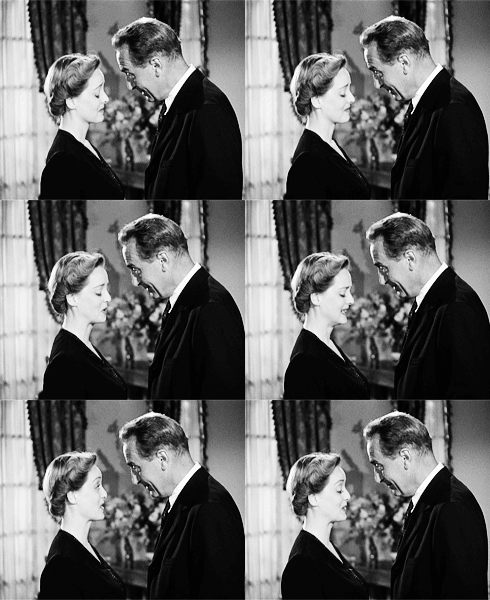
#TheResistance at the movies: Horas de Tormenta (1943) / Watch on the Rhine (1943)

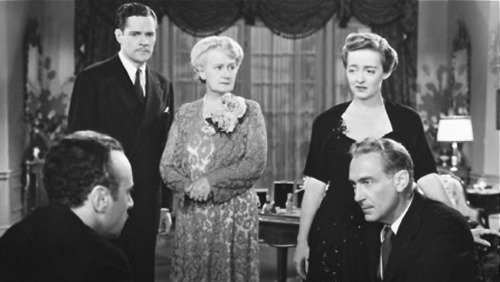
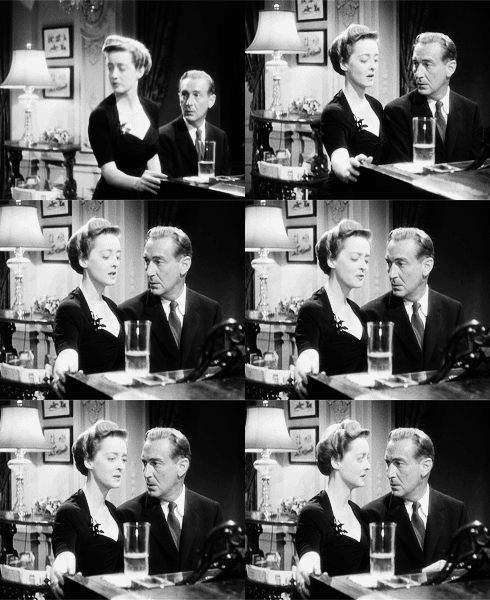
Horas de Tormenta” é mais conhecido por ser o filme que fez Paul Lukas ganhar um Oscar de Melhor ator quando Humphrey Bogart também concorria ao prêmio por sua interpretação de Rick Blaine em Casablanca. Mas o filme merece ser conhecido por outros atributos. É verdade que Paul Lukas interpreta o melhor personagem, deixando até Bette Davis em segundo plano, e ele é também o mais inspirador – e deveria ser nossa inspiração nos tempos sombrios que estamos vivendo.

Watch on the Rhine” is best remembered for being the film that made Paul Lukas win an Oscar over Humphrey Bogart’s portrayal of Rick Blaine in Casablanca. But the movie deserves to be remembered for more than this. It’s true that Paul Lukas is the greatest character onscreen, overshadowing even Bette Davis, and he’s also the most inspirational – and one that should be our inspiration in times as somber as the ones we live in.

Em 1943, o Oscar foi todo sobre #TheResistance. Embora o filme com mais indicações e prêmios tenha sido “A Canção de Bernadette”, podemos ver o tema comum e combater o mal em “Horas de Tormenta”, “Casablanca” e “Por quem os sinos dobram”, um filme que levou apenas a estatueta de Melhor Atriz Coadjuvante. E os três ativistas lutando pelo prêmio de Melhor Ator eram o ativista discreto Rick, de Bogart, o ativista sem medo Kurt, de Lukas, e o ativista que punha a mão na massa Robert Jordan, de Gary Cooper.

In 1943, the Oscars were all about #TheResistance. Although the film with the most nominations and wins was “The Song of Bernadette”, we can sense a common theme of fighting evil in both “Watch on the Rhine”, “Casablanca” and “For whom the bell tolls”, a film that ultimately got the Best Supporting Actress award. As for the three activists battling for the Best Actor statuette, we get the quiet activist on Bogart’s Rick, the outspoken one in Lukas’ Kurt and the go-getter in Gary Cooper’s Robert Jordan.  
Nós não estamos novamente neste momento artisticamente, mas certamente precisamos resistir ao fascismo, assim como o personagem de Paul Lukas, Kurt Muller, faz em “Horas de Tormenta”. Então aí vão 10 lições sobre ativismo por Paul Lukas (as falas retiradas diretamente do filme estão em negrito):

We’re not again at this moment artistically, but we certainly are in need of resisting against fascism, just like Paul Lukas’ character, Kurt Muller, does in “Watch on the Rhine”. So here we have 10 lessons on activism by Paul Lukas (quotes taken directly from the film are in bold):

1- Nós seriamente precisamos de pessoas como ele: o texto no início do filme elogia quem lutou contra o fascismo desde sua gênese, e não apenas quando o mal chegou o poder. Seria você uma destas pessoas?

1- We seriously need people like him: The text at the beginning praises the people who have fought fascism since its genesis, and not only when it rose to power. Are you one of those people?
2- “O mundo mudou, e algumas pessoas nele são perigosas”: Sara (Bette Davis) se refere aos nazistas que chegaram ao poder no começo dos anos 30 e estavam então em guerra contra os aliados, mas eu aposto que você consegue citar ao menos três pessoas perigosas no mundo atualmente.

2- “The world has changed, and some people in it are dangerous”: Sara (Bette Davis) is talking about the Nazis that rose to power in the early 1930s and were then at war against the Allies, but I bet you can cite at least three dangerous people living in the world right now.

3- “Soa tão grande. E é tão pequeno. Eu sou um anti-fascista”: Kurt não tem medo de contar à família de sua esposa qual é sua profissão. Mais do que isso: ele não tem nem vergonha nem orgulho do que faz. Ele odeia ser chamado de “um homem nobre” apenas porque ele luta contra o fascismo. É apenas o trabalho dele.

3- “It sounds so big. And it is so small. I’m an anti-fascist”: Kurt is not afraid to tell his in-laws what he does for a living. More than that: he’s neither ashamed nor proud of what he does. He hates being described as “a noble man” only because he fights fascism. It’s only his job.
4- “Antes da tempestade nazista… Eu descobri que apenas a esperança não é suficiente”: como podemos ter esperança se não lutamos? Você vai depender da luta dos outros? E, desculpem-me as pessoas religiosas, mas ações dizem mais e fazem mais que simples orações.

4- “Before the Nazi storm… I find out that hope by itself is not enough”: how can you have hope if you don’t fight? Will you rely on the fight of others? And, I apologize to religious people, actions speak louder and do more than simple prayers.
5- “Os homens que sabem por que eles lutam vão lutar com mais afinco”: autoexplicativo. Informação é poderosa. Informação gera raiva e medo, os combustíveis da mudança.

5- “Given men who know what they fight for, and will fight hard”: self-explanatory. Information is powerful. Information generates anger and fear, the fuels for change.

6- “A vontade de lutar não pode ser inserida em um homem, mas quando ela já está lá...”: ela só é extinta com a morte.

6- “The willingness to fight cannot be put in a man, but when it is there…”: it’s only extinguished with death.
7- “Você não sabe o que é estar com medo. Infelizmente, acho que você vai ter de aprender”: uma mensagem para nossos tempos, quando o fascismo está ganhando espaço novamente. É também uma mensagem para as famílias dos ativistas mais apaixonados, que terão medo por seus entes queridos, mas terão de aceitar o fato de que lutar é a missão deles.

7- “You don’t know what it is to be frightened. Unfortunately, I think you’ll have to learn”: a message for our times, when fascism is rising once again. It’s also a message for the families of the most passionate activists, who will fear for their loved ones, but will have to accept that fighting is their mission.

8- “Bem, é o que em geral acontece com os heróis, infelizmente”: falando de seu amigo e ativista Max Freidank, que havia acabado de ser capturado pelos nazistas e perdeu um braço na luta. Esta frase de Kurt nos mostra uma verdade dura e amedrontadora, mas lembre-se: há muitos ativistas, mas poucos heróis. Você pode lutar por uma causa, mas isso não significa que você terá de se sacrificar por ela se este não for seu destino.

8- “Well, it’s what often happens to heroes, unfortunately”: speaking of his friend and activist Max Freidank, who had just been captured by Nazis after losing an arm. This quote by Kurt tells us a harsh, chilling truth, but remember: there are many activists, but few heroes. You can be a fighter for a cause, but it doesn’t mean you’ll have to sacrifice yourself for it if this is not your destiny.
9- “Os únicos homens que fazem valer seu tempo na Terra são aqueles que lutam por outros homens”: seja um deles. Esteja do lado correto da história.

9- “The only men on Earth worth their time on Earth were the men who would fight for other men”: be one of them. Be in the right side of history.

10- “Eu devo tomar meu lugar. Não posso fazer mais nada. Deus me ajude. Amém”: esta frase de Lutero é citada por Kurt e deve ser seguida por todos os não-conformistas.

10- “I must make my stand. I can do nothing else. God help me. Amen”: this quote by Luther is cited by Kurt and should be followed by all non-conformists.
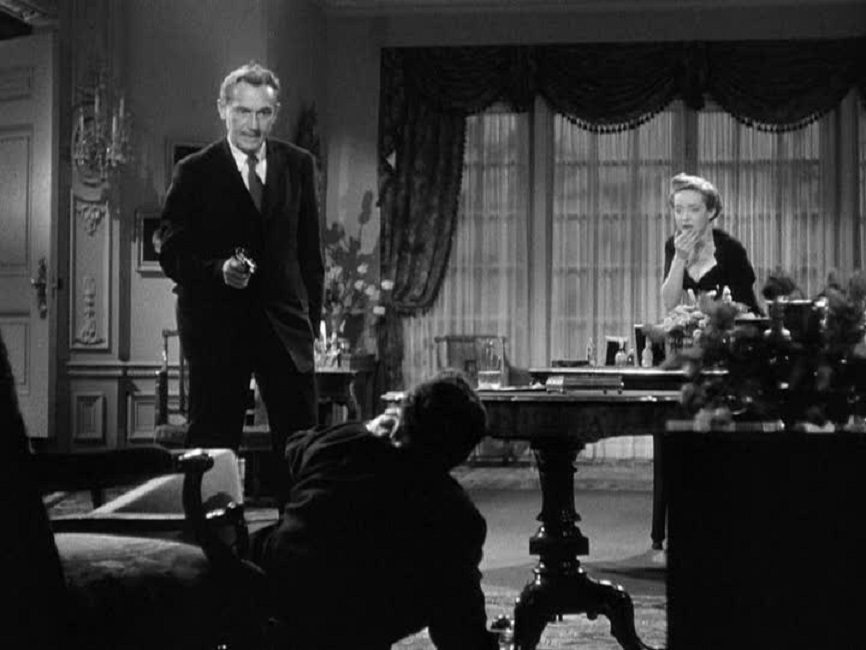
Além de tudo isso, Kurt e Sara nos lembram que fascistas não são aliens: são pessoas como nós, feitas de carne e osso, não são invencíveis e podem ser destruídas. (SPOILERS) Ironicamente, o escritório do Código Hays queria que Kurt morresse no fim porque ele atirou em um fascista, afinal, o personagem teria de pagar por seu crime! Isso em muito se parece com o recente debate sobre “é certo socar um nazista”. Fico feliz em dizer que Kurt terminou bem, então tudo bem para nós lutarmos contra os nazistas como bem entendermos.

Besides all that, Kurt and Sara reminds us that fascists are not aliens: they are human beings like us, made of flesh and bone, not invincible, and can be destroyed. (SPOILERS) Ironically, the Hays Office wanted Kurt to die in the end because he shot a fascist, after all, he had to pay for his crime! This is very much like the recent “is it OK to punch a Nazi” debate. I’m happy to inform that, for Kurt it ended up OK, so it’s OK for us to fight Nazis any way we want. 
Related Posts Plugin for WordPress, Blogger...