} Crítica Retrô: 1957

Tradutor / Translator / Traductor / Übersetzer / Traduttore / Traducteur / 翻訳者 / переводчик

Showing posts with label 1957. Show all posts

Friday, October 28, 2022

A Clandestina (1957) / Manuela (1957)


O significado do nome Manuela é “Deus está conosco”. É um nome mais comum em países de língua espanhola, por isso é natural que o filme “Manuela”, conhecido por aqui pelo título “A Clandestina”, comece num povoado na América do Sul.

The meaning of the name Manuela is “God is with us”. It is a name more common in Spanish-speaking countries, so it is only natural that the action for the film “Manuela” starts in a Spanish-speaking pueblo in South America.

A tripulação de um navio vai à terra firme, até um povoado próximo, porque o chefe de engenharia morreu e eles querem que ele tenha um enterro digno em solo, não em alto-mar. Seis pessoas estão nessa missão: o capitão James Prothero (Trevor Howard), seu subordinado Evans (Donald Pleasence), Mario Constanza (Pedro Armendáriz) e três outros ajudantes. Ao completarem a missão, eles decidem aproveitar a noite no povoado. Mario é abordado por uma garota, Manuela (Elsa Martinelli), que está fugindo de homem e quer saber se Mario consegue colocá-la a bordo do navio para a Inglaterra, onde ela estará segura.

The crew of a ship goes ashore to a nearby pueblo because their chief engineer died and they want him to have a proper burial on land, not at sea. Six people are on this mission: captain James Prothero (Trevor Howard), his subordinate Evans (Donald Pleasence), Mario Constanza (Pedro Armendáriz) and three other helpers. When the mission is complete, they decide to enjoy the night at the pueblo. Mario is approached by a girl, Manuela (Elsa Martinelli), who is running away from a man and wants to know if Mario could get her on board of the ship to England, so she can finally be safe.

Mario termina concordando com Manuela, não sem antes exigir sexo em troca do pequeno favor. Fica apenas implícito que a troca foi feita, porque logo depois Manuela é levada para o navio. O problema agora é que não há mulheres no navio, e Manuela não consegue se disfarçar de homem. Quando o capitão descobre que ela está a bordo, Manuela pula do navio, mas o capitão James diz à sua tripulação para resgatá-la. Então, o calor se torna quase insuportável dentro do navio – não apenas por causa de Manuela, mas também por causa de um problema com as caldeiras.

Mario ends up agreeing with Manuela, not without asking for sex in exchange of this little favor. It is only implied that the exchange was made, but the next thing you know is that Manuela is taken on board of the ship. The problem now is that there are no women on the ship, and Manuela can’t disguise as a boy. When the captain finds out about her, Manuela jumps in the sea, but captain James tell his crew to rescue the girl. Then, the heat becomes almost insufferable inside the ship – not only because of Manuela, but also because of a problem with the furnaces.

Um grande problema com o filme – algo que realmente me incomodou – foi que Manuela deveria ter 17 anos de idade. Ela Martinelli tinha 22 quando o filme foi feito, e parece ainda mais madura. É por isso que é curioso quando sua personagem diz que, aos 25 anos, as mulheres são “velhas e gordas”. O capitão James deveria ter 43 anos e Trevor Howard, aos 44, parece ainda mais velho. A idade de Mario nunca é mencionada, mas Pedro Armendáriz tinha 45 quando o filme foi feito. Qualquer intimidade sugerida entre Manuela e um dos dois é, por conta desta diferença de idade, um pouco perturbadora.  

One major problem with the movie – something that really bothered me – is that Manuela is supposed to be seventeen. Elsa Martinelli was 22 when the film was made, and she looks even older. That’s why it’s so curious when her character claims that, by the time they are 25, women are “old and fat”. Captain James was supposed to be 43, and Trevor Howard, at 44, looks older than that. Mario’s age is never mentioned, but Pedro Armendáriz was 45 when the film was made. Any intimacy implied between Manuela and the two is, because of this age gap, a bit disturbing.

A trilha sonora merece destaque. As músicas instrumentais são tocadas pela Orquestra Sinfônica de Londres, e o diretor do departamento de música do filme é Muir Mathieson, que trabalhou em outras películas famosas, como “Desencanto” (1945) e “Um Corpo que Cai” (1958). Em “A Clandestina”, as músicas são perfeitas para criar uma atmosfera e aumentar o suspense em momentos-chave.

The soundtrack is something worth highlighting. The instrumental songs are played by the Symphonic Orchestra of London, and the director of the music department is Muir Mathieson, who worked in other famous movies, like “Brief Encounter” (1945) and “Vertigo” (1958). In “Manuela”, the songs are perfect to create a mood and enhance the suspense in key moments.

Um momento interessante acontece quando Manuela está falando sobre seu falecido marido, que era também sócio de seu pai: um homem brasileiro chamado... Corcovado. É praticamente impossível encontrar aqui uma pessoa com este nome: Corcovado é o nome de um conjunto de montanhas no Rio de Janeiro. Ao tentar destacar o que há de “exótico” na América Latina e no Brasil, escritores e roteiristas falharam em diversas ocasiões.

A most interesting moment came when Manuela was talking about her late husband, who was also her father’s partner: a Brazilian man named... Corcovado. It’s nearly impossible to find a person with such a name here: Corcovado is actually the name of a famous mountain in Rio de Janeiro. When trying to highlight the “exotic” in Latin America and Brazil writers and screenwriters have failed again and again. 

“A Clandestina” é baseado em um livro de William Woods, que também escreveu o roteiro junto com Ivan Foxwell e Guy Hamilton, que eram, respectivamente, produtor e diretor do filme. Hamilton ainda iria dirigir quatro filmes de 007. Em “A Clandestina”, vale mencionar uma excelente escolha técnica: o contra-plongée usado quando o capitão James e Mario estão em um barquinho, e o ângulo da câmera imita o ponto de vista de James.

“Manuela” is based on a book by William Woods, who also wrote the script alongside Ivan Foxwell and Guy Hamilton, who were, respectively, producer and director of the film. Hamilton would go on to direct four James Bond films. In “Manuela”, one excellent choice of camera angle should be mentioned: the contra-plongée used when only captain James and Mario are in a small boat, mimicking James’ point of view.

Você já percebeu que há menção ao sexo em muitas ocasiões em “A Clandestina”. O filme dificilmente seria aprovado pelo Código Hays nos EUA, mas na Inglaterra a censura era um pouco diferente. Distribuidores britânicos de filmes criaram, em 1912, o British Board of Film Censors, originando assim a autocensura dentro da indústria britânica do cinema. Os filmes aprovados pela junta recebiam um certificado para ser exibido no início, algo que pode ser visto em “A Clandestina”:  

You have already seen that sex is implied in several moments in “Manuela”. The film would hardly be approved by the Hays Code in the US, but in England censorship was a bit different. British film distributors had created, in 1912, the British Board of Film Censors, originating with this the self-regulation within the British film industry. The films approved by the board received a certificate to be exhibited in the beginning, something that we can see in “Manuela”:

“A Clandestina” não é um filme perfeito nem uma joia escondida. É escondido, sem dúvidas, e é divertido. Você não está perdendo muito se não viu o filme, mas se decidir vê-lo, com certeza terá 90 minutos agradáveis.

“Manuela” isn’t a perfect film nor a hidden gem. It’s hidden, no doubt about it, and it’s entertaining. You’re not missing much if you haven’t watched it, but if you do decide to watch the movie, you’ll certainly spend pleasant 90 minutes.

This is my contribution to the Devilishly Delightful Donald Pleasence blogathon, hosted by Gill and Barry at RealWeegieMidget Reviews and Cinematic Catharsis.

Monday, February 28, 2022

A História da Humanidade (1957) / The Story of Mankind (1957)


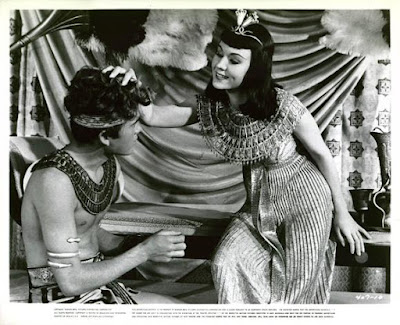
Mais estrelas que há no céu: com este lema eram anunciados os filmes “all-star”. Estes eram filmes com um elenco de dar inveja, e entre os muitos produzidos podemos mencionar “Grande Hotel” (1932), “Jantar às Oito” (1933), “Seis Destinos” (1942) e “A Conquista do Oeste” (1952). Se um bom elenco reflete na qualidade de um filme, isso significa que um filme “all-star” não pode ser ruim, certo? Errado. Vamos dar uma olhada em um filme “all-star” que deu muito errado: “A História da Humanidade” (1957).

More stars than there are in Heaven: with this motto the “all-star” movies were advertised. These were movies with an impressive cast, and among them we can mention “Grand Hotel” (1932), “Dinner at Eight” (1933), “Tales of Manhattan” (1942) and “How the West Was Won” (1952). If a good cast reflects in the quality of the movie, this means that an “all-star” movie can’t be bad, right? Wrong. Let’s take a look at an “all-star” movie gone terribly wrong: “The Story of Mankind” (1957).

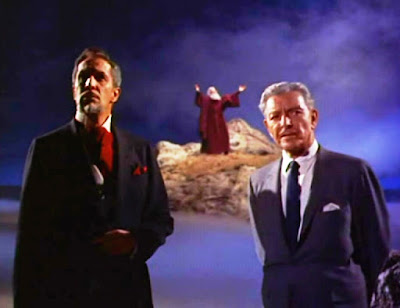
A trama até que é interessante. Depois do desenvolvimento de uma arma denominada Super H-Bomb – ou seja, uma bomba de hidrogênio -, seres celestiais organizam um julgamento no espaço sideral para decidir o destino da humanidade. Será que a humanidade deveria ser salva ou os seres celestiais deixarão os homens destruírem uns aos outros? Para decidirem, os juízes vão ouvir os argumentos do Espírito do Homem (Ronald Colman), que tentará proteger a humanidade, e do Diabo (Vincent Price), que tentará provar que a humanidade sempre foi má e merece ser extinta. Nos 90 minutos seguintes, haverá um desfile de participações especiais e algumas mortes ridículas.

The plot is actually interesting. After the development of a weapon named Super H-Bomb – that is, a hydrogen bomb –, celestial beings call for a tribunal in outer space to decide the fate of mankind. Should mankind be saved from itself or will the celestial beings let men destroy other men? In order to decide, the judges will hear arguments from the Spirit of Man (Ronald Colman), who will try to protect mankind, and from the Devil (Vincent Price), who will try to prove that mankind has always been evil and deserves to be erased from Earth. In the following 90 minutes, you’ll be served a parade of special guests and also some ridiculous onscreen deaths.


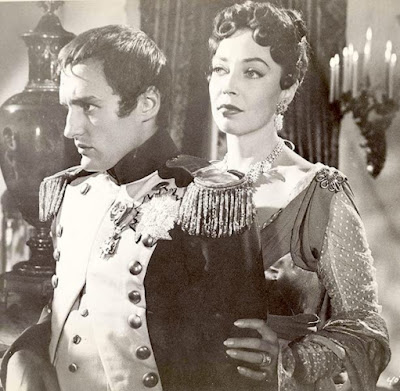
O filme não é muito bondoso para com as mulheres notáveis da história. Ele retrata Helena de Troia como uma femme fatale fútil, Cleópatra como ladra (e também fútil) e Maria Antonieta como uma tirana sem coração. Joana D’Arc (interpretada por Hedy Lamarr) é uma heroína, mas o Diabo usa o caso dela para provar que as pessoas são más porque traem outras pessoas, como Joan foi traída por compatriotas francesas. Mulheres são comumente apagadas da história, e é uma pena que, quando elas são mencionadas, são retratadas como personagens pouco complexas.

The movie is not very kind to the notorious women of history. It portrays Helen of Troy as a futile femme fatale, Cleopatra as a pickpocket (also futile) and Marie Antoinette as an inconsiderate tyrant. Joan of Arc (played by Hedy Lamarr) is a heroine, but the Devil uses her case to prove that people are evil because they betray other people, as Joan was betrayed by her fellow Frenchmen. Women are often erased from history, and it’s a shame that, when they are acknowledged, they are portrayed as less-than-complex characters.


A maioria dos momentos de bondade mostrados pelo Espírito do Homem tem a ver com religião. Isso inclui a revelação dos dez mandamentos para Moisés, os primeiros católicos rezando nas catacumbas em Roma, os monges mantendo a palavra de Deus viva na Idade Média. Todo esse discurso católico é estranho, e ainda mais estranho considerando que o filme diz que o julgamento é no espaço sideral, não no Céu. Nestes momentos, o filme se torna pregador, soando mais como uma lição de moral que uma obra de entretenimento.

Most of he moments of goodness shown by the Spirit of Man are connected with religion. This includes the reveal of the ten commandments to Moses, the first Catholics praying in the catacombs in Rome, the monks that kept God’s word alive during the Middle Ages. All this Catholic speech is odd, and even odder considering that the movie says that the courtroom is in outer space, and not Heaven. In these moments, the film becomes too preachy, sounding more than a moral lesson than a piece of entertainment.


A História da Humanidade” apresenta apenas a história eurocêntrica, sendo inclusive “anglocêntrica” quando conta, por exemplo, que a lei e a ordem foram trazidas de volta ao mundo quando o rei John assinou a Magna Carta no século XIII. Ao seguir esta visão, o Diabo apresenta um bom argumento, por exemplo, quando fala sobre a destruição trazida pelo colonizador para a América, com o massacre dos nativos. O Diabo mais uma vez tem razão quando o Espírito do Homem tenta mostrar que o colonizador inglês é um cavalheiro, e o Diabo o recorda da escravidão.

The Story of Mankind” presents only Eurocentric history, even being “anglocentric” when it tells, for instance, that law and order were brought back to the world when king John signed the Magna Carta in the 13th century. By following this vision, the Devil makes a point, for instance, when he talks about the destruction brought by the colonizers to America, with the slaughter of the natives. The Devil also scores when the Spirit of Men tries to paint English colonizers as true gentlemen, and the Devil reminds him of slavery.


Ronald Colman foi uma escolha perfeita para interpretar o Espírito do Homem e nos defender. Um ator fantástico, Colman interpretou muitos personagens honrados, como o protagonista de “A Queda da Bastilha” (1935). Vincent Price também foi a escolha perfeita para fazer o Diabo: suave e fria, sua persona cinematográfica combina com sua interpretação de um diabo bonitão e ultrarracional.

Ronald Colman was a perfect choice to play the Spirit of Man and defend us all. A superb actor, Colman often played honored characters, like the lead in “A Tale of Two Cities” (1935). Vincent Price was also perfectly cast as the Devil: suave yet cold, his onscreen persona matches this portrayal of a handsome and intellect-driven devil.


A premissa de “A História da Humanidade” é até bem intelectual: o homem é intrinsecamente bom ou mau? Esta é uma questão feita e refeita há séculos, uma questão que dividiu filósofos com o passar dos séculos: Thomas Hobbes acredita que somos intrinsecamente maus, Jean-Jacques Rousseau acha que os humanos são bons. Sociedades complexas modernas – e por “modernas” eu quero dizer sociedade como as que emergiram na Mesopotâmia por volta de 3000 a.C. - são as sociedades em que líderes tirânicos podem emergir – e convencer ou forçar as pessoas a fazer o mal. Psicólogos sociais, após experimentos e a observação dos julgamentos de Nuremberg, concluíram que é a situação que fará uma pessoa se comportar de maneira boa ou má. Ninguém conseguiu dar uma resposta definitiva para a questão – nem mesmo este filme.

The premise of “The Story of Mankind” is actually very intellectual: is man intrinsically good or evil? This is a centuries-old question, one that has divided philosophers through the ages: Thomas Hobbes thinks we’re inherently evil, Jean-Jacques Rousseau thinks humans are good. Modern complex societies – and by “modern” I mean societies like the ones that emerged in Mesopotamia around 3,000 b.C. - are the societies where tyrannical leaders could emerge – and convince or force people to do harm. Social psychologists, after experiments and the observation of the trials in Nuremberg, concluded that it is the situation that determines if a person will do good or behave badly. Nobody was able to give a definitive answer to the question – not even this film.


A História da Humanidade” foi dirigida, produzida e co-escrita por Irwin Allen, usando como base um livro de não-ficção com o mesmo título publicado em 1921. O nome de Irwin Allen é familiar para os fãs do gênero “filme de desastre”: ele foi produtor de “O Destino do Poseidon” (1972), “Inferno na Torre” (1974) e do ridículo “O Enxame” (1978).

The Story of Mankind” was directed, produced and co-written by Irwin Allen, using as source a non-fiction book of the same title published in 1921. Irwin Allen’s name is familiar for fans of the “disaster movie” genre: he was the producer of “The Poseidon Adventure” (1972), “The Towering Inferno” (1974) and the ridiculous “The Swarm” (1978).


Em 1957, Allen era apenas um ex-publicitário que estava fazendo sua estreia num filme live-action depois de dirigir dois documentários. De acordo com notícias da época, “A História da Humanidade” deveria ser um épico de três horas com apenas dois atores, um homem e uma mulher, contando toda a história da humanidade. A ideia mudou e um elenco de peso foi chamado para fazer o filme que conhecemos – isto é, este filme cheio de anacronismos e erros factuais.
In 1957, Allen was just a former publicist who was making his live-action feature film debut after directing two documentaries. According to press releases of the time, “The Story of Mankind” was first supposed to be a three-hour epic with only two actors, a man and a woman, telling the whole history of mankind. Things changed and an all-star cast was assembled to make the movie as we know it – that is, full of anachronisms and factual errors.


Eu sempre tento ver o lado bom dos filmes ruins, e consegui encontrar algumas coisas boas em “A História da Humanidade”. A sequência de Groucho Marx como colonizador inglês é divertida. Temos Francis X. Bushman, uma superestrela da era muda, como Moisés. A fotografia de Nicholas Musuraca – creditado como “Nick” – é muito boa. Surpreendentemente, não há blackface, brownface nem yellowface.

I always try to find redemptive characteristics even in the worst movies, and I managed to find some in “The Story of Mankind”. Groucho Marx’s bit as an English settler is funny. We have Francis X. Bushman, a superstar from the silent era, as Moses. The cinematography by Nicholas Musuraca – credited as “Nick” – is very good. Surprisingly, there is no blackface, brownface or yellowface.


Eu li em algum lugar que a História nada mais é que um bando de pessoas horríveis fazendo coisas horríveis. Eu penso muito sobre essa definição, e na maioria das vezes concordo com ela. Com genocídios, guerras e tantas outras coisas ruins que aconteceram e vêm acontecendo agora mesmo, eu também tendo a concordar com o Diabo de “A História da Humanidade” – a voz mais razoável num filme que às vezes soa como propaganda religiosa, e na maior parte do tempo é apenas uma bela bagunça.

I read somewhere that history is a bunch of horrible people doing horrible deeds. I’ve thought about this definition often, and I tend to agree with it. With genocides, wars and so much more bad things that have happened and are happening right now, I also tend to agree with the Devil from “The Story of Mankind” – the most reasonable voice in a film that sometimes feels like religious propaganda, and most of the time is just a beautiful mess.

This is my contribution to the Fourth So Bad It’s Good blogathon, hosted by Rebecca at Taking Up Room.

Saturday, April 3, 2021

Um Pijama para Dois (1957) / The Pajama Game (1957)


Uma fábrica de pijamas parece ser o lugar mais chato do mundo, né? Mas mesmo este lugar pode se tornar interessante... com o poder do cinema! E com o poder da Broadway, claro. Em 1954, “Um Pijama para Dois” foi um grande sucesso na Broadway, com uma estranha porém eficaz mistura de romance, trabalhadores lutando por salários justos e um pouco de humor. Quando foi adaptado para a tela, o talento e o carisma de Doris Day foram adicionados para criar mais um grande sucesso.

A pajama factory sounds like the most boring place in the world, doesn't it? But even this place can become interesting... with the power of movies! And the power of Broadway, of course. In 1954, “The Pajama Game” was a huge hit on Broadway, with an odd but efficient mix of romance, workers fighting for fair wages and a bit humor. When it was adapted to the screen, the star power of Doris Day was added to make another sure hit.


Sid Sorokin (John Raitt) acaba de ser contratado como superintendente na Fábrica de Pijamas Sleeptite (algo como “durma bem”). Assim que começa no novo trabalho, ele entra em atrito com uma das funcionárias, Katherine 'Babe' Williams (Doris Day). É uma daquelas histórias clássicas: eles começam não gostando um do outro, mas é certeza que eles ficarão juntos no final – mesmo que ela declare não estar nem um pouco apaixonada.

Sid Sorokin (John Raitt) has just been hired as a superintendant at the Sleeptite Pajama Factory. As he begins his new job, he clashes with one of the employees, Katherine 'Babe' Williams (Doris Day). It's one of those classic stories: they start disliking each other, but they'll certainly be together in the end – even though she declares she's not at all in love. 

Felizmente, não demora o filme todo para que eles confessem o que sentem um pelo outro isso acontece no piquenique annual dos Fabricantes Unidos de Camisas & Pijamas da América. Mas surge um conflito: Sid foi contratado para impedir que os funcionários da fábrica consigam um aumento de sete centavos e meio por hora no salário, e Babe faz parte do sindicato que luta por esse aumento. Sete centavos e meio não compra muita coisa, mas pode ser suficiente para separar Sid e Babe.

Fortunately, it doesn't take them the whole movie to confess they are in love: they do it in the Amalgamated Shirt & Pajama Workers of America's annual picnic. But conflict arises: Sid was hired to prevent the workers in the factory from getting a 7 ½ cents raise in their hourly wage, while Babe is a member of the union fighting for this same raise. 7 ½ cents do not buy a hell of a lot, but may be enough to keep Sid and Babe apart.

O cabelo de Doris Day está bem moderno neste filme, e seu figurino é simplesmente lindo. Embora ela pareça feliz durante a maior parte do filme, nos bastidores ela tinha dificuldades por ser uma de apenas quatro artistas que não estrelaram a peça na Broadway. Encontrar seu lugar onde já havia tanto entrosamento foi difícil, embora não haja evidências de que ela tenha sido tratada de maneira diferente pelo resto do elenco.

Doris Day's hair looks very modern in this movie, and her outfits are simply gorgeous. Although she looks happy during most of the film, behind the scenes she was struggling because she was only one of four performers who weren't in the original Broadway cast. Finding her place in that well-oiled machine was hard, although there is no accounts that she was ever treated differently by the rest of the cast.

John Raitt – que se parece um pouco com Warren Beatty em algumas cenas – interpretou o protagonista de “Um Pijama para Dois” na Broadway. Depois de impressionar Rodgers & Hammerstein num teste para ser substituto no musical “Oklahoma!” em 1944, a dupla escreveu o musical “Carrossel” especificamente para Raitt interpretar o papel principal. John Raitt trabalhou muito na Broadway e fez algumas participações na TV. “Um Pijama para Dois” foi seu maior papel no cinema, e infelizmente ele e Doris Day não tinham muita química.

John Raitt – who looks a little like Warren Beatty in some scenes – played the lead of “The Pajama Game” on Broadway. After impressing Rodgers & Hammerstein in an audition for a position as an understudy in the musical “Oklahoma!” in 1944, the duo wrote the musical “Carousel” specifically for Raitt to play the lead. John Raitt worked mostly on Broadway and made a few TV appearances.“The Pajama Game” was his biggest film role, and unfortunately he and Doris Day don't have a great chemistry.

Carol Haney está hilária como a secretária Gladys Hotchckiss, papel que ela interpretou na Broadway e que lhe garantiu um prêmio Tony. No cinema, Carol tinha apenas aparecido como dançarina, e “Um Pijama para Dois” foi o único filme em que ela teve falas. Sua Gladys é decidida e adorável, embora não seja exatamente engraçado ver um atirador de facas ciumento correndo atrás dela, ameaçando-a.

Carol Haney is hilarious as the secretary Gladys Hotchckiss, a role she played on Broadway and gave her a Tony Award. In film, Carol had only appeared as a dancer, and “The Pajama Game” was the only movie in which she had lines. Her Gladys is no-nonsense and adorable, although it's not exactly funny to see a jealous knife-thrower running after her and threatening her.

O coreógrafo do musical da Broadway e da versão cinematográfica de “Um Pijama para Dois” foi Bob Fosse. A coreografia mais interessante e incomum no filme, na minha opinião, é do número “Steam Heat”. Algumas músicas da peça foram cortadas, incluindo “Think of the Time I Save”, que tem uma letra bem divertida.

The choreographer for both the Broadway musical and the movie version of “The Pajama Game” was Bob Fosse. The most interesting and unusual choreography in the film, in my opinion, is in the number “Steam Heat”. A few songs from the musical were dropped, including “Think of the Time I Save”, that has hilarious lyrics.

Há muitas músicas boas em “Um Pijama para Dois”, incluindo “I'm not at All in Love” e “Hey There”, as duas mais famosas da trilha sonora. A canção “Small Talk” é bem ousada por evocar o ato sexual, e é bem curioso ver esta canção ser cantada para Doris Day, que ainda faria suas mais famosas – e puritanas – comédias românticas com o ator e amigo Rock Hudson no final da década de 1950 e início da década de 1960.

There are many great tunes in “The Pajama Game”, including “I'm not at All in Love” and “Hey There”, the two most famous of the soundtrack. The song “Small Talk” is very risky in the sense it points out to sex and making out, and it's very curious to see this being sung to Doris Day, who would still make her most famous – and prude – romantic comedies with actor and good friend Rock Hudson in the late 1950s / early 1960s.

Os compositores do musical certamente estavam antenados com as tendências, pois nos anos 50 os sindicatos atingiram recordes de membros... então por que não fazer um musical sobre as pessoas nestes sindicatos? Embora hoje haja menos trabalhadores sindicalizados e algumas novas indústrias tentem impedir que seus trabalhadores se sindicalizem, não vemos muito na história norte-americana a mesma tendência de outros países como o Brasil: considerar sindicatos como lugares de comunistas e anarquistas e por isso atacá-los.

The authors of the musical certainly were up-to-date with tendencies, as in the 1950s labor unions reached their membership highest... so why not make a musical about union workers? Although now there are less people in unions and some new industries fight to prevent their workers from unionizing, we don't really see in US history the same tendency we see in other countries like Brazil: to label labor unions as places for communist and anarchist activities and because of this these places are attacked.

"Um Pijama para Dois” não é meu musical favorito de Doris Day, nem meu filme favorito dela. Tem um par de ótimas músicas, bons personagens e momentos divertidos, mas ainda é uma mistura estranha. Mesmo assim, pode ser visto como uma cápsula do tempo, de um tempo em que sete centavos e meio faziam a diferença no salário, quando Hollywood olahva para a Broadway à procura de ideias para competir com a recém-nascida televisão e quando Doris Day era uam rainha das telas.

The Pajama Game” isn't my favorite Doris Day musical or Doris Day movie. It has a couple of amazing tunes, nice characters and funny moments, but it's still an odd mix. Nevertheless, it can be seen as a time capsule, from a time when 7 ½ cents were a good raise in wages, when Hollywood looked to Broadway for ideas to compete with the newborn television and when Doris Day was a screen queen.

This is my contribution to the Fifth Annual Doris Day blogathon, hosted by Michaela at Love Letters to Old Hollywood.

Wednesday, March 10, 2021

Ilha nos Trópicos (1957) / Island in the Sun (1957)


O começo de “Ilha nos Trópicos” parece um anúncio sedutor que convida o público para visitar a ilha de Santa Marta e aproveitar o verão. De fato, parece ser o paraíso, um lugar como muitos outros no Caribe. Santa Marta é um lugar fictício, mas muitas das características dadas à ilha são encontradas por todo o Caribe há os descendentes dos colonizadores britânicos, há os nativos, há uma economia baseada no turismo e nas plantações e há uma boa dose de tensão racial.

The beginning of “Island in the Sun” looks like a seductive ad calling the audience to visit the island of Santa Marta and enjoy the summer. Indeed, it looks like a paradise, a place like many others in the Caribbean. Santa Marta happens to be a fictional place, but many of the characteristics given to it could be found everywhere in the Caribbean: there are descendants of the English colonizers, there are natives, there is an economy based on tourism and plantations and there is a good deal of racial tension.

Uma das famílias mais ilustres de Santa Marta é a família Fleury. Maxwell Fleury (James Mason) pode ser parte da família bem-sucedida, mas é muito infeliz. Com medo de não corresponder à expectativa das pessoas em relação a ele e à família, Maxwell se torna muito inseguro e começa a acreditar que sua esposa Sylvia (Patricia Owens) está traindo-o com um homem que fuma cigarros egípcios – a única prova que ele tem para alimentar sua paranoia.

One of the most notorious families in Santa Marta is the Fleurys. Maxwell Fleury (James Mason) may be part of the successful family, but he is very unhappy. Fearing that he does not live to people's expectation of him and his family, he becomes very insecure and starts believing his wife Sylvia (Patricia Owens) is cheating on him with a man who smokes Egyptian cigarettes – the only evidence to support his paranoia.

Enquanto isso, a irmã mais nova de Maxwell, Jocelyn (Joan Collins), está aproveitando a vida quando conhece e se apaixona por Euan Templeton (Stephen Boyd), filho do governador da ilha. Joan Collins e Stephen Boyd estavam na época entre os candidatos para os papéis de Cleópatra e Marco Antônio no épico que acabou sendo feito em 1963 com Elizabeth Taylor e Richard Burton.

Meanwhile, Maxwell's young sister Jocelyn (Joan Collins) is living life to the fullest when she meets and falls in love with Euan Templeton (Stephen Boyd), son of the governor of the island. Joan Collins and Stephen Boyd were at the time being considered for the roles of Cleopatra and Marc Anthony in the epic film that was eventually made in 1963 with Elizabeth Taylor and Richard Burton.

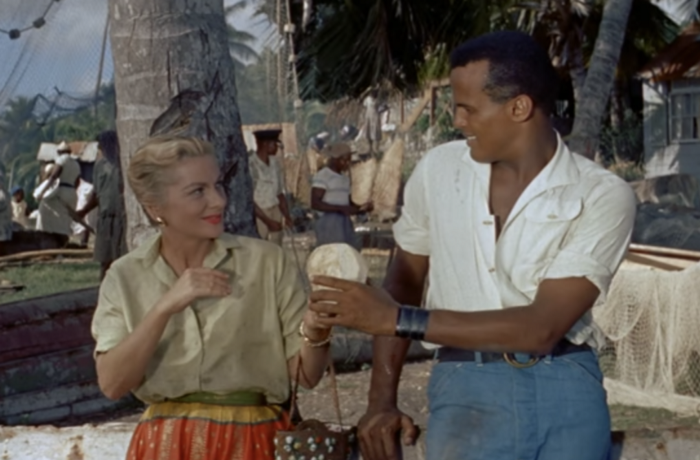
Surpreendentemente, há dois casais inter-raciais: David Boyeur (Harry Belafonte) é um líder comunitário em ascensão que está saindo com Mavis Norman (Joan Fontaine), uma mulher muito rica. E Denis (John Justin), que trabalha para o governador, começa a namorar Margot (Dorothy Dandridge), que trabalha numa farmácia.

Surprisingly, there are two interracial couples: David Boyeur (Harry Belafonte) is a rising community leader going out with Mavis Norman (Joan Fontaine), a very rich woman. And Denis (John Justin), who works for the governor, starts dating Margot (Dorothy Dandridge), a drugstore cashier. 

Maxwell e Jocelyn ficam chocados quando um artigo de jornal revela que a avó deles era jamaicana – portanto, negra. Julian, o pai deles (interpretado por Basil Sydney), tenta amenizar a situação com cálculos extremos: a mãe dele era ¾ branca! Ele é apenas 1/16 “de cor”! Já vi este tipo de matemática frequentemente no cinema e na TV norte-americanos – nunca me esquecerei quando alguém numa série de TV disse que era “1/64 Cherokee”. De fato, cor e raça são assuntos de peso nos EUA, e não de maneira velada. Veja isto: recentemente: um site se referiu à atriz Anya Taylor-Joy como “uma mulher de cor” apenas porque ela foi criada na Argentina – ela não nasceu lá, nasceu em Miami, apenas foi criada na América Latina!

Maxwell and Jocelyn are shocked when a newspaper article reveals that their grandmother was Jamaican – that means: black. Julian, their father (played by Basil Sydney), tries to compensate the situation by doing extreme math: his mother was ¾ white! He’s only 1/16 “colored”! I've seen this kind of math frequently on US film and TV – Il'll never forget when someone on a TV show claimed to be “1/64 Cherokee”. Indeed, color and race are huge issues in the US, and not in a veiled way. Take a look at this: recently, a website referred to actress Anya Taylor-Joy as “a woman of color” only because she was raised in Argentina – she wasn't born there, she was born in Miami, she was only raised in Latin America!

From dvdbeaver.com

De volta ao filme: quando o pai o obriga a agir como se nada tivesse acontecido, um contrariado Maxwell diz que é maravilhoso que o artigo tenha sido publicado porque ele pode fazer campanha para um cargo político chegando nos eleitores e dizendo “Sou um de vocês agora”, porque ele combina o negro e o branco. Maxwell acaba de dobrar suas chances de ser eleito – e de atrapalhar a carreira política de David Boyeur.

Back to the film: when his father makes him act as if nothing happened, an upset Maxwell says that it’s wonderful that the article was published because he can campaign for a political position by approaching all people and saying “I’m one of you now”, because he combines black and white.Maxwell just doubled his chances of being elected – and he can even stand in the way of David Boyeur's political career.

Além dos romances e da eleição, há mais uma coisa acontecendo na ilha: assassinato! Hilary Carson (Michael Rennie) é assassinado em sua casa, e um chefe de polícia muito sagaz, o coronal Wittingham (John Williams), investiga o caso.

Besides the romances and the election, there is something else happening in the island: murder! Hilary Carson (Michael Rennie) is murdered in his house, and a very clever chief of police, Colonel Wittingham (John Willams), investigates the case.

Quando perguntado sobre o principal problema na ilha, David Boyeur responde rapidamente: cor. Boyeur acredita que também há problemas com a manutenção das tradições. Maxwell, por outro lado, não perde a oportunidade para lembrar Boyeur de que o pai dele trabalhou na plantação do pai de Maxwell, e não foi deixado sem assistência quando adoeceu – ou seja, quando deixou de ser útil para o patrão. “Isto é caridade. O que nós queremos é igualdade”, Boyeur resume.

When asked what is the biggest problem in the island, David Boyeur answers in a heartbeat: color. Boyeur believes there are problems with keeping traditions as well. Maxwell, on the other hand, doesn't waste the opportunity to remind Boyeur that his father had worked in Maxwell's father's plantation and wasn't left unassisted when he got sick – that is, when he was no longer useful for his master. “That's charity. What we want is equality”, Boyeur summarizes.

E David está certo: há um problema envolvendo cor na ilha. Quando David e Mavis compram refrigerantes para um grupo de crianças, uma mulher mulata tira o refrigerante da mão do filho e devolve a bebida, mostrando que o menino de pele clara não deveria ser tratado da mesma forma que as outras crianças, que tinham a pele mais escura. Outro momento tenso, e muito surpreendente para um filme de 1957, ocorre quando Mavis segura uma máscara na frente do rosto e David violentamente tira a máscara, porque ela simula blackface - algo subentendido e, aparentemente, considerado normal na ilha.

And David is right: there is a problem about color in the island. When David and Mavis buy sodas for a group of kids, a mixed-race woman takes the soda away from her son’s hand and gives it back, showing that the boy with light-colored skin shouldn’t be treated like the other children, who had darker skin. Another tense moment, and a surprising one for a 1957 movie, is when Mavis puts a mask in front of her face and David violently takes it from her, as it simulates blackface - something implied and, apparently, considered normal in the island.

Maxwell é o personagem principal e a maior parte do filme é sobre ele, o que é um pouco desanimador, pois eu preferiria ter visto mais sobre os problemas enfrentados pelos casais inter-raciais. Mesmo assim, podemos dizer que é um milagre que este filme tenha sido feito, considerando os vários assuntos polêmicos que foram minimamente abordados - e isso inclui retratar David como um líder popular carismático e justo em tempos de histeria McCarthista.

Maxwell is the main character and most of the film revolves around him, which is a little upsetting, as I'd rather have seen more of the troubles faced by the interracial couples. Nevertheless, we can say that it's a miracle that this film was made at all, considering the many risky subjects that were barely addressed – and this includes the portrayal of David as a charismatic and just popular leader in a time of McCarthism hysteria.

Mas, na Hollywood dos anos 50, Darry F. Zanuck não tinha (muito) medo de arriscar - lembre-se de que ele foi produtor de outro filme sobre o controverso tema da miscigenação, “O que a Carne Herda” (1949). Zanuck comprou os direitos de adaptação do romance “Island in the Sun” quando ele foi publicado em 1955. Mesmo com sua experiência em polêmicas, Zanuck ficou apreensivo com possíveis reclamações e exigiu algumas mudanças no roteiro - por exemplo, Dorothy Dandridge e John Justin tiveram de enfrentar o produtor para que seus personagens pudessem dizer que se amavam.

But, in Hollywood in the 1950s, Darryl F. Zanuck was not (very) afraid of risking – remember that he was the producer of another movie about the controversial theme of miscegenation, “Pinky” (1949). Zanuck bought the rights to adapt the novel “Island in the Sun” when it was published in 1955. Even though he was experienced in polemics, Zanuck was apprehensive about possible complaints and demanded some changes in the script – for instance, Dorothy Dandrige and John Justin had to battle the producer so their characters were able to say that they loved each other.

O último filme de Dorothy Dandridge tinha sido “Carmen Jones”, em 1954, com Harry Belafonte. Depois do sucesso do filme e uma indicação ao Oscar, Dorothy assinou um contrato com a 20th Century Fox, que planejava um remake de “O anjo Azul” (1930) com um elenco todo negro, um projeto que infelizmente não se concretizou. Dorothy então recusou o papel coadjuvante de Tuptim em “O Rei e Eu” (1956), papel que foi para Rita Moreno. Em 1957, ela processou a revista Confidential após a publicação de uma notícia falsa que a acusava de “ter fornicado com um músico branco” em Nevada em 1950.

Dorothy Dandridge's last film had been “Carmen Jones”, in 1954, with Harry Belafonte. After the success of the film and an Oscar nomination, Dorothy signed with 20th Century Fox, that was planning to film a remake of “The Blue Angel” (1930) with an all-black cast, a project that unfortunately wasn’t further developed. Dorothy then refused the supporting role of Tuptim in “The King and I” (1956), a role that went to Rita Moreno. In 1957 she sued Confidential magazine when it published a false story accusing Dorothy of having “fornicated with a white band leader” in Nevada in 1950.

Logo antes de o filme estrear, Belafonte se casou com Julie Robinson, uma mulher branca. Mesmo assim, Joan Collins diz em sua autobiografia que ela e Belafonte tiveram um caso durante as filmagens de “Ilha nos Trópicos”. Poucos anos após o filme ser feito, nos anos 60, Belafonte se envolveu com o movimento dos Direitos Civis, tornando-se próximo de Martin Luther King Jr. Em sua carreira, Belafonte recusou diversas ofertas quando o papel retratava negros de maneira negativa ou quando o elenco era segregado racialmente.

Right before the film opened, Belafonte married Julie Robinson, a white woman. Nevertheless, Joan Collins claimed in her autobiography that she and Belafonte had an affair while filming “Island in the Sun”. A few years after the film was made, in the early 1960s, Belafonte got involved in the Civil Rights Movement, becoming close to Martin Luther King Jr. Throughout his career, Belafonte refused several offers if the role portrayed black people in a derogatory way or if the cast was segregated.

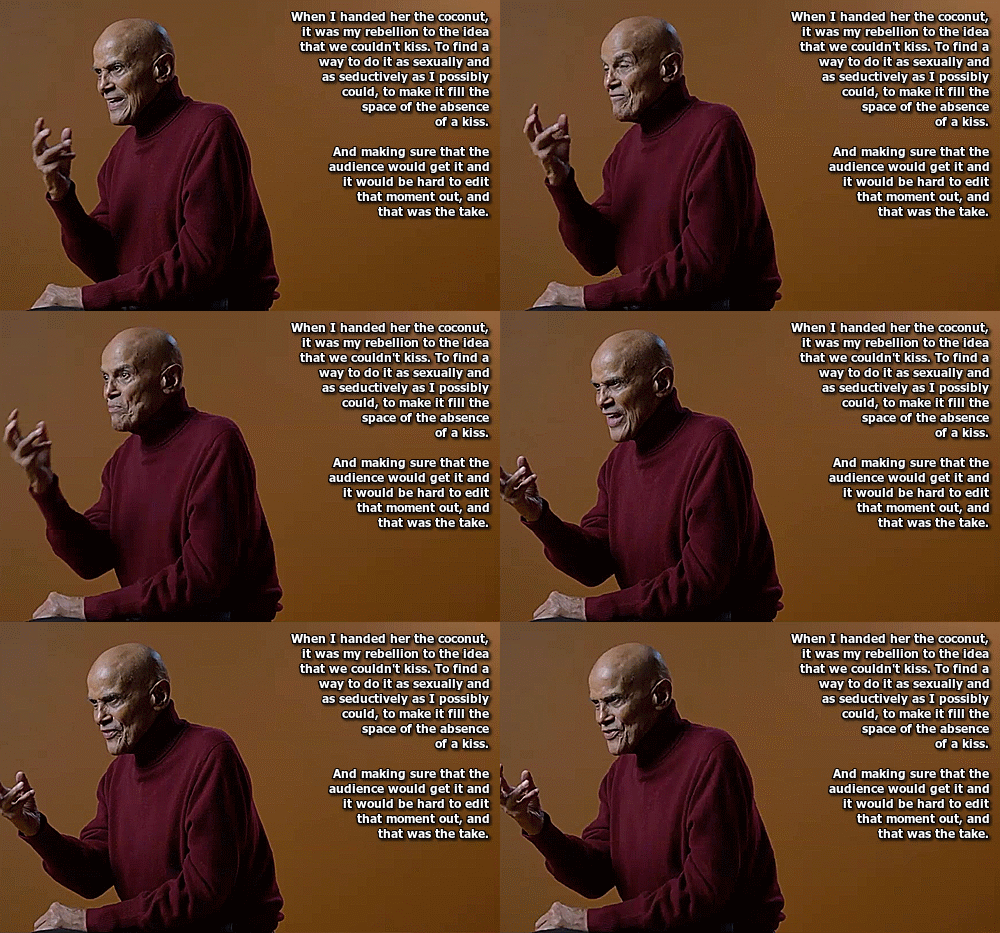
Como era de se esperar, o filme não foi bem recebido por racistas. A Ku Klux Klan e outros fanáticos mandaram cartas odiosas para Joan Fontaine - e ela nem beija Harry Belafonte no filme, mas o fato de eles beberem do mesmo coco foi considerado chocante demais! Joan precisou de escolta policial para ir à estreia do filme em Hollywood - o mesmo tipo de coisa que sua personagem jamais poderia imaginar, mas que é algo que afeta o personagem de Belafonte todos os dias. Houve protestos contra o filme em Minneapolis, um político tentou bani-lo na Carolina do Sul e o filme foi de fato banido em Memphis. Em todos estes casos, assim como acontece hoje, os racistas estavam protestando contra o filme sem tê-lo visto: para eles, a simples existência de tal filme era inaceitável.

As you may expect, the film was not received well by racists. The Ku Klux Klan and other fanatics sent Joan Fontaine hate letters – and she doesn't even kiss Harry Belafonte in the movie, but they simply sharing a coconut was considered too shocking! Fontaine needed police escort to attend the premiere of the film in Hollywood – just the kind of thing her character could never imagine, but it's something that affects Belafonte's character daily. There were protests against the film in Minneapolis, a politician tried to ban it in South Carolina and it was indeed banned in Memphis. In all these cases, just as it happens nowadays, the racists were protesting against a movie without having seen it: for them, the simple existence of such a movie was unacceptable.

Há um momento em que David diz “minha pele é meu país”. De fato, muitas pessoas sofrem por causa da cor da pele, não importa aonde elas vão - há preconceito, e especialmente preconceito racial, em toda parte do mundo. “Ilha nos Trópicos” tem boas performances e poderia ter sido muito mais revolucionário. Também poderia ter sido censurado. Por isso, vamos nos alegrar porque o filme foi feito e exibiu os talentos de artistas como Dorothy Dandridge e Harry Belafonte.

There is one moment when David says “My skin is my country”. Indeed, many people suffer because of their skin color anywhere they go - there is prejudice, and especially racial prejudice, anywhere in the world. “Island in the Sun” has nice performances and it could have been much more groundbreaking. It could also have been censored. So, let’s get happy because it was made at all, with talents such as Dorothy Dandridge’s and Harry Belafonte’s.

This is my contribution to the Joan Collins blogathon, hosted by Gill at Realweegiemidget Reviews.

Related Posts Plugin for WordPress, Blogger...