} Crítica Retrô: Doris Day

Tradutor / Translator / Traductor / Übersetzer / Traduttore / Traducteur / 翻訳者 / переводчик

Showing posts with label Doris Day. Show all posts

Saturday, July 20, 2024

Tempero do Amor (1963) / The Thrill of It All (1963)


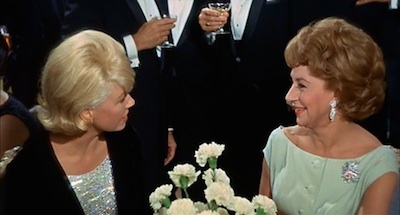
No começo do filme, uma mulher em êxtase faz todas as pessoas dentro de um elevador rirem histericamente. Ela tem motivos para rir: depois de vinte anos tentando, ela finalmente engravidou! Esta mulher é a senhora Fraleigh (Arlene Francis), e ela não teria engravidado sem a ajuda de seu obstetra, Gerald Boyer (James Garner). Para comemorar, a senhora Fraleigh convida o doutor e a esposa Beverly (Doris Day) para jantar.

In the beginning of the film, an ecstatic woman makes everybody in an elevator laugh histerically. She has reasons to laugh: after twenty years trying, she finally got pregnant! This woman is Mrs Fraleigh (Arlene Francis), and she couldn’t have become pregnant without the help of her obstetrician, Gerald Boyer (James Garner). To celebrate, Mrs Fraleigh invites the doctor and his wife Beverly (Doris Day) over for dinner.

No jantar os Boyers conhecem o sogro da senhora Fraleigh, Tom (Reginald Owen), um homem de negócios. Beverly conta que ela está usando o produto que ele vende, o sabão Happy. Tom convida Beverly a fazer uma propaganda do sabão. A experiência é um desastre, mas os consumidores amam Beverly, que é então convidada para ser garota-propaganda do sabão.

At the dinner party the Boyers meet Mrs Fraleigh’s father-in-law, Tom (Reginald Owen), a businessman. Beverly tells she’s using the product he sells, Happy Soap. Tom invites Beverly to appear in an advertisement for the soap. The experience is a disaster, but consumers love Beverly, who is then invited to be the spokeswoman for Happy Soap.
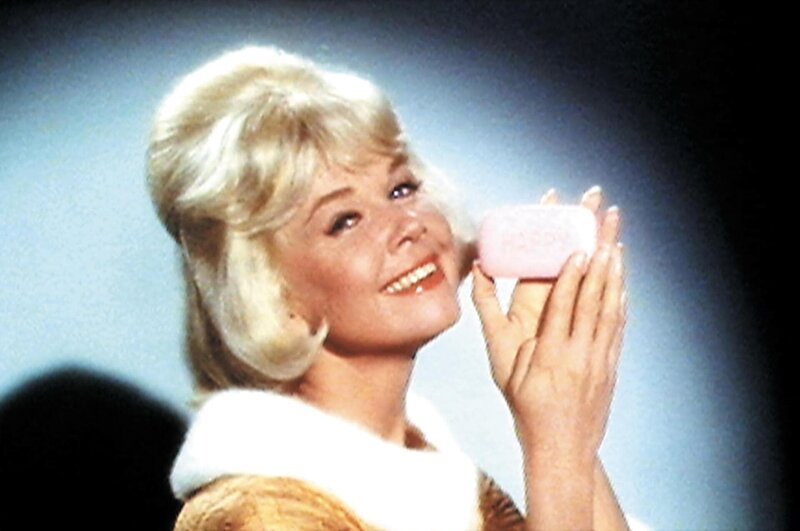
Estamos na época da televisão ao vivo. As atrações, como peças, eram encenadas ao vivo em frente às câmeras e transmitidas para todos os aparelhos de TV. E assim eram também feitos os comerciais: ao vivo, sem segunda chance. Há uma piada no filme, sobre as histórias das peças para TV serem todas iguais, de modo que até uma criança poderia apontar a semelhança entre os programas. A TV e o cinema tinham, ainda naquele tempo, uma rivalidade, e, ao contrário do que é mostrado no filme, a minoria das casas tinha TV a cores.

This was the time of live television. The plays were acted out live in front of the cameras and broadcasted to all the TV sets. So were the commercials made: live, without a second chance. There is a joke in the movie, about the plots of these TV plays being always the same, so similar that even a child could tell the similarities. TV and the movies had, at the time still, a rivalry, and, contrary to what is shown in the film, most houses didn’t have color TVs.

Numa cena Beverly lê numa revista que, em alguns casos, tarefas domésticas não são suficiente para uma mulher se sentir realizada, não sendo elas gratificantes o bastante. Ela usa isso para convencer o marido, que não quer que ela tenha uma carreira paralela, que está tudo bem se ela trabalhar com propaganda. Ela pode ter hobbies como ir a reuniões na escola e fazer seu próprio ketchup, mas ela quer mais.

In a scene Beverly reads from a magazine that, in some cases, household chores are not enough for a woman to fill fulfilled, they’re simply not gratifying enough. She uses this to convince her husband, who doesn’t want her to have a parallel career, that it’s OK if she works in advertisement. She may have hobbies such as PTA meetings and making her own ketchup, but she wants more.

O horário de trabalho do doutor Gerald é confuso porque bebês nem sempre nascem na data calculada. Ele frequentemente tem de sair de casa no meio da noite para ajudar num parto, algo que hoje não é tão comum por causa das desastrosas cesáreas agendadas, que são boas para os médicos, mas péssimas para os bebês e as mães. Com Beverly fazendo os comerciais à noite, Gerald e ela mal se veem dentro de casa.

Dr Gerald’s work schedule is hectic because babies aren’t always born on their due dates. He often has to leave house in the middle of the night to deliver a baby, something that is not so common anymore because the unfortunate advent of the scheduled C-sections, that are good for doctors, but awful for babies and mothers. With Beverly doing the commercials at night, Gerald and her often don’t meet in their house.

Gerald se enfurece não somente porque não encontra Beverly em casa. Ele fica bravo quando ela é reconhecida num restaurante e ele é ignorado. Ele até mesmo diz que o fato de que ela está ganhando seu próprio dinheiro “sufoca seus direitos de homem”. E então ele luta com a única arma que ele acha que Beverly vai entender: o ciúme.

Gerald gets bitter not only because he and Beverly don’t see each other often at home. He becomes angry when she’s recognized in a restaurant and he’s ignored. He even says that the fact that she’s earning her own money “suffocates his rights as a man”. Then he starts fighting with the only weapon he thinks Beverly cares about: jealousy.

Foi arriscado explorar a condição da senhora Fraleigh no film, pois o Código Hays proibia que o cinema tratasse de gravidez e parto, mas esta proibição já estava mais relaxada em 1963. Não era somente proibido: era pouco elegante mostrar uma mulher grávida, por isso elas escondiam a barriga em roupas bastante largas.

It was tricky to explore Mrs Fraleigh’s condition in this film, as the Hays Code prohibited to talk about pregnancy and childbirth on film, but it was already weaker in the early 1960s. It wasn’t only prohibited: it wasn’t fashionable to show that a woman was pregnant, so she hid her bump in oversized clothes.
Como Olivia, empregada dos Boyer, temos ZaSu Pitts. Seu papel é mais uma participação de luxo, pois Olivia tem duas ou três cenas antes de ir embora no meio do filme. Pitts faleceu seis semanas antes da estreia de “Tempero do Amor”. O IMDb lista 223 créditos para a atriz tanto no cinema quanto na televisão, começando em 1917. Como ela costumava roubar as cenas, em muitas ocasiões suas cenas eram cortadas, o que levou o diretor Alfred E. Green a declarar que o rosto dela “esteve em mais chãos de salas de edição do que qualquer outra atriz”.

As the Boyers’ maid Olivia we have ZaSu Pitts. Her role is more like a deluxe cameo, as Olivia has two or three scenes before going away in the middle of the film. Pitts died six weeks before “The Thrill of It All” was released. IMDb gives her 223 credits on both film and TV, starting in 1917. Because she was a great scene-stealer, in many occasions her scenes ended up being cut, which led director Alfred E. Green to say that her face “has been in more cutting-room floors than any other actress”.

Indicado a sete Oscars, o diretor Norman Jewison começou sua carreira na televisão em 1952. “Tempero do Amor” foi apenas seu segundo longa-metragem. Jewison foi duramente criticado pelo crítico de cinema britânico Richard Whitehall, que odiou o filme e disse que Jewison tinha de ser um “gênio pervertido” para transformar uma ideia engraçada em um filme tão sem graça. Nós discordamos.

Seven-time Academy Award nominee, director Norman Jewison had started his career in 1952 on television. “The Thrill of It All” was only his second feature. Jewison was heavily criticized by the British film critic Richard Whitehall, who hated the movie and said that Jewison had to be “a perverted genius” to transform a funny idea into this unfunny movie. We disagree.

A moral do filme ainda é antiquada: “não há nada mais recompensador na vida do que ter um bebê”. É impossível não sorrir com Doris Day, mesmo como a atrapalhada dona de casa que virou uma estrela, mas o charme da conclusão só é parcialmente agradável. Não podemos esperar modernidade de um filme feito há mais de 60 anos, mas este aponta que os tempos e as coisas estavam mudando em 1963.

The moral of the movie is still old-fashioned: “there is nothing more fulfilling in life than having a baby”. It’s impossible not to smile with Doris Day, even as the clumsy housewife-turned-star, but the charm in the conclusion is only partially pleasant. We cannot expect modernity from a film that is over 60 years old, but this one points that times and things were changing in 1963.


This is my contribution to the Norman Jewison blogathon, hosted by Rebecca at Taking Up Room.


Saturday, June 15, 2024

Rouxinol da Broadway (1951) / Lullaby of Broadway (1951)

 Quando, logo depois de vermos os créditos na tela tendo ao fundo a clássica melodia “Lullaby of Broadway”, somos introduzidos a uma Doris Day sapateando usando um smoking, sabemos quer vem coisa boa por aí. Afinal, trata-se de um filme de Doris Day como tantos outros da estrela: uma lufada de ar fresco e (quase) sem problemas por 90 minutos.


When, right after seeing the credits roll by the tune of the classic “Lullaby of Broadway”, we are introduced to a tap-dancing Doris Day wearing a tuxedo, we know we’re in for a treat. It’s, after all, another Doris Day movie like so many others from the star: a breath of fresh air and (almost) no problems for 90 minutes.

Doris Day é Melinda Howard, que é vista pela primeira vez cantando e dançando num espetáculo para a caridade num navio em alto mar. Ela está indo para Nova York visitar a mãe, Jessica (Gladys George), que é uma estrela da Broadway. Mas Jessica Howard não está vivendo dias de glória: ela bebe demais e pode ser encontrada cantando em clubes de quinta categoria. Para esconder esta realidade de Melinda, a ela é dito que a mãe está em turnê e lhe apresentam o Sr Hubbell, o proprietário da casa cujo endereço a mãe deu a ela.


Doris Day is Melinda Howard, who is first seen singing and dancing in a show for charity in a ship mid-sea. She is going to New York to visit her mother, Jessica (Gladys George), who is a Broadway star. But Jessica Howard isn’t living her most glorious days: she drinks too much and can be found singing at crappy clubs. To hide this reality from Melinda, she is told that her mother is on tour and introduced to Mr Hubbell, the owner of the house that matches the address her mother gave her.

A casa do Sr Hubbell (S.Z. Sakall) respire cultura. Seus criados foram estrelas do vaudeville. Ele patrocina shows da Broadway e dá festas para as estrelas. E é numa dessas festas que Melinda reencontra Tom Farnham (Gene Nelson), com quem ela tinha conversado no navio. Eles logo se dão bem e no momento seguinte são contratados para aparecerem juntos num show.


Mr Hubbell’s (S.Z. Sakall) house breathes culture. His servants were once vaudeville artists. He sponsors Broadway shows and throws parties for its stars. And it’s in one of those parties that Melinda meets again Tom Farnham (Gene Nelson), with whom she had spoken in the ship. They soon hit it off and the next thing we know they are appearing together in a show.

Gene Nelson não é o primeiro, segundo ou terceiro nome em que pensamos quando falamos de protagonistas de musicais. Nelson quis se tornar um cantor e dançarino porque via Fred Astaire - que é mencionado no filme quando uma garotinha pede um autógrafo para Tom e diz que ela o considera o melhor dançarino do mundo. Nelson havia acabado de ganhar o Globo de Ouro de Novato Mais Promissor quando foi escalado para “Rouxinol da Broadway”, num movimento da Warner Bros para testar protagonistas que pudessem substituir o pouco cooperativo Gordon MacRae. Em 1957 Gene Nelson se envolveu num acidente com um cavalo que acabou com sua carreira como protagonista, mas ele conseguiu uma segunda carreira como diretor de cinema e TV.


Gene Nelson isn’t the first, second or third leading man we think about when we talk about musicals. Nelson was inspired to become a song-and-dance man by watching Fred Astaire - who is mentioned in the film when a little girl asks Tom for an autograph saying she thinks he’s the greatest dancer in the world. Nelson had just received the Golden Globe for Most Promising Newcomer when he was cast in “Lullaby of Broadway”, in a Warner Bros move to test leading men who could replace uncooperative Gordon MacRae. In 1957 Gene Nelson was involved in a horse accident that ended his career as a leading man, but he started a new page as a director on film and TV.

O ator coadjuvante S.Z. Sakall tem uma chance de brilhar em “Rouxinol da Broadway”. Este foi o quarto filme que ele fez com Doris Day, que sempre se lembrou dele com carinho. Nascido em Budapeste, Hungria, ele começou a atuar na década de 1910 e trabalhou na Alemanha até a chegada dos nazistas ao poder. Ele voltou para a Hungria, onde seguiu trabalhando, mas migrou em 1940 quando o país se juntou ao Eixo fascista. Contratado da Warner Bros, apareceu em dezenas de filmes, mas seu mais famoso provavelmente é “Casablanca” (1942), num papel que ele quase recusou quando lhe foi oferecido.


Character actor S.Z. Sakall has a chance to shine in “Lullaby of Broadway”. This was the fourth film he made with Doris Day, who always remembered him fondly. Born in Budapest, Hungary, he started acting in the 1910s and worked in Germany until the Nazis took the power. He went back to Hungary, where he kept working, but left in 1940 when the country joined the fascist Axis. Under contract with Warner Bros, he appeared in dozens of films, but his most famous might be “Casablanca” (1942), in a role that he almost refused when he was offered.

Todos os números musicais são inseridos no context de algum tipo de apresentação, teatro, como ensaio ou outra coisa. As canções são bonitas e algumas delas podem até ser descritas como “memoráveis”. O disco de Doris Day com músicas deste filme ficou em primeiro lugar na lista da Billboard.


All the musical numbers are in the context of some kind of presentation, theatrical, as a rehearsal or other. The songs are sweet and some of them could even be described as “memorable”. Doris Day’s LP with songs from this movie was placed number one on the Billboard chart.

O título no Brasil para o filme é “Rouxinol da Broadway”. Um rouxinol é um pássaro cantor cujo canto pode ser ouvido tanto à noite - daí o nome em inglês, “nightingale” - quanto de dia. Rouxinóis são associados com a arte, a poesia em particular, por causa de seu canto criativo e espontâneo. Há apenas um problema: Doris Day não poderia ser um rouxinol porque apenas os machos da espécie cantam!


The Brazilian title for this film is “Broadway Nightingale”. A nightingale is a singing bird whose song can be heard both at night - which gives it the name in English - and day. Nightingales have been associated with the arts, poetry in particular, because of how creative and spontaneous their singing is. There is only one problem: Doris Day couldn’t be a nightingale because only male nightingales sing!

Doris Day fez, apenas em 1951, quarto filmes. Bem-sucedido e lucrativo, “Rouxinol da Broadway” mostra os talentos dela como cantora e dançarina e nos diverte como só Doris Day sabia fazer.


Doris Day appeared in four movies in 1951 alone. Succesfull and profitable, “Lullaby of Broadway” showcases her singing and dancing talents and entertains us like only Doris Day could do.


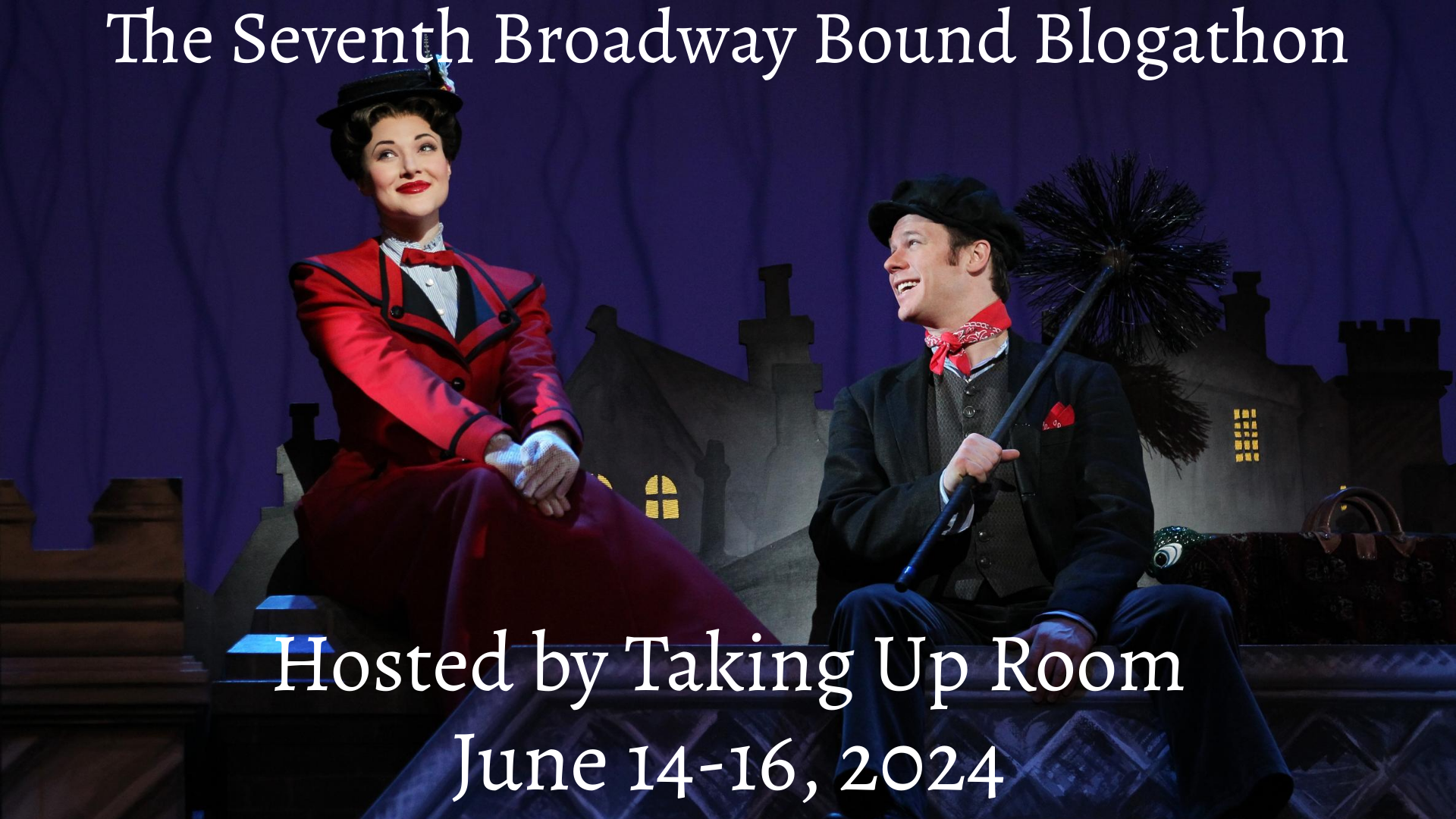
This is my contribution to the Seventh Broadway Bound Blogathon, hosted by Rebecca at Taking Up Room.

Saturday, April 3, 2021

Um Pijama para Dois (1957) / The Pajama Game (1957)


Uma fábrica de pijamas parece ser o lugar mais chato do mundo, né? Mas mesmo este lugar pode se tornar interessante... com o poder do cinema! E com o poder da Broadway, claro. Em 1954, “Um Pijama para Dois” foi um grande sucesso na Broadway, com uma estranha porém eficaz mistura de romance, trabalhadores lutando por salários justos e um pouco de humor. Quando foi adaptado para a tela, o talento e o carisma de Doris Day foram adicionados para criar mais um grande sucesso.

A pajama factory sounds like the most boring place in the world, doesn't it? But even this place can become interesting... with the power of movies! And the power of Broadway, of course. In 1954, “The Pajama Game” was a huge hit on Broadway, with an odd but efficient mix of romance, workers fighting for fair wages and a bit humor. When it was adapted to the screen, the star power of Doris Day was added to make another sure hit.


Sid Sorokin (John Raitt) acaba de ser contratado como superintendente na Fábrica de Pijamas Sleeptite (algo como “durma bem”). Assim que começa no novo trabalho, ele entra em atrito com uma das funcionárias, Katherine 'Babe' Williams (Doris Day). É uma daquelas histórias clássicas: eles começam não gostando um do outro, mas é certeza que eles ficarão juntos no final – mesmo que ela declare não estar nem um pouco apaixonada.

Sid Sorokin (John Raitt) has just been hired as a superintendant at the Sleeptite Pajama Factory. As he begins his new job, he clashes with one of the employees, Katherine 'Babe' Williams (Doris Day). It's one of those classic stories: they start disliking each other, but they'll certainly be together in the end – even though she declares she's not at all in love. 

Felizmente, não demora o filme todo para que eles confessem o que sentem um pelo outro isso acontece no piquenique annual dos Fabricantes Unidos de Camisas & Pijamas da América. Mas surge um conflito: Sid foi contratado para impedir que os funcionários da fábrica consigam um aumento de sete centavos e meio por hora no salário, e Babe faz parte do sindicato que luta por esse aumento. Sete centavos e meio não compra muita coisa, mas pode ser suficiente para separar Sid e Babe.

Fortunately, it doesn't take them the whole movie to confess they are in love: they do it in the Amalgamated Shirt & Pajama Workers of America's annual picnic. But conflict arises: Sid was hired to prevent the workers in the factory from getting a 7 ½ cents raise in their hourly wage, while Babe is a member of the union fighting for this same raise. 7 ½ cents do not buy a hell of a lot, but may be enough to keep Sid and Babe apart.

O cabelo de Doris Day está bem moderno neste filme, e seu figurino é simplesmente lindo. Embora ela pareça feliz durante a maior parte do filme, nos bastidores ela tinha dificuldades por ser uma de apenas quatro artistas que não estrelaram a peça na Broadway. Encontrar seu lugar onde já havia tanto entrosamento foi difícil, embora não haja evidências de que ela tenha sido tratada de maneira diferente pelo resto do elenco.

Doris Day's hair looks very modern in this movie, and her outfits are simply gorgeous. Although she looks happy during most of the film, behind the scenes she was struggling because she was only one of four performers who weren't in the original Broadway cast. Finding her place in that well-oiled machine was hard, although there is no accounts that she was ever treated differently by the rest of the cast.

John Raitt – que se parece um pouco com Warren Beatty em algumas cenas – interpretou o protagonista de “Um Pijama para Dois” na Broadway. Depois de impressionar Rodgers & Hammerstein num teste para ser substituto no musical “Oklahoma!” em 1944, a dupla escreveu o musical “Carrossel” especificamente para Raitt interpretar o papel principal. John Raitt trabalhou muito na Broadway e fez algumas participações na TV. “Um Pijama para Dois” foi seu maior papel no cinema, e infelizmente ele e Doris Day não tinham muita química.

John Raitt – who looks a little like Warren Beatty in some scenes – played the lead of “The Pajama Game” on Broadway. After impressing Rodgers & Hammerstein in an audition for a position as an understudy in the musical “Oklahoma!” in 1944, the duo wrote the musical “Carousel” specifically for Raitt to play the lead. John Raitt worked mostly on Broadway and made a few TV appearances.“The Pajama Game” was his biggest film role, and unfortunately he and Doris Day don't have a great chemistry.

Carol Haney está hilária como a secretária Gladys Hotchckiss, papel que ela interpretou na Broadway e que lhe garantiu um prêmio Tony. No cinema, Carol tinha apenas aparecido como dançarina, e “Um Pijama para Dois” foi o único filme em que ela teve falas. Sua Gladys é decidida e adorável, embora não seja exatamente engraçado ver um atirador de facas ciumento correndo atrás dela, ameaçando-a.

Carol Haney is hilarious as the secretary Gladys Hotchckiss, a role she played on Broadway and gave her a Tony Award. In film, Carol had only appeared as a dancer, and “The Pajama Game” was the only movie in which she had lines. Her Gladys is no-nonsense and adorable, although it's not exactly funny to see a jealous knife-thrower running after her and threatening her.

O coreógrafo do musical da Broadway e da versão cinematográfica de “Um Pijama para Dois” foi Bob Fosse. A coreografia mais interessante e incomum no filme, na minha opinião, é do número “Steam Heat”. Algumas músicas da peça foram cortadas, incluindo “Think of the Time I Save”, que tem uma letra bem divertida.

The choreographer for both the Broadway musical and the movie version of “The Pajama Game” was Bob Fosse. The most interesting and unusual choreography in the film, in my opinion, is in the number “Steam Heat”. A few songs from the musical were dropped, including “Think of the Time I Save”, that has hilarious lyrics.

Há muitas músicas boas em “Um Pijama para Dois”, incluindo “I'm not at All in Love” e “Hey There”, as duas mais famosas da trilha sonora. A canção “Small Talk” é bem ousada por evocar o ato sexual, e é bem curioso ver esta canção ser cantada para Doris Day, que ainda faria suas mais famosas – e puritanas – comédias românticas com o ator e amigo Rock Hudson no final da década de 1950 e início da década de 1960.

There are many great tunes in “The Pajama Game”, including “I'm not at All in Love” and “Hey There”, the two most famous of the soundtrack. The song “Small Talk” is very risky in the sense it points out to sex and making out, and it's very curious to see this being sung to Doris Day, who would still make her most famous – and prude – romantic comedies with actor and good friend Rock Hudson in the late 1950s / early 1960s.

Os compositores do musical certamente estavam antenados com as tendências, pois nos anos 50 os sindicatos atingiram recordes de membros... então por que não fazer um musical sobre as pessoas nestes sindicatos? Embora hoje haja menos trabalhadores sindicalizados e algumas novas indústrias tentem impedir que seus trabalhadores se sindicalizem, não vemos muito na história norte-americana a mesma tendência de outros países como o Brasil: considerar sindicatos como lugares de comunistas e anarquistas e por isso atacá-los.

The authors of the musical certainly were up-to-date with tendencies, as in the 1950s labor unions reached their membership highest... so why not make a musical about union workers? Although now there are less people in unions and some new industries fight to prevent their workers from unionizing, we don't really see in US history the same tendency we see in other countries like Brazil: to label labor unions as places for communist and anarchist activities and because of this these places are attacked.

"Um Pijama para Dois” não é meu musical favorito de Doris Day, nem meu filme favorito dela. Tem um par de ótimas músicas, bons personagens e momentos divertidos, mas ainda é uma mistura estranha. Mesmo assim, pode ser visto como uma cápsula do tempo, de um tempo em que sete centavos e meio faziam a diferença no salário, quando Hollywood olahva para a Broadway à procura de ideias para competir com a recém-nascida televisão e quando Doris Day era uam rainha das telas.

The Pajama Game” isn't my favorite Doris Day musical or Doris Day movie. It has a couple of amazing tunes, nice characters and funny moments, but it's still an odd mix. Nevertheless, it can be seen as a time capsule, from a time when 7 ½ cents were a good raise in wages, when Hollywood looked to Broadway for ideas to compete with the newborn television and when Doris Day was a screen queen.

This is my contribution to the Fifth Annual Doris Day blogathon, hosted by Michaela at Love Letters to Old Hollywood.

Sunday, April 5, 2020

A Mais Querida do Mundo (1962) / Billy Rose’s Jumbo (1962)


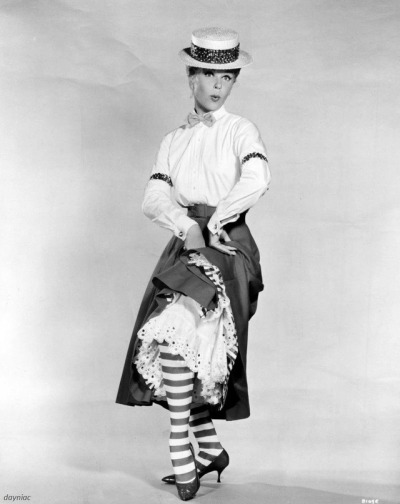
Um filme sobre o circo. Codirigido por Busby Berkeley, escrito por Sidney Sheldon, baseado numa peça escrita por Ben Hecht, estrelando Doris Day, Jimmy Durante e Stephen Boyd – sim, o Messala de “Ben-Hur”. E é um musical! O que poderia dar errado?

A movie about the circus. Co-directed by Busby Berkeley, written by Sidney Sheldon, based on a play written by Ben Hecht, starring Doris Day, Jimmy Durante and Stephen Boyd – yes, Messala from “Ben-Hur”. And it’s a musical! What could go wrong?


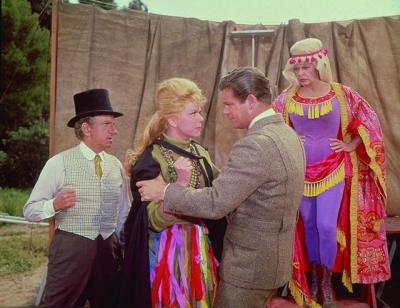
Um circo itinerante do passado está passando por dificuldades financeiras. Há muitas dívidas e o urso domesticado se demitiu por falta de pagamento. Não é só o urso que está de saída: alguns músicos, palhaços e um grande acrobata também vão embora. É neste momento que um belo estranho, Sam Rawlins (Stephen Boyd), chega à procura de trabalho – ele diz que pode fazer qualquer coisa. Num primeiro momento ele se desentende com Kitty (Doris Day), a gerente não oficial do circo e filha do dono do empreendimento circense.

An itinerant circus of days gone by is going through financial difficulties. There are lots of debts and the trained bear quit because it wasn’t paid. It’s not only the bear that’s leaving: some musicians, clowns and the star acrobat are also out. It’s in this moment that a tall dark stranger, Sam Rawlins (Stephen Boyd), arrives wanting work – he says he can do any kind of work. At first he clashes with Kitty (Doris Day), the circus’ unofficial manager and the owner’s daughter.


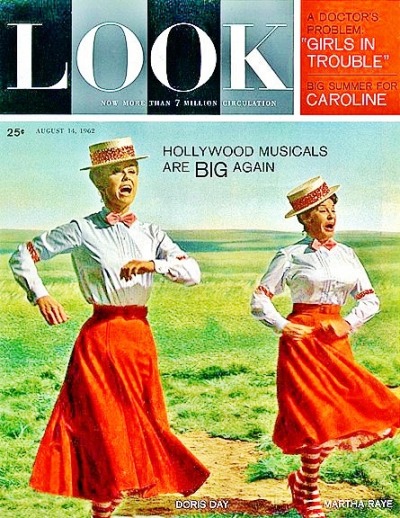
O dono do circo é Anthony Wonder (Jimmy Durante), que está noivo de Lulu (Martha Raye), a vidente do circo, há 14 anos. Entretanto, Anthony está mais apaixonado por Jumbo, o talentoso elefante do circo. Mas o principal concorrente de Anthony, John Noble (Dean Jagger), está de olho em Jumbo e mal pode esperar para comprar o elefante e todo o resto quando Anthony falir.

The owner of the circus is Anthony Wonder (Jimmy Durante), who has been engaged to Miss Lulu (Martha Raye), the circus’ fortune teller, for 14 years. However, Anthony is more in love with Jumbo, the circus’ talented elephant. But Anthony’s main competitor, John Noble (Dean Jagger), has an eye on Jumbo and can’t wait to buy the elephant and everything else when Anthony becomes bankrupt.


O número de Jimmy Durante na corda bamba é cheio de comédia física e eu tive de aplaudi-lo ao final. Ele também nos faz rir em muitos outros pequenos momentos, como quando ele diz que Jumbo se parece com ele, e também quando ele interage com Lulu. Se você pensou que Maurice Chevalier e Hermione Gingold foram a melhor coisa de “Gigi” (1958), espere até ver Jimmy Durante e Martha Raye em “A Mais Querida do Mundo”! Jimmy Durante não fez nenhum filme por 10 anos antes de “A Mais Querida do Mundo”, e não perdeu o jeito de fazer rir.

Jimmy Durante’s tightrope number is full of physical comedy and I couldn’t help but clap in the end. He also makes us laugh in many other small moments, like when he says Jumbo and him have an undeniable resemblance, and also whenever he interacts with Lulu. If you thought Maurice Chevalier and Hermione Gingold were the best thing in “Gigi” (1958), wait until you see Jimmy Durante and Martha Raye in “Billy Rose’s Jumbo”! Jimmy Durante hadn’t made any film for 10 years before “Billy Rose’s Jumbo” and didn’t lose his ability to make us laugh.


O circo é um meio muito visual. As ações importam muito mais que as palavras, e os movimentos dos acrobatas, palhaços e dançarinos são lembrados depois de muito tempo, enquanto as poucas palavras do mestre de cerimônias são logo esquecidas pelo respeitável público. Os números na corda bamba são os mais memoráveis – embora, obviamente, tenham sido executados por dublês e não por Jimmy Durante e Stephen Boyd. O coreógrafo que virou diretor Charles Walter faz maravilhas com sua câmera – ajudado por um idoso Busby Berkeley –, capturando toda a mágica de dias de glória do circo – melhor do que DeMille fez no oscarizado “O Maior Espetáculo da Terra” (1952).

The circus is a very visual medium. The actions matter way more than the words, and the movements of acrobats, clowns and dancers are remembered after a long time, while the few words of the master of ceremonies are soon forgotten by the public. The tightrope numbers are the most memorable ones – although, obviously, they were performed by stunts and not by Jimmy Durante and Stephen Boyd. Choreographer-turned-director Charles Walters does wonders with his camera – with the help of an old Busby Berkeley –, capturing all the magic of bygone circus’ glory days – better than DeMille did in his Oscar-winning “The Greatest Show on Earth” (1952).


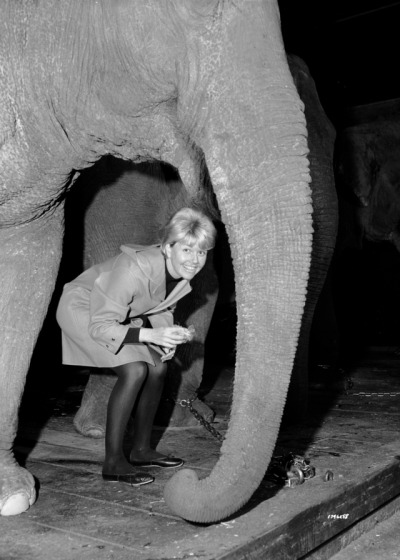
Atualmente, a maioria dos circos não tem mais animais – algo que eu considero certo, por muitas razões. É interessante perceber que a tradição circense europeia apresentava seus animais em números divertidos, enquanto a tradição norte-americana preferia mostrar um domador domando “feras selvagens”. Exotismo era a norma nos circos, e você pode ver muitos animais exóticos – como camelos – desfilando no filme. De toda forma, em “A Mais Querida do Mundo”, o elefante é tratado como parte da família por Anthony e, em especial, por Kitty. Doris Day, conhecida ativista pelos direitos dos animais, e o elefante Sidney se deram muito bem antes e durante as filmagens, e é possível ver como os elefantes são inteligentes através dos truques que Sidney / Jumbo aprendeu.

Nowadays, most circuses don’t have animal stars anymore – something I agree with, for a bunch of reasons. It’s interesting to notice that the European circus tradition presented their animals in playful acts, while the North American tradition preferred to show a trainer taming “wild beasts”. Exoticism was the norm is circuses, and you can see many exotic animals – like camels – on parade in the film. Anyway, in “Billy Rose’s Jumbo”, the elephant is treated as part of the family by Anthony and, in special, Kitty. Doris Day, a notorious animal rights’ advocate, and the star elephant Sidney formed a true bond before and during filming and you can see how intelligent elephants are by the tricks Sidney / Jumbo performs.


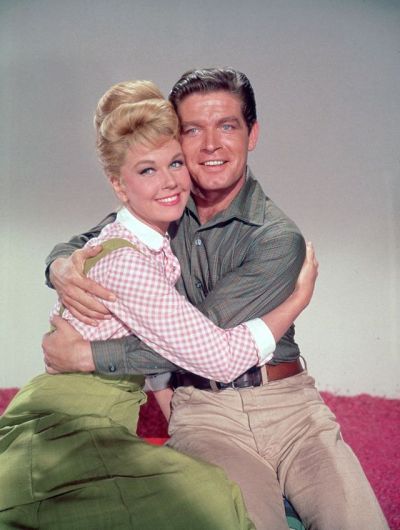
As canções não são particularmente memoráveis. Além disso, Stephen Boyd foi dublado cantando, mas ninguém sabe quem o dublou, pois as fontes da época não são claras sobre isso. Boyd está muito bonito no filme, apresenta uma química excelente com Doris Day e foi indicado ao Globo de Ouro por sua performance. Boyd havia abandonado a produção de “Cleópatra” (1963) e foi substituído por Richard Burton – e Burton havia sido a primeira opção de Charles Walters para interpretar Sam em “A Mais Querida do Mundo”!

The songs are not particularly memorable. Furthermore, Stephen Boyd’s singing was dubbed, but nobody knows who dubbed him, as sources of the time aren’t clear about the matter. Boyd is probably at his most handsome, had an amazing chemistry with Doris Day and was nominated for a Golden Globe for his performance. Boyd had left the production of “Cleopatra” (1963) and was replaced by Richard Burton – and Burton had been Charles Walters’ first choice for Sam in “Billy Rose’s Jumbo”!


“A Mais Querida do Mundo” teve origem como uma peça em 1935 e Jimmy Durante fez parte do elenco original que se apresentou no Teatro Hippodrome de Nova York – a peça do empresário Billy Rose foi um fracasso. Os direitos da peça foram adquiridos pela MGM nos anos 1940, e em 1952 um musical baseado nela seria feito com Donald O’Connor e Debbie Reynolds, mas o projeto foi cancelado em pré-produção. Antes disso, “A Mais Querida do Mundo” seria um possível veículo para Judy Garland e Mickey Rooney ou Gene Kelly.

“Billy Rose’s Jumbo” was originated as a play in 1935 and Jimmy Durante was part of the original cast that performed at the New York city’s Hippodrome Theater – the play by showman Billy Rose was a flop. The rights of the play were acquired by MGM in the 1940s, and in 1952 a musical based on it was in the works, with Donald O’Connor and Debbie Reynolds, but it was cancelled during pre-production. Before that, “Billy Rose’s Jumbo” had been thought as a possible vehicle for Judy Garland and Mickey Rooney or Gene Kelly.


“A Mais Querida do Mundo” é um dos musicais pertencentes a um tempo em que musicais extravagantes estavam caindo de moda. Com mais de duas horas de duração, com direito a uma abertura, este foi um dos últimos grandes musicais da MGM, e também o último musical da carreira de Doris Day.

“Billy Rose’s Jumbo” is one of the musicals that belong to a time when extravagant musicals were dying. With over two hours, and complete with overture, this was one of the last big budget MGM musicals, as well as Doris Day’s last musical movie.


“A Mais Querida do Mundo” é um filme regular. Seu enredo é previsível, e a resolução do conflito principal é muito rápida. Mesmo assim, é um filme bem divertido – que te fará rir, se assustar, aplaudir e esquecer seus problemas. Acho que todos nós precisamos de um filme assim agora, não?

“Billy Rose’s Jumbo” is a regular movie. Its plot is predictable, and the resolution of the main conflict is incredibly quick. Nevertheless, it’s a very enjoyable movie – one that will make you laugh, gasp, clap and forget the current troubles. I guess we all need this kind of movie right now, isn’t so?

This is my contribution to the Fourth Annual Doris Day blogathon, hosted by Michaela at Love Letters to Old Hollywood.

Related Posts Plugin for WordPress, Blogger...