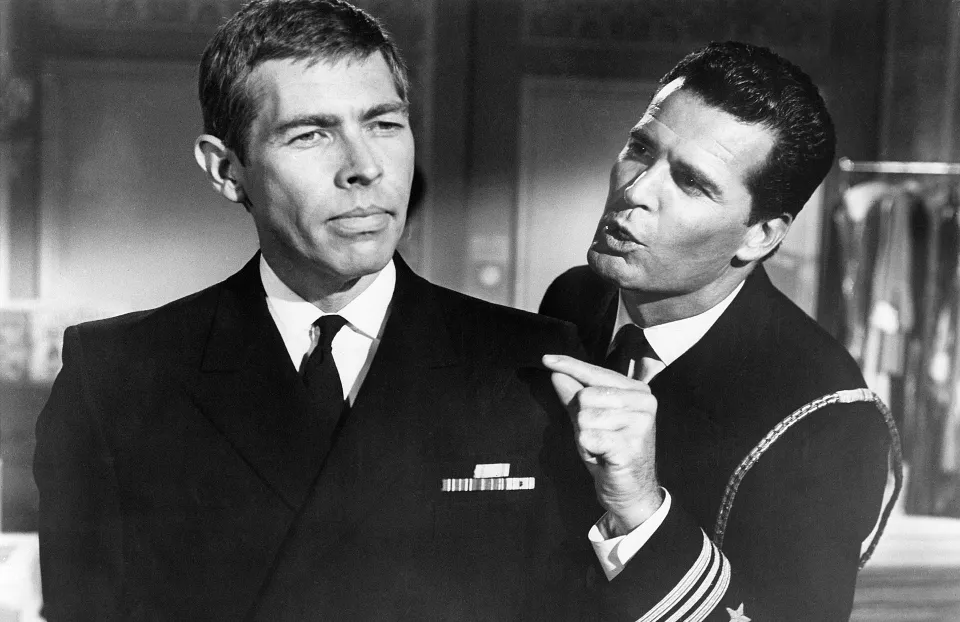
No começo do filme, uma mulher em êxtase faz todas as pessoas dentro de um elevador rirem histericamente. Ela tem motivos para rir: depois de vinte anos tentando, ela finalmente engravidou! Esta mulher é a senhora Fraleigh (Arlene Francis), e ela não teria engravidado sem a ajuda de seu obstetra, Gerald Boyer (James Garner). Para comemorar, a senhora Fraleigh convida o doutor e a esposa Beverly (Doris Day) para jantar.
In the beginning of the film, an ecstatic woman makes everybody in an elevator laugh histerically. She has reasons to laugh: after twenty years trying, she finally got pregnant! This woman is Mrs Fraleigh (Arlene Francis), and she couldn’t have become pregnant without the help of her obstetrician, Gerald Boyer (James Garner). To celebrate, Mrs Fraleigh invites the doctor and his wife Beverly (Doris Day) over for dinner.

No jantar os Boyers conhecem o sogro da senhora Fraleigh, Tom (Reginald Owen), um homem de negócios. Beverly conta que ela está usando o produto que ele vende, o sabão Happy. Tom convida Beverly a fazer uma propaganda do sabão. A experiência é um desastre, mas os consumidores amam Beverly, que é então convidada para ser garota-propaganda do sabão.
At the dinner party the Boyers meet Mrs Fraleigh’s father-in-law, Tom (Reginald Owen), a businessman. Beverly tells she’s using the product he sells, Happy Soap. Tom invites Beverly to appear in an advertisement for the soap. The experience is a disaster, but consumers love Beverly, who is then invited to be the spokeswoman for Happy Soap.
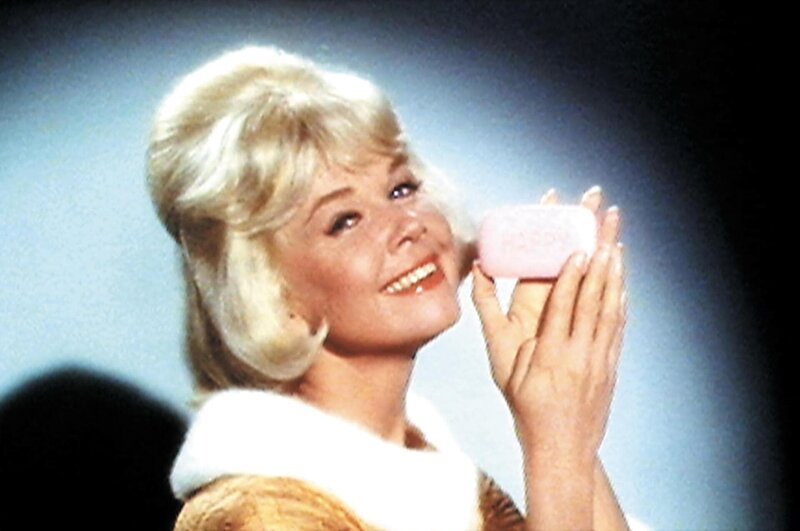
Estamos na época da televisão ao vivo. As atrações, como peças, eram encenadas ao vivo em frente às câmeras e transmitidas para todos os aparelhos de TV. E assim eram também feitos os comerciais: ao vivo, sem segunda chance. Há uma piada no filme, sobre as histórias das peças para TV serem todas iguais, de modo que até uma criança poderia apontar a semelhança entre os programas. A TV e o cinema tinham, ainda naquele tempo, uma rivalidade, e, ao contrário do que é mostrado no filme, a minoria das casas tinha TV a cores.
This was the time of live television. The plays were acted out live in front of the cameras and broadcasted to all the TV sets. So were the commercials made: live, without a second chance. There is a joke in the movie, about the plots of these TV plays being always the same, so similar that even a child could tell the similarities. TV and the movies had, at the time still, a rivalry, and, contrary to what is shown in the film, most houses didn’t have color TVs.
Numa cena Beverly lê numa revista que, em alguns casos, tarefas domésticas não são suficiente para uma mulher se sentir realizada, não sendo elas gratificantes o bastante. Ela usa isso para convencer o marido, que não quer que ela tenha uma carreira paralela, que está tudo bem se ela trabalhar com propaganda. Ela pode ter hobbies como ir a reuniões na escola e fazer seu próprio ketchup, mas ela quer mais.
In a scene Beverly reads from a magazine that, in some cases, household chores are not enough for a woman to fill fulfilled, they’re simply not gratifying enough. She uses this to convince her husband, who doesn’t want her to have a parallel career, that it’s OK if she works in advertisement. She may have hobbies such as PTA meetings and making her own ketchup, but she wants more.

O horário de trabalho do doutor Gerald é confuso porque bebês nem sempre nascem na data calculada. Ele frequentemente tem de sair de casa no meio da noite para ajudar num parto, algo que hoje não é tão comum por causa das desastrosas cesáreas agendadas, que são boas para os médicos, mas péssimas para os bebês e as mães. Com Beverly fazendo os comerciais à noite, Gerald e ela mal se veem dentro de casa.
Dr Gerald’s work schedule is hectic because babies aren’t always born on their due dates. He often has to leave house in the middle of the night to deliver a baby, something that is not so common anymore because the unfortunate advent of the scheduled C-sections, that are good for doctors, but awful for babies and mothers. With Beverly doing the commercials at night, Gerald and her often don’t meet in their house.

Gerald se enfurece não somente porque não encontra Beverly em casa. Ele fica bravo quando ela é reconhecida num restaurante e ele é ignorado. Ele até mesmo diz que o fato de que ela está ganhando seu próprio dinheiro “sufoca seus direitos de homem”. E então ele luta com a única arma que ele acha que Beverly vai entender: o ciúme.
Gerald gets bitter not only because he and Beverly don’t see each other often at home. He becomes angry when she’s recognized in a restaurant and he’s ignored. He even says that the fact that she’s earning her own money “suffocates his rights as a man”. Then he starts fighting with the only weapon he thinks Beverly cares about: jealousy.
Foi arriscado explorar a condição da senhora Fraleigh no film, pois o Código Hays proibia que o cinema tratasse de gravidez e parto, mas esta proibição já estava mais relaxada em 1963. Não era somente proibido: era pouco elegante mostrar uma mulher grávida, por isso elas escondiam a barriga em roupas bastante largas.
It was tricky to explore Mrs Fraleigh’s condition in this film, as the Hays Code prohibited to talk about pregnancy and childbirth on film, but it was already weaker in the early 1960s. It wasn’t only prohibited: it wasn’t fashionable to show that a woman was pregnant, so she hid her bump in oversized clothes.
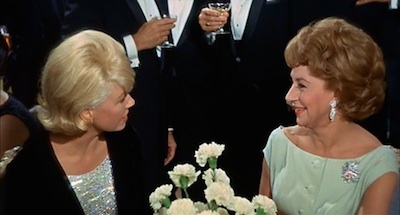
Como Olivia, empregada dos Boyer, temos ZaSu Pitts. Seu papel é mais uma participação de luxo, pois Olivia tem duas ou três cenas antes de ir embora no meio do filme. Pitts faleceu seis semanas antes da estreia de “Tempero do Amor”. O IMDb lista 223 créditos para a atriz tanto no cinema quanto na televisão, começando em 1917. Como ela costumava roubar as cenas, em muitas ocasiões suas cenas eram cortadas, o que levou o diretor Alfred E. Green a declarar que o rosto dela “esteve em mais chãos de salas de edição do que qualquer outra atriz”.
As the Boyers’ maid Olivia we have ZaSu Pitts. Her role is more like a deluxe cameo, as Olivia has two or three scenes before going away in the middle of the film. Pitts died six weeks before “The Thrill of It All” was released. IMDb gives her 223 credits on both film and TV, starting in 1917. Because she was a great scene-stealer, in many occasions her scenes ended up being cut, which led director Alfred E. Green to say that her face “has been in more cutting-room floors than any other actress”.
Indicado a sete Oscars, o diretor Norman Jewison começou sua carreira na televisão em 1952. “Tempero do Amor” foi apenas seu segundo longa-metragem. Jewison foi duramente criticado pelo crítico de cinema britânico Richard Whitehall, que odiou o filme e disse que Jewison tinha de ser um “gênio pervertido” para transformar uma ideia engraçada em um filme tão sem graça. Nós discordamos.
Seven-time Academy Award nominee, director Norman Jewison had started his career in 1952 on television. “The Thrill of It All” was only his second feature. Jewison was heavily criticized by the British film critic Richard Whitehall, who hated the movie and said that Jewison had to be “a perverted genius” to transform a funny idea into this unfunny movie. We disagree.

A moral do filme ainda é antiquada: “não há nada mais recompensador na vida do que ter um bebê”. É impossível não sorrir com Doris Day, mesmo como a atrapalhada dona de casa que virou uma estrela, mas o charme da conclusão só é parcialmente agradável. Não podemos esperar modernidade de um filme feito há mais de 60 anos, mas este aponta que os tempos e as coisas estavam mudando em 1963.
The moral of the movie is still old-fashioned: “there is nothing more fulfilling in life than having a baby”. It’s impossible not to smile with Doris Day, even as the clumsy housewife-turned-star, but the charm in the conclusion is only partially pleasant. We cannot expect modernity from a film that is over 60 years old, but this one points that times and things were changing in 1963.
This is my contribution to the Norman Jewison blogathon, hosted by Rebecca at Taking Up Room.