} Crítica Retrô: Melvyn Douglas

Tradutor / Translator / Traductor / Übersetzer / Traduttore / Traducteur / 翻訳者 / переводчик

Showing posts with label Melvyn Douglas. Show all posts

Tuesday, February 4, 2020

Não Podes Comprar Meu Amor (1964) / The Americanization of Emily (1964)


O tenente Charles Madison (James Garner) tem um hábito estranho: ele cumprimenta todas as mulheres que encontra com um tapinha no traseiro – e todas elas o reconhecem por este estranho gesto. Mas as coisas são diferentes com Emily Barham (Julie Andrews), uma motorista que, após receber seu primeiro tapa no traseiro, responde com um sonoro tapa no rosto de Charlie.

Lt. Commander Charles Madison (James Garner) has a strange habit: he greets every female he meets with a pat in the butt – and they all recognize him by this weird gesture. But things are different with Emily Barham (Julie Andrews), a driver who, upon receiving her first tap in the butt, answers with a vigorous slap in Charlie’s face.


Charlie é um soldado Americano fazendo o possível para evitar ir para o campo de batalha. Emily é uma inglesa séria que perdeu o pai, o irmão e o marido na guerra. Ela se apaixona com muita facilidade e se magoa também com facilidade. Ele acredita que a Segunda Guerra Mundial, assim como todas as guerras, é resultado da ganância dos europeus, e ele diz isso a Emily. Eles foram feitos um para o outro, nós sabemos, e eles começaram o relacionamento com o pé esquerdo.

Charlie is an American soldier doing everything he can to avoid going to the battlefield. Emily is a serious English woman who has lost her father, brother and husband in the war already. She falls in love too easily and shatters too easily. He believes the second World War, as all wars, is the result of European greed, and he tells that to Emily. They are made for each other, we know that, and they’re off to a rough start.


Estranhamente, Emily decide se envolver com Charlie depois que ele a chama de “puritana”. Nós podemos ver por que Emily se apaixona por Charlie: primeiro, porque ele é James Garner. Mas a segunda razão é mais importante: ela valoriza a covardia dele, porque todas as vezes em que um homem que ela amava decidiu fazer um ato heroico, este homem morreu e ela foi deixada com o coração partido. A covardia de Charlie é o que o torna uma escolha estável para ela.

Oddly, Emily decides to have a romance with Charlie after he calls her a “prissy”. We can see why Emily falls for Charlie: first, he’s James Garner, for God’s sake. But the second reason is more important: she values his cowardice, because every time a man she loved decided to do a heroic deed, he died and she was left heartbroken. Charlie being a coward is what makes him a stable choice for her.


É 1944 e os amigos de Charlie no exército estão planejando o Dia D. O papel de Charlie nele é distinto: ele é um “dog robber”, um oficial que fica encarregado de se certificar que os oficiais mais graduados estejam bem alimentados, bem vestidos e bem amados – estas são as palavras exatas usadas no filme. Mesmo assim, Charlie recebe a missão de filmar a invasão da praia de Omaha no Dia D.

It’s 1944 and Charlie’s army friends are planning the D-Day. Charlie’s role in this is distinct: he’s a “dog-robber”, an officer who is in charge of certifying that the high officers are well-fed, well-dressed and well-loved – these are the exact words used in the film. Nevertheless, Charlie receives the mission to film the invasion of the Omaha Beach on D-Day.


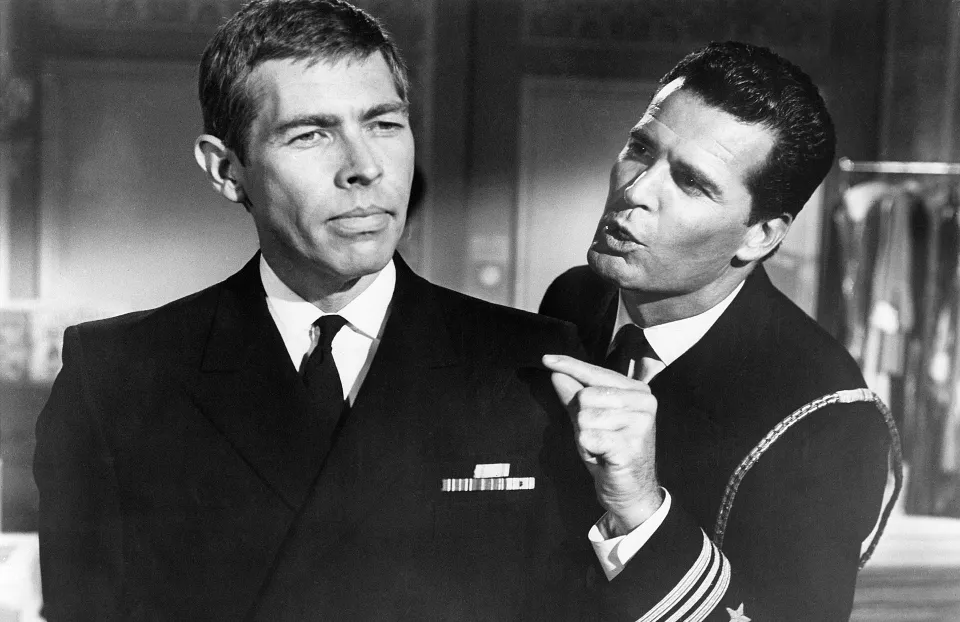
O planejamento do Dia D é tão tenso que o almirante William Jessup (Melvyn Douglas) acaba ficando em estado catatônico. Eu gostei muito da camaradagem na cena em que Charlie massageia as costas do almirante enquanto ele se recupera. Falando em camaradagem, outro camarada de Charlie é o tenente Paul Cummings (James Coburn), ou “Bus”, como ele é chamado por todos.  Bus é outro covarde que terá de filmar a invasão da praia de Omaha.

The planning of the D-Day is tense enough to leave Admiral William Jessup (Melvyn Douglas) in a catatonic state. I loved the camaraderie in the scene where Charlie massages the admiral’s back while he recovers. Speaking of camaraderie, another comrade of Charlie’s is Lt. Commander Paul Cummings (James Coburn), or “Bus”, as everybody calls him. Bus is another fun-loving coward who will have to record the Omaha Beach invasion.

O filme tem muitos momentos sérios de reflexão sobre a guerra. Charlie diz à mãe de Emily que ele perdeu um irmão na guerra, e a mãe dele só sobrevive porque honra as instituições e finge ter orgulho de seu falecido filho – quando na verdade a saudade dela é maior que seu orgulho patriótico. Neste sentido, o roteiro de Paddy Chayefsky é completamente antiguerra... mas mais sobre isso mais tarde.

The film has many serious moments of reflections about war. Charlie tells Emily’s mother that he lost a brother in the war, and his mother only survives through honoring the institutions and pretending to be proud of her dead son – when her longing for him is bigger than her patriotic pride. In this sense, Paddy Chayefsky’s screenplay is blatantly anti-war… but more on that later.


É curioso que o título original seja “The Americanization of Emily” quando Charlie é o foco do filme. Claro, James Garner era mais conhecido que Julie Andrews no começo de 1964, quando o filme foi feito. Julie havia acabado de filmar “Mary Poppins”, um filme que estrearia um mês antes de “Não Podes Comprar Meu Amor” e daria a Julie um Oscar. Como Emily, ela evitou ser estereotipada como uma bela cantora, e também apareceu em um filme em preto e branco – o único de sua carreira. Tanto Julie quanto James disseram que “Não Podes Comprar Meu Amor” é o filme favorito de suas respectivas carreiras.

It’s curious that the title is “The Americanization of Emily” when Charlie is the focus of the movie. Sure, James Garner was a bigger star than Julie Andrews in the beginning of 1964, when the film was shot. Julie had just wrapped “Mary Poppins”, a film that would premiere a month before “The Americanization of Emily” and give her an Oscar. As Emily, she avoided being typecast as a singing marvel, and also appeared in a black and white film – the only one in her career. Both Andrews and Garner have said that “The Americanization of Emily” is their favorite of their respective careers.


O tema principal do filme é o orgulho. Orgulho é a razão pela qual Jessup decide que o primeiro norte-americano a morrer na praia de Omaha deve ser um marinheiro – uma decisão bastante estúpida e orgulhosa, porque ele está sacrificando a vida de outra pessoa para chamar a atenção para a Marinha. Orgulho é característica de um herói, e a linha que separa um herói de um covarde é bem tênue, como o filme mostra. E, obviamente, a “história oficial” pode ser bem diferente dos acontecimentos reais.

The overall theme of the movie is pride. Pride is the reason why Jessup decides that the first American to die at Omaha Beach on D-Day must be a sailor – a very stupid and proud decision, because he’s sacrificing someone else’s life to shine a light on the Navy. Pride is what makes a hero, and the line that separates a hero from a coward is a very thin one, as the film shows. And, of course, the “official history” may be very different from the real happenings.


Mais uma vez, esta é uma narrativa envolvendo a Segunda Guerra Mundial que mostra que pode valer a pena lutar uma guerra, e sacrifícios podem ser necessários – mesmo se esse sacrifício envolver mentir sobre ser um herói.

Once again, this is a narrative involving World War II that shows that a war can be worth fighting, and sacrifices can be worth making – even if this sacrifice involves lying about being a hero.

This is my contribution to the James Garner: He Thrilled Them All blogathon, hosted by Gill at Realweegiemidget Reviews.

Sunday, May 12, 2019

Um Rosto de Mulher (1941) / A Woman's Face (1941)

Durante a Era de Ouro dos estúdios, sempre que um artista tinha liberdade para interpretar um personagem diferente do que estava acostumado – em geral depois de muita insistência e luta – o resultado era quase sempre maravilhoso. Por exemplo: quando a MGM deixou Joan Crawford arriscar e interpretar uma personagem marcada – em vez de mais uma mulher glamourosa – em “Um Rosto de Mulher”, ela nos legou uma performance incrível.

During the Studio Era, whenever a performer was allowed to play against type – usually after a lot of insistence and fighting – the result was almost always wonderful. For instance: when MGM let Joan Crawford take a risk and play a scarred character – instead of another glamorous woman – in “A Woman's Face”, she delivered an outstanding performance.


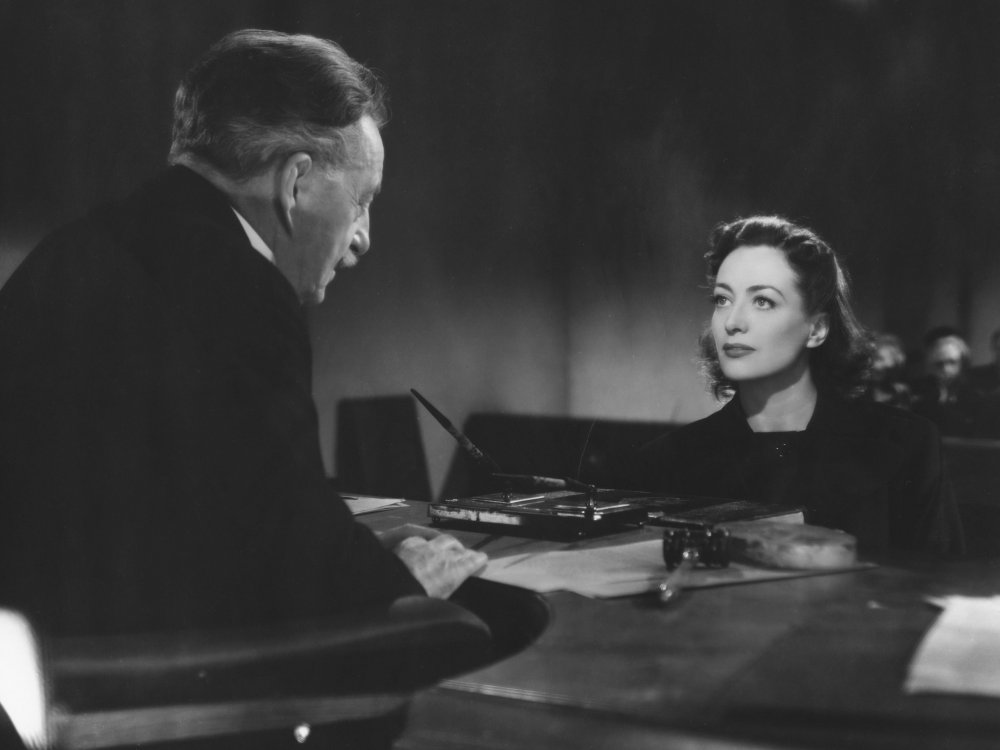
Em um tribunal em Estocolmo, o julgamento de Anna Holm (Joan Crawford) começa. Anna é acusada de assassinato. As testemunhas são chamadas e contam a história em flashback. Anna e seus “amigos” trabalhavam em um restaurante, mas este trabalho era só de fachada: eles atuavam de verdade no ramo da chantagem.

In a tribunal in Stockholm, the judgment of Anna Holm (Joan Crawford) begins. Anna is accused of murder. The witnesses are called and they tell the story in flashback. Anna and her “friends” worked in a restaurant, but this job was just a disguise: they were really active in the blackmail market.


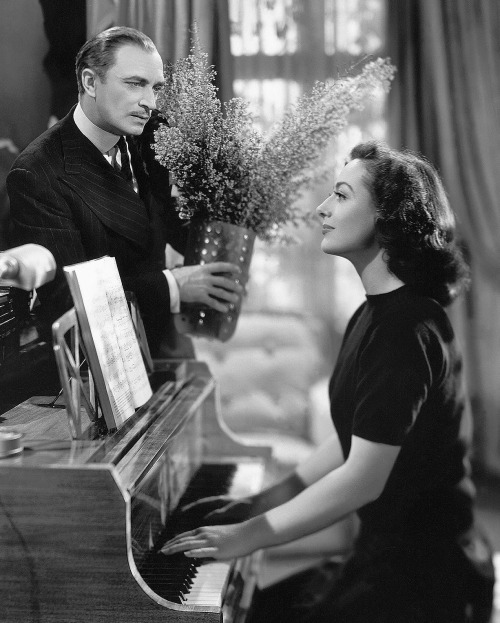
A vítima de chantagem que vai mudar toda a história é Vera Segert (Osa Massen), cujas cartas de amor para um amante foram parar nas mãos erradas. Enquanto negocia com Vera, Anna conhece o esposo dela, Gustaf (Melvyn Douglas), quese interessa pela grande cicatriz que Anna tem no rosto. Gustav então se oferece para operar Anna e remover a cicatriz. Ao mesmo tempo, Anna se apaixona por Torsten Barring (Conrad Veidt), que a quer para executar seu próprio plano maligno.

The blackmail victim that will change everything is Vera Segert (Osa Massen), whose love letters to a lover ended up in wrong hands. While negotiating with Vera, Anna meets her husband, Gustaf (Melvyn Douglas), who gets interested in the big scar Anna has in her face. Gustav then offers to operate Anna and remove the scar. At the same time, Anna falls in love with Torsten Barring (Conrad Veidt), who wants her for an evil plan of his own.


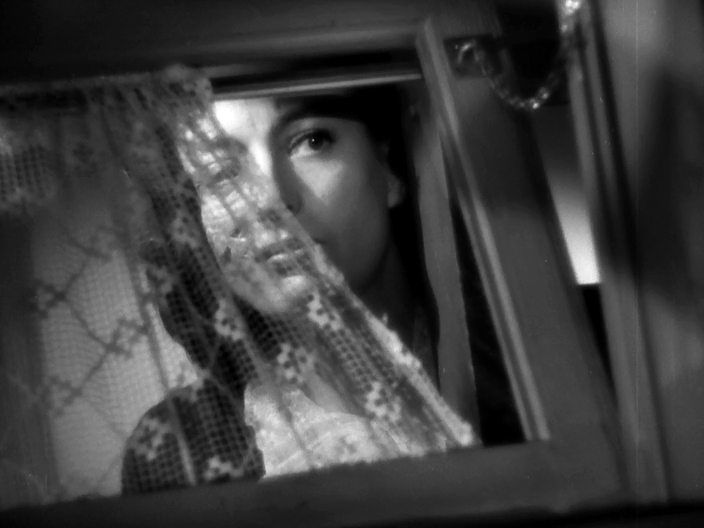
A cicatriz de Anna é decorrente de um incêndio ao qual ela sobreviveu na infância. Por causa da cicatriz, ela não conseguiu arranjar trabalho quando era adolescente e então se tornou criminosa. Anna lidava com canalhas, e em geral desconfiava de todos – não porque eles eram canalhas, mas porque ela achava que eles estavam sempre zombando de seu rosto. Toda a vida e todas as atitudes de Anna foram pautadas em sua cicatriz.

Anna got her scar after she survived a fire in her childhood. Because of the scar, she couldn't find a job as a teen and turned to crime. Anna was dealing with crooks, and she was often suspicious of everybody – not because they were crooks, but because she thought they were always mocking her appearance. All her life and her actions have been dictated by that scar.


“Um Rosto de Mulher” nos leva a refletir sobre as aparências e sobre como julgamos as pessoas pela aparência. Isso vai além das noções de bonito ou feio: aqui estamos falando de uma pessoa marcada, na mesma situação de pessoas que adquiriram uma deficiência depois de um acidente. Eu pensei muito nas pessoas que lutaram em guerras e ficaram para sempre marcadas ou deficientes porque não havia  tratamento ou cirurgia plástica na época. Estas são as vítimas do fogo, de bombas e de ataques com gás que tiveram de conviver com pessoas que não acreditavam que alguém “diferente” merecia respeito.

A Woman's Face” leads us to think about appearances and how we judge people by their looks. This goes way beyond the notions of beautiful and ugly: here we are talking about someone scarred, in the same situation as people who were left handicapped by some accident. I thought a lot about people who had fought in wars and left permanently scarred or disabled because there was no treatment or plastic surgery in that time. These are the victims of fires, bombs, gas attacks, who then had to live among people who didn't see someone “different” as someone worth respecting.


Hollywood, desde sempre, fez remakes de sucessos internacionais, e neste caso não foi diferente. “Um Rosto de Mulher” é o remake de “A Mulher que Vendeu a Alma”, filme sueco de 1938 que revelou ao mundo uma jovem de 23 anos chamada Ingrid Bergman. Enquanto Crawford está bem no remake, não há comparação com a personagem amarga interpretada por Ingrid no original.

Hollywood, since the beginning, remade international successes, and this case was no exception. “A Woman's Face” is the remake of “En kvinnas ansikte”, a Swedish film from 1938 that introduced to the world a young 23-year-old girl named Ingrid Bergman. While Crawford is good in the remake, there is no comparison to the embittered character played by Ingrid in the original.


Em uma única cena no sótão, Conrad Veidt consegue ser incrivelmente assustador e sombrio – muito diferente de quando ele está dançando com Joan Crawford. Como Vera, Osa Massen ou é uma péssima atriz ou uma ótima atriz interpretando uma personagem insuportável. Alguns coadjuvantes brilham, em especial Marjorie Main e Donald Meek.

In a single scene in an attic, Conrad Veidt manages to be incredibly scary and somber – very different from when he's dancing with Joan Crawford. As Vera, Osa Massen is either a very bad actress or a very good one playing an annoying character. Some supporting players shine, in special Marjorie Main and Donald Meek.


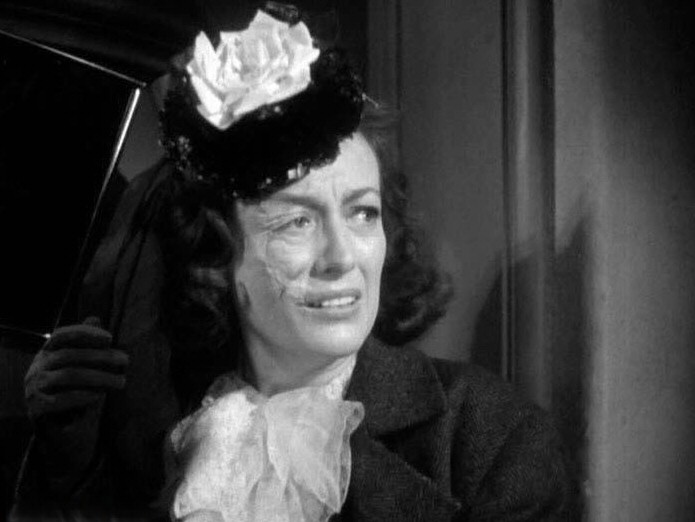
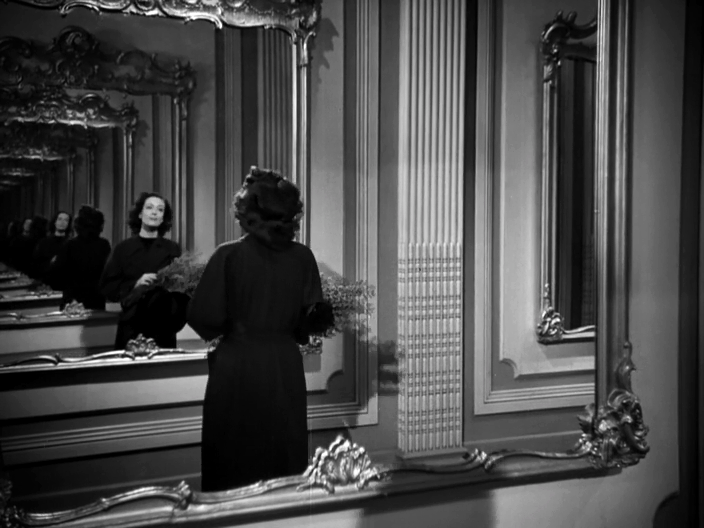
Do ponto de vista técnico, há algumas coisas a se destacar em “Um Rosto de Mulher”. Há uma cena muito interessante com diversos espelhos. Há duas sequências muito tensas e sem música – apenas com os barulhos do ambiente, e esta escolha foi muito eficiente para aumentar o suspense. E, claro, o departamento de maquiagem fez maravilhas não apenas com a criação da cicatriz de Anna, mas também com a maneira como mostram o efeito do fogo no olho dela.

From the technical point of view, there are a few things to point out about “A Woman's Face”. There is a very interesting shot with a lot of mirrors. There are a couple of very tense scenes that have no music – only the noises of the place, and this choice proved to be very effective to increase the suspense. And, of course, the make-up department did wonders not only conceiving Anna's scar, but also showing how the fire also affected her eye.


Antes do doutor Gustaf ver o resultado da cirurgia de Anna, ele diz ter medo de que ela se torne “um belo rosto sem coração”. A mudança no rosto de Anna vem junto com uma mudança no coração, e assim o filme reforça o estereótipo de Hollywood de que tudo que é belo é bondoso. “Um Rosto de Mulher” é um ótimo filme, mas eu gostaria mais dele se a aparência de Anna não tivesse mudado. Afinal, se o Corcunda de Notre Dame podia ser um cara legal mesmo sendo considerado “feio”, por que o mesmo não poderia acontecer com Anna Holm?

Before Dr. Gustaf sees the result of Anna's surgery, he says he's afraid of her ending up having “a beautiful face and no heart”. As Anna's change in her face comes with a change of heart, we see another picture that reinforces the Hollywood stereotype that beautiful equals kind. “A Woman's Face” is a great film, but I'd love it more if the Anna's appearance didn't change. After all, if the Hunchback of Notre Dame could be a great guy even being considered “ugly”, why couldn't Anna Holm be the same?


This is my contribution to the Joan Crawford blogathon, hosted by Pale Writer and Poppity Talks Classic Films.


Related Posts Plugin for WordPress, Blogger...