} Crítica Retrô: Conrad Veidt

Tradutor / Translator / Traductor / Übersetzer / Traduttore / Traducteur / 翻訳者 / переводчик

Showing posts with label Conrad Veidt. Show all posts

Monday, April 27, 2026

Figuras de Cera (1924) / Waxworks (1924)


Este gabinete veio depois do de Doutor Caligari. As figuras de cera não ganham vida à noite, como na trilogia “Uma Noite no Museu”: elas ganham vida graças à imaginação de um escritor contratado para fazer propaganda do gabinete de figuras de cera com histórias instigantes. O resultado é um triunfo de direção para Paul Leni e de atuação para Conrad Veidt e Emil Jannings, anos antes de os três irem para Hollywood. 

This cabinet came after Doctor Caligari’s. The wax figures don’t become alive at night, like in the “Night at the Museum” trilogy: they come alive thanks to the imagination of a writer hired to advertise the waxworks cabinet with engaging stories. The result is a triumph of directing for Paul Leni and acting for Conrad Veidt and Emil Jannings, years before the three went to Hollywood.

O Califa Haroun Al-Raschid (Emil Jannings) odeia monotonia, por isso ele tem uma esposa para cada dia do ano - mas nenhuma delas é mais bonita que a esposa do padeiro, Zarah, que passa a ser cortejada pelo Grande Vizir e gosta da paquera, pois está infeliz com o casamento. Para mudar a situação, o padeiro promete roubar um anel mágico do Califa. Mas ele não sabe que o Califa vai até a sua casa bem na hora em que ele leva a cabo o roubo no palácio. 

The Caliph Haroun Al-Raschid (Emil Jannings) hates monotony, so he has one wife for each day of the year - but none is more beautiful than the baker’s wife, Zarah, who starts being coveted by the Grand Vizier and likes being coveted, as she’s unhappy in her marriage. To change the situation, the baker vows to steal the Caliph’s Wishing Ring. Unbeknownst to him, the Caliph goes to his house while the baker goes to the palace to steal the ring.

Ivan, o Terrível (Conrad Veidt) está especialmente interessado em venenos e outras maneiras de eliminar seus inimigos. Como ele fez muitos inimigos, bola um plano para viajar sem que haja a possibilidade de ser assassinado - mas o perigo o ronda assim mesmo.

Ivan the Terrible (Conrad Veidt) is especially interested in poisons and other means to eliminate his enemies. Since he has made so many enemies, he plots a plan to travel without the possibility of being murdered - but danger lurks anyway.

E então Jack, o Estripador (Werner Krauss) volta à vida

And then Jack the Ripper (Werner Krauss) becomes alive.

Este é um filme de antologia, algo que sempre foi um pouco raro no mundo do cinema, mas que chama a atenção de muitos - e eu me incluo neste grupo - quando são feitos. Um exemplo também do cinema de Weimar é “A Morte Cansada” (1921), de Fritz Lang. Originalmente, “Figuras de Cera” contaria quatro histórias mas não sobrou dinheiro para fazer a última, porque o plano era gravar este episódio na Itália. 

This is an anthology movie, something that has always been a bit rare in the movie world, but drives the interest of many - me included - when they’re made. One early example, also from Weimar Cinema, is Fritz Lang’s “Destiny” (1921). Originally, “Waxworks” would have four stories told, but there wasn’t enough money to do the fourth, because the plan was to shoot this episode in Italy.

Emil Jannings foi um verdadeiro camaleão que se tornou o primeiro agraciado com o Oscar de Melhor Ator. Conrad Veidt tinha olhos líquidos inimitáveis. Mas gostaríamos de destacar outro intérprete: Werner Krauss. O próprio Doutor Caligari do filme de 1920, Krauss apareceu em diversos clássicos do cinema mudo e teve uma transição tranquila para o cinema falado… até que fez o filme de propaganda antissemita “Judeu Suss” em 1940. Após a queda do Nazismo, ele declarou que foi coagido a fazer o filme, mas mesmo assim foi considerado um criminoso de guerra menor e teve de se mudar para a Áustria, onde continuou trabalhando mas morreu relativamente esquecido em 1959 - como deveria acontecer com todo nazista. 

Emil Jannings was a true chameleon who became the first Best Actor Oscar recipient. Conrad Veidt had unmistakable liquid eyes. But here we’d like to showcase someone else: Werner Krauss. THE Doctor Caligari in the 1920 film, Krauss made appearances in several classic silent movies and transitioned well to talkies… until he appeared in the antissemitic propaganda film “Jud Suess” in 1940. After the fall of Nazism, he proclaimed that he was coerced into making the movie, nevertheless he was considered a minor war criminal and had to move to Austria, where he kept working until he died in relative obscurity in 1959 - which should happen to all Nazis.

Outro intérprete digno de destaque é William Dieterle, que faz o Poeta que escreve todas as histórias para as figuras de cera, e também Assad o Padeiro na história do Califa e um Boiardo na história de Ivan. Ele começou a atuar aos dezesseis anos e logo se tornou um favorito do diretor de teatro Max Reinhardt, trabalhando ao seu lado entre 1919 e 1924. Tendo feito seu primeiro filme como ator em 1921 e o primeiro como diretor em 1923, ele foi bem-sucedido em ambas as funções. Indo para Hollywood em 1930 para fazer versões dubladas para o alemão de filmes norte-americanos, ele em vez disso se tornou um prolífico diretor. No IMDb, ele conta com 67 créditos como ator e 91 como diretor. 

Another performer to showcase is William Dieterle, who plays The Poet who writes all the stories for the wax figures, and also Assad the Baker in the Caliph story and a Boyar in Ivan’s story. He started acting at age sixteen and soon became a favorite of theater director Max Reinhardt, who worked with him between 1919 and 1924. Making his first film as an actor in 1921 and the first as director in 1923, he was successful in both functions. Going to Hollywood in 1930 to make German-dubbed versions of North American films, he instead became a prolific director. On IMDb, he has 67 credits as an actor and 91 as director.

Com uma mistura perfeita de terror e comédia, “Figuras de Cera” foi escrito por Henrik Galeen, também responsável pelo roteiro de “Nosferatu” (1922). Como um exemplo tardio do Expressionismo Alemão, pode não ser tão lembrado quanto Caligari, que é uma obra-prima, mas este é um filme interessante que sabe entreter.

With a perfect mix of horror and comedy, “Waxworks” was written by Henrik Galeen, also responsible for the screenplay of “Nosferatu” (1922). As a late German Expressionism flick, it is not as well remembered as Caligari, which is a masterpiece, but this is an interesting and entertaining film.

Sunday, May 12, 2019

Um Rosto de Mulher (1941) / A Woman's Face (1941)

Durante a Era de Ouro dos estúdios, sempre que um artista tinha liberdade para interpretar um personagem diferente do que estava acostumado – em geral depois de muita insistência e luta – o resultado era quase sempre maravilhoso. Por exemplo: quando a MGM deixou Joan Crawford arriscar e interpretar uma personagem marcada – em vez de mais uma mulher glamourosa – em “Um Rosto de Mulher”, ela nos legou uma performance incrível.

During the Studio Era, whenever a performer was allowed to play against type – usually after a lot of insistence and fighting – the result was almost always wonderful. For instance: when MGM let Joan Crawford take a risk and play a scarred character – instead of another glamorous woman – in “A Woman's Face”, she delivered an outstanding performance.


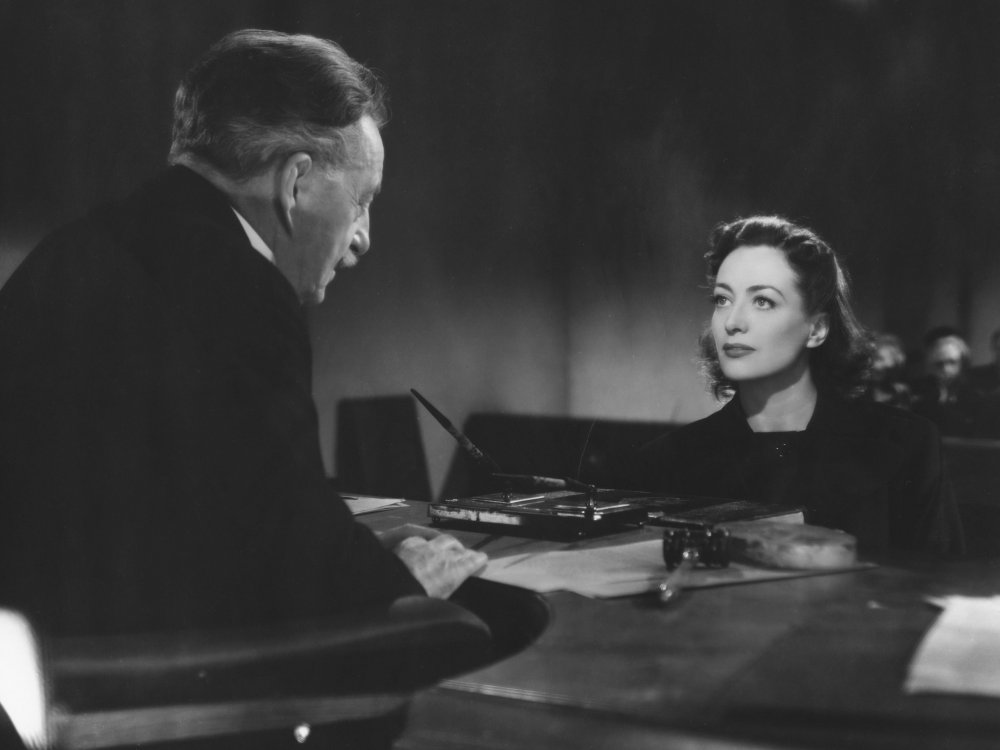
Em um tribunal em Estocolmo, o julgamento de Anna Holm (Joan Crawford) começa. Anna é acusada de assassinato. As testemunhas são chamadas e contam a história em flashback. Anna e seus “amigos” trabalhavam em um restaurante, mas este trabalho era só de fachada: eles atuavam de verdade no ramo da chantagem.

In a tribunal in Stockholm, the judgment of Anna Holm (Joan Crawford) begins. Anna is accused of murder. The witnesses are called and they tell the story in flashback. Anna and her “friends” worked in a restaurant, but this job was just a disguise: they were really active in the blackmail market.


A vítima de chantagem que vai mudar toda a história é Vera Segert (Osa Massen), cujas cartas de amor para um amante foram parar nas mãos erradas. Enquanto negocia com Vera, Anna conhece o esposo dela, Gustaf (Melvyn Douglas), quese interessa pela grande cicatriz que Anna tem no rosto. Gustav então se oferece para operar Anna e remover a cicatriz. Ao mesmo tempo, Anna se apaixona por Torsten Barring (Conrad Veidt), que a quer para executar seu próprio plano maligno.

The blackmail victim that will change everything is Vera Segert (Osa Massen), whose love letters to a lover ended up in wrong hands. While negotiating with Vera, Anna meets her husband, Gustaf (Melvyn Douglas), who gets interested in the big scar Anna has in her face. Gustav then offers to operate Anna and remove the scar. At the same time, Anna falls in love with Torsten Barring (Conrad Veidt), who wants her for an evil plan of his own.


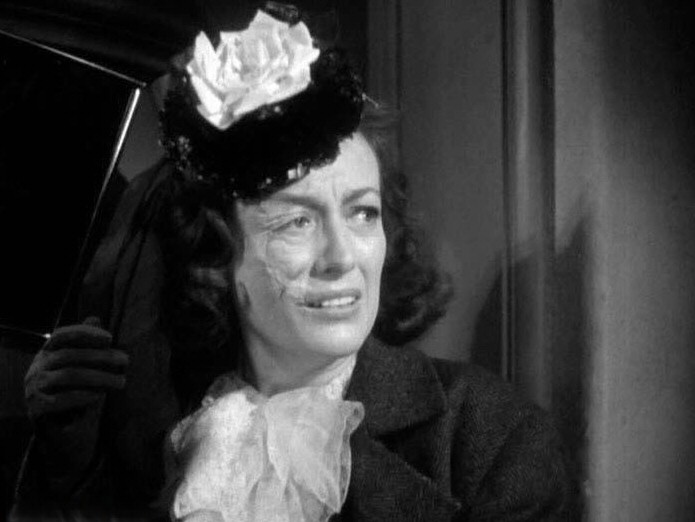
A cicatriz de Anna é decorrente de um incêndio ao qual ela sobreviveu na infância. Por causa da cicatriz, ela não conseguiu arranjar trabalho quando era adolescente e então se tornou criminosa. Anna lidava com canalhas, e em geral desconfiava de todos – não porque eles eram canalhas, mas porque ela achava que eles estavam sempre zombando de seu rosto. Toda a vida e todas as atitudes de Anna foram pautadas em sua cicatriz.

Anna got her scar after she survived a fire in her childhood. Because of the scar, she couldn't find a job as a teen and turned to crime. Anna was dealing with crooks, and she was often suspicious of everybody – not because they were crooks, but because she thought they were always mocking her appearance. All her life and her actions have been dictated by that scar.


“Um Rosto de Mulher” nos leva a refletir sobre as aparências e sobre como julgamos as pessoas pela aparência. Isso vai além das noções de bonito ou feio: aqui estamos falando de uma pessoa marcada, na mesma situação de pessoas que adquiriram uma deficiência depois de um acidente. Eu pensei muito nas pessoas que lutaram em guerras e ficaram para sempre marcadas ou deficientes porque não havia  tratamento ou cirurgia plástica na época. Estas são as vítimas do fogo, de bombas e de ataques com gás que tiveram de conviver com pessoas que não acreditavam que alguém “diferente” merecia respeito.

A Woman's Face” leads us to think about appearances and how we judge people by their looks. This goes way beyond the notions of beautiful and ugly: here we are talking about someone scarred, in the same situation as people who were left handicapped by some accident. I thought a lot about people who had fought in wars and left permanently scarred or disabled because there was no treatment or plastic surgery in that time. These are the victims of fires, bombs, gas attacks, who then had to live among people who didn't see someone “different” as someone worth respecting.


Hollywood, desde sempre, fez remakes de sucessos internacionais, e neste caso não foi diferente. “Um Rosto de Mulher” é o remake de “A Mulher que Vendeu a Alma”, filme sueco de 1938 que revelou ao mundo uma jovem de 23 anos chamada Ingrid Bergman. Enquanto Crawford está bem no remake, não há comparação com a personagem amarga interpretada por Ingrid no original.

Hollywood, since the beginning, remade international successes, and this case was no exception. “A Woman's Face” is the remake of “En kvinnas ansikte”, a Swedish film from 1938 that introduced to the world a young 23-year-old girl named Ingrid Bergman. While Crawford is good in the remake, there is no comparison to the embittered character played by Ingrid in the original.


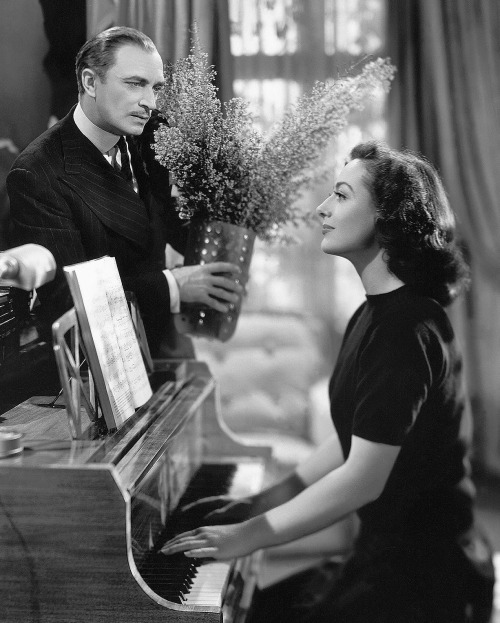
Em uma única cena no sótão, Conrad Veidt consegue ser incrivelmente assustador e sombrio – muito diferente de quando ele está dançando com Joan Crawford. Como Vera, Osa Massen ou é uma péssima atriz ou uma ótima atriz interpretando uma personagem insuportável. Alguns coadjuvantes brilham, em especial Marjorie Main e Donald Meek.

In a single scene in an attic, Conrad Veidt manages to be incredibly scary and somber – very different from when he's dancing with Joan Crawford. As Vera, Osa Massen is either a very bad actress or a very good one playing an annoying character. Some supporting players shine, in special Marjorie Main and Donald Meek.


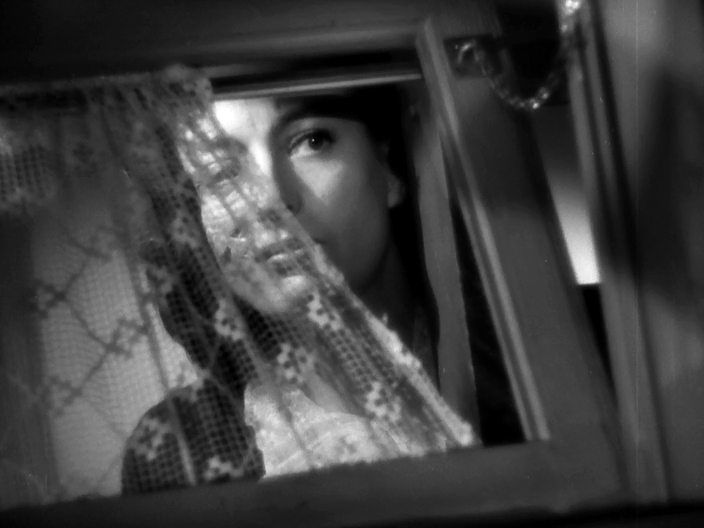
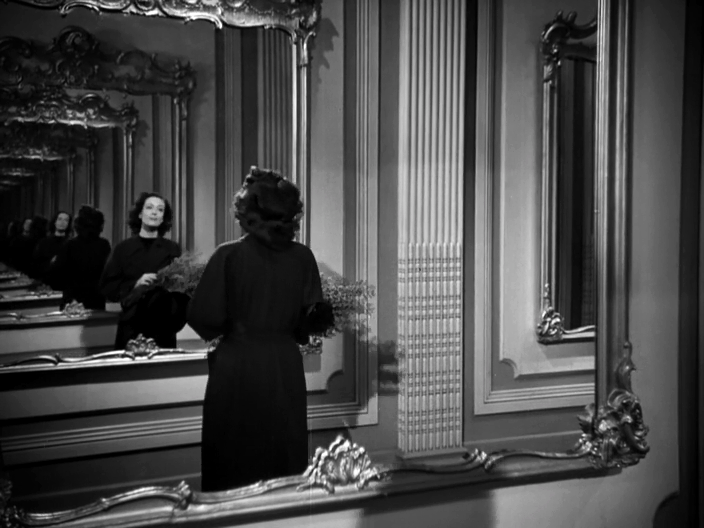
Do ponto de vista técnico, há algumas coisas a se destacar em “Um Rosto de Mulher”. Há uma cena muito interessante com diversos espelhos. Há duas sequências muito tensas e sem música – apenas com os barulhos do ambiente, e esta escolha foi muito eficiente para aumentar o suspense. E, claro, o departamento de maquiagem fez maravilhas não apenas com a criação da cicatriz de Anna, mas também com a maneira como mostram o efeito do fogo no olho dela.

From the technical point of view, there are a few things to point out about “A Woman's Face”. There is a very interesting shot with a lot of mirrors. There are a couple of very tense scenes that have no music – only the noises of the place, and this choice proved to be very effective to increase the suspense. And, of course, the make-up department did wonders not only conceiving Anna's scar, but also showing how the fire also affected her eye.


Antes do doutor Gustaf ver o resultado da cirurgia de Anna, ele diz ter medo de que ela se torne “um belo rosto sem coração”. A mudança no rosto de Anna vem junto com uma mudança no coração, e assim o filme reforça o estereótipo de Hollywood de que tudo que é belo é bondoso. “Um Rosto de Mulher” é um ótimo filme, mas eu gostaria mais dele se a aparência de Anna não tivesse mudado. Afinal, se o Corcunda de Notre Dame podia ser um cara legal mesmo sendo considerado “feio”, por que o mesmo não poderia acontecer com Anna Holm?

Before Dr. Gustaf sees the result of Anna's surgery, he says he's afraid of her ending up having “a beautiful face and no heart”. As Anna's change in her face comes with a change of heart, we see another picture that reinforces the Hollywood stereotype that beautiful equals kind. “A Woman's Face” is a great film, but I'd love it more if the Anna's appearance didn't change. After all, if the Hunchback of Notre Dame could be a great guy even being considered “ugly”, why couldn't Anna Holm be the same?


This is my contribution to the Joan Crawford blogathon, hosted by Pale Writer and Poppity Talks Classic Films.


Friday, July 8, 2011

O Ladrão de Bagdá / The Thief of Bagdad (1940)

Primeira versão sonorizada e em cores do filme estrelado em 1924 por Douglas Fairbanks, O Ladrão de Bagdá é uma história de amizade, malandragem, cobiça, magia e, como não podia deixar de ser, amor.

This is the first sound and color version of the film starred in 1924 by Douglas Fairbanks. “The Thief of Bagdad” is a tale of friendship, mischief, greed, magic and, of course, love.
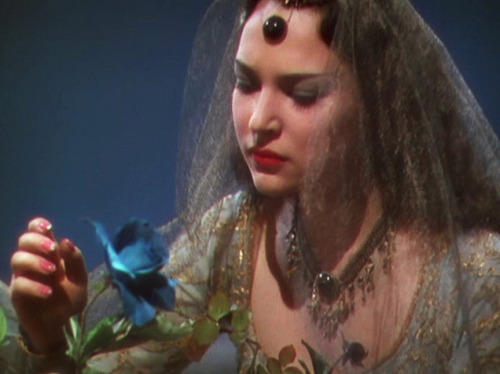
O estreante John Justin é Ahmad, príncipe que, amaldiçoado pelo rival Jaffar (Conrad Veidt), fica cego e passa a viver como mendigo. Sabu é Abu, o ladrão do título que, ao contrário da versão original, nada quer com a princesa, aqui interpretada por June Duprez, substituindo Vivien Leigh.

Newcomer John Justin plays Ahmad, a prince that was cursed by his rival Jaffar (Conrad Veidt), becomes blind and has to live as a beggar. Sabu plays Abu, the thief referred to in the title. Contrary to the original version, the thief has nothing to do with the princess, played by June Duprez, but a role intended for Vivien Leigh.
Cinco diretores assinam o filme, com destaque para Michael Powell que, através da produtora The Archers e da parceria com Emerich Pressburger, faria grandes filmes como “Os Sapatinhos Vermelhos” (1948) e “Narciso Negro” (1946). A trilha sonora é de Miklós Rósza, contratado após a ideia de usar valsas vienenses ter sido descartada. O filme teve cenas rodadas na Inglaterra e nos Estados Unidos, por isso os cinco diretores. Essa diferença é facilmente notada: nas partes gravadas em solo norte-americano, por conta da censura, as personagens estão mais vestidas e com decotes menores.

Five directors sign the movie. We highlight Michael Powell who, with the production company The Archers and his partner Emeric Pressburger, would still make great movies such as “The Red Shoes” (1948) and “Black Narcissus” (1946). The soundtrack was composed by Miklós Rósza, who was hired after nobody agree with the use of waltzes from Vienna in the soundtrack. The film was shot both in England and in the United States, with the five directors divided on the two continents. This difference is visible: in the scenes shot in the US, due to censorship, the characters show less cleavage and have more clothes on.  
No ano seguinte, o filme levou três prêmios Oscar: melhores fotografia, efeitos especiais e direção de arte. De fato, apesar dos olhos críticos e cínicos do público (notadamente da juventude) atual desdenharem dos efeitos da época, são eles que criam a magia até hoje crível, fazendo da película uma espécie de Alladin do tempo dos nossos avós.

The following year, the movie took home three Oscars: best Cinematography, Special Effects and Art Direction. Indeed, although critical and cynical eyes from the modern viewer usually disdain the dated special effects, it is because of these effects that the film exhales a magic that remains fresh more than 70 years after the original release. “The Thief of Bagdad” becomes, with its special effects, an Alladin from the times of our grandparents. 
Tudo o que vem à nossa mente ao mencionarmos a Arábia e As Mil e Uma Noites pode ser encontrado em O Ladrão de Bagdá. Tapetes voadores, feiticeiros, sultões, dançarinas de véu, cavalos alados, gênios da lâmpada que concedem três pedidos.  E mais algumas mágicas cinematográficas fora do mundo árabe, como uma aranha gigante ou a transformação do menino em cachorro. Um truque usado até hoje foi usado pela primeira vez neste filme: a gravação em fundo azul para depois colocar o cenário colorido durante a edição. Técnicas e Technicolor para criar o melhor clima de ação e aventura possível.

Everything that comes to our minds when we think about the Arab world and the 1001  Nights can be found in “The Thief of Bagdad”. Flying carpets, magicians, sultans, veil dancers, horses with wings, lamp genies that grant three wishes. And also some film magics outside the Arab world, like a giant spider or a boy being transformed in a dog. A trick used until today was created for the film: the chroma key, the scene shot in front of a blue background in order to add the scenario during the editing process. Techniques and Technicolor to create the best mood of action and adventure.

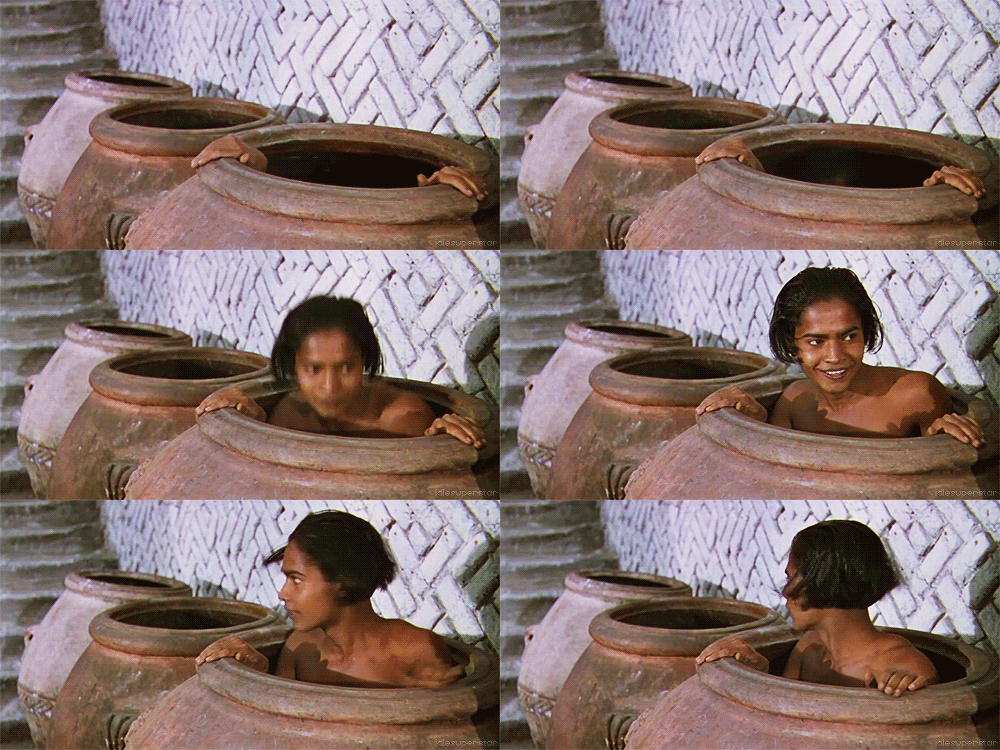
Sabu, carismático ator indiano sempre em papéis exóticos como o luxurioso príncipe de Narciso Negro e o menino lobo Mogli (1942, 25 anos antes de Walt Disney colocá-lo para dançar entre os animais da floresta em desenho animado), é o destaque como o divertido, espirituoso e leal ladrão. Conrad Veidt, o alemão com cara de mau que esteve nos clássicos O Gabinete do Dr. Caligari (1919) e Casablanca (1942), convence como vilão. John e June estão bem como o casal principal, mas infelizmente suas carreiras não progrediram. Não podemos dizer o mesmo das técnicas de efeitos especiais que, embora tenham feito progresso, perderam a real magia que só os sonhos ou os filmes como O Ladrão de Bagdá mantém.

Sabu was a charismatic Indian actor who always played exotic roles such as the luxurious prince from “Black Narcissus” and Mowgli (from the 1942 “The Jungle Book”, made 25 years before Walt Disney put Mowgli to dance amidst the jungle animals in the cartoon). Here Sabu is the scene stealer as the fun, witty and loyal thief. Conrad Veidt, the German with an evil face that was in classics like “The Cabinet of Doctor Caligari” (1919) and “Casablanca” (1942), is great and convincing as the villain. John and June perform well as the main couple, but unfortunately they didn't have much success in their later careers. But we can't say the special effects weren't successful! Although there was great progress in the field through the years, there was a loss of the real magic that only dreams or movies like “The Thief of Bagdad” can have.

Related Posts Plugin for WordPress, Blogger...