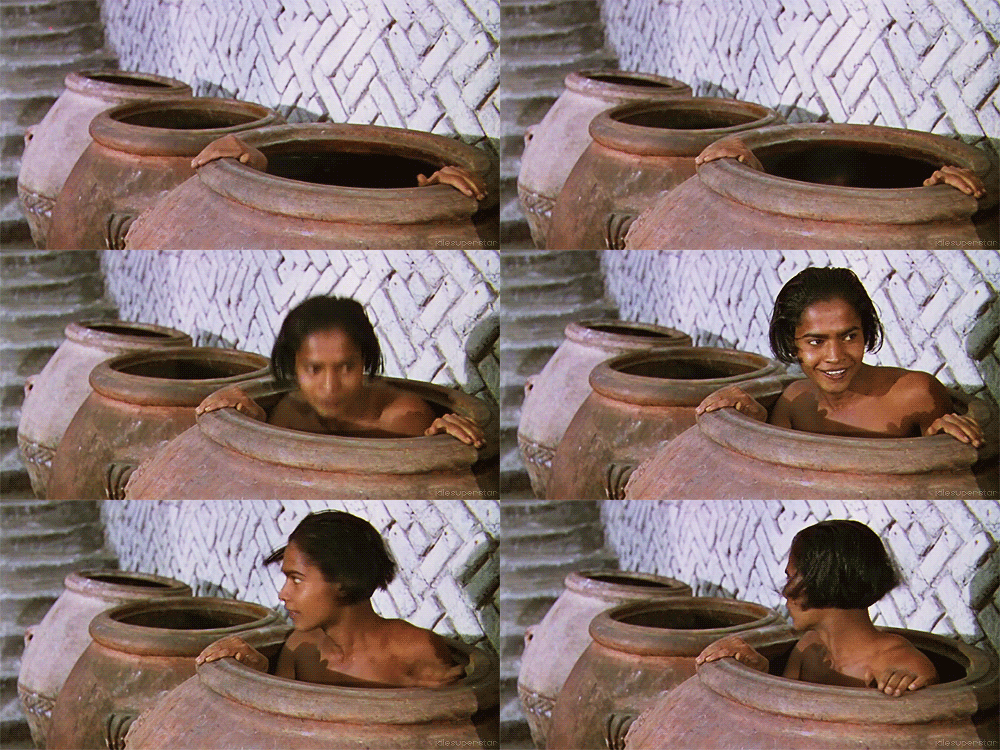
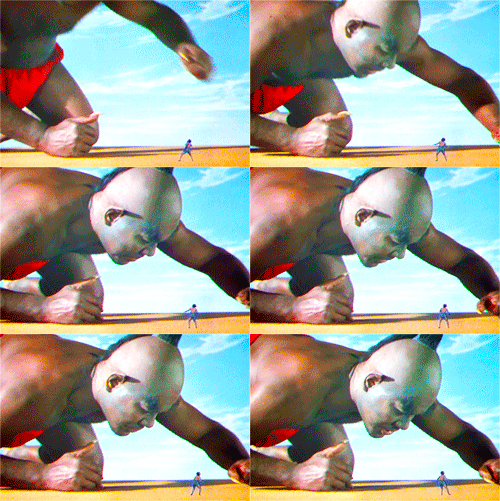
Talvez você tenha ido ver
a nova aventura live-action da Disney, “The Jungle Book”. É provável que você tenha tido seu primeiro
contato com a história de Mogli através do desenho de 1967, que também lhe
ensinou que “necessário, somente o necessário, o extraordinário é demais”. Mas
é provável que você não saiba algumas coisas. Primeiro, que quem escreveu o
livro “The Jungle Book” foi Rudyard Kipling. Segundo, que a primeira adaptação
da história para o cinema foi em 1942, e estrelou um grande ídolo indiano.
Maybe you went to the
movies to see the new Disney live-action adventure, “The Jungle Book”. There is
a good chance that you had your first contact with Mowgli's story through the
1967 cartoon, that also taught you about the “bare necessities”. But there is a
chance that you aren't aware about a couple of things. First, that the author
of “The Jungle Book” is Rudyard Kipling. Second, that the first adaptation of
the story to film was made in 1942, and starred a great Indian idol.

Uma turista ouve um velho senhor indiano (Joseph
Calleia) contando histórias para uma multidão. Ele começa a contar
especialmente para ela a história de Latu, uma criança da aldeia que ficou
perdida no mato. O tigre Shere Khan matou o pai de Latu, mas o menininho foi
acolhido por uma família de lobos (o que é um óbvio ponto retirado da lenda de
fundação de Roma pelos irmãos Rômulo e Remo, criados por uma loba). Em meio aos
lobos, o menino Latu passa a ser chamado de Mogli.
A tourist listens to an
old Indian man (Joseph Calleia) who is telling a story to a crowd. He then
proceeds to tell, especially to her, the story of Latu, a child from the
village who got lost in the jungle. Shere Khan, the tiger, killed Latu's
father, but the little boy was adopted by a family of wolves (which is
obviously taken from the legend of the foundation of Rome by the brothers
Romulus and Remus, raised by a wolf). Among the wolves, Latu is called Mowgli.

Doze anos se passam, e Shere Khan agora quer
pegar Mogli. Um dia, sem querer, Mogli volta à sua aldeia e é pego e
reconhecido pela mãe. O menino passa então algum tempo entre as pessoas,
aprendendo a falar e ficando longe de sua vida selvagem. É na aldeia que ele
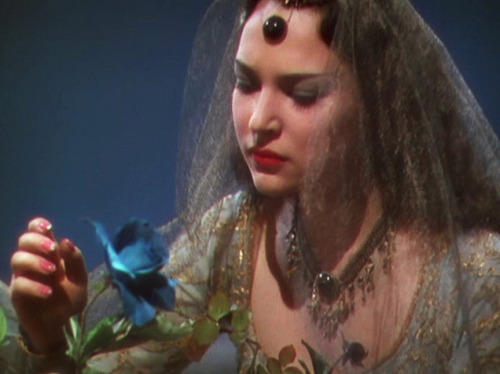
conhece a encantadora Mahala (Patricia O'Rourke), de quem fica amigo. Mas Mogli
é uma mistura única de homem e lobo, e ainda tem como objetivo se vingar de
Shere Khan.
Twelve years go by, and
now Shere Khan wants to catch Mowgli. One day, by accident, Mowgli goes back to
his village, is captured and his mother recognizes him. The boy then spends
some time among people, learning how to speak English and staying away from his
wild life. In the village he meets the charming Mahala (Patricia O'Rourke), who
becomes his friend. But Mowgli is an unique mix of man and wolf, and still has
in mind his revenge against Shere Khan.

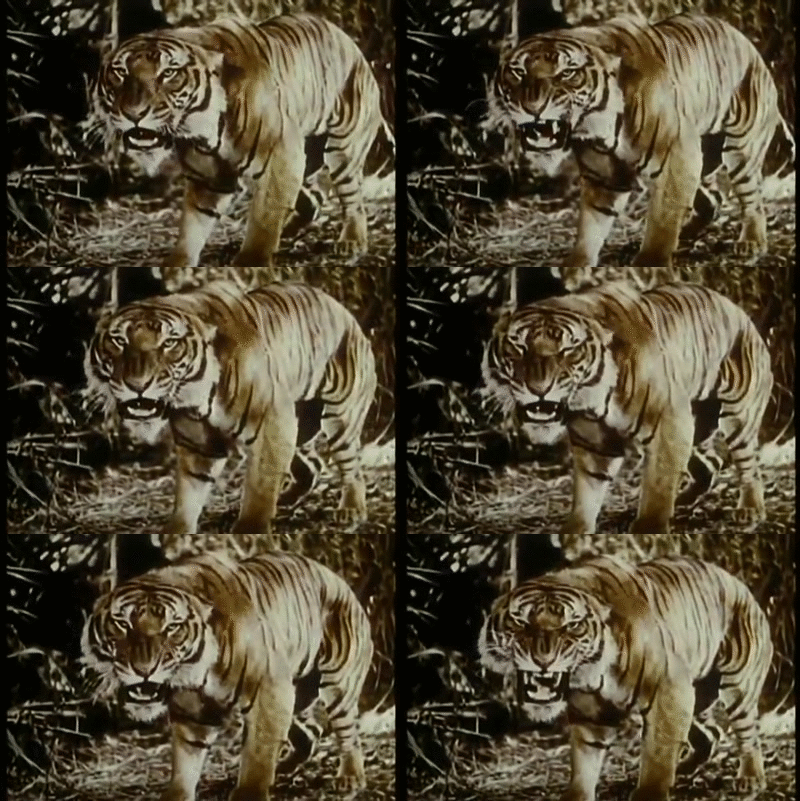
Foram usados mais de 300 animais nas filmagens:
nada de CGI! Imagine a surpresa quando um tigre imenso vem se aproximando de
você, na tela do cinema, pronto para atacar! Nem tudo, claro, é verdade. A cena
do pequeno Mogli entrando na toca dos lobos conta com supostos filhotes de
lobo... que evidentemente são cachorrinhos colocados perto da criança sem
oferecer perigo. O tigre Shere Khan foi filmado da mesma maneira que o leopardo
Baby em algumas cenas de “Levada da Breca” (1938), utilizando-se uma tela
transparente entre o animal, os atores e a câmera.
More than 300 animals
were used in the movie: no CGI! Imagine the surprise you have when a huge tiger
gets nearer and nearer you, at the movie screen, and is ready to attack! Not
everything, of course, was true. The scene of little Mowgli entering the
wolves' cave has some wolf cubs... that are obviously puppies placed near the
child in order to shoot the scene without danger. The tiger Shere Khan was film
using the same technique from some scenes with the leopard from “Bringing Up
Baby” (1938): using a transparent screen between the animal, actors and the
camera.

Os únicos animais falantes do filme são as
cobras. Aqui, Kaa só dá dicas para Mogli derrotar Shere Khan. Há também outra
cobra, guardiã dos tesouros de uma cidade perdida no meio da selva que, quando
descoberta, desperta a cobiça dos homens da aldeia.
The only talking animals
in the film are snakes. Here, Kaa only gives tips for Mowgli to defeat Shere
Khan. There is also another snake, the guardian of the treasures from a lost
town in the middle of the forest. When discovered, the town makes the men from
the village greedy.

É a presença dos homens neste filme que o
distancia tanto da versão da Disney. Com Mogli convivendo em uma aldeia, e
dividido entre a vida selvagem e a civilizada, o filme se aproxima mais das
histórias mais recentes de Tarzan ou até de “George, o Rei da Floresta”.
It is the presence of men
in this film that puts it far away from the Disney version. With Mowgli living
in a village, and torn between wild and civilized life, the film gets closer to
a modern Tarzan tale or even “George of the Jungle” (1997).
Os três irmãos Korda, responsáveis pelo grande
sucesso anterior do menino Sabu, “Ladrão de Bagdá” (1940), saíram da Inglaterra
para filmar nos Estados Unidos durante a guerra. Zóltan Korda foi o diretor,
Alexander foi o produtor e Vincent cuidou da bela direção de arte.
The three Korda brothers
were responsible for the latest big hit Sabu has appeared in, “The Thief of Bagdad” (1940), and they left England to film in the USA during the war. Zóltan
Korda was the director, Alexander was the producer and Vincent was responsible
by the inspired art direction.

Os temas do filme são às vezes chocantes demais
para as crianças acostumadas a consumir apenas o politicamente correto. Mas são
temas do cotidiano: amor, morte, cobiça e destruição. A edição e utilização das
cenas de animais é fantástica e capaz de empolgar quem já deixou de ser criança
faz tempo. É uma aventura maravilhosa, empolgante, que te faz voltar a ser
criança – ou ao menos te envolve a ponto de você não ver o tempo passar.
The themes of the film
are sometimes too shocking for children used to
“politically correct entertainment”. But they are everyday themes: love,
death, greed and destruction. The edition and use of animals are fantastic and
can conquer you even if you are not a child. It is a wonderful, breathtaking
adventure, able to make you feel like a child again – or at least able to make
you so involved that you won't see time passing.
This is my contribution
to the Animals in Film Blogathon, hosted by Crystal at In the Good Old Days of
Classic Hollywood.