} Crítica Retrô: 1949

Tradutor / Translator / Traductor / Übersetzer / Traduttore / Traducteur / 翻訳者 / переводчик

Showing posts with label 1949. Show all posts

Friday, August 27, 2021

A Noiva Desconhecida (1949) / In the Good Old Summertime (1949)


Eles são colegas de trabalho que não se suportam, mas ao mesmo tempo, sem saber, eles trocam cartas nas quais fazem confidências e assim se apaixonam. Sim, você já viu essa história antes: filmada pela primeira vez como “A Loja da Esquina” (1940) e depois como “Mensagem para Você” (1998), esta história previsível porém charmosa foi transportada para o começo do século XX em “A Noiva Desconhecida”.

They are coworkers who deeply dislike each other, but at the same time, without them knowing, they are pen pals who share confidences in much awaited letters every week. Yes, you've seen this story before: filmed for the first time as “The Shop Around the Corner” (1940) and later as “You've Got Mail” (1998), this predictable yet charming story was transported to early 20th century Chicago in “In the Good Old Summertime”.

O primeiro encontro de Andrew 'Andy' Larkin (Van Johnson) e Veronica Fisher (Judy Garland) é fofo para nós, mas desagradável para eles. As coisas ficam mais amargas quando Veronica vai até uma loja de música procurando emprego e Andy, que trabalha lá, diz a ela que não há lugar na loja para mais um vendedor. Com uma canção, ela prova que ele estava errado e consegue o emprego, vendendo a primeira de cem harpas que o dono da loja comprou.

The meet cute between Andrew 'Andy' Larkin (Van Johnson) and Veronica Fisher (Judy Garland) is cute for us, but unpleasant for them. Things get bitterer when Veronica goes to a music store searching for a job and Andy, who works there, tells her there is no place in the store for another salesperson. With a song, she proves him wrong and gets the job, also selling the first of 100 harps the owner of the shop has bought.

Há outro casal na loja: o dono, Sr Oberkugen (S.Z. 'Cuddles' Sakall) e sua caixa e secretária, Nellie (Spring Byington). Eles se conhecem há 20 anos e têm um tipo de relação que ainda não terminou em casamento. Falando em relacionamentos, um empregado da loja é parente do senhor Oberkugen: Hickey, interpretado pelo grande Buster Keaton, é sobrinho do dono da loja.

There's another couple in the store: the owner, Mr Oberkugen (S.Z. 'Cuddles' Sakall) and his cashier and secretary Nellie (Spring Byington). They have known each other for 20 years and have some kind of relationship that hasn'tended in a marriage yet. Speaking of relationships, one employee of the store is related to Mr Oberkugen: Hickey, played by the great Buster Keaton, is the owner's nephew. 

Van Johnson tinha muito carisma e isso transbordava em suas performances. Ele é muito fofo em “A Noiva Desconhecida”, especialmente quando não percebe que uma garota que toca violino e mora na mesma pensão que ele gosta dele. Por outro lado, não é muito legal da parte dele quando ele descobre que  Veronica é a moça com quem está trocando cartas e decide ir ao encontro marcado por eles só para infernizá-la.

Van Johnson had a huge charisma and it translated in his performances. He is the cutest in “In the Good Old Summertime”, especially when he can't see that a girl who plays the violin and lives in the same boarding house as his is in love with him. It's not very nice of him, however, when he finds out Veronica is his pen pal and decides to show up to their date only to pick up on her.

No começo de 1948 Judy Garland estava terminando de filmar “Desfile de Páscoa”. Depois de um pouco de descanso, ela voltou ao trabalho em “A Noiva Desconhecida”. As filmagens foram calmas, algo raro na época para Judy. O que colaborou para o clima bom no set foi, como Van Johnson explicou: “Nós a fizemos sentir querida e necessária. Nós brincamos com ela e a mantivemos feliz”. Camaradagem foi o segredo do sucesso.

In the beginning of 1948 Judy Garland was finishing the shooting of “Easter Parade”. After some rest, she returned to work in “In the Good Old Summertime”. Filming went smoothly, a rare thing at the time for Judy. What collaborated for the good times on set was, as Van Johnson explained: “We made her feel wanted and needed. We joked with her and kept her happy”. Camaraderie was the secret of this success.

Buster Keaton estava trabalhando como escritor de gags na MGM quando foi chamado para fazer este filme. Ele tem apenas um ótimo momento de slapstick e pouco tempo na tela, o que desagrada grandes fãs como eu. Buster também coordenou o primeiro encontro entre Andy e Veronica, quando uma colisão faz com que ele destrua o chapéu dela.

Buster Keaton was working as a gag writer at MGM when he was called to make the movie. He has only one great moment of slapstick and not enough time on screen to please hardcore fans like me. Buster also coached the meet cute between Andy and Veronica, when a collision makes him destroy her hat. 

Para um musical, “A Noiva Desconhecida” tem poucos momentos musicais, sendo o “I Don't Care” de Judy Garland o mais memorável deles. Não há canções originais no filme, todas as canções cantadas na loja de música ou nas festas foram realmente publicadas no começo do século XX, época em que o filme é ambientado.

For a musical, “In the Good Old Summertime” has few musical moments, being Judy Garland's “I Don't Care” the most memorable one. There are no original songs in the film, all of the songs sung in the music shop or at parties were really released in the early 20th century, when the story is set.

Ter um amigo por correspondência é bastante comum atualmente – com a caneta e a tinta substituídas pelos bits e bits das amizades virtuais. Como em qualquer relacionamento, há poder envolvido. Em “A Noiva Desconhecida”, o personagem de Van Johnson está em vantagem, sabendo quem é sua amiga sem que ela saiba quem é ele, e assim ele pode brincar um pouco com ela e manipular o relacionamento deles. A adição de Louise, a amiga violinista de Andy, traz outro elemento para a relação, e representa uma ameaça ao final feliz deles, quando Andy ainda não sabe que Veronica o ama. 

Having a pen pal is rather common now – with the pen and ink becoming the bits and bytes of online friendships. As in any relationship, there is power involved. In “In the Good Old Summertime”, Van Johnson's character has the advantage of knowing who his pen pal is without her doing the same, and thus he can play a bit with her and manipulate their relationship. The addition of Louise, Andy's violinist friend, brings another element to the relationship, and poses a threat to their happy ending for a while, when Andy is unaware that Veronica loves him.

É impossível perder, bem no finalzinho, a estreia no cinema de uma pequenina Liza Minnelli. É um final adorável para um filme adorável, um clássico para aquecer corações.

It's impossible to miss, in the very ending, the film debut of a tiny Liza Minnelli. It's an adorable ending for an adorable film, a true heartwarming classic.

This is my contribution to the Fifth Annual Van Johnson blogathon, hosted by Michaela at Love Letters to Old Hollywood.

Saturday, August 7, 2021

A Filha de Netuno (1949) / Neptune’s Daughter (1949)


Em 1940, uma nadadora de 18 anos chamada Esther Williams não pôde competir nos Jogos Olímpicos porque o evento foi cancelado por causa da Segunda Guerra Mundial. Os Jogos Olímpicos de 1944 também foram cancelados pelo mesmo motivo. Esther perdeu a oportunidade de uma vida, mas algo maior que a glória olímpica a esperava: a glória cinematográfica. Ela se juntou ao show Billy Rose’s Aquacade e foi vista por olheiros da MGM que lhe ofereceram a chance de fazer filmes. Menos de uma década depois de não ir para as Olimpíadas, Esther Williams era uma das mais populares estrelas de cinema de Hollywood e fez um filme cujo título descreve perfeitamente sua persona cinematográfica: “A Filha de Netuno”.

In 1940, an 18-year-old swimmer named Esther Williams was unable to compete in the Olympic Games as the tournament was cancelled because of World War II. The 1944 Olympics were also cancelled by the same reason. Esther lost this chance of a lifetime, but something bigger than the Olympic glory was waiting for her: cinematic glory. She joined Billy Rose’s Aquacade and was seen by MGM scouts who offered her the chance to be in movies. Less than a decade after missing the Olympics, Esther Williams was one of the most popular Hollywood movie stars and made a film whose title perfectly described her movie persona: “Neptune’s Daughter”.

Eve Barrett (Esther Williams) é uma nadadora que se tornou mulher de negócios na indústria de trajes de banho. Novas oportunidades surgirão com a chegada na cidade de um time de polo da América do Sul, diz o sócio dela. A pessoa que mais fica animada com o time de polo é a irmã de Eve, a namoradeira Betty (Betty Garrett). Betty vai ao local de treinamento do time e confunde o massagista, Jack (Red Skelton), com o capitão do time, José O’Rourke (Ricardo Montalban). Preocupada com a possibilidade da irmã ter seu coração partido por um conquistador, Eve diz ao José O’Rourke de verdade para ele ficar longe de Betty, e ele diz que a única maneira de fazer isso é se Eve aceitar ir a um encontro com ele.

Eve Barrett (Esther Williams) is a swimmer who became a businesswoman in the swimwear industry. New opportunities will appear with the arrival in town of a polo team from South America, her business partner says. The person who gets the most excited about the polo team is Eve’s man-hungry sister, Betty (Betty Garrett). Betty goes to the place where the team is training and mistakens the masseur, Jack (Red Skelton), for the team captain, José O’Rourke (Ricardo Montalban). Worried that her sister could have her heart broken by a womanizer, Eve tells the real José O’Rourke to keep away from Betty, and he says the only way he can do this is if Eve goes on a date with him.

“A Filha de Netuno” é o segundo de três filmes que Esther Williams fez com Ricardo Montalban - em 1947 eles interpretaram irmãos gêmeos no surpreendentemente bom “Festa Brava” e também fizeram “Numa Ilha com Você” em 1948. É interessante notar como Hollywood lidou com a origem latina de Montalban: aqui em “A Filha de Netuno” José O’Rourke é considerado o “Latin lover”, um sedutor barato. Outros elementos latinos usados no filme para provocar riso são as roupa de gaúcho que Red Skelton usa no seu primeiro encontro com a personagem de Betty Garrett, e também a incompreensão do idioma espanhol da parte destes dois personagens. No final das contas, com este humor simples, o filme não é ofensivo para com os latinos.

“Neptune’s Daughter” is the second of three movies that Esther Williams made with Ricardo Montalban - in 1947 they played twins in the surprisingly good “Fiesta” and appeared together again in “On an Island with You” in 1948. It’s interesting to notice how Hollywood dealt with Montalban’s Latino origin: here in “Neptune’s Daughter” José O’Rourke is considered the “Latin lover”, a cheap seducer. Other Latino elements used in the film for laughs are the gaucho clothes that Red Skelton wears in his first date with Betty Garrett’s character, and also the misunderstandings the Spanis language by these two characters. In the end, with this simple humor, this film is not very offensive towards Latinos.

“A Filha de Netuno” também é o segundo de três filmes que Williams fez com Red Skelton. Antes eles haviam contracenado em “Escola de Sereias” (1944), fazendo um par romântico. Aqui seus personagens apenas se encontram brevemente no final, o que é uma boa escolha do roteiro. Como dupla de alívio cômico, Red Skelton e Betty Garrett estão fantásticos e suas cenas são hilárias, em especial a sequência em que eles tentam fazer Skelton montar num cavalo. A personagem de Betty Garrett me lembrou da motorista de táxi que ela interpretou em outro musical de 1949, “Um Dia em Nova York”.

“Neptune’s Daughter” is also the second of three movies that Williams made with Red Skelton. Previously they worked together in “Bathing Beauty” (1944), where they were a romantic duo. Here their characters only meet briefly in the end, which is actually for good. As a comic relief duo, Red Skelton and Betty Garrett are outstanding and their scenes are hilarious, in special the one in which they are trying to put him up on a horse. Betty Garrett’s character reminded me of the taxi driver she played in another 1949 movie musical, “On the Town”.

“A Filha de Netuno” apresenta pela primeira vez a música “Baby It’s Cold Outside”, uma canção que recentemente foi retomada e criticada por causa de possivelmente retratar um assédio sexual ao mostrar uma pessoa que não aceita não como resposta. Curiosamente, a música que deveria ter sido usada no filme, “On a Slow Boat to China”, foi banida por censores do estúdio que acharam que a letra da música era sugestiva demais.

“Neptune’s Daughter” presents the debut of the song “Baby It’s Cold Outside”, a song that recently was reassessed and criticized because of its possible portrayal of sexual harassment as it portrays a person who can’t accept no for an answer. Curiously, the song that was supposed to be used in the film, “On a Slow Boat to China”, was banned by studio censors who thought the lyrics were too suggestive.

Uma cartela no começo do filme nos lembra de que “A Filha de Netuno” estreou quando os estúdios MGM completaram 25 anos. Nas décadas de 1940 e 1950, MGM era o estúdio número um para extravagâncias musicais como as que foram feitas com Esther Williams. Ela era uma estrela como nenhuma outra: ela não era capaz de cantar, dançar e atuar, ela era um talento único que podia cantar e nadar! Num primeiro momento considerada a resposta da MGM para Sonja Henie, estrela patinadora da Fox, Williams se tornou uma estrela maior que Henie ao fazer seus filmes de natação com muito improviso - ela chegou a declarar que só passou a ter um coreógrafo para os números subaquáticos depois de seu quinto filme. Seus filmes eram em geral grandes sucessos, com “A Filha de Netuno” terminando 1949 como décima maior bilheteria do ano.

A card at the beginning reminds us that “Neptune’s Daughter” was released in Metro-Goldwyn-Mayer’s Silver Anniversary, that is, when MGM studios turned 25. In the 1940s and 1950s, MGM was the number one studio for musical extravaganzas like the ones made with Esther Williams. Williams was a star like no other: she wasn’t the triple threat who sang, danced and could act, she was a unique talent who could sing and swim! At first considered the MGM answer to Fox’s ice-skating star Sonja Henie, Williams became a bigger star than Henie by doing the swim films with a lot of improvisation - Williams famously said that she only got a choreographer for the underwater ballets in her fifth film. Her films were often huge successes, with “Neptune’s Daughter” being the 10th highest-grossing film of 1949.

“A Filha de Netuno” apresenta uma história previsível com um elemento clássico de identidades trocadas. É um filme simples, divertido, charmoso. O balé aquático é muito curto no final do filme, mas ele vale a pena ser visto graças a Red Skelton, Betty Garrett e a estrela Esther Williams.

“Neptune’s Daughter” presents a predictable plot with a classic mistaken identity element. It’s a simple, fun, charming and enjoyable movie. The water ballet in it is very brief in the end, but it is worth a watch thanks to Red Skelton, Betty Garrett and Esther Williams’s star power.

This is my contribution to the 100 Years of Esther Williams blogathon, hosted by Michaela at Love Letters to Old Hollywood.

Saturday, August 3, 2019

A Dama de Espadas (1949) / The Queen of Spades (1949)


ESTA CRÍTICA CONTÉM SPOILERS

THIS ARTICLE HAS SPOILERS

Ver um filme que é elogiado pela maioria dos críticos e também por diretores como Martin Scorsese e Wes Anderson é como fazer uma aposta segura. A obra-prima britânica de horror “A Dama de Espadas”, baseada em um conto russo, foi considerada perdida até 2009, quando foi redescoberta e restaurada – para hoje termos a sorte de poder vê-la.

Watching a film that is praised by most critics and also by filmmakers like Martin Scorsese and Wes Anderson is always a safe bet. The British horror masterpiece “The Queen of Spades”, based on a Russian short story, was considered lost until 2009, when it was rediscovered and restored – and now we’re lucky to be able to watch it.


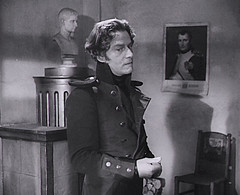
O ano é 1806. Um novo jogo de cartas chamado Faro se tornou febre na Rússia. O capitão Herman Suvorin (Anton Walbrook), entretanto, parece ser imune a esta febre. Ele tem outras coisas com as quais se preocupar: sendo um grande fã de Napoleão Bonaparte – ele tem um busto e um quadro de Napoleão no quarto – Suvorin sonha com uma grandeza e uma fortuna que não consegue alcançar.

The year is 1806. A new card game called Faro has became a fever in Russia. Captain Herman Suvorin (Anton Walbrook), however, seems to be immune to that fever. He has bigger things to worry: a big fan of Napoleon Bonaparte – he has a bust and a painting of Napoleon in his bedroom – Suvorin dreams with a greatness and a fortune that he fails to achieve.


Um dia, enquanto mexia em uma pilha de livros, ele encontra um sobre pessoas que venderam suas almas ao diabo em troca de algo grandioso em troca. No livro ele descobre que a Condessa Ranevskaya (Edith Evans), em 1746, vendeu sua alma ao diabo em troca do poder de nunca perder um jogo de cartas, pois ela precisava recuperar o dinheiro do marido, roubado por seu amante. Suvorin se alegra ao descobrir que a condessa ainda está viva.

One day, while perusing a bunch of old books, he finds one about people who sold their souls to the devil to get something big as a reward. In the book he learns about Countess Ranevskaya (Edith Evans) who, in 1746, sold her soul to the devil so she would never lose a card game, because she needed to recover her husband's money, stolen by her lover. Suvorin is thrilled to learn that the Countess is still alive.


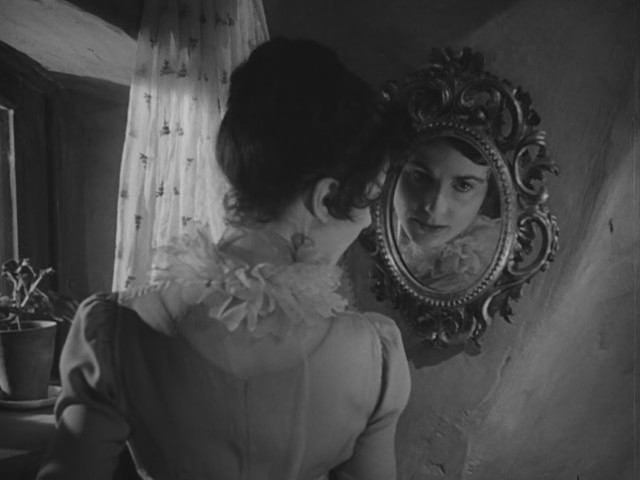
Pra conhecer a condessa, ele decide seduzir a dama de companhia dela, Lizaveta Ivanova (Yvonne Mitchell). A pobre Ivanova acretiva que ele realmente a ama. Quando Suvorin está escrevendo uma carta de amor para ela, uma aranha tecendo uma teia aparece: afinal, ele apenas quer usar Ivanova para chegar à condessa. Assim a armadilha é representada por uma poderosa metáfora visual.

To get to meet the Countess, he decides to seduce the lady's companion, Lizaveta Ivanova (Yvonne Mitchell). Poor Ivanova thinks he really loves her. When Suvorin is writing a love letter to her, a spider in its web appears: after all, he only wants to use her to reach the Countess. It’s a trap translated in a powerful visual metaphor.


Depois de um baile, Suvorin consegue entrar no quarto da condessa e pergunta a ela quais são as três cartas que nunca a deixaram perder. Antes de contar o segredo, a condessa morre. Suvorin é mais tarde assombrado pelo fantasma da condessa e, durante seu delírio, descobre que as três cartas são o três, o sete e o ás. Ele então decide apostar alto no Faro, mas se engana e aposta na Rainha de Espadas e não no ás. Enquanto isso, Ivanova descobre a verdade sobre seu pretendente.

After a ball, Suvorin manages to enter the Countess’s bedroom and asks her for the secret of the three cards that never let her lose. Before telling the secret, the Countess dies. Suvorin is later haunted by the Countess’s ghost and, during his delirium, he learns that the three cards are the three, the seven and the ace. He then decides to bet high on Faro, but mistakenly bets on the Queen of Spades instead of on the ace. Meanwhile, Ivanova learns the truth about her suitor.


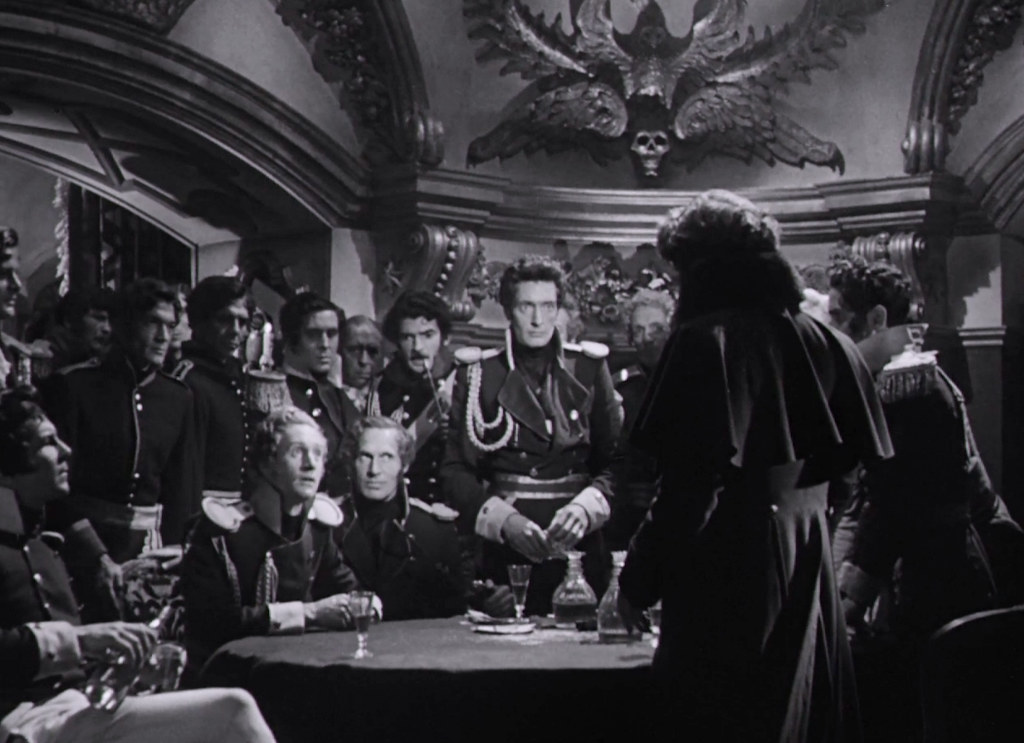
“A Dama de Espadas” é um excelente filme com grandes atuações, trilha sonora arrepiante e um design de produção maravilhoso. Os figurinos e em especial os cenários, todos lindamente feitos., foram os meus aspectos favoritos do filme.

“The Queen of Spades” is a terrific film with great performances, chilling music and outstanding production design. The outfits and in special the sets, all of them beautifully made, were my favorite aspects of the movie.


Anton Walbrook – hoje mais lembrado como Lermontov em “Os Sapatinhos Vermelhos” (1948) – tem em “A Dama de Espadas” provavelmente a melhor performance de sua carreira. Como Suvorin, ele é extremamente ambicioso, um mentiroso e manipulador que se rende à loucura em uma sequência que é de arrepiar e demonstra seu enorme talento. É com certeza uma das melhores performances em um dos melhores filmes de terror feitos na Inglaterra.

Anton Walbrook – now better remembered as Lermontov from “The Red Shoes” (1948) – has in “The Queen of Spades” probably the best performance of his career. As Suvorin, he is overly ambitious, a liar and a manipulator who descents into madness in a sequence that is a thrill and a demonstration of his huge talent. It’s certainly one of the top performances in one of the top horror movies made in England.


Yvone Mitchell era uma novata em “A Dama de Espadas”. O mesmo quase poderia ser dito sobre Edith Evans, que estava de volta aos cinemas depois de uma breve experiência na era muda. O perfil de Yvonne e suas expressões me fizeram lembrar um pouco de Ingrid Bergman, e ela atua bem, mas o filme pertence a Walbrook.

Yvonne Mitchell was a newcomer in “The Queen of Spades”. The same could almost be said about Edith Evans, who was back to the film world after a brief experience in the silent era. Yvonne's profile and expressions reminded me a bit of Ingrid Bergman, and she delivers a good performance, but the film belongs to Walbrook.


O diretor Thorold Dickinson foi escolhido para dirigir “A Dama de Espadas” graças a uma sugestão de Walbrook. Os dois haviam trabalhado juntos no filme britânico “À Meia-Luz”, de 1940. Depois que a MGM fez sua versão em 1944, o estúdio tentou destruir todas as cópias do original britânico, mas felizmente não conseguiram. Thorold Dickinson dirigiu apenas nove filmes em sua carreira.

Director Thorold Dickinson was brought to direct “The Queen of Spades” per Walbrook’s suggestion. The two had previously worked together in the British “Gaslight” from 1940. After MGM did its version in 1944, the studio tried to destroy all the copies of the original British film, but luckily they failed. Thorold Dickinson only directed nine films in his career.


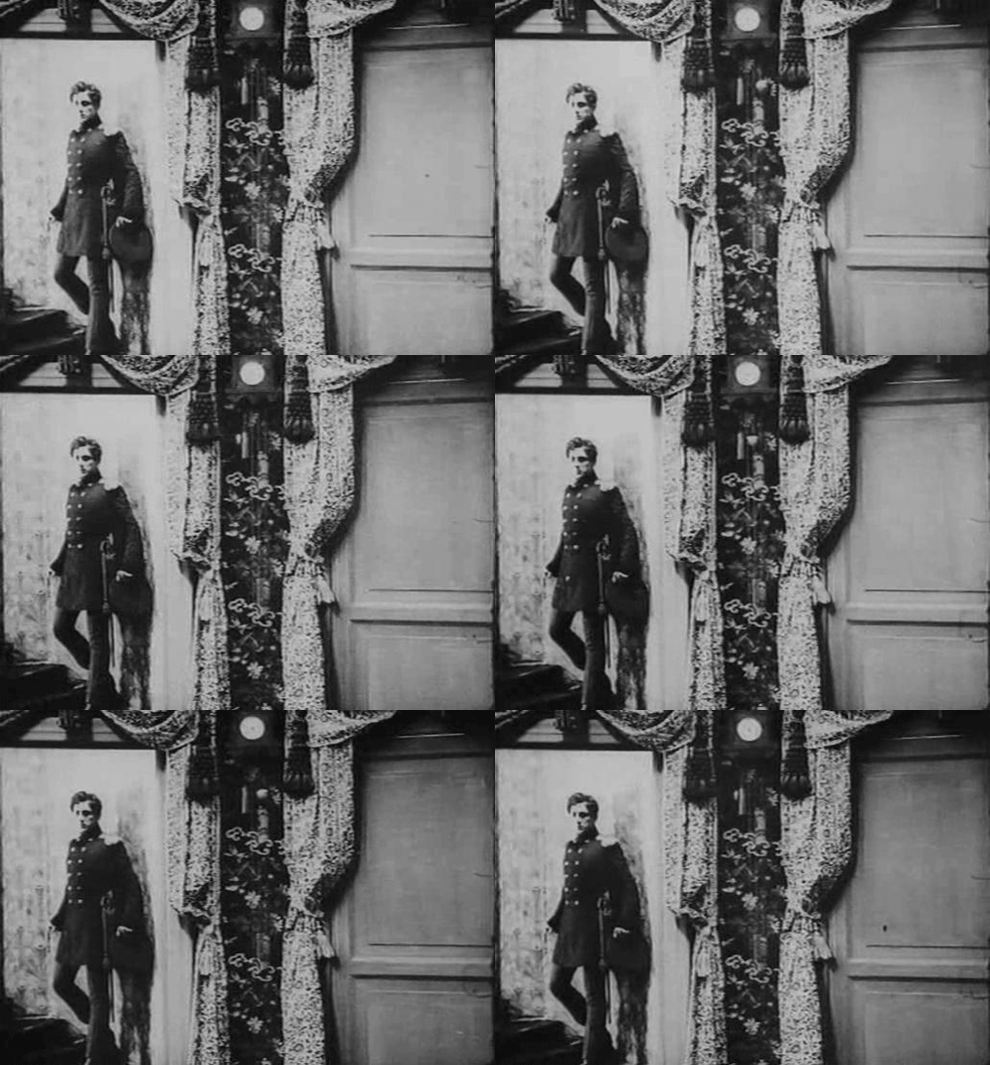
“A Dama de Espadas” é um conto escrito por Alexander Pushkin e serviu de base para uma ópera de Tchakovsky. A história foi adaptada para o cinema diversas vezes, mais notadamente em duas ocasiões durante a Rússia Czarista: uma vez em 1910 como um filme de 15 minutos e novamente em 1916 em um longa de 62 minutos. A adaptação de 1910 foi a primeira vez que a história foi transposta para as telas.

“The Queen of Spades” is a short story written by Alexander Pushkin and was the basis for an opera by Tchaikovsky. It was adapted to film several times, most notably in two occasions during Czarist Russia: once in 1910 as a 15-minute film and again in 1916 in a 62-minute feature. The 1910 adaptation was the very first time this story was seen on screen.
1918
1916
Muitas pessoas classificam o filme “A Dama de Espadas” como terror, embora a parte terrível seja apenas o delírio de Suvorin. A Inglaterra não teve grande tradição no horror clássico no cinema – o filme de terror clássico mais lembrado da Inglaterra é provavelmente o filme de antologia “Na Solidão da Noite” (1945).

Many people categorize the film “The Queen of Spades” as horror, although the horrible part is only Suvorin’s delirium. England didn’t have a big classic horror tradition in its film industry – the best remembered classic English horror is probably the anthology film “Dead of Night” (1945).
 
"Na Solidão da Noite / Dead of Night" (1945)
Talvez por causa do ritmo – construir toda a trama até o clímax de horror leva muito tempo – “A Dama de Espadas” não é reconhecida como a obra-prima de terror que realmente é. Impossível de ser filmada dos EUA anticomunistas do período, a história russa encontrou na Inglaterra uma equipe à sua altura para novamente ganhar vida nos cinemas – em uma belíssima versão.

Maybe because of the pace – building everything up until the horror-themed climax takes very long – “The Queen of Spades” is not recognized as a horror masterpiece that it is. It would be impossible to film it in the anticommunist USA of the time, so the Russian story found in England a perfect team to once again make it alive on screens – in a gorgeous version.

This is my contribution to the 6th Annual Rule, Britannia Blogathon, hosted by Terry at A Shroud of Thoughts.


Related Posts Plugin for WordPress, Blogger...