} Crítica Retrô: 1936

Tradutor / Translator / Traductor / Übersetzer / Traduttore / Traducteur / 翻訳者 / переводчик

Showing posts with label 1936. Show all posts

Tuesday, July 29, 2025

Magnólia: O Barco das Ilusões (1936) / Show Boat (1936)


Um dos meus atores / cantores favoritos é Paul Robeson. Eu sempre fiquei intrigada com a letra de uma música comumente associada à Robeson: Ol’ Man River. A letra é assim: “Estou cansado de viver mas com medo de morrer”. Já ouvi alguns idosos dizendo que estavam cansados de viver, mas ouvir um adulto saudável dizendo isso me chocou. Isso aconteceu porque eu não conhecia o contexto, algo que corrigi quando finalmente assisti ao filme “Magnólia: O Barco das Ilusões” (1936).

One of my favorite singers / actors is Paul Robeson. I’ve always been intrigued with the lyrics of one tune commonly associated with Robeson: Ol’ Man River. The lyrics are those: “I’m tired of living but scared of dying”. I’ve heard quite a few old people saying they were tired of living, but a healthy adult saying this shocked me. It was because I didn’t get the context, something I fixed by finally watching “Show Boat” (1936).

Você sabe que a sessão vai ser boa quando um verdadeiro desfile traz os créditos.

You know you’re in for a treat when a whole parade brings the credits.

A família Hawks administra um barco de espetáculos cuja aparição no horizonte é suficiente para deixar todas as pessoas - e os animais! - de uma cidade alvoroçados. Os Hawks só têm um desejo: que sua filha Magnólia (Irene Dunne) se torne uma pessoa respeitável, isso é, que ela nunca se apresente no barco de espetáculos. Mas Magnólia, ou Nola, sonha em cantar, dançar e se apresentar para o público.

The Hawks are the managers of a show boat whose sighting is enough to make all the people - and the animals! - of a town excited. They only have one wish: that their daughter Magnolia (Irene Dunne) becomes a respectable person, that is, that she never becomes a show boat attraction. But Magnolia, or Nola, dreams about singing, dancing and acting for the public.

Ela tem sua grande chance após um episódio triste: descobre-se que Steve (Donald Cook) e Julie (Helen Morgan), as estrelas do show, são um casal interracial, algo proibido no Mississipi. Num país em que “uma gota de sangue negro faz de você um negro”, ter pele clara não faz uma pessoa ser considerada branca. O episódio pode soar como um problema de um passado distante, mas não se engane: a última lei de segregação foi abolida apenas em 1965 e a genética ainda dita quem é branco e quem não é. Em “Magnólia: O Barco das Ilusões”, Julie e Steve têm que abandonar o espetáculo.

She gets her big chance after a shameful episode: it’s discovered that Steve (Donald Cook) and Julie (Helen Morgan), the stars of the show, are a mixed-race couple, a thing forbidden in Mississippi. In a country where “one drop of negro blood makes you a negro”, having fair skin doesn’t make a person be seen as white. The whole episode might sound as a problem from a distant past, but don’t be fooled: the last segregation law only fell in 1965 and genetics still dictate who is white and who isn’t. In “Show Boat”, Julie and Steve have to leave the show.

Como ela era próxima de Julie, Magnólia conhecia o papel principal e podia substituí-la, o que faz sua mãe se desesperar. Para o papel masculino principal, os Hawks contratam um viajante, Gaylord Ravenal (Allan Jones) do Tennessee. Ele e Magnólia têm uma química incrível, afinal, estão apaixonados! Mas este é um melodrama musical, então você pode esperar que muitos obstáculos aparecerão em seus caminhos.

Since she was close to Julie, Magnolia knew the lead part and could replace her, to her mother’s desperation. As the leading man, the Hawks hire a passerby, Gaylord Ravenal (Allan Jones) from Tennessee. He and Magnolia have a magnificent chemistry, after all, they’re in love! But this is a musical melodrama, so you can expect that many hardships will come their way.

A escolha do diretor pode parecer estranha: James Whale, o mesmo cara que dirigiu “Frankenstein” (1931), entre outros filmes de monstro. Na sequência de Ol’ Man River, há alguns ângulos de câmera inspirados e sombras que contam uma história. “Magnólia: O Barco das Ilusões” acabou sendo o filme favorito de Whale entre suas próprias obras.

The director choice may look odd: James Whale, the same guy who directed “Frankenstein” (1931), among other monster movies. In the Ol’ Man River sequence, there are some inspired camera angles and shadows telling the story. “Show Boat” ended up being the favorite among Whale’s own films.

A música é de Jerome Kern e as letras de Oscar Hammerstein II. As canções são mais o estilo de uma ópera, como aquelas nos filmes de Nelson Eddy e Jeanette MacDonald. Elas são perfeitas para o estilo de Allan Jones, que também foi estrela do filme dos Irmãos Marx “Uma Noite na Ópera” (1935).

The music is by Jerome Kern and the lyrics by Oscar Hammerstein II. The songs are more operatic, such as the ones in the Nelson Eddy and Jeanette MacDonald movies. They suit perfectly the style of Allan Jones, who also starred in the Marx Brothers vehicle “A Night at the Opera” (1935).

Falamos dos pontos positivos, agora vem a parte negativa: o racismo. Quando Irene Dunne começa a fazer uma dança chamada cakewalk, é simplesmente ofensivo. E aí fica pior: ela canta com blackface. Mais do que isso, Hattie McDaniel faz um papel de empregada (“Mamie”). O Joe de Paul Robeson é retratado como preguiçoso - mesmo com suas canções sendo as melhores do filme.

We talked about the good, now comes the bad and the ugly: racism. When Irene Dunne starts doing the cakewalk it’s simply offensive. And then it gets worse: she sings while doing blackface. Moreover, Hattie McDaniel is stuck in a Mamie kind of role. Paul Robeson’s Joe is portrayed as lazy - even though his songs are the best in the movie.

Agora que eu assisti a “Magnólia: O Barco das Ilusões”, eu sei que a letra de Ol’ Man River vai além: Paul Robeson canta expressando seu desejo de cruzar o Rio Jordão, o que significa que ele está em busca de liberdade e redenção. Morrer numa vida para começar de novo. No final das contas, o filme pode ser uma saga focada numa família do ramo do entretenimento, mas o que se perpetua e sobrevive através do tempo é o grande número de Paul Robeson.

Now that I have watched “Show Boat”, I know there is more to the Ol’ Man River lyrics: Paul Robeson sings about his wish to cross the Jordan River, meaning he’s looking for freedom and redemption. Dying in one life to start anew. In the end, the film might be a saga focusing on a white family in the entertainment business, but what remains and shall survive through the ages is Paul Robeson’s big number.

Wednesday, June 28, 2023

Como Gosteis (1936) / As You Like It (1936)


Desde os primórdios do cinema, Shakespeare parece ser uma fonte inesgotável de histórias para serem filmadas. E não houve melhor ator para interpretar Shakespeare que Laurence Olivier. Ver a primeira vez em que ele interpretou Shakespeare num filme é como embarcar em uma máquina do tempo e poder ter um vislumbre de todo o talento e potencial – e beleza! - que ele tinha aos 29 anos. Este primeiro filme Shakespeareano é “Como Gosteis” (1936).


Since the dawn of cinema, Shakespeare seems to be a never-ending source for stories to be filmed. And there was no better actor to play Shakespeare than Laurence Olivier. Seeing the first time he played Shakespeare in a film is like embarking on a time machine and taking a glimpse of all the talent and potential - and handsomeness! - he had at age 29. This first Shakespearean flick is “As You Like It” (1936).


Nosso herói Orlando (Olivier) é um órfão que foi posto sob a tutela do irmão mais velho e precisa lutar por sua liberdade. Lutar literalmente: ele desafia Charles, o homem forte do povoado, numa luta e vence. É nesta luta que ele conhece as primas Celia (Sophie Stewart) e Rosalind (Elisabeth Bergner), e se apaixona por esta última.


Our hero Orlando (Olivier) is an orphan who was put under the wings of his older brother and needs to wrestle for his freedom. Literally wrestle: he challenges Charles, the local strongman, in a wrestling match and wins. It’s in that match that he meets the cousins Celia (Sophie Stewart) and Rosalind (Elisabeth Bergner), and falls in love with the latter.


As coisas não saem como planejado e, fugindo da ira do irmão, Orlando vai viver na floresta junto a um grupo de homens que foram banidos do reino, entre eles o pai de Rosalind. Mais apaixonado a cada dia, Orlando escreve poemas e os pendura em árvores, além de escrever o nome “Rosalind” no tronco das árvores. Um dia, sem seu vestido elegante, Rosalind se apresenta para Orlando como um homem, o único que pode fazê-lo se esquecer de seu amor impossível, e os dois iniciam um flerte esquisito e constante.


Things don’t go as expected and, running away from his brother’s rage, Orlando goes live in the forest with a group of men who have been banished from the kingdom, among them Rosalind’s father. More in love each day, Orlando writes poems and hangs them on trees, and carves the name “Rosalind” in the trees. One day, without her fancy dress, Rosalind presents herself to Orlando as a man, the only one who can make him forget this impossible love, and the two start a weird and constant flirt.


O nome de Laurence Olivier não é o primeiro nos créditos, esta honra pertence a Elisabeth Bergner. Nascida no Império Austro-Húngaro, num território que hoje faz parte da Ucrância, Bergner tinha como língua materna o alemão e de fato interpretou Rosalind nos palcos alemães. Fugindo da Alemanha quando Hitler chegou ao poder, ela jurou que só voltaria a interpretar Shakespeare na Inglaterra quando tivesse dominado a nova língua. Alguns críticos disseram que seu sotaque alemão ainda é forte no filme, mas eu discordo. Bergner fez seu primeiro filme em 1924 e já era uma atriz indicada ao Oscar quando fez “Como Gosteis”. Neste filme, ela é dirigida por seu marido Paul Czinner. Curiosidade: foi um episódio da vida de Bergner que inspirou a história de “A Malvada” (1950).


Laurence Olivier isn’t first billed in the film, this honor belongs to Elisabeth Bergner. Born in Austria-Hungary, in a territory that now is part of Ukraine, Bergner’s mother tongue was German and she did portray Rosalind on the German stage. Fleeing Germany when Hitler rose to power, she vowed to play Shakespeare again in England only when she had mastered the new language. Some critics say that her German accent was still strong in the film, but I disagree. Bergner had made her film debut in 1924 and by the time she made “As You Like It” she was already an Oscar-nominated performance and was, in this film, directed by her husband Paul Czinner. Curious tidbit: It was an episode of her life that inspired the short story that was the basis for the film “All About Eve” (1950).


David Lean trabalhou como editor neste filme. Nascido em 1908 – o que faz dele um ano mais novo que Olivier – David Lean já trabalhava como editor desde 1930, quando começou em cinejornais. No final dos anos 30 ele já era um conhecido e reconhecido editor. Ele co-dirigiu seu primeiro filme em 1942, e o resto é História.


David Lean worked as editor in this film. Born in 1908 - making him one year younger than Olivier - David Lean had been working as an editor since 1930, starting with newsreels. By the late 1930s Lean was already a well-known and praised editor. He co-directed his first film in 1942, and the rest is history.


O IMDb diz que um terço da peça original foi removido na adaptação para as telas, mas o epílogo permaneceu. O texto original foi mantido, cheio de formalidades. Acredita-se que a peça foi escrita em 1599 e é descrita como uma comédia pastoral. Foi adaptada para o cinema por J.M. Barrie, que escreveu “Peter Pan”. Considerando que cross-dressing – ou melhor, uma mulher se apresentando como um homem – é um ponto principal da trama, podemos afirmar que este filme não seria feito em Hollywood sob o Código Hays, e ainda bem que este é um filme britânico. Às vezes só os britânicos – como Olivier – conseguem fazer justiça a Shakespeare, e mesmo uma de suas peças menores pode se tornar um filme agradável se feito pelas mãos certas.


IMDb says that one-third of the play was removed when adapted to the screen, but they chose to retain the theatrical epilogue. The text was kept as it was, full of “thy’s” and “thee’s”. The play is believed to have been written in 1599 and is described as a pastoral comedy. It was adapted to the screen by J.M. Barrie, who wrote “Peter Pan”. Considering that cross-dressing - or rather, a woman presenting as a man - is a main part of the plot, this film wouldn’t be made in the US under the Hays Code, and we’re glad this is a British film. Sometimes only the British - like Olivier - can do their homeboy Shakespeare justice, and even one of his lesser plays can become an enjoyable movie if made by the right hands.

Friday, June 1, 2018

A Canção da Liberdade (1936) / Song of Freedom (1936)

Um conhecedor de filmes, quando ouve “Hammer Films”, pensará em filmes de horror, como os da série do Drácula com Peter Cushing e Christopher Lee. Eles não estão errados. Entretanto, a Hammer Films engloba muito mais que isso: assim como qualquer estúdio de cinema, ela teve de começar em algum lugar, e no começo a Hammer era muito diferente daquilo que a tornou conhecida a partir dos anos 50. Para conhecer prestes primeiros tempos, analisaremos o mais antigo filme da Hammer que ainda sobrevive em sua versão completa: “A Canção da Liberdade” (1936).

A film connoisseur, after hearing “Hammer Films”, will think about horror movies, like the Dracula series with Peter Cushing and Christopher Lee. They are not wrong. However, there is more to Hammer Film: like any movie studio, it had to start somewhere, and in the beginning Hammer was so very different from what made it popular in the 1950s onwards. To look at this beginning, we analyze the earliest Hammer film that fully survives: “Song of Freedom” (1936).
É o ano de 1700 em um canto ainda não explorado da África. Lá reina a tirana rainha Zinga, que sente prazer em humilhar os prisioneiros antes da execução. Em uma destas terríveis cerimônias, Zinga coloca seu medalhão real no pescoço de um homem que havia tentado tirá-la do poder. Uma moça rouba o medalhão do pescoço dele, e foge com o filho de Zinga. Eles chegam a uma vila e pedem ajuda para seguirem com a fuga. O único problema é que eles pedem ajuda a um traficante de escravos.

It’s the year 1700 in a not yet explored corner of Africa. There reigns the tyrant queen Zinga, who loves to humiliate her prisoners before execution. In one of these horrible ceremonies, Zinga places her royal medallion in the neck of a man who was trying to take her out of the throne. A girl steals the royal medallion from his neck, and runs away with Zinga’s son. They reach a village and ask for help to go further away. The only problem is that they asked a slave trader for help.
Crazy queen Zinga
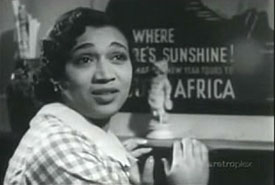
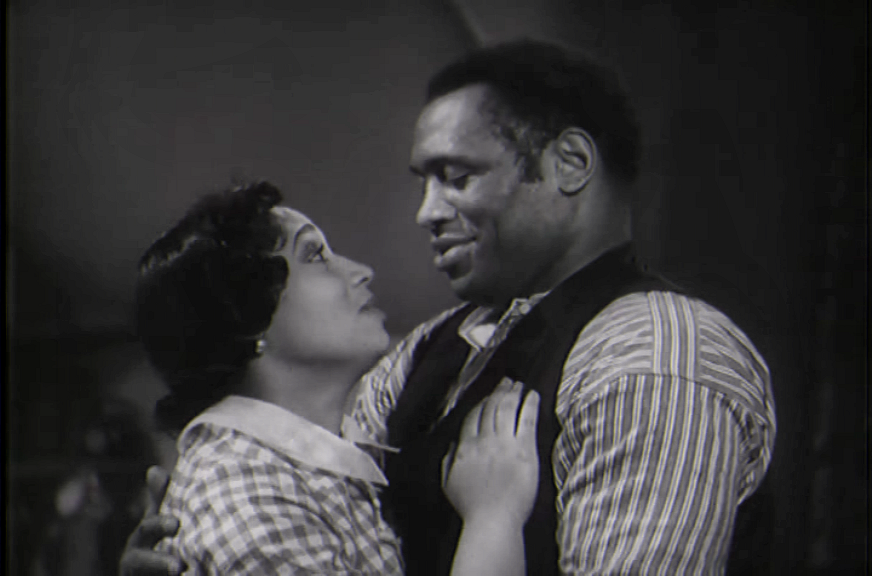
O filho de Zinga e a moça se tornam escravos, e uma montagem mostra que o medalhão deles passou de pai para filho nos séculos seguintes. No ano de 1838, o tráfico de escravos acaba (exceto para o Brasil) e os negros são libertações. Finalmente, chegamos ao tempo presente. O mais jovem Zinga é John Zinga (Paul Robeson), um estivador que adora cantar uma música que ele lembra da infância, e cujo sonho é voltar para sua terra, a África, um sonho que incomoda sua esposa Ruth (Elisabeth Welch).

Zinga’s son and the girl become slaves, and a montage shows that the medallion they had passes from father to son in the following centuries. In the year 1838, the slave trade is over (except to Brazil) and black people are liberated. Finally, we arrive in the present time. The youngest Zinga is John Zinga (Paul Robeson), a dock worker who loves to sing a song he knew since childhood, and who longs to come back to his land, Africa, a wish that upsets his wife, Ruth (Elisabeth Welch).
John's two loves: Africa and Ruth
Eis que chega ao porto o compositor de óperas italiano Gabriel Donozetti (Esme Percy). Ele ouve uma voz fantástica, mas não consegue ver quem é o cantor. Na noite seguinte, ele vai até as docas procurar o cantor misterioso, e finalmente encontra John cantando em uma taverna. Ele convida John para conversarem na casa dele e, apesar de a primeira lição de treinamento não terminar muito bem, John assina um contrato com Donozetti porque ele quer juntar dinheiro suficiente para viajar para a África.

This is when Italian opera composer Gabriel Donozetti (Esme Percy) arrives in the harbor. He listens to a fantastic voice, but is unable to see who is singing. The following night, he goes to the docks looking for the mysterious singer and finally finds John singing in a tavern. He invites John to his house and, although the first voice training session is not very peaceful, John signs a contract with Donozetti because he wants to earn enough money to travel to Africa.
John faz uma turnê pela Europa e obtém grande sucesso, mas é em casa que ele obtém a resposta para seu questionamento: depois da ópera “The Black Emperor” (cujo subtítulo é, aff, “a negro opera”), ela canta para a plateia a canção que ele conhece desde menino, mas cuja origem ele nunca soube. Um pesquisador tem a resposta: a música e o medalhão vêm da ilha africana de Casanga – e assim que John chega lá, tudo piora.

John travels Europe singing with great acclaim, but he finds the answer for his question at home: after the opera “The Black Emperor” (whose subtitle is, ugh, “a negro opera”) he sings to the audience the song he knew since childhood but never knew where it comes from. A researcher has the answer: the song and the medallion John uses point out to the African island of Casanga - and once John arrives there, things get ugly.
O filme é surpreendentemente bem feito, mas quando chegamos à África pela segunda vez, ficamos envergonhados. O racismo e o imperialismo estão por toda parte. E nem tudo estava perfeito antes disso. O mordomo de John, Monty (Robert Adams), é o negro bobo que serve apenas de alívio cômico, um tipo que você já deve conhecer de alguns filmes que John Ford fez nos anos 1930. Na ilha, descobrimos que um grupo de feiticeiros tomou o poder após a morte da rainha Zinga, e dali em diante a miséria se espalhou. Os nativos acreditam em rituais, danças e curas mágicas, e nada sabem sobre agricultura, política, armazenamento de comida e medicina moderna. 

The film is surprisingly well-done, but when we reach the African island for the second time, we feel embarrassed. Racism and imperialism are now everywhere. Not that all was perfect before. John’s butler, Monty (Robert Adams) is the silly black man who exists as comic relief only, and you might know the type from some John Ford movies of the 1930s. In the island, we find that a bunch of witch-doctors took the power after Queen Zinga’s death, and from then on they spread misery. The natives believe in rituals, magic dances and cures, and know nothing of agriculture, politics, food storage and modern medicine.
John pode ser negro, mas ele é o homem europeu – afinal, ele nasceu em Londres – que vai levar a civilização a estas pobres pessoas. Os africanos são retratados como não tendo nenhum conhecimento – algo muito longe da realidade, mas um tropo comum nas histórias contadas pelo colonizador. Pelo menos, é bom que Casanga não seja o nome de nenhuma ilha real. Entretanto, aí vai uma curiosidade: Casanga era o nome de um quilombo localizado em Ubatuba, no litoral de São Paulo.

John may be black, but he is the European man - after all, he was born in London - that will bring civilization to those poor people. The Africans are portrayed as having no knowledge - something that was far from the truth, but it is a common trope in stories told by the colonizers. It’s at least a good thing that Casanga is not the name of a real island. However, here is a curious fact: Casanga was the name of a quilombo in Ubatuba, São Paulo, Brazil - a quilombo being a community formed by slaves who ran away from captivity.
Paul Robeson me dá arrepios sempre que canta. Robeson foi um americano que encontrou apenas preconceito em seu país e por isso foi morar na Inglaterra. Depois de abandonar sua carreira como advogado por causa do preconceito e ao ter dificuldades para encontrar bons papéis para negros no cinema e no teatro americanos, Robeson foi para Londres. Lá, ele fez sucesso em peças e filmes – foi em Londres que ele pela primeira vez fez parte de uma montagem de “Show Boat” – e “A Canção da Liberdade” é o filme que o deixou mais orgulhoso – porque alguns dos outros filmes estavam cheios de racismo. Robeson deixou o cinema após uma experiência ruim em “Seis Destinos” (1942) e mais tarde foi posto na lista negra maccarthista por ter ido várias vezes à União Soviética e por defender a igualdade entre todos.

Paul Robeson gives me chills every time he sings. Robeson was an American who found only prejudice in his home country and left for England. After abandoning his career as a lawyer early on due to prejudice and having trouble finding good parts for black men on American film and theater, Robeson went to London. There, he was successful in several plays and movies – it was in London that Robeson worked for the first time in the musical “Show Boat” -, being “Song of Freedom” the one that made him the proudest - some of the others had blatant racism. Robeson left cinema after being discontent with his experience in “Tales of Manhattan” (1942) and he was later blacklisted in the US due to having made several trips to Soviet Union and for being a vocal defender of equality.
“A Canção da Liberdade” foi um grande sucesso entre seu público-alvo: negros. Talvez eles estivessem suficientemente felizes em ver alguém como eles na tela, sem ser ridicularizado ou torturado. Talvez eles não tivessem minhas habilidades de historiadora que vê problema em tudo. Não podemos negar que o filme é muito melhor que outros da mesma época – aliás, houve algum outro filme antes desse que mostrasse o interior de um navio negreiro? Há elementos datados, mas a presença de Paul Robeson redime todos eles, e torna possível algo que muitos filmes modernos ainda não conseguem fazer: dá dignidade a um protagonista negro.

“Song of Freedom” was a huge success among its target: black people. Maybe they were happy enough to see one of theirs on screen, not being ridiculed or tortured. Maybe they didn’t have my sharp skills as a historian that sees trouble everywhere. We can’t deny that the film is much better than several contemporaries – by the way, was there any other film made before this one that shows the interior of a slave ship? There are dated elements, but Paul Robeson’s presence redeems them all and makes possible something many modern films are still failing to do: it gives dignity to a black leading character.

This is my contribution to the Hammer-Amicus blogathon, hosted by Gill at RealWeegieMidget Reviews and Barry from Cinematic Catharsis.

Saturday, April 7, 2018

A Floresta Petrificada (1936) / The Petrified Forest (1936)

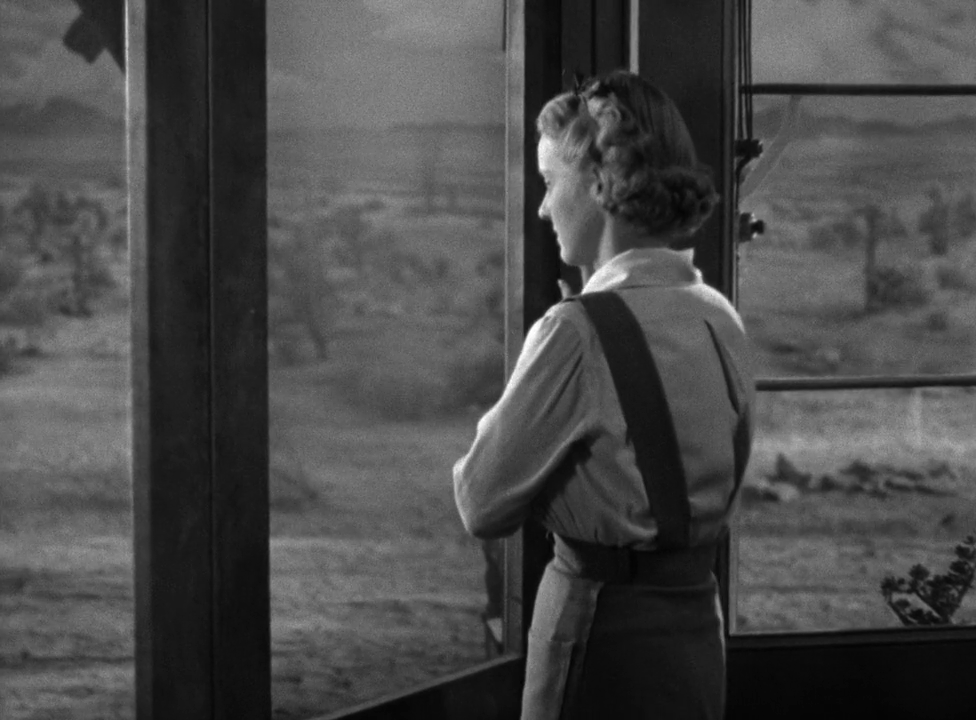
Quantos filmes interessantes começam em um posto de gasoline / restaurante? Vejamos: “Beija-me, Idiota” (1964) é o primeiro que me vem à mente. Também há “Fuga do Passado” (1947) e muitos outros filmes noir. Mas em quantos ótimos filmes a ação acontece quase totalmente em um posto de gasolina que está literalmente no meio do nada? “A Floresta Petrificada”, que se passa em um posto na desértica Black Mesa, Arizona, é o único filme que me vem à mente.

How many interesting movies start in a gas station / restaurant? Let’s see: “Kiss Me, Stupid” (1964) is the first I think about. Also “Out of the Past” (1947) and some other noir films. But how many great films are basically fully set in a gas station literally out of nowhere? “The Petrified Forest”, set in a gas station in the desert place of Black Mesa, Arizona, is the only one that comes to my mind. 
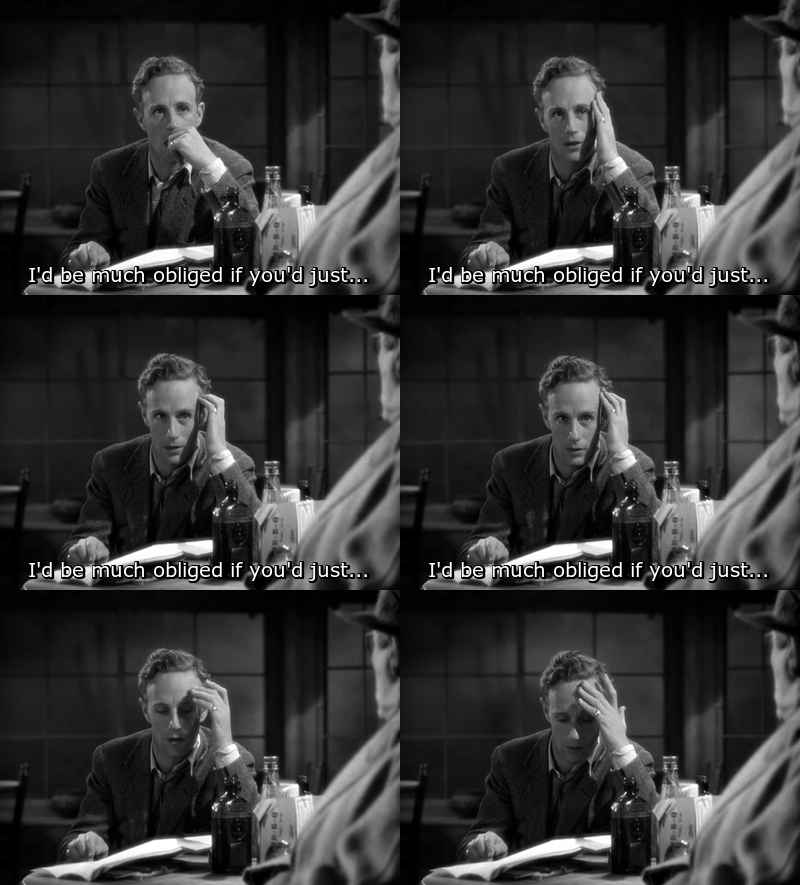
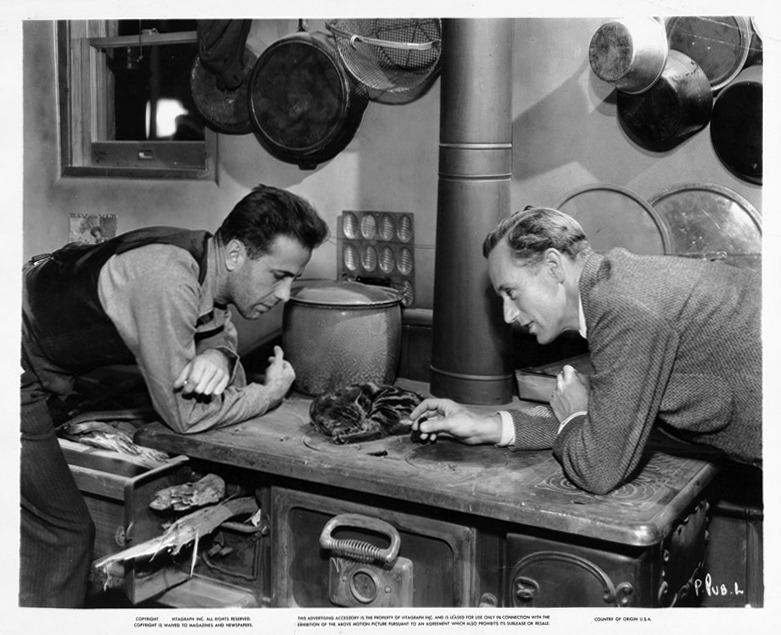
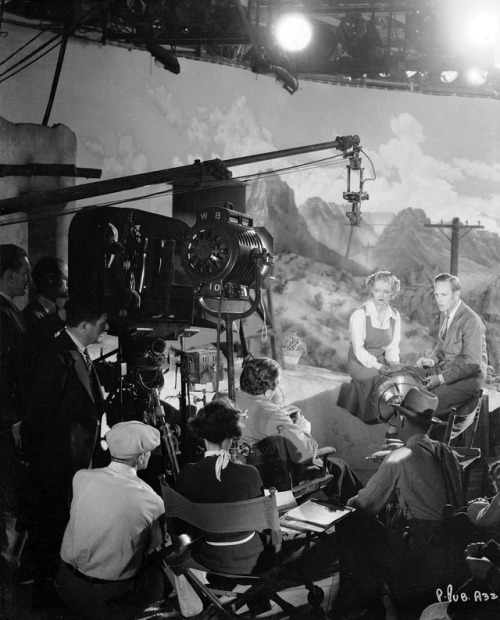
Tudo começa com a chegada de um estranho: Alan Squier (Leslie Howard, tão magro e pálido que se parece com Stan Laurel). Squier é um escritor charmoso que está cruzando os EUA após se divorciar, e ele logo conquista a garçonete do restaurante, a ingênua e sonhadora Gabrielle (Bette Davis).

Everything starts with the arrival of an odd man: Alan Squier (Leslie Howard, so slim and pale that he looks like Stan Laurel). Squier is a charming writer crossing the country after a divorce, and he instantly conquers the restaurant’s waitress, naïve dreamer Gabrielle Maple (Bette Davis).
Mas chega a hora de dizer adeus. Alan pega uma carona com o casal Chisholm (Genevieve Tobin e Paul Harvey) e o motorista deles. Quando eles estão na estrada, escutam no rádio a descrição da aparência do gângster fugitivo Duke Mantee (Humphrey Bogart) e qual carro ele e seus comparsas estão usando para a fuga. Na curva seguinte o casal Chisholm tem uma surpresa: é o próprio Duke Mantee que os para e rouba o carro.

But time has come to say goodbye. Alan gets a lift from the Chisholms (Genevieve Tobin and Paul Harvey) and their driver. When they are on the road the radio describes how runaway gangster Duke Mantee (Humphrey Bogart) looks like and which car he and his mates are using. On the next curve the Chisholms have a surprise: it’s Duke Mantee himself, who stops them and steals their car.
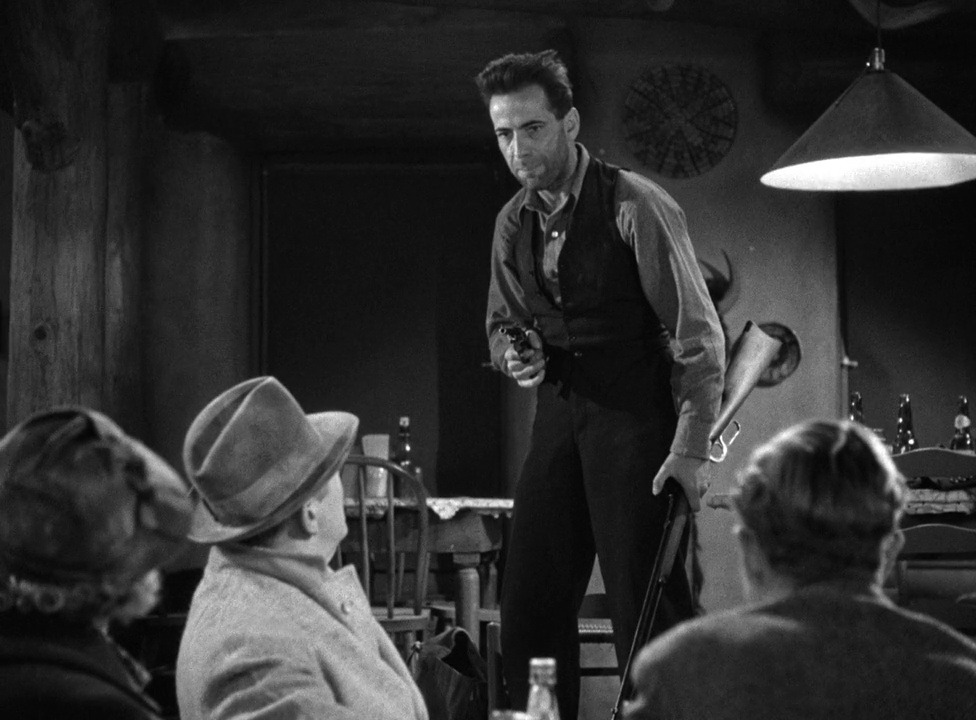
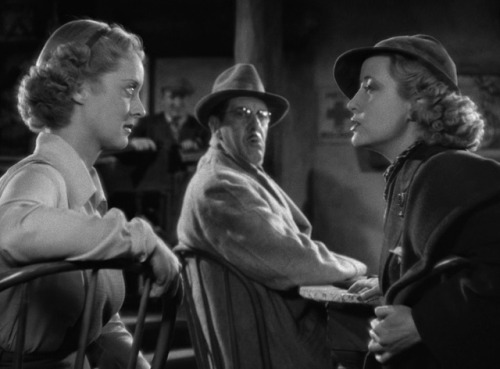
Enquanto o casal tenta consertar o carro de Duke para continuarem com a viagem, Alan, muito nervosa, volta para o restaurant, sabendo que Duke está prestes a encontrar Gabrielle. Duke chega lá. E Alan também. Agora, temos Gabrielle, Alan, o funcionário do posto Boze (Dick Foran) e o avô de Gabrielle (o divertido Charley Grapewin) são reféns de Duke e seus capangas. Com todos no restaurante, eles só podem ter conversas profundas sobre a vida, amor, dinheiro e dúvidas existenciais. E, sim, o casal Chisholm e o motorista também acabam sendo feitos reféns.

While the Chisholms try to fix Duke’s broken car to go on with their trip, a very nervous Alan walks back to the restaurant, knowing that Duke is about to hit the place. Duke does that. And so does Alan. Now, we have Gabrielle, Alan, the gas station employee Boze (Dick Foran) and Gabrielle’s grandfather (a very funny Charley Grapewin) held hostage by Duke and his evil crew. With all in the restaurant, they can only have deep conversations about life, love, money and existential doubts. And, yes, the Chisholms and the driver eventually arrive there, too.
A principal tarefa de Bette Davis em “A Floresta Petrificada” é ser adorável. Gabrielle é uma garota sensível que deseja visitar sua cidade natal na França e adora ler poesia. Alan é um par perfeito para ela. Como Alan, Leslie Howard tem de dizer coisas bonitas e intelectuais que também sejam provocativas para nós, espectadores. E Genevieve Tobin tem um monólogo FANTÁSTICO.

Bette Davis’s main job in ‘The Petrified Forest” is to be adorable. Gabrielle is a sensitive girl who wants to visit her birthplace in France and loves to read poetry. Alan is a perfect match for her – even though Boze is insistent about seducing her. As Alan, Leslie Howard has to say beautiful, intellectual things that are provocative for us, viewers. Oh, and Genevieve Tobin has a FANTASTIC monologue.
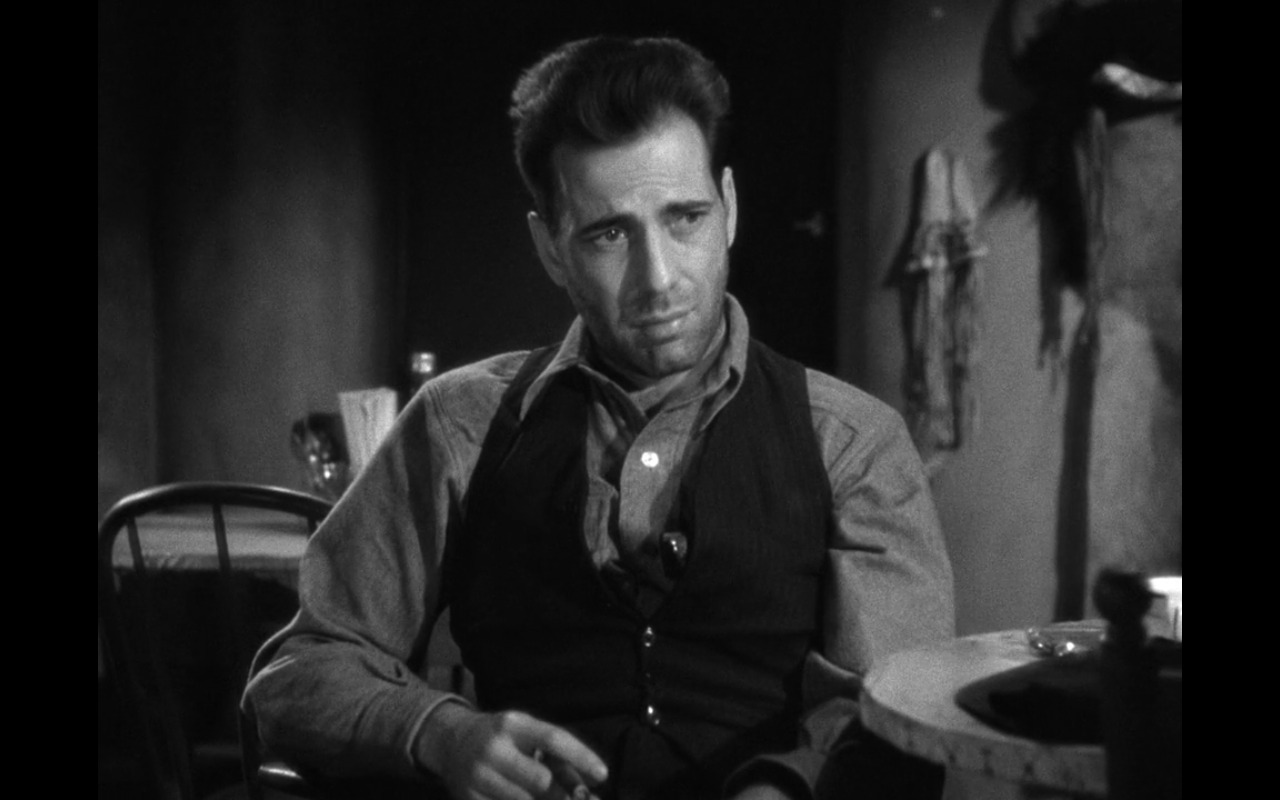
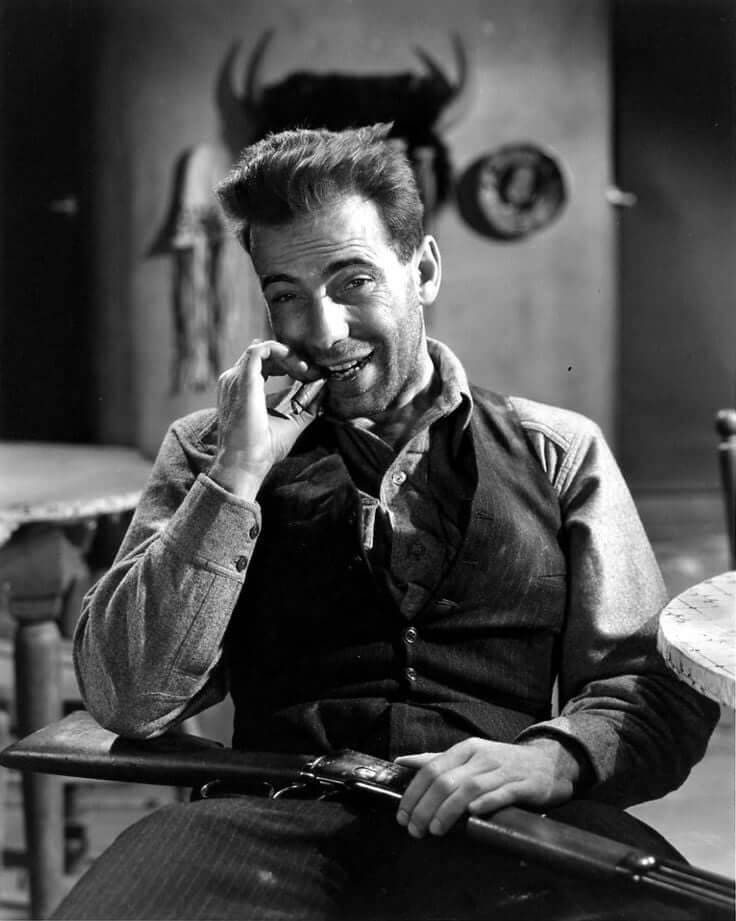
Humphrey Bogart interpreta um gângster barra-pesada com um minúsculo coração de manteiga. Na primeira fase de sua carreira, que vai de 1930 a 1941, ele foi mal aproveitado pela Warner Bros, que lhe dava só pequenos papéis – seu nome é só o quarto nos créditos deste filme – e papéis de vilão – no ano seguinte ele interpretaria um membro da Ku Klux Klan. É interessante notar, em Duke Mantee, este momento em particular, quando a câmera – por causa de uma tomada precisa planejada pelo diretor Archie Mayo – captura a alma do personagem:

Humphrey Bogart plays a heavy gangster with a tiny soft spot in his heart. In the first phase of his career, that goes from 1930 to 1941, he was mostly “undercast” by Warner Bros, who gave him small roles – he’s the fourth billed here – and roles of villains – he would play a Ku Klux Klan member in a 1937 movie. It’s interesting to notice, about Duke Mantee, this moment in particular, when the camera –because of a precisely planned shot by director Archie Mayo – captures the character’s soul:
“A Floresta Petrificada” foi primeiro apresentada como peça, com Howard, Davis e Bogart nos três papéis principais. Quando o estúdio Warner adquiriu os direitos da peça, os executivos planejaram dar o papel de Duke para Edward G. Robinson, mas Leslie insistiu em contracenar com Bogart. Por causa deste apoio, Bogart foi para sempre grato para com Howard, e inclusive deu o nome de Leslie à sua filha. E Bogart teve a chance de interpretar Duke Mantee mais uma vez em 1955, em uma adaptação para a TV, com Lauren Bacall como Gabrielle e Henry Fonda como Alan.

“The Petrified Forest” was first presented as a play, with Howard, Davis and Bogart in the three main roles. When it acquired the play rights, Warner planned to cast Edward G. Robinson for the role of Duke, but Leslie Howard insisted on working with Bogart. Because of this support, Bogart was forever grateful to Howard, and even named his daughter Leslie after him. And Bogart had the chance to play Duke Mantee once more in 1955, in a TV adaptation, with Lauren Bacall as Gabrielle and Henry Fonda as Alan.       
Sem dar spoilers, posso dizer que o filme pega um caminho muito incomum por causa do amor de Alan por Gabrielle. E, se você imaginou que um filme de 1936 traria uma lição moral machista e antiquada sobre as razões para a vida de um homem ou uma mulher, eu digo: você está muito enganado! Agora basta apenas conferir este excelente filme.

Without spoiling it, I can say that the film goes through a very unusual path thanks to Alan’s love for Gabrielle. And, if you presumed that a 1936 movie would bring a sexist, old-fashioned moral lesson about the reason behind a man’s or a woman’s existence, I must say: boy, you are wrong! Now go on and watch this wonderful movie.

This is my contribution to the Third Annual Bette Davis blogathon, hosted by Crystal at In the Good Old Days of Classic Hollywood.

Saturday, March 31, 2018

Daqui a Cem Anos (1936) / Things to Come (1936)


ESTA CRÍTICA CONTÉM SPOILERS
THIS REVIEW HAS SPOILERS

Pergunte a todas as pessoas que você conhece sobre o quê elas se preocupam.  A maioria responderá “sobre o futuro”. Nós, como seres humanos, temos medo do que é incerto, e depois do que acontece após a morte, nada é mais incerto do que o futuro. É por isso que nos interessamos tanto pelas pessoas ou obras de arte que tentam prever o futuro. Seja isso curiosidade ou medo, nós amamos ouvir previsões. E quando elas se mostram corretas, como acontece em alguns momentos do filme inglês de 1936 “Daqui a Cem Anos”, nós ficamos completamente chocados.

Ask all people you know what they worry about. Most of them will say “the future”. We, as human beings, are afraid of what is uncertain, and second to what happens after death, nothing is more uncertain than the future. That is why we are so interested by people or works of art that try to predict the future. Be it curiosity or fear, we love to hear predictions. And when they get the future right, like the 1936 English movie “Things to Come” did in a few moments, we are nothing short of shocked.
Natal de 1940. Os cânticos da época se misturam com conversas e cartazes sobre uma guerra iminente. John Cabal (Raymond Massey) está preocupado. O bisavô, homem mais velho da família Cabal, vê as crianças abrindo os presentes de Natal e se pergunta como a tecnologia evoluirá com o tempo. John diz que a tecnologia não verá evolução se houver uma guerra. Seu amigo Passworthy (Edward Chapman) acredita no contrário: ele acha que a guerra estimula a ciência. E ele não terá de esperar muito para ver se está certo.

Christmas 1940. The seasons’ carols are mixed up with talks and posters about an imminent war. John Cabal (Raymond Massey) is worried. The Cabal great grandfather sees the children opening the Christmas gifts and wonders how technology will evolve with time. John says technology won’t evolve if there is a war. His friend Passworthy (Edward Chapman) believes the opposite: he thinks war stimulates science. And he won’t have to wait long to see if he is right.
A guerra começa naquela noite, e dura 26 anos. Cabal e Passworthy vão para o front, e Cabal se alista na Aeronáutica – preste atenção em um piloto malfadado e você reconhecerá George Sanders. A cidade deles, chamada Everytown, é destruída por tanques, e fica parecendo com o que seria a Berlim do pós-Segunda Guerra. Com a guerra, vem uma nova tragédia: uma epidemia mortal. Se a doença que seguiu à Primeira Guerra foi a gripe espanhola, a  nova doença fictícia mortal é a doença ambulante. Todas as pessoas que são infectadas e começam a vagar são mortas – incluindo a irmã de Richard Gordon (Derrick de Marney).

The war starts that same night, and lasts for 26 years. Cabal and Passworthy go to the front, where Cabal joins the Air Force – take a close look at an ill-fated pilot and you’ll recognize George Sanders. Their hometown, wisely named Everytown, is destroyed by tanks, and then bears a horrifying resemblance to the post-WWII Berlin. With the war, a new tragedy strikes: a mortal epidemic. If the post-WWI disease was the Spanish flu, the new fictional mortal disease is the wandering sickness. All people who are infected and start wandering are shot – including Richard Gordon’s (Derrick de Marney) sister.
Quando a epidemia termina e o número de pessoas na Terra cai pela metade, estamos de volta à Idade Média – e, ah, sim, novamente em estado de alerta para guerra. Não há mais petróleo. Voar se tornou algo impossível... até que um avião aterrisa. Quem está pilotando é o nosso velho amigo John cabal, que é agora um membro do grupo Asas Sobre o Mundo – algo como as Nações Unidas, só que funcionando para valer. John não é bem recebido pelo novo Chefe (Ralph Richardson), que é uma figura despótica. A Asas Sobre o Mundo quer derrubar o Chefe e construir um novo mundo com base na ciência e no conhecimento.

When the epidemic ends and the number of humans on Earth is cut by half, we are back at the Middle Ages – and, oh, yes, there is a new state of war. There is no petrol anymore. Flying became impossible... until a plane lands. Who is flying it is our old friend John Cabal, who is now a member of the institution Wings Over the World – like an United Nations that really works. John is not welcomed by the new Boss (Ralph Richardson), who is a despotic figure. Wings Over the World wants to dethrone the Boss and build a new world with science and knowledge.
O ano é agora 2016. O novo mundo está aí, e o bisneto de John, Oswald (novamente Raymond Massey) é o responsável pelo programa espacial de Everytown. Ele quer mandar o homem para a lua, e os dois voluntários para a missão são sua filha, Catherine (Pearl Argyle) e o jovem filho dos Passworthy, Maurice (Kenneth Villiers). Mas um homem chamado Theotocopoulos (Cedric Hardwicke) não está satisfeito com a era tecnológica e conclama os homens para destruir as máquinas.

The year is now 2036. The new world is here, and John’s great grandson, Oswald (also Raymond Massey) is the head of Everytown’s space program. He wants to send the man to the moon, and the two volunteers are his daughter, Catherine (Pearl Argyle) and the young Passworthy son, Maurice (Kenneth Villiers). But a man named Theotocopoulos (Cedric Hardwicke) is not very happy with the technological era and gathers the people to destroy the machines.
“Daqui a Cem Anos” é baseado em um livro de HG Wells, publicado em 1933. O próprio Wells escreveu o roteiro e, de acordo com algumas fontes, começou a dirigir o filme, mas devido à sua falta de experiência atrás das câmeras, ele foi substituído por William Cameron Menzies. Wells é uma destas pessoas – assim como Nostradamus – cujas previsões ainda nos surpreendem.

“Things to Come” is based on a HG Wells novel published three years earlier. Wells himself wrote the screenplay and, according to some sources, started directing the movie, but because of his lack of experience behind the cameras he was replaced by William Cameron Menzies. Wells is one of those people – together with Nostradamus – whose predictions still amaze us.
A trama é muito complexa, com novos personagens e conflitos sendo apresentados a todo momento – você não ficou confuso só de ler os parágrafos acima? Os personagens não são aprofundados, sendo mais arquétipos do que seres ficcionais com os quais nos importamos. Há muitas sequências impressionantes, tanto da guerra quanto da reconstrução tecnológica. Por isso “Daqui a Cem Anos” custou aproximadamente 300 mil libras – o equivalente a quase 20 mil libras hoje, ou mais de 27 milhões de dólares.

The plot is very thick, always introducing new characters and new conflicts – I mean, weren’t you confused just by reading the previous paragraphs? The characters are not deepened, being more like archetypes than fictional beings we'd care about. There are many jaw-dropping sequences, both from the war and from the technological reconstruction. No wonder “Things to Come” cost approximately 300 thousand pounds – the equivalent of almost 20 million pounds nowadays, or more than 27 million dollars.
Eu gosto muito de assistir a filmes de ficção científica e ver quais previsões deram certo e quais foram um tiro n’água.Obviamente, a previsão da guerra vindoura é a primeira que nos impressiona em “Daqui a Cem Anos”. Os paralelos com a última guerra, ainda muito fresca na mente de todos, são óbvios. Entretanto, não há duas guerras iguais.

I really like watching science fiction and seeing what the film predicted right and what it got wrong. Obviously, predicting the upcoming war is the first thing that impresses us in “Things to Come”. The parallels between the last war, still very fresh in everybody’s mind, are obvious. But no two wars are the same.
A man with "wandering sickness"
E quanto à tecnologia? Bem, o filme nos surpreende ao prever a existência de televisões gigantes de tela plana em todas as casas. A maneira como os foguetes são lançados no futuro do filme lembram um pouco da realidade, embora o processo de lançamento não se pareça com o de atirar. O maior erro é que foi previsto que a corrida espacial começaria em 2036, quando na verdade a lua foi visitada pela primeira vez em 1969. Bem, precisamos perdoá-los, pois se a guerra tivesse, de fato, durado 26 anos, a lua ainda seria um sonho distante. Mas não vamos perdoar as roupas. As pessoas de 2016 se vestem como romanos sensuais, e eu fico feliz por esta previsão não ter se tornado realidade... ainda.

What about technology? Well, the film surprises us by predicting flat-screen TV sets, with huge screens, in every house. The way rockets are launched in the future seen in the film resemble a bit the real thing, although the process is not like firing a gun. The biggest let down is that they predicted the space exploration would start in 2036, when in reality the moon was visited by the first time in 1969. Well, let’s forgive them, if the war had, indeed, lasted 26 years, the moon would still be a far away dream. But we won’t forgive the clothes. The people of 2036 dress like sexy Romans, and I’m happy this prediction didn’t become true… yet.
O ódio de Theotocopoulos pela tecnologia é o mais perto que chegamos de uma luta de classes – e ela se parece muito com o movimento Luddista da Revolução Industrial. Hoje, a maioria das pessoas aceitou que a tecnologia é parte da vida, e o movimento atual é contra o progresso social. Nós exploramos outros planetas, mas não conseguimos respeitar as escolhas dos outros. Não podemos ignorar a onda conservadora que está se tornando maior e mais forte, infelizmente. Nós também temos de enfrentar coisas que não foram previstas pela ficção científica.

Theotocopoulos’ dislike of technology is the closest we get from the class struggle subject – and it’s a lot like the Luddite movement from the Industrial Revolution. Today, most people accepted that technology is a part of life, and the current movement is against social progress. We explore planets, but can’t respect each other’s choices. We can’t ignore the conservative wave that is becoming bigger and stronger, unfortunately. We have to face things that were not predicted by science fiction, too.
O que podemos aprender com “Daqui a Cem Anos”? Que o mundo pode acabar, mas ele será reconstruído. Aconteceu na era Paleozoica (descansem em paz, trilobitas), aconteceu quando os dinossauros foram extintos, aconteceu a cada guerra. Talvez haja algo ainda pior que a Segunda Guerra Mundial vindo por aí. Muitos vão perecer. Mas o mundo vai permanecer.

What can we learn from “Things to Come”? That the world may end, but it will be rebuilt. It happened in the Paleozoic era (RIP trilobites), it happened when the dinosaurs were extinct, it happened with each and every war. Maybe there is something worse than World War II coming in the horizon. Maybe we will perish. But the world will go on.

This is my contribution to the End of the World blogathon, hosted by Quiggy and Steve at The Midnite Drive-In and Movie Movie Blog Blog.
Related Posts Plugin for WordPress, Blogger...