} Crítica Retrô: Laurence Olivier

Tradutor / Translator / Traductor / Übersetzer / Traduttore / Traducteur / 翻訳者 / переводчик

Showing posts with label Laurence Olivier. Show all posts

Friday, May 29, 2026

O Príncipe Encantado (1957) / The Prince and the Showgirl (1957)


No cinema, há Atores e há Ícones. Atores são também chamados de Intérpretes. Eles atuam de maneira grandiosa e em geral têm talento para o drama, a comédia, o suspense e às vezes até para o musical. Ícones estão lá para atrair o público. Eles podem não ser muito bons na atuação, mas têm Fama. Mas o que acontece quando um Ator e um Ícone se encontram? É isso que aconteceu em “O Príncipe Encantado”.

In movies, there are Actors and there are Icons. Actors are also called Thespians. They deliver great performances and often have range, doing drama, comedy, suspense and sometimes even a musical. Icons are there to attract the audience. They may not be great in acting, but they have Star Power. And what happens when an Actor meets an Icon? This is what happened in “The Prince and the Showgirl”.

O Príncipe Regente de Carpátia (Laurence Olivier) é levado para os bastidores de um teatro para conhecer os atores. Quando ele troca um aperto de mãos com Elsie (Marilyn Monroe), um acidente de figurino faz com que ele quase veja um seio - nós, o público, somos privados dessa visão. Logo depois, Elsie é convidada para cear na embaixada da Carpátia! Ela fica, entretanto, pouco impressionada pelos modos do Regente, pois ele prefere fazer ligações telefônicas a conversar com ela. As intervenções do Futuro Rei (Jeremy Spenser) e da Rainha Mãe (Sybil Thorndike) também não causam boa impressão nela. Bêbada após tomar vodka, primeiro ela recusa as investidas do Regente, mas minutos depois as aceita. Porém, o caso deles não pode durar muito tempo - mesmo quando ela descobre um segredo político.  

The Regent Prince of Carpathia (Laurence Olivier) is taken backstage in a theater to get to know the actors. As he shakes hands with Elsie (Marilyn Monroe), a wardrobe malfunction makes him almost see a boob - we, the audience, are deprived from such a vision. Next thing we know, Elsie is invited for supper at the Carpathian embassy! She is, however, unimpressed by the Regent’s manners as he makes phone calls instead of talking to her. The interventions of the Future King (Jeremy Spenser) and the Queen Dowager (Sybil Thorndike) also fail to bewitch her. Drunk with vodka, first she refuses as the Regent tries to seduce her, but minutes later she accepts his advances. But their affair can’t last - not even when she discovers a political secret.

O nome de Marilyn aparece primeiro nos créditos, e depois vem o de Olivier - para que saibamos como ela era um chamariz de bilheteria em 1957. Alternando entre ingênua e esperta, surpresa com a pompa e segura de si, sua Elsie é o tipo de garota que merece encontrar seu Príncipe Encantado. A sequência na qual ela pratica uma dança sem saber que o Futuro Rei está vendo é uma delícia. E quando o jogo vira perto do fim, o filme atinge o puro êxtase. 

Marilyn was billed first, Olivier second - so you know how powerful she was as an audience magnet by 1957. Alternating between naïve and street-smart, wide-eyed and full of herself, her Elsie is the kind of girl who deserves to find her Prince Charming. The sequence when she practices a dance routine without knowing the Future King is watching is delightful. And when the tables turn near the end, the film becomes pure bliss.

A história se passa em 1911, durante a coroação do Rei George V da Inglaterra. A Carpátia é um reino da Ruritânia, isto é, um reino fictício nos Bálcãs - mas os Cárpatos ficam na Ucrânia, um tantinho longe dos Bálcãs! É curioso quando o Regente diz que, com eleições gerais nos Bálcãs, uma guerra começaria dentro de seis meses. Na realidade, a Primeira Guerra Mundial começou em 1914 com o assassinato de um grão-duque dos Bálcãs.

The story happens in 1911, during the coronation of King George V of England. Carpathia is a Ruritanian kingdom, that is, a fictional kingdom in the Balkans - but the Carpathian Mountains are in Ukraine, a bit removed from the Balkans! It’s curious that the Regent says that, with general elections in the Balkans, a war would start in six months. In reality, World War I started in 1914 with the assassination of an archduke from the Balkans.

O roteiro é de Terence Rattigan, baseado em sua própria peça “The Sleeping Prince”. Olivier tinha interpretado o protagonista também no teatro, ao lado de sua então esposa Vivien Leigh. Marilyn Monroe, que tinha criado sua própria produtora, comprou os direitos da peça e convenceu Olivier a embarcar no projeto do filme.

The screenplay is by Terence Rattigan, based on his own play “The Sleeping Prince”. Olivier had played the lead also in the theater, alongside his then wife Vivien Leigh. Marilyn Monroe, who had created her own production company, bought the rights to the play and convinced Olivier to embark on the film project.  

Marilyn estava usando um vestido branco em sua cena icônica com o escapamento de ar em “O Pecado Mora ao Lado” (1955). É curioso que aqui ela use um vestido branco quase o tempo todo, com exceção da cena de abertura, o que é inclusive notado pela Rainha Mãe. O vestido e todas as roupas das atrizes foram feitos por Beatrice Dawson, uma figurinista indicada ao Oscar que trabalhou em 64 filmes entre 1947 e 1976.

Marilyn was wearing a white dress in her iconic scene with the air duct in “The Seven-Year Itch” (1955). It’s curious that here she also wears a white dress almost all the time, with the exception of her opening scene, which is even noticed by the Queen Dowager. The dress and all the ladies’ costumes were made by Beatrice Dawson, an Oscar-nominated dressmaker who worked in 64 films between 1947 and 1976. 

O filme foi rodado na Inglaterra e Olivier foi astro, produtor e diretor. A história dos bastidores desse filme foi contada em “Sete Dias com Marilyn” (2011) e eu recomendo uma sessão dupla com essa semi-cinebiografia e o filme original, especialmente para que possamos ver que, quando um mestre está no comando, as tensões atrás das câmeras não se traduzem em frente a elas. Neste caso Laurence Olivier não foi apenas Ator mas um verdadeiro Artista.

The film was shot in England and Olivier was the star, producer and director. The backstage story of this movie was told in “My Week with Marilyn” (2011) and I highly recommend a double feature with this semi-biopic and the original movie, especially for us to see that when a master is in charge, the tensions behind the scenes don’t translate to the screen. In this case Laurence Olivier was not only an Actor but a true Artist.

This is my contribution to the Marilyn Monroe 100th Birthday blogathon, hosted by Kristen at Hoofers and Honeys.

Friday, May 15, 2026

Variações sobre um mesmo tema: O Morro dos Ventos Uivantes (1939 e 2026)


Variations on the same theme: Wuthering Heights (1939 and 2026)

Eu nunca li “O Morro dos Ventos Uivantes” de Emily Brontë, mas anos atrás assisti a uma das adaptações do romance para as telas, mas hoje já me esqueci da maioria dos detalhes. Fiquei curiosa para conferir a nova adaptação e, como li que a versão de 1939 é a melhor até agora, aqui estou para ver e comparar ambas.

I have never read Emily Brontë’s “Wuthering Heights”, but many years ago I watched one of the adaptations of the novel to the screen, even though I forgot most details. I was curious to check out this new adaptation, and as I read that the 1939 version is the best one so far, I’m here to watch and compare both. 


A versão de 2026 começa com um enforcamento e uma ereção - duas coisas que definitivamente não seriam mostradas em 1939 por causa do nefasto Código Hays. Então somos apresentados à garotinha Cathy, cujo pai bêbado adota um menino que ela batiza de Heathcliff em homenagem a um irmão já falecido. Eles são criados como irmãos, mas quando crescem percebem que o amor que nutrem um pelo outro não é fraternal. Mas Cathy (Margot Robbie) se casa com o vizinho Edgar Lynton porque ela pode amar Heathcliff (Jacob Elordi), mas eles viverão na pobreza se ficarem juntos.

The 2026 version starts with a hanging and an erection - two things that definitely wouldn’t be shown in 1939 because of the nefarious Hays Code. Then we’re introduced to the girl Cathy, whose drunk father adopts a boy she baptizes as Heathcliff after her dead brother. They grow up as brother and sister, but only when they get old they understand that their love isn’t fraternal. But Cathy (Margot Robbie) marries their neighbor Edgar Lynton because she may love Heathcliff (Jacob Elordi), but they will live in poverty if they stay together.

A versão de 1939 começa com um homem procurando um lugar para se abrigar durante uma tempestade de neve. Ele chega ao Morro dos Ventos Uivantes e é recebido pelo proprietário Heathcliff (Laurence Olivier), que lhe oferece um quarto. Ele ouve uma mulher gritando no meio da noite e se assusta. Heathcliff sai para perseguir a mulher que grita e uma empregada conta ao hóspede a história de amor de Cathy (Merle Oberon) e Heathcliff.

The 1939 version starts with a man looking for a place to stay during a snowstorm. He arrives at Wuthering Heights and is received by owner Heathcliff (Laurence Olivier), who offers him a bedroom. He listens to a woman screaming in the middle of the night and gets scared. Heathcliff leaves to pursue the screaming woman and a maid tells the guest the love story of Cathy (Merle Oberon) and Heathcliff.

Cathy tem uma infância feliz ao lado do pai e de um irmão, Hindley, que começa a mandar no irmão adotivo deles depois que o pai morre. A alta sociedade aceita e abraça a Cathy adulta e ela se acostuma com uma vida de luxo. Quando Heathcliff foge, Cathy aceita se casar com o vizinho Edgar (David Niven), mas Heathcliff voltará com uma atitude blasé.

Cathy has a happy childhood alongside her father and a brother, Hindley, who starts bossing around their adoptive brother after their father dies. High society accepts and embraces adult Cathy and she gets used to a life of luxuries. When Heathcliff runs away, Cathy accepts to marry neighbor Edgar (David Niven), but Heathcliff will come back with a no-nonsense attitude.

Os dois filmes retratam os empregados do Morro dos Ventos Uivantes de maneiras muito distintas. Na versão de 1939, é a empregada Ellen (Flora Robson) que conta a história toda, o que significa que ela sabe tudo que aconteceu. Na versão de 2026, a empregada Nelly (Hong Chau) é uma personagem enxerida e inconveniente, tramando contra os dois amantes. 

The two movies are very different about how they picture the Wuthering Heights employees. In the 1939 version, it’s maid Ellen (Flora Robson) who tells the whole story, meaning that she knows everything that has happened. In the 2026 version, maid Nelly (Hong Chau) is a nosy and inconvenient character, plotting against the two lovers.


Outra diferença diz respeito à personagem Isabella. Em ambos ela se apaixona por Heathcliff, mas em 1939, interpretada por Geraldine Fitzgerald, ela é só uma jovem apaixonada que tem uma ótima cena de confronto com Cathy, enquanto em 2026, interpretada por Alison Oliver, ela é uma maníaca, com personalidade totalmente amalucada. 

Another difference conceals the character Isabella. In both she falls in love with Heathcliff, but in 1939, played by Geraldine Fitzgerald, she is just a young girl in love that gets an excellent confrontation scene with Cathy, while in 2026, played by Alison Oliver, she is a maniac, with a completely nutty personality.

O roteiro da versão de 2026 foi escrito pela diretora e produtora Emerald Fennell. Sei que ela tem muitos haters, mas considerei OK seu último filme, “Saltburn” (não vi seu filme ganhador do Oscar “Bela Vingança” por causa de um spoiler que arruinou o filme para mim). O roteiro da versão de 1939 ficou a cargo de Ben Hecht, um dos meus roteiristas favoritos, e Charles McArthur, mais conhecido por ter escrito a peça “The Front Page”. Nenhuma dessas versões segue o livro à risca, pois há uma segunda parte ignorada por ambas.

The screenplay for the 2026 version was written by director and producer Emerald Fennell. I know she has plenty of haters but I found her past effort “Saltburn” OK (I didn’t watch her Oscar-winning movie “Promising Young Woman” because I saw a spoiler and it ruined the movie for me). The screenplay for the 1939 version was penned by Ben Hecht, a favorite of mine, and Charles McArthur, best known for having written the play “The Front Page”. None of these two versions follow the book closely, as there is a second part that is ignored by both.


Fennell usa diversas músicas pop na trilha sonora, completa com algumas faixas instrumentais. As músicas grandiosas da versão de 1939 foram compostas por Alfred Newman. Ele foi considerado um prodígio da música quando criança e foi empregado como maestro na Broadway por uma década, começando com apenas 19 anos. Ele iria compor para o cinema e seria indicado ao Oscar 45 vezes, ganhando nove prêmios. Sua mais famosa obra, entretanto, dura alguns segundos: a música que acompanha o logo da 20th Century Fox até hoje.

Fennell uses several pop songs in the soundtrack, complete with some instrumental tunes. The grandiose songs from the 1939 version were composed by Alfred Newman. He was considered a musical prodigy as a child and was employed as a conductor on Broadway shows for a decade, starting when he was only 19. He would go on to score movies and would be nominated for the Oscar 45 times, winning nine awards. His most famous piece however, lasts a few seconds: the tune that accompanies 20th Century Fox logos to this day.

Visualmente impressionante, a versão de 2026 teve figurinos feitos pela renomada Jacqueline Durran e fotografia de Linus Sandgren. A de 1939 teve fotografia de Gregg Toland, um dos maiores diretores de fotografia da História e que ganhou seu único Oscar por esse filme, e figurinos de Omar Kiam - não confundir com o multitalentoso Omar Khayyam

Visually stunning, the 2026 version had costumes made by the renowned Jacqueline Durran and photography by Linus Sandgren. The 1939 version had its photography by Gregg Toland, one of the best cinematographers of all time in his only Oscar win, and costumes by Omar Kiam - not to be confused with the multitalented Omar Khayyam!

Emerald Fennell menciona diversos clássicos como inspiração para seu filme, como “Na Noite do Passado” (1942), “Neste Mundo e no Outro” (1946) e “Pele de Asno” (1970), mas seu filme não está à altura da versão de 1939, que é mais emocionante, igualmente bela e tem excelentes interpretações.

Emerald Fennell mentions several classics as inspirations for her movie, such as “Random Harvest” (1942), “A Matter of Life and Death” (1946) and “Donkey Skin” (1970), but her movie doesn’t stand close to the 1939 version, which is more moving, equally beautiful to look at and a masterclass in acting.

Wednesday, June 28, 2023

Como Gosteis (1936) / As You Like It (1936)


Desde os primórdios do cinema, Shakespeare parece ser uma fonte inesgotável de histórias para serem filmadas. E não houve melhor ator para interpretar Shakespeare que Laurence Olivier. Ver a primeira vez em que ele interpretou Shakespeare num filme é como embarcar em uma máquina do tempo e poder ter um vislumbre de todo o talento e potencial – e beleza! - que ele tinha aos 29 anos. Este primeiro filme Shakespeareano é “Como Gosteis” (1936).


Since the dawn of cinema, Shakespeare seems to be a never-ending source for stories to be filmed. And there was no better actor to play Shakespeare than Laurence Olivier. Seeing the first time he played Shakespeare in a film is like embarking on a time machine and taking a glimpse of all the talent and potential - and handsomeness! - he had at age 29. This first Shakespearean flick is “As You Like It” (1936).


Nosso herói Orlando (Olivier) é um órfão que foi posto sob a tutela do irmão mais velho e precisa lutar por sua liberdade. Lutar literalmente: ele desafia Charles, o homem forte do povoado, numa luta e vence. É nesta luta que ele conhece as primas Celia (Sophie Stewart) e Rosalind (Elisabeth Bergner), e se apaixona por esta última.


Our hero Orlando (Olivier) is an orphan who was put under the wings of his older brother and needs to wrestle for his freedom. Literally wrestle: he challenges Charles, the local strongman, in a wrestling match and wins. It’s in that match that he meets the cousins Celia (Sophie Stewart) and Rosalind (Elisabeth Bergner), and falls in love with the latter.


As coisas não saem como planejado e, fugindo da ira do irmão, Orlando vai viver na floresta junto a um grupo de homens que foram banidos do reino, entre eles o pai de Rosalind. Mais apaixonado a cada dia, Orlando escreve poemas e os pendura em árvores, além de escrever o nome “Rosalind” no tronco das árvores. Um dia, sem seu vestido elegante, Rosalind se apresenta para Orlando como um homem, o único que pode fazê-lo se esquecer de seu amor impossível, e os dois iniciam um flerte esquisito e constante.


Things don’t go as expected and, running away from his brother’s rage, Orlando goes live in the forest with a group of men who have been banished from the kingdom, among them Rosalind’s father. More in love each day, Orlando writes poems and hangs them on trees, and carves the name “Rosalind” in the trees. One day, without her fancy dress, Rosalind presents herself to Orlando as a man, the only one who can make him forget this impossible love, and the two start a weird and constant flirt.


O nome de Laurence Olivier não é o primeiro nos créditos, esta honra pertence a Elisabeth Bergner. Nascida no Império Austro-Húngaro, num território que hoje faz parte da Ucrância, Bergner tinha como língua materna o alemão e de fato interpretou Rosalind nos palcos alemães. Fugindo da Alemanha quando Hitler chegou ao poder, ela jurou que só voltaria a interpretar Shakespeare na Inglaterra quando tivesse dominado a nova língua. Alguns críticos disseram que seu sotaque alemão ainda é forte no filme, mas eu discordo. Bergner fez seu primeiro filme em 1924 e já era uma atriz indicada ao Oscar quando fez “Como Gosteis”. Neste filme, ela é dirigida por seu marido Paul Czinner. Curiosidade: foi um episódio da vida de Bergner que inspirou a história de “A Malvada” (1950).


Laurence Olivier isn’t first billed in the film, this honor belongs to Elisabeth Bergner. Born in Austria-Hungary, in a territory that now is part of Ukraine, Bergner’s mother tongue was German and she did portray Rosalind on the German stage. Fleeing Germany when Hitler rose to power, she vowed to play Shakespeare again in England only when she had mastered the new language. Some critics say that her German accent was still strong in the film, but I disagree. Bergner had made her film debut in 1924 and by the time she made “As You Like It” she was already an Oscar-nominated performance and was, in this film, directed by her husband Paul Czinner. Curious tidbit: It was an episode of her life that inspired the short story that was the basis for the film “All About Eve” (1950).


David Lean trabalhou como editor neste filme. Nascido em 1908 – o que faz dele um ano mais novo que Olivier – David Lean já trabalhava como editor desde 1930, quando começou em cinejornais. No final dos anos 30 ele já era um conhecido e reconhecido editor. Ele co-dirigiu seu primeiro filme em 1942, e o resto é História.


David Lean worked as editor in this film. Born in 1908 - making him one year younger than Olivier - David Lean had been working as an editor since 1930, starting with newsreels. By the late 1930s Lean was already a well-known and praised editor. He co-directed his first film in 1942, and the rest is history.


O IMDb diz que um terço da peça original foi removido na adaptação para as telas, mas o epílogo permaneceu. O texto original foi mantido, cheio de formalidades. Acredita-se que a peça foi escrita em 1599 e é descrita como uma comédia pastoral. Foi adaptada para o cinema por J.M. Barrie, que escreveu “Peter Pan”. Considerando que cross-dressing – ou melhor, uma mulher se apresentando como um homem – é um ponto principal da trama, podemos afirmar que este filme não seria feito em Hollywood sob o Código Hays, e ainda bem que este é um filme britânico. Às vezes só os britânicos – como Olivier – conseguem fazer justiça a Shakespeare, e mesmo uma de suas peças menores pode se tornar um filme agradável se feito pelas mãos certas.


IMDb says that one-third of the play was removed when adapted to the screen, but they chose to retain the theatrical epilogue. The text was kept as it was, full of “thy’s” and “thee’s”. The play is believed to have been written in 1599 and is described as a pastoral comedy. It was adapted to the screen by J.M. Barrie, who wrote “Peter Pan”. Considering that cross-dressing - or rather, a woman presenting as a man - is a main part of the plot, this film wouldn’t be made in the US under the Hays Code, and we’re glad this is a British film. Sometimes only the British - like Olivier - can do their homeboy Shakespeare justice, and even one of his lesser plays can become an enjoyable movie if made by the right hands.

Monday, November 2, 2015

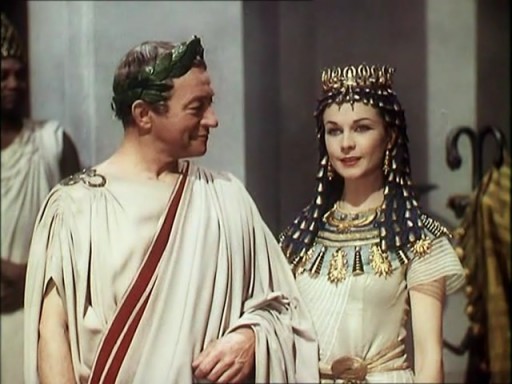
César e Cleópatra (1945)

Você deve saber que Elizabeth Taylor foi a primeira atriz de cinema a receber um milhão de dólares por um único filme: “Cleópatra”, em 1963. Antes dela, outras atrizes já haviam interpretado a mais famosa rainha do Egito, entre elas Theda Bara, Claudette Colbert e Vivien Leigh. Apenas Leigh pôde viver Cleópatra com uma surpreendente dose de humor, e um estilo muito parecido com o de Scarlett O’Hara, sua mais famosa personagem. Embora seja o Júlio César interpretado por Claude Rains o grande herói da história, todos os olhares se voltam para a mais bela joia do Nilo quando ela surge na tela.
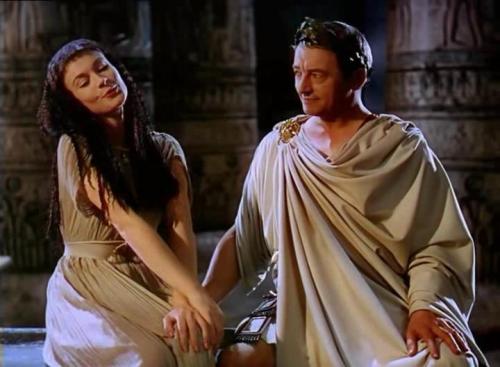
Cleópatra é mostrada como uma jovem divertida, ingênua e muitas vezes inconsequente. Ela é um produto da dominação de Júlio César. Ele a toma como pupila e lhe ensina a comandar um reino com firmeza. O primeiro encontro dos dois se dá aos pés de uma esfinge, e aqui a voz aguda da inexperiente Cleópatra já denuncia sua ingenuidade. César a convence a levá-lo ao palácio, sem dizer-lhe quem realmente é. Ele dá suas primeiras lições sobre como tratar os escravos e como ter confiança. Quando Cleópatra descobre quem é seu conselheiro, a empatia já está formada.
César agora está instalado dentro do palácio, e toma decisões sobre a própria política do Egito. Um impasse ocorria entre Cleópatra e seu irmão / esposo (porque os nobres egípcios se casavam com seus irmãos para manter a pureza do sangue, algo que surpreende os romanos). Ptolomeu (Anthony Harvey), fraco e despreparado para governar o Egito, logo estará fora da questão, apesar dos esforços de seu gordo tutor Pothinus (Francis L. Sullivan).
A trajetória da Cleópatra de Vivien Leigh curiosamente muito se assemelha à de Scarlett O'Hara. Ela inclusive conta com uma “babá” ao estilo de Mammy (Hattie McDaniel): a fiel e inconformada Ftatateeta (Flora Robson). Da menina mimada e ingênua à mulher forte e tirana, Vivien passeia com a mesma graça, seja ela Scarlett ou Cleópatra na tela. Linda e de olhar penetrante (em especial nos close-ups perto do final), ela reproduz com muito charme a cena histórica em que Cleópatra é dada de presente para César, enrolada em um grande tapete. Nesta cena também merece destaque o entregador do tapete, o siciliano Apollodorus (Stewart Granger), em um traje romano minúsculo.
A era de ouro dos épicos bíblicos e históricos só aconteceria na década seguinte, e talvez “César e Cleópatra” seria melhor se fosse feito dez anos depois. A verdade é que alguns elementos grandiosos das superproduções em Cinemascope ou de Cecil B. DeMille já estavam ali presentes, e é o cenário que se destaca, junto com a surpreendente e maravilhosa mímesis de um pôr do sol nas areias do deserto egípcio.
Se você prestou atenção aos créditos, viu o nome de George Bernard Shaw. O dramaturgo escreveu a peça “César e Cleópatra” em 1898, e ela foi encenada pela primeira vez em 1901. Em 1945, a ideia era ter Vivien Leigh como Cleópatra e John Gielgud como Júlio César, mas Gielgud recusou o papel devido à sua antipatia para com o diretor e produtor Gabriel Pascal. Entre 1951 e 1952, Vivien Leigh interpretou Cleópatra nos palcos, em uma dupla sessão com Laurence Olivier ao seu lado, nos papéis de Júlio César e Marco Antônio. Fui durante uma das apresentações da peça que ela foi informada de que havia ganhado seu segundo Oscar.
E a empreitada de 1945 se transformou em uma grande peça de teatro filmada. Os diálogos são típicos do teatro, a ação é quase nula (não que isso seja ruim), e às vezes as imagens em locação se parecem mais com sets unidimensionais que locais reais. O esforço para filmar foi extremo, com uma custosa viagem ao Egito para buscar areia (!!!), gravações na Inglaterra (durante a Segunda Guerra Mundial, o que fazia com que as filmagens fossem interrompidas diversas vezes por bombardeios) e até a construção de uma esfinge cenográfica gigante. Quem pagou mais caro, entretanto, foi Vivien Leigh: grávida, ela foi obrigada pelo diretor a fazer uma cena arriscada sem dublê, escorregou no chão do palácio e sofreu um aborto espontâneo. Vivien jamais perdoou o diretor Gabriel Pascal pelo ocorrido.
Situado entre uma comédia histórica e um épico prematuro, “César e Cleópatra” ainda merece ser visto. Há, é claro, a especulação de como seria o filme se Olivier interpretasse César, uma vez que Claude Rains funciona mais como uma figura paterna para a Cleópatra de Vivien Leigh. Entre a eterna Scarlett e o eterno Capitão Renault não há nenhuma tensão sexual, e muito menos indícios do início de uma bela amizade.


This is my contribution to the Vivien Leigh and Laurence Olivier blogathon, hosted by Wolffian Classics Movies Digest.

Sunday, August 3, 2014

A Caixa Mágica / The Magic Box (1951)

Na minha opinião, o melhor cineasta ainda em atividade é Martin Scorsese. Não apenas porque os filmes dele são de excelente qualidade, mas principalmente porque ele ama os filmes antigos. Scorsese é um admirador e apoia as campanhas de conservação de filmes. Ele tem até uma pequena coluna no site do canal TCM. Scorsese é uma pessoa especial. E o filme que o convenceu a tornar-se cineasta tem de ser mais especial ainda: “A Caixa Mágica”.

In my opinion, the best filmmaker still working is Martin Scorsese, not only because his films are usually great, but mainly because he loves old movies. Scorsese is a movie buff and supports film preservation campaigns. He even has a small monthly column at the TCM website. Scorsese is a special person. And the film that made him want to be a filmmaker ought to be even more special: “The Magic Box”. 


Esta é a história do mais desconhecido pioneiro da sétima arte. Qualquer um conhece Méliès, Thomas Edison e os irmãos Lumière, e só os cinéfilos mais dedicados sabem quem foram Segundo de Chomón ou Eadweard Muybridge. Mas o mais obscuro dos pais do cinema ainda é William Friese-Greene (1855 – 1921), que eu mesma desconhecia até ver o filme.

This is the story of the most unknown film pioneer. Any person knows Méliès, Thomas Edison and the Lumière brothers, and only the biggest cinephiles know Segundo de Chomón or Eadweard Muybridge. But the most obscure of all film fathers still is William Friese-Greene (1855-1921), one even I didn't know until I watched his biopic.


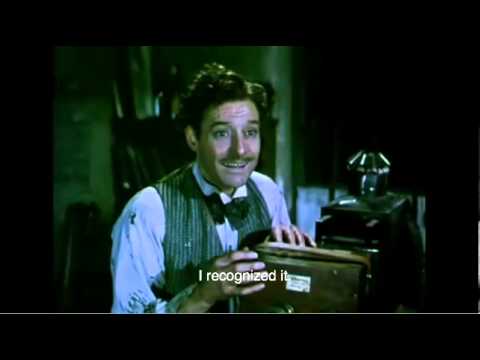
William Friese-Greene revive em flashback sua trajetória. Ele se encontra agora em uma convenção de industriais para decidir o futuro do cinema e ele próprio, um pioneiro no negócio, é desconhecido e incompreendido. Em sua juventude, William (Robert Donat) é um jovem fotógrafo cheio de ideias inovadoras que desagradam seu patrão, Maurice Guttenberg (Frederick Valk). Demitido, William começa seu próprio negócio de fotografia com a esposa Helena (Maria Schell). Mas o sonho do fotógrafo sempre foi outro: dar movimento às imagens.

William Friese-Greene tells his story in a flashback. He is now in a industrial convention to decide the future of cinema and he, a film pioneer, is unknown and misunderstood there. In his youth, William (Robert Donat) is a young photographer full of innovative ideas that displease his boss, Maurice Guttenberg (Frederick Valk). Fired, William starts his own photography business with his wife, Helena (Maria Schell). But his real dream was to make moving images. 


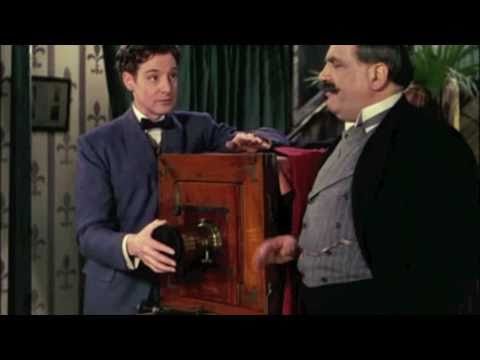
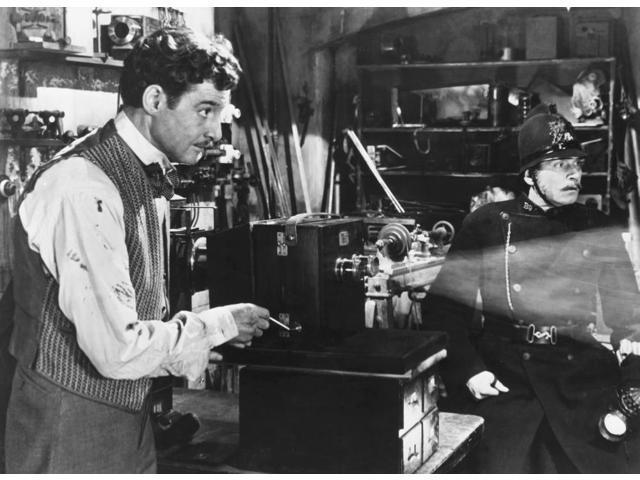
Ele passa então a se encontrar com John Arthur Roebuck Rudge e a se interessar pelas lanternas mágicas, que eram as avós do cinema (isso não é mostrado no filme) e usavam fotografias capturadas em chapas de vidro, que impediam a adição de movimento. William queria mais, e tirou dinheiro do próprio bolso para construir uma câmera que, finalmente, colocou imagens em movimento, ainda que fossem apenas 8 fotos por segundo (os filmes de hoje projetam 24 imagens por segundo). Quem assiste a essa primeira exibição histórica sem entender nada é um policial interpretado por Laurence Olivier, em uma participação muito especial (atenção: ele é um dos muitos cameos!). Mas a história nos conta algo diferente: sim, Friese-Greene conseguiu colocar imagens em movimento... em 1889, menos de um ano depois de “Roundhay Garden Scene”, de Le Prince, que contava com 10 a 12 imagens por segundo. Le Prince também “filmou” um homem virando uma esquina em 1887, e os negativos foram organizados em um pequeno filme.

He then starts meeting John Arthur Roebuck Rudge and becomes interested in magical lanterns, the precursors to cinema (something not shown in the film) that used static photographies in glass supports. William wanted more, and used his own savings to build a camera that, finally, put images in movement, even though he could only show 8 pictures per second (the modern films show 24 pictures per second). The only spectator of Friese-Greene's historical first exhibition is a police officer played by Laurence Olivier, who understands nothing that is going on (pay attention: Olivier is only one of the many cameos!). But history tells us something different: yes, Friese-Greene managed to put images in moviment... in 1889, less than a year after “Roundhay Garden Scene”, by Le Prince, that had from 10 to 12 images per second. Le Prince also “filmed” a man walking around a corner in 1887, and the negatives were organized in a small film.


Depois de ganhar um prisma da esposa, William decide que seus próximos esforços serão para adicionar cor às imagens em movimento! Quem conta essas desventuras, também em flashback, é a segunda esposa de William. Na vida real, ele desenvolveu o “Biocolour”, mas não foi adiante devido ao bizarro fato de os inventores ingleses do processo “Kinemacolor” terem patenteado os filmes coloridos... Sendo que eles próprios “roubaram” a ideia do falecido Edward Raymond Turner! Mas William lutou nos tribunais e, em 1914, recebeu o “direito” de usar seu sistema Biocolour, que na década seguinte foi melhor desenvolvido por seu filho Claude.

After he gets a prism from his wife, William decides that his next efforts will be to add color to the images in movement! The person telling these efforts, also in flashback, is William's second wife. In real life, William developed the Biocolour process, but he didn't go ahead because the Englishmen who invented the Kinemacolor process patented color films... And in reality they stole the idea from the deceased Edward Raymond Turner! But William fought in the courts and, in 1914, he received the right to use his Biocolour system, and in the following decade it was better developed by his son Claude.


No filme, William Friese-Greene tem todas as características estereotipadas do grande inventor: ele não se conforma com seu pequeno emprego, briga com o chefe cabeça-dura, é um visionário e um sonhador (o chefe chega a perguntar: “Do you think people really want to see moving pictures?”). Ele gasta tudo em seus inventos, mas não recebe o merecido reconhecimento. E tudo isso por um golpe de azar, tão comum aos pioneiros do cinema: o filme de Friese-Greene de 1889 não existe mais. Entretanto, ele conseguiu repetir o experimento em 1910, em uma disputa legal contra Thomas Edison para decidir quem era o inventor do cinematógrafo. William não apenas filmou e projetou as imagens em movimento, mas também o fez com fitas de celulose.

In the film, William Friese-Greene has all the stereotyped characteristics of a great inventor: he doesn't like his simple small job, fights with a stubborn boss, is a visionary and a dreamer (his boss even asks: “Do you think people really want to see moving pictures?”). He spends everything in his inventions, but does not receive the recognition he deserves. And all that because of the kind of bad luck that strikes many film pioneers: Friese-Greene'd 1889 film doesn't exist anymore. However, he managed to repeat his experiment in 1910, in a legal dispute against Thomas Edison to decide who invented the cinematograph. William not only filmed and exhibited the moving images, but he did that in celulose tapes. 


Mas foi Friese-Greene o real, pioneiro inventor do cinema, como ambos o filme e sua família advogam? Não exatamente. É impossível saber quem teve a ideia primeiro, em especial porque muitos documentos foram perdidos e não havia a rapidez das comunicações que temos hoje. Sim, Le Prince filmou em seu jardim em 1888, Edison (mais empresário que inventor) estava fazendo experiências em 1891, e em 1895 os irmãos Lumière faziam a primeira exibição pública de um filme. A verdade é que o cinema tem muitos pais, mas é imperdoável retirar o nome de William Friese-Greene da certidão de nascimento da sétima arte. 

Was William Friese-Greene the real, the pioneer, the inventor of cinema, as both “The Magic Box” and his family say? Not exactly. It's impossible to know who had the idea first, because many documents were lost and there weren't fast means of communication as the ones we have today. Yes, Le Prince filmed his garden in 1888, Edison (more a businessman than an inventor) was making experiences in 1891 and in 1895 the Lumière brothers made the first public exhibition of a movie. The truth is that cinema has a lot of fathers, but we can't remove William Friese-Greene's name from cinema's birth certificate.


This is my contribution to the British Invaders Blogathon, hosted by Terry Towles Canote from the blog A Shroud of Thoughts. Yes, sir!


Related Posts Plugin for WordPress, Blogger...