} Crítica Retrô: teatro

Tradutor / Translator / Traductor / Übersetzer / Traduttore / Traducteur / 翻訳者 / переводчик

Showing posts with label teatro. Show all posts

Saturday, April 7, 2018

A Floresta Petrificada (1936) / The Petrified Forest (1936)

Quantos filmes interessantes começam em um posto de gasoline / restaurante? Vejamos: “Beija-me, Idiota” (1964) é o primeiro que me vem à mente. Também há “Fuga do Passado” (1947) e muitos outros filmes noir. Mas em quantos ótimos filmes a ação acontece quase totalmente em um posto de gasolina que está literalmente no meio do nada? “A Floresta Petrificada”, que se passa em um posto na desértica Black Mesa, Arizona, é o único filme que me vem à mente.

How many interesting movies start in a gas station / restaurant? Let’s see: “Kiss Me, Stupid” (1964) is the first I think about. Also “Out of the Past” (1947) and some other noir films. But how many great films are basically fully set in a gas station literally out of nowhere? “The Petrified Forest”, set in a gas station in the desert place of Black Mesa, Arizona, is the only one that comes to my mind. 
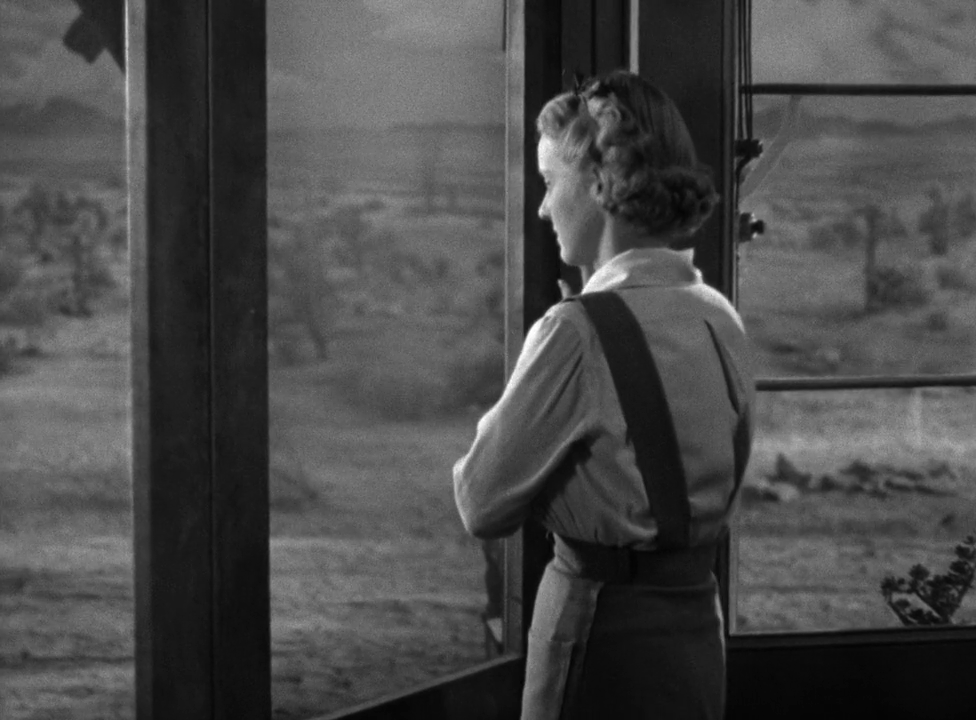
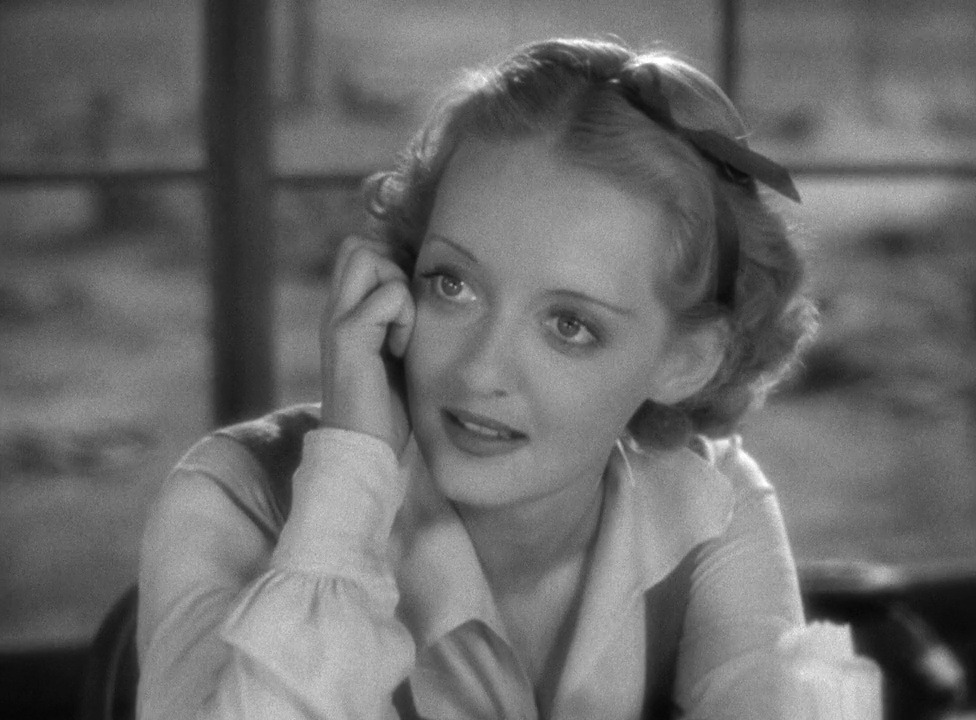
Tudo começa com a chegada de um estranho: Alan Squier (Leslie Howard, tão magro e pálido que se parece com Stan Laurel). Squier é um escritor charmoso que está cruzando os EUA após se divorciar, e ele logo conquista a garçonete do restaurante, a ingênua e sonhadora Gabrielle (Bette Davis).

Everything starts with the arrival of an odd man: Alan Squier (Leslie Howard, so slim and pale that he looks like Stan Laurel). Squier is a charming writer crossing the country after a divorce, and he instantly conquers the restaurant’s waitress, naïve dreamer Gabrielle Maple (Bette Davis).
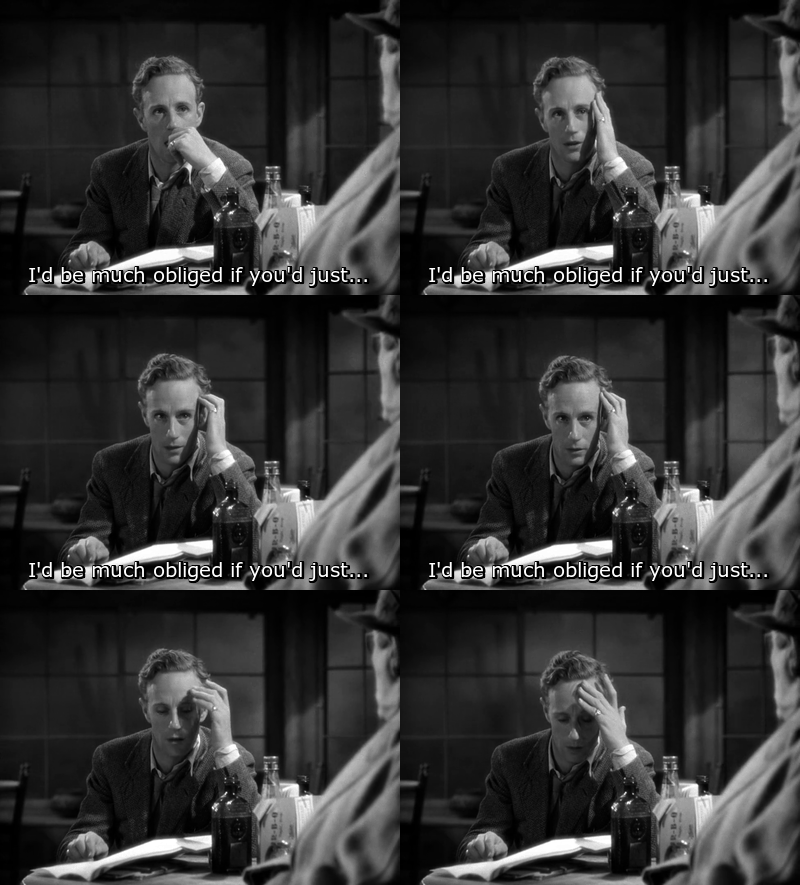
Mas chega a hora de dizer adeus. Alan pega uma carona com o casal Chisholm (Genevieve Tobin e Paul Harvey) e o motorista deles. Quando eles estão na estrada, escutam no rádio a descrição da aparência do gângster fugitivo Duke Mantee (Humphrey Bogart) e qual carro ele e seus comparsas estão usando para a fuga. Na curva seguinte o casal Chisholm tem uma surpresa: é o próprio Duke Mantee que os para e rouba o carro.

But time has come to say goodbye. Alan gets a lift from the Chisholms (Genevieve Tobin and Paul Harvey) and their driver. When they are on the road the radio describes how runaway gangster Duke Mantee (Humphrey Bogart) looks like and which car he and his mates are using. On the next curve the Chisholms have a surprise: it’s Duke Mantee himself, who stops them and steals their car.
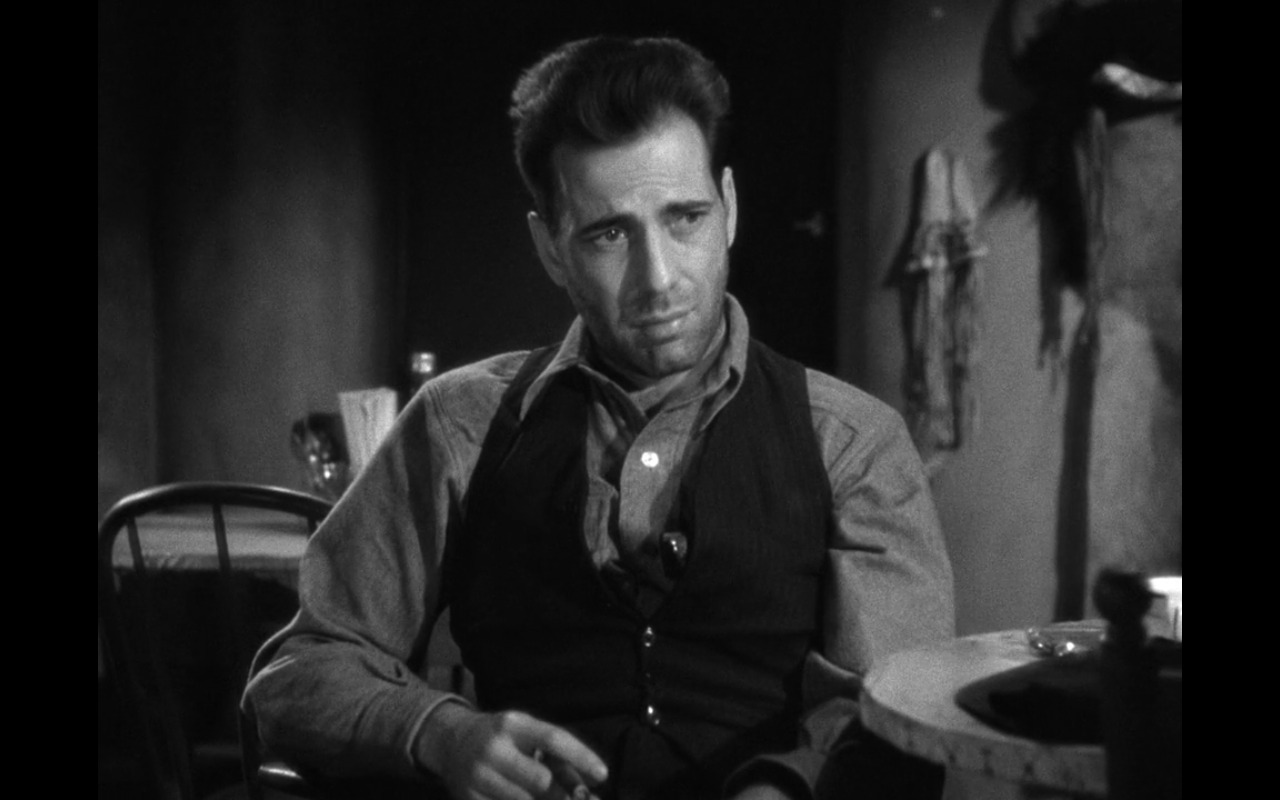
Enquanto o casal tenta consertar o carro de Duke para continuarem com a viagem, Alan, muito nervosa, volta para o restaurant, sabendo que Duke está prestes a encontrar Gabrielle. Duke chega lá. E Alan também. Agora, temos Gabrielle, Alan, o funcionário do posto Boze (Dick Foran) e o avô de Gabrielle (o divertido Charley Grapewin) são reféns de Duke e seus capangas. Com todos no restaurante, eles só podem ter conversas profundas sobre a vida, amor, dinheiro e dúvidas existenciais. E, sim, o casal Chisholm e o motorista também acabam sendo feitos reféns.

While the Chisholms try to fix Duke’s broken car to go on with their trip, a very nervous Alan walks back to the restaurant, knowing that Duke is about to hit the place. Duke does that. And so does Alan. Now, we have Gabrielle, Alan, the gas station employee Boze (Dick Foran) and Gabrielle’s grandfather (a very funny Charley Grapewin) held hostage by Duke and his evil crew. With all in the restaurant, they can only have deep conversations about life, love, money and existential doubts. And, yes, the Chisholms and the driver eventually arrive there, too.
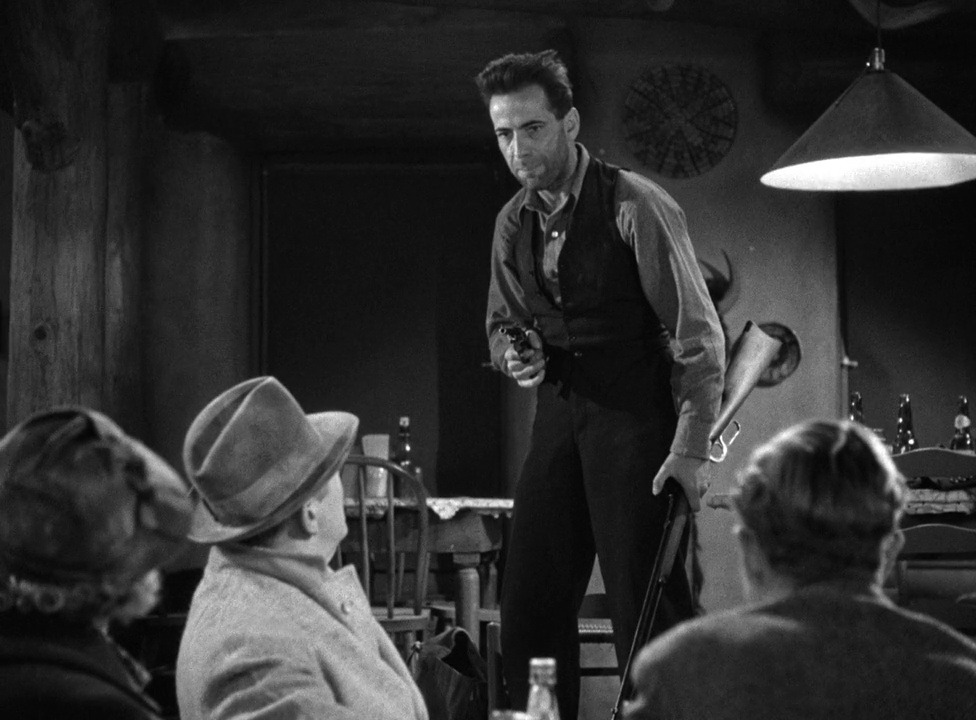
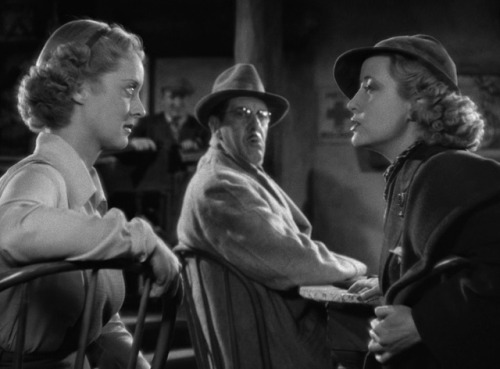
A principal tarefa de Bette Davis em “A Floresta Petrificada” é ser adorável. Gabrielle é uma garota sensível que deseja visitar sua cidade natal na França e adora ler poesia. Alan é um par perfeito para ela. Como Alan, Leslie Howard tem de dizer coisas bonitas e intelectuais que também sejam provocativas para nós, espectadores. E Genevieve Tobin tem um monólogo FANTÁSTICO.

Bette Davis’s main job in ‘The Petrified Forest” is to be adorable. Gabrielle is a sensitive girl who wants to visit her birthplace in France and loves to read poetry. Alan is a perfect match for her – even though Boze is insistent about seducing her. As Alan, Leslie Howard has to say beautiful, intellectual things that are provocative for us, viewers. Oh, and Genevieve Tobin has a FANTASTIC monologue.
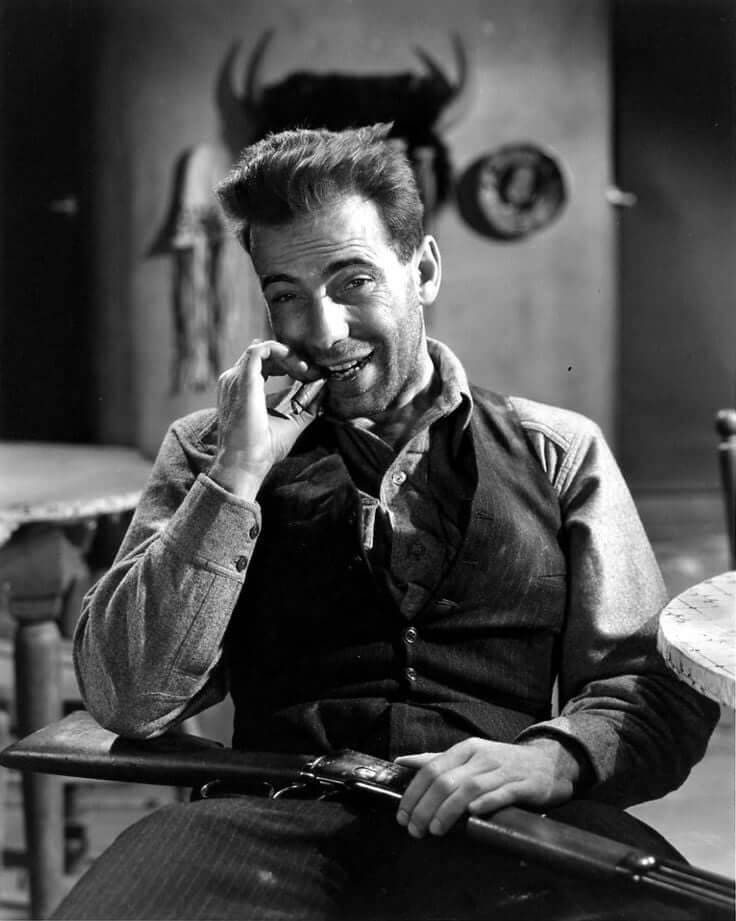
Humphrey Bogart interpreta um gângster barra-pesada com um minúsculo coração de manteiga. Na primeira fase de sua carreira, que vai de 1930 a 1941, ele foi mal aproveitado pela Warner Bros, que lhe dava só pequenos papéis – seu nome é só o quarto nos créditos deste filme – e papéis de vilão – no ano seguinte ele interpretaria um membro da Ku Klux Klan. É interessante notar, em Duke Mantee, este momento em particular, quando a câmera – por causa de uma tomada precisa planejada pelo diretor Archie Mayo – captura a alma do personagem:

Humphrey Bogart plays a heavy gangster with a tiny soft spot in his heart. In the first phase of his career, that goes from 1930 to 1941, he was mostly “undercast” by Warner Bros, who gave him small roles – he’s the fourth billed here – and roles of villains – he would play a Ku Klux Klan member in a 1937 movie. It’s interesting to notice, about Duke Mantee, this moment in particular, when the camera –because of a precisely planned shot by director Archie Mayo – captures the character’s soul:
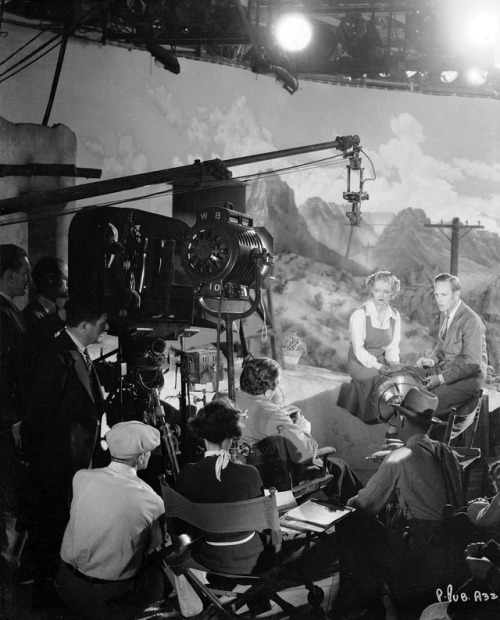
“A Floresta Petrificada” foi primeiro apresentada como peça, com Howard, Davis e Bogart nos três papéis principais. Quando o estúdio Warner adquiriu os direitos da peça, os executivos planejaram dar o papel de Duke para Edward G. Robinson, mas Leslie insistiu em contracenar com Bogart. Por causa deste apoio, Bogart foi para sempre grato para com Howard, e inclusive deu o nome de Leslie à sua filha. E Bogart teve a chance de interpretar Duke Mantee mais uma vez em 1955, em uma adaptação para a TV, com Lauren Bacall como Gabrielle e Henry Fonda como Alan.
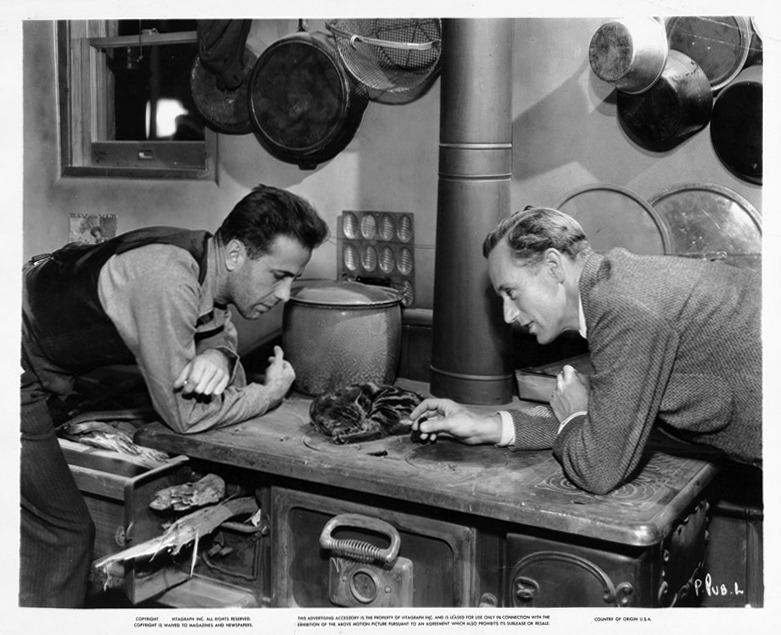
“The Petrified Forest” was first presented as a play, with Howard, Davis and Bogart in the three main roles. When it acquired the play rights, Warner planned to cast Edward G. Robinson for the role of Duke, but Leslie Howard insisted on working with Bogart. Because of this support, Bogart was forever grateful to Howard, and even named his daughter Leslie after him. And Bogart had the chance to play Duke Mantee once more in 1955, in a TV adaptation, with Lauren Bacall as Gabrielle and Henry Fonda as Alan.       
Sem dar spoilers, posso dizer que o filme pega um caminho muito incomum por causa do amor de Alan por Gabrielle. E, se você imaginou que um filme de 1936 traria uma lição moral machista e antiquada sobre as razões para a vida de um homem ou uma mulher, eu digo: você está muito enganado! Agora basta apenas conferir este excelente filme.

Without spoiling it, I can say that the film goes through a very unusual path thanks to Alan’s love for Gabrielle. And, if you presumed that a 1936 movie would bring a sexist, old-fashioned moral lesson about the reason behind a man’s or a woman’s existence, I must say: boy, you are wrong! Now go on and watch this wonderful movie.

This is my contribution to the Third Annual Bette Davis blogathon, hosted by Crystal at In the Good Old Days of Classic Hollywood.

Saturday, October 8, 2016

Vidas em Fuga / The Fugitive Kind (1960)

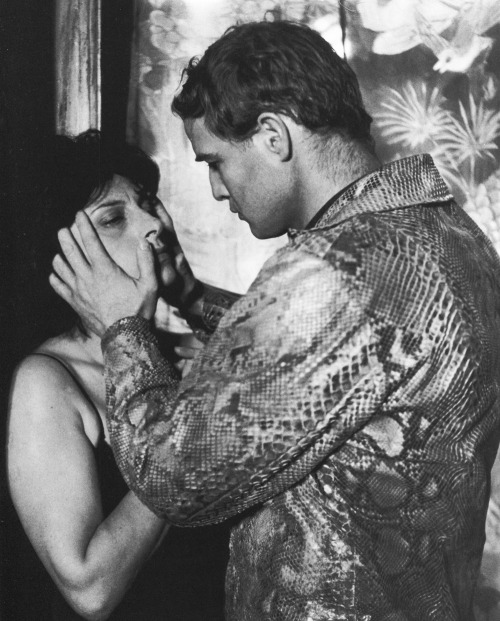
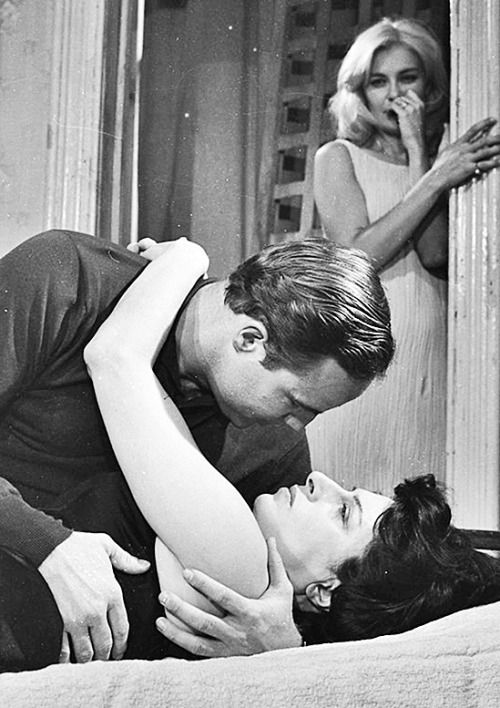
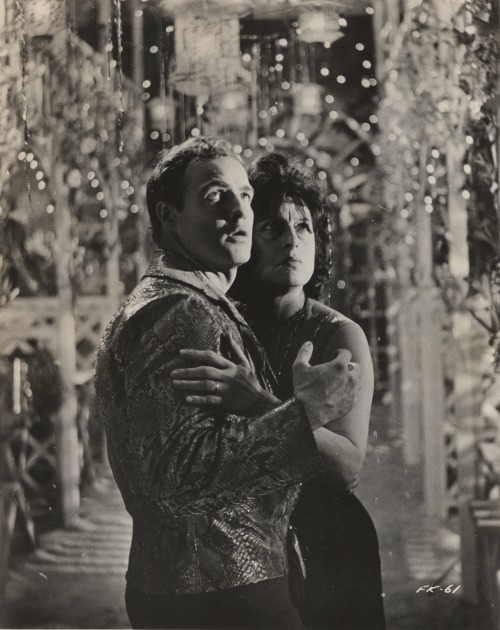
Um duelo de gigantes: não há maneira melhor de definir o encontro de duas lendas do cinema, Anna Magnani e Marlon Brando. Ela, uma das maiores, talvez a maior, atriz do cinema italiano. Ele, um ator igualmente poderoso e icônico. Juntos, eles se contrastam, se completam, e formam um estranho e eletrizante casal.

A battle of giants: there is no better expression to describe the occasion when two film legends, Anna Magnani and Marlon Brando, met. She was one of the greatest – maybe THE greatest – actresses from Italy. He was an equally powerful and iconic actor. Together, they contrast, they complete each other, and make a stange and thrilling couple.
Valentine ‘Val’ Xavier (Marlon Brando) é um músico que acaba de completar 30 anos e quer ficar longe de problemas. Ele foge de New Orleans para não ser preso, e se emprega como vendedor em uma pequena loja de uma pequena cidade. A dona da loja é Lady Torrance (Anna Magnani), e surge uma tensão sexual entre eles.

Valentine 'Val' Xavier (Marlon Brando) is a musician who just turned 30 and wants to stay away from troubel. He flees New Orleans in order to escape prison and gets a job as a clerk in a small store in a small town. The store is owned by Lady Torrance (Anna Magnani) and a sexual tension sparkles between them.
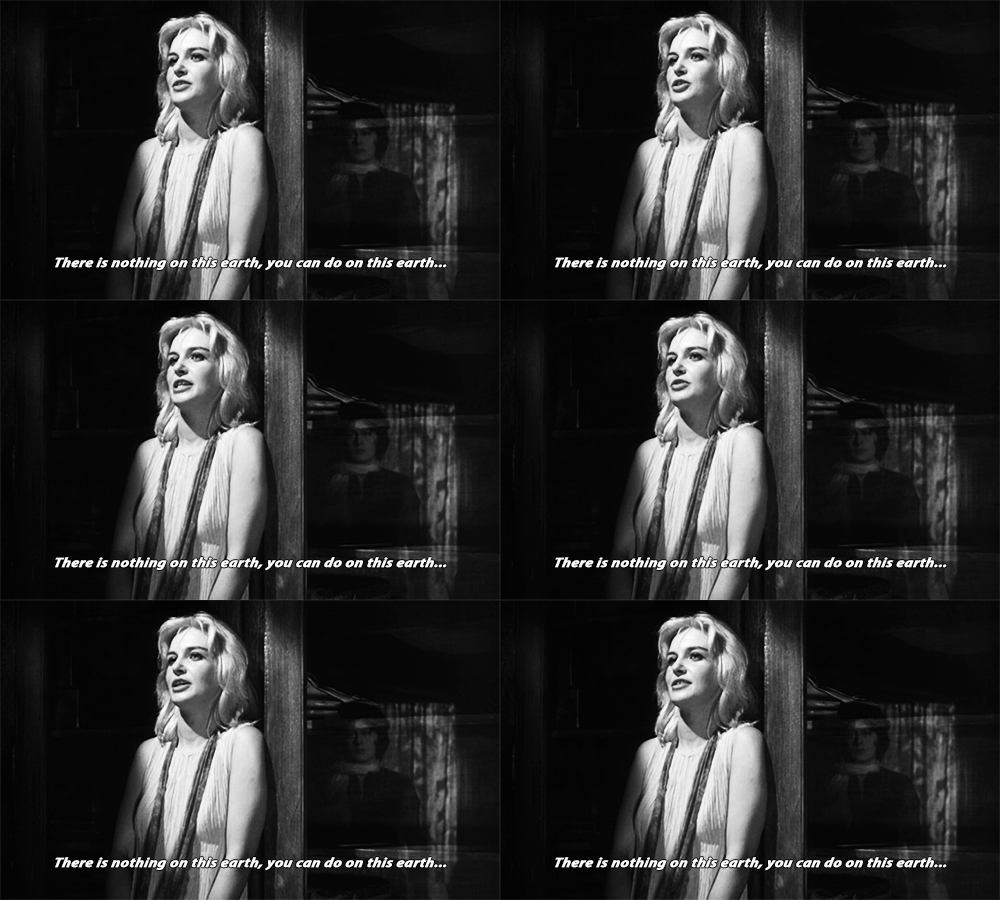
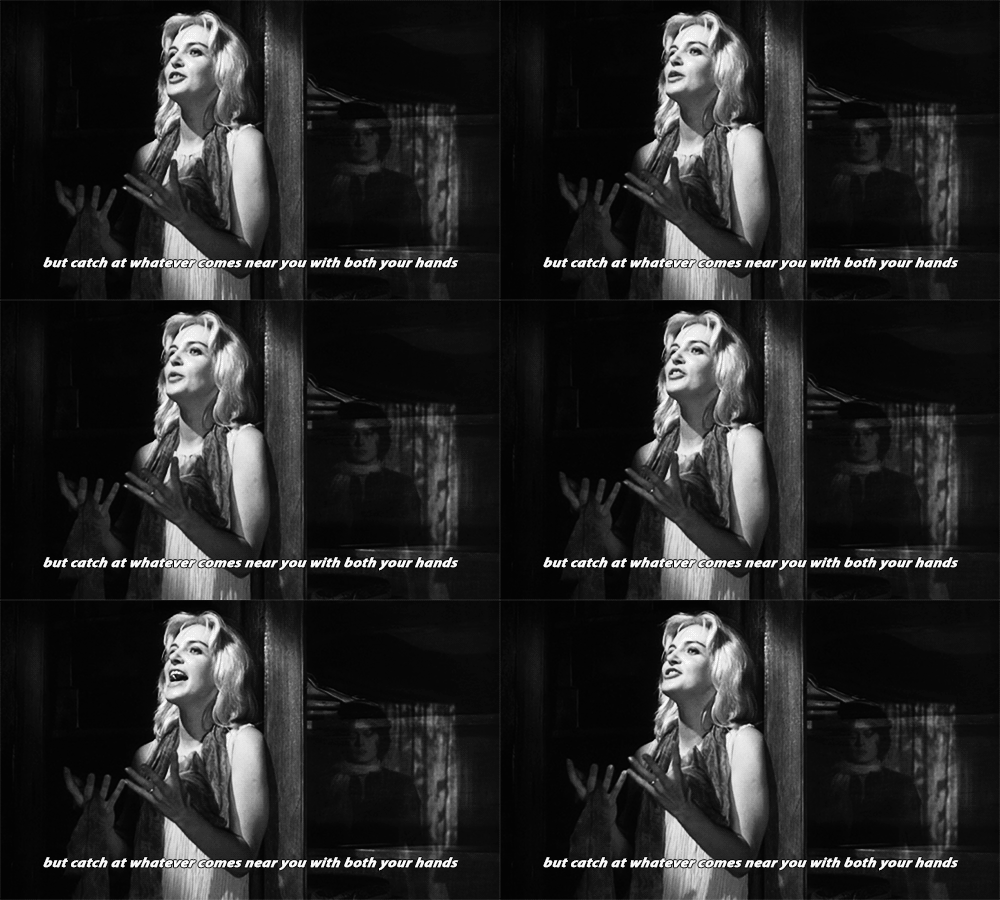
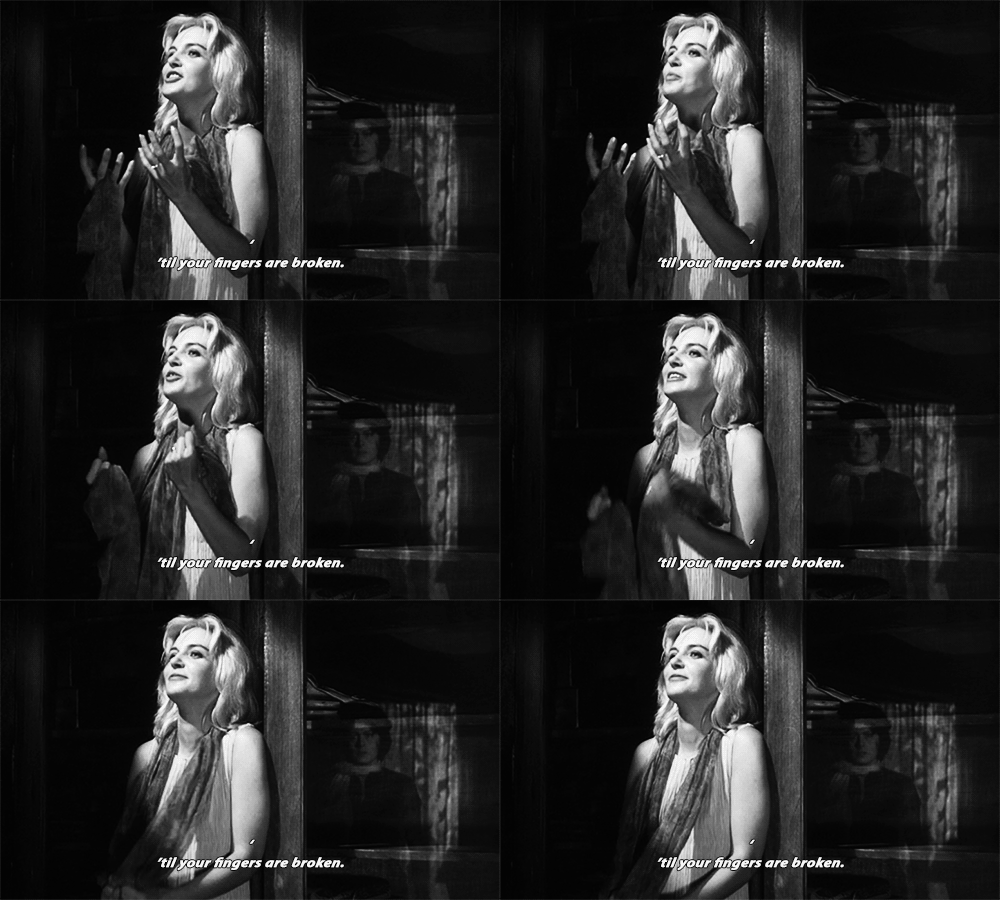
Mas há muitos problemas. Primeiro: Lady Torrance é casada, e seu marido atualmente agoniza no andar de cima da loja. Segundo: Val tem não uma, mas duas mulheres de olho nele desde que ele chegou à nova cidade: a desmiolada e perdida Carol Cutrere (Joanne Woodward) e a dona de casa Vee Talbot (Maureen Stapleton).

But there are many problems in the way. First: Lady Torrance is married, and her husband currently agonizes in an apartment above the store. Second: Val doesn't have one, but two women observing him since he arrived to the new town: the lost rebel Carol Cutrere (Joanne Woodward) and the housewife Vee Talbot (Maureen Stapleton).
Não é um filme romântico. Não é uma história de amor melosa e fofa. É drama puro, protagonizado por dois dos maiores atores dramáticos da história e com coadjuvantes igualmente talentosos. Lady Torrance é uma mulher triste, amarga, sofrida. Carol Cutrere é a moça de família rica que decide se rebelar e viver com uma... hippie. Carol é super-sexualizada, atrevida, espontânea e livre. Vee Talbot não é um interesse amoroso, mas é uma personagem importante e sensível.

This is not a romantic film. This is not a cute, sweety love story. It is pure drama, leaded by two of the best dramatic actors in history and with equally talented supporting actors. Lady Torrance is a sad, bitter suffering woman. Carol Cutrere is the girl from a rich family who rebels and lives as a hippie. Carol is overly-sexualized, sassy, spontaneous and free. Vee Talbot is not a love interest, but she is an important and sensitive character.
“Vidas em Fuga” teve sua origem em uma peça de Tennessee Williams, que em sua primeira versão se chamava “Batalha de Anjos” e não teve grande público em 1940. Anos mais tarde, já um renomado dramaturgo, Williams reescreveu a peça, agora com o título “A Descida de Orfeu”, exatamente pensando em Anna Magnani e Marlon Brando nos papéis principais. Ambos se recusaram a protagonizar a peça nos palcos, mas aceitaram a oferta para as telas.

“The Fugitive Kind” was originated by a Tennessee Williams play first called “Battle of Angels”. This first version didn't have enough attendance in 1940 to keep running. Years later, when he was alredy a well-known playwriter, Williams rewrote the play, now under the title “Orpheus Descending”, exatcly thinking about Anna Magnani and Marlon Brando for the lead roles. Both refused to be involved in the stage production, but accepted the offer to star the version on the screen.
Era o projeto mais pessoal de Tennessee Williams, e aquele que só foi devidamente reconhecido após a morte do autor. A peça foi um fracasso na reestreia de 1957, o filme de 1960 foi um fracasso de bilheteria e a revista Films in Review o chamou de “uma desgraça para a cultura americana”. Marlon Brando, que havia recebido um milhão de dólares para interpretar Val, batendo um recorde salarial, viu ali o começo de uma má fase na carreira que só acabaria com Vito Corleone.

It was the most personal Tennessee Williams project, and one that only was recognized as a great piece after the author had died. The play was a failure in the 1957 re-opening, the 1960 film was a box-office failure and the magazine Film in Review called it “a disgrace to US culture”. Marlon Brando, who had received a million dollars to play Val, an unprecedent salary at the time, saw there the beginning of a bad phase in his career that would only end with Vito Corleone.
E Brando também não ficou feliz por a história pertencer, mesmo em momentos que não devia, a Anna Magnani. Magnani domina a tela, é o centro das atenções e consegue, de algum modo, domar até mesmo Marlon Brando, o indomável. Tennessee Williams sempre escreveu peças com grandes personagens femininas: “Um Bonde Chamado Desejo”, “A Rosa Tatuada”, “Gata em Teto de Zinco Quente”, “De Repente, no Último Verão”. Não poderia ser diferente com “A Descida de Orfeu” e sua adaptação para o cinema.

And Brando also got mad because the story belonged, even when it wasn't supposed to, to Anna Magnani. Magnani dominates the screen, is the focus of all attention and somehow is able to tame Marlon Brando, the wild one. Tennessee Williams always wrote plays with powerful female characters: “A Streetcar Named Desire”, “The Rose Tattoo”, “Cat in a Hot Tin Roof”, “Suddenly, Last Summer”. It couldn't be different with “Orpheus Descending” and its film adaptation.
Ao mesmo tempo, é difícil pensar em Sidney Lumet como um diretor de grandes atrizes. Seus filmes mais conhecidos, como “Doze Homens e uma Sentença” (1957), “Um Dia de Cão” (1975) e “Equus” (1977), são todos muito masculinos em seu tema e com fortes atuações de atores. Mas há também outros trabalhos, talvez menos conhecidos, de Lumet com atrizes fantásticas, incluindo Katharine Hepburn em “Longa Jornada Noite Adentro” (1962), o elenco principal com foco feminino em “O Grupo” (1966) e a força visível de Anne Bancroft aliada à força apenas sugerida de Garbo em “Fala, Greta Garbo!” (1984).

At the same time, it's difficult to think about Sidney Lumet as a director working with great actresses. His best known movies, such as “12 Angry Men” (1957), “Dog Day Afternoon” (1977) and “Equus” (1977), have all very male themes and strong performances by actors. But there are also other works, perhaps less known, that Lumet did with fantastic actresses, including Katharine Hepburn in “Long Day's Journey into Night” (1962), the female-focused main cast in “The Group” (1966) and Anne Bancroft's visible strenght sewed together with Garbo's suggested strenght in “Garbo Talks!” (1984).
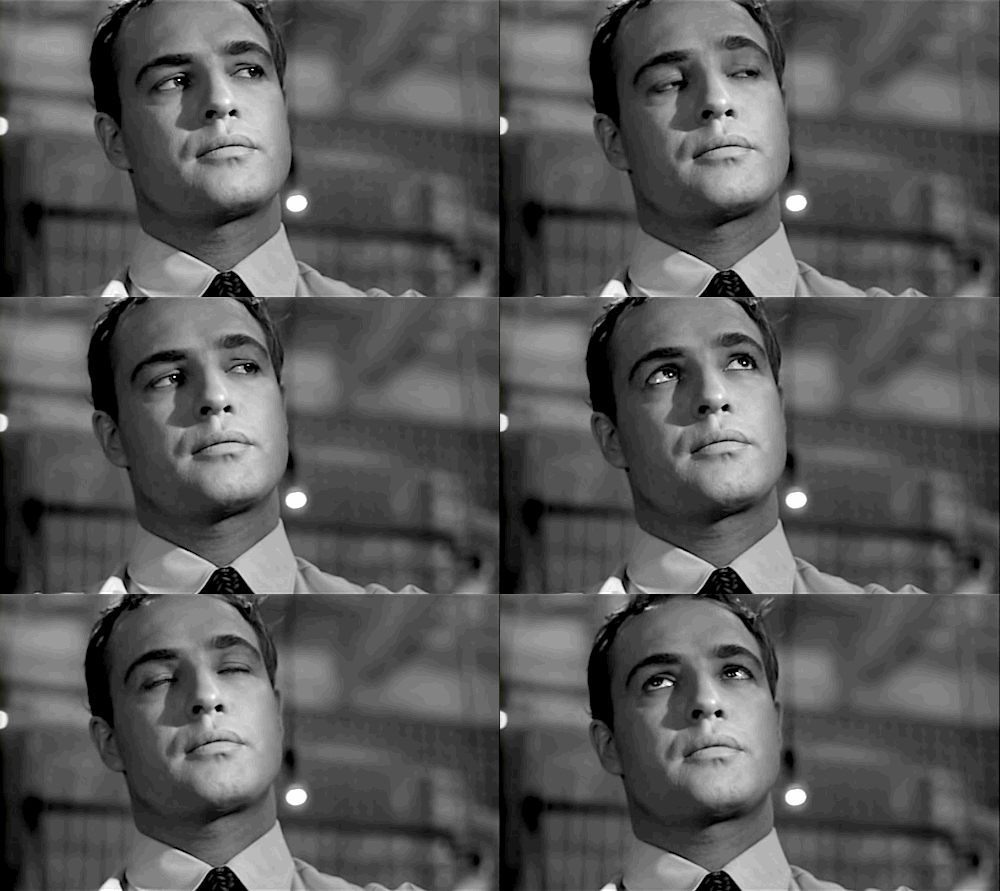
Marlon Brando, Sidney Lumet
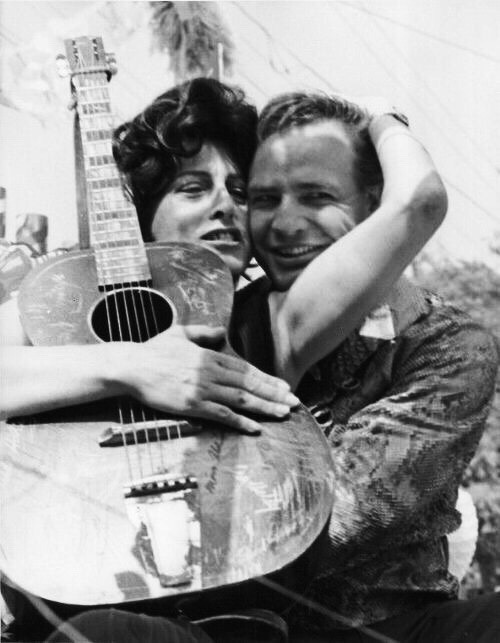
Não foi uma filmagem fácil, a de “Vidas em Fuga”: os modos de trabalho de Brando, Magnani e Lumet eram conflitantes. Brando fez inimizades nos sets de vários de seus filmes, e não foi diferente aqui com Magnani e Woodward. Mas toda essa animosidade adiciona ao filme e é traduzida na tela com perfeição por um diretor sempre comprometido com o realismo, mesmo que este se tornasse doloroso.

The shooting of “The Fugitive Kind” wasn't easy: the way Brando, Magnani and Lumet worked were different and contrasting. Brando made enemies while shooting several of his films, and it also happened here with Magnani and Woodward. But all this animosity adds to the movie, and is translated to the screen with perfection by a director always committed to realism, even if at times it became painful.

This is my contribution to the Sidney Lumet blogathon, hosted by SeanMunger.com 
Related Posts Plugin for WordPress, Blogger...