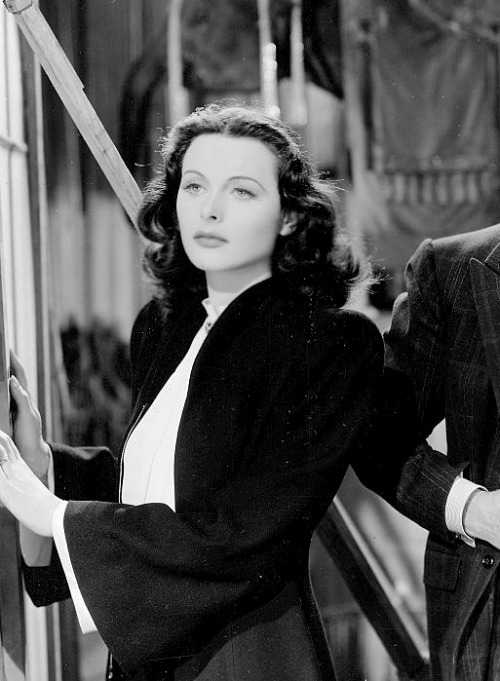
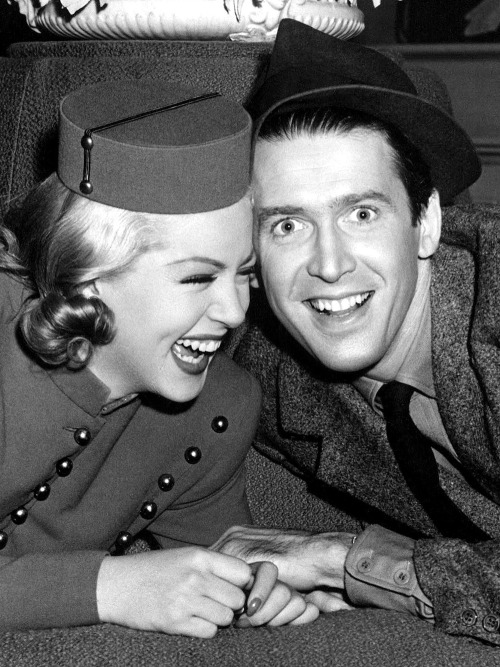
} Crítica Retrô: Hedy Lamarr

Tradutor / Translator / Traductor / Übersetzer / Traduttore / Traducteur / 翻訳者 / переводчик

Showing posts with label Hedy Lamarr. Show all posts

Wednesday, May 29, 2024

Variações sobre um mesmo tema: O Demônio da Algéria (1937) e Argélia (1938)

 Variations on the same theme: Pépé Le Moko (1937) and Algiers (1938)


Todos sabemos que os norte-americanos não gostam de assistir a filmes com legendas. Todos também sabemos que os chefes dos estúdios estão sempre de olho no mercado estrangeiro, procurando por inspiração e sucessos para fazer remakes. Em 1938, Hollywood fez um remake de um filme que havia estreado apenas um ano antes na França. “Argélia” é um remake fidelíssimo, quase cena a cena, de “O Demônio da Algéria” (sic), que ainda consegue ser cinco minutos mais longo que o original. Ambos contam com ótimas performances e alguns nomes nos bastidores que merecem ser destacados.


It’s widely known that Americans don’t like to watch movies with subtitles. It’s also widely known that studio heads are always with an eye on the foreign market, looking for inspiration and successes to be remade. In 1938, Hollywood remade a film that had premiered in France only one year prior. “Algiers” is an almost shot-by-shot remake of “Pépé Le Moko” that still manages to be five minutes longer than the original. Both have great performances and a few names behind the cameras that we should highlight.


Nos últimos dez anos, cinco detetives tentaram e falharam em capturar o ladrão Pépé Le Moko (Jean Gabin / Charles Boyer). Seu esconderijo é bem conhecido: é a Casbah, bairro labiríntico de Argel onde vivem quarenta mil pessoas. Como dito em “Argélia”, a polícia não pode simplesmente entrar no bairro e prender Pépé porque “não se pode prender um rei no seu próprio palácio”.


In the last two years, five detectives tried and failed to capture the thief Pépé Le Moko (Jean Gabin / Charles Boyer). His hidi
ng place is well known: it’s the Casbah, a labyrinthine district of Argel where forty thousand people live. As it’s said in “Algiers”, the police can’t simply invade the Casbah and arrest Pépé because “you can’t arrest a king in his own palace”.

Uma noite, enquanto fugia de um grupo de policiais, Pépé conheceu Gaby (Mireille Balin / Hedy Lamarr) e se apaixonou por ela... e ainda mais pelas joias dela. Ela é uma socialite francesa que estava passeando pela Casbah e está disposta a voltar nem que seja para jantar e dançar com o belo ladrão. Fora da Casbah é muito perigoso para ele... será que Pépé se contentará com sua garota Inès (Line Noro / Sigrid Gurie) ou se arriscará indo atrás de Gaby?


While running away one night from a group of police officers, Pépé meets Gaby (Mireille Balin / Hedy Lamarr) and falls in love with her… falling deeper for her jewels. She is a French socialite who was touring the Casbah and is willing to come back if only to have dinner and a dance with the handsome thief. Outside the Casbah it’s too dangerous for him… will Pépé settle for his girl Inès (Line Noro / Sigrid Gurie) or will he risk going after Gaby?

“O Demônio da Algéria” é um bom filme por causa do charme e do talent de Jean Gabin, que na época já era uma superestrela. Num artigo para o website da Criterion, Michael Atkinson escreve sobre ele: “Gabin era quase como Garbo em sua habilidade de ancorar nossa atenção sem mover um músculo”. O mais novo de sete filhos de uma dona de café e um artista de cabaré, ele começou a atuar aos 15 anos, trabalhando subsequentemente tanto no Folies Bergéres quanto no Moulin Rouge, além de fazer turnê pela América do Sul com um grupo. Ele fez seu primeiro filme em 1928 e o último em 1976, ano em que faleceu. Ele apareceu num total de 97 filmes.


“Pépé Le Moko” works because of the charm and talent of Jean Gabin, then already a superstar. In an  essay for the Criterion website, Michael Atkinson writes this about him: “Gabin was almost Garbo-like in his ability to anchor our attention without moving a muscle”. The youngest of seven children of a coffee owner and a cabaret entertainer, he started acting at 15, working in subsequent years at both the Folies Bergéres and the Moulin Rouge, and also touring South America with a troupe. He made his first film in 1928 and the last in 1976, the year he passed away. He appeared in 97 films total.

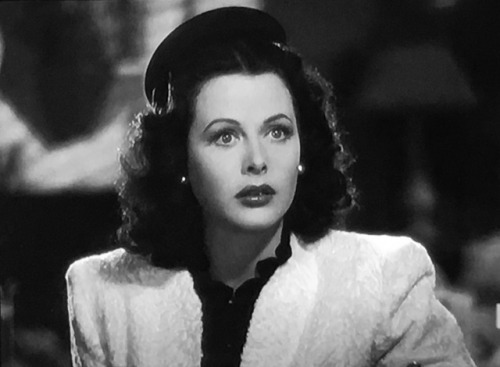
Charles Boyer pode ser charmoso e francês – uma redundância –, mas a verdadeira estrela de “Argélia” é Hedy Lamarr, em seu primeiro filme em Hollywood. O produtor Walter Wanger no início queria Sylvia Sidney ou Dolores Del Río como a atriz principal, mas acabou decidindo pedir Lamarr emprestada da MGM. Diz-se que foi Charles Boyer que apresentou Lamarr para Wanger após uma festa. Apesar de ser o chamariz para o filme, Hedy Lamarr foi considerada inadequada pelo diretor John Cromwell, que disse que ela não sabia atuar e não tinha personalidade.


Charles Boyer may be charming and French – a redundancy –, but the real star of “Algiers” is Hedy Lamarr, in her first Hollywood movie. Producer Walter Wanger first wanted Sylvia Sidney or Dolores Del Río as the female lead, but decided to borrow Lamarr from MGM instead. It is said that it was Charles Boyer who introduced Lamarr to Wanger after a party. Despite being the one who called attention for the film, Hedy Lamarr was considered inadequate by director John Cromwell, who said she couldn’t act and had no personality.

O livro que serviu de inspiração foi, diz-se, inspirado em “Scarface” (1932) e deu origem a um filme sem o qual o cinema noir seria completamente diferente. “O Demônio da Algéria” foi a primeira adaptação cinematográfica de um a obra literária de Henri La Barthe, creditado com seu pseudônimo Ashelbé. O diretor Julien Duvivier, que no começo da década foi responsável por efetivamente fazer a carreira de Jean Gabin decolar, foi um dos roteiristas. A história seria filmada mais uma vez em 1948, num musical com Tony Martin, Märta Torén e Yvonne de Carlo.


The source novel was reportedly inspired by “Scarface” (1932) and it originated a movie without which film noir wouldn’t be what it was. “Pépé Le Moko” was the first cinematic adaptation of a literary work by Henri La Barthe, credited under his pseudonym Ashelbé. Director Julien Duvivier, who was in the beginning of the decade responsible for effectively launching Jean Gabin’s career, served as one of the screenwriters. The story would be filmed once more in 1948, as a musical starring Tony Martin, Märta Torén and Yvonne De Carlo.
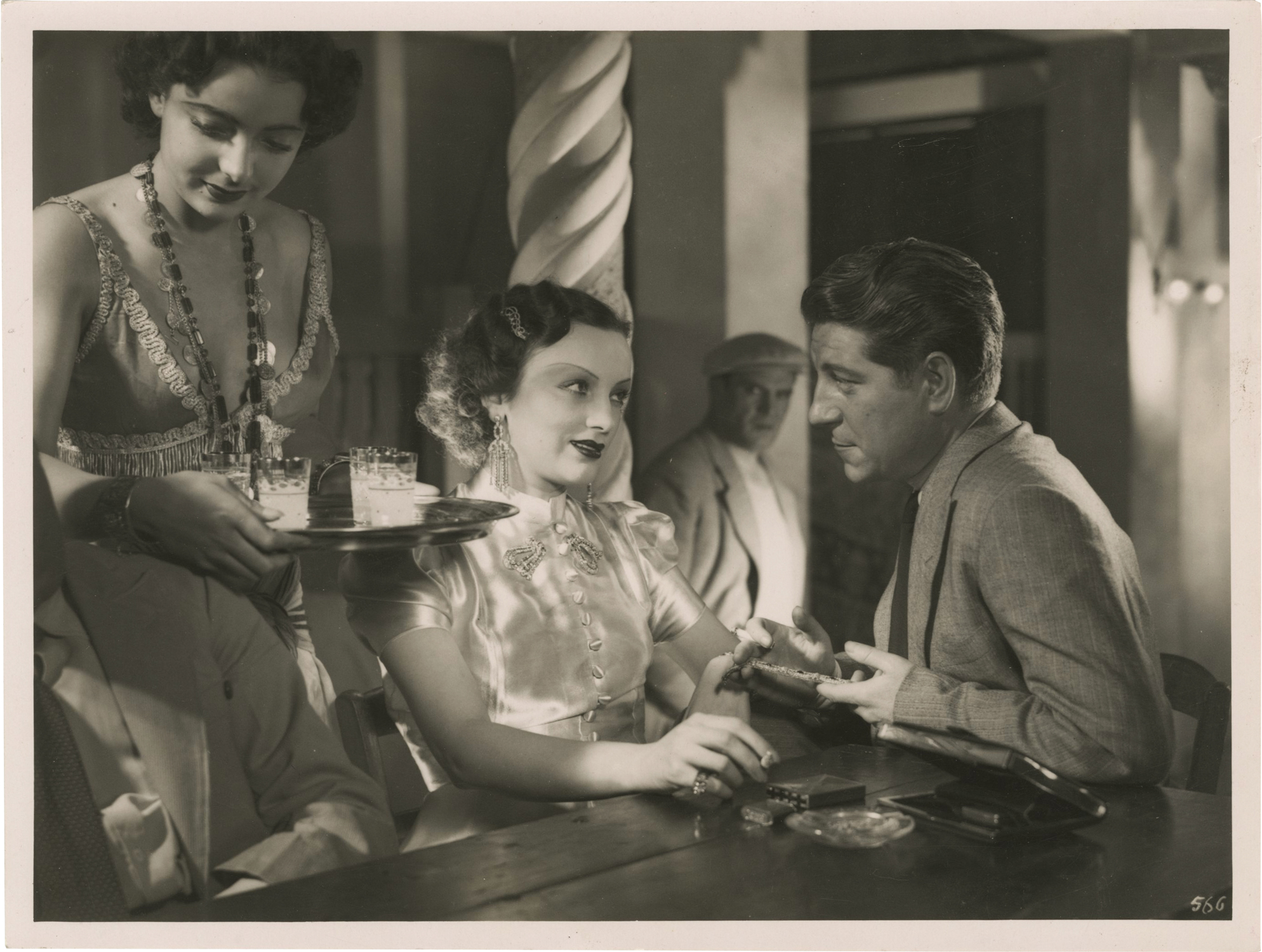
O diretor de fotografia de “Argélia” é o grande James Wong Howe. Nascido na China, sua família chegou a Washington quando ele tinha cinco anos. Ele foi boxeador profissional na adolescência e começou sua carreira no cinema como assistente de Cecil B. DeMille. “Argélia” deu a Howe a primeira de suas dez indicações ao Oscar, e ele ganhou duas vezes. Curiosidade: James Wong Howe e Charles Boyer nasceram no mesmo dia, 28 de agosto de 1899.


The director of photography in “Algiers” is the great James Wong Howe. Born in China, his family arrived in Washington when he was five. He was a professional boxer as a teenager and started his career in film as an assistant to Cecil B. DeMille. “Algiers” gave Howe his first of 10 Oscar nominations, and he would win twice. Curious info: James Wong Howe and Charles Boyer were born in the same day, August 28, 1899.

Em “Argélia” o personagem Regis (Gene Lockhart) tem mais tempo em cena que no filme original. Há basicamente uma sessão de tortura psicológica com ele quando Pépé descobre que Regis traiu seu amigo Pierrot e acompanhou o jovem até uma armadilha. Gene Lockhart foi indicado ao Oscar de Melhor Ator Coadjuvante por sua performance, mas não ganhou o prêmio.


In “Algiers” the character Regis (Gene Lockhart) has more screen time than in the original. There is basically a psychological torture session with him when Pépé finds out that Regis betrayed his pal Pierrot and accompanied the young man right into a trap. Gene Lockhart was nominated for the Best Supporting Actor Oscar for his performance, but didn’t win the award.

Quando Régis (Fernand Charpin) fala sobre Pépé ser mulherengo, ele retruca: “Eu dou a elas [às mulheres] meu corpo, mas mantenho para mim a cabeça”. Quando fala sobre sua linha de raciocínio para Inès, Pépé (interpretado por Charles Boyer) diz que “eu não penso com minha cabeça, mas com meu coração”. Estas frases definem as diferenças de construção de um mesmo personagem: o de Gabin é sexy e ousado, o de Boyer mais suave.


When Régis (Fernand Charpin) talks about Pépé’s womanizing habits, he says: “I give them [the women] my body, but I keep my head”. When talking about his thinking to Inès, Pépé (played by Charles Boyer) says that “I don’t think with my head, but with my heart”. These quotes settle the differences between the portrayals of the same character: Gabin’s is sexy and bold, Boyer’s is softer.

O sotaque francês e o jeito mulherengo do personagem de Boyer inspirou o personagem dos Looney Tunes Pepé Le Pew, apresentado ao público em 1945 com a frase de efeito “Venha comigo para a Casbah”. O filme de 1938 também inspirou “Casablanca”, com seu sucesso de bilheteria servindo de argumento para convencer a Warner Bros a aprovar o projeto do filme em 1942. A MGM, entretanto, não liberou Hedy Lamarr de seu contrato e “Casablanca” teve de ser feita com Ingrid Bergman como protagonista.


The French accent and the womanizing in Charles Boyer’s character inspired the Looney Tunes character Pepé Le Pew, introduced in 1945 with the catchphrase “Come with me to the Casbah”. The 1938 film also inspired “Casablanca”, with its success in the box-office serving as a point to convince Warner Bros to approve the project for the film in 1942. MGM, however, didn’t release Hedy Lamarr from her contract and “Casablanca” had to be made with Ingrid Bergman as the lead.

Um fato para horrorizar os amantes de cinema: enquanto era filmado o remake, Walter Wanger tentou destruir todas as cópias de “O Demônio da Algéria”. Que bom que ele não conseguiu! “O Demônio da Algéria” tem 3,8 estrelas no Letterboxd e sua nota no IMDb é 7,7, enquanto “Argélia” tem respectivamente 3,2 estrelas e nota 6,6. Ambos os filmes são muito bons de maneiras diferentes e vê-los em sequência, embora um pouco cansativo por causa da mesma história, dá origem a um divertido jogo de “encontrar diferenças”.


A fact that will horrify all film lovers: while shooting the remake, Walter Wanger tried to have all the copies of “Pépé Le Moko” destroyed. We’re happy his wish wasn’t granted! “Pépé Le Moko” has 3,8 stars on Letterboxd and its grade is 7,7 on IMDb, while “Algiers” has respectively 3,2 stars and grade 6,6. Both movies are extremely enjoyable and entertaining in their own ways, and a double feature, even though tiring with the same story, serves as a joyful game of “spot the differences”.

Monday, February 28, 2022

A História da Humanidade (1957) / The Story of Mankind (1957)


Mais estrelas que há no céu: com este lema eram anunciados os filmes “all-star”. Estes eram filmes com um elenco de dar inveja, e entre os muitos produzidos podemos mencionar “Grande Hotel” (1932), “Jantar às Oito” (1933), “Seis Destinos” (1942) e “A Conquista do Oeste” (1952). Se um bom elenco reflete na qualidade de um filme, isso significa que um filme “all-star” não pode ser ruim, certo? Errado. Vamos dar uma olhada em um filme “all-star” que deu muito errado: “A História da Humanidade” (1957).

More stars than there are in Heaven: with this motto the “all-star” movies were advertised. These were movies with an impressive cast, and among them we can mention “Grand Hotel” (1932), “Dinner at Eight” (1933), “Tales of Manhattan” (1942) and “How the West Was Won” (1952). If a good cast reflects in the quality of the movie, this means that an “all-star” movie can’t be bad, right? Wrong. Let’s take a look at an “all-star” movie gone terribly wrong: “The Story of Mankind” (1957).

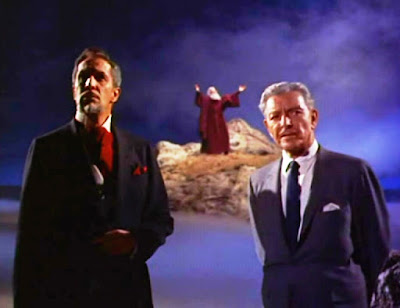
A trama até que é interessante. Depois do desenvolvimento de uma arma denominada Super H-Bomb – ou seja, uma bomba de hidrogênio -, seres celestiais organizam um julgamento no espaço sideral para decidir o destino da humanidade. Será que a humanidade deveria ser salva ou os seres celestiais deixarão os homens destruírem uns aos outros? Para decidirem, os juízes vão ouvir os argumentos do Espírito do Homem (Ronald Colman), que tentará proteger a humanidade, e do Diabo (Vincent Price), que tentará provar que a humanidade sempre foi má e merece ser extinta. Nos 90 minutos seguintes, haverá um desfile de participações especiais e algumas mortes ridículas.

The plot is actually interesting. After the development of a weapon named Super H-Bomb – that is, a hydrogen bomb –, celestial beings call for a tribunal in outer space to decide the fate of mankind. Should mankind be saved from itself or will the celestial beings let men destroy other men? In order to decide, the judges will hear arguments from the Spirit of Man (Ronald Colman), who will try to protect mankind, and from the Devil (Vincent Price), who will try to prove that mankind has always been evil and deserves to be erased from Earth. In the following 90 minutes, you’ll be served a parade of special guests and also some ridiculous onscreen deaths.


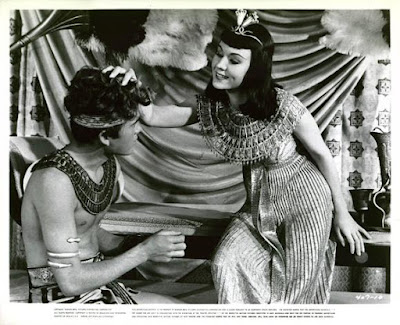
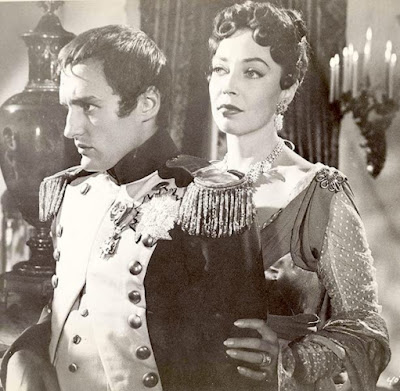
O filme não é muito bondoso para com as mulheres notáveis da história. Ele retrata Helena de Troia como uma femme fatale fútil, Cleópatra como ladra (e também fútil) e Maria Antonieta como uma tirana sem coração. Joana D’Arc (interpretada por Hedy Lamarr) é uma heroína, mas o Diabo usa o caso dela para provar que as pessoas são más porque traem outras pessoas, como Joan foi traída por compatriotas francesas. Mulheres são comumente apagadas da história, e é uma pena que, quando elas são mencionadas, são retratadas como personagens pouco complexas.

The movie is not very kind to the notorious women of history. It portrays Helen of Troy as a futile femme fatale, Cleopatra as a pickpocket (also futile) and Marie Antoinette as an inconsiderate tyrant. Joan of Arc (played by Hedy Lamarr) is a heroine, but the Devil uses her case to prove that people are evil because they betray other people, as Joan was betrayed by her fellow Frenchmen. Women are often erased from history, and it’s a shame that, when they are acknowledged, they are portrayed as less-than-complex characters.


A maioria dos momentos de bondade mostrados pelo Espírito do Homem tem a ver com religião. Isso inclui a revelação dos dez mandamentos para Moisés, os primeiros católicos rezando nas catacumbas em Roma, os monges mantendo a palavra de Deus viva na Idade Média. Todo esse discurso católico é estranho, e ainda mais estranho considerando que o filme diz que o julgamento é no espaço sideral, não no Céu. Nestes momentos, o filme se torna pregador, soando mais como uma lição de moral que uma obra de entretenimento.

Most of he moments of goodness shown by the Spirit of Man are connected with religion. This includes the reveal of the ten commandments to Moses, the first Catholics praying in the catacombs in Rome, the monks that kept God’s word alive during the Middle Ages. All this Catholic speech is odd, and even odder considering that the movie says that the courtroom is in outer space, and not Heaven. In these moments, the film becomes too preachy, sounding more than a moral lesson than a piece of entertainment.


A História da Humanidade” apresenta apenas a história eurocêntrica, sendo inclusive “anglocêntrica” quando conta, por exemplo, que a lei e a ordem foram trazidas de volta ao mundo quando o rei John assinou a Magna Carta no século XIII. Ao seguir esta visão, o Diabo apresenta um bom argumento, por exemplo, quando fala sobre a destruição trazida pelo colonizador para a América, com o massacre dos nativos. O Diabo mais uma vez tem razão quando o Espírito do Homem tenta mostrar que o colonizador inglês é um cavalheiro, e o Diabo o recorda da escravidão.

The Story of Mankind” presents only Eurocentric history, even being “anglocentric” when it tells, for instance, that law and order were brought back to the world when king John signed the Magna Carta in the 13th century. By following this vision, the Devil makes a point, for instance, when he talks about the destruction brought by the colonizers to America, with the slaughter of the natives. The Devil also scores when the Spirit of Men tries to paint English colonizers as true gentlemen, and the Devil reminds him of slavery.


Ronald Colman foi uma escolha perfeita para interpretar o Espírito do Homem e nos defender. Um ator fantástico, Colman interpretou muitos personagens honrados, como o protagonista de “A Queda da Bastilha” (1935). Vincent Price também foi a escolha perfeita para fazer o Diabo: suave e fria, sua persona cinematográfica combina com sua interpretação de um diabo bonitão e ultrarracional.

Ronald Colman was a perfect choice to play the Spirit of Man and defend us all. A superb actor, Colman often played honored characters, like the lead in “A Tale of Two Cities” (1935). Vincent Price was also perfectly cast as the Devil: suave yet cold, his onscreen persona matches this portrayal of a handsome and intellect-driven devil.


A premissa de “A História da Humanidade” é até bem intelectual: o homem é intrinsecamente bom ou mau? Esta é uma questão feita e refeita há séculos, uma questão que dividiu filósofos com o passar dos séculos: Thomas Hobbes acredita que somos intrinsecamente maus, Jean-Jacques Rousseau acha que os humanos são bons. Sociedades complexas modernas – e por “modernas” eu quero dizer sociedade como as que emergiram na Mesopotâmia por volta de 3000 a.C. - são as sociedades em que líderes tirânicos podem emergir – e convencer ou forçar as pessoas a fazer o mal. Psicólogos sociais, após experimentos e a observação dos julgamentos de Nuremberg, concluíram que é a situação que fará uma pessoa se comportar de maneira boa ou má. Ninguém conseguiu dar uma resposta definitiva para a questão – nem mesmo este filme.

The premise of “The Story of Mankind” is actually very intellectual: is man intrinsically good or evil? This is a centuries-old question, one that has divided philosophers through the ages: Thomas Hobbes thinks we’re inherently evil, Jean-Jacques Rousseau thinks humans are good. Modern complex societies – and by “modern” I mean societies like the ones that emerged in Mesopotamia around 3,000 b.C. - are the societies where tyrannical leaders could emerge – and convince or force people to do harm. Social psychologists, after experiments and the observation of the trials in Nuremberg, concluded that it is the situation that determines if a person will do good or behave badly. Nobody was able to give a definitive answer to the question – not even this film.


A História da Humanidade” foi dirigida, produzida e co-escrita por Irwin Allen, usando como base um livro de não-ficção com o mesmo título publicado em 1921. O nome de Irwin Allen é familiar para os fãs do gênero “filme de desastre”: ele foi produtor de “O Destino do Poseidon” (1972), “Inferno na Torre” (1974) e do ridículo “O Enxame” (1978).

The Story of Mankind” was directed, produced and co-written by Irwin Allen, using as source a non-fiction book of the same title published in 1921. Irwin Allen’s name is familiar for fans of the “disaster movie” genre: he was the producer of “The Poseidon Adventure” (1972), “The Towering Inferno” (1974) and the ridiculous “The Swarm” (1978).


Em 1957, Allen era apenas um ex-publicitário que estava fazendo sua estreia num filme live-action depois de dirigir dois documentários. De acordo com notícias da época, “A História da Humanidade” deveria ser um épico de três horas com apenas dois atores, um homem e uma mulher, contando toda a história da humanidade. A ideia mudou e um elenco de peso foi chamado para fazer o filme que conhecemos – isto é, este filme cheio de anacronismos e erros factuais.

In 1957, Allen was just a former publicist who was making his live-action feature film debut after directing two documentaries. According to press releases of the time, “The Story of Mankind” was first supposed to be a three-hour epic with only two actors, a man and a woman, telling the whole history of mankind. Things changed and an all-star cast was assembled to make the movie as we know it – that is, full of anachronisms and factual errors.


Eu sempre tento ver o lado bom dos filmes ruins, e consegui encontrar algumas coisas boas em “A História da Humanidade”. A sequência de Groucho Marx como colonizador inglês é divertida. Temos Francis X. Bushman, uma superestrela da era muda, como Moisés. A fotografia de Nicholas Musuraca – creditado como “Nick” – é muito boa. Surpreendentemente, não há blackface, brownface nem yellowface.

I always try to find redemptive characteristics even in the worst movies, and I managed to find some in “The Story of Mankind”. Groucho Marx’s bit as an English settler is funny. We have Francis X. Bushman, a superstar from the silent era, as Moses. The cinematography by Nicholas Musuraca – credited as “Nick” – is very good. Surprisingly, there is no blackface, brownface or yellowface.


Eu li em algum lugar que a História nada mais é que um bando de pessoas horríveis fazendo coisas horríveis. Eu penso muito sobre essa definição, e na maioria das vezes concordo com ela. Com genocídios, guerras e tantas outras coisas ruins que aconteceram e vêm acontecendo agora mesmo, eu também tendo a concordar com o Diabo de “A História da Humanidade” – a voz mais razoável num filme que às vezes soa como propaganda religiosa, e na maior parte do tempo é apenas uma bela bagunça.

I read somewhere that history is a bunch of horrible people doing horrible deeds. I’ve thought about this definition often, and I tend to agree with it. With genocides, wars and so much more bad things that have happened and are happening right now, I also tend to agree with the Devil from “The Story of Mankind” – the most reasonable voice in a film that sometimes feels like religious propaganda, and most of the time is just a beautiful mess.

This is my contribution to the Fourth So Bad It’s Good blogathon, hosted by Rebecca at Taking Up Room.

Monday, November 5, 2018

Um Rival nas Alturas (1944) / The Heavenly Body (1944)


Você já leu seu horóscopo hoje? Ele trouxe boas ou más previsões? Você está aqui somente porque ele disse que hoje era um bom dia para ler um blog bilíngue de cinema clássico? Não importam as respostas para estas perguntas; é preciso perceber que horóscopo e o zodíaco já eram bons assuntos para serem discutidos em filmes lá em 1944, quando a deliciosa mas pouco conhecida comédia “Um Rival nas Alturas” foi feita.

Have you read your horoscope today? Did it have good or bad predictions? Are you here only because it said today was a good day to read a bilingual blog on classic film? No matter the answers to these questions, we must face horoscopes and the Zodiac were already good plot devices back in 1944, when the delightful yet lesser known screwball comedy “The Heavenly Body” was made. 


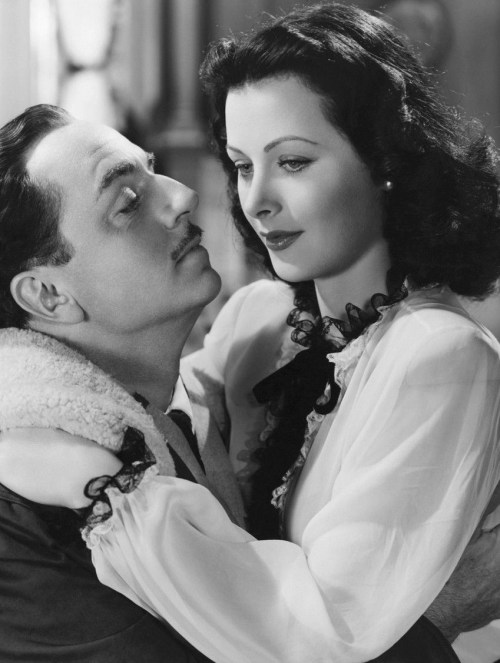
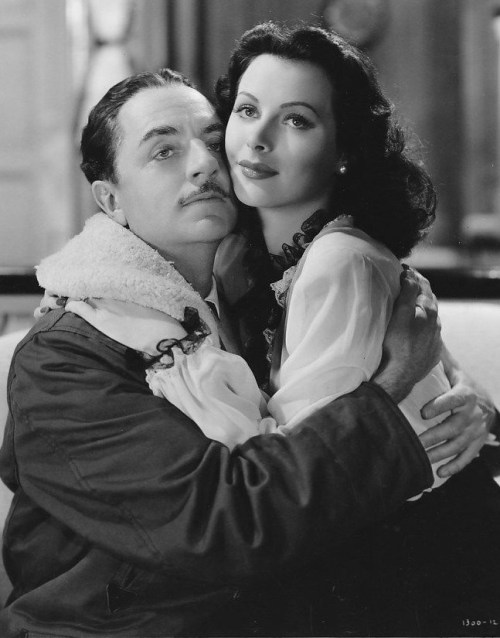
A confusão entre astronomia e astrologia é o cerne do conflito de “Um Rival nas Alturas”. Como diz o professor William Whitley (William Powell), astronomia é uma ciência, astrologia é superstição. O professor acabou de descobrir um novo cometa, e mesmo assim sua esposa, Vicky (Hedy Lamarr), está decidida a se consultar com uma astróloga porque sua vizinha está dizendo maravilhas a respeito da poderosa mulher.
The confusion between astronomy and astrology is at the heart of the conflict in “The Heavenly Body”. As Professor William Whitley (William Powell) puts it, astronomy is a science, astrology is superstition. Professor Whitley is a famous astronomer who just discovered a new comet, and yet his wife, Vicky (Hedy Lamarr) is willing to see an astrologer because her neighbor has been talking wonderful things about her.


Na verdade, a vizinha Nancy Potter (Spring Byington) está completamente dependente da consulta ao horóscopo para escolher o que vestir ou o que fazer em determinado dia. Ela seria uma daquelas chefes que não contratariam pessoas dos signos de Virgem e Escorpião de maneira alguma. Sim, é 1944 e já tínhamos maníacos por horóscopo!

In fact, the neighbor Nancy Potter (Spring Byington) is completely dependent on her horoscope in order to choose her clothes or her next step for that day. She would be one of those bosses who don’t hire Virgos or Scorpios under any circumstances. Yes, it’s 1944 and we already had horoscope freaks!


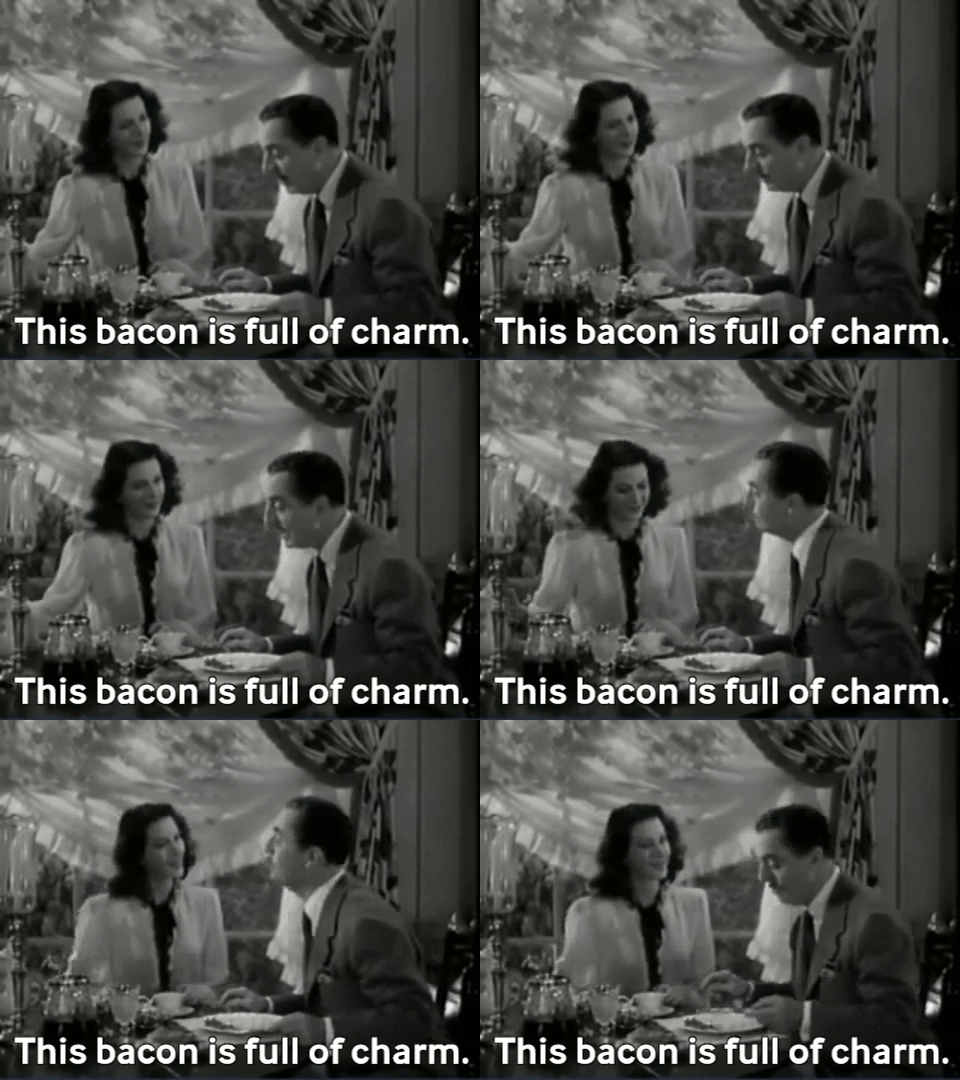
O casal Whitley tem uma rotina caótica. Já que o professor tem de trabalhar à noite, quando as estrelas e outros corpos celestes estão visíveis, ele chega em casa quando Vicky acorda. E ele toma café da manhã uma hora antes de Vicky jantar. Por causa disso, eles não conseguem encontrar uma empregada que se acostume aos horários deles – você sabe, #WhitePeopleProblems.

The Whitley couple has a hectic schedule. Since the professor has to work at night, when the stars and other heavenly bodies are visible, he arrives home when Vicky wakes up. And he has breakfast one hour before Vicky has dinner. Because of this, they can’t find a maid that will suit their needs – you know, White People Problems™.


Quando Whitley descobre que a esposa se consultou com uma astróloga, ele reage como se ela tivesse cometido um crime. A situação é bastante ridícula com Vicky evitando chegar perto de janelas aos domingos e de seu marido às terças-feiras, mas tudo piora quando a senhora Sybill diz a Vicky que ela irá conhecer seu amor verdadeiro – que, obviamente, não é o senhor Whitley. Não há nada a ser feito: está escrito nas estrelas.

When Whitley learns that his wife saw an astrologer, he reacts as if she had committed a crime. The situation is ridiculous enough as Vicky starts avoiding windows on Sundays and her husband on Tuesdays, but it really gets ugly when Mrs Sybill tells Vicky she is about to meet her one true love – who, obviously, isn’t Mr. Whitley. There is nothing they can do: it’s simply written in the stars.


Você acredita em horóscopo? É uma pergunta difícil para mim. Como alguém que nasceu entre dois signos do zodíaco – Câncer e Leão – eu vejo características de ambos em mim mesma. Eu também fico feliz quando meu horóscopo acerta – tipo quando eu li que pessoas de Câncer são bons historiadores. Mas eu também não leio o horóscopo com frequência nem tomo decisões baseada nele.

Do you believe in horoscopes? That is a difficult answer for me to answer. Being someone who was born on the verge of the change of two Zodiac signs – from Cancer to Leo – I see characteristics of both signs in myself. I also get happy when my horoscope gets it right – like when I once read that Cancers make good historians. But I also don’t read the horoscope often and don’t make choices based on it.


Nós acreditamos em horóscopos porque gostamos de acreditar – em qualquer coisa. A vida é tão caótica que precisamos acreditar em alguma coisa que a controle – não importa se for religião, estrelas, destino, deuses ou uma combinação destas coisas. Acreditar em horóscopos tira um pouco da culpa – “Eu só faço isso porque é típico de Capricórnio” – e acaba com a necessidade de fazer escolhas – “Eu farei isso porque é algo bom para alguém de Peixes fazer no dia de hoje”.

We believe in horoscopes because we like to believe – in anything. Life is so hectic and chaotic that we must believe in something controlling it – no matter if it is religion, stars, destiny, gods or a combination of them. Believing in horoscopes take away some kind of guilt – “I only do that because I’m a Capricorn” – and the need to make some choices – “I’ll do that because it’s a good thing for a Pisces to do today”.


Mesmo sem acreditar no negócio, Vicky se consulta com a senhora Sybill (Fay Bainter), que faz previsões para políticos, reis e outras pessoas importantes. E ela diz nunca estar errada. E quando Vicky conhece o correspondente de guerra Lloyd Hunter (Jim Craig), ela pensa que ele é o homem vindo de terras estrangeiras que ela deveria encontrar e por quem iria se apaixonar. Obviamente, Whitley não deixará Vicky ir embora, e tentará vários truques para fazê-la parar de acreditar na senhora Sybill.

Even without believing the thing, Vicky goes see Mrs Sybill (Fay Bainter), who makes predictions for politicians, kings and other important people. And she says she is never wrong. As Vicky meets the war correspondent Lloyd Hunter (Jim Craig), she thinks he is the man from foreign lands she is supposed to meet and fall in love with. Of course, Whitley won’t let Vicky go so easy, and he’ll try several tricks to make her stop believing Mrs Sybill.


“Um Rival nas Alturas” é um filme divertido que ensina algumas coisas. Você pode vê-lo e querer procurar cometas e luas com um telescópio. Você também pode querer ver qual é o jeito certo de tomar vodka – com um limão na língua, com o limão na bebida ou com pimenta – e nunca descobrir o certo porque haverá uma grande festa rua na sua casa antes que você seja considerado bêbado demais para prosseguir festejando. Você também pode querer tentar o que quiser – ou qualquer coisa que for sugerida pelo seu horóscopo.

“The Heavenly Body” is a fun movie that teaches a few things. You may watch it and try looking for comets and moons through telescopes. You may also try to learn the proper way to drink vodka – with a lemon in your tongue, with a lemon in the drink or with pepper – and never really learn because there will be a full Russian party in your house just before you are considered too drunk to function. You may try whatever suits you – or whatever was suggested in your horoscope.

To read more about Hedy Lamarr’s heavenly BRAIN, visit my review of the documentary “Bombshell”.

This is my contribution to the Bombshell: the HedyLamarr blogathon, hosted by Samantha at Musings of a Classic Film Addict.

Sunday, November 12, 2017

O Mundo é um Teatro / Ziegfeld Girl (1941)

As mulheres frequentavam os cinemas nos anos 1930 queriam ter uma garota como melhor amiga: Joan Blondell. Esperta, divertida, espirituosa e sempre pronta para te apoiar: as personagens de Joan tinham tudo o que uma boa amiga deveria ter. As mulheres que frequentavam os cinemas nos anos 1940, por outro lado, tinham outro tipo de melhor amiga dos sonhos: Eve Arden.

Female filmgoers from the 1930s wished they had one girl as their best friend: Joan Blondell. Wise, funny, quick-witted and supportive: Joan's characters embodied everything a good pal should have. Female filmgoers from the 1940s, on the other hand, had other kind of dream best friend: Eve Arden.
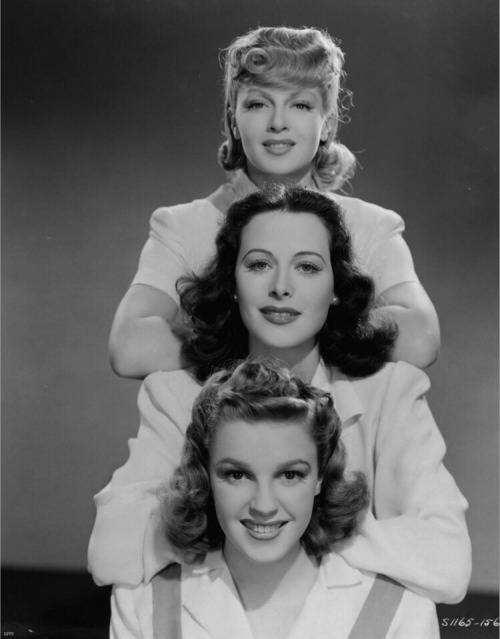
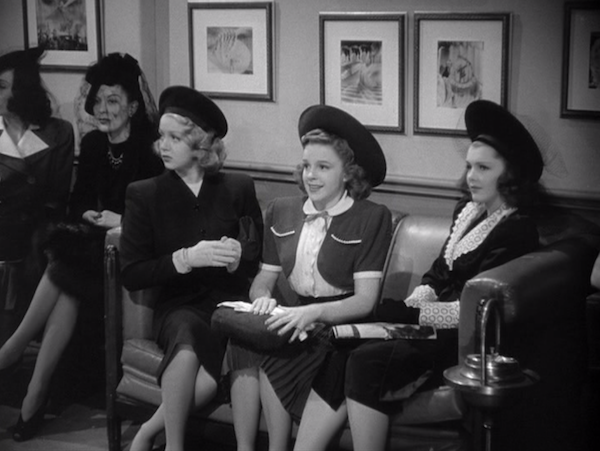
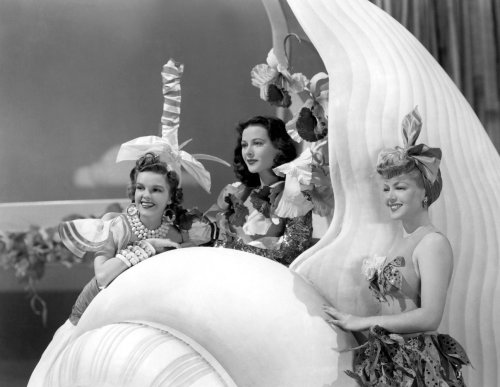
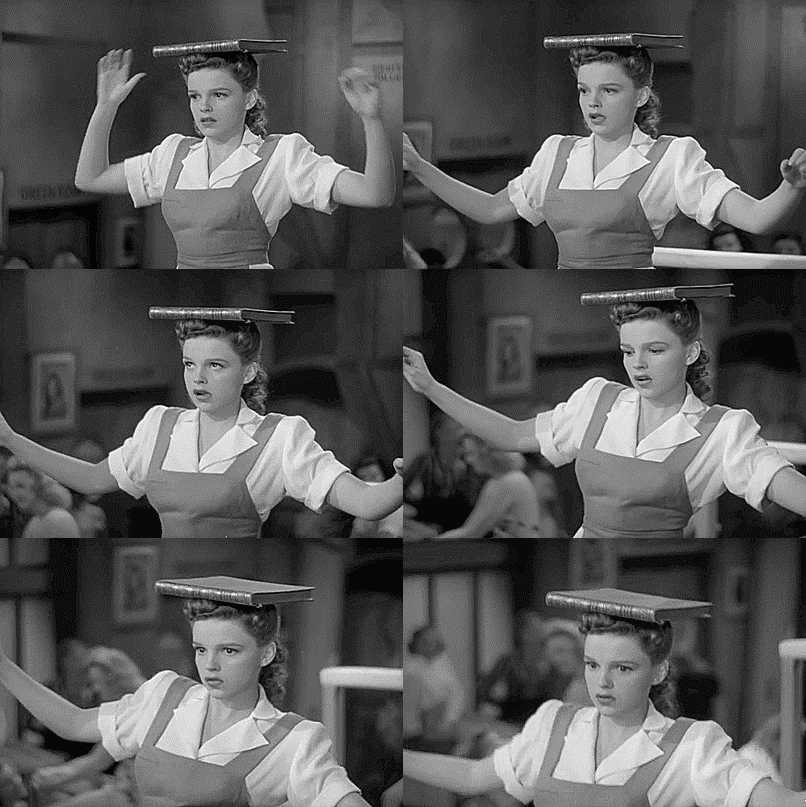
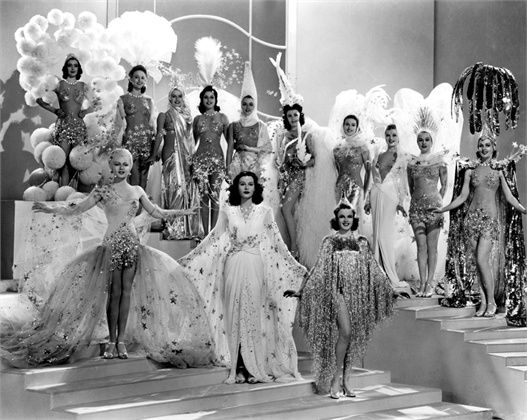
Três moças são recém-chegadas no grupo das Ziegfeld Girls. Sheila (Lana Turner) era ascensorista antes de ser descoberta pelo próprio Sr. Ziegfeld. Susie (Judy Garland) nasceu em uma família do teatro e o Sr. Ziegfeld viu o número que ela fazia com o pai, mas contratou apenas a garota. Sandra (Hedy Lamarr) estava acompanhando o marido violinista em um teste quando um cantor a viu e a mandou para o Sr. Ziegfeld. Ela aceitou o trabalho porque o casal estava passando por dificuldades.

Three women are new in the Ziegfeld Girls group. Sheila (Lana Turner) was an elevator operator before being spotted by Mr. Ziegfeld himself. Susie (Judy Garland) was born in a vaudeville family and Mr. Ziegfeld saw her number with her father, but hired only her. Sandra (Hedy Lamarr) was accompanying her violinist husband in an audition when a singer spotted her and sent her to Mr. Ziegfeld. She accepted the job as a show girl because the couple was out of money.
“O Mundo é um Teatro” é sobre as relações destas mulheres com os homens de suas vidas. Sheila tem um namorado simples, Gil (James Stewart), mas decide sair com um “benfeitor das artes”, Geoffrey Collins (Ian Hunter), que lhe presenteia com joias caras.

“Ziegfeld Girl” is all about the relationship these women have with the men in their lives. Sheila has a simple-minded boyfriend, Gil (James Stewart), but she decides to hang out with an “arts benefactor”, Geoffrey Collis (Ian Hunter), who gives her expensive jewelry.
O pai de Susie (Charles Winninger) deve encarar uma amarga verdade: ele ensinou tudo para sua garotinha, mas agora ele está acabado e o show quer contratar apenas ela. Ao mesmo tempo, Susie se interessa pelo irmão mais novo de Sheila, Jerry (Jackie Cooper).

Susie's father (Charles Winninger) must face a bitter truth: he has taught everything to his little girl, and now he's washed up and the shows only want her. At the same time, Susie becomes sweethearts with Sheila's young brother, Jerry (Jackie Cooper).
Sandra se vê dividida entre o marido Franz (Philip Dorn), que não gosta do novo trabalho dela, e o cantor Frank Merton (Tony Mayer), um conhecido mulherengo que foi responsável pela descoberta dela. Das três, Susan é aquela que tem menos tempo em cena, enquanto Sheila é a que tem mais.

Sandra becomes torn between her husband Franz (Philip Dorn), who disapproves her new job, and lead singer Frank Merton (Tony Martin), a well-known womanizer who discovered her. Out of the three, Sandra is the one that gets less screen time, while Sheila has the most.
Patsy Dixon (Eve Arden) não é uma das estrelas principais entre as Ziegfeld girls. A pobre Eve sequer é creditada no começo do filme! Patsy é uma artista que coleciona duas coisas: joias e maridos. Ela parece antipática e frívola, até que dá um conselho a Sheila em um momento delicado. E, se Eve Arden está lhe dando um conselho, é melhor escutá-la.

Patsy Dixon (Eve Arden) is not one of the main Ziegfeld girls. Poor Eve is not even credited in the beginning of the movie! Patsy is a showgirl that collects two things: jewelry and husbands. She sounds unsympathetic and frivolous, until a pivotal moment in which she gives advice to Sheila. And, if Eve Arden is giving you advice, you'd better listen to her.
Busby Berkeley foi a escolha perfeita para dirigir os números de dança. Florenz Ziegfeld Jr não era um homem básico, e seu estilo combinou perfeitamente com o de Berkeley. Obviamente, a edição e os truques de câmera impossíveis de serem realizados no teatro deram uma pequena vantagem a Berkeley, e ele chegou um pouco mais longe de Ziegfeld com suas criações, que estão eternizadas em celuloide.

Busby Berkeley was the perfect choice to direct the dance numbers. Florenz Ziegfeld Jr wasn't a basic man at all, and his style combined perfectly with Berkeley's. Of course, editing and camera tricks that were not part of the theater world gave Berkeley a small advantage, and he went a mile further than Ziegfeld with his own creations, forever burned on celluloid.
É interessante notar que o próprio Sr. Ziegfeld nunca é visto. Quando o filme tinha data de estreia prevista para 1938, Walter Pidgeon havia sido escalado, e havia a possibilidade de William Powell reprisar o papel de Ziegfeld que já havia feito em “Ziegfeld – Criador de Estrelas” (1936). Walter Pidgeon acabou interpretando Ziegfeld em “Funny Girl – A Garota Genial” (1968). Em minha opinião, foi uma decisão sábia não mostrar o Sr. Ziegfeld no filme, ou o foco mudaria da vida das artistas, da Ziegfeld girls, para a vida do próprio showman.

It's interesting to notice that Mr. Ziegfeld is never seen. When the film was set for a 1938 release, Walter Pidgeon had been cast, and there was a chance that William Powell would recreate his role as Ziegfeld from the 1936 Oscar-winning extravaganza “The Great Ziegfeld”. Walter Pidgeon ended up playing Ziegfeld in “Funny Girl” (1968). In my opinion, it was a wise decision to not show Mr. Ziegfeld in the movie, because otherwise the focus would shift from the girls’ lives to the showman’s life.
Edward Everett Horton está adorável como sempre em seu papel de caça-talentos super-preocupado. Jackie Cooper tem pouco a fazer, apenas ser fofo ao lado de uma igualmente adorável Judy Garland, e foi particularmente bom ver o veterano do vaudeville Al Shean fazendo um número em frente às câmeras. James Stewart está muito bem e demonstra grande alcance nas técnicas de atuação.

Edward Everett Horton is his usual delightful self as the over-worried talent hunter. Jackie Cooper has little to do but to be cute to an equally adorable Judy Garland, and it was particularly nice to see vaudevillian Al Shean doing his routine for the cameras. James Stewart is very good in the movie, showing a fine acting range.
O final é previsível, mas isso não tira os méritos do filme. Se nem todas as histórias são exploradas ao máximo, “O Mundo é um Teatro” merece ser visto por causa dos incríveis números musicais, da direção de arte de Cedric Gibbons, dos figurinos fantásticos de Adrian, da boa performance de Lana Turner e da voz maravilhosa de Judy Garland.

The ending is predictable, but this doesn't take away the film's merits. If not all the stories deliver their full potential, “Ziegfeld Girl” deserves to be seen because of the amazing song and dance numbers, the art direction by Cedric Gibbons, the fantastic gowns by Adrian, Lana Turner’s good performance and Judy Garland’s marvelous voice.


This is my contribution to the Eve Arden blogathon, hosted by Laura at Phyllis Loves Classic Movies.
Related Posts Plugin for WordPress, Blogger...