} Crítica Retrô: William Powell

Tradutor / Translator / Traductor / Übersetzer / Traduttore / Traducteur / 翻訳者 / переводчик

Showing posts with label William Powell. Show all posts

Friday, December 30, 2022

Lost in Translation: odd classic film titles in Portuguese - screwball comedy edition


Here we are again, at yet another edition of the beloved - at least by me - series “Lost in Translation”. This time we talk about one of the most cherished film genres, that produced movies that made people laugh and forget their troubles. Many screwball masterpieces were also a box-office failure when they were first exhibited, but they stood the test of time and are now considered some of the best movies ever made by critics, filmmakers and cinephiles.

One curious tidbit is that there is no direct translation of “screwball comedy” in Portuguese. We either refer to the original term or try an approximation - I usually say “zany” or “wacky” comedies whe talking about screwball. Now let’s see some fun titles in Brazilian Portuguese:    

“Bombshell” (1933) received the title “Mademoiselle Dynamite” (“Mademoiselle Dinamite”)

“The Thin Man” (1934) is here “The Accused’s Supper” (“A Ceia dos Acusados”)

“Mr Deeds Goes to Town” (1936) got the title “The Dashing Mr Deeds” (“O Galante Mr Deeds”)

“My Man Godfrey” (1936) became “Irene, the Stubborn” (“Irene, a Teimosa”)

“Libeled Lady” (1936) is here “Married to my Fiancée” (“Casado com Minha Noiva”)

“Easy Living” (1937) received the title “Lucky Girl” (“Garota de Sorte”)

“The Awful Truth” (1937) is known as “Cupid is a Stubborn Brat” (“Cupido é Moleque Teimoso”)

“Bringing Up Baby” (1938) received the title “Mischievous” (“Levada da Breca” is a hard-to-translate slang)

“You Can’t Take It with You” (1938) was translated as “From the World You Take Nothing” (“Do Mundo Nada se Leva”)

“The Philadelphia Story” (1940) got the title “Wedding of Scandal” (“Núpcias de Escândalo”)

“His Girl Friday” (1940) is known as “Fasting of Love” (“Jejum de Amor”)

“The Lady Eve” (1941) became “The Three Nights of Eve” (“As Três Noites de Eva”)

“Sullivan’s Travels” (1941) received the title “Human Contrasts” (“Contrastes Humanos”)

“The Palm Beach Story” (1942) is known as “A Real Woman” (“Mulher de Verdade”)  

“The Man who Came to Dinner” (1942) received the title “Satan Dines with Us” (“Satã Janta Conosco”)

“The More the Merrier” (1943) is here “Original Sin” (“Original Pecado”)

“Arsenic and Old Lace” (1944) became “This World is a Loony House” (“Este Mundo é um Hospício”)

“Christmas in Connecticut” (1945) got the title “Indiscretion” (“Indiscrição”)

Monday, November 5, 2018

Um Rival nas Alturas (1944) / The Heavenly Body (1944)


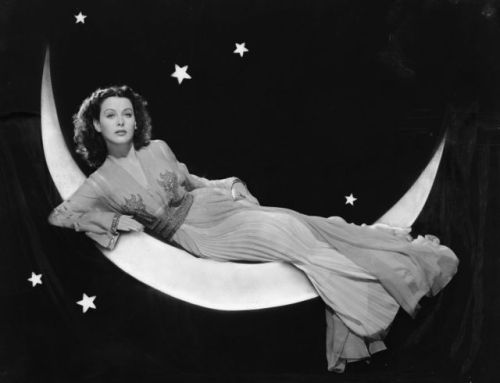
Você já leu seu horóscopo hoje? Ele trouxe boas ou más previsões? Você está aqui somente porque ele disse que hoje era um bom dia para ler um blog bilíngue de cinema clássico? Não importam as respostas para estas perguntas; é preciso perceber que horóscopo e o zodíaco já eram bons assuntos para serem discutidos em filmes lá em 1944, quando a deliciosa mas pouco conhecida comédia “Um Rival nas Alturas” foi feita.

Have you read your horoscope today? Did it have good or bad predictions? Are you here only because it said today was a good day to read a bilingual blog on classic film? No matter the answers to these questions, we must face horoscopes and the Zodiac were already good plot devices back in 1944, when the delightful yet lesser known screwball comedy “The Heavenly Body” was made. 


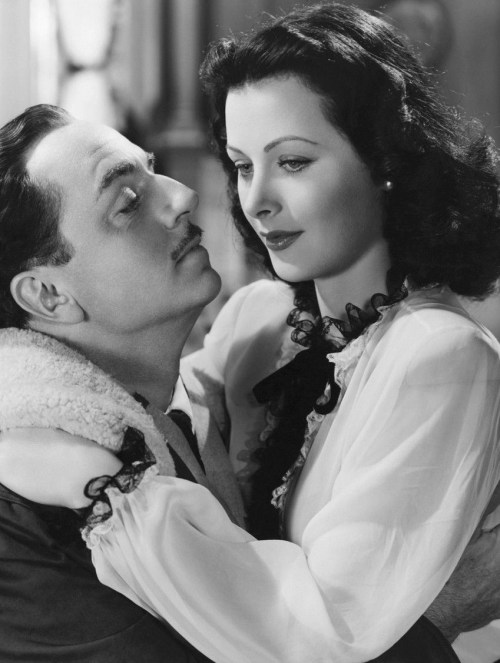
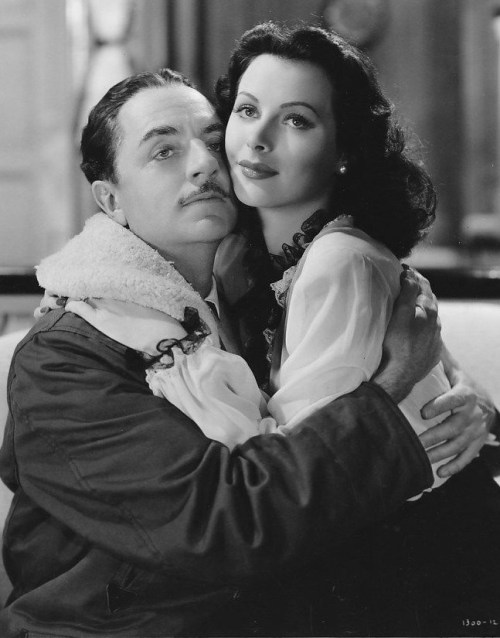
A confusão entre astronomia e astrologia é o cerne do conflito de “Um Rival nas Alturas”. Como diz o professor William Whitley (William Powell), astronomia é uma ciência, astrologia é superstição. O professor acabou de descobrir um novo cometa, e mesmo assim sua esposa, Vicky (Hedy Lamarr), está decidida a se consultar com uma astróloga porque sua vizinha está dizendo maravilhas a respeito da poderosa mulher.

The confusion between astronomy and astrology is at the heart of the conflict in “The Heavenly Body”. As Professor William Whitley (William Powell) puts it, astronomy is a science, astrology is superstition. Professor Whitley is a famous astronomer who just discovered a new comet, and yet his wife, Vicky (Hedy Lamarr) is willing to see an astrologer because her neighbor has been talking wonderful things about her.


Na verdade, a vizinha Nancy Potter (Spring Byington) está completamente dependente da consulta ao horóscopo para escolher o que vestir ou o que fazer em determinado dia. Ela seria uma daquelas chefes que não contratariam pessoas dos signos de Virgem e Escorpião de maneira alguma. Sim, é 1944 e já tínhamos maníacos por horóscopo!

In fact, the neighbor Nancy Potter (Spring Byington) is completely dependent on her horoscope in order to choose her clothes or her next step for that day. She would be one of those bosses who don’t hire Virgos or Scorpios under any circumstances. Yes, it’s 1944 and we already had horoscope freaks!


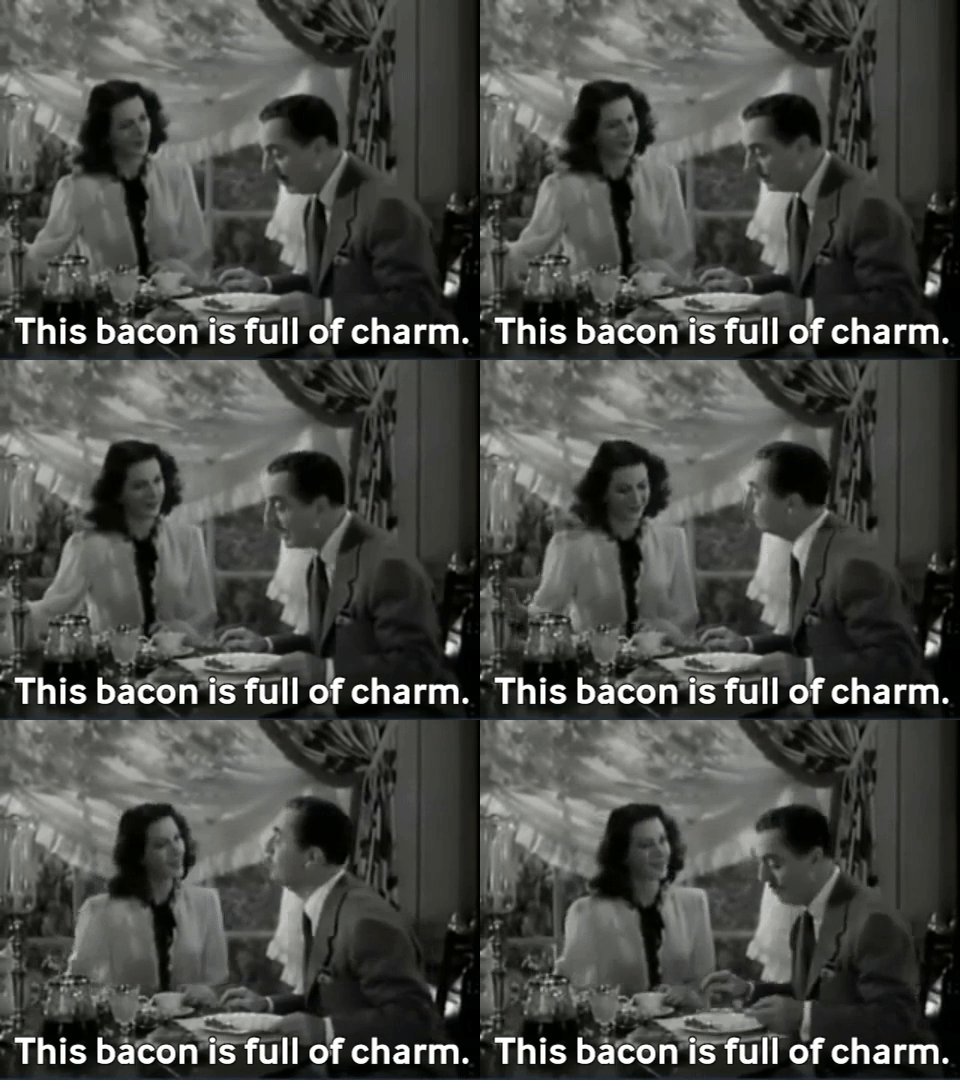
O casal Whitley tem uma rotina caótica. Já que o professor tem de trabalhar à noite, quando as estrelas e outros corpos celestes estão visíveis, ele chega em casa quando Vicky acorda. E ele toma café da manhã uma hora antes de Vicky jantar. Por causa disso, eles não conseguem encontrar uma empregada que se acostume aos horários deles – você sabe, #WhitePeopleProblems.

The Whitley couple has a hectic schedule. Since the professor has to work at night, when the stars and other heavenly bodies are visible, he arrives home when Vicky wakes up. And he has breakfast one hour before Vicky has dinner. Because of this, they can’t find a maid that will suit their needs – you know, White People Problems™.


Quando Whitley descobre que a esposa se consultou com uma astróloga, ele reage como se ela tivesse cometido um crime. A situação é bastante ridícula com Vicky evitando chegar perto de janelas aos domingos e de seu marido às terças-feiras, mas tudo piora quando a senhora Sybill diz a Vicky que ela irá conhecer seu amor verdadeiro – que, obviamente, não é o senhor Whitley. Não há nada a ser feito: está escrito nas estrelas.

When Whitley learns that his wife saw an astrologer, he reacts as if she had committed a crime. The situation is ridiculous enough as Vicky starts avoiding windows on Sundays and her husband on Tuesdays, but it really gets ugly when Mrs Sybill tells Vicky she is about to meet her one true love – who, obviously, isn’t Mr. Whitley. There is nothing they can do: it’s simply written in the stars.


Você acredita em horóscopo? É uma pergunta difícil para mim. Como alguém que nasceu entre dois signos do zodíaco – Câncer e Leão – eu vejo características de ambos em mim mesma. Eu também fico feliz quando meu horóscopo acerta – tipo quando eu li que pessoas de Câncer são bons historiadores. Mas eu também não leio o horóscopo com frequência nem tomo decisões baseada nele.

Do you believe in horoscopes? That is a difficult answer for me to answer. Being someone who was born on the verge of the change of two Zodiac signs – from Cancer to Leo – I see characteristics of both signs in myself. I also get happy when my horoscope gets it right – like when I once read that Cancers make good historians. But I also don’t read the horoscope often and don’t make choices based on it.


Nós acreditamos em horóscopos porque gostamos de acreditar – em qualquer coisa. A vida é tão caótica que precisamos acreditar em alguma coisa que a controle – não importa se for religião, estrelas, destino, deuses ou uma combinação destas coisas. Acreditar em horóscopos tira um pouco da culpa – “Eu só faço isso porque é típico de Capricórnio” – e acaba com a necessidade de fazer escolhas – “Eu farei isso porque é algo bom para alguém de Peixes fazer no dia de hoje”.

We believe in horoscopes because we like to believe – in anything. Life is so hectic and chaotic that we must believe in something controlling it – no matter if it is religion, stars, destiny, gods or a combination of them. Believing in horoscopes take away some kind of guilt – “I only do that because I’m a Capricorn” – and the need to make some choices – “I’ll do that because it’s a good thing for a Pisces to do today”.


Mesmo sem acreditar no negócio, Vicky se consulta com a senhora Sybill (Fay Bainter), que faz previsões para políticos, reis e outras pessoas importantes. E ela diz nunca estar errada. E quando Vicky conhece o correspondente de guerra Lloyd Hunter (Jim Craig), ela pensa que ele é o homem vindo de terras estrangeiras que ela deveria encontrar e por quem iria se apaixonar. Obviamente, Whitley não deixará Vicky ir embora, e tentará vários truques para fazê-la parar de acreditar na senhora Sybill.

Even without believing the thing, Vicky goes see Mrs Sybill (Fay Bainter), who makes predictions for politicians, kings and other important people. And she says she is never wrong. As Vicky meets the war correspondent Lloyd Hunter (Jim Craig), she thinks he is the man from foreign lands she is supposed to meet and fall in love with. Of course, Whitley won’t let Vicky go so easy, and he’ll try several tricks to make her stop believing Mrs Sybill.


“Um Rival nas Alturas” é um filme divertido que ensina algumas coisas. Você pode vê-lo e querer procurar cometas e luas com um telescópio. Você também pode querer ver qual é o jeito certo de tomar vodka – com um limão na língua, com o limão na bebida ou com pimenta – e nunca descobrir o certo porque haverá uma grande festa rua na sua casa antes que você seja considerado bêbado demais para prosseguir festejando. Você também pode querer tentar o que quiser – ou qualquer coisa que for sugerida pelo seu horóscopo.

“The Heavenly Body” is a fun movie that teaches a few things. You may watch it and try looking for comets and moons through telescopes. You may also try to learn the proper way to drink vodka – with a lemon in your tongue, with a lemon in the drink or with pepper – and never really learn because there will be a full Russian party in your house just before you are considered too drunk to function. You may try whatever suits you – or whatever was suggested in your horoscope.

To read more about Hedy Lamarr’s heavenly BRAIN, visit my review of the documentary “Bombshell”.

This is my contribution to the Bombshell: the HedyLamarr blogathon, hosted by Samantha at Musings of a Classic Film Addict.

Wednesday, January 3, 2018

Meu Querido Maluco (1941) / Love Crazy (1941)

Há pouco mais de sete anos, eu me formei no ensino médio e fiz a melhor escolha da minha vida: decidi não ir à formatura e passar a noite vendo dois filmes clássicos na TV. Um desses filmes era o peculiar faroeste “Johnny Guitar” (1954). O outro filme era “A Ceia dos Acusados” (1934) – e foi ele que me apresentou Myrna Loy e William Powell.

A little over seven years ago, I graduated high school and made the best decision of my life: I decided to not attend prom and watch two classic films on TV instead. One of these films was the unusual western “Johnny Guitar” (1954). The other film was “The Thin Man” (1934) – the one that introduced Myrna Loy and William Powell to me.
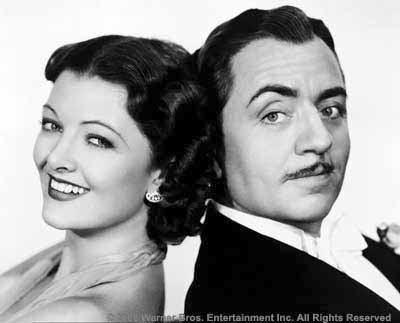
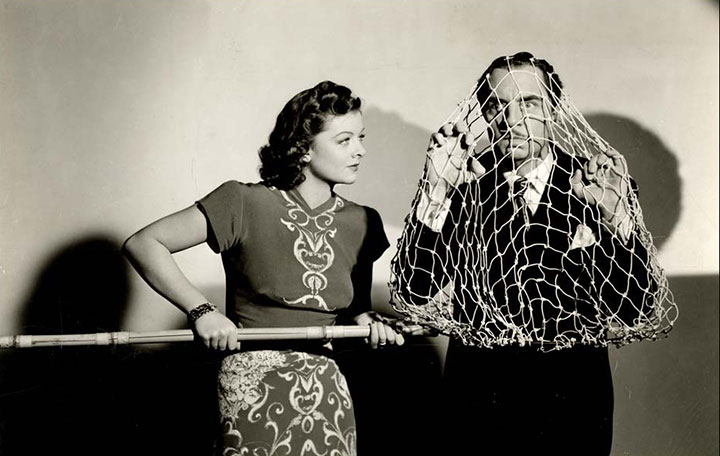
Os fãs de cinema clássico não podem negar que Powell e Loy são, especialmente quando interpretam Nick e Nora Charles, um exemplo de casal 20. Juntos, eles fizeram 14 filmes, e é uma árdua tarefa escolher o melhor deles. “Meu Querido Maluco”, de 1941, certamente fica entre os 5 melhores porque trata de um assunto que ninguém relaciona com Powell e Loy: o divórcio.

Classic film fans can’t deny that Powell and Loy, especially when playing Nick and Nora Charles, are #relationshipgoals. Together, they made 14 films, and it’s hard to choose the best of the bunch. And “Love Crazy”, from 1941, is among the TOP 5 because it deals with a subject you wouldn’t associate with Powell and Loy: divorce.
É o quarto aniversário de casamento de Steve (Powell) e Susan Ureland (Loy). Eles têm um jeito tradicional de comemorar a data, mas decidem fazer tudo ao contrário... até que a situação foge do controle. Primeiro a mãe de Susan (Florence Bates) chega com um tapete como presente e uma carta para Steve enviar.

It's Steve's (Powell) and Susan Ireland's (Loy) fourth wedding anniversary. They have a traditional way to celebrate, but decide to do it backwards... until everything goes out of control. First Susan's mother (Florence Bates) arrives with a rug as a gift and a letter for Steve to send.
Depois Steve encontra uma velha conhecida, Isobel (Gail Patrick), no elevador, e descobre que eles moram no mesmo andar do prédio – e também descobre que, mesmo sendo casada, Isobel ainda está interessada em conquistar Steve.

Then Steve meets an old acquaintance, Isobel (Gail Patrick), at the elevator, and finds out they now live in the same floor – oh, and also that, even though she is married, Isobel is still interested in pursuing Steve. 
A mãe de Susan, como é de se esperar, é a primeira a reparar que há algo estranho no comportamento de Steve durante e depois do jantar. Quando Susan precisa sair por algumas horas para pegar uma tia na estação de trem, Steve precisa fazer companhia para a sogra. Seguindo o velho estereótipo, ela se mostra uma mulher insuportável, e Steve mente dizendo que vai ver um amigo, mas na verdade sai com Isobel.

Susan's mother, as expected, is the first one to point out that something in Steve's behavior during and after dinner is weird. When Susan has to go out for a couple of hours to get her aunt at the train station, Steve has to stay with his mother-in-law. Following the old trope, she proves to be an unbearable woman, and Steve lies saying he'll meet a friend, but in fact he goes out with Isobel.
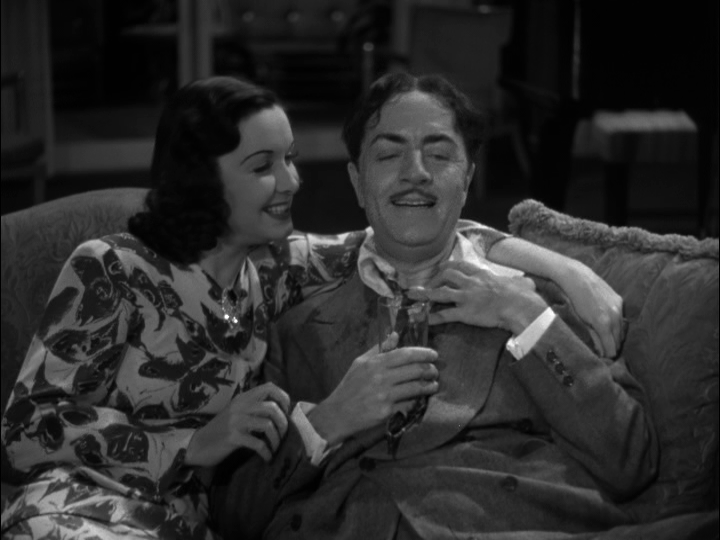
Quando Susan descobre como Steve passou a noite, ela fica furiosa. O que se segue é uma sequência muito engraçada envolvendo uma confusão de identidades, e finalmente Susan decide pedir o divórcio. Para que a decisão do tribunal demore o máximo possível, Steve finge ter enlouquecido.

When Susan finds out how Steve spent the evening, she gets mad. A very funny follow-up with a few mistaken identities follow, and finally Susan decides to file for divorce. In order to postpone the divorce from going to court, Steve pretends to be insane.
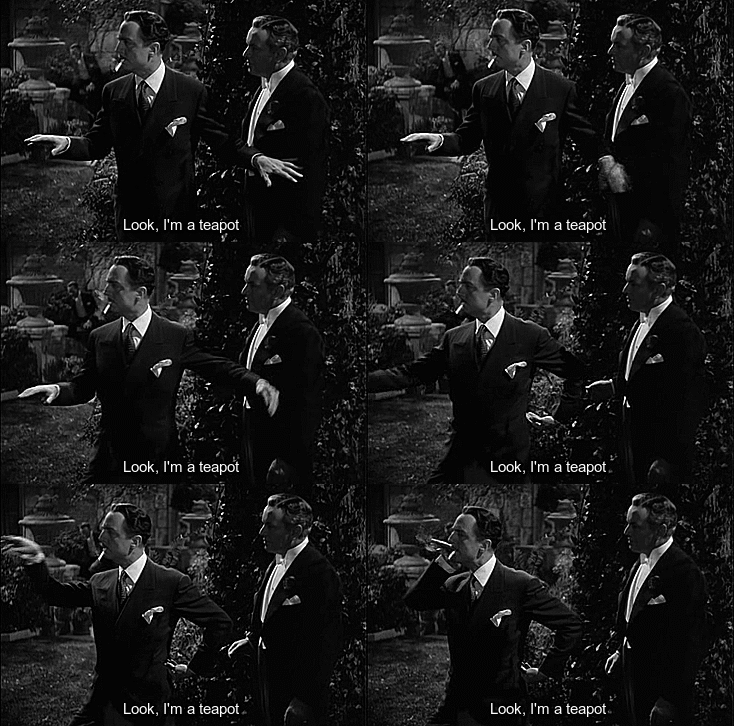
William Powell está simplesmente perfeito como Steve. “Meu Querido Maluco” é um dos pontos altos de sua longa carreira – Powell trabalhou no cinema de 1922 a 1955, em diversos gêneros. Ele era charmoso, às vezes assustador, e tinha um timing especial para a comédia. Neste filme ele tem falas divertidíssimas e, bem, este momento:

William Powell is nothing but delightful as Steve. “Love Crazy” is a highlight in a long career – Powell worked in films from 1922 to 1955, in several genres. He was charming, sometimes scary, and had a special timing for comedy. In this film he has wonderfully funny lines and, well, this moment:
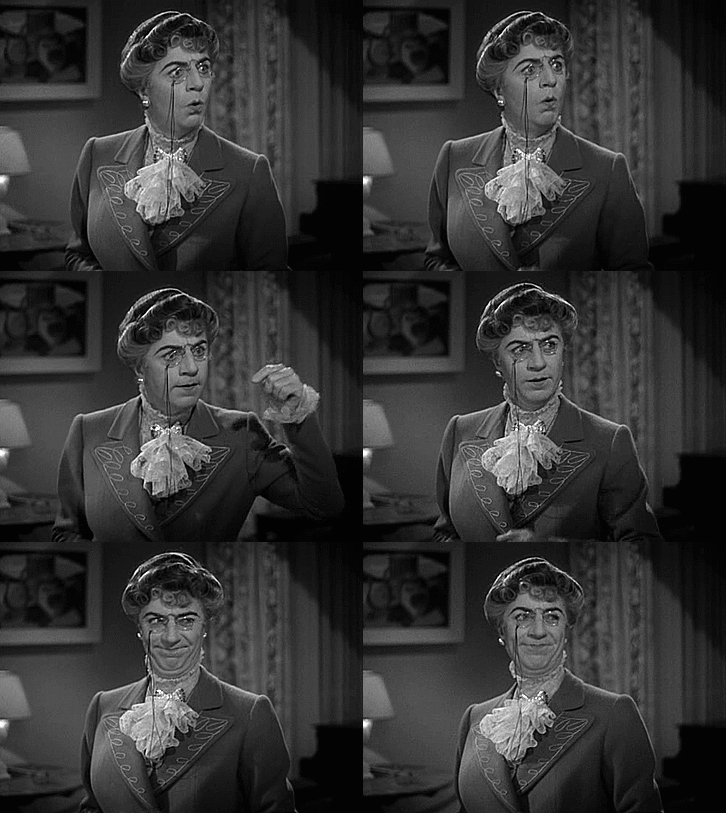
Já falamos o suficiente sobre Myrna e Bill – vamos falar agora sobre os coadjuvantes. Logo no começo do filme, fique com os olhos bem abertos e você verá que o jovem ascensorista é ninguém menos que Elisha Cook Jr. Jack Carson é Ward Willoughby, morador do mesmo prédio em que Steve, Susan e Isobel vivem. Lá pela metade do filme, você verá que a matrona dona da festa, Mrs. Bristol, é interpretada por Kathleen Lockhart, que era esposa de Gene Lockhart e mãe de June Lockhart. Vladimir Sokolof, ator russo que também trabalhou na Alemanha, interpreta um médico, e outro membro da equipe médica é interpretado por Edward Van Sloan, que fez Van Helsing em “Drácula”, de 1931. A secretária ajudando os médicos é May McAvoy, antiga protagonista de filmes mudos, como “Ben-Hur” (1925).

Enough about Myrna and Bill – let’s talk about the supporting cast. In the beginning of the movie, keep your eyes sharp and you'll realize the elevator boy is no other than Elisha Cook Jr.. Jack Carson is Ward Willoughby, also a resident of the building Steve, Susan and Isobel live in. By the middle of the movie, you'll see the matron at the party, Mrs. Bristol, played by Kathleen Lockhart, who was Gene Lockhart's wife and June Lockhart's mother. Vladimir Sokoloff, Russian actor who also worked in Germany, plays a doctor and you'll also find a doctor played by Edward Van Sloan, who was Van Helsing in 1931's “Dracula”. The secretary helping the doctors is May McAvoy, former leading lady in silents like “Ben-Hur” (1925).


Steve e Susan têm tradições e atitudes peculiares, assim como Nick e Nora. Talvez um hipotético divórcio de Nick e Nora se parecesse muito com o que vemos em “Meu Querido Maluco” – embora eu duvide que Nora possa ser tomada pelos ciúmes. Na verdade, Nora provavelmente riria da ideia de que o marido a traiu, pediria um Martini para si e outro para Nick, e continuaria curtindo a vida.

Steve and Susan are as peculiar in their traditions and actions as Nick and Nora. Maybe a Charles vs. Charles divorce would be just like the one in “Love Crazy” – although I doubt that Nora Charles could be consumed by jealousy. Actually, Nora would laugh all the suspicions off, ask a Martini for her, another for Nick, and would keep on enjoying life.
Meu Querido Maluco” é mais uma das comédias sobre divórcio que – você já deve estar imaginando – não termina em divórcio. Claro que não poderia terminar assim: Powell e Loy tinham muita química, e o apelido de Loy era “A Esposa Perfeita”. Mais uma vez ela teve de provar que era uma nas telas, mostrando como uma esposa deve confiar no marido e aceitar as esquisitices e até criancices dele.

Love Crazy” is another divorce comedy that – I bet you already know – doesn’t end in divorce. Of course it couldn’t: Powell and Loy had great chemistry, and Loy’s nickname was “The Perfect Wife”. Once again she proved she was one onscreen, showing how a wife must trust her husband and keep up with his shenanigans or even childishness.
Meu Querido Maluco” deveria figurar entre as melhores comédias já feitas – em muitos momentos, o filme me fez rir mais do que “Cupido é Moleque Teimoso” (1937). Além de ter uma dupla perfeita e um ótimo grupo de coadjuvantes, ainda há as falas engraçadas e uma boa quantidade de comédia física. Mesmo que tenham se passado mais de 75 anos de sua estreia, podemos dizer que “Meu Querido Maluco” ainda é adorável, amalucado e muito divertido.

Love Crazy” should be among the best screwball comedies ever made – some moments made me laugh harder than I did with “The Awful Truth” (1937). It not only has the perfect duo and a great supporting cast, but also very funny lines and a good amount of physical comedy. Even if more than 75 years have passed after its initial release, we can say something: “Love Crazy” is still lovely, zany and extremely funny.

This is my contribution to the Bill and Myrna New Year’s blogathon, hosted by Emily and Laura at The Flapper Dame and Phyllis LovesClassic Movies.

Sunday, November 19, 2017

Ladrão Romântico / Jewel Robbery (1932)

Viena, anos 30. Começamos o filme com alguns close-ups de joias – lindas joias, em ouro e diamantes, e muitos cofres. Estamos dentro de uma joalheria e algo incrível está prestes a acontecer. Meu bisavô costumava dizer que a fotografia em preto e branco nos filmes é mais bonita que a colorida, e eu devo concordar com ele: aquelas joias realmente brilham na tela bicromática!
Vienna, 1930s. We open the movie with some close-ups of jewels – beautiful jewels, diamonds and gold, and many safes. We're inside a jewelry shop and we're in for a treat. My great-grandfather use to say that black and white photography in film is more beautiful and I must agree with him: those jewels really shine in the bicromatic screen!
Enquanto um inventor demonstra um sistema de alarme revolucionário com raios invisíveis, a joalheria de Hollander é assaltada. Alguns dias depois, um dos melhores clientes do local, a baronesa Teri (Kay Francis) se apronta para ir à joalheria comprar um anel de diamantes. Teri é assistida por muitas empregadas: massagistas, cabeleireiras, manicures e muito mais. Quando fica pronta, ela sai de casa com a amiga Marianne (Helen Vinson).
As an inventor is demonstrating a revolutionary alarm system with invisible rays, Hollander's jewel store is being robbed. A few days later, one of their favorite clients, baroness Teri (Kay Francis) is getting ready to visit the jewelry store and buy a diamond ring. Teri is pampered by a lot of maids: she has masseurs, hairdressers, manicurists and more. When she is ready, she leaves the house with her friend Marianne (Helen Vinson).
O marido de Teri, o barão Franz (Henry Kolker) também vai até a joalheria para negociar o preço do anel. Ele leva consigo um membro do gabinete, Paul (Hardie Albright). Há apenas um problema: Paul está apaixonado por Teri, e ela não corresponde o sentimento.
Teri's husband, baron Franz (Henry Kolker) also goes to the jewelry store to negotiate the price for the diamond ring. He brings with him a member of the cabinet, Paul (Hardie Albright). There is only one problem: Paul is in love with Teri, but she does not care about him.
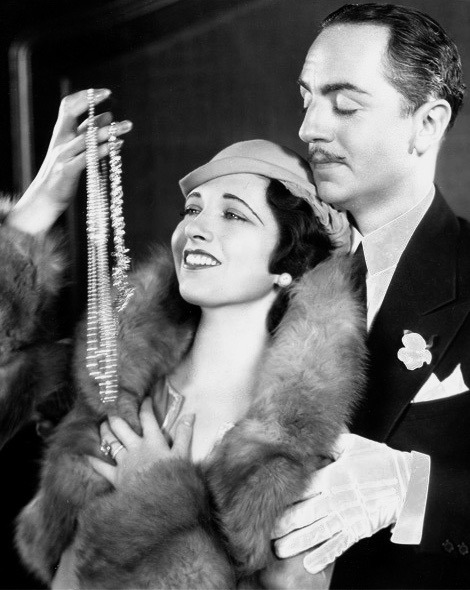
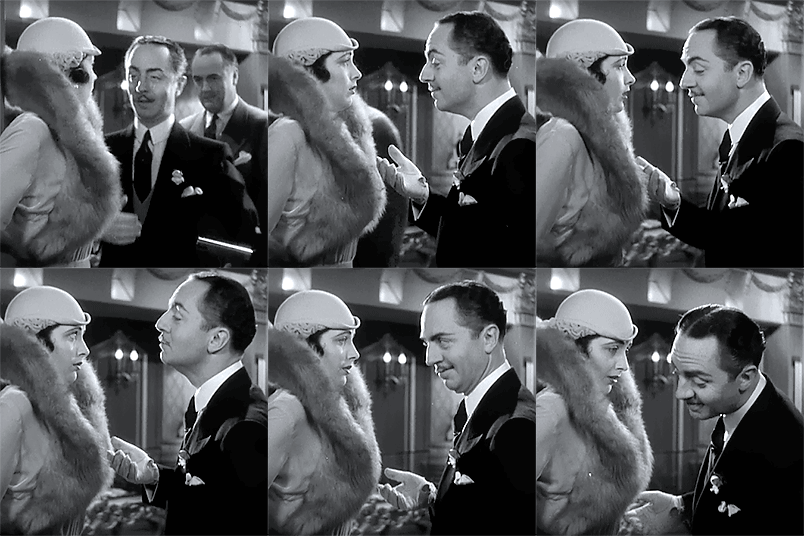
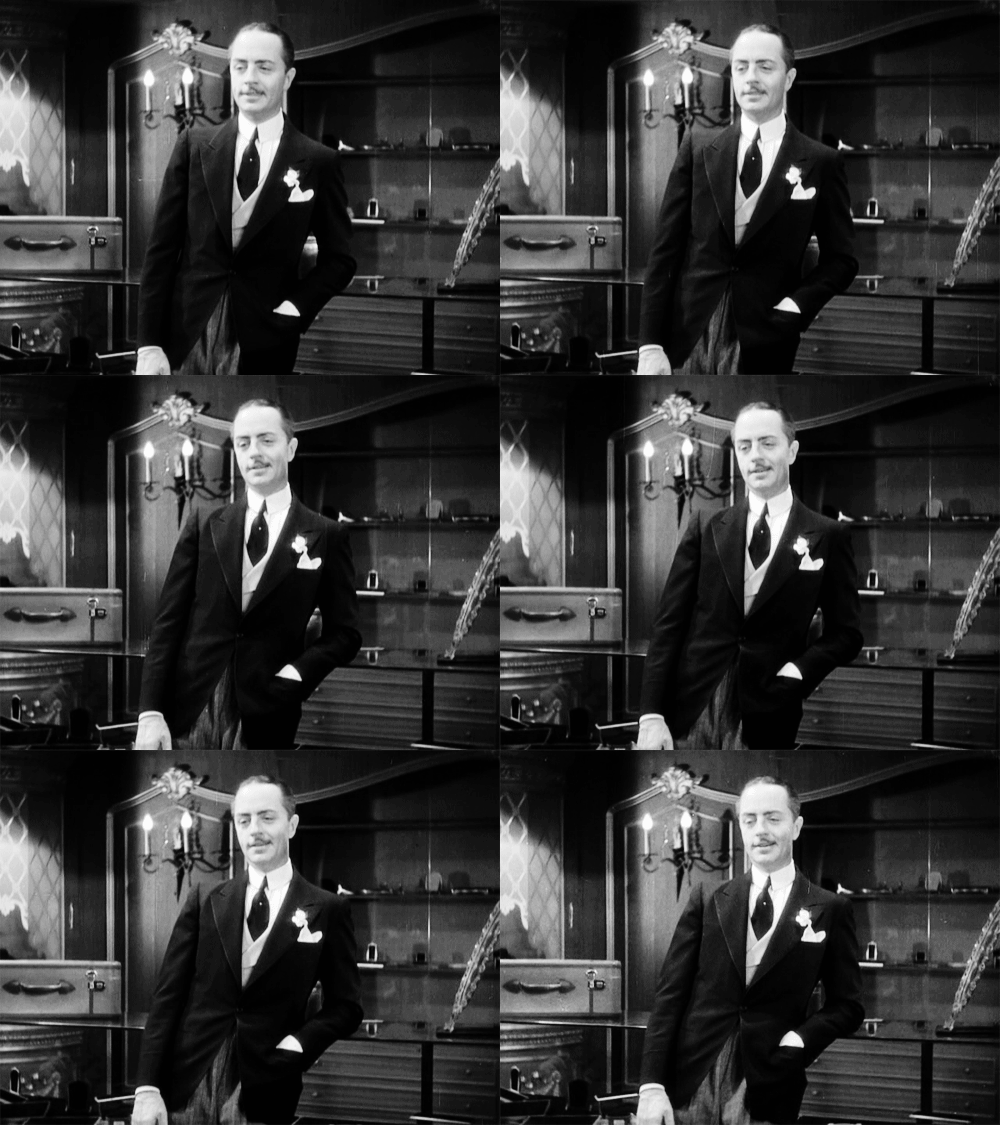
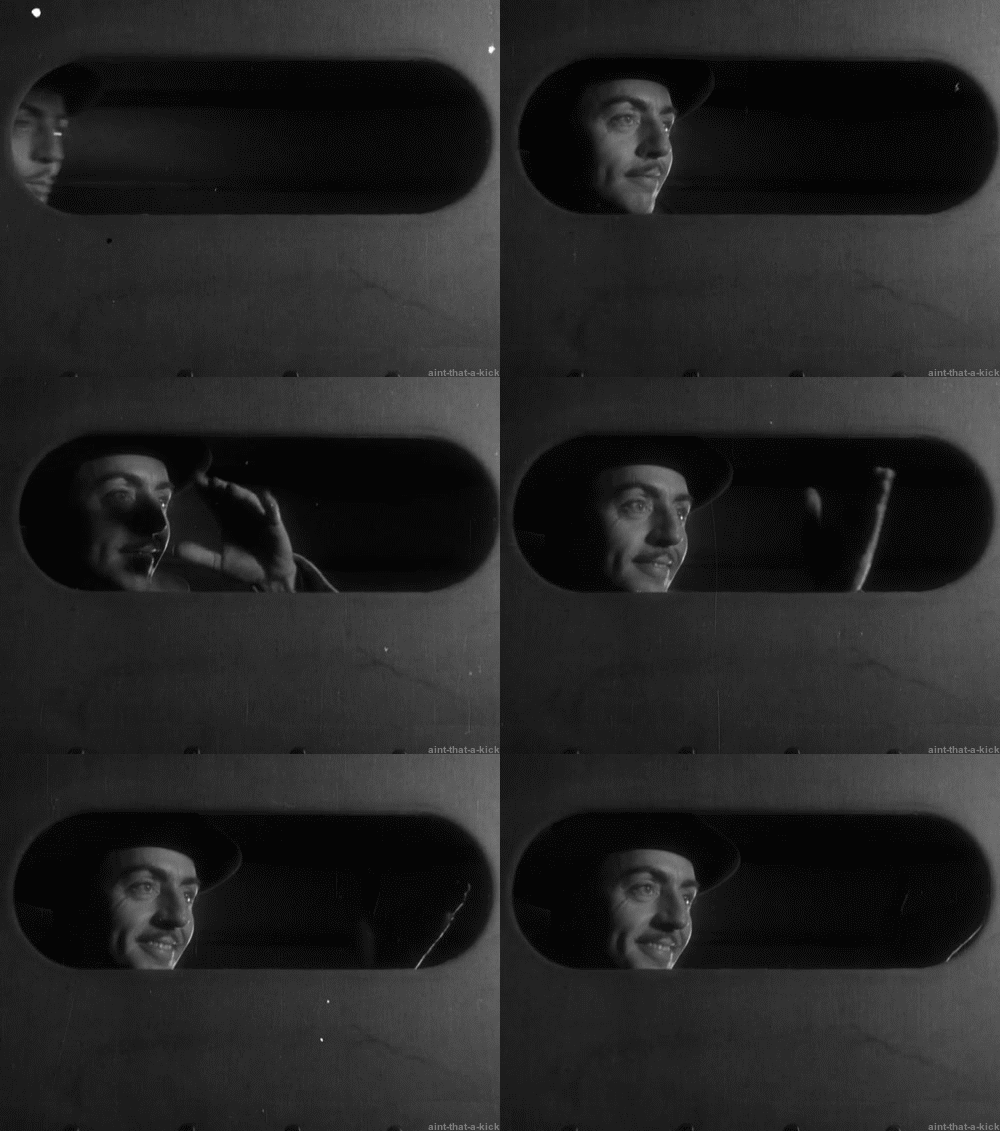
Quando o barão e o senhor Hollander finalmente chegam a um acordo em relação ao preço, a joalheria é assaltada novamente. O ladrão? William Powell. Powell é o ladrão mais elegante, educado, charmoso e distinto do mundo. Ele fala com calma e até toca música – o Danúbio Azul – enquanto seus capangas estão pegando as joias. Ele é basicamente o Moriarty do roubo de joias.
When the baron and Mr Hollander finally agree on a price, the shop is robbed again. The robber? William Powell. Powell is the fanciest, politest, coolest, most distinguished robber of all time. He talks smoothly and even plays music – the Blue Danube – while his minions are catching all the jewels. He's basically a Moriarty of jewel robbery.
Quando falamos sobre Moriarty, precisamos falar sobre o brilhante Sherlock Holmes. E quando falamos sobre William Powell, precisamos falar sobre o detetive charmoso Nick Charles. Em dois anos Powel interpretaria Nick Charles pela primeira vez, e é realmente muito interessante que ele já tenha interpretado o exato oposto de Nick em “Ladrão Romântico”.
When we talk about Moriarty, we need to talk about mastermind Sherlock Holmes. And when we talk about William Powell, we need to talk about cool detective Nick Charles. In two years Powell would play Nick Charles for the first time, and it's really interesting that he had already got to play Charles's perfect counterpart in “Jewel Robbery”.
O ladrão de Powell diz que estudou em escola francesa para aprender 'finesse' – ao contrário dos ladrões americanos que são loucos por balas, armas e sempre fazem sujeira. Powell inclusive consegue enganar um inspetor de polícia! Moriarty é um gênio como Sherlock, mas um usa a inteligência para fazer o bem, e o outro para o mal. A mesma coisa acontece com Nick Charles e o ladrão: a diferença é com que intuito cada um usa seu charme.
As the robber, Powell says he studied in the French school in order to learn 'finesse' – contrary to the American thieves, who are crazy for bullets, guns and always make a mess. Powell even manages to make a fool out of a police inspector! Moriarty is a genius just like Holmes, but one uses the brains to do good, and the other to do bad. The same happens with Nick Charles and the robber: the difference is the goal their charm is used to achieve.  
Teri e Marianne são construídas como mulheres fúteis. Elas só pensam em duas coisas: sexo e joias – e frequentemente usam o primeiro para conseguir o segundo. Elas são mulheres amorais, no sentido de que elas não se importam com ética ou princípios. Elas não são personagens bem desenvolvidas, e em um filme de apenas 68 minutos de duração isso é um problema previsível
Teri and Marianne are constructed as frivoulous women. They only think about two things: sex and jewels – often using the first in exchange for the second. They are amoral women, in the sense that they do not care for ethics or principles. They are not well-developed characters, and in a film that lasts only 68 minutes this is a predictable problem.
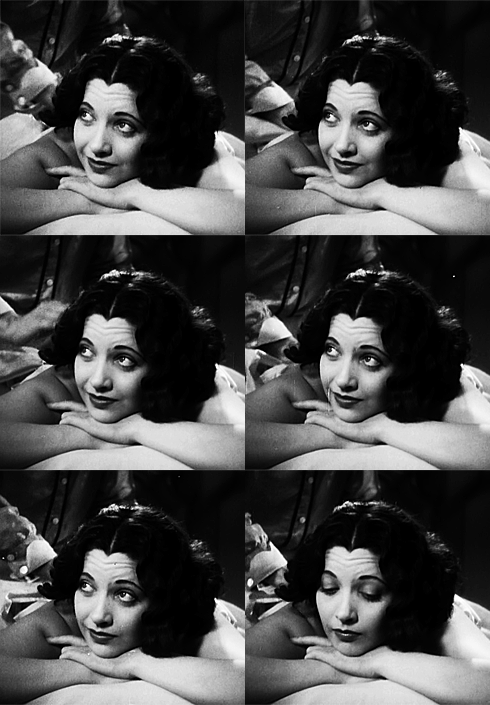
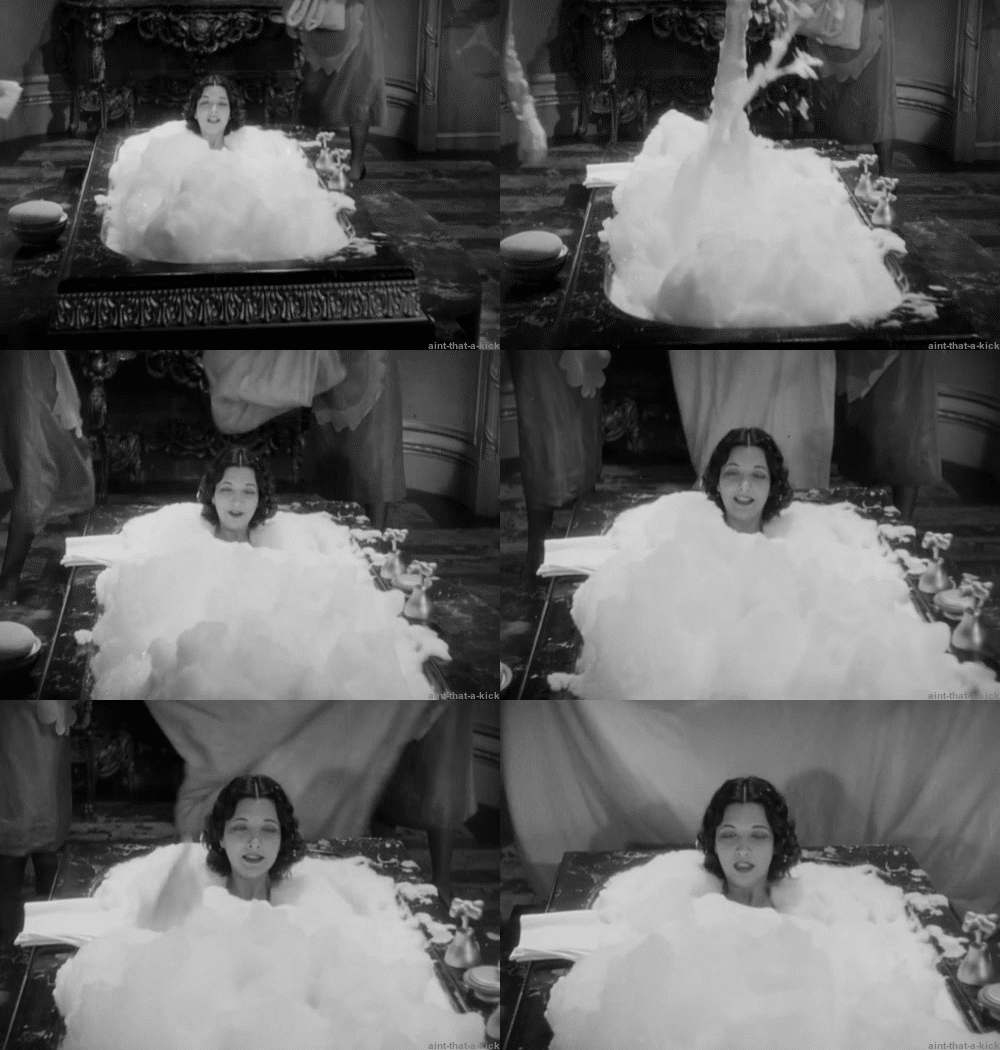
Quando Teri é vista pela primeira vez, ela está tomando um banho de espuma. A sequência é 100% pre-Code: é óbvio que Kay Francis está nua, e ela muda de uma toalha para outra, até colocar um vestido. Nada além de seus ombros, pernas e pés são mostrados, mas isso já é suficiente para açimentar a imaginação do espectador.
When Teri first appears, she is taking a bubble bath. That sequence is 100% pre-Code: it's obvious that Kay Francis is naked, and she changes from one towel to another, until she puts on a dress. Nothing besides her shoulders, legs and feet is shown, but there is enough in the scene to feed the viewer's imagination.
Há também muitas frases de duplo sentido, de teor sexual e um momento hilário com policiais chapados fumando maconha. Todos estes momentos são exclusivos da era pre-Code em Hollywood, e são eles que fazem de “Ladrão Romântico” um filme tão divertido.
There is also a lot of sexual innuendo and a hilarious moment with high policemen smoking joint. All these moments are pre-Code Hollywood in a nutshell, and they are what makes “Jewel Robbery” such a funny movie.
O esquema do ladrão pode parecer perfeito, mas eu acho que você não deve tentar fazer isso em casa. Muitas de suas técnicas geniais para produzir álibis e coordenar o roubo não funcionam mais por causa do que temos hoje em termos de redes sociais, GPS e outras tecnologias.
The robber's scheme may sound perfect, but I think you shouldn't try to reproduce it at home. A lot of his genius techniques to produce alibis and coordinate the robbery work no more because of social media, GPS and other new technologies.
Um filme como “Ladrão Romântico” jamais poderia ser feito hoje – e não apenas por causa da tecnologia que destrói os esquemas. É um filme que definitivamente não passa no teste de Beachdel. É um filme que chama um personagem de 'romântico', quando na verdade ele é doente e problemático. Eu entendo que se trata de uma comédia, e eu ri muito em vários momentos. Mas como é arriscada!
A film like “Jewel Robbery” could never be made today – and not only because of the technology that ruins schemes. It's a film that fails hard the Bechdel test. It's a film that portrays as 'romantic' a character that is in reality really sick and problematic. I understand it's a comedy, and I laughed out loud in many moments. But, wow, it is risky!
Ladrão Romântico”, tão exagerado e divertido, só poderia ter sido feito na era pre-Code. 1932 foi o pior ano da recessão pós quebra da bolsa de 1929. As pessoas precisavam rir de alguma coisa – nem que fosse de um crime.
Jewel Robbery”, so exaggerated and funny, could only have been made in the pre-Code era. 1932 was the worst year of recession since the 1929 Crash. People needed something to laugh at something – even if it was at a crime.
This is my contribution to the It Takes a Thief blogathon, hosted by Debbie at Moon in Gemini.

Friday, October 6, 2017

My Man Godfrey: the 1957 remake

Você acredita que há uma crise de criatividade em Hollywood e que esta é a razão de existirem tantos remakes? Você sente falta dos bons e velhos tempos da velha Hollywood, quando todas as ideias eram originais? Então eu estou aqui para desapontá-lo: remakes são tão velhos quanto o próprio cinema. Os primeiros cineastas, como os Lumières, Alice Guy e Thomas Edison, estavam sempre refazendo os filmes de 50 segundos de seus concorrentes, de acordo com as demandas dos mercados mais próximos. E o remake se tornou uma grande tradição cinematográfica.

Do you think there is a creativity crisis in Hollywood and that’s why there are so many movies being remade? Do you miss the good old times of Classic Hollywood, when all the ideas were fresh? Then I’m here to disappoint you: remakes are as old as the film industry itself. The first filmmakers, like the Lumières, Alice Guy and Thomas Edison, were always making the same 50-second movies their counterparts did, in order to show it in the closest interested market. And the remake became a long cinematic tradition.
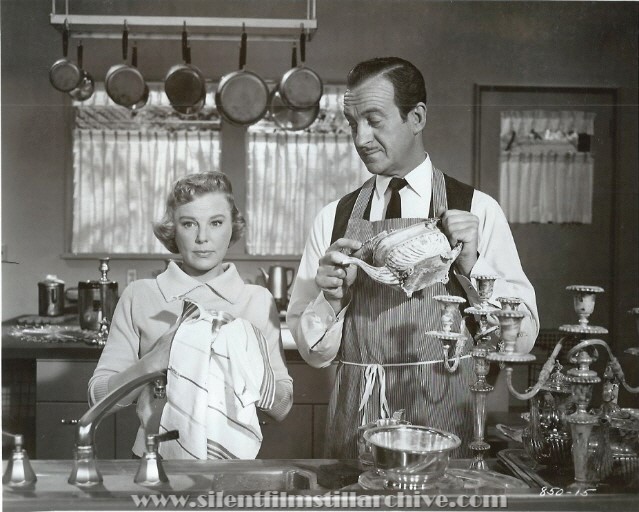
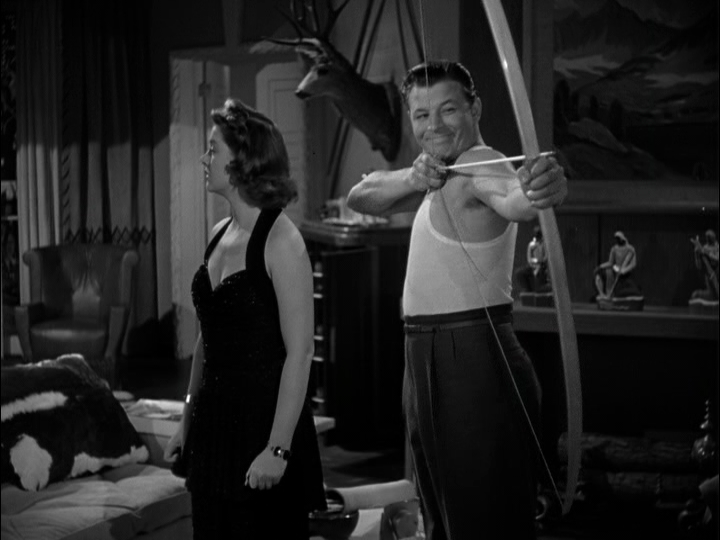
Em 1957, alguém dos estúdios da Universal pensou que era uma boa ideia fazer o remake de “My Man Godfrey” – ou “Irene, a Teimosa” – a comédia perfeita de 1936. Eles tinham um grande desafio pela frente: escalar dois atores que fossem melhores, ou ao menos tão bons quanto, a dupla original, Carole Lombard e William Powell. A ideia inicial era que o filme fosse estrelado pelo talento recém-importado Otto Wilhelm ‘O.W.’ Fischer. Otto desistiu do filme devido a problemas de memória, e o papel de Godfrey foi dado a David Niven.

In 1957, someone at Universal Studios thought it was a good idea to remake “My Man Godfrey”, the flawless 1936 comedy. They had a mighty hard challenge: cast a couple of actors who would be better, or at least as good as, the original starring duo Carole Lombard and William Powell. The initial idea was to use the film as a vehicle for recently imported talent Otto Wilhelm ‘O.W.’ Fischer. Otto dropped out of the production when he started having memory problems, and the role of Godfrey was given to David Niven.
Você provavelmente já conhece a história: a rica e despreocupada Irene Bullock (June Allyson) encontra Godfrey, o mendigo, nas docas durante uma caça ao tesouro. Irene leva Godfrey até o local do evento de caça ao tesouro e ganha o primeiro prêmio. Depois, ela oferece a ele um emprego como mordomo na casa da família Bullock. Em pouco tempo ela se apaixona por Godfrey, que talvez não seja realmente um mendigo.

You probably already know the story: Rich and carefree Irene Bullock (June Allyson) finds Godfrey, the tramp, in the docks during a scavenger hunt. Irene takes Godfrey to the scavenger event and is pronounced the winner. Then, she offers him a job as a butler at the Bullock house. Soon she becomes smitten with Godfrey, who may not be a tramp after all.
Este é quase um remake feito cena a cena, com algumas novas piadas – e a presence de um novíssimo aparelho de TV em uma cena. Infelizmente, na nova versão Godfrey não coloca Irene embaixo do chuveiro, e há mais tomadas externas. A personagem Cornelia, irmã de Irene, aqui interpretada por Martha Hyer, é menos interessante que a Cornelia de 1936, interpretada por Gail Patrick.

This is almost a shot-by-shot remake, with a few new jokes – and the presence of a brand-new TV set in a scene. Unfortunately, in the new version Godfrey doesn’t put Irene in the shower, and there are more scenes shot outdoors. The character Cornelia, Irene’s sister, here played by Martha Hyer, is less interesting than the 1936 Cornelia, played by Gail Patrick.
A ótima e peculiar família Bullock não muda muito entre as versões. Na de 1957, temos a chance de ver a coadjuvante Jessie Royce Landis em muitas cenas excelentes, destaque que lhe foi negado em seus dois filmes com Hitchcock. O nome do amante de Angelica Bullock muda – de Carlo, passa a ser Vincent aqui. E também temos uma participação especial de Eva Gabor como a mulher que conhece o passado de Godfrey – na versão de 1936, é um homem que já havia se encontrado, em outro contexto, com Godfrey.

The delightful and odd Bullocks are very good in both versions. In the 1957 version, we have the chance to see character actress Jessie Royce Landis in many good scenes, something she wasn’t given in her two films with Hitchcock. The name of Angelica Bullock’s lover is changed, here, from Carlo to Vincent. We also have here a special appearance by Eva Gabor, as the woman who knows about Godfrey’s past – in the 1936 version, it’s a man that has met Godfrey before, somewhere else.
Claro, a versão de 1957 de ‘My Man Godfrey” – chamada de “O Galante Vagabundo” é filmada em cores e tem figurinos e cenários decorados ao estilo dos anos 50, enquanto a versão de 1936 é filmada em preto e branco e conta com aqueles cenários maravilhosos ao estilo art déco. Mas é inevitável que a comparação chegue a este ponto: como os novos protagonistas estão em relação aos antigos e maravilhosos?

Sure, the 1957 “My Man Godfrey” is shot in color and has 1950s clothes and interior design, while the 1936 version is shot in black and white and has those delightful art deco sets. But inevitably the comparison comes to this: how did the new leads compare to the masterful first ones?
June Allyson fala tão rápido quanto Carole Lombard e é competente o suficiente para ser a força motriz do filme. David Niven é charmoso, elegante e tão suave quanto William Powell, e certamente está bem como Godfrey. Os protagonistas se saem bem não porque têm química ou muito talento, mas sim porque têm carisma.

June Allyson talks as fast as Carole Lombard and is competent enough to be the force that drives the film. David Niven is classy, fancy and as cool as William Powell, and surely is a fine Godfrey. The two leads are able to deliver such a nice performance neither because of chemistry nor great talent, but because of charisma.
“O Galante Vagabundo” é um ótimo exemplo de que um filme perfeito não precisa ser refilmado. June Allyson e David Niven eram populares, talentosos e carismáticos do jeito deles, mas não eram Carole Lombard e William Powell – estes, sim, uma dupla preciosa.

“My Man Godfrey” is good to make the point that a perfect movie must not be remade. June Allyson and David Niven were popular, talented and charismatic in their own ways, but they were no Carole Lombard and William Powell – those were, yes, a mighty precious duo.
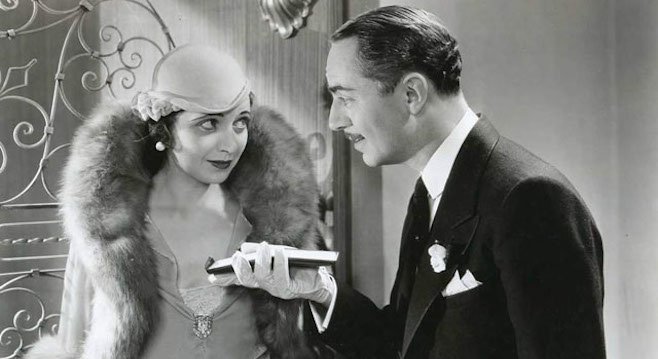

This is my contribution to the June Allyson Centenary blogathon, hosted by Simoa at Champagne for Lunch.
Related Posts Plugin for WordPress, Blogger...