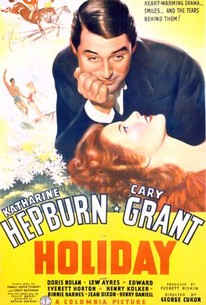
“Boêmio Encantador” é o terceiro de quatro filmes
que Katharine Hepburn e Cary Grant fizeram juntos. Os outros três são “Vivendo
em Dúvida” (1935), “Levada da Breca” (1938) e “Núpcias de Escândalo” (1940). “Boêmio
Encantador” é o pior do quarteto, e isso pode ser porque ele é teatral demais –
mas ainda é um filme bacana.
“Holiday” is the third of four movies Katharine
Hepburn and Cary Grant made together. The other three are “Sylvia Scarlett”
(1935), “Bringing Up Baby” (1938) and “The Philadelphia Story” (1940).
“Holiday” is the worst of the bunch, and this may be because it’s too
theatrical – but still a nice movie.
A trama é bem simples. Johnny Case (Grant)
conhece Julia Seton (Doris Nolan) há apenas dez dias, mas acredita que está
pronto para se casar com ela. O que ele não esperava descobrir é que Julia vem
de uma família extremamente rica – sua casa é tão grande que tem um elevador –
e que o pai dela tem tudo preparado para o casal: ele planejou a futura casa
deles e quer que seu futuro genro aceite um emprego no banco dele... mas o
pobre Johnny só quer sair de férias para clarear as ideias.
The plot is pretty simple. Johnny Case (Grant) has
known Julia Seton (Doris Nolan) for ten days, but believes he’s ready to marry
her. What he didn’t expect to discover is that Julia comes from an extremely
rich family – her house is so big that it has an elevator – and her father has
everything prepared for the soon-to-be newlyweds: he’s planned their future
house and wants his future son-in-law to take a job at his bank… but poor
Johnny only wants a holiday to clear his mind.
A família da noiva é fora de série: temos o
irmão mais novo de Julia, o alcoólatra Ned (Lew Ayres) e a vivaz irmã mais nova
Linda (Hepburn). Linda queria dar uma festa de noivado simples e íntima para
Julia e Johnny, mas o pai dela decide dar uma imensa festa de véspera de Ano
Novo para anunciar o noivado para toda a alta sociedade. Esta festa é o assunto
da maior parte do filme.
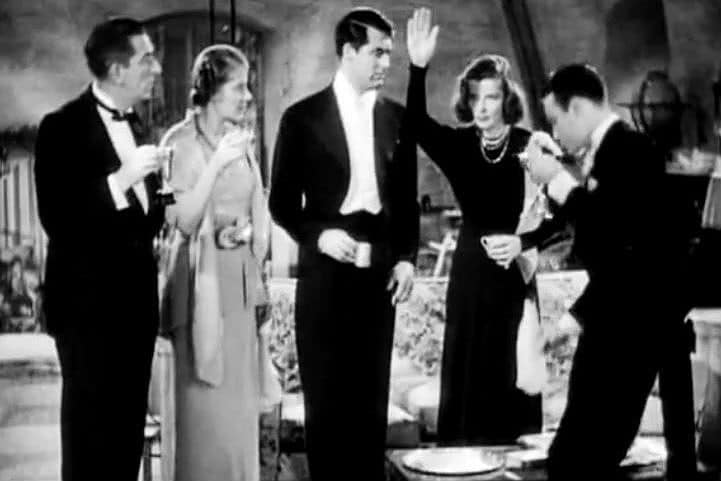
The future in-laws Johnny meets are out of this world:
there is Julia’s alcoholic younger brother Ned (Lew Ayres) and vivacious
younger sister Linda (Hepburn). Linda wanted to throw a simple and intimate
engagement party to Julia and Johnny, but her father decides to throw a huge
New Year’s Eve party to announce their engagement to all of high society. This
party takes the biggest bulk of the film.
Linda decide não se juntar à festa e fica na
sala de jogos da casa, onde podemos encontrar vários brinquedos da infância dos
irmãos – um tempo mais simples e mais feliz para eles. No meio da festa se
juntam a ela os amigos de Johnny, Nick e Susan Potter, interpretados por Edward
Everett Horton e Jean Dixon. Logo Johnny e Ned também se juntam a eles na sala
de jogos, onde a verdadeira diversão está – e talvez também o amor verdadeiro.
Linda decides to not join the party and stays in the
house’s playroom, where we can find several toys from the siblings’ childhood –
a simpler, happier time for them. In the middle of the party she’s joined by
Johnny’s close friends Nick and Susan Potter, played by Edward Everett Horton
and Jean Dixon. Soon Johnny and Ned also join them in the playroom, where the
true fun is – and maybe also true love.
“Boêmio Encantador” foi uma peça de teatro que
estreou em 1928 e teve 229 performances. Donald Ogden Stewart, que escreveu o
roteiro do filme, havia interpretado Nick Potter no teatro, e Katharine Hepburn
foi substituta na peça. A peça de Philip Barry – que também escreveu “Núpcias
de Escândalo” – já havia sido adaptada para as telas em 1930, e Edward Everett
Horton também interpretou Nick Potter neste filme.
“Holiday” was a theater play that opened in 1928 and
ran for 229 performances. Donald Ogden Stewart, who wrote the screenplay for
the movie, had played Nick Potter in the theater, and Katharine Hepburn was an
understudy in the play as well. The play by Philip Barry – who also wrote “The Philadelphia
Story” – had already been adapted to the screen in 1930, and Edward Everett
Horton was in this film as Nick Potter.
Katharine Hepburn não foi a primeira escolha para
o papel de Linda. O papel era supostamente de Irene Dunne, e Ginger Rogers e
Joan Bennett também foram nomes cotados antes de Hepburn ser emprestada da RKO
para a Columbia - o que foi ótimo, uma vez que ela está perfeita no papel. O diretor George Cukor queria que Rita Hayworth interpretasse
Julia, mas a novata foi considerada sem experiência suficiente para o papel,
que ficou com Doris Nolan.
Katharine Hepburn wasn’t the first choice to play
Linda. The role was supposed to go to Irene Dunne, and Ginger Rogers and Joan
Bennett were also considered before Hepburn was loaned from RKO to Columbia - a great deal, as she is perfect in the role. Director
George Cukor wanted Rita Hayworth to play Julia, but the newcomer wasn’t
considered to be too inexperienced for the role, that went to Doris Nolan.
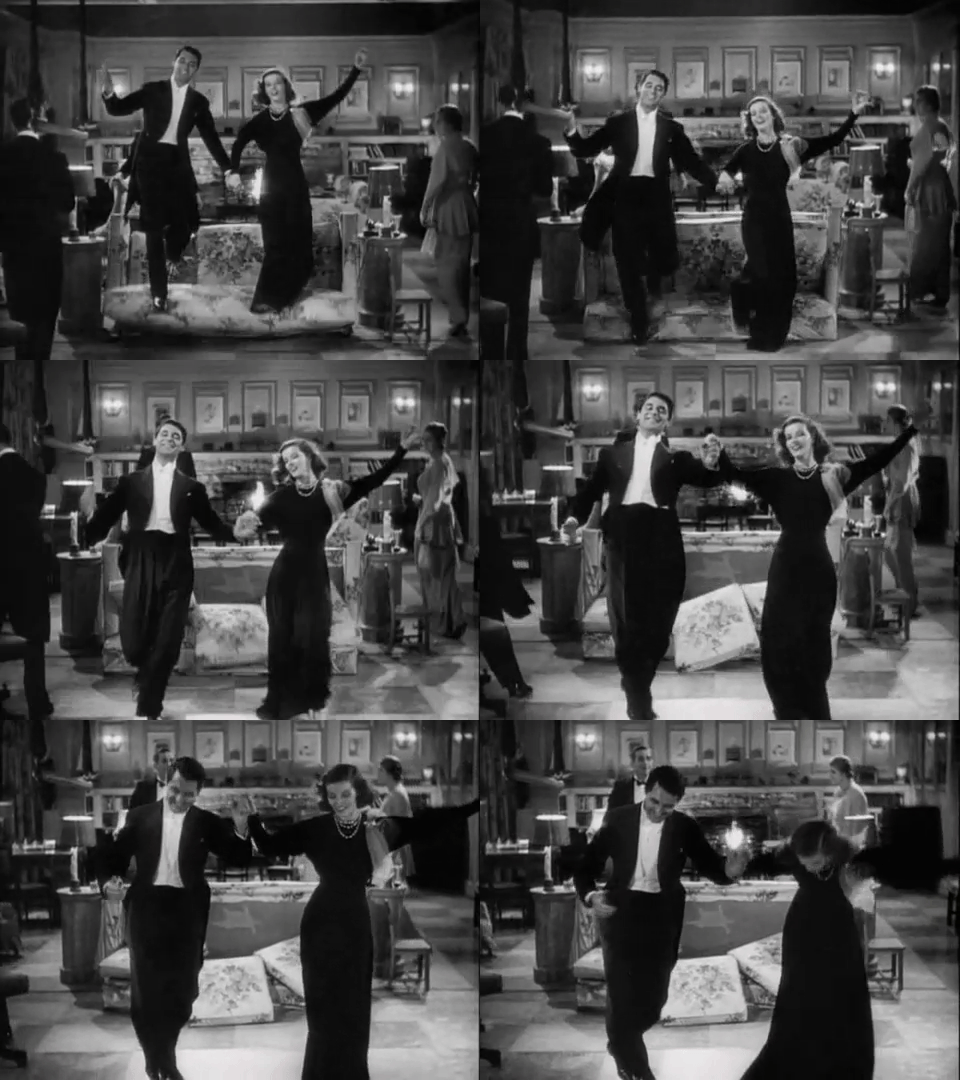
“Boêmio Encantador” é certamente um filme
sofisticado, mas também verborrágico. Há muita falação – especialmente quando
estão solucionando a situação toda – e só um pouco de ação. O momento com mais
ação é a acrobacia de Grant e Hepburn, um momento que você pode já ter visto em
forma de GIF. Menos famoso que os outros três filmes feitos pela dupla dinâmica
Grant e Hepburn, “Boêmio Encantador” pode ser charmoso, mas também é um pouco
chato e previsível. Uma pena, mas nem todos os filmes podem ser obras-primas.
“Holiday” is certainly a sophisticated film, but also
a “talky” one. There is too much talking – especially when they are solving the
whole situation – and just a little action. The moment with the most action is
Grant’s and Hepburn’s tumbling trick, a moment you might have already seen as a
GIF. Less famous than the other three films made by the dynamic duo Grant and
Hepburn, “Holiday” may be charming, but it’s also a bit boring and predictable.
Too bad, but we can’t have only masterpieces.
Here we are again, at yet another edition
of the beloved - at least by me - series “Lost in Translation”. This time we
talk about one of the most cherished film genres, that produced movies that
made people laugh and forget their troubles. Many screwball masterpieces were
also a box-office failure when they were first exhibited, but they stood the
test of time and are now considered some of the best movies ever made by
critics, filmmakers and cinephiles.
One curious tidbit is that there is
no direct translation of “screwball comedy” in Portuguese. We either refer to
the original term or try an approximation - I usually say “zany” or “wacky”
comedies whe talking about screwball. Now let’s see some fun titles in
Brazilian Portuguese:
“Bombshell” (1933) received the
title “Mademoiselle Dynamite” (“Mademoiselle Dinamite”)
“The Thin Man” (1934) is here “The
Accused’s Supper” (“A Ceia dos Acusados”)
“Mr Deeds Goes to Town” (1936) got
the title “The Dashing Mr Deeds” (“O Galante Mr Deeds”)
“My Man Godfrey” (1936) became “Irene,
the Stubborn” (“Irene, a Teimosa”)
“Libeled Lady” (1936) is here “Married
to my Fiancée” (“Casado com Minha Noiva”)
“Easy Living” (1937) received the
title “Lucky Girl” (“Garota de Sorte”)
“The Awful Truth” (1937) is known as
“Cupid is a Stubborn Brat” (“Cupido é Moleque Teimoso”)
“Bringing Up Baby” (1938) received
the title “Mischievous” (“Levada da Breca” is a hard-to-translate slang)
I
was talking with some fellow bloggers about classic movies when a
thought crossed my brain: I had to memorize the titles of classic
films at least twice, once in their original English and once as they
were translated in Brazilian Portuguese – and I'm not considering
the times I get to know the titles in Spanish or in Portuguese from
Portugal, which is a different trip! As I kept thinking about that I
was reminded how this is a blog with a global audience, and you guys
certainly would get a kick out of some odd translations of classic
film titles here in Brazil. I chose 12 of my favorite, most curious
oddities to begin with:
Há algo
de encantador em cidades pequenas. As casinhas com cercas baixas. As lojas
passadas de pai para filho. O parque ou o lago onde acontecem todas as funções
sociais. O fato de que todos se conhecem. E há algo de podre nas cidades
pequenas também, e justamente pelo motivo de que todos se conhecem. É terreno
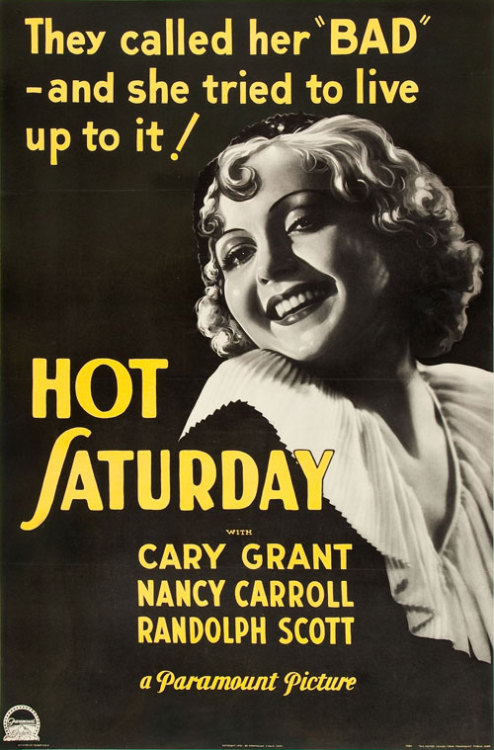
de fofoca, inveja, reputações destruídas por boatos. A reputação de Ruth (Nancy
Carroll) em “Sábado Alegre” é destruída justamente por um boato. Se eu fosse
Ruth, nem me importaria: afinal, o boato envolve ninguém mais ninguém menos que
Cary Grant.
There
is something charming in small towns. The little houses with low fences around.
The mom and pop stores. The park or lake where all the picnics happen. The fact
that everybody knows everybody. And there is something rotten in small towns as
well, also because everybody knows everybody. Small towns are ground for
gossip, jealousy, are places where reputations are destroyed by rumors. Ruth’s
(Nancy Carroll) reputation in “Hot Saturday” is destroyed by a rumor. If I were
Ruth, I wouldn’t care: after all, the rumor involves Cary Grant!
Ruth
trabalha no banco e é cobiçada por todos os funcionários do sexo masculino. Ela
rejeita diversos convites para sair, mas finalmente cede quando Conny (Ed Woods,
que interpretou o irmão bonzinho de James Cagney em “Inimigo Público” em 1931)
a convida para ir ao clube numa tarde de sábado.
Ruth
works at the bank and all the male employers are interested in her. She refuses
several approaches, but finally capitulates when Conny (James Woods, who played
James Cagney’s good brother in ‘The Public Enemy” in 1931) invites her to go to
the club on a Saturday afternoon.
Naquele
sábado alegre, em uma bela casa em frente ao lago, os jovens se divertem,
nadam, passeiam de barco e comem. Mais tarde, eles vão para um baile. O dono da
casa é Romer Sheffield (Cary Grant), que tem a má fama de ser um garanhão que
não espera até a noite de núpcias para ter intimidade com suas namoradas.
On that
hot Saturday, in a beautiful house near the lake, the young people have fun,
swim, ride boats and eat. Later they go to a dancing house. The owner of the
house by the river is Romer Sheffield (Cary Grant), who is a known womanizer
who can’t wait until the wedding night to get intimate with his girlfriends.
Romer
não vai ao baile, mas Ruth e Conny vão. Pouco depois, eles pegam um barco e
Conny tenta beijar Ruth contra a vontade dela. Ela resiste e sai correndo, e em
busca de ajuda vai até Romer, que pede que seu motorista a leve de volta para casa.
Mas Conny não vai deixar barato: com a ajuda de Eve Randolph (Lilian Bond), a
ciumenta filha do dono do banco, ele espalha um boato sobre Ruth.
Romer
doesn’t go dancing, but Ruth and Conny do. A little later, they catch a boat
and Ronny tries to kiss Ruth against her will. She resists, runs away and asks
Romer for help. He listens to her, comforts her and asks his driver to take her
home. But Conny is planning revenge: with the help of Eve Randolph (Lilian
Bond), the bank owner’s jealous daughter, he starts a rumor about Ruth.
Logo
todos na cidade ouvem a fofoca: Ruth passou a noite com Romer. Cada um que
espalha o boato adiciona um toque de malícia. Ruth é demitida e se torna pária
em sua cidade. Vítima da hipocrisia, ela vê uma chance de redenção em um velho
amigo de infância, Bill Fadden (Randolph Scott), que confessa que sempre foi
apaixonado por ela. Ruth decide se casar com ele. Mas será que ela o ama de
verdade?
Soon
everybody in town know about the gossip: Ruth spent the night with Romer. Each
person adds a new spicy detail when spreading the rumor. Ruth is fired and
becomes persona non grata in the city. A victim of hypocrisy, she sees a last
chance of redemption in her childhood friend Bill Fadden (Randolph Scott), who
confesses he has always been in love with Ruth. She decides to marry him. But
is it true love?
A
construção da história até chegar ao clímax – o ostracismo de Ruth – é lento,
levando 40 minutos. Sobram apenas mais 32 para a história ser finalizada. Mas
que final mais deliciosamente... pre-Code!
Building
up the story until the clímax – that is, Ruth’s ostracism – takes 40 minutes. We
have only 32 more minutes left until the end. But the end is deliciously…
pre-Code!
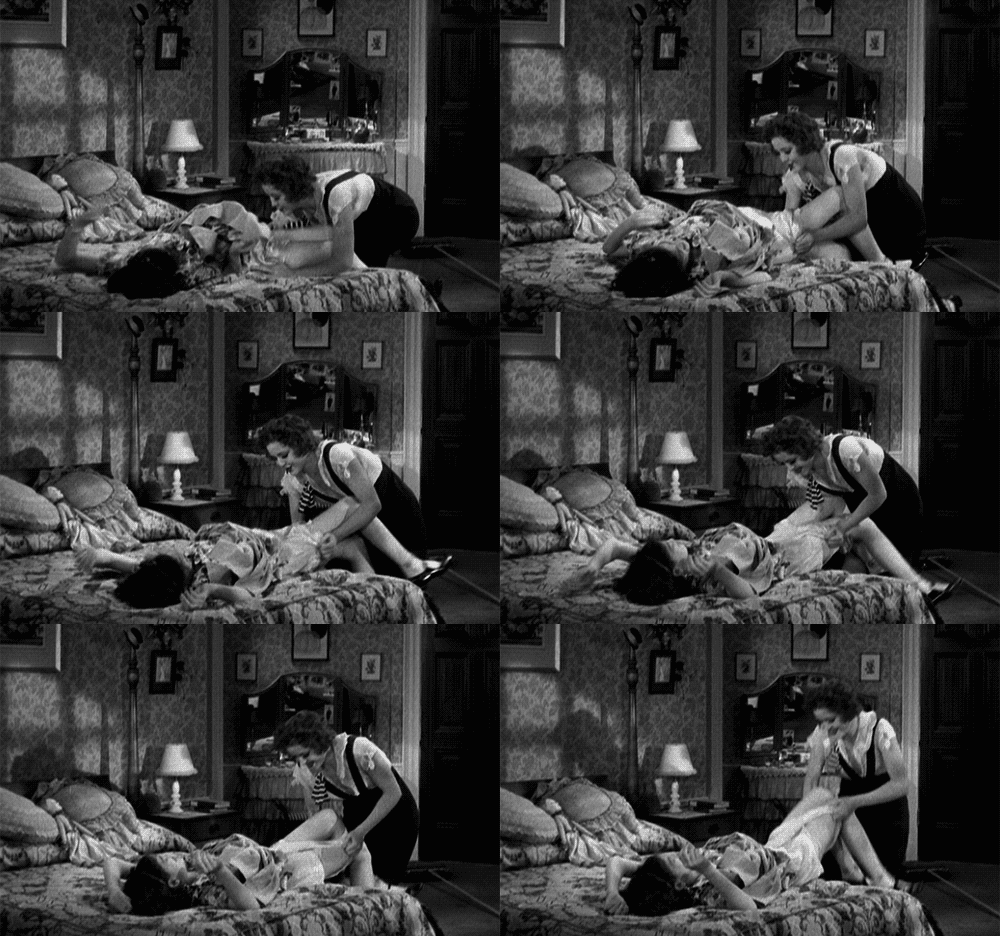
Há uma
cena em especial que grita pre-Code:
vemos Ruth trocando de roupa, ficando apenas com um saiote quase transparente.
E ela faz isso logo depois de tirar, à força, os shorts que a irmã
pré-adolescente havia pegado de sua gaveta. É uma sequência que deixaria
William Hays de cabelo em pé.
There
is one scene in particular that screams ‘pre-Code’: we see Ruth changing
clothes, and she wears a near transparent negligee. This happens right after
Ruth violently undresses her teenager sister because the little girl had stolen
her new shorts. It is a scene to freak William Hays out.
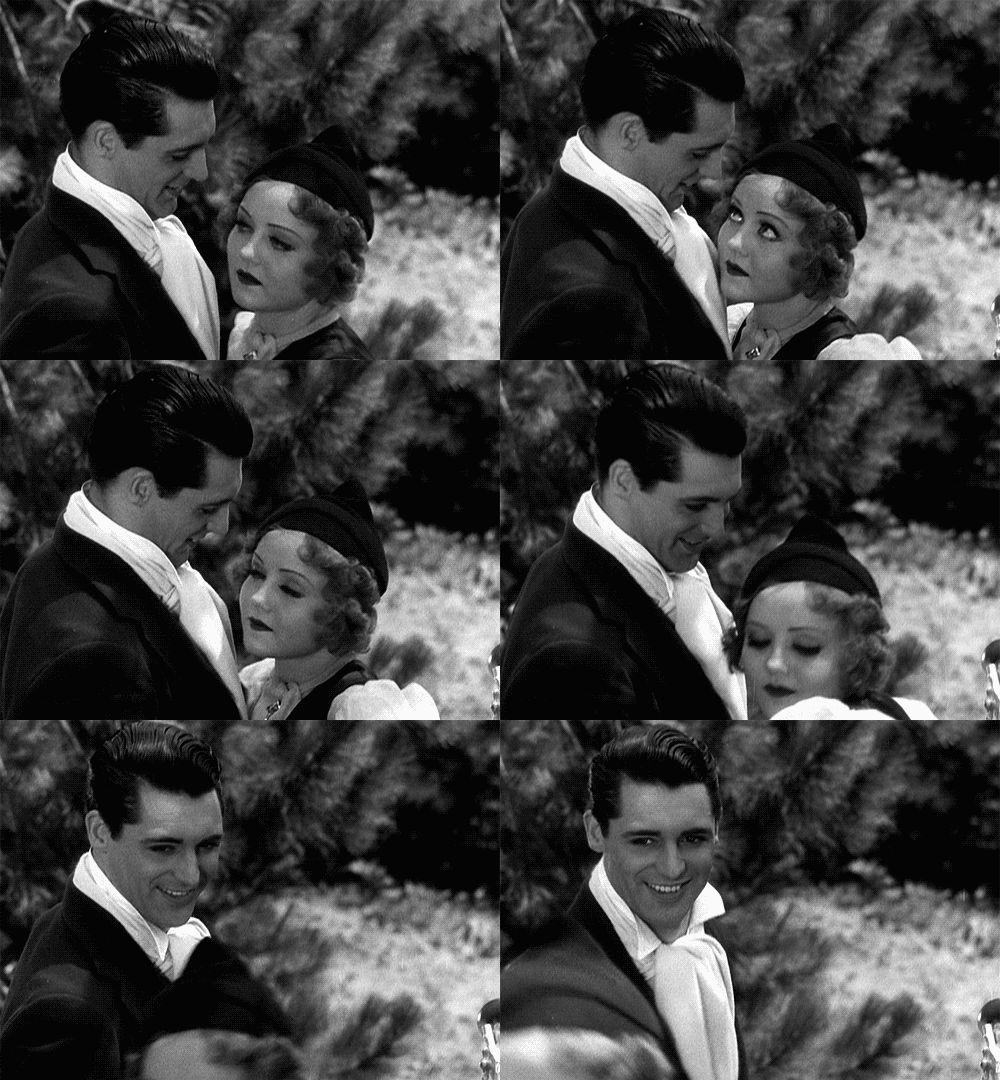
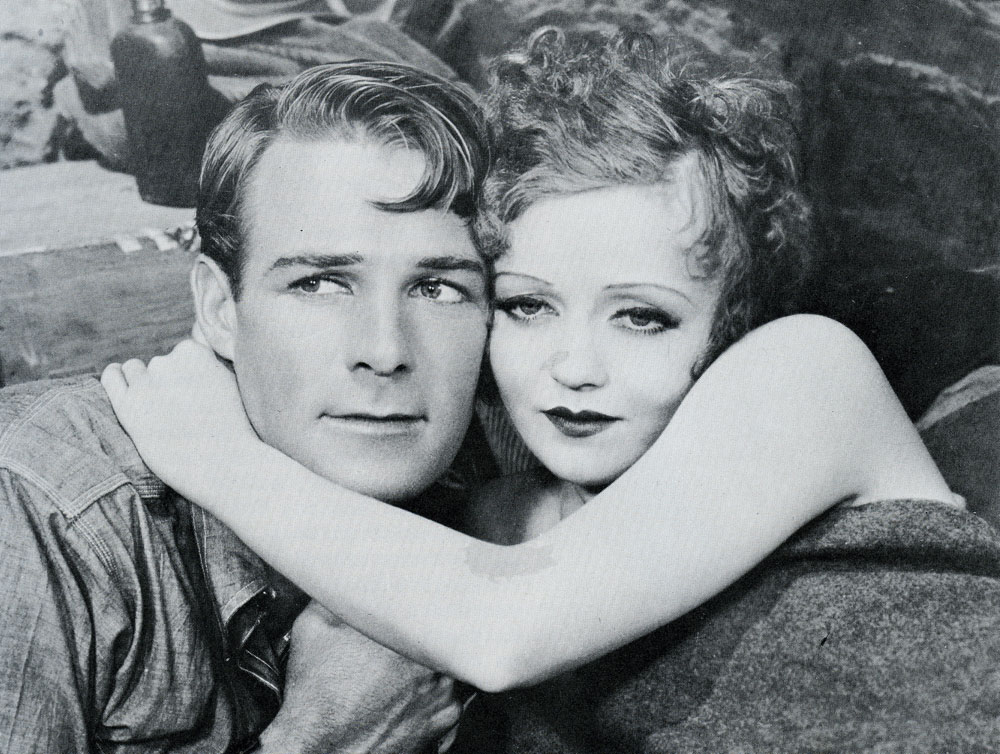
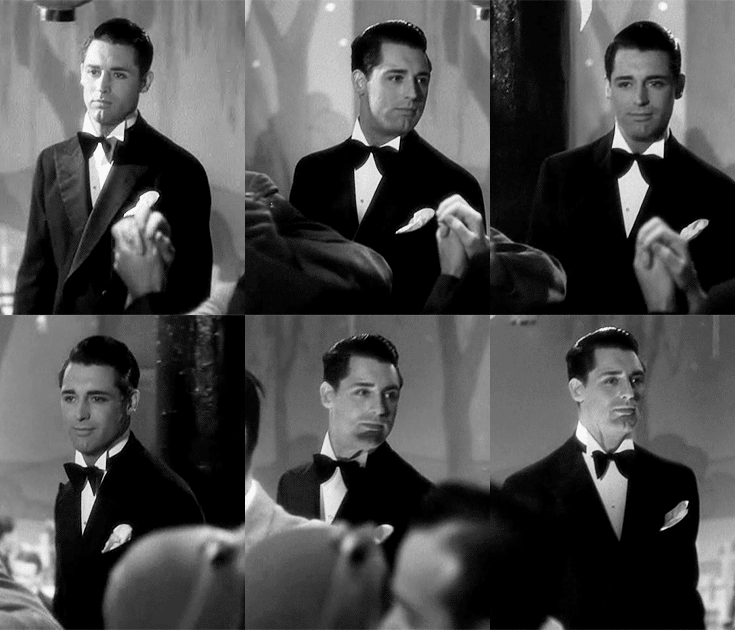
Cary
Grant, pela primeira vez com seu nome no topo dos créditos, é muito sedutor já
aos 28 anos. Além disso, ele aparenta usar bastante lápis de olho e rímel, que
deixam seu olhar penetrante. Randolph Scott tem um personagem que consegue ser
denso mesmo com poucas cenas, e é interessante ver os dois melhores amigos na
vida real em uma pequena disputa cinematográfica pela mesma mulher. Eles fariam
mais um filme juntos, “Minha Esposa Favorita” (1940).
Cary
Grant, first-billed for the first time in his career, is a very seductive
28-year-old. And he achieves a powerful look in his eyes by, apparently, using
a lot of makeup and mascara. Randolph Scott plays a character that could be
dense and well-constructed even with little screen time. It’s interesting to
see the two best friends in real life competing for the same woman on the
screen. Grant and Scott would make one more film together, “My Favorite Wife”
(1940).
O final
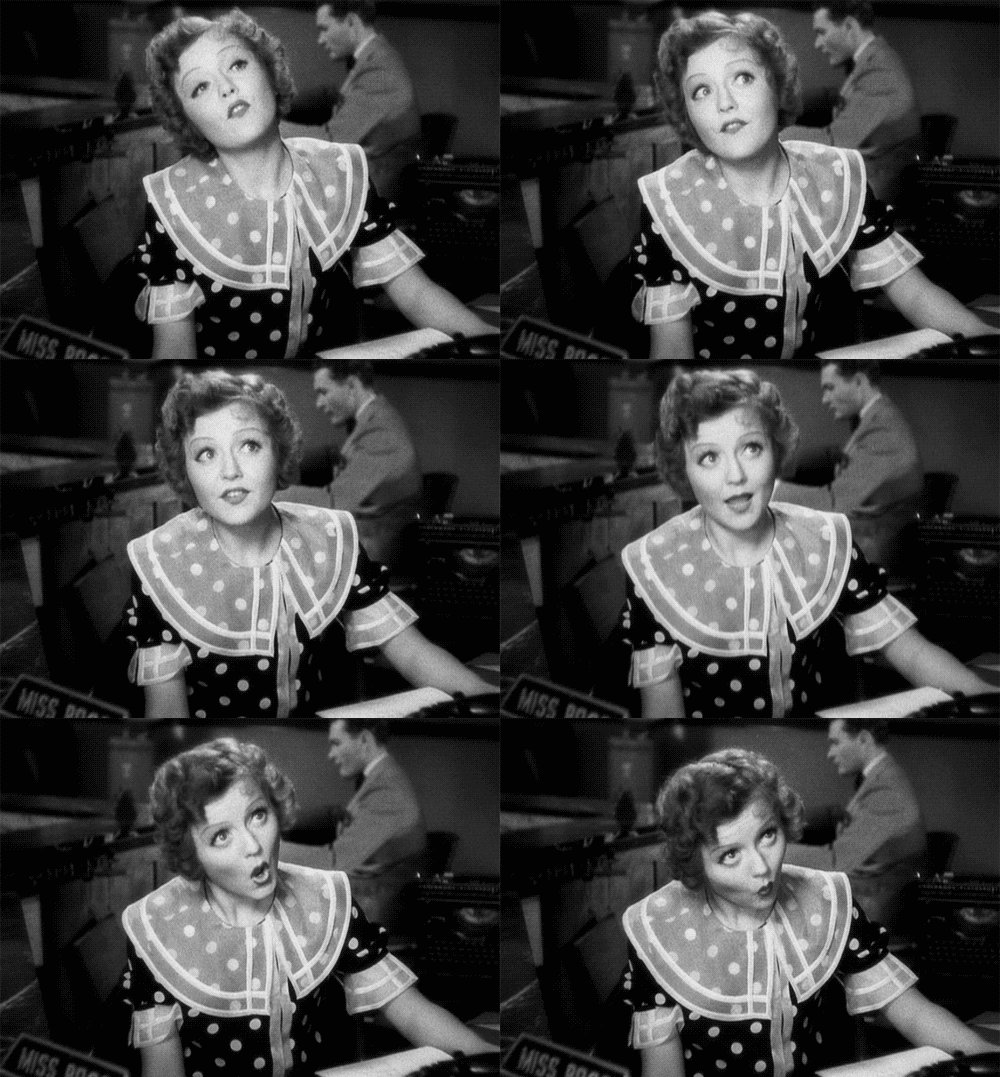
é redentor, e muito moderno e necessário. Nancy Carroll arregala os olhos e
percebe que precisa cuidar de sua própria vida, capitanear seu destino sem se
importar com o que os outros pensam. É impressionante ver que um filme de 1932
tem temas tão atuais. É triste perceber que as questões (especialmente para
mulheres) são as mesmas de 80 anos atrás. E é mais triste ainda saber que a
sociedade continua hipócrita, mas sem a presença de Cary Grant para embelezar o
mundo.
The
ending is redemptive, very modern and necessary. Nancy Carroll has her eyes
wide open when she realizes that she must mind her own business and live her
life without bothering about the opinions of others. It’s surprising to see
that a film from 1932 has such a modern theme. It’s sad to see that some
troubles (for women, in special) are the same as 80 years ago. And it’s even
sadder to know that society has still a lot of hypocrisy, and Cary Grant is not
here anymore to make the world a little more pleasant.
This is
my contribution to the Cary Grant blogathon, hosted by Laura at Phyllis Loves Classic
Movies.
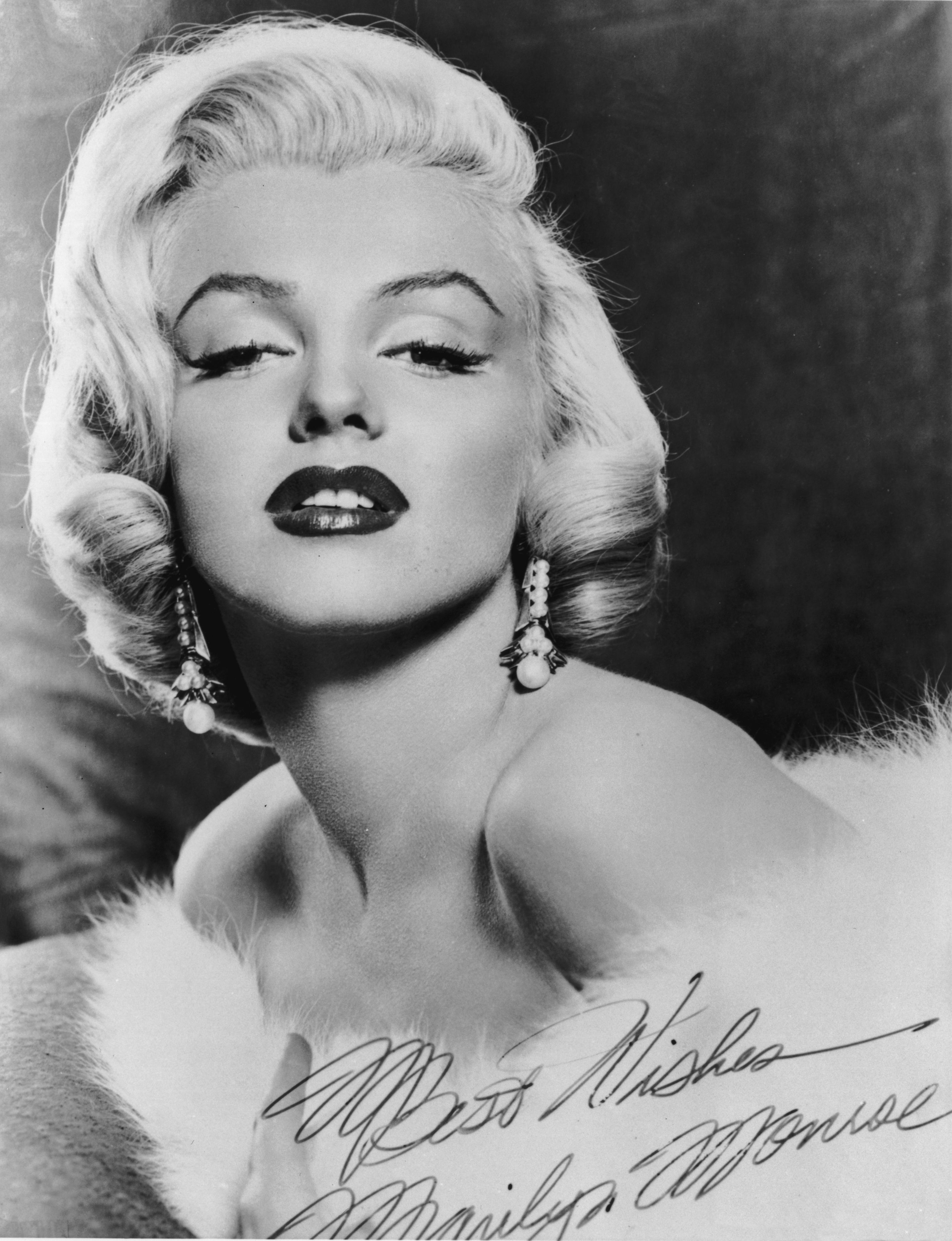
Ela está em todos os lugares. É ícone da cultura pop e talvez o mais
conhecido rosto do século XX. Mas eu me atrevo a dizer: Marilyn Monroe é
superestimada. Podia ser uma grande atriz – mas não foi. Pouco aproveitada, era
mais um pedaço de carne a ser exibido nas telas. Sua imagem sempre veio antes
do seu talento – e tinha talento: foi uma das melhores alunas do Actor’s
Studio.
She is everywhere. She is a pop culture icon and maybe the most recognized
face of the 20th century. But I dare to say: Marilyn Monroe is overrated. She
could have been a great actress - but she wasn’t. Underused, she was more of a
piece of meat to be exhibited on the screens. Her image always came before her
talent - and she had talent: she was one of the best students at the Actor’s
Studio.
Olhe para a foto acima. Marilyn lê! Sim, ela não é apenas um belo rosto!
Mas ela precisava ser exibida em frente à estante usando apenas uma lingerie
muito sexy? Não.
Look at the photo above. Marilyn reads! Ys, she is more than just a
pretty face! But did she really need to be exhibited in front of the Bookshelf
wearing only a very sexy lingerie? Nope.
Como símbolo sexual e diva do cinema, Marilyn acaba atraindo a atenção de
muitas pessoas (olhe como ela está nos cartazes de todos os seus filmes, mesmo
tendo um papel pequeno!). São milhões de fãs no mundo inteiro, sendo que uma
boa parte desses fãs não assistiram a nenhum filme com Marilyn. Eu não sou
exatamente uma fã, mas já vi quase todos os filmes da estrela. E vou dizer:
eles são ótimos, mas não por causa de Miss Monroe...
As a sex symbol and movie diva, Marilyn ends up attracting the attention
of so many people (she is in the poster for all of her films, even when she has
just a small role!). There are millions of her fans around the world, and many
of these fans have never watched any movie with Marilyn. I’m not exactly a fan,
but I’ve watched almost all of her movies. And let me say: they are great, but
not because of Miss Monroe…
Loucos de
Amor (1949)
Preste
atenção em: Harpo
Marx.
Por quê?: Groucho Marx pode ter muito tempo em
cena com seu papel de detetive, mas é Harpo, adorável como nunca, que rouba
todas as cenas em que aparece.
Love Happy (1949)
Pay attention
to: Harpo Marx.
Why?: Groucho Marx may have a lot of screen time with his role as a detective,
but it is Harpo, adorable as ever, who steals all the scenes he is in.
A Malvada (1950)
Preste
atenção em: todo o
elenco feminino.
Por quê?: Marilyn aparece em cena por menos de um
minuto, e a loira está longe de ser a razão principal para ver este grande
filme. Bette Davis e Anne Baxter brigando pelo lugar de diva máxima do teatro,
com Thelma Ritter e Celeste Holm como coadjuvantes. Precisa pedir
mais?
All
About Eve (1950)
Pay attention to: all the female cast.
Why?: Marilyn is on screen for less than a minute, and the blonde is far from
being the main reason to watch this great film. Bette Davis and Anne Baxter
disputing the place as the maximum diva in theater, with Thelma Ritter and
Celeste Holm as supporting players. Could you ask for anything more?
O Segredo das
Joias (1951)
Preste
atenção em: Jean
Hagen.
Por quê?:Mais uma vez, a participação de Marilyn
é restrita a um minuto. Por outro lado, quem mostra muito talento (e uma bela
voz) é Jean Hagen. Não reconhece o nome? Ela interpretou, no ano seguinte, a
cômica vilã Lina Lamont em “Cantando na Chuva”!
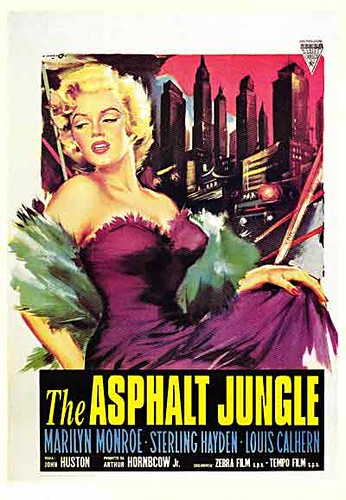
The
Asphalt Jungle (1951)
Pay attention to: Jean Hagen.
Why?: Once again, Marilyn receives only one minute of screen time. On the other
hand, the one who showcases a lot of talent (and a beautiful voice) is Jean
Hagen. Don’t you recognize the name? She would play, in the following year, the
comic villain Lina Lamont in “Singin’ in the Rain”!
Sempre
Jovem (1951)
Preste
atenção em: Monty
Woolley, Thelma Ritter e Constance Bennett.
Por quê?: Monty Woolley é o mais desconhecido de
todos os indicados ao Oscar (ele foi indicado DUAS VEZES e ainda assim poucos o
conhecem). Mas ele e as sempre ótimas Thelma e Constance dão um show com um
roteiro muito divertido: para evitar a aposentadoria, John R. Hodges (Woolley)
finge ser o presidente da própria empresa em que trabalha, enganando os
funcionários.
As
Young as You Feel (1951)
Pay attention to: Monty Woolley,
Thelma Ritter e Constance Bennett.
Why?: Monty Woolley is the most unknown of all Oscar nominees (he was
nominated TWICE and yet so few people know him). But he and the always great
Thelma and Constance are lovely in this film with a great script: to avoid
retirement, John R. Hodges (Wolley) pretends to be the president of the company
he works for, fooling the employees.
Só a
mulher peca (1952)
Preste
atenção em: Barbara
Stanwyck, a rainha subestimada do cinema.
Por quê?: Marilyn está OK no filme, mas ele
pertence à sempre excelente Barbara Stanwyck. Pense em um filme meio noir,
passado à beira do mar, com uma femme fatale de meia-idade e dirigido pelo
mesmo homem que dirigiu Metrópolis!
Clash
by Night (1952)
Pay attention to: Barbara Stanwyck, the underrated queen of the movies.
Why?: Marilyn is OK in the film, but it belongs to the always great Barbara
Stanwyck. It is kind of a noit movie, set at the beach, with a middle-aged
femme fatale and directed by the same man who directed Metropolis!
O Segredo
das Viúvas (1952)
Preste
atenção em: Frank
Fay.
Por quê?: Este filme está muito longe de ser
especial. Se você puder evitá-lo, não perderá nada. Apenas me surpreendi com
Frank Fay, já no final da carreira. Frank foi o primeiro marido de Barbara
Stanwyck e parece já bem velho e judiado.
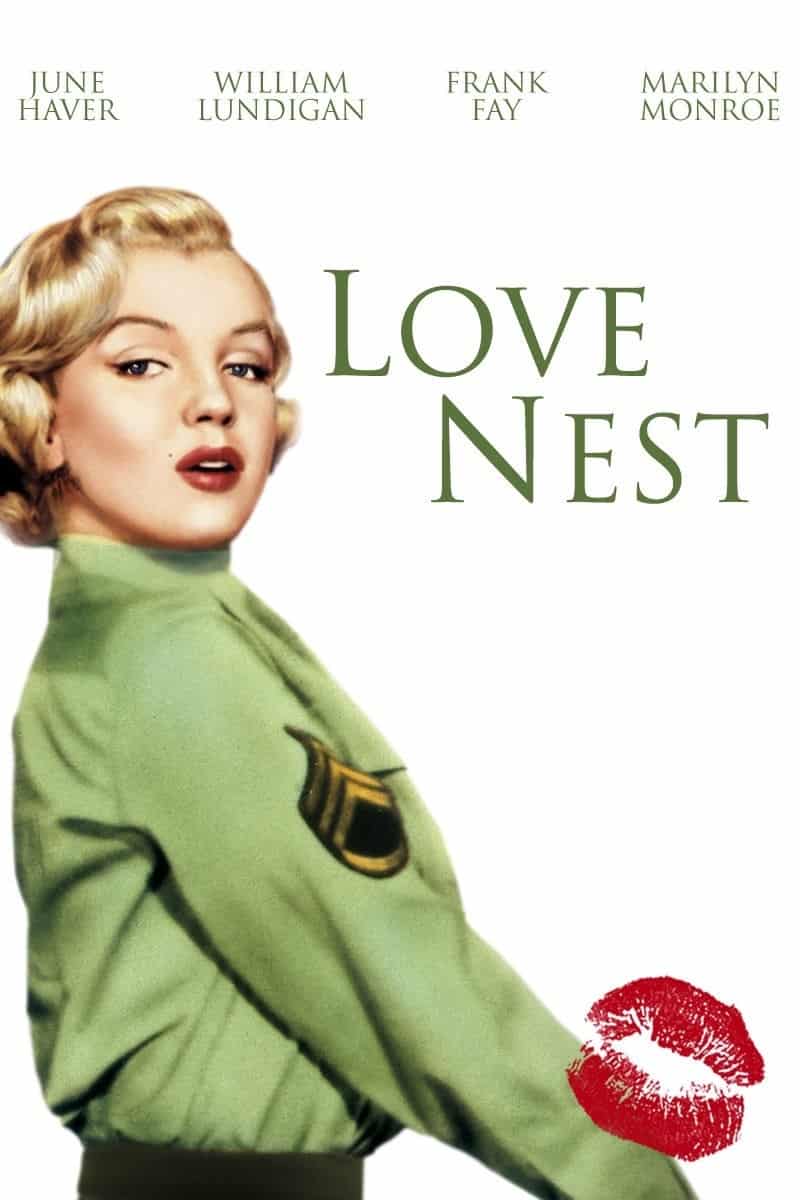
The
Love Nest (1952)
Pay attention to: Frank Fay.
Why?: This film is not special at all. If you can avoid it, you’ll miss
nothing. I was only surprised by Frank Fay, already in the end of his career.
Fay was Barbara Stanwyck’s first husband and appears here already pretty old, a
sad figure.
O Inventor
da Mocidade (1952)
Preste
atenção em: Cary
Grant e Ginger Rogers.
Por quê?: Junte dois dos melhores atores da
época, Cary e Ginger. Eles são muito bons na comédia e têm uma ótima química.
Prepare-se para muitas gargalhadas durante toda a projeção (meu momento
favorito é quando Cary decide brincar de índio).
Monkey
Business (1952)
Pay attention to: Cary Grant and Ginger Rogers.
Why?: Put together two of the best actors of their time, Cary and Ginger. They
are so good at comedy and have a great chemistry. Get ready for many laughs
during the whole movie (my favorite moment is when Cary decides to play as an
Indian).
Travessuras de Casados (1952)
Preste
atenção em: qualquer
coisa.
Por quê?: Três casais descobrem que a união
deles não é válida porque o juiz ainda não tinha uma licença. Há o casal do
rádio que vive brigando, mas mantém as aparências quando está no ar, há a miss
que pode competir agora que está solteira, e a moça que fica preocupada por seu
filho nascer no “pecado”. Qual o problema do filme? É curto demais, cada caso
poderia ser explorado melhor!
We’re not married (1952)
Pay attention
to: anything.
Why?: Three couples find out that their marriage is not legal because the
judge didn’t have a license. There is the radio couple who is always fighting,
but keeps the appearance when they go on air, there is the miss who can go back
to competitions now that she is single, and the lady who gets nervous because
her son will be born “in sin”. What is wrong with the film? It is too short,
each case could be better explored!
Almas
Desesperadas (1952)
Preste
atenção em: Anne
Bancroft em seu primeiro papel no cinema... e preste atenção também em Marilyn.
Por quê?: Sem dúvida este é o melhor filme de
Marilyn, ou pelo menos aquele em que ela mostra todo seu potencial como atriz
dramática. Uma deliciosa surpresa e uma atuação muito intensa!
Don't bother to knock (1952)
Pay attention to: Anne Bancroft in her first film role… and also pay attention to Marilyn.
Why?: There is no doubt that this is Marilyn’s best film, or at least the one
in which she shows her whole potential as a drama actress. A delicious surprise and a very intense performance!
Torrente
de Paixão (1953)
Preste
atenção em: Joseph
Cotten (e nos cenários).
Por quê?: Este é um filme noir em Technicolor.
As salas fumacentas dão lugar ao ar puro das cataratas do Niágara, e Joseph
Cotten ressuscita seu lado “tio Charlie” para ficar assustador. Imperdível.
Niagara
(1953)
Pay attention to: Joseph Cotten (and the sets).
Why?: This is a Technicolor
noir. The foggy rooms give space to the fresh air in the Niagara Falls, and
Joseph Cotten resurrects his “Uncle Charlie” side to look scary. A film you can’t miss.
Os homens
preferem as louras (1953)
Preste
atenção em: Jane
Russell.
Por quê?: os homens podem preferir as louras,
mas é a bela morena que comanda o espetáculo. Ela é mais exuberante em todos os
números musicais e ainda faz uma maravilhosa imitação da personagem de Marilyn
no tribunal.
Gentlemen
prefer blondes (1953)
Pay attention to: Jane Russell.
Why?: Gentlemen may prefer blondes, but it is the beautiful brunette who owns
the show. She is more exuberant in all the musical numbers and also imitates
Marilyn’s character perfectly in a courtroom scene.
Como agarrar um milionário (1953)
Preste
atenção em: Lauren
Bacall e Betty Grable.
Por quê?: Betty Grable tem um figurino
maravilhoso no filme (tá, os óculos de Marilyn também são muito bonitos), mas o
destaque vai para a linda e talentosa Lauren Bacall em seus momentos cômicos.
How to marry a millionaire (1953)
Pay attention
to: Lauren Bacall
and Betty Grable.
Why?: Betty Grable has a wonderful wardrobe in the film (OK, Marilyn’s
glasses are also very beautiful), but the highlight is the gorgeous and
talented Lauren Bacall in her comic scenes.
O Mundo da Fantasia (1954)
Preste
atenção em: Donald
O’Connor
Por quê?: Este é um dos grandes momentos de
O’Connor no cinema. Sua dança com as estátuas, quando ele percebe que está
apaixonado, é o equivalente ao Cantando na Chuva de Gene Kelly.
There is no business like show business (1954)
Pay attention
to: Donald
O’Connor.
Why?: This is one of the great moments in Donald O’Connor’s career. His dance
with the statues, when he realizes he’s in love, is the equivalent of Gene
Kelly’s Singin’ in the Rain.
O Rio das
Almas Perdidas (1954)
Preste
atenção: nas roupas! No cenário! Nas
forças da natureza!
Por quê?: Marilyn é uma cantora de saloon com
belas roupas, mas o verdadeiro protagonista do filme é o rio, que ameaça Burt
Lancaster, seu filho pequeno e a nossa loira favorita.
River
of No Return (1954)
Pay attention to: the clothes! The sets! The force of nature!
Why?: Marilyn is a saloon
singer who wears beautiful clothes, but the real lead in the film is the river
that threats Burt Lancaster, his small son and our favorite blonde.
O pecado
mora ao lado (1955)
Preste
atenção: nos diálogos.
Por quê?: este é o filme com a famosa cena do
vestido. Mas nem por isso é especial dentro da filmografia brilhante de Billy
Wilder. Sim, há bons momentos do humor característico de Wilder, e apenas eles
fazem o filme valer a pena. Ah, tem também “o bife”:
The
Seven Year Itch (1955)
Pay attention to: the dialogues.
Why?: This is the film with the famous dress scene. But this doesn’t make it a
special entry in Billy Wilder’s brilliant filmography. Yes, there are good
humorous moments, totally Wilder’s thing, and only those make the film worth
seeing. Oh, and there is the “chopsticks”:
Nunca fui Santa
(1956)
Preste
atenção: no figurino de Marilyn. Só
isso salva o filme.
Por quê?: Não sei quanto a você, mas eu
considero este filme muito, muito chato, em especial por causa do protagonista
sem carisma,Don Murray, que resolve
sequestrar a personagem de Marilyn, a bela cantora Chérie, e levá-la para viver
com ele. Marilyn foi tratada como um objeto neste filme!
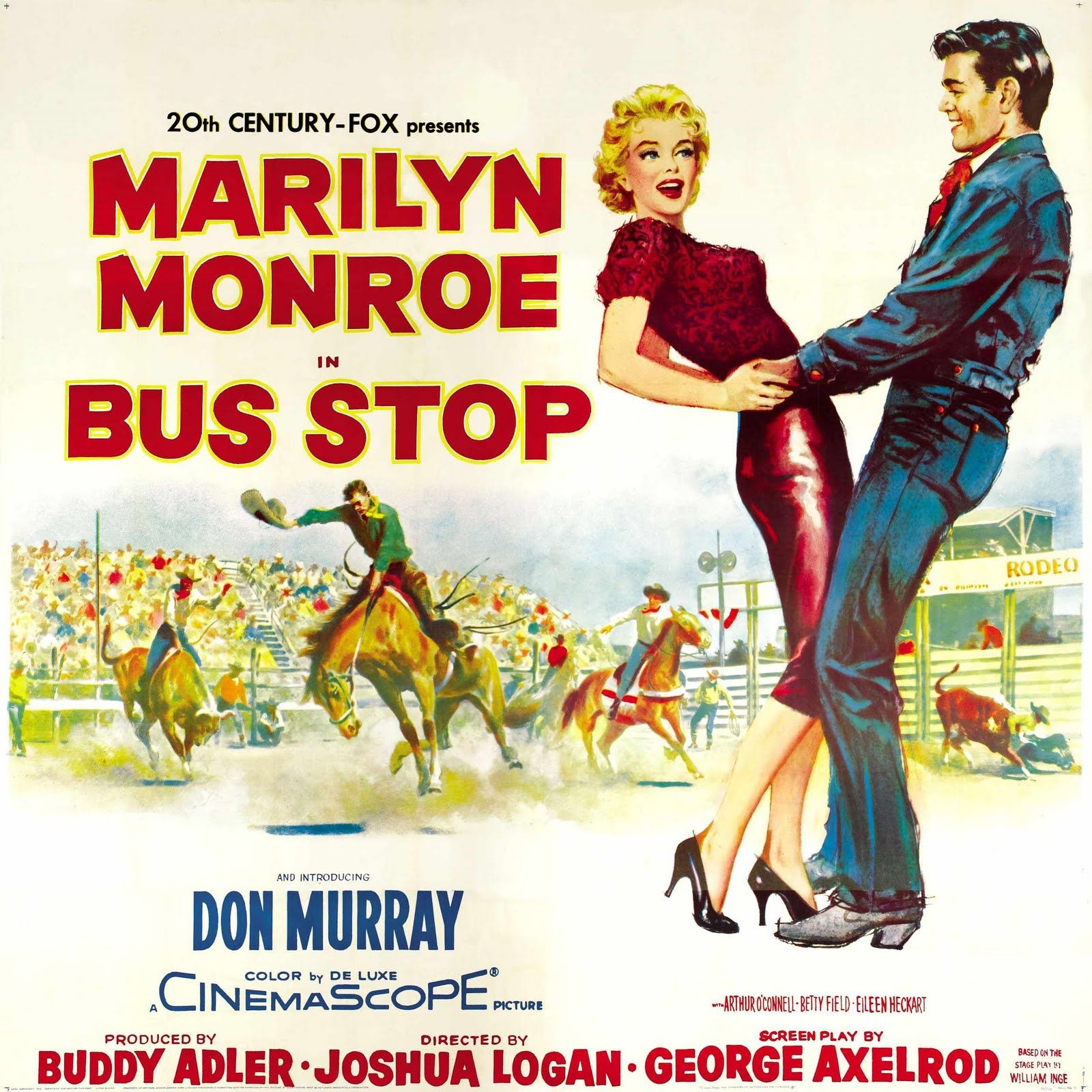
Bus Stop
(1956)
Pay attention
to: Marilyn’s
outfits. Only them save the film.
Why?: I don’t know about you, but I think this film is very, very boring, in
special because of the leading man without charisma, Don Murray, who decides to
kidnap Marilyn’s character, the beautiful singer Chérie, and take her to live
with him. Marilyn was treated as an object in this movie!
O Príncipe
Encantado (1957)
Preste
atenção em: Laurence
Olivier.
Por quê?: Olivier podia fazer tudo, da comédia
ao drama de Shakespeare. Entretanto, aqui a história dos bastidores é tão
interessante quanto o filme final, como podemos ver em “Sete Dias com Marilyn /
My week with Marilyn” (2011).
The Prince and the Showgirl (1957)
Pay attention
to: Laurence
Olivier.
Why?: Olivier could do anything, from comedy to Shakespeare’s drama. However,
here the backstage story is as interesting as the final film, something we can
see in “My Week with Marilyn” (2011).
Quanto
mais quente melhor (1959)
Preste
atenção em: Jack
Lemmon... e Joe E. Brown.
Por quê?: Como Gerald / Daphne, Jack Lemmon dá
total vazão a seu lado feminino e parece realmente aproveitar todo o tempo em
que está vestido de mulher. O problema começa quando o rico Osgood (Joe E.
Brown) se apaixona por Daphne. Uma pena que Lemmon não ganhou o Oscar de Melhor
Ator!
Some
like it hot (1959)
Pay attention to: Jack Lemmon... and Joe E. Brown.
Why?: As Gerald / Daphne, Jack Lemmon perfectly connects with his feminine
side and really looks to be enjoying his time dressed as a woman. The problem
begins when the rich Osgood (Joe E. Brown) falls in love with Daphne. It’s a
shame that Lemmon didn’t win the Best Actor Oscar!
Adorável
Pecadora (1960)
Preste
atenção em:
participações especiais (“cameos”) de
Bing Crosby, Gene Kelly e Milton Berle.
Por quê?: Bing, Gene e Berle aparecem no filme
apenas para descobrir algum talento no personagem de Yves Montand – um homem
rico que, ao descobrir que é motivo de piada em uma peça de teatro, resolve
entrar no elenco (o que é um ótimo enredo!).
Let's
Make Love (1960)
Pay attention to: cameos by Bing Crosby, Gene Kelly and Milton Berle.
Why?: Bing, Gene and Berle appear in the movie only to try to discover a talent
in the character played by Yves Montand - a rich man who, as he finds out he’s
being the source of a joke in a theater play, decides to join the play (which
is a great story!).
Os
Desajustados (1961)
Preste
atenção em: Clark
Gable.
Por quê?: Se Clark Gable tivesse feito apenas
esse filme, já mereceria um lugar de destaque entre as maiores estrelas do
cinema. Em sua atuação mais brilhante, Gable mostra que não era só um sex symbol dos anos 30. Repare na
frustração quando ele não encontra os filhos do lado de fora do bar. É, sem
dúvida, o momento em que sua estrela brilhou mais alto em frente às câmeras.
The
Misfits (1961)
Pay attention to: Clark Gable.
Why?: If Clark Gable had made only this film, he would already deserve a place
among the greatest cinema stars. In his most brilliant performance, Gable
proves that he wasn’t only a 1930s sex symbol. Pay attention to the frustration
when he doesn’t see his children outside the bar. It is, without a doubt, the
moment when his star shone the brightest in front of the cameras.
Marilyn
era diva? Era. Tinha tudo para ser uma grande atriz? Provavelmente. Foi produto
e vítima de Hollywood. Apesar de ainda ser muito lembrada, certamente foi uma
das estrelas mais tristes da constelação da era de ouro.
Marilyn was a
diva? Yes. Did she have everything she needed to be a great actress? Probably.
She was a product and a victim of Hollywood. Even though she is
well-remembered, she was certainly one of the saddest stars in the Golden Age
constellation.
This is my contribution to the Contrary to Popular
Opinion Blogathon, hosted by Sister Celluloid!













_NRFPT_01.jpg)



-.jpg)