} Crítica Retrô: William Holden

Tradutor / Translator / Traductor / Übersetzer / Traduttore / Traducteur / 翻訳者 / переводчик

Showing posts with label William Holden. Show all posts

Thursday, April 16, 2026

Fedora (1978)


Algumas parcerias não apenas começam bem, mas também terminam bem. William Holden fez quatro filmes com Billy Wilder, incluindo aquele que deu ao ator seu único Oscar, e o último desta parceria foi “Fedora”, de 1978. Pouco elogiado e pouco visto, “Fedora” de muitas maneiras ecoa uma das obras-primas de Wilder.

Some partnerships not only start well, but also end well. William Holden worked in four films with Billy Wilder, including the film that gave the actor his only Oscar, and the last one in this partnership is 1978’s “Fedora”. Underrated and underseen, “Fedora” in many ways echoes one of Wilder’s masterpieces.

Fedora (Marthe Keller), a atriz de origem polonesa, está morta. Ela caiu ou se jogou em frente a um trem. Ela tinha entre 60 e 70 anos, dependendo da fonte. Uma das centenas de pessoas em seu funeral é o produtor de cinema independente Barry Detweiler (William Holden), que começa a nos contar uma história.

Fedora (Marthe Keller), the Polish-born actress, is dead. She either fell or jumped in front of a train. She was either 60 or 70, depending on the source. One of the hundreds of people at her funeral is independent movie producer Barry Detweiler (William Holden), who starts telling us a story.

O flashback nos leva a apenas duas semanas antes, na Grécia. Barry está lá para fazer negócios com Fedora, que vive reclusa no Mediterrâneo. Ela não quer recebê-lo em sua Villa, então ele segue o carro dela até arranjar uma brecha para falar com ela. Ela não o reconhece, então mais tarde no hotel ele escreve uma carta para refrescar a memória da atriz.

The flashback brings us to only two weeks before, in Greece. Barry is there to talk business with Fedora, who is living as a recluse at the Mediterranean. She doesn’t want to receive him in her Villa, so he follows her car until he gets a chance to talk to her. She doesn’t recognize him, so later at his hotel he writes a letter to refresh her memory. 

Estamos agora num flashback dentro de um flashback. O ano é 1947, o ápice do Sistema de Estúdio. Fedora já é uma estrela, enquanto Barry (agora interpretado por Stephen Collins) é apenas diretor assistente. Mesmo assim, eles passam a noite juntos. O flashback acaba aqui, é breve. Mas haverão outros.  

It’s now a flashback within a flashback. We’re in 1947, the apex of the Studio System. Fedora is already a star, while Barry (now played by Stephen Collins) is just second assistant director. Nevertheless, they spend the night together. The flashback ends here, it’s a brief one. But there will be others.

Fedora vive sob a influência da Condessa (Hildegard Knef), uma velha rica e excêntrica que abertamente condena a volta de Fedora às telas. Para ser mais precisa, a Condessa, uma empregada e o doutor Vando (José Ferrer) estão mantendo Fedora basicamente em cárcere privado.   

Fedora lives under the influence of The Countess (Hildegard Knef), a rich and eccentric old woman who openly disapproves when Fedora shows she’s eager for a comeback. To be more precise, the Countess, a maid and doctor Vando (José Ferrer) are keeping Fedora basically incarcerated.

O doutor afirma que o diagnóstico de Fedora é paranoia. Ela apareceu depois de um colapso nervoso, quando ela tentou se matar porque amava um ator muito mais jovem, Michael York, e não era correspondida. Não era bem assim. Mas isso não é motivo para manter uma mulher numa camisa-de-força.

The doctor says the diagnosis for Fedora is paranoia. It appeared after a nervous breakdown, when she attempted suicide for loving a much younger actor, Michael York, and not being loved back. It was not exactly like this. But this is no reason to keep a woman in a straight jacket.

Numa conversa entre Fedora e Barry, ele diz a ela que a MGM vendeu seus estúdios e leiloou todas as peças, incluindo móveis onde ela fez amor para as câmeras com Robert Taylor. A MGM vinha diminuindo em tamanho e importância  desde o início dos anos 70 e o último filme rodado no seu famoso set foi o documentário “Era uma Vez em Hollywood” de 1974. 

In a talk between Fedora and Barry, he tells her that MGM sold the backlot and auctioned everything, including some furniture where she made love for the cameras with Robert Taylor. MGM had been downsizing since the early 1970s and the last movie shot in the famous backlot was the documentary “That’s Entertainment!” from 1974.

A trilha sonora ficou a cargo de Miklos Rozsa, que fez músicas grandiosas para filmes épicos mas também trabalhou em projetos “menores”. Para “Fedora”, sua trilha injeta suspense e inclusive aumenta o drama no incrível plot twist.

The soundtrack was by Miklos Rozsa, who made grand music for epic films but also worked on “smaller” projects. For “Fedora”, his soundtrack adds suspense and even enhances the drama in the amazing plot twist.

Eu tenho certeza de que você está pensando nisso e é verdade: é impossível assistir a “Fedora” e não se lembrar de e comparar com “Crepúsculo dos Deuses” (1950): Podemos comparar Fedora com Norma Desmond e com a atriz que interpreta Norma, Gloria Swanson. Swanson soube envelhecer longe das telas, mantendo-se dinâmica, escrevendo sua autobiografia e advogando pela nutrição saudável. Neste sentido, a reclusa Fedora não se parece em nada com ela e se assemelha mais a Greta Garbo. Na verdade, Garbo é mencionada em “Fedora”, pela Condessa que diz que Garbo fez Anna Karenina duas vezes, e Fedora não estaria interessada em fazer o mesmo papel. Outras atrizes do cinema clássico são mencionadas, como Joan Crawford, Monroe e Harlow.  

I’m sure you’re thinking this and it’s true: it’s impossible to watch “Fedora” and not remember and compare it with “Sunset Boulevard” (1950). We can compare Fedora to Norma Desmond and the actress who plays Norma, Gloria Swanson. Swanson knew how to get older out of the screens, remaining a dynamic force, writing her biography and advocating for healthy nutrition. In this sense, the recluse Fedora is nothing like her and more like Greta Garbo. In fact, Garbo is mentioned in “Fedora”, by the Countess who says Garbo did Anna Karenina twice, so Fedora wouldn’t be interested in a new version. Other classic film actresses are also mentioned, such as Joan Crawford, Monroe and Harlow.

“Fedora” é muito mais que um filme que acompanha “Crepúsculo dos Deuses”. É uma produção surpreendente, um comentário sobre a queda do Sistema de Estúdio e a busca pela juventude eterna. Billy Wilder faria mais um filme, mas “Fedora” foi uma maneira perfeita, ainda que agridoce, de terminar sua bem-sucedida parceria com o grande William Holden.

“Fedora” is much more than a companion piece to “Sunset Boulevard”. It’s a surprising movie, a comment on the fall of the Studio System and the search for eternal youth. Billy Wilder would make one more film, but “Fedora” was a perfect, yet bittersweet, way to end his successful partnership with the great William Holden.

This is my contribution to the 7th Golden Boy blogathon - a William Holden celebration, hosted by Virginie and Emily at The Wonderful World of Cinema and The Flapper Dame.

Sunday, April 17, 2022

Tributo de Sangue (1952) / The Turning Point (1952)

Quando eu estava me preparando para assistir a “Tributo de Sangue” (1952) no Internet Archive, percebi que ele estava categorizado como “filme noir tardio”. É uma categoria estranha, e mais estranha ainda se considerarmos que muitos filmes noir foram feitos em meados e até finais da década de 1950. Seja ele um “filme noir tardio” ou não, o que importa é que “Tributo de Sangue” tem o ingrediente principal do filme noir: crime.

As I was getting ready to watch “The Turning Point” (1952) at the Internet Archive, I noticed that it was labeled “late film noir”. It was an odd label, even odder considering that there were several films noir made way into the 1950s. Whether it’s a “late film noir” or not, what is important is that “The Turning Point” exudes the stuff film noir is made of: crime.

Johnny Conroy (Edmond O’Brien) é um promotor de sucesso que está investigando um novo caso. Ele pede ajuda a seu pai, um policial, mas recebe um não como resposta. Surpreso pela recusa, o amigo de Johnny, Jerry (William Holden), que é repórter, decide seguir o pai de Johnny, Matt (Tom Tully), pela cidade.

Johnny Conroy (Edmond O’Brien) is a successful special prosecutor investigating a new case. He asks his father, a cop, for help, and his father refuses. Startled by the father’s refusal, Johnny’s friend Jerry (William Holden), a reporter, decides to follow Johnny’s father, Matt (Tom Tully), through the city.

Acontece que Matt está colaborando com os caras malvados, entregando para eles informações secretas da polícia. Também envolvida com o caso, mas do lado dos bonzinhos, está a namorada e assistente de Johnny, Amanda (Alexis Smith). Conforme vai escrevendo sobre a investigação, Jerry se envolve cada vez mais com o caso – e também se envolve com Amanda.

It turns out that Matt is collaborating with the bad guys, sending them classified information from the police. Also involved in the case, but at the good guy’s side, is Johnny’s girlfriend and work assistant Amanda (Alexis Smith). As he writes about the ongoing investigation, Jerry becomes more and more involved with the case – and he also becomes involved with Amanda.

Em vez do detetive durão que costumamos encontrar no filme noir, em “Tributo de Sangue” temos um repórter durão, Jerry, que é constantemente mais inteligente que Johnny, o promotor e protagonista do filme. Quando Johnny fica inseguro frente a uma decisão de autossacrifício – que é denunciar seu pai – pelo bem do caso, é Jerry que o convence a seguir em frente. Um ano antes de sua performance ganhadora do Oscar em “Inferno Nº 17” (1953), William Holden é o protagonista de fato em “Tributo de Sangue”.

Instead of the hard-boiled detective we often find in film noir, in “The Turning Point” we have a hard-boiled reporter, Jerry, who is usually more intelligent than Johnny, the prosecutor and lead of the movie. When Johnny feels unsure about sacrificing himself – that is, denouncing his father – for the sake of the case, it’s Jerry who convinces him to do so. One year before his Oscar-winning performance in “Stalag 17” (1953), William Holden is the de facto lead of “The Turning Point”.

Não era raro ter repórteres nos filmes noir ou com toques de noir. Podemos mencionar “A Montanha dos 7 Abutres” (1951), um filme com toques de noir no qual um repórter faz de tudo para explorar uma boa história após encontrá-la. O noir argentino “Los Tallos Amargos” (1957) é sobre um esquema mortal envolvendo um curso de jornalismo por correspondência. Não devemos nos esquecer de que o cinema noir por vezes encontrou inspiração em jornais, fosse em casos reais – como aconteceu em “Tributo de Sangue” – ou no estilo cru das fotos tiradas por grandes fotojornalistas dos anos 1930 e 1940, a exemplo de Weegee.

It wasn’t so rare to have reporters in film noir or in “noirish” films. We can mention “Ace in the Hole” (1951), a noirish film in which a reporter does anything for a good story once he finds it. The Argentinian noir “Los Tallos Amargos” (“Bitter Stems”, 1957) is about a deadly scheme involving a journalism correspondence course. We must not forget that film noir often found inspiration in newspapers, be it in real-life cases – which happened in “The Turning Point” – or in the raw looks of the photos taken by lead photojournalists of the 1930s and 1940s, such as Weegee.

Os figurinos de “Tributo de Sangue” foram feitos por Edith Head. Não há roupas extravagantes, pois a maioria dos personagens são homens de terno. Os vestidos usados por Alexis Smith são bonitos, mas não figuram entre as melhores criações de Edith Head. Na história do cinema noir, Edith fez figurinos de filmes notáveis como “Pacto de Sangue” (1944), “Crepúsculo dos Deuses” (1950) e o subestimado “O Relógio Verde” (1948).

The costumes for “The Turning Point” were made by Edith Head. There are no flashy costumes, as most characters are men in suits. The dresses worn by Alexis Smith are pretty, but are not among Edith Head’s best creations. In film noir history, Head also created costumes for the very famous “Double Indemnity” (1944), “Sunset Boulevard” (1950) and the underrated “The Big Clock” (1948).

Tributo de Sangue” foi dirigido por William Dieterle. O diretor de origem alemã teve uma carreira bem longa, começando como ator em 1913 – seu papel mais famoso é como o coadjuvante Valentin em “Fausto”, de 1926. Ele começou a dirigir filmes na Alemanha em 1923 e em 1931 foi para Hollywood. Com 91 créditos como diretor, de acordo com o IMDb, Dieterle foi prolífico em sua carreira atrás das câmeras, dirigindo vários gêneros durante mais de 40 anos.

The Turning Point” was directed by William Dieterle. The German-born director had a very long career, starting as an actor in 1913 – his most famous role being the supporting role of Valentin in 1926’s “Faust”. He started directing in Germany in 1923 and in 1931 went to Hollywood. With 91 directing credits to his name, according to IMDb, Dieterle was a prolific director, working in several genres for over four decades.

Com um clímax tenso num ringue de boxe – mas não tão tenso quanto o clímax no carrossel em “Pacto de Sangue” (1951) – “Tributo de Sangue” termina de um jeito amargo, como tantos filmes noir. É um filme pouco visto, considerando a carreira de William Holden, apesar de sua ótima performance, e é outro noir subestimado que eu tive a sorte de encontrar no Internet Archive.

With a tense climax in a boxing arena – but not as tense as the climax in the merry-go-round in “Strangers on a Train” (1951) – “The Turning Point” ends on a bitter note, like so many noirs. It’s an underseen movie in William Holden’s career, despite his very good performance, and it’s another underrated noir I was lucky to find at the Internet Archive.

This is my contribution to the 5th Golden Boy blogathon: A William Holden Celebration, hosted by Virginie at The Wonderful World of Cinema, Michaela at Love Letters to Old Hollywood and Emily at The Flapper Dame.

Monday, May 6, 2019

Quando Paris Alucina (1964) / Paris When It Sizzles (1964)


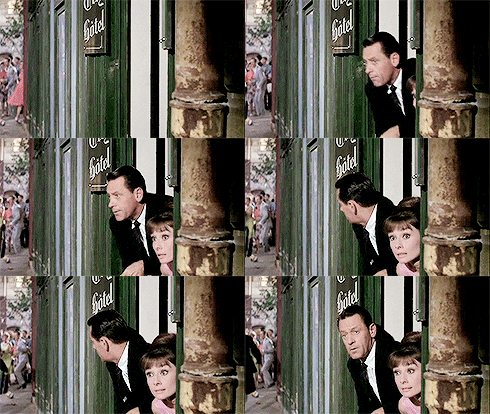
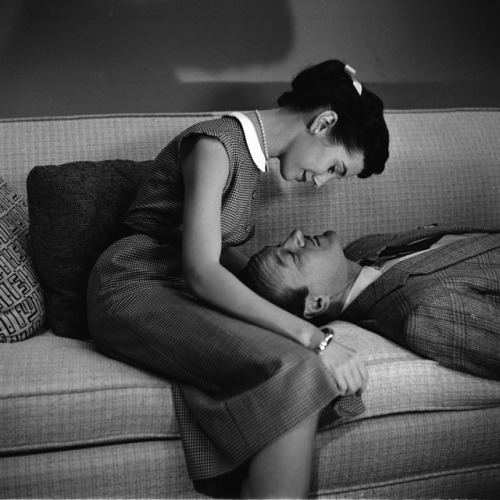
Dez anos depois de sua última parceria, “Sabrina” (1954), William Holden e Audrey Hepburn se encontraram novamente em um estúdio de cinema – ou melhor, em dois estúdios de cinema. “Quando Paris Alucina” (1964) é um filme metalinguístico, ou seja, é um filme sobre fazer filmes, e ele tem um filme dentro de outro filme. Pode parecer confuso, mas a película é na verdade muito boa para ajudar as pessoas a compreenderem como os filmes são feitos – e como esse processo pode ser caótico.

Ten years after their previous collaboration, “Sabrina” (1954), William Holden and Audrey Hepburn met again on a movie set – or better, at two movie sets. “Paris When It Sizzles” (1964) is a metalinguistic film, that is, a film about making films, and it has a film inside other film. It may sound confusing, but the movie is actually a very good one to make people understand how films are made – and how chaotic this process can be.


Richard Benson (William Holden) é um roteirista que está trabalhando no roteiro do seu próximo filme, chamado “A Garota que Roubou a Torre Eiffel”. Ou ele deveria estar trabalhando: ele passou cinco meses se divertindo, bebendo, tomando sol e procrastinando e agora ele só tem dois dias para entregar um roteiro de 130 páginas.

Richard Benson (William Holden) is a screenwriter who is working on the screenplay for his next film, called “The Girl who Stole the Eiffel Tower”. Or he should be working: he spent five months partying, drinking, sunbathing and procrastinating, and now he only has two days to deliver a 130-page script.


Uma datilógrafa, Gabrielle Simpson (Audrey Hepburn), é enviada para ajudá-lo a digitar o roteiro. Ele confessa para ela que não tem nada pronto, embora ele descreva o filme com grandiosidade, como uma mistura gloriosa de gêneros. Gabrielle fica surpresa com a situação incomum, mas mesmo assim eles começam a trabalhar juntos, com Richard jogando cara ou coroa para tomar decisões sobre o filme – como, por exemplo, se a cena inicial se passará durante o dia ou à noite.

A typist, Gabrielle Simpson (Audrey Hepburn), is sent to help him type his script. He confesses to her that he has nothing ready, although he describes his film with grandiosity as glorious a mix of genres. Even though Gabrielle is surprised with the uncommon situation, they start working together, with Richard tossing a coin to decide some things about his movie – like if the opening scene will be set by day or at night.


As coisas não vão bem. Chateado, Richard começa a conversar com Gabrielle e decide usar a história dela como inspiração. “A Garota que Roubou a Torre Eiffel” será sobre uma jovem trabalhadora festejando o Dia da Bastilha depois que seu amigo, Maurice, cancela o encontro que eles tinham. Conforme Richard imagina a ação, ela se desenrola na frente dos nossos olhos. É o filme dentro do filme.

Things are not going well. Upset, Richard starts talking to Gabrielle and decides to use her story as an inspiration. “The Girl who Stole the Eiffel Tower” will be about a working girl spending the Bastille Day festivities after her date, Maurice, dumps her. As Richard envisions the action, it develops in front of our eyes. It's the film within the film.


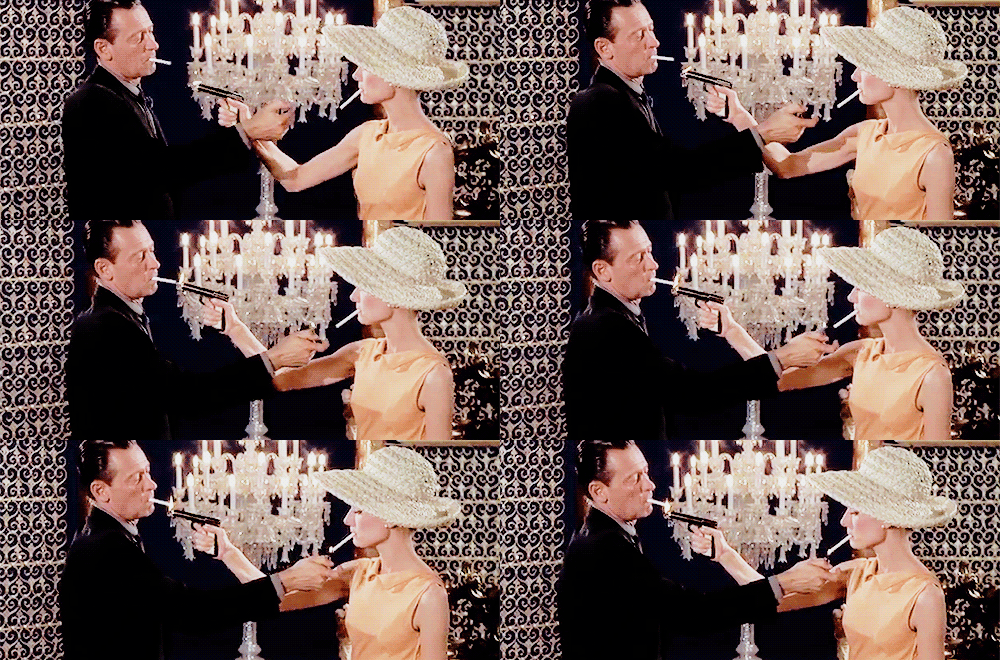
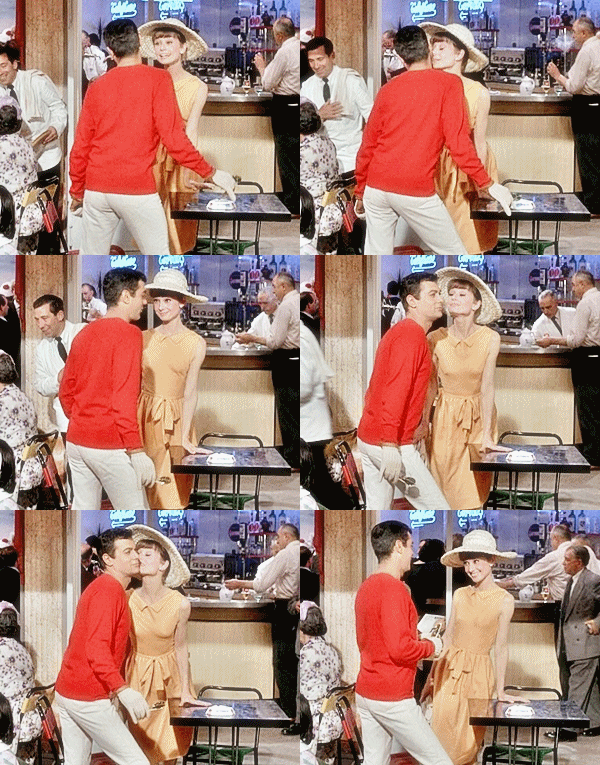
A garota, Gabby, também é interpretada por Audrey Hepburn. Maurice, seu amigo narcisista, é interpretado por Tony Curtis em uma participação hilária. Mas um homem misterioso, Rick, interpretado por William Holden, decide levá-la para passar um dia divertido com ele. Agora eles precisam decidir o que acontecerá a seguir. “A Garota que Roubou a Torre Eiffel” será um filme de romance? De aventura? De suspense? De horror? Ou talvez de comédia?

The girl, Gabby, is played by Audrey Hepburn as well. Maurice, her narcissistic date, is played by Tony Curtis in an hilarious cameo. But a mysterious man, Rick, played by William Holden, decides to take her out for a fun day. Now they have to decide what will happen next. Will “The Girl who Stole the Eiffel Tower” be a romantic movie? An adventure? Spy thriller? Horror film? Or maybe a comedy?


Filmes metalinguísticos são meu tipo de filme favorito. Além de apreciar “Quando Paris Alucina”, eu também me vi retratada em muitas situações. Primeiro, Richard é um procrastinador. Assim como ele, eu também estou acostumada a fazer minhas tarefas quando a data limite está próxima. Como eu não gosto da palavra “procrastinação”, eu prefiro dizer que não sou boa em administrar meu tempo, mas não importa qual termo eu uso: o resultado é o mesmo.

Metalinguistic films are my favorite kind of film. Besides enjoying “Paris When It Sizzles”, I also saw myself in many situations. First, Richard is a procrastinator. Like him, I am also used to doing my things when the deadline is approaching. As I don't like the world “procrastinating”, I prefer to say that I'm not good at managing my time, but no matter the term I use: the result is the same.


Segundo, Richard é um escritor que gosta de visualizar as cenas que ele está criando. Eu, sempre que escrevo ficção, também gosto de visualizar a ação se desenvolvendo na minha mente, por isso eu escolho alguns atores, vivos ou mortos, e às vezes até pessoas que eu conheço, para imaginá-los interpretando as cenas na minha cabeça. É mais fácil ver se o que você escreveu é verossímil se você pode, bem, ver a ação se desenrolar na sua mente.

Second, Richard is a writer who likes to visualize the scenes he's creating. I, whenever I write fiction, also like to visualize the action developing in my mind, so I “cast” some actors, dead or alive, and sometimes even people I know, to imagine them playing the scenes in my head. It's easier to see if what you wrote is believable if you can, well, see it unfolding in your mind.


Há muitas, muitas piadas envolvendo o mundo do cinema. Para começar, Gabrielle conta a Richard que seu último trabalho foi com um cineasta em cujos filmes a coisa mais importante era a ação que NÃO estava acontecendo – e eu logo pensei em Buñuel e filmes europeus experimentais.

There are many, many jokes involving the film world. To begin with, Gabrielle tells Richard that she last worked for a filmmaker in whose films the important thing was what was NOT going on – and I instantly thought about Buñuel and experimental European flicks.
 
Tony Curtis and Audrey Hepburn
Depois, Richard zomba dos atores que seguem o Método. Assim que Richard começa a visualizar o filme dentro do filme, os créditos rolam e neles está escrito “little person” no lugar dos nomes de profissionais como diretor de arte e decorador. No filme dentro do filme, Gabby diz não gostar dos filmes da Nouvelle Vague (chamados de New Wave pelos norte-americanos) porque nada acontece neles. Há algumas referências a “Bonequinha de Luxo” (1961), outro filme de Audrey. E há algumas participações especiais, incluindo Marlene Dietrich, Mel Ferrer e as participações vocais de Frank Sinatra e Fred Astaire!

Next, Richard mocks Method actors. As Richard starts envisioning the film-within-the-film, the credits appear and they have “little person” written for behind-the-cameras professionals like art director and set decorator. In the film-within-the-film, Gabby says that she doesn't like those New Wave movies because nothing happens in them. There are a few hints to Audrey’s movie “Breakfast at Tiffany's” (1961). And there are a few cameos, including Marlene Dietrich, Mel Ferrer and the vocal cameos of Frank Sinatra and Fred Astaire!


Mais do que isso, “Quando Paris Alucina” é uma lição na arte de fazer filmes. Os novatos aprendem o significado de fade in, fade out e do efeito de dissolver (“dissolve”). Nós literalmente vemos um roteiro ganhar vida na nossa frente. Nós testemunhamos o processo de brainstorm que gera um filme, e podemos ter certeza de que muitos dos, se não todos, filmes que vimos e apreciamos surgiram através deste exercício de imaginação.

More than that, “Paris When It Sizzles” is a filmmaking lesson. Beginners get to know the meaning of fade in, fade out and the dissolve effect. We literally see a script becoming alive in front of us. We witness the brainstorm process that gives birth to a movie, and we can be sure that many, if not all, flicks we've seen and enjoyed came to be through this exercise of imagination.


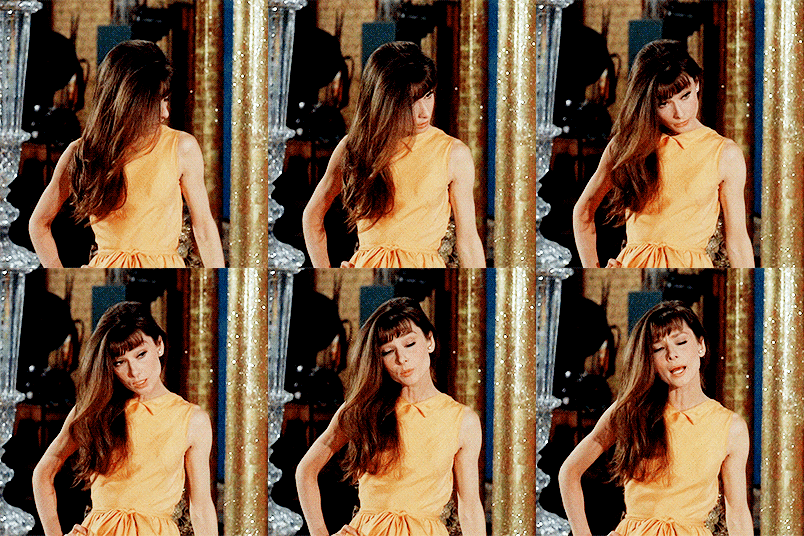
Audrey adiciona um toque infantil à sua Gabrielle que bem pode ser chamado de “serendipidade”, uma palavra ensinada a ela por Richard. Como Gabby, a heroína do filme dentro do filme, ela é como uma moleca, parecendo ingênua mas usando sua sagacidade sempre que precisa fugir de problemas – ela é feita do mesmo material das heroínas de cinema mudo interpretadas por Ossi Oswalda. Audrey parecia estar se divertindo muito enquanto gravava o filme.

Audrey adds a childlike touch to her Gabrielle that can be called “serendipity”, a word Richard teaches her. As Gabby, the heroine of the film-within-the-film, she is like a gamine, looking naïve but using her brains whenever she needs to escape some trouble – she is made from the same material of silent film heroines played by Ossi Oswalda. Audrey really seemed to be having a lot of fun while doing  the film.


“Quando Paris Alucina” não foi um sucesso entre os críticos. Mesmo hoje, muitos fãs de cinema não gostam muito do filme. Eu, por outro lado, acho-o bastante divertido – e, mais importante, um retrato em forma de paródia da indústria do cinema e do processo criativo.

“Paris When It Sizzles” was not a success among critics. Even nowadays, many film fans are not very fond of the film. I, on the other hand, find it very entertaining – and, more important, a tongue-in-cheek portrait of the film industry and the creative process.

This is my contribution to the Audrey at 90: The Salute to Audrey Hepburn blogathon, hosted by Janet at Sister Celluloid.


As our friend Kate Gabrielle mentioned, Audrey would have loved if, as a birthday gift, we donated some money – any quantity – to UNICEF. You can donate HERE.


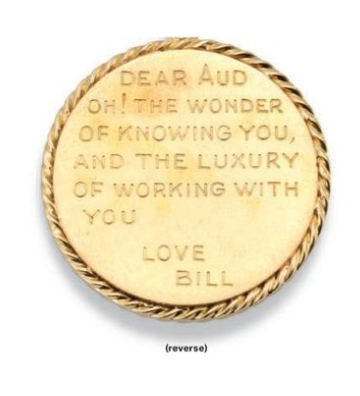
Holden deu a Audrey esta joia charmosa depois do final das filmagens
Holden gave Audrey this charming jewel after the film wrapped

Friday, April 19, 2019

Ingênua Até Certo Ponto (1953) / The Moon is Blue (1953)


Eu sou fascinada por filmes que foram condenados ou censurados. Eu amo quando um filme ri na cara da Legião da Decência ou da Igreja Católica. Eu adoro filmes provocantes. Por isso que fiquei intrigada com “Ingênua Até Certo Ponto” (1953), um filme que foi condenado pela Production Code Administration e pela Legião da Decência. Além disso, ele tem o comercial de cerveja mais estranho de todos os tempos.

I’m fascinated by films that were either condemned or censored. I love whenever a film laughed at the face of the Legion of Decency or the Catholic Church. I adore provocative movies. That’s why I was more than intrigued with “The Moon is Blue” (1953), a film that was condemned by the Production Coda Administration and the Legion of Decency. Also, it has the weirdest beer commercial ever.


Patty (Maggie McNamara) está vendo as vitrines das lojas quando seus olhos encontram os de um estranho. Este homem começa a segui-la em outras lojas e vai atrás dela até o topo do Empire State Bulding. Isso deveria ser uma sequência engraçada e charmosa, mas se você é uma mulher você sabe que ser seguida por um homem é assustador. Felizmente, este estranho é inofensivo porque ele é interpretado pelo grande William Holden – mas este é só o começo dos problemas para Patty.

Patty (Maggie McNamara) is window shopping when she locks eyes with a stranger. This man starts following her to other stores and eventually to the top of the Empire State Building. It's supposed to be a funny and charming sequence, but if you're a woman you know that being followed by a man is terrifying. Fortunately, this stranger is harmless because he is played by the great William Holden – but this is just the beginning of Patty's problems.


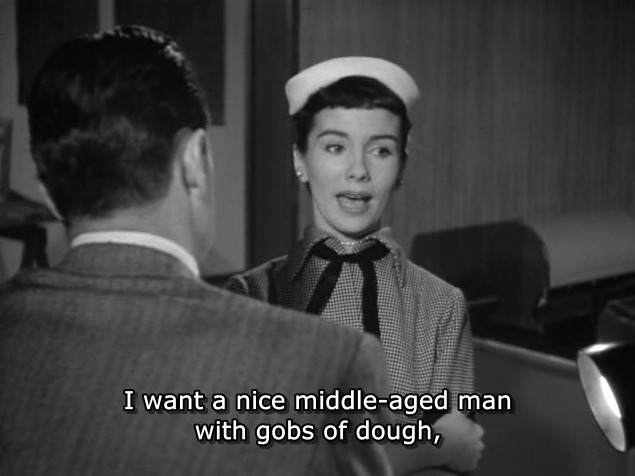
Ainda bem que Patty não é boba. Ela vai com Don (o personagem de Holden) até o escritório dele, e lá ela diz que é atriz e está procurando um homem com quem se casar. Mas não qualquer homem: de preferência um homem de meia-idade que já tenha sido casado e que não vá babar em cima dela. Don é muito jovem e está babando. Um pouco depois, ela também surpreende uma taxista com sua conversa franca com Don sobre as intenções dele e, confuso, ele aceita que o jantar deles tenha “afeto, mas sem paixão”.

A good thing is that Patty is not a fool. She goes with Don (Holden's character) to his office, and there she says that she is an actress trying to get a man to marry her. But not any man: preferably a middle-aged man who had been married before and won't drool over her. Don is too young and currently drooling. A while later, she also surprises a taxi driver with her blunt talk to Don about his intentions, and, confused, he agrees that their dinner can have “affection, but no passion”.


Depois de uma conversa reveladora no apartamento de Don, ele sai para comprar ingredientes para Patty preparar o jantar. Enquanto Don está fora, seu vizinho David (David Niven) bate à porta à procura de Don, e se surpreende ao encontrar uma garota como Patty no lugar. David quer falar com Don porque a filha de David, Cynthia (Dawn Addams), passou a noite com Don e estava furiosa porque “ele fez mal a ela” – nesse caso, ela estava furiosa porque Don não a tocou!

After a revealing chat at Don’s apartment, he leaves to buy ingredients for Patty to make dinner. While Don is out, his neighbor David (David Niven) knocks on his door looking for him, and is surprised to find a girl like Patty there. David wants to talk to Don because David’s daughter, Cynthia (Dawn Addams), had spent the night with Don and was sour because “he had done her wrong” – in this case, she was sour because Don didn’t touch her!


David fica para jantar com Don e Patty, e mais tarde David e Patty vão até o apartamento dele, onde ele fala sobre os sentimentos que tem por ela. Cynthia também aparece, e assuntos como virtude, dar o exemplo e pureza são discutidos.

David stays for dinner with Don and Patty, and later David and Patty go to his apartment, when he talks about his feelings for her. Cynthia also appears, and issues like virtue, leading by example and purity are discussed.


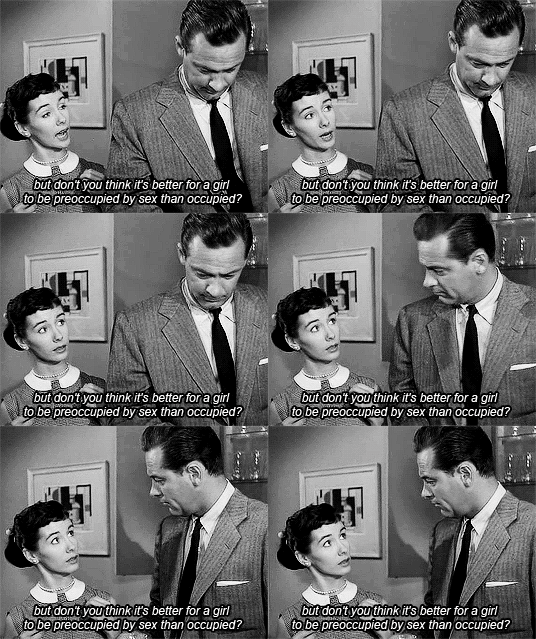
É fácil perceber por que “Ingênua Até Certo Ponto” foi condenado: a protagonista está longe de ser o que era esperado para uma mulher dos anos 1950. Patty O’Neill poderia ser considerada um mau exemplo para as jovens espectadoras. Patty não acredita no amor, é completamente prática ao falar sobre casamento e considera natural discutir sexo e sedução. Ela não quer ilusões românticas, ela quer segurança. Você consegue imaginar, nos anos 50, o que aconteceria se as mulheres começassem a ser tão... EXIGENTES?

It’s easy to see why “The Moon is Blue” was condemned: the leading lady was not what is expected of women to be in the 1950s. Patty O’Neill could even be considered a bad role model for young moviegoers. Patty doesn’t believe in love, she is completely practical when talking about marriage and considers it’s natural to discuss sex and seduction. She doesn’t want romantic illusions, she wants security. Can you imagine, in the 1950s, what would happen if women started being so… DEMANDING?


Tanto Patty quanto Cynthia são novos tipos de mulher, que gostam de ser beijadas e tocadas, e não necessariamente se envolver romanticamente com um homem. Elas não podem dizer não a um homem e não gostam que os homens digam não a elas. Elas são mulheres modernas, modernas demais para os anos 50, mesmo Patty ainda sendo virgem.

Both Patty and Cynthia are new kinds of women, who enjoy being kissed and touched, and not necessarily get romantically involved with a man. They can’t say no to a man and don’t like when a man says no to them. They are modern women, too modern for the 50s, even though Patty is still a virgin.


E aí está o problema: “Ingênua Até Certo Ponto” ousou usar a palavra “virgem” – algo que nenhum outro filme da era do Código Hays havia ousado fazer! E tem mais: este filme também foi pioneiro no uso de “seduzir” e “amante”, por isso a Legião da Decência deu ao filme uma nota C – a mais baixa possível – e a película foi banida em algumas cidades, como Boston e Memphis.

And there lies the problem: “The Moon is Blue” was bold enough to use the word “virgin” – something that no other film from the Code era had done until them! There is more: this film was also a pioneer of the use of both “seduce” and “mistress”, so the Legion of Decency gave it a C rating – the lowest possible –  and the film was banned in some cities, like Boston and Memphis.


“Ingênua Até Certo Ponto” teve origem como uma peça da Broadway que também foi dirigida por Otto Preminger. Assim que ele conseguiu os direitos de adaptação da peça para o cinema, Preminger fez escolhas curiosas no elenco, escalando David Niven, então considerado uma estrela em decadência, e a novata Maggie McNamara, que havia interpretado a protagonista da peça em Chicago. Para equilibrar as coisas, ele escolheu William Holden para completar o trio – Holden era então um ator muito popular nas bilheterias.

“The Moon is Blue” originated as Broadway play that was also directed by Otto Preminger. As he secured the rights to adapt the play to the screen, Preminger made odd cast choices as he chose David Niven, then considered a fading star, and newcomer Maggie McNamara, who had played the lead of the play in Chicago. To balance things, he chose William Holden to complete the trio – Holden was then a very popular actor among moviegoers.


Maggie McNamara é adorável como a tagarela Patty – ela inclusive foi indicada a um Oscar por “Ingênua Até Certo Ponto”, seu primeiro filme. A atriz, que se parecia muito com Jean Simmons, foi uma das três protagonistas de “A Fonte dos Desejos”, de 1954. Infelizmente, sua carreira nunca decolou e anos mais tarde ela passou a trabalhar como datilógrafa para sobreviver. Maggie cometeu suicídio em 1978, aos 48 anos.

Maggie McNamara is adorable as the talkative Patty – she was even nominated for an Oscar for “The Moon is Blue”, her very first film. The actress, who looked a lot like Jean Simmons, was one of the three leads in 1954’s “Three Coins in the Fountain”. Unfortunately, her career never took off and later in life she worked as a typist to survive. Maggie committed suicide in 1978, at age 48.


David Niven ganhou um Globo de Ouro por interpretar David, o que deu nova vida à sua carreira, e William Holden teve um ótimo ano de 1953: ele apareceu em quatro filmes naquele ano – além de uma participação na versão alemã de “Ingênua Até Certo Ponto” – e um desses filmes, “Inferno nº 17”, deu a ele um Oscar. Como uma coincidência curiosa, Otto Preminger interpreta o antagonista de “Inferno nº 17”.

David Niven won a Golden Globe for his portrayal of David, what gave new life to his career, and William Holden had an overall great year of 1953: he appeared in four films that year – plus a cameo in the German version of “The Moon is Blue” – and one of those films, “Stalag 17”, gave him his only Oscar. As a curious coincidence, Otto Preminger plays the antagonist in “Stalag 17”.


No final das contas, “Ingênua Até Certo Ponto” e Otto Preminger riram por último: a United Artists distribuiu o filme mesmo sem o selo de aprovação do Código. O filme foi um sucesso de bilheteria e as pessoas perceberam que ele não tinha nada questionável – ele era, na verdade, um filme bastante decente, charmoso e divertido. Era o começo do fim do Código Hays. Viva “Ingênua Até Certo Ponto”!

In the end, “The Moon is Blue” and Otto Preminger had the last laugh: United Artists distributed the movie even though it didn’t receive a Code Seal from Breen’s office. The film was a box-office hit and people realized that it had nothing to object – it was actually a very decent, charming and entertaining movie. It was the beginning of the end of the Code. Hooray for “The Moon is Blue”!

This is my contribution to the 4th Golden Boy blogathon, hosted by Virginie, Michaela and Emily at The Wonderful World of Cinema, Love Letters to Old Hollywood and The Flapper Dame.

Related Posts Plugin for WordPress, Blogger...