} Crítica Retrô: Otto Preminger

Tradutor / Translator / Traductor / Übersetzer / Traduttore / Traducteur / 翻訳者 / переводчик

Showing posts with label Otto Preminger. Show all posts

Friday, September 12, 2025

Porgy & Bess (1959)

 Antes de assistir a “Porgy & Bess” (1959), eu não conseguia imaginar Sidney Poitier num musical. Por outro lado, estava mais que familiarizada com os talentos musicais de Sammy Davis Jr - que esteve em um dos meus musicais favoritos e pouco vistos, “Robin Hood de Chicago” (1964) - e Dorothy Dandridge, que se tornou a primeira mulher negra indicada ao Oscar de Melhor Atriz com “Carmen Jones” (1954), dirigido pelo mesmo homem por trás de “Porgy & Bess”, Otto Preminger. E foi assim, com novidades no horizonte e alguns rostos conhecidos, que dei o play no filme. 

Before watching “Porgy and Bess” (1959), I couldn’t imagine Sidney Poitier in a musical. On the other hand, I was more than familiar with the musical talents of Sammy Davis Jr - who was in one of my favorite underrated musicals, “Robin and the 7 Hoods” (1964) - and Dorothy Dandridge, who became the first black woman to be nominated for the Best Actress Oscar with “Carmen Jones” (1954), directed by the same man behind “Porgy and Bess”, Otto Preminger. And it was like this, with novelties in the horizon and some familiar faces, that I went to watch the movie.


Bess (Dorothy Dandridge) bebe uísque como um homem e faz apostas em jogos de dados dominados também por homens. Entre os homens jogando podemos encontrar Porgy (Sidney Poitier), um homem com deficiência, e o namorado de Bess, Crowne (Brock Peters). Depois do jogo, Porgy vai para casa e Crowne tem uma briga com outro homem, acabando por matá-lo. Crowne foge e Bess encontra refúgio na casa de Porgy. 

Bess (Dorothy Dandridge) drinks whisky like a man and places bets in crap games also dominated by men. Among the men playing we can find Porgy (Sidney Poitier), a handicapped guy, and Bess’s beau Crowne (Brock Peters). After the game, Porgy goes to his house and Crowne has a heated argument with another man, and ends up killing him. Crowne escapes and Bess finds a refuge at Porgy’s house.

O tempo passa e Porgy e Bess formam um casal. Um dia, há um piquenique ao qual Bess vai enquanto Porgy fica em casa. Lá Crowne reaparece, querendo Bess de volta. Ele abusa dela - numa cena brutal de abuso, considerando quando o filme foi feito - e quando a febre dela, causada pelo trauma, arrefece, um furacão chega para trazer mais problemas para Porgy e Bess, que ainda está sendo perseguida não apenas por Crowne, mas também pelo traficante Sportin’ Life (Sammy Davis Jr). 

Time passes and Bess becomes Porgy’s girl - or Porgy is now Bess’s man, the order doesn’t matter. One day, there is a picnic that Bess attends while Porgy stays at home. There Crowne reappears, wanting Bess back. He assaults her - in a shockingly brutal assault scene considering the time the film was made - and when her fever caused by the trauma ceases, a hurricane arrives to bring more trouble to Porgy and Bess, who is being pursued not only by Crowne, but also by the drug dealer Sportin’ Life (Sammy Davis Jr).

É muito raro ver personagens com deficiência em filmes clássicos. Posso pensar em alguns em cadeiras de rodas, como em “Estrela Ditosa” (1929), na série do Dr Kildares e no vilão de “A Felicidade não se Compra” (1946). O outro personagem que anda apoiado nos joelhos pode ser encontrado no filme de Lon Chaney “The Penalty” (1920). Tudo isso prova que deficiências eram em geral características de vilões. 

It was very rare to see a character with disabilities in classic movies. I can think of a few men in wheelchairs, like in “Lucky Star” (1929), in the Dr Kildare series and the villain from “It’s a Wonderful Life” (1946). The other character walking on his knees can be found in the Lon Chaney vehicle “The Penalty” (1920). All this proves that disabilities were often linked to villains.


É surpreendente que as canções de “Porgy & Bess” não sejam tão conhecidas como as outras de Gershwin. Gostei muito de “I’ve got plenty of nothing” e “It ain’t necessarily so”. Há momentos em que a cantoria de Poitier e Dandridge (dublados respectivamente por Robert McFerrin e Adele Addison) se sobrepõe, e mesmo que seja difícil apreender as palavras da música, o efeito fica bacana.

I’m surprised because the songs from “Porgy and Bess” are not as well-known as other Gershwin songs. I liked a lot “I’ve got plenty of nothing” and “It ain’t necessarily so”. There are moments in which Poitier’s and Dandridge’s singing (dubbed respectively by Robert McFerrin and Adele Addison) overlap, and although it is difficult to apprehend the words of the songs, it’s a nice effect.

“Porgy & Bess” não é considerado um grande clássico porque, sendo controverso - por causa do uso de drogas de Bess -, quando estreou, foi exibido em algumas poucas cidades e a versão completa, com 138 minutos, basicamente desapareceu (eu só encontrei uma no YouTube com 115 minutos de duração). Foi também o último filme produzido por Samuel Goldwyn. O filme só recuperou metade do orçamento. Apesar de tudo isso, o filme foi adicionado à lista de preservação National Film Registry em 2011.  

“Porgy and Bess” isn’t considered a household classic because, being controversial - because of Bess’s drug use - when it was released, it was shown only in a few cities and the complete, 138-minute-long version, basically disappeared (I only found one on YouTube lasting for 115 minutes). It was also the last movie produced by Samuel Goldwyn. It’s recorded that the film only recovered half of its budget. Despite all that, the film was added to the National Film Registry in 2011.

A versão dos palcos de “Porgy & Bess”, lá em meados dos anos 1930, foi dirigida por Rouben Mamoulian, que foi contratado como diretor do filme mas logo dispensado quando a produção se recuperava de um incêndio que destruiu cenários e figurinos. Otto Preminger, o novo diretor, teve um romance com Dorothy Dandridge, mas que já havia acabado quando o filme foi rodado, e ele tratava mal Dorothy e Poitier.

The stage version of “Porgy and Bess”, back in the mid-1930s, was directed by Rouben Mamoulian, who was hired as director but soon fired as the production was recovering from a fire that destroyed costumes and sets. Otto Preminger, the new director, had a previous romance with Dorothy Dandridge, but it ended by the time the film was shot, and he mistreated her and Poitier on set. 


O coreógrafo foi o lendário Hermes Pan, que foi parceiro de Fred Astaire para coreografar seus famosos musicais dos anos 30, mas ao todo Pan trabalhou em 89 filmes. Além disso, a música do filme foi conduzida pelo maestro André Previn, que foi casado com Mia Farrow

The choreographer was the legendary Hermes Pan, who was Fred Astaire’s partner at choreographing his famous 1930s musicals, but overall Pan choreographed 89 movies. Besides that, the music was conducted by the maestro André Previn, who was once married to Mia Farrow.

O figurino foi feito por Irene Sharaff. Ganhadora de cinco Oscars e um Tony, Irene nasceu em 1910 em Boston e trabalhou como ilustradora antes de fazer figurinos tanto para teatro, incluindo balé, e cinema. Ela foi responsável pelos figurinos de mais de 30 filmes - o primeiro sendo “Agora Seremos Felizes” (1944) e o último “Mamãezinha Querida” (1981) - e faleceu em 1993.  

The costumes were made by Irene Sharaff. The winner of five Oscars and one Tony, Irene was born in 1910 in Boston and worked as an illustrator before making costumes to both theater, including ballets, and film. She was the dressmaker for over thirty movies - the first being “Meet Me in St Louis” (1944) and the last “Mommie Dearest” (1981) - and died in 1993. 

“Porgy & Bess” é um destes filmes que têm uma história interessante, mas uma história de bastidores ainda mais interessante. Você acredita que os anos 40 o executivo da Columbia Harry Cohn queria comprar os direitos da peça para fazer um filme com Al Jolson, Fred Astaire e Rita Hayworth, todos em blackface? Aff. “Porgy & Bess” tem seus defeitos, mas é bom lembrar que poderia ter sido muito pior…

“Porgy and Bess” is one of these films that had an interesting story, but a more interesting backstory. Do you believe that in the 1940s Columbia executive Harry Cohn wanted to buy the rights of the play to make a movie starring Al Jolson, Fred Astaire and Rita Hayworth, all in blackface? Ew. “Porgy and Bess” has its flaws, but we must remember that it could have been much worse…

Friday, April 19, 2019

Ingênua Até Certo Ponto (1953) / The Moon is Blue (1953)


Eu sou fascinada por filmes que foram condenados ou censurados. Eu amo quando um filme ri na cara da Legião da Decência ou da Igreja Católica. Eu adoro filmes provocantes. Por isso que fiquei intrigada com “Ingênua Até Certo Ponto” (1953), um filme que foi condenado pela Production Code Administration e pela Legião da Decência. Além disso, ele tem o comercial de cerveja mais estranho de todos os tempos.

I’m fascinated by films that were either condemned or censored. I love whenever a film laughed at the face of the Legion of Decency or the Catholic Church. I adore provocative movies. That’s why I was more than intrigued with “The Moon is Blue” (1953), a film that was condemned by the Production Coda Administration and the Legion of Decency. Also, it has the weirdest beer commercial ever.


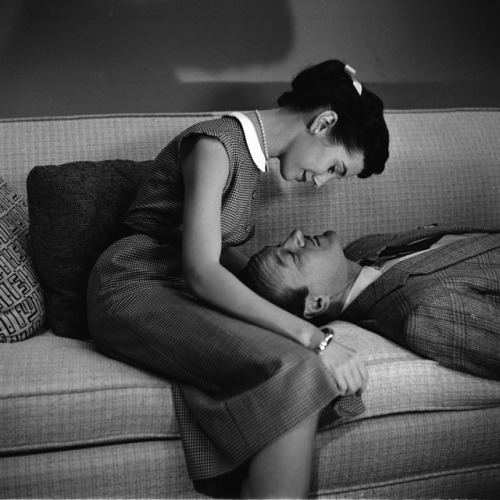
Patty (Maggie McNamara) está vendo as vitrines das lojas quando seus olhos encontram os de um estranho. Este homem começa a segui-la em outras lojas e vai atrás dela até o topo do Empire State Bulding. Isso deveria ser uma sequência engraçada e charmosa, mas se você é uma mulher você sabe que ser seguida por um homem é assustador. Felizmente, este estranho é inofensivo porque ele é interpretado pelo grande William Holden – mas este é só o começo dos problemas para Patty.

Patty (Maggie McNamara) is window shopping when she locks eyes with a stranger. This man starts following her to other stores and eventually to the top of the Empire State Building. It's supposed to be a funny and charming sequence, but if you're a woman you know that being followed by a man is terrifying. Fortunately, this stranger is harmless because he is played by the great William Holden – but this is just the beginning of Patty's problems.


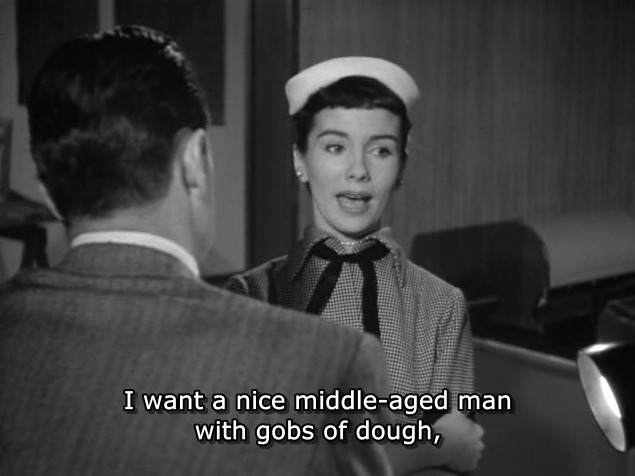
Ainda bem que Patty não é boba. Ela vai com Don (o personagem de Holden) até o escritório dele, e lá ela diz que é atriz e está procurando um homem com quem se casar. Mas não qualquer homem: de preferência um homem de meia-idade que já tenha sido casado e que não vá babar em cima dela. Don é muito jovem e está babando. Um pouco depois, ela também surpreende uma taxista com sua conversa franca com Don sobre as intenções dele e, confuso, ele aceita que o jantar deles tenha “afeto, mas sem paixão”.

A good thing is that Patty is not a fool. She goes with Don (Holden's character) to his office, and there she says that she is an actress trying to get a man to marry her. But not any man: preferably a middle-aged man who had been married before and won't drool over her. Don is too young and currently drooling. A while later, she also surprises a taxi driver with her blunt talk to Don about his intentions, and, confused, he agrees that their dinner can have “affection, but no passion”.


Depois de uma conversa reveladora no apartamento de Don, ele sai para comprar ingredientes para Patty preparar o jantar. Enquanto Don está fora, seu vizinho David (David Niven) bate à porta à procura de Don, e se surpreende ao encontrar uma garota como Patty no lugar. David quer falar com Don porque a filha de David, Cynthia (Dawn Addams), passou a noite com Don e estava furiosa porque “ele fez mal a ela” – nesse caso, ela estava furiosa porque Don não a tocou!

After a revealing chat at Don’s apartment, he leaves to buy ingredients for Patty to make dinner. While Don is out, his neighbor David (David Niven) knocks on his door looking for him, and is surprised to find a girl like Patty there. David wants to talk to Don because David’s daughter, Cynthia (Dawn Addams), had spent the night with Don and was sour because “he had done her wrong” – in this case, she was sour because Don didn’t touch her!


David fica para jantar com Don e Patty, e mais tarde David e Patty vão até o apartamento dele, onde ele fala sobre os sentimentos que tem por ela. Cynthia também aparece, e assuntos como virtude, dar o exemplo e pureza são discutidos.

David stays for dinner with Don and Patty, and later David and Patty go to his apartment, when he talks about his feelings for her. Cynthia also appears, and issues like virtue, leading by example and purity are discussed.


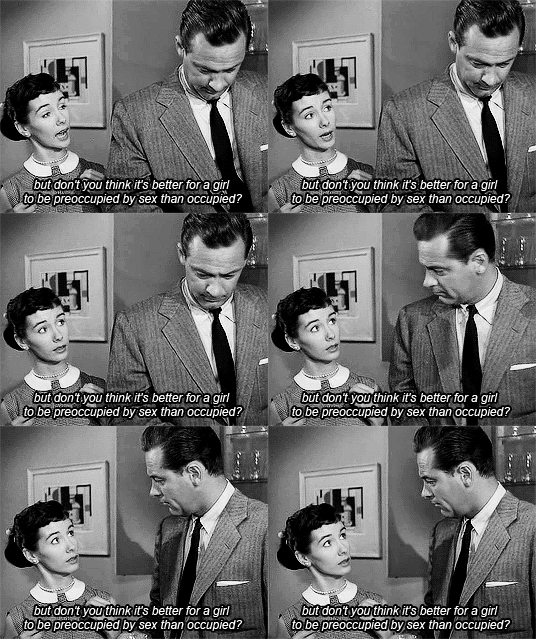
É fácil perceber por que “Ingênua Até Certo Ponto” foi condenado: a protagonista está longe de ser o que era esperado para uma mulher dos anos 1950. Patty O’Neill poderia ser considerada um mau exemplo para as jovens espectadoras. Patty não acredita no amor, é completamente prática ao falar sobre casamento e considera natural discutir sexo e sedução. Ela não quer ilusões românticas, ela quer segurança. Você consegue imaginar, nos anos 50, o que aconteceria se as mulheres começassem a ser tão... EXIGENTES?

It’s easy to see why “The Moon is Blue” was condemned: the leading lady was not what is expected of women to be in the 1950s. Patty O’Neill could even be considered a bad role model for young moviegoers. Patty doesn’t believe in love, she is completely practical when talking about marriage and considers it’s natural to discuss sex and seduction. She doesn’t want romantic illusions, she wants security. Can you imagine, in the 1950s, what would happen if women started being so… DEMANDING?


Tanto Patty quanto Cynthia são novos tipos de mulher, que gostam de ser beijadas e tocadas, e não necessariamente se envolver romanticamente com um homem. Elas não podem dizer não a um homem e não gostam que os homens digam não a elas. Elas são mulheres modernas, modernas demais para os anos 50, mesmo Patty ainda sendo virgem.

Both Patty and Cynthia are new kinds of women, who enjoy being kissed and touched, and not necessarily get romantically involved with a man. They can’t say no to a man and don’t like when a man says no to them. They are modern women, too modern for the 50s, even though Patty is still a virgin.


E aí está o problema: “Ingênua Até Certo Ponto” ousou usar a palavra “virgem” – algo que nenhum outro filme da era do Código Hays havia ousado fazer! E tem mais: este filme também foi pioneiro no uso de “seduzir” e “amante”, por isso a Legião da Decência deu ao filme uma nota C – a mais baixa possível – e a película foi banida em algumas cidades, como Boston e Memphis.

And there lies the problem: “The Moon is Blue” was bold enough to use the word “virgin” – something that no other film from the Code era had done until them! There is more: this film was also a pioneer of the use of both “seduce” and “mistress”, so the Legion of Decency gave it a C rating – the lowest possible –  and the film was banned in some cities, like Boston and Memphis.


“Ingênua Até Certo Ponto” teve origem como uma peça da Broadway que também foi dirigida por Otto Preminger. Assim que ele conseguiu os direitos de adaptação da peça para o cinema, Preminger fez escolhas curiosas no elenco, escalando David Niven, então considerado uma estrela em decadência, e a novata Maggie McNamara, que havia interpretado a protagonista da peça em Chicago. Para equilibrar as coisas, ele escolheu William Holden para completar o trio – Holden era então um ator muito popular nas bilheterias.

“The Moon is Blue” originated as Broadway play that was also directed by Otto Preminger. As he secured the rights to adapt the play to the screen, Preminger made odd cast choices as he chose David Niven, then considered a fading star, and newcomer Maggie McNamara, who had played the lead of the play in Chicago. To balance things, he chose William Holden to complete the trio – Holden was then a very popular actor among moviegoers.


Maggie McNamara é adorável como a tagarela Patty – ela inclusive foi indicada a um Oscar por “Ingênua Até Certo Ponto”, seu primeiro filme. A atriz, que se parecia muito com Jean Simmons, foi uma das três protagonistas de “A Fonte dos Desejos”, de 1954. Infelizmente, sua carreira nunca decolou e anos mais tarde ela passou a trabalhar como datilógrafa para sobreviver. Maggie cometeu suicídio em 1978, aos 48 anos.

Maggie McNamara is adorable as the talkative Patty – she was even nominated for an Oscar for “The Moon is Blue”, her very first film. The actress, who looked a lot like Jean Simmons, was one of the three leads in 1954’s “Three Coins in the Fountain”. Unfortunately, her career never took off and later in life she worked as a typist to survive. Maggie committed suicide in 1978, at age 48.


David Niven ganhou um Globo de Ouro por interpretar David, o que deu nova vida à sua carreira, e William Holden teve um ótimo ano de 1953: ele apareceu em quatro filmes naquele ano – além de uma participação na versão alemã de “Ingênua Até Certo Ponto” – e um desses filmes, “Inferno nº 17”, deu a ele um Oscar. Como uma coincidência curiosa, Otto Preminger interpreta o antagonista de “Inferno nº 17”.

David Niven won a Golden Globe for his portrayal of David, what gave new life to his career, and William Holden had an overall great year of 1953: he appeared in four films that year – plus a cameo in the German version of “The Moon is Blue” – and one of those films, “Stalag 17”, gave him his only Oscar. As a curious coincidence, Otto Preminger plays the antagonist in “Stalag 17”.


No final das contas, “Ingênua Até Certo Ponto” e Otto Preminger riram por último: a United Artists distribuiu o filme mesmo sem o selo de aprovação do Código. O filme foi um sucesso de bilheteria e as pessoas perceberam que ele não tinha nada questionável – ele era, na verdade, um filme bastante decente, charmoso e divertido. Era o começo do fim do Código Hays. Viva “Ingênua Até Certo Ponto”!

In the end, “The Moon is Blue” and Otto Preminger had the last laugh: United Artists distributed the movie even though it didn’t receive a Code Seal from Breen’s office. The film was a box-office hit and people realized that it had nothing to object – it was actually a very decent, charming and entertaining movie. It was the beginning of the end of the Code. Hooray for “The Moon is Blue”!

This is my contribution to the 4th Golden Boy blogathon, hosted by Virginie, Michaela and Emily at The Wonderful World of Cinema, Love Letters to Old Hollywood and The Flapper Dame.


Related Posts Plugin for WordPress, Blogger...