} Crítica Retrô: Rita Hayworth

Tradutor / Translator / Traductor / Übersetzer / Traduttore / Traducteur / 翻訳者 / переводчик

Showing posts with label Rita Hayworth. Show all posts

Sunday, April 14, 2019

Salomé (1953) / Salome (1953)


ESTE ARTIGO TEM SPOILERS

THIS ARTICLE HAS SPOILERS

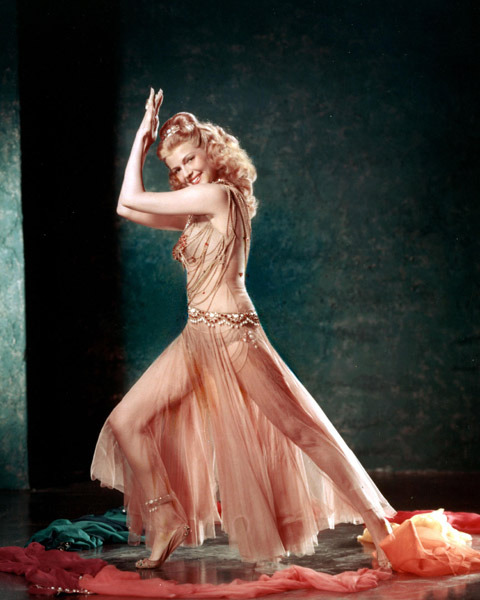
Primeiro, ela foi Gilda, arrasando corações em um cassino em Buenos Aires em 1946. Depois, em 1948, ela foi Carmen, uma cigana que faz um militar se tornar fora da lei na Espanha. O próximo passo para ela foi dar vida à Salomé, que pediu a cabeça de João Batista na Galileia. A atriz Rita Hayworth interpretou muitas femme fatales – na lista, apenas Gilda seria considerada a femme fatale regular do cinema noir – e ela era a escolha óbvia para interpretar a femme fatale bíblica em “Salomé”, de 1953 – e corajosamente subverter a famosa história.

First, she was Gilda, wrecking hearts in a casino in Buenos Aires in 1946. Then, in 1948, she was Carmen, a gypsy that makes an officer become an outlaw in Spain. The next step for her was to embody Salome, who asked for John the Baptist's head in Galilee. Actress Rita Hayworth played many femme fatales – in the list, only Gilda could be considered the common noir femme fatale – and she was the obvious choice to play the Biblical femme fatale in 1953's “Salome” - and boldly subvert the well-known story.

Um pouco do básico de história bíblica: antes de Jesus ficar conhecido como o Messias, seu primo, João Batista, era considerado o Messias, embora sempre negasse isso. John era alguns meses mais velho que Jesus e Jesus, já adulto, foi batizado por João.

A little of Biblical history 101: before Jesus became known as the Messiah, his cousin, John the Baptist, was considered the Messiah, although he denied the title. John was a few months older than Jesus and Jesus, already in his adulthood, was baptized by John.


Assim como outros profetas, João Batista (Alan Badel) prega contra tiranos, como o rei Herodes (Charles Laughton) – o filho de Herodes o Grande, aquele rei que quis matar todos os bebês do gênero masculino quando Jesus nasceu. Quem está mais ansiosa com a crescente popularidade de João é a rainha Herodias (Judith Anderson), que quer que seu marido faça algo antes que o pregador os tire do trono.

Like other prophets, John the Baptist (Alan Badel) preaches and talks against tyrants, like King Herod (Charles Laughton) – the son of Herod the Great, that king who wanted all baby boys killed by the time Jesus was born. The one more anxious about John's growing popularity is Queen Herodias (Judith Anderson), who wants her husband to do something about the preacher before he dethrones them.


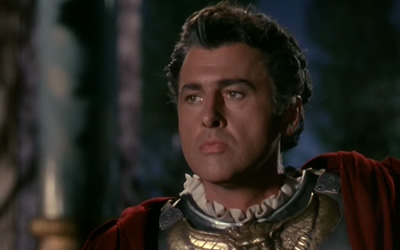
Filha da rainha Herodias e enteada do rei Herodes, a princesa Salomé (Rita Hayworth) vive em Roma. Marcellus (Rex Reason), sobrinho do imperador Tiberius Cesar (Cedric Hardwicke), quer se casar com Salomé, mas o imperador o proíbe, porque Salomé não é romana, e então bane Salomé de Roma. No caminho para casa, ela conhece o comandante Claudius (Stewart Granger), que deve acompanhar a caravana dela par a Galileia. O provocador e pio comandante se apaixona por ela.

Queen Herodias's daughter and king Herod's stepdaughter, Princess Salome (Rita Hayworth), lives in Rome. Marcellus (Rex Reason), the nephew of emperor Tiberius Caesar (Cedric Hardwicke), wants to marry Salome, but the emperor forbids him to do so, because Salome is not a Roman, and banishes Salome from Rome. On her way home, she meets commander Claudius (Stewart Granger), who must accompany her caravan to Galilee. The provocative and pious commander falls in love with her.


Atravessando a planície rumo à Galileia, a caravana encontra João Batista e seus seguidores e ocorre um confronto. Claudius impede que João seja morto por um soldado – ele diz que a morte de João causaria revolta entre o povo, mas na realidade Claudius e João são amigos.

When going by land to Galilee, the caravan meets with John the Baptist and his followers and there is confrontation. Claudius prevents John from being killed by a soldier – he says that killing John would cause uproar among the people, but in reality Claudius and John are friends.

No palácio, o rei Herodes se interessa pela enteada, enquanto a rainha Herodias cria um plano para usar a beleza de Salomé a seu favor. Salomé vai ao mercado e ouve João Batista falando mal da mãe dela, e por isso começa a se opor a ele, o que é perfeito para o plano de Herodias.

In the palace, King Herod lusts over her stepdaughter, while Queen Herodias plots a plan to use Salome's beauty to her favor. Salome goes to the market and listens to John the Baptist speaking ill of her mother, and thus starts to oppose him, which is perfect for Herodias's plan.
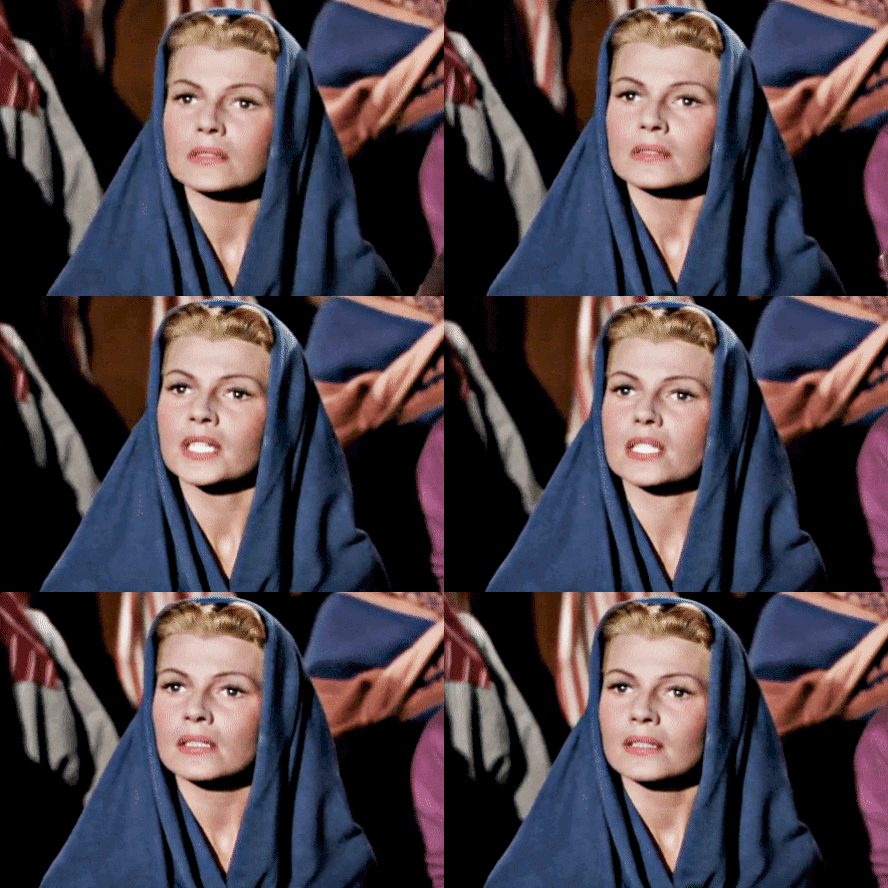

Entre 1949 e 1951, Rita Hayworth se afastou de Hollywood ao se casar com o príncipe Ali Khan e se tornar a primeira atriz / princesa. Em 1951, DeMille disse que queria Hayworth para interpretar Salomé em um filme que ele faria no futuro. O chefe da Columbia, Harry Cohn, roubou a ideia e fez “Salomé” em 1953, com Hayworth também como produtora do filme, através de sua produtora Beckworth Company, que produziu três de seus filmes.

Between 1949 and 1951, Rita Hayworth took a break from Hollywood as she married Prince Aly Khan and became the first actress / princess. In 1951, DeMille said he wanted Hayworth to play Salome in an upcoming picture. Columbia boss Harry Cohn stole the idea and made “Salome” in 1953, with Hayworth serving also as a producer, under her company Beckworth, that produced only three of her movies.

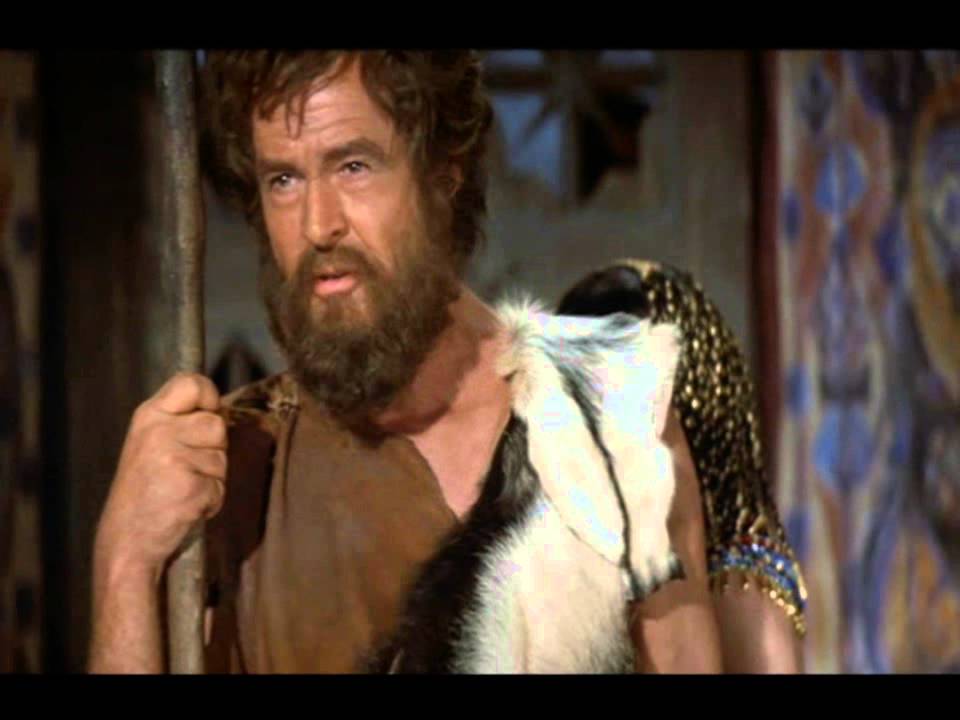
Alan Badel, olhando para cima o tempo todo com olhos arregalados, faz João Batista parecer um pouco lunático. Em “Rei dos Reis” (1961), João Batista é interpretado por Robert Ryan, o que faz com que ele pareça bem mais velho que o Jesus de Jeffrey Hunter, e também mais circunspecto. No épico de 1961, Salomé é interpretada por Brigid Bazlen, uma garota parecida com Elizabeth Taylor que tinha apenas 16 anos na época.

Alan Badel, looking up all the time with wide open eyes, makes John the Baptist look a little bit lunatic. In “King of Kings” (1961), John the Baptist is played by Robert Ryan, what makes him look much older than Jeffrey Hunter’s Jesus, and also more circumspect. In the 1961 epic, Salome is played by Brigid Bazlen, an Elizabeth Taylor lookalike who was only 16 at the time.
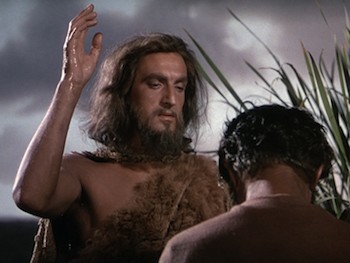
John the Baptist in 1953
John the Baptist in 1961

Falando em louco, o Herodes de Charles Laughton nos lembra um pouco do Nero de Peter Ustinov em “Quo Vadis” (1951), com a diferença de que Nero era mais megalomaníaco, enquanto Herodes é mais como uma criatura nojenta.
Judith Anderson, conhecida como a vilã de “Rebecca” (1940), é perfeita como a maldosa rainha Herodias.

Speaking of crazy, Charles Laughton's Herod kind of reminds us of Peter Ustinov's Nero in “Quo Vadis” (1951), with the difference that Nero was more megalomaniac, while Herod is more of a disgusting creature. Judith Anderson, known as the villain in “Rebecca” (1940), is perfect as the evil Queen Herodias.
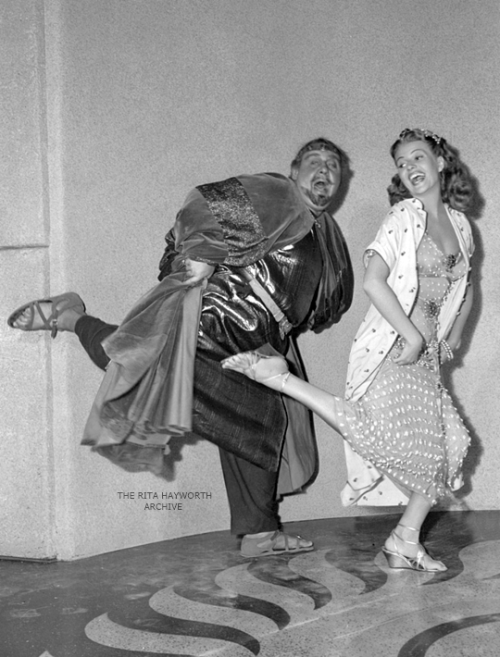

Assim como em “Ben-Hur”, em “Salomé” Jesus também aparece, mas seu rosto não é mostrado. Mas, aqui, o personagem mais importante é fictício: Claudius é um homem bom entre homens maus, dividido entre o dever e sua nova crença. Quando se apaixona por Salomé, um novo conflito surge, pois ele tenta mostrar a ela que a mãe dela está errada e que João Batista está pregando uma doutrina que durará séculos.

Like in “Ben-Hur”, in “Salome” Jesus is also there, but his face is not shown. But, here, the most important character is a fictional one: Claudius is a good man among bad men, torn between duty and his new belief. As he falls in love with Salome, a new conflict appears, as he tries to show her that her mother is wrong and John the Baptist is actually preaching about something that will last centuries.


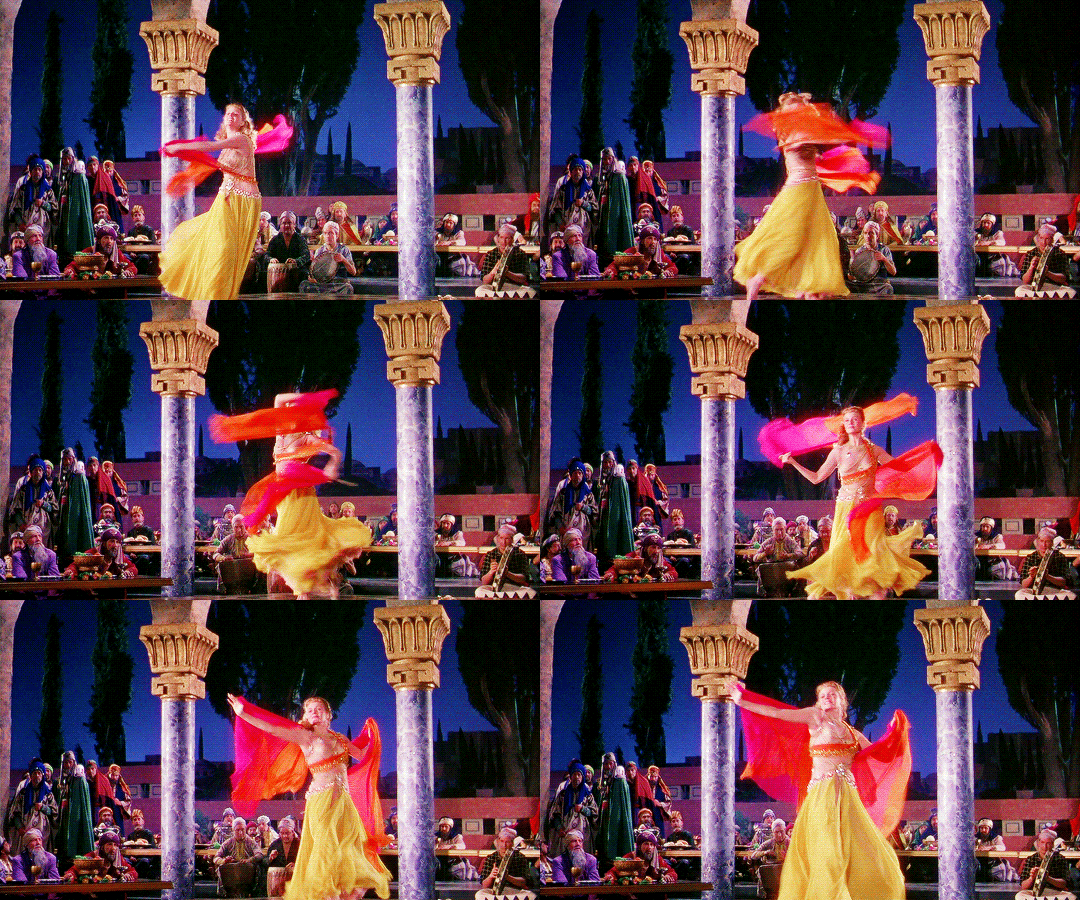
Podemos até ser subversivos e dizer que “Salomé” é tão subversivo quanto “Bastardos Inglórios” (2009), de Tarantino. Salomé se redime e sua culpa no assassinato de João Batista é apagada, e ela se torna uma vítima e não uma femme fatale. Nesta versão, ela faz a Dança dos Sete Véus – que Hayworth mencionou como a coreografia mais difícil que teve de fazer – como distração para que Claudius tente libertar João Batista. Obviamente, isso não termina bem para João, mas é bom ver Salomé como um ser humano, que ri, ama e aprende.
  
We can even be subversive and say that “Salome” is as subversive as Tarantino's “Inglorious Basterds” (2009). Salome is redeemed and her guilt in John the Baptist's assassination is erased, and she becomes a victim rather than a femme fatale. In this version, she performs the Dance of the Seven Veils – that Hayworth mentioned as the most demanding dance routine she ever performed – as a distraction while Claudius tries to free John. Of course, it doesn’t end well for John, but it’s nice to see Salome as a human, laughing, loving and learning.

This is my contribution to the Stewart Granger blogathon, hosted by Maddy at Maddy Loves Her Classic Movies.


Friday, October 19, 2018

Carmen (1948) / The loves of Carmen (1948)


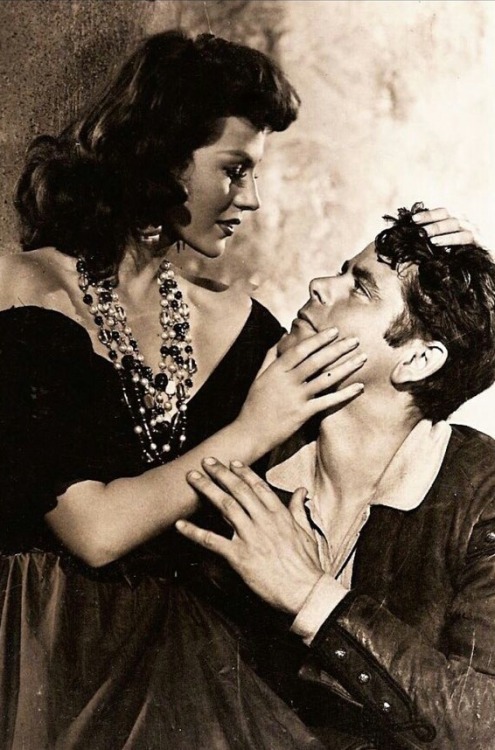
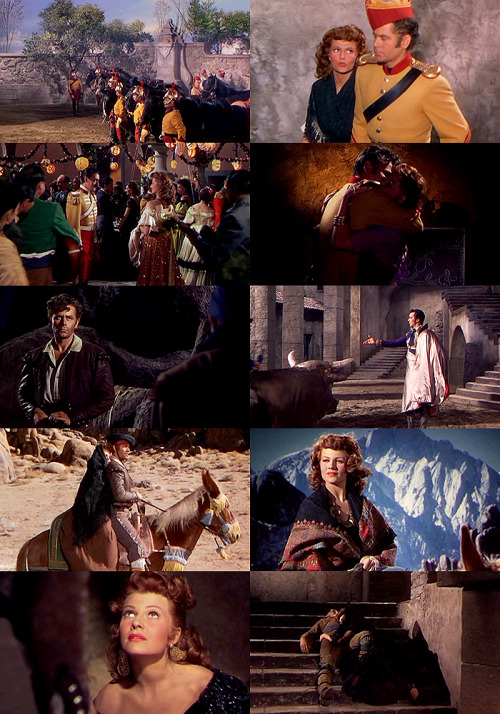
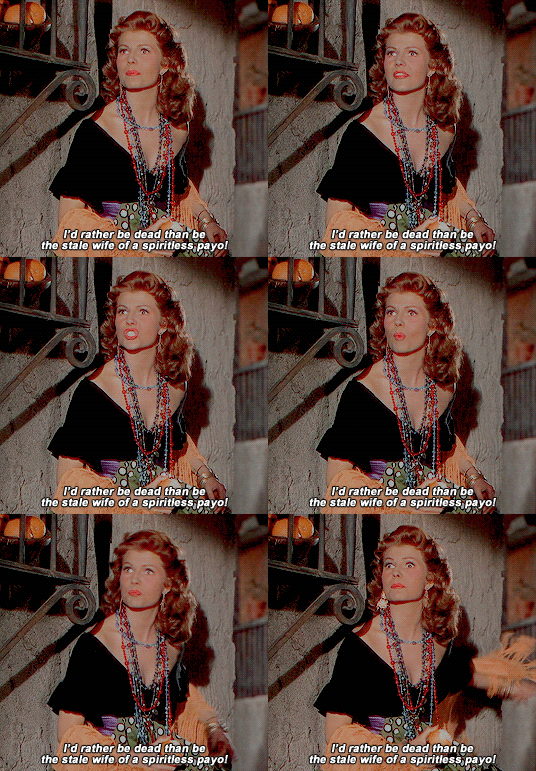
Quando falamos sobre Rita Hayworth e Glenn Ford, pensamos na dupla que protagoniza “Gilda”, de 1946. Mas eles fizeram outros filmes juntos, incluindo “Carmen”, produzido e dirigido por Charles Vidor – também diretor de “Gilda” – e filmado num belo Technicolor que ressaltou a beleza de ambos os astros.

When we talk about Rita Hayworth and Glenn Ford, we think of the duo in 1946’s Gilda. But they starred together in more movies together, including “The loves of Carmen”, produced and directed by Charles Vidor – also the director of Gilda – and shot in ravishing Technicolor that highlighted both their beauties.


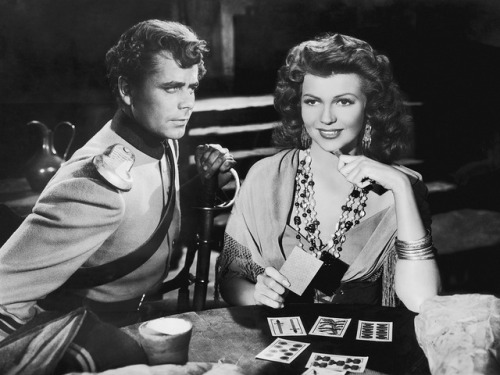
Don Jose (Ford) é um novato vindo de Navarra. Ele chegou a Andaluzia para ser um soldado da guarda, e a primeira pessoa que ele conhece em seu primeiro dia é a provocante cigana Carmen (Hayworth). Assim como todos os ciganos, Carmen é desprezada pelos “cidadãos de bem” do local.

Don Jose (Ford) is a newcomer from Navarra. He has arrived in Andalucía in order to serve the guard, and the first person he meets in his first day is the provocative gypsy Carmen (Hayworth). Like all gypsies, Carmen is despised by the “good citizens” of the town.


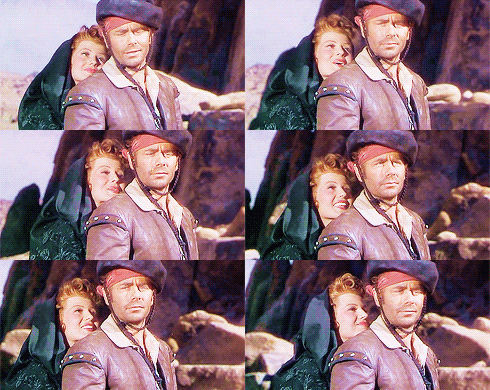
Ela provoca Jose e ele fica caidinho por ela. Entretanto, ela não aceita o amor dele por causa de uma previsão de má sorte revelada nas cartas. Mas ela muda de ideia e faz com que Jose mate seu comandante em um duelo – sendo agora um fora da lei, resta a Jose seguir com Carmen e um grupo de ladrões rumo às montanhas, onde ele conhece o líder do grupo, García (Victor Jory), um homem que acaba de sair da prisão... e que por acaso é marido de Carmen.

She teases Jose and he falls for her. However, she won’t accept his love because of a bad omen revealed in the cards for her. But she changes her mind and arranges a duel for Jose to kill his commander - now an outlaw, Jose can only follow Carmen and her group of thieves to the mountains, where he meets the group leader, García (Victor Jory), a man who has just been released from prison... and who happens to be Carmen’s husband.


Antes da fuga, vamos a cidade espanhola recriada no estúdio sendo fotografada de maneira pouco inspirada, não tendo nada a ver com outros cenários europeus feitos em estúdio. Esta primeira metade do filme nos lembra de “Sangue e Areia” (1941), no qual um toureiro interpretado por Tyrone Power é seduzido por ninguém menos que Rita Hayworth. Em Hollywood, cidades espanholas e vilas latino-americanas são muito parecidas.

Before they run away, we see the Spanish city recreated in studio is photographed in an uninspired way, unlike other European sets built in studio. This first half of the movie reminds us of “Blood and Sand” (1941), in which a toreador played by Tyrone Power is seduced by none other than Rita Hayworth. In Hollywood, Spanish towns and Latin American villas are very much alike.


Na segunda metade, conforme o grupo foge pelas montanhas, temos a sensação de estarmos assistindo a um faroeste, com armadilhas, recompensas por um foragido, tropas perseguindo o grupo e muitos tiros disparados. Jose trocou de lado completamente e agora está roubando carruagens e se tornando mais violento a cada dia – não porque ele queira, mas porque precisa.

In the second half, as the group escapes through the mountains, we get the feeling that we are now watching a western, with traps, rewards for an outlaw, troops coming for our group and a lot of shootings. Jose traded places completely and is now stealing from stagecoaches and becoming more violent each day- not because he wants to, but because he has to.


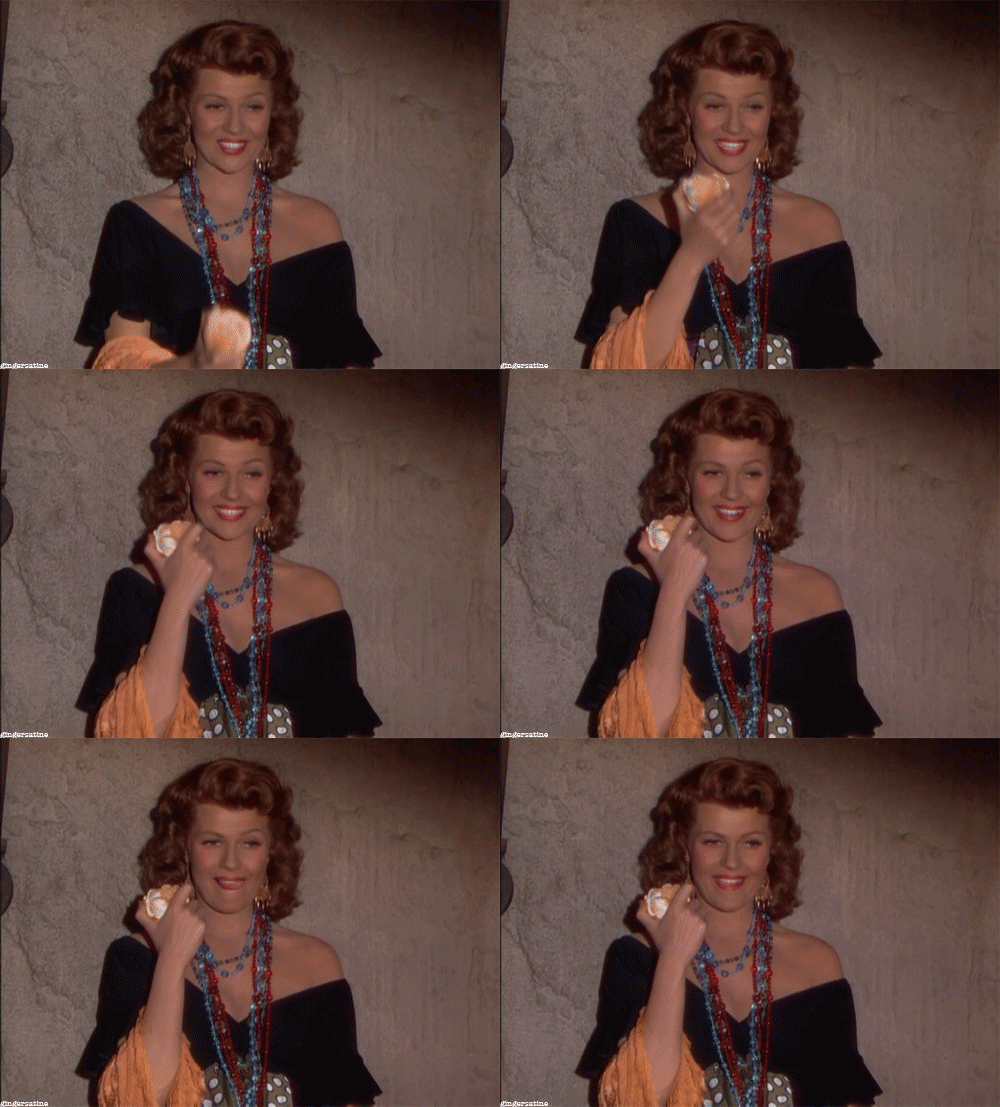
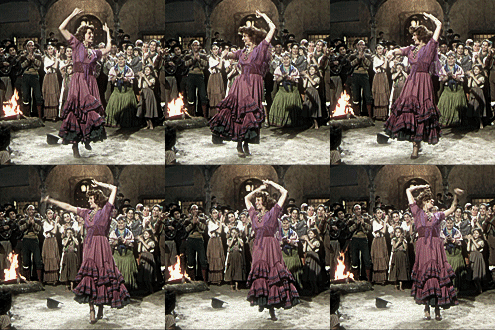
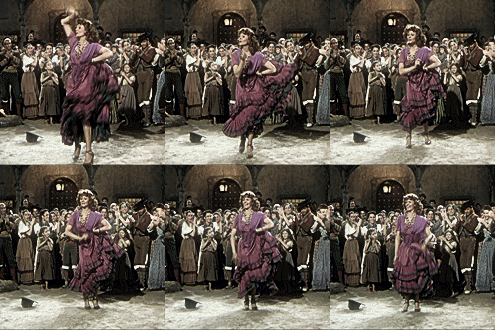
É uma delícia ver Rita Hayworth cantando e dançando músicas folclóricas neste filme. Quando garota, sob seu nome verdadeiro, Rita Cansino, ela dançava profissionalmente, em uma dupla com o pai, Eduardo Cansino, que inclusive trabalhou em “Carmen” como coreógrafo. Ela dançava coreografias como as do filme desde pequena. O único ponto negativo é que ela é dublada ao cantar. A voz dela é dublada por Anita Ellis, que também a dublou em “Gilda”.

It’s delightful to see Rita Hayworth singing and dancing folk songs in this film. As a young girl, under her real name Rita Cansino, she danced for a living, making a duo with her father, Eduardo, who even worked here in “The loves of Carmen” as a choreographer. She had been performing dances like the ones in the film since a very early age. The only downside is that she is dubbed in the songs. Her singing voice is dubbed by Anita Ellis, who also dubbed her in “Gilda”.


Para o povo, Carmen é nojenta. Para a elite, ela é fonte de entretenimento, pois dança nas festas. Isso significa que ela é uma curiosidade para a sociedade, e nada mais. É um comportamento bem hipócrita. Carmen não é apenas uma excluída porque faz parte de um grupo nômade – os ciganos – ela também é vítima de preconceito porque é uma mulher livre que não pode “pertencer” a um homem só.

For the people, Carmen is disgusting. For the elite, she is source of entertainment when she dances at parties. That means that she is a curiosity for society, and nothing else. It’s a very hypocritical behavior. Not only Carmen is an outcast because she is part of a nomad group – the gypsies – she is also frown upon because she is a free woman that can’t “belong” to one man.


Um texto inicial cheio de preconceitos, chamando os ciganos de “uma raça infeliz”, mostra o pensamento que foi responsável pela perseguição de milhões de ciganos durante o Holocausto – ou melhor, o “Porajmos”. Sim, os ciganos rom têm seu próprio termo para a perseguição que sofreram dos nazistas – não há números oficiais, alguns historiadores estimam que 200 mil ciganos foram mortos em campos de concentração, e outros colocam a estimativa em 1,5 milhão. Hollywood não estava fazendo um favor a estas pessoas três anos após a queda de Hitler com tanto preconceito.

An opening text full of prejudice, calling the gypsies “an unhappy breed”, shows the mindset that was responsible for the persecution of millions of gypsies during the Holocaust – or better, the “Porajmos”. Yes, the Romani gypsies have their own word for the persecution they suffered under the Nazis – there are no official numbers, some historians estimate 200000 gypsies were killed in concentration camps, and other put the number up to 1,5 million. Hollywood wasn’t doing a favor to those people three years after Hitler’s fall with so much prejudice.


Se refletirmos um pouco, “Carmen” tem algumas coisas em comum com “Gilda”: a protagonista sedutora, o protagonista que é bobo no começo mas fica mais durão e ciumento por causa de uma mulher, muitas traições, o fatalismo que paira sempre no ar. “Carmen” só se difere por causa do cenário e do Technicolor, os elementos da história são os mesmos. Eu não estou falando que “Carmen” é um filme noir: eu estou dizendo que as histórias do noir bebem de uma fonte universal.

If we think a little, “The loves of Carmen” has some things in common with “Gilda”: the seductive leading lady, the leading man who is at first silly then becomes tougher and more jealous because of a woman, the many betrayals, and the fatalism that is all over. “The loves of Carmen” is different only for its setting and the Technicolor, the story elements are the same. I’m not saying that this film is noir: I’m saying that the noir stories drink from a universal fountain.


“Carmen” certamente se beneficia da química entre os protagonistas. Entretanto, não é tão interessante quanto outras versões da mesma história, como “Carmen Jones”, de 1954. Mas pelo menos podemos ver Glenn Ford mais bonito que nunca e Rita Hayworth dançando danças espanholas.

“The loves of Carmen” certainly profits from the chemistry the two leads have. However, it’s not as interesting as other versions of the same story, like “Carmen Jones”, from 1954. But at least we are able to see Glenn Ford more handsome than ever and Rita Hayworth dancing Spanish songs.  

This is my contribution to the 100 Years of Rita Hayworth blogathon, hosted by Michaela at Love Letters to Old Hollywood.

Saturday, July 2, 2016

Uma Loira com Açúcar / The Strawberry Blonde (1941)

Hoje todos os olhares e homenagens estão voltados para ela. Não são todas as talentosas lendas de Hollywood que chegam aos 100 anos, mas Olivia de Havilland conseguiu, e no meio do caminho ainda ganhou dois Oscars e lutou pelos direitos dos atores.
Today, all the eyes and tributes are for her. Not all talented Hollywood legends live to be 100, but Olivia de Havilland made it, and also won two Oscars and fought for actors’ rights.
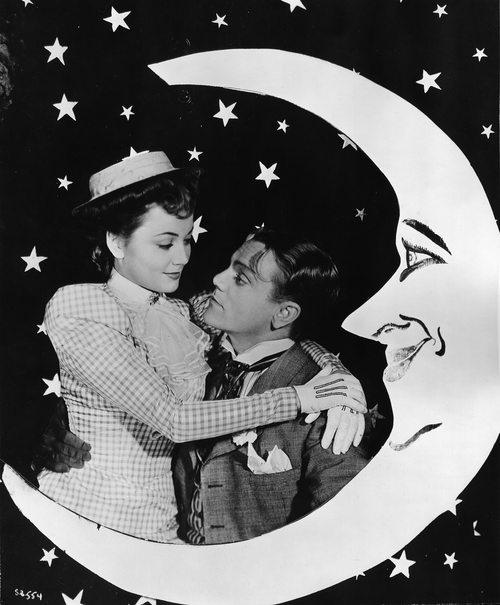
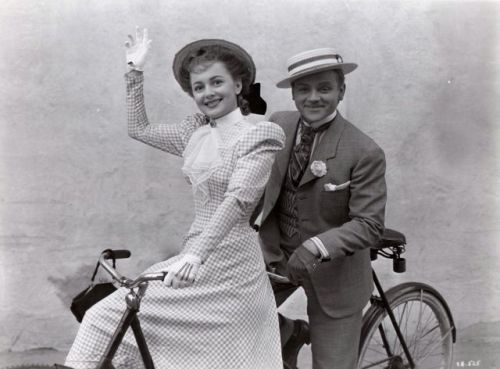
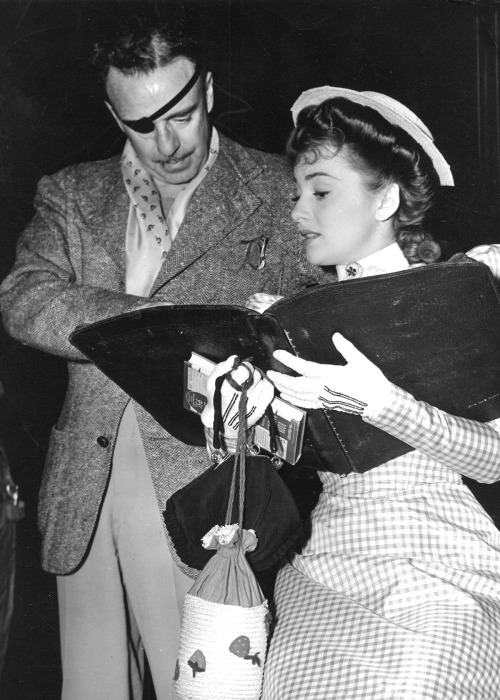
O filme escolhido, “Uma loira com açúcar”, tem James Cagney no papel principal e Olivia como segunda mais importante nos créditos. Já é difícil superar Cagney em tela, e Olivia tem uma rival ainda mais perigosa: Rita Hayworth, com uma personagem exuberante que atrai todos os olhares para si, deixando a personagem de Olivia em segundo plano. Mas às vezes (ou talvez quase sempre?) escolher a moça menos cobiçada compensa.
The film I chose, “The Strawberry Blonde”, has James Cagney in the lead and Olivia as second billed. It is already difficult to shine more than Cagney in a film, and Olivia has a much more dangerous rival: Rita Hayworth, playing an exuberant character that attracts all the attention to her, leaving Olivia behind. But sometimes (or maybe almost all the time?) it is rewarding to choose the less sought-after girl.
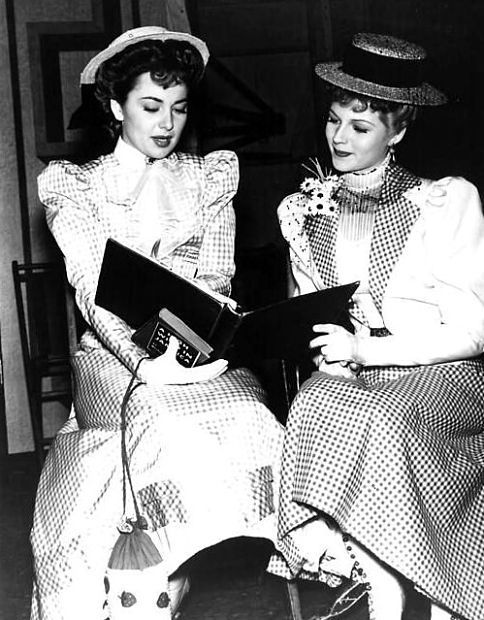
Virginia Brush (Hayworth) é uma mulher comum da Era Vitoriana. Sua amiga Amy Lind (Olivia) é a mulher batalhadora e inconformada que amamos: trabalha como enfermeira, é sufragista e luta pela igualdade entre os sexos. Não tem vergonha de flertar e detesta qualquer hipocrisia disfarçada de bons modos.
Virginia Brush is a regular Edwardian woman. Her friend Amy Lind (Olivia) is the strong and independent kind of woman we love: she works as a nurse, is a suffragette and fights for gender equality. She is not ashamed to flirt and hates any kind of hypocrisy that can pass as good manners.
Virginia é a moça dos sonhos de todos os homens. Amy é a moça que causa escândalo na sociedade do começo do século XX: independente, com ideias modernas, fuma, flerta e sabe que as mulheres gostam de sentir prazer tanto quanto os homens. Ela assusta Biff (Cagney), mas ao final mostra como é de verdade o encanta (e me decepciona um pouco).
Virginia is the girl all men dream of. Amy is the girl that causes scandal in the turn-of-the-century society: she is independent, has modern ideas, smokes, flirts and knows that women like to have pleasure as much as men. She scares Biff (Cagney), but in the end she shows how she really is and he is charmed (and I felt a little deceived).
Mas Virginia é uma moça caprichosa, que gosta de coisas e atrações caras. E Biff é um pobre aprendiz de dentista, que além do mais vive se metendo em brigas, algo que ele herdou do pai. E Virginia decide se casar com o velho amigo de Biff, Hugo Barnstead (Jack Carson). Hugo é empreendedor, mas não é honesto, e acaba envolvendo Biff em um esquema ilegal.
But Virginia is a frivolous woman who likes expensive gifts and dates. And Biff is a poor guy studying to be a dentist, who also is always getting into fights, just like his father. And Virginia decides to marry Biff’s old friend, Hugo Barnstead (Jack Carson). Hugo is an entrepreneur, but he’s not honest, and gets Biff involved in an illegal scheme.
Isso tudo descrito acima é contado em flashback, quando Biff está prestes a reencontrar Hugo após cinco anos na prisão. O que mais esperar de Raoul Walsh? Como ator, seu mais importante papel foi o de John Wilkes Booth, o assassino do presidente Lincoln, em “O Nascimento de uma Nação” (1915). Como diretor, seu mais famoso trabalho também é ao lado de James Cagney: “Fúria Sanguinária” (1949).
Everything narrated above is told in flashback, when Biff is about to meet Hugo again, after spending five years in prison. What else could be expected from Raoul Walsh? As an actor, his most important role was the one of John Wilkes Booth, the man who killed President Lincoln, in “The Birth of a Nation” (1915). As a director, his most famous work is also with James Cagney: “White Heat” (1949).
Uma Loira com Açúcar” é o remake de “A Mulher Preferida” (1933), em que Gary Cooper interpreta Biff, Fay Wray é Virginia e a pouco conhecida Frances Fuller fica com o papel de Amy. O remake ganhou um novo nome em homenagem à mãe de Cagney, que visitou o set um dia e se lembrou de uma ocasião relacionada à música principal, “(Casey would waltz with a strawberry blonde) And the band playedon!”. Raoul Walsh dirigiu também o segundo remake do filme, em 1948.
The Strawberry Blonde” is the remake of “One Sunday Afternoon” (1933), in which Gary Cooper plays Biff, Fay Wray is Virginia and little-known Frances Fuller plays the role of Amy. The remake got a new name in a tribute to Cagney’s mother when she, a strawberry blonde herself, visited the set one day and remembered one occasion in her youth linked to the theme song, “(Casey would waltz with a strawberry blonde) And the band played on!”. Raoul Walsh also directed the second remake of the film, in 1948.
É um papel bom, mas nem tanto, para Cagney. É um papel que alçou Hayworth ao estrelato, e nos proporcionou ouvir brevemente sua verdadeira voz ao cantar. É um papel um pouco ingrato para Olivia, mas com ótimos momentos cômicos. O filme, no geral, serve como uma fábula ou um ode à nostalgia, divertindo muito e ensinando pouco.
It is a good role, yet not ideal, for Cagney. It is a role that made Rita Hayworth to be noticed, and made possible for us to hear her real singing voice briefly. It is an ungrateful role for Olivia, but with great comic moments. The film, after all, works as a fable or an ode to nostalgy, entertaining a lot and teaching very little.
This is my contribution to the Olivia de Havilland Centenary blogathon, hosted by Crystal and Laura at In the Good Old Days of Classic Hollywood and Phyllis Loves Classic Movies. Hooray for Livvie! 

Wednesday, June 24, 2015

A Dama de Xangai (1947) / The Lady from Shanghai (1947)

Era a noite de Natal de 2009. A única fonte de luz na sala escura era a tela da televisão. Foi então que eu vi um filme que me marcou profundamente, cujos diálogos e imagens continuam vivos, perfeitos, em minha mente, mesmo eu nunca mais tendo visto o filme novamente. Que obra me causou tamanha impressão? Aquela que considero a obra-prima de Orson Welles, o cineasta que foi de menino prodígio a maldito em uma só encarnação: “A Dama de Xangai”, de 1947.

It was Christmas night, 2009. The only source of light in the dark room was the TV screen. It was then that I watched a film that touched me deeply, whose dialogues and images remain alive, perfect, in my mind, even though I never rewatched it. Which movie caused this to me? The one I consider to be Orson Welles’ masterpiece - Welles, the filmmaker who went from prodigious child to maudit in a single incarnation - : “The Lady from Shanghai”, from 1947.

Em um podcast presente no curso “Investigating Film Noir”, o professor Richard L. Edwards e seu convidado chamam 1947 de “o ano do suicídio no cinema”. Não, nenhum artista / diretor se matou naquele ano, felizmente. O argumento é que o ano já começou com um personagem inesquecível que imagina como seria o mundo sem ele em “A Felicidade não se Compra”, e os cadáveres se amontoam em outras tantas produções do ano – em especial em filmes noir como “A Dama de Xangai”.

In a podcast that was parto f the online course “Investigating Film Noir”, professor Richard Edwards and his guest call 1947 “the year of suicide at the movies”. No, no artist / director committed suicide that year, thankfully. The explanation is that the year already started with an unforgettable character imagining how the world without him would be in “It’s a Wonderful Life”, and the corpses keep appearing in other movies released that year - especially in noirs like “The Lady from Shanghai”.

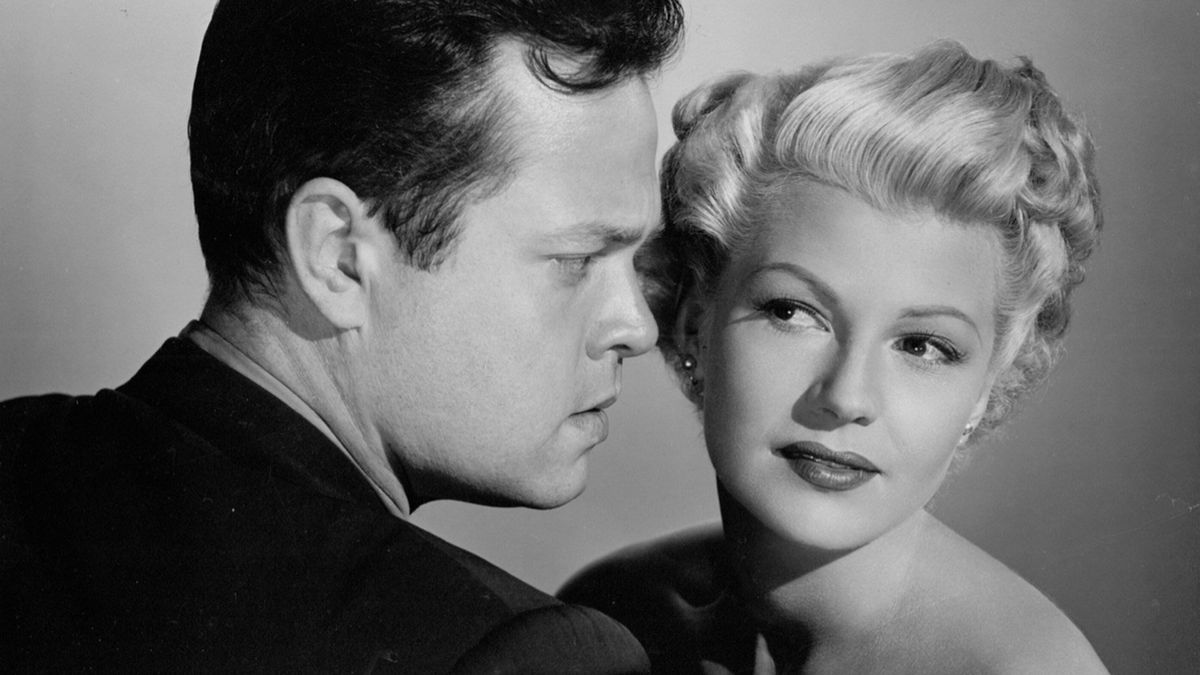
Além de dirigir, roteirizar e produzir o filme, Orson Welles interpreta o protagonista Michael O'Hara. Ele é um irlandês à procura de emprego que acaba contratado pelo advogado manco Arthur Bannister (Everett Sloane), após Michael salvar a jovem esposa de Arthur, Elsa (Rita Hayworth), de um assalto. A partir daí, uma trama de assassinato e luxúria se desenrola.

Besides directing, producing and writing the screenplay, Orson Welles plays the lead Michael O’Hara. He is an Irishman looking for a job who ends up being hired by the lawyer with a limp Arthur Bannister (Everett Sloane), after Michael saves Arthur’s young wife Elsa (Rita Hayworth) from a robbery. From then on, a plot full of lust and murder starts.

Uma das minhas cenas favoritas no filme cita o Brasil, e eu fiquei em êxtase quando isso aconteceu. É raro uma citação séria e profunda sobre este país tropical e caliente, mas encontramos isso no filme graças a um episódio interessante da história: em 1942, Orson Welles passou um tempo no Brasil filmando um documentário, “It's All True”, que nunca ficou pronto. Ele esteve em Fortaleza, e de lá tirou uma anedota perfeita para “A Dama de Xangai”. A anedota gira em torno de dezenas de tubarões que enlouquecem e começam a comer uns aos outros. Fascinante e premonitório.

One of my favorite scenes in the film mentions Brazil, and I was ecstactic when I saw it. It’s rare to see Brazil mentioned in a serious and deep way, but we find it in this movie thanks to an interesting episode in flm history: in 1942, Orson Welles spent some time in Brazil shooting a documentary, “It’s All True”, that was never finished. He went to Fortaleza, where he got a perfect story for “The Lady from Shanghai”. The story is about dozens of sharks that go mad and start eating each other. Fascinating and prescient.

Outra cena inesquecível envolve Arthur Bannister em um julgamento... usando ele mesmo como testemunha. Aqui não importam os argumentos, as perguntas, os diálogos: a cena existe apenas para mostrar a confusão deliciosa da justiça no mundo do filme noir (e, por que não?, no mundo real também) e é a situação ridícula ao extremo (sequer o juiz parecia interessado no caso).

Another unforgettable scene involves Arthur Bannister in a trial… calling himself as a witness. Here there is no importance given to the arguments, the questions, the dialogues: the scene exists simply to show the delicious mess that is justice in the world of film noir (and why not? In the real world as well) and it is ridiculous to the extreme (even the judge seemed nor interested in the case).

Mas a cena mais memorável ainda é a do clímax, que acontece em uma sala de espelhos em um circo itinerante. A fotografia da sequência é de tirar o fôlego, e em muitos momentos chama mais atenção que a própria ação. Os personagens se confundem e se multiplicam na sala de espelhos, formando um quebra-cabeça tão fascinante quanto a trama do filme (Welles se inspirou em “O Gabinete do Doutor Caligari”, 1920, para criar o cenário, e contou com ajuda do especialista em efeitos especiais Lawrence W. Butler, que trabalhou em “O Ladrão de Bagdá”, de 1940). O que estraga um pouco a cena (e eu só percebi após rever a cena múltiplas vezes) é a trilha sonora assustadora e pesada que começa quando tiros são disparados. A sequência teria ficado melhor sem música, apenas com o som dos tiros, e Orson Welles concordava com isso: o ator / diretor ficou furioso com a trilha sonora escolhida para a cena!

But the most memorable scene is the climax, in a fun house from a travelling show. The photography in the sequence is breathtaking and in many moments it calls more attention than the action itself. The characters multiply in the mirror room, creating a puzzle as fascinating as the plot of the film (Welles was inspired by “The Cabinet of Dr Caligari”, 1920, to create the set, and was helped by the special effects expert Lawrence W. Butler, who worked in “The Thief of Bagdad”, from 1940). What ruins the scene a little (and I only realized it after multiple viewings of the scene) is the heavy and scary soundtrack that begins the moment the first guns are shot. The sequence would have been better without music, only with the sound of the gunshots, and Orson Welles agreed with thay: the actor / director got mad at the soundtrack chosen for the scene!

A Dama de Xangai” é um filme de Orson Welles. Isso significa que a filmagem foi conturbada (com direito a alugar o iate de um sempre bêbado Errol Flynn no México), o filme ficou longo demais (155 minutos no corte de Welles), o estúdio fez muitas alterações na sala de edição e as plateias americanas não gostaram muito do resultado, enquanto os europeus adoraram. Mas, sendo um filme de Welles, pode esperar que, ainda mutilado, tenha indícios de obra-prima. Ao final, “A Dama de Xangai” se transformou nisto: uma soma de cenas memoráveis em um filme noir que, apesar de tudo, não deixa de ser brilhante.

The Lady from Shanghai” is a film by Orson Welles. This means that the shooting was complicated (in Mexico they even rented the yacht belonging to a permanently drunk Errol Flynn), the film was too long (155 minutes in Welles’ cut), the studio made many changes at the editing room and the American audience didn’t like it very much, while the Europeans loved it. But, being a film by Welles, you can always expect that, even mutilated, it contains traces of a masterpiece. In the end, “The Lady from Shanghai” became this: a sum of memorable scenes in a film noir that, despite it all, can be considered brilliant.


This is my contribution to the “…And Scene!” Blogathon, hosted by Sister Celluloid! And Cut!

Thursday, October 30, 2014

Rita Hayworth: a deusa e a femme fatale / Rita Hayworth: the goddess and the femme fatale

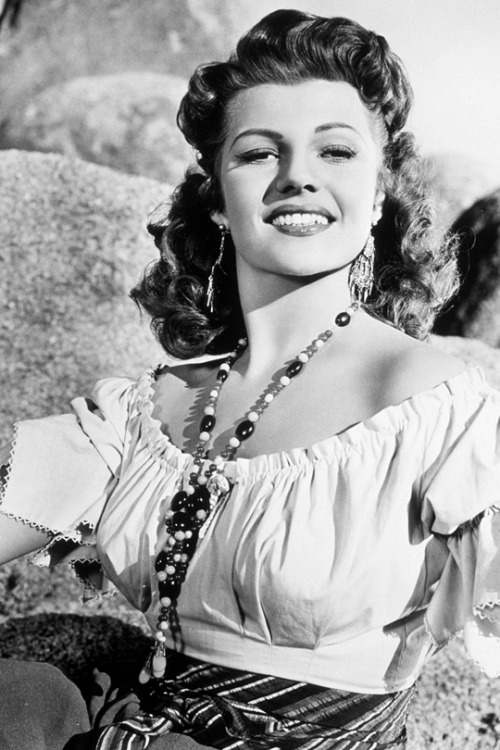
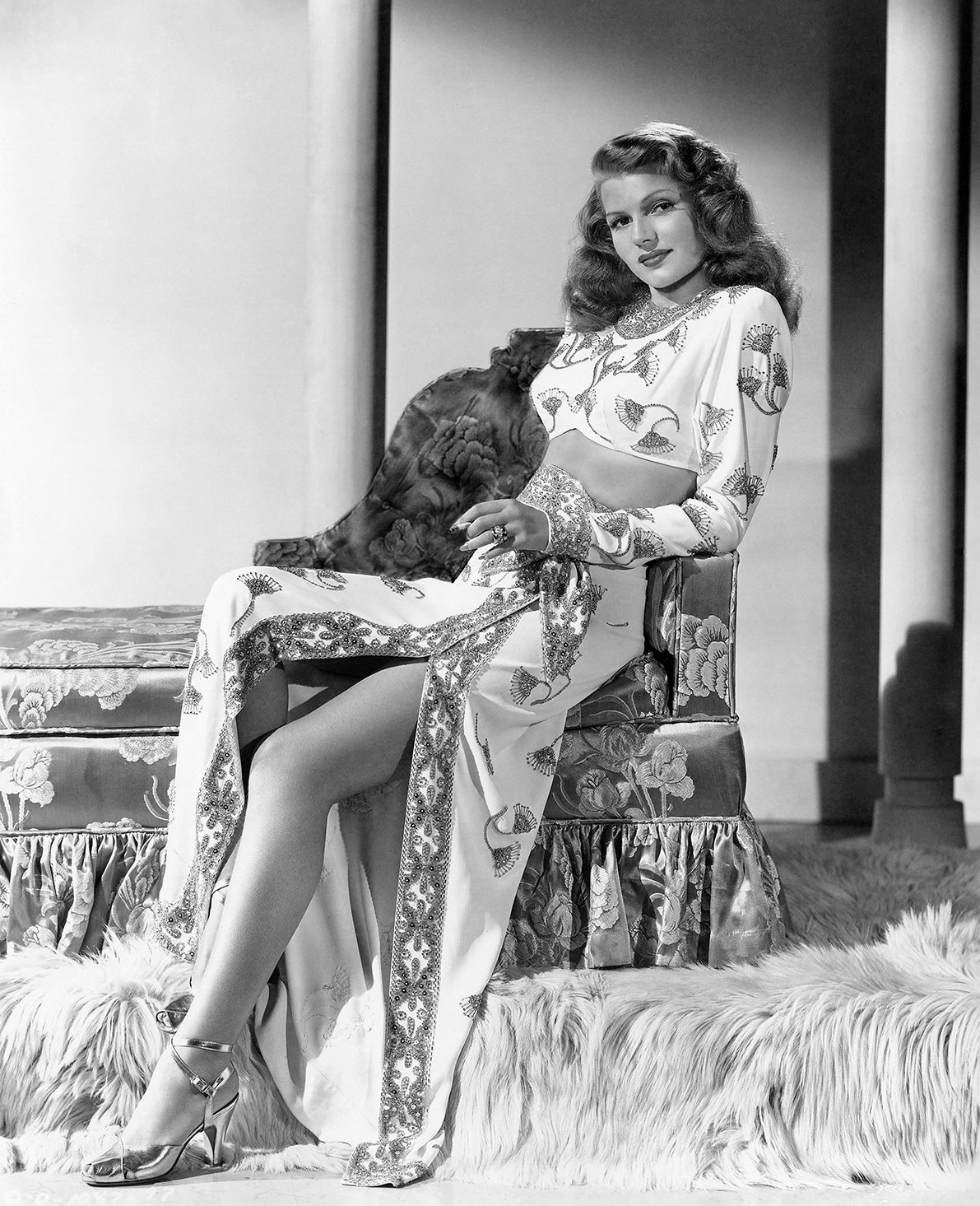
Ela nasceu Margarita Carmen Cansino em 1918. Para milhões de pessoas, ela será para sempre Gilda, a protagonista do filme homônimo de 1946. Mas Rita Hayworth foi muito mais que a sex symbol que seduziu Glenn Ford no clássico noir. Ela inclusive chegou a dizer que seus relacionamentos haviam falhado porque os homens se apaixonavam por Gilda, mas acordavam com Rita.

She was born Margarita Carmen Cansino in 1918. For millions, she will always be Gilda, the leading lady in the homonimous 1946 film. But Rita Hayworth was much more than the sex symbol who seduced Glenn Ford in the noir classic. She even said that all her relationships had failed because the men fell in love with Gilda, but woke up with Rita.
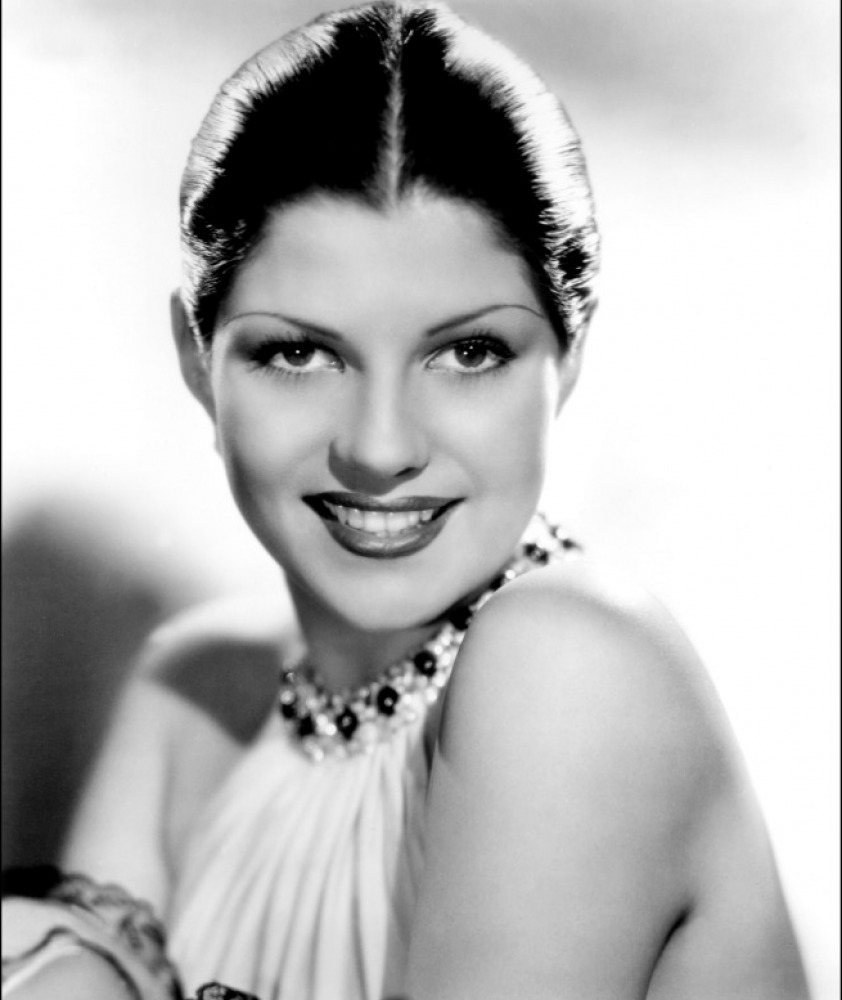
Começou como dançarina, formava uma dupla com o pai, professor de dança, e brilhou nas telas pela primeira vez em 1934 (é praticamente impossível vê-la em seu primeiríssimo filme, de 1926). Não tentem encontrar a Rita que todos conhecemos: aos 16 anos, Rita Cansino era uma moça morena com fortes traços latinos. Precisou se “americanizar” para conseguir papéis melhores e não ser estereotipada. Tornou-se ruiva e fez eletrólise nos cabelos para aumentar o tamanho da testa. Estava criada a lenda.

She started as a dancer, was in a duo with her father, a dance teacher, and was alrady shining in her first film, from 1934 (it's neraly impossible to spot her in her very first screen appearance, from 1926). Don't try to find the Rita we all know: at age 16, Rita Cansino was a brunette with strong Latin features. She had to be “Americanized” to get better roles and not become sterotyped. She became a red-head and did eletrolisis in her hairline in order to widen her forehead. The legend was then created.
A música e a dança estavam muito presentes nos primeiros sucessos de Rita. Embora ela tenha sido notada pelo grande público pela primeira vez em “Paraíso Infernal / Only Angels Have Wings” (1939), foi com os musicais que alcançou maior prestígio no início da carreira. Teve a honra de dançar com Fred Astaire e Gene Kelly. O próprio Fred disse uma vez que Rita foi sua parceira de dança favorita.

Music and dance were always present in her first screen successes. Even though she had been noticed by the audience for the first time in “Only Angels Have Wings” (1939), she got more compliments in musicals when she was starting. She had the honor to dance with both Fred Astaire and Gene Kelly. Astaire himself once said that Rita was his favorite dance partner.


E ela foi, realmente, uma deusa em “Quando os Deuses Amam / Down to Earth” (1947). Rita interpreta Terpsícore, a musa grega da música e da dança. Sua função era inspirar os artistas, mas ela tem uma ideia bem diferente: quer atrapalhar o musical de Danny Miller (Larry Parks), que não está tratando as musas com o devido respeito. Ela convence Mr. Jordan (Roland Culver) e o mensageiro 7013 (Edward Everett Horton) a deixarem-na ir para a Terra, prometendo ajudar Danny. O plano de Terpsícore não é executado, porque ela se apaixona por Danny e ainda consegue o papel principal no musical.

She was a literal goddess in “Down to Earth” (1947). Rita plays  Terpsichore, the Greek muse of music and dance. Her function was to inspire artists, but she has a very different idea: she wants to cause trouble in the musical made by Danny Miller (Larry Parks), who is not treating the muses respectifully. She convinces Mr. Jordan (Roland Culver) and Messenger 7013 (Edward Everett Horton) to let her come to Earth, promising she will help Danny. Therpsicore's plan does not go on, because she falls in love with Danny and gets the leading role in the musical.
“Quando os Deuses Amam” não é o melhor musical do mundo. Faltam as músicas que ficam na memória horas, dias, meses após vermos o filme. Alguns momentos são de vergonha extrema (eu não queria ser nenhuma daquelas chorus girls com figurino rosa bizarro). Mas mesmo assim é um filme adorável, graças, principalmente, a Rita Hayworth. É incontestável que ela está realmente divina aqui em Technicolor.

“Down to Earth” is not the best musical in the world. There are no musics that stick to our memory for days, even months, after we saw the movie. Some moments involve extreme shame (I wouldn't want to be one of those chorus girls wearing bizarre pink clothes). Nevertheless, it is an adorable film thanks to Rita Hayworth. We can't deny that she is a goddess in Technicolor.
Ela foi femme fatale mais que tudo: “Gilda” (1946), “A Dama de Xangai / The Lady from Shanghay” (1947), “Carmen / The Loves of Carmen” (1948) e “Salomé” (1953). Com sua sensualidade, ela sempre levava um homem à ruína ao final desses filmes. E foram muitas as vítimas, incluindo Glenn Ford – mais de uma vez – e o então marido / diretor Orson Welles, na obra-prima noir de 1947.

She was a femme fatale in several occasions: in “Gilda” (1946), “The Lady from Shanghai” (1947), “The Loves of Carmen” (1948) and “Salome” (1953). With her sex appeal, she always ruined a man by the end of these films. And there were many victims, including Glenn Ford – more than once – and her then husband and director Orson Welles in the noir masterpiece from 1947.
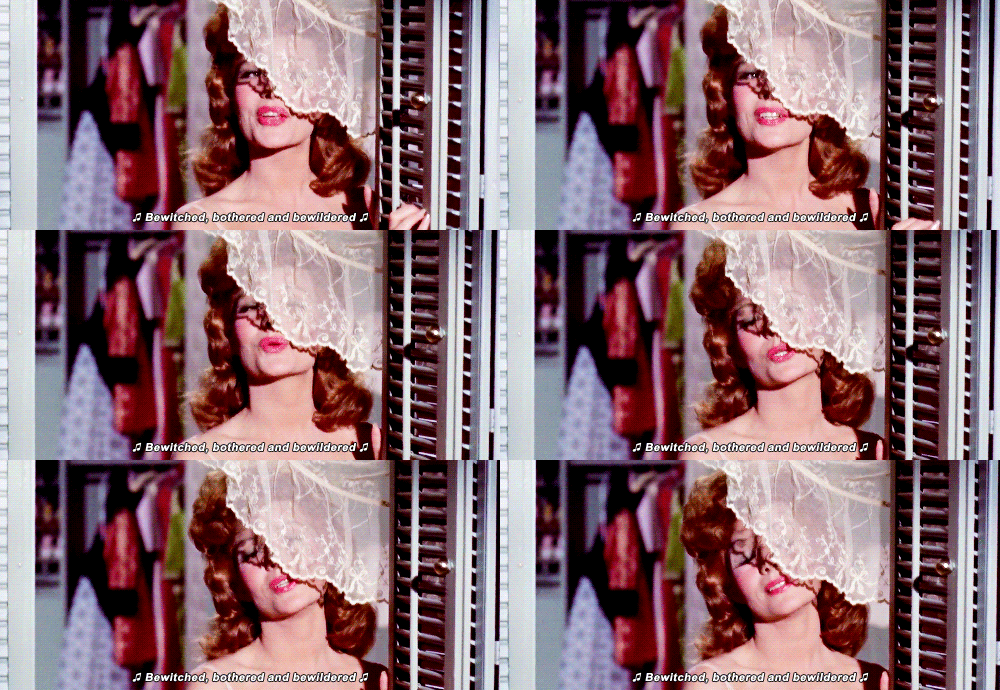
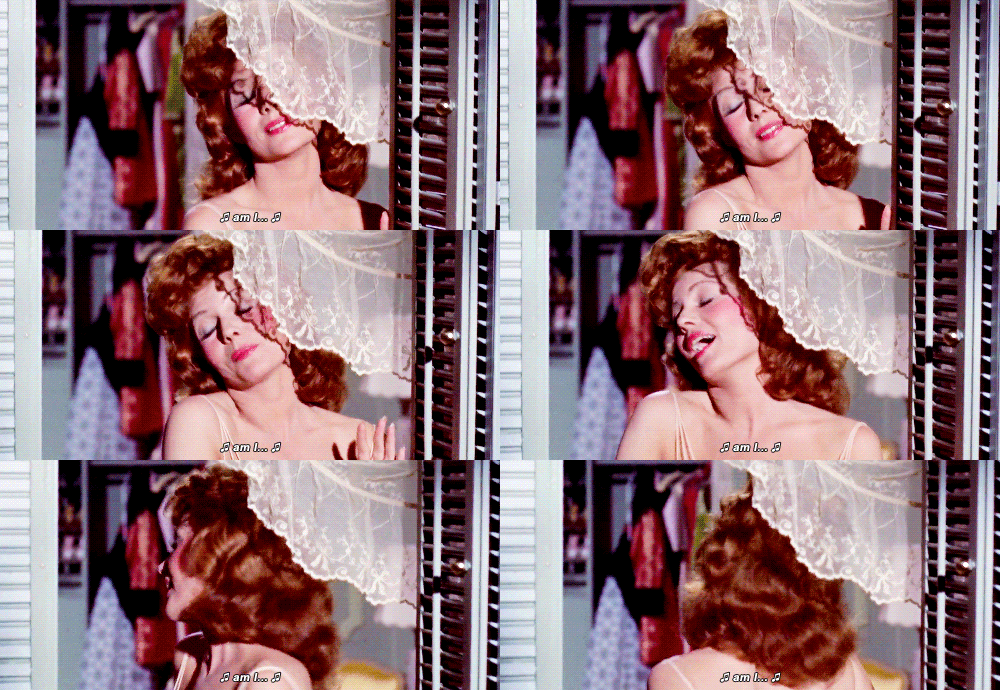
Mesmo nestes filmes, a música ainda estava presente. Gilda faz o strip-tease comportado e feroz ao som da canção “Put the Blame on Mame”. Como Elsa Bannister, a loira fatal, ela apenas canta “Don’t Kiss Me”, tornando mais fácil o processo de enlouquecimento de Michael O’Hara (Welles) e do marido Arthur (Everett Sloane). A cigana Carmen se exibe em uma taverna. Salomé faz sua dança dos sete véus.

Even in these films, the music was still present. Gilda does a different kind of striptease while singing “Put the Blame on Mame”. As Elsa Bannister, the fatal blonde, she only sings “Don't Kiss Me”, making it easier for Michael O'Hara (Welles) and her husband Arthur (Everett Sloane) to be driven crazy. Carmen the gypsy exhibits her moves in a tavern. Salome does the seven veils dance. 
Talvez seja aí que vemos o talento de uma atriz: na capacidade de interpretar uma personagem tão diferente de si de maneira a convencer o público. Acreditamos no poder destruidor de Rita enquanto femme fatale, mas ela também se mostra crível como a dançarina adorável de “Minha Namorada Favorita / My Gal Sal” (1942) ou Vera, que disputa Frank Sinatra com Kim Novak em “Meus Dois Carinhos / Pal Joey” (1957).

Maybe this is where we see an actress's talent: in her ability to play a character that is so different from herself in a convincing way. We believe in Rita's destructive power as a femme fatale, but she is also believable as the lovely dancer from “My Gal Sal” (1942) or as Vera, who fights with Kim Novak for Frank Sinatra in “Pal Joey” (1957).
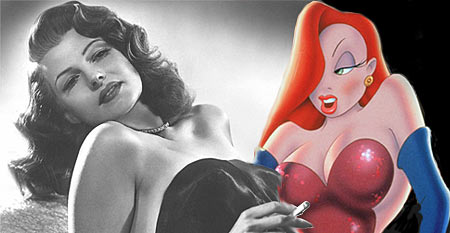
Há quem diga que a personagem interpretada por Ava Gardner em “A Condessa Descalça / The Barefoot Contessa” (1954) foi inspirada em Rita. De fato, a personagem María Vargas é uma moça exótica que alcança sucesso no cinema e depois se casa com um nobre. Rita casou-se com o príncipe Aly Khan em 1949 e ficou três anos afastada do cinema.  Há outra lenda, esta mais difícil de ser comprovada, que diz que a Margarita (o drink!) recebeu este nome em homenagem à jovem dançarina que se apresentava uma vez no México. Ah, e outra homenagem: ela foi uma das sexy symbols que serviu de inspiração para criar a personagem Jessica Rabbit.

Some rumors say that the character played by Ava Gardner in “The Barefoot Contessa” (1954) was inspired by Rita. Indeed, the character María Vargas is an exotic lady who becomes a successful movie star and then gets married to a nobleman. Rita got married to prince Aly Khan in 1949 and spent three years away from the screen. Another legend, mor difficult to be proved true or false, is that the drink Margarita was baptized after a young dancer who was working once in Mexico... And one more homage: she was one of the sex symbols who served as an inspiration to create the character Jessica Rabbit.


Na vida pessoal, Rita era quieta, sofria de complexo de inferioridade e lutava contra o vício em álcool. Sonhava com uma família e acreditou que poderia abandonar o cinema depois de seu casamento com o príncipe Aly Khan, mas não foi bem assim. A história de Rita Hayworth talvez tenha sido um conto de fadas sem final feliz. Rita não foi princesa feliz para sempre. Mas foi deusa. E, para chegar a esse patamar, uma dose de sofrimento é, infelizmente, necessária.

In real life, Rita was shy, suffered from inferiority complex and fought against an addiction to alcohol. She dreamed of having a family and believed she could abandon the cinema after she married prince Aly Khan. It didn't happen. Rita Hayworth's story was, maybe, a fairytale without a happy ending. Rita wasn't a princess for ever after. But she was a goddess. And, in order to achieve this, a dosis of suffering is unfortunately necessary.

This post is part of the “getTV Rita Hayworth Blogathon” hosted by Classic Movie Hub and running during the entire month of October. Please visit getTVschedule to see a full list of Rita Hayworth films airing on the channel this month, and please be sure to visit Classic Movie Hub for a full list of other Blogathon entries.

Related Posts Plugin for WordPress, Blogger...