Tradutor / Translator / Traductor / Übersetzer / Traduttore / Traducteur / 翻訳者 / переводчик
Saturday, December 10, 2022
Édipo Rei: A Tragédia de um Rei (1968) / Oedipus the King (1968)
A literatura grega
clássica prova ser, continuamente, uma excelente fonte de histórias para o
cinema. O exemplo em questão: “Édipo Rei” de Sófocles foi adaptada muitas vezes
para as telonas, começando em 1910. Em 1967 uma versão foi feita pelo famoso
diretor Pier Paolo Pasolini, mas hoje falaremos de uma versão que estreou no
ano seguinte, com um elenco fantástico que incluiu Orson Welles e Christopher
Plummer.
Classical Greek literature
is proven to be, again and again, an excellent source for stories for movies.
The example here: “Oedipus Rex” by Sophocles has been adapted many times for
the big screen, starting as early as 1910. In 1967 a version was made by the
famous filmmaker Pier Paolo Pasolini, but today we’ll talk about a version
released the following year, with a fantastic cast that included Orson Welles
and Christopher Plummer.
A história é conhecida, mas vamos
recapitular: com metade de seu peito nu, Édipo (Plummer) é um rei belo e
benevolente. Há uma
praga em curso e um assassino solto. O deus Apolo diz
que a praga não desaparecerá enquanto o assassino não for pego. Édipo ofende um
vidente (Welles) que faz terríveis previsões sobre a vida de Édipo. E elas se
tornam realidade: Édipo descobre que a mulher com quem ele é casado, Jocasta (Lili
Palmer), é na verdade sua mãe, e que foi responsável pela morte de seu pai.
The story is well-known, but let’s
recapitulate: with half of his chest bare, Oedipus (Plummer) is a handsome and
benevolent king. There is a plague going on and a killer on the loose. The god
Apollo says that the plague won’t go away until the killer is caught. Oedipus
offends a seer (Welles) who makes terrible predictions about Oedipus’ life. And
they do come true: Oedipus finds out that the woman he’s married to, Jocasta
(Lilli Palmer), is actually his mother, and that he was responsible for his
father’s death.
Muitos deuses gregos são
mencionados, mas Apolo é o mais importante na narrativa. Apolo é o deus da profecia
e dos oráculos, da música e da poesia, do arco e flecha, da cura, das pragas e
doenças e também protetor da juventude – um deus realmente muito poderoso. É
muito propício que ele seja o deus de destaque em “Édipo Rei”, pois se trata da
história de um jovem rei lidando com uma profecia tremendamente sombria.
There are several Greek
gods mentioned, but Apollo is the main one in the narrative. Apollo is the god
of prophecy and oracles, music and poetry, archery, healing, plague and
disease and also the protector of the youth – a pretty powerful god, for sure.
It’s very fitting that he’s the outstanding god in “Oedipus the King”, as it is
the story of a young king dealing with a tremendously dark prophecy.
Christopher Plummer domina cada
cena em que aparece em “Édipo Rei”. Nós normalmente não pensamos que o Capitão
Von Trapp de “A Noviça Rebelde” (1965) é um grande ator, mas Plummer certamente
era excelente. Plummer teve por quase uma década o recorde de mais velho
ganhador do Oscar por atuação, pois aos 82 ele ganhou o prêmio de Melhor Ator
Coadjuvante por “Toda Forma de Amor” (2010) – ele apenas perdeu o recorde em
2021 quando Anthony Hopkins ganhou o Oscar por “Meu Pai”.
Christopher Plummer
dominates every single scene he’s in in “Oedipus the King”. We don’t usually
think about Captain Von Trapp from “The Sound of Music” (1965) as a great
actor, but Plummer certainly was excellent. Plummer held for nearly a decade
the record for oldest acting Oscar winner, as he was 82 when he won the Best
Supporting Actor Oscar for “Beginners” (2010) – he only lost that record in
2021 when Anthony Hopkins won for “The Father”.
Nesta versão, a adaptação de uma
peça de centenas de anos foi um esforço conjunto do director Philip Saville e
do produtor Michael Luke. A linguagem nos diálogos é pomposa e pode ser a causa
de uma demora para entrarmos no clima do filme. É um filme teatral no seu âmago,
pois foi o primeiro filme feito pelo director Saville, que era um ator
dramático.
In this version, the adaptation of the
centuries-old play to a screenplay was a joint effort by director Philip
Saville and producer Michael Luke. The language in the dialogs is pompous and
it may be the cause of us taking a while to enter the mood of the film. It’s a
theatrical film in its core, as it was also the first film made by director
Saville, who was a trained dramatic actor.
A maior parte do filme acontece
em um anfiteatro e foi filmado em locação na Grécia. O local escolhido para as
filmagens foi depois transformado em sítio arqueológico. Boa parte da equipe foi
de profissionais gregos, como o diretor de arte Yannis Migadis e os
departamentos inteiros de arte, câmera e som.
Most of the film happens in
an amphitheater and was shot on location in Greece. The place chosen for the
shooting was later transformed into an archaeological site. A good part of the
cast were local Greek professionals, such as art director Yannis Migadis
and the whole art, camera and sound departments.
Não há nada muito especial em “Édipo Rei”. O filme se beneficiaria de mais Orson Welles –
embora não haja necessidade narrativa para mais cenas com o personagem. Pode
ser um filme raro – não estreou nos cinemas nos EUA e na Europa, e apenas se
tornou disponível quando foi exibido na TV – mas é uma adaptação fiel da peça. Sófocles ficaria orgulhoso.
There’s nothing very special in “Oedipus the
King”. The film could have benefitted from more Orson Welles – even though
there is no narrative need for more scenes with his character. It might be a
rare film – it was not theatrically released in the US and Europe, and only
became available when it was shown on TV – but it is a faithful adaptation of
the play. Sophocles would be proud.
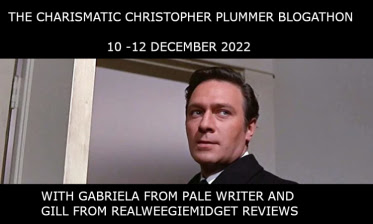
This is my contribution to
the Charismatic Christopher Plummer blogathon, hosted by RealWeegieMidgetReviews and Pale Writer.
Saturday, September 4, 2021
Resenha: O Pensamento Vivo de Orson Welles, de Rogério Sganzerla
Orson Welles é meu diretor de
cinema favorito, mas eu não sou a maior fã de Orson Welles que já existiu no
Brasil. Este título, se é que ele existe, deve pertencer ao cineasta Rogério
Sganzerla, um homem tão fascinado por Welles e pela pequena odisseia do diretor
no Brasil em 1942 que ele fez quatro filmes sobre o assunto, e ainda escreveu
um livro sobre Welles para uma coleção.
Orson Welles is my favorite male director, but I’m not the biggest Orson Welles fan that ever lived in Brazil. This title, if it exists, must belong to filmmaker Rogério Sganzerla, a man so fascinated with Welles and the director’s small odyssey in Brazil in 1942 that he made four films about this subject and also wrote a book about Welles as part of a book collection.
Sganzerla foi chamado para organizar este livro como parte de uma coleção que pretendia servir de introdução completa aos pensamentos de pessoas famosas. Sganzerla então compilou textos e frases sobre Welles, organizou uma linha do tempo e escolheu várias boas imagens, a maioria fotos dos bastidores, e também fotos da infância e juventude de Welles e até mesmo uma caricatura feita como autorretrato.
Sganzerla was asked to organize this book as part of a collection that wanted to serve as a complete introduction to the thoughts of famous people. Sganzerla then compiled texts and quotes about Welles, organized a timeline and chose several great images, most of them backstage photos, but also photos from Welles’ childhood and youth and even a caricature that is a self-portrait.
Numa entrevista que abre o livro, Welles fala sobre o imbróglio envolvendo seu filme “O Outro Lado do Vento” - que estreou apenas em 2018 - e também cita outros projetos, como sua ideia de filmar a vida de Cristo como um faroeste, uma adaptação de “The Dreamers” de Dinesen e uma versão de Rei Lear, e também um roteiro original que ele escreveu e queria filmar intitulado “The Big Brass Ring”.
In an interview that opens the book, Welles talks about the imbroglio involving his movie “The Other Side of the Wind” - the movie was released only in 2018 - and also cites other projects, like his idea to film the life of the Christ as a western, an adaptation of Dinesen’s “The Dreamers” and a version of King Lear, and also an original screenplay he wrote and wanted to film titled “The Big Brass Ring”.
O livro traz muitas informações, e mesmo uma super fã de Welles como eu pode aprender muito com a leitura. Por exemplo: “Cidadão Kane” foi só a terceira opção de Welles para começar sua parceria com a RKO. A primeira opção era uma adaptação de “Heart of Darkness” de Joseph Conrad, que não pôde ser feita porque a atriz que Welles queria escalar, Dita Parlo, estava doente. A segunda opção se chamava “The Smiler with a Knife”, abandonada quando tanto Carole Lombard quanto Rosalind Russell recusaram o papel principal.
The book is very informative, and even a die-hard Welles admirer like me learned a lot from it. For example: “Citizen Kane” was only the third option Welles had to start his partnership with RKO. The first was an adaptation of Joseph Conrad’s “Heart of Darkness” that couldn’t be made because the actress Welles wanted, Dita Parlo, was sick. The second option was called “The Smiler with a Knife”, abandoned when both Carole Lombard and Rosalind Russell turned down the lead role.
Eu também aprendi que em 1946
Welles produziu uma adaptação de “ A Volta ao Mundo em 80 Dias”, misturando
teatro, cinema, balé e circo. Este foi o trabalho favorito de Welles no teatro,
e podemos apenas imaginar como a adaptação da história para o cinema teria sido
feita se Welles tivesse sido contratado para dirigi-la - eu certamente amaria
esta versão!
I also learned that in 1946 Welles staged a production of “Around the World in 80 Days”, mixing theater, cinema, ballet and circus. This was Welles’ favorite work in the theater, and we can only imagine how the film adaptation of the story would have been if Welles was asked to direct it - I certainly would love this version!
Através da linha do tempo, podemos ver que Welles se manteve ocupado mesmo quando não estava em Hollywood. Ele teve diversos papéis em filmes europeus nas décadas de 40 e 50, e também trabalhou sem parar na televisão a partir dos anos 50.
Through the timeline we can see that Welles kept busy even when he wasn’t in Hollywood. He had several roles in European movies in the 40s and 50s, and also worked steadily for television starting in the 1950s.
Há também muitas frases sobre Welles, de biógrafos, cineastas, críticos de cinema, e também frases de Welles, sobre a vida em geral e sobre o cinema em particular. Sem análises profundas dos filmes, o livro é um bom primeiro passo para quem quer entrar na maravilhosa mente de Orson Welles.
There are also may quotes about Welles, from biographers, filmmakers, film critics, and also quotes by Welles, about life in general and filmmaking in particular. Without deep analysis of any of his films, the book is a fine first step for anyone who wants to enter Orson Welles’ wonderful mind.
This review is part of the 2021 Summer Reading Classic Film Book Challenge, hosted by Raquel at Out of the Past.
Thursday, January 14, 2021
O gigante Grande Otelo
The Gigantic Grande Otelo
Fernanda Montenegro é a única atriz brasileira a ganhar um Emmy Internacional e também a única brasileira indicada a um Oscar. Na verdade, ela é a única falante de português a ser indicada ao Oscar. Não há dúvidas de que ela é a maior atriz brasileira de todos os tempos. Em 2019, quando ela completou 90 anos, um usuário do Twitter perguntou: se Fernanda Montenegro é a melhor atriz brasileira, quem é o melhor ator brasileiro? Um debate acalorado se iniciou. Eu não participei do debate, mas no instante que eu li a pergunta, eu soube que minha resposta seria Grande Otelo. E eu não estou sozinha: Orson Welles também acreditava que Grande Otelo era o maior ator brasileiro - e Welles só conheceu Otelo no começo da carreira.
Fernanda Montenegro is the only Brazilian actress to win an Emmy International and also the only Brazilian to be nominated for an Oscar. In fact, she is the only Portuguese-speaking performer to be nominated for an Oscar. There is no doubt that she is the greatest Brazilian actress of all time. In 2019, when she turned 90, a Twitter user asked: if Fernanda Montenegro is the best Brazilian actress ever, who is the best Brazilian actor? A heated debate followed. I didn’t participate in the debate, but the moment I read the question I knew that my answer would be Grande Otelo. And I’m not the only one: Orson Welles also believed Grande Otelo was the greatest Brazilian actor - and Welles only met Otelo in the very beginning of the actor’s career.
Sebastião Bernardes de Souza Prata - batizado como Sebastião Bernardo da Costa - nasceu em Uberlândia, Minas Gerais (mesmo estado em que eu nasci!) em 18 d outubro de 1915. Aos sete anos, ele começou a se “apresentar” na frente de um hotel da cidade, cantando e dançando em troca de moedas. De acordo com algumas fontes, aos oito anos ele teria assistido a “O Garoto” (1921) de Chaplin e decidido se tornar ator. Em 1924 ele foi descoberto por uma companhia teatral e saiu em turnê com eles.
Sebastião Bernardes de Souza Prata – actually baptized as Sebastião Bernardo da Costa – was born in Uberlândia, Minas Gerais (my home state!) on October 18th, 1915. At age seven, he started “performing” in front of a local hotel, dancing and singing for a few bucks. According to some sources, at eight he'd have watched Chaplin's “The Kid” (1921) and decided to become an actor. In 1924 he was discovered by a theater company and joined them on tour.
![]() |
| At 11, in 1926 |
Em meados dos anos 1920, ele se juntou à revolucionária Companhia Negra de Revistas, uma companhia de teatro formada apenas por artistas negros. Pouco antes disso, um maestro havia testado a voz dele e profetizado que, quando ele crescesse, ele interpretaria Otelo na ópera de Verdi inspirada na obra de Shakespeare. Como o ator permaneceu baixinho na idade adulta - com 1,50m seria impossível interpretar o mouro de Veneza - ele adotou, como piada, o nome artístico Grande Otelo.
In the mid-1920s he joined the groundbreaking Companhia Negra de Revistas, a theater company made only of black performers. A little before that, a maestro had tested his singing skills and prophesized that he'd star in Othello, an opera by Verdi inspired by Shakespeare's work, when he grew up. As the actor remained very short – at only five feet tall it’d be impossible for him to play the character – he mockingly adopted the stage name of Grande Otelo, or Great Othello.
Grande Otelo fez seu primeiro filme em 1935 e na mesma época começou a se apresentar em cassinos luxuosos do Rio de Janeiro. Ele era a estrela do show, mas, por ser negro, tinha de entrar no cassino pela porta dos fundos. No final dos anos 1930 e começo dos anos 1940 ele também compôs algumas músicas, como a famosa “Praça Onze” com Herivelto Martins.
Grande Otelo made his first film in 1935 and at the same time started appearing in luxurious casinos in Rio de Janeiro. He might have been the star of the show, but, being black, he had to enter the casino by the back door. In the late 1930s and early 1940s he also composed some songs, like the famous “Praça Onze” with Herivelto Martins.
Grande Otelo foi apresentado a Orson Welles por Zacharias Yaconelli, que havia sido professor de inglês de Carmen Miranda. Quando Welles ia começar a filmar cenas de “É Tudo Verdade” no Cassino da Urca, ele exigiu a presença do homem que havia acabado de conhecer - e assim Grande Otelo s juntou ao documentário. Entretanto, após assistir ao show de Grande Otelo no cassino, Welles disse a ele que ele era “exagerado”. Isso, felizmente, não abalou a amizade deles.
Grande Otelo was introduced to Orson Welles by Zacharias Yaconelli, who worked as Carmen Miranda's English teacher. When Welles was about to start shooting scenes for “It's All True” at the Urca Casino, he requested the presence of the guy he had met earlier – and thus Grande Otelo joined the cast of the documentary. However, after seeing Grande Otelo's show at the casino, Welles told him he “overacted”. This, fortunately, didn't harm their friendship.
O estúdio RKO parou de financiar o filme de Welles depois de ver as primeiras imagens - eles se irritaram porque Welles estava filmando muitas pessoas negras no Carnaval! Para aumentar os problemas, um dos jangadeiros morreu durante as filmagens de uma sequência. O filme não foi concluído, mas Grande Otelo continuou trabalhando no cinema brasileiro. A maioria dos seus filmes dos anos 40 e 50 eram chanchadas, comédias com Oscarito - ator de origem espanhola - ou Ankito - um popular comediante e acrobata.
RKO Studios stopped financing Welles' picture after seeing the first rushes – they were displeased because Welles was filming too many black people on Carnaval! To add to the problems, a subject in a sequence about Brazilian navigators - called “jangadeiros” - died during the shoot. The film wasn’t completed, but Grande Otelo kept working in Brazilian movies. Most of his films of the 40s and 50s were “chanchadas”, comedies with either Oscarito – a Spanish-born comedian – or Ankito – a skilled acrobat and funnyman.
![]() | ||||||||
| Oscarito e Grande Otelo como Romeu e Julieta / Oscarito and Grande Otelo as Romeo and Juliet |
Deste período, dois papéis dramáticos devem ser mencionados. Em “Também Somos Irmãos” (1949) e “Amei um Bicheiro” (1952). Nestes filmes trágicos, com elementos noir, Grande Otelo brilha: enquanto “Também Somos Irmãos” traz uma rara discussão madura sobre racismo no Brasil, em “Amei um Bicheiro” Grande Otelo rouba a cena - e a cena final de seu personagem, emocionante e sem diálogos, foi a cena favorita da carreira de Grande Otelo.
From this period, two dramatic roles must be mentioned. In “Também Somos Irmãos” (We're Also Brothers, 1949) and “Amei um Bicheiro” (1952). In those tragic movies, with noir undertones, Grande Otelo shines: while “Também Somos Irmãos” brings a rare mature discussion of racism in Brazil, in “Amei um Bicheiro” Grande Otelo steals the scene – and his character's final scene, a chilling one without dialogue, was Grande Otelo's favorite scene ever.
De 1960 em diante, Grande Otelo também participou de diversas telenovelas. Na esfera cinematográfica, ele trabalhou em diversos estúdios - como Cinédia, Atlântida e Herbert Richers - e fez comédias musicais e também produções do Cinema Novo.
From the 1960s onwards, Grande Otelo also appeared in several telenovelas. In the cinematographic sphere, he worked in several well-known Brazilian studios – such as Cinédia, Atlântida and Herbert Richers – and appeared in musical comedies and also in productions of the Cinema Novo, the Brazilian New Wave of the 1960s.
Um de seus filmes mais famosos é “Macunaíma” (1969). Baseado em um famoso livro de Mário de Andrade, este filme louco, quase surrealista, apresenta um retrato do povo brasileiro através do personagem Macunaíma, o preguiçoso. Grande Otelo divide o papel com Paulo José - porque no meio da história Macunaíma se torna branco! Difícil de resumir, “Macunaíma” é uma verdadeira experiência cinematográfica.
One of his most famous films is “Macunaíma” (1969). Based on the famous book by Mário de Andrade, this wacky, almost surrealist film presents a portrait of the Brazilian people through this character, Macunaíma, the lazy man. Grande Otelo shares the character with actor Paulo José – because in the middle of the story Macunaíma becomes white! Hard to summarize, “Macunaíma” is a film that must be experienced.
A experiência com Orson Welles não foi a única incursão de Grande Otelo no cinema internacional. Ele foi chamado para trabalhar nos EUA junto com Carmen Miranda, mas recusou porque o pagamento não valia a pena. Entretanto, em 1982 ele teve um pequeno papel em “Fitzcarraldo” de Werner Herzog, filmado na Amazônia. Herzog mandou a Grande Otelo duas páginas com falas em inglês. Grande Otelo preferiu falar tudo em espanhol... e a cena foi um grande sucesso!
The experience with Orson Welles wasn't Grande Otelo's only stint in international cinema. He was called to work in the US alongside Carmen Miranda, but refused because the payment was not worthwhile. However, in 1982 he had a bit part in Werner Herzog's “Fitzcarraldo”, shot in the Amazon. Herzog sent Grande Otelo two pages full of lines in English. Grande Otelo chose to deliver the lines in Spanish... and it was a great success!
Grande Otelo faleceu em 26 de novembro de 1993 em Paris, onde ele estava para receber um prêmio no Festival de Cinema de Nantes. Ele tinha 78 anos e sofreu um ataque cardíaco. No docudrama “Nem Tudo é Verdade”, de 1986, Grande Otelo termina o filme com uma carta a Orson Welles, dizendo que sente saudades dele e que ele gostaria d ver “É Tudo Verdade” terminado. A reconstrução do filme de Welles estreou no ano em que Grande Otelo morreu.
Grande Otelo passed away on November 26th, 1993 in Paris, where he was to receive an award at the Nantes Film Festival. He was 78 when he suffered a fatal heart attack. In the 1986 docudrama “Nem Tudo é Verdade”, Grande Otelo finishes the film with a letter to Orson Welles, telling him that he misses him – he uses the world “saudade”, that has no correspondence in English – and that he'd like to see “It's All True” finished. The reconstruction of Welles’ film premiered the same year Grande Otelo died.
Grande Otelo se casou três vezes e teve cinco filhos. Sua primeira esposa se matou após matar seu filho, enteado de Grande Otelo. O ator enfrentou o alcoolismo e o racismo com sabedoria e brilhou. Um homem extremamente inteligente, capaz e talentoso, Grande Otelo é um ícone do cinema que merece ser celebrado. Não é à toa que o troféu dado no Grande Prêmio de Cinema Brasileiro se chama Troféu Grande Otelo.
Grande Otelo got married three times and had five children. His first wife killed herself after also killing her son, Grande Otelo's stepson. The actor battled alcoholism and racism with his street-smartness and thrived. An extremely intelligent, capable and talented man, Grande Otelo is a cinema icon that deserves to be celebrated. No wonder the trophy given at the annual Great Prize of Brazilian Cinema is called Trophy Grande Otelo.
This is my contribution to the Second Luso World Cinema blogathon, hosted by Beth and me at Spellbound by Movies and here at Crítica Retrô.

.jpg)