} Crítica Retrô: Brasil

Tradutor / Translator / Traductor / Übersetzer / Traduttore / Traducteur / 翻訳者 / переводчик

Showing posts with label Brasil. Show all posts

Thursday, April 3, 2025

Announcing the Fifth Luso World Cinema blogathon


Hello again from sunny Brazil! This year has already brought something brand new: an Oscar for a Lusophone country with the victory of “I’m Still Here” in the Best International Film category. It was the fifth time Brazil was up for this award – it’s a shame that Portugal and other Lusophone countries were never even nominated. Because of this historical win, we - that is, me and Beth from Spellbound with Beth Ann - decided to make a change in the Luso blogathon this year: instead of hosting on the usual date, May 5th, we decided to start the event on June 19th, when we celebrate Brazilian Cinema Day. The event will continue until June 22nd – plenty of time to contribute with a text and/or read the entries.

The rules are simple:

The Luso World Cinema Blogathon once again accepts posts about films made in Lusophone countries, that is, countries that speak Portuguese – see the list below –, and film stars with Luso heritage, that means, film stars of Portuguese descent. This list includes natives like Carmen Miranda, Rodrigo Santoro, Sônia Braga, Raul Roulien, Maria de Medeiros and also Keanu Reeves, Mary Astor, Louise Fazenda, Tom Hanks, Joe DeRita, James Franco, Daniel Brühl, Auli'i Cravalho (the voice of Disney's Moana!), Nestor Paiva, Amy Poehler,  Dorothy DeBorba and many more you can find listed HERE. You can write an overview of those people's lives or careers or focus on a specific film or TV show they made. We also accept the quite rare portraits of Portuguese, Brazilian or other Luso people in film, like in 1937’s “Captain Courageous”, in which Spencer Tracy plays a Portuguese sailor, for instance.

Now a little intermission to know more about us, your hostesses:


Here are a few lists of movies from Lusophone countries:

List of films from Portugal: https://en.wikipedia.org/wiki/Category:Portuguese_films

List of films from Brazil: https://en.wikipedia.org/wiki/Category:Brazilian_films

List of films from Cape Verde: https://en.wikipedia.org/wiki/Category:Cape_Verdean_films

List of films from Mozambique: https://en.wikipedia.org/wiki/Category:Mozambican_films

List of films from Angola: https://en.wikipedia.org/wiki/Category:Angolan_films

List of films from Guinea-Bissau:  https://en.wikipedia.org/wiki/Category:Bissau-Guinean_films

List of films from São Tomé and Príncipe: https://en.wikipedia.org/wiki/Cinema_of_S%C3%A3o_Tom%C3%A9_and_Pr%C3%ADncipe

List of films from Equatorial Guinea: https://en.wikipedia.org/wiki/Category:Equatoguinean_films

List of films from East Timor: https://en.wikipedia.org/wiki/Category:East_Timorese_films

We have banners for you to spread the news about the blogathon:

Mary Astor

Ilhéu de Contenda / The Island of Contenda (1996)

A Trança Feiticeira / The Bewitching Braid (1996)

Trikal (1985)

Air Conditioner (2020)

Rio, Zona Norte / Rio, Northern Zone (1957)


Mulheres de Beira / Border Women (1923)

Mark Ruffalo


Carmen Miranda

Tom Hanks


Maria de Medeiros


Jasmine Guy

Yvonne Furneaux in Lisbon (1956)


Lena Horne

Who's doing what:

Crítica Retrô: Silvino Santos, a filmmaker from the jungle

Spellbound with Beth Ann: That time when TCM called Carmen Miranda a Latin AND Hispanic icon

Realweegiemidget Reviews: That Man from Rio (1964)

Cinematic Catharsis: Tombs of the Blind Dead (1972)

Hollywood Kitchen: Louise Fazenda's Cookie Recipe

Speakeasy: Zé do Caixão a.k.a Coffin Joe

Classic Film and TV Corner: The Miranda Sisters

Taking Up Room: Mary Astor in "Dodsworth" (1936)

Moon in Gemini: Keanu Reeves in "Tune In Tomorrow" (1990)

A Shroud of Thoughts: Nestor Paiva

The Midnite Drive-In: The Creature from the Black Lagoon (1954, set somewhere in Brazil) 

18 Cinema Lane - Jasmine Guy's episodes of  "Touched by an Angel"

Silver Screenings - Storm Over Lisbon (1944)

Friday, February 28, 2025

No País das Amazonas (1922)


O primeiro documentário de longa-metragem - de cinco ou mais rolos de filme - foi “Nanook, o Esquimó” de 1922, certo? ERRADO. Quatro anos antes, um longa documentário foi gravado no Brasil, “Amazonas - O maior rio do mundo”, por um português chamado Silvino Santos, que teve seu filme roubado pelo distribuidor europeu, que passou a declarar que o filme era seu. E no mesmo ano em que obtivemos Nanook, Santos mais uma vez filmou o Amazonas, maior estado do Brasil.

The first feature-length - five reels or more of film - documentary was 1922’s “Nanook of the North”, right? WRONG. Four years prior a feature-length documentary was shot in Brazil, “Amazonas - The biggest river in the world”, by a Portuguese man named Silvino Santos, who had his film stolen by its distributors in Europe, who then claimed the movie was their own. And in the same year that gave us Nanook, Santos once again filmed the Amazonas, the biggest state in Brazil.

A capital do estado, Manaus, é ostensivamente mostrada no começo. Muitas atrações turísticas desfilam diante de nossos olhos e, como eu ainda não estive em Manaus, não tenho ideia de quantas ainda estão de pé. O Theatro Amazonas (abaixo), entretanto, é uma atração que eu sei que ainda está aqui.

The capital of the state, Manaus, is ostensibly shown in the beginning. Many tourist attractions parade before our eyes and, since I haven’t been there yet, I have no idea how many still stand. The Amazonas Theater (below), however, is an attraction I know is still there.

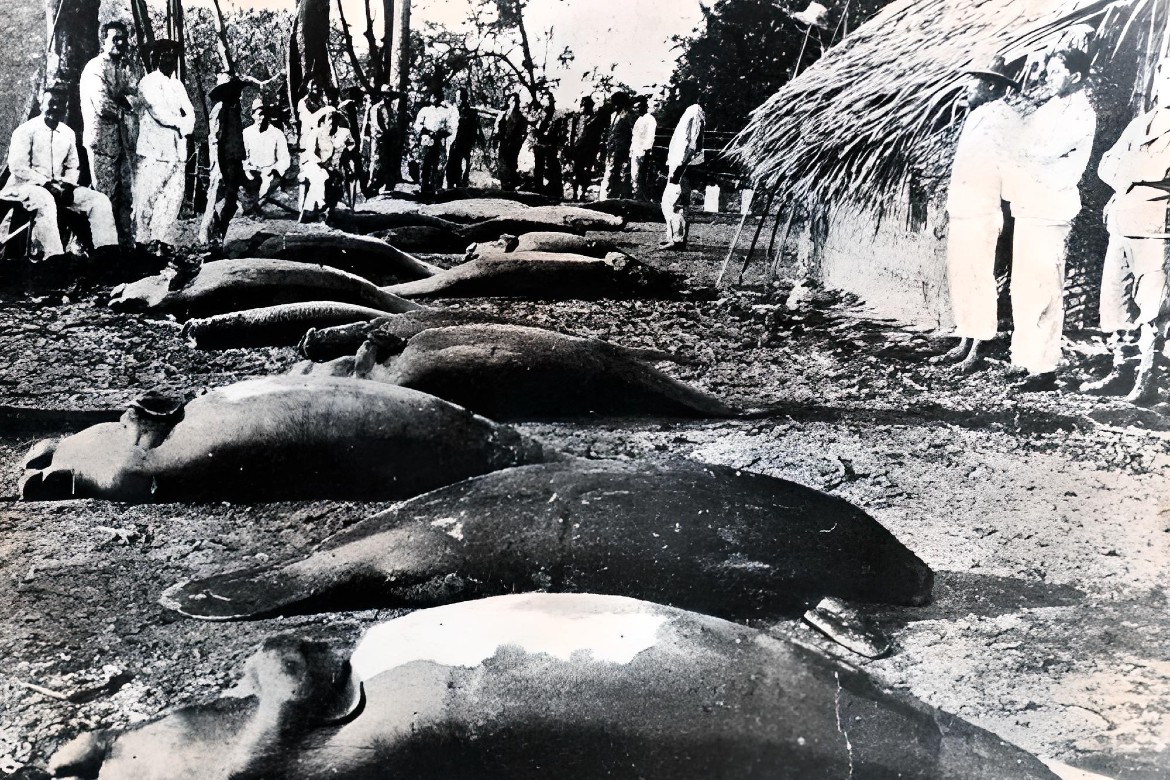
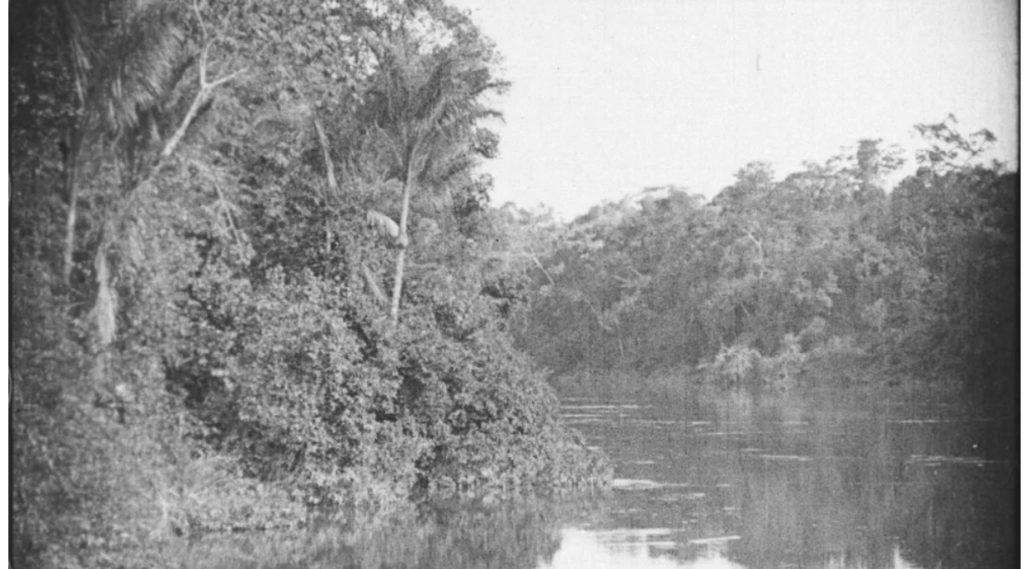
A natureza tem um papel importante no documentário. Vemos uma onça, um tamanduá, preguiças, lontras, jacarés, macacos, aves, peixes, borboletas - “o Amazonas é o paraizo (sic) das borboletas”, uma cartela de texto nos conta - e até alguns infelizmente mortos peixes-boi - na verdade, nos ensinam a pescar estes animais majestosos. A pesca do peixe-boi também foi exibida no documentário de 1918 e teve consequências: o peixe-boi da Amazônia é hoje considerado uma espécie vulnerável. Outro animal ameaçado, a tartaruga, é brevemente mostrado botando ovos, com pessoas mais tarde recolhendo os ovos para consumo próprio, o que acelerou o declínio da espécie. A retirada de penas de garças é condenada no filme, o que não acontece com os outros crimes ambientais.

Nature plays a big role in the documentary. We spot a jaguar, an anteater, sloths, otters, alligators, monkeys, birds, fish, butterflies - “the Amazonas is the paradise of butterflies”, a title card tells us - and even some unfortunately dead manatees - in fact, we’re taught how to hunt these majestic animals. The hunt of the manatee was also exhibited in the 1918 documentary and had its consequences: the manatee from the Amazon is today considered a vulnerable species. Another threatened animal, the turtle, is briefly shown laying eggs, with people then harvesting the eggs for consumption, which accelerated the species’s decline. The extraction of the feathers in herons is condemned by the movie, but not these other environmental crimes.

Todas as atividades econômicas do Amazonas têm um bom tempo de tela: a caça e a pesca, extração de castanhas, borracha e madeira, plantação de guaraná, criação de gado. É bacana notar que muitas mulheres são empregadas nessas atividades, especialmente descascando castanhas e a fruta do guaraná.

All the economic activities of the Amazonas are given a good amount of screen time: hunting and fishing, nut, rubber and wood extraction, guaraná plantation, cattle. It’s worth noting that many women are employed in these activities, especially taking the nuts out of their shells and peeling the guaraná fruit.

Há índios, tratados com o já esperado exotismo. O interesse ainda é atual, pelos índios “não-civilizados”. Rituais indígenas também são de interesse para os documentaristas, e há até um aviso sobre “índias bastante decoradas”. Em tempos recentes, os índios do Amazonas vêm sendo ameaçados de ficar sem casa - ou melhor, sem terra - por causa do absurdo Marco Temporal.

There are Indians, treated with the expected exoticism. The interest is one that still exists, about “non-civilized” Indians. Indian rituals are also of interest to the documentarists, and there is even a warning for “female Indians very adorned”. In recent times, the Indians in Amazonas were threatened to become homeless - or rather landless - because of the absurd Marco Temporal.

Mesmo antes de o presidente Washington Luís ser eleito, seu lema “governar é construir estradas” era sentido no Amazonas. Não são mostradas apenas estradas em travelogues, mas também estradas de ferro que cruzam a selva. Os documentaristas viajam de trem, carro e navio.

Even before president Washington Luis was elected, his motto “to govern is to build roads” was felt in the Amazonas. Not only roads are shown in travelogues, but also train tracks that crossed the jungles. The documentarists travel by train, car and boat.

Recentemente vêm acontecendo conversas sobre exploração de petróleo na Amazônia. Muito do que é mostrado no documentário foi, sem dúvida, destruído nos últimos 100 anos e muito mais pode ruir com essa terrível ideia. O Greenpeace alertou que não é viável extrair petróleo da Amazônia e que a vida dos animais e das comunidades indígenas ao redor pode ser afetada e, ainda pior, destruída.

Recently there have been talks about drilling oil in the Amazon. Much of what is shown in the documentary was without a doubt destroyed in the past 100 years and much more can be destroyed with this terrible idea. Greenpeace warned that it’s not viable to drill oil in the Amazon and the lives of animals and Indian communities nearby could be affected and, even worse, destroyed.

O diretor Silvino Santos nasceu em Portugal em 1886 e faleceu em Manaus em 1970. Sua primeira experiência com cinema foi um filme feito sob encomenda para o empresário Julio Cezar Araña, que estava sendo acusado de usar trabalho escravo em sua propriedade e queria sua defesa feita pelo cinema. O filme foi rodado em 1912 mas os negativos foram perdidos num naufrágio dois anos depois. Quando seu filme de 1918 foi roubado e rebatizado de “Maravilhas da Amazônia”, Silvino tentou recriá-lo quase quadro a quadro e o resultado, um filme bem diferente, foi “No País das Amazonas”. O patrocinador do documentário, Joaquim Gonçalves de Araújo, é comumente creditado como co-diretor.

Director Silvino Santos was born in Portugal in 1886 and died in Manaus in 1970. His first experience with cinema was a film made for hire for the entrepreneur Julio Cezar Araña, who was being accused of using slaves in his property and wanted his defense to be made via cinema. The film was shot in 1912 but the negatives were lost in a shipwreck two years later. When his 1918 film was stolen and relabeled as “Wonders of the Amazon”, Silvino tried to recreate it almost frame by frame, and the result, a very different movie, was “No País das Amazonas”. The sponsor of the documentary, Joaquim Gonçalves de Araujo, is often credited as co-director.

Como aconteceu quando eu assisti à “Amazonas - O maior rio do mundo”, eu fiquei muda e hipnotizada com as imagens na real. Eu me lembrei do que minha mãe sempre diz quando assiste a filmes antigos: “todas essas pessoas já morreram, não é?”. Considerando que o documentário foi feito há mais de 100 anos, a resposta é sim. Mas esta é a beleza do cinema: as pessoas podem ser imortalizadas ao participarem de um filme. E nós podemos viajar, algumas vezes muito longe e outras dentro do nosso próprio país, sem sair de casa.

Like it happened when I watched “Amazonas - The biggest river in the world”, I was speechless and hypnotized by the images on the screen. I was reminded of what my mom always says when watching old movies: “all these people are dead, aren’t they?”. Considering that the documentary was made over 100 years ago, the answer is yes. But this is the beauty of cinema: people can be immortalized by being in a movie. And we can travel, sometimes far away and sometimes in our own country, without leaving our houses.

Wednesday, May 3, 2023

As duas Carmens do cinema brasileiro


A tale of two Carmens


Ambas nasceram em Portugal, chegaram ao Brasil ainda crianças e encontraram seu lugar na história do cinema brasileiro. Foram ambas batizadas como Maria do Carmo, e ambas escolheram Carmen como nome artístico. Ambas partiram cedo demais. Elas são a atriz, produtora e diretora Carmen Santos e a multiartista Carmen Miranda – as duas Carmens do cinema brasileiro.

They were both born in Portugal, arrived in Brazil as children and found their place in Brazilian film history. They were both christened Maria do Carmo, and both chose Carmen as their stage name. They were both gone too soon. They are actress, producer and director Carmen Santos and entertainer Carmen Miranda – the two Carmens from Brazilian cinema.


Maria do Carmo Santos Gonçalves nasceu na cidadezinha de Vila Flor em 1904 e chegou ao Rio de Janeiro aos oito anos de idade. Ainda adolescente, parou de estudar e arrumou um emprego para ajudar a família. Primeiro foi costureira numa loja, e depois se tornou vendedora. Em 1919, aos 15 anos, fez seu primeiro filme. A verdade sobre como ela foi descoberta é incerta: primeiro ela declarou à imprensa que foi descoberta imitando Mary Pickford na loja onde trabalhava. Em outra entrevista, disse que nunca havia ido ao cinema antes de fazer o filme, e fez o teste por diversão. A verdade é que ela conseguiu o papel principal em “Urutau” (1919), um filme que seria exibido poucas vezes por seu diretor, o americano William Jansen. Quando deixou o Brasil, Jansen levou consigo todas as cópias do filme.

Maria do Carmo Santos Gonçalves was born in the small town of Vila Flor in 1904 and arrived in Rio de Janeiro at age eight. Barely a teenager, she stopped studying and got a job to help her family. First she was a seamstress at a shop, and later became a saleswoman. In 1919, at age 15, she made her first film. The truth about how she was discovered is uncertain: at first she told the press that she was discovered while imitating Mary Pickford at the shop she worked in. In another interview, she said she had never been to the movies before starring in one, and made a screen test for fun. The truth is that she got the lead role in “Urutau” (1919), a film that would be screened only a few times by its maker, the American William Jansen. When he left Brazil, Jansen left with all the copies of the film.


Maria do Carmo Miranda da Cunha nasceu em Marco de Canaveses em 1909 e chegou ao Brasil quando tinha apenas um ano de idade. Já adolescente, empregou-se numa chapelaria. Em 1926 foi figurante em seu primeiro filme, “A Esposa do Solteiro”, de Carlo Campogalliani. Em 1929 começou a cantar no rádio e em 1930, depois de gravar o sucesso “Taí”, Carmen se tornou uma superestrela. Ela foi a primeira pessoa a assinar um contrato com uma estação de rádio no Brasil e logo se tornou a pessoa mais bem-paga no rádio. A transição para os filmes era um caminho natural, e entre 1932 e 1939 fez seis filmes, aparecendo como ela mesma na maioria. Infelizmente, quase todos estes filmes foram perdidos.

Maria do Carmo Miranda da Cunha was born in Marco de Canaveses in 1909 and arrived in Brazil when she was only one year old. As a teenager, she found work in a hat store. In 1926 she was an extra in her first film, Carlo Campogalliani’s “A Esposa do Solteiro” (“The Single Man’s Wife”). In 1929 she started singing on the radio and in 1930, after recording the hit song “Taí”, Carmen became a superstar. She was the first person to ever sign a contract with a radio station in Brazil and soon she became the highest-paid professional in radio. Her transition to the movies was a natural step, and between 1932 and 1939 she made six films, most of them appearing as herself. Unfortunately, almost all of these films are lost.


Carmen Santos chamou muito a atenção da imprensa com seu primeiro filme. A imprensa faria dela uma superestrela – sem que um único filme dela chegasse às telas na década seguinte. Seus dois esforços subsequentes seriam dirigidos por Leo Merten, um realizador tchecoslovaco: “A Carne” (1924) e “Mademoiselle Cinema” (1925). Em ambos, além de ser a estrela, Carmen era também produtora, pois havia fundado sua própria produtora, a Films Artístico Brasileiro, FAB. Ambos os filmes jamais são projetados, pois os negativos são destruídos por incêndios e acidentes no laboratório onde eram revelados e armazenados.

Carmen Santos garnered a lot of press attention with her first work. The press would make her a superstar – without a single film with her reaching the theaters in the following decade. Her next two efforts would be directed by Leo Merten, a filmmaker from Czechoslovakia: “A Carne” (“The Flesh”, 1924) and “Mademoiselle Cinema” (1925). In both, besides being the star, Carmen was also a producer, as she had founded her own production company, Films Artístico Brasileiro, FAB. Both movies never see the light of the day, destroyed by fires and accidents at the movie lab.


Em 1939, enquanto cantava no Cassino da Urca, Carmen Miranda atraiu a atenção do empresário da Broadway Lee Shubert, que a contratou para seu novo espetáculo. Carmen aceitou o convite de ir para a Broadway com uma condição: ela queria levar consigo o grupo musical Bando da Lua. Com tudo acertado, Carmen zarpou. Ela teve muito sucesso na Broadway, mas foi criticada por brasileiros: algumas pessoas achavam que ela estava apresentando uma imagem estereotipada do país e, quando ela voltou para fazer shows no Brasil, disseram que ela voltou americanizada.

In 1939, while singing at the Casino da Urca, Carmen Miranda called the attention of Broadway impresario Lee Shubert, who hired her for his new revue. Carmen accepted the invitation to go to Broadway, with one condition: she wanted to take with her the musical group Bando da Lua. When everything was settled, off went Carmen. She had a lot of success on Broadway, but was criticized by Brazilians: some people believed she was presenting a stereotyped image of the country and, when she returned for shows in Brazil, that she returned “Americanized”.


Carmen Santos poderia ter existido, mas ela já era uma estrela, graças à proximidade com o jornalista Pedro Lima, da revista Cinearte. Figurinha carimbada na revista, Carmen era sempre questionada sobre seus próximos projetos. Estes próximos projetos vieram quando ela conheceu o cineasta Humberto Mauro em Cataguases, Minas Gerais. Com Mauro ela finalmente apareceu nas telas: ela protagonizou quatro dos filmes do diretor, “Sangue Mineiro” (1929), “Favela dos Meus Amores” (1935), “Cidade Mulher” (1936) e “Argila” (1942).

Carmen Santos could have given up, but she was already a star, thanks to being close to journalist Pedro Lima from the magazine Cinearte. An habitué at the magazine, Carmen was always questioned about her next projects. The next projects came as she met filmmaker Humberto Mauro in Cataguases, Minas Gerais. With Mauro she finally appeared on screen: she starred in four of his films, “Sangue Mineiro” (“Blood from Minas”, 1929), “Favela dos Meus Amores” (“My Love, the Shanty Town”, 1935), “Cidade Mulher” (“Woman City”, 1936) and “Argila” (“Clay”, 1942).


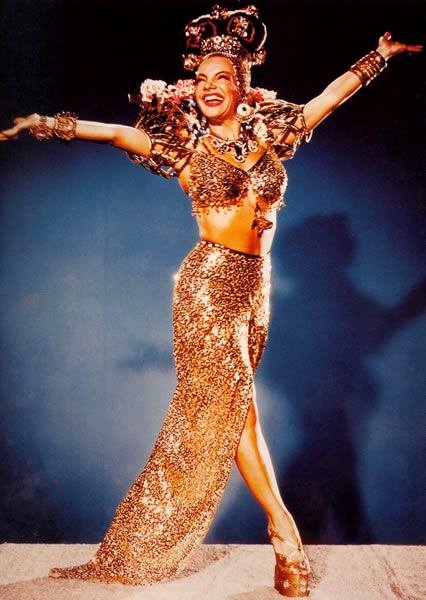
Carmen Miranda fez sucesso imediato na Broadway, e Hollywood era o próximo passo, naturalmente. A “Brazilian Bombshell” fez seu primeiro filme em Hollywood em 1940, “Serenata Tropical”. Durante a Segunda Guerra Mundial, e graças à Política da Boa Vizinhança, Carmen Miranda fez oito filmes. Em março de 1941, ela colocou as marcas de suas mãos e pés na calçada do Grauman’s Chinese Theater, tornando-se a primeira pessoa da América Latina a fazê-lo.

Carmen Miranda was an instant hit on Broadway, and Hollywood was the natural next step. The “Brazilian Bombshell” made her first film in Hollywood in 1940, “Down Argentine Way”. During World War II, and thanks to the Good Neighborhood Policy, Carmen Miranda made eight movies. In March of 1941, she imprinted her hand and feet at the Grauman’s Chinese Theatre, becoming the first Latin person to do so.


O projeto seguinte de Carmen Santos seria o melhor filme brasileiro já feito: o clássico cult “Limite” (1931), dirigido por Mario Peixoto, um cinéfilo que faria apenas este filme. Mesmo com um papel pequeno, Carmen rouba a cena neste filme silencioso tardio. Seu novo projeto, novamente com Peixoto, seria “Onde a Terra Acaba”, um filme deixado incompleto por Peixoto e finalizado por outro cineasta, Otávio Gabus Mendes.

Carmen Santos’s next project would be the best Brazilian film ever: the cult classic “Limite” (1931), directed by Mario Peixoto, a cinephile who would go on to make only this movie. Even with a small role, Carmen steals the scene in this late silent. Her next project, again with Peixoto, would be “Onde a Terra Acaba” (“Where land ends”), a film that was left incomplete by Peixoto, and finished by another filmmaker, Otávio Gabus Mendes.


Um dos maiores sucessos de Carmen Miranda foi “Entre a Loura e a Morena” (1943), de Busby Berkeley. Seu número “The Lady in the Tutti-frutti Hat” foi levado a outro nível graças ao talento de Berkeley para composições caleidoscópicas. O filme foi um grande sucesso de bilheteria e as imagens de frutas gigantes dançando ao redor de Carmen se tornaram icônicas. Em 1945 ela se tornou a mulher mais bem-paga dos Estados Unidos.

One of Carmen Miranda’s biggest hits was Busby Berkeley’s “The Gang’s All Here”, from 1943. Her routine “The Lady in the Tutti-frutti Hat” was enhanced by Berkeley’s caleidoscopic vision for musical numbers. The movie was a huge box-office hit and the images of giant fruits dancing around Carmen became iconic. In 1945 she became the highest paid woman in the whole United States.


Em 1934, com ajuda financeira do marido e consultoria técnica de Humberto Mauro, Carmen Santos funda uma nova produtora, primeiro chamada Brasil Vox Films e mais tarde Brasil Vita Films. Seu sonho é produzir, dirigir e protagonizar um filme sobre a Inconfidência Mineira, movimento de 1792 que buscou fazer do Brasil um país independente. Tal filme só seria finalizado em 1948.

In 1934, with the financial help of her husband and technical help from Humberto Mauro, Carmen Santos founds a new production company, first named Brasil Vox Films and later changed to Brasil Vita Films. Her dream is to produce, direct and star in a movie about the Inconfidência Mineira, a 1792 movement that sought to make Brazil an independent country. This film would only be finished in 1948.


Com o fim da Segunda Guerra Mundial, Carmen Miranda fez seus primeiros filmes em preto e branco. Este “rebaixamento” mostra que Hollywood estava menos interessada em fazer musicais para o público de casa e também menos interessada em promover uma Política da Boa Vizinhança com países latino-americanos. A carreira de Carmen estava em declínio, mas ela ainda trabalhava, agora livre do contrato com o estúdio. Ela ainda tinha sucesso gravando discos e fazendo aparições em clubes noturnos e na TV.

With the end of World War II, Carmen Miranda made her first black and white movies. This “demotion” shows that Hollywood was less interested in making musicals for the public in the home front and also less interested in promoting a Good Neighborhood Policy with Latin American countries. Her career was in decline, but she still worked, now free from her studio contract. She still enjoyed success recording discos and appearing in nightclubs and on TV.


Dois dos filmes de Carmen Santos com Humberto Mauro feitos nos anos 1930 foram sucesso de público e crítica, mas hoje estão perdidos. Seu épico “Inconfidência Mineiro” também está perdido. Sua produtora / estúdio sofreu com dificuldades financeiras. E ainda assim ela não desistia. A única coisa que impediu Carmen Santos de fazer mais pelo cinema brasileiro foi a morte: Carmen faleceu em 1952, aos 48 anos, depois de uma batalha contra o câncer.

Two of Carmen Santos’s films with Humberto Mauro made in the 1930s were hits with the public and the critics, but are now lost. Her epic “Inconfidência Mineira” is also lost. Her production company / studio faced financial problems. And yet she wouldn’t give up. The only thing that stopped Carmen Santos from doing more for Brazilian cinema was death: Carmen died in 1952, aged 48, after a battle against cancer.


Diz-se que Carmen Miranda usava barbitúricos e outros remédios para cumprir uma agenda extenuante como atriz e cantora. Ela passou por uma reabilitação mas não foi suficiente. Pouco depois de receber o convite para ter seu próprio programa de televisão, Carmen Miranda faleceu em 1955, aos 46 anos, de ataque cardíaco horas após sua última performance na televisão.

It’s said that Carmen Miranda used barbiturates and other medicines to be able to follow extenuating routines as actress and singer. She went to a detoxification but it wasn’t enough. Just after receiving the invitation to have a TV show all her own, Carmen Miranda died in 1955, aged 46, of cardiac arrest mere hours after her last performance on television.


Carmen Santos foi quase esquecida após sua morte. Ela foi casada apenas uma vez e teve dois filhos, um menino e uma menina. Em tempos mais recentes, Carmen está sendo redescoberta e ganhando o espaço que merece na história do cinema brasileiro: o lugar de uma verdadeira pioneira, que merece ser inspiração para todos nós.

Carmen Santos was nearly forgotten after her death. She was married only once and had two children, a boy and a girl. In recent times, Carmen is being rediscovered and given the place she deserves in Brazilian film history: the place of a true pioneer, who should be an inspiration to all of us.


Estima-se que sessenta mil pessoas foram ao funeral de Carmen Miranda no Brasil, e meio milhão viram o cortejo do corpo pelas ruas do Rio de Janeiro. Nunca esquecida, sempre um ícone, Carmen Miranda foi frequentemente imitada, mas nunca igualada.

It’s estimated that sixty thousand people were at Carmen Miranda’s funeral in Brazil, and half a million could see her body as it paraded Rio de Janeiro. Never forgotten, always an icon, Carmen Miranda was imitated often, but never equaled.


This is my contribution to the Third Luso World Cinema Blogathon, hosted by Beth Ann at Spellbound and me here at Crítica Retrô.

Saturday, February 25, 2023

Cinderela Baiana (1998)


Em 1995, um filme estreou no Brasil: “Carlota Joaquina, Princesa do Brasil”, marcando o que se costumou chamar de Retomada do Cinema Brasileiro: depois de 20 anos de ditadura militar - quando a censura reinava - e uma década de inflação galopante, o cinema voltava a ser feito. Três anos depois, outro filme estreou, merecendo destaque por razões diferentes:  “Cinderela Baiana” é amplamente considerado o pior filme já feito no Brasil. Eu o assisti e escrevi esta crítica para que você não precise assisti-lo.


In 1995, a film premiered in Brazil: “Carlota Joaquina, Princess of Brazil”, marking what we used to call the Renaissance of Brazilian cinema: after 20 years of military dictatorship - when censorship was widespread - and a decade of high inflation, cinema was being made again. Three years later, another film premiered, outstanding for different reasons: “Cinderela Baiana” is widely considered the worst movie ever made in Brazil. I watched it and wrote this review so you don’t have to.


O filme começa bizarramente com uma cobra na cama de Maria (Juliana Calil). Não há nada para comer na casa e a família decide sair para começar o dia. Maria é a mãe de Carlinha, e Carlinha (interpretada quando criança por Carla Fabianny) é nossa heroína: uma garota que ama dançar. Maria sofre com uma tosse insistente e morre em consequência dela naquele mesmo dia, sem ouvir as boas notícias que o marido trazia: ele recebeu uma bolsa de estudos em Salvador, capital do estado da Bahia.


The film begins bizarrely with a snake on Maria’s (Juliana Calil) bed. There is nothing to eat in the house and the family decides to leave the house to start the day. Maria is Carlinha’s mother, and Carlinha (played as a child by Carla Fabianny) is our heroine: a girl who loves to dance. Maria has a persistent cough and dies from it that very same day, without hearing the good news from her husband: he was awarded a scholarship to study in Salvador, the capital of the state of Bahia.


Carlinha e seu pai vão para Salvador, onde ela frequenta a escola e ele encontra o sucesso trabalhando num escritório - mesmo assim, eles vivem numa favela alagada. Carlinha cresceu (interpretada agora por Carla Perez), mas ainda ama dançar. Apoiada por amigos, ela vai dançar num clube, onde é vista por um caça-talentos e sua vida muda para sempre.  


Carlinha and her father go to Salvador, where she enters school and he finds success working in an office - even though they live in a kind of shanty town. Carlinha is now grown up (and played by Carla Perez), but still loves to dance. Supported by friends, she goes to dance in a club where a talent hunter sees her and her life changes forever.


Carla Perez, que interpreta a protagonista, era uma famosa dançarina no grupo É o Tchan, um dos mais populares da época. Escolher alguém como ela para protagonizar um filme em nada difere de uma prática que vemos com frequência hoje: influenciadores digitais tentando se lançar como atores e atrizes - e em geral falhando. Como os influencers de hoje, fica claro que Carla Perez não tem talento como atriz - mesmo tentando, como na cena em que Carlinha anda de salto alto pela primeira vez - e a consequência é que o filme todo sofre com isso. A atriz que interpreta Graça, rival de Carlinha, também é terrível.


Carla Perez, who plays the lead, was a famous dancer in the group É o Tchan, one of the most popular at the time. Choosing her to be the lead of a movie is not at all different from a practice we see often today: digital influencers trying to become actors and actresses - and often failing. Like the influencers of nowadays, it’s clear that Carla Perez had no talent as an actress - even if she tries her best, like when Carlinha is walking in high heels for the first time -, and the consequence is that the film suffers as a whole. The actress who plays Carlinha’s rival Graça is also terrible.


Os novatos certamente são um problema, mas um ator profissional salva o filme. Perry Salles, então já estabelecido e popular como ator, interpreta Pierre, o empresário de Carlinha, como uma caricatura: um homem que só quer dinheiro e é verdadeiramente exagerado, sendo por vezes cômico, por vezes aterrorizante. Perry certamente percebeu que o filme era brega e exagerou na atuação de propósito, nos legando uma incrível performance em meio ao caos total.


The newcomers certainly have a problem, but a professional actor saves the movie. Perry Salles, then already an established and popular actor, plays Pierre, Carlinha’s manager, as a caricature: a man who only wants money and is truly larger-than-life, being at times comic, at times terrifying. Perry certainly realized that the film was camp and overacted on purpose, giving us an amazing performance in the middle of total chaos.


Foi curioso ver uma sequência envolvendo o quase-roubo de acarajés, prato típico baiano que eu adoro. Infelizmente, depois que os acarajés são dados aos famintos, todos começam a dançar na rua, mas não sabemos de onde a música está vindo. Em outra sequência, Carlinha dança ao ritmo de uma música que não está sendo tocada perto dela.


It was curious to see a sequence involving the near-theft of acarajés, a delicious typical dish from Bahia that I love. Unfortunately, after the acarajés are given to the hungry ones, everyone starts to dance on the street, but we don’t know where the song is coming from. In another sequence, Carlinha dances to the rhythm of a song that is not even being played near her.


Mas vamos falar sobre alguns pontos positives: o departamento de figurino se saiu bem, dando a Carlinha algumas poucas roupas rotas para usar, mostrando assim como ela era pobre. O departamento de arte também não glamourizou o “antes” da vida de Carlinha, mostrando que ela vivia e perambulava pela Salvador que não é mostrada para os turistas. Também foi bacana ouvir algumas das músicas mais populares da década d 1990 na trilha sonora.   


But let’s talk about some positive points: the wardrobe department did well, giving Carlinha only a few ragged clothes to wear showing us how poor she is at first. The art department also didn’t glamourize the “before” in Carlinha’s life, showing that she lived in and wandered through the Salvador that is not presented to the tourists. It was also nice to hear some of the most popular songs of the 1990s in the soundtrack.


Houve uma tentativa de “rebranding” de “Cinderela Baiana” como um filme infantile, mas não deu certo: é verdade que as crianças dos anos 1990 estavam assistindo a Carla Perez dançando nas tardes de domingo com o É o Tchan e sabiam as coreografias de todas as suas músicas, mas este definitivamente não é um filme para crianças. Por exemplo: muitas não entenderiam a trama principal, uma crítica de como o show business usa as pessoas quando elas estão no auge e depois as descarta.


There was an attempt to “rebrand” “Cinderela Baiana” as a kid’s movie, but it doesn’t work: it’s true that children in the 1990s were watching Carla Perez dance on Sunday afternoon with É o Tchan and knew the choreography to all their songs, but this definitely isn’t a movie for kids. For instance, many won’t understand the main plot, a critic to how show business uses people when they are at the top and then discharges them.


É com uma surpresa que lemos o nome de Lázaro Ramos quase no final dos créditos. “Cinderela Baiana” foi um de seus primeiros filmes, e aqui ele interpreta Chico, vizinho de Carlinha que gosta de espiá-la dançando e lhe dá o apelido de “Cinderela Baiana”. Com o tempo, Lázaro Ramos mostrou seu talento como ator, fazendo diversos filmes, séries de TV e novelas, e inclusive sendo indicado ao Emmy Internacional. Mais recentemente ele também se tornou diretor, com o potente “Medida Provisória” (2022) sendo sua estreia detrás das câmeras. Lázaro certa vez disse que não se arrependeu de fazer “Cinderela Baiana”, pois com o cachê que recebeu pôde pagar por aulas de atuação e deixar seu emprego num laboratório de análises clínicas.


It is with surprise that we read the name of Lázaro Ramos near the end of the credits. “Cinderela Baiana” was one of his first films, and here he plays Chico, Carlinha’s neighbor who likes to spy on her dancing and is actually the one who nicknames her “Cinderela Baiana”. With time, Lázaro Ramos showed his talent as an actor, making several movies, TV shows and soap operas, and was even nominated for an Emmy International. More recently he became a director too, with the powerful “Executive Order” (2022) being his directorial debut. Lázaro once said that he doesn’t regret being in “Cinderela Baiana”, because with the payment he received for the film he could take acting lessons and leave his job in a health lab.


O produtor Antonio Polo Galante estava fazendo sua volta triunfal depois de uma década longe dos cinemas. Ele foi um prolífico produtor da “Boca do Lixo”, uma região em São Paulo que serviu de resistência cultural à ditadura militar. “Cinderela Baiana” foi feito 100% com os recursos de Galante, por isso o fracasso do filme nas bilheterias acabou com sua carreira. Este foi também o último filme do diretor e roteirista Conrado Sanchez.


Producer Antonio Polo Galante was making his comeback after a decade away from cinema. He was a prolific producer from “Boca do Lixo”, a region in São Paulo that offered cultural resistance to the military dictatorship. “Cinderla Baiana” was made fully with Galante’s resources, so the film’s failure at the box office ended his career. It was also the last film made by screenwriter and director Conrado Sanchez.


Eu já vi uma boa quantidade de filmes brasileiros ruins - inclusive, minhas críticas mais populares no Letterboxd são de dois destes filmes brasileiros terríveis - e “Cinderela Baiana” pode entrar nesta lista. Com apenas 83 minutos de duração, por vezes o filme parecia se arrastar. E é mais uma prova de que uma má protagonista pode destruir um filme.


I’ve seen a fair share of awful Brazilian movies - in fact, my most popular reviews on Letterboxd are of two terrible Brazilian movies - and “Cinderela Baiana” is up there with these bad flicks. At only 83 minutes long, sometimes it felt that the movie dragged. And it is another proof that a bad lead can destroy a movie.


This is my contribution to the Fifth So Bad It’s Good blogathon, hosted by Rebecca at Taking Up Room.

Related Posts Plugin for WordPress, Blogger...