} Crítica Retrô: Fred MacMurray

Tradutor / Translator / Traductor / Übersetzer / Traduttore / Traducteur / 翻訳者 / переводчик

Showing posts with label Fred MacMurray. Show all posts

Sunday, February 28, 2021

O Enxame (1978) / The Swarm (1978)


Melissofobia ou apifobia é o medo de abelhas. Quando eu era criança, eu tinha medo de abelhas, até o momento em que compreendi que, se eu não incomodasse as abelhas, elas não me incomodariam – não que eu tenha cutucado uma colmeia ou coisa parecida. Mas se eu tivesse assistido ao filme de desastre “O Enxame” de 1978 quando eu era criança, meu medo de abelhas – e possíveis alucinações com abelhas – seria justificado. Isto é, se, como criança, eu não compreendesse que “O Enxame” é um filme muito ridículo.

Melissophobia or apiphobia is the fear of bees. When I was a kid I used to be afraid of bees, until I understood that if I didn't bother them they wouldn’t bother me – not that I had poked a beehive or something like this. But if I had watched the 1978 disaster movie “The Swarm” as a kid, my fear of bees – and possible hallucinations with bees – would be justified. That is, if, as a kid, I couldn't understand how ridiculous “The Swarm” is.
 

O filme começa com uma equipe do exército chegando a uma base de mísseis. Duas pessoas que também chegam ao local são o General Slater (Richard Widmark) e o entomologista Bradford Crane (Michael Caine). A maioria dos trabalhadores da base é encontrada morta, a médica Helena Anderson (Katharine Ross) está cuidando dos seis sobreviventes, e a causa da morte é motivo de debate entre Slater e Crane, pois Crane tem certeza de que um enxame de abelhas africanas assassinas atacou o lugar.

The film starts with a military team arriving at a missile base. Two people also arriving there are General Slater (Richard Widmark) and the entomologist Bradford Crane (Michael Caine). Most of the workers at the missile base are found dead, with doctor Helena Anderson (Katharine Ross) taking care of six survivors, and the cause of death is debated by Slater and Crane, as Crane is sure that a swarm of African killer bees has attacked the place.

Mais pessoas estão investigando o que aconteceu. Um homem num helicóptero menciona uma massa negra vindo em sua direção, e alguém em outro helicóptero identifica que a massa é feita de milhões de abelhas. Infelizmente, os dois helicópteros colidem com as abelhas, caindo e explodindo. Crane estava certo e, para desgosto de Slater, ele é colocado no comando de uma guerra contra as abelhas – nome dado pelo próprio Crane. Slater diz ao Major Baker (Bradford Dillman) para ficar de olho em Crane, pois ele acha suspeito que o cientista estivesse passando por acaso pelo local quando o ataque ocorreu.

More people are investigating what happened. A man in a helicopter mentions a black mass coming in his direction, and someone in another helicopter identify the mass as being made of millions of bees. Unfortunately, the two helicopters collapse when they meet the bees, crashing and exploding. Crane was right and, to Slater’s dismay, he is put in the command of what he calls a war against bees. Slater tells Major Baker (Bradford Dillman) to keep an eye on Crane, as he thinks it’s too suspicious that the scientist just happened to be passing by when the attack occurred. 

As abelhas saem da base nuclear e vão para os campos floridos na cidade mais próxima, onde matam os pais do pequeno Paul (Christian Juttner). Não demorará para que as abelhas entrem na cidade, criando caos numa escola onde trabalha Maureen (Olivia de Havilland), numa sequência que lembra a invasão de pássaros na escola de Bodega Bay em “Os Pássaros” (1963), mas numa escala muito maior. Para piorar as coisas, quem não morre instantaneamente por causa das picadas das abelhas pode ter uma recaída fatal...

The bees move from the nuclear facility to the flower fields surrounding the nearest town, and there they victimize young boy Paul’s (Christian Juttner) parents. It won’t be long until the bees reach town, wrecking havoc in a school where Mauren (Olivia de Havilland) works, in a sequence that reminds the invasion of birds in the Bodega Bay school in “The Birds” (1963), but in a much bigger scale. To make things worse, those who don’t die instantly from the bee stings may have a fatal relapse later...

Pode haver uma ameaça no ar - literalmente – mas também sobra lugar para romance em “O Enxame”. Há uma tensão sexual óbvia entre Bradford Crane e Helena Anderson. Enquanto isso, há um triângulo amoroso com idosos: tanto o prefeito Clarence Tuttle (Fred MacMurray) quanto o aposentado Felix Austin (Ben Johnson) estão apaixonados por Maureen! E há também a garçonete Rita (Patty Duke), que perde o marido no primeiro ataque das abelhas e, estando grávida, se apaixona por seu médico.

There may be a menace on the air - literally - but there is still a place for romance in “The Swarm”. There is obvious sexual tension between Bradford Crane and Helena Anderson. Meanwhile, there is a love triangle involving the elderly: both the mayor Clarence Tuttle (Fred MacMurray) and the retiree Felix Austin (Ben Johnson) are in love with Maureen! And there is also the waitress Rita (Patty Duke), who loses her husband in the first bee attack and, being pregnant, falls in love with her doctor.

Bradford Crane chamou outros peritos para fazer parte do time, e um deles é seu mentor, Dr Walter Krim (Henry Fonda). Outro perito, Dr Hubbard (Richard Chamberlain) diz que as abelhas africanas assassinas agora são chamadas de abelhas brasileiras porque elas sofreram uma mutação no Brasil, e Crane responde que o nome não importa se a ameaça é a mesma. O mesmo pode ser dito da gripe espanhola, ou da COVID-19 / coronavírus – o nome não importa, o que importam são os impactos nas pessoas. Mas aqui precisamos falar que topônimos como abelhas africanas / brasileiras, gripe espanhola e a expressão claramente racista “vírus chinês” causam ainda mais dano, porque grupos de pessoas são associados à doença, fazendo com que esses grupos sejam alvo de ataques de ódio – e ódio é uma pandemia bem mais difícil de controlar.

Bradford Crane has called other experts to be part of his team, one of them being his mentor, Dr Walter Krim (Henry Fonda). Another expert, Dr Hubbard (Richard Chamberlain) says that the African killer bees are now being called Brazilian bees because they suffered a mutation in Brazil, to which Crane replies that the name doesn’t matter if the threat is the same. The same can be said about the Spanish flu, or the COVID-19 / coronavirus – the name doesn’t matter, the impacts they have on people matter. But here we must address that toponyms like African / Brazilian bees, Spanish flu and the clearly racist expression “Chinese virus” cause even more harm, because groups of people become associated with the disease, making them more likely to be the target of hate attacks – and hate is a pandemic much harder to control. 

Slater que jogar pesticidas nas abelhas, e Crane fica furioso com ele, porque a ideia mataria as abelhas assassinas e também as abelhas normais. Slater diz que o dano colateral causado nas pessoas e nas outras abelhas seria “o menor dos males”. Crane diz para Slater e para todo o público que as abelhas são importantes para o meio-ambiente e para os humanos – e, mais de 40 anos depois, ainda não aprendemos. Um terço da comida produzida no mundo depende da polinização feita pelas abelhas. Mesmo assim, as abelhas estão morrendo por causa da destruição de seu habitat, das mudanças climáticas e do uso de pesticidas. É por isso que não devemos matar abelhas – e “O Enxame” inclusive termina com uma nota para o público lembrando da importância das abelhas:

Slater wants to drop pesticides on the bees, to which Crane reacts furiously, as the idea would kill the normal bees as well as the killer bees. Slater refers to the collateral damage to people and other bees as “the lesser of two evils”. Crane reminds Slater and the whole audience of the importance of bees to environment and to humans – and, over 40 years later, we still haven’t learned. One third of the world's food production depends on the pollination process made by bees. Nevertheless, bees are dying because of the loss of their habitat, climate change and the use of pesticides. That's why we shouldn't kill bees – and “The Swarm” even ends with a note for the audience about the importance of bees:

O Enxame” é um filme de sua época, outro filme de desastre cheio de estrelas do cinema, como muitos outros dos anos 1970, entre eles “O Destino do Poseidon” (1972), “Terremoto” (1974) e “Inferno na Torre” (1974). Poseidon e “Inferno na Torre” também foram produzidos por Irwin Allen, que produziu e dirigiu “O Enxame”, o primeiro de três grandes fracassos que acabaram dizimando o sub-gênero filme de desastre.

The Swarm” is a film of its time, another all-star disaster movie made in the 1970s, like “The Poseidon Adventure” (1972), “Earthquake” (1974) and “The Towering Inferno” (1974). Poseidon and “Towering Inferno” were also produced by Irwin Allen, who produced and directed “The Swarm”, the first of three huge flops that ultimately killed the disaster movie subgenre at the time.

O grande problema com “O Enxame”, pelo menos para mim, foi o elenco cheio de grandes nomes, com a maioria dos personagens sem desenvolvimento, pois têm pouco tempo em cena. Rita, por exemplo: nós não a vemos com seu marido antes dele morrer – mas temos de acreditar que ela está devastada – e que simplesmente desaparece quando seu bebê nasce. Além disso, os veteranos do cinema não tinham muito o que fazer com o diálogo pouco inspirado – escrito, surpreendentemente, por Stirling Silliphant, que escreveu o roteiro de “No Calor da Noite” (1967).

The greatest problem about “The Swarm”, at least for me, was the all-star cast, as most characters aren’t developed as they have little time on screen. Take Rita, who we don't see with her husband before he dies – even though we're supposed to believe she's devastated – and who simply disappears from the movie as her baby is born. Besides that, all the film veterans had little to do with the uninspired dialog – written, surprisingly, by Stirling Silliphant, who wrote the screenplay of “In the Heat of the Night” (1967).


Alguns momentos são extremamente ridículos. Há uma tomada do ponto de vista de uma abelha - como a tomada do ponto de vista da mosca em “A Mosca da Cabeça Branca” (1958) - e pessoas correndo e se esquivando em câmera lenta quando as abelhas invadem a cidade. Algumas pessoas inclusive começam a ter alucinações com abelhas, e eu definitivamente não vou contar a razão pela qual as abelhas foram atraídas para a base nuclear para começo de conversa – é algo muito ridículo e você provavelmente ficará pasmo.

Some moments are extremely ridiculous. There is a shot from the bee’s point of view - like the fly’s point of view in “The Fly” (1958) - and people running and ducking in slow-motion when the bees invade the town. Some people even start hallucinating with bees, and I definitely won’t tell the reason why the bees were attracted to the nuclear facility in the first place – it’s too ridiculous and you’ll probably be surprised.

Para tornar tudo mais difícil, devo informá-lo que você não será capaz de ver a versão compacta de “O Enxame” que estreou em 1978, pois esta versão de 116 minutos foi mais tarde substituída na TV, DVD e em Blu-Ray por uma versão mais longa, com 155 minutos. Sim, são 39 minutos extras de abelhas africanas assassinas. Mas nem tudo é ruim: você pode ver “O Enxame” se você quiser ter a chance de ver Michael Caine usando roupas em cores neutras ou, melhor ainda, Richard Widmark com um lança-chamas. Você também pode ver Olivia de Havilland de volta à Warner Brothers 34 anos após ter processado o estúdio. Ou você pode ver que, mais uma vez, é um ser diminuto que coloca o futuro da humanidade em risco – se é que você precisava ser lembrado disso.

To make things more unbearable, I must inform that you won't be able to watch the compact version of “The Swarm” that hit theaters in 1978, as the 116 minutes was later replaced on TV, DVD and Blu-Ray for a longer version, with 155 minutes. Yes, it's 39 extra minutes of African killer bees. But it's not all bad: you can watch “The Swarm” if you want a chance to see Michael Caine wearing clothes in neutral colors or, better yet, Richard Widmark with a flamethrower. You can also see Olivia de Havilland going back to the Warner Brothers backlot 34 years after her lawsuit against the studio. Or you can see that, once again, it's a tiny being that puts the future of mankind in jeopardy – that is, if you needed to be reminded of that.

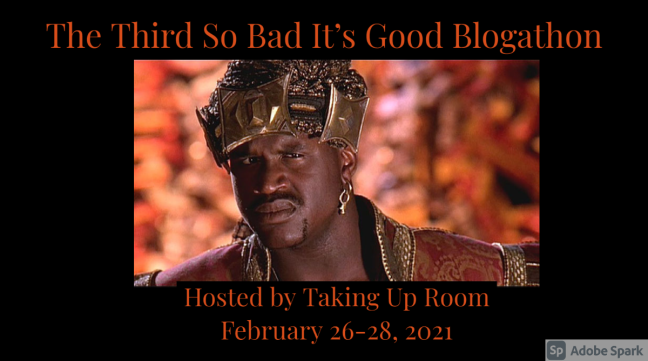
This is my contribution to the Third So Bad It's Good blogathon, hosted by Rebecca at Taking Up Room.

 

Sunday, September 2, 2018

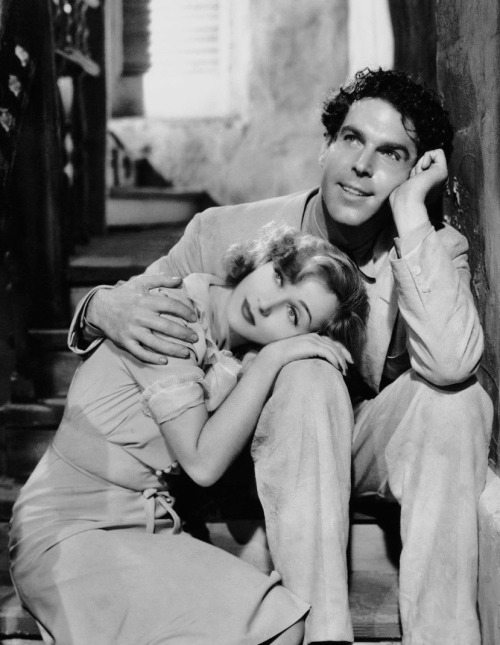
Fred MacMurray, Billy Wilder e a luxúria


Fred MacMurray, Billy Wilder and lust


Quer você queira ou não, um ator ou atriz desenvolve uma persona – especialmente nos dias do sistema de estúdio – para ser facilmente reconhecido pelo público e também para que o estúdio o utilize em papéis estereotipados. Isso aconteceu com Fred MacMurray, mais conhecido por interpretar caras bacanas pais de família, pais que tinham resposta para tudo e que poderiam ser ao mesmo tempo um pouco atrapalhados e muito sábios. Mas ele não fazia estes papéis quando trabalhava com Billy Wilder.

Whether you want it or not, a performer usually develops a persona – especially in the Studio System days – in order to be easily recognizable by the public and also typecasted by the studio. This happened to Fred MacMurray, better known as a lovely guy, a family man, a dad who knew it all and who could be at the same time a bit clumsy and very wise. But he didn't play by these rules when he was working with Billy Wilder.
 
1935
Billy Wilder desafiou os limites de MacMurray e tirou tudo de pior que existe na mente humana para encher seus personagens de ambição e luxúria – e, assim, Wilder dirigiu MacMurray nas duas melhores performances da carreira do ator, em que ele fez papéis muito diferentes dos habituais e, ironicamente, estas são as performances pelas quais MacMurray é mais conhecido hoje.

Billy Wilder went wild (LOL) with MacMurray, and took the worst he could have in his mind in order to infuse his characters with ambition and lust – and, by doing this, Wilder directed MacMurray in the two best performances of his career, in which he played against type and, ironically, these are the performances that today he has the biggest chance to be recognized for.


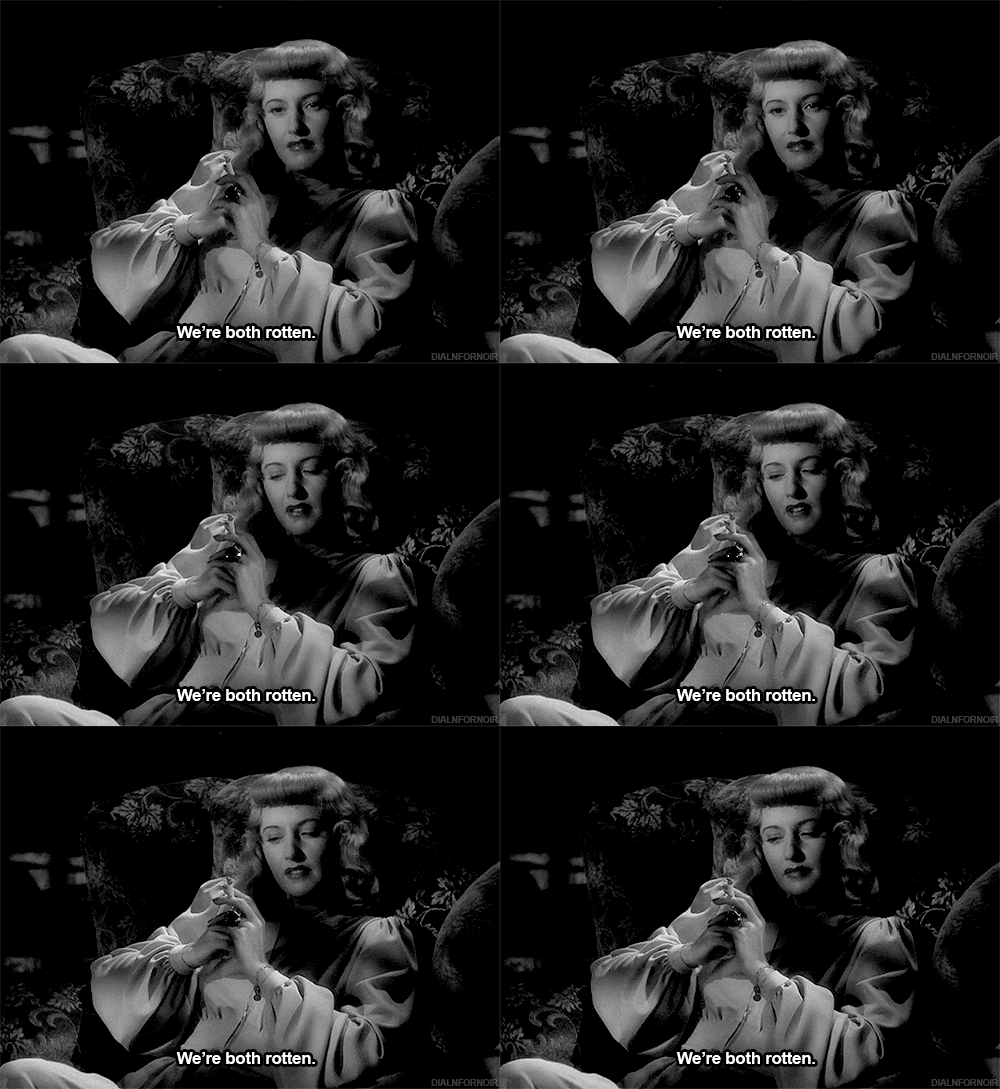
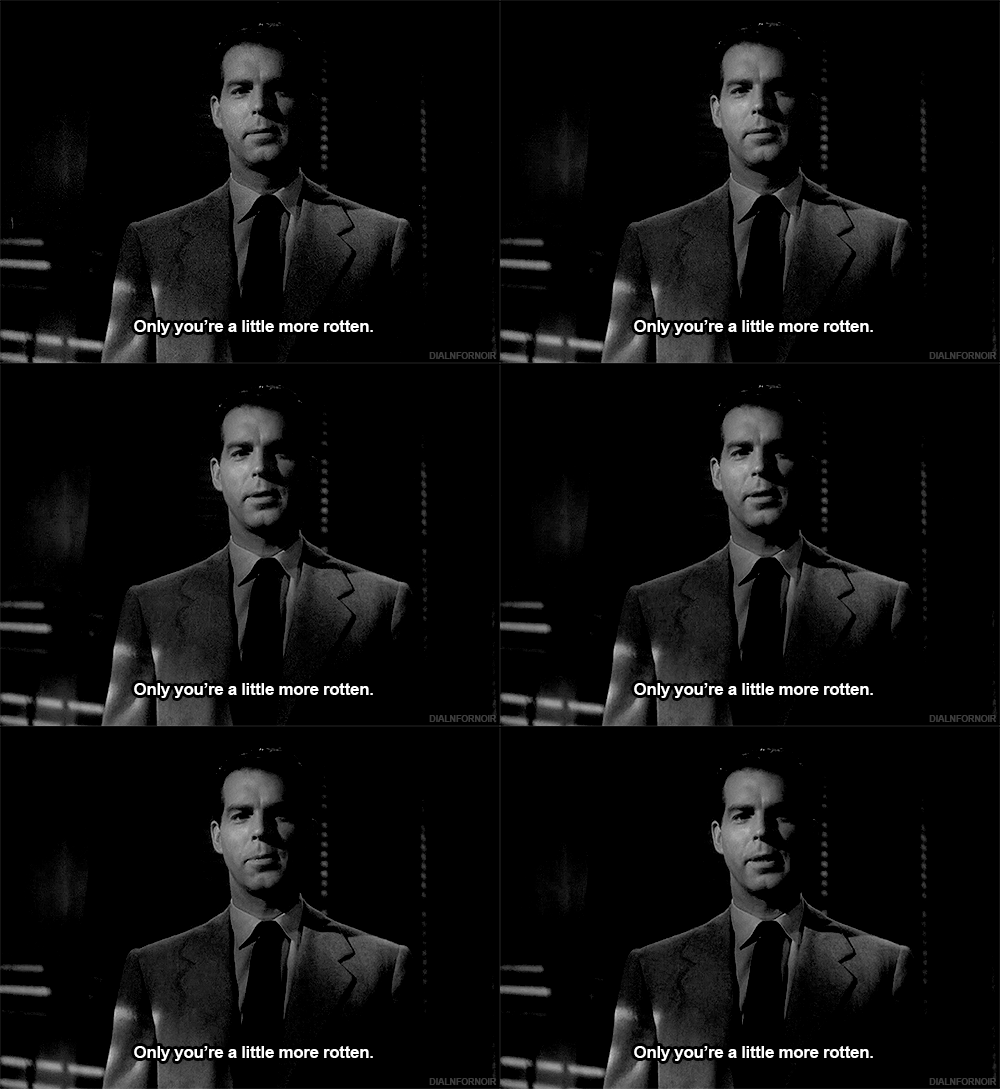
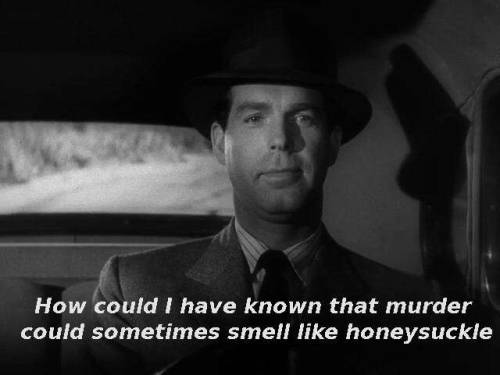
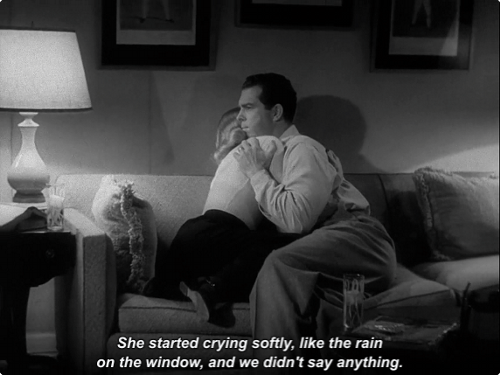
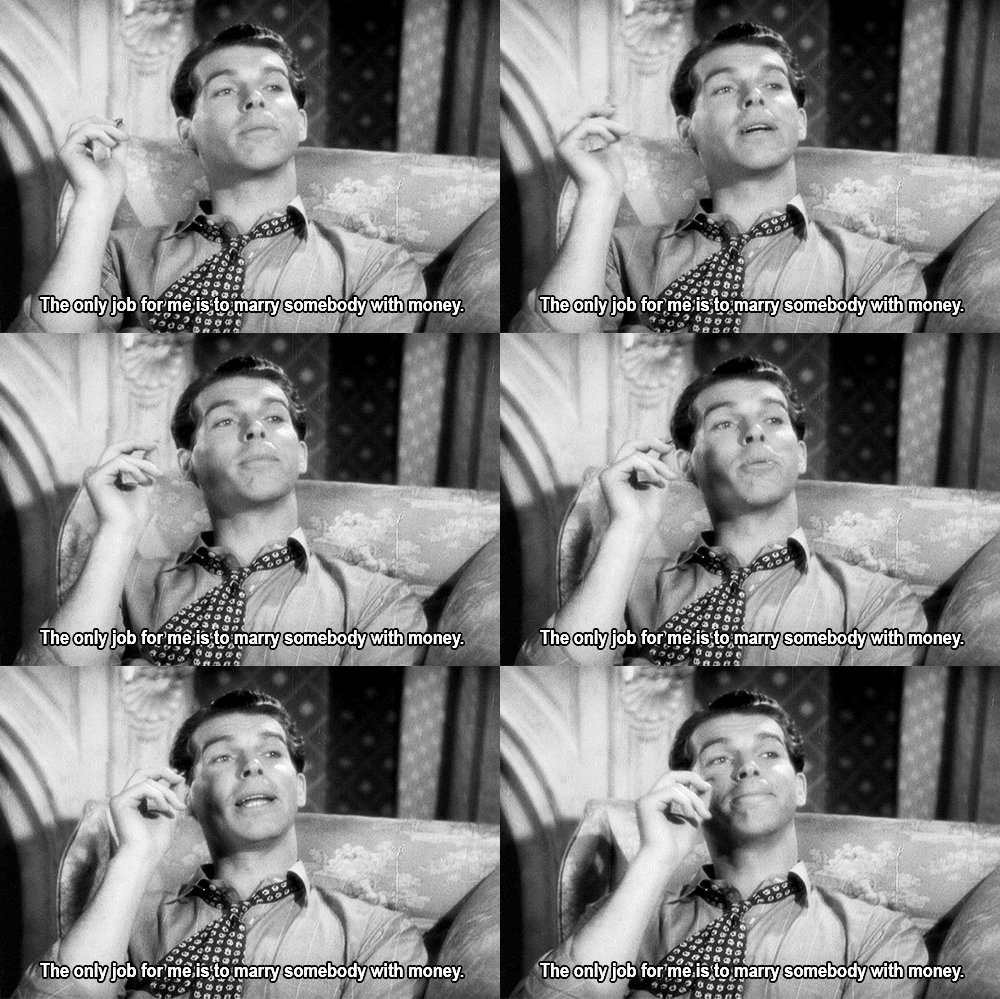
“Pacto de Sangue” (1944) é um dos melhores filmes noir de todos os tempos. Nele, Fred MacMurray é Walter Neff, o perfeito panaca que é seduzido pela femme fatale Phyllis Dietrichson (Barbara Stanwyck) e convencido a fazer parte do plano para matar o marido dela e ficar com o dinheiro do seguro. Obviamente, Walter não é um completo imbecil. Ele tem boa memória e boa atenção aos detalhes, habilidades que são importantes para o crime.

“Double Indemnity” (1944) is one of the best film noir of all time. In it, Fred MacMurray is Walter Neff, the perfect stupid man who is dragged down by femme fatale Phyllis Dietrichson (Barbara Stanwyck) and convinced to take part in her plan to kill her husband and get the insurance money. Of course, Walter is not totally idiot. He has a good memory and pays a lot of attention to detail, skills that are important for the crime.


Walter é movido por luxúria, por seu desejo sexual por Phyllis e periodicamente impedido de continuar por causa de sua amizade com Barton Keyes (Edward G. Robinson) – ou talvez haja também luxúria envolvida, porque algumas teorias apontam para um subtexto homossexual no filme. Só depende da maneira como cada pessoa interpreta o filme.

Walter is moved by lust, by his sexual desire for Phyllis and periodically stopped by his friendship with Barton Keyes (Edward G. Robinson) – or maybe there is also lust involved here, because some theories point at a gay subtext in the movie. It only depends on how each person interprets the movie.


Em 1943, Barbara Stanwyck era a atriz mais bem paga de Hollywood, e Fred MacMurray era o ator mais bem pago. Entretanto, foi coincidência que eles tenham se juntado para fazer “Pacto de Sangue”. Ambos estavam relutantes no início. Stanwyck foi facilmente convencida por Wilder a aceitar o papel, quando ele disse a ela para ser ousada, mas a história com MacMurray foi outra. Walter Neff era um anti-herói, e o papel já havia sido recusado por grandes atores como James Cagney, Spencer Tracy e Alan Ladd. Até o próprio MacMurray recusou o papel, dizendo que ele não era capaz de fazê-lo, mas Wilder insistiu, dia após dia, até que o ator se rendeu. No começo, MacMurray disse para Wilder: “Você está cometendo o maior erro da sua vida!”, e no fim, confessou: “Eu jamais sonharia que aquele seria o melhor filme que eu faria”.

In 1943, Barbara Stanwyck was the highest paid actress in Hollywood and Fred MacMurray, the highest-paid actor. It was, however, a coincidence that they ended up doing “Double Indemnity”. Both were reluctant at first. Stanwyck was easily convinced by Wilder, who told her to be fearless, but it was another thing with MacMurray. Walter Neff was an anti-hero and the role was refused by A-listers like James Cagney, Spencer Tracy and Alan Ladd. Even MacMurray himself turned down the role, saying he couldn’t do it, but Wilder insisted, day after day, until the actor compromised. At first, MacMurray said to Wilder: “You’re making the mistake of your life!”, and in end, he confessed: “I never dreamed it would be the best picture I ever made”.


MacMurray voltou a trabalhar com Wilder 16 anos depois. Na época, ele já era um favorito na Disney, tendo feito alguns filmes fofos para a família no estúdio do Mickey. O ano era 1960 e o filme era “Se Meu Apartamento Falasse”. Fred MacMurray interpretava Sheldrake, o chefe de C.C. Baxter (Jack Lemmon). Sheldrake usa o apartamento de seu empregado para ter encontros sexuais com outras mulheres sem correr o risco de ser descoberto pela esposa. A presa atual é Fran Kubelik (Shirley MacLaine), que é ascensorista no prédio de Sheldrake. Mais uma vez, o personagem de MacMurray é movido pela luxúria.

MacMurray reteamed with Wilder 16 years later. By then, MacMurray was already a Disney favorite, having made some cute family flicks for the Mickey Mouse studio. The year was 1960 and the film was “The Apartment”. Fred MacMurray played Sheldrake, C.C. Baxter's (Jack Lemmon) boss. Sheldrake uses his employee's apartment to have sexual encounters with other women far from his wife. The current prey is Fran Kubelik (Shirley MacLaine), who is an elevator operator at Sheldrake's building. Once again, MacMurray's character is drove by lust.


Sheldrake é simplesmente nojento – provavelmente o personagem menos simpático que MacMurray interpretou em toda sua carreira. Além de trair a esposa e enganar a senhorita Kubelik, ele também cria uma situação difícil para Baxter. E Sheldrake simplesmente não se importa. Ele quer ter prazer e evitar problemas. Quando a senhorita Kubelik para de lhe proporcionar prazer e se torna um problema, ele simplesmente a dispensa, e não se importa se isso for colocar a vida dela em perigo.

Sheldrake is simply disgusting – probably the least likeable character MacMurray ever played. Besides cheating on his wife and making empty promises to Miss Kubelik, he also creates a difficult situation for Baxter. And Sheldrake simply doesn’t care. He wants to have pleasure and avoid problems. When Miss Kubelik stops giving him pleasure and becomes a problem, he simply dumps her, and doesn’t even care if this puts her life in danger.


Convenhamos: se refletirmos sobre a maioria dos outros personagens de MacMurray, nos perguntamos como eles podem sequer transar. Quer dizer, em “Bon Voyage, Enfim Paris!”, ele tem dois filhos, mas é tão ingênuo e atrapalhado que se perde no esgoto parisiense. Em “Quando o Coração não Envelhece” (1967), ele é um pai trapalhão que tem um jacaré de estimação chamado George. Em outros filmes da Disney, como “O Fantástico Super-Homem” (1961) e “Nunca é Tarde para Amar” (1966), ele começa o filme como um cara solteiro, e depois de um namoro atrapalhado e fofo, acaba casado. O MacMurray da Disney não conhece luxúria – por isso ele é aceito pela Disney, e por isso ele não é tão interessante quanto o MacMurray de Billy Wilder.

Let's face it: if we think about most of MacMurray's characters, we ask ourselves how they could even get laid. I mean, in “Bon Voyage” (1962), he has two children, but is so naïve and absent-minded that he gets lost in the Parisian sewer. In “The Happiest Millionaire” (1967), he is a goofy father who has a pet alligator called George. In other Disney films, like “The Absent-Minded Professor” (1961) and “Follow Me, Boys!” (1966), he starts the movie as a single man, and after a sweet but clumsy dating process, he ends up married. The Disney MacMurray has no lust – that's why he is accepted by Disney, and that's why he is not as interesting as the Billy Wilder MacMurray.
 
1967
Billy Wilder e Fred MacMurray poderiam ter feito outro filme juntos. O ator foi um dos nomes considerado para o papel de Joe Gillis em “Crepúsculo dos Deuses” (1950), mas todos nós sabemos que William Holden foi escalado em seu lugar. Gillis é outro personagem que se deixa levar pela luxúria, e eu penso que MacMurray teria sido um ótimo Gillis. Mesmo sem este filme na parceria, nós não podemos negar que MacMurray nunca esteve tão bem quanto ao lado de Billy Wilder.

Billy Wilder and Fred MacMurray could have done another film together. The actor was considered for the role of Joe Gillis in “Sunset Boulevard” (1950), but we all know William Holden was cast instead. Gillis is another character very much driven by lust, and I imagine MacMurray would have played a great Gillis. Even without this movie in their partnership, we can’t deny that MacMurray did his best when he went a little Wilder.  

This is my contribution to the Fred MacMurray blogathon, hosted by Laura at Phyllis Loves Classic Movies.

Wednesday, May 23, 2018

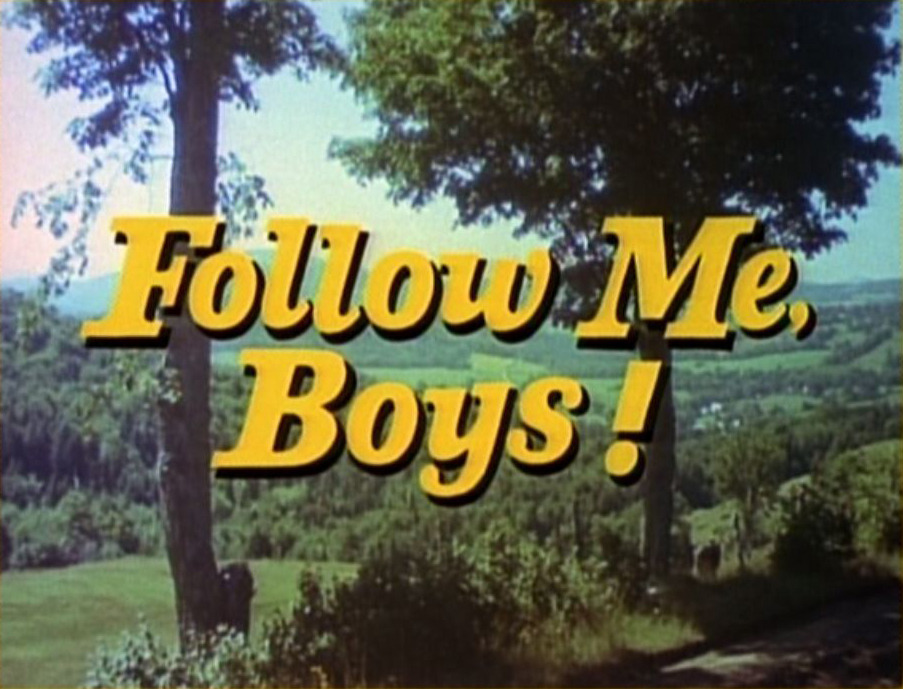
Nunca é Tarde para Amar (1966) / Follow Me, Boys (1966)

Está provado que os anos 60 foram a Era de Ouro dos filmes live-action na Disney. “Mary Poppins” (1964) pode ter sido o mais bem-sucedido deles, inclusive no Oscar, e é também aquele que as pessoas se lembram com mais carinho. Mas houve muito, muito mais filmes live-action, e eles eram veículos ideais para dois tipos de atores: os experientes e simpáticos, e os novatos talentosos.

It is proved that the 1960s were the Golden Age of Disney live-action films. “Mary Poppins” (1964) may have been the most successful from the batch, even Oscar-wise, and also the one people remember with more fondness. But there were many, many more live-action movies, and they were ideal vehicles for two kinds of performers: experienced and sympathetic ones, and talented newcomers.
Em “Nunca é Tarde para Amar” (1966), a performance mais simpática é do protagonista Fred MacMurray, mas temos também Vera Miles, Lillian Gish e Charlie Ruggle. E o novato talentoso era um menino de 15 anos que havia acabado de ser contratado pela Disney. Seu nome era Kurt Russell.

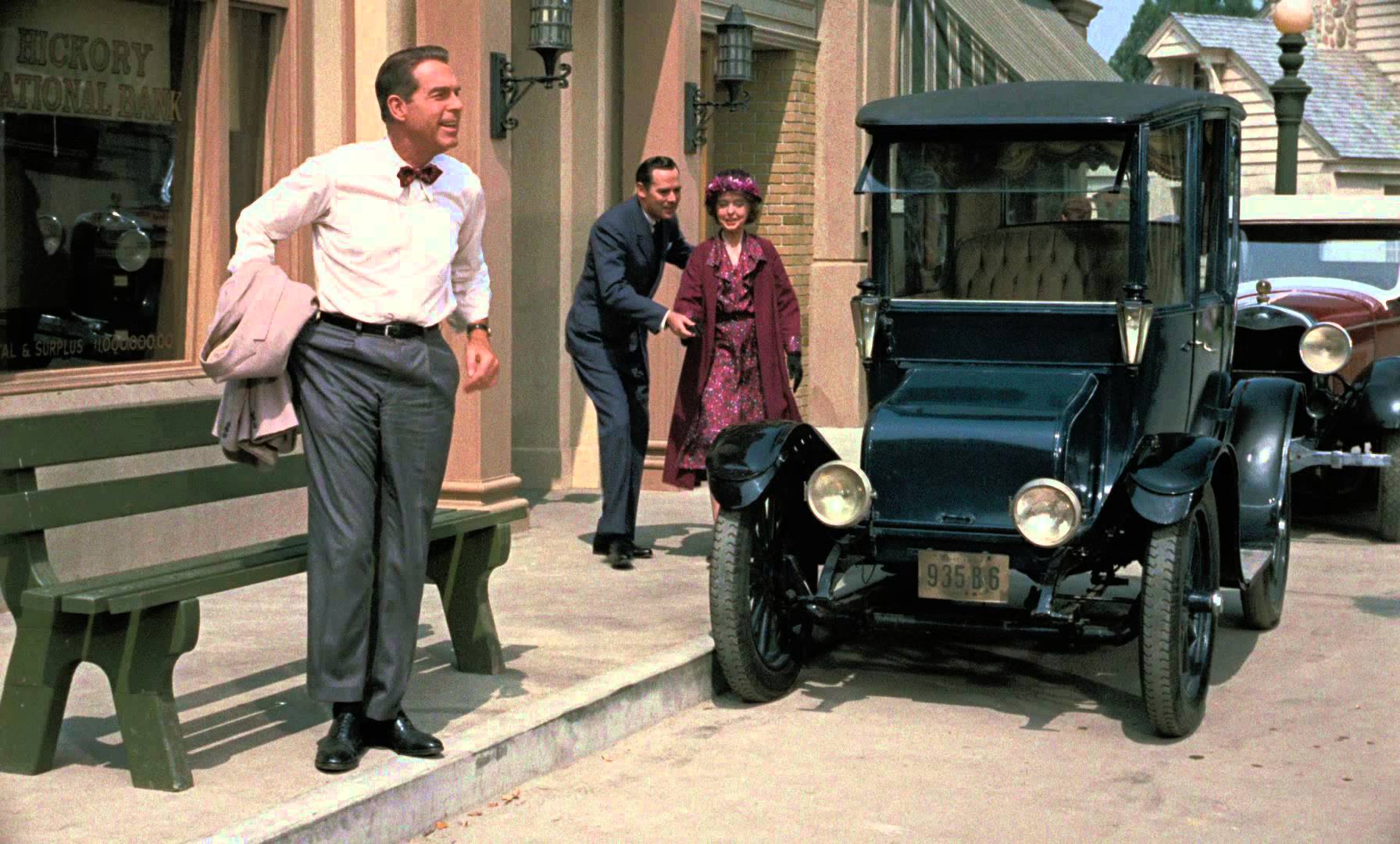
In “Follow Me, Boys” (1966), the most prominent sympathetic performance is lead Fred MacMurray, but we also have Vera Miles, Lillian Gish and Charlie Ruggles in the cast. And the talented newcomer was a 15-year-old boy who had just been hired by Disney. His name was Kurt Russell.
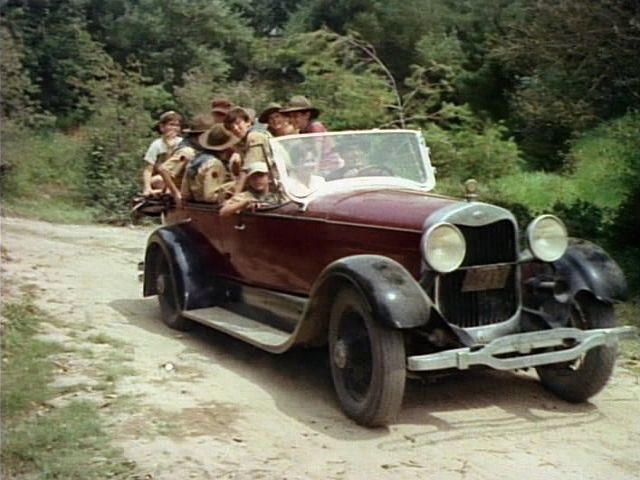
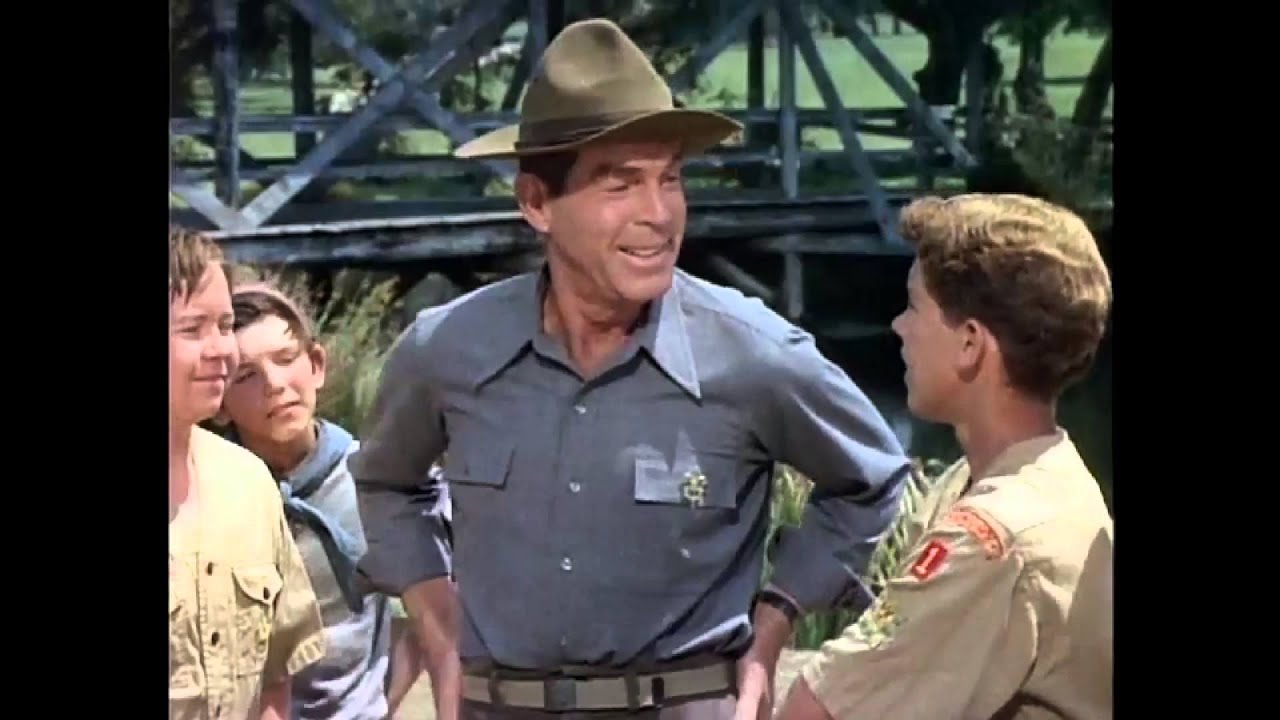
Lemuel ‘Lem’ Siddons (MacMurray) quer ser advogado. Mas há uma grande distância entre o que queremos ser e o que devemos ser. Enquanto ele não vai para a faculdade, Lem tem outros empregos. Quando o conhecemos, ele é saxofonista de uma banda, mas ele logo muda de emprego quando chega à cidadezinha de Hickory. Lem decide ficar por lá e trabalhar como vendedor. E então ele consegue um segundo emprego, como chefe de escoteiros voluntário.

Lemuel ‘Lem’ Siddons (MacMurray) wants to be a lawyer. But there is a great distance between what we want to be and what we are supposed to be. While he can’t go to college, Lem has some odd jobs. When we meet him, he is playing saxophone in a band, but he quickly change jobs when he arrives in Hickory, a very small town. Lem decides to settle down and work as a sales clerk. And then he gets a second job, as a volunteer scoutmaster.
O dono da loja é John Everett Hughes (Charlie Ruggles). A ideia de criar uma tropa de escoteiros é dada em uma reunião local como forma de tirar os meninos das ruas. Muitos garotos gostam da ideia e se juntam à tropa – exceto o garoto mais problemático da cidade, Whitey (Kurt Russell). Ah, e há também a adorável Vida Downey (Vera Miles) e seu namorado ambicioso, Ralph (Elliott Reid), que quer confiscar a propriedade da idosa Hetty Seibert (Lillian Gish). Hetty empresta a propriedade para que os escoteiros tenham onde se reunir.

The store’s owner is John Everett Hughes (Charlie Ruggles). The idea of creating a boy scouts troop was given in a local reunion as a way to taking the boys off the streets. Many boys like the idea and join the Boy Scouts troop – except the local troublemaker, Whitey (Kurt Russell). Oh, there is also lovely Vida Downey (Vera Miles) and her ambitious beau, Ralph (Elliott Reid), who wants to take a land property from elder Hetty Seibert (Lillian Gish). Hetty lets the Boy Scouts reunite in her property.
O filme começa em 1930 – há inclusive um cinema anunciando um filme de Carole Lombard, com quem Fred MacMurray trabalhou no começo da carreira. Mais tarde, o tempo salta para 1944 e há uma sub-trama de guerra – alternando entre comédia e um pouquinho de drama. Em uma manobra clássica da Disney, descobrimos que Whitey, o problemático, é na verdade um bom menino, e ele recebe muita ajuda de Lem.

The film starts in 1930 – there is even a theater marquee announcing a movie with Carole Lombard, with whom Fred MacMurray had worked early in his career. Later on, the film jumps to 1944 and there is a war subplot – that alternates between fun and a little drama. In a classic Disney maneuver, we find out that Whitey, the troublemaker, is actually a sweet boy, and he receives a lot of love and help from Lem.
Como dito anteriormente, Kurt Russell tinha 15 anos quando “Nunca é Tarde para Amar” foi filmado. Ele fez mais 9 filmes para a Disney nos 10 anos seguintes. Russell, MacMurray e a jovem estrela Hayley Mills eram provavelmente os mais bem-sucedidos atores nos filmes live-action da Disney nos anos 60. Sem dúvida, Russell se deu melhor que Mills com o passar do tempo – e ele continua trabalhando sem parar!

As said before, Kurt Russell was 15 when “Follow Me, Boys” was shot. He went on to make 9 more movies for Disney in the following 10 years. Russell, MacMurray and young star Hayley Mills were arguably the three biggest and most successful players in live-action Disney films in the 1960s. Without a doubt, Russell fared better than Mills as he grew up – and he continues working steadily!
“Nunca é Tarde para Amar” apresentou uma canção, com o mesmo título do filme, que é uma deliciosa música chiclete – e ela foi escrita pelos irmãos Sherman, responsáveis pelas canções de “Mary Poppins”. O filme foi também o último a estrear antes da morte de Walt Disney – ele faleceu duas semanas após a estreia.

“Follow Me, Boys” presented a song, with the same title as the movie, that is a pleasant earworm – and the song was written by the Sherman brothers, also responsible for the songs in “Mary Poppins”. It was also the last film released before Walt Disney’s death – he passed away two weeks after the premiere.
“Nunca é Tarde para Amar” é um filme para a família, e certamente agrada a todos os membros de uma família. Fred MacMurray tem carisma e também tinha experiência como escoteiro... bem, ao menos quando ele era criança. Com um elenco misturando talentos jovens e experientes, “Nunca é Tarde para Amar” é uma graça – e provavelmente te deixará com vontade de ser escoteiro!

“Follow Me, Boys” is a family film, and is certain to please all members of a family. Fred MacMurray has charisma and also had experience as a Boy Scout… well, as a child, at least. With a cast mixing young and experienced talents, “Follow Me, Boys” is a delight – and it’ll probably leave you wanting to be a Scout!

This is my contribution to the Kurt Russell blogathon, hosted by Gill at Real Weegie Midget Reviews.

Wednesday, May 11, 2016

A Mulher que Soube Amar / Alice Adams (1935)

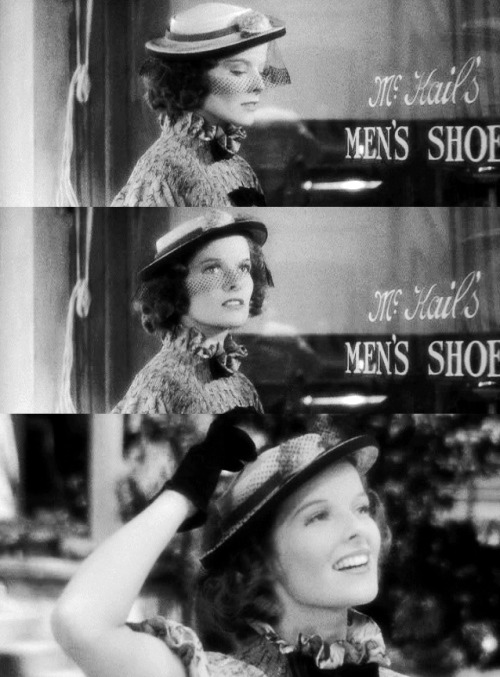
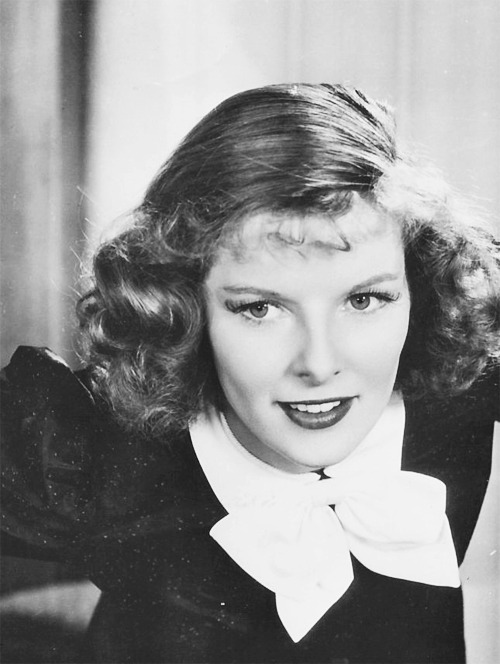
Se você gosta de cinema clássico, já deve ter ouvido falar do renascimento da carreira de Katharine Hepburn em 1940, dois anos depois de ela ter sido chamada de “veneno de bilheteria”. Mas talvez você não saiba que este foi o segundo renascimento da carreira da moça de pouco mais de 30 anos. Em 1934 ela ganhou seu primeiro de quatro Oscars, mas a RKO continuou lhe oferecendo péssimos papéis. Em 1935 ela conseguiu se recuperar de vários fracassos com uma performance emocionante que lhe rendeu mais uma indicação ao Oscar. O filme responsável por este primeiro renascimento foi “A Mulher que Soube Amar”.

If you like classic movies, you must have heard about Katharine Hepburn’s career Renaissance in 1940, two years after she was labeled “box-office poison”. But maybe you don’t know that this was the second Renaissance in the career of the actress in her early thirties. In 1934 she won her first of four Oscars, but RKO Studios kept offering her terrible roles. In 1935 she recovered from a series of film flops with an emotional performance and a second Oscar nomination. The film responsible for this first Renaissance was “Alice Adams”.
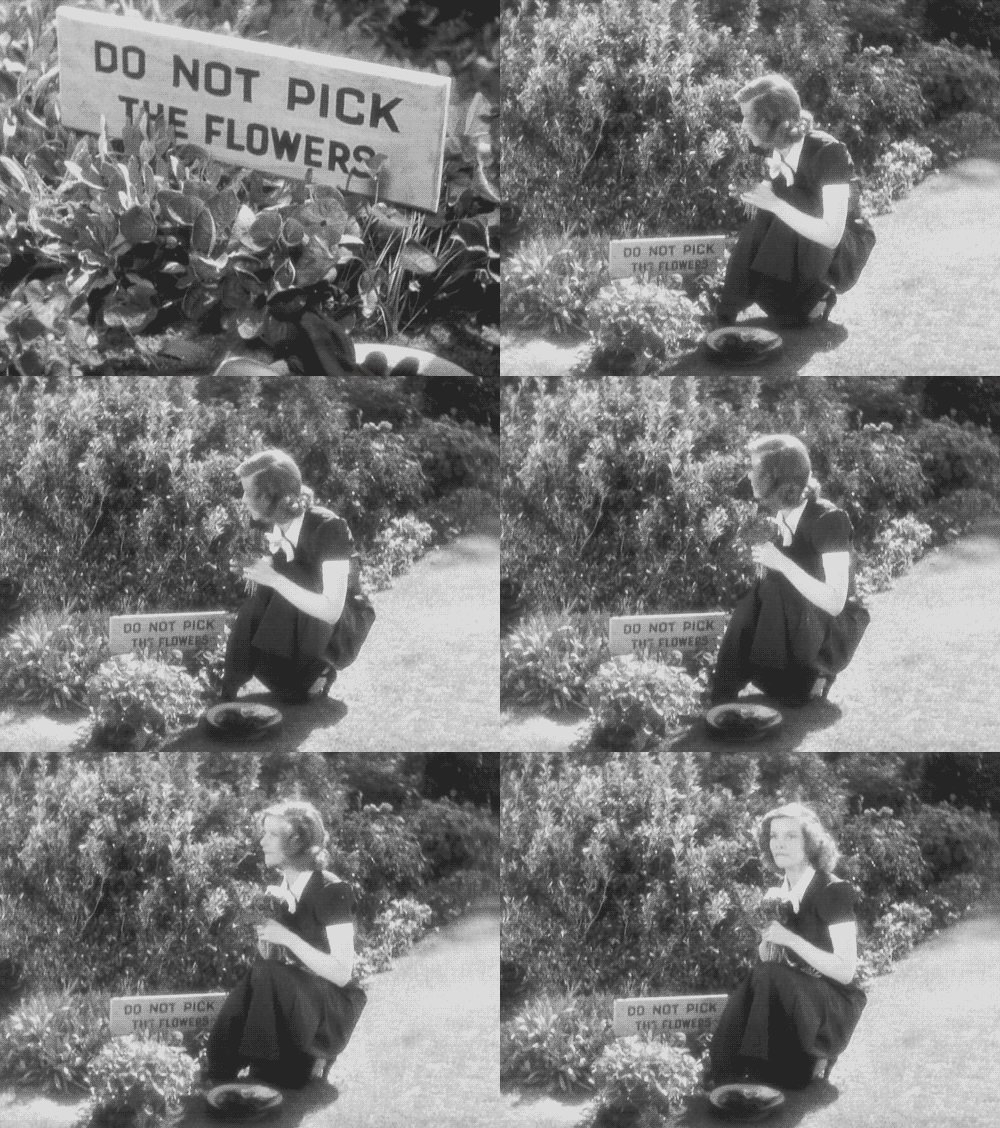
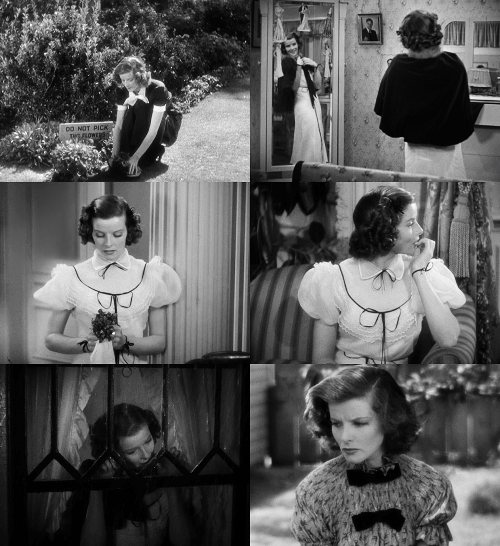
Alice Adams (Katharine Hepburn) é filha de um operário que está doente e, por isso, afastado do trabalho. Alice tem um desejo na vida: ser como as garotas ricas da cidade. Ela vai à badalada festa dos Palmer com um vestido que tem há dois anos, e com um buquê de violetas apanhadas na praça. Na festa, apesar de menosprezada pelas meninas, ela mantém o sorriso no rosto. Até me lembrou de mim mesma na adolescência.

Alice Adams (Katharine Hepburn) is the daughter of a sick, out of work factory worker. Alice has one desire in her life: to be like the rich girls in her city. She goes to the trendy Palmer ball wearing a dress she’s had for a couple of years and a bouquet of violets she has gathered from the local square. At the party, she is ignored by the girls, but keeps a huge smile on her face. She even reminded me of my teenage self!
Alice Adams é uma garota otimista, e que acredita com toda força na vida perfeita que ela diz ter. Dentro de casa, despida da falsa extroversão, ela é uma filha carinhosa e preocupada. A mãe de Alice (Ann Shoemaker) insiste que o pai, Virgil (Fred Stone), ganhe mais dinheiro para que a filha possa competir com as meninas ricas da cidade. Ela sugere que Virgil abra uma fábrica para comercializar uma cola superpotente que ele inventou com o patrão, muitos anos atrás.

Alice Adams is an optimistic girl, and she really believes in the perfect life she has invented. When she is with her family, without her fake extroversion, she is a worried and affectionate daughter. Alice's mother (Ann Shoemaker) insists that Alice's father, Virgil (Fred Stone), should earn more money so his daughter can compete with the rich girls from the city.  She suggests that Virgil should open a factory to sell the superglue he has invented with his boss, many years earlier.
Alice Adams” funciona muito bem como uma fábula, resumida na moral da história: “seja você mesma”. Alice aprenderá que jogar o “jogo do contente” de Poliana só serve para jovens órfãs. Para moças enfrentando a dura realidade das diferenças entre as classes sociais, fingir não é a solução.

Alice Adams” works very well as a fable, or a cautionary tale. It can be resumed in the moral lesson “be yourself”. Alice will learn that playing Pollyanna's “glad game” only works for young orphans. If you are a young lady facing the tough reality of social differences, to pretend that everything is OK is not the best solution.
O filme pertence a Katharine Hepburn. Fred MacMurray interpreta Arthur Russell, que se apaixona por Alice, mas não tem muito a fazer além de sorrir e ser muito bonito. Há também a presença breve de Hattie McDaniel. Ela é a última a aparecer nos créditos, e seu nome ainda é escrito como “Hattie McDaniels”. Hattie interpreta a empregada contratada para servir o jantar que Alice organiza para Arthur conhecer a família Adams.

The film belongs to Katharine Hepburn. Fred MacMurray plays Arthur Russell, who falls in love with Alice, but he has few to do in the film besides smiling and being very handsome. There is also Hattie McDaniel in a short appearance. She is the last billed, and her name even appears as “Hattie McDaniels”. Hattie plays the made hired to serve the dinner Alice organizes so Arthur can meet the Adams family.


É impossível não se apaixonar por Alice Adams. Se você já teve problemas para se enturmar, como eu, o filme pode ser um pouco doloroso, mas há também comédia na medida certa na sequência do jantar. Mas a força do filme está em sua protagonista: Katharine Hepburn, linda, nos faz torcer por Alice, e prova pela primeira vez que é capaz de interpretar toda e qualquer emoção.

It's impossible to not fall in love with Alice Adams. If you already had troubles to fit in a group, like I did, the film can be a little painful, but there is also comedy during the dinner sequence. The force of the film, however, is the protagonist: Katharine Hepburn, looking gorgeous, makes us root for Alice, and for the first time she proves that she is able to play all and any emotion on screen.

This is my contribution to The 3rd Annual Great Katharine Hepburn Blogathon, hosted by Kate expert Margaret at MargaretPerry.org

Sunday, March 13, 2016

Tudo Começou no Trópico / Swing High, Swing Low (1937)

Você gosta de ver duas pessoas se apaixonando, e depois enfrentando os desafios do relacionamento? Eu não gosto, mas mesmo assim dei uma chance a “Tudo Começou no Trópico / Swing High, Swing Low”, de 1937. E sabe por quê? Porque eu adoro analisar representações de países tropicais e seus habitantes em filmes antigos. Normalmente esta representação não é muito lisonjeira, e aqui não foge à regra.
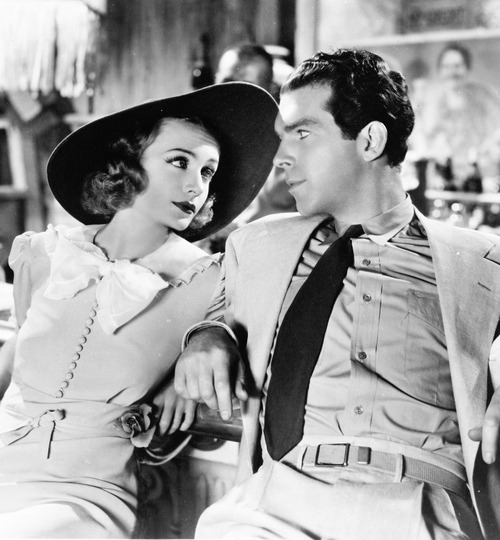
Maggie (Carole Lombard) trabalha como cabeleireira em um navio que está cruzando o canal do Panamá rumo ao Hemisfério Sul. É observando o funcionamento do canal que ela conhece o soldado Skid (Fred MacMurray), que está prestes a pedir dispensa do exército. Quando Maggie e sua amiga chegam na Cidade do Panamá e vão fazer um passeio, o guia turístico que elas encontram é justamente Skid.
A barraca em que Skid as leva para comer lagosta tem ares de cais orientais, como vemos em “O Véu Pintado / The Painted Veil” (1934) e “Mares da China / China Seas” (1935). Quando os panamenhos falam espanhol e Maggie não entende, é o diálogo de reclamação dela que se sobrepõe à fala dos nativos. É mais importante ouvir a incompreensão dos norte-americanos do que a língua falada pelos habitantes locais.
Em seguida, Skid e Maggie vão a um bar com música ao vivo, onde ela é importunada por um Anthony Quinn muito jovem, com quem Skid briga. A confusão leva o casal a passar uma noite na cadeia (nas comédias românticas dos anos 30 todo mundo é preso pelo menos uma vez) e, quando são soltos, veem que o navio de Maggie já zarpou.
Morando na cabana tropical rústica de um amigo de Skid, ele e Maggie vão procurar trabalho, e ela logo consegue ocupação para ambos em um clube. Para isto, entretanto, ela precisa mentir que eles são recém-casados.
Skid toca trompete na banda, e Maggie é dançarina no clube. Outra dançarina e cantora é Anita Alvarez (Dorothy Lamour), a estrela do show e antiga namorada de Skid. Logo Maggie e Skid terão uma chance de chegar ao centro do palco quando começarem a compor suas próprias músicas.
Dorothy Lamour sofreu da maldição que todas as mulheres exóticas sofrem em Hollywood: mesmo se nascidas nos Estados Unidos, elas são sempre associadas a pequenos papéis de sedutoras estrangeiras. A própria associação com sedução e pecado começa na escolha do nome artístico de Mary Leta Dorothy Slaton, Miss New Orleans 1931. Sim, a primeira associação é com a palavra francesa “l'amour”, embora outras fontes garantam que Dorothy teria se inspirado no sobrenome de seu padrasto, Lambour, para escolher seu nome artístico.
A carreira de Dorothy foi marcada por um sarongue que ela usou em seu primeiro sucesso como protagonista: “A Princesa da Selva”, de 1936. Papel semelhante de nativa ela teve em “O Furacão” (1937), uma obra subestimada de John Ford, com ótimos efeitos especiais e excelentes atuações. Dorothy também ficou conhecida por atuar ao lado de Bob Hope e Bing Crosby na série de filmes “Road to...”, e até interpretou uma brasileira em “A Caminho do Rio / Road to Rio” (1947).
Apesar de o filme ser previsível, há uma reviravolta perto do final que surpreende positivamente: tendo muito sucesso como trompetista, Skid precisa enfrentar seus velhos vícios no jogo e na bebida. Sua decadência está ligada à figura de Anita, a dançarina femme fatale, e garante bons momentos dramáticos para Fred MacMurray. Quem perdeu com a reviravolta foi Dorothy Lamour e todas as mulheres latinas, desde sempre e talvez para sempre associadas ao pecado e à tentação.
This is my contribution to the Dorothy Lamour Blogathon, hosted by Ruth at Silver Screenings and Maedez at Font and Frock.
Related Posts Plugin for WordPress, Blogger...