} Crítica Retrô: social

Tradutor / Translator / Traductor / Übersetzer / Traduttore / Traducteur / 翻訳者 / переводчик

Showing posts with label social. Show all posts

Saturday, May 18, 2019

Sós no Mundo (1934) / Two Alone (1934)


Uma história de Cinderela – mas feita antes do Código Hays. Isso significa que não há quase nada “de fadas” neste “conto”. Para começar, “Sós no Mundo” é uma história rural de uma órfã que é adotada por fazendeiros para trabalhar para eles. Seu Príncipe Encantado é na verdade um adolescente que fugiu do reformatório. Sua Fada Madrinha é um velho bêbado que todos consideram louco. E seu malvado Padrasto quer mais dela do que apenas seu trabalho...

A Cinderella story – but made in the pre-Code era. This means that there is too little of “fairy” in this “tale”. To begin with, “Two Alone” is a rural tale of an orphan who is adopted by farmers only to work for them. Her Prince Charming is actually a teenager running away from Reform School. Her Fairy Godmother is a drunken old man everyone considers to be crazy. And her evil Stepfather wants more of her than only her ability to work…


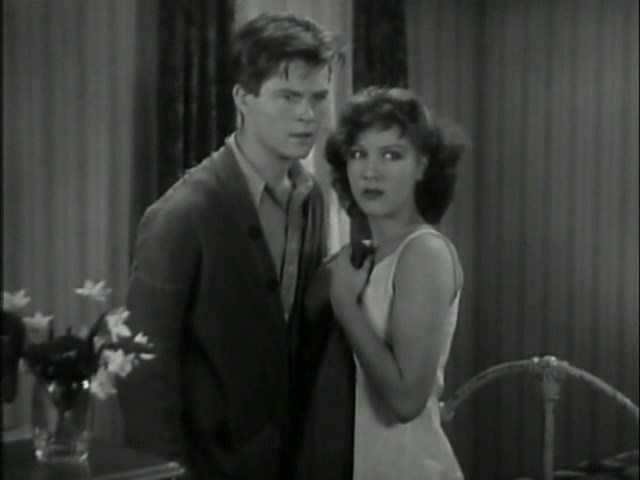
A família Slag vive em uma fazenda. O Sr. Slag (Arthur Byron) e a senhora Slag (Beulah Bondi) têm dois filhos, um garoto e uma garota, e o Sr. Slag adotou uma órfã, Mazie (Jean Parker).  Mas seu objetivo não era dar para Mazie o amor e o carinho que ela nunca recebeu na vida, mas sim fazê-la trabalhar para a família.

The Slag family lives in a farm. Mr. Slag (Arthur Byron) and Mrs. Slag (Beulah Bondi) have two children, a guy and a girl, and Mr. Slag has adopted an orphan, Mazie (Jean Parker). But his goal was not to shower Mazie with the love and care she never had in her life, but rather make the girl work for them.


Um dia, um adolescente fugindo do reformatório aparece na fazenda. Ele, um garoto chamado Adam (Tom Brown), rouba comida de Mazie, mas ela é bondosa o suficiente para tratar das feridas no rosto do rapaz. Naquela noite, Mazie sai de casa para dar algumas roupas para Adam, mas o Sr. Slag os flagra. O Sr. Slag, em vez de entregá-lo para a polícia, decide fazer do garoto também empregado da sua fazenda.

One day, a runaway teenager from Reform School shows up at the farm. He, a boy named Adam (Tom Brown), steals food from Mazie, but she is kind enough to tend to his facial wounds. That night, Mazie leaves the house to give some clothes to Adam, but Mr. Slag catches them. Mr. Slag, instead of turning the boy to the police, decides to make him work at the farm as well.


Alguns meses se passam, e a filha do Sr. Slag vai se casar – com a pior orquestra do mundo tocando na cerimônia. Mazie é humilhada quando tenta parabenizar a noiva, o que a entristece. Adam, agora um empregado da fazenda, diz que um dia ambos estarão livres e felizes longe dali. Sozinhos em casa, eles comem e conversam com Sandy Roberts (Charley Grapewin), um homem considerado louco pela população. Adam beija Mazie, mas depois se sente culpado.

A few months pass, and Mr. Slag’s daughter is going to be married – with the world’s worst orchestra playing at the ceremony. Mazie is humiliated when she tries to congratulate the bride, and that makes her sad. Adam, now working at the farm, tells that one day they both will be free and happy far from there. Home alone, they eat and chat with Sandy Roberts (Charley Grapewin), a man considered crazy by the people. Adam kisses Mazie, but then feels ashamed.


Algum tempo depois, Adam confessa para Mazie que a ama – e, felizmente, ela também o ama! Mas temos mais problemas: quando Adam pede ao Sr. Slag para deixá-lo casar com Mazie, o velho rabugento diz não – porque ele não quer perder dois empregados, e também porque ele está interessado em Mazie, agora quase uma mulher. Amedrontada, Mazie diz a Adam que eles deveriam fugir – e é isso que eles fazem.

A while later, Adam confesses to Mazie that he loves her – and, luckily, she loves him back! But problems arise once more: when Adam asks Mr. Slag to let him marry Mazie, the old man says no – because he doesn’t want to lose two employers, and also because he is interested in Mazie, now almost a woman. Afraid, Mazie tells Adam they should escape – and so they do.


Adam e Mazie querem chegar à casa do antigo empregado de Slag, o bondoso George Marshall (Willard Robertson), que, coincidentemente, também está procurando por Mazie. Muitas reviravoltas acontecem, e temos suspense... e sexo!

Adam and Mazie want to reach the house of Slag’s former employee, the good George Marshall (Willard Robertson), who, coincidentally, is also looking for her. A lot of plot twists happen and there is suspense… and sex!

Os anos 30 foram uma boa década para crianças e adolescentes do cinema. As crianças da série “Our Gang” (“Os Batutinhas”) continuaram com o sucesso que tinham na era muda. Shirley Temple, Judy Garland e Mickey Rooney cresceram em frente às câmeras. Os garotos da turma “Dead End Kids” apareceram no teatro e também no cinema em filmes como “Anjos de Cara Suja” (1938). Adolescentes fugitivos eram uma triste realidade durante a Grande Depressão, e foram o foco de “Idade Perigosa” (1933), um filme interessante de William A. Wellman.

The 1930s were a nice decade for kids and teens at the movies. The kids from “Our Gang” kept the success from the silent era. Shirley Temple, Judy Garland and Mickey Rooney grew up in front of the cameras. The “Dead End Kids” appeared at the stage and made it to the screen in films like “Angels with Dirty Faces” (1938). Runaway teens were a sad reality in the Depression Era, and they were the subject of “Wild Boys of the Road” (1933), an interesting little film by William A. Wellman.
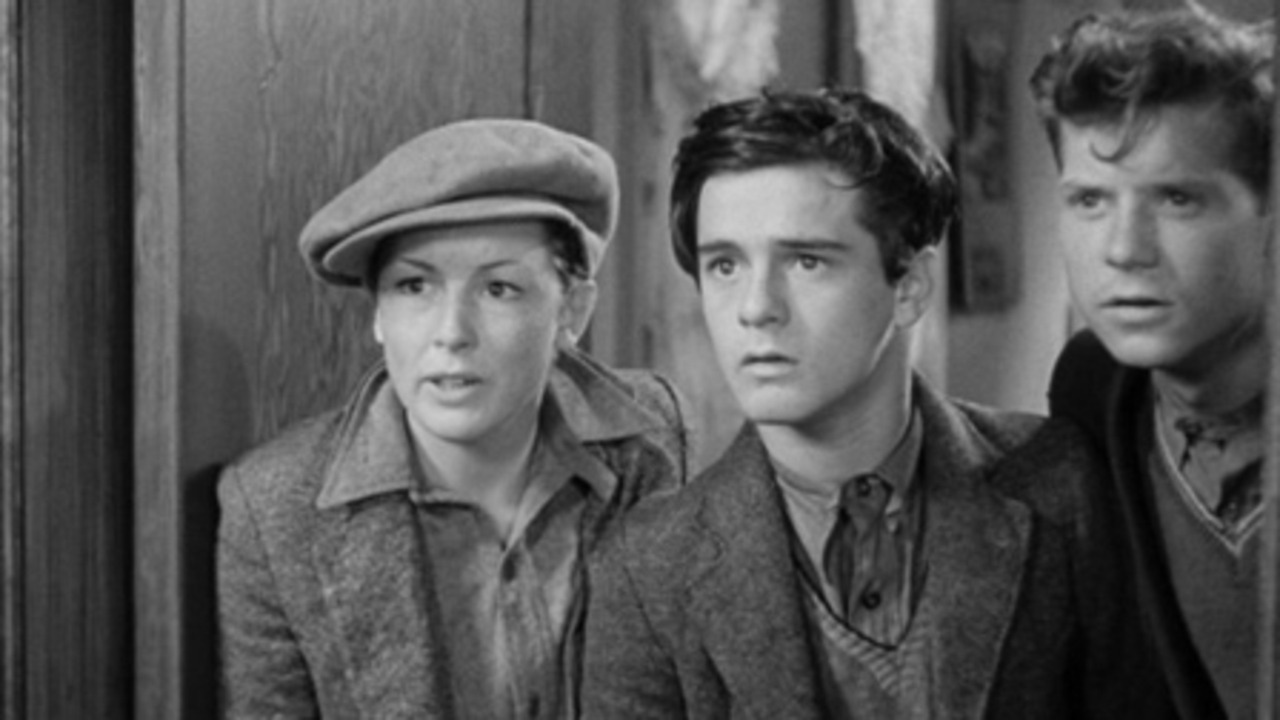
 
Idade Perigosa / Wild Boys of the Road
“Sós no Mundo” é um filme B feito pelos estúdios RKO. De acordo com os arquivos do estúdio, o filme foi um fracasso na bilheteria, provavelmente por causa da falta de grandes estrelas no elenco e também por causa da trama complexa. A pobre ZaSu Pitts, interpretando Esthey Roberts – filha de Sandy Roberts – é completamente desperdiçada, pois só aparece em duas cenas.

“Two Alone” is a B-movie made by RKO. According to studio’s records, it was a huge box-office flop, probably due to the lack of A-listers in the cast and the very complex story. Poor ZaSu Pitts, playing Esthey Roberts – Sandy Roberts’s daughter – is completely wasted as she appears in only a couple of scenes.


Jean Parker, então com 19 anos e no começo da carreira, foi emprestada pela MGM, e ela é a melhor em cena em “Sós no Mundo”. Ela interpreta a doce e pobre Mazie de maneira convincente, e seus olhos são brilhantes e expressivos. O belo Tom Brown, com apenas 21 anos na época, já havia sido modelo na infância e feito alguns filmes mudos. Como namorados, Mazie e Adam nos fazem torcer por eles.

Jean Parker, then 19 and in the beginning of her career, was borrowed from MGM, and she is the best in scene in “Two Alone”. She plays sweet and helpless Mazie in a believable way, and her eyes are bright and expressive. Handsome Tom Brown, playing Adam, only 21 at the time, had already been a model in his childhood and appeared in a couple of silent films. As sweethearts, Mazie and Adam are worth rooting for.


“Sós no Mundo” foi dirigido por Elliott Nugent. O nome não parece familiar, né? No começo dos anos 30 Elliott era ator, e logo se tornou também roteirista e diretor. Seu filme mais famoso como diretor provavelmente é a versão de 1939 de “O Gato e o Canário”, com Paulette Goddard e Bob Hope.

“Two Alone” was directed by Elliott Nugent. The name doesn’t sound familiar, does it? In the early 1930s Elliott was actually a leading man, and soon he became also a screenwriter and director. His most famous endeavor as a director is probably the 1939 version of “The Cat and the Canary”, with Paulette Goddard and Bob Hope.

Jean Parker, Elliott Nugent, Tom Brown

“Sós no Mundo” se torna mais emocionante quando nos lembramos de que ainda há muitas crianças e adolescentes órfãos vivendo como Mazie. Adotar crianças para ter empregados sem salário não é coisa do passado. Abuso, tráfico humano, cárcere privado e escravidão de crianças ainda existem. Se o Código Hays não tivesse sido implantado, será que teríamos mais consciência sobre estes temas? Eu não sei, mas ao menos fico feliz que um filme como “Sós no Mundo” exista para nos mostrar como avançamos tão pouco nos últimos 85 anos.

“Two Alone” becomes more poignant as we remember that there are still many orphaned children and teens living like Mazie. Adopting kids to have them as unpaid maids is not a thing from the past. Abuse, human trafficking, false imprisonment and child slavery still exist. If the Hays Code wasn’t implanted, would we be more aware of themes like those? I don’t know, but at least I’m happy a film like “Two Alone” exists to show us we haven’t come very far in the last 85 years.

This is my contribution to the It’s a Young World – Teen Movie Blogathon, hosted by Robin and Crystal at Pop Culture Reverie and In the Good Old Days of Classic Hollywood.


Friday, February 22, 2019

The Terror of Tiny Town (1938)


Atualmente, um diretor muito prolífico faz, no máximo, dois filmes por ano. Em 1938, Sam Newfield fez 15 filmes em 12 meses – um a menos que no ano anterior. Obviamente, estes eram filmes de baixo orçamento feitos por pequenos estúdios – geralmente faroestes com menos de uma hora de duração. Mas um destes faroestes de 1938 se destaca: o bizarro “The Terror of Tiny Town”, um filme que tem de tudo.

Nowadays, a very prolific director makes, at most, two films a year. In 1938, Sam Newfield made 15 films in 12 months – which was one less than he did the previous year. Of course, those were low-budget films made for poverty row studios - often westerns that were under one hour long. But one of his westerns from 1938 stands out: the bizarre “The Terror of Tiny Town”, a film that has everything.


E quando eu digo que tem de tudo eu quero dizer TUDO mesmo: “The Terror of Tiny Town” é um faroeste musical com toques de comédia. Tem famílias rivais e uma trama com um romance ao estilo Romeu e Julieta, um xerife corrupto e ladrões de gado. Há um cozinheiro que persegue um pato para servir de alívio cômico, um pinguim em uma barbearia sem motivo algum e um número musical com homens de rosto infantil dublados com vozes de tenor. Tudo isso em apenas 60 minutos.

And when I say everything I mean EVERYTHING: “The Terror of Tiny Town” is a musical western with touches of comedy. It has rival families and a plot that involves a Romeo and Juliet kind of romance, a corrupt sheriff and cattle thieves. There is a cook chasing a duck for comic relief, a penguin at a barber shop for no reason at all and a musical number with baby-faced men dubbed with tenor voices. All this in only 60 minutes.


Em Tiny Town, um local no Oeste habitado apenas por anões, vivem duas famílias rivais: os Lawson e os Preston. Buck Lawson (Billy Curtis) se apaixona por Nancy (Yvonne Moray), sobrinha do patriarca Preston. Enquanto isso, o gado das duas famílias está sendo roubado, e o ladrão é Bat Haines (‘Little Billy’ Rhodes), um membro da família Preston que quer que a rivalidade continue indefinidamente. Ao seu lado Bat tem o corrupto xerife da cidade (Joseph Herbst) e uma namorada ciumenta identificada apenas como uma Vamp (Nita Krebs).

In Tiny Town, a place in the West inhabited only by little people, live two rival families: the Lawsons and the Prestons. Buck Lawson (Billy Curtis) is in love with Nancy (Yvonne Moray), the Preston patriarch’s niece. Meanwhile, cattle is being robbed from both families, and the thief is Bat Haines ('Little Billy' Rhodes), a member of the Preston family that wants the rivalry to go on indefinitely. On his side Bat has the corrupt town sheriff (Joseph Herbst) and a jealous girlfriend identified only as a Vamp (Nita Krebs).


Embora Tiny Town seja habitada apenas por anões, os cenários eram de tamanho normal. Isso significa que os atores quase sempre passavam por baixo da porta do saloon e das cercas. Eles também tinham de lidar com mobília normal, por vezes entrando dentro dos armários. O pior disso tudo é o tamanho de uma arma normal nas mãos pequenas dos atores. Estes detalhes foram, obviamente, pensados para serem engraçados, mas mostram como o único objetivo do filme era rir dos anões.

Although Tiny Town is inhabited only by little people, the sets were normal size. That means that the actors often passed under the saloon doors and under fences. They also had to deal with normal furniture, often entering inside closets. The worst of all is the size of a normal gun in the actors' small hands. Those details were, of course, thought to bring laughter, but they show that the film was made for exploitation purposes only.


E que outra opção eles tinham nos anos 30 além de serem explorados dessa forma? A inclusão é difícil até hoje, e naquela época os anões ou viviam trancados em suas casas ou em instituições de caridade ou entravam para o elenco de circos e shows de horrores. No cinema, eles eram usados, mais uma vez, como curiosidades ou como alívio cômico. Uma exceção é o surpreendente “Monstros” (1932), que tem como estrela um anão que se apaixona por uma trapezista. O astro de “Monstros”, Harry Earles, e boa parte do elenco de “The Terror of Tiny Town” tiveram mais uma oportunidade de brilhar em Hollywood como Munchkins em “O Mágico de Oz” (1939).

And what other option had a little person in the 1930s if not being exploited? Inclusion is difficult until today, and back then those people had to either live locked in their homes or in institutions or join circuses and freak shows. On film, they were used again as curiosities and sometimes as comic relief. One exception is the chilling “Freaks” (1932), that stars a dwarf who is in love with a trapeze girl. The star of “Freaks”, Harry Earles, and most of the cast of “The Terror of Tiny Town” had another opportunity to shine in Hollywood as Munchkins in “The Wizard of Oz” (1939).


A vida nem sempre foi tão difícil para os anões. No Egito Antigo, por exemplo, eles eram considerados seres divinos e tinham altos cargos junto ao faraó. A mesma coisa acontecia na China Antiga. Na Europa Moderna e Medieval, entretanto, os anões eram ou bobos da corte ou tratados como animais de estimação pela nobreza e monarquia. Quando começou a Era da Razão, eles passaram a ser exibidos como curiosidade ou estudados por cientistas que procuravam a cura do nanismo.

Life wasn’t always so difficult for little people. In the Ancient Egypt, for instance, they were considered divine beings and held high positions near the Pharaoh. The same happened in Ancient China. In Medieval and Modern Europe, however, little people were either court jesters or treated as pets by the nobility or the monarchs. As the Age of Reason started, they were either exhibited as freaks or studied by scientists looking for a cure for dwarfism.
 
A deusa egípcia Bes era uma anã /
Egyptian goddess Bes was a dwarf
Em quase todos estes casos, há um denominador comum: os anões não eram ouvidos. O diretor alemão Werner Herzog, em seu segundo longa-metragem, tentou dar voz aos anões ao mesmo tempo em que mandava uma mensagem mais profunda – e foi tudo uma bagunça... exatamente como ele planejou.

In almost all these cases, there is one thing in common: little people weren’t heard about what they wanted. German director Werner Herzog, in his second feature, tried to give a voice to little people while also sending a deeper message – and, boy, it was a mess... just as he intended.


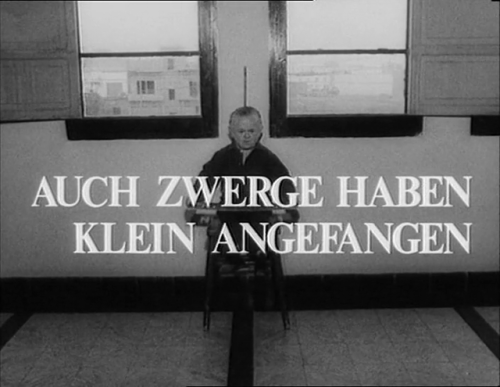
Um anão é uma pessoa que, na idade adulta, mede menos de 1,20 m – o que significa que eu escapei por 30 cm. No filme “Os Anões Também Começaram Pequenos” (1970), vemos uma instituição de caridade habitada apenas por anões. Quando um destes internos, Pepe (Gerd Gickel), é detido pelo instrutor da instituição – que também é anão – e é acusado de atacar outra interna, todos os anões se rebelam, causando caos - e abuso animal.

A little person or a dwarf is a person who, as an adult, is less than 4 feet tall – which means that I escaped by a whole foot. In the film “Even Dwarfs Started Small” (1970), we see an institution inhabited only by little people. When one of those interns, Pepe (Gerd Gickel), is detained by an instructor of the institution – who is also a dwarf – and accused of attacking another intern, all little people revolt, resulting in chaos - and animal abuse.


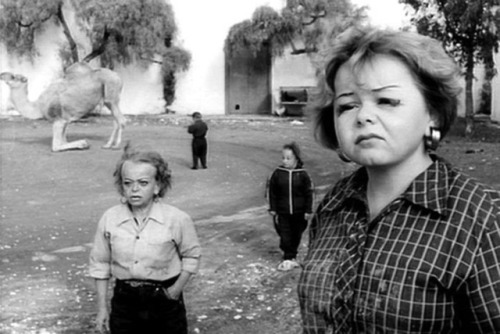
Os anões se revoltam contra as regras do lugar, contra as atividades que eles têm de fazer 'porque faz bem à saúde', como caminhar ao ar livre, regar as plantas e cuidar dos animais. Você pode pensar que foi uma tentativa de dar voz a quem não era ouvido, mas por fim vemos que eles gostam de fazer coisas infantis – como pregar peças em dois anões cegos e encenar um falso casamento entre uma anã com alguma deficiência mental e o homem mais baixo do lugar, um cara chamado Hombre (Helmut Döring). Tudo em meio a muitas risadinhas.

The little people revolt against the norms of the place, against the activities they have to do 'for their health', such as walking outdoors, watering plants and taking care of the animals. You may think it was an attempt to give a voice to the voiceless, but eventually we see that they engage in childish adventures – like pranking two blind dwarfs and holding a fake wedding between a mentally impaired female dwarf and the shortest man there, a guy called Hombre (Helmut Döring). All in between many giggles.


À primeira vista, é difícil entender os temas subjacentes que Herzog adiciona aos seus filmes. Em “Os Anões Também Começaram Pequenos”, há o absurdo da situação toda, a ideia de que toda revolução termina em caos se não há foco e cooperação e muitos outros – porque cada espectador interpretará o filme de maneira diferente. Havia uma resão mais profunda e mais nobre para Herzog fazer este filme do que a exploração dos seus atores – mas só entendemos isso depois de refletir sobre o filme dentro da carreira do diretor.

It's difficult at first to understand the underlying themes Herzog adds to his films. In “Even Dwarfs Started Small”, there is the absurdity of the whole situation, the idea that all revolution ends in chaos if there is no focus and cooperation and many others – because all viewers will interpret the film differently. There was a deeper, nobler reason for Herzog to make this movie than simple exploitation – but we just understand that after reflecting upon the film inside of the director's career.


Recentemente, um monte de reality shows de televisão estrelando anões surgiu e teve muito sucesso. Há muita controvérsia sobre estes programas, em especial quando consideramos que muitos espectadores apenas os veem em busca do mesmo tipo de exploração que era oferecido pelos shows de horrores.

Recently, a plethora of reality TV shows starring little people appeared and became hits. There is a lot of controversy around those shows, in special considering that many viewers only follow the shows looking for the same kind of exploitation offered by freak shows.
Todos os atores de “The Terror of Tiny Town” já eram profissionais no palco, e continuaram atuando. A maioria dos atores de “Os Anões Também Começaram Pequenos” não era profissional, e quase todos eles fizeram apenas este filme e nada mais no cinema. “The Terror of Tiny Town” pode não ter beneficiado a carreira de nenhum de seus atores, mas imortalizou-os, e gerou um debate que nos mostra que ainda há muito a fazer para que os anões sejam incluídos no cinema como as pessoas completas, capazes, inteligentes e talentosas que eles são.

All actors in “The Terror of Tiny Town” were already professionals of the stage, and went on acting. Most actors of “Even Dwarfs Started Small” were not professionals, and almost all of them didn't do other films. “The Terror of Tiny Town” may not have furthered anyone's career, but it immortalized those little actors, and sparkled a debate that shows us that there is still a long way to go for little people to be fully included in movies as the whole, capable, intelligent and talented people they are.

This is my contribution to the So Bad It’s Good Blogathon, hosted by Rebecca at Taking Up Room.

Sunday, November 18, 2018

O Fugitivo (1932) e o moderno Jean Valjean


I am a Fugitive from a Chain Gang (1932) and the modern-day Jean Valjean


ESTE ARTIGO TEM SPOILERS
THIS ARTICLE HAS SPOILERS

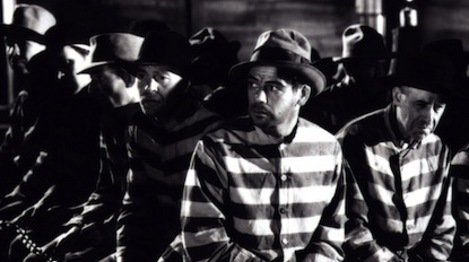
Sempre que eu penso no filme “O Fugitivo”, de 1932, eu não posso evitar pensar também no livro “Os Miseráveis”. Quando eu penso no protagonista do filme da Warner Bros – James Allen, ou Jim, interpretado por Paul Muni – eu o vejo como um Jean Valjean moderno, à imagem e semelhança do protagonista do livro de Victor Hugo.

Whenever I think about the 1932 movie “I am a Fugitive from a Chain Gang”, I can’t help but also think about the book “Les Misérables”. When I think about the lead in the Warner Bros flick – James Allen, or Jim, played by Paul Muni – I see him as a modern Jean Valjean, the lead of Victor Hugo’s book.


Jean Valjean roubou um pedaço de pão para duas para sua irmã e seus sobrinhos, que passavam fome. James Allen foi forçado por Pete (Preston Foster), que ele acabara de conhecer, a roubar cinco dólares de um restaurante. Jean Valjean foi condenado a vinte anos de prisão – na verdade cinco, mas outros 14 foram adicionados porque ele tentou escapar muitas vezes. James Allen foi condenado a 10 anos de trabalhos forçados. Nós não chegamos a ver muita coisa dos anos que Jean Valjean passou na cadeia, mas podemos imaginar que estes anos foram bem parecidos com a pena de James Allen.

Jean Valjean stole one piece of bread to give his sister because she and her children were starving. James Allen was forced by Pete (Preston Foster), who he had just met, to rob five dollars from a bar. Jean Valjean was condemned to twenty years in prison – actually five, but fourteen more were added as he tried to escape many times. James Allen was condemned to ten years of hard labor. We don't get to see a lot of Jean Valjean's time in jail, but we can imagine that they were a little like James Allen's.


Comida horrível. Uma corrente entre suas pernas – e outra corrente, maior e mais forte, para prender todos os detentos juntos quando eles dormem ou são transportados para o trabalho, como se eles fossem gado ou extremamente perigosos. Acordar às 4:20 da manhã – hora escolhida de propósito? Segregação racial até mesmo na cadeia. Uma jornada de trabalho diária de quase 16 horas. Ter de pedir permissão para secar o suor do seu próprio rosto. Sofrer abuso e ser punido fisicamente por descumprir qualquer regra. A experiência de Jim Allen na cadeia pode ser descrita com a canção do musical Les Mis: “Olhe para baixo, para baixo. Não olhe nos olhos deles. Olhe para baixo, para baixo. Você está aqui até morrer”.

Terrible food. A chain between your legs – and another chain, bigger and stronger, to hold together all inmates as they sleep and are transported to work, as if they were cattle or extremely dangerous. Waking up at 4:20 AM – time chose on purpose? Racial segregation even in the jail. A daily labor journey that lasts almost 16 hours. Having to ask for permission even to wipe the sweat of your own face. Suffering abuse and being physically punished for breaking any rules. Jim Allen's experience in the chain gang can be described by the music from Les Mis: “Look down, look down. Don't look 'em in the eye. Look down, look down. You're here until you die.”


Mas, ao contrário do prisioneiro 24601, Jim Allen não é capaz de esperar que sua sentença seja cumprida para começar sua saga. Depois de alguns meses, ele planeja e executa uma fuga. E ele não tem apenas um Javert atrás dele, mas sim dois policiais com cães treinados. Jim os despista ficando embaixo d’água em uma sequência eletrizante, e de repente ele está livre – mas com um andar engraçado por causa dos meses com as pernas acorrentadas.

But, unlike prisoner 24601, Jim Allen couldn't wait his whole sentence to be over to start his saga. After a few months, he plans and executes an escape. And he doesn't get only one Javert after him, but two cops with dogs. Jim outwits them by going underwater in a chilling sequence, and suddenly he is free – but with a funny walk thanks to the chains he had between his legs for months.


Enquanto fora da lei e fugitivo, tanto Jean Valjean quanto James Allen precisam manter os olhos bem abertos. Eles mudam de identidade, mas isso não é o suficiente. James Allen sempre fica alerta quando vê um policial na rua, e um encontro particularmente nervoso acontece em uma barbearia – um encontro nervoso porém irônico, porque o policial descreve o fugitivo, mas não é capaz de reconhecê-lo bem ali na sua frente.

As an outlaw and a fugitive, both Jean Valjean and James Allen must keep their eyes wide open. They change identity, but this is not enough. James Allen is always suspicious when he sees a police officer on the streets, and a particularly nervous encounter occurs in a barber shop – a nervous yet ironic one, because the officer describes the fugitive, but can't recognize the man in front of him.


James Allen muda seu nome para allen James e consegue um trabalho na construção civil. Ele aluga um quarto de Marie Woods (Glenda Farrell) e obtém mais do que só um quarto – afinal, é um filme feito antes do código Hays. Quando Allen para de dar atenção a Marie, ela o chantageia: ela descobriu que ele é um fugitivo através de uma carta do irmão dele, e agora ela quer se casar com ele. Depois do casamento, ela gasta o dinheiro dele e o trai, mas ainda mantém a chantagem. Pelo menos Jean Valjean teve a sorte de nunca ter se casado.

James Allen changes his name to Allen James and gets a job as a construction worker. He rents a room from Marie Woods (Glenda Farrell), and gets more than just a room – after all, it's a pre-Code movie. When Allen stops giving attention to Marie, she blackmails him: she discovered that he is a fugitive from a chain gang from a letter his brother sent him, and now she wants to marry him. After the wedding, she spends a lot and cheats on him, but maintains the blackmail. At least Jean Valjean was lucky enough to never get married.


Ao ser preso pela segunda vez, após a morte de Fantine, Jean Valjean é condenado à prisão perpétua. Quando ele salva um marinheiro que estava se afogando, a multidão clama por sua liberdade. Algo semelhante acontece com Allen quando Marie o entrega: a questão legal gera um debate sobre campos de trabalhos forçados para detentos. Eu sei muito pouco sobre o sistema penal, mas como ser humano eu sei que campos como estes são absurdos e sádicos.

In a second prison, after Fantine's death, Jean Valjean is condemned to serve life sentence. As he saves a sailor who is drowning, the people beg for his release. Something similar happens to Allen when Marie turns him: the legal issue generates a debate about chain gangs. I know very little about the penal system, but as a human I know chain gangs are absurd and sadistic.


O perdão da sentença é oferecido a James se ele ficar mais 90 dias na prisão estatal. Ele aceita a oferta, porque lhe foram prometidos apenas 90 dias fazendo trabalho simples no escritório da cadeia, mas quando ele volta ele é mandado novamente para o campo de trabalhos forçados. Aqui está uma verdade sobre a prisão: como o sistema penal raramente recupera os detentos, muitos acabam voltando para cumprir mais penas.
  
James is offered a pardon if he spends 90 more days in the states' jail. He accepts it, because he was promised 90 easy days doing simple work and the jail's office, but when he comes back he is sent to the old chain gang. Here is something true about being arrested: since the penal system rarely recovers the inmates, many of them come back to serve more sentences.


Tanto “Os Miseráveis” quanto “O Fugitivo” provam que a cadeia não recupera ninguém, e ainda acaba transformando os detentos em pessoas piores. Tanto Valjean quanto Allen roubam MAIS depois que saem da prisão. Ao ter seu perdão negado duas vezes, Jim decide fugir de novo. Na última cena, ele diz adeus à sua namorada Helen (Helen Vinson) e quando ela pergunta “mas como você vive?” ele responde de maneira surpreendente: “eu roubo”.

Both “Les Misérables” and “I am a fugitive from a chain gang” prove that the jail recovers no one, just makes people worse. Both Valjean and Allen steal MORE when they leave jail. When Jim's pardon is denied twice, he decides to escape again. In the last scene, he says goodbye to his sweetheart Helen (Helen Vinson), and when she asks “but how do you live?” he answers the most surprising way: “I steal”. 


Jim é o ‘homem esquecido’ (‘forgotten man’) da canção de Joan Blondell ao final de “Cavadoras de Ouro” de 1933: um veterano da Primeira Guerra Mundial afetado pela Grande Depressão e ignorado pelo Novo Acordo de Roosevelt. Havia tantos destes homens esquecidos que, em uma cena, Jim tenta vender sua medalha de honra da guerra para uma loja de penhores, e descobre que a loja já tinha uma pilha de medalhas semelhantes vendidas por veteranos desesperados.

Jim is the 'forgotten man' sung by Joan Blondell in the end of “Gold Diggers of 1933”: a WWI veteran affected by the Great Depression and ignored by the New Deal. There were so many forgotten men that, in a scene, Jim tries to sell his medal of honor to a pawn broker, only to find that the man already had a pile of similar medals sold by other desperate veterans.


Sim, Jim conseguiu seu trabalho entediante de volta na fábrica Parker quando ele voltou da guerra, mas não era mais isso que ele queria. Ele queria construir coisas, e deixou sua cidade natal para procurar trabalho na construção civil. A condenação de Jim veio porque ele tinha um sonho – e ele estava no lugar errado na hora errada.

Of course, Jim got his boring job at the Parker factory back when he returned from the war, but it wasn't what he wanted anymore. He wanted to be a constructor, and left his hometown to go after work in construction. Jim was condemned because he had a dream – and he happened to be in the wrong place at the wrong time.


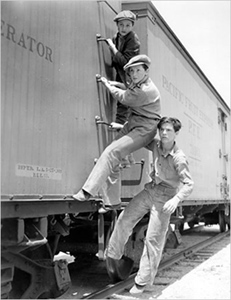
Muitas das pessoas consideradas “fora da lei” são na verdade boas pessoas que, por causa de circunstâncias extremas, precisam fazer algo de errado – e às vezes eles não fazem nada de errado. Um bom exemplo é o filme “Idade Perigosa”, outro filme da Warner de 1933, que mostra como bons adolescentes se tornam foras da lei ao pegar carona em trens indo de cidade em cidade, na esperança de encontrar emprego.

Many of the people who come to be called 'outlaws' are actually good people caught in extreme circumstances that make them do something wrong – and sometimes they do nothing wrong. A good example is the film “Wild Boys of the Road”, also a Warner release from 1933, that shows how good teenagers became outlaws by catching trains from town to town, in the hopes of one day finding a job.
 
"Idade Perigosa / Wild Boys of the Road"
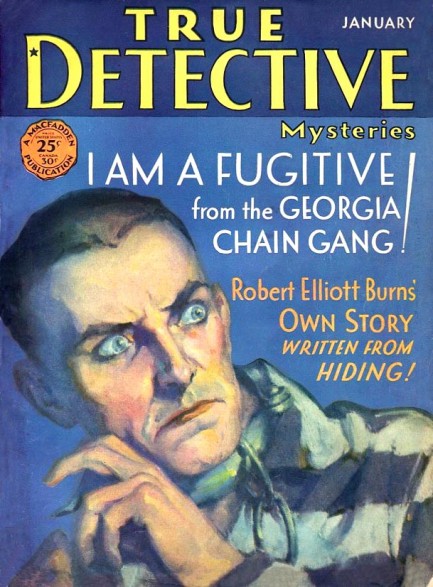
Houve uma figura real por trás da história de “O Fugitivo”: Robert E. Burns, um fugitivo de um campo de trabalhos forçados na Geórgia, que na época passava por um novo julgamento. Ele contou sua experiência no livro “I am a fugitive from a Georgia chain gang!” (sem tradução para o português), publicado em seis edições da revista True Detective Mysteries em 1932, e compilado em forma de livro no ano seguinte.

There was a real figure behind the story of “I am a fugitive from a chain gang”: Robert E. Burns, a real fugitive from a chain gang in Georgia, who at the time was under a new judgment. He chronicled his experience in the book “I am a fugitive from a Georgia chain gang!”, published as a six-part serial at the True Detective Mysteries magazine in 1931, and as a book the following year.


Robert Elliott Burns voltou da guerra traumatizado e em casa descobriu que sua namorada havia se casado com outro homens e que seu emprego já havia sido preenchido por outra pessoa. Em 1922, Burns e dois outros homens roubaram 5,80 dólares para comer – eles foram presos e Burns foi condenado a 10 anos de trabalhos forçados. E assim Burns escapou da prisão – duas vezes.

Robert Elliott Burns returned from the war suffering from shell shock to find out his girl was married to someone else and he had no job anymore. In 1922, Burns and two other guys stole US $5.80 to eat – they were caught and Burns was sentenced to 10 years of hard labor. So burns escaped – twice.


Na época das filmagens, Burns viva em Nova Jersey, e por causa da diferença nas leis estaduais ele não pôde ser mandado de volta para a cadeia e um julgamento teve início. Burns foi escondido para Hollywood para ajudar na produção do filme. Ele ajudou muito, mas de acordo com o roteirista não-creditado Sheridan Gibney, Burns se assustava facilmente com os barulhos no estúdio, e ficava nervoso ao ouvir sirenes de polícia e barulhos de tiros. Mas a história de Burns teve um final feliz: ele se retirou da vida pública após a estreia do filme, e em 1945 sua pena foi considerada cumprida. O filme certamente ajudou com seu caso, e também levou à extinção dos campos de trabalhos forçados.

When the film was being shot, Burns lived in New Jersey, and because of different state laws he wasn’t taken back to the chain gang and a judgment started. Burns went to Hollywood undercover in order to help in the film production. He did help a lot, but according to uncredited screenwriter Sheridan Gibney, he was easily scared by the studio’s noises, and got startled whenever he heard a police siren or guns being fired. But Burns’ story ended well: he slipped out of the public eye after the film was made, and in 1945 his sentence was commuted. The film certainly helped in his case, and also led to the extinction of the chain gangs.


Não podemos evitar torcer por James Allen, não apenas porque ele está passando por uma situação absurda e desumana, mas também porque Paul Muni o interpreta de maneira muito sensível. Um de meus atores favoritos – talvez porque ele foi considerado “o novo Lon Chaney” no começo da carreira – Muni colocava muita energia em cada performance. Houve uma adaptação de “Os Miseráveis” para o cinema em 1935, com Fredric March como Jean Valjean, feita pela 20th Century Pictures antes de a companhia se unir à Fox. Uma pena que Muni tinha contrato com a Warner: com base em “O Fugitivo”, posso apostar que ele faria um ótimo Jean Valjean.

We can’t help but root for James Allen, not only because his situation is absurd and inhuman, but also because Paul Muni plays him in a very sensitive way. One of my favorite actors – maybe because he was labeled “the new Lon Chaney” in the beginning of his career – Muni put lots of energy in all performances. There was a “Les Misérables” film adaptation in 1935, with Fredric March as Jean Valjean, made by 20th Century Pictures right before it merged with Fox. Too bad Muni was under contract with Warner: per “I am a fugitive from a chain gang”, I bet he would have made a great Valjean.
  

“O Fugitivo” é um dos filmes mais duros feitos em 1932. Ele mostra uma verdade feia e difícil de engolir, mas ao mesmo tempo foi um filme agente de mudança social. É por isso que precisamos de filmes duros: para exigir e fazer mudanças na sociedade. “O Fugitivo” indiretamente ajudou muitos homens como James Allen. E nós vimos só o começo da dura vida de Jim. Talvez ele tinha tido a mesma sorte de Jean Valjean e encontrou uma doce Cosette para chamar de sua. Eu espero que sim.

“I was a fugitive from a chain gang” is one of the roughest films made in 1932. It shows an ugly truth, a hard one to swallow, but it was an agent of social change. That’s why we need rough movies: to demand and make change in society. “I am a fugitive from a chain gang” indirectly helped so many men like James Allen. And we got only the beginning of Jim's rough life. Maybe he was lucky like Jean Valjean and found a sweet Cosette for himself. At least I hope he did.

This is my contribution to the 2018 CMBA Fall Blogathon, whose theme is Outlaws. All entries can be found at the Classic Movie Blog Association’s blog.

Related Posts Plugin for WordPress, Blogger...