} Crítica Retrô: cinema português

Tradutor / Translator / Traductor / Übersetzer / Traduttore / Traducteur / 翻訳者 / переводчик

Showing posts with label cinema português. Show all posts

Friday, May 3, 2024

A Canção de Lisboa (1933) / A Song of Lisbon (1933)


O que me fascina no cinema é que, mesmo que seja uma arte com poucos mais de 125 anos e que haja tantos filmes perdidos, há sempre muito mais para descobrir. O caso em questão é o cinema de Portugal. Como alguém que tem dupla cidadania - brasileira e portuguesa - a sétima arte em ambas as minhas pátrias muito me interessa.

What enchants me in cinema is that, even though it’s an art that is a little more than 125 years old and there are so many lost movies, there is always so much more to discover. The case in question is cinema from Portugal. As someone who has double citizenship - Brazilian and Portuguese - the seventh art in both my homelands interests me a lot.


Eu sei que os filmes dos Lumière foram exibidos pela primeira vez em Portugal em 1896, que o primeiro cinema no país foi inaugurado em 1904 e o filme com roteiro mais antigo de Portugal foi filmado em 1907. O primeiro filme falado estreou em 1931 - mesmo ano em que “A Canção de Lisboa” foi filmado - e que em 1933 a Era de Ouro do cinema em Portugal começa exatamente com “A Canção de Lisboa”. É claro que eu teria que assistir a este filme que é um marco histórico.

I know that Lumière’s films were first shown in Portugal in 1896, the first movie theater in the country opened in 1904 and the earliest scripted Portuguese film was shot in 1907. The first talkie was released in 1931 - the same year “A Song of Lisbon” was filmed - and that in 1933 the Golden Age of film in Portugal begins exactly with “A Song of Lisbon”. Of course I needed to watch this milestone movie.

Vasco Leitão (Vasco Santana) é um estudante que fracassou em seu exame oral final e assim não se graduou no curso de Medicina. Sua família no interior, entretanto, não sabe de seu fracasso e duas tias estão vindo para Lisboa para comemorar a formatura do “Vasquinho”. Vasco é despejado do quarto onde vivia, mas recebe ajuda dos muitos amigos e do sogro Caetano (António Silva), com quem ele tem uma relação de pai e filho.  

Vasco Leitão (Vasco Santana) is a student who just flunked his final oral exam and failed to receive a medical degree. His family on the countryside, however, isn’t aware of his failure and two aunts are coming to Lisbon to celebrate his graduation. Vasco is evicted from the place he used to live in, but is helped by his many friends and his father-in-law Caetano (António Silva), with whom he has a father/son relationship.

A namorada de Vasco, Alice (Beatriz Costa), é uma costureira que trabalha com o pai. Ela é candidata num concurso que elegerá a “Rainha das Costureiras”. Alice tem seus momentos para canto e dança, incluindo quando ela sonha acordada com a vida de casada.

Vasco’s girlfriend Alice (Beatriz Costa) is a seamstress who works with her father. She is a candidate at a contest that will choose the “Queen of Seamstresses”. Alice has moments of song and dance, including when she daydreams about married life.

“A Canção de Lisboa” não é apenas uma comédia, é também um musical! Há canções extradiegéticas no começo e o já mencionado sonho acordado de Alice. Há inclusive uma quadrilha, dança típica das quermesses. E há Vasco se recusando a cantar um fado, o mais famoso gênero musical português, mas ele acaba cantando-o mesmo assim.

“A Song of Lisbon” is not only a comedy, it’s also a musical! There are extra-diegetic songs in the beginning and Alice’s aforementioned daydream. There is even a “quadrilha”, a typical dance presented at folk parties. And there is Vasco refusing to sing fado, the most famous Portuguese music genre, but he ends up singing it nonetheless.

Há uma longa sequência com Vasco levando suas tias ao zoológico, onde eles vêem diversos animais. O Zoológico de Lisboa foi fundado em 1884, movido para uma nova sede em 1894 e teve sua mudança final em 1905 - o que significa que ele se localiza atualmente no mesmíssimo lugar em que foram filmadas as cenas de “A Canção de Lisboa”! Há cerca de dois mil animais atualmente no zoológico.

There is a long sequence of Vasco taking his aunts to the zoo, where many animals are shown. The Lisbon Zoo was founded in 1884, moved to another place in 1894 and had its final move in 1905 - which means that it is currently located in the exact same spot where “A Song of Lisbon” was filmed! There are about two thousand animals currently at the zoo.

Há momentos de pura e sutil genialidade, como quando Vasco diz Luís 16 e uma janela cai acertando seu pescoço, como uma guilhotina. Isso com certeza não foi coincidência! Outro detalhe: quando Vasco finge ser um manequim, o casaco que ele veste está sendo vendido por 9500 escudos tendo por “ocasião: Estado Novo”. O Estado Novo, ditadura de extrema-direita portuguesa, começou com um golpe em 1926 e teve um referendo em 1933 para aprovar a nova constituição.

There are moments of pure and subtle geniality, like when Vasco says Louis, 16 and a window shield falls on his neck, like a guillotine. This certainly wasn’t a coincidence! Another detail: when Vasco pretends to be a mannequin, the coat he dresses is being sold for 9500 escudos having as “occasion: Estado Novo”. The Estado Novo, Portugal’s far-right dictatorship, started with a coup in 1926 and had a referendum in 1933 to approve the new constitution.

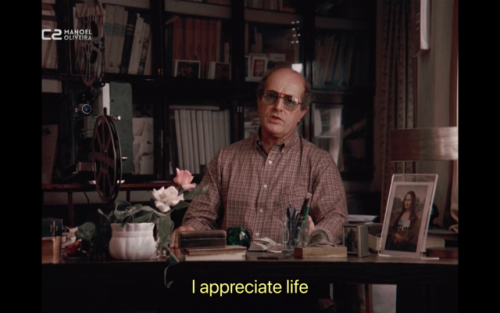
No papel de Carlos temos Manoel de Oliveira, um conhecido ator e diretor que já tinha dirigido seu primeiro filme quando “A Canção de Lisboa” foi feito. Ele trabalharia bastante nos 80 anos seguintes, dirigindo 66 filmes. Manoel morreu aos 106 anos e ainda trabalhava à época de seu falecimento.

As Carlos we have Manoel de Oliveira, a well-known actor and director who had already directed his first film when “A Song of Lisbon” was made. He would work steadily in the following 80 years, directing 66 movies. Manoel died at age 106 and was still working when he passed.

O diretor de “A Canção de Lisboa” é José Cottinelli Telmo, um arquiteto que se tornou multiartista, dirigindo três filmes na década de 1930. O assistente de direção é o famoso pintor Carlos Botelho, enquanto o assistente de roteiro é o poeta José Gomes Ferreira. Os cartazes do filme foram desenhados pelo artista Modernista Almada Negreiros. Em frente às Câmeras, como os protagonistas, temos dois artistas muito conhecidos da Era de Ouro do cinema português: Vasco Santana e Beatriz Costa. Ambos fizeram turnê por Portugal e pelo mundo com sua arte e Beatriz até mesmo morou dez anos no Brasil.  

The director of “A Song of Lisbon” is José Cottinelli Telmo, an architect who became a multi-artist, directing three films in the 1930s. The director’s assistant is the famous painter Carlos Botelho, while the writing assistant is the poet José Gomes Ferreira. The posters for the film were designed by the Modernist artist Almada Negreiros. In front of the cameras, as the leads, we have two very famous performers from the Golden Age of Portuguese cinema: Vasco Santana and Beatriz Costa. Both toured Portugal and the world with their art and Beatriz even lived for ten years in Brazil.

Talvez algo seja perdido pelos estrangeiros que são apresentados a “A Canção de Lisboa”. É um filme demasiado português - e orgulhoso de sua nacionalidade. Um sucesso na televisão local, onde é exibido com frequência desde a década de 1950, é uma grande comédia, um bom musical e um ponto de partida perfeito para aqueles que querem mergulhar fundo no cinema português.

Maybe something is lost to foreigners who are introduced to “A Song of Lisbon”. It’s such a Portuguese film - and proud of its nationality. A success on local television, where it is shown frequently since the 1950s, it’s a great comedy, a fine musical and a perfect starting point for those who want to dive deep into Portuguese cinema.


This is my contribution to the Fourth Luso World Cinema blogathon, hosted by Beth and me at Spellbound with Beth Ann and Crítica Retrô.


Monday, November 30, 2020

Announcing the Second Luso World Cinema Blogathon


Are you ready to say so long, farewell, auf Wiedersehen, goodbye to 2020? I certainly am. And there is no better way to say goodbye to a year than to start planning for the next year, so here it is something to look forward to in the beginning of 2021: our Luso World Cinema Blogathon is back!


The Luso World Cinema Blogathon was held for the first time in 2019, hosted by me here at Crítica Retrô and by Beth at Spellbound by Movies. We were more than thrilled when the blogathon won the award for Best Classic Film Event of the year, tied with the equally amazing 4th Alfred Hitchcock blogathon, hosted by Maddy at Maddy Loves Her Classic Films. Hooray!


The Luso World Cinema Blogathon once again accepts posts about films made in Lusophone countries, that is, countries that speak Portuguese – see the list below –, and film stars with Luso heritage, that means, film stars of Portuguese descent. This list includes natives like Carmen Miranda, Rodrigo Santoro, Sônia Braga (recently named one of the 25 best actors of the 21stcentury!), Raul Roulien, Maria de Medeiros and also Keanu Reeves, Mary Astor, Louise Fazenda, Tom Hanks, Joe DeRita, James Franco, Daniel Brühl, Auli'i Cravalho (the voice of Disney's Moana!), Nestor Paiva, Amy Poehler, Dorothy DeBorba and many more you can find listed HERE. You can write an overview of those people's lives or careers or focus on a specific film or TV show they made.

Here are a few lists of movies from Lusophone countries:

List of films from Portugal

List of films from Brazil

List of films from Cape Verde

List of films from Mozambique

List of films from Angola

List of films from Guinea-Bissau

List of films from São Tomé and Príncipe

List of films from Equatorial Guinea

List of films from East Timor

There are many options for the blogathon! You can be inspired also by our list of contributors from our first year, found HERE.

And here they are, the banners!

Actress Louise Fazenda

Actress Mary Astor

Actor Tom Hanks

Brazilian actor Rodrigo Santoro

Actor Daniel Brühl, whose father was born in Brazil

Portuguese director Manoel de Oliveira

Scene from the Brazilian film "Macunaíma" (1969)

Singer Emilinha Borba in the Brazilian film "Garota Enxuta" (1959)

Luso-Brazilian entertainer Carmen Miranda

Scene from the Angolan film "Santana" (2020)

Brazilian actress Sônia Braga in "Kiss of the Spider Woman" (1985)


Our contributors so far:


Crítica Retrô - The Career of Grande Otelo

Silver Screenings - Louise Fazenda in Hearts and Flowers (1919) and Down on the Farm (1920) 

Realweegiemidget Reviews -  Keanu Reeves in "The Devil's Advocate" (1997)

Taking Up Room - Carmen Miranda in "The Gang's All Here" (1943)

Dubsism - Tom Hanks in "Apollo 13" (1995)

Ana Roland - Alberto Cavalcanti's "Went the Day Well?" (1942)

Wide Screen World - Fernando Meirelles' "The Two Popes" (2019)

A Shroud of Thoughts - O Pátio das Cantigas (1942)

Spellbound by Movies - Casa de Lava (1995)

Hollywood Kitchen - Carmen Miranda's recipe of Creme de Abacate (yes, it's a podcast!)

Moon in Gemini - Ruy Guerra's Eréndira (1983)

Pop Culture Reverie - Central do Brasil / Central Station (1999)

Crimson Kimono - A Guerra de Beatriz (2013), a filme from East Timor

18 Cinema Lane - Daniel Brühl in Ladies in Lavender (2004)


You can find Beth's announcement HERE.

Até 2021!

Friday, November 15, 2019

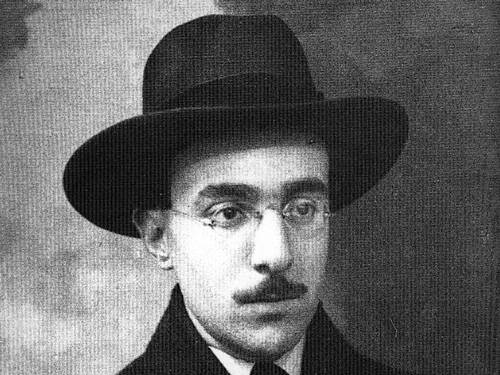
Fernando Pessoa e o cinema / Fernando Pessoa and film


Os dois escritores mais famosos de Portugal são o romancista José Saramago – que inclusive ganhou o Nobel – e o poeta Fernando Pessoa. Enquanto Saramago chegou a Hollywood com a adaptação paras as telas de seu livro “Ensaio Sobre a Cegueira” em 2008 – curiosamente dirigido pelo diretor brasileiro Fernando Meirelles – Pessoa nunca chegou a Hollywood. De acordo com o IMDb, seus escritos serviram de base para 36 produções, a maioria curtas-metragens. Mas o próprio Pessoa já havia sonhado em conquistar as telas.

The two most famous writers from Portugal are novelist José Saramago – who is also a Nobel laureate – and poet Fernando Pessoa. While Saramago made it to Hollywood when his novel “Ensaio Sobre a Cegueira” (Essay on Blindness) was adapted for the screen as the film “Blindness” (2008) – curiously directed by Brazilian director Fernando Meirelles – Pessoa never made it to Hollywood. According to IMDb, his writings were the base for 36 productions, most of them shorts. But Pessoa himself once dreamed about reaching the screen.


É importante dizer que Fernando Pessoa não era só um: ele era múltiplo. Ele criou diversos heterônimos para escrever em estilos diferentes e sobre assuntos diversos – e até criou biografias para eles. Um destes heterônimos era Álvaro de Campos, um poeta futurista, engenheiro e quase sempre um homem amargo. Em seu poema “Carnaval” ele diz: “Fitas de cinema correndo sempre / E nunca tendo um sentido preciso”. Álvaro de Campos criticava tudo, incluindo o cinema.

It’s important to say that Fernando Pessoa wasn’t just one: he was multiple. He created several alter egos / heteronyms to write in different styles and about different subjects – and even created biographies for them. One of these alter egos was Álvaro de Campos, a futuristic poet, an engineer and almost always a bitter man. In his poem “Carnaval” he says: “Film reels always running / And never having a precise sense”. Álvaro de Campos criticized everything, including cinema.
 
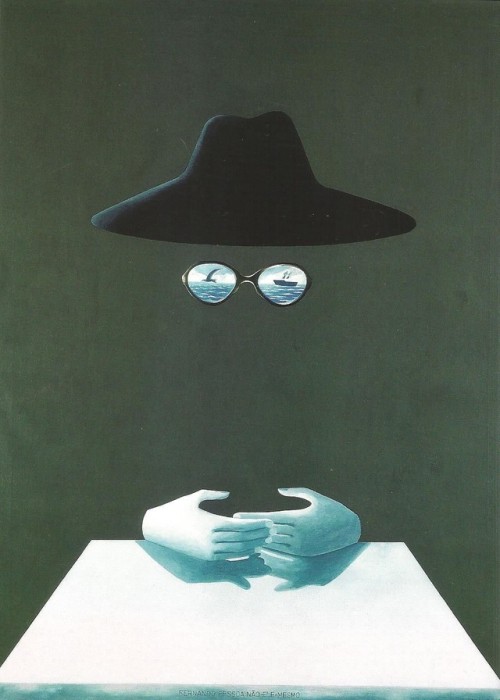
Fernando Pessoa Not Himself
(oil on canvas, 1976 by António Costa Pinheiro)
Mas o próprio Fernando Pessoa pensava que o cinema poderia ser muito útil para promover Portugal em terras estrangeiras. Então, o que ele fez? Ele planejou abrir uma companhia cinematográfica! Seu empreendimento, que seria chamado Cosmopolis, produziria filmes especiais de propaganda, mostrando o melhor lado do moderno e agora democrático país que era Portugal – o país se tornou uma república em 1910, abandonando o regime monárquico.

But Fernando Pessoa himself thought that cinema could be very useful to promote Portugal in foreign lands. So, what did he do? He planned to open a film company! His endeavor, to be called Cosmopolis, would produce special propaganda films, showing the best side of the modern and now democratic Portugal – the country became a republic in 1910, abandoning the monarchic government.
 
"I have in me all the dreams of the world"
O plano da Cosmopolis foi feito no final da década de 1910 e logo abandonado. Mas Pessoa voltou nos anos 20 com uma nova ideia: uma produtora de cinema a ser chamada de Ecce Film, que teria sua sede na famosa Rua de São Bento, 333-335, onde muitos filmes já haviam sido feitos. Este empreendimento também não se realizou. Mas Pessoa não se importou, pois em meados dos anos 1920 ele estava escrevendo argumentos para o cinema.

The Cosmopolis plan was made in the late 1910s and soon abandoned. But Pessoa came back in the 1920s with a new idea: a film production company to be called Ecce Film, and to have its headquarters at the famed São Bento Street, 333-335, where many films had been shot. This endeavor also didn’t become true. But Pessoa didn’t care, as in the mid-1920s he was actually writing film arguments.


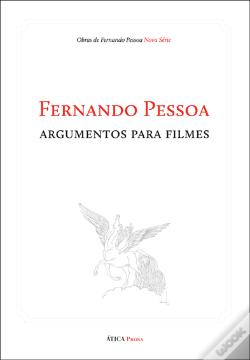
Os sete argumentos que Fernando Pessoa escreveu foram mantidos em segredo por quase 80 anos, e em 2011 eles foram reunidos no livro “Argumentos para Filmes” pelos pesquisadores Patricio Ferrari e Claudia Fischer. Pessoa escreveu os argumentos em português (apenas os diálogos), inglês e francês, e estes textos podem ser divididos em duas categorias: thrillers (cinco deles) e comédias (os outros dois).

The seven arguments Fernando Pessoa wrote were kept a secret for nearly eighty years, and in 2011 they were reunited in the book “Argumentos para Filmes” (that is, Movie Scripts), by researchers Patricio Ferrari and Claudia Fischer. Pessoa wrote the arguments in Portuguese (dialogues only), English and French, and these texts can be divided in two categories: thrillers (five of them) and comedies (the other two).


Um argumento, intitulado “Três Andares”, demonstraria as desigualdades sociais através de três famílias de um mesmo prédio, mas de diferentes classes sociais, que executam a mesma ação. Um thriller inclusive apresenta o uso do MacGuffin: neste filme, um milionário cruzaria o Atlântico de navio levando consigo um objeto valioso e acompanhado por um detetive particular, e então várias pessoas tentariam roubar este objeto... apenas para descobrir no final que o objeto real já havia sido enviado em outro navio na semana anterior.

One argument, called “Three Floors”, would demonstrate social inequalities by having three families from the same building but from different social classes do the same actions. One thriller even has a clever use of the MacGuffin: in this film, a millionaire would cross the Atlantic by ship taking a valuable object with him and accompanied by a private detective, then several people try to steal this object... only to find out in the end that the real object had been shipped a week earlier in another ship.
Lisbon in the 1920s
É também interessante notar que Pessoa escreveu, em 1930: “Com exceção dos alemães e dos russos, ninguém ainda colocou nada de arte no cinema”. Ele parece refletir aqui a opinião de outros escritores portugueses que escreviam e publicavam a revista Presença e geralmente davam destaque aos filmes alemães e soviéticos. Embora Pessoa criticasse os “homens vazios do cinema”, comparando Mary Pickford e Rodolfo Valentino a aventureiros tolos que apenas queriam quebrar recordes de velocidade (ele usa as palavras “viciados em velocidade, estrelas de papelão do cinema”), uma revista com anotações encontrada em seus pertences mostra que ele estava particularmente interessado no mapa astral de Joan Crawford.

It’s also interesting to see that Pessoa wrote, in 1930: “Except the Germans and the Russians, no one has as yet been able to put anything like art into the cinema”. He seems to reflect here the opinion of fellow Portuguese writers who wrote and published the magazine Presença (Presence) and often highlighted German and Soviet films. Although Pessoa criticized the “film hollow men” of Hollywood, comparing Mary Pickford and Rudolf Valentino to silly adventurers who only wanted to break speed records (he uses the words “speed dopers, film cardboarders”), an annotated magazine found in his belongings shows that he was particularly interested in Joan Crawford’s astrology chart.


Fernando Pessoa faleceu em 1935 aos 47 anos – por causa de cirrose ou pancreatite. Ele deixou muitos trabalhos e empreendimentos inacabados, incluindo todos estes mencionados na seara do cinema. Companhia cinematográfica, produtora de filmes, argumentos fílmicos: é bastante coisa para alguém que escreveu, em uma carta de 1929 para o amigo José Régio: “Ao inquérito sobre cinema não responderei. Não sei o que penso do cinema.”

Fernando Pessoa passed away in 1935 at age 47 – due to either cirrhosis or pancreatitis. He left many works and endeavors unfinished, including all these mentioned in the film world. Film company, production company, seven arguments: it’s a lot for someone who wrote, in a 1929 letter to his friend José Régio: “I won’t answer the questionnaire about cinema. I don’t know what I think about cinema.”

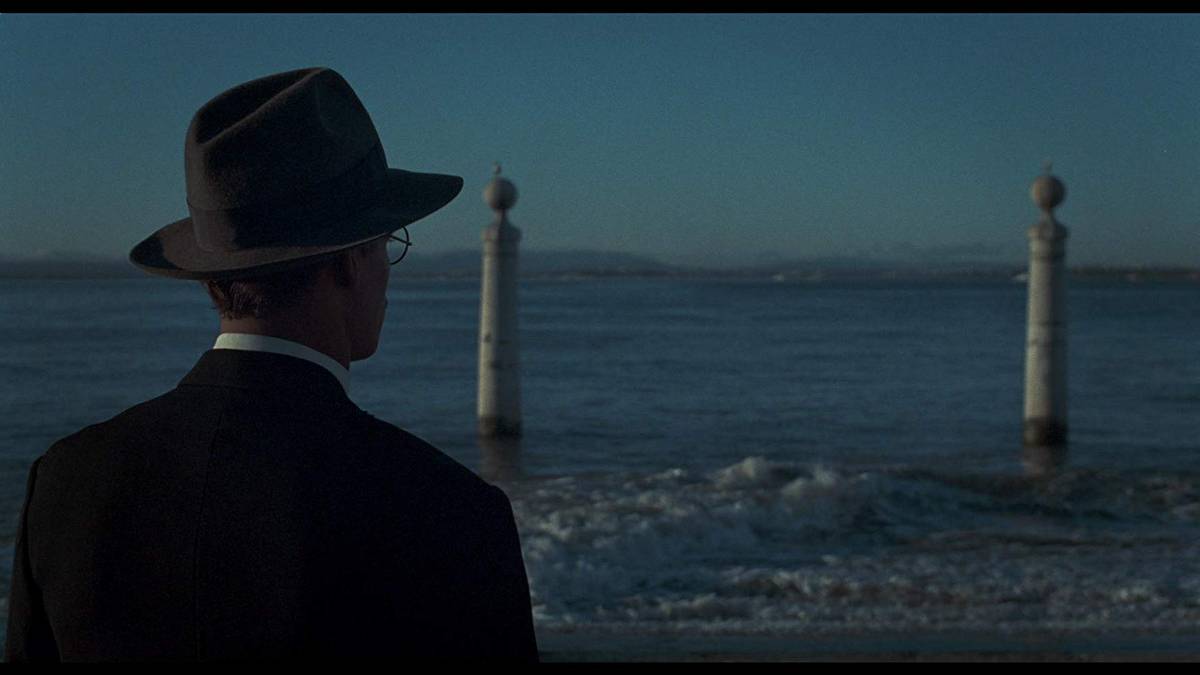
"Como Fernando Pessoa Salvou Portugal" (2018)
Fontes:

FERRARI, Patricio. FISCHER, Claudia. Fernando Pessoa: Argumentos para Filmes. Lisboa: Editora Ática, 192 p, 2011.

FRIAS, Joana Matos. Transforma-se o espectador no próprio espectáculo: O desassossego fílmico de Fernando Pessoa.

MARTONI. Alex Sandro. O cinema de Fernando Pessoa. Cadernos de Letras da UFF - Dossiê: Palavra & Imagem n° 44, p. 393-398, 2012.

SANTIAGO, Silviano. Fernando Pessoa e o cinema. Estado de São Paulo, 09 de junho de 2012.

This is my contribution to the Luso World Cinema Blogathon, hosted by Beth and me at Spellbound by Movies and here at Crítica Retrô. 


Tuesday, November 12, 2019

The Luso World Cinema Blogathon begins


Bem-vindo!

Welcome!


Beth Gallagher from Spellbound by Movies and me here from Crítica Retrô are happy to be hosting the Luso World Cinema Blogathon. We are excited to see so many bloggers writing about cinema made in Portuguese and also paying a tribute to film performers from Portuguese ancestry.
Without further ado, let’s start with the chica-chica-boom-chic!

Day 1 entries


Ruth from Silver Screenings writes about the fashion influence of Carmen Miranda.


My co-hostess Beth talks about the beautiful art deco covers of Cinearte magazine.


Maddy writes a tribute to Lena Horne, talking about her life, work and her involvement with the civil rights activism.


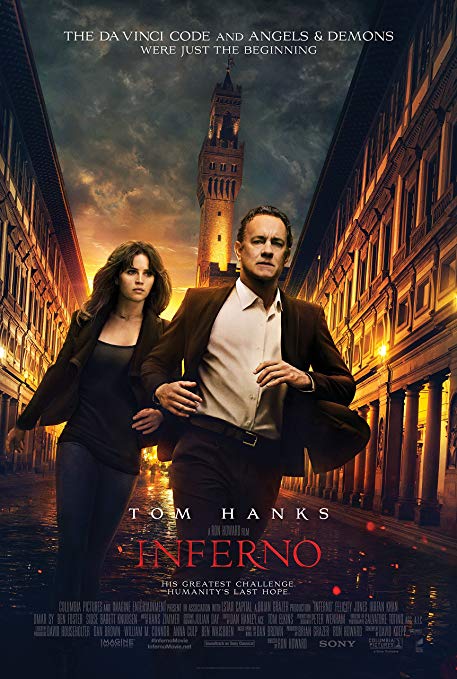
MovieRob is here with his first contribution: a review of 2016’s “Inferno”, starring Tom Hanks, an actor from Portuguese heritage.


Quiggy from The Midnite Drive-In writes about the unique Portuguese horror “Os Olhos da Minha Mãe / The Eyes of My Mother”


Terence from A Shroud of Thoughts writes about the morals scrutinized in Manoel de Oliveira’s “Aniki Bobó”.


Day 2 entries

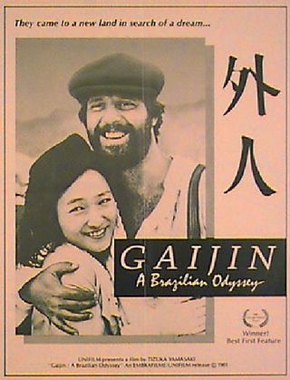
Dan from Crimson Kimono reviews “Gaijin– A Brazilian Odyssey” (1980) and finds some things in common with Japanese people who migrated to Brazil in 1908.


Rebecca from Taking Up Room reviews “The Miracle of Our Lady of Fatima” (1952), a B-movie about the appearance of the Virgin Mary to three children in 1917.


Annette from Hometowns to Hollywood gives us a view of Mary Astor’s life and the places she lived in.


MovieRob is back with a guy everybody likes: Keanu Reeves, who is from Portuguese heritage. Rob now reviews“The Devil’s Advocate” (1997).


Be sure to visit Spellbound by Movies for Days 3 and 4 of the blogathon!


Monday, August 26, 2019

Announcing the Luso World Cinema Blogathon


According to the Babbel website, 260 million people in the world speak Portuguese – about 220 million are native speakers. This makes Portuguese the sixth most spoken language in the world! Nine countries have Portuguese as their official language: Portugal, Brazil, Angola, Mozambique, Cape Verde, Guinea-Bissau, East Timor, Equatorial Guinea and São Tomé e Príncipe.


But why am I talking about that? Well, the language you all find when you reach this blog, in the title and in the non-italic text, is Portuguese. For five years, this blog was in Portuguese only, and since in 2016 it is a bilingual blog. The blog’s slogan is “classic film with a tropical twist”, and this is what I try to do: bring a Portuguese-speaking perspective to my analysis.

Carmen Miranda, born in Portugal, raised in Brazil

That’s why I got extremely excited when Beth Gallagher from the blog Spellbound by Movies talked about the Luso World Cinema Blogathon she was planning – because countries that speak Portuguese are called “Lusophone”. Cinema in Portuguese is rich and often unexplored by non-Portuguese speakers – and it should be discovered by everybody!

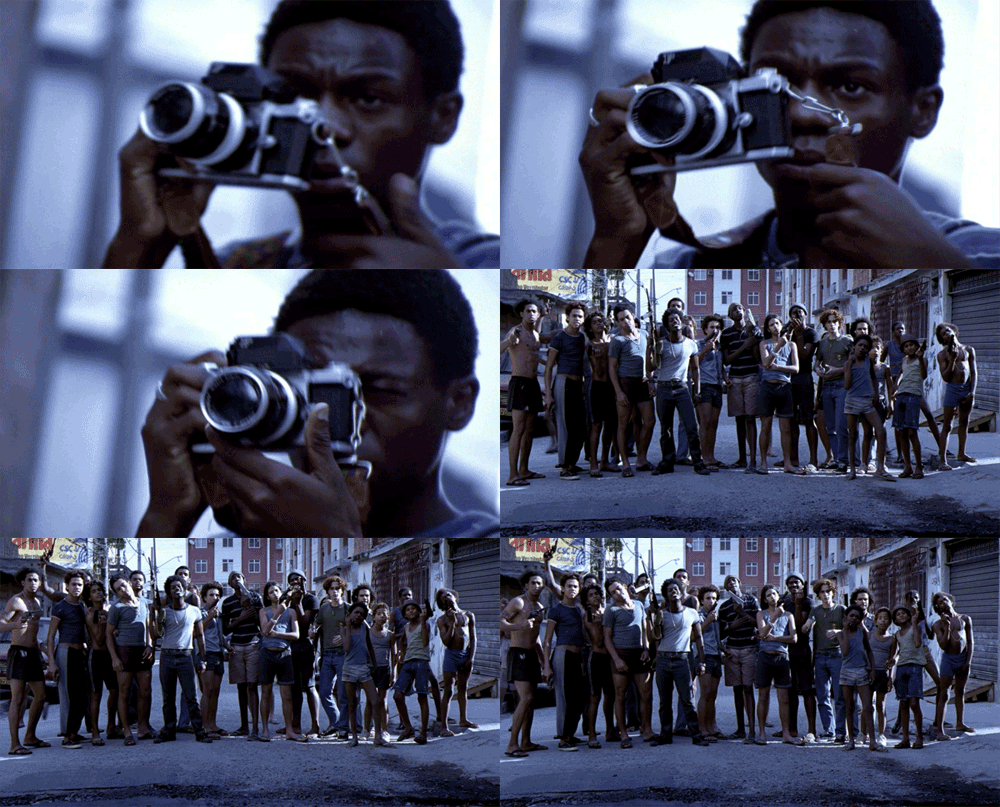
"City of God", 2002

The first films arrived in both Portugal and Brazil in 1896, and since the first decade of the 20th century these countries were making movies. So far, one film spoken in Portuguese has won the Oscar for Best Foreign Language Film (1959's "Black Orpheus", and the award went to its French producers), and the Brazilian movie “The Given Word” (“O Pagador de Promessas”, 1962) won the Palme D’Or at Cannes.

Director Anselmo Duarte (shaking his hand with someone else)
arrives at Santos with the Palme D'Or

All the Portuguese-speaking countries, except Brazil and Portugal, were still colonies until the middle of the 20th century – this means that their national cinema developed in a different rhythm and circumstances. Furthermore, both Brazil and Portugal went through dictatorships in the past century, and it impacted the Lusophone cinema with censorship, shifts of subject and, of course, the organization of a resistance cinema.

Brazilian filmmaker Alberto Cavalcanti

The main filmmakers in Brazilian cinema are Mário Peixoto – who only directed the 1930 masterpiece “Limite” – Humberto Mauro, Glauber Rocha, Nelson Pereira dos Santos and Eduardo Coutinho, all of them already deceased. Right now, there are many new voices appearing in Brazilian cinema – but they are at risk since the new government supports censorship.

Humberto Mauro

In Portugal, the main filmmaker was without a doubt Manoel de Oliveira, who in 1942 was using techniques that the Italian Neorrealism would only begin to use six years later. Manoel de Oliveira lived to be 106!
Manoel de Oliveira

Not only Luso films made an impact in the film world, but also many people from Portuguese-speaking countries or descendants of Portuguese-speaking people work in film. For instance: classic Hollywood actress Mary Astor was of Portuguese ancestry from her mother’s side – in fact, her real name was Lucile Vasconcellos Langhake. Actor Daniel Brühl’s father was born in Brazil from German parents. Nowadays, in Hollywood, we have actors Rodrigo Santoro and Alice Braga, directors Carlos Saldanha and Fernando Meirelles, producer Rodrigo Teixeira (all born in Brazil), actress Camila Mendes (daughter of a Brazilian couple) and many more that will surprise you.

Mary Astor

So, for this blogathon, you can choose any film from a Lusophone country and also people born in Lusophone countries or people with Lusophone ancestry. And you can even talk about a song in Portuguese, like “Brazil”, a famous song by Ary Barroso that was featured in several movies.


The blogathon runs November 12th until November 15th. Pick a topic, grab a banner, and “vamos lá!” (“let’s go!”)

Here are some resources that may help you:

List of films from São Tomé and Príncipe: :(

The contributors:

Maddy Loves Her Classic Films - Tribute to Lena Horne
Pale Writer - Keanu Reeves in "Point Break" (1991)
Poppity Talks Classic Film - "The House of Sand" (2005)
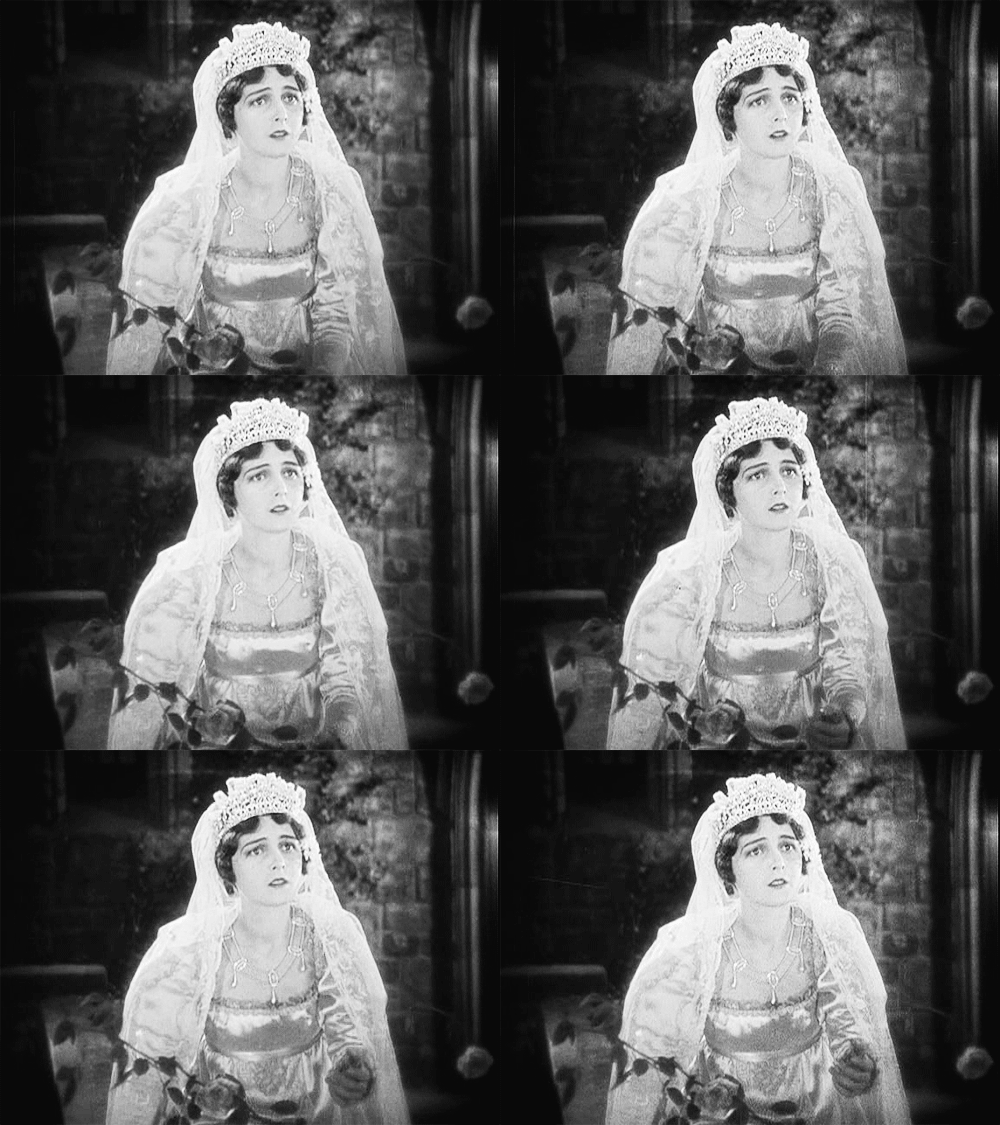
Strictly Vintage Hollywood - Helena D'Algy and Tony D'Algy - film "A Sainted Devil" (1924)
Ana Roland - Sonia Braga
Wide Screen World - "Francisca" (1981)
A Shroud of Thoughts - "Aniki Bobó" (1942)
Realweegiemidget Reviews - Rue McClanahan in "They Might be Giants" (1971)
The Midnite Drive-In - "The Eyes of my Mother" (2016)
Voiceover - "Ossos" (1997)
Silver Screenings - Tribute to Carmen Miranda 
Movies, Silently - "Braza Dromida" (1928)
Musings of a Classic Film Addict - Carmen Miranda in "Down Argentine Way" (1941)
Pop Culture Reverie - "Central Station" (1999)
Crimson Kimono - "Gayjin - A Brazilian Odyssey" Part I (1980) and Part II (1985)
Moon in Gemini - "Dona Flor and her Two Husbands" (1976) 
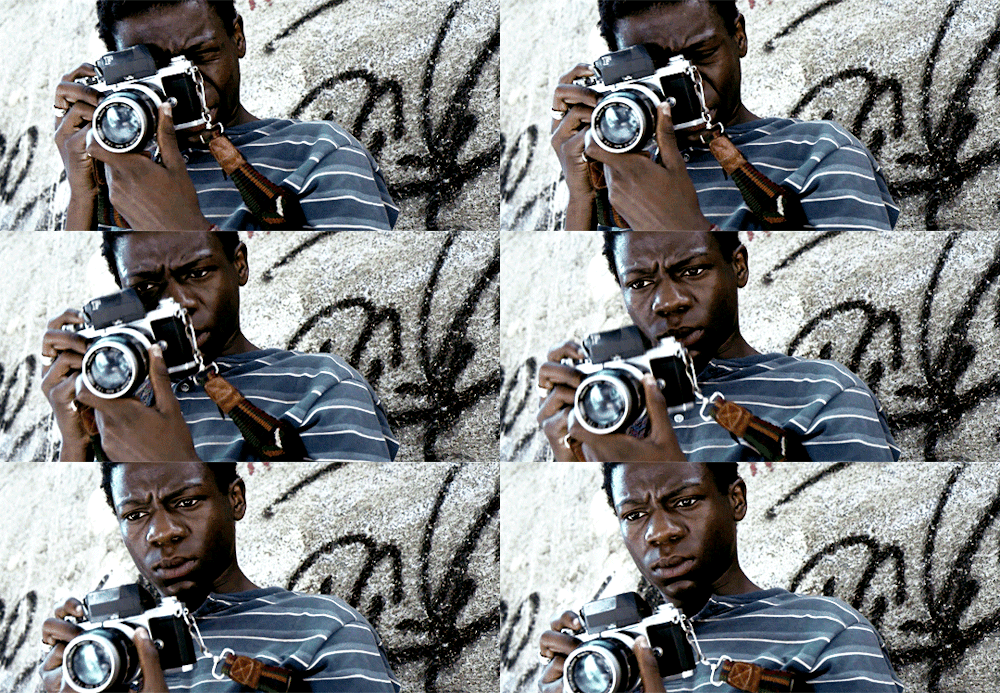
Cinema Parrot Disco - "City of God" (2002)
In the Good Old Days of Classic Hollywood - Favorite Mary Astor films
Taking Up Room - "The Miracle of Our Lady of Fatima" (1952) 
Silentology - Louise Fazenda in "A Bear Affair" (1915)
MovieRob - Tom Hanks in "Inferno" (2016), Keanu Reeves in "The Devil's Advocate" (1998), Mary Astor in "Across the Pacific" (1942) and Joe DeRita in "Three Stooges in Orbit" (1962)

The banners:


Related Posts Plugin for WordPress, Blogger...