Por
muito tempo, eu tinha como desejo ir um dia ao paraíso dos amantes
de cinema mudo, a Giornate del Cinema Muto em Pordenone, Itália.
Neste ano, por causa da pandemia, o evento foi realizado
virtualmente... e eu não apenas tive a oportunidade de assistir aos
filmes, mas também tive a imensa honra de participar do Collegium,
uma experiência quase indescritível que reuniu 12 jovens de várias
partes do mundo para discutir sobre os filmes e ouvir especialistas
falando sobre restauração de filmes. Foi uma experiência
enriquecedora – muito melhor do
que eu poderia ter imaginado – que
me fez aproveitar ainda mais este festival que, pude perceber, foi
construído com contrastes este ano.
For a
long time, I had in my bucket list the dream of one day attending the
silent film nerd heaven aka the Giornate del Cinema Muto in
Pordenone, Italy. This year, because of the pandemic, the event had
to go online... and I had the opportunity not only to watch the films
but also the amazing honor of being part of the Collegium, a nearly
undescribable experience that reunited 12 young people from around
the world to discuss the films and listen to experts on topics about
film restoration. It was an enriching experience – much
better than I could ever have imagined –
that made me enjoy even more this festival that, I came to realize,
was built with contrasts this year.

O
primeiro contraste é bastante óbvio: estamos assistindo a filmes
mudos, muitos deles feitos há mais de 100 anos, em telas de
computadores, smartphones e Smart TVs. As pessoas que fizeram estes
filmes jamais imaginaram este tipo de tecnologia que hoje estamos
usando para vê-los de qualquer lugar do mundo e
para nos conectar com outros fãs de cinema mudo.
The
first contrast is pretty obvious: we're watching silent movies, many
of them released over 100 years ago, on computer screens, smartphones
and Smart TVs. The people who made these movies could never imagine
this kind of technology we're now using to see them from anywhere in
the world and to connect to
other silent film fans.
 |
| Lady the dog in "Toodles, Tom and Trouble" (1916) | |
Começamos
com um sentimento compartilhado: a vontade de viajar, explorada numa
série de nove travelogues, ou filmes de viagens. Os filmes datam de
1911 a 1939, indo
de um giro por Nova York até um verão em Trieste com gente feliz
aproveitando o tempo livre, sem saber que uma guerra terrível estava
para começar. Nós, os espectadores, temos o benefício do tempo e
sabemos o que estava por vir. Neste ponto do catálogo, o diretor
artístico do festival, Jay Weissberg, destaca algo que eu sempre
procuro ter em mente quando vejo e pesquiso sobre filmes antigos: os
perigos da nostalgia quando destacada da memória histórica. Se
queremos ter uma visão completa do mundo, a história é a nossa
arma.
We
started with a shared feeling: the urge to travel, explored in a
series of nine travelogues. The travelogues date from 1911 to 1939,
going from a tour around New York to a summer in Trieste with happy
people enjoying their time off, not knowing that a terrible war was
about to start. We, the viewers, have the benefit of time and know
what was about to happen. At this point in the catalogue, the
festival's artistic director, Jay Weissberg, highlights something I
always have in mind while watching and researching old films: the
dangers of nostalgia when unaccompanied by historical memory. If we
want a complete view of the world, history is our best weapon.

O
magnífico travelogue / desfile de moda em Pathécolor “Un Voyage
au Caire” (“Uma Viagem ao Cairo”), de 1928, é outro
curta-metragem de contrastes: na viagem ao Cairo, dois artistas da
Comédie-Française se hospedam em um hotel chique que hoje é a
residência presidencial e um símbolo da terrível ditadura de
Mubarack. No deserto, eles descem de um carro moderno e a mulher
mostra um talento natural para andar de camelo, mesmo estando com
roupas bem inadequadas para a aventura.
The
magnificent travelogue / fashion show in Pathécolor “A Trip to
Cairo”, from 1928, is another little film of contrasts: in their
trip to Cairo, two French performers from the Comédie-Française
stay at a fancy hotel that now is the presidential residence and a
symbol of Mubarack's terrible dicatorship. In the desert, they get
off their modern car and the woman shows her natural talent to ride a
camel, even though her clothes couldn’t be more inadequate for the
adventure.

O
filme “As Aventuras de Chiquinho / Penrod and Sam”, de William
Beaudine, traz três pré-adolescentes bem diferentes: o protagonista
Penrod, o garoto nerd George que deve passar por uma humilhante
“iniciação” para entrar no clube de Penrod, e o rico e mimado
Roddy, cujo pai compra o lote de terra em que Penrod e seus amigos
brincam. Um contraste que poderíamos esperar considerando a época,
felizmente, não existe: os dois meninos negros não são tratados de
um jeito diferente pelos outros meninos e nem
são usados para piadas estúpidas baseadas em estereótipos.
William
Beaudine's “Penrod and Sam” brings three very different pre-teen
boys: the lead Penrod, the nerd boy George who must go through a
humiliating “initiation” to enter Penrod’s club, and the rich
and spoiled boy Roddy, whose father buys the lot where Penrod and his
friends play. A contrast we could expect from the time period,
luckily, is not there: the two African-American boys are not treated
differently by the other boys and are not used for cheap,
stereotype-based laughs.
O
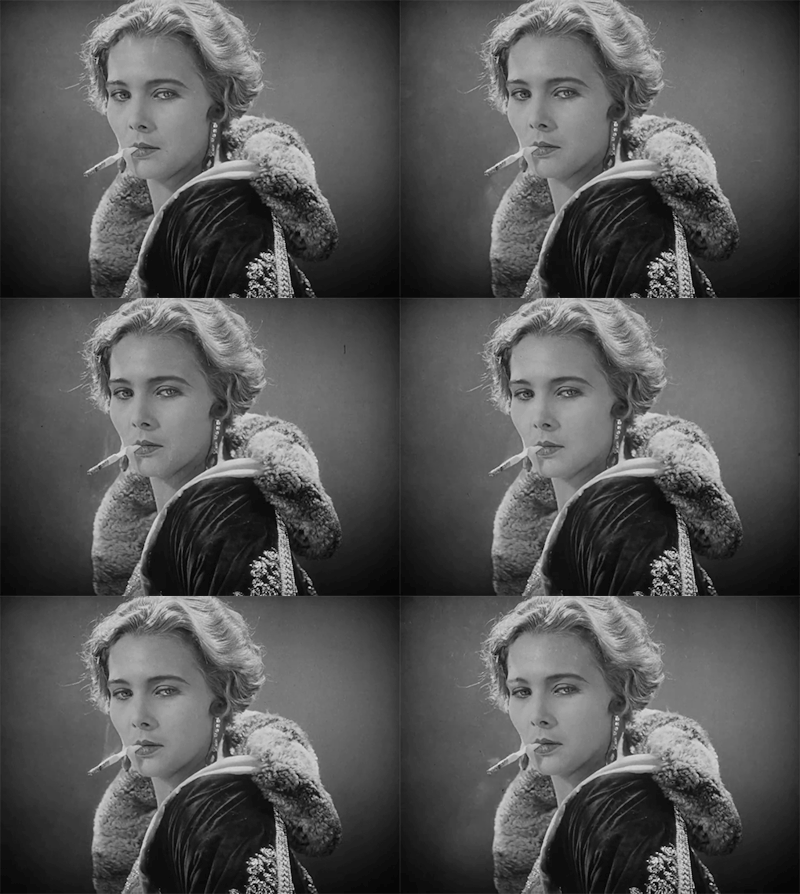
contraste entre Oriente e Ocidente é central para dois filmes: a
produção de Hollywood de 1921, “Onde as Luzes são Baixas / Where
Lights are Low”, e o filme chinês de 1935 “Costumes Nacionais /
Guofeng”. Obviamente, a maneira como as diferenças são exploradas
são únicas em cada filme.
The
contrast between East and West is central in two films: the 1921
Hollywood production “Where Lights are Low” and the 1935 Chinese
film “National Customs”. Obviously, the way the differences are
explored are unique in each one.
Em
“Onde as Luzes são Baixas”, o príncipe chinês Tsu Wong,
interpretado pela então superestrela internacional Sessue Hayakawa,
já havia adotado alguns valores ocidentais quando
entra em conflito com o tio ao
falarem sobre
casamento: enquanto Wong quer se casar com alguém que ele ama, o tio
quer que ele se case com alguém escolhido pela família. Depois
deste conflito, Wong deixa a China para ir para a faculdade nos EUA.
O protagonista nos é simpático, assim como era para o público dos
anos 1920, por causa de sua adoção de valores ocidentais desde o
começo do filme.
In
“Where Lights are Low”, Chinese prince Tsu Wong, played by then
international superstar Sessue Hayakawa, had already adopted some
Western values when he clashes with his uncle about marriage issues:
while Wong wants to marry someone he loves, the uncle wants him to
marry someone appointed by the family. After this clash, Wong leaves
China to attend university in the United States. The lead is
sympathetic to us, as he was for early 1920s audiences, because of
this adoption of Western values since the beginning.

Quatro
anos depois, já formado, vemos Wong novamente, completamente
americanizado: de terno e cartola, ele está jogando dados com os
amigos quando seu tio chega. O tio já está horrorizado após entrar
na festa de graduação e alucinar com a banda de jazz, imaginando-os
como músicos chineses vestindo roupas tradicionais e tocando canções
modernas. Mesmo depois de ficar pobre e começar a trabalhar em
Chinatown, Wong não se veste com roupas chinesas: estas são
exclusivas do vilão, que é apenas americanizado no chapéu Fedora
que usa.
Four
years later, already graduated, we see Wong again, completely
Americanized: in a suit and top hat, he's playing dice with his
friends when his uncle arrives. The uncle is already horrified after
entering the graduation party and hallucinating with the jazz band,
imagining them as Chinese musicians dressed in traditional clothes
and blasting modern tunes. Even after becoming poor and starting
working in Chinatown, Wong doesn't dress in Chinese clothes: those
are worn by the villain, Americanized only in his Fedoras.
O
elenco do filme também tem grandes contrastes, com atores em sua
maioria japoneses interpretando personagens chineses, e uma atriz
claramente branca interpretando a namorada do protagonista. Na época,
miscigenação era tão mal vista na tela quanto na vida real, mas
Hollywood não viu problema em colocar uma atriz branca fazendo
“yellowface” para viver uma donzela raptada.
The
casting of the film also has high contrasts, with mostly Japanese
actors playing Chinese characters, and a clearly white actress
playing the Chinese love interest. At
the time, miscigenation was
frowned upon as much on screen as it was in real life, but
Hollywood saw no problem in putting a white actress in yellowface to
be a kidnapped damsel in distress.

“Costumes
Nacionais” apresenta, obviamente, um ponto de vista diferente. As
irmãs Lan (Ruan
Lingyu)
e Tao (Li
Lili)
são, na maior parte do filme, completos opostos: Lan é responsável,
simples e sempre busca a verdade, enquanto Tao é despreocupada,
mesquinha e, de acordo com a irmã, segue
o caminho da destruição. Lan representa a China rural, a China
“real”, e Tao representa a China cosmopolita, influenciada por
valores ocidentais. A crítica à modernização fica clara na
sequência com os pais do
personagem
Xu Boyang. Como alívio cômico do filme, eles satirizam o povo
chinês seguindo modas ocidentais, mudando sua maneira de vestir e as
mulheres usando maquiagem e aparelhos para criar novos penteados.
“National
Customs” presents, obviously, a different point of view. Sisters
Lan (Ruan Lingyu)
and Tao (Li Lili)
are, for most of the picture, complete opposites: Lan is responsible,
frugal and always seeks the truth, while Tao is carefree, greedy and,
according to her sister, on the path of destruction. Lan represents
rural China, the “real” China, and Tao represents cosmopolitan
China, influenced by Western values. The criticism of modernization
is clear in a sequence with Xu Boyang's parents. As the comic relief
in the film, they satirize Chinese people adopting Western fashions,
changing their way of dressing and, for women, using make-up and
bobbing
their hair with ironing curls.
 |
Make-up as futility in "National Customs" (1935)
|
Ser
infeliz quando se tem tudo parece algo contrastante, não? Mas é
exatamente isso que acontece com o protagonista de “Tempestade em
um Crânio”, uma deliciosa comédia italiana de 1922. Renato
De-Ortis, interpretado pelo diretor do filme, Carlo Campogalliani,
acredita que enlouquecerá, tal como seus ancestrais. Para provar que
ele está errado, seus amigos e sua namorada Liana (Letizia Quaranta)
criam uma complexa sequência de sonho, que servirá também como
psicoterapia.
Being
unhappy when you have everything sounds contrasting, doesn't it? But
this is exactly what happens to the lead of “La Tempesta in un
Cranio”, a delightful 1922 Italian comedy. Renato De-Ortis, played
by the director of the film, Carlo Campogalliani, believes he'll
become mad like his ancestors. To prove him wrong, his friends and
his girlfriend Liana (Letizia Quaranta) stage an ellaborate dream
sequence that will also serve as psychotherapy.

Nenhum
dos filmes havia apresentado o contraste entre classes sociais –
até o quinto dia, quando a restauração do filme grego “Os
Apaches de Atenas” foi exibida. O filme começa com cenas da vida
diária em um bairro pobre de Atenas, cenas que poderiam ter sido
filmadas por qualquer mestre do Neorrealismo Italiano. Nas ruas,
frequentadores de cafés – os Apaches do título – lutam para
sobreviver mas ainda
encontram
tempo para amar e se divertir. Enquanto a diversão deles é jogar
pedras uns nos outros com estilingues, os – novos – ricos da
cidade andam a cavalo e compram livros apenas para decorar as
estantes, pois não têm interesse na leitura. O contraste é mais
palpável quando um dos ricos contrata os três amigos pobres para
pregar uma peça. O dinheiro que o homem rico gasta sem pensar duas
vezes é usado pelos homens pobres para uma atividade de luxo: um
passeio de táxi por Atenas.
None
of the films had presented the contrast between social classes –
until the fifth day, when the restoration of the Greek film “The
Apaches of Athens” was presented. The film starts with scenes from
daily life in a poor neighborhood in Athens that could have been
filmed by any master of Italian Neorrealism. On these streets,
café-goers – the Apaches from the title – struggle to make ends
meet but still find
time for love and fun. While their fun is throwing stones at each
other with slingshots, the – newly – rich people in the city ride
horses for fun and buy books only to decorate their houses, as they
are not interested in reading. The contrast is more palpable as one
of the rich people contracts the three poor friends for an ellaborate
prank. The money the rich man spends without second thought is used
by the poor men to afford a luxury: a taxi ride through Athens.

De
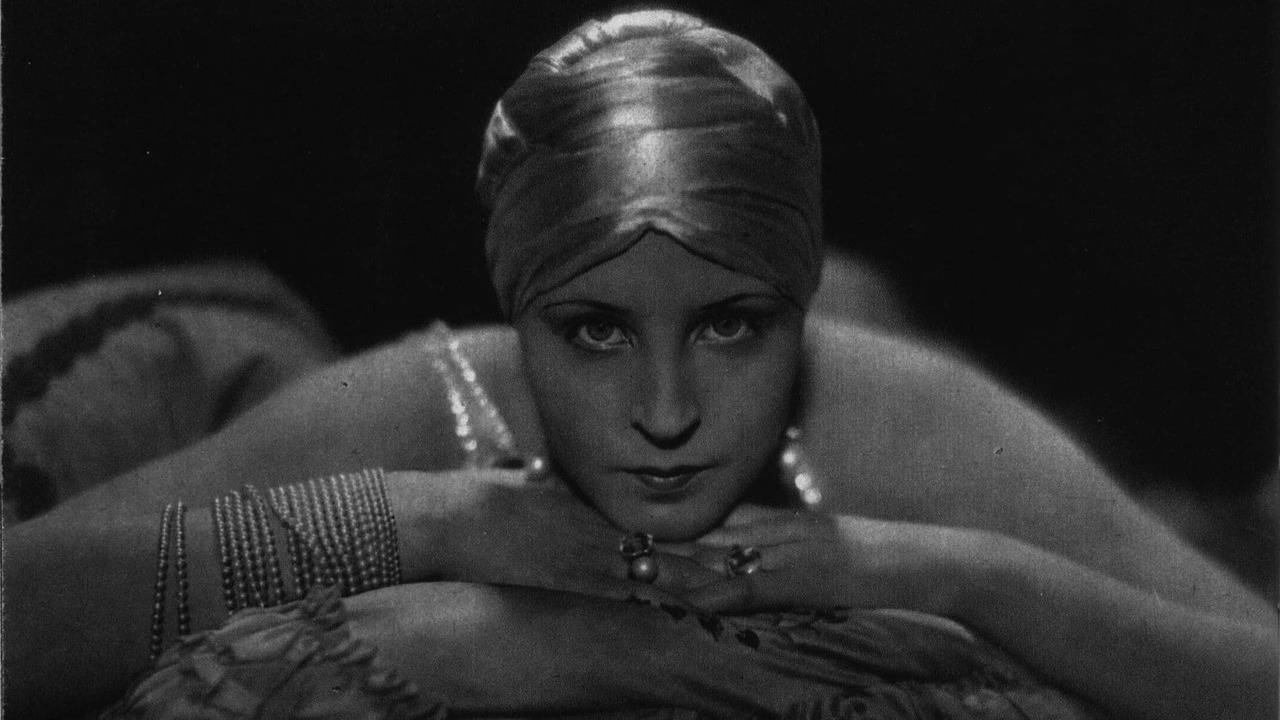
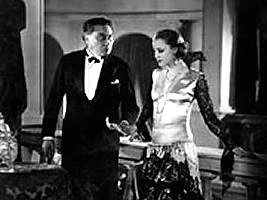
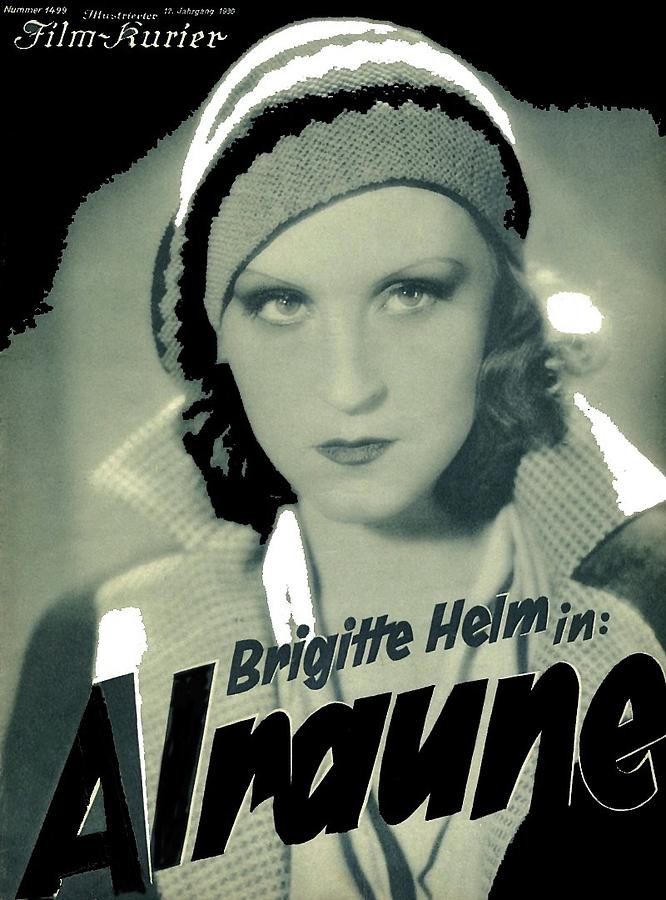
Atenas nós vamos para Berlim em “Crise” de G.W. Pabst, de 1928,
um filme sobre um casamento em crise. Uma pessoa que ajuda a criar
esta crise é Liane (a maravilhosa e subestimada Hertha von Walther),
amiga da protagonista, Irene (Brigitte Helm), que o marido de Irene
considera ser uma má influência para a esposa. Liane é
despreocupada e leva Irene para uma noite revolucionária num clube,
onde Liane usa um ousado vestido sem costas, dois anos antes de Jean
Harlow usar uma peça semelhante em “Anjos do Inferno”.
From
Athens we go to Berlin in G.W. Pabst's “A
Devious Path / Abwege”,
from 1928, a film about a marriage in crisis. One person helping this
crisis is Liane (the wonderful and underrated Hertha von Walther), a
friend of the lead, Irene (Brigitte Helm), and someone Irene's
husband considers to be
a bad influence for his wife. Liane is carefree and takes Irene to a
life-changing night on a nightclub, where Liane wears a risky
backless dress, two years before a similar piece was worn by blonde
bombshell Jean Harlow in “Hell's Angels”.
 |
Hertha von Walther
|
De
volta a Hollywood para “Romance of the Redwoods” (1917) de Cecil
B. DeMille, no qual Mary Pickford e Elliott Dexter se apaixonam em
circunstâncias estranhas. A cena deles na mesa, tomando café da
manhã, tem uma forte marca de “A Bela e a Fera”, com a garota
ficando horrorizada com a falta de etiqueta do homem que a tem como
hóspede / refém.
Back
to
Hollywood for Cecil B. DeMille’s “Romance of the Redwoods”
(1917), in which Mary Pickford and Elliott Dexter fall in love under
weird circumstances. Their scene on the table, having breakfast, has
a strong “Beauty and the Beast” feeling, with the girl becoming
horrified by the lack of manners of the man who has her as a guest /
hostage.
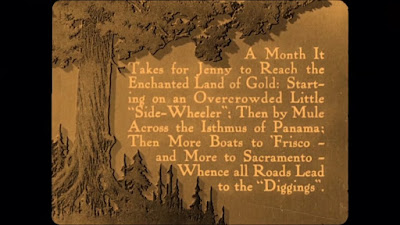 |
Mary Pickford had to travel a whole month!
|
O
filme dinamarquês de 1913 “Filha do Balé / Ballettens Datter” me apresentou Rita
Sacchetto, a protagonista do filme e uma das maiores bailarinas do
mundo na época. Rita interpreta Odette, uma mulher dividida entre o
casamento e sua profissão de bailarina, pois seu marido, um conde,
exigiu que ela parasse de dançar quando eles se casaram, mas ela
sente muita falta dos palcos. É possível ver, numa sequência em
particular, quão triste ela está, e como ela fica feliz ao visitar
sua antiga companhia de balé.
The
1913 Danish film “Unjustly Accused / Ballettens Datter” introduced me to Rita
Sacchetto, the film's lead and one of the biggest dancers of the
world at the time. Rita plays Odette, a woman torn between marriage
and her profession as a dancer, as her husband, a count, demanded her
to stop dancing when they got married, but she really misses the
stage. You can see, in a particular sequence, how sad she is, and how
happy she becomes once she visits her old ballet company.

E
do que são feitas boas duplas cômicas se não de contraste? Quando
pensamos em duplas visualmente contrastantes no cinema, logo nos
lembramos de Stan Laurel e Oliver Hardy. Eles não eram apenas um
cara magro e um homem gordo – Stan e Ollie eram opostos e
complementares de muitas formas. Laurel aprendeu seu ofício nos
palcos ingleses. Hardy era gerente de um cinema e se tornou ator.
Laurel fez muitas paródias e também interpretou personagens
ingênuos. Hardy foi, de início, escalado como vilão. Laurel era o
cérebro, em geral escrevendo e dirigindo os filmes da dupla. Hardy
era o coração. Juntos, eles foram icônicos, mas o festival
escolheu focar nos dois individualmente, em curtas que eles fizeram
antes de se tornarem parceiros – e esta seleção foi incrível,
com destaque para o segundo rolo da hilária paródia “When Knights
Were Old”.
And
what are good comedy duos made of if not contrast? When we think
about visually contrasting onscreen duos, we quickly remember Stan
Laurel and Oliver Hardy. They were not only a thin man and a chubby
guy – Stan and Ollie were opposites and complimentary in many ways.
Laurel's background was music hall. Hardy was a theater manager
turned screen actor. Laurel did many parodies and also played naïve
characters. Hardy was at first cast as a heavy. Laurel was the brain,
often writing and directing the films of the duo. Hardy was the
heart. Together, they were iconic, but the festival chose to
highlight the two individually, in shorts
they made before being paired – and this selection was amazing,
with the highlight being the second reel of the hilarious parody
“When Knights Were Old”.

Mas
nem tudo foi contrastante. De volta ao segundo dia da jornada,
encontramos “The Brilliant Biograph”, uma compilação de 46
curtas gravados em 68mm e feitos entre 1897 e 1902 por toda a Europa.
Vamos dar uma olhada na última parte desta compilação, chamada de
“Corpo em Movimento”. Pense na família de malabaristas de 1898
ou nos boxeadores de ponta-cabeça de 1899: eles ainda são
divertidos, não? Se eles tivessem sido filmados hoje, o vídeo não
viralizaria? O público moderno não fica intrigado e maravilhado com
muitas das mesmas coisas que intrigavam e maravilhavam o público da
Era Vitoriana? No final, como o festival mostrou, só os séculos
mudaram: nós, o público, somos o mesmo. Somos um só.
But
not everything was contrasting. Going back to the second day of the
journey, we find “The Brilliant Biograph”, a compilation of 46
68-mm short films made between 1897 and 1902 all around Europe. Let's
take a look in the last sessionof this compilation, called “Body in
Movement”. Think about the Agoust family of jugglers from 1898, or
the upside-down boxers from 1899: aren't they still amusing? If they
were filmed today, wouldn't the video go viral? Aren't modern
audiences intrigued and marvelled by many of the same things
Victoran-era audiences were? In the end, as the festival showed, only
the centuries have changed: we, the public, are one and the same.