} Crítica Retrô: Adela Rogers St John

Tradutor / Translator / Traductor / Übersetzer / Traduttore / Traducteur / 翻訳者 / переводчик

Showing posts with label Adela Rogers St John. Show all posts

Friday, June 27, 2025

Hollywood (1932) / What Price Hollywood? (1932)


Meu filme favorito de todos os tempos é a versão de 1937 de “Nasce uma Estrela”. Com Technicolor brilhante, este drama sobre fama e infortúnio me arrebatou quando o vi pela primeira vez, há mais de 15 anos. Até agora, o filme foi refilmado três vezes - em 1954 com Judy Garland, em 1976 com Barbra Streisand e em 2018 com Lady Gaga. Mas mesmo em 1937 a história não era completamente original: o filme foi meio que inspirado por uma produção anterior, sobre a qual escreverei sobre agora, depois de todos esses anos apaixonada pela história de Vicky Lester e Norman Maine.

My favorite film of all time is the 1937 version of “A Star is Born”. With shining Technicolor, this drama of fame and misfortune swept me out of my feet when I first watched it, over 15 years ago. So far, the film was remade three times - in 1954 with Judy Garland, in 1976 with Barbra Streisand and in 2018 with Lady Gaga. But the story wasn’t completely original in 1937: the movie was kind of inspired by an earlier movie, which I’ll review today, after all those years being in love with the story of Vicky Lester and Norman Maine.

Mary Evans (Constance Bennett) segue as modas ditadas pelas estrelas de cinema e pelas revistas sobre o tema. Ela sonha com uma beijoca de Clark Gable, mas enquanto não tem sua grande chance, trabalha servindo mesas numa lanchonete local. Numa noite ela serve a mesa do famoso diretor Max Carey (Lowell Sherman), que, estando bêbado, a convida para ser seu par numa estreia de filme.  

Mary Evans (Constance Bennett) follows the fashions dictated by movie stars and fan magazines. She dreams of a smooch from Clark Gable, but while she doesn’t get her big break, she waits tables in a local derby. One night she waits the table of famous director Max Carey (Lowell Sherman), who, being drunk, invites her to be his date in a movie premiere.

No dia seguinte, porque Mary o trouxe inconsciente até a casa dele, Carey diz para ela ir até o estúdio. Ela consegue um pequeno papel com uma fala. Ela passa muitas horas ensaiando e o esforço compensa: o produtor Sr Saxe (Gregory Ratoff) lhe oferece um contrato a longo prazo. Com o apelido de “Amiga da América”, eles querem transformar Mary numa estrela. E conseguem.

The following day, since Mary brought him unconscious to his house, Mr Carey tells her to come to the studio. She is given a bit part with one line. She spends many hours rehearsing and the effort pays off: the producer Mr Saxe (Gregory Ratoff) gives her a long-term contract. Marketing her as “America’s Pal”, they want to turn Mary into a star. And so they do.

Um dia num jogo de polo, ela conhece Lonny Borden (Neil Hamilton), que a força a jantar com ele porque ele não aceita não como resposta. O horrível jantar forçado é logo seguido do anúncio do noivado deles. O casamento é um grande evento, mas a lua de mel precisa ser adiada porque Mary precisa regravar algumas cenas de seu próximo filme. Lonny é um milionário, mas pelo estúdio ele é conhecido como Sr Evans. Carey não quer que Mary desperdice seu tempo e talento dando atenção ao marido ao invés de focar na carreira. 

One day in a polo game she meets Lonny Borden (Neil Hamilton), who then forces her to have dinner with him because he can’t take no for an answer. The horrible forced dinner is quickly followed by the news of their engagement. The wedding is a huge event, but the honeymoon has to be postponed because Mary needs to do some retakes for her next film. Lonny is a millionaire but around the studio he is referred to as Mr Evans. Mr Carey doesn’t want Mary wasting her time and talent giving attention to her husband and focusing less on her career.

O contrato de sete anos com o mesmo estúdio era prática comum em Hollywood. À primeira vista soava como segurança, mas podia ser uma prisão. O contrato era como ter um dono: os estúdios eram donos de suas estrelas e as estrelas tinham que aceitar quaisquer papéis e roteiros que os executivos escolhiam para elas. Mas havia maneiras de escapar: atores podiam incentivar a permuta com outros estúdios que ofereciam papéis melhores, como fez Elizabeth Taylor, ou recusar papéis do estúdio, o que fez Bette Davis, sendo então suspensa por causa de seu comportamento.

The contract lasting for seven years with the same studio was common practice in Hollywood. It at first sounded like security, but could be a prison. The contract was basically an ownership: studios owned their stars and the stars had to accept whichever roles and scripts the executives chose for them. But there were ways out: actors could trigger loans to other studios for juicier roles, as Elizabeth Taylor did, or refuse roles from their studios, which Bette Davis did and was suspended for her behavior.

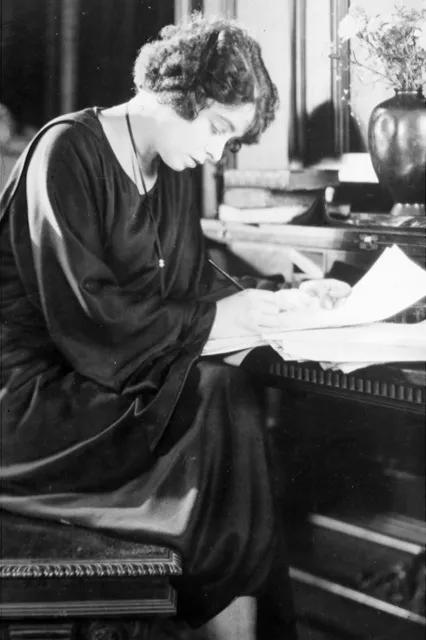
Este filme foi baseado numa história de Adela Rogers St. John. Muitos detalhes do roteiro são comentados por uma coluna de fofocas chamada “You Ask Me!”. Mas Adela não veio dessas colunas: ela foi uma respeitada jornalista em revistas de cinema, que a levaram até Hollywood, onde a primeira adaptação de uma de suas histórias foi feita em 1918. Para “Hollywood”, ela provavelmente se inspirou na vida pessoal de Colleen Moore e na tragédia do diretor Tom Forman. Adela foi indicada ao Oscar na categoria Melhor História. 

This movie was based on a story by Adela Rogers St. John. Many plot points here are commented upon by a gossip column called “You Ask Me!”. Adela didn’t come from these columns, though: she was a respected journalist in fan magazines, which led her to Hollywood, where the first adaptation of one of her stories was made in 1918. For “What Price Hollywood?”, she probably took inspiration from Colleen Moore’s personal life and the tragedy of director Tom Forman. Adela was nominated for an Oscar in the Best Story category.

Tanto “Hollywood” quanto a versão de 1937 de “Nasce uma Estrela” foram produzidos por David Selznick, que queria Clara Bow no papel principal e precisou convencer os executivos da RKO de que um filme sobre filmes seria bem-sucedido. Tanto “Hollywood” quanto a versão de 1954 de “Nasce uma Estrela” foram dirigidos por George Cukor. Cukor se recusou a dirigir a versão de 1937 por causa das semelhanças que continha com o filme de 1932. 

Both “What Price Hollywood?” and the 1937 “A Star is Born” were produced by David Selznick, who wanted to cast Clara Bow as the lead and had to convince RKO executives that a movie about movies would be successful. Both “What Price Hollywood?” and the 1954 “A Star is Born” were directed by George Cukor. Cukor refused to direct the 1937 version because of the similarities between this and the 1932 movie.

Os créditos começam com algo que não estamos acostumados a ver: um galo em cima de um globo e as palavras “An RKO Pathé Picture”. Em 1931 a RKO adquiriu a Pathé Exchange, fundada em 1914. Com a fusão vieram algumas das maiores estrelas da Pathé, como Constance Bennett. O nome “RKO Pathé” foi usado apenas até o fim de 191, quando o estúdio voltou a se chamar somente RKO. 

The credits begin with something we’re not used to seeing: a rooster over a globe and the words “An RKO Pathé Picture”. In 1931 RKO acquired Pathé Exchange, founded in 1914. With the merge came some of the greatest Pathé stars, such as Constance Bennett. The name “RKO Pathé” was used only until late 1932, when the studio became once again only RKO. 

Eu simplesmente amei os vestidos de Mary! Eu com certeza os usaria se eles fossem um pouco mais curtos A supervisão de figurino ficou a cargo de Margaret Pemberton, que tem apenas dois créditos no currículo. Na estreia, o destaque foi uma sequência com uma montagem da ascensão de Mary para os píncaros da fama, usando efeitos especiais que eram então novidade. 

I simply loved Mary’s dresses! I would certainly wear them if they were a little shorter. The wardrobe supervisor is Margaret Pemberton, who has only two film credits. At the premiere, however, the highlight was a sequence featuring a montage of Mary’s ascension to the top of Tinseltown, using special effects that were brand new at the time.

Em “Hollywood”, a figura bêbada problemática é o diretor Max Carey e não o marido da estrela, o que faz do roteiro mais criativo do que o de “Nasce uma Estrela”, mas provavelmente com menos pathos. É bacana, entretanto, ver uma “versão” da história na era pre–Code, mesmo sendo cheia de misoginia e racismo para com a empregada de Mary, Juanita (a incansável Louise Beavers). Considerando os prós e contras, é uma boa sessão.

In “What Price Hollywood?”, the problematic drunk figure is the director Mr Carey and not the starlet’s husband, which makes the plot more creative than the one in “A Star is Born”, although probably with less pathos. It’s nice, however, to see a “version” of the story made in the pre-Code era, even though it’s full of misogyny and racism towards the character of Mary’s maid Juanita (the hardworking Louise Beavers). Considering the pros and cons, it’s an enjoyable movie.

Monday, May 12, 2025

Sublime Redenção (1925) / The Red Kimona (1925)


“A tragédia apela ao coração. A comédia, à mente. O melodrama, aos olhos.” - Victor Hugo

“Tragedy appeals to the heart. Comedy, to the mind. Melodrama, to the eyes.” - Victor Hugo


Melodramas - aqueles filmes melosos que nos fazem chorar - são filmes pensados para um público majoritariamente feminino. Considerado não um gênero, mas uma forma de apresentar histórias, é geralmente do agrado das mulheres… mas pode uma mulher também realizar um melodrama?

Melodramas - also called tearjerkers or weepies - are movies that target a mostly female audience. Not considered a genre, but a way to present stories, it is often enjoyed by women… but can it also be made by women?

Quando mais mulheres estavam trabalhando atrás das câmeras, na era muda do cinema, algumas se aventuraram no melodrama, por exemplo a atriz que se tornou diretora Dorothy Davenport, que fez da perda de seu marido, o ídolo das matinês Wallace Reid, uma oportunidade para uma nova carreira contando histórias instigantes. “Sublime Redenção” foi um dos filmes que ela produziu e co-dirigiu.

When more ladies were working behind the cameras, in the silent movie era, some ventured into melodrama, for example actress turned filmmaker Dorothy Davenport, who made the loss of her husband, matinee idol Wallace Reid, an opportunity for a new career telling compelling stories. “The Red Kimona” was one of the films she produced and co-directed.

“Essa é uma história real”, nos conta a própria Dorothy no prólogo. Apertem seus cintos. Gabrielle (Priscilla Bonner) descobre que seu amado Howard (Carl Miller) foi para Los Angeles se casar - mas ele vai voltar para pegar de volta os anéis que deu para ela de presente. Ela o segue e atira nele dentro de uma joalheria. Ela é presa e conta sua história no tribunal.

“This is a true story”, we’re told by Dorothy herself in the prologue. Brace yourselves. Gabrielle (Priscilla Bonner) learns that her beloved Howard (Carl Miller) has gone to Los Angeles to get married - but he’ll come back to fetch the rings he gave her as a gift. She follows him and shoots him inside a jewelry store. She is arrested and tells her story at the trial.

Gabrielle conheceu Howard quando era mais nova, e vivia com seus irmãos e seu severo pai (Tyrone Power sR). Howard diz que a ama e a leva para Nova Orleans, onde ela é obrigada a se prostituir (prática então chamada de “white slavery”). Ouvindo a história dela, o júri declara Gabrielle inocente.

Gabrielle met Howard when she was younger, living with her siblings and strict father (Tyrone Power Sr). Howard says he loves her and takes her to New Orleans, where she is forced into prostitution (what was then called “white slavery”). Hearing her story, the jury declares Gabrielle not guilty.

Depois do julgamento ela é acolhida na casa de uma benfeitora chamada Beverly Fontaine (Virginia Pearson), que faz caridade só para ganhar fama. Gabrielle é chamada de “Madalena moderna” pelo jornal e a Sra Fontaine só quer que sua nova protegida pareça “interessante” para suas amigas ricas, que são como gatos brincando com um rato de brinquedo. Mas tudo que Gabrielle quer é parar de ser vista como um objeto e se tornar enfermeira. Mas seu passado não vai voltar para assombrá-la?  

After the trial she is taken to the home of a philanthropist named Beverly Fontaine (Virginia Pearson), who does charity only to gain publicity. Gabrielle is called a “modern Magdalen” by the newspaper and Mrs Fontaine only wants her new protégée to look “interesting” for her rich friends, who are like cats playing with a toy mouse. But all Gabrielle wants is to stop being seen as an object and become a nurse. But won’t her past come back to haunt her?

A Letra Escarlate / The Scarlet Letter

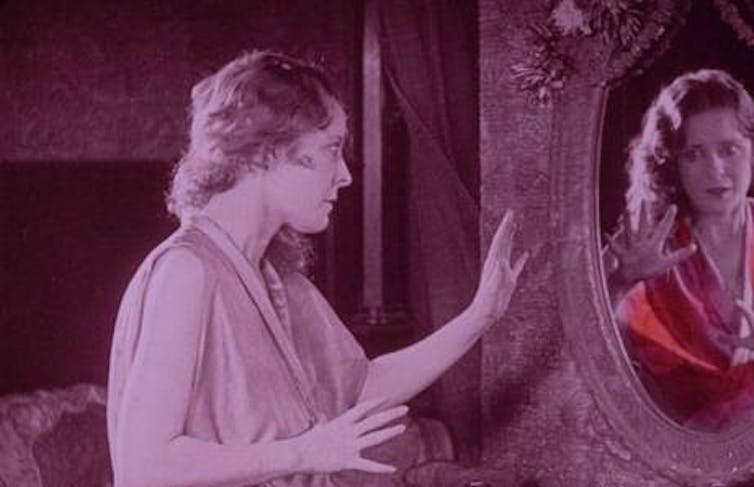
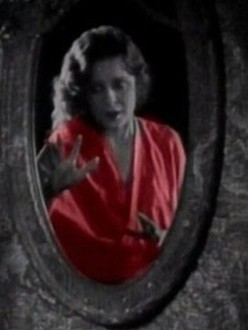
Nem 30 minutos se passaram desde o início quando vemos a imagem mais icônica do filme - imagem que você pode já ter visto sem saber que era de “Sublime Redenção”: Gabrielle vendo sua imagem refletida num espelho, primeiro vestida de noiva, depois com o quimono vermelho do título original - sim, o negativo foi pintado de vermelho neste momento particular. Outras sequências visualmente interessantes são a metáfora visual já mencionada com os gatos e uma tomada de dentro de uma agência da Western Union apontando para a rua.

Not 30 minutes have passed when we see the most iconic image of the film - one you might have seen without knowing it’s from “The Red Kimona”: Gabrielle seeing her image reflected on a mirror, first as a bride, then with the red Kimona from the title - yes, the negative was tinted red in this particular moment. Other visually interesting sequences are the aforementioned visual metaphor with the cats and a view from inside a Western Union agency pointing to the streets.

O melodrama é como um sucessor da tragédia grega para a sociedade burguesa. Suas raízes podem ser traçadas até Shakespeare, a ópera e principalmente um autor chamado Pixérécourt. Os melodramas trazem mensagens moralizantes que são como a “moral da história” de contos de fadas e outras histórias infantis; É por isso que esta forma foi adotada após a Revolução Francesa para moralizar e educar as massas - um conceito que também era novidade.

Melodrama is kind of the successor to the Greek tragedy for the bourgeois society. Its roots can be traced to Shakespeare, opera and mainly to an author called Pixérécourt. Melodramas bring moralizing messages that are like the “moral of the story” from fairy and children’s tales. That’s why this form was adopted after the French Revolution to moralize and educate the masses - a concept that was also brand new.

O melodrama também foi bem-sucedido nas primeiras décadas do cinema, especialmente com D.W. Griffith. Ele faz sua pupila favorita Lillian Gish sofrer para ensinar uma lição em filmes como “Inocente Pecadora” (1920) e “Órfãs da Tempestade” (1921, abaixo).

Melodrama was also successful in the first decades of cinema, especially with D.W. Griffith. He makes his favorite pupil Lillian Gish suffer to teach a lesson in movies such as “Way Down East” (1920) and “Orphans of the Storm” (1921, picture below).

“Sublime Redenção” foi baseada numa história original de Adela Rogers St. John e adaptada para as telas pela futura diretora Dorothy Arzner. O novato Walter Lang é em geral creditado como único diretor, mas Dorothy Davenport - creditada como Sra Wallace Reid - também dirigiu o filme, e merece ser conhecida por seu próprio nome

“The Red Kimona” was based on an original story by Adela Rogers St. John and adapted to the screen by future director Dorothy Arzner. Newcomer Walter Lang is often credited solo as the director, but Dorothy Davenport - credited Mrs Wallace Reid - also directed the movie, and deserves to be known by her own name.

A verdadeira Gabrielle Darley não ficou feliz ao ver sua história contada nas telas sem sua aprovação nem sequer uma mudança de nome. Graças a isso, um caso que foi esquecido é hoje conhecido pelo público mais de 100 anos após o acontecido. Dorothy Davenport teve de pagar 50 mil dólares para Gabrielle após um processo. O filme foi também banido em algumas cidades, embora sua mensagem final seja de misericórdia e não vício. 

The real Gabrielle Darley wasn’t happy seeing her story told on screen without her approval nor at least a name change. Thanks to that, a case that fell into obscurity is now known by audiences over 100 years after it happened. Dorothy Davenport had to pay fifty thousand dollars to Gabrielle following a lawsuit. The film was also banned in some cities, even though its final message is of mercy, not vice.

De acordo com a professora Mary Ann Doane, quando uma mulher olha para outra mulher na tela, ela pode ou ter uma profunda identificação com a personagem - como nos “women’s films” - ou desejar a personagem como um voyeur masculino. Colocar-nos no lugar de uma vítima de prostituição e assassina não é exatamente fácil, mas é um milagre que pode ser alcançado com o poder do cinema. Como o final diz, qualquer uma de nós poderia ser uma Madalena.

According to scholar Mary Ann Doane, when a woman looks at another woman on screen, she can either have a deep identification with the character - like in “women’s films” - or desire the character like a male voyeur. Putting ourselves in the place of a prostitution victim and murder isn’t exactly easy, but it’s a miracle that can be accomplished by the power of cinema. As the ending says, we could all be modern Magdalens.

Em “Meanings of Melodrama”, o professor Ben Singer menciona as características definidoras do melodrama. Vejamos se elas se aplicam a “Sublime Redenção”:

In “Meanings of Melodrama”, scholar Ben Singer mentions the defining characteristics of melodrama. Let’s see if they apply to “The Red Kimona”:

1- Pathos, isto é, o que causa compaixão: com certeza nos sentimos mal por Gabrielle. Por isso é que se chama “empatia” - de pathos.

1- Pathos, that is, what causes pity: we for sure feel bad for Gabrielle. No wonder it’s called “empathy” - from pathos.

2- Emoção exagerada: há muito sofrimento.

2- Exaggerated emotion: there is a lot of suffering.

3- Polarização moral: o vil Howard não tem qualidades que o redimem.

3- Moral polarization: the vile Howard has no redeeming qualities.

4- Estrutura narrativa não-clássica, isto é, feita de coincidências: Gabrielle conhece Howard por acaso, e o mesmo acontece com a saga de seu par final para vê-la novamente.

4- Non-classic narrative structure, that is, made of coincidences: Gabrielle meets Howard by chance, and the same happens with her final suitor’s saga to see her again.

5- Sensacionalismo: há suspense no tribunal e ação perto do final, fazendo nosso coração disparar.

5- Sensationalism: there is suspense in the trial and action near the end, making our hearts race.

No melodrama, o amor cego não é uma virtude. O herói melodramático ou, menos comumente, a heroína, ganha o amor como recompensa por obter outra coisa que beneficia o coletivo. É isso que acontece em “Sublime Redenção”, um exemplo perfeito de melodrama mudo - e mais: feito por mulheres! 

In melodrama, blind love is not a virtue. The melodramatic hero or, less common, heroine gains love as a reward for obtaining something else that is good for the collective. This is what happens in “The Red Kimona”, a perfect example of silent melodrama - and a plus: made by women!

This is my contribution to the Cry Me a River: Tearjerkers Blogathon, hosted by the Classic Movie Blog Association.

Related Posts Plugin for WordPress, Blogger...