“A tragédia apela ao coração. A
comédia, à mente. O melodrama, aos olhos.” - Victor Hugo
“Tragedy appeals to the heart.
Comedy, to the mind. Melodrama, to the eyes.” - Victor Hugo
Melodramas - aqueles filmes
melosos que nos fazem chorar - são filmes pensados para um público
majoritariamente feminino. Considerado não um gênero, mas uma forma de
apresentar histórias, é geralmente do agrado das mulheres… mas pode uma mulher
também realizar um melodrama?
Melodramas - also called
tearjerkers or weepies - are movies that target a mostly female audience. Not
considered a genre, but a way to present stories, it is often enjoyed by women…
but can it also be made by women?

Quando mais mulheres estavam
trabalhando atrás das câmeras, na era muda do cinema, algumas se aventuraram no
melodrama, por exemplo a atriz que se tornou diretora Dorothy Davenport, que
fez da perda de seu marido, o ídolo das matinês Wallace Reid, uma oportunidade
para uma nova carreira contando histórias instigantes. “Sublime Redenção” foi
um dos filmes que ela produziu e co-dirigiu.
When more ladies were working
behind the cameras, in the silent movie era, some ventured into melodrama, for
example actress turned filmmaker Dorothy Davenport, who made the loss of her
husband, matinee idol Wallace Reid, an opportunity for a new career telling
compelling stories. “The Red Kimona” was one of the films she produced and
co-directed.

“Essa é uma história real”, nos
conta a própria Dorothy no prólogo. Apertem seus cintos. Gabrielle (Priscilla
Bonner) descobre que seu amado Howard (Carl Miller) foi para Los Angeles se
casar - mas ele vai voltar para pegar de volta os anéis que deu para ela de
presente. Ela o segue e atira nele dentro de uma joalheria. Ela é presa e conta
sua história no tribunal.
“This is a true story”, we’re told
by Dorothy herself in the prologue. Brace yourselves. Gabrielle (Priscilla
Bonner) learns that her beloved Howard (Carl Miller) has gone to Los Angeles to
get married - but he’ll come back to fetch the rings he gave her as a gift. She
follows him and shoots him inside a jewelry store. She is arrested and tells
her story at the trial.

Gabrielle conheceu Howard quando
era mais nova, e vivia com seus irmãos e seu severo pai (Tyrone Power sR).
Howard diz que a ama e a leva para Nova Orleans, onde ela é obrigada a se
prostituir (prática então chamada de “white slavery”). Ouvindo a história dela,
o júri declara Gabrielle inocente.
Gabrielle met Howard when she was
younger, living with her siblings and strict father (Tyrone Power Sr). Howard
says he loves her and takes her to New Orleans, where she is forced into
prostitution (what was then called “white slavery”). Hearing her story, the
jury declares Gabrielle not guilty.

Depois do julgamento ela é
acolhida na casa de uma benfeitora chamada Beverly Fontaine (Virginia Pearson),
que faz caridade só para ganhar fama. Gabrielle é chamada de “Madalena moderna”
pelo jornal e a Sra Fontaine só quer que sua nova protegida pareça
“interessante” para suas amigas ricas, que são como gatos brincando com um rato
de brinquedo. Mas tudo que Gabrielle quer é parar de ser vista como um objeto e
se tornar enfermeira. Mas seu passado não vai voltar para assombrá-la?
After the trial she is taken to
the home of a philanthropist named Beverly Fontaine (Virginia Pearson), who
does charity only to gain publicity. Gabrielle is called a “modern Magdalen” by
the newspaper and Mrs Fontaine only wants her new protégée to look
“interesting” for her rich friends, who are like cats playing with a toy mouse.
But all Gabrielle wants is to stop being seen as an object and become a nurse.
But won’t her past come back to haunt her?
 |
| A Letra Escarlate / The Scarlet Letter |
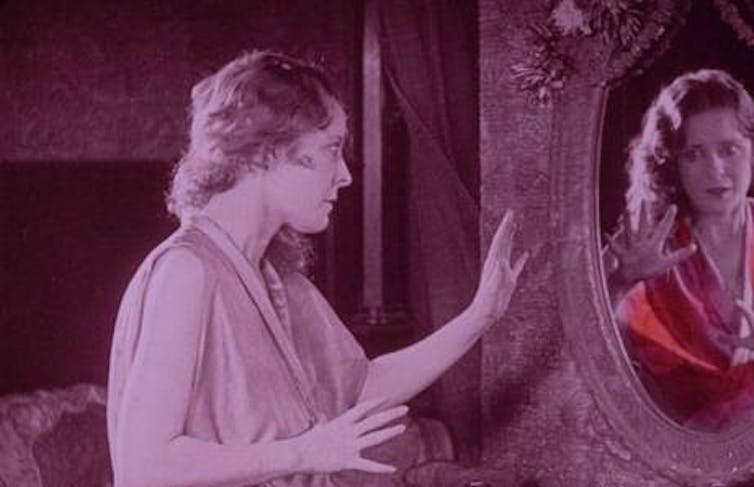
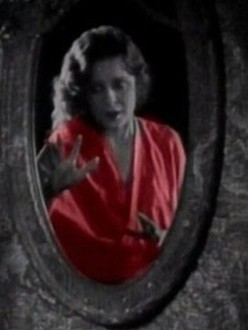
Nem 30 minutos se passaram desde o
início quando vemos a imagem mais icônica do filme - imagem que você pode já
ter visto sem saber que era de “Sublime Redenção”: Gabrielle vendo sua imagem
refletida num espelho, primeiro vestida de noiva, depois com o quimono vermelho
do título original - sim, o negativo foi pintado de vermelho neste momento
particular. Outras sequências visualmente interessantes são a metáfora visual
já mencionada com os gatos e uma tomada de dentro de uma agência da Western
Union apontando para a rua.
Not 30 minutes have passed when we
see the most iconic image of the film - one you might have seen without knowing
it’s from “The Red Kimona”: Gabrielle seeing her image reflected on a mirror,
first as a bride, then with the red Kimona from the title - yes, the negative
was tinted red in this particular moment. Other visually interesting sequences
are the aforementioned visual metaphor with the cats and a view from inside a
Western Union agency pointing to the streets.
O melodrama é como um sucessor da
tragédia grega para a sociedade burguesa. Suas raízes podem ser traçadas até
Shakespeare, a ópera e principalmente um autor chamado Pixérécourt. Os
melodramas trazem mensagens moralizantes que são como a “moral da história” de
contos de fadas e outras histórias infantis; É por isso que esta forma foi
adotada após a Revolução Francesa para moralizar e educar as massas - um
conceito que também era novidade.
Melodrama is kind of the successor
to the Greek tragedy for the bourgeois society. Its roots can be traced to
Shakespeare, opera and mainly to an author called Pixérécourt. Melodramas bring
moralizing messages that are like the “moral of the story” from fairy and
children’s tales. That’s why this form was adopted after the French Revolution
to moralize and educate the masses - a concept that was also brand new.
O melodrama também foi
bem-sucedido nas primeiras décadas do cinema, especialmente com D.W. Griffith.
Ele faz sua pupila favorita Lillian Gish sofrer para ensinar uma lição em
filmes como “Inocente Pecadora” (1920) e “Órfãs da Tempestade” (1921, abaixo).
Melodrama was also successful in
the first decades of cinema, especially with D.W. Griffith. He makes his
favorite pupil Lillian Gish suffer to teach a lesson in movies such as “Way Down East” (1920) and “Orphans of the Storm” (1921, picture below).

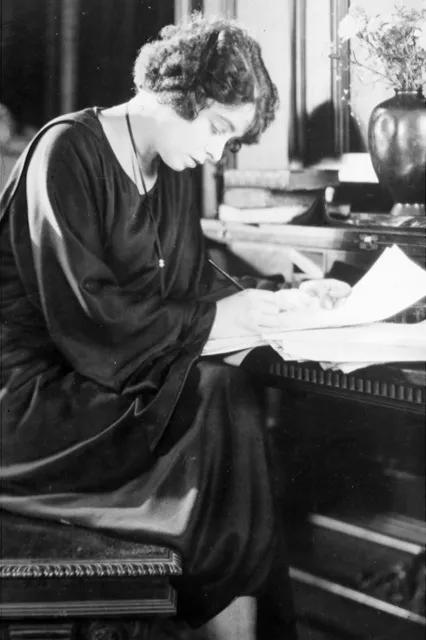
“Sublime Redenção” foi baseada
numa história original de Adela Rogers St. John e adaptada para as telas pela
futura diretora Dorothy Arzner. O novato Walter Lang é em geral creditado como
único diretor, mas Dorothy Davenport - creditada como Sra Wallace Reid - também
dirigiu o filme, e merece ser conhecida por seu próprio nome.
“The Red Kimona” was based on an
original story by Adela Rogers St. John and adapted to the screen by future
director Dorothy Arzner. Newcomer Walter Lang is often credited solo as the
director, but Dorothy Davenport - credited Mrs Wallace Reid - also directed the
movie, and deserves to be known by her own name.
A verdadeira Gabrielle Darley não
ficou feliz ao ver sua história contada nas telas sem sua aprovação nem sequer
uma mudança de nome. Graças a isso, um caso que foi esquecido é hoje conhecido
pelo público mais de 100 anos após o acontecido. Dorothy Davenport teve de
pagar 50 mil dólares para Gabrielle após um processo. O filme foi também banido
em algumas cidades, embora sua mensagem final seja de misericórdia e não
vício.
The real Gabrielle Darley wasn’t
happy seeing her story told on screen without her approval nor at least a name
change. Thanks to that, a case that fell into obscurity is now known by
audiences over 100 years after it happened. Dorothy Davenport had to pay fifty
thousand dollars to Gabrielle following a lawsuit. The film was also banned in
some cities, even though its final message is of mercy, not vice.

De acordo com a professora Mary
Ann Doane, quando uma mulher olha para outra mulher na tela, ela pode ou ter
uma profunda identificação com a personagem - como nos “women’s films” - ou
desejar a personagem como um voyeur masculino. Colocar-nos no lugar de uma
vítima de prostituição e assassina não é exatamente fácil, mas é um milagre que
pode ser alcançado com o poder do cinema. Como o final diz, qualquer uma de nós
poderia ser uma Madalena.
According to scholar Mary Ann
Doane, when a woman looks at another woman on screen, she can either have a
deep identification with the character - like in “women’s films” - or desire
the character like a male voyeur. Putting ourselves in the place of a
prostitution victim and murder isn’t exactly easy, but it’s a miracle that can
be accomplished by the power of cinema. As the ending says, we could all be
modern Magdalens.

Em “Meanings of Melodrama”, o
professor Ben Singer menciona as características definidoras do melodrama.
Vejamos se elas se aplicam a “Sublime Redenção”:
In “Meanings of Melodrama”,
scholar Ben Singer mentions the defining characteristics of melodrama. Let’s
see if they apply to “The Red Kimona”:
1- Pathos, isto é, o que causa
compaixão: com certeza nos sentimos mal por Gabrielle. Por isso é que se chama
“empatia” - de pathos.
1- Pathos, that is, what causes
pity: we for sure feel bad for Gabrielle. No wonder it’s called “empathy” -
from pathos.
2- Emoção exagerada: há muito
sofrimento.
2- Exaggerated emotion: there is a
lot of suffering.
3- Polarização moral: o vil Howard
não tem qualidades que o redimem.
3- Moral polarization: the vile
Howard has no redeeming qualities.
4- Estrutura narrativa
não-clássica, isto é, feita de coincidências: Gabrielle conhece Howard por
acaso, e o mesmo acontece com a saga de seu par final para vê-la novamente.
4- Non-classic narrative structure,
that is, made of coincidences: Gabrielle meets Howard by chance, and the same
happens with her final suitor’s saga to see her again.
5- Sensacionalismo: há suspense no
tribunal e ação perto do final, fazendo nosso coração disparar.
5- Sensationalism: there is
suspense in the trial and action near the end, making our hearts race.
No melodrama, o amor cego não é
uma virtude. O herói melodramático ou, menos comumente, a heroína, ganha o amor
como recompensa por obter outra coisa que beneficia o coletivo. É isso que
acontece em “Sublime Redenção”, um exemplo perfeito de melodrama mudo - e mais:
feito por mulheres!
In melodrama, blind love is not a
virtue. The melodramatic hero or, less common, heroine gains love as a reward
for obtaining something else that is good for the collective. This is what
happens in “The Red Kimona”, a perfect example of silent melodrama - and a
plus: made by women!
This is my contribution to the Cry Me a River: Tearjerkers Blogathon, hosted by the Classic Movie Blog
Association.