} Crítica Retrô: Valentino

Tradutor / Translator / Traductor / Übersetzer / Traduttore / Traducteur / 翻訳者 / переводчик

Showing posts with label Valentino. Show all posts

Wednesday, May 13, 2020

Nita Naldi: a vamp / Nita Naldi: the vamp

Nita Naldi. Que nome perfeito para uma estrela de cinema. Se a década de 1910 teve Theda Bara, os anos 20 tiveram Nita Naldi como a vamp perfeita. Com um rosto belo e expressivo e cabelo escuro, Nita costumava interpretar mulheres exóticas. Para ela, e para muitas outras atrizes da época, tudo começou no Ziegfeld Follies.

Nita Naldi. What a perfect name for a movie star. If the 1910s had Theda Bara, the 1920s has Nita Naldi as the perfect vamp. With a beautiful, expressive face and dark hair, Nita often played exotic women. For her, and for many other actresses of her time, it all started at the Ziegfeld Follies.

Nascida em Nova York em 1894, a garota foi batizada de Mary Nonna Dooley em homenagem à sua tia-avó, que era freira. Seus pais eram irlandeses. Em 1910 o pai deixou a família e em 1915 a mãe faleceu, deixando Mary Nonna e um irmão mais novo. Ela logo se juntou ao vaudeville, e depois de fazer parte do coro no espetáculo The Passing Show of 1918, com Fred e Adele Astaire, ela se juntou ao elenco do Ziegfeld Follies em 1918. Foi nesta época que ela mudou o nome para Nita Naldi, inspirada por Maria Naldi, antiga empregada da família que Nita considerava como irmã.

Born in New York in 1894, the little girl received the name Mary Nonna Dooley as a homage to her great-aunt, who was a nun. Her parents were Irish. In 1910 her father left the family and in 1915 her mother died, leaving Mary Nonna was and a younger brother. She soon entered the vaudeville circuit, and after being a chorus girl at The Passing Show of 1918, with Fred and Adele Astaire, she became part of the Ziegfeld Follies cast in 1918. It was during this time that she changed her name to Nita Naldi, after Maria Naldi, the former maid of the family who Nita considered as a sister.

Nita Naldi não é creditada em nenhuma edição do Ziegfeld Follies do final da década de 1910 e início da década de 1920, o que nos faz acreditar que ela fazia parte do coro numeroso cuja composição sempre mudava. Ela foi apenas anunciada numa produção de Ziegfeld em 1921, quando substituiu uma atriz no espetáculo “Sally”, interpretando a Sra Ten Broek.

Nita Naldi is not credited in any of the Ziegfeld Follies revues of the late 1910s and early 1920s, which makes us believe she was part of the numerous and ever-rotating chorus. She was only advertised in a Ziegfeld production in 1921, when she appeared as a replacement in the show “Sally”, where she played Mrs Ten Broek.

Em 1919, Florenz Ziegfeld contratou o pintor Alberto Vargas para pintar retratos das Ziegfeld Girls. Nita Naldi estava entre as primeiras garotas a terem seus retratos pintados. O peruano Vargas é considerado o pai da moda pin-up, e já é possível ver a firmeza e sofisticação de seus desenhos em 1920, quanto ele tinha apenas 24 anos de idade. Ele pintou Nita nua, abraçada à estátua de um fauno.

In 1919, Florenz Ziegfeld hired painter Alberto Vargas to paint the portraits of the Ziegfeld Girls. Nita Naldi was among the first girls to be painted. Peruvian Vargas is considered the father of the pin-up fad, and you can already see how firm and sophisticated his drawings were in 1920, when he was just 24 years old. He painted Nita naked, hugging the statue of a faun.

Embora “A Divorce of Convenience” tenha sido gravado primeiro, o filme estreou apenas em 1921, por isso a estreia oficial de Nita foi em “ O Médico e o Monstro” (1920). Neste filme, ela interpreta a dançarina italiana Miss Ginna, que é vista pelo Dr Jekyll (John Barrymore) num cabaré. Mais tarde, como Hyde, ele vai atrás dela em busca de prazer carnal, e encontra algo mais no curioso anel que ela usa. Barrymore ficou amigo de Nita, e a atriz mais tarde foi como uma segunda mãe para a filha de John, Diana. Diana deixou cinco mil dólares para Nita em seu testamento.

Although “A Divorce of Convenience” was the first film she shot, it only premiered in 1921, that’s why Nita’s oficial debut was “Dr Jekyll and Mr Hyde” (1920). In this film, she plays the Italian dancer Miss Ginna, who Dr Jekyll (John Barrymore) sees in a nightclub once. Later, as Mr Hyde, he goes after her looking for carnal pleasure, and finds a little more as she carries a curious little ring. Barrymore became friends with Nita, and the actress later served as a second mother to John’s daughter Diana. Indeed, Diana left 5,000 dollars to Nita in her will.

Não há dúvidas de que o filme mais famoso de Nita é “Sangue e Areia”, de 1922, para o qual ela foi escolhida pessoalmente pelo autor Vicente Blasco Ibañez quando ela fez ele perder a dentadura durante uma festa. Neste filme ela interpreta Doña Sol, uma mulher mais velha que seduz o toureiro Juan Gallardo, interpretado por Rodolfo Valentino, que era 11 anos mais novo que ela. Para mim, Nita é o grande destaque de “Sangue e Areia”. Este foi o primeiro de três filmes que ela faria com o amigo Valentino.

There is no doubt that Naldi’s most famous film is 1922’s “Blood and Sand”, for which she was personally chosen by author Vicente Blasco Ibañez when she caused him to drop his false teeth during a party. In this film she plays Doña Sol, an older woman who seduces the young bullfighter Juan Gallardo, played by Rudolf Valentino, who was 11 years her junior. To me, Naldi is the best in scene in “Blood and Sand”. This was the first of three films she would make with her friend Valentino.

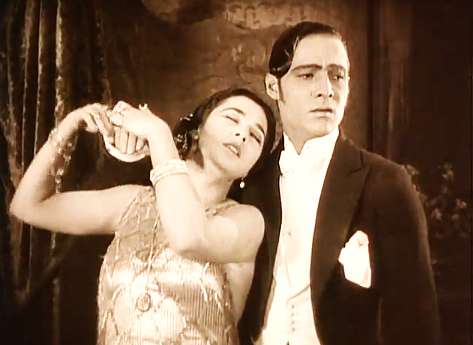
Em 1923 Nita conseguiu um papel no épico “Os Dez Mandamentos”, de Cecil B. DeMille. O filme consiste, curiosamente, de duas partes: a primeira mostra Moisés libertando seu povo do cativeiro egípcio, enquanto a segunda mostra a importância de seguir os mandamentos no mundo moderno. Nita aparece na segunda parte como Sally, uma vamp asiática que é amante do corrupto magnata da construção Dan McTavish (Rod LaRocque). Um pequeno SPOILER aqui: a cena da morte de Sally, na qual ela segura uma cortina e as argolas se soltam uma por uma, inspirou Hitchcock na composição da cena do chuveiro em “Psicose” (1926).

In 1923 Nita got a role in Cecil B. DeMille’s epic “The Ten Commandments”. The film curiously consists of two parts: the first shows Moses freeing his people from the Egyptian captivity, while the second shows the importance of following the commandments in the modern world. Nita appears in the second part as Sally, an Asian vamp who is the lover of corrupted construction mogul Dan McTavish (Rod La Rocque). A little SPOILER here: her death scene, in which she holds a curtain and it breaks little by little, inspired Hitchcock while shooting the shower scene in “Psycho” (1960).

E é aí que a vida de Nita se encontra com a de Hitchcock. Em 1926 ela foi escalada no segundo filme do diretor, “The Mountain Eagle”, como a professora Beatrice. Nita estava saindo do estereótipo da vamp pela primeira vez na vida ao interpretar esta mulher indefesa. Infelizmente, “The Mountain Eagle” foi perdido, o que não incomodou Hitchcock, que considerava o filme horrível. Nita, Hitchcock e Alma Reville se tornaram bons amigos, e o casal inclusive passou um tempo com a atriz em Paris durante a lua de mel deles.

And this is where Nita’s life intersects with Hitchcock. In 1926 she was cast in the director’s second film, “The Mountain Eagle”, as the school teacher Beatrice. Nita was playing against type for the first time in her life, as a helpless woman. Unfortunately, “The Mountain Eagle” was lost, which didn’t disappoint Hitchcock, who thought the film was awful. Nita, Hitchcock and Alma Reville became good friends, and the couple even spent time with the actress in Paris during their honeymoon.

Nita Naldi nunca fez um filme falado. Em 1929 ela se casou com J. Searle Barclay, com quem já vivia desde o começo da década. Nita então voltou ao teatro, nos anos 40 encontrou emprego principalmente em casas de show e por vezes apareceu na televisão. Sua filmografia consiste de 30 títulos, alguns deles perdidos. Ela se foi em 1961, mas não foi esquecida: os filmes e as fotos de Nita estão aí para mostrar esta mulher poderosa, sedutora e deslumbrante. Você já viu um rosto tão belo quanto o de Nita?

Nita Naldi never made a talkie. In 1929 she married J. Searle Barclay, with whom she had already been living since the beginning of the decade. Nita then went back to theater, in the 1940s found work mainly in nightclubs and sometimes appeared on TV. Her filmography consists of 30 titles, some of them lost. Gone in 1961, but never forgotten: Nita’s films and photos are there to show this powerful, seductive and breathtaking woman. Have you ever seen a face like Nita’s?

This is my contribution to The Great Ziegfeld Blogathon, hosted by Zoe at Hollywood Genes.

Saturday, March 26, 2016

Sangue e Areia (1922) / Blood and Sand (1922)

Não há dois substantivos que melhor definam as touradas quanto os que Vicente Blasco Ibáñez escolheu para o título de seu famoso romance. Na versão cinematográfica de 1922, as touradas são deixadas em segundo plano e são mais explorados os bastidores da vida do toureiro matador – um ídolo cuja ascensão e queda podem ser tão rápidas e conflituosas quanto ao começo e trágico fim de carreira de um ídolo do cinema dos anos 1920.

There are no better substantives to define the bullfights than the substantives Vicente Blasco Ibañez chose as the title of his famous novel. In the 1922 film adaptation, the bullfights are second to the private life of the bullfighter – an idol whose rise and fall can be so fast and shocking as the beginning and tragic end of a movie idol from the 1920s.


O primeiro intertítulo que vemos no filme já é uma condenação à tourada. Ela é descrita como uma “crueldade disfarçada de esporte para satisfazer a sede do homem por excitação”. Para os espanhóis, “o gosto pela tourada é uma herança da barbárie”. Esta é, sobretudo, uma história de tentação e crueldade, ou seja, um objeto de estudo perfeito para Don Joselito (Charles Belcher).

The first title card in the screen shows us that the film condems bullfights. A bullfight is described as “cruelty disguised as sport to gratify man's lust for excitement”. To the Spanish people, the love for the bullfight is “a heritage of barbarism”. This is, above all, a story about temptation and cruelty, or a perfect object to be studied by Don Joselito (Charles Belcher).

Juan Gallardo (Rodolfo Valentino) não quer seguir a profissão do pai e se tornar sapateiro. Ele prefere ir para Sevilha se apresentar, ainda que aos farrapos, em touradas amadoras. As aventuras de Juan não agradam nada a sua mãe, irmã e cunhado, e é ao confrontá-los que vemos o grande carisma de Valentino: irreverente, irônico, sem medo de desobedecer à autoridade, Juan vive de acordo com suas próprias regras.

Juan Gallardo (Rudolf Valentino) doesn't want to follow his father's profession and become a shoemaker. He'd rather go to Seville and take part, dressed in rags, in amateur bullfights. Juan's adventures don't please his mother, sister and brother-in-law, and when he confronts them we see Valentino’s huge charisma: playful, ironic, not afraid of disobeying authority, Juan lives by his own rules.

Mas esta rebeldia compensa no dia em que Juan se torna um famoso matador. Ídolo das multidões, herói da arena, rico e admirado. Para a vida ficar mais perfeita ainda, Juan se casa com Carmen (Lila Lee), que conhece desde a infância.

But these rebel ways pay off the day Juan becomes a famous bullfighter. The idol of the crowds, the hero of the arena, rich and admired. To make life even more perfect, Juan marries Carmen (Lila Lee), his childhood friend.

Juan é seduzido por Doña Sol (Nita Naldi), a bela sobrinha viúva de um criador de touros. Apesar de bem-sucedido, Juan é ingênuo e está pouco à vontade no ambiente dos ricos e poderosos. E ele é, ainda, um tolo, porque para Doña Sol ele é apenas mais uma aventura amorosa.

Juan is seduced by Doña Sol (Nita Naldi), the beautiful niece of a man who sells bulls. Juan may be successful, but he is naïve and he's not comfortable around rich and powerful people. And he is also a fool, because for Doña Sol he is only another romantic adventure.


A simbologia destes dois amores se dá, no filme, através de duas flores. O simples ramo de flores que Carmen deu a Juan quando ele ganhou sua primeira grande tourada o lembra do amor puro e sincero da esposa. Logo esta flor é pisada por Doña Sol, que dá então a Juan uma voluptuosa rosa. Ah, o cinema mudo e seus símbolos maravilhosos!

The two loves of Juan are symbolized by two flowers in the film. The simple flower Carmen gave Juan when he won his first bullfight reminds him of his wife's pure and sincere love. This flower is destroyed by Doña Sol, who gives Juan a voluptuous rose. Oh, silent film and its marvelous symbols!


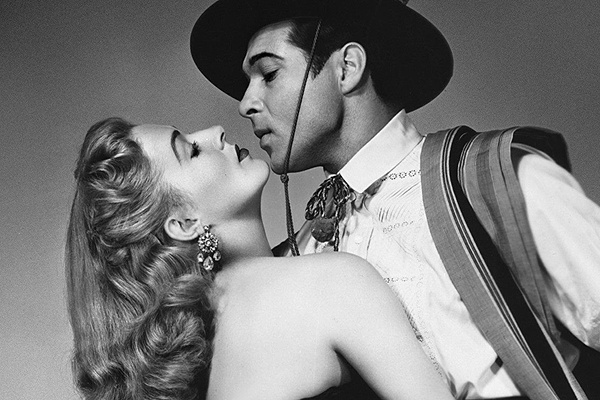
A atenção primorosa ao detalhe está presente em especial na casa de Doña Sol, que contrasta com o ambiente religioso em que Carmen, criada em um convento, reza enquanto o marido enfrenta os touros. Nestas cenas com Nita Naldi a versão muda não deixa nada a desejar, e o luxo até supera o da versão falada, de 1941. Sim, a Doña Sol de Rita Hayworth brilhava como o astro-rei em Technicolor, mas Nita Naldi, a vamp exótica de Nova York, é tão sedutora e atraente quanto Rita.

It's given great attention to detail in special in Doña Sol's house, a place that makes a contrst with the religious room where Carmen, who was raised by nuns, prays while her husband fights the bull. In these scenes with Nita Naldi the silent version is great, and the luxus is even superior to the one in the talkie, from 1941. Yes, Rita Hayworth's Doña Sol shone as the Sun in Technicolor, but Nita Naldi, the exotic vamp from New York, is as seductive and attractive as Hayworth. 

Quem faz sua estreia como diretora no filme, ainda que sem receber créditos, é Dorothy Arzner. Na verdade, Dorothy era editora do filme, e coube a ela tornar as cenas das touradas realistas para o público. Dorothy, então, intercalou closes e shots de Valentino na arena com cenas de touradas reais para criar o efeito tenso e surpreendente, e foi muito elogiada pelo resultado.

Dorothy Arzner debuts as a director in this film, but doesn't receive credit. Actually, Dorothy was the editor of the film, and was given the task of making the bullfight scenes more realistic for the public. Dorothy chose to mix closes and shots of Valentino in the arena with scenes from real bullfights in order to create a tense and surprising effect. She received many compliments for the final product.

Rodolfo Valentino era charmoso, tinha it, tinha sex appeal e um ar de amante exótico. Eu ainda caio de amores pelo Juan Gallardo que Tyrone Power encarnou em 1941, enquanto apenas tenho vergonha alheia da sobrancelha única de Valentino em 1922. “Sangue e Areia” solidificou Valentino como super-astro, e seus melhores anos ainda estavam por vir. Valentino não apresenta o mesmo desespero da traição que Tyrone Power demonstra ao bagunçar nervosamente os cabelos. Ele tem apenas um decisivo ataque de fúria, e nada mais. O show pertence à Nita Naldi, provocante e deslumbrante.

Rudolf Valentino was charming, had it, had sex appeal and looked like an exotic lover. I'm crazy about the Juan Gallardo played by Tyrone Power in 1941, while I can only be embarrassed by Valentino’s one eyebrow in 1922. “Blood and Sand” solidified Valentino as a great star, and his best years were yet to come. Valentino doesn't present the same panic over the betrayal as Power presents as he nervously passes his hands over his hair. He has only a decisive moment of fury, and that's all. The show belongs to Nita Naldi, provoking and breathtaking.

Sofrência

Há diferenças essenciais entre as versões de 1922 e 1941, que vão muito além do som e do Technicolor. Em 1922 temos dois personagens a mais, o bandido Plumitas e o estudioso do comportamento humano Don Joselito, que já no começo aponta as semelhanças entre o toureiro e o fora-da-lei. O confronto entre Juan, Plumitas e Doña Sol é o clímax do filme mudo, que tem bem menos sangue e areia que seu remake.

There are essential differences between the 1922 and the 1941 versions, way beyond the sound and the Technicolor. In 1922 we have two extra characters, the criminal Plumitas and the intellectual Don Joselito, who in the beginning points out how the bullfighter and the outlaw are alike. The confrontation between Juan, Plumitas and Doña Sol is the climax of the silent film, a film that has less blood and sand than the remake.

O cuidado das duas versões nos detalhes é o melhor que elas nos têm a oferecer – cada uma à sua maneira, claro. Isso não impede que possamos apreciar ambas, e ter a oportunidade de ver o desabrochar de Rodolfo Valentino como galã.

The attention to detail is the highlight of both versions – although it's made differently in each one, as we could expect. This makes it possible for us to enjoy both, and have the  opportunity to see Valentino as a blooming star.

This is my contribution to the 2nd Annual Rudolph Valentino Blogathon, hosted by  Michele at Timeless Hollywood.

Saturday, March 14, 2015

Rodolfo Valentino: o homem, a lenda

Quando a lenda se torna fato, imprima a lenda”
“When the legend becomes fact, print the legend”

A frase acima é do filme “O Homem que matou o Facínora / The Man who Shot Liberty Valance” (1962), mas se aplica perfeitamente ao caso de Rodolfo Valentino. O amante latino estava no auge da fama quando morreu de repente, aos 31 anos, em 1926, e sua morte causou histeria e comoção internacionais. Ele foi o primeiro de uma longa lista de personalidades que morreram muito jovens, mas (talvez por causa da morte prematura) influenciaram muitas gerações. Elvis Presley, Marilyn Monroe, James Dean, Janis Joplin: o fascínio atravessou décadas e não foi apenas pela suposição de “o que poderia ter sido se eles não tivessem ido embora tão jovens”. A morte os eternizou, mas a vida atribulada, desregrada e cercada de mistérios continua impressionando quem toma contato com essas personalidades.
E muitas vezes a polêmica e os boatos se tornam mais importantes que as obras do artista. Afinal, quem quer conhecer os filmes de Marilyn se é muito mais divertido discutir quantos abortos ela teria feito? Quem não ama romances atribulados e proibidos das estrelas do passado? E as supostas relações homossexuais, então: são perfeitas para atrair curiosos. E com esses ingredientes foram feitos muitos filmes sobre a vida de Valentino.
A maioria das pessoas que conheceram Valentino ainda estavam vivas em 1951, incluindo sua ex-mulher Natacha Rambova. Isso gerou uma onda de protestos e processos por difamação, e o estúdio foi obrigado a adaptar a história ocultando nomes e fatos. No final, o que temos é o bailarino Valentino (Anthony Dexter, parecidíssimo), que se torna um ator muito popular do dia para a noite, e precisa enfrentar muitos problemas com a mulher que ama, que pode atender pelos nomes Joan Carlisle ou Sarah Gray, dependendo do momento da carreira em que está (ela é interpretada por Eleanor Parker). Assim como na cinebiografia “O Palhaço que Não Ri / The Buster Keaton Story”, de 1951, o filme tem de tudo... menos verdade.
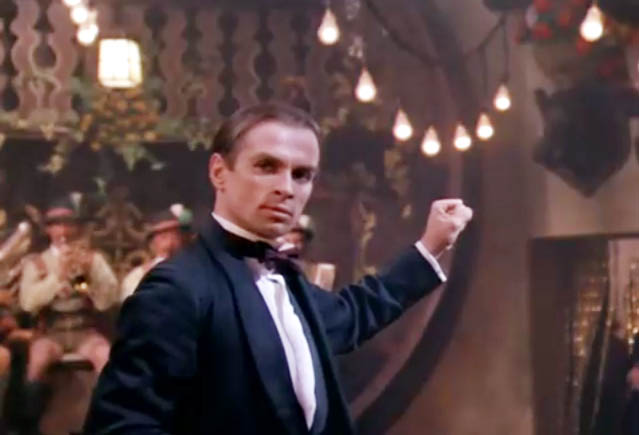
Uma cinebiografia melhor, também denominada “Valentino”, foi feita em 1977 e parte do funeral do astro para apresentar a vida dele em flashback, incluindo as muitas mulheres que se apaixonavam por ele. Alla Nazimova (Leslie Caron) é uma delas, e aparece no funeral vestida de rainha tarântula. Não é, de maneira alguma, um retrato lisonjeiro de Nazimova. Quem interpreta Valentino é o dançarino russo Rudolf Nureyev, que em nada se parecia com o astro dos anos 20, mas dançava lindamente e surpreende como ator.
De acordo com o filme, Valentino atraiu a atenção da roteirista June Mathis durante uma festa particular de Fatty Arbuckle, na qual Valentino teria enfurecido o comediante. Arbuckle é retratado como uma pessoa muito, muito desagradável, sempre arrancando risadas à custa da humilhação de outras pessoas. Jesse L. Lasky, um dos fundadores da Paramount, só pensa em lucros... e mantém um macaco de estimação preso em uma jaula.
Quase sempre colocada de lado pelas obras que se referem a Valentino, a esposa Natacha Rambova ganha muita importância aqui: ela é mostrada como a força motriz ambiciosa por trás da carreira de Valentino, é demasiado controladora e deseja ser responsável por todos os aspectos dos filmes do marido: figurino, cenário, roteiro, direção e produção. Não é de se espantar que ela não goste de dividir Rudy com as milhões de fãs histéricas.
Apesar das falhas, há muitas coisas boas: é impagável a cena em que Valentino exige escolher os roteiros que quer filmar. Repare bem e você verá que há todo um western clichê sendo gravado ao fundo da cena! E a sequência de abertura, com manchetes de jornal e a canção “There is a new star in Heaven tonight”, é o convite perfeito para que entremos na vida de Valentino.
Em 1975, Franco Nero interpretou Valentino em um filme feito para a TV. Em 1977, Gene Wilder parodiou a imagem do amante latino no filme “O Maior Amante do Mundo / The World’s Greatest Lover”. No quase desconhecido “Return to Babylon”, de 2013, Valentino aparece brevemente. Mais um filme sobre ele, “Silent Life”, já tem até pôster no IMDb e pode ser lançado em 2015, mas há constantes atrasos em sua produção.
Quem poderia interpretar Valentino em um filme feito hoje? Robert Pattinson? Mario Lopez? Um talento ainda não descoberto? Definitivamente, ainda não foi feita uma cinebiografia de Valentino que agradasse a todos. Talvez porque seja impossível transportar para as telas, mais uma vez, todo o fascínio que Rodolfo Valentino sempre gerou.

This is my contribution to the Rudolph Valentino blogathon, hosted by Timeless Hollywood.

Sunday, January 12, 2014

1925: um ano inesquecível / 1925: an unforgettable year

AVISO: este post é muito, muito longo. Mas vale a pena ser lido / assistido.

WARNING: this post is very, very long. But it is one worth reading / watching.

1925 não foi um ano bom para o cinema. Foi um ano ótimo. Excelente. Sensacional. Os três grandes nomes da comédia muda estrelaram longas-metragens (Buster Keaton estrelou dois!), o filme mais caro do cinema mudo foi feito depois de muito atraso (Ben-Hur), uma obra de referência para aspirantes a cineastas e revolucionários surgiu na URSS (O encouraçado Potemkin), Garbo fez o filme que a traria para a América (Rua das Lágrimas) e uma obra-prima sacudiu o mundo (O Grande Desfile).

1925 wasn't a good year for film. It was an excellent year. Fantastic. Sensational. The three greats of silent comedies made feature films (Buster Keaton made two!), the most expensive silent film was releaed after a lot of delay (Ben-Hur), an essential work for wannabe filmmakers and revolutionaries was made in the USSR (Battleship Potemkin), Garbo made the film that would bring her to the US (Joyless Street) and a masterpiece shook the world (The Big Parade).

Technicolor in "Phantom of the Opera"

Muitos dos futuros astros e estrelas fizeram suas primeiras participações. Myrna Loy, Clark Gable, Carole Lombard estavam lá, como extras irreconhecíveis na multidão. Mas por pouco tempo. Outros tantos futuros astros nasceram em 1925: Jack Lemmon, Julie Harris, Paul Newman, Dorothy Malone, Lee Van Cleef, Joan Leslie, Farley Granger, Peter Sellers, Angela Lansbury, Richard Burton, Tony Curtis, Rock Hudson, Sammy Davis Jr, Dick Van Dyke...

Many future stars made their first movie appearances. Myrna Loy, Clark Gable, Carole Lombard were there, as unknonw extras in the crowd. But not for long. Other future stars were born in 1925: Jack Lemmon, Julie Harris, Paul Newman, Dorothy Malone, Lee Van Cleef, Joan Leslie, Farley Granger, Peter Sellers, Angela Lansbury, Richard Burton, Tony Curtis, Rock Hudson, Sammy Davis Jr, Dick Van Dyke...

Mas quais os melhores filmes de 1925? Se já houvesse Oscar naquele ano, quem ganharia? Para responder isso, eu criei meu próprio Oscar, disponível no vídeo abaixo.

But which were the best movies of 1925? If there was already the Oscars that year, who would be the winners? To answer this question, I made my own Oscar ceremony, availabe in the video below.

E agora, uma breve sinopse dos 19 filmes de 1925 que eu vi para escrever este post:

And now, a brief synopsis of the 19 films from 1925 that I watched to write this post:

Chess Fever: Uma cidade russa recebe um campeonato de xadrez, fazendo com que todos os habitantes se tornem entusiastas do jogo. Mas um deles exagera.

Chess Fever: A Russian town hosts a chess championship, and all the citizens become chess enthusiasts. But one citizen goes too far.

Em Busca do Ouro / The Gold Rush: Charles Chaplin é o adorado vagabundo no Klondike, onde ele espera encontrar ouro para dar uma vida melhor à mulher que ama (Georgia Hale).

The Gold Rush: Charles Chaplin is the adorable tramp in the Klondike, where he expects to find gold to provide a better life for the woman he loves (Georgia Hale).

Vaqueiro Avacalhado / Go West: Um homem sem amigos (Buster Keaton) vai para o Oeste e começa uma história de amor e amizade com uma vaca.

Go West: A friendless man (Buster Keaton) goes West and starts a story of love and friendship with a cow.

O Calouro / The Freshman: Harold Lamb (Harold Lloyd) está ansioso para ir para a faculdade. Ele acredita que poderá ser popular se agir como o personagem de um filme, o que inclui fazer uma dancinha e jogar futebol americano.

The Freshman: Harold Lamb (Harold Lloyd) is anxious to go to college. He believes he can be popular if he acts like a character from a film, and that includes a little dance and playing football.

Sete Oportunidades / Seven Chances: Buster Keaton herdará sete milhões de dólares se se casar até as sete horas de seu vigésimo sétimo aniversário. Ele então sai em busca de uma noiva.

Seven Chances: Buster Keaton will inherit seven million dollars if he gets married before seven on the day of his twenty-seventh birthday. So he starts searching for a bride.


O Encouraçado Potemkin: Com um bocado de glamour, o filme conta como os marinheiros do Potemkin se rebelaram contra as condições terríveis do navio e assim iniciaram um levante que contagiou a cidade de Odessa.

Battleship Potemkin: With a touch of glamour, the film tells how the sailors from the Battleship Potemkin started a rebellion against the terrible conditions they worked in and how this rebellion changed the city of Odessa.

Variety / Varieté: Um acrobata (Emil Jannings) e sua amante (Lya de Putti) têm a chance de se apresentar em um grande espetáculo, mas o dono do show começa a flertar com a moça, despertando ciúmes.

Variety / Varieté: An acrobat (Emil Jannings) and his lover (Lya de Putti) have the chance to present their act in a big show, but the owner of the place starts flirting with the girl, causing jealousy.

O Fantasma da Ópera / Phantom of the Opera: A ópera de Paris é surpreendida por rumores de que uma estranha criatura (Lon Chaney) mora no subsolo e faz de tudo para ajudar a cantora Christina (Mary Philbin) a prosperar na carreira. 

Phantom of the Opera: The Paris Opera is surprised to hear about rumors of a strange creature (Lon Chaney) who is living in the underground and doing everything he can to help the singer Chrisitna (Mary Philbin) to be successful.

O Mundo Perdido / The Lost World: O professor Challenger (Wallace Beery) organiza uma expedição para a Amazônia com o objetivo de provar a existência de dinossauros vivos. No grupo estão o repórter Ed Malone (Lloyd Hughes), o rico aventureiro Lorde Roxton (Lewis Stone) e Paula White (Bessie Love), filha de um explorador morto na expedição anterior.

The Lost World: Professor Challenger (Wallace Beery) organizes an expedition to the Amazon in order to prove that living dinosaurs still exist. In the expedition we can find the reporter Ed Malone (Lloyd Hughes), the rich adventurer Lord Roxton (Lewis Stone) and Paula White (Bessie Love), the daughter of an explorer who was killed in a previous expedition.

Body and Soul: O criminoso “Big Carl” foge da prisão e passa a se apresentar como reverendo Jenkins (Paul Robeson em seu filme de estreia). Na cidade em que ele prega vive a carola Martha Jane (Mercedes Gilbert), que deseja que a filha Isabelle se case com o perigoso reverendo.

Body and Soul: The criminal “Big Carl” runs away from prison and starts presenting himself as the Reverend Jenkins (Paul Robeson in his film debut). In the city where he preaches there is the very religious Martha Jane (Mercedes Gilbert), who wants her daughter Isabelle to get married to the dangerous reverend.


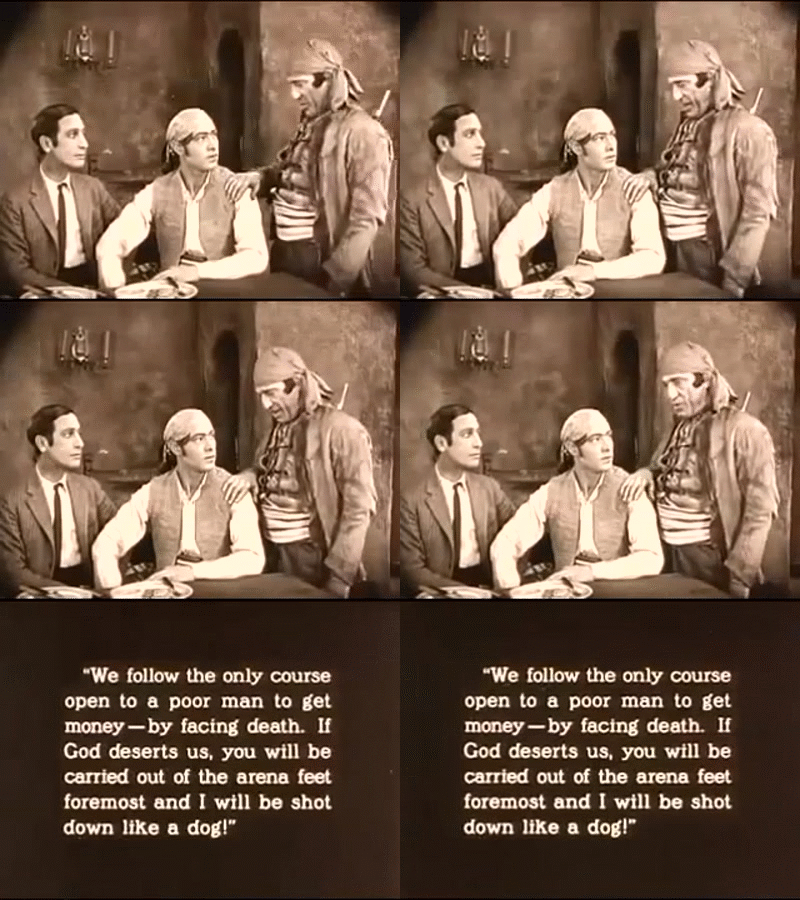
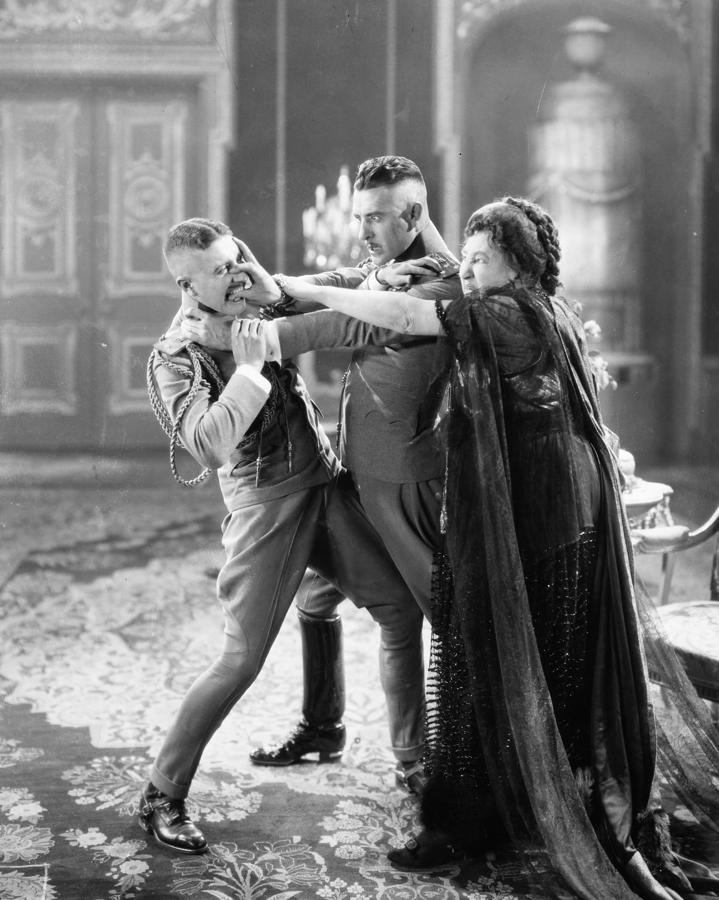
O Águia / The Eagle: Valentino é um oficial da guarda da czarina que deserta ao saber que o pai está morrendo. Ele então decide se vingar do homem que roubou o patrimônio da família, adotando a identidade de Águia Negra.

The Eagle: Valentino is an officer from the Tsarina's guard who leaves when he gets the word that his father is dying. He then decides to seek revenge from the man who stole the family's fortune, and adopts the identity of the Black Eagle.

Sua Vida Pelo Seu Amor / Little Annie Rooney: Em um de seus últimos papéis de criança, Mary Pickford é Annie, uma garota pobre que se apaixona pelo amigo do irmão, membro de uma gangue.

Little Annie Rooney: In one of her last childish roles, Mary Pickford plays Annie, a poor girl who falls in love with her brother's friend, who is a member of a gang.

Rua das Lágrimas aka Joyless Street / Die Freudlose Gasse: Greta (Greta Garbo) e Marie (Asta Nielsen) vivem na pobreza em Viena em 1921. Enquanto Marie foge de casa e cai na prostituição, Greta tem dificuldades para pagar as dívidas do pai e vê como única saída dançar em um cabaré.

Joyless Street / Die Freudlose Gasse: Greta (Greta Garbo) and Marie (Asta Nielsen) live in poverty in Vienna in 1921. While Marie runs away from home and becomes a prostitute, Greta has trouble to pay her father's debts and has to dance in a cabaret.

Ben-Hur: A Tale of the Christ: Judah Ben-Hur (Ramon Novarro) quer se vingar do velho amigo Messala (Francis X. Buschman), que se tornou um soldado romano preconceituoso. Em sua jornada, Ben-Hur conhece Jesus e decide então seguir e defender o Messias.

Ben-Hur: Judah Ben-Hur (Ramon Novarro) wants revenge from his old friend Messala (Francis X. Bushman), who became a prejudiced Roman soldier. In his journey, Ben-Hur meets Jesus and decides to follow and to defend the Messiah.

O Jardim dos Prazeres / The Pleasure Garden: Neste primeiro filme dirigido por Hitchcock, as coristas Patsy (Virginia Valli) e Jill (Carmelita Geraghty) precisam tomar uma decisão quando seus namorados vão para a América. Jill promete esperar para se casar, enquanto Patsy se casa rapidamente com homem que é infiel.

The Pleasure Garden: In this first film directed by Hitchcock, the chorus girls Patsy (Virginia Valli) and Jill (Carmelita Geraghty) need to make up their minds when their boyfriends go to America. Jill promises to wait for him to get married, while Patsy quickly marries a man who later proves to be unfaithful.

O Grande Desfile / The Big Parade: O jovem e rico Jim Apperson (John Gilbert) vai para a Primeira Guerra Mundial e faz amizade com o operário Slim (Karl Dane) e o barman Bull (Tom O’Brien). Com a divisão do exército treinando em vila francesa, Jim conhece a adorável Melisande (Renée Adorée), mas precisa deixá-la para ir ao front.

The Big Parade: Young and rich Jim Apperson (John Gilbert) enlists to fight in the First World War and becomes friends with the construction worker Slim (Karl Dane) and the barman Bull (Tom O'Brien). As the army is in training in a French village, Jim gets to know the adorable Melisande (Renée Adorée), but has to abandon her to go to the front.

A Viúva Alegre / The Merry Widow: O príncipe Danilo Petrovich (John Gilbert) se apaixona pela dançarina Sally O’Hara (Mae Murray), mas sua posição e sua família impedem o casamento. Devastada, Sally se casa com velho banqueiro que sustenta a família real.

The Merry Widow: Prince Danilo Petrovich (John Gilbert) falls in love with the dancer Sally O'Hara (Mae Murray), but his position and his family prohibit the union. Devastated, Sally gets married to an old banker who financially supports the royal family.

Ação, ciúme, pancadaria! / Action, jealousy, fighting!

O Feiticeiro de Oz / The Wizard of Oz: Esta versão muito louca da história de L. Frank Baum mostra Dorothy (Dorothy Dwan) como a rainha perdida de Oz, que foi levada ainda bebê para o Kansas. Já crescida, ela desperta a paixão de um fazendeiro (Larry Semon, o faz-tudo do filme). Oliver Hardy interpreta outro fazendeiro.

The Wizard of Oz: Thisvery crazy version of the L. Frank Baum story brings Dorothy (Dorothy Dwan) as the lost queen of Oz, who was taken to Kansas as a baby. As an adult, she becomes the object of desire of a farmer (Larry Semon, the man who did it all in the movie). Oliver Hardy plays another farmer.

O Leque da Lady Margarida / Lady Windermere’s Fan: Oscar Wilde é o autor da história de lady Margaret Windermere (May McAvoy), ou melhor, da mãe dela, Mrs Erlynne (Irene Rich), que foi uma mulher de vida desregrada. Depois de muitos anos, Mrs Erlynne volta a Londres mas, para evitar que Margaret, que pensa que a mãe morreu, tenha uma surpresa desagradável, o Lorde Windermere paga uma quantia para Mrs Erlynne deixá-los em paz.  

Lady Windermere's Fan: Oscar Wilde is the author of the story about Lady Margaret Windermere (May McAvoy), or better, her mother's, Mrs Erlynne's (Irene Rich), story. Mrs Erlynne lived an unruly life. After many years, she goes back to London but to avoid an unpleasant surprise for Margaret, who thinks her mother is dead, Lord Windermere pays a good sum so Mrs Erlynne will leave her daughter alone. 

Wow! This is my contribution for the Film History Project Blogathon, hosted by Fritzi, Aurora and Ruth, respectively at Movies, Silently, Once Upon a Screen and Silver Screenings.


Related Posts Plugin for WordPress, Blogger...