} Crítica Retrô: Inimigo Público

Tradutor / Translator / Traductor / Übersetzer / Traduttore / Traducteur / 翻訳者 / переводчик

Showing posts with label Inimigo Público. Show all posts

Saturday, May 15, 2021

6 filmes em 6 décadas / 6 films, 6 decades


Fazer listas é divertido, não é? Mas ao mesmo tempo é difícil. Como qualquer cinéfilo pode confirmar, eleger seus filmes favoritos pode ser um exercício excruciante - porque nós temos MUITOS favoritos! Eu nunca digo não para uma lista, mas devo confessar que sofro um pouco para escrevê-las. Este ano, para o Dia do Cinema Clássico, tivemos de listar um filme favorito para cada década, começando em 1920 e terminando nos anos 1960. Foi um trabalho complexo, por isso decidi listar o filme que primeiro viesse à minha cabeça quando eu pensei em cada uma das décadas.

Lists are fun, aren’t they? But at the same time they are rough. As any cinephile would tell you, choosing your favorite movies can be an excruciating exercise - because we have SO MANY favorites! I never say no to a list, but I must confess I suffer a little to write them. This year, for National Classic Movie Day, we had to list our favorite film for each decade from the 1920 to the 1960s. This was a tough job, so I decided to let go and list the favorite movie that first came to my mind when I thought about each decade.

“O Pássaro Azul” (1918): Este belíssimo filme dirigido por Maurice Tourneur é um deleite para os olhos. Tudo parece ter um toque de seda, ou talvez um toque de mágica. É a adaptação da peça escrita pelo filósofo Maurice Maeterlinck, contando a história dos irmãos Mytyl e Tyltyl, que estão à procura do lendário pássaro azul da felicidade. A fot6ografia do filme é do brilhante John van der Broek, que infelizmente faleceu logo após as filmagens. Sim, há beleza e tristeza neste primeiro filme da lista.

“The Blue Bird” (1918): This wonderful, wonderful film directed by Maurice Touneur is a feast for the eyes. Everything looks like it has a touch of silk, or maybe a touch of magic. It’s the adaptation of the play written by the philosopher Maurice Maeterlinck, telling the story of the siblings Mytyl and Tyltyl, who are after a legendary blue bird of happiness. The cinematography is by the brilliant John van der Broek, who unfortunately passed away right after the film was finished. Yes, there is beauty and sadness in my first choice.

A Última Ordem” (1928): embora meu filme mudo preferido também tenha sido feito na década de 20 (“O Grande Desfile”, de 1925) e mesmo com tantos ótimos curtas e longas-metragens feitos naquela década, “A Última Ordem” foi aquele em que pensei primeiro. É uma obra-prima do final da era muda e um filme que me faz desejar que os diálogos sincronizados tivessem demorado um pouquinho mais para surgirem. O filme conta, em flashback, a história de um homem com um passado glorioso na Rússia czarista que atualmente está com dificuldades para arranjar emprego como figurante em Hollywood. O filme conta com uma performance brilhante do nojento Emil Jannings e também traz William Powell num papel coadjuvante. Com muitos momentos surpreendentes, “A Última Ordem” é a prova do poder do storytelling no cinema mudo - e também roça que, na vida real, há pessoas espertas e talentosas que escolhem o lado do mal.

The Last Command” (1928): although my favorite silent film was also made in the 1920s (it’s “The Big Parade”, from 1925) and even though so many amazing shorts and features were made in that decade, “The Last Command” was the first film that came to my mind. It’s a masterpiece of the late silent era and one that makes me wish synchronized dialogue could have waited just a little more to make an appearance. The film tells, in flashback, the story of an once great man in Czarist Russia who is currently struggling to find work as an extra in Hollywood. The film has a brilliant performance by the filthy Emil Jannings and also brings William Powell in a supporting role. With many surprising moments, “The Last Command” is proof of silent cinema’s power in storytelling - and also proves that, in real life, there are smart and talented people who side with evil.

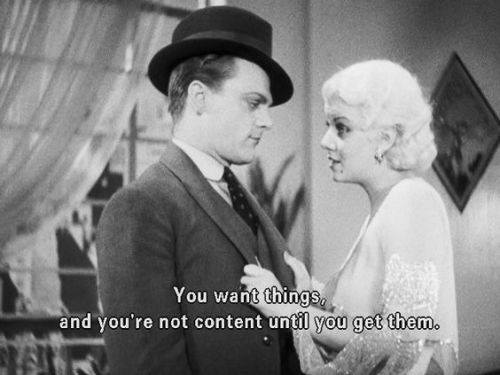
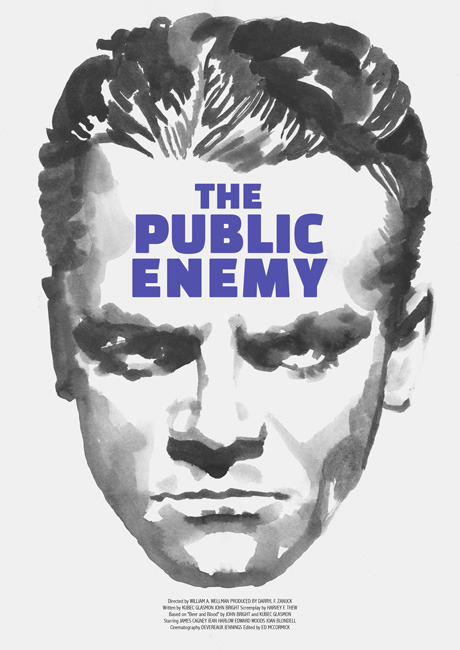
Inimigo Público” (1931): meu filme favorito de todos os tempos foi feito na década de 1930 (“Nasce uma Estrela”, de 1937) e já faz algum tempo que eu o revi. Por isso, escolhi o maravilhoso filme que fez de James Cagney, meu ator favorito, uma estrela. Além disso, é um ótimo exemplo dos primeiros filmes falados, mostrando quanto o cinema mudou e evoluiu desde o final dos anos 20. Um dos melhores, se não o melhor, filmes de gângster, conta a elétrica, violenta e rápida saga de Tom Powers (James Cagney), e é tão poderoso que eu gostaria de esquecer o final só para me surpreender com ele mais uma vez. Há também a emocionante relação entre Tom e sua mãe, a beleza de Jean Harlow e a famosa cena com um grapefruit.

The Public Enemy” (1931): my favorite film ever was made in the 1930s (it’s “A Star is Born”, from 1937) and it’s been a while I last rewatched it. So I chose the wonderful flick that made a star of James Cagney, my favorite actor. Also, it’s a great early talkie that shows how much cinema changed and evolved since the late 1920s. One of the best, if not the best, gangster films, it tells the electric, violent and quick saga of Tom Powers (James Cagney), and it is so powerful that I wish I could forget the ending only to be surprised by it again. There is also a poignant relationship between Tom and his mother, Jean Harlow looking pretty and the infamous grapefruit scene.

Um Dia em Nova York” (1949): New York, New York, uma cidade maravilhosa! Ao menos foi o que disseram aos três amigos marinheiros que têm apenas um dia para ver tudo em Nova York antes de voltarem ao navio. Frank Sinatra tem um velho guia turístico que pertenceu ao avô, Gene Kelly quer conhecer uma garota (ou talvez sete ou oito garotas) e Jules Munshin quer ver os pontos turísticos da cidade mais bonita do mundo. Enquanto estão na cidade, eles conhecem três garotas igualmente fantásticas: Betty Garrett é uma motorista de táxi decididas, Vera-Ellen é a famosa Miss Borboleta do cartaz no metrô e Ann Miller está procurando por um homem pré-histórico. Há uma hora marcada para a diversão acabar, mas até lá, é um diante folga delicioso para eles e para nós. Só pensar neste musical maravilhoso - com ótimas canções e sequência de dança - já me faz sorrir.

On the Town” (1949): New York, New York, it’s a wonderful town! Or at least this was said to three sailor friends who have just one day to see everything in New York before they need to get back to the ship. Frank Sinatra has an old and outdated tourist guide given to him by his grandfather, Gene Kelly wants to pick up a date (maybe seven or eight) and Jules Munshin wants to see the sights of the most wonderful city in the world. While on the town, they meet three equally great ladies: Betty Garrett is a resolute taxi driver, Vera-Ellen is the famous Miss Turnstiles from the subway poster and Ann Miller is looking for a prehistoric man. There is a time for fun to end, but until then, it’s a delightful holiday for them and for us. Only thinking about this marvelous musical with great musical numbers makes me smile.

Europa ‘51” (1952): “Crepúsculo dos Deuses” (1950) não é um filme perfeito, talvez o melhor filme já feito? Em, provavelmente é. Mas esta lista precisava de mais diversidade - todos os outros títulos são filmes de Hollywood - e “Europa ‘51” não é somente um filme neorrealista italiano subestimado, mas também é um filme com uma mensagem universal e atual. Ingrid Bergman interpreta uma mulher que, após a morte do filho, decide apenas fazer boas ações e ajudar pessoas. Como sempre, ela é vista com maus olhos e os autoproclamados “cidadãos de bem” querem impedi-la de seguir fazendo o bem. Além de ser muito bem feito, o filme ainda conta com a presença de Giulietta Masina - esposa de Fellini e uma de minhas atrizes favoritas - num pequeno papel.

Europe ‘51” (1952): Isn’t “Sunset Boulevard” (1950) a perfect film, maybe the best film ever made? Yes, it probably is. But this list was lacking diversity - all the other titles are Hollywood movies - and “Europe ‘51” is not only an underrated Italian Neorrealist flick, it’s also one with an universal, timely message. Ingrid Bergman stars as a woman who, after the death of her son, decides to only do good deeds and help people. As always, she is frowned upon and the self-proclaimed “good citizens” want to stop her. Besides being beautifully made, the film also brings Giulietta Masina - Fellini’s wife and one of my favorite actresses - in a small role.

Descalços no Parque” (1967): uma delícia da Nova (mais nova? Talvez não tão nova?) Hollywood, este filme é a adaptação de uma peça de Neil Simon. Robert Redford e Jane Fonda interpretam recém-casados que são muito diferentes: ele é sério e tímido, ela é divertida e extrovertida. Conforme começam a vida juntos, eles lidam com um vizinho extravagante e vão jantar com a mãe de Cory (Fonda). Mesmo explorando o clichê de “oposto que se atraem”, esta é uma adorável comédia romântica cheia de risadas e suspiros.

Barefoot in the Park” (1967): a delight from New (newer? Maybe not so new now?) Hollywood, this film is the adaptation of a play by Neil Simon. Robert Redford and Jane Fonda play newlyweds who are very different: he is serious and shy, she is fun-loving and outgoing. As they start their life together, they deal with an extravagant neighbor and have dinner with Cory’s (Fonda) mother. Even though the film explores the “opposites attract” cliché, it’s a sweet romantic comedy full of laughs and sighs.

This is my contribution to the 6 films - 6 decades blogathon, hosted by Rick at Classic Film & TV Café.

Sunday, December 9, 2018

Revisitando o “Inimigo Público” (1931) / Revisiting “The Public Enemy” (1931)


ESTE ARTIGO TEM SPOILERS
THIS ARTICLE HAS SPOILERS

Assim como a maioria dos adolescentes, eu era rebelde e nem sempre me dava bem com a minha família. Ao contrário da maioria dos adolescentes, cinema clássico era minha válvula de escape. A história que contarei hoje começa em janeiro de 2010, quando eu briguei com a minha família por causa de uma sobremesa que eu havia preparado – uma “brevidade” que ficou dura demais. Eu estava com raiva e fui ao shopping naquela tarde. Quando eu cheguei em casa, era tarde demais para ver minha sitcom favorita, “The Big Bang Theory”, no horário das oito. Eu teria de esperar pela reprise à meia-noite. Para a hora passar, eu decidi ver um filme que estava começando: “Inimigo Público”. De certa maneira, este filme mudou minha vida.

Like most teenagers, I was rebellious and not always got along with my family. Unlike most teenagers, classic films were my escape. The story I'll tell today starts in January 2010, after I argued with my family over one dessert I had backed – a cake called “brevidade” that actually ended up too hard. I was sour and spent the evening at the mall. When I arrived home, it was too late to catch my favorite sitcom, “The Big Bang Theory”, at the 8 P.M. showing time. I had to wait for the rerun at midnight. Until then, I decided to watch a film that was starting: “The Public Enemy”. In a sense, this film changed my life.


Eu decidi assistir ao filme por causa de Jean Harlow. Eu já tinha ouvido falar sobre ela, que morreu com apenas 26 anos, mas nunca a tinha visto em um filme. No final, Jean esteve OK, mas James Cagney foi quem me surpreendeu e impressionou. Eu apreciei tanto sua performance e a trama do filme que, naquele mesmo ano, eu vi “Inimigo Público” mais duas vezes. E por oito anos eu não o revi – e aqui estão minhas impressões depois de revisitar meu querido filme de gângster.

I decided to watch it because of Jean Harlow. I had heard about her, who had died at only 26, but never had seen her in anything. In the end, Jean was OK, but James Cagney was the one that surprised and amazed me. I enjoyed his performance and the overall plot so much that, in that same year, I rewatched “The Public Enemy” twice. And for eight years I haven't rewatched it – and here are my impressions after revisiting my beloved gangster flick.


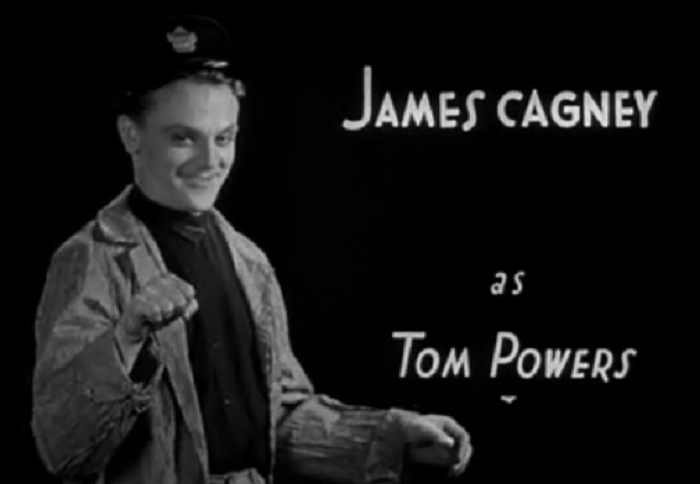
Eu me lembro bem dos créditos iniciais. Eu amo estes créditos dos pre-Codes com a imagem de cada ator e o nome do personagem. Eu me lembro perfeitamente de Cagney socando o ar e Harlow sorrindo nestes créditos iniciais. Eu também amo o realismo que a Warner tentou imprimir nestes filmes com os textos sobre como tudo era baseado em histórias reais...

I remember the opening credits well. I love those pre-Code credits with each actor and their character's name. I vividly remember Cagney punching the air and Harlow smiling in these opening credits. I also love the realism Warner tried to imprint their films with as they added those texts about how the facts here presented are happening right now...


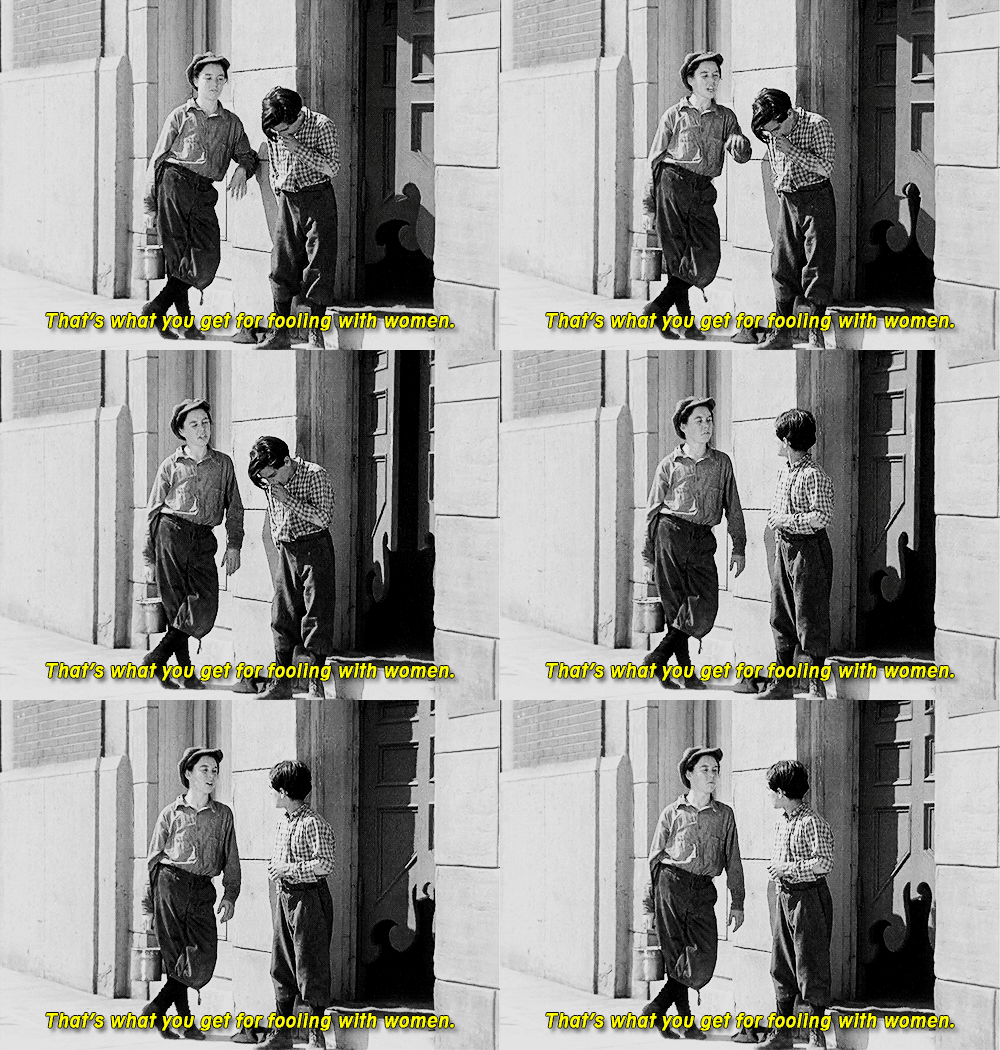
O “Inimigo Público” é Tom Powers (Cagney), alguém que nasceu para se meter em encrencas. Eu me lembrava pouco das cenas da infância dos personagens, mas não entendo como Tom pôde crescer tanto, indo de pré-adolescente até a fase James Cagney, em apenas seis anos. A partir de 1915 na linha do tempo do filme, já podemos ver Cagney.

“The Public Enemy” is Tom Powers (Cagney), a natural-born troublemaker. I remembered a little of his childhood phase as shown in the movie, but I don't understand how Tom could grow from his pre-teen phase to the James Cagney stage in only six years. By 1915 in the film's timeline, Cagney can already be seen.


Desde a infância, Tom e seu melhor amigo Matt Doyle (Eddie Woods) estavam envolvidos em atividades ilícitas, como roubos. Quando chega 1920 e a proibição da venda de bebidas alcoólicas é promulgada, eles veem uma nova oportunidade com o dono de bar Paddy (Robert O’Connor) e o grande contrabandista Nails Nathan (Leslie Fenton) – um novo trabalho que permite que Cagney intimide e cuspa cerveja no rosto de um homem.

Since childhood, Tom and his best friend Matt Doyle (Eddie Woods) have been involved in illicit activities like stealing. When they reach 1920 and the Prohibition arrives, they see a new opportunity with bar owner Paddy (Robert O’Connor) and master bootlegger Nails Nathan (Leslie Fenton) – a new job that allows Cagney to intimidate and spit beer to a man’s face.


Tom e Matt têm êxito, mas Tom não conta à sua querida mãezinha (Beryl Mercer) que ele está envolvido com atividades ilegais. Quando seu irmão Mike (Donald Cook) volta da guerra, uma briga começa: Mike acha que o que Tom faz é horrível, mas Tom também condena Mike por ter matado pessoas na guerra. Eu não me lembrava desta sequência interessante, mas a linha do tempo histórica me incomodou – quem esperaria de 1918, quando a guerra acabou, até 1920 para voltar para casa?

Tom and Matt thrive, but Tom doesn’t tell his beloved mother (Beryl Mercer) that he is involved with illegal activities. When his brother Mike (Donald Cook) comes back from the war, an argument starts: Mike thinks what Tom does is hideous, but Tom also condemns Mike for killing innocent people in the war. I didn’t remember this very interesting sequence, but the historical timeline kind of bothered me here – who waited from 1918, when the war ended, to 1920 to come home?


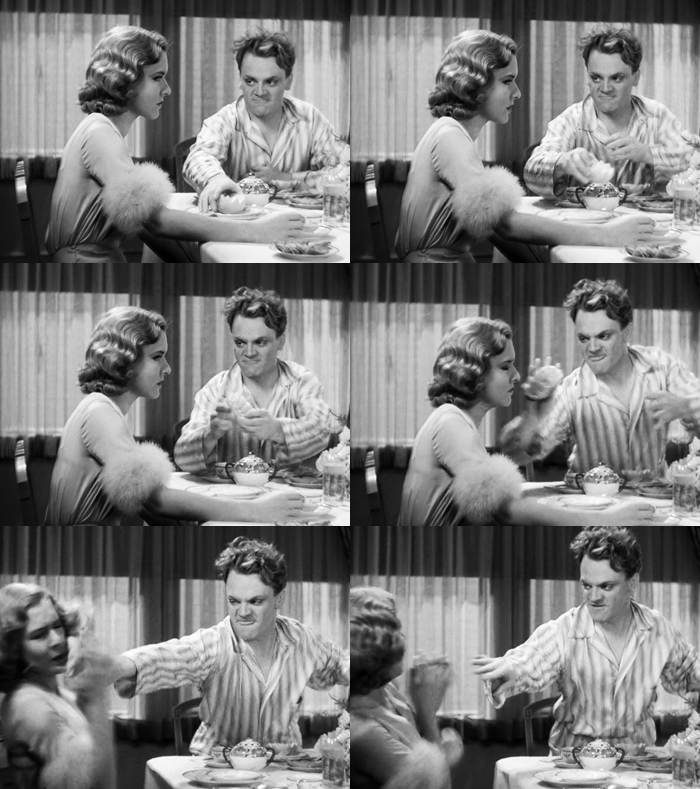
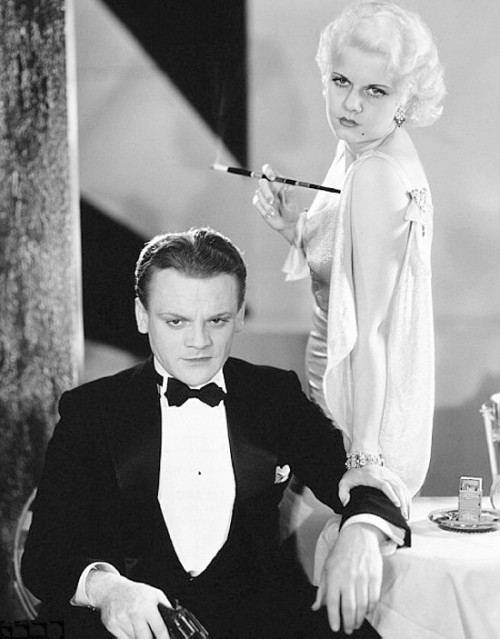
O que se segue é a famosa cena do grapefruit, depois que Tom confessa a Nathan que já está de saco cheio de sua namorada, Kitty (Mae Clarke, não creditada). Depois deste episódio, Matt e Tom conhecer Gwen (Jean Harlow) e dão uma carona a ela – Harlow tem uma entrada simples, mas memorável.

What follows is the famous grapefruit scene, after Tom confesses to Nathan that he is already fed up with his girl, Kitty (an uncredited Mae Murray). After the episode, Matt and Tom meet Gwen (Jean Harlow) and give her a ride – Harlow has a simple but memorable entrance.


Matt se casa com Mamie (Joan Blondell) e Tom começa a sair com Gwen. Na noite de núpcias de Matt, ele tem de deixar sua esposa e acompanhar Tom em uma missão para matar um velho conhecido. Tom age como se nada tivesse acontecido depois que o “trabalho” é feito, mas Matt fica muito perturbado com o que viu. O hábito de Tom de socar o rosto das pessoas como cumprimento também começa a incomodar sua mãe, que imita o gesto de maneira desconfortável.

Matt marries Mamie (Joan Blondell) and Tom starts dating Gwen. On Matt’s wedding night, he has to leave his wife and accompany Tom in a mission to kill an old acquaintance. Tom acts as if nothing happened after the job is done, but Matt is deeply disturbed by what he witnessed. Tom’s habit of punching people’s faces as a greeting also starts bothering his mother, who mimics the gesture once in an uncomfortable way.

Tom recebe a notícia de que Nails Nathan morreu enquanto Gwen está declarando seu amor por ele. Tom a deixa no mesmo minuto para buscar vingança – um tipo chocante de vingança, que eu nunca esqueci. Gwen fica sozinha, refletindo se ela significa para Tony o mesmo que ele significa para ela.

Tom receives the news that Nails Nathan died while Gwen was declaring all her love for him. Tom leaves her in the same minute to seek revenge – a shocking kind of revenge, one I never forgot. Gwen is left thinking if she means to Tom as much as he means to her.


Tom Powers pode não ser o chefe dos gângsteres agora, mas é parte de uma briga de gangues, e não deixará que atos de violência contra seus amigos passem sem vingança. Vingança é o tema dos últimos 20 minutos do filme, quando você aprende que violência só leva a mais violência.

Tom Powers may not be the top gangster now, but he is part of a mob war, and won’t let acts of violence against his fellows pass without revenge. Revenge is the theme of the last 20 minutes of the film, when you learn that violence only leads to more violence.


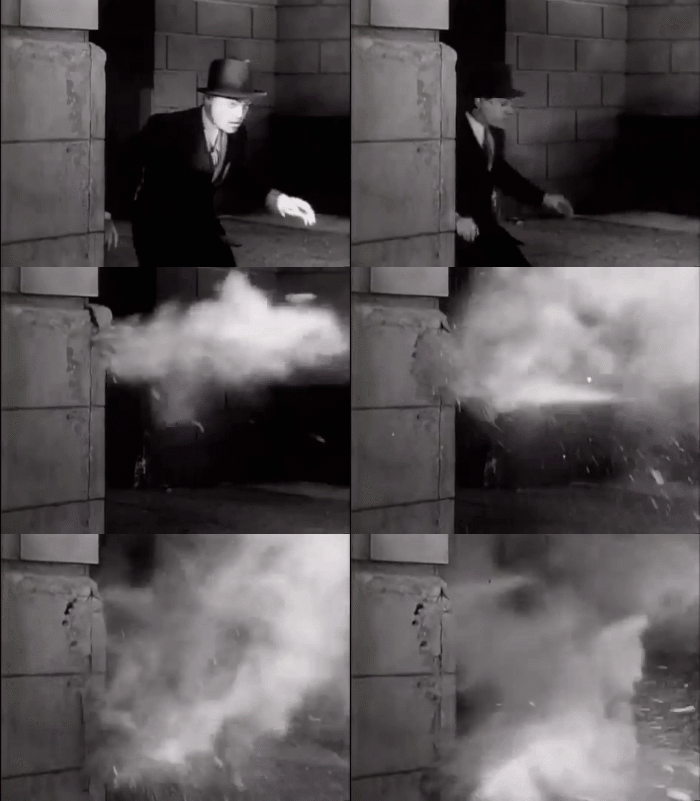
E quão poderoso é o final? Eu fiquei sem fala, com os olhos arregalados, naquela noite fatídica em janeiro de 2010, quando eu vi o filme pela primeira vez. Agora, eu espero pelo final com animação. Na verdade, como eu já vi o filme antes, em muitos momentos eu pude perceber o suspense crescendo, e pude ver os muitos elementos interessantes – como o som de carvão sendo despejado de um caminhão – que foram usados para criar o suspense que culmina no clímax.

And how powerful is that ending? I was just speechless, with my eyes wide open, in that fatidic night in January 2010, when I watched the film for the first time. Now, I expect the ending with anticipation. Actually, because I had seen the film before, in many moments I could feel the suspense in a crescendo, and the many interesting elements – like the sound of coal being poured from a truck – that were used to create the suspense until the climax.


Eu me lembro de que o homem que comentava este filme na TV disse que o segredo de Cagney era energia – ele disse isso enquanto passavam cenas de Cagney andando na chuva e sorrindo. Eu concordo, mas devo acrescentar que seus momentos mais sutis, de fragilidade – como quando ele é ferido – são igualmente poderosos. E não podemos nos esquecer de Beryl Mercer interpretando a Mamãe Powers, uma personagem tão simplória que é quase patética, mas de quem gostamos e cujo sofrimento nos faz também sofrer.

I remembered that the man commenting this film on TV said that Cagney’s secret was energy – he said that while they were showing footage of Cagney walking in the rain and grinning. I agree, but I must add that his more subtle moments of fragility – like when he’s hurt – are equally powerful. And we can’t forget Beryl Mercer as Ma Powers, playing that character as such a simpleton that she is almost pathetic, but we can’t help liking her and suffering when she suffers.


Eu discordo das pessoas que dizem que “Inimigo Público” foi um produto de seu tempo, quando o som ainda era novo em Hollywood. De maneira alguma o filme é primitivo: a história é ótima, as performances são naturais e perfeitas, os cenários e os sons são muito bons. “Inimigo Público” é um filme excelente mesmo depois de todos estes anos, e depois de revê-lo eu posso dizer que ele ainda está entre meus preferidos.

I disagree when people say that “The Public Enemy” was a product of its time, when sound was still new in Hollywood. In no ways the film is primitive: the storytelling is great, the performances are natural and on point, the sets and sound are very good. William A. Wellman is truly a master of cinema. “The Public Enemy” is a terrific movie even after all those years, and after rewatching it I can say it still belongs in my top five.


Se eu não tivesse brigado com a minha família e perdido “The Big Bang Theory”, eu teria assistido a “Inimigo Público” em circunstâncias muito diferentes, e talvez eu não tivesse ficado tão hipnotizada e maravilhada com o filme. Talvez eu não gostasse tanto de filmes de gângster e de William A. Wellman – e talvez James Cagney não fosse meu ator favorito. Graças e Deus, eu fui uma adolescente rebelde – e que fazia péssimos bolos.

If I hadn't argued with my family and missed “The Big Bang Theory”, I would have watched “The Public Enemy” under very different circumstances, and maybe I wouldn't have been so amused and thrilled. Maybe then I wouldn't like gangster movies and William A. Wellman so much – and maybe James Cagney wouldn't be my favorite actor. Thank God I was a rebellious teenager – and one who baked terrible cakes.

This is my contribution to The Unexpected Blogathon, hosted by Rebecca at Taking Up Room.

Related Posts Plugin for WordPress, Blogger...