} Crítica Retrô: Europa '51

Tradutor / Translator / Traductor / Übersetzer / Traduttore / Traducteur / 翻訳者 / переводчик

Showing posts with label Europa '51. Show all posts

Saturday, May 15, 2021

6 filmes em 6 décadas / 6 films, 6 decades


Fazer listas é divertido, não é? Mas ao mesmo tempo é difícil. Como qualquer cinéfilo pode confirmar, eleger seus filmes favoritos pode ser um exercício excruciante - porque nós temos MUITOS favoritos! Eu nunca digo não para uma lista, mas devo confessar que sofro um pouco para escrevê-las. Este ano, para o Dia do Cinema Clássico, tivemos de listar um filme favorito para cada década, começando em 1920 e terminando nos anos 1960. Foi um trabalho complexo, por isso decidi listar o filme que primeiro viesse à minha cabeça quando eu pensei em cada uma das décadas.

Lists are fun, aren’t they? But at the same time they are rough. As any cinephile would tell you, choosing your favorite movies can be an excruciating exercise - because we have SO MANY favorites! I never say no to a list, but I must confess I suffer a little to write them. This year, for National Classic Movie Day, we had to list our favorite film for each decade from the 1920 to the 1960s. This was a tough job, so I decided to let go and list the favorite movie that first came to my mind when I thought about each decade.

“O Pássaro Azul” (1918): Este belíssimo filme dirigido por Maurice Tourneur é um deleite para os olhos. Tudo parece ter um toque de seda, ou talvez um toque de mágica. É a adaptação da peça escrita pelo filósofo Maurice Maeterlinck, contando a história dos irmãos Mytyl e Tyltyl, que estão à procura do lendário pássaro azul da felicidade. A fot6ografia do filme é do brilhante John van der Broek, que infelizmente faleceu logo após as filmagens. Sim, há beleza e tristeza neste primeiro filme da lista.

“The Blue Bird” (1918): This wonderful, wonderful film directed by Maurice Touneur is a feast for the eyes. Everything looks like it has a touch of silk, or maybe a touch of magic. It’s the adaptation of the play written by the philosopher Maurice Maeterlinck, telling the story of the siblings Mytyl and Tyltyl, who are after a legendary blue bird of happiness. The cinematography is by the brilliant John van der Broek, who unfortunately passed away right after the film was finished. Yes, there is beauty and sadness in my first choice.

A Última Ordem” (1928): embora meu filme mudo preferido também tenha sido feito na década de 20 (“O Grande Desfile”, de 1925) e mesmo com tantos ótimos curtas e longas-metragens feitos naquela década, “A Última Ordem” foi aquele em que pensei primeiro. É uma obra-prima do final da era muda e um filme que me faz desejar que os diálogos sincronizados tivessem demorado um pouquinho mais para surgirem. O filme conta, em flashback, a história de um homem com um passado glorioso na Rússia czarista que atualmente está com dificuldades para arranjar emprego como figurante em Hollywood. O filme conta com uma performance brilhante do nojento Emil Jannings e também traz William Powell num papel coadjuvante. Com muitos momentos surpreendentes, “A Última Ordem” é a prova do poder do storytelling no cinema mudo - e também roça que, na vida real, há pessoas espertas e talentosas que escolhem o lado do mal.

The Last Command” (1928): although my favorite silent film was also made in the 1920s (it’s “The Big Parade”, from 1925) and even though so many amazing shorts and features were made in that decade, “The Last Command” was the first film that came to my mind. It’s a masterpiece of the late silent era and one that makes me wish synchronized dialogue could have waited just a little more to make an appearance. The film tells, in flashback, the story of an once great man in Czarist Russia who is currently struggling to find work as an extra in Hollywood. The film has a brilliant performance by the filthy Emil Jannings and also brings William Powell in a supporting role. With many surprising moments, “The Last Command” is proof of silent cinema’s power in storytelling - and also proves that, in real life, there are smart and talented people who side with evil.

Inimigo Público” (1931): meu filme favorito de todos os tempos foi feito na década de 1930 (“Nasce uma Estrela”, de 1937) e já faz algum tempo que eu o revi. Por isso, escolhi o maravilhoso filme que fez de James Cagney, meu ator favorito, uma estrela. Além disso, é um ótimo exemplo dos primeiros filmes falados, mostrando quanto o cinema mudou e evoluiu desde o final dos anos 20. Um dos melhores, se não o melhor, filmes de gângster, conta a elétrica, violenta e rápida saga de Tom Powers (James Cagney), e é tão poderoso que eu gostaria de esquecer o final só para me surpreender com ele mais uma vez. Há também a emocionante relação entre Tom e sua mãe, a beleza de Jean Harlow e a famosa cena com um grapefruit.

The Public Enemy” (1931): my favorite film ever was made in the 1930s (it’s “A Star is Born”, from 1937) and it’s been a while I last rewatched it. So I chose the wonderful flick that made a star of James Cagney, my favorite actor. Also, it’s a great early talkie that shows how much cinema changed and evolved since the late 1920s. One of the best, if not the best, gangster films, it tells the electric, violent and quick saga of Tom Powers (James Cagney), and it is so powerful that I wish I could forget the ending only to be surprised by it again. There is also a poignant relationship between Tom and his mother, Jean Harlow looking pretty and the infamous grapefruit scene.

Um Dia em Nova York” (1949): New York, New York, uma cidade maravilhosa! Ao menos foi o que disseram aos três amigos marinheiros que têm apenas um dia para ver tudo em Nova York antes de voltarem ao navio. Frank Sinatra tem um velho guia turístico que pertenceu ao avô, Gene Kelly quer conhecer uma garota (ou talvez sete ou oito garotas) e Jules Munshin quer ver os pontos turísticos da cidade mais bonita do mundo. Enquanto estão na cidade, eles conhecem três garotas igualmente fantásticas: Betty Garrett é uma motorista de táxi decididas, Vera-Ellen é a famosa Miss Borboleta do cartaz no metrô e Ann Miller está procurando por um homem pré-histórico. Há uma hora marcada para a diversão acabar, mas até lá, é um diante folga delicioso para eles e para nós. Só pensar neste musical maravilhoso - com ótimas canções e sequência de dança - já me faz sorrir.

On the Town” (1949): New York, New York, it’s a wonderful town! Or at least this was said to three sailor friends who have just one day to see everything in New York before they need to get back to the ship. Frank Sinatra has an old and outdated tourist guide given to him by his grandfather, Gene Kelly wants to pick up a date (maybe seven or eight) and Jules Munshin wants to see the sights of the most wonderful city in the world. While on the town, they meet three equally great ladies: Betty Garrett is a resolute taxi driver, Vera-Ellen is the famous Miss Turnstiles from the subway poster and Ann Miller is looking for a prehistoric man. There is a time for fun to end, but until then, it’s a delightful holiday for them and for us. Only thinking about this marvelous musical with great musical numbers makes me smile.

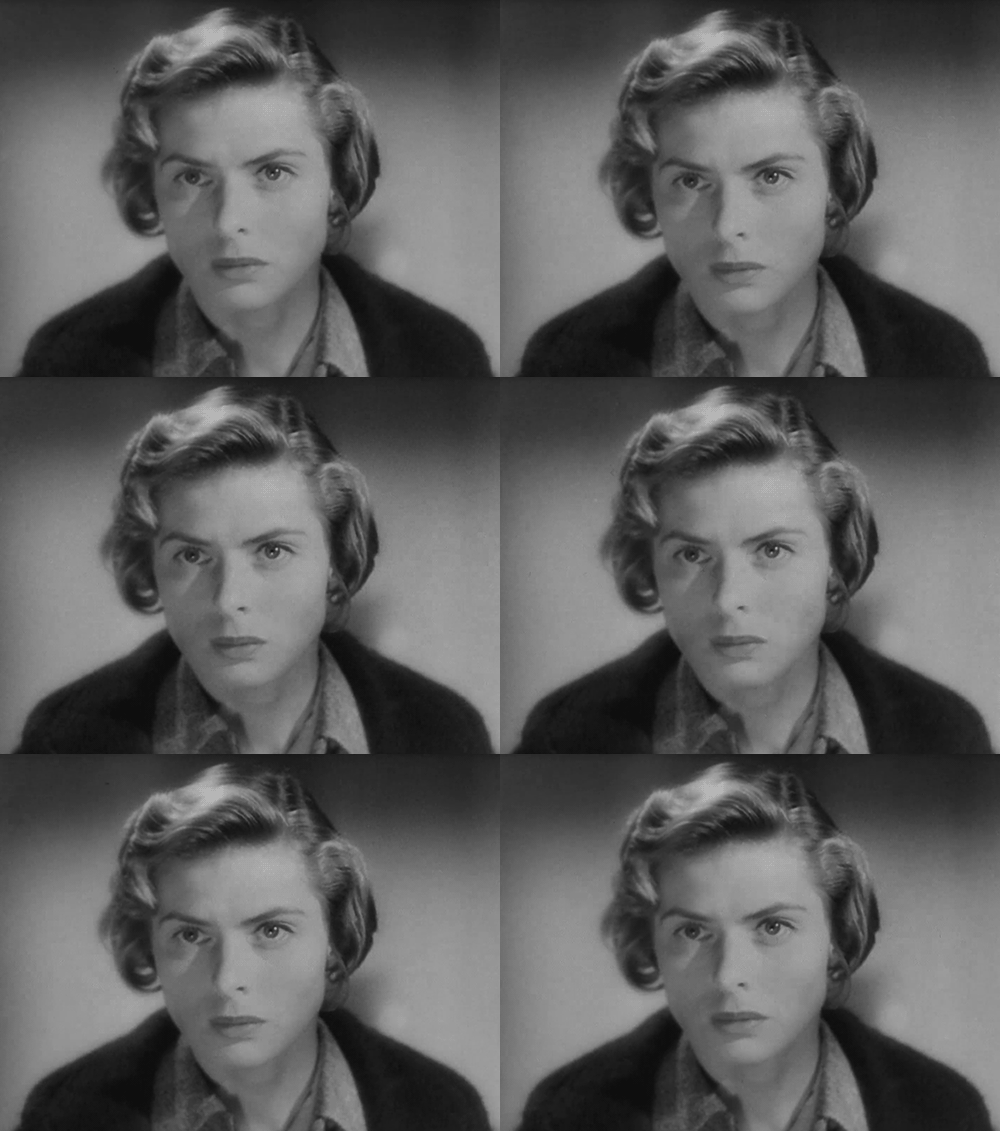
Europa ‘51” (1952): “Crepúsculo dos Deuses” (1950) não é um filme perfeito, talvez o melhor filme já feito? Em, provavelmente é. Mas esta lista precisava de mais diversidade - todos os outros títulos são filmes de Hollywood - e “Europa ‘51” não é somente um filme neorrealista italiano subestimado, mas também é um filme com uma mensagem universal e atual. Ingrid Bergman interpreta uma mulher que, após a morte do filho, decide apenas fazer boas ações e ajudar pessoas. Como sempre, ela é vista com maus olhos e os autoproclamados “cidadãos de bem” querem impedi-la de seguir fazendo o bem. Além de ser muito bem feito, o filme ainda conta com a presença de Giulietta Masina - esposa de Fellini e uma de minhas atrizes favoritas - num pequeno papel.

Europe ‘51” (1952): Isn’t “Sunset Boulevard” (1950) a perfect film, maybe the best film ever made? Yes, it probably is. But this list was lacking diversity - all the other titles are Hollywood movies - and “Europe ‘51” is not only an underrated Italian Neorrealist flick, it’s also one with an universal, timely message. Ingrid Bergman stars as a woman who, after the death of her son, decides to only do good deeds and help people. As always, she is frowned upon and the self-proclaimed “good citizens” want to stop her. Besides being beautifully made, the film also brings Giulietta Masina - Fellini’s wife and one of my favorite actresses - in a small role.

Descalços no Parque” (1967): uma delícia da Nova (mais nova? Talvez não tão nova?) Hollywood, este filme é a adaptação de uma peça de Neil Simon. Robert Redford e Jane Fonda interpretam recém-casados que são muito diferentes: ele é sério e tímido, ela é divertida e extrovertida. Conforme começam a vida juntos, eles lidam com um vizinho extravagante e vão jantar com a mãe de Cory (Fonda). Mesmo explorando o clichê de “oposto que se atraem”, esta é uma adorável comédia romântica cheia de risadas e suspiros.

Barefoot in the Park” (1967): a delight from New (newer? Maybe not so new now?) Hollywood, this film is the adaptation of a play by Neil Simon. Robert Redford and Jane Fonda play newlyweds who are very different: he is serious and shy, she is fun-loving and outgoing. As they start their life together, they deal with an extravagant neighbor and have dinner with Cory’s (Fonda) mother. Even though the film explores the “opposites attract” cliché, it’s a sweet romantic comedy full of laughs and sighs.

This is my contribution to the 6 films - 6 decades blogathon, hosted by Rick at Classic Film & TV Café.

Wednesday, May 15, 2019

TOP 5 - Meus filmes favoritos dos anos 1950


TOP 5 - My favorite films of the 1950s


Se você me perguntasse se eu queria viver na década de 1950, eu responderia “claro que NÃO” instantaneamente. Os anos 50 foram péssimos para a diversidade. O racismo e o sexismo eram escancarados, havia segregação racial, a “Ameaça Vermelha” e o McCarthismo. As mulheres podiam apenas ser esposas e mães - havia poucas mulheres trabalhando fora. E você tinha de se conformar com as convenções sociais e jamais se destacar, ou você seria considerado estranho e poderia inclusive ser perseguido. Bem, considerando a última parte, eu poderia dizer que os anos 50 foram exatamente como minha época no ensino médio.

If you asked me if I wanted to live in the 1950s, I’d answer “hell, NO” instantly. The 1950s were not a very diverse decade. Racism and sexism were blatant, there was racial segregation, the Red Scare and the McCarthism. Women could only be wives and mothers - there were few who worked outside of the home. And you had to conform to society norms and not stand out, or you would be considered weird and could even be persecuted. Well, thinking about that last part, I could say that the 1950s were exactly like my high school years.


Mas uma coisa é inegável: os filmes feitos nos anos 50 foram incríveis. Praticamente todos os gêneros estavam em seu auge, e no mundo todo excelentes filmes eram feitos. E Hollywood estava no ápice de sua Era de Ouro. É por isso que o Dia do Cinema Clássico de 2019 será celebrado por blogueiros que escolherão seus cinco filmes favoritos dos anos 50.

But one thing is undeniable: the films made in the 1950s were amazing. Basically all genres were at their peak, and all over the world great movies were being made. And Hollywood was in the height of its Golden Age. That’s why the 2019 Classic Movie Day Will be celebrated by classic film bloggers who will choose their top five films from the 1950s.


E, puxa, essa não é tarefa fácil. Milhares de filmes foram feitos naquela década, e algumas centenas deles são realmente ótimos, ou ao menos filmes bons que têm um lugar especial no coração dos cinéfilos. Para fazer minha lista, levei em consideração ambos: qualidade e valor emocional.

And, wow, this is not an easy task. Thousands of films were made in that decade, and a few hundred are very, very good ones, or at least nice films that have a special place in cinephiles’ hearts. To write my list, I considered both: quality and emotional value.


Primeiro, algumas menções honrosas: Dizem que é Pecado (1951), A Lenda dos Beijos Perdidos (1954), Um Corpo que Cai (1958).

First, a few honorable mentions: People Will Talk (1951), Brigadoon (1954), Vertigo (1958).


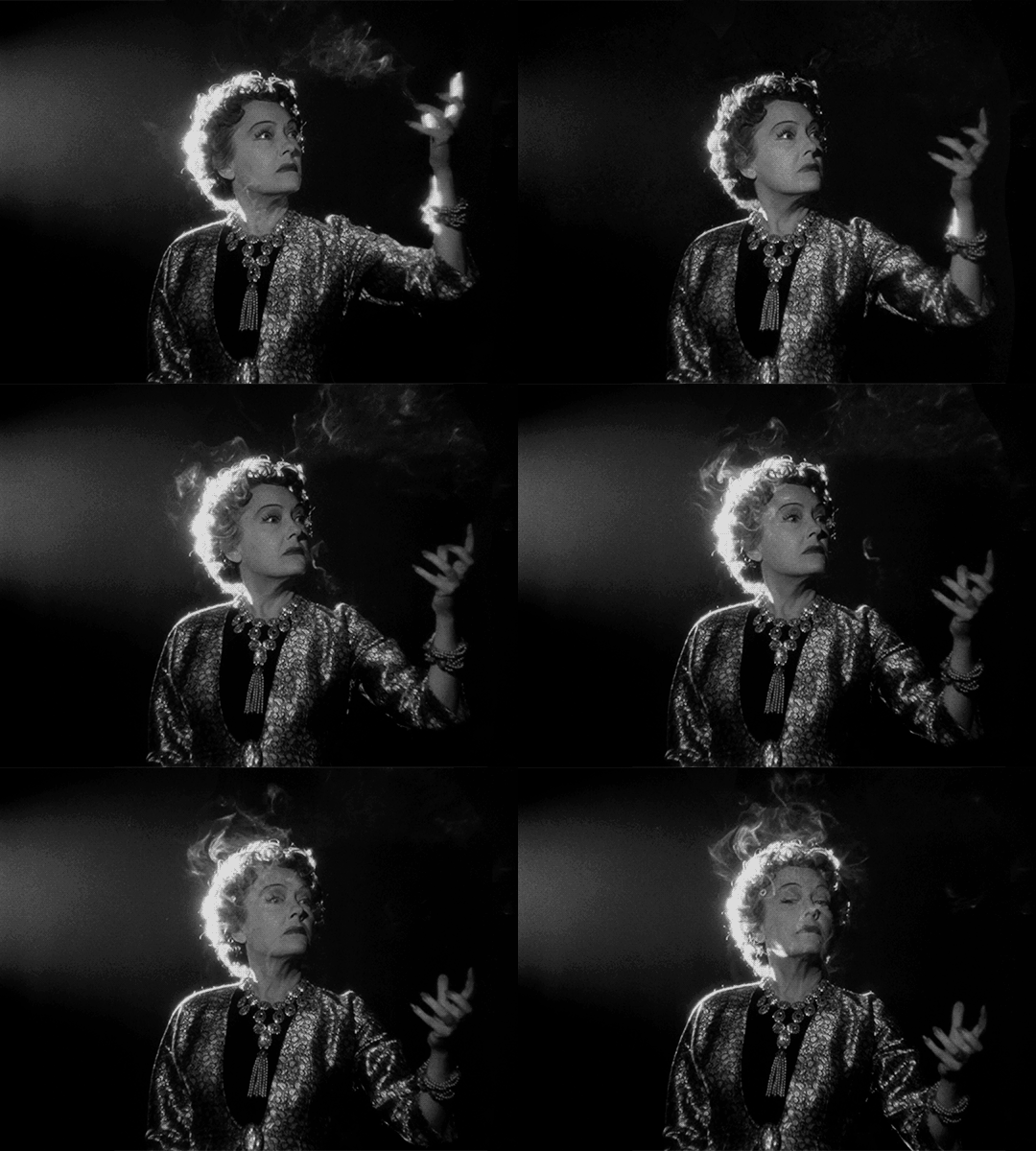
Crepúsculo dos Deuses (1950): Como uma pessoa muito racional, eu tenho um filme favorito e um filme que considero o melhor já feito. Meu filme favorito é “Nasce uma Estrela” (1937), enquanto o filme que eu considero o melhor é “Crepúsculo dos Deuses” - coincidentemente, ambos são filmes sobre filmes. Tudo em “Crepúsculo dos Deuses” é perfeito: o roteiro, as atuações (Gloria Swanson está brilhante), os cenários, a trilha sonora, as participações especiais. Há poucos filmes mais icônicos que “Crepúsculo dos Deuses”, e não há diretor tão versátil quanto Billy Wilder.

Sunset Boulevard (1950): As a very rational person, I have one favorite movie and one movie that I consider to be the best ever made. My favorite movie is “A Star is Born” (1937), while the film I consider the best is “Sunset Boulevard” - as a coincidence, both are movies about movies. Everything in “Sunset Boulevard” is perfect: the screenplay, the acting (Gloria Swanson is superb), the sets, the soundtrack, the cameos. There are few movies more iconic as “Sunset Boulevard”, and there is no director as versatile as Billy Wilder.


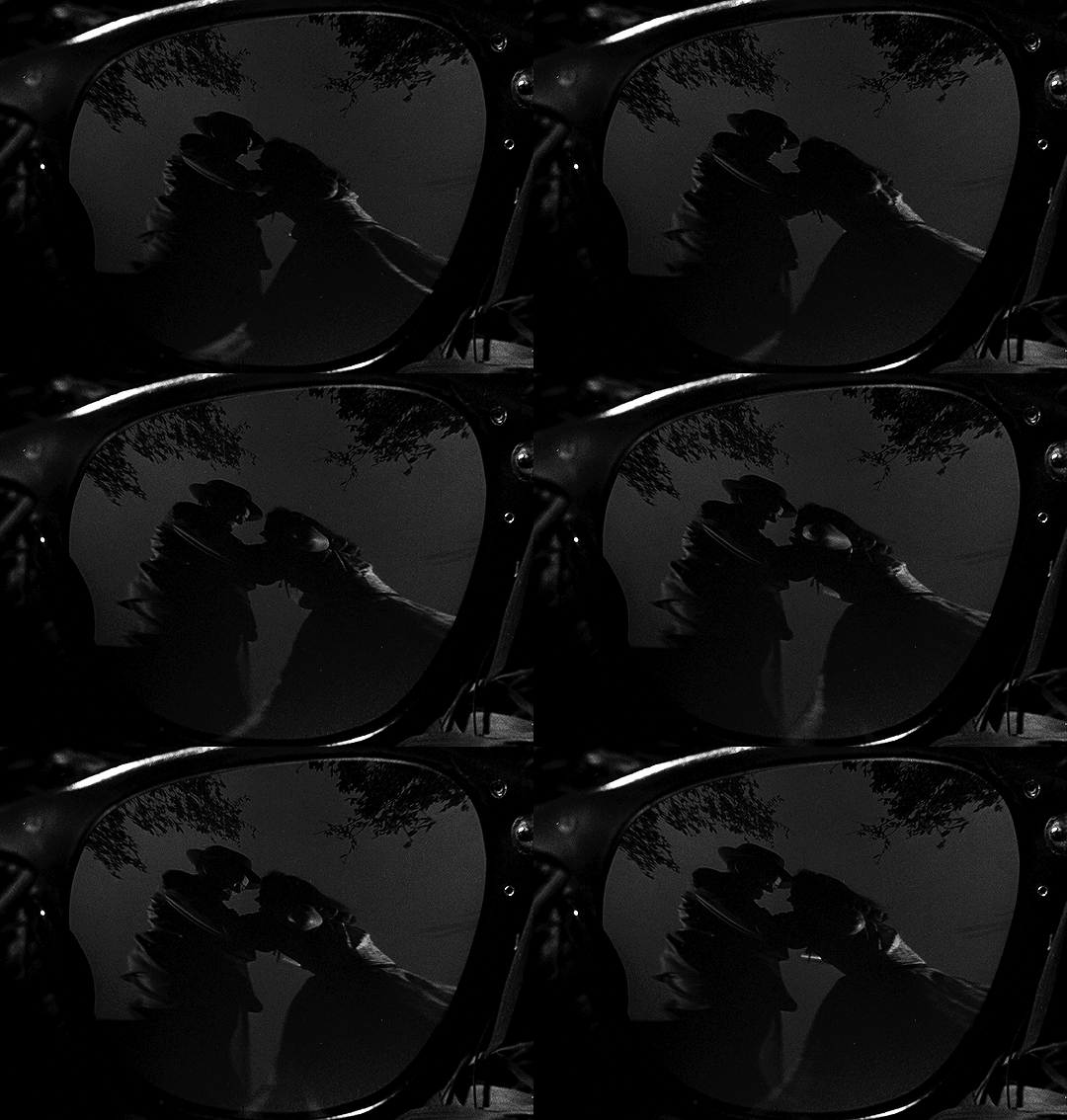
Pacto Sinistro (1950): Meu filme preferido de Hitchcock também é um filme perfeito. Começando com a maneira como os personagens principais se conhecem e terminando no clímax no carrossel, tudo é perfeito. Eu particularmente adoro duas sequências: uma em que um assassinato é refletido em um par de óculos, e a partida de tênis. Tudo neste filme é ótimo: a fotografia, o roteiro - baseado em um livro de Patricia Highsmith, o roteiro foi escrito por uma assistente de Ben Hecht chamada Czenzi Ormonde - e a performance eletrizante de Robert Walker.

Strangers on a Train (1951): My favorite Hitchcock film also happens to be a perfect film. From the way the two main characters meet until the climax in a merry-go-round, everything is perfect. I’m particularly fond of two sequences: the one in which a murder is seen reflected in a pair of glasses, and the tennis match. Everything in this film is great: the cinematography, the screenplay- based on a novel by Patricia Highsmith, the screenplay was written by Ben Hecht’s assistant, a woman named Czenzi Ormonde - and a chilling performance by Robert Walker.


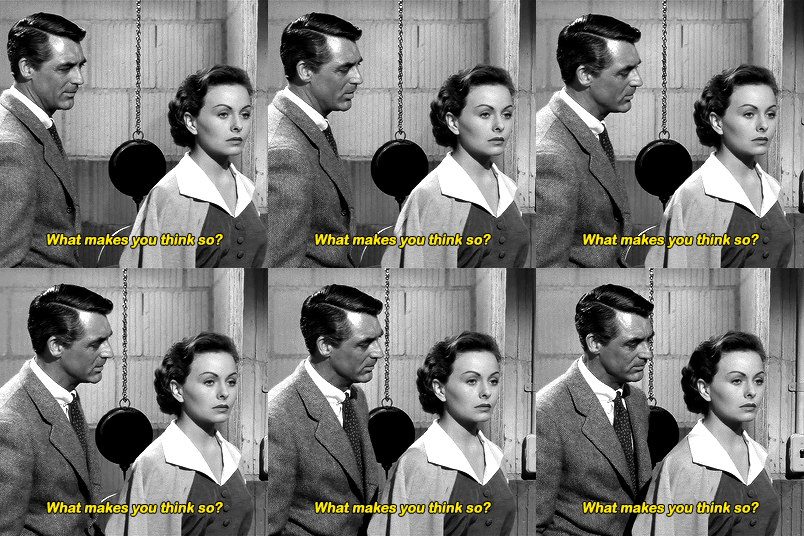
Europa ‘51 (1952): Dezenas de outros filmes italianos poderiam ser mencionados como melhores representantes do Neorrealismo Italiano, mas este foi o que mais me tocou - porque ele é tão atual. Ingrid Bergman protagoniza “Europa ‘51” como uma mulher que, ao perder seu filho, decide só fazer o bem, e é considerada louca pelos seus amigos da alta sociedade. Ela é alguém que começa a seguir os ensinamentos de Jesus - e, como acontece sempre, os cristãos decidem silenciá-la. Como alguém que estudou em um colégio de freitas, que vive em um país profundamente desigual e que tem um forte senso de justiça, eu fiquei muito mexida com este filme. Eu escrevi sobre “Europa ‘51” AQUI.

Europa ‘51 (1952): Dozens of other Italian films could be mentioned as more representative of the Italian Neorealism movement, but this was the one that spoke to me - because it is so timely. Ingrid Bergman stars in “Europa ‘51” as a woman who, after losing her son, decides only to do good, and is considered crazy by her high society friends. She is someone who starts to follow what Christ has taught us - and, as it always happens, Christians quickly decide to silence her. As a person who studied in a Catholic school as a child, who lives in a profoundly unequal country and who has a strong sense of justice, I was deeply moved by this film. I wrote about “Europa ‘51” HERE.


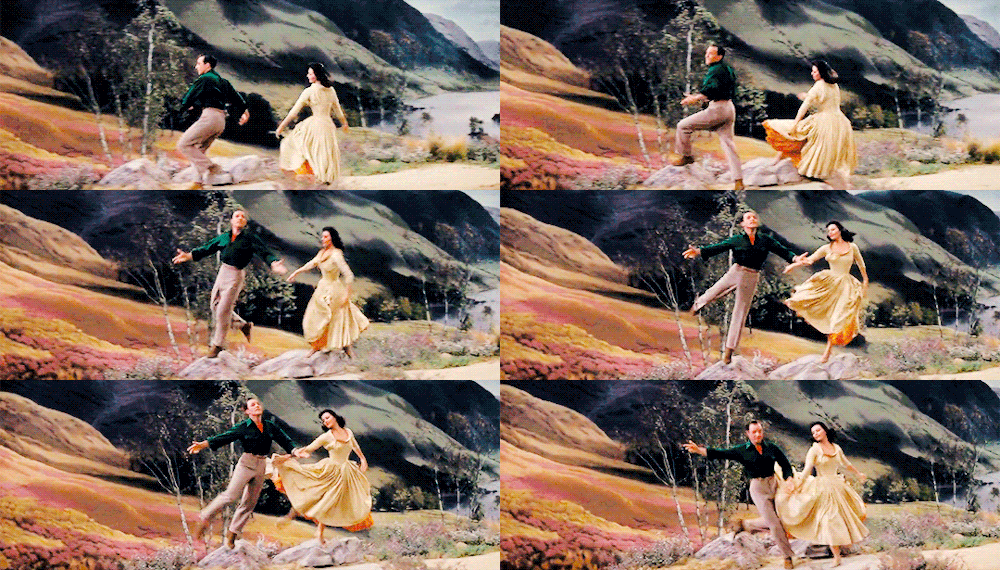
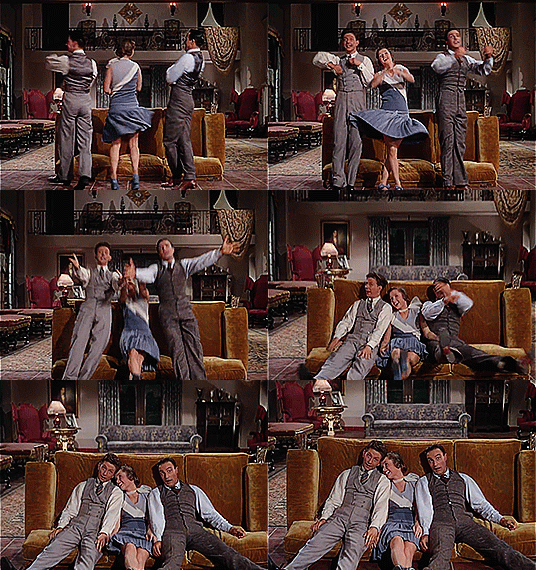
Cantando na Chuva (1952): Até eu começar a fazer esta lista, eu não havia percebido como 1952 foi um bom ano para o cinema - ou pelo menos para mim. Eu pensei em colocar “A Lenda dos Beijos Perdidos” (1954) como meu musical favorito na lista, mas eu estaria tentando enganar a mim mesma. “Cantando na Chuva” é um filme que me deixa feliz, e mais do que isso: ele é muito bem feito, com ótimas canções antigas, coreografias bacanas e até uma história coisa - algo que nem todos os musicais tinham. Eu já escrevi sobre meu amor por “Cantando na Chuva” AQUI.

Singin’ in the Rain (1952): Up until I started making this list, I hadn’t realized how 1952 was a good year for film - or at least for me. I thought about adding “Brigadoon” (1954) as my musical of choice to the list, but I’d be trying to deceive myself. “Singin’ in the Rain” is a film that makes me happy, and more than that: it’s beautifully done, with great vintage songs, nice choreography and even a smart storyline- something not all musicals had. I previously wrote about my love for “Singin’ in the Rain” HERE.


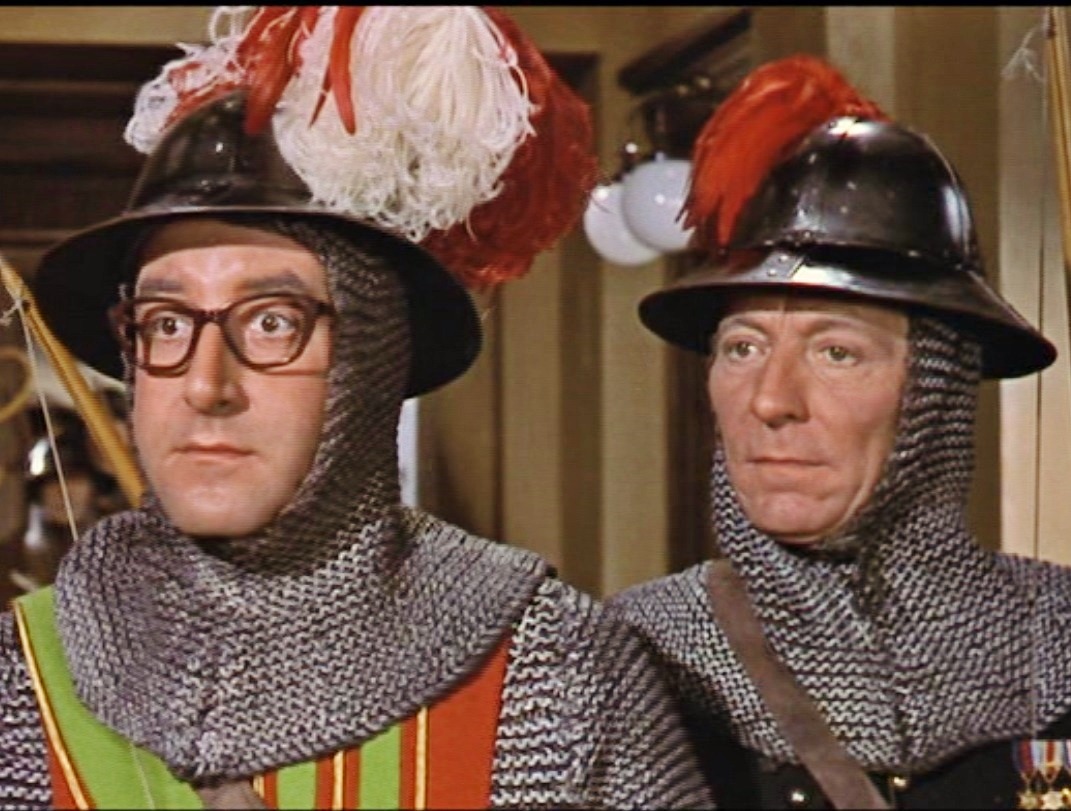
 O Rato que Ruge (1959): Quando tanto a cinéfila quanto a historiadora em mim apreciam um filme, você pode apostar que é uma película excelente. Esta comédia britânica lida com geopolítica ao contar a história de um pequeno país que decide invadir os EUA, declarar guerra, rapidamente perder a guerra e receber ajuda monetária. O problema é que eles ganham a guerra quando sequestram um cientista que possui uma bomba de hidrogênio. O melhor do filme é Peter Sellers interpretando três papéis: um soldado, um Primeiro-ministro... e uma Rainha.


The Mouse that Roared (1959): When both the movie nerd and the history nerd in me are pleased by a film, you can bet it is an outstanding production. This British comedy deals with geopolitics as it tells the story of a tiny country that decides to invade the US, declare war, quickly lose the war and then receive monetary help. The problem is that they win the war by kidnapping a scientist that has a hydrogen bomb. The best thing in this film is Peter Sellers playing three roles: a soldier, a Prime Minister... and a Queen.


This is my contribution to the “5 Favorite Films ofthe ‘50s” blogathon to celebrate National Classic Movie Day, hosted by Rick at Classic Film & TV Café.

Saturday, December 1, 2018

Adventures in cinematography


Tudo começou com um desafio do Facebook: escolher 10 filmes que me causaram impacto e publicar cenas destes filmes, durante 10 dias, deixando seus amigos adivinharem qual o filme de cada dia. Minha grande amiga – e também Suffragette – Rafaella me desafiou e eu decidi escolher apenas as mais belas imagens para publicar. Com isso, eu pude explorar um assunto que vem chamando minha atenção ultimamente: a fotografia dos filmes e os grandes diretores de fotografia do cinema.

It all started as a Facebook challenge: choose 10 films that made an impact on you, and post frames of them over 10 days, letting your friends guess which film it was. My good friend – and fellow Suffragette – Rafaella challenged me and I decided to choose only very beautiful frames to add to my feed. With this, I could dive deeper into something that has been calling my attention lately: cinematography and great cinematographers.


Eu sei que os filmes noir têm algumas das melhores direções de fotografia, e grandes diretores de fotografia como Greg Tolland e John Alton fizeram filmes noir. Para minha lista, eu escolhi um filme noir, três filmes mudos, e fiz questão de incluir filmes dos EUA, América Latina e Europa.

I know noir has some of the best photographies, and great cinematographers like Greg Tolland and John Alton worked in noir. For my list, I chose one film noir, three silent films, and I also made an effort to choose from both US, Latin and European films.

Estes foram os dez escolhidos, com algumas observações:
Here are my chosen ten, with some notes:

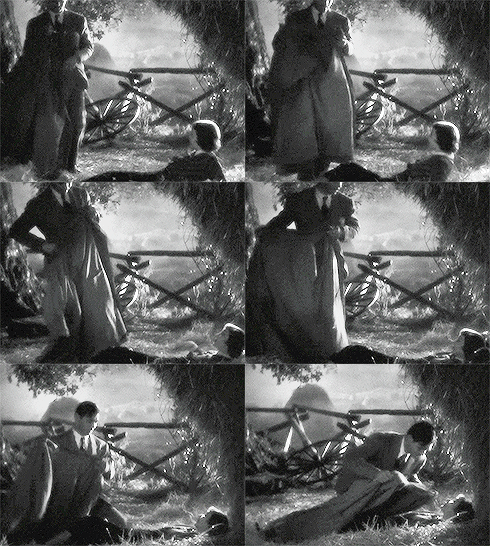
Aconteceu Naquela Noite, 1934. Dirigido por Frank Capra. Diretor de fotografia Joseph Walker.
Este foi o filme que deu origem ao blog Crítica Retrô!

It Happened One Night, 1934. Directed by Frank Capra. Cinematographer Joseph Walker.
This was the film that originated the blog Crítica Retrô!


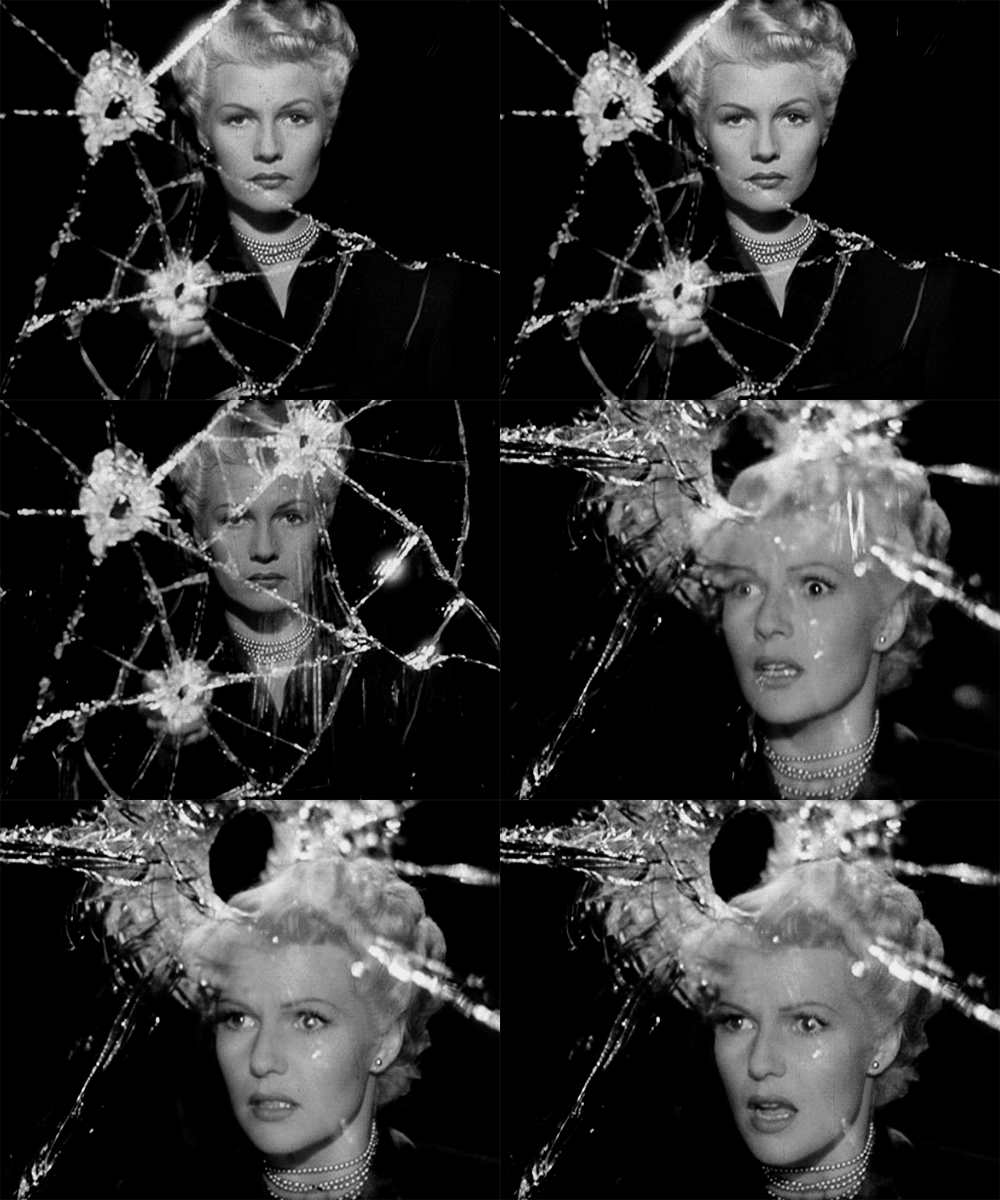
A Dama de Xangai, 1947. Dirigido por Orson Welles. Diretores de fotografia Charles Lawton Jr (creditado), Rudolph Maté e Joseph Walker (ambos não creditados).

The Lady from Shanghai, 1947. Directed by Orson Welles. Cinematographers Charles Lawton Jr (credited), Rudolph Maté, Joseph Walker (both uncredited).
It has one of my favorite sequences of all films.


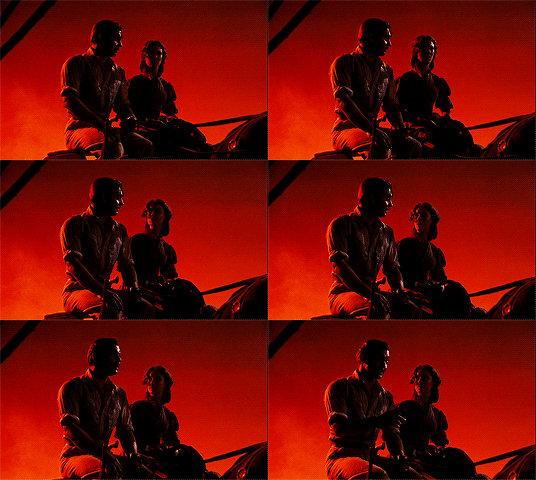
E o Vento Levou, 1939. Dirigido por Victor Fleming. Diretores de fotografia Ernest Haller (creditado), Lee Garmes (não creditado).

Gone with the Wind, 1939. Directed by Victor Fleming.  Cinematographers Ernest Haller (credited), Lee Garmes (uncredited).


Europa ’51, 1952. Dirigido por Roberto Rossellini. Diretor de fotografia Aldo Tonti.

Europa '51, 1952. Directed by Roberto Rossellini.  Cinematographer Aldo Tonti.

Quando Explode a Vingança, 1971. Dirigido por Sergio Leone. Diretor de fotografia Giuseppe Ruzzolini.
Outro elemento icônico do filme é a bela trilha sonora composta por Ennio Morricone.

A Fistful of Dynamite aka Duck, You Sucker!, 1971. Directed by Sergio Leone. Cinematographer Giuseppe Ruzzolini.
Another iconic element in this film is the beautiful soundtrack composed by Ennio Morricone.


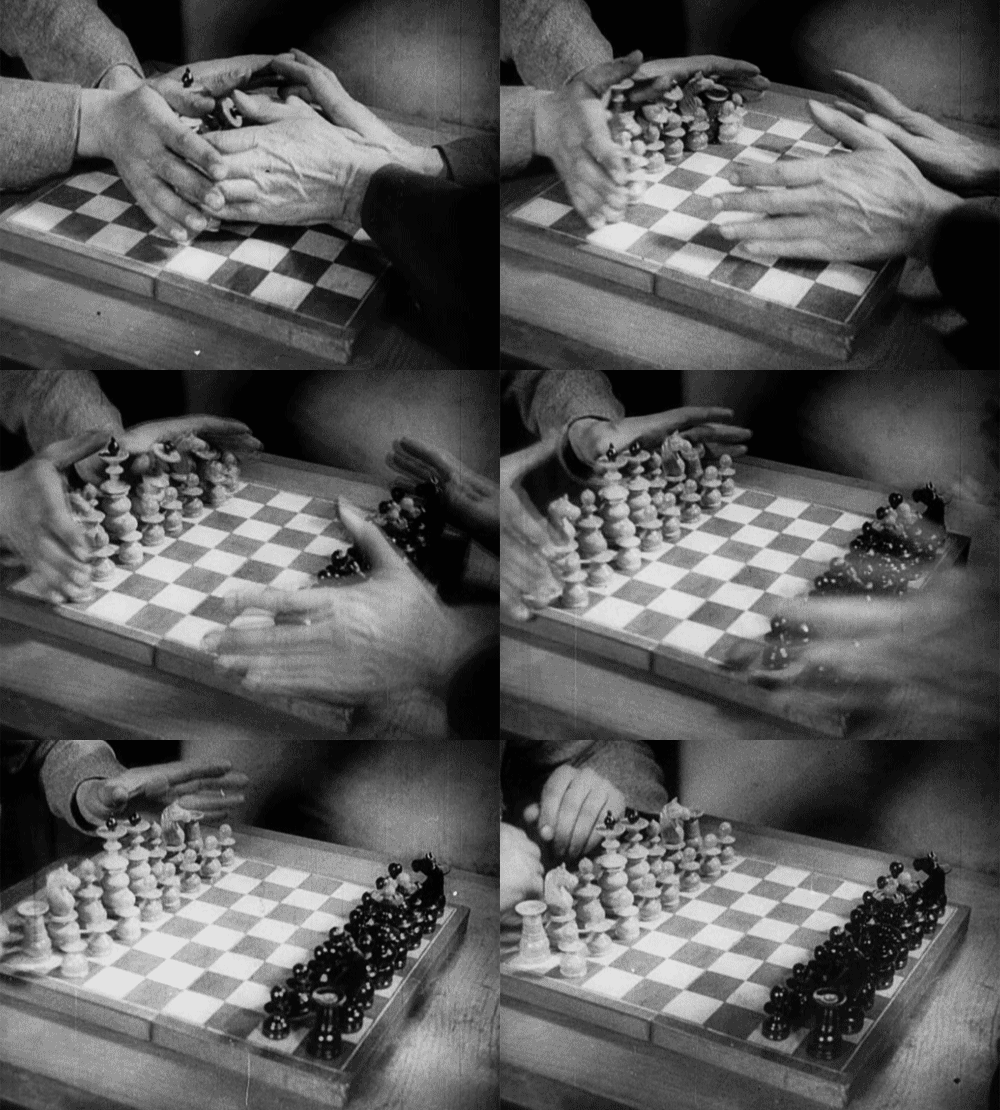
Um Homem com uma Câmera, 1929. Dirigido por Dziga Vertov. Diretores de fotografia Mikhail Kaufman (creditado), Gleb Troyanski (não creditado).
Mikhail Kaufman é também o protagonista deste grande filme.

Man with a Movie Camera, 1929. Directed by Dziga Vertov.  Cinematographers Mikhail Kaufman (credited), Gleb Troyanski (uncredited).
Mikhail Kaufman is also the lead in this great film.


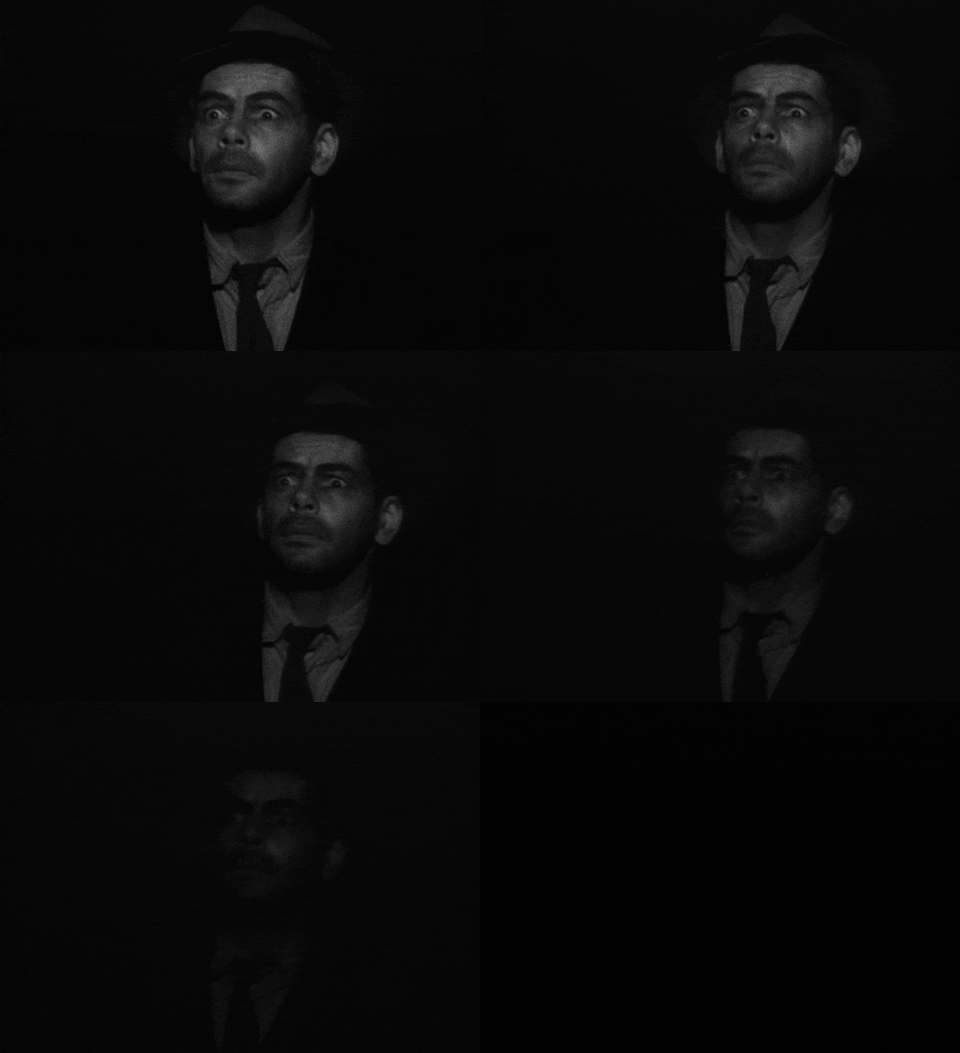
O Fugitivo, 1932. Dirigido por Mervyn LeRoy. Diretor de fotografia Sol Polito.

I am a Fugitive from a Chain Gang, 1932. Directed by Mervyn LeRoy. Cinematographer Sol Polito.


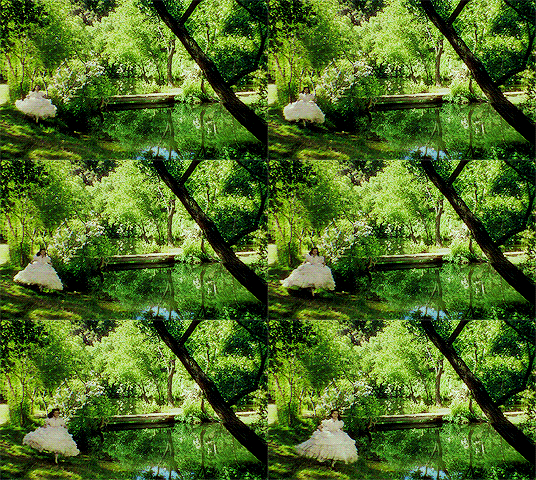
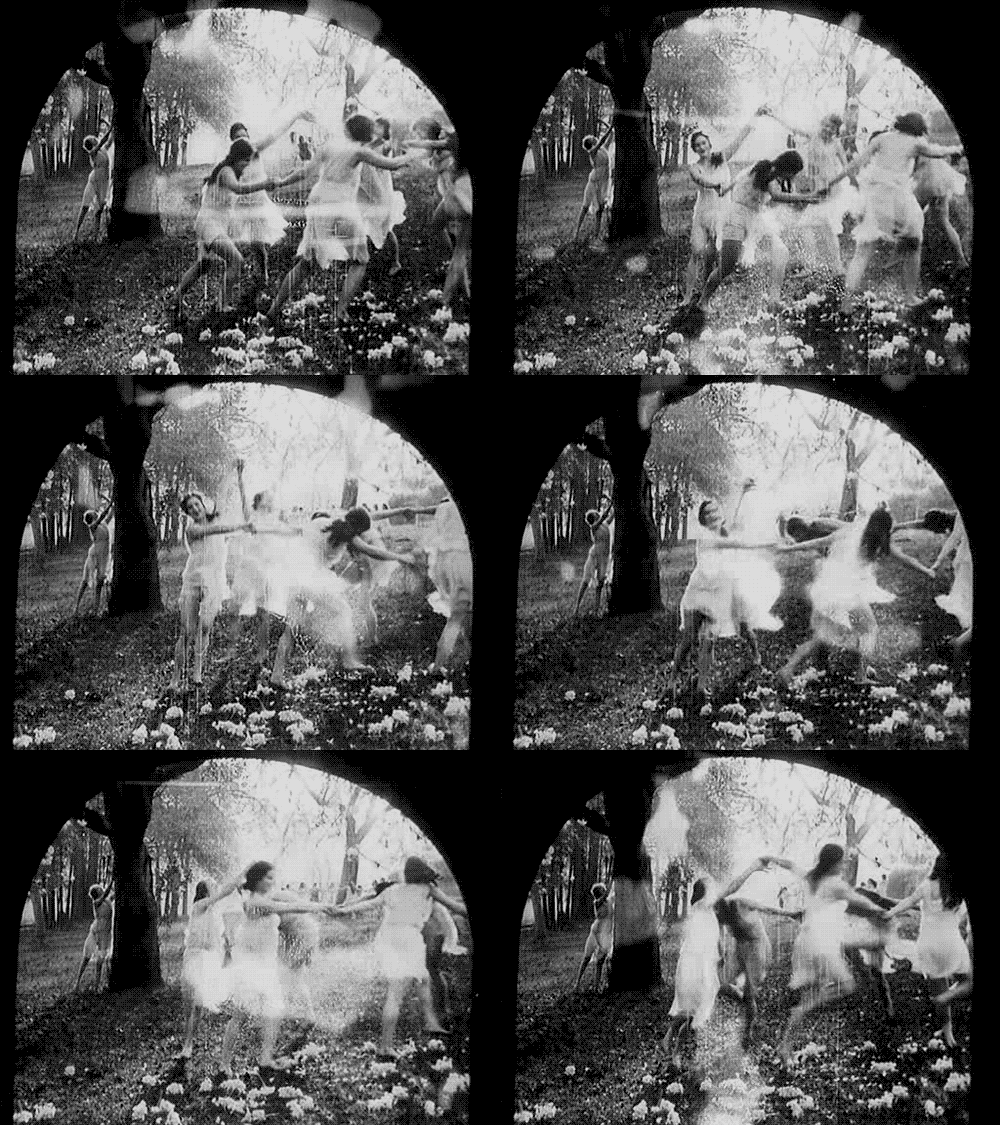
O Pássaro Azul, 1918. Dirigido por Maurice Tourneur. Diretor de fotografia John van den Broek.
John van den Broek faleceu menos de três meses após a estreia deste filme.

The Blue Bird, 1918. Directed by Maurice Tourneur. Cinematographer John van den Broek.
John van den Broek passed away less than three months after this film premiered.


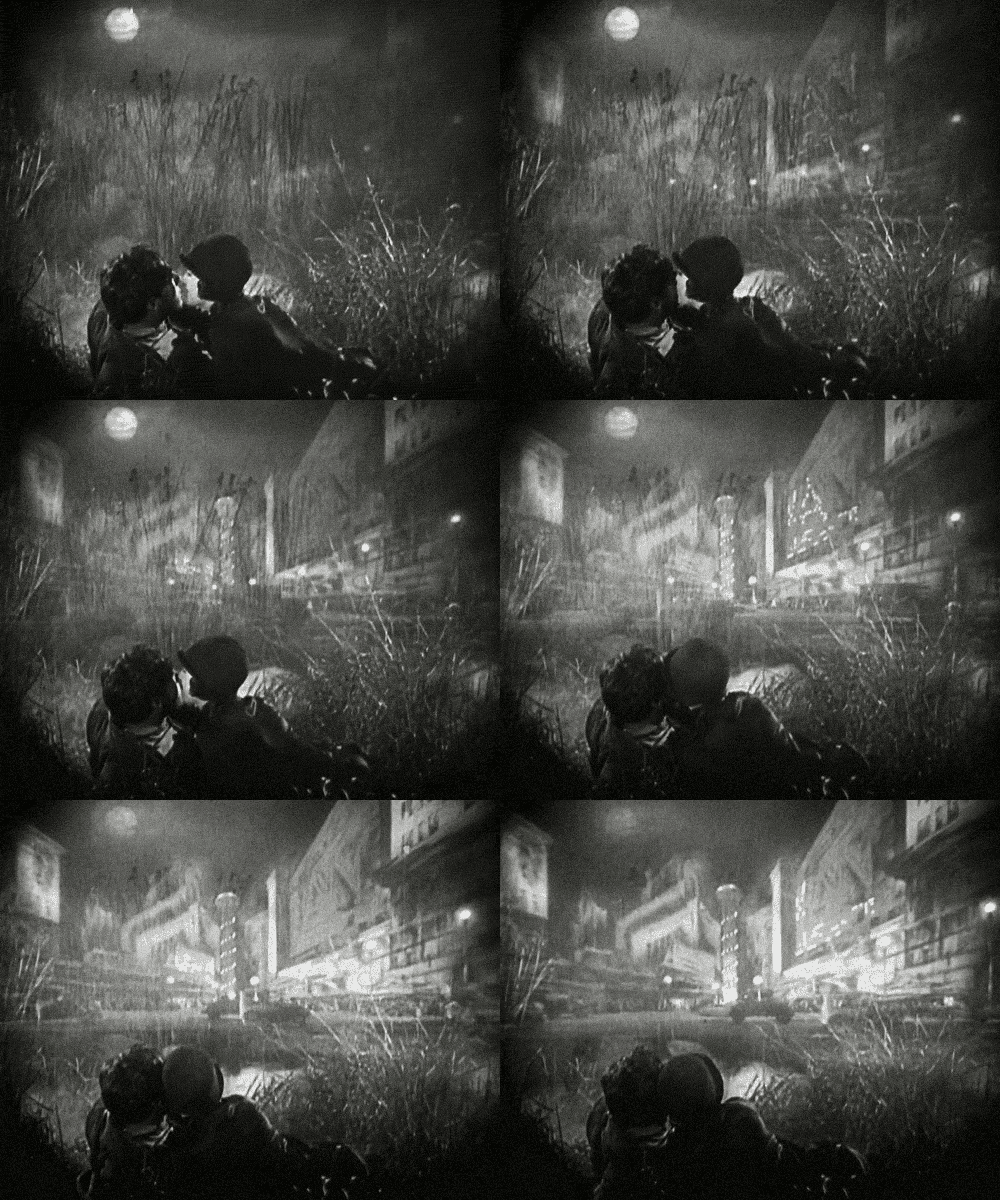
Aurora, 1927. Dirigido por F.W. Murnau. Diretores de fotografia Charles Rosher, Karl Struss.

Sunrise, 1927. Directed by F.W. Murnau. Cinematographers Charles Rosher, Karl Struss.


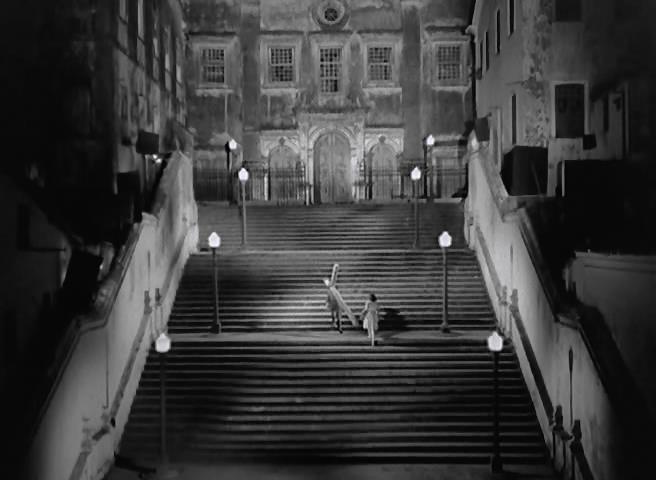
O Pagador de Promessas, 1962. Dirigido por Anselmo Duarte. Diretor de fotografia H.E. Fowle.
H.E. Fowle era comumente creditado como ‘Chick’ Fowle. Ele era um diretor de fotografia inglês que veio para o Brasil em 1950 com Alberto Cavalcanti, com quem colaborou em vários trabalhos.

The Given Word (O Pagador de Promessas), 1962. Directed by Anselmo Duarte. Cinematographer H.E. Fowle.
H.E. Fowle was credited as 'Chick' Fowle. He was an English director of photography who came to Brazil in 1950 with Alberto Cavalcanti,  his frequent collaborator.


Eu devo concordar com meu bisavô que filmes em preto e branco são mais bonitos!

I must agree with my grand-grandfather that black and white movies are more beautiful!

Related Posts Plugin for WordPress, Blogger...