} Crítica Retrô: fantasia

Tradutor / Translator / Traductor / Übersetzer / Traduttore / Traducteur / 翻訳者 / переводчик

Showing posts with label fantasia. Show all posts

Saturday, September 5, 2020

Mário de Andrade No Cinema


Um herói sem nenhum caráter: esta é a descrição do protagonista do livro “Macunaíma”, de Mário de Andrade. Mas isso não significa que o herói não tem caráter algum: ele tem MUITOS caracteres. O mesmo pode ser dito sobre seu criador: Mário de Andrade era múltiplo. Mário de Andrade (1893-1945) foi escritor, poeta, folclorista, fotógrafo, historiador da arte e crítico. Como o homem múltiplo que era, e também um homem do seu tempo, ele teve muito a dizer sobre a arte que estava dominando o mundo no começo do século XX: o cinema. Os artigos de Mário sobre o cinema foram compilados no livro “Mário de Andrade No Cinema”.

A hero without a character: this is the description of the protagonist of Mário de Andrade’s book “Macunaíma”. But the hero wasn’t one without any character: he was one with MANY characters. The same can be said about its creator: Mário de Andrade was multiple. Mário de Andrade (1893-1945) was a writer, poet, folklorist, photographer, art historian and critic. As the multiple man he was, and also a man of his time, he had a lot to say about the art that was sweeping the world in the early 20th century: cinema. Mário’s writings about cinema are compiled in the book “Mário de Andrade No Cinema” (literally “Mário de Andrade at the Movies”, the book isn’t available in English).

Como colunista da revista Klaxon, Mário constantemente escrevia usando pseudônimos – porque a revista queria que os leitores tivessem a impressão de que havia muitos autores colaborando com artigos. “Klaxon” significa “buzina” em francês e a revista modernista de vida curta recebeu este nome porque seus criadores queriam fazer barulho – um barulho moderno, alto, cosmopolita e por vezes irritante. No Manifesto Klaxon, publicado no primeiro número da revista, Mário define o cinema como “a criação artística mais representativa da nossa época”.

As a columnist for the Klaxon magazine, Mário often wrote under pseudonyms – because the magazine wanted readers to have the impression that it had many collaborators. “Klaxon” means “horn” in French and the short-lived Modernist magazine received this name because their creators wanted to make noise with it – a modern, loud, cosmopolitan and sometimes irritating noise. In the Klaxon Manifest, published in the first number of the magazine, Mário defines cinema as “the most representative artistic creation of our times”.

Mário escreve com frequência sobre as qualidades de “O Garoto” (1921), de Chaplin. Primeiro, ele diz que “Charlie é o professor do século XX”. Em outro artigo, ele foca na sequência de sonho do filme e em como ela representa perfeitamente o psicológico do Vagabundo. Mais tarde, ele fala sobre o rosto de Chaplin, perfeito para a tela, um rosto que se parece com uma caricatura em meio a faces humanas. Neste momento ele diz que Keaton é inferior a Chaplin por causa de seu rosto estático, e este é o momento em que eu mais violentamente discordo do escritor.

Mário often writes about the qualities of Chaplin’s “The Kid” (1921). First, he says that “Charlie is the professor of the 20th century”. In another article, he focuses on the dream scene in the film and on how it perfectly portrayed the Tramp’s psychological state of mind. Later, he talks about Chaplin’s perfect face for the screen, a face that looks like a cartoon amid human faces. At that point he says Keaton is inferior to Chaplin because of his static facial expression, and this was the moment I most violently disagreed with the author.

Mas Chaplin não recebe apenas elogios. Depois de deixar implícito que ele já vira “O Grande Ditador” (1940) mais de uma vez, Mário de Andrade analisa os defeitos do filme. Para ele, Chaplin errou ao fazer uma comédia sobre Hitler. Devemos destruir Hitler, não rir dele: é isso que Mário afirma. Além disso, no monólogo final, é Chaplin que está lá mandando sua mensagem, não seu personagem Vagabundo. Se fosse o Vagabundo, Mário disserta, todos nós nos identificaríamos com ele, pois o Vagabundo Carlitos é um ícone universal. Mário ignora que Chaplin nunca teve a intenção de fazer o Vagabundo falar, e evitou isso, ao mesmo tempo em que quase deu ao público o que eles queriam, na cena em que o Vagabundo canta uma música ininteligível em “Tempos Modernos” (1936). Mário também não viveria para descobrir que Chaplin se arrependeu de zombar de Hitler: em sua autobiografia Chaplin declarou que, se soubesse dos campos de concentração, ele “não poderia ter feito graça com a loucura homicida dos nazistas.”

But Chaplin doesn’t receive only compliments. After implying that he had already watched “The Great Dictator” (1940) more than once, Mário de Andrade analyzes its flaws. For him, Chaplin was mistaken when he made a comedy about Hitler. We must destroy Hitler, not laugh at him: this is what Mário says. Moreover, in the final monologue, it’s Chaplin there giving his message, not his Tramp character. If it was the Tramp, Mário argues, we all would identify with him, as the Tramp is a universal icon. Mário ignores that Chaplin never meant to have the Tramp talking, and avoided it, while kind of giving the people what they wanted, by having the Tramp sing gibberish in “Modern Times” (1936). Mário also wouldn’t live long enough to know that Chaplin regretted making fun of Hitler: in his autobiography Chaplin declared that, if he had known about concentration camps, he “could not have made fun of the homicidal insanity of the Nazis.”

Mário de Andrade acreditava que os europeus inventavam as novas técnicas no cinema – e eu concordo com isso – mas os norte-americanos tinham meios para executar estas técnicas com perfeição. Esta é a razão pela qual ele chama “O Gato e o Canário” (1927) de obra-prima técnica, mas não uma obra de arte. Mais de uma vez Mário clama pelo fim das cartelas de texto, porque o cinema só poderá desenvolver seu potencial total como arte quando as palavras desnecessárias forem suprimidas.

Mário de Andrade believed that Europeans were the ones who invented new techniques in cinema – something I tend to agree – but Americans were the ones who had the means to execute these techniques with perfection. This is the reason why he calls “The Cat and the Canary” (1927) a technical masterpiece but not quite a work of art. More than once Mário advocates for the end of title cards, because cinema can only develop its full potential as an art when the unnecessary words are suppressed.

O autor reclama de como os filmes falados retiraram as orquestras das salas de cinema, porque mesmo uma orquestra ruim podia emanar a sensação de ir a um evento fora de casa, enquanto o aparelho de som, o substituto da orquestra, era como um eletrodoméstico. Pouco depois, ele diz que filmes falados recuados de jazz e musicais em geral estão tornando o cinema “insuportável”, e que as únicas obras-primas criadas com som sincronizado são curtas animados, como a “Dança Macabra” de Walt Disney de 1929!

The author complains about talkies taking orchestras away from the movie theaters, because even a bad orchestra could allude to an out-of-the-house activity, while the phonograph, the substitute of the orchestra, was a homely instrument. A little later, he says that jazz-filled talkies and revues are making cinema “unbearable”, and that the only masterpieces created with synchronized sound are animated shorts, like Disney’s “The Skeleton Dance” from 1929!

Quando escreve sobre filmes de horror – focando em “Frankenstein” de 1931 – Mário de Andrade usa quase uma metodologia psicológica para elogiar o modus operandi de Lon Chaney, comentar sobre o nojo que sente por baratas e mencionar que a literatura tem a capacidade de criar repulsa, mas só o cinema e o teatro podem nos fazer sentir nojo pelo que vemos na tela ou no palco. Ele termina o ensaio dizendo que a única fonte verdadeira de horror é a vida real.

When writing about horror movies – with a focus on 1931’s “Frankenstein” – Mário de Andrade uses almost a psychological approach to compliment Lon Chaney’s modus operandi, comment on his own disgust of cockroaches and mention how literature can create repulsion, but only film and theater can make us feel disgust for what we’re seeing on the screen or stage. He ends his essay by saying that the only true source of horror is real life.

Com o tempo os artigos de Mário ficam mais longos, e o maior deles é um ensaio sobre “Fantasia” (1940), um filme, Mário declara no primeiro parágrafo, que não é uma obra-prima, mas se tornará um clássico. Seu maior problema é a falta de ligação entre as sequências animadas. Outro grande problema é o preço do ingresso: 10 mil-réis (cerca de 125 reais hoje)! Mas, mesmo criticando as formas humanas dos centauros, Mário destaca duas sequências: o Quebra-Nozes e a Fuga de Bach. Ele também comenta como Disney não iluminou as cores no filme, mas coloriu as luzes.

With time Mário de Andrade’s articles became longer, and the longest of them all is an essay about “Fantasia” (1940), a film, Mário declares in the first paragraph, that is not a masterpiece, but will become a classic. His biggest problem is the lack of liaison between the animated sequences. Another huge problem was the price of the ticket: dez mil-réis (roughly 24 dollars)! But, even though he criticizes the human forms of the centaurs, Mário highlights two sequences: the Nutcracker Suite and Bach’s Toccata and Fugue in D Minor. He also talks about how Disney didn’t illuminate the colors in the film, but rather colored the lights.

Como mencionado num ensaio publicado no final do livro pelo pesquisador Paulo José da Silva Cunha, Mário de Andrade tentou, nos anos 1920, definir o cinema, localizado entre a arte e a indústria, e mais tarde ele fez mais conexões entre o cinema e acontecimentos da época, como a guerra. Daquele primeiro período, uma frase se destaca: “Tem dois cinemas: o cinema como criação, isto é, o cinema-arte, e o cinema como sensualidade, isto é, o cinema-comércio”. Uma separação perfeita, não?

As noted in a essay published at the end of the book by researcher Paulo José da Silva Cunha, Mário de Andrade tried, in the 1920s, to define cinema, caught between art and industry, and later he made more connections between film and current events, like war. From the first period, a quote resonates: “There are two cinemas: cinema as creation, that is, cinema-art, and cinema as sensuality, that is, cinema-commerce”. A perfect distinction, isn’t it?

Ler os textos de Mário de Andrade – seriam eles críticas, opiniões ou ensaios? - nos desperta dúvidas. O primeiro crítico de cinema foi, obviamente, autodidata: ele – ou, por que não, ela – não fez faculdade para aprender a analisar os filmes recém-nascidos. Hoje, a origem dos críticos de cinema é diversa: muitos são jornalistas, alguns estudaram cinema na faculdade, alguns aprenderam a profissão conforme a exerciam, e eu sou historiadora – e provavelmente não sou a única historiadora escrevendo sobre cinema. O que faz um bom crítico de cinema? O que faz um bom ensaísta, se você preferir? Há centenas de cursos por aí prometendo ensinar um cinéfilo a ser crítico. Mas esses cursos criarão pensadores, que escreverão artigos instigantes como os de Mário, ou criarão uma nova linha de produção de opiniões sobre filmes? Esta é uma questão legítima, e não tenho resposta para ela.

Reading Mário de Andrade’s texts – are they reviews, opinions, essays? - brings us some doubts. The first film critic was, of course, self-taught: he – or why not she – didn’t go to college to learn how to analyze the newborn movies. Today, the origin of film critics is diverse: many are journalists, some studied film at college, some learned their profession by doing it, and I’m a historian – and I’m probably not the only historian writing about film. What makes a good film critic? What makes a good film essayist, if you prefer? There are hundreds of courses out there promising to teach a film lover to become a critic. But will those courses create real thinkers, writing thought-provoking articles like Mario did, or will they create a new assembly line for opinions on movies? This is a legitimate question and I have no answer to it.


Cartoon by Robert Neubecker

Eu sempre achei uma pena Mário de Andrade ter morrido tão jovem, com apenas 52 anos. Eu me pergunto o que ele pensaria e escreveria sobre os musicais e épicos dos anos 50, e sobre os filmes posteriores de Chaplin, como “Monsieur Verdoux” (1948) e especialmente “Luzes da Ribalta” (1952). Mesmo se você nunca ouviu falar ou nunca leu nada de Mário de Andrade, este pequeno livro mostrará o tanto que ele entendia de pinturas, música clássica e como ele era capaz de conectar todas estas artes. O trabalho de resgate dos escritos de cinema de Mário foi primoroso: ainda bem, pois foi ótimo descobrir o que um dos maiores escritores brasileiros pensava sobre a arte que dominou o seu século.

I’ve always thought that it was a shame that Mário de Andrade passed away so young, at only 52. I wonder what he’d have thought of and written about the musicals and epics of the 1950s, and of Chaplin’s later films, like “Monsieur Verdoux” (1948) and especially “Limelight” (1952). Even if you have never heard of or read anything from Mário de Andrade, this short book (tragically not available in English) will show how much he understood about paintings, classical music and how he could link all those arts. The rescuing of Mário’s writings about cinema was fantastic: thankfully, because it was great to find out what one of the biggest Brazilian writers thought of the art that dominated his century.

This is my first contribution to the 2020 Summer Reading Challenge, hosted annually by Raquel at Out of the Past.

Sunday, January 27, 2019

Contos de Hoffmann (1916) / Tales of Hoffmann (1916) / Hoffmanns Erzählungen (1916)


ESTA CRÍTICA CONTÉM SPOILERS

THIS ARTICLE HAS SPOILERS

De acordo com o dicionário Oxford, o termo robô foi originado nos anos 1920, em uma peça tcheca chamada “R.U.R Rossum’s Universal Robots”, vindo da palavra tcheca robota, que significa trabalho forçado. O filme “Hoffmanns Erzählungen”, ou “Contos de Hoffmann”, foi feito antes de 1920, mas tem um robô - ou melhor, um autômato. Robô e autômato são sinônimos até hoje.

According to the Oxford Dictionary, the term robot was originated in the 1920s, coming from a Czech play called “R.U.R Rossum’s Universal Robots”, and came from the Czech word robota, meaning forced labor. The film “Hoffmanns Erzählungen”, or “Tales of Hoffmann” was made before 1920, but it has a robot - or better, an automaton. Robot and automaton are used as synonyms until now.


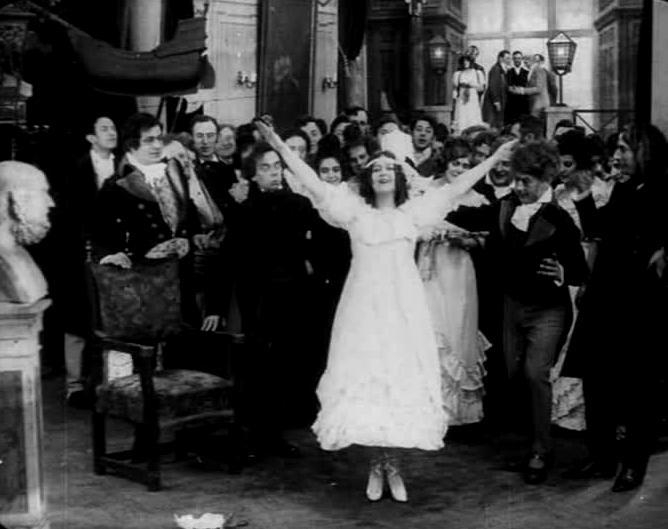
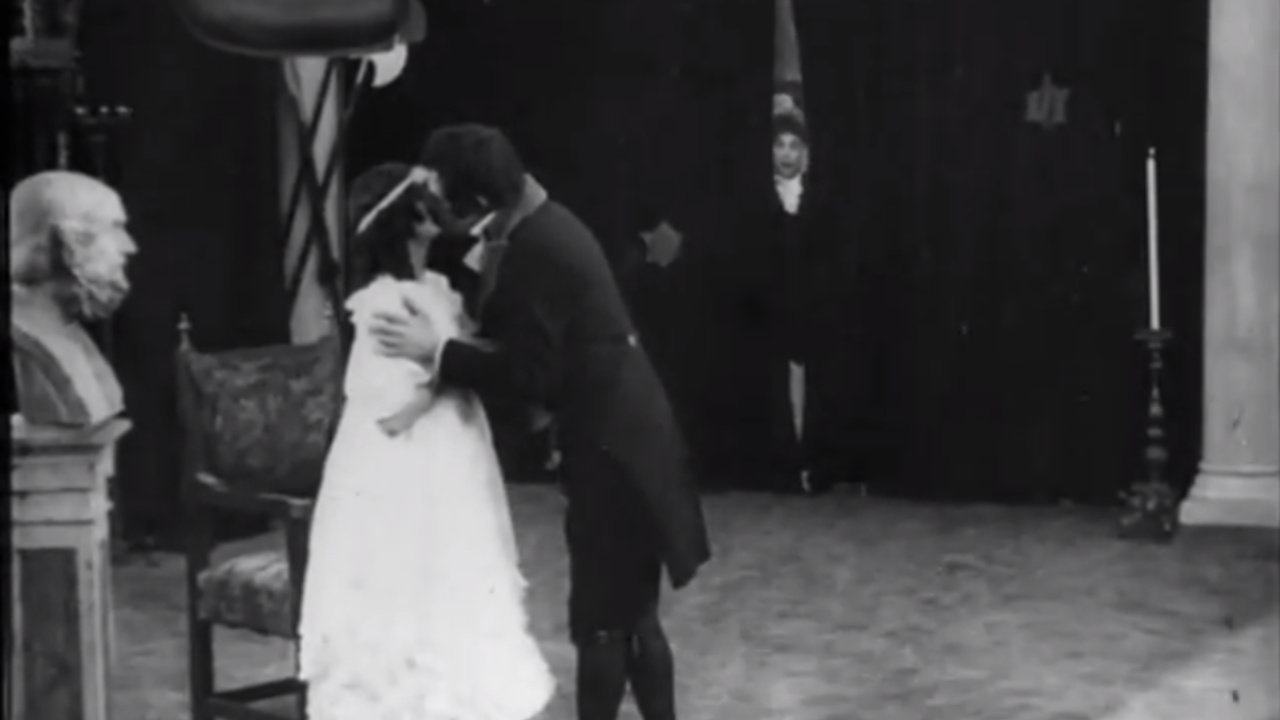
No Prelúdio, conhecemos o jovem E.T.A Hoffmann (Kurt Wolowsky), que mora com o tio e o enfurece com seu hábito de desenhar caricaturas. Perto da casa de Hoffmann podemos encontrar os alquimistas Coppelius (Friedrich Kühne) e Spalanzani (Lupu Pick) que, como bons alquimistas, querem produzir ouro, mas a partir de partes do corpo humano. Um dia, Hoffmann fica de castigo por causa de uma caricatura que ele desenhou do Conde Dapertutto (Werner Krauss), mas o jovem escapa e encontra o esconderijo dos alquimistas, e lá fica horrorizado com as experiências deles. Hoffmann desmaia na rua e é salvo por uma dançarina chamada Angela (Relly Ridon), uma mulher casada cobiçada por um médico. Depois que Hoffmann se recupera, Angela morre subitamente depois de uma última dança.

In the Prelude, we get to know the young E.T.A. Hoffmann (Kurt Wolowsky), who lives with his uncle and enrages him with his habit of drawing caricatures. Near Hoffmann’s place we can find the alchemists Coppelius (Friedrich Kühne) and Spalanzani (Lupu Pick) who, as good alchemists, want to make gold, but out of people’s body parts. One day, Hoffmann is grounded because of a caricature he drew of Count Dapertutto (Werner Krauss) but the young man escapes and finds the alchemists’ place, where he gets horrified with their experience. Hoffmann collapses in the street and is saved by a dancer named Angela (Relly Ridon), a married woman coveted by a doctor. After Hoffman recovers, Angela dies suddenly after a last dance.


Quando começa o Primeiro Ato, encontramos Hoffmann já como homem maduro - agora interpretado por Erich Kaiser-Titz - e amante da atriz Stella (Kathe Oswald). Quando o noivo de Stella flagra os dois, Hoffmann foge. Em uma pequena cidade, ele encontra Coppelius e Spalanzani, agora um vendedor de óculos e um diretor de museu, com a mais nova invenção deles: Olympia (Alice Hechy), um autômato quase real. Ao usar os óculos especiais e mágicos de Coppelius, Hoffmann se apaixona por Olympia, acreditando que ela é uma mulher real, mas ele tem seu coração partido ao tirar os óculos.

When the First Act begins, we find Hoffmann as a mature man - now played by Erich Kaiser-Titz - and the lover of actress Stella (Kathe Oswald). When Stella’s fiancé find the two, Hoffmann escapes. In a small town, he meets Coppelius and Spalanzani, now a glass seller and a museum director, with their newest invention: Olympia (Alice Hechy), a life-like automaton. While wearing Coppelius’s special magical glasses, Hoffmann falls in love with Olympia, believing she is a real girl, only to have his heart broken when the glasses are removed.


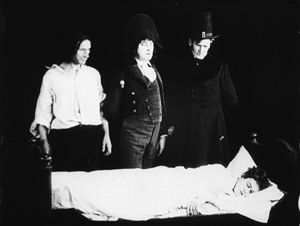
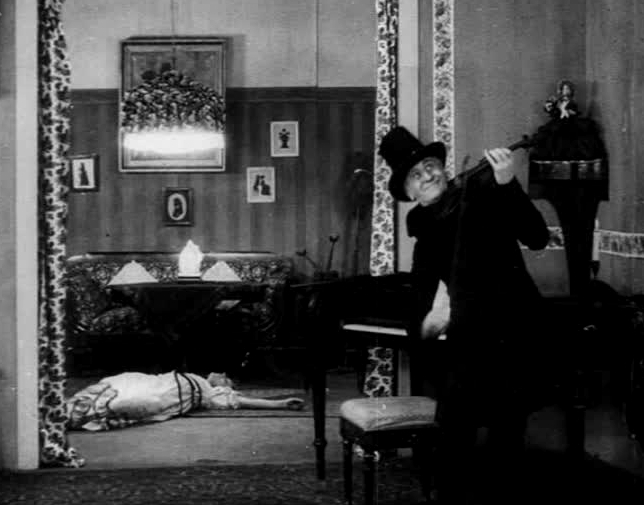
Então, para esquecer Olympia, Hoffmann vai ao teatro e se apaixona pela rica Giulietta (Thea Sandten) - que está mais interessada em seus pretendentes viciados em jogo. De volta ao lar, Hoffmann namora Antonia, a filha de Angela - a mulher que o ajudou muitos anos antes - que foi proibida pelo pai de dançar e que também é cortejada pelo médico que cobiçava sua mãe, o vingativo doutor Miracle (Andreas von Horn).

Then, to forget Olympia, Hoffmann goes to the theater and falls for the rich Giulietta (Thea Sandten) - who is more interested in her gambling suitors. Back home, Hoffmann dates Antonia, the daughter of Angela - the woman who helped Hoffmann many years before - who is forbidden to dance by her father and who is also courted by the doctor who courted her mother, the revengeful doctor Miracle (Andreas von Horn).
 
Prolific actress Thea Sandten was killed in Auschwitz in 1943

E.T.A. Hoffmann realmente existiu: ele foi um autor de literatura fantástica do século XVIII e início do século XIX. “Os Contos de Hoffmann” são uma coletânea dos contos dele em forma de ópera, composta por Offenbach em 1881. Para o filme de 1916, os roteiristas - uma dupla que incluía o diretor Richard Oswald - mudaram a ordem dos atos da ópera.

E.T.A. Hoffman really existed: he was a writer of fantastic literature from the 18th and early 19th centuries. “The Tales of Hoffmann” is a collection of his stories in the shape of an opera, composed by Offenbach in 1881. For the 1916 film, the screenwriters - a duo that included director Richard Oswald - changed the order of the acts of the opera to film.


A história do autômato é interessante, mas muito curta - dura cerca de 15 minutos. O filme alemão “A Boneca”, de 1919, por outro lado, traz uma história de amor com autômato maior e melhor. Algo a se notar em “Contos de Hoffmann” é o uso de efeitos especiais para mostrar o autômato, em versão miniatura, girando dentro de uma caixa. Não encontrei detalhes sobre como isso foi feito, mas uma cena semelhante aparece em “A Noiva de Frankenstein” (1935), com miniaturas se mexendo dentro de garrafas. No filme de Hollywood, o efeito foi obtido quando se colocaram os atores em jarras gigantescas em frente a um veludo preto, e a cena gravada foi editada junto aos atores interpretando os cientistas.

The automaton story is interesting, but very short - it lasts about 15 minutes. The German film “The Doll”, from 1919, on the other hand, has a nicer and longer automaton love story. The one thing to notice in “Tales of Hoffmann” is the use of special effects to show Olympia the automaton, in a miniature version, moving inside a box. I couldn’t find how it was made, but a similar scene appears in “The Bride of Frankenstein” (1935), with miniatures moving in bottles. In this Hollywood film, the effect was achieved by putting the actors in huge jars in front of black velvet then mixing and lining up this footage with the footage of the scientists.


Fica óbvio que o banqueiro Elias, um personagem menor, é judeu - algo que depois é inclusive mencionado e confirmado em uma carta. Muitos judeus trabalhavam com finanças, na Alemanha e no resto do mundo, e há a ideia geral de que judeus têm talento para os negócios. Uma das razões para a perseguição de judeus na era nazista foi o ressentimento em relação à banqueiros judeus que, diretamente ou não, teriam ajudado na derrota da Alemanha na Primeira Guerra Mundial.

It’s clear to the eyes - and later stated in a letter - that the banker Elias, a minor character, is a Jew. Many Jews worked in the financial field, in German and elsewhere, and there is the general idea that Jews have a talent for business. One of the reasons for the persecution of Jews during the Nazi era was the bitterness towards Jewish bankers who, directly or indirectly, might have helped Germany to be defeated in World War I.


Os belos cenários em cenas de interiores são a melhor coisa de “Contos de Hoffmann” - um filme sobre um homem que não consegue ser feliz no amor. A versão que temos disponível, com 67 minutos, é considerada incompleta pelo site silentera.com, mas não há quase nada faltando e as histórias podem ser compreendidas sem problemas. Servindo mais como uma curiosidade e uma experiência, “Contos de Hoffmann” é para os mais loucos cinéfilos e os mais audaciosos aventureiros do cinema.

The gorgeous interior sets are the best thing about “Tales of Hoffmann” - a film about a man who can’t find happiness in his love life. The print we have available now, with 67 minutes, is considered incomplete by the site silentera.com, but there isn’t much missing and the stories can be understood perfectly. Serving as more of a curiosity and an experience, “Tales of Hoffmann” is for the craziest cinephiles and the most daring screen adventurers.

This is my contribution to the Robots in Film blogathon, hosted by Quiggy and Hamlette at The Midnight Drive-In and Hamlette’s Soliloquy.


Monday, December 24, 2018

Vênus, a Deusa do Amor (1948) / One Touch of Venus (1948)


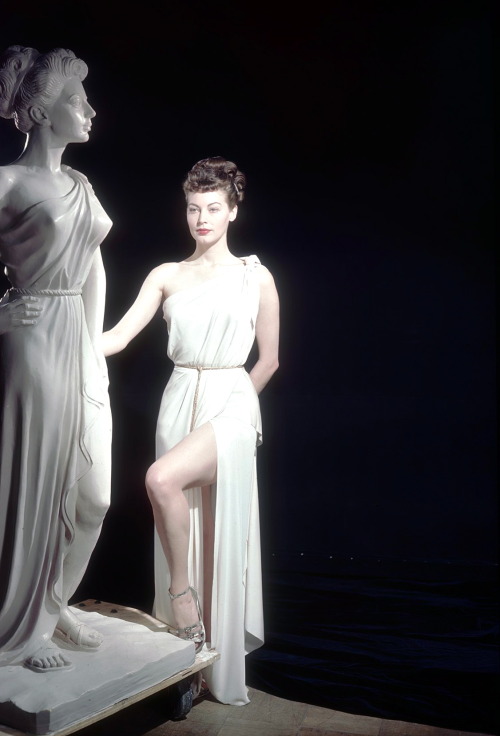
Há muitas atrizes do cinema clássico que poderiam ser chamadas de deusas – atrizes demais para citar aqui. Mas foram poucas que de fato interpretaram deusas nas telas. Uma delas foi Rita Hayworth em “Quando os Deuses Amam” (1947). No ano seguinte, outro filme sobre uma deusa que vem à Terra e se apaixona por uma mortal foi feito: “Vênus, a Deusa do Amor”. A atriz sabiamente escolhida para interpretar a deusa foi Ava Gardner.

There were many classic film actresses that could be called goddesses – like, too many to mention. But only a handful of them went on to actually play goddesses on screen. One of them was Rita Hayworth in “Down to Earth” (1947). The following year, another movie about a goddess who comes to Earth and falls in love with a mortal was made: “One Touch of Venus”. The actress wisely chosen to play the love goddess was Ava Gardner.


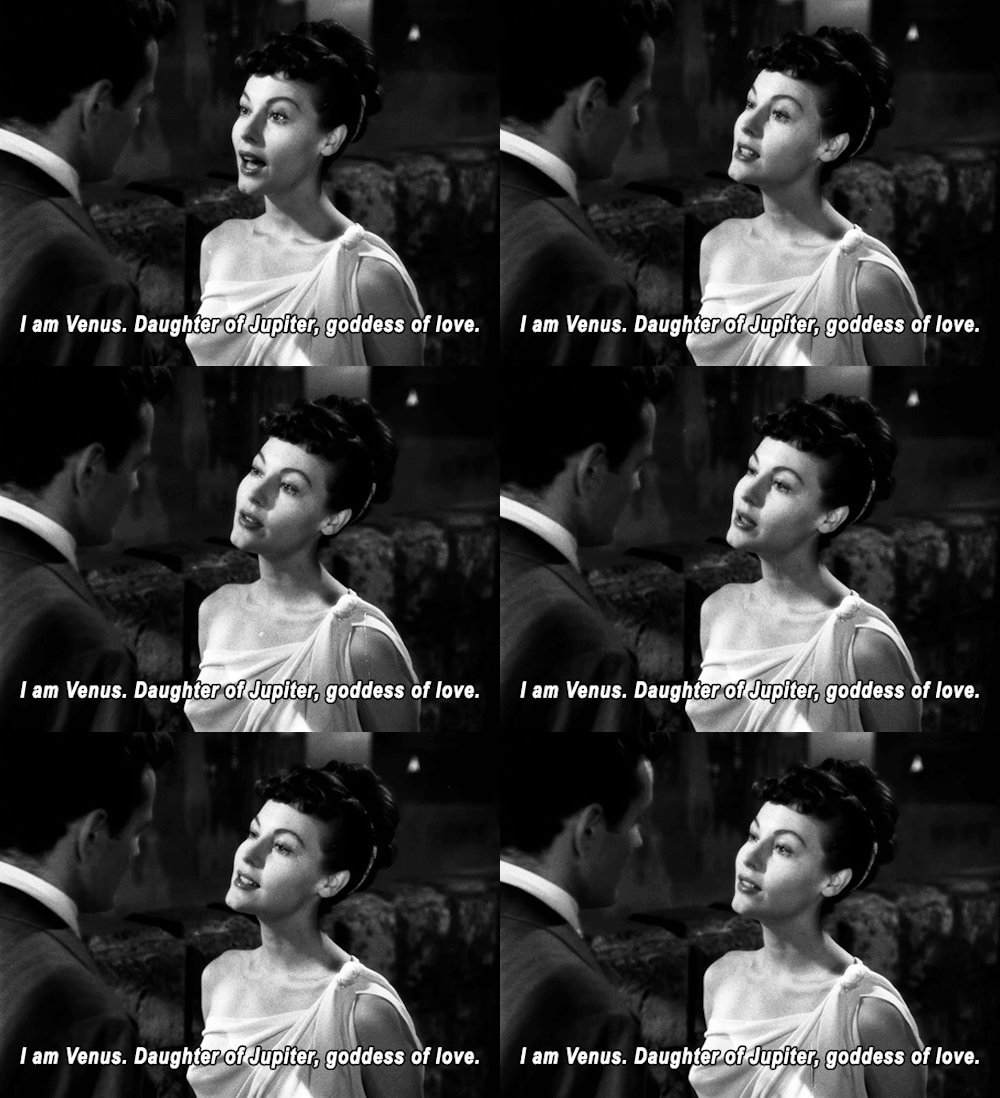
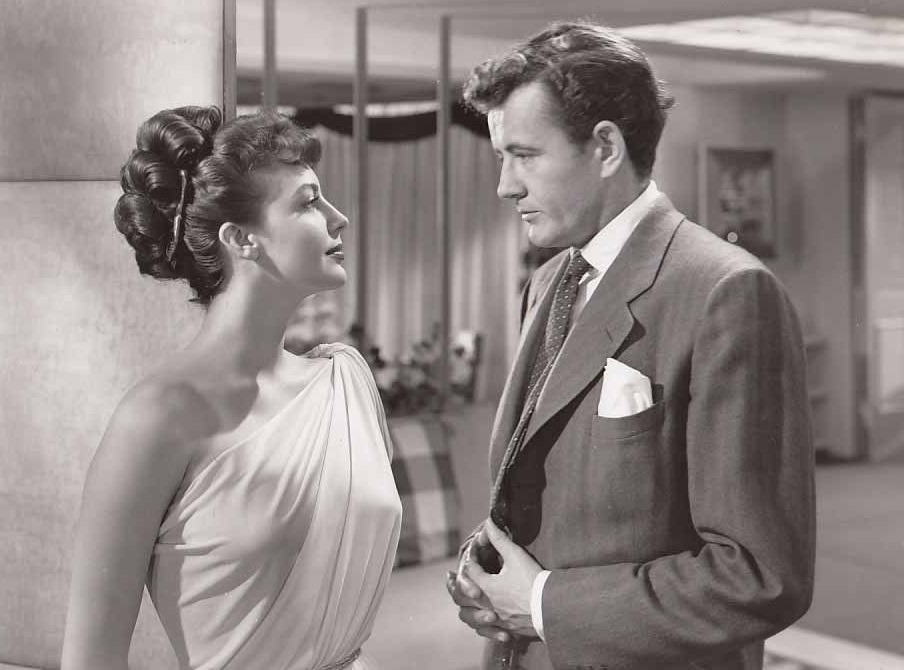
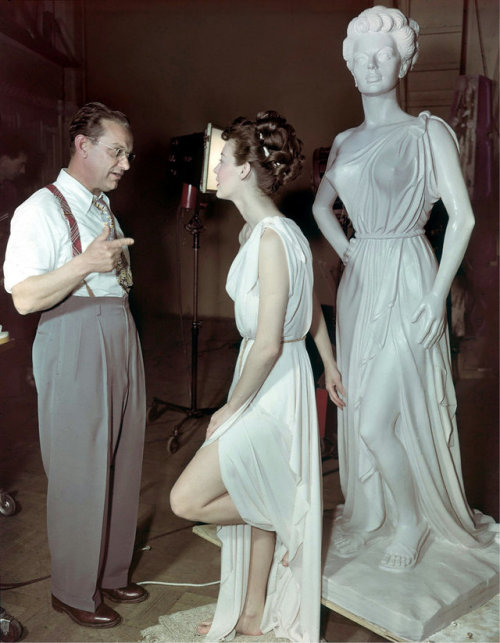
Os créditos passam por cima de um anfiteatro grego. Quando eles acabam, Eddie Hatch (Robert Walker) aparece por trás do anfiteatro, revelando que este era um modelo em uma vitrine. O atrapalhado Eddie é então chamado por seu chefe Savory (Tom Conway) para consertar as pregas de uma cortina que cobre a estátua da deusa do amor, Vênus. Eddie fica encantado com a estátua e, depois de tomar uma taça de champanhe, a beija. Um trovão se escuta e a estátua se torna viva. Agora, Eddie está com problemas e Vênus, a deusa do amor (Ava Gardner) só vai criar mais confusão.

The credits roll over a Greek amphitheatre. When we’re done with the credits, Eddie Hatch (Robert Walker) appears behind the amphitheatre, revealing that it was a window shop model. Clumsy Eddie is then called by his boss Savory (Tom Conway) to fix a curtain drape that covers a statue of the love goddess Venus. Eddie becomes infatuated by the statue and, after one glass of champagne, he kisses it. A thunder is heard and the statue comes to life. Now Eddie is in trouble, and Venus, the love goddess (Ava Gardner) will only bring him more problems.


Primeiro, Eddie é acusado por seu chefe de ter roubado a estátua. Ele diz a verdade ao chefe e à polícia, mas ninguém acredita que uma estátua de mármore simplesmente saiu andando. Eddie é mandado para casa, onde recebe cuidados do amigo Joe (Dick Haymes) e da namorada Gloria (Olga San Juan). Logo Vênus reaparece, e eles têm de fugir para escapar da fúria ciumenta de Gloria.

First, Eddie is accused by his boss of stealing the statue. He tells him and the police the truth, but nobody believes that a marble statue simply walked away. Eddie is sent home, where he is helped by his friend Joe (Dick Haymes) and his girlfriend Gloria (Olga San Juan). Soon Venus reappears there, and they have to run away to escape Gloria’s jealous fury.

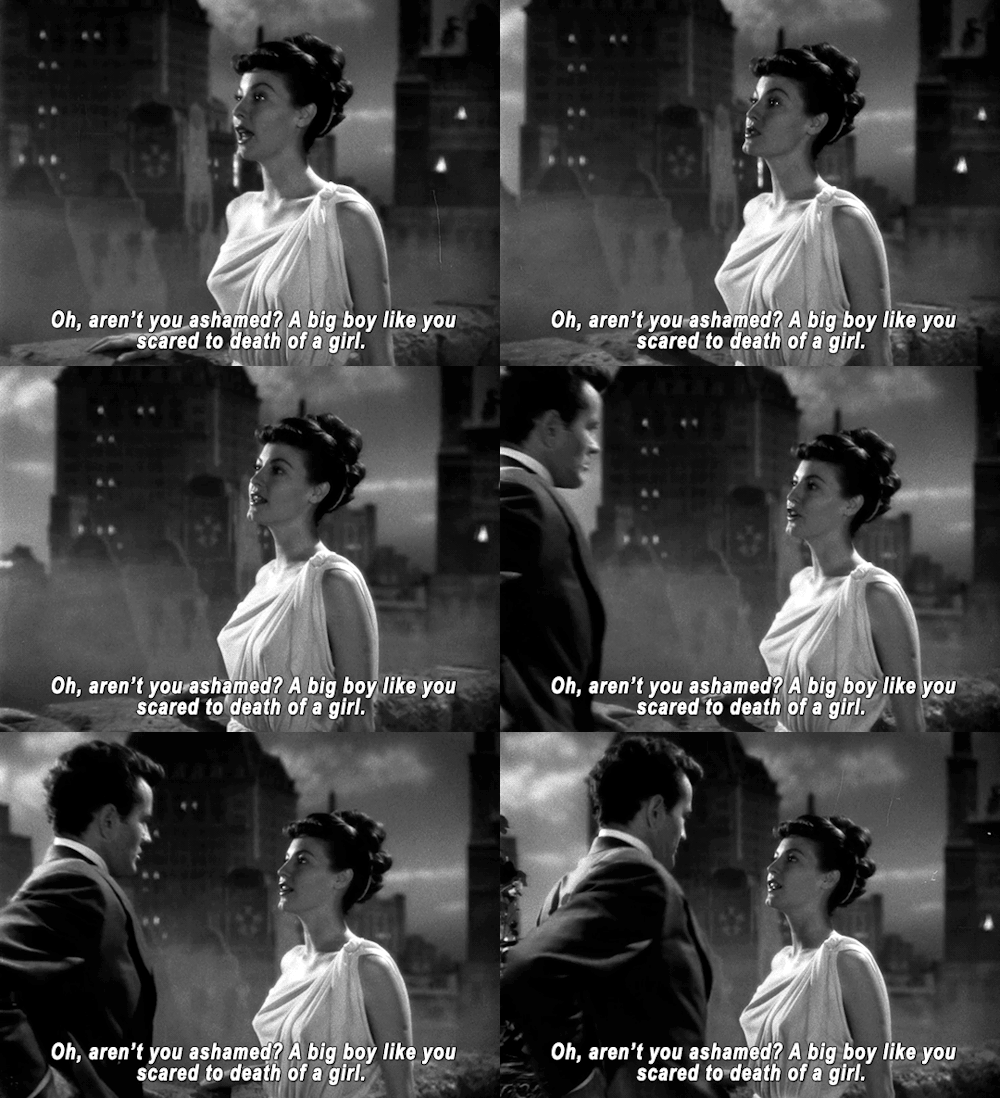
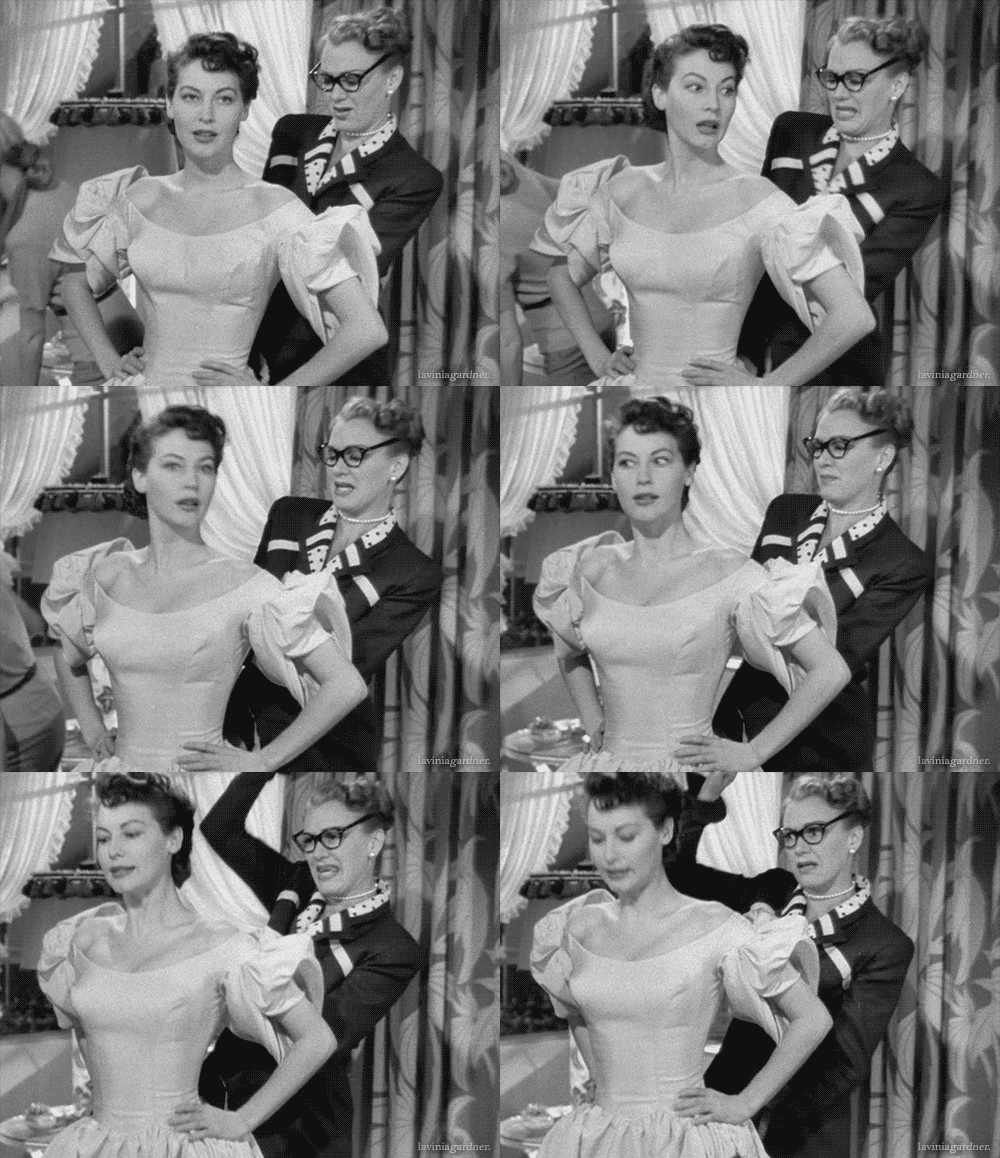
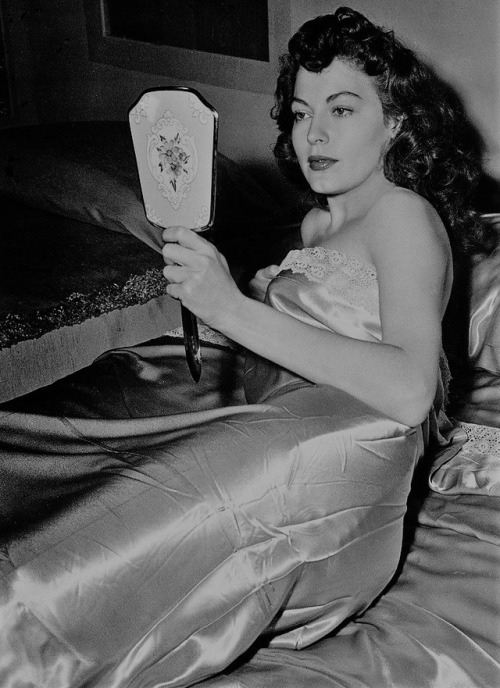
Na sua forma humana, Vênus não usa seus poderes com frequência – só em momentos cruciais. Seu maior poder é a sedução, e quando ela descende do Olimpo, o amor fica no ar. Além disso, ela só quer se divertir aqui na Terra durante alguns dias. Considerando sua beleza, sex appeal e personalidade de amante da diversão, podemos dizer que a escolha da jovem Ava Gardner, então com 23 anos, foi perfeita.

In her human form, Venus doesn’t use her powers often – only in crucial moments. Her biggest power is seduction, and when she descends from the Olympus, love gets in the air. Moreover, she just wants to have fun while she is spending a few days on Earth. Considering her beauty, sex appeal and fun-loving personality, we can say that choosing young Ava Gardner, then 23, was a perfect move.


Se você só conhece Robert Walker como o sinistro Bruno de “Pacto Sinistro” (1951), você terá uma grande surpresa. Ele é muito engraçado como Eddie, fazendo caras e boas exageradas e parecendo tão desconcertado com o que acontece quanto Cary Grant em “Este Mundo é um Hospício” (1944). Outra boa performance é de Eve Arden, que interpreta a secretária de Savory, Molly, que é apaixonada pelo patrão. Ela tem várias frases de efeito engraçadas e também brilha com suas expressões faciais.

If you’re only familiar with Robert Walker as the sinister Bruno in “Strangers on a Train” (1951), you’re in for a huge surprise. He is very funny as Eddie, making exaggerated faces and appearing as flabbergasted by all the action as Cary Grant is in “Arsenic and Old Lace” (1944). Another great performance is Eve Arden’s, who play Savory’s secretary Molly, who is in love with her boss. She has many hilarious one-liners and also shines with her facial expressions.


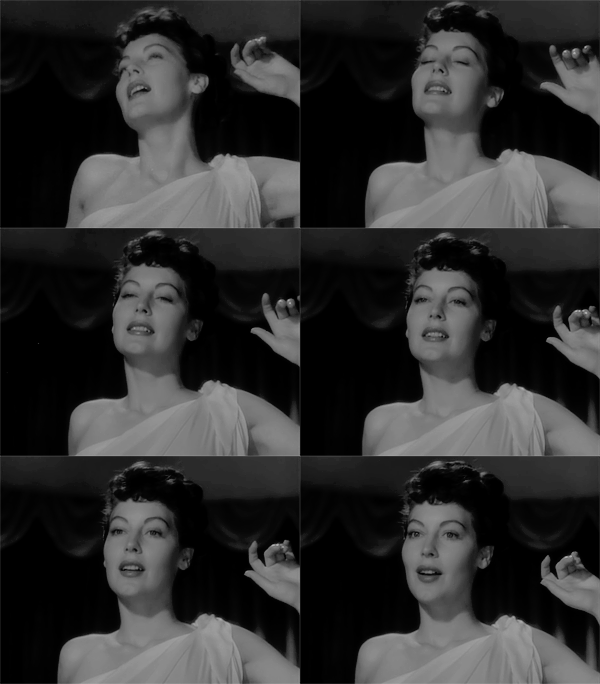
“Vênus, a Deusa do Amor” é um filme de fantasia e comédia romântica e é também um musical. Há três números musicais, e em todos eles a voz de Ava Gardner é dublada por Eileen Wilson. Em sua curta carreira de apenas 12 filmes, Eileen dublou atrizes como Jane Russell em “Os Homens Preferem as Loiras” (1953) e Ava em três ocasiões: “Mercador de Ilusões” (1947), “Lábios que Escravizam” (1949) e aqui em “Vênus, a Deusa do Amor”.

One Touch of Venus” is a romantic comedy-fantasy and also a musical. There are three musical numbers, and in all three Ava Gardner’s singing voice is dubbed by Eileen Wilson. In her short career that lasted only 12 films, Eileen dubbed actresses like Jane Russell in “Gentlemen Prefer Blondes” (1953) and Ava in three occasions: in “The Hucksters” (1947), “The Bribe” (1949) and here in “One Touch of Venus”.


A trama tem origem em um fato histórico misturado a um mito grego. A influência histórica é o templo de Vênus na cidade grega de Tessalônica, construído no século VI a.C. - e ainda preservado. O mito em questão é o mito de Pigmaleão, um escultor talentoso que se apaixonou por uma de suas criações. Vênus, a deusa do amor, foi ao seu estúdio ver as estátuas e, comovida com a estátua em questão, chamada Galateia, deu vida a ela.

The plot is originated in a historical fact mixed with a Greek myth. The historical influence is the temple of Venus in the Greek city of Thessaloniki, built in the 6th century B.C. - and  preserved until today. The myth in question is the myth of Pygmalion, a talented sculptor who fell in love with one of his creations. Venus, the goddess of love, went to his studio to see his statues and, moved by his devotion to the statue named Galatea, brought it to life.

With director William A. Seiter
É inevitável a comparação entre “Vênus, a Deusa do Amor”, e “Quando os Deuses Amam”. “Quando os Deuses Amam” foi feito em 1947 pela Columbia e trazia Rita Hayworth como Terpsícore, a musa da música e da dança, que se apaixona por um mortal que num primeiro momento ela queria punir. Em “Vênus, a Deusa do Amor”, feito pela Universal em 1948, Vênus se apaixona pelas pequenas coisas que um mortal – que já estava apaixonado por ela – dá a ela. Além disso, “Quando os Deuses Amam” é em Technicolor, e “Vênus, a Deusa do Amor” é em preto e branco – embora o plano inicial era que fosse em cores, quando Mary Pickford comprou os direitos da peça de teatro original para produzir o filme.
  
We can't avoid comparing “One Touch of Venus” with “Down to Earth”. “Down to Earth” was made in 1947 by Columbia and starred Rita Hayworth as Terpsichore, the muse of music and dance, who falls in love with a mortal who she was at first going to punish. In “One Touch of Venus”, released by Universal in 1948, Venus falls in love with the little things a mortal – who was already in love with her – provides her. Moreover, “Down to Earth” is in Technicolor, and “One Touch of Venus” is in black and white – although it was first supposed to be shot in color, when Mary Pickford bought the rights of the original play to produce a movie in 1945.


“Vênus, a Deusa do Amor” é um filme subestimado que podia ser mais longo. Mesmo assim, ele tem mais pontos positivos que negativos, e é um filme que te fará sorrir e desejar a possibilidade de experimentar um amor inspirado por ninguém mais ninguém menos que Vênus, a deusa do amor.

“One Touch of Venus” is an underrated movie that could have been longer. However, it has more positive aspects than negative ones, and it is a movie that will make you smile and wish you could experience a love inspired by Venus herself.


This is my contribution to the Ava Gardner blogathon, hosted by Maddy at Maddy Loves Her Classic Films.


Related Posts Plugin for WordPress, Blogger...