} Crítica Retrô: Marte

Tradutor / Translator / Traductor / Übersetzer / Traduttore / Traducteur / 翻訳者 / переводчик

Showing posts with label Marte. Show all posts

Friday, April 28, 2023

Aelita – A Rainha de Marte (1924) / Aelita, Queen of Mars (1924)

 ESTA CRÍTICA TEM SPOILERS / THIS REVIEW HAS SPOILERS


Marte! O sonho de muitos aventureiros, astronautas e lunáticos. Um local que já foi visitado, através do cinema: eu já escrevi sobre viagens cinematográficas para Marte antes, mas há uma lista infindável de filmes com passagem por Marte. Um destes filmes, feito na União Soviética na era muda, é o estranho filme de propaganda “Aelita – A Rainha de Marte”, de 1924.

Mars! The dream of many adventurers, astronauts and lunatics. A place that was already visited, through cinema: I’ve talked about movie trips to Mars before, but there is a never-ending list of films with a passage to Mars. One of these films, made in the Soviet Union in the silent era, is the strange propaganda flick “Aelita, Queen of Mars”, from 1924.

Em Marte, a rainha Aelita (Yuliya SoIntseva) vê num telescópio os habitantes do planeta vizinho, a Terra, com genuína curiosidade. Ela se apaixona por um dos terráqueos. Enquanto isso, na Terra, muitas pessoas em laboratórios recebem uma estranha mensagem: “Anta Odeli Uta”. Acreditando ser uma mensagem de Marte, o engenheiro Loss (Nikolai Tsereteli) decide construir uma nave espacial para visitar o planeta vermelho.

On Mars, Queen Aelita (Yuliya SoIntseva) sees throw a telescope the inhabitants of the neighboring planet, Earth, with genuine curiosity. She falls in love with one of them. Meanwhile, on Earth, several people in laboratories receive a strange message: “Anta Odeli Uta”. Believing it’s a message from Mars, the engineer Loss (Nikolai Tsereteli) decides to build a spaceship to visit the red planet.


Depois de seis meses trabalhando numa usina, Loss volta para casa e encontra a esposa Natasha (Valentina Kuindhzi) numa pose comprometedora com um canalha. Loss atira em Natasha e decide que é hora de ir para Marte. No planeta vermelho, ele encontra Aelita e causa profundo impacto com mudanças para os menos afortunados.

After six months working on a power plant, Loss returns home to find his wife Natasha (Valentina Kuindhzi) in a compromising pose with a scoundrel. Loss shoots Natasha and decides it’s the ideal time to go to Mars. On the red planet, he meets Aelita and has a deep impact on changing how things happen there for the less powerful.


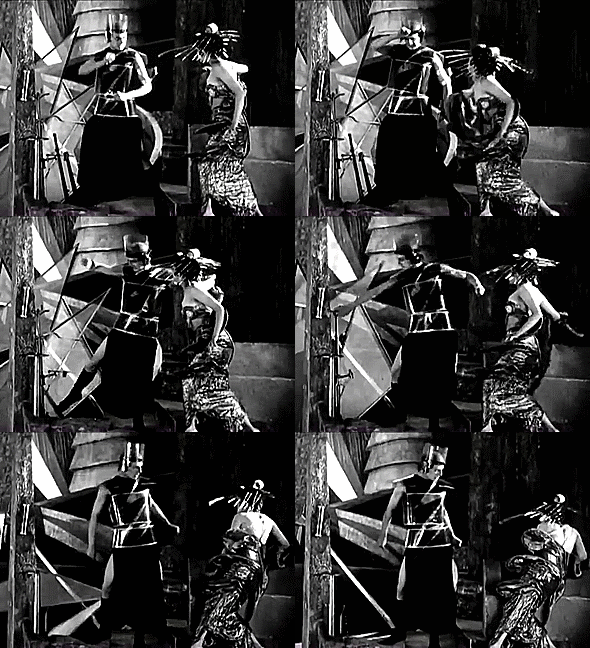
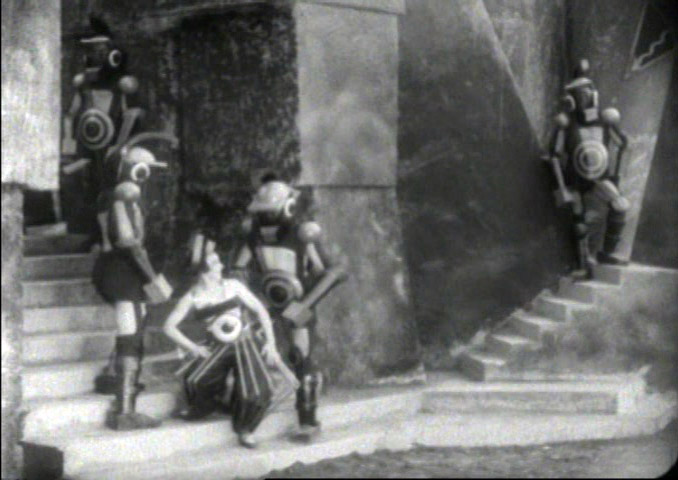
Marte em “Aelita” é futurístico, mas não muito. As roupas usadas pelos marcianos são brilhantes e curiosas – mais curiosas que belas. Não há equipamentos futurísticos mostrados além do estranho telescópio do começo do filme. É futurístico em Marte, mas a norma social vigente é construída em cima da escravidão.

Mars in “Aelita” is futuristic, but not so much. The clothes worn by the Martians are shiny and curious – more curious than charming. There is no futuristic gadget shown other than the weird-looking telescope from the beginning. It’s futuristic on Mars, but the societal norm is built on slavery.

Loss acredita que pode ajudar a “reconstruir a Rússida” com sua missão para Marte. A mensagem “Anta Odeli Uta” é recebida em quatro de dezembro de 1921: apenas quatro anos após a Revolução Russa. Neste sentido, “Aelita” é um tipo estranhíssimo de propaganda, pois os russos vão para Marte para ajudar a estabelecer uma União de Repúblicas Socialistas Soviéticas por lá.

Loss believes he can help “reconstruct Russia” with his mission to Mars. The message “Anta Odeli Uta” is received on December 4th, 1921: only four years after the Russian Revolution. In this sense, “Aelita” is the oddest kind of propaganda, as the Russians who go to Mars help establish a Union of Socialist Soviet Republics there.

Yuliya SoIntseva é mais lembrada hoje como a primeira mulher a ganhar o prêmio de Melhor Direção no Festival de Cinema de Cannes, com o filme “A Epopeia dos Anos de Fogo” (1961). Yuliya foi casada com o diretor Aleksandr Dovzhenko e estreou como assistente de direção no seu filme “Terra” (1930), hoje um clássico cult. “Aelita” foi o primeiro trabalho de Yuliya como atriz, e ela apareceu em outros sete filmes até 1930, quando fez a mudança para trás das câmeras. Yuliya dirigiu 14 filmes entre 1939 e 1980.

Yuliya SoIntseva is best remembered today as the first female filmmaker to win the Best Director Award at the Cannes Film Festival, with the film “The Story of the Flaming Years” (1961). Yuliya was married to the director Aleksandr Dovzhenko and debuted as assistant director in his film “Earth” (1930), now a cult classic. “Aelita” was Yuliya’s first role as an actress, and she appeared in seven more films until 1930, when she went behind the cameras for good. Yuliya directed 14 films between 1939 and 1980.

O director Yakov Protazanov estava voltando do exílio. Ele havia deixado o país durante a Revolução Russa, e fez filmes na França e na Alemanha enquanto estava exilado. Protazanov fazia filmes desde 1909, quando dirigiu seu primeiro curta, e escreveu boa parte dos filmes que dirigiu.

Director Yakov Protazanov was coming back from exile. He had fled the country during the Russian Revolution, and made films in France and Germany while on exile. Protazanov had been making films since 1909, when he directed his first short, and he had written a good amount of the movies he directed.

Algo que ninguém esperava: o filme é baseado num romance de Tolstoy. Mas não é Lev Tolstoy: o autor é Alexei Tolstoy, um homem provavelmente assombrado por ter o mesmo nome de um autor conhecidíssimo. Mais lembrado hoje exatamente por escrever o material que deu origem a “Aelita”, Alexei Tolstoy é também o autor de “The Golden Key, or Buratino’s Adventure”, algo que surgiu como um fanfic de Pinóquio.

Something nobody expected: the movie is based on a novel by Tolstoy. But it’s not Leo Tolstoy: the author is Alexei Tolstoy, a man probably plagued by having the same last name of a remarkable writer. Best remembered today exactly for writing the material that gave birth to “Aelita”, Alexei Tolstoy is also the writer of “The Golden Key, or Buratino’s Adventure”, something that was originally a Pinocchio fanfic.

Eu ouvi falar tanto de “Aelita” nos últimos anos e estava animada por finalmente poder conferir o filme. Infelizmente, minhas expectativas eram altas demais, e acabei a sessão frustrada. Eu esperava mais cenas em Marte e, o pior de tudo, o filme tem meu tipo mais odiado de Deus ex machina: a resolução “foi tudo um sonho” – neste caso, foi tudo um sonho acordado. Eu reconheço a importância de “Aelita” para a história da ficção científica e como o filme influenciou o retrato de Marte e dos marcianos em filmes subsequentes. Há muito para se gostar em “Aelita” – isto é, se você não estiver esperando um filme só sobre Marte. É possível fazer uma viagem melhor para Marte em outros filmes.

I’ve heard about “Aelita” so much over the years and was excited to finally see it. Unfortunately, my high expectations weren’t met and I left the session underwhelmed. I expected more scenes in Mars, and, the worst of all, the movie had my least favorite kind of Deus ex machina: the “it was all a dream” resolution – in this case, it was all a daydream.  I recognize the importance “Aelita” has in sci-fi history and in shaping the overall look of Mars and Martians in future films. There is plenty to like in “Aelita” – that is, if you don’t come expecting a huge Mars festival. You can take a better trip to Mars elsewhere..


This is my contribution to the Futurethon, hosted by Gill and Barry at Realweegiemidget Reviews and Cinematic Catharsis

Thursday, February 20, 2020

Fantasias de 1980 (1930) / Just Imagine (1930)


Imagine como o mundo vai ser daqui a 50 anos. Veículos voadores são obrigatórios em todas as previsões futurísticas, mas queremos mais: como as pessoas vão se vestir? Que tipo de música estará na moda? As pessoas serão conhecidas pelo nome ou por um número? Como será o namoro? Nós visitaremos outros planetas? Todas estas questões são respondidas em “Fantasias de 1980” – mas quase nenhuma projeção deste estranho filme se concretizou.

Just imagine how the world will be 50 years from now. Flying vehicles are a must in all futuristic predictions, but we want more: how will people dress? Which kind of music will be in vogue? Will people be called by names or numbers? How will dating be like? Will we visit other planets? All these questions are answered in “Just Imagine” – but almost nothing predicted by this strange film became true.


Nós não sabemos o porquê, mas o filme previu que em 1980 o governo diria às pessoas com quem elas deveriam se casar. Ah, e as pessoas teriam letras e números para identificá-las ao invés de nomes. E é assim que somos apresentados a LN-18 (Maureen O’Sullivan) e J-21 (John Garrick), dois apaixonados que, de acordo com o governo, não foram feitos um para o outro. Ele gosta dela porque ela é uma “garota à moda antiga”, como aquelas de 1930 – como a avó de J-21, ele diz! Ele até canta uma canção sobre garotas à moda antiga...

We don't know why, but the film predicted that in 1980 the government would tell people who they must marry. And, oh, people would have letters and numbers to identify them, not names. So this is how we're introduced to LN-18 (Maureen O'Sullivan) and J-21 (John Garrick), two lovebirds who, according to the government, weren't made for each other. He likes her because she's an “old-fashioned girl”, like the ones from the 1930s – like J-21's grandmother, he says! He even sings about the old-fashioned gals...


Depois da música, J-21 ainda está triste porque não pode se casar com LN-18, mas seu colega de quarto o convida para ver um cientista tentar um feito extraordinário: trazer um homem de volta à vida! Em um laboratório cheio de luzes e equipamentos, o experimento é um sucesso, e um homem (El Brendel) que foi atingido por um raio e morto durante uma partida de golfe em 1930 é ressuscitado. O cientista liberta sua cobaia, e o pobre homem é recebido por J-21 e seu amigo RT-42 (Frank Albertson), que apresentam o novo mundo a ele, e ele escolhe o “nome” Single-O.

After the song, J-21 is still sad because he can't marry LN-18, but his roommate invites him to see a fellow scientist try something astounding: to bring a dead man back to life! In a laboratory full of lights and paraphernalia, the experiment is successful, and a man (El Brendel) who was struck by lightning and killed during a game of golf in 1930 is resurrected. The scientist sets his experiment free, and the poor man is greeted by J-21 and his friend RT-42 (Frank Albertson), who present the new world to him, and he chooses the “name” Single-O.


A comida e a bebida foram substituídas por pílulas saborizadas. Bebês são feitos e entregues por máquinas após o casal depositar uma moeda e escolher o gênero da criança. Por causa destas mudanças, Single-O diz sem parar “Dê-me os velhos tempos de volta”, e seus amigos modernos acham graça do saudosismo dele.

Food and drinks were replaced by flavored pills. Babies are made and delivered by machines after the couple puts a coin and selects the gender of the kid. Because of these changes, Single-O keeps repeating “Give me the good old days”, which amuses his modern-day pals.


A amiga de LN-18, D-6 (a adorável Marjorie White), decide ajudá-la e organiza um encontro com J-21. Quando este encontro é interrompido pelo noivo que o governo escolheu para LN-18, J-21 fica com o coração partido. Entretanto, um estranho o chama e o leva até um cientista que oferece a ele... uma viagem para Marte! J-21 aceita a missão, porque assim ele mostrará seu valor e o tribunal terá de deixá-lo se casar com LN-18.

LN-18’s friend D-6 (the lovely Marjorie White) helps her and stages a meeting with J-21. When this meeting is interrupted by LN-18’s government-assigned fiancé, J-21 is left heartbroken. However, a stranger approaches him and takes him to a scientist who offers him… a trip to Mars! J-21 accepts the mission, because this will show how distinguished he is, and the tribunal will have to let him marry LN-18.


J-21, RT-42 e Single-O – como clandestine – vão a Marte num foguete. Depois de um mês – um intervalo de tempo ridículo, eu sei – eles chegam a Marte, e aqui algumas cópias do filme passam a ser em tons de sépia. Nossos heróis sépia – com trajes especiais vagabundos e nenhum capacete – encontram marcianos em tons de sépia com roupas minúsculas e linguagem difícil – eles só se comunicam através de gestos e gritos – e todos têm um gêmeo do mal! Isso é muito diferente de, digamos, como os marcianos foram retratados em “Himmelskibet” (1918), onde eram vegetarianos e pacifistas.

J-21, RT-42 and Single-O – as a stowaway – go to Mars on a rocket. After one month – a ridiculous amount of time, I know – they get to Mars, and here some copies of the film become sepia-toned. Our sepia heroes – with lousy special suits and no helmet at all – meet sepia-toned Martians with minimum clothing and poor language skills – they only communicate through gestures and screams – and everybody has an evil twin! This is very different from, let’s say, the Martians in “Himmelskibet” (1918), who were vegetarians and pacifists.


Como esse filme tão ruim chega a ser bom? Primeiro, é um musical sem músicas interessantes. Claro, John Garrick é um bom cantor, mas nos anos 30 havia muitos como ele em Hollywood. Segundo, é uma comédia, e com El Brendel como alívio cômico. Brendel é pouquíssimo lembrado atualmente, e algumas de suas piadas são tão bobas que são engraçadas. “Fantasias de 1980” é o filme mais conhecido de Brendel, mas ele também pode ser visto em um pequeno papel cômico em “Asas” (1927).

What makes this movie so bad it’s actually good? First, it’s a musical without any memorable tunes. Sure, John Garrick is a fine singer, but back at the 1930s there were many like him in Hollywood. Second, it’s a comedy, and with El Brendel as comic relief. Brendel is hardly remembered nowadays, and some of his jokes and gags are so silly that they become entertaining. “Just Imagine” is Brendel’s best known film, but he can also be seen in a small comic relief role in “Wings” (1927).


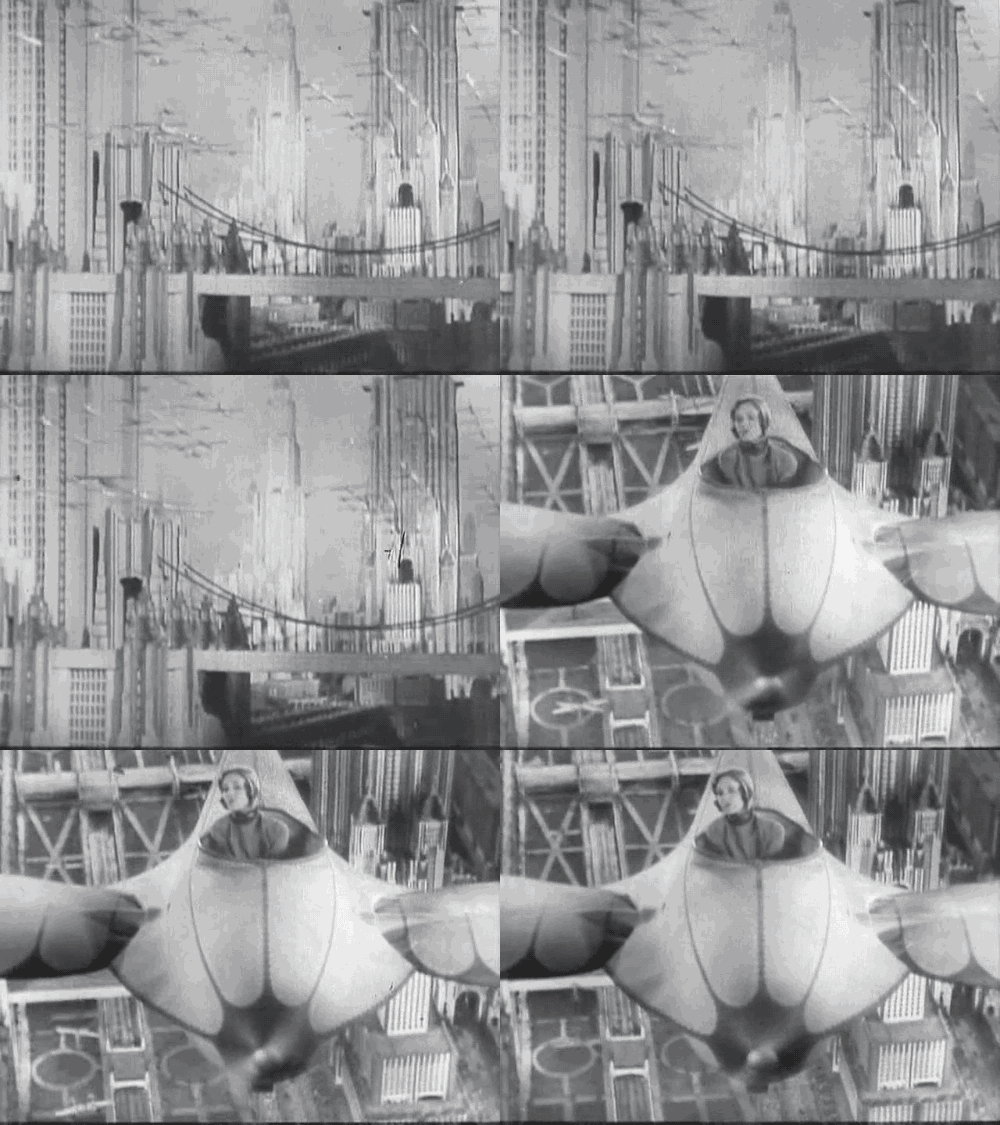
Mesmo sendo um filme bobinho, “Fantasias de 1980” tem um estilo impressionante. Ele foi indicado ao Oscar de Direção de Arte, e a metrópole de 1980 realmente se parece com, bem, a cidade de “Metrópolis” (1927). Além disso, o filme tem a honra de ser o primeiro filme de ficção científica sonoro – e também o primeiro musical de ficção científica! – feito em Hollywood. E ele também foi o último filme de ficção científica de grande orçamento feito por um grande estúdio – no caso a Fox – até os anos 50. Todas as outras tentativas de se fazer ficção científica nas décadas de 30 e 40 foram de estúdios pequenos, e algumas sequências, tomadas e cenários de “Fantasias de 1980” foram reciclados por estes estúdios em suas produções.

Even though it’s a silly movie, “Just Imagine” has an impressive look. It was nominated for an Art Direction Oscar, and the 1980 metropolis really looks like, well, the city from “Metropolis” (1927). Besides that, the film has the honor of being the first science fiction talkie – and also the first science fiction musical! – made in Hollywood. And it was also the last big-budget sci-fi made by a big studio – Fox here – until the 1950s. All other attempts of doing sci-fi in the 30s and 40s were by poverty row studios, and some sequences, shots and sets from “Just Imagine” were recycled by those studios in their productions.


Como é dito no começo do filme, muitas coisas podem mudar em 50 anos. Os cineastas certamente não contaram com mais uma guerra mundial, nem mesmo com mudanças na música e na moda. Mesmo assim, algumas previsões se mostraram corretas. Há telas que mostram o lado de fora para quem está dentro de um apartamento, como as câmeras de monitoramento que temos agora. Um vestido formal se transforma em camisola, em um momento muito pre-Code. Em 1930, o filme foi uma curiosa previsão do futuro, mas hoje, em 2020, é um também curioso vislumbre do passado.

Like it's said in the beginning of the film, a lot of things can change in 50 years. The filmmakers certainly didn't count on another world war, not even with the changes on music and fashion. Nevertheless, they predicted some things right. There are screens that show the outdoors to people indoors, like the monitoring cameras we have now. A dinner dress transforms itself into a nightgown, in a moment that screams pre-Code! In 1930, the film was a curious prediction of the future, but now, in 2020, it’s an equally curious glimpse of the past.

This is my contribution to the Second So Bad It’s Good blogathon, hosted by Rebecca at Taking Up Room.

"Just Imagine" can be found on YouTube.


Sunday, April 15, 2018

Papai Noel Conquista os Marcianos (1964) e outras vezes em que o cinema foi a Marte


Santa Claus Conquers the Martians (1964) and other film trips to Mars


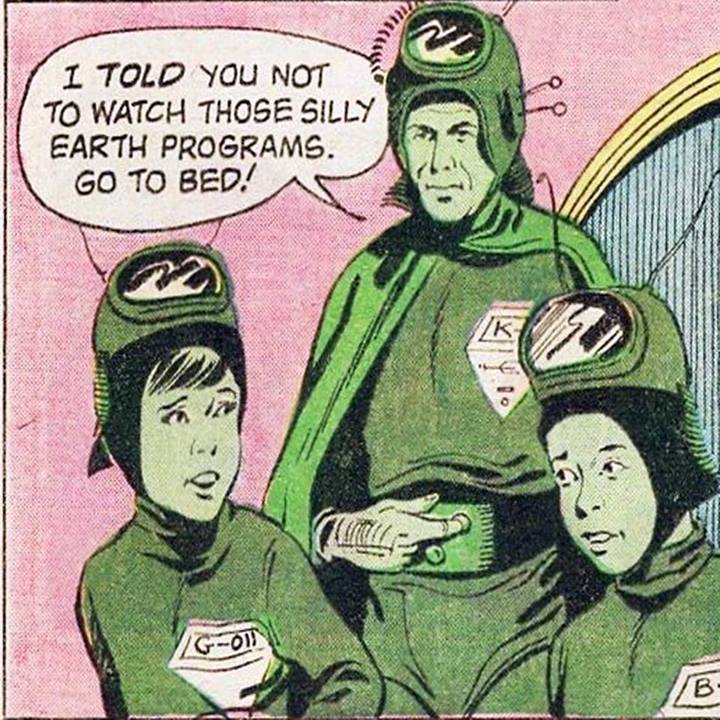
Um repórter da TV, falando diretamente da oficina do Papai Noel no Polo Norte, onde os ajudantes de Noel acabam de mostrar um boneco de um marciano, diz: “Se há [pessoas em Marte] eu espero que elas tenham alguém lá como você, Noel, para levar alegria e felicidade para todas as crianças marcianas”. Corte para os marcianos. Eles são exatamente como os bonecos e não, eles não têm um Papai Noel, mas têm a capacidade de ver os programas de TV da Terra. E, de acordo com um velho sábio, é a ausência de um Papai Noel – e a ausência de uma infância – que causa a tristeza nas crianças marcianas. Por isso, um grupo de marcianos decide vir à Terra para sequestrar o Papai Noel.

A TV reporter, speaking from Santa’s workshop at the North Pole, where the helpers just presented a Martian doll, says: “If there are [people on Mars] I hope they have someone like you up there, Santa, to bring joy and good cheer to all the Martian children”. Cut to the Martians. They are exactly as the doll predicted, and no, they not have a Santa Claus, but they are able to watch TV programs from Earth. And, according to a wise old man, it’s this lack of a Santa Claus – and the extended lack of a childhood – that is leaving Martian kids sad. So a group of Martians decide to come to Earth and kidnap Santa Claus.
É assim que tem início um marco do cinema ruim. Entre atores cobertos de maquiagem verde horrível, crianças sem expressão, piadas sem graça e o próprio Papai Noel, uma coisa salva “Papai Noel Conquista os Marcianos”: Marte. Não, o cenário não é bonito nem sequer bem elaborado, mas é algo que me fez pensar: por que o cinema é tão fascinado por Marte?

This is how a pinnacle of awful filmmaking unfolds. Among actors wearing horrible green make-up, children giving awful performances, unfunny jokes and Santa Claus himself, one thing kind of saves “Santa Claus Conquers the Martians”: Mars. No, the set is not gorgeous or even elaborate, but it is something that made me think: why is the film world so fascinated with Mars?
A resposta é simples: porque somos fascinados pelo desconhecido. E desde que Marte continue inexplorado, não há limite para a imaginação, e filmes no planeta vermelho podem ter praticamente qualquer coisa – até pílulas como refeição, homens verdes maus e um sistema que permite que os marcianos vejam programas de TV da Terra (por que eles não faziam seus próprios programas de TV?).

The answer is simple: because we are fascinated by the unknown. And as long as it remains unknown, there is no limit to imagination, and films set on Mars can have literally anything – even people who eat pills as meals, evil green men and some kind of system that allows Martians to watch TV shows made on Earth (why didn’t Martians make their own TV shows?).
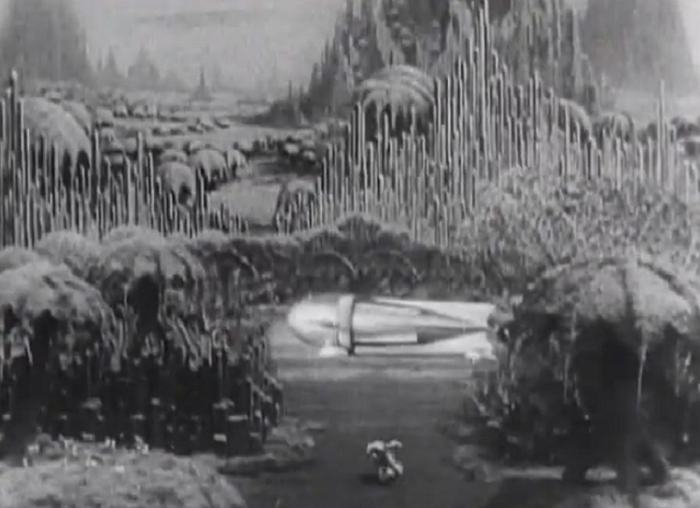
O primeiro cineasta a ir a Marte, surpreendentemente, não foi Georges Méliès, mas Thomas Edison. Em 1910, Edison produziu “A Trip to Mars”, na qual um homem se torna astronauta após descobrir o pó da ‘gravidade reversa’, e em Marte ele encontra marcianos enormes que podem congelar os terráqueos com um simples sopro. Não há limites entre a ficção científica e o horror puro neste filme de cinco minutos.

The first filmmaker to go to Mars, surprisingly, wasn’t Georges Méliès, but Thomas Edison. In 1910, he produced “A Trip to Mars”, in which a man becomes an astronaut thanks to the discovery of the powder of ‘reverse gravity’ and finds out that Martians are HUGE and can freeze Earth people with only a blow. There is no boundary between science fiction and pure horror in this five-minute film.
Em 1918, um grupo muito criativo de dinamarqueses fez o filme “Viagem a Marte” (ou “Himmelskibet”). Nele, um grupo de cientistas liderados por Avanti Planetaros (Gunnar Tolnaes) desafia todos os céticos e chegam a Marte em seis meses – que é, de fato, o tempo que uma viagem ao planeta vermelho demoraria hoje!

In 1918, a group of very creative Danish people made a film called “A Trip to Mars” (aka “Himmelskibet”). In it, a group of scientists led by Avanti Planetaros (Gunnar Tolnaes) challenges all naysayers and reach Mars in six months – what is, indeed, the time a trip to the Red Planet would take today!
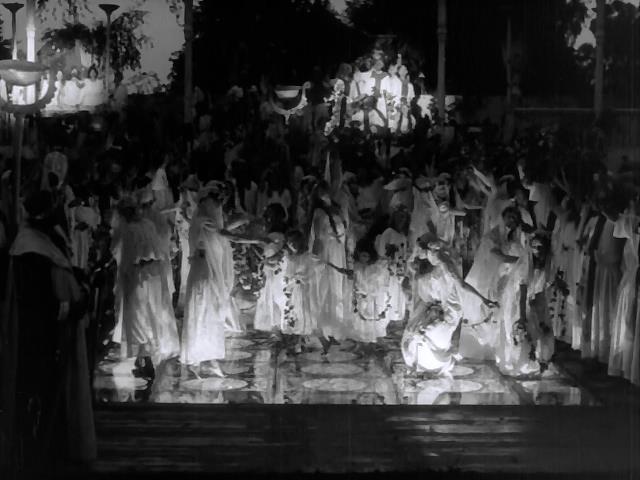
Mas nada poderia prepará-los para o que encontram lá: uma sociedade evoluída, na qual todas as pessoas são vegetarianas e pacifistas, e a guerra e o sofrimento foram abolidos. O líder deles é um homem sábio e ninguém teme a morte. Os marcianos contam que eram como as pessoas da Terra, mas aprenderam a viver em paz. A mesma paz não é compartilhada com o cinema soviético, como podemos ver em “Aelita, Rainha de Marte”, de 1924.

But nothing could prepare them for what they find there: an evolved society, where all people are vegetarians and pacifists, and all war and suffering has been abolished. Their leader is a wise man and nobody fears death. The Martians tell them that they were once like people on Earth, but they learned to live better and in peace. The same peace is not shared with the Soviet cinema, as we can see in the 1924 production “Aelita, Queen of Mars”.
Himmelskibet
Himmelskibet
Aelita
Com a chegada do som, Marte se tornou sinônimo de filme B. Dos anos 30 aos 70, quase todos os filmes sobre expedições a Marte eram seriados ou produções de baixo orçamento. “Fantasias de 1980”, de1930, é um dos mais estranhos de todos. Ele conta a história de um homem chamado J-21 (John Garrick), que, para impressionar a mulher que ama e ganhar o direito de se casar com ela, vai a Marte com um amigo e com um homem que foi morto em 1930 e ressuscitado pela ciência em 1980 (interpretado por El Brendel). Em Marte, eles descobrem uma sociedade em que todos têm um irmão gêmeo (um gêmeo bom e um mau), mas os marcianos são agradáveis, usam pouca roupa, o cenário é lindo e a líder é a rainha Loo Loo (Joyzelle Joyner). Para ser sincera, eu gostaria de visitar esta versão de Marte.

When sound came, Mars became a synonym of cheap movie. From the 1930s until the 1970s, almost all films about expeditions to Mars were serials or low-budget productions. “Just Imagine”, from 1930, is one of the weirdest of them all. Set in the 1980s, it tells the story of a man called J-21 (John Garrick), who, in order to impress his sweetheart and be allowed to marry her, goes to Mars with a friend and a man who was killed in 1930 and resurrected by science in 1980 (played by El Brendel). On Mars, they find a society in which everybody has a twin (one evil and one good), but the Martian people are welcoming, wear few clothes, the set is exquisite and their leader is queen Loo Loo (Joyzelle Joyner). To be sincere, I’d like to visit this version of Mars.
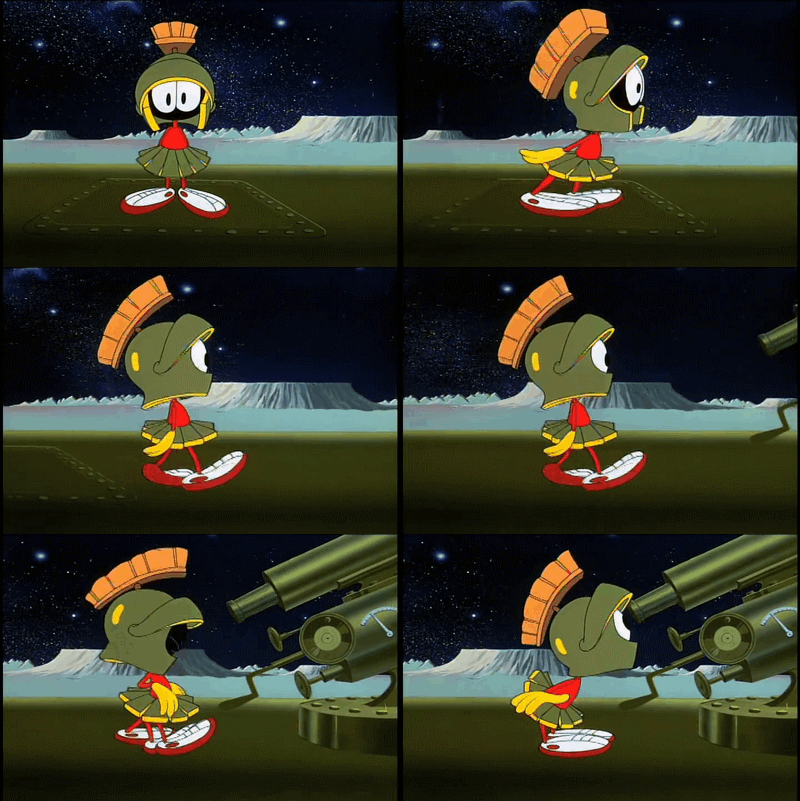
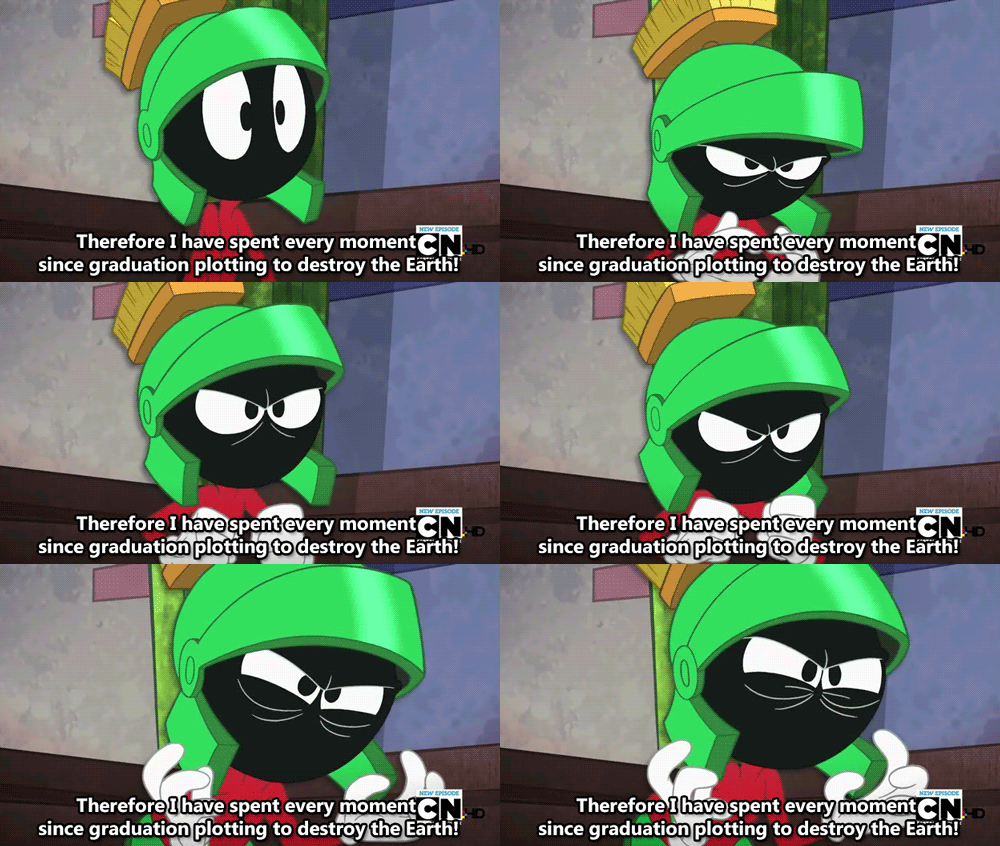
Buster Crabbe, como Flash Gordon, pode ter ido a Marte no seriado de 1938, mas os anos 50 foram a década que trouxe real interesse em viagens espaciais, tanto em filmes quanto em desenhos. Estudos traçam a origem da ideia de que alienígenas são ‘homenzinhos verdes’ até uma lenda contada no século XII, mas foi com as histórias de ficção científica dos anos 1940 e 50 que a ideia se popularizou. Por isso conhecemos Marvin o Marciano em 1948, e ele apareceu em outros desenhos nas décadas seguintes, incluindo o famoso curta “Duck Dodgers in the 24 ½th Century”, de 1953.

Buster-Crabbe-as-Flash-Gordon may have been to Mars in the 1938 serial, but the 1950s were the decade that brought real interest in space travelling, both on feature film and animation. Studies trace the idea of aliens being ‘little green men’ back to a legend told in the 12th century, but it was with science fiction stories from the 1940s and 50s that the idea became popular. No wonder we got Marvin the Martian in 1948, and he appeared in other cartoons the following decades, including the famous “Duck Dodgers in the 24 ½th  Century”, from 1953.
Marvin, 1948: nice skirt
Marvin, 2012: more relatable
Quem mais, além de Pernalonga, já foi a Marte? Ou melhor, quem ainda não foi a Marte? Tom e Jery já foram. Abbott e Costello também. Como vimos, Papai Noel também. Matt Damon esteve lá recentemente – e poderia ter ficado por lá. O que todos esses filmes sobre Marte têm a nos ensinar, não importa quão ridículos ou estúpidos eles sejam?

Who else, besides Bugs Bunny, has been to Mars? I mean, who hasn’t been to Mars? Tom and Jerry have. Abbott and Costello have. As we just saw, Santa Claus had. Matt Damon had been there recently – and he could have been left there. What all those films about Mars teach us, no matter how campy or stupid they are?
Eles nos ensinam que nós amamos o desconhecido e as muitas possibilidades que vêm com ele, mas só até certo ponto. Quando chegam a Marte, todos os personagens, em especial nos filmes mais antigos, encontram seres vivos semelhantes ao homem. Os marcianos podem falar outra língua, usar roupas engraçadas, ser maiores que nós, mas eles sempre se parecem conosco na ficção. Até Marvin tem um cachorro de estimação, o K-9! Explorar pode ser excitante, desde que estejamos no controle. Hoje sabemos que, se há vida em Marte, ela não se parece em nada com os humanos da Terra. Então, talvez, seja mais interessante para nós nos conformarmos com rostos familiares em planetas estranhos – talvez, nesta situação, a ficção científica será mais emocionante que a realidade.

They teach that we love the unknown and its many possibilities, but until a certain point. Once on Mars, almost all characters, especially in older films, find human-like life. Martians may speak a different language, dress funny, be bigger than us, but they always looked like us in fiction. Even Marvin has a dog, K-9, as a pet! Exploring is exciting, as long as we are in control. Today, we know that, if there is life on Mars, it’s nothing like humans on Earth. So, maybe, it’s more interesting for us to conform to familiar faces in strange planets – maybe, in this case, science fiction will be more exciting than reality.

This is my contribution to the Outer Space on Film blogathon, hosted by Debbie from Moon in Gemini.
Related Posts Plugin for WordPress, Blogger...